Beans and Sardines

  • Home
  • About
  • Recipe of the week
  • Recipes
  • Wines
  • Contact
Creamed spinach 1.jpg

My mum's Creamed spinach (without cream) recipe

Beans and Sardines
May 25, 2021 by tina oblak in Adriatic Recipe, brunch, Central European recipes, Eastern European recipes, Easy recipe, healthy mael, Istrian cuisine, Istrian dish, Istrian food, Istrian gastronomy, Nutritious dish, Rustic dish, Slovenian cuisine, Slovenian food, Slovenian gastronomy, Vegetarian

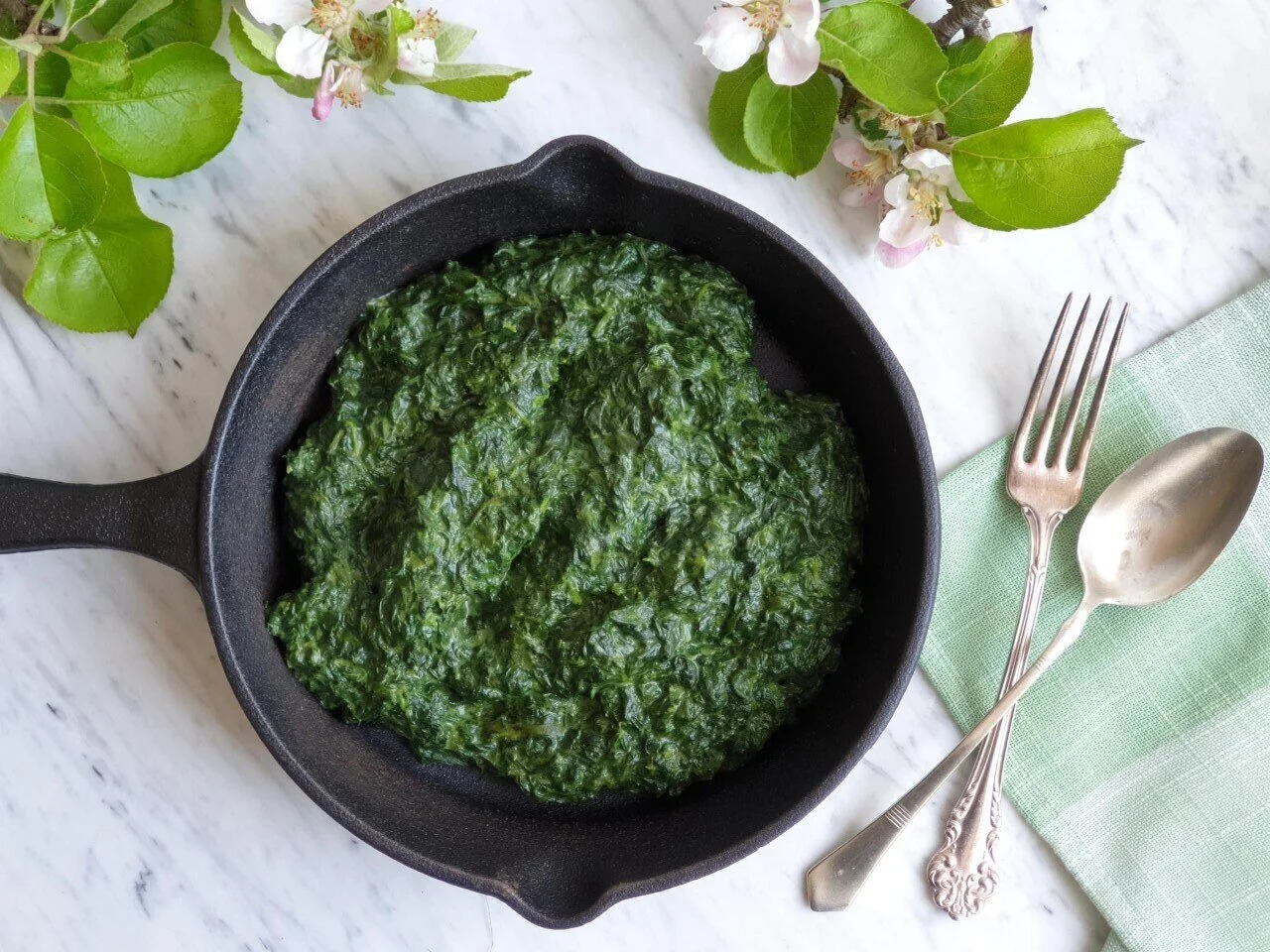
Creamed spinach is one of my absolute favourite side dishes and it is one of those recipes that you will go back to time and time again. Spinach is a beautiful leafy plant but it is sometimes an unsung hero of dinner greens. It is quick and easy to make, perfect to introduce as a vegetable dish during midweek or to serve along those special weekend meat roasts. It is very tasty, nutritious, healthy and accompanies really nicely just about any fish or meat dish.

Spinach cooked this way was the one I loved most as a child, and I could never get enough of it, I could literally eat it out of pan with a spoon, nothing much has changed. And of course, I was never told off for eating too much of it! Definitely worth giving it a go if you have children (and adults) that are not so kin on vegetables.

My mother made creamed spinach very often for me and my brother when we were little during the week as a quick meal together with mashed potatoes and fried egg. This vegetable side dish is very popular back home and still served as part of school meals just as it used to be. It is reassuring to know that some things just haven't changed...
Creamed spinach 2.jpg

Ingredients

Serves 2-4 as part of meal

  • 2 Tbsp extra virgin olive oil

  • 1 clove of garlic, peeled

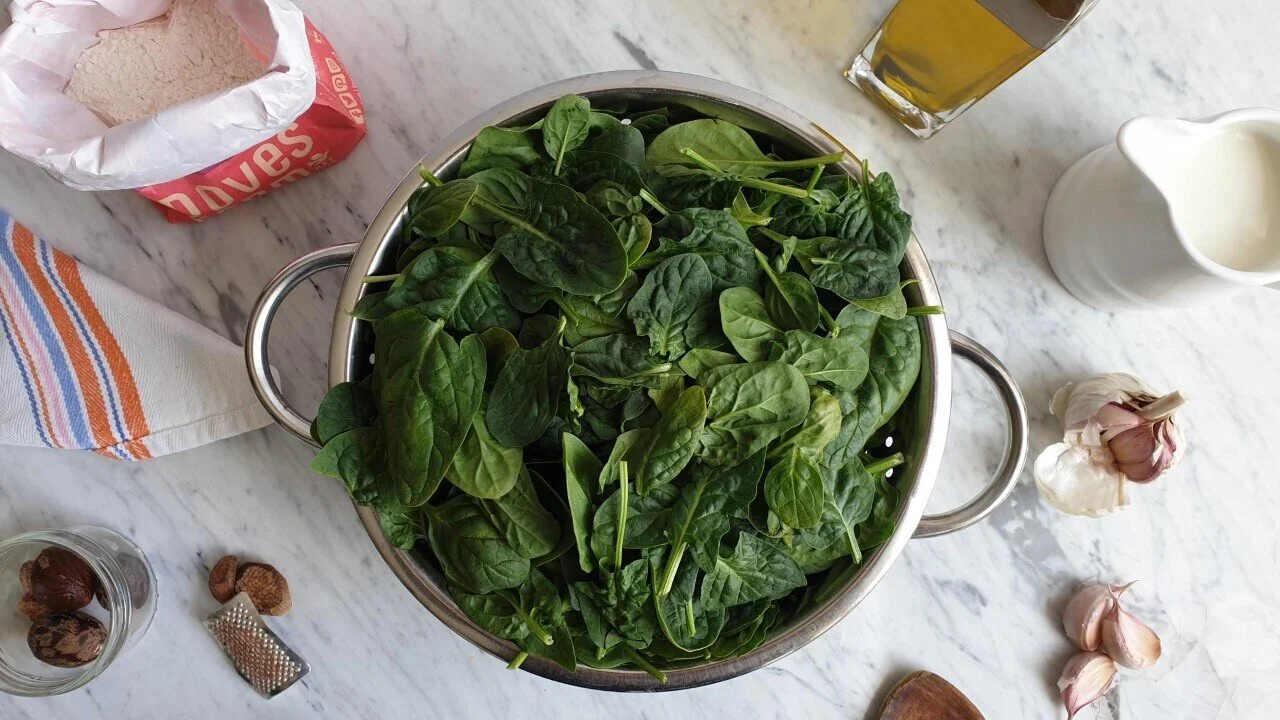
  • 500g of baby spinach (washed and ready to use) You can use other varieties of spinach or Swiss chard in which case you remove the stalks

  • 2 Tbsp all-purpose flour

  • 250 ml milk (semi skimmed or full fat)

  • sea salt

  • nutmeg, freshly grated (optional)

Method

First of all you need to wash the spinach thoroughly if you bought it unwashed. If you are using the spinach that has been washed already and is ready to use just skip the following step.

The best way to wash the spinach is to put it in a sink or large container of cold water. Swish leaves around and than let them stand for a few minutes allowing the dirt to sink to the bottom.

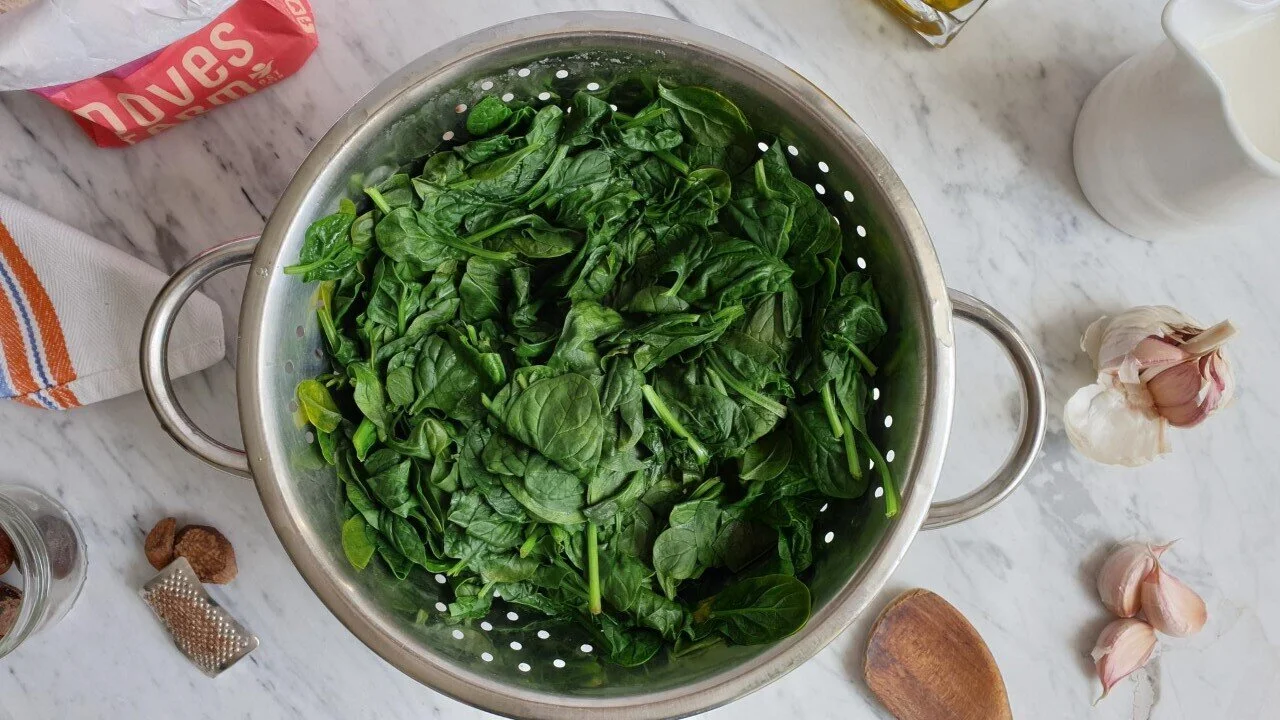
Place washed spinach in a big pot and pour over boiling hot water. If you prefer you can bring a large pot of water to a rolling boil and then add the spinach. In both cases you need to push the leaves down to completely submerge them in the water.

Blanch the spinach for about 40 seconds to a minute (blanching is most often used as an intermediary step for a dish and it means giving greens, in this case spinach, a quick cook in hot water to cook them through and soften them).

Place a large colander in a sink, drain the spinach and run it under cold water just for few seconds. This will stop the cooking immediately (and retain the nutrients) but it will also help to cool down the spinach.

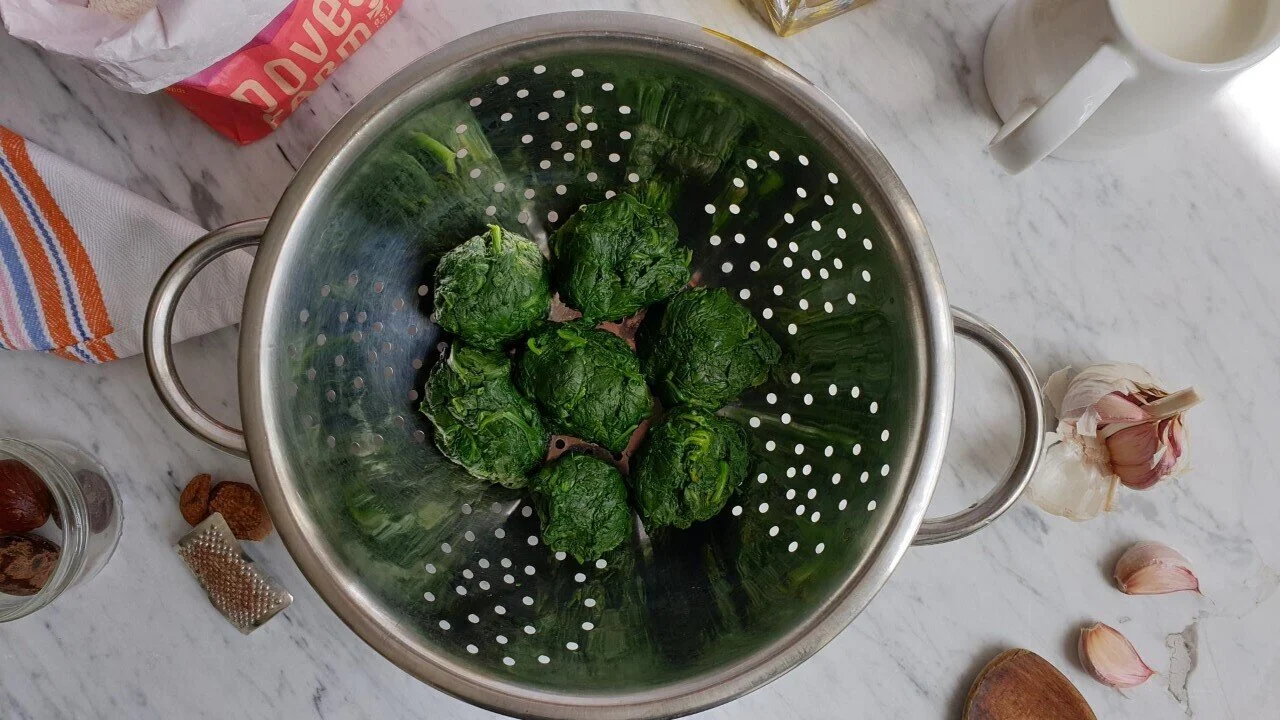
Let the spinach cool completely for few minutes and drain as much as you can. You want to remove as much excess liquid as you can (spinach contains quite a lot of water). I do this in batches by taking small handfuls of spinach and squeeze it very well. I end up with few balls of very well drained spinach.
View fullsize Creamed spinach 3.jpg
View fullsize Creamed spinach 4.jpg

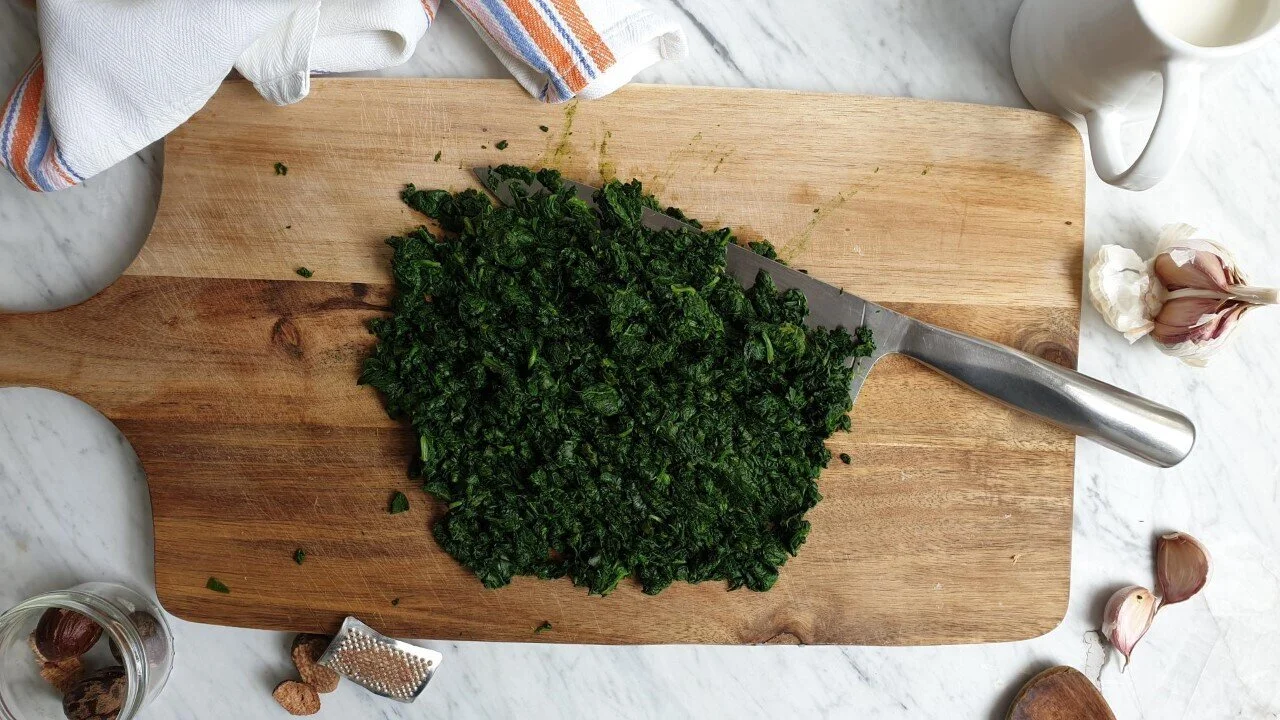
Transfer drained spinach on a chopping board and chop quite finely.
Creamed spinach 5.jpg

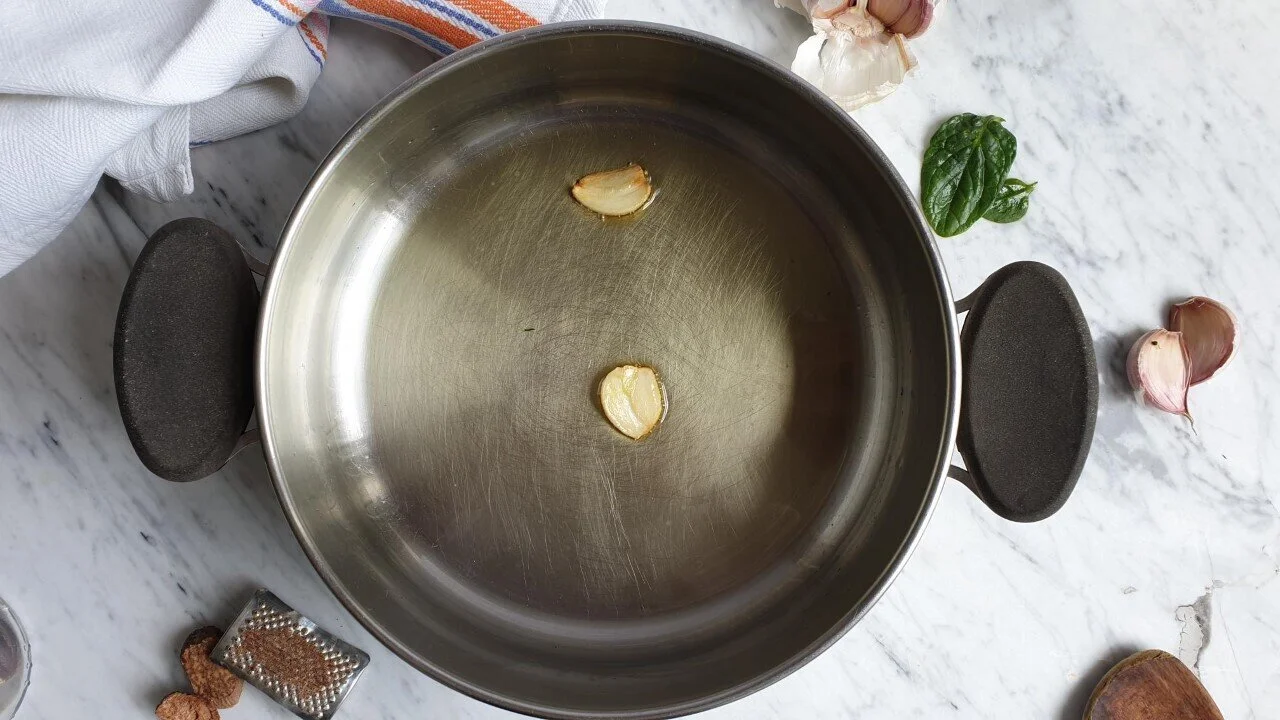
Put the extra virgin olive oil and peeled clove of garlic in a saucepan. Infuse the oil with the garlic on a medium-low heat and when the garlic turns nice golden colour remove it from the saucepan and discard it. Be careful not to burn it, trust me this is easily done.

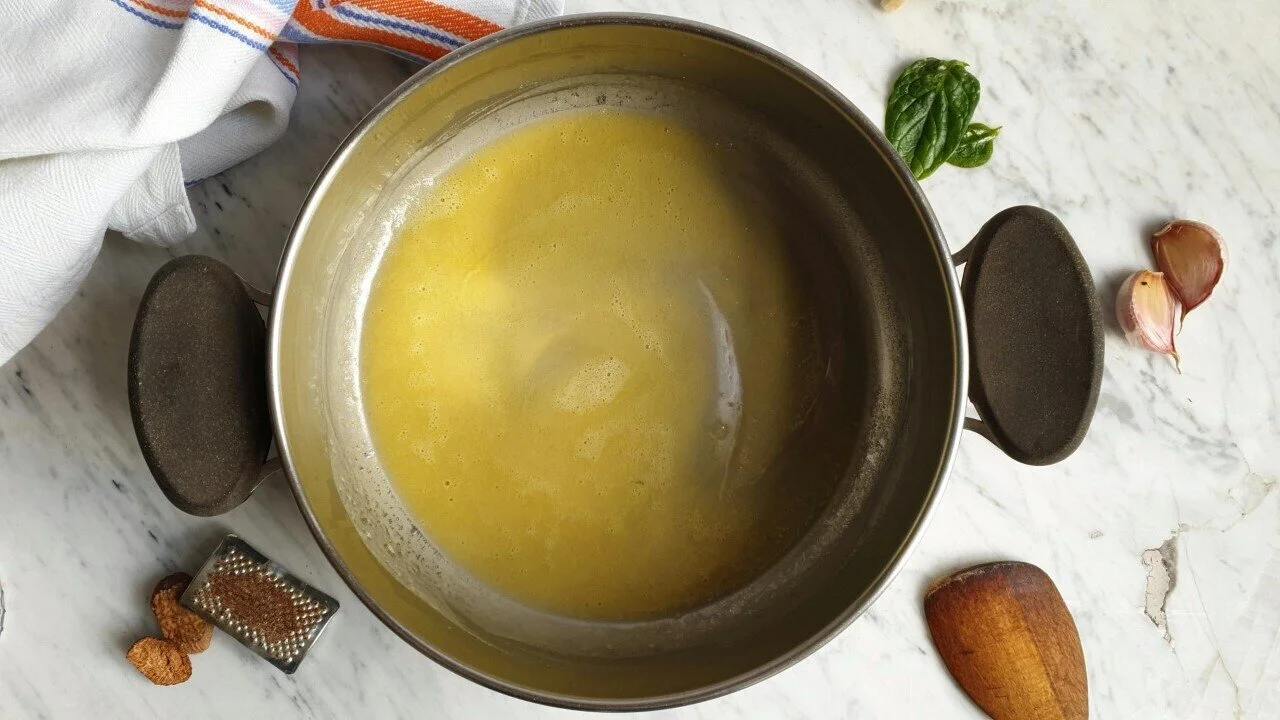
Add the flour and cook briefly, stirring constantly, until the flour turns golden colour.
View fullsize Creamed spinach 6.jpg
View fullsize Creamed spinach 7.jpg

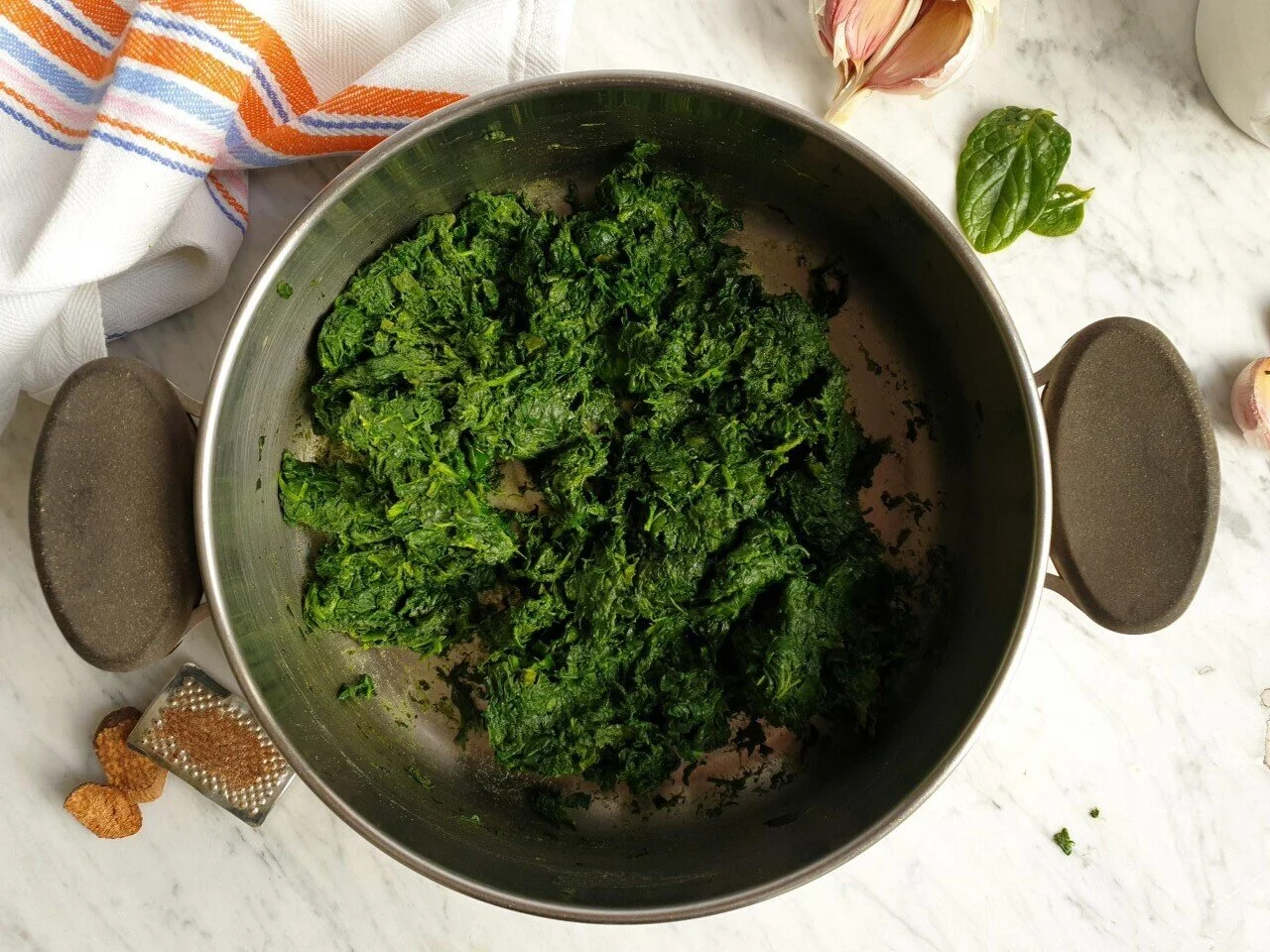
Add chopped spinach and stir well so the spinach is mixed well with the flour mixture. At this point the spinach mixture might stick to the bottom a bit, do not worry if this is the case.

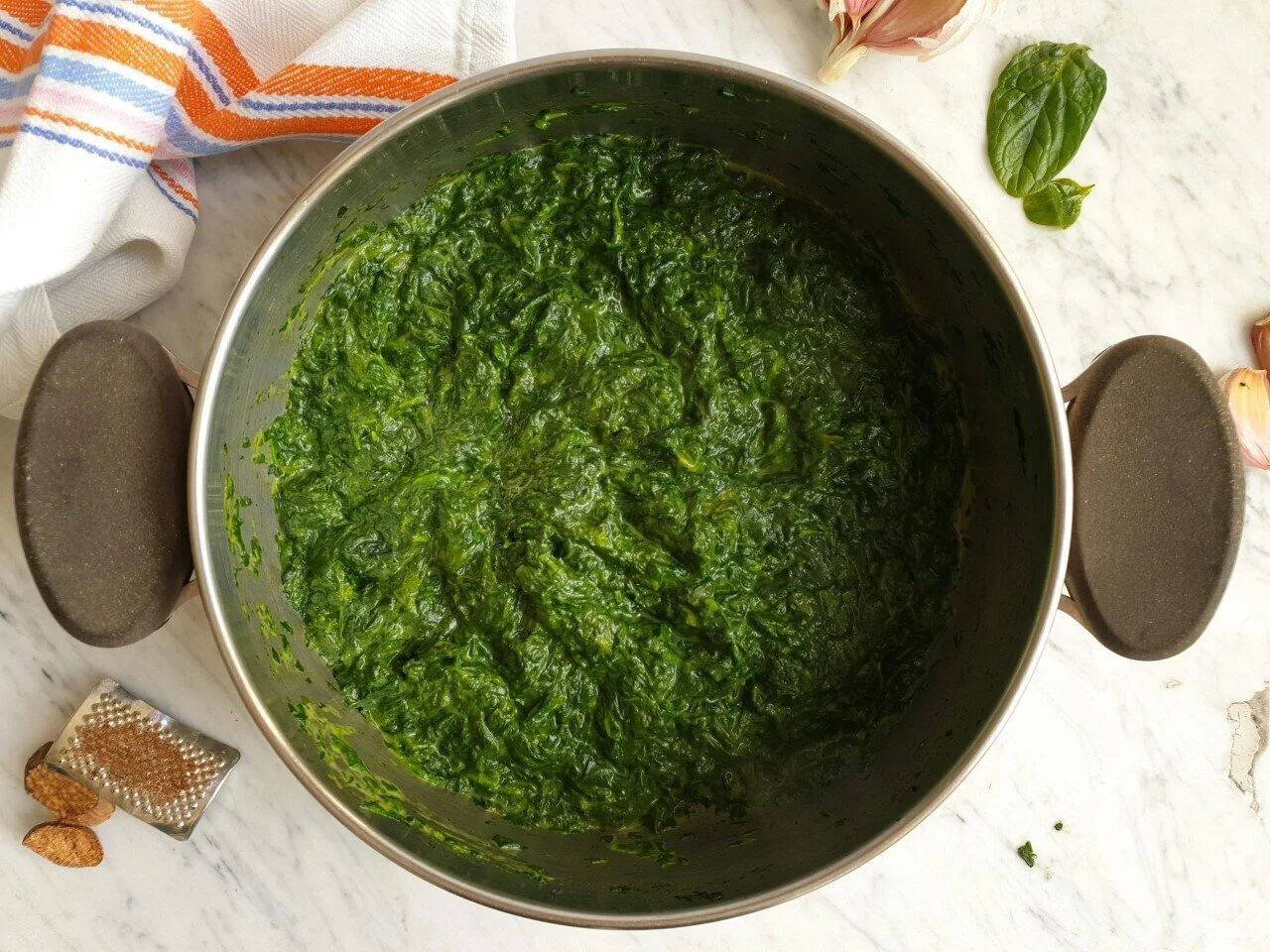
Start pouring gradually the milk, stirring and mixing constantly, incorporating well. Season with salt and add some freshly grated nutmeg, if using, and cook further for about 5-7 minutes on a gentle heat, stirring constantly. By this time you should end up with a lovely thickened creamed spinach. If it does look a bit watery give it another minute or so.
View fullsize Creamed spinach 8.jpg
View fullsize Creamed spinach 9.jpg

Just a thought

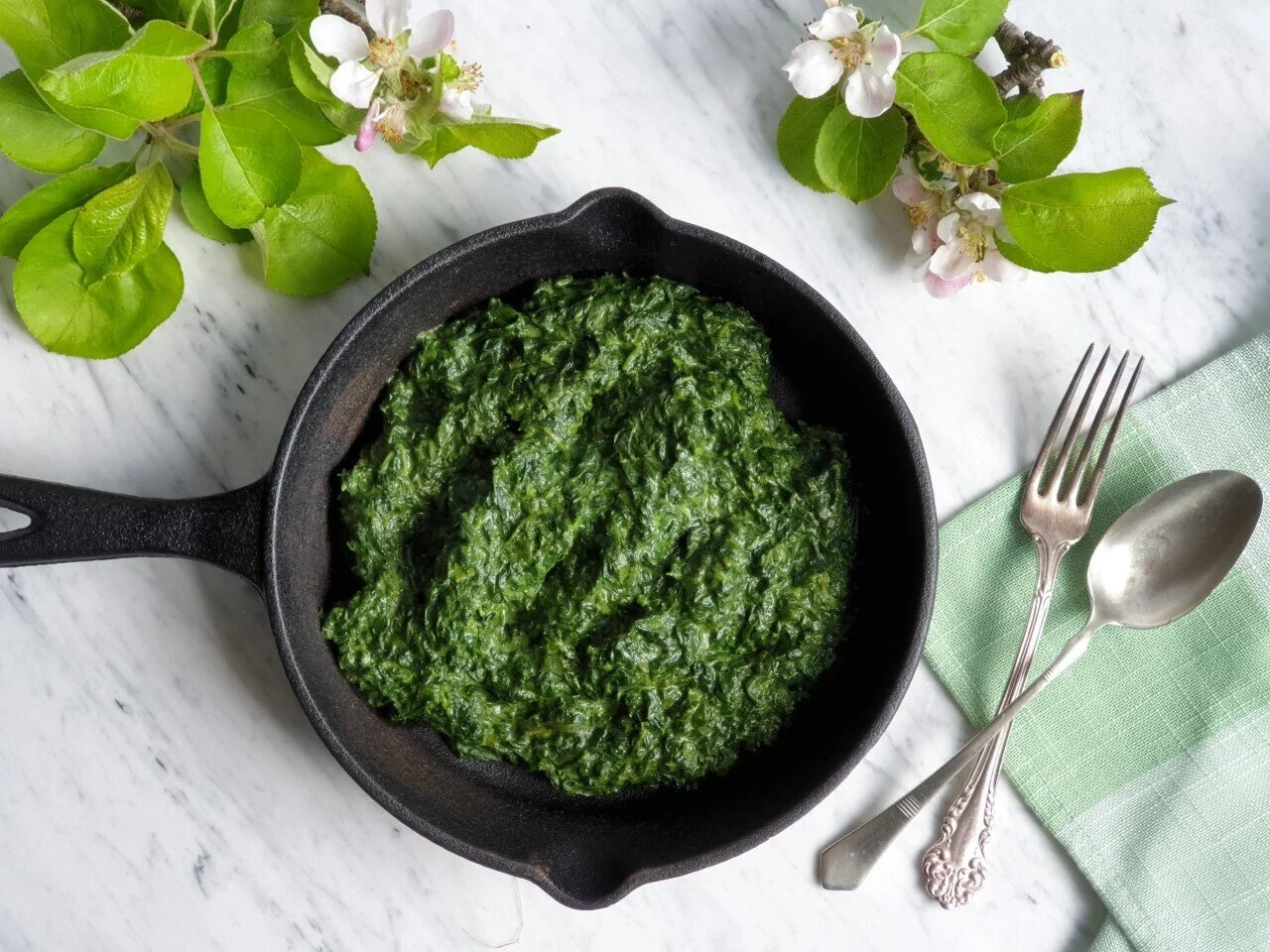
If you prepare this dish in advance it might get a bit thick. When heating up just pour in gradually a little bit more milk and stir constantly until you get the desired consistency.
Creamed spinach 10.jpg
May 25, 2021 /tina oblak
fresh baby spinach, baby spinach in a skillet, quick spinach recipe, easy spinach recipe
Adriatic Recipe, brunch, Central European recipes, Eastern European recipes, Easy recipe, healthy mael, Istrian cuisine, Istrian dish, Istrian food, Istrian gastronomy, Nutritious dish, Rustic dish, Slovenian cuisine, Slovenian food, Slovenian gastronomy, Vegetarian
3 Comments
Foto 1.jpg

Gratinated scallops Venetian style recipe

Beans and Srdines
April 27, 2021 by tina oblak in Fish & Seefood, Adriatic Recipe, Easy recipe, entrée course, healthy mael, Istrian cuisine, Istrian dish, Istrian food, Istrian gastronomy, main course, main dish, Rustic dish, shellfish

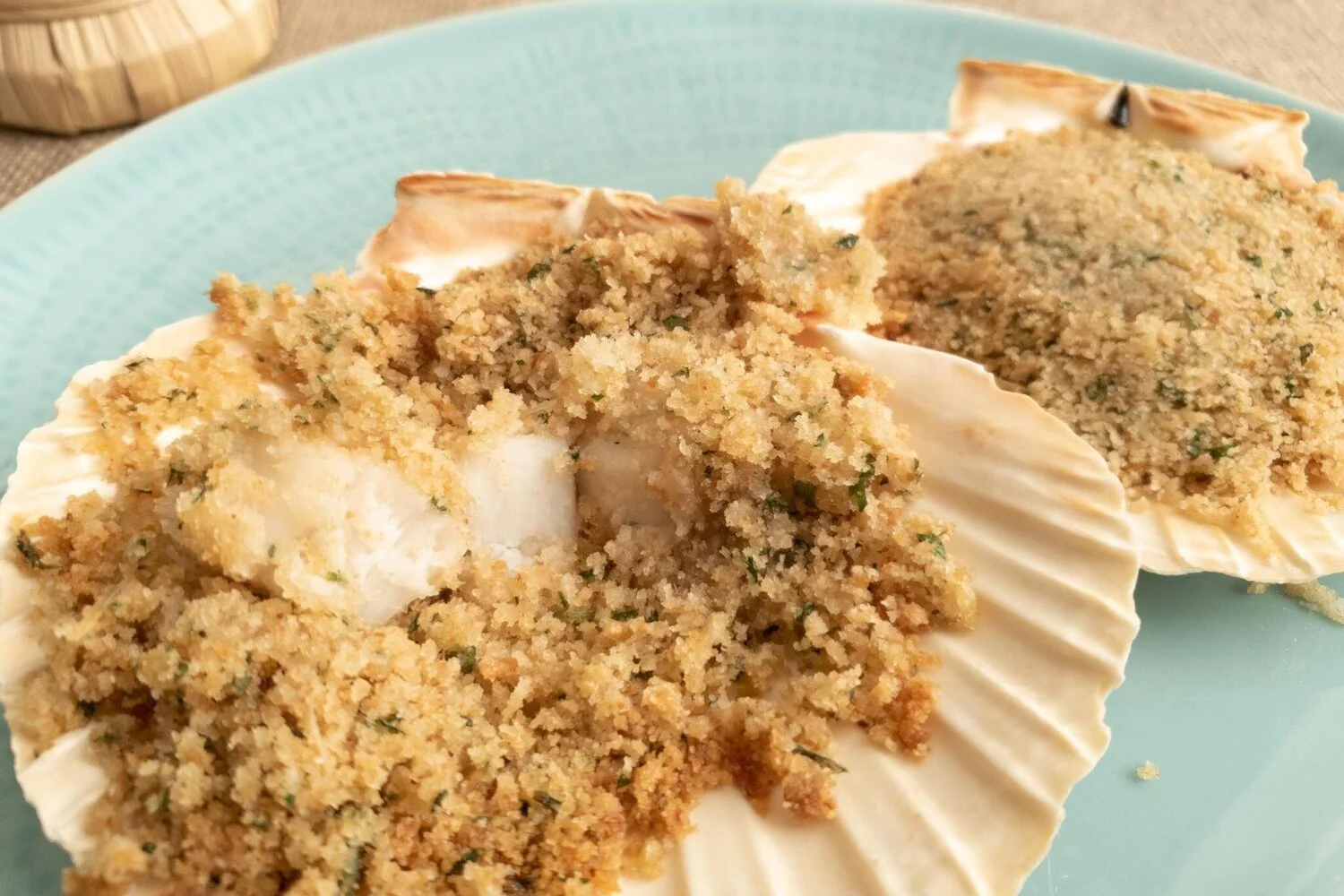
The scallop, which is also known as coquille St-Jacques in French, is probably one of the best known, appreciated and loved types of shellfish, even by those that are generally not so keen on fish or seafood.

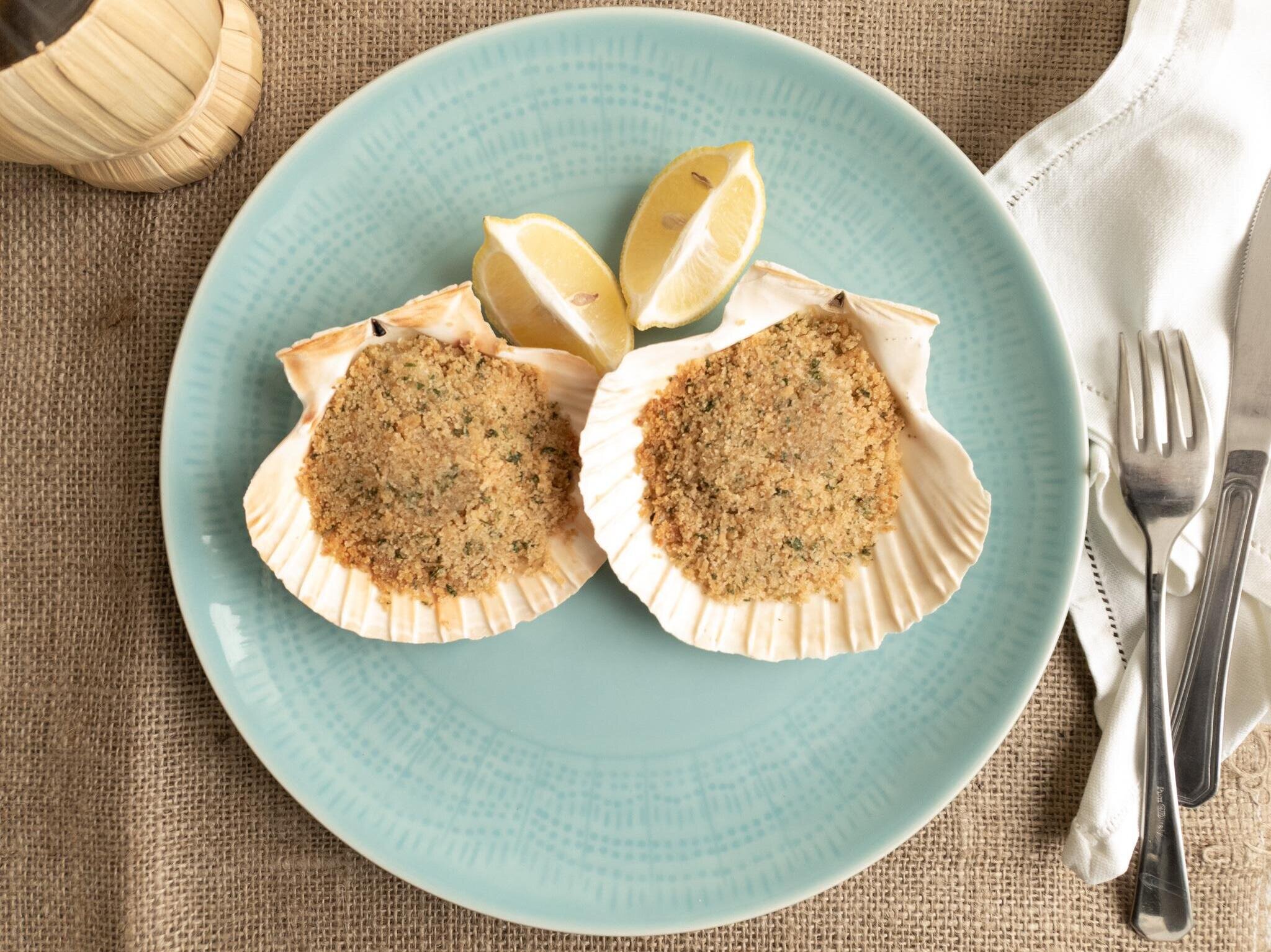
I have always adored gratinated scallops, so simple and quick to make. Plum, juicy scallops are covered with enriched breadcrumb mixture and then quickly baked. Despite its simplicity, they feel so luxurious and festive and very impressive, especially when served in their shells.

The use of the scallop shell goes back to medieval times when it was used to pour holy water on the head of the baptized members of the congregation, and it had a very practical purpose and served as a replacement for a bowl so the pilgrims could use them to hold their food and drink on their long journey on the Camino de Santiago, or in English the Way of St. James, i.e. the pilgrim trail leading to the Cathedral of Santiago de Compostela, in Galicia in north-western Spain, and the shrine of St. James, one of the original apostles, and it is widely travelled today.

The scallop shell scoop would also serve as the measure for the food the pilgrims would receive, donated by local churches and other establishments.

This is a great and very tasty starter for special occasions and there are a lot of variations of this dish. The most familiar variation of it to me, which I grew up with, is eating it in the Venetian style (called Capesante a la Selvadega in Venetian dialect). This is another example of a dish that left significant footprints in the region due to strong presence in the territory of the Serenissima (i.e. ‘the Most Serene Republic of Venice’).

No matter how you prefer making them, scallops are a healthy eating option as they mainly consist of protein and healthy omega-3 fat, are rich in vitamin B12 and zinc, all of which are essential for a healthy brain.

Great to freeze and can be prepared in advance.

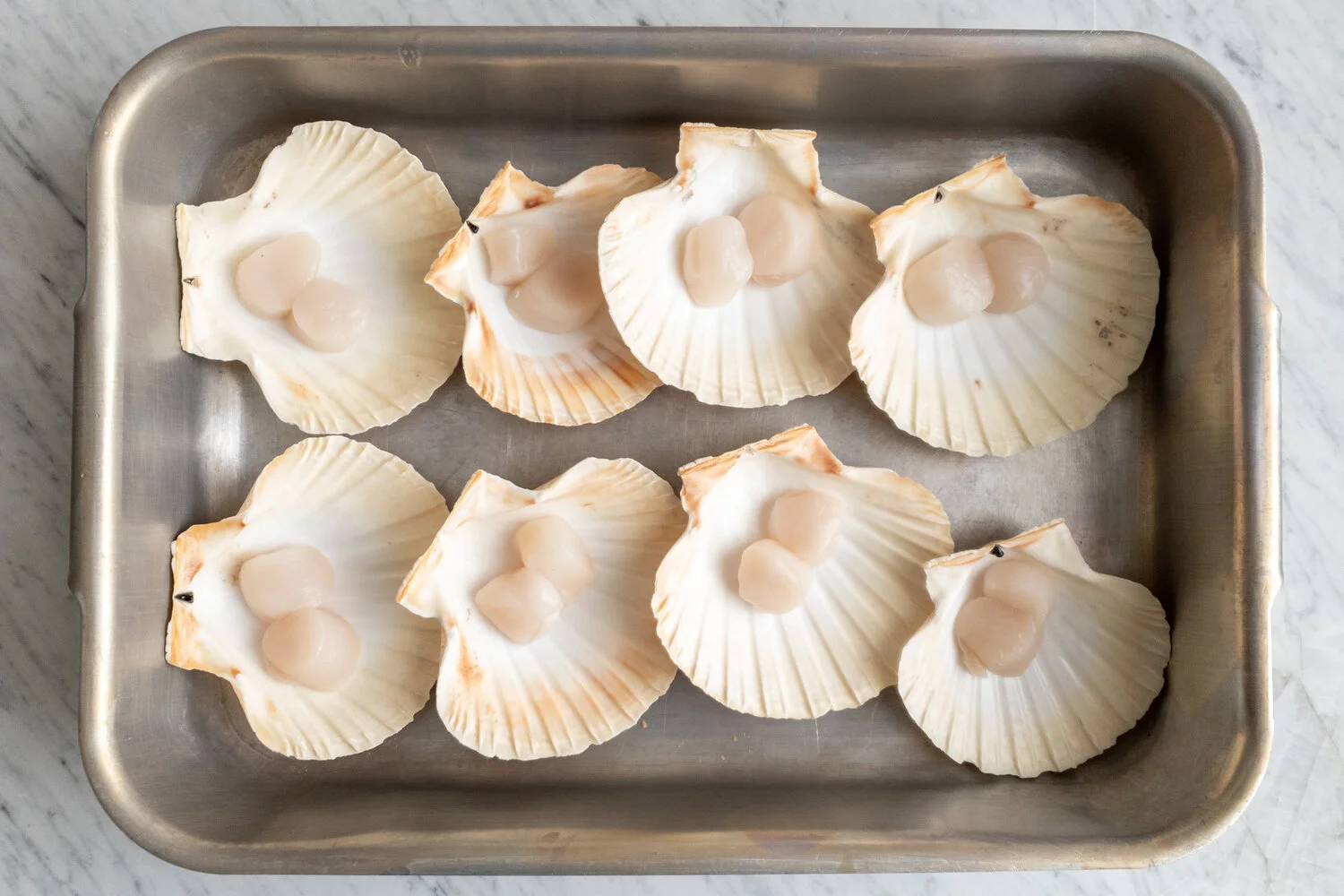
For this recipe, you can buy fresh scallops and clean them yourself or buy the ones that have been cleaned already by the fishmonger but still sold in their original shell. You can, however, buy already cleaned fresh or frozen scallops without the shell and use the ramekins to cook and serve them in.

Foto 2.jpg

If you buy the fresh scallops in their original shell, I would suggest you keep them for the future use. Brush them well, wash them in a hot soapy water or you can even put them in the dishwasher.

Whether you buy them fresh or frozen you really want to make sure they are caught using sustainable fishing methods.

Ingredients

Serves 4

  • 12 large fresh scallops (separated from their shell and cleaned)

  • 12 clean concave scallop shell to be used as cooking and serving dishes (or ramekins)

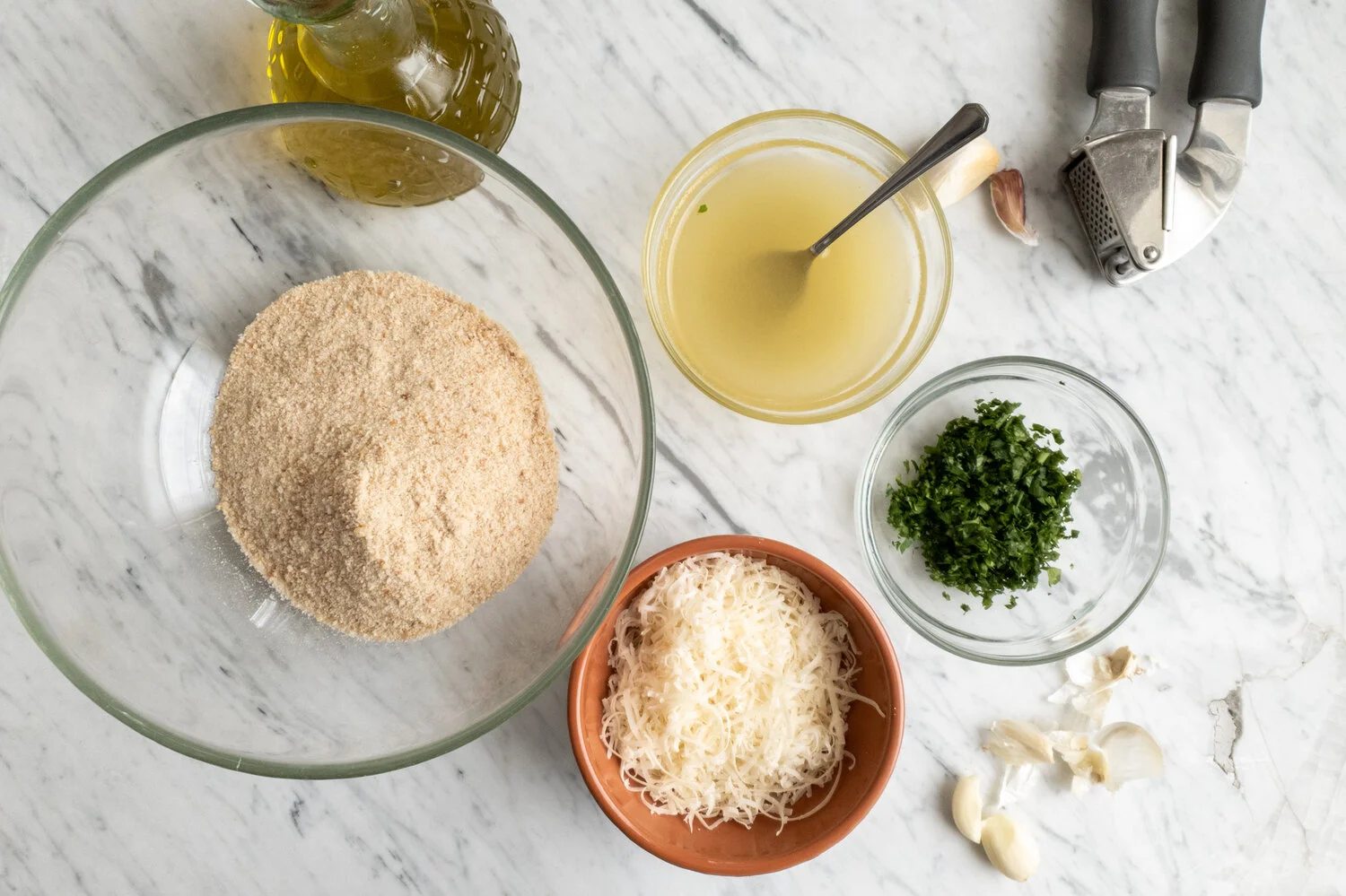
  • 120g breadcrumbs

  • 1 clove of garlic (peeled and pressed)

  • vegetable stock, 1-2 Tsp per scallop (using a good quality instant vegetable stock is perfectly fine)

  • fresh flat leaf parsley, about a handful (7g), very finely chopped

  • fresh Parmigiano-Reggiano (Parmesan cheese) (about 30g), finely grated

  • extra virgin olive oil (about 4 Tbsp)

  • sea salt, to taste

  • butter, few knobs

  • lemon wedges, for serving

Method

Preheat the oven to 200C static.

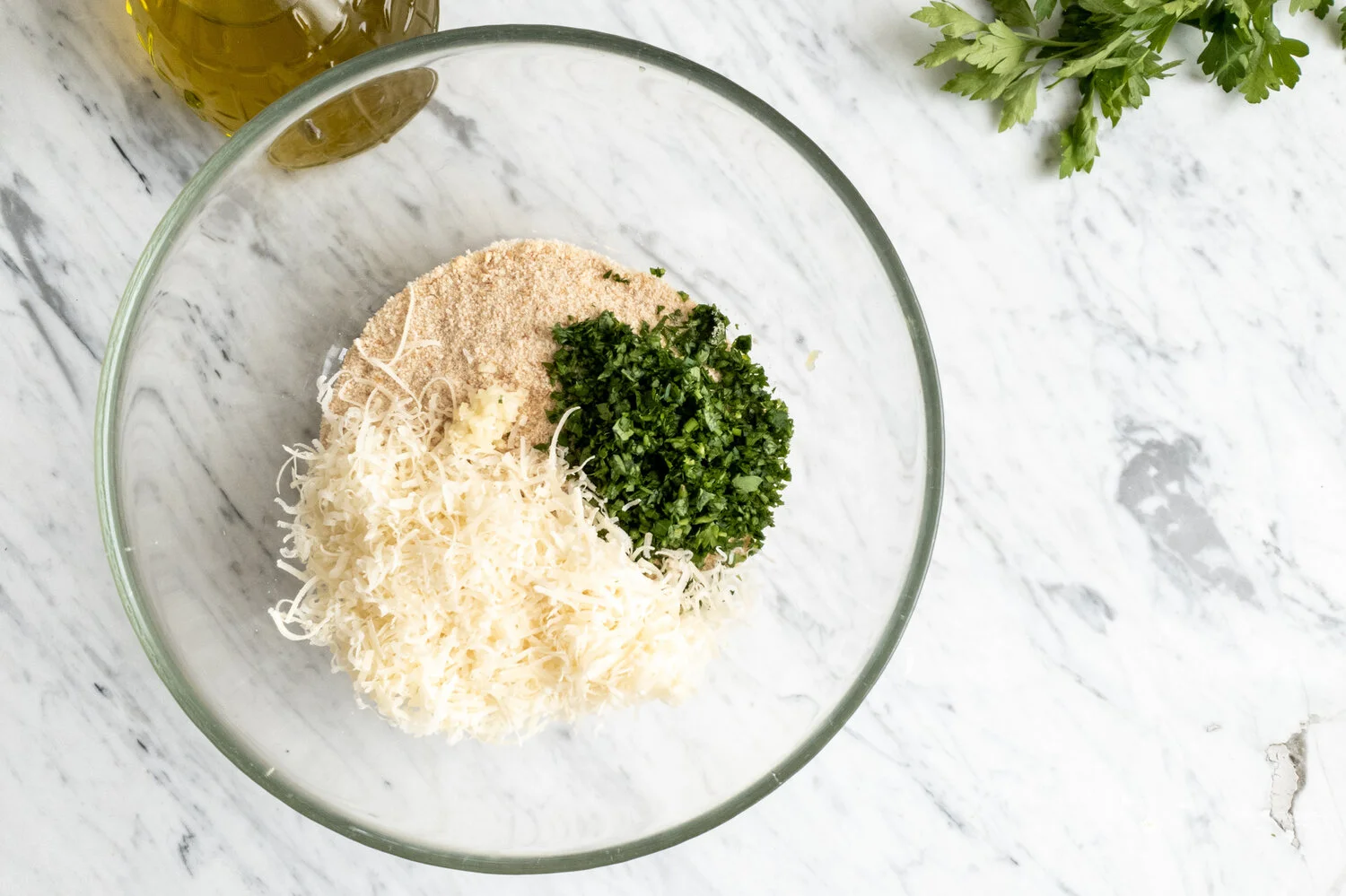
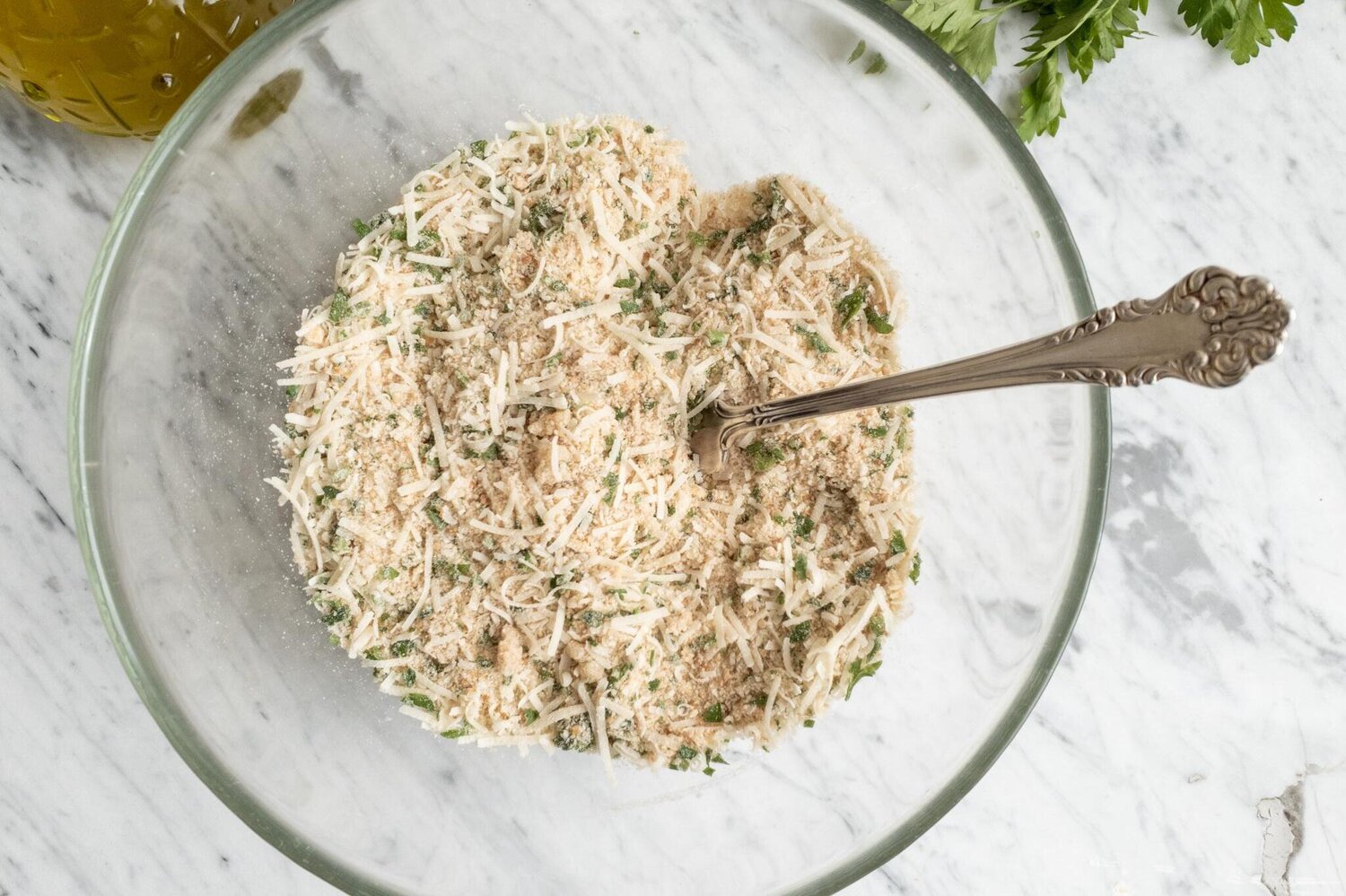
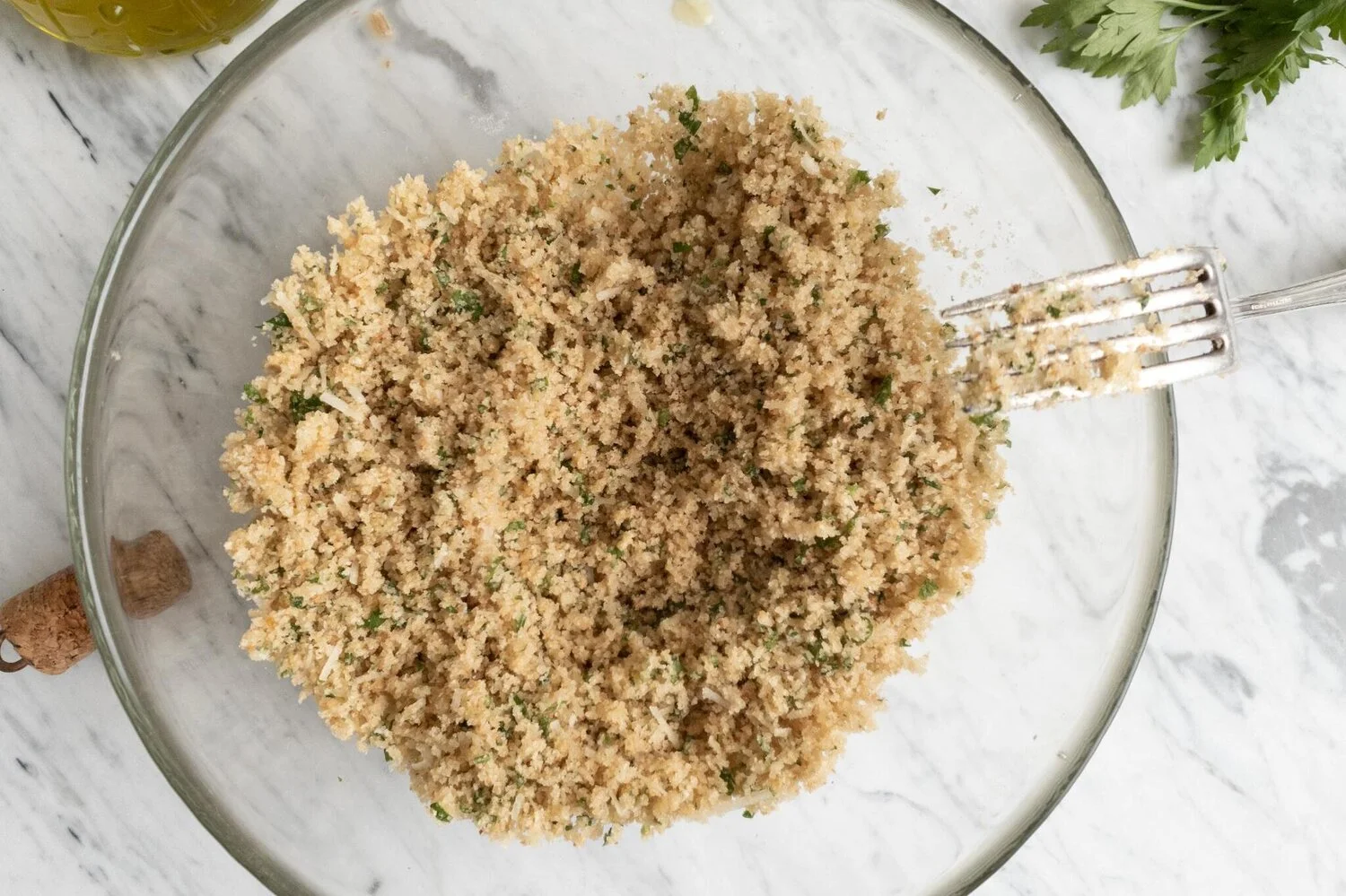
First of all, make the breadcrumb mixture. In a mixing bowl put the breadcrumbs, garlic, parsley, parmesan cheese and extra virgin olive oil. With the fork stir and mix so that all the ingredients combine well. You should end up with a moist breadcrumb mixture. Taste and adjust seasoning with sea salt.

Foto 3.jpg
View fullsize Foto 4.jpg
View fullsize Foto 5.jpg
View fullsize Foto 6.jpg

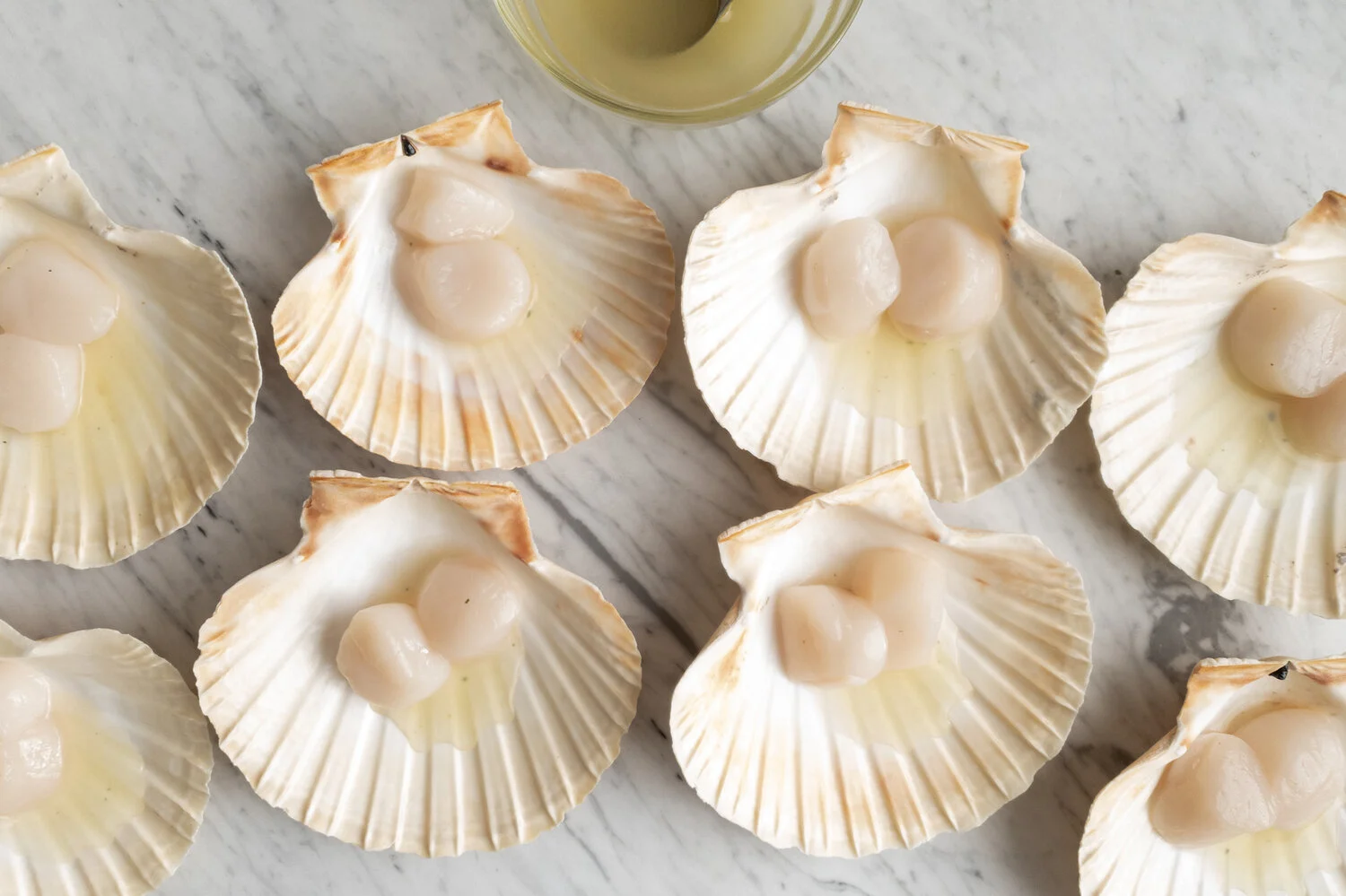
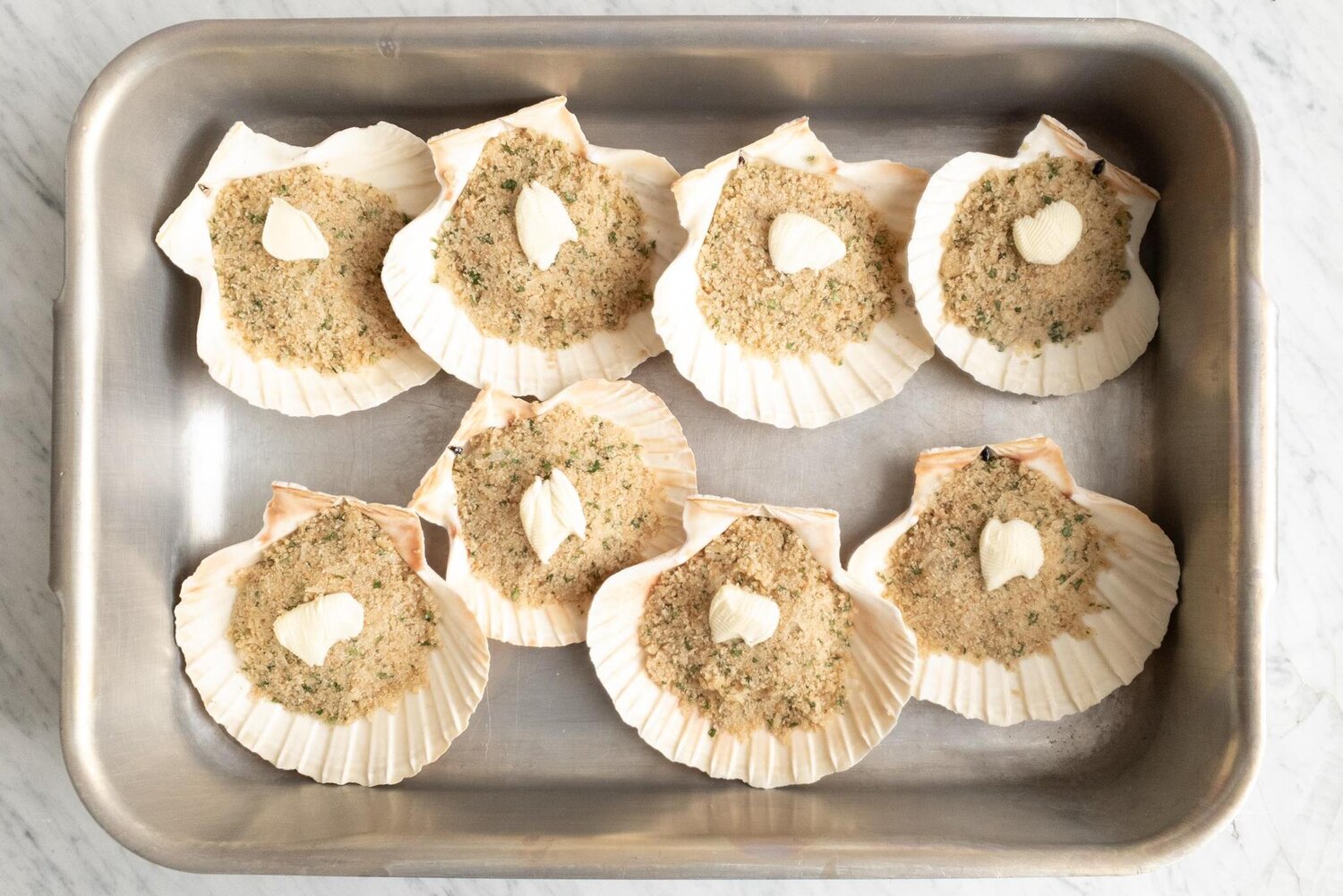
Place the deep, concave shells (or ramekins if using) with scallops on a baking tray. With a small spoon pour the vegetable stock over each scallop.

Foto 7.jpg

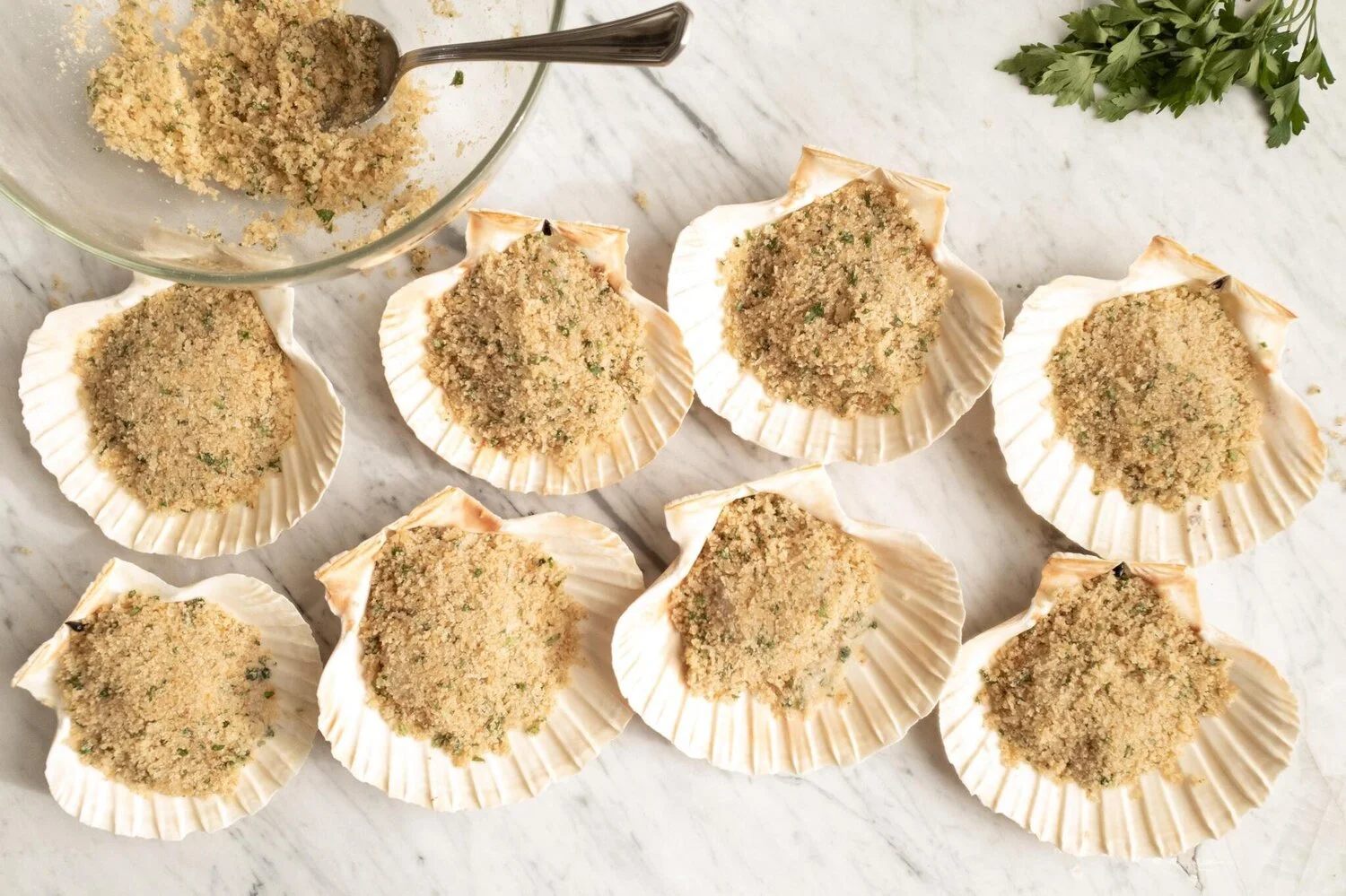
Spoon 1-2 Tbsp of the breadcrumb mixture over each scallop and press down the breadcrumb mixture slightly with the back of the spoon.

Add a knob of butter on the top of each scallop. At this stage you can freeze the prepared scallops if not used immediately.

View fullsize Foto 8.jpg
View fullsize Foto 9.jpg

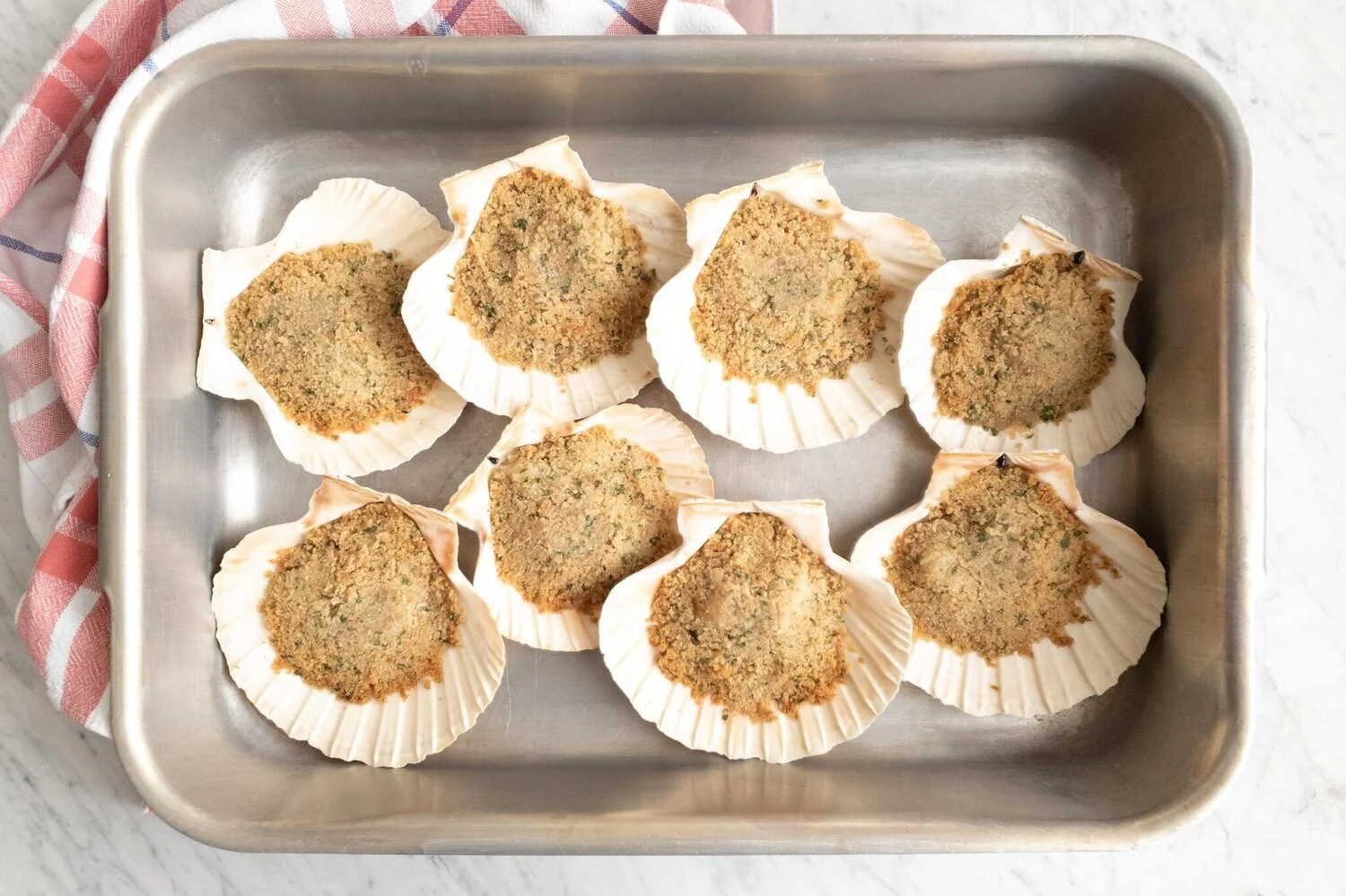
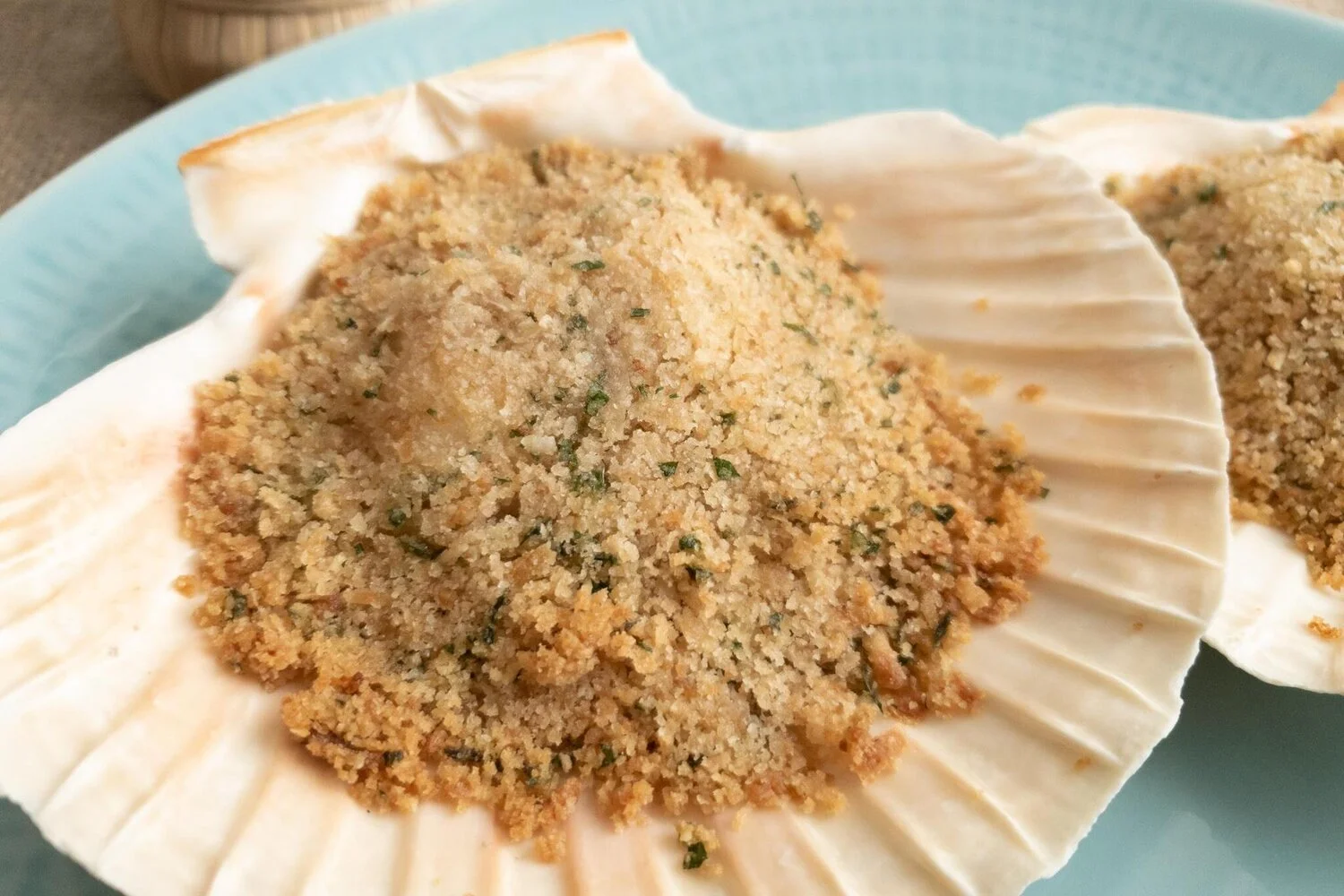
Bake in preheated oven for about 10 min until the breadcrumbs turn nice golden colour. Do not overbake the scallops as they will dry too much.

Foto 10.jpg

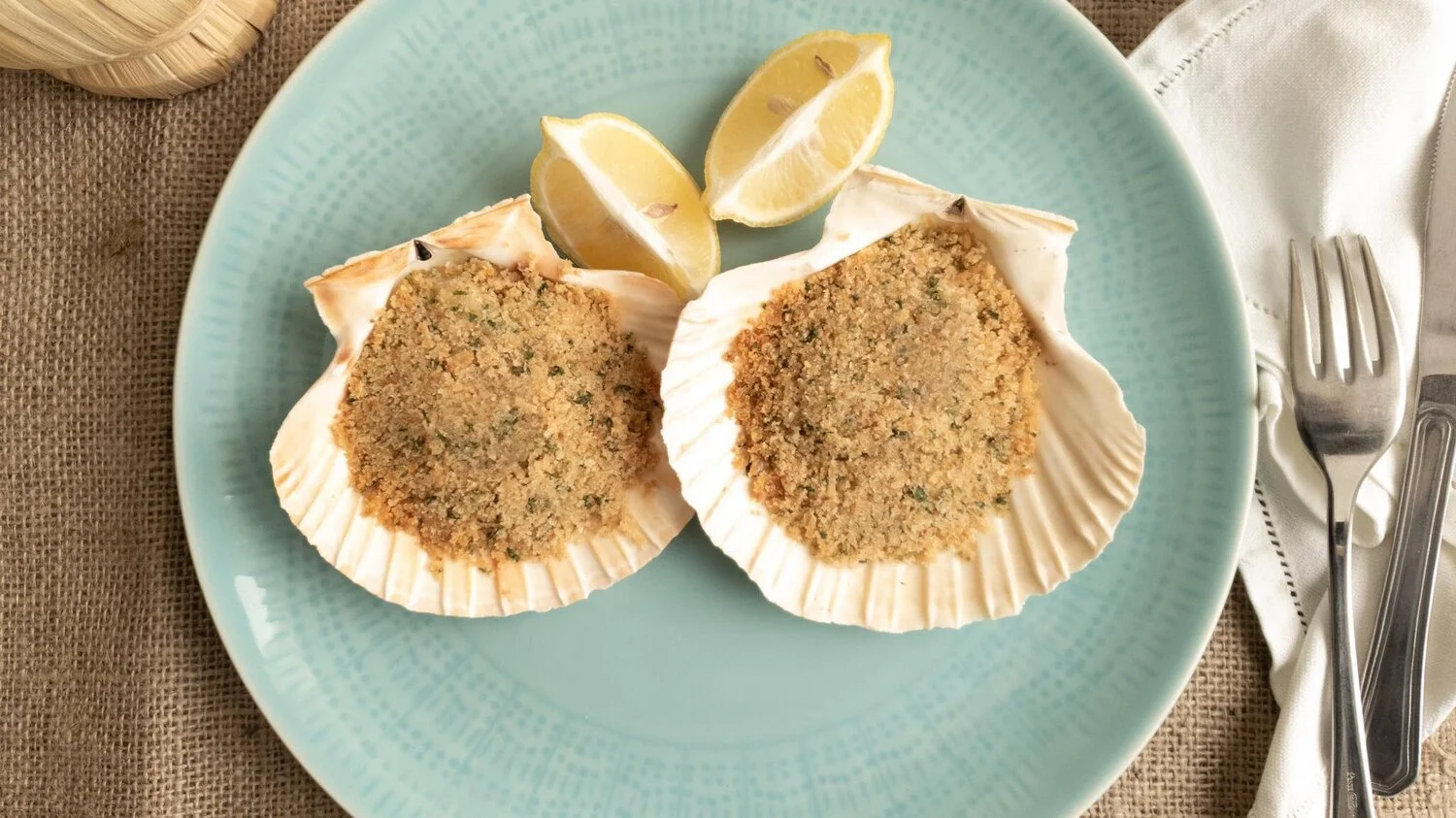
Serve hot with lemon wedges on the side.

Foto 11.jpg
View fullsize Foto 12.jpg
View fullsize Foto 13.jpg

Just a thought

You can use the same breadcrumb topping but use mussels instead of scallops. Fantastic warm canapé served with drinks.

Wine suggestion

Friulano DOC "Toc Bas" 2018 by Ronco del Gelso, Friuli Isonzo Rive Alte.

April 27, 2021 /tina oblak
Gratinated scallops Venetian style recipe, gratinated scallops easy recipes, gratinated scallops with breadcrumbs mix
Fish & Seefood, Adriatic Recipe, Easy recipe, entrée course, healthy mael, Istrian cuisine, Istrian dish, Istrian food, Istrian gastronomy, main course, main dish, Rustic dish, shellfish
1 Comment
Pasta e Fasoi 1.jpg

Nona Nada's pasta e fasoi Istrian style (pasta and beans soup Istrian style) recipe

Beans and Sardines
March 02, 2021 by tina oblak in Soups, Adriatic Recipe, Easy recipe, entrée course, healthy mael, Istrian cuisine, Istrian dish, Istrian food, Istrian gastronomy, main course, main dish, Nutritious dish, Rustic dish, Slovenian cuisine, Slovenian food, Slovenian gastronomy, Vegan, Vegetarian

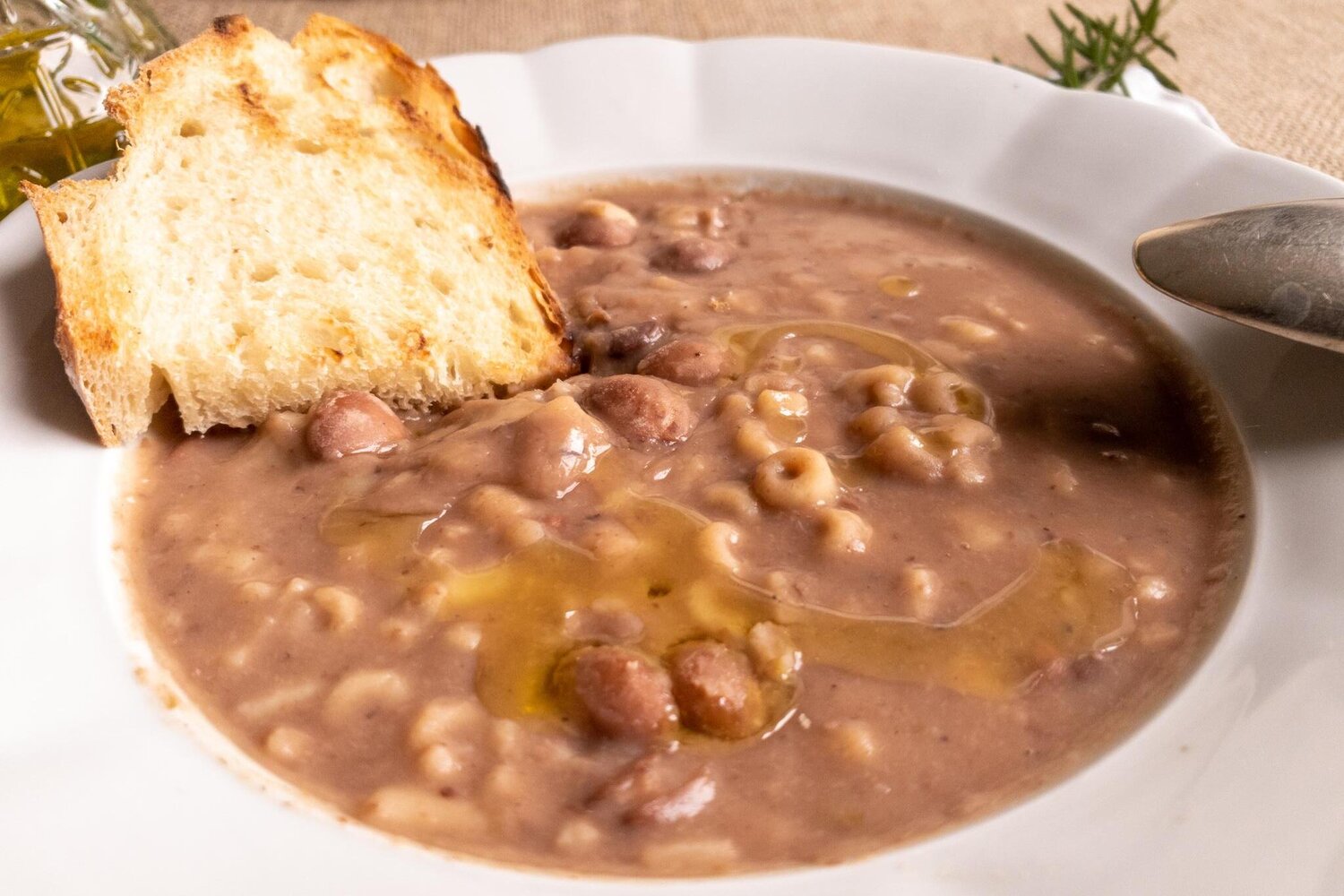
This must be one of the most humble, hearty and comforting dishes ever. It originated as a peasant dish, it is flavoursome, makes a robust meal, and it is made with simple, inexpensive ingredients.

Pasta and beans is a traditional Italian soup but there are numerous variations of recipe and names according to the region where it originates from, Central and Northern Italy.

Some vegetables like onions, celery and carrots can be used as a base. Some recipes include the use of diced tomatoes or tomato purée, pancetta or lard and flavoured with rosemary and garlic.

However, no matter how you want to call it, or where it originates from, two ingredients would be in common to all the variations: beans (cannellini beans or borlotti most commonly) and a small variety of pasta like ditalini pasta.

Using mixed shape pasta or breaking spaghetti in small sticks is very common, or the use of fresh egg pasta, like home made tagliatelle works wonderful.

I will share with you my Nona Nada's recipe that she learnt as a young girl from her grandmother, so it really goes back generations. It is the soup that reminds me of home, and of my childhood, and is a variety of simple variations. In the Istrian local dialect, we just simply call it “Pasta e fasoi,” and is based on a Venetian variation (as the area was once under the Venetian empire) characteristic of which is the use of pancetta, lard or cotenna (thick and hard outer layer covering pancetta or prosciutto).

My grandma told me that they would prepare the soup in advance in the morning, put it on the stove on a low heat to cook for hours while they would be working on the fields. Upon return this hearty soup would be ready to be eaten.

This dish is so common that it also appeared in popular culture in the song “That’s Amore” by Warren and Brooks (popularized by Dean Martin) including the rhyme "When the stars make you drool, just like pasta fazool, that's amore".

No matter how simple and humble this dish is, it is a big hit every single time! My son and my husband love it and here is how to make it.

The quantities of the ingredients in the recipe is for a big pot of soup, feeding quite a lot of people, about eight (providing they do not go for seconds!).

This soup also freezes very well. Keep in mind that when you defrost it, or simply refrigerate it and then reheat, it will most probably thicken up quite a bit. You can keep it thick or just dilute it with a bit of water.

You can make half the quantity with 300g borlotti and 2 ½ l of water, smaller piece of pancetta and 100g of pasta

Ingredients

Serves 8

  • 500g dried borlotti beans

  • 4 ½ l water

  • 1 bay leaf, fresh or dry

  • few celery leaves

  • 1 medium size potato, peeled (about 200g)

  • extra virgin olive oil, generous drizzle

  • 1 piece, about 130g of pancetta (cured pork belly) or similar like ham hock, pig's trotter, cotenna or bone of prosciutto

  • sea salt

  • freshly ground black pepper

  • 200g ditalini shape pasta (or any small shaped pasta), or fresh egg pasta

Method

First of all, you need to soak the dry borlotti beans in plenty of cold water overnight. The following day drain them using a colander and run them through cold water.

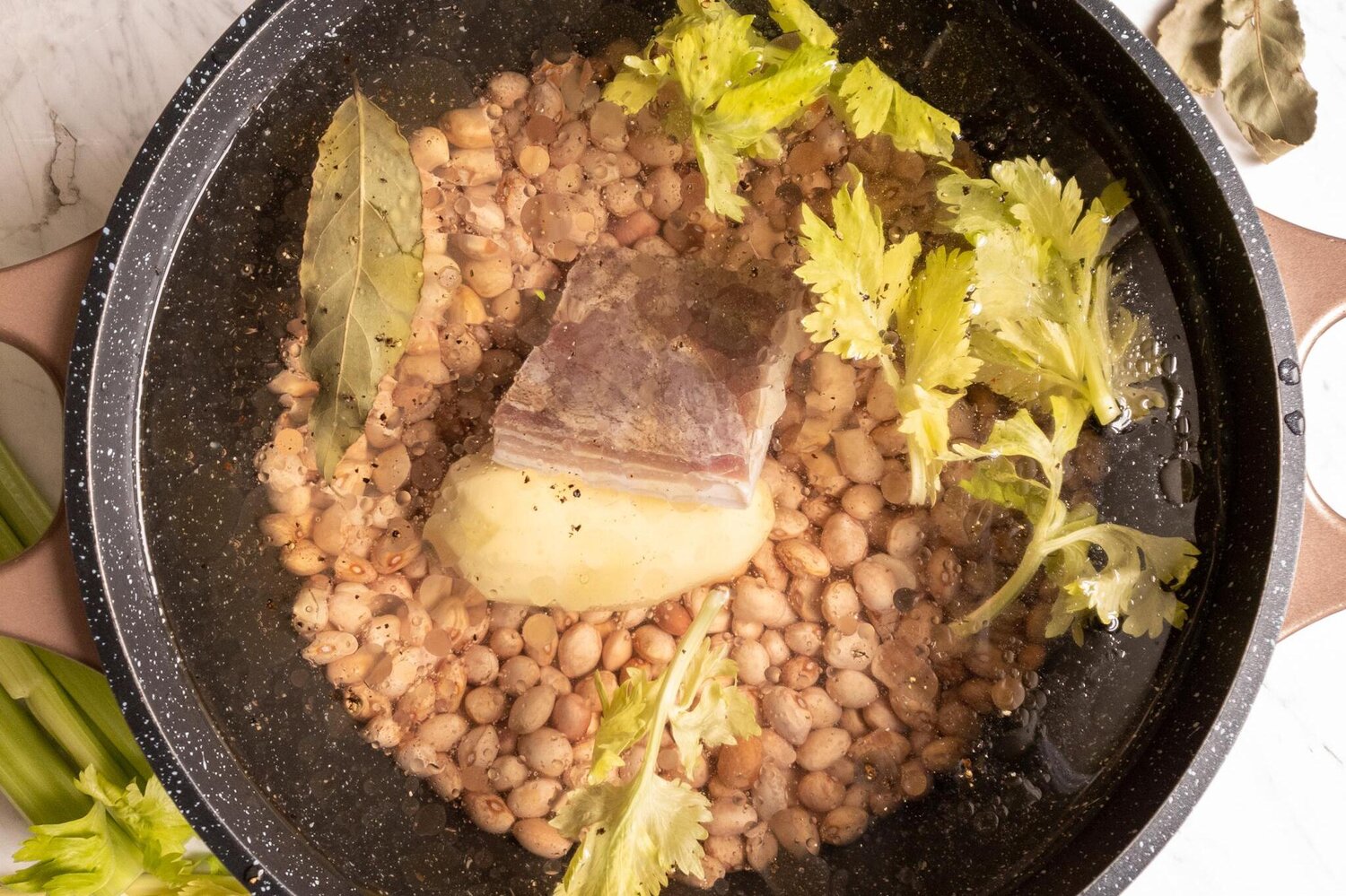
Put the beans in a big pot, add cold water so the beans are completely covered. Add bay leaf, celery leaves, potato, piece of pancetta, drizzle of oil and season with sea salt and black pepper.

View fullsize Foto 2.jpg
View fullsize Foto 3.jpg

Bring to boil then lower the heat to medium-low and with the lid partially uncovered cook for about 2 ½ h.

Remove bay leaf and pancetta. Cut the meaty bits off the pancetta, set aside and put it back in a soup after you pass it through a food mill.

Pasta e Fasoi 4.jpg

Take a food mill and place it steadily over a bowl. With a soup spoon, spoon out about ¾ of the beans with the liquid and mill them so you get a bean purée. Transfer the bean purée back in the pot and mix well with the rest and cook for further 30 min.

Add the pasta of your choice and cook until al dente making sure you mix it now and again just to avoid sinking the pasta to the bottom and burn.

It is very common to cook pasta separately, drain it and then added to the soup.

If the potato did not end up through the mill, then take the wooden spoon and with the back of it just press the potato against the wall of the pot. By doing so the potato will just disintegrate giving pasta and fasoi a nice thick, velvety, consistency.

Serve hot with a drizzle of extra virgin olive oil and a nice rustic type of bread, slightly toasted even better. It is very common to grate fresh Parmigiano-Reggiano (Parmesan cheese) on top of it.

Foto 5.jpg

Just a thought

This is a great dish for vegetarians and vegans by opting out pancetta or similar and using non egg based pasta for the soup.

Wine suggestion

Friulano DOC “Valeris” 2019 by Muzic, Collio.


March 02, 2021 /tina oblak
pasta and bean soup Istrian style, pasta and borlotti beans soup, Venetian style pasta and beans soup, Pasta e fagioli recipe, Pasta e fasioi Venetian recipe, rustic borlotti beans and pasta soup, simple bean soup
Soups, Adriatic Recipe, Easy recipe, entrée course, healthy mael, Istrian cuisine, Istrian dish, Istrian food, Istrian gastronomy, main course, main dish, Nutritious dish, Rustic dish, Slovenian cuisine, Slovenian food, Slovenian gastronomy, Vegan, Vegetarian
Comment
Beef Goulash 1.jpg

Beef goulash with fresh herbs Istrian style recipe

Beans and Sardines
February 23, 2021 by tina oblak in Meat, Adriatic Recipe, Easy recipe, Istrian cuisine, Istrian food, Istrian gastronomy, Rustic dish, Slovenian cuisine, Slovenian food, Slovenian gastronomy, main meat course, Istrian dish

There is a wide variety of different goulash recipes and the one that I share here with you is more like the Austrian version than the Hungarian one since it has a nice thick gravy and a texture of a stew. It does derive, however, from the Hungarian version, which is more of a soupy consistency with bell peppers and potatoes.

Beef goulash, locally called “golaž” is one of those dishes that, yes, belong to the Austro-Hungarian Empire but it took a bit of a “southern turn” and changed to fit in better with Istrian's local flavours and ingredients.

And as I come from the coastal town Koper, held by Austrian Empire between 1813 -1918, with Mediterranean climate, a handful of fresh herbs would be added for flavour, developing into Istrian Style beef goulash instead of using caraway seeds and powdered sweet Hungarian paprika that can be added for more “imperial” taste.

In Central Europe and in other parts of Europe, goulash is a common meal. Very popular in Austria, Slovenia and Italy, especially in Friuli Venezia Giulia, the most eastern region of Italy, which borders with Slovenia and Austria. A dish that truly represents a gastronomic osmosis.

This must be comfort food at its best, and it is so popular that it appears almost weekly on tables as a family meal, and on menus in local “gostilnas” (informal family run restaurants in Slovenia) especially during colder months. I grew up with this dish and my husband and my son go mad for it, especially when accompanied with fluffy potato gnocchi, that are squashed with a fork to soak up that delicious gravy.

It is very easy to make but it does take time to cook so not the best option if you are in a rush and want a quick meal.

It is best made one day or two days in advance and then reheat it, as the beef tenderizes further, the gravy thickens and flavours enhance.

Traditionally is served with soft, just cooked polenta, fresh crunchy rustic bread, mashed or roasted potatoes, potato gnocchi, bread dumplings or pasta of any shape and form.

Beef Goulash 2.jpg

Great also with spinach or plain spaetzle (German style egg pasta) and moon crescent fried gnocchi. All good options as they will soak up the gravy.

Commonly beef goulash would be made with shin of beef, which is very tough piece of meat but after long and slow cooking process it melts into your mouth and becomes so tender you do not need the knife to cut it, so a trip to a local butcher is worth if you are having difficulty to find it in a local food store or supermarket.

Ingredients

Serves 4-6

  • 1 kg shin of beef, diced (can use stewing beef)

  • 4 Tbsp extra virgin olive oil

  • 200 g onions or shallots, finely chopped

  • 4 garlic cloves, finely grated or crashed

  • 1 small carrot 20g-40g, finely grated

  • 1 full handful of mixed fresh herbs, finely chopped (marjoram, thyme, sage, rosemary, basil, fresh or dry oregano)

  • 1 bay leaf fresh or dry

  • 1 ½ l water, vegetable or beef stock

  • 2 Tbsp double concentrated tomato purée

  • 1 Tbsp all purpose flour

    Method

In a large pot put the oil, finely chopped onions, crashed garlic, grated carrots a pinch of salt and cook on a low-medium heat stirring quite often until the onions are soft.

View fullsize Beef Goulash 3.jpg
View fullsize Beef Goulash 4.jpg

Add diced beef, turn up the heat a bit and brown it stirring and turning occasionally. The meat should be sealed on all sides with almost no juices from the meat left in the pot.

Beef Goulash 5.jpg

Sprinkle flour over the beef, stir and add water, vegetable or beef stock, herbs, bay leaf, tomato purée and let it simmer for about 2 ½ -3 hours on a fairly low heat with a lid partially uncovered.

Beef Goulash 6.jpg
View fullsize Beef Goulash 7.jpg
View fullsize Beef Goulash 8.jpg
View fullsize Beef Goulash 9.jpg
Beef Goulash 9.jpg

Wine suggestion

Teroldego IGT "Foradori" 2019 by Elisabetta Foradori, Vigneti delle Dolomiti.

February 23, 2021 /tina oblak
Beef goulash with fresh herbs Istrian style recipe, beef goulash recipe, easy beef goulash recipe, slow cooked sheen of beef goulash, goulash with fresh herbs, Austrian style beef goulash, Slovenian golaž
Meat, Adriatic Recipe, Easy recipe, Istrian cuisine, Istrian food, Istrian gastronomy, Rustic dish, Slovenian cuisine, Slovenian food, Slovenian gastronomy, main meat course, Istrian dish
Comment
  • Newer
  • Older