Beans and Sardines

  • Home
  • About
  • Recipe of the week
  • Recipes
  • Wines
  • Contact
LRM_20191009_123138.jpg

Liptauer (Austro-Hungarian paprika spiced cheese spread) recipe

Beans and Sardines
March 09, 2021 by tina oblak in Starters, brunch, Easy recipe, entrée course, healthy mael, Slovenian cuisine, Slovenian food, Slovenian gastronomy, Vegetarian, spreads, Eastern European recipes, Central European recipes, Mitteleuropean recipes, Snacks, Canapés, Finger food, Small bites, Appetizers

Liptauer, pronounced “Lip-tower”, is a simple, flavourful, central European, or Mitteleuropean, well seasoned, paprika spiced cheese spread with a sharp, rich, and deep smoky taste.

Its origin has long been disputed but the name derived from the German name Liptau for the region of Liptov (Hungarian: 'Lipto') in northern Slovakia, a former county in the Austro-Hungarian Empire.

Nowadays, Liptauer spread appears in numerous variations throughout many other European countries, and is a part of Slovak, Hungarian, Slovenian, Italian (some north-east regions) and Austrian cuisine, where it is commonly served as a popular dish in wine taverns, and as a snack for kids during break time in schools.

Despite extensive variations on the recipe, as many families have their own unique version of Liptauer, they all have in common the main ingredient which is cheese that can vary from Quark, Bryndza (a sheep milk cheese) cream cheese, cottage or goat cheese and powdered sweet paprika giving a spread a beautiful colour.

It is great for vegetarians and you can change and play around with the quantities of some ingredients to suit your taste.

Here, I will share with you the recipe my maternal Grandma Iva used to make. This dish was a constant part of my childhood and it really does bring back some wonderful memories as it was made on numerous occasions, especially when the family got together to mark special festivals like Carnival (before Lent began), Easter, Christmas, and All Saint's Day, or family celebrations like birthdays and anniversaries.

LRM_20191009_123656 (1).jpg

My grandmother would put the spread in the middle of the table with freshly made home made bread, and everyone would help themselves before the big meal ahead. Along with the spread, there would be a selection of cold meats, different types of cheeses, and a variety of pickles. We children often got so stuffed with this delicacy we did not get to the first course! We just simply could not resist the fresh spread on a crunchy piece of bread. It is a great appetizer from Mitteleuropa to start the children on!

LRM_20191009_115935.jpg

Liptauer has a very versatile use. Traditionally served as part of cheese and charcuterie board and hard boiled eggs.

It is typically eaten as an open sandwich, or on toast, crackers and bagels. It is a great alternative base for a variety of sandwiches, and can be used as canapè spread.

You can serve it with drinks, pretzels, and a selection of pickles, cheese sticks, and really whatever you fancy.

I also serve them as a canapè with drinks, and they do go down as a real treat. Just take a single round of thinly sliced piece of German or Hungarian style salami, spread a bit of Liptauer and roll it into a cigar shape. And there you have it, salami roll ups.

LRM_20191015_110326.jpg

Ingredients

  • 250g curd cheese (was difficult to find, now available in most supermarkets and Polish food stores)

  • 50g butter (soft at room temperature)

  • 1 Tsp Dijon mustard

  • 1 Tsp powdered sweet Hungarian paprika

  • 1 Tsp caraway seeds (crashed well with pestle and mortar)

  • 2 Tbsp pickled gherkins, cornichons or pickled cucumber (very finely chopped)

  • 2 Tbsp onions (very finely chopped)

  • sea salt, a pinch or to taste

  • freshly ground black pepper, a pinch or to taste
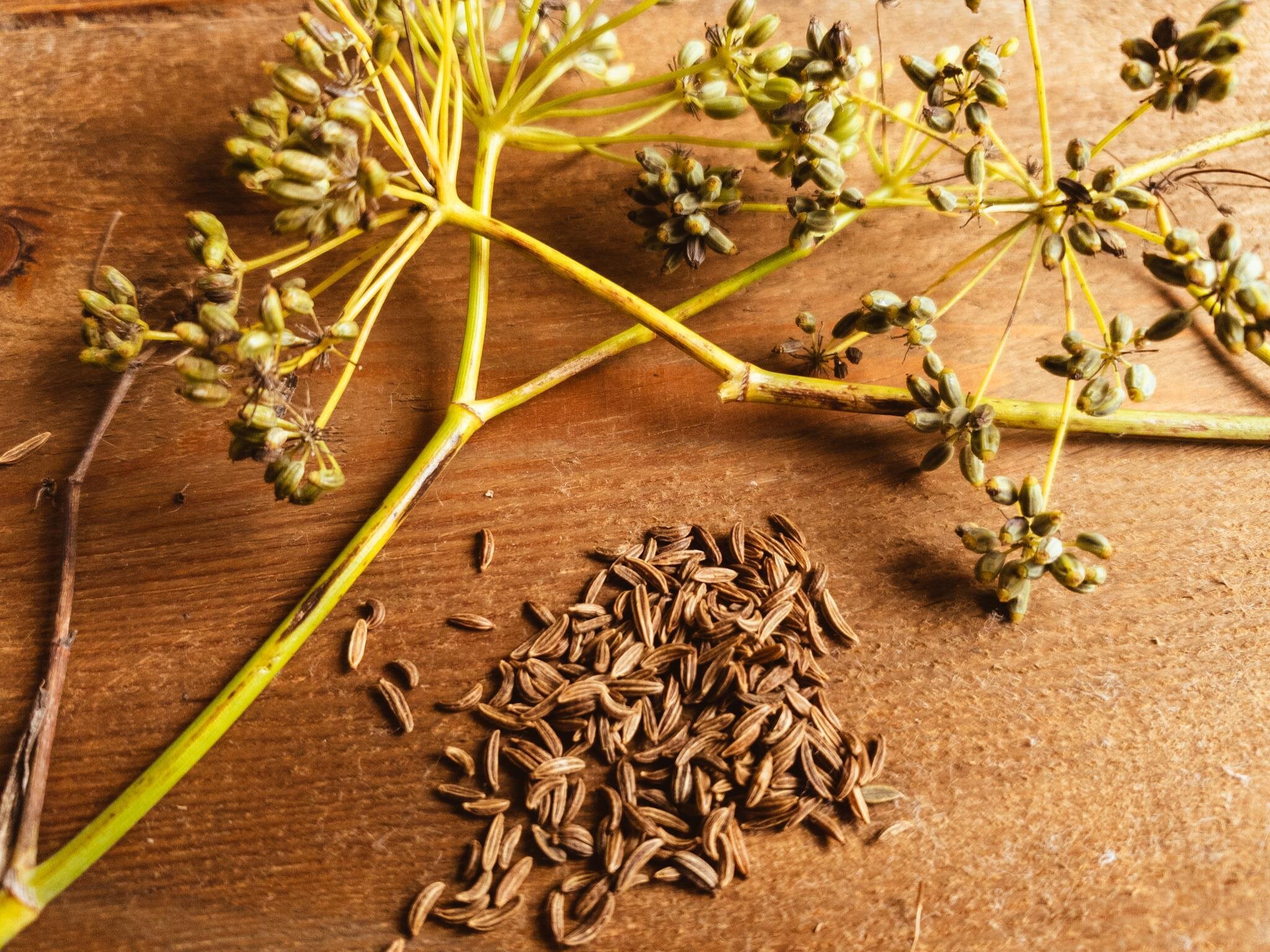
View fullsize LRM_20191008_110825.jpg
View fullsize LRM_20191008_135836.jpg

Method

Put all the ingredients in a bowl. Mix and combine well all the ingredients. Serve as a cold starter.

LRM_20191009_103405.jpg

You can keep the spread in the fridge for up to a week in an airtight container.

Just a thought

This is a great cold starter. If you can, try to prepare it in advance, and ahead of a time to allow all the ingredients and flavours to absorb well.

Wine suggestion

Traminer Aromatico DOC 2019 by Sirch, Friuli Colli Orientali.

March 09, 2021 /tina oblak
Sweet Hungarian paprika, Liptauer (Austro-Hungarian paprika spiced cheese spread) recipe, Austro-Hungarian paprika spiced cheese spread recipe, Liptauer spread, Eastern European cheese spreads, Eastern European cheese spread, sandwich spread, canapé spread, vegetarian curd cheese spread, Liptauer
Starters, brunch, Easy recipe, entrée course, healthy mael, Slovenian cuisine, Slovenian food, Slovenian gastronomy, Vegetarian, spreads, Eastern European recipes, Central European recipes, Mitteleuropean recipes, Snacks, Canapés, Finger food, Small bites, Appetizers
1 Comment
Pasta e Fasoi 1.jpg

Nona Nada's pasta e fasoi Istrian style (pasta and beans soup Istrian style) recipe

Beans and Sardines
March 02, 2021 by tina oblak in Soups, Adriatic Recipe, Easy recipe, entrée course, healthy mael, Istrian cuisine, Istrian dish, Istrian food, Istrian gastronomy, main course, main dish, Nutritious dish, Rustic dish, Slovenian cuisine, Slovenian food, Slovenian gastronomy, Vegan, Vegetarian

This must be one of the most humble, hearty and comforting dishes ever. It originated as a peasant dish, it is flavoursome, makes a robust meal, and it is made with simple, inexpensive ingredients.

Pasta and beans is a traditional Italian soup but there are numerous variations of recipe and names according to the region where it originates from, Central and Northern Italy.

Some vegetables like onions, celery and carrots can be used as a base. Some recipes include the use of diced tomatoes or tomato purée, pancetta or lard and flavoured with rosemary and garlic.

However, no matter how you want to call it, or where it originates from, two ingredients would be in common to all the variations: beans (cannellini beans or borlotti most commonly) and a small variety of pasta like ditalini pasta.

Using mixed shape pasta or breaking spaghetti in small sticks is very common, or the use of fresh egg pasta, like home made tagliatelle works wonderful.

I will share with you my Nona Nada's recipe that she learnt as a young girl from her grandmother, so it really goes back generations. It is the soup that reminds me of home, and of my childhood, and is a variety of simple variations. In the Istrian local dialect, we just simply call it “Pasta e fasoi,” and is based on a Venetian variation (as the area was once under the Venetian empire) characteristic of which is the use of pancetta, lard or cotenna (thick and hard outer layer covering pancetta or prosciutto).

My grandma told me that they would prepare the soup in advance in the morning, put it on the stove on a low heat to cook for hours while they would be working on the fields. Upon return this hearty soup would be ready to be eaten.

This dish is so common that it also appeared in popular culture in the song “That’s Amore” by Warren and Brooks (popularized by Dean Martin) including the rhyme "When the stars make you drool, just like pasta fazool, that's amore".

No matter how simple and humble this dish is, it is a big hit every single time! My son and my husband love it and here is how to make it.

The quantities of the ingredients in the recipe is for a big pot of soup, feeding quite a lot of people, about eight (providing they do not go for seconds!).

This soup also freezes very well. Keep in mind that when you defrost it, or simply refrigerate it and then reheat, it will most probably thicken up quite a bit. You can keep it thick or just dilute it with a bit of water.

You can make half the quantity with 300g borlotti and 2 ½ l of water, smaller piece of pancetta and 100g of pasta

Ingredients

Serves 8

  • 500g dried borlotti beans

  • 4 ½ l water

  • 1 bay leaf, fresh or dry

  • few celery leaves

  • 1 medium size potato, peeled (about 200g)

  • extra virgin olive oil, generous drizzle

  • 1 piece, about 130g of pancetta (cured pork belly) or similar like ham hock, pig's trotter, cotenna or bone of prosciutto

  • sea salt

  • freshly ground black pepper

  • 200g ditalini shape pasta (or any small shaped pasta), or fresh egg pasta

Method

First of all, you need to soak the dry borlotti beans in plenty of cold water overnight. The following day drain them using a colander and run them through cold water.

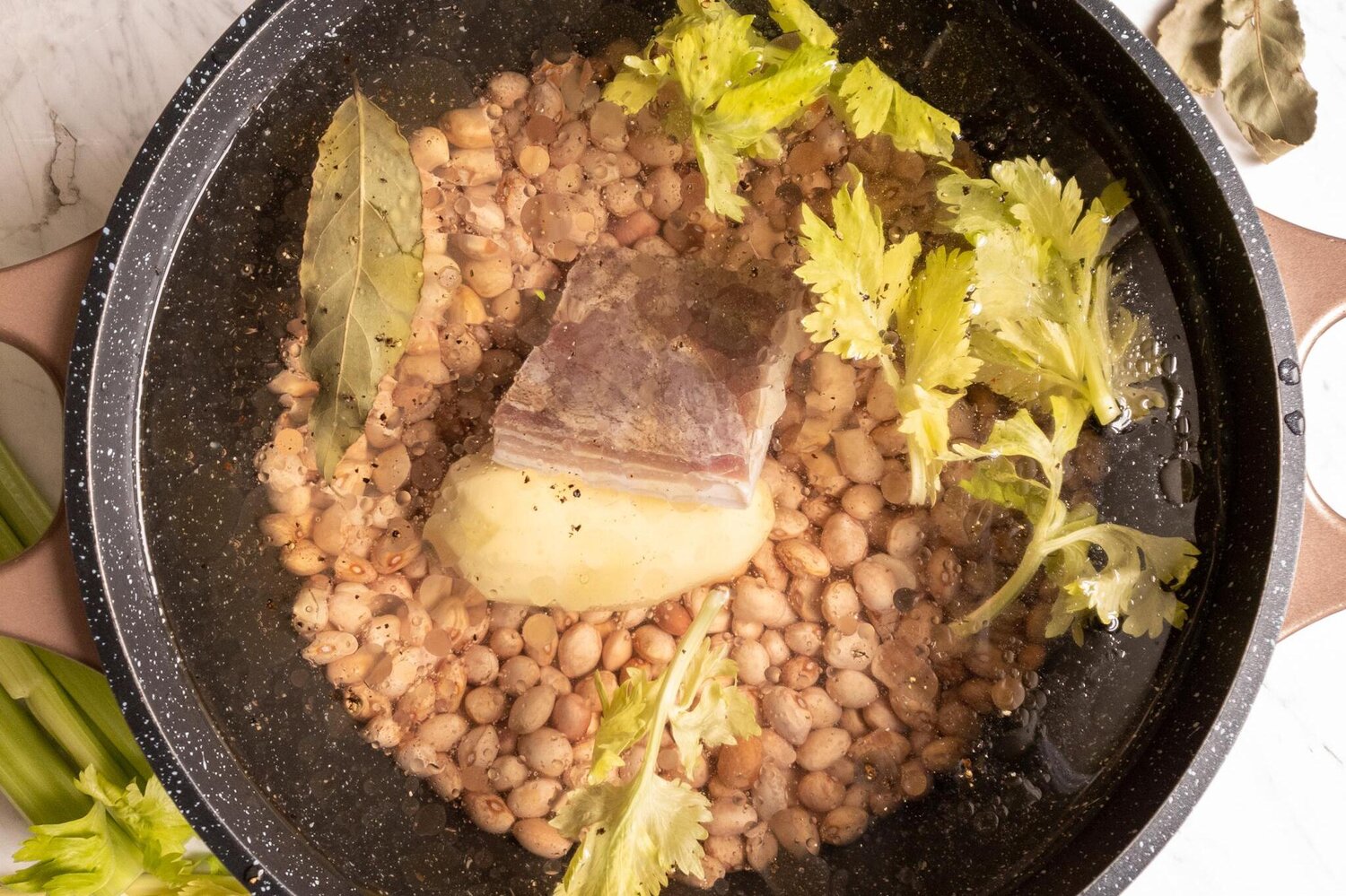
Put the beans in a big pot, add cold water so the beans are completely covered. Add bay leaf, celery leaves, potato, piece of pancetta, drizzle of oil and season with sea salt and black pepper.

View fullsize Foto 2.jpg
View fullsize Foto 3.jpg

Bring to boil then lower the heat to medium-low and with the lid partially uncovered cook for about 2 ½ h.

Remove bay leaf and pancetta. Cut the meaty bits off the pancetta, set aside and put it back in a soup after you pass it through a food mill.

Pasta e Fasoi 4.jpg

Take a food mill and place it steadily over a bowl. With a soup spoon, spoon out about ¾ of the beans with the liquid and mill them so you get a bean purée. Transfer the bean purée back in the pot and mix well with the rest and cook for further 30 min.

Add the pasta of your choice and cook until al dente making sure you mix it now and again just to avoid sinking the pasta to the bottom and burn.

It is very common to cook pasta separately, drain it and then added to the soup.

If the potato did not end up through the mill, then take the wooden spoon and with the back of it just press the potato against the wall of the pot. By doing so the potato will just disintegrate giving pasta and fasoi a nice thick, velvety, consistency.

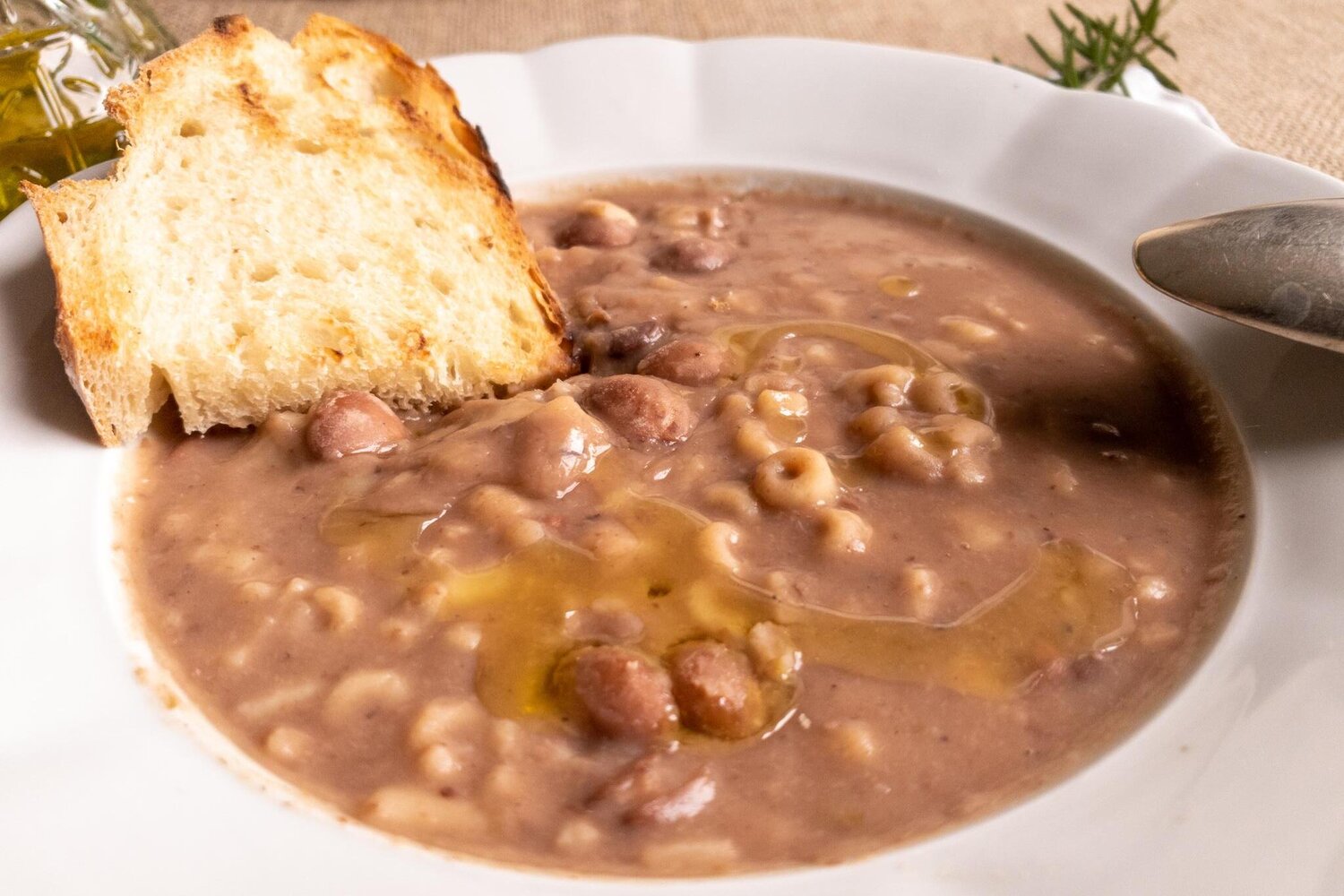
Serve hot with a drizzle of extra virgin olive oil and a nice rustic type of bread, slightly toasted even better. It is very common to grate fresh Parmigiano-Reggiano (Parmesan cheese) on top of it.

Foto 5.jpg

Just a thought

This is a great dish for vegetarians and vegans by opting out pancetta or similar and using non egg based pasta for the soup.

Wine suggestion

Friulano DOC “Valeris” 2019 by Muzic, Collio.


March 02, 2021 /tina oblak
pasta and bean soup Istrian style, pasta and borlotti beans soup, Venetian style pasta and beans soup, Pasta e fagioli recipe, Pasta e fasioi Venetian recipe, rustic borlotti beans and pasta soup, simple bean soup
Soups, Adriatic Recipe, Easy recipe, entrée course, healthy mael, Istrian cuisine, Istrian dish, Istrian food, Istrian gastronomy, main course, main dish, Nutritious dish, Rustic dish, Slovenian cuisine, Slovenian food, Slovenian gastronomy, Vegan, Vegetarian
Comment
Beef Goulash 1.jpg

Beef goulash with fresh herbs Istrian style recipe

Beans and Sardines
February 23, 2021 by tina oblak in Meat, Adriatic Recipe, Easy recipe, Istrian cuisine, Istrian food, Istrian gastronomy, Rustic dish, Slovenian cuisine, Slovenian food, Slovenian gastronomy, main meat course, Istrian dish

There is a wide variety of different goulash recipes and the one that I share here with you is more like the Austrian version than the Hungarian one since it has a nice thick gravy and a texture of a stew. It does derive, however, from the Hungarian version, which is more of a soupy consistency with bell peppers and potatoes.

Beef goulash, locally called “golaž” is one of those dishes that, yes, belong to the Austro-Hungarian Empire but it took a bit of a “southern turn” and changed to fit in better with Istrian's local flavours and ingredients.

And as I come from the coastal town Koper, held by Austrian Empire between 1813 -1918, with Mediterranean climate, a handful of fresh herbs would be added for flavour, developing into Istrian Style beef goulash instead of using caraway seeds and powdered sweet Hungarian paprika that can be added for more “imperial” taste.

In Central Europe and in other parts of Europe, goulash is a common meal. Very popular in Austria, Slovenia and Italy, especially in Friuli Venezia Giulia, the most eastern region of Italy, which borders with Slovenia and Austria. A dish that truly represents a gastronomic osmosis.

This must be comfort food at its best, and it is so popular that it appears almost weekly on tables as a family meal, and on menus in local “gostilnas” (informal family run restaurants in Slovenia) especially during colder months. I grew up with this dish and my husband and my son go mad for it, especially when accompanied with fluffy potato gnocchi, that are squashed with a fork to soak up that delicious gravy.

It is very easy to make but it does take time to cook so not the best option if you are in a rush and want a quick meal.

It is best made one day or two days in advance and then reheat it, as the beef tenderizes further, the gravy thickens and flavours enhance.

Traditionally is served with soft, just cooked polenta, fresh crunchy rustic bread, mashed or roasted potatoes, potato gnocchi, bread dumplings or pasta of any shape and form.

Beef Goulash 2.jpg

Great also with spinach or plain spaetzle (German style egg pasta) and moon crescent fried gnocchi. All good options as they will soak up the gravy.

Commonly beef goulash would be made with shin of beef, which is very tough piece of meat but after long and slow cooking process it melts into your mouth and becomes so tender you do not need the knife to cut it, so a trip to a local butcher is worth if you are having difficulty to find it in a local food store or supermarket.

Ingredients

Serves 4-6

  • 1 kg shin of beef, diced (can use stewing beef)

  • 4 Tbsp extra virgin olive oil

  • 200 g onions or shallots, finely chopped

  • 4 garlic cloves, finely grated or crashed

  • 1 small carrot 20g-40g, finely grated

  • 1 full handful of mixed fresh herbs, finely chopped (marjoram, thyme, sage, rosemary, basil, fresh or dry oregano)

  • 1 bay leaf fresh or dry

  • 1 ½ l water, vegetable or beef stock

  • 2 Tbsp double concentrated tomato purée

  • 1 Tbsp all purpose flour

    Method

In a large pot put the oil, finely chopped onions, crashed garlic, grated carrots a pinch of salt and cook on a low-medium heat stirring quite often until the onions are soft.

View fullsize Beef Goulash 3.jpg
View fullsize Beef Goulash 4.jpg

Add diced beef, turn up the heat a bit and brown it stirring and turning occasionally. The meat should be sealed on all sides with almost no juices from the meat left in the pot.

Beef Goulash 5.jpg

Sprinkle flour over the beef, stir and add water, vegetable or beef stock, herbs, bay leaf, tomato purée and let it simmer for about 2 ½ -3 hours on a fairly low heat with a lid partially uncovered.

Beef Goulash 6.jpg
View fullsize Beef Goulash 7.jpg
View fullsize Beef Goulash 8.jpg
View fullsize Beef Goulash 9.jpg
Beef Goulash 9.jpg

Wine suggestion

Teroldego IGT "Foradori" 2019 by Elisabetta Foradori, Vigneti delle Dolomiti.

February 23, 2021 /tina oblak
Beef goulash with fresh herbs Istrian style recipe, beef goulash recipe, easy beef goulash recipe, slow cooked sheen of beef goulash, goulash with fresh herbs, Austrian style beef goulash, Slovenian golaž
Meat, Adriatic Recipe, Easy recipe, Istrian cuisine, Istrian food, Istrian gastronomy, Rustic dish, Slovenian cuisine, Slovenian food, Slovenian gastronomy, main meat course, Istrian dish
Comment
Sautéed Sauerkraut 1.jpg

Sautéed Sauerkraut recipe

Beans and Sardines
February 16, 2021 by tina oblak in Side Dishes, Adriatic Recipe, Easy recipe, healthy mael, Nutritious dish, Vegan, Vegetarian, Istrian food, Istrian cuisine, Istrian gastronomy, Slovenian food, Slovenian gastronomy, Slovenian cuisine, Rustic dish

The word “sauerkraut” comes from German Sauerkraut, which literally means “sour cabbage”. From sauer “sour” and kraut “vegetable, cabbage.” The origin of the dish has been disputed but it took root mostly in Central and Eastern European cuisines.

Sauerkraut is finely shredded cabbage, that has been fermented by various lactic acid bacteria and it has a distinctive sour flavour due to the fact, that the lactic acid is formed when the bacteria ferment the sugars in the cabbage. It is the lactic acid that naturally preserves sauerkraut and gives it long shelf life.

Sautéed Sauerkraut 2.jpg

It is incredibly popular dish back home, and would appear on tables as a part of a family meal on a weekly basis, especially during colder months. Its popularity is not surprising, if we consider the fact, that the area was under Austro-Hungarian Empire until the end of First World War. Almost every household would have a slightly different version of how to prepare and cook sauerkraut.

In Slovenia, you can buy sauerkraut in all supermarkets in sealed plastic bags or glass jars, but I just love getting it from farmer's market, where it is sold on food stalls by local farmers directly from big wooden barrels.

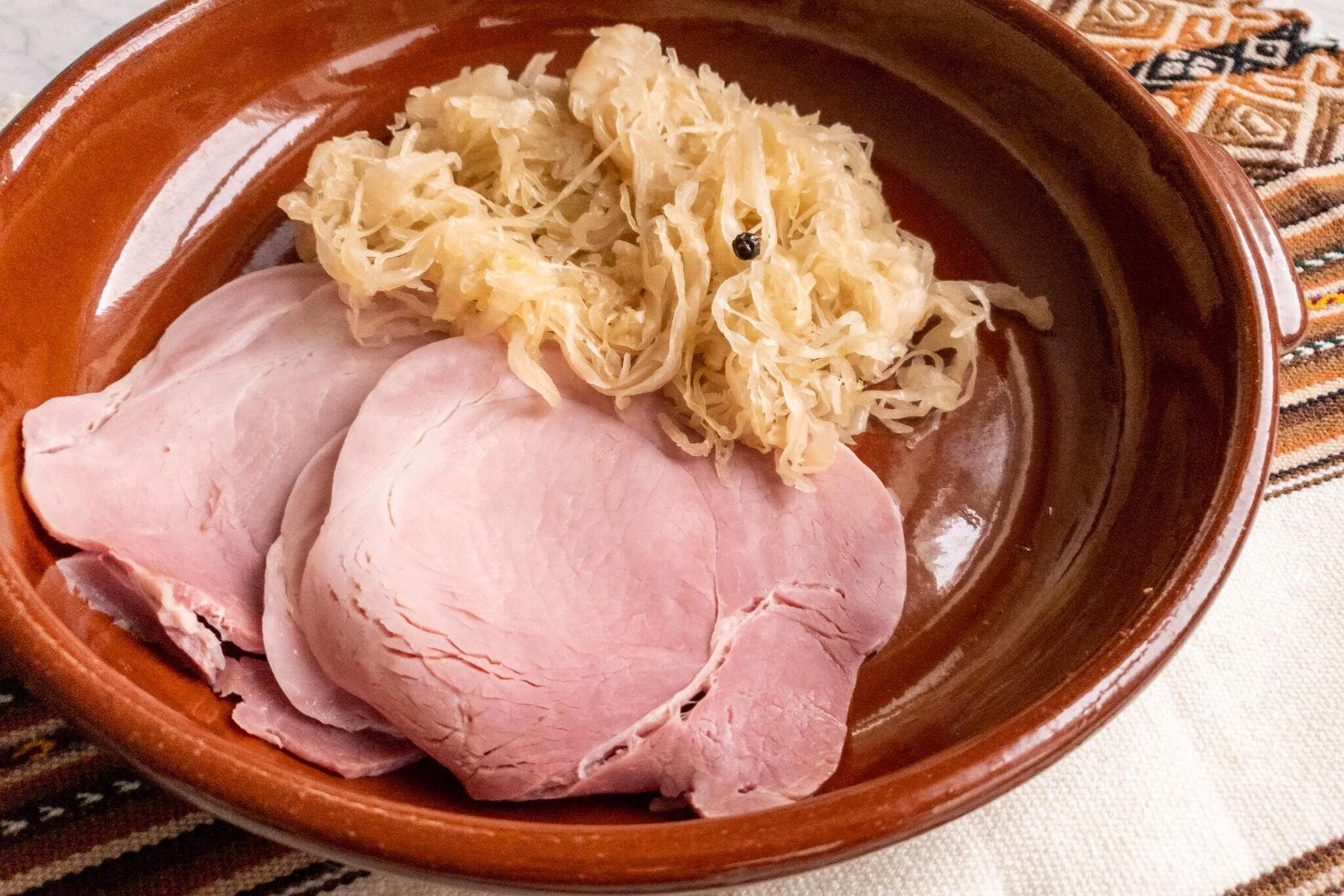
I am sharing with you my grandma and my mum's version of how it is cooked on the coastal region, simply with extra virgin olive oil, a bit of garlic and bay leaf, however, adding a pinch of sweet Hungarian paprika and few crushed caraway seeds is quite common too, in order to achieve once again that “imperial” flavour. This is a great side dish, traditionally used to accompany almost any meat based dish like sausages, cooked ham, pork roast or other meat roasts, pork chops, black sausage...

As children, my brother and I would have it just simply with fried eggs and a bit of potato mash.

Sauerkraut is quite versatile, and it can be also used in a variety of other dishes, and just to mention a few, jota (Istrian sauerkraut and bean soup), Hungarian style sauerkraut, rice and mince pork casserole, and it is great in sandwiches, made for example, with rye bread and cooked ham.

Sautéed Sauerkraut 3.jpg

My nona Nada has vivid memories from when she was a child, of every household in the village making a big barrel of sauerkraut; cabbage would be harvested in autumn and fermented during winter month.

Sauerkraut is also very healthy, and has numerous nutritional benefits. Contains live and active probiotics, helping your body to fight off harmful bacteria or toxins, it has high level of digestive enzymes, high in vitamin C and K2. Rich in fibre and minerals like potassium, iron and magnesium.

No wonder Captain James Cook always took a store of sauerkraut on his sea voyages!

It is really not surprising, that sauerkraut has been gaining increasing popularity in the past few years, especially in the countries where it has been less known.

Back home, it has always been there...just like family.

When shopping for sauerkraut, make sure you get a good quality one, just sea salt and nothing else should be added on the ingredient list.

Ingredients

Serves 4

  • 1kg Sauerkraut (sauerkraut is normally sold in glass jars or sealed plastic bags and will have different net weights of sauerkraut, it does not matter if you end up with slightly less or more than 1kg of sauerkraut)

  • 1 bay leaf (fresh or dry)

  • 4 Tbsp extra virgin olive oil

  • 2-3 cloves of garlic (peeled and crashed)

  • sea salt

  • few black whole peppercorns

Method

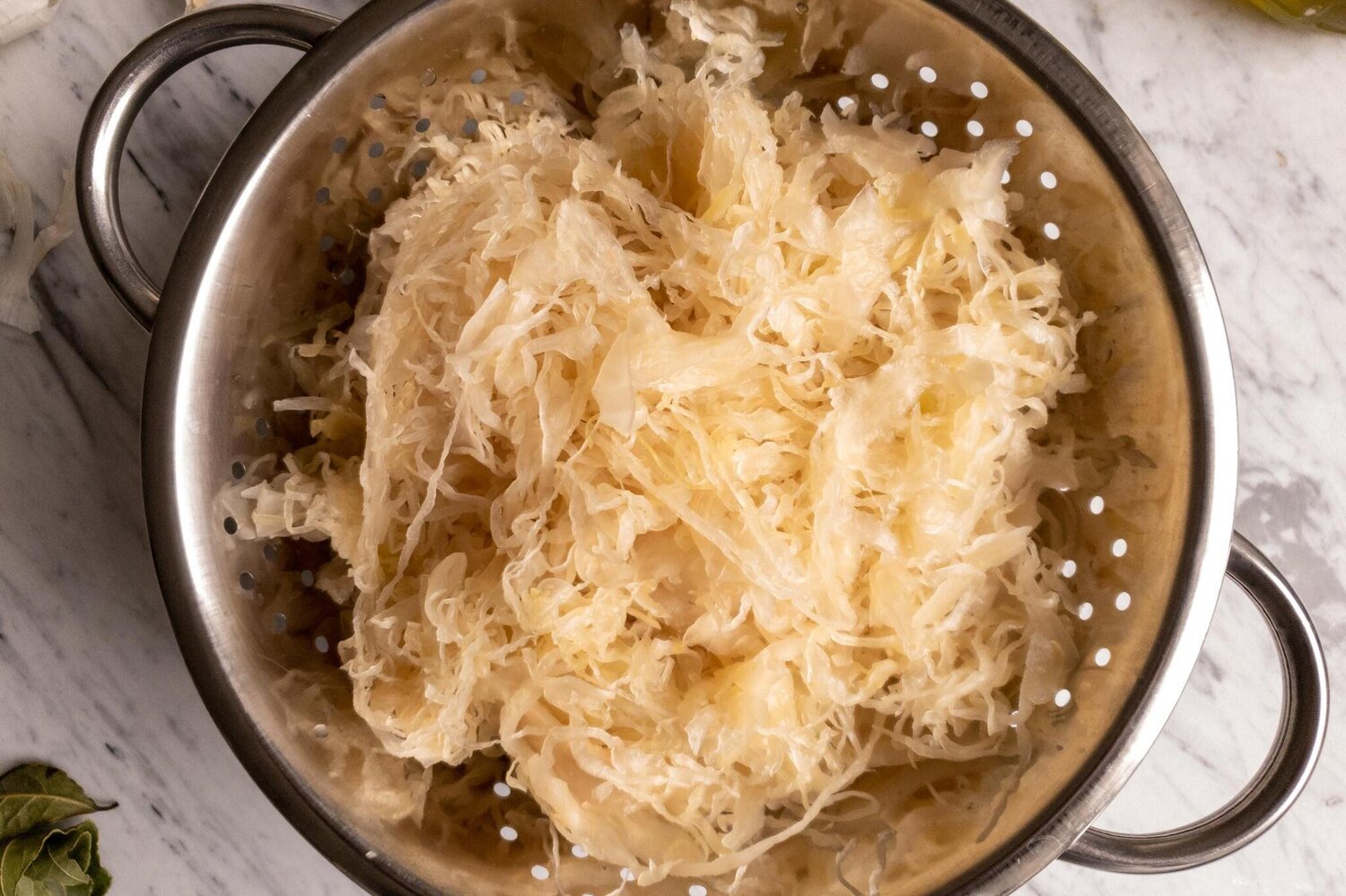
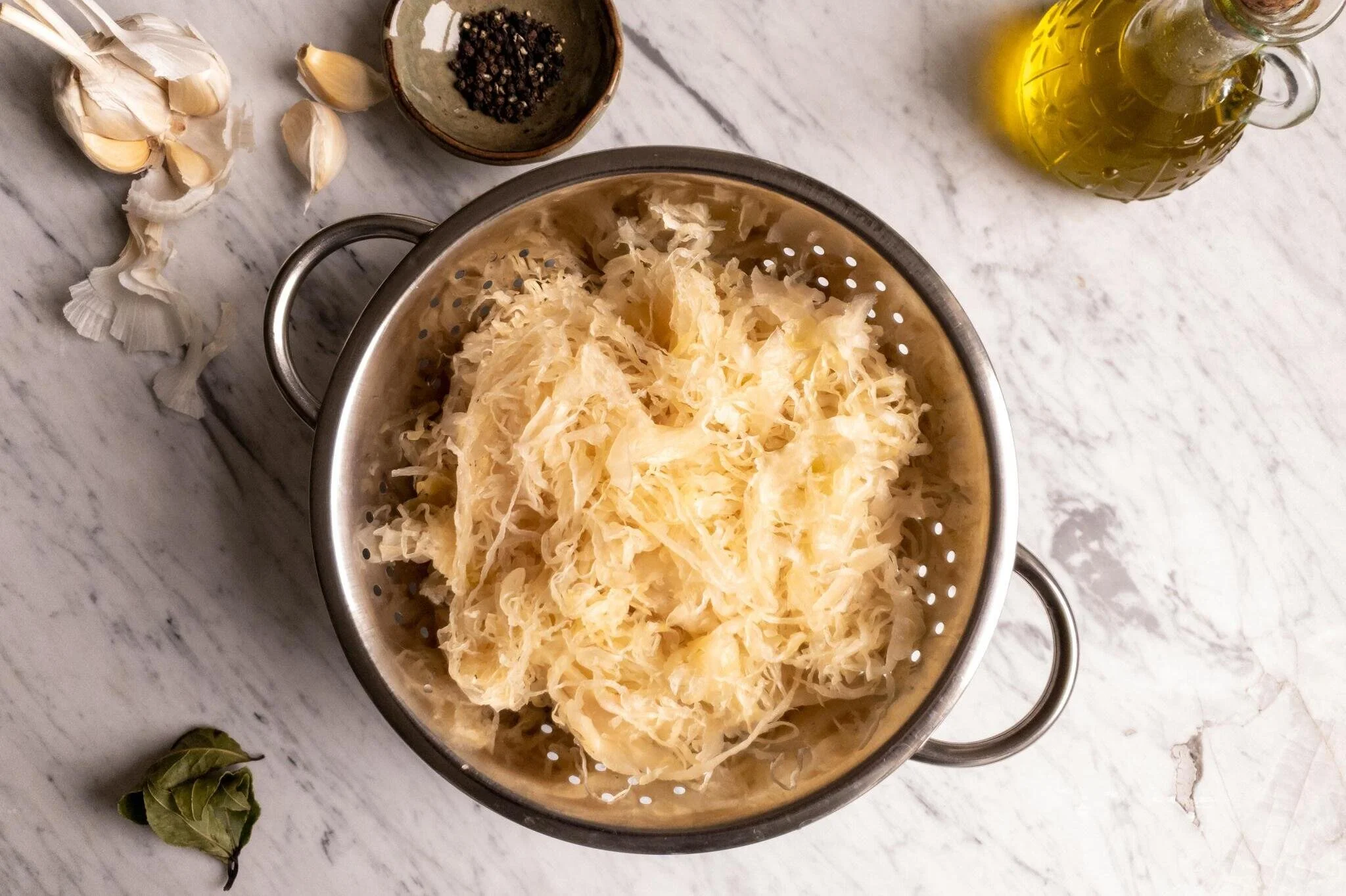
Drain the saurekraut in a colander and give it a quick rinse with cold water if you think the sauerkraut is too acid for your taste, but do not over rinse it, as you will loose the characteristic sauerkraut taste.

Sautéed Sauerkraut 4.jpg

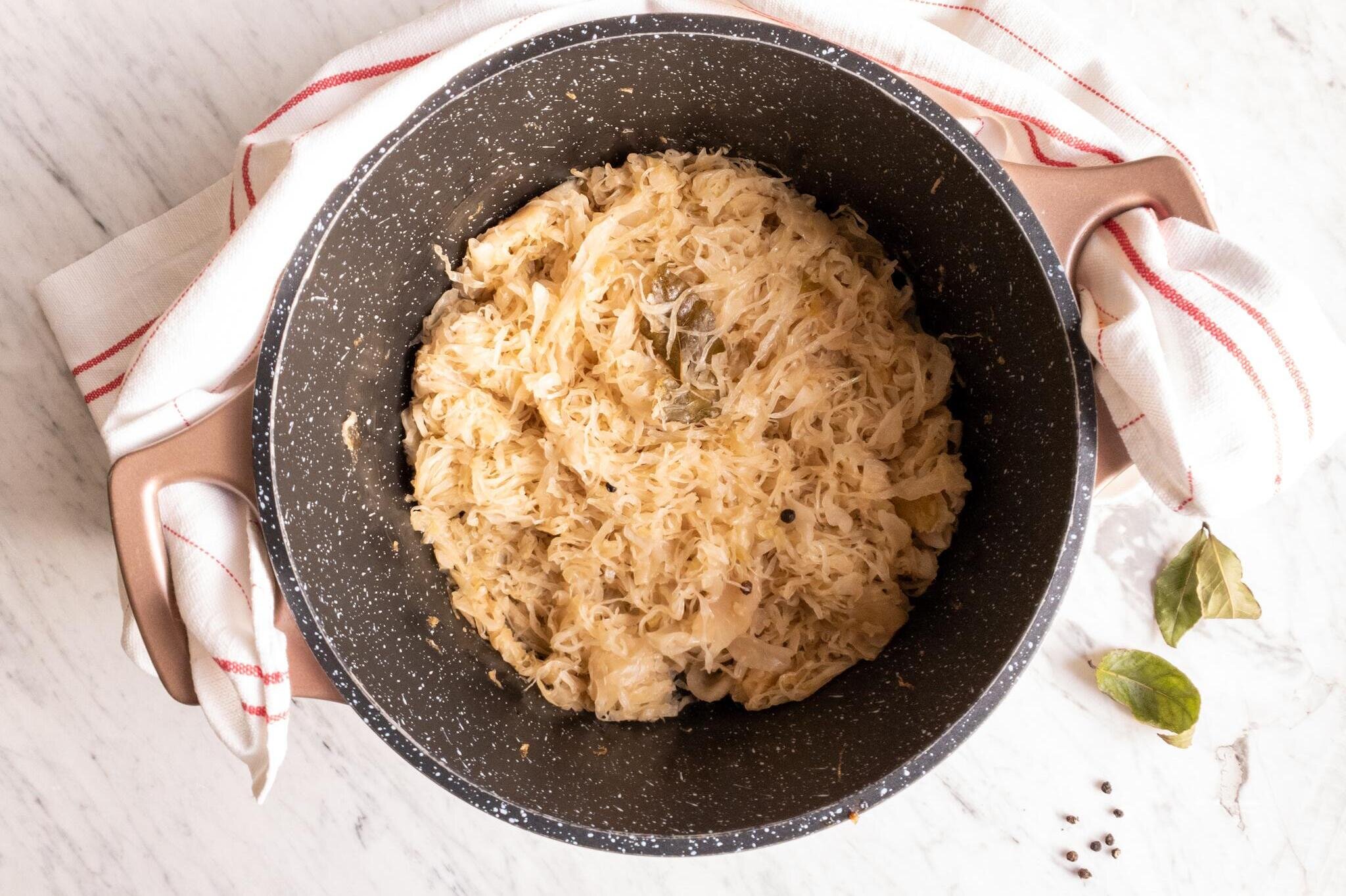
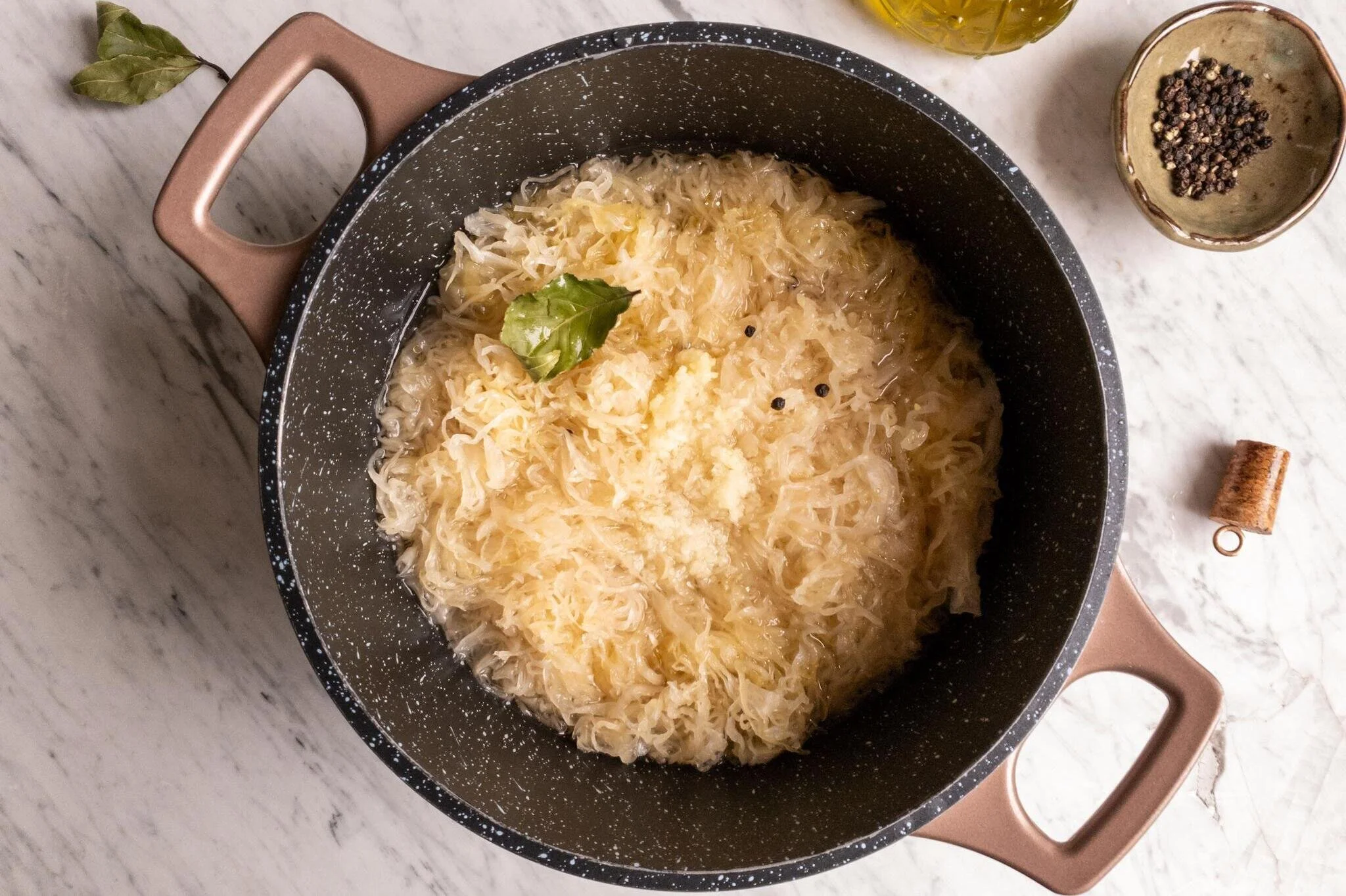
Place the rinsed sauerkraut into a large, preferably non stick pan, add sea salt, peppercorns, bay leaf, garlic, extra virgin olive oil.

Add water, just enough to cover the sauerkraut, bring to boil, reduce the heat and simmer for about 1-1 1/2 hours.

Sautéed Sauerkraut 5.jpg

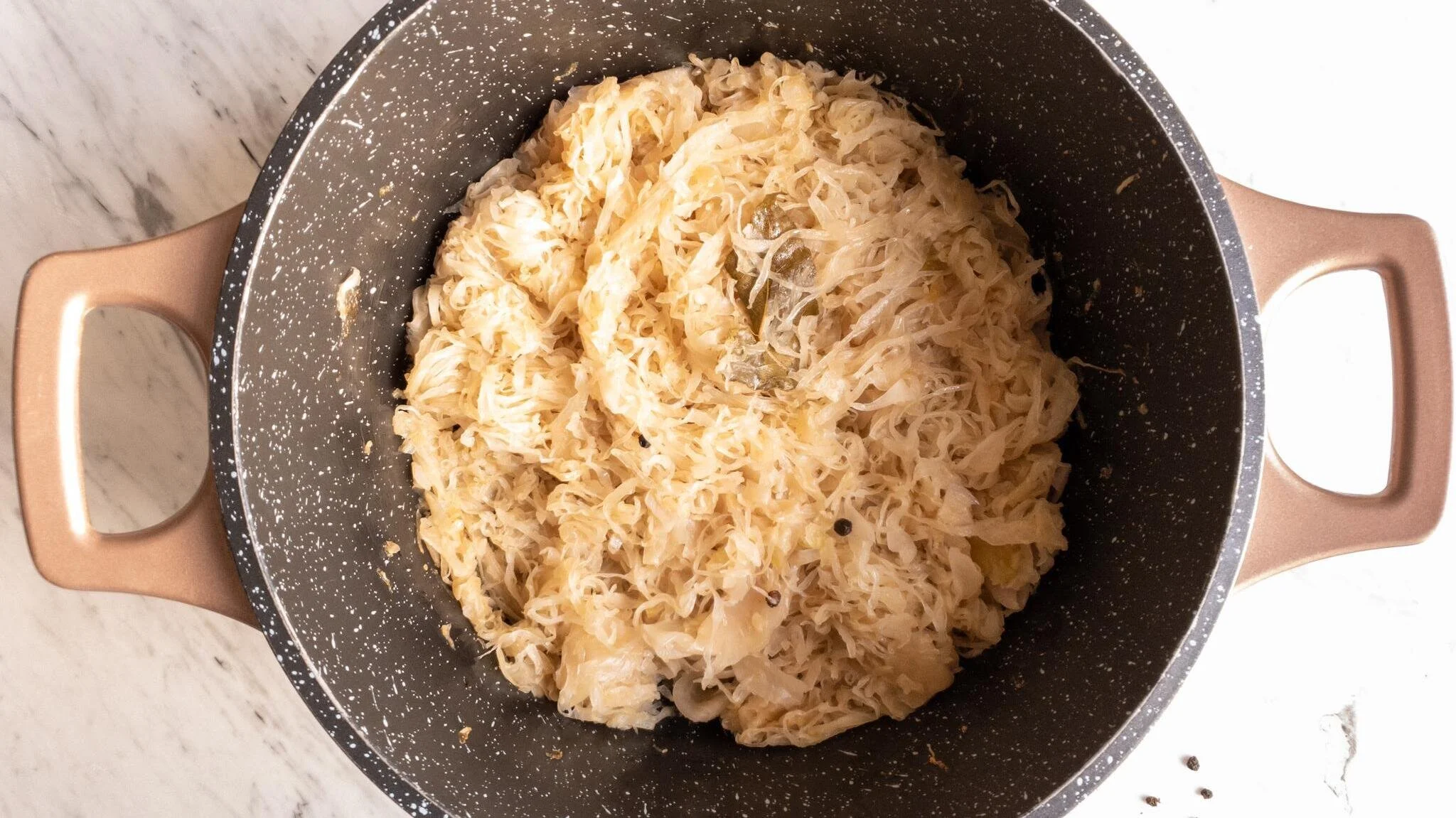
Sauerkraut is cooked, when you have no excess liquid left in the pan, and the sauerkraut is nice and soft. Adjust seasoning with sea salt and freshly ground pepper.

Sautéed Sauerkraut 6.jpg
Sautéed Sauerkraut 7.jpg

Wine suggestion

Cabernet Sauvignon IGT 2017 by Balter, Vallagarina.

February 16, 2021 /tina oblak
side dish, Sautéed Sauerkraut recipe, Istrian style Sautéed Sauerkraut recipe, Sauerkraut recipe
Side Dishes, Adriatic Recipe, Easy recipe, healthy mael, Nutritious dish, Vegan, Vegetarian, Istrian food, Istrian cuisine, Istrian gastronomy, Slovenian food, Slovenian gastronomy, Slovenian cuisine, Rustic dish
Comment
  • Newer
  • Older