Beans and Sardines

  • Home
  • About
  • Recipe of the week
  • Recipes
  • Wines
  • Contact
Pasta e Fasoi 1.jpg

Nona Nada's pasta e fasoi Istrian style (pasta and beans soup Istrian style) recipe

Beans and Sardines
March 02, 2021 by tina oblak in Soups, Adriatic Recipe, Easy recipe, entrée course, healthy mael, Istrian cuisine, Istrian dish, Istrian food, Istrian gastronomy, main course, main dish, Nutritious dish, Rustic dish, Slovenian cuisine, Slovenian food, Slovenian gastronomy, Vegan, Vegetarian

This must be one of the most humble, hearty and comforting dishes ever. It originated as a peasant dish, it is flavoursome, makes a robust meal, and it is made with simple, inexpensive ingredients.

Pasta and beans is a traditional Italian soup but there are numerous variations of recipe and names according to the region where it originates from, Central and Northern Italy.

Some vegetables like onions, celery and carrots can be used as a base. Some recipes include the use of diced tomatoes or tomato purée, pancetta or lard and flavoured with rosemary and garlic.

However, no matter how you want to call it, or where it originates from, two ingredients would be in common to all the variations: beans (cannellini beans or borlotti most commonly) and a small variety of pasta like ditalini pasta.

Using mixed shape pasta or breaking spaghetti in small sticks is very common, or the use of fresh egg pasta, like home made tagliatelle works wonderful.

I will share with you my Nona Nada's recipe that she learnt as a young girl from her grandmother, so it really goes back generations. It is the soup that reminds me of home, and of my childhood, and is a variety of simple variations. In the Istrian local dialect, we just simply call it “Pasta e fasoi,” and is based on a Venetian variation (as the area was once under the Venetian empire) characteristic of which is the use of pancetta, lard or cotenna (thick and hard outer layer covering pancetta or prosciutto).

My grandma told me that they would prepare the soup in advance in the morning, put it on the stove on a low heat to cook for hours while they would be working on the fields. Upon return this hearty soup would be ready to be eaten.

This dish is so common that it also appeared in popular culture in the song “That’s Amore” by Warren and Brooks (popularized by Dean Martin) including the rhyme "When the stars make you drool, just like pasta fazool, that's amore".

No matter how simple and humble this dish is, it is a big hit every single time! My son and my husband love it and here is how to make it.

The quantities of the ingredients in the recipe is for a big pot of soup, feeding quite a lot of people, about eight (providing they do not go for seconds!).

This soup also freezes very well. Keep in mind that when you defrost it, or simply refrigerate it and then reheat, it will most probably thicken up quite a bit. You can keep it thick or just dilute it with a bit of water.

You can make half the quantity with 300g borlotti and 2 ½ l of water, smaller piece of pancetta and 100g of pasta

Ingredients

Serves 8

  • 500g dried borlotti beans

  • 4 ½ l water

  • 1 bay leaf, fresh or dry

  • few celery leaves

  • 1 medium size potato, peeled (about 200g)

  • extra virgin olive oil, generous drizzle

  • 1 piece, about 130g of pancetta (cured pork belly) or similar like ham hock, pig's trotter, cotenna or bone of prosciutto

  • sea salt

  • freshly ground black pepper

  • 200g ditalini shape pasta (or any small shaped pasta), or fresh egg pasta

Method

First of all, you need to soak the dry borlotti beans in plenty of cold water overnight. The following day drain them using a colander and run them through cold water.

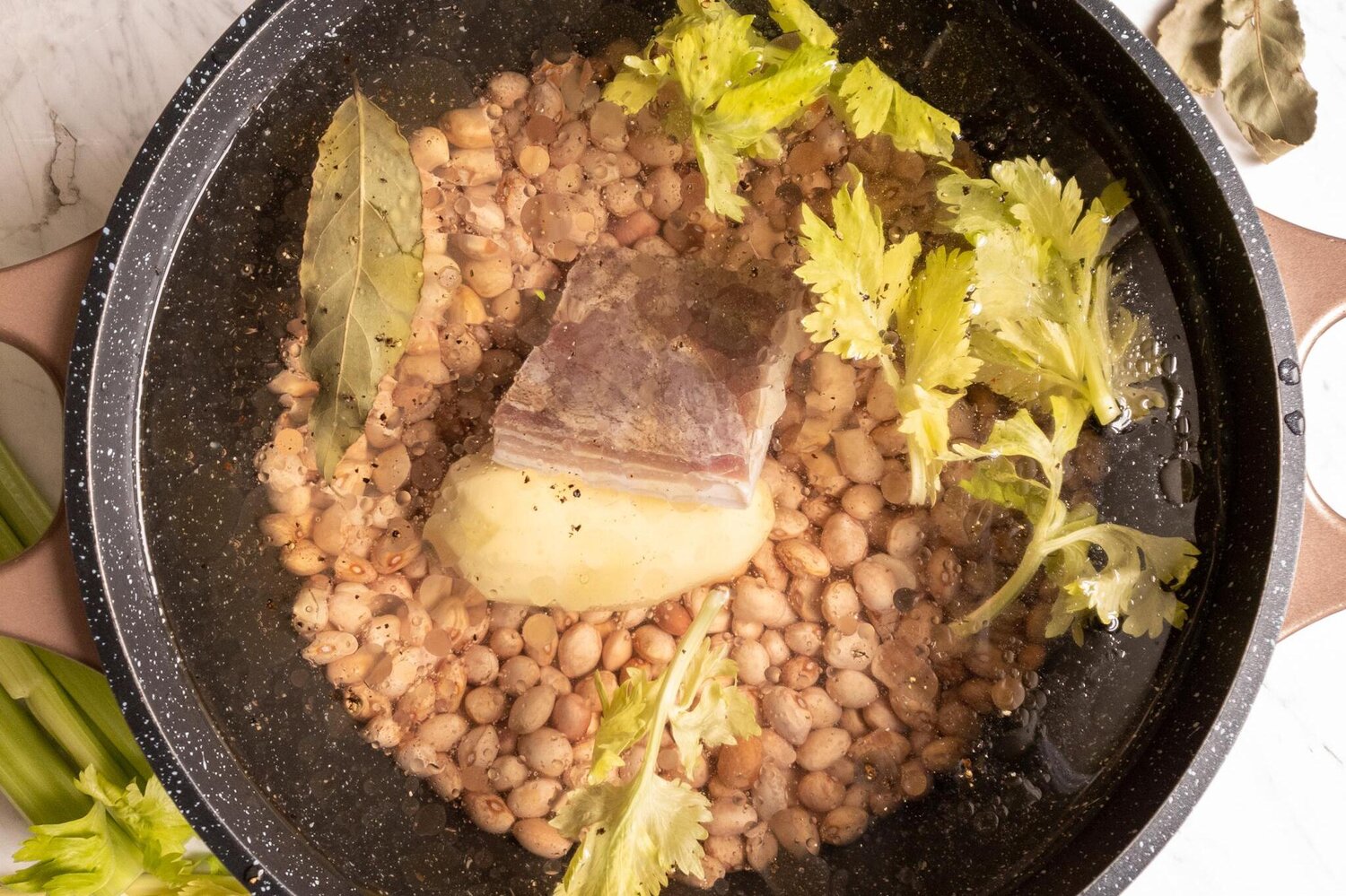
Put the beans in a big pot, add cold water so the beans are completely covered. Add bay leaf, celery leaves, potato, piece of pancetta, drizzle of oil and season with sea salt and black pepper.

View fullsize Foto 2.jpg
View fullsize Foto 3.jpg

Bring to boil then lower the heat to medium-low and with the lid partially uncovered cook for about 2 ½ h.

Remove bay leaf and pancetta. Cut the meaty bits off the pancetta, set aside and put it back in a soup after you pass it through a food mill.

Pasta e Fasoi 4.jpg

Take a food mill and place it steadily over a bowl. With a soup spoon, spoon out about ¾ of the beans with the liquid and mill them so you get a bean purée. Transfer the bean purée back in the pot and mix well with the rest and cook for further 30 min.

Add the pasta of your choice and cook until al dente making sure you mix it now and again just to avoid sinking the pasta to the bottom and burn.

It is very common to cook pasta separately, drain it and then added to the soup.

If the potato did not end up through the mill, then take the wooden spoon and with the back of it just press the potato against the wall of the pot. By doing so the potato will just disintegrate giving pasta and fasoi a nice thick, velvety, consistency.

Serve hot with a drizzle of extra virgin olive oil and a nice rustic type of bread, slightly toasted even better. It is very common to grate fresh Parmigiano-Reggiano (Parmesan cheese) on top of it.
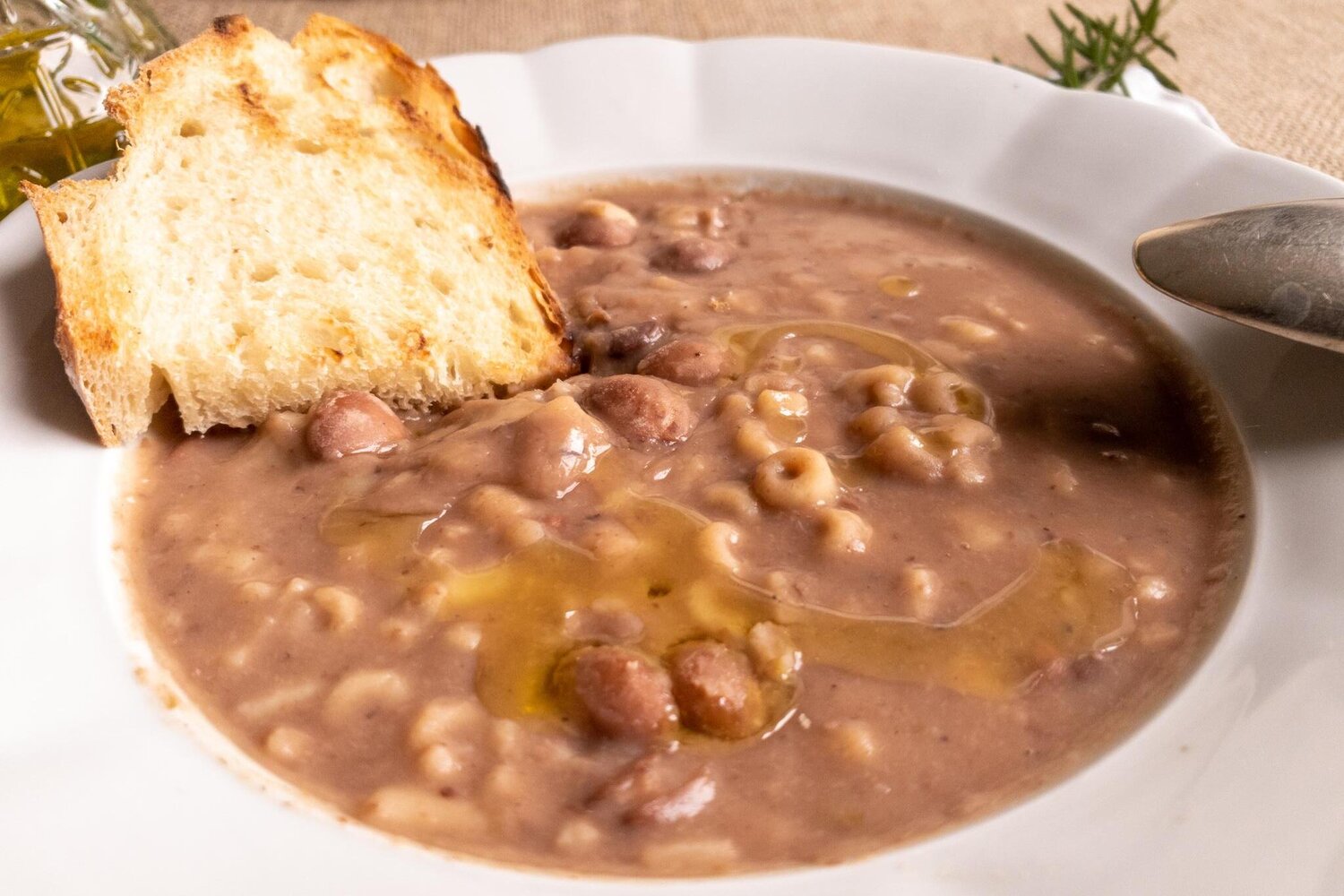
Foto 5.jpg

Just a thought

This is a great dish for vegetarians and vegans by opting out pancetta or similar and using non egg based pasta for the soup.

Wine suggestion

Friulano DOC “Valeris” 2019 by Muzic, Collio.

March 02, 2021 /tina oblak
pasta and bean soup Istrian style, pasta and borlotti beans soup, Venetian style pasta and beans soup, Pasta e fagioli recipe, Pasta e fasioi Venetian recipe, rustic borlotti beans and pasta soup, simple bean soup
Soups, Adriatic Recipe, Easy recipe, entrée course, healthy mael, Istrian cuisine, Istrian dish, Istrian food, Istrian gastronomy, main course, main dish, Nutritious dish, Rustic dish, Slovenian cuisine, Slovenian food, Slovenian gastronomy, Vegan, Vegetarian
Comment
Sautéed Sauerkraut 1.jpg

Sautéed Sauerkraut recipe

Beans and Sardines
February 16, 2021 by tina oblak in Side Dishes, Adriatic Recipe, Easy recipe, healthy mael, Nutritious dish, Vegan, Vegetarian, Istrian food, Istrian cuisine, Istrian gastronomy, Slovenian food, Slovenian gastronomy, Slovenian cuisine, Rustic dish

The word “sauerkraut” comes from German Sauerkraut, which literally means “sour cabbage”. From sauer “sour” and kraut “vegetable, cabbage.” The origin of the dish has been disputed but it took root mostly in Central and Eastern European cuisines.

Sauerkraut is finely shredded cabbage, that has been fermented by various lactic acid bacteria and it has a distinctive sour flavour due to the fact, that the lactic acid is formed when the bacteria ferment the sugars in the cabbage. It is the lactic acid that naturally preserves sauerkraut and gives it long shelf life.

Sautéed Sauerkraut 2.jpg

It is incredibly popular dish back home, and would appear on tables as a part of a family meal on a weekly basis, especially during colder months. Its popularity is not surprising, if we consider the fact, that the area was under Austro-Hungarian Empire until the end of First World War. Almost every household would have a slightly different version of how to prepare and cook sauerkraut.

In Slovenia, you can buy sauerkraut in all supermarkets in sealed plastic bags or glass jars, but I just love getting it from farmer's market, where it is sold on food stalls by local farmers directly from big wooden barrels.

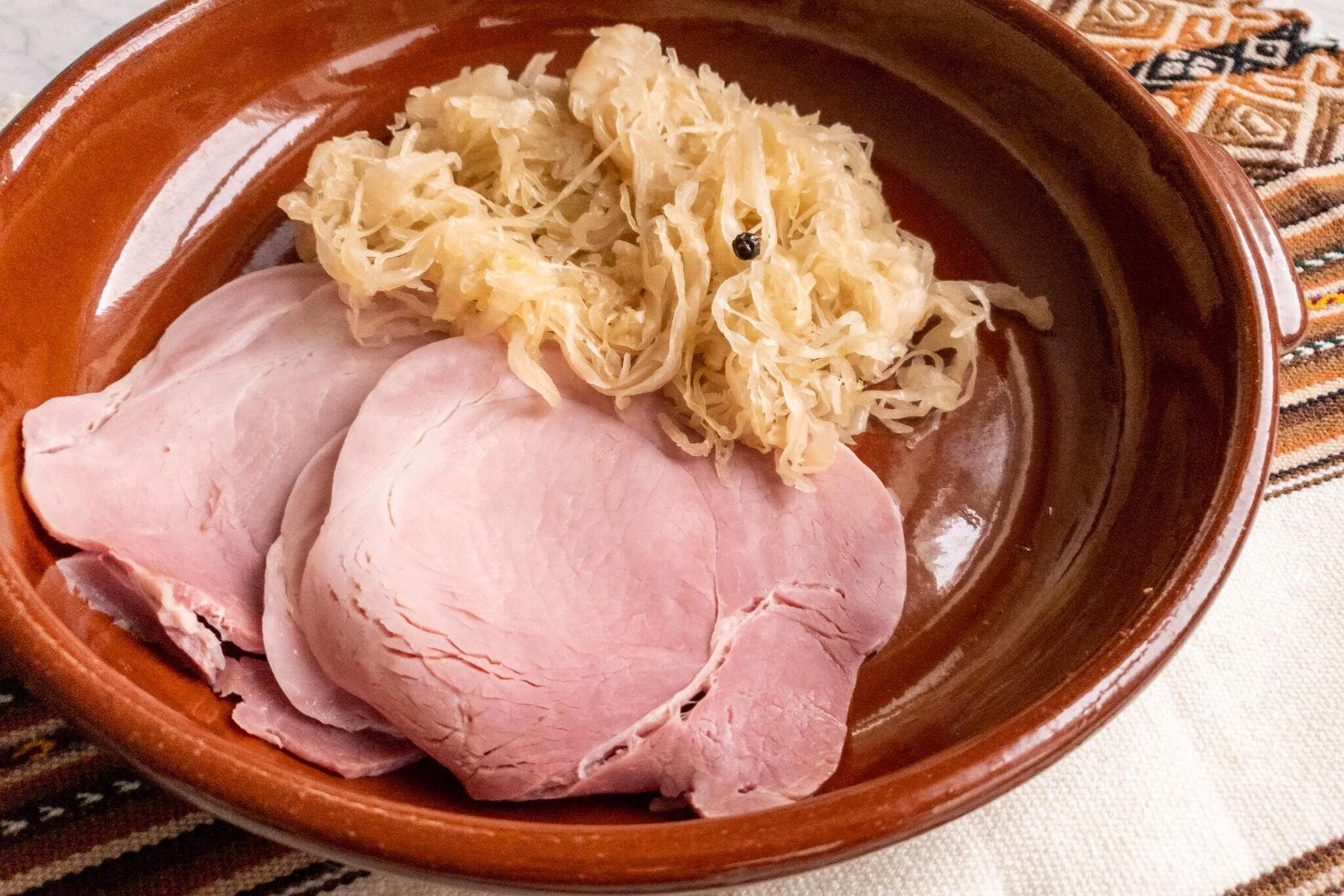
I am sharing with you my grandma and my mum's version of how it is cooked on the coastal region, simply with extra virgin olive oil, a bit of garlic and bay leaf, however, adding a pinch of sweet Hungarian paprika and few crushed caraway seeds is quite common too, in order to achieve once again that “imperial” flavour. This is a great side dish, traditionally used to accompany almost any meat based dish like sausages, cooked ham, pork roast or other meat roasts, pork chops, black sausage...

As children, my brother and I would have it just simply with fried eggs and a bit of potato mash.

Sauerkraut is quite versatile, and it can be also used in a variety of other dishes, and just to mention a few, jota (Istrian sauerkraut and bean soup), Hungarian style sauerkraut, rice and mince pork casserole, and it is great in sandwiches, made for example, with rye bread and cooked ham.

Sautéed Sauerkraut 3.jpg

My nona Nada has vivid memories from when she was a child, of every household in the village making a big barrel of sauerkraut; cabbage would be harvested in autumn and fermented during winter month.

Sauerkraut is also very healthy, and has numerous nutritional benefits. Contains live and active probiotics, helping your body to fight off harmful bacteria or toxins, it has high level of digestive enzymes, high in vitamin C and K2. Rich in fibre and minerals like potassium, iron and magnesium.

No wonder Captain James Cook always took a store of sauerkraut on his sea voyages!

It is really not surprising, that sauerkraut has been gaining increasing popularity in the past few years, especially in the countries where it has been less known.

Back home, it has always been there...just like family.

When shopping for sauerkraut, make sure you get a good quality one, just sea salt and nothing else should be added on the ingredient list.

Ingredients

Serves 4

  • 1kg Sauerkraut (sauerkraut is normally sold in glass jars or sealed plastic bags and will have different net weights of sauerkraut, it does not matter if you end up with slightly less or more than 1kg of sauerkraut)

  • 1 bay leaf (fresh or dry)

  • 4 Tbsp extra virgin olive oil

  • 2-3 cloves of garlic (peeled and crashed)

  • sea salt

  • few black whole peppercorns

Method

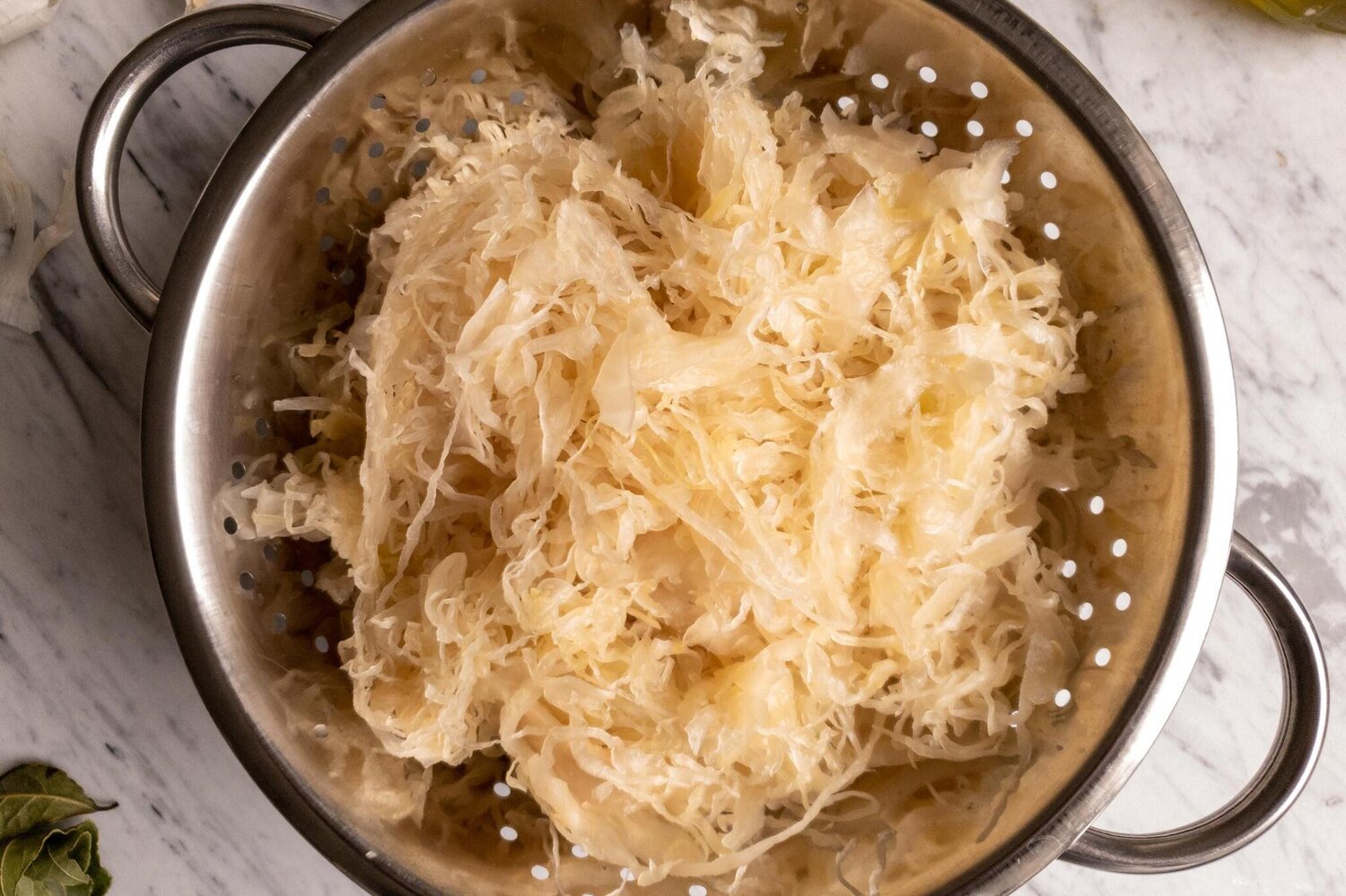
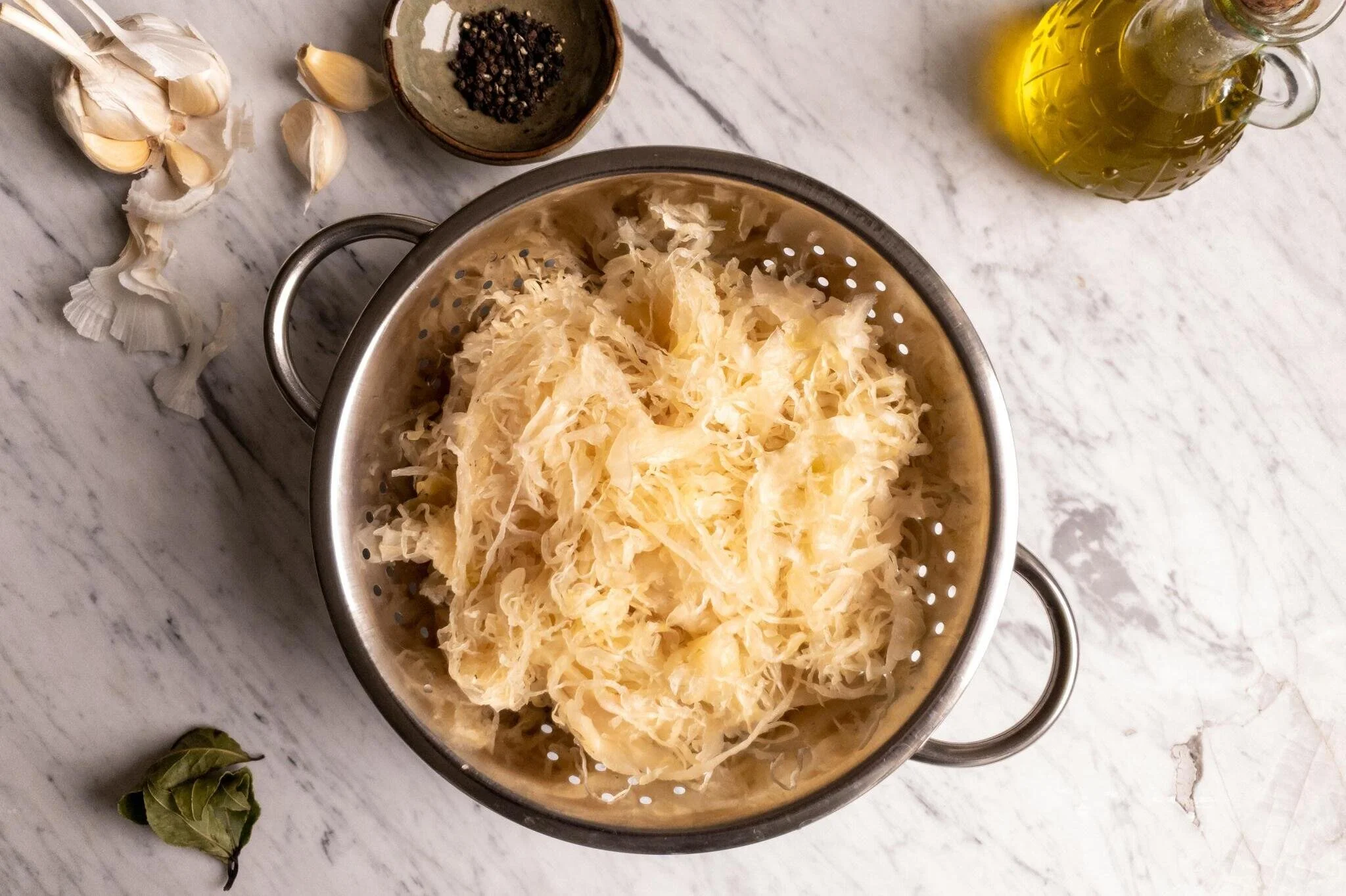
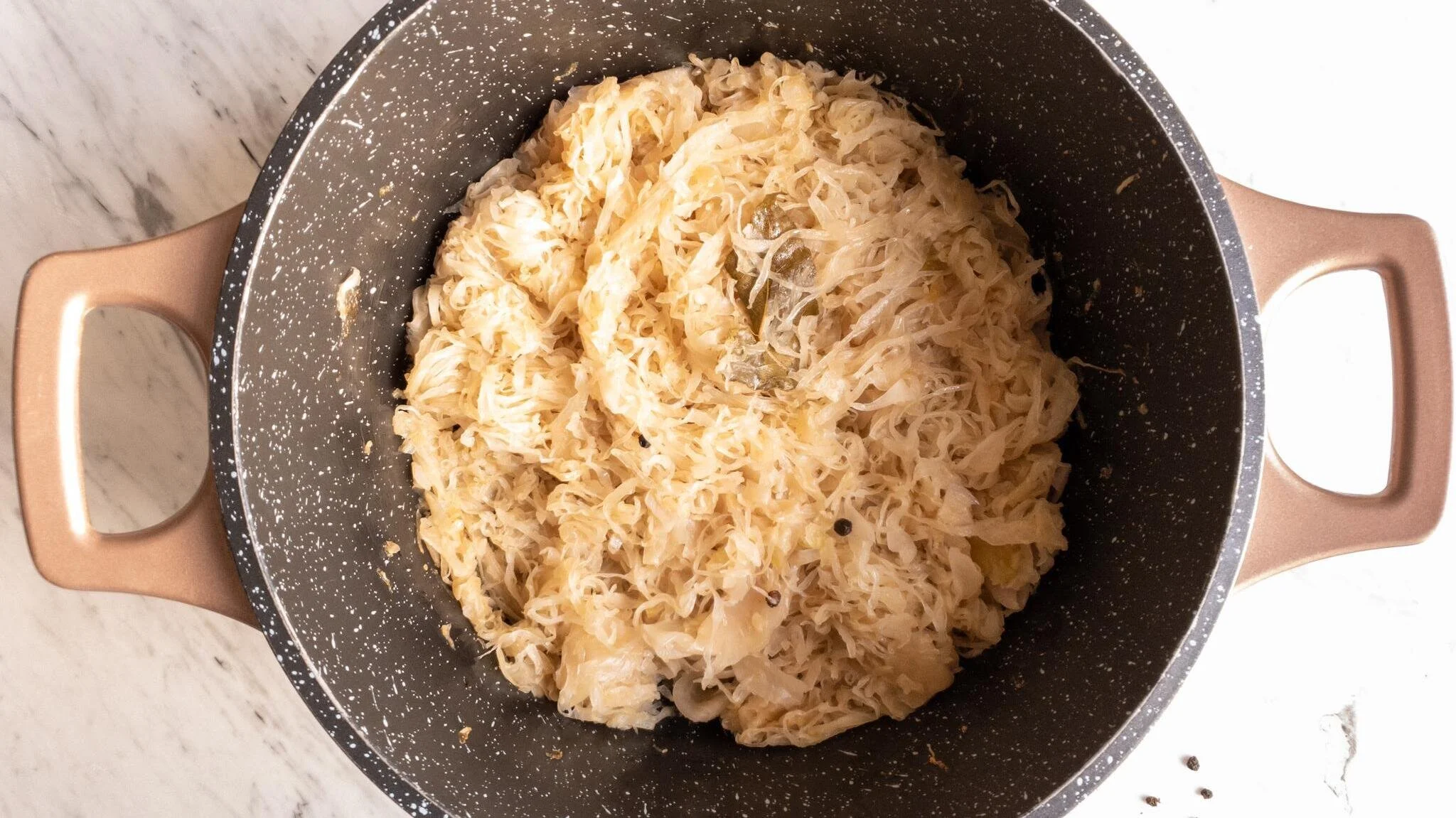
Drain the saurekraut in a colander and give it a quick rinse with cold water if you think the sauerkraut is too acid for your taste, but do not over rinse it, as you will loose the characteristic sauerkraut taste.

Sautéed Sauerkraut 4.jpg

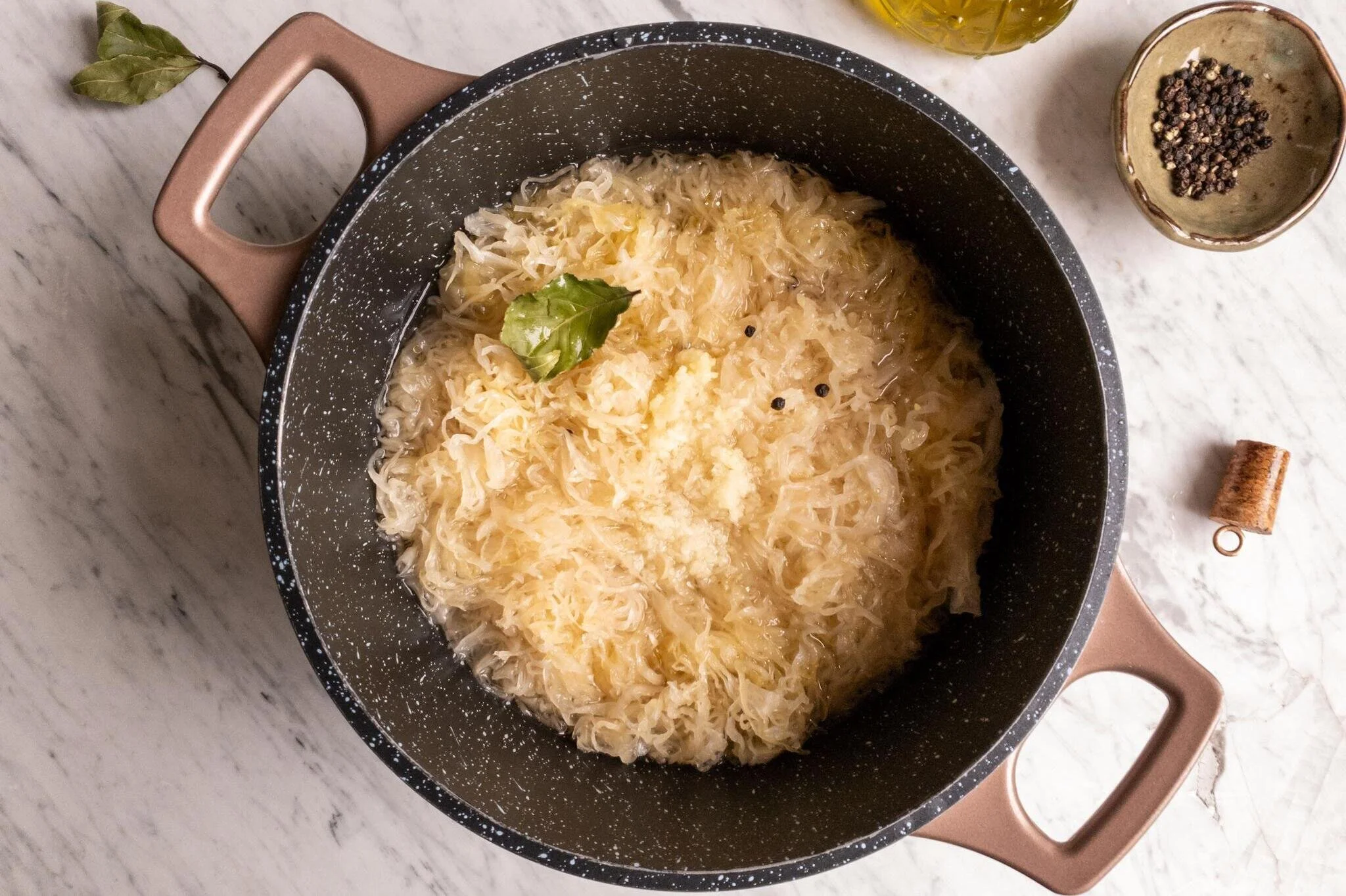
Place the rinsed sauerkraut into a large, preferably non stick pan, add sea salt, peppercorns, bay leaf, garlic, extra virgin olive oil.

Add water, just enough to cover the sauerkraut, bring to boil, reduce the heat and simmer for about 1-1 1/2 hours.

Sautéed Sauerkraut 5.jpg

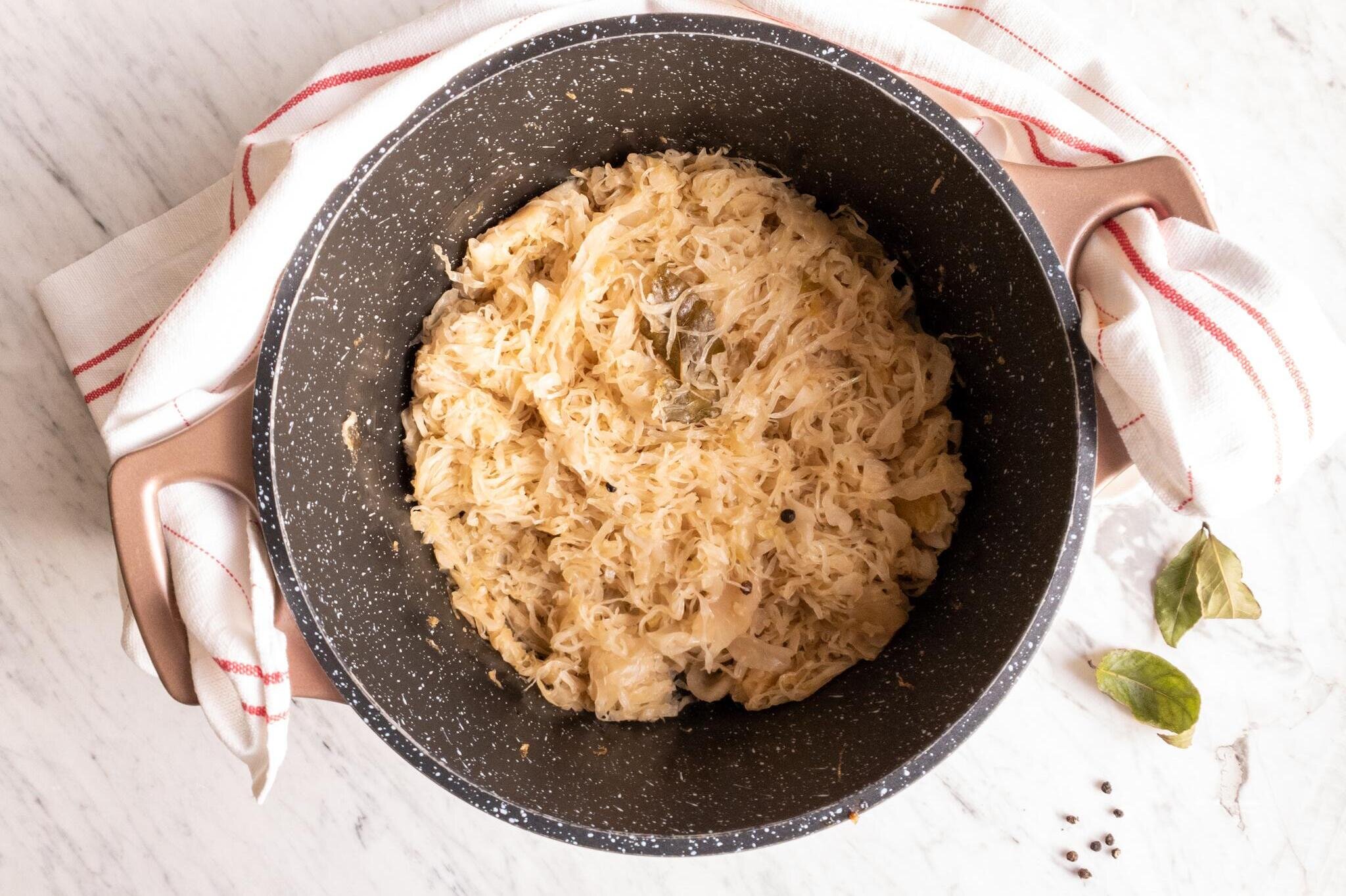
Sauerkraut is cooked, when you have no excess liquid left in the pan, and the sauerkraut is nice and soft. Adjust seasoning with sea salt and freshly ground pepper.

Sautéed Sauerkraut 6.jpg
Sautéed Sauerkraut 7.jpg

Wine suggestion

Cabernet Sauvignon IGT 2017 by Balter, Vallagarina.

February 16, 2021 /tina oblak
side dish, Sautéed Sauerkraut recipe, Istrian style Sautéed Sauerkraut recipe, Sauerkraut recipe
Side Dishes, Adriatic Recipe, Easy recipe, healthy mael, Nutritious dish, Vegan, Vegetarian, Istrian food, Istrian cuisine, Istrian gastronomy, Slovenian food, Slovenian gastronomy, Slovenian cuisine, Rustic dish
Comment
Leek Risotto 10.jpg

Leek Risotto recipe

Beans and sardines
February 09, 2021 by tina oblak in Risotti, Adriatic Recipe, Easy recipe, entrée course, healthy mael, main course, recipe from Northern Ital, Side Dishes, Healthy

Leek is a humble vegetable of great potential but it is sadly often overlooked. It is a relative of the onion with long green leaves and a white bulbous root. As we know it today, leeks were first grown by the ancient Egyptians.

These alliums (the type of plants that belong to the group that includes onions, shallots, scallions, chives and garlic) are almost inedible when raw but when cooked slow and low they become mellow, sweet, creamy and taste delicious. Fantastically versatile, full of flavour, and it should be no surprise the humble leek is used in risotto where it takes central stage.

Leeks are omnipresent at the vegetable markets but at its best during the coldest months of the year from October through May.

They are packed with nutrients and anti-oxidants, and so make the best use out of them especially during autumn and winter months when less native vegetables are available. They will help fight colds and flu.

Leek Risotto 2.jpg

Back home we will use just about anything to make risotto, a very much liked and loved dish. This should be no surprise since my hometown is less than a two hours drive to Venice, and the region of Veneto (Northern Italy), especially the Po Valley, where growing rice is very popular, and is a major agricultural industry.

The valley offers a constant supply of water for the rice fields since there are many large non-seasonal rivers.

It is in this region of Italy, the Veneto region, with its colder climate compared to the warmer South of Italy, that the dishes had to be warming, hearty, and filling, and although risotto is found in the whole of Italy, it is in the Veneto that the greatest variety, and number of risotto recipes can be found.

My mum would go to the vegetable market and made risotto with the vegetables there were in season, and when the leeks were at their best, leek risotto would be on the table for lunch or dinner.

This very simple, comforting leek risotto is perfect solution for mid week quick nutritious lunch or dinner, but equally great for more formal entertaining since it is also presentable as a delicate and elegant dish.

Ingredients

Serves 4

  • 500g leeks, cleaned and chopped (Do buy more than you think you will need to allow for losses caused by trimmings)

  • 4 Tbsp extra virgin olive oil

  • 1 clove of garlic (peeled)

  • 300g risotto rice (like Vialone Nano, Arborio, Carnaroli) In this recipe I used Vialone Nano.

  • 1l vegetable or chicken stock (you can use good quality instant stock powder or boiling water)

  • 40g Parmiggiano Reggiano (finely grated)

  • knob of butter (1-2 Tbsp)

Method

Rinse your leeks under cold running water and pat dry with a paper towel.

Put your rinsed leeks on a chopping board and with a sharp knife cut off the dark green leaf ends of the leek and the muddy tips of the roots. Keep the green ends for the stock if you wish or discard.

Slice each leek in half from top to bottom and slice further the halves into thin stripes (julienne cut), then chop.

View fullsize Leek Risotto 3.jpg
View fullsize Leek Risotto 4.jpg
View fullsize Leek Risotto 5.jpg
Leek Risotto 6.jpg

Wash chopped leeks thoroughly under running cold water. Leeks need a good cleaning before using, as dirt often gets stuck between the layers of leaves as they grow.

Before starting making risotto, it is a good idea to have your boiling hot stock or water ready to hand for later.

Now, let's start making risotto by putting the oil in a pan and heat it with the garlic clove. When the garlic has turned golden in colour and infused the oil, remove it. Pay attention not to burn the garlic.

Add chopped leeks and cook them slowly on a gentle heat for about 20-30min until they reach a very soft consistency, almost disintegrating.

Season with sea salt, add risotto rice, mix well with the leeks and toast it together for few minutes stirring constantly to avoid sticking to the bottom of a pan.

View fullsize Leek Risotto 7.jpg
View fullsize Leek Risotto 8.jpg
View fullsize Leek Risotto 9.jpg

After toasting the rice, cover it completely with boiling stock or water and cook over medium heat.

Start adding gradually the ladles of stock or water, one at a time, to keep the risotto moist, allow liquid to be absorbed before adding more. Stir constantly and cook until the rice is cooked al dente (fully cooked but still firm when bitten) and the stock almost completely absorbed but make sure you do not dry the risotto too much.

If the risotto gets too dry just add a bit more stock. There should always be enough liquid just to cover the risotto, the Italians say that risotto should be smooth and runny enough to be described as all'onda (on the wave).

Generally it will take at least about 15 to 18 min for risotto to be cooked.

The risotto is now ready to be finished with a typical Italian mantecare phase which is quite essential when making risotto. Mantecare simply means that you remove the saucepan from the heat, add grated cheese and cold butter or cream to the risotto when is almost finished and stir with a wooden spoon quite vigorously in order to develop that delicious creamy texture.

Leek Risotto 1.jpg

Serve immediately garnished with extra grated or shaved Parmiggiano Reggiano if desired.

Wine suggestion

Pinot Grigio DOC 2019 by Le vigne di Zamò, Friuli Colli Orientali.

February 09, 2021 /tina oblak
leeks, creamy leek risotto, simple leek risotto, Vialone nano rice
Risotti, Adriatic Recipe, Easy recipe, entrée course, healthy mael, main course, recipe from Northern Ital, Side Dishes, Healthy
Comment
Pumpkin soup 1.jpg

Pumpkin Soup recipe

Beans and Sardines
February 02, 2021 by tina oblak in Soups, Starters, Easy recipe, healthy mael, Rustic dish, Vegetarian

I simply love autumn, the leaves falling gently from the trees and the crunch you hear when stepping on them, the conkers, the woody fragrance in the air, but there is nothing like the sight of a field full of pumpkins of different shapes and colours... Pumpkin to me is a queen of the autumn. Yes, it gets cold and dark, but equally the opportunity arises to cook some comforting dishes.

When you want to cosy up, pumpkin soup must be one of the easiest and fastest dishes to cook with that gives an almost instant reward. Pumpkins are widely available to buy, they are inexpensive and make a very nutritious meal. During the cold autumn and winter months this smooth and velvety pumpkin soup must be one of the most reassuring. It has a silky texture and is perfect to serve as a light supper or lunch or as a starter for a more formal dinner party. No wonder my mother would present it on the table quite often, usually on Sundays as a hot starter followed by a chicken roast and Apple strudel as a dessert.

View fullsize Pumpkin soup 3.jpg
View fullsize Pumpkin soup 2.jpg

It is simply delicious serving the soup with toasted pumpkin seeds and a drizzle of toasted pumpkin seed oil, it really does compliment the soup well giving it extra dimension and completes the dish beautifully. You can also use croutons or just have it with a rustic type bread. If you never had pumpkin seed oil before this is a great opportunity to buy it and try it. It bursts with flavour, has a deeply nutty aroma and is full of valuable nutrients. Its use is very versatile, it is used cold and can be added to salad dressings, dips and sauces.

This little known speciality is gaining popularity very fast among the foodies but has been part of daily culinary use since... forever. It is widely used in central Europe but particularly known for high consumption and production of it are the countries like Austria (especially the region of Styria), Hungary and Slovenia (in particular the region of Prekmurje).

I am sharing here my mum's recipe and the success will be guaranteed.

Pumpkin soup 4.jpg

Ingredients

Serves 4

  • 2 Tbsp (30ml) extra virgin olive oil

  • 2 Tbsp (30g) butter

  • 1kg butternut squash, peeled, deseeded and roughly chopped (you should end up with about 600g of butternut)

  • 200g potatoes, washed, peeled, roughly chopped

  • 1 onion (about 80g) peeled and roughly chopped

  • 2-3 Tbsp fresh flat leave parsley, roughly chopped

  • 1l vegetable stock (it is perfectly fine to use a good quality instant vegetable stock like Bouillon powder)

  • sea salt

  • black pepper

  • handful of pumpkin seeds, optional (about 30-40g), lightly toasted (I used pumpkin seeds already cleaned and dried directly from a pack, widely available from the supermarkets and other food stores)

  • pumpkin seed oil or extra virgin olive oil for drizzling, optional

Method

Clean, peel, deseed and roughly chop the butternut squash.

View fullsize Pumpkin soup 5.jpg
View fullsize Pumpkin soup 6.jpg
View fullsize Pumpkin soup 7.jpg
View fullsize Pumpkin soup 8.jpg

Put extra virgin olive oil and butter in a large heavy-based pan or casserole dish set over low heat and allow butter to melt. Add the onions, pinch of salt and sauté gently for about 10 minutes until the onions are translucent, stirring frequently to make sure they don't catch.

Add the squash and the potatoes and sauté further for about 10-15min, stirring frequently. Squash and potatoes will become slightly softer and absorb the flavours from the oil, butter and the onions.

Add stock, parsley and bring to the boil. Reduce the heat and simmer for 25-30min or until the squash and potatoes are completely soft.

View fullsize Pumpkin soup 9.jpg
View fullsize Pumpkin soup 10.jpg
View fullsize Pumpkin soup 11.jpg

While the soup is simmering, if using, lightly toast pumpkin seeds in a non stick frying pan on a medium to low heat for few minutes giving a pan a shake now and again. They are ready when they turn darker in colour.

Remove the soup from the heat and blend it until completely smooth and velvety in consistency.

Taste and adjust the seasoning with sea salt if needed but bare in mind that your vegetable stock will already have salt in it.

View fullsize Pumpkin soup 12.jpg
View fullsize Pumpkin soup 13.jpg
View fullsize Pumpkin soup 14.jpg

Ladle the soup into bowls , top with toasted pumpkin seeds and a drizzle of pumpkin oil or extra virgin olive oil. Serve immediately.

Pumpkin soup 15.jpg

Just a thought

Butternut squash freezes really well, so if you end up with more than you need just cut the butternut squash into cubes, put them in the bags and freeze them. It really helps to weight cubed butternut squash before freezing. By doing so, you know that you have 600g of butternut squash in your bag ready to use.

Alternatively you can double the amount of the ingredients in the recipe and cook a big batch of pumpkin soup and freeze it.

Wine suggestion

Bianco IGT “Arteus” 2016 by La Viarte, Venezia Giulia.

February 02, 2021 /tina oblak
rustic pumpkin soup, creamy pumpkin soup, pumpkin soup with toasted pumpkin seeds, pumpkin soup with toasted pumpkin seed oil recipe, hearty pumpkin soup recipe, easy pumpkin soup recipe, healthy pumpkin soup
Soups, Starters, Easy recipe, healthy mael, Rustic dish, Vegetarian
1 Comment
  • Newer
  • Older