Beans and Sardines

  • Home
  • About
  • Recipe of the week
  • Recipes
  • Wines
  • Contact

My Mum's Celebratory Sponge Cake with Fresh Strawberries and Cream Recipe

Beans and Sardines
July 30, 2024 by tina oblak in Adriatic Recipe, All year round recipe, baked dish, baking, celebratory desserts, Celebratory dish, easy baking, easy cakes, Easy recipe, festive bakes, festive dessert, festive dish, festive sweet things, pudding, simple recipe, sweet course, patisserie

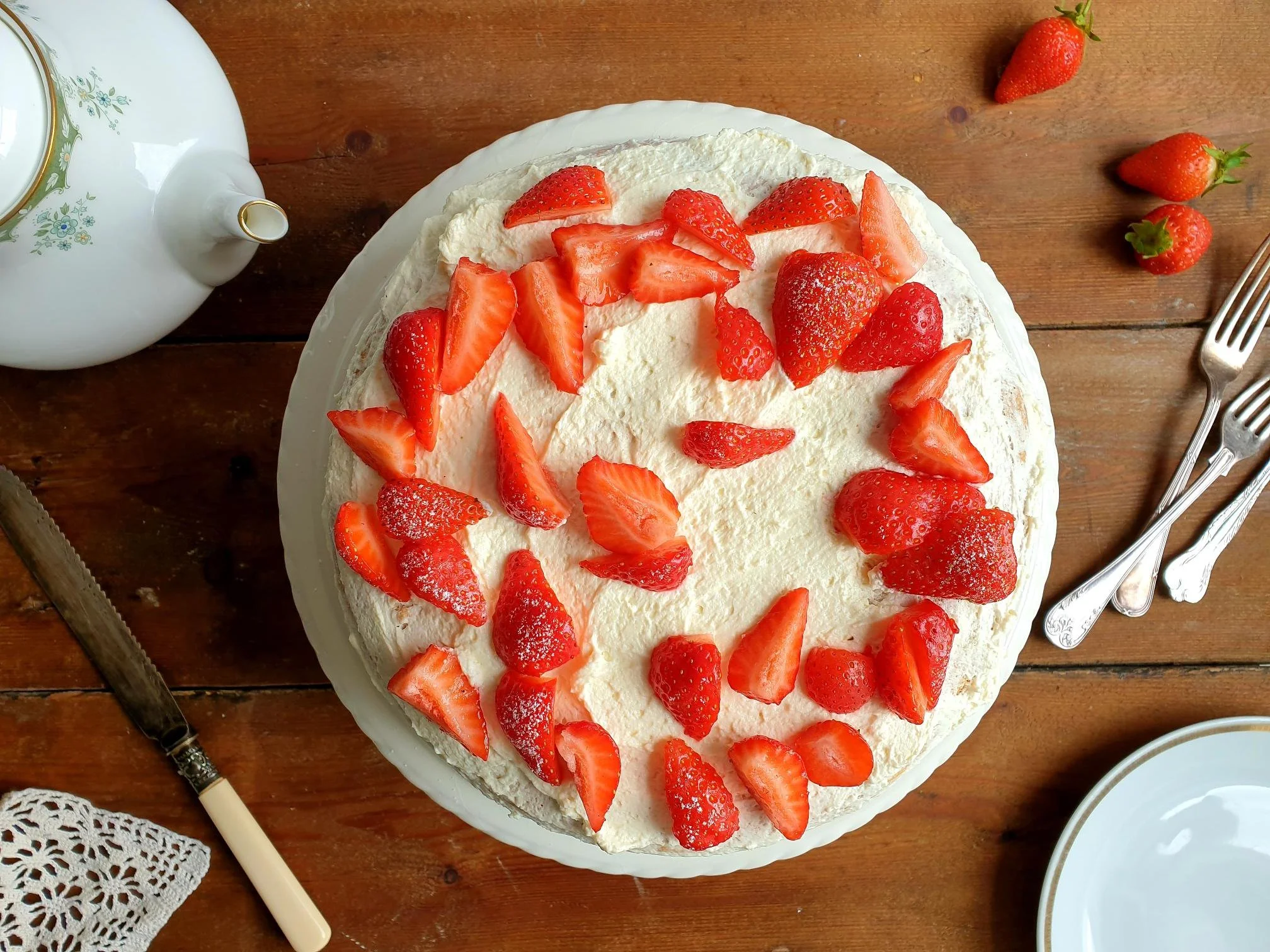
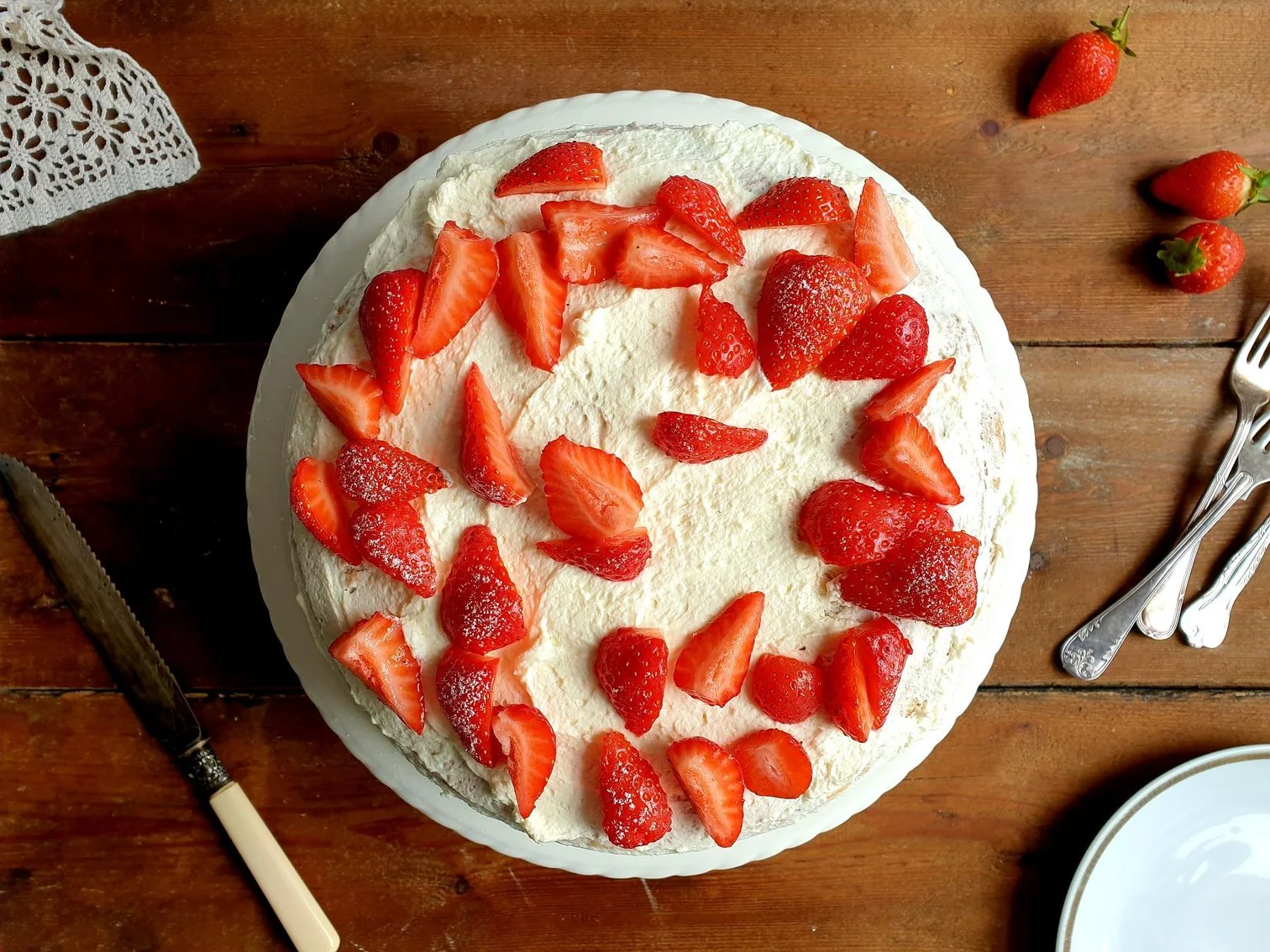
A classic simple sponge made with eggs, sugar and flour with no use of butter, filled with fresh whipped cream and fresh seasonal strawberries, a true classic celebratory cake that is difficult to beat. It is perfect for spring/summer birthdays and for all other summer special occasions, it is a top favourite with all ages.

This cake is delicious in taste with the lightest and fluffiest sponge; beautiful and elegant in its appearance, it looks like it has just come from the patisserie shop and yet could not be simpler to make.

With a few ingredients and a few simple steps you will impress your family and friends, and they will ask you for the recipe before they leave!

This celebratory cake would accompany all my childhood and my adulthood birthdays, baked exclusively by my mother.
In Slovenian Istra this type of sponge, refereed by the locals in the dialect as”Pandišpanija” (Pan di Spagna, translates literally as Spanish Bread) was the first form of the most simple celebratory cake, it was simply dusted with the sugar on the top and baked for special occasions like weddings. It is believed to originate during Napoleon's reign (19th century), and was first used in Croatian side of Istra, and then to then spread into a Slovenian part. Only later this type of sponge was cut horizontally in half and filled with different types of cream which resembles more to a modern concept of celebratory cake.

She would bake this type of cake for every birthday in the family and for her special friends, changing the fruits a bit to reflect the seasons. Peaches work very well and, in the winter, when the selection of fresh fruit is limited, she would use different types of tinned fruit which works amazingly well, the syrup from the tin was used to spoon the disc of the sponge.

No one will ever get fed up with this celebratory cake, we never had to struggle with any leftovers, bake it and see for yourself!

I am sharing the recipe for this special cake to remember and to honour my mother who recently died, so her legacy for this celebratory cake can live on for years to come.

Recipe

Ingredients

For the Sponge

  • 4 eggs (room temperature)

  • 4 Tbsp cold water

  • 200g icing sugar

  • 1 Tsp vanilla extract or 1 sachet of vanillin powder (very widely used in continental Europe baking)

  • 150g all purpose flour, sifted

  • 8g baking powder, sifted

For the filling and topping

  • 400g fresh strawberries, washed, pat dried and halved or quartered (reserve 100g fresh strawberries to decorate the top of the cake)

  • 2 Tbsp caster sugar (can use less or more depending on the taste and the sweetness of the strawberries)

  • 2 Tbsp water

  • 300ml fresh double cream, cold

  • 2 Tbsp caster sugar or to taste

Method

Preheat the oven to 180º static.

Lightly grease (I used butter) a 22cm (9in) loose-bottomed cake tin or spring form round cake tin and line the base with baking parchment.

Separate the egg whites and the yolks. Put the egg whites in a big clean bowl and the egg yolks in a small cereal type of bowl, whisk the egg yolks lightly with the fork.

View fullsize My Mum's Celebratory Sponge Cake with fresh strawberries and cream 1.jpg
View fullsize My Mum's Celebratory Sponge Cake with fresh strawberries and cream 3.jpg

Add 4 table spoons of cold water into a bowl with egg whites and start whisking with the hand whisker.

During the whisking start gradually adding, one spoon at a time of icing sugar and keep whisking until the egg whites become stiff and firm but not dry.

View fullsize My Mum's Celebratory Sponge Cake with fresh strawberries and cream 4.jpg
View fullsize My Mum's Celebratory Sponge Cake with fresh strawberries and cream 6.jpg

Add vanilla extract and egg yolks and mix well until fully incorporated.

My Mum's Celebratory Sponge Cake with fresh strawberries and cream 8.jpg
My Mum's Celebratory Sponge Cake with fresh strawberries and cream 9.jpg

Slowly and gradually start adding sifted flour together with baking powder.

Gently fold until thoroughly blended, do not mix with the hand mixer as you want to keep all the air inside the mixture which will make the cake incredibly soft and fluffy.

View fullsize My Mum's Celebratory Sponge Cake with fresh strawberries and cream 11.jpg
View fullsize My Mum's Celebratory Sponge Cake with fresh strawberries and cream 12.jpg

Transfer the mixture into the prepared tin and bake in the pre-heated oven for about 25 minutes or until golden in colour, well risen and the top of the cake springs back when lightly pressed with a finger.

View fullsize My Mum's Celebratory Sponge Cake with fresh strawberries and cream 13.jpg
View fullsize My Mum's Celebratory Sponge Cake with fresh strawberries and cream 14.jpg

While the cake is baking prepare the strawberries for the filling. Wash and pat dry 300g of strawberries, cut the smaller strawberries in half and the bigger ones in quarters. Place them in the bowl, add 2 table spoons of caster sugar (or to taste) and two table spoons of water.

View fullsize My Mum's Celebratory Sponge Cake with fresh strawberries and cream 24.jpg
View fullsize My Mum's Celebratory Sponge Cake with fresh strawberries and cream 25.jpg

Mix well and leave the strawberries to macerate, put aside until needed.

View fullsize My Mum's Celebratory Sponge Cake with fresh strawberries and cream 26.jpg
View fullsize My Mum's Celebratory Sponge Cake with fresh strawberries and cream 27.jpg

Filter the strawberries, put them in a sieve and collect the juices.

View fullsize My Mum's Celebratory Sponge Cake with fresh strawberries and cream 29.jpg
View fullsize My Mum's Celebratory Sponge Cake with fresh strawberries and cream 28.jpg

Leave the sponge to cool in the tin for a few minutes, then remove from the tin and peel off the baking parchment.

Finish cooling on a wire rack.

View fullsize My Mum's Celebratory Sponge Cake with fresh strawberries and cream 15.jpg
View fullsize My Mum's Celebratory Sponge Cake with fresh strawberries and cream 16.jpg

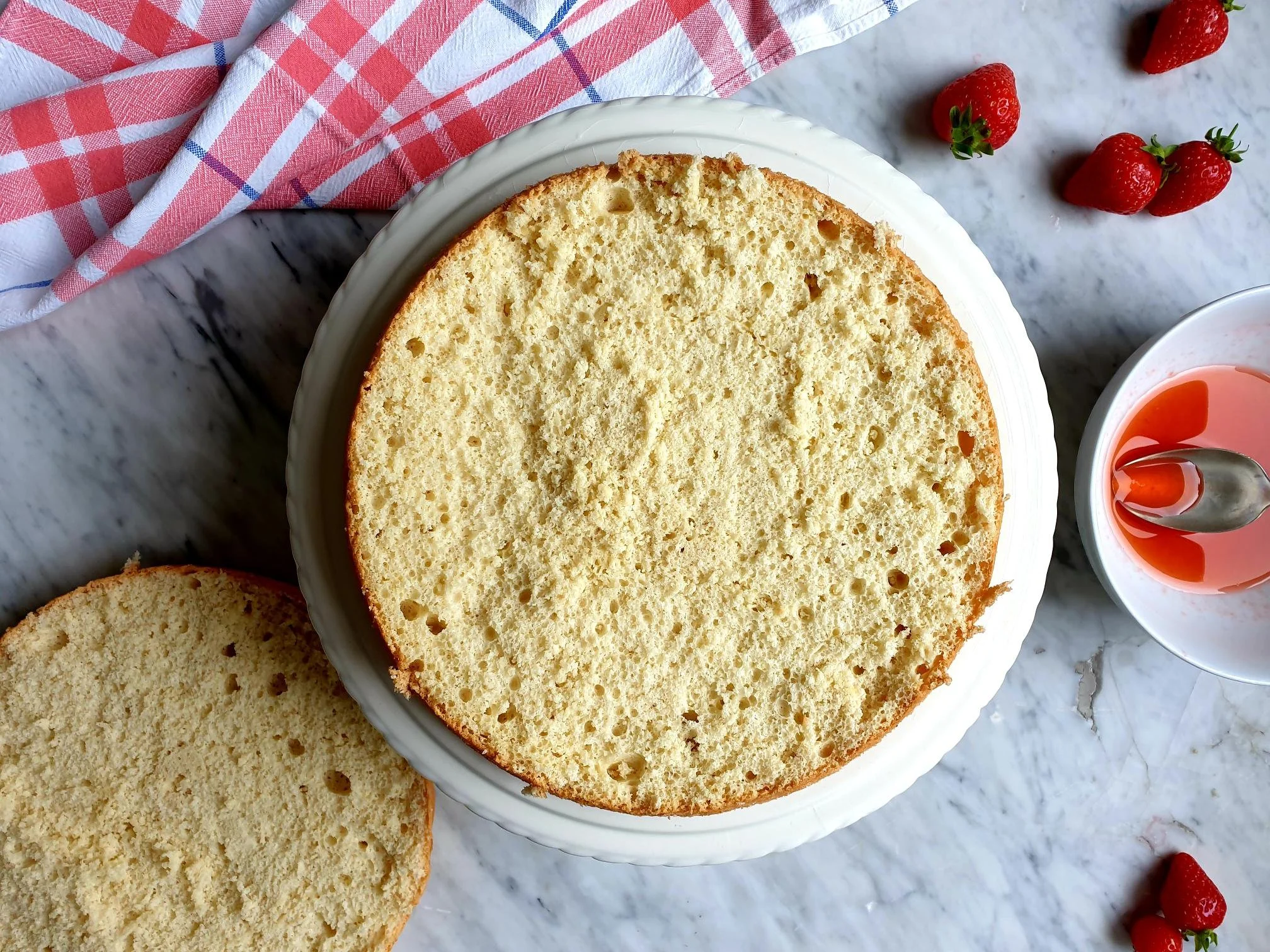
When the sponge is completely cool, take a sharp knife and cut the cake horizontally in half so you obtain two discs.

View fullsize My Mum's Celebratory Sponge Cake with fresh strawberries and cream 20.jpg
View fullsize My Mum's Celebratory Sponge Cake with fresh strawberries and cream 21.jpg

Place the bottom disk of the sponge on a cake stand of your choice.

Take fresh double cream from the fridge and pour it into a mixing bowl. Start whisking with the hand whisker.

During the whisking start adding caster sugar and whisk until the cream becomes stiff enough to be able to spread it on the cake.

View fullsize My Mum's Celebratory Sponge Cake with fresh strawberries and cream 31.jpg
View fullsize My Mum's Celebratory Sponge Cake with fresh strawberries and cream 32.jpg

Spoon strawberry juices over a bottom disk of the sponge.
View fullsize My Mum's Celebratory Sponge Cake with fresh strawberries and cream 34.jpg
View fullsize My Mum's Celebratory Sponge Cake with fresh strawberries and cream 36.jpg

Spread roughly 1/3 of whipped cream.

View fullsize My Mum's Celebratory Sponge Cake with fresh strawberries and cream 37.jpg
View fullsize My Mum's Celebratory Sponge Cake with fresh strawberries and cream 38.jpg

Then arrange the macerated strawberries over the disc to completely cover it.

Place the second disk of the sponge on the top.

View fullsize My Mum's Celebratory Sponge Cake with fresh strawberries and cream 39.jpg
View fullsize My Mum's Celebratory Sponge Cake with fresh strawberries and cream 40.jpg

Spread the rest of the cream on the top and on the sides of the cake.

Decorate to your liking the top of the cake with fresh strawberries, sliced or left whole.

View fullsize My Mum's Celebratory Sponge Cake with fresh strawberries and cream 43.jpg
View fullsize My Mum's Celebratory Sponge Cake with fresh strawberries and cream 44.jpg

Dust with a bit of icing sugar if desired and serve.

Just a thought

This cake must be eaten on the day of filling. You can prepare the sponge a day ahead, cool it completely and store it in an airtight container until the following day when is ready to be filled and decorated.

You can use tinned fruit of your choice instead of fresh strawberries. Make sure you reserve the syrup and use it to spoon over the bottom disc of the sponge as described in the recipe.

July 30, 2024 /tina oblak
sponge cake, double cream, whipped cream, fresh fruit, tinned fruit, celebratory cake, Pandišpanija, Pan di Spagna
Adriatic Recipe, All year round recipe, baked dish, baking, celebratory desserts, Celebratory dish, easy baking, easy cakes, Easy recipe, festive bakes, festive dessert, festive dish, festive sweet things, pudding, simple recipe, sweet course, patisserie
Comment

Austrian inspired Linzer Cookie Recipe

Beans and Sardines
December 21, 2023 by tina oblak in All year round recipe, Austrian inspired dishes, baking, biscuits, Central European recipes, Christmas bakes, cookies, dessert, Eastern European recipes, easy baking, Easy recipe, festive bakes, festive sweet things, simple recipe, sweet nibbles, Sweet Things

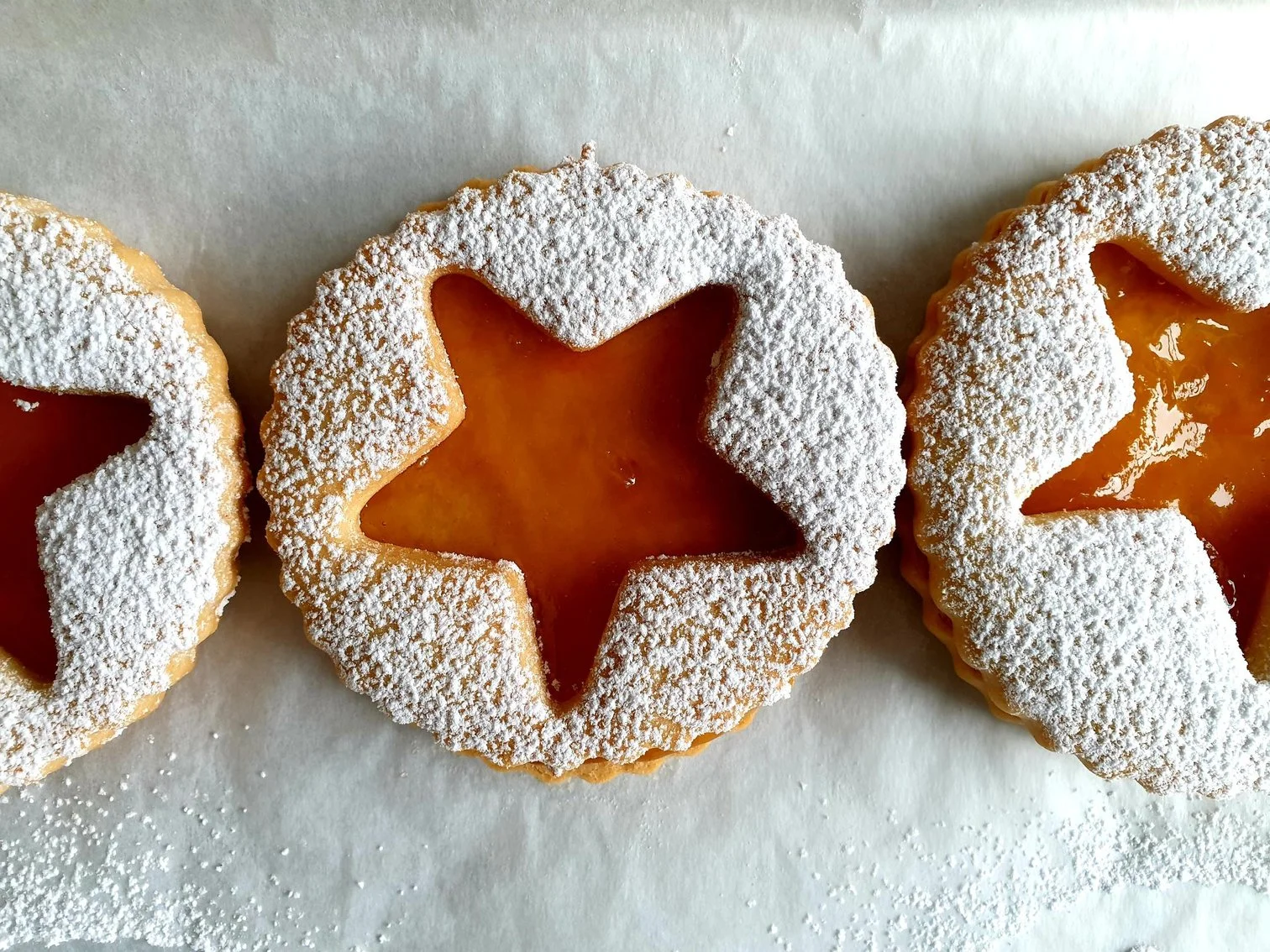
This incredibly delicious and very pretty in appearance biscuits are made with flour, butter, sugar, eggs and vanilla. Almond flour is very often used to give these irresistible cookies a delicate and light texture. They are jammed together with different types of preserves.

Quick and easy to make, this little works of art can be a perfect holiday gift for your foodie friends and family.

Linzer style cookies are very popular type of biscuits and are traditionally prepared around Christmas holidays in all regions of Slovenia but can be eaten any time of the year.

You can buy them in food stores or bakeries, and they are enjoyed all year round. They are often seen sandwiched together by chocolate spread.

These biscuits are Austrian in origin, and are linked to Linzer Cake, a recipe takes us back to 1653, and so it is often called the oldest recipe in the world. There are speculations, guesses and different legends and stories as to where the Linzer cookies come from. It is believed that Linzer biscuits originated in the Austrian city of Linzer by a pastry chef, who mixed the ingredients for the cake but rather than making a cake cut out the cookies instead.

This recipe, like many others, has variations and adaptations, one of which does not include almond flour as an ingredient.

I am sharing here the family top favourite recipe for the festive baking.

Recipe

Ingredients

  • 125g soft butter (at room temperature)

  • 1 egg, small or medium (at room temperature)

  • 75g caster sugar

  • 1 ½ Tbsp vanilla sugar or ¼ Tsp vanilla extract

  • finely grated lemon zest of ½ lemon

  • 250g plain white (all purpose) flour, plus more for rolling out

  • 2 Tsp baking powder

  • a pinch of fine sea salt

  • icing sugar or vanilla icing sugar, to dust the biscuits

  • a pinch of ground cinnamon, optional

  • a pinch of ground nutmeg, optional

  • smooth apricot jam (can use strawberry, raspberry or red currant jam, or any jam of your preference)

Method

Place softened butter and sugar in a mixing bowl and beat until pale and fluffy.

Add the egg, finely grated lemon zest, vanilla sugar (or vanilla extract), and mix until all the egg is fully incorporated (if you happen to get a bit of “curdled appearance” at this stage do not worry).

View fullsize Linzer cookies 1.jpg
View fullsize Linzer cookies 2.jpg

Add sifted flour together with the baking powder and mix with the wooden spoon first until all the ingredients are incorporated and the dough comes together in large clumps.

Transfer to a lightly floured surface (or keep the mixture in the bowl) and with your hands gently knead the dough until it becomes soft and smooth (if the dough is too wet to handle add a bit of flour at the time until you get the dough that does not stick to your hands or to the working surface; the wetness of the dough will depend on the size of the egg you are using).

Shape the dough into a disc and wrap it tightly in cling film.

Put the dough in the fridge and let it rest and chill for at least 30 minutes.

Lay a baking tray with baking parchment.

View fullsize Linzer cookies 3.jpg
View fullsize Linzer cookies 4.jpg

Take the disc of the dough out of the fridge and place it onto a lightly floured working surface.

Lightly flour the rolling pin and gently roll out the dough to the thickness of about 4mm.

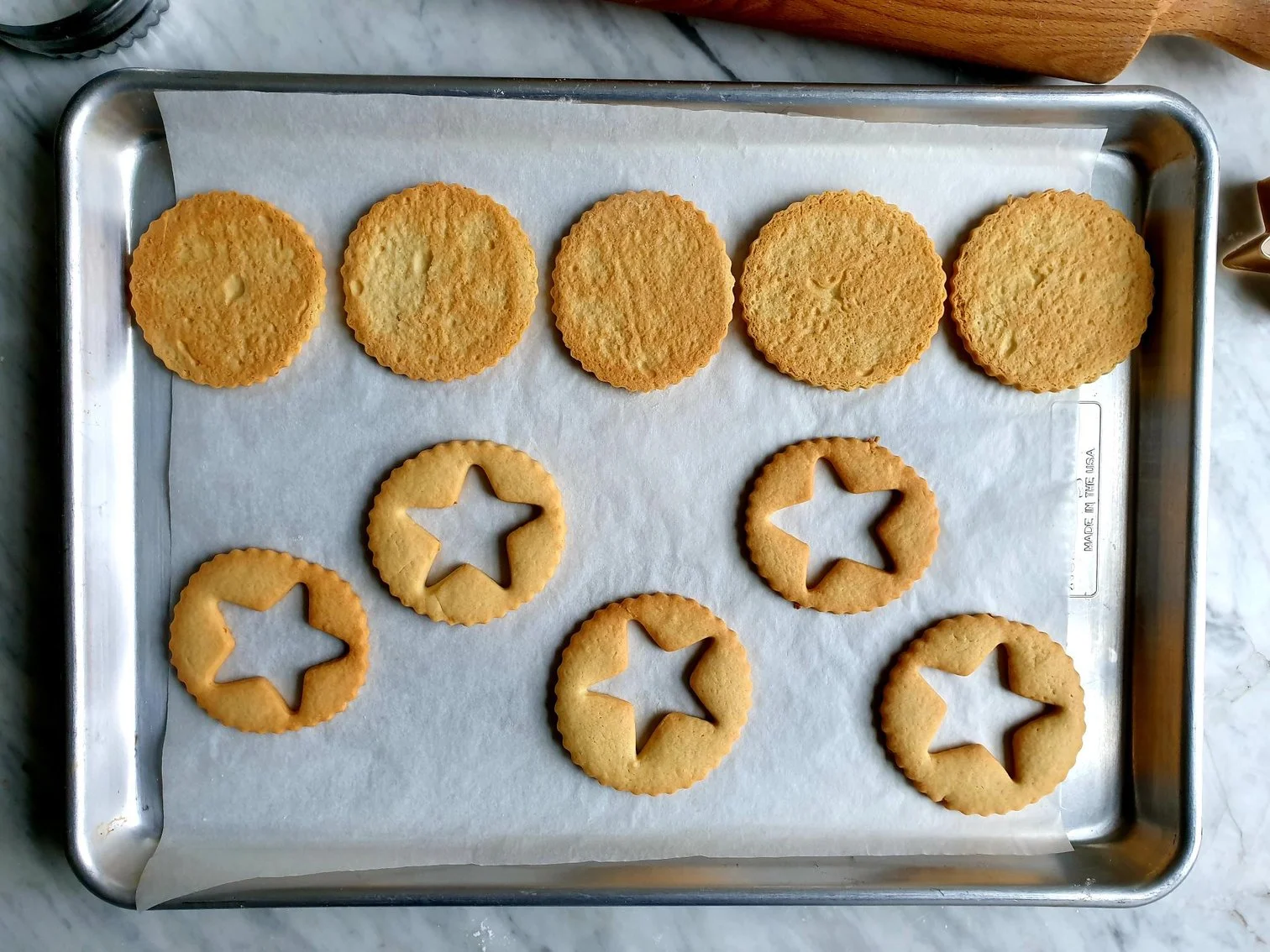
Stamp out rounds (circles) using a smooth or crinkle-edged cookie cutter and place on a baking tray.

(I decided to make quite big biscuits and used 9cm, 3 ½ - inch, fluted round cookie cutter).

If the dough sticks to the cookie cutters, deep them into the flour first.

Lift away the excess dough, form a ball and roll it out again.

Cut out as many more biscuits as you can.

Use a small round or select your favourite mini festive cookie cutters (heart, star, Christmas tree, flower for example) to stamp a circle, or other shapes, from the centre of the biscuits.

Remember you need to end up with an even number.

View fullsize Linzer cookies 5.jpg
View fullsize Linzer cookies 6.jpg

Place on a baking tray and bake in a preheated oven at 180°C static or equivalent for about 10 minutes or until light golden in colour (the baking time will depend on the size of the cookies).

View fullsize Linzer cookies 7.jpg
View fullsize Linzer cookies 8.jpg

When baked, leave to cool just for a few minutes on the tray, then transfer to a wire rack to cool completely.

View fullsize Linzer cookies 9.jpg
View fullsize Linzer cookies 10.jpg

When the biscuits are completely cold, they are ready to be sandwiched together.

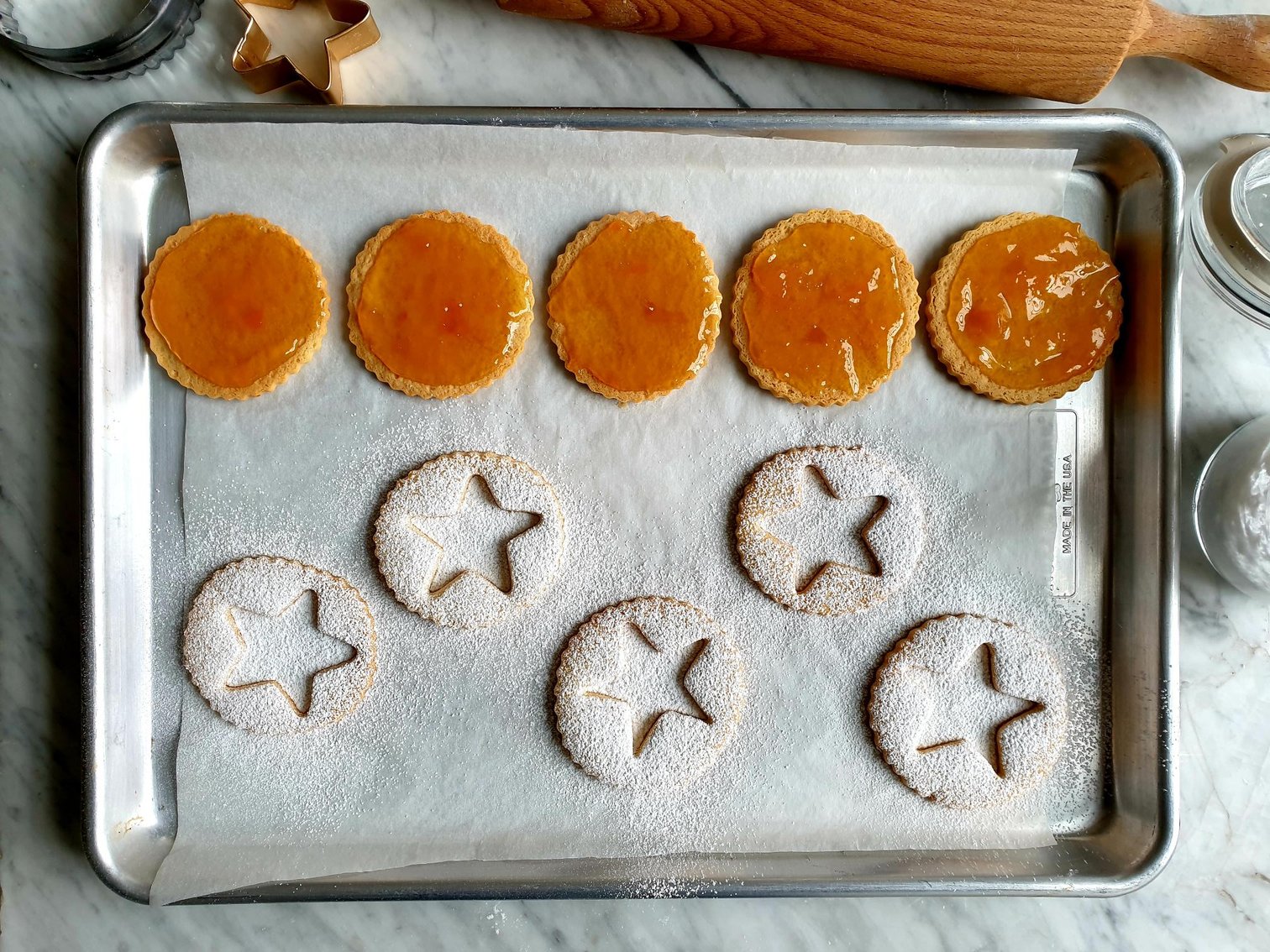
Turn the whole biscuits upside down.

Spoon on top a bit of jam and spread it over the biscuits.

View fullsize Linzer cookies 12.jpg
View fullsize Linzer cookies 13.jpg

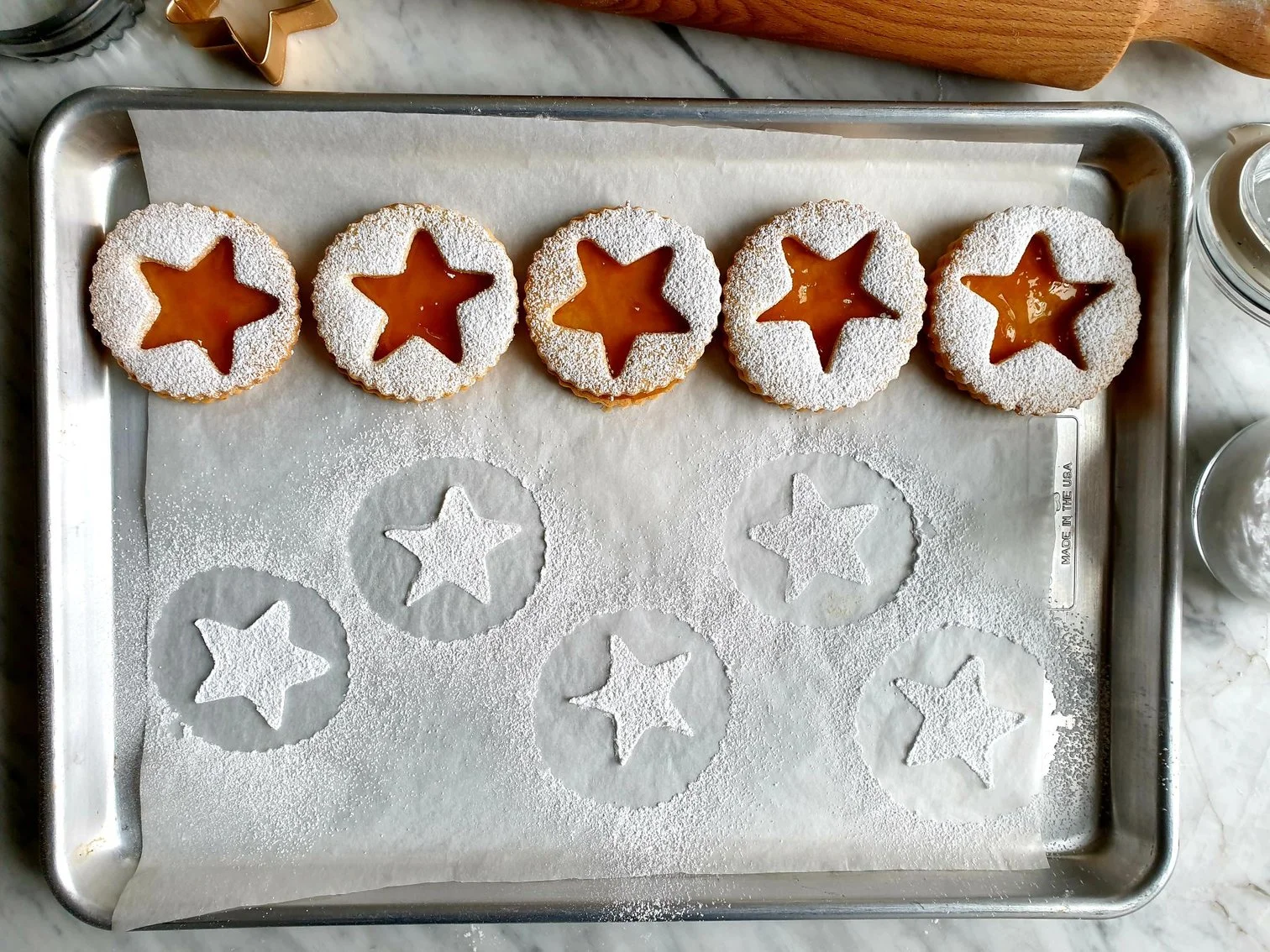
Dust with icing sugar or vanilla icing sugar the top part of the cookies you cut the shape out of.

View fullsize Linzer cookies 14.jpg
View fullsize Linzer cookies 15.jpg

Sandwich the biscuits together, use the other half of the biscuits with icing sugar and gently place them on top of the other bottom half of the biscuits.

When freshly baked this Linzer style biscuits are nice and crunchy but will become softer the following day and just melt in your mouth.

Just a thought

You can keep the biscuits in the airtight container for about six days.

December 21, 2023 /tina oblak
linzer cookies, Linzer biscuits, almond flour
All year round recipe, Austrian inspired dishes, baking, biscuits, Central European recipes, Christmas bakes, cookies, dessert, Eastern European recipes, easy baking, Easy recipe, festive bakes, festive sweet things, simple recipe, sweet nibbles, Sweet Things
Comment

Sweet Dough Yeasted Rings (Busolai) Recipe

Beans and Sardines
May 31, 2023 by tina oblak in All year round recipe, baked dish, baking, biscuits, breakfast, brunch, celebratory desserts, Celebratory dish, cookies, dessert, Easter, Easter recipes, easy baking, Easy recipe, Enriched dough, festive bakes, festive dessert, festive sweet things, home baking, Istrian cuisine, Istrian food, Istrian gastronomy, recipe from Northern Ital, simple recipe, Slovenian cuisine, Slovenian Easter Sweet Br, Slovenian food, Slovenian gastronomy, Snacks, Sweet bread, sweet course, sweet nibbles, Sweet Things

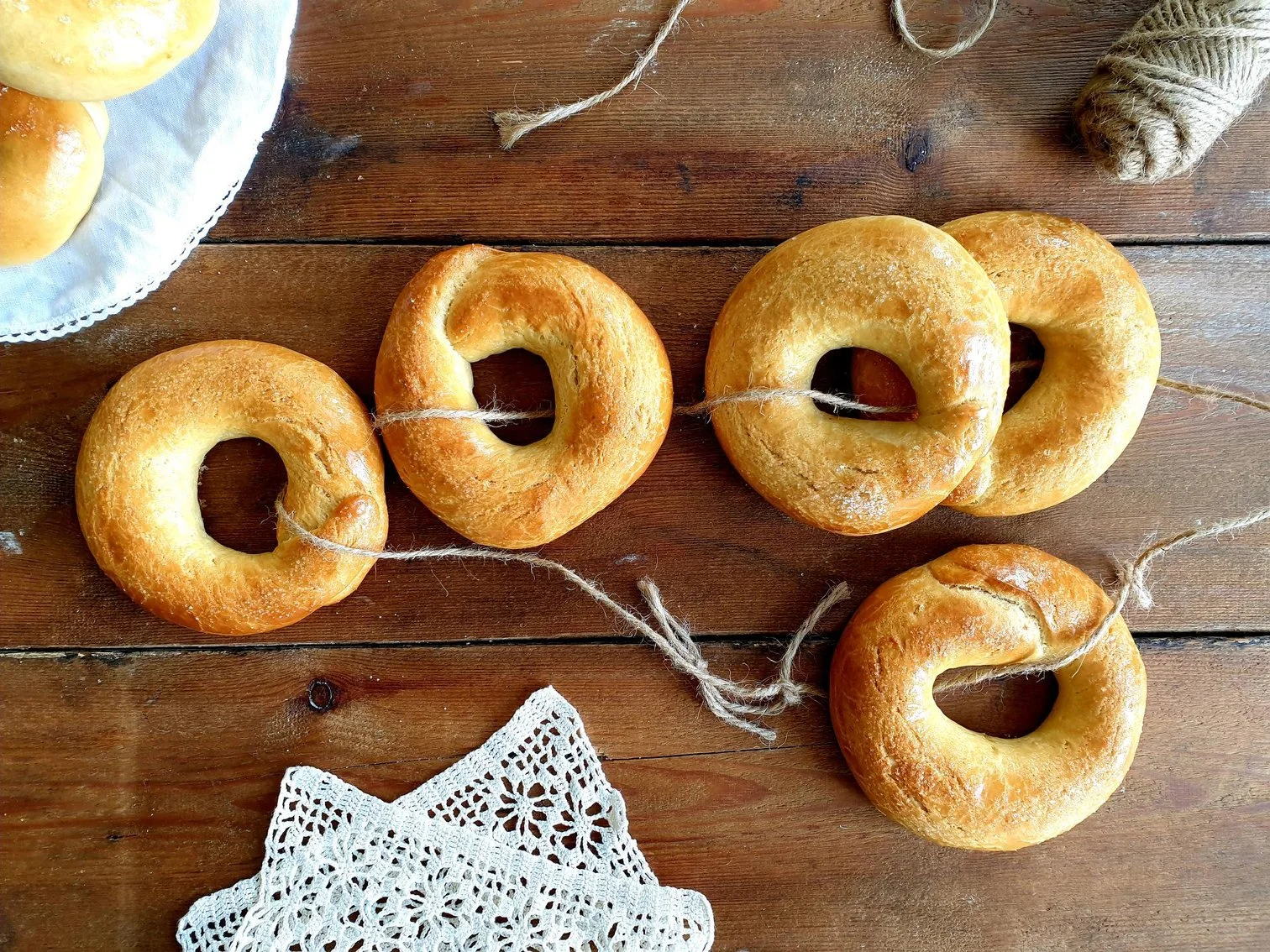
Busolai (also spelled Bussolai or Buzolai) are sweet treats that originate in the region of Veneto in north-east Italy. They are characteristic of Venice, and in particular on the fishermen island of Burano, hence these baked delights are also called Buranei (Burano buiscuits).

They are known as biscuits as they have the consistency of a biscuit, the dough does not contain the yeast, and it can be shaped into a ring or like the letter “S” (not a coincidence, since the S-shaped form of the biscuits makes it easier to dunk into milk or sweet wines).

They used to be only prepared and enjoyed during Easter festivities but nowadays almost every bakery on the island of Burano and in Venice sells them all year round.

Apparently, the letter from the Government of Venice, which still exists, has been found in the national archives of Italy, warning the nuns of the convent of St. Matthew on an island in the Venetian Lagoon that they should cut the number of Bussolai enjoyed during Easter festivities or otherwise they would encounter financial troubles.

The recipe for these biscuits, however, travelled further east, through the region of Friuli, and reached the city of Trieste (in Italy), and the land of Slovenian Istria across the “border”, where the recipe took a slightly different turn

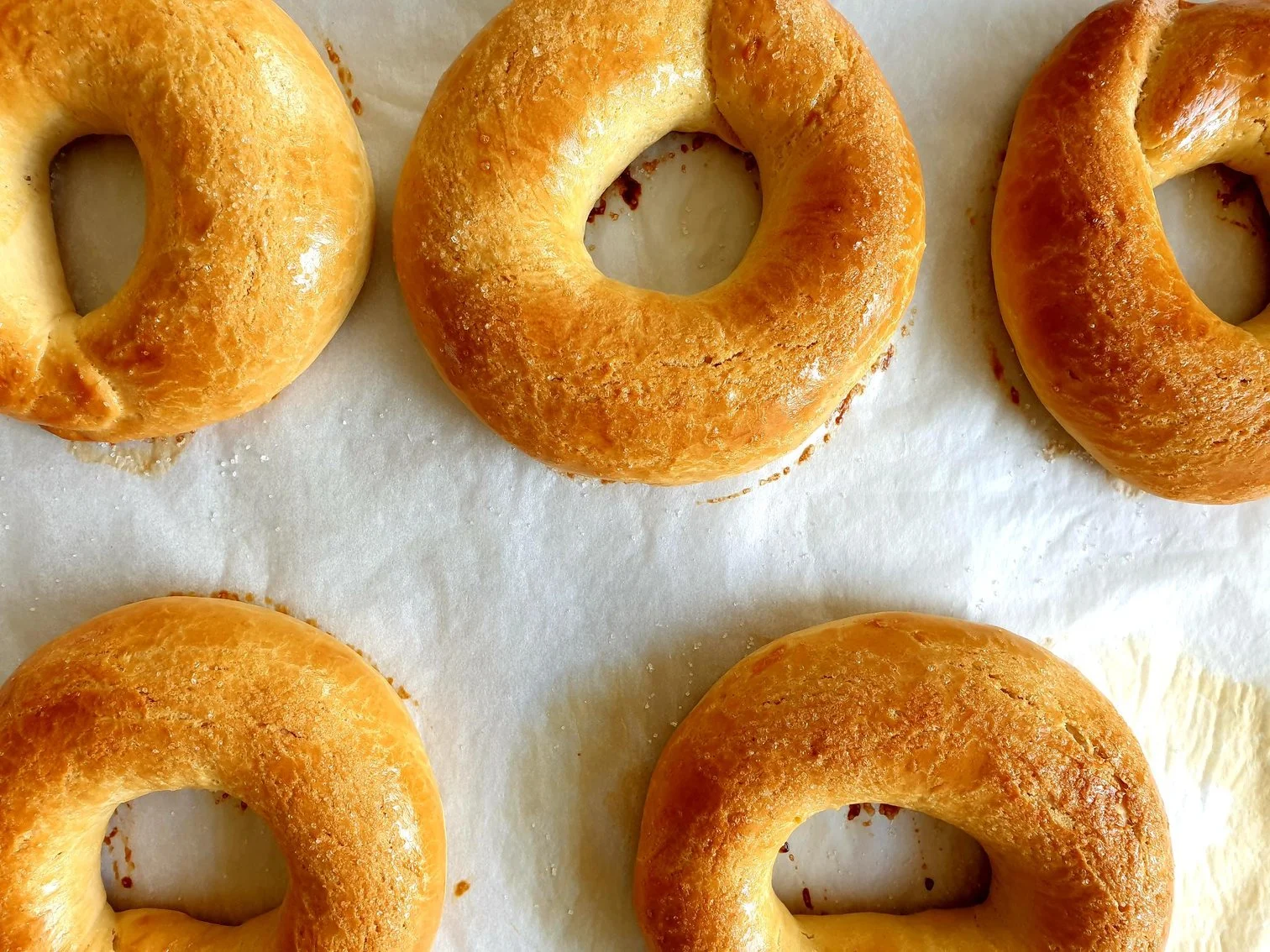
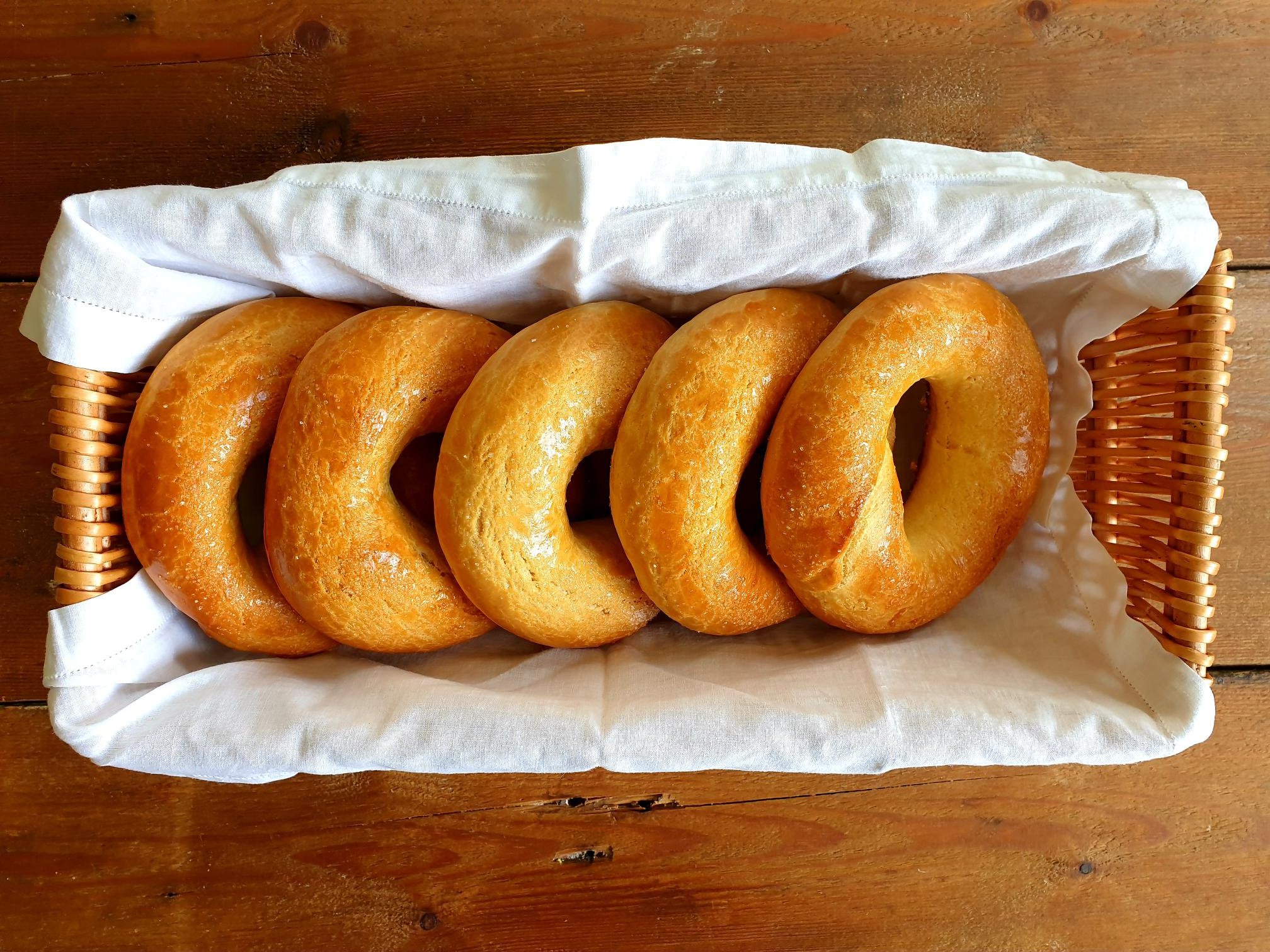
The yeast was added to the dough making these baked goodies resemble more like soft doughnuts than the cookies, in fact, in the area they are described by the locals as sweet bread rings (obročki iz sladkega kruha).

As soon as they were freshly baked, it was a custom of some locals to spoon a bit of rum or grappa over them and sprinkle them with extra sugar.

Being like biscuits or doughnuts, they have one unmistakable characteristic in common, they have a hole in the centre, called “busa” in Venetian dialect”, hence their name, Busolai.

To make things more confusing in terms of naming this sweet treat, busolai are sometimes known as “kolach”, name originated from Old Slavonic word kolo meaning “wheel” or “circle”.

Once again, they were baked during festivities, especially during Easter since a great percentage of eggs are used in the recipe (egg representing the symbol of rebirth and resurrection).

These sweet baked rings were traditionally very popular during Confirmation (a rite in the Christian Church, at which baptized persons affirm their Christian belief, and are admitted as a full member of the Church).

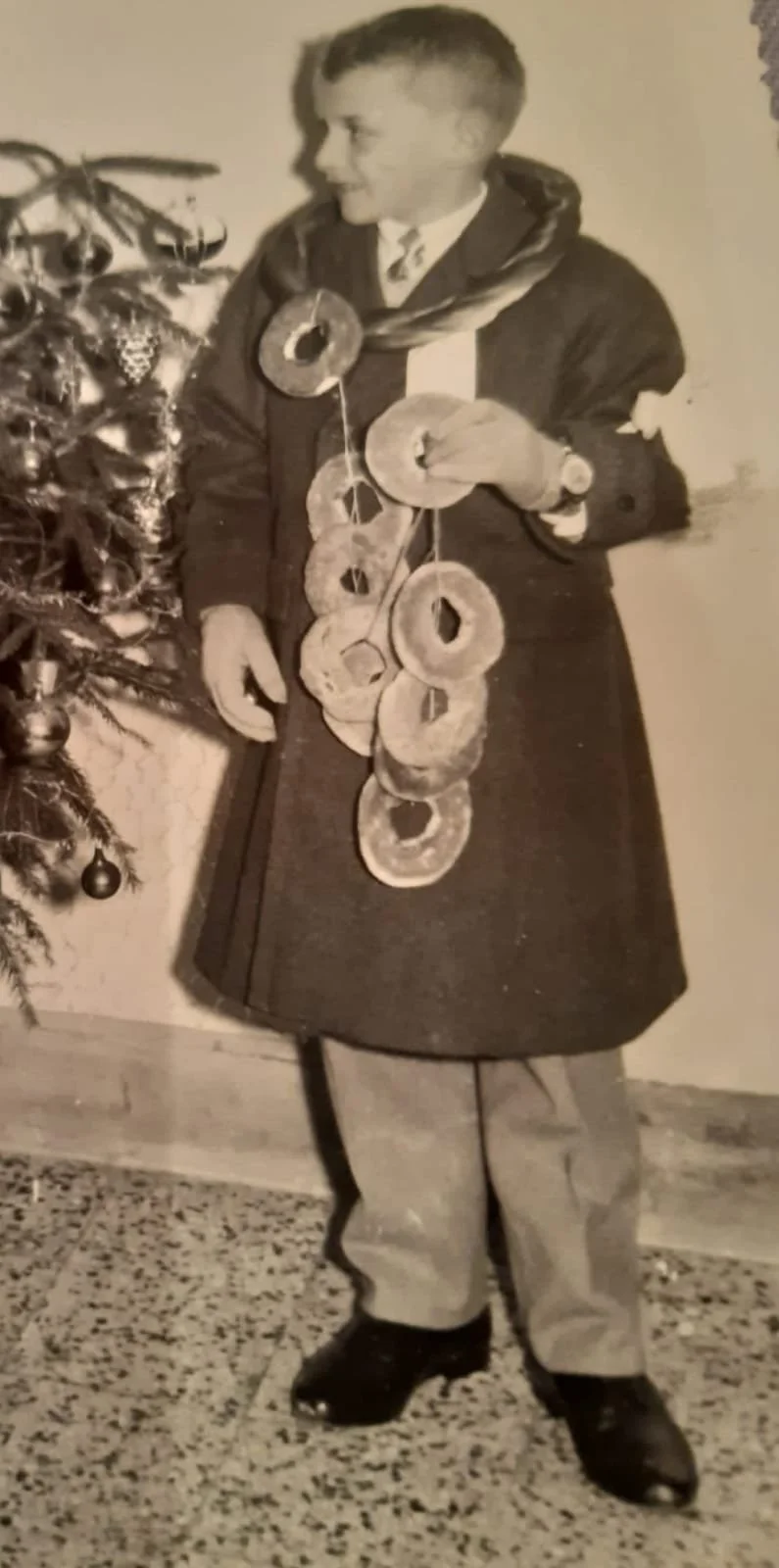
Busolai were made into a garland with the use of a simple string and the godfather would gift these to his god child. This is described by a very well know and famous proverb in local dialect “Chi ga santoli ga buzzolai” (only the one who has a godfather will get busolai).

This tradition would be furthermore highlighted by another proverb in the local dialect “Bezi, basi e bussolai no i xe boni se no I xe assai,” which translates in standard Italian as (Soldi, baci e bussolai non sono buoni se non sono assai), and in English means that money, kisses and bussolai are no good if not given in abundance.

My husband’s uncle (known as zio Livio) with a garland of bussolai received on his Confirmation day by his godfather

This custom used to be very popular in Slovenian Istra, and almost each village would have a slightly different recipe for it. I am sharing with you my nona's recipe from the village of Marezige, a few kilometres from a coastal town of Koper where there used to be only one baker in town, at the time when my nona was a little girl, selling busolai, run by a family of Venetian origin.

Very sadly, there are no bakers selling busolai anymore, moreover, the custom of godfathers gifting the children with busolai has completely died out, and younger generations have never seen or heard of busolai.

Only a bunch of elderly people still alive today will tell you, with nostalgic voices and tearful eyes, with touching and emotional stories about their Confirmation Day, and they very much anticipated sugar coated busola, the only gift they received, if they were lucky enough.

Recipe

Ingredients

  • 500g regular plain flour

  • 1 cube of fresh (brewer's) yeast 42g or 14g of dry yeast

  • 100g unsalted butter, melted

  • 150g sugar

  • 2 medium eggs, lightly beaten

  • 2 egg yolks, lightly beaten

  • 100ml tepid lukewarm milk (semi skimmed or full fat)

  • 2 Tbsp dark rum or grappa (alcoholic, fragrant grape-based pomace brandy of Italian origin)

  • finely grated lemon zest of 1 unwaxed lemon

  • pinch of sea salt

  • 1 small egg, lightly beaten, for glazing (can use lightly beaten egg whites, the busolai will result lighter in colour after baking)

Method

In a small bowl place dry or fresh yeast (if using fresh yeast slightly brake it down into smaller pieces with your fingers).

Add 100ml of lukewarm milk and ¼ tsp of caster sugar.

Gently stir and leave for about 20 minutes or until gentle bubbles form on the surface.

In a separate mixing bowl put the eggs, egg yolks and beat them gently.

Add melted butter, sugar, rum or grappa, grated lemon zest and a pinch of sea salt, and with the fork mix well all the ingredients.

In a large mixing bowl put the flour, add egg mixture and the yeast mixture.

Combine well all the ingredients with the wooden spoon or spatula to start with. When all the ingredients are well combined transfer the mixture onto a clean, floured surface.

Work with your hands and knead the dough for about 10-15 minutes, stretching it and folding it, adding a little flour at the time if the dough is too sticky.

Knead the dough until it becomes smooth, soft, shiny and elastic (the dough should not stick to the surface or your hands).

Shape the dough in a ball, place it back into a previously oiled mixing bowl.

Cover tightly with cling film, leave to rest and prove in a draft free space at a room temperature for 3 hours.

After this time your dough should be at least double in size.

Line 2 large flat baking trays with baking parchment.

Take the dough out of the mixing bowl, place it on a working surface, knock the air out of the dough and shape it into a log.

View fullsize Busolai 3.jpg
View fullsize Busolai 4.jpg

Divide the dough into more or less equal parts (10-12 parts each weighting roughly 100g).

Shape each piece of the dough into a sausage and form a ring, pinching the ends together (make sure you are generous with the size of the ring, during the baking the busalai rise and stretch quite a bit, if the whole is too small, after the baking you will end up with busolai that have almost a non-existing hole, not that this is really a problem).

View fullsize Busolai 5.jpg
View fullsize Busolai 6.jpg

Place your ring-shaped sweet dough onto a tray.

Cover with clean tea towel and leave to prove for the second time for about 30 minutes.

Gently brush the sweet dough rings with lightly beaten egg or egg whites and sprinkle the top of the rings with sugar.

View fullsize Busolai 9.jpg
View fullsize Busolai 12.jpg

Preheat the oven to 180°C and bake for 20 to25 minutes or until well risen and deep golden brown (they will be slightly lighter in colour if you brush them with egg whites).

Remove from the oven and transfer the busolai to a wire rack to cool completely.

Busolai are best eaten within a few hours.

You can easily freeze them, just make sure you freeze them as soon as they are completely cool.

Wine suggestion

Vin Santo di Torgiano DOC 2010 - Lungarotti

May 31, 2023 /tina oblak
sweet dough yeasted rings, Busolai, Bussolai, Buzolai, Istrian Busolai, obročki iz sladkega kruha, Buranei, Buranei buiscuits, Venitian Buiscuits, sweet dough, sweet bread, Cinfirmation sweet treats
All year round recipe, baked dish, baking, biscuits, breakfast, brunch, celebratory desserts, Celebratory dish, cookies, dessert, Easter, Easter recipes, easy baking, Easy recipe, Enriched dough, festive bakes, festive dessert, festive sweet things, home baking, Istrian cuisine, Istrian food, Istrian gastronomy, recipe from Northern Ital, simple recipe, Slovenian cuisine, Slovenian Easter Sweet Br, Slovenian food, Slovenian gastronomy, Snacks, Sweet bread, sweet course, sweet nibbles, Sweet Things
Comment

Easter Sweet Plaited Bread (Tičice) Istrian Recipe

Beans and Sardines
April 07, 2023 by tina oblak in Adriatic Recipe, baking, breakfast, brunch, celebratory desserts, Celebratory dish, child friendly dish, dessert, Easter, Easter recipes, Easter treats, easy baking, Easy recipe, Enriched dough, festive bakes, festive dessert, festive sweet things, home baking, Istrian cuisine, Istrian food, Istrian gastronomy, Rustic dish, Slovenian cuisine, Slovenian Easter Sweet Br, Slovenian food, Slovenian gastronomy, Spring recipe, Sweet bread, sweet course, sweet finger food, sweet nibbles, Sweet Things

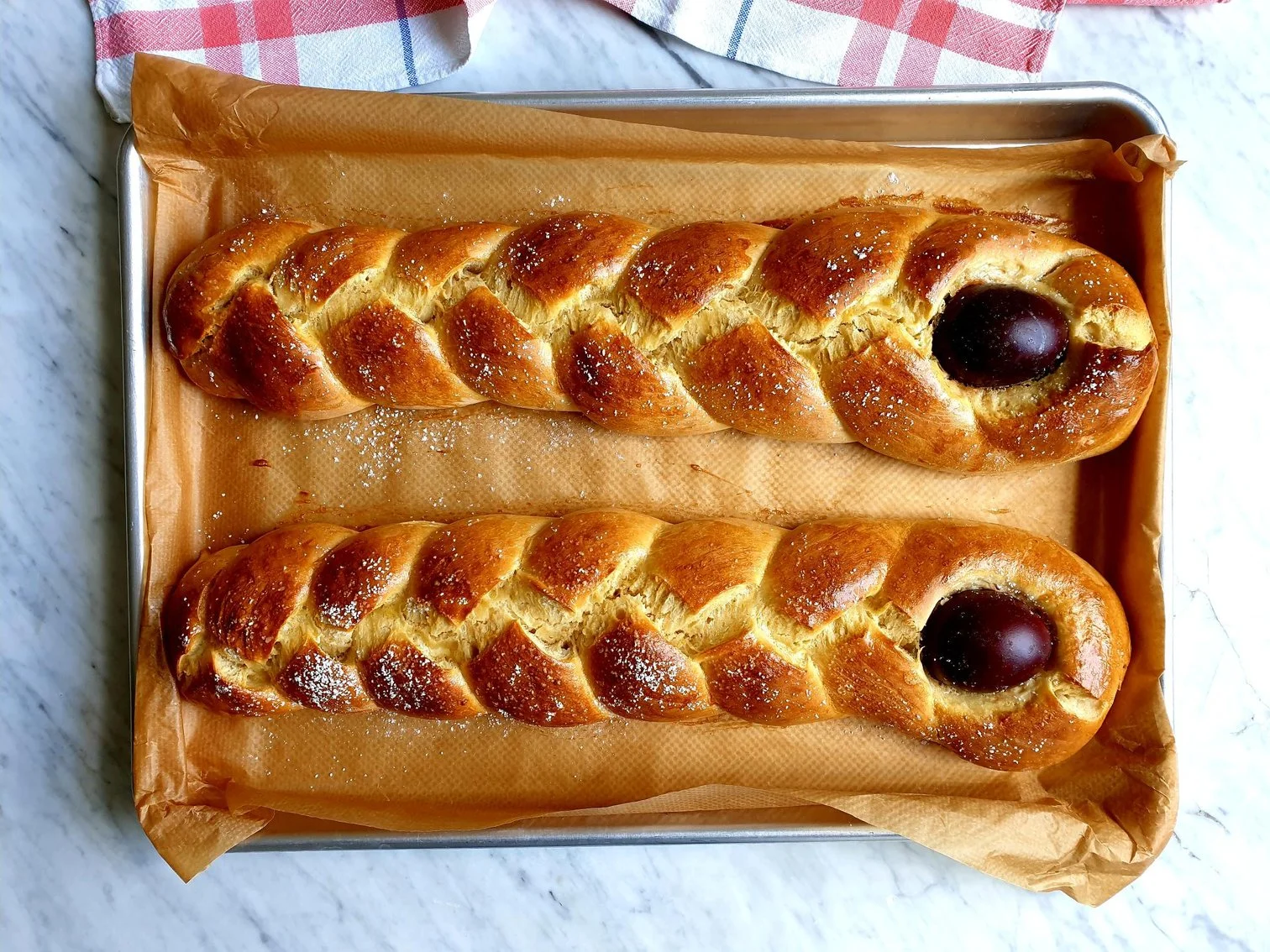
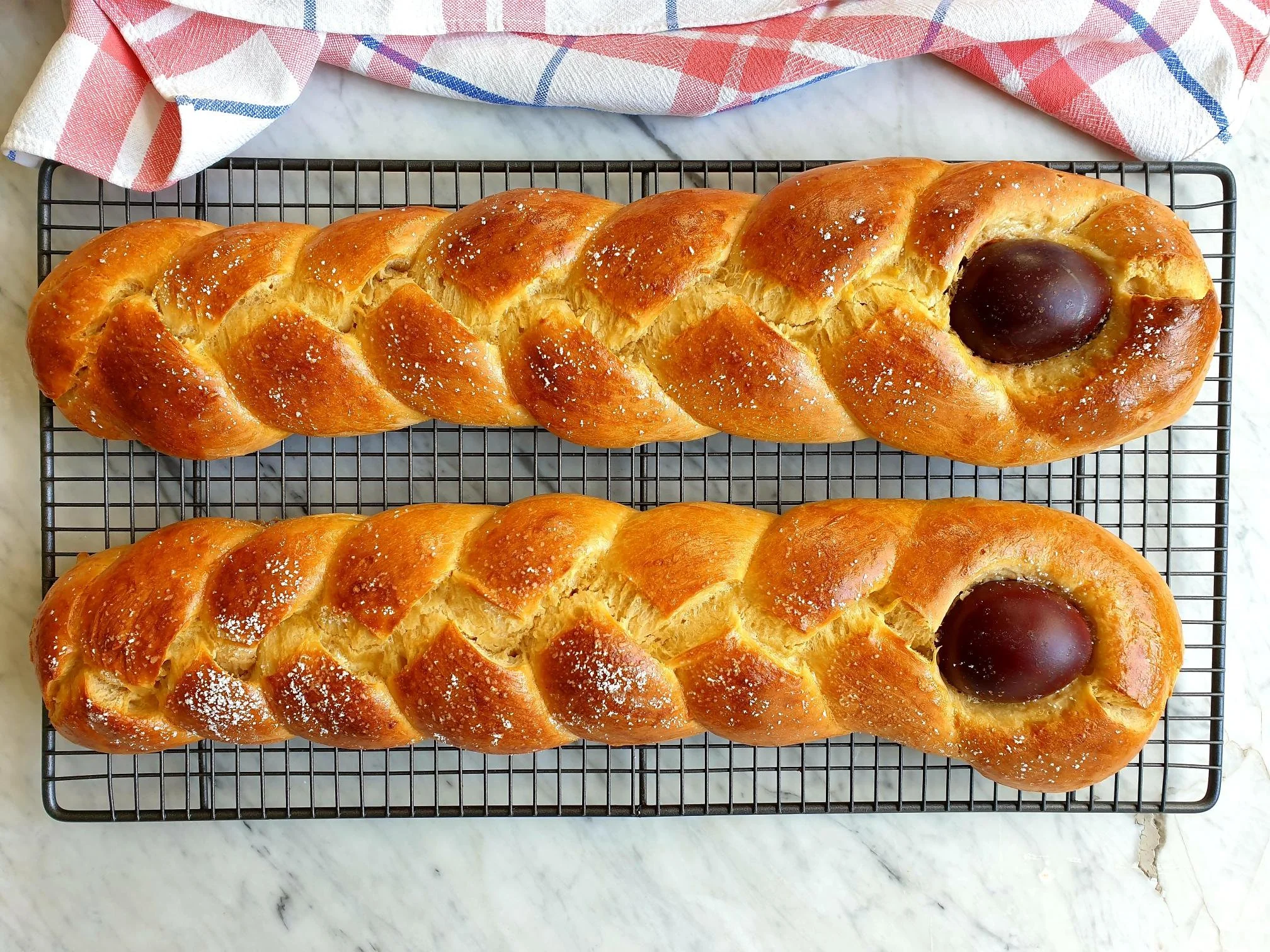
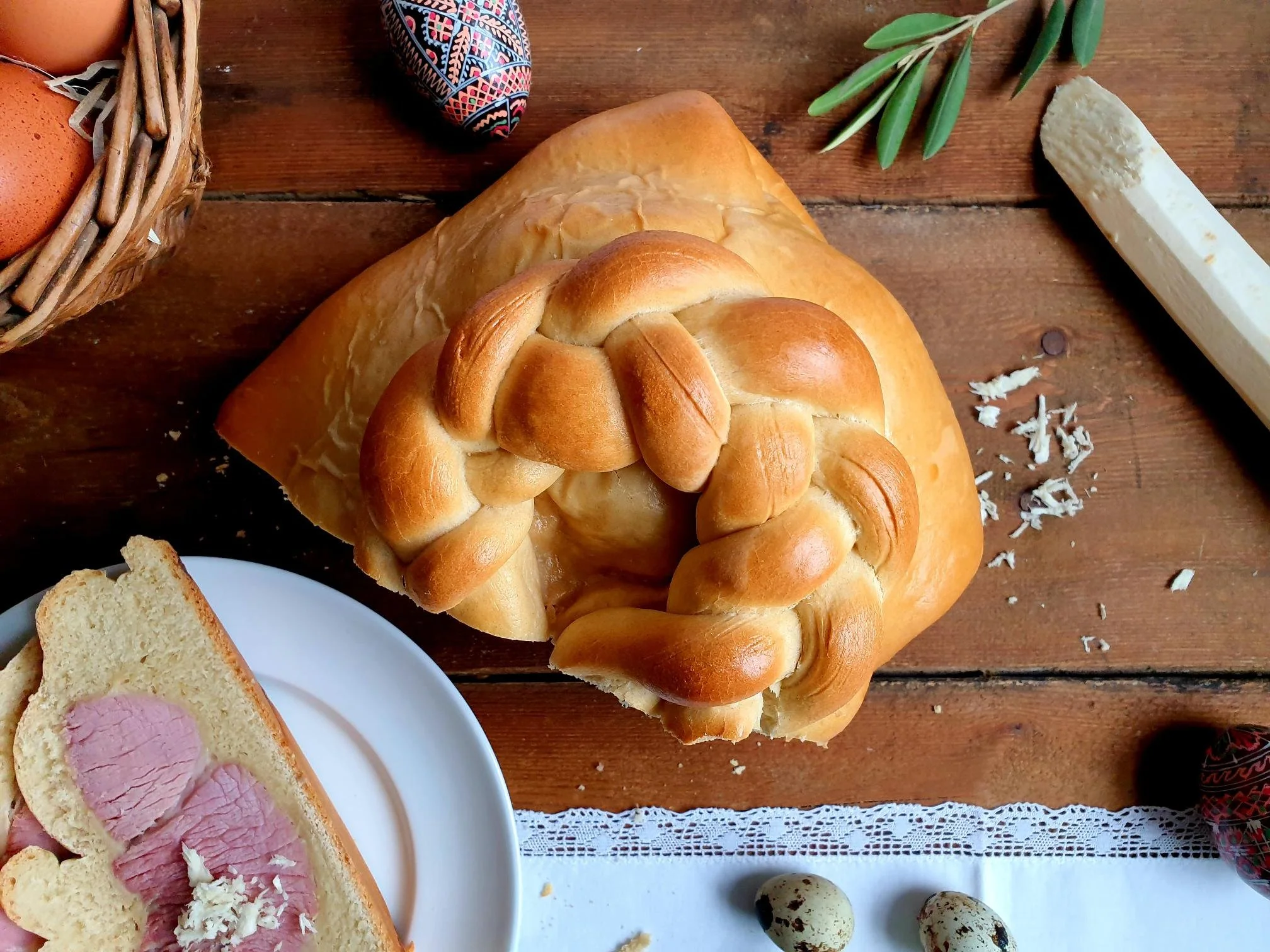
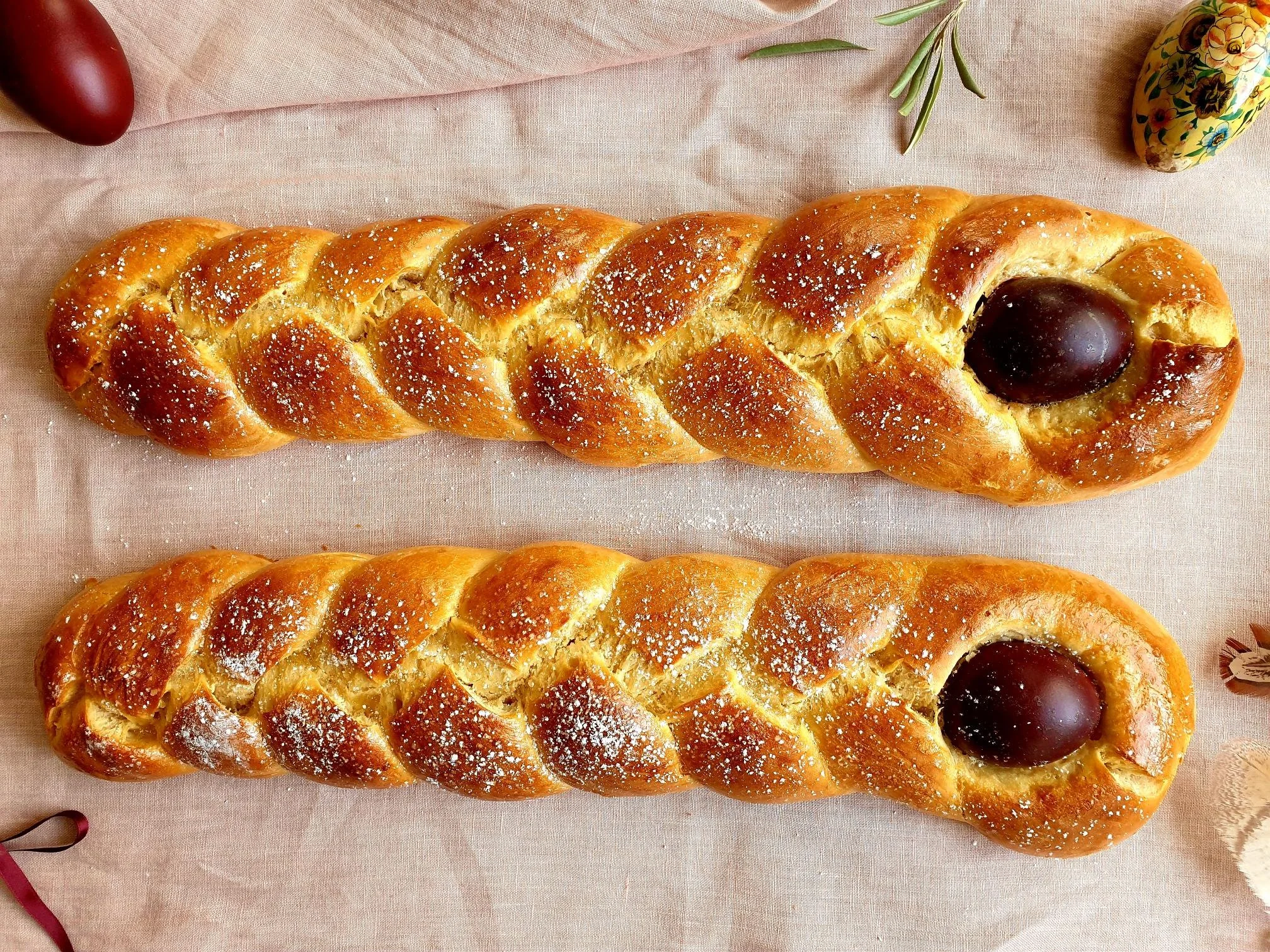
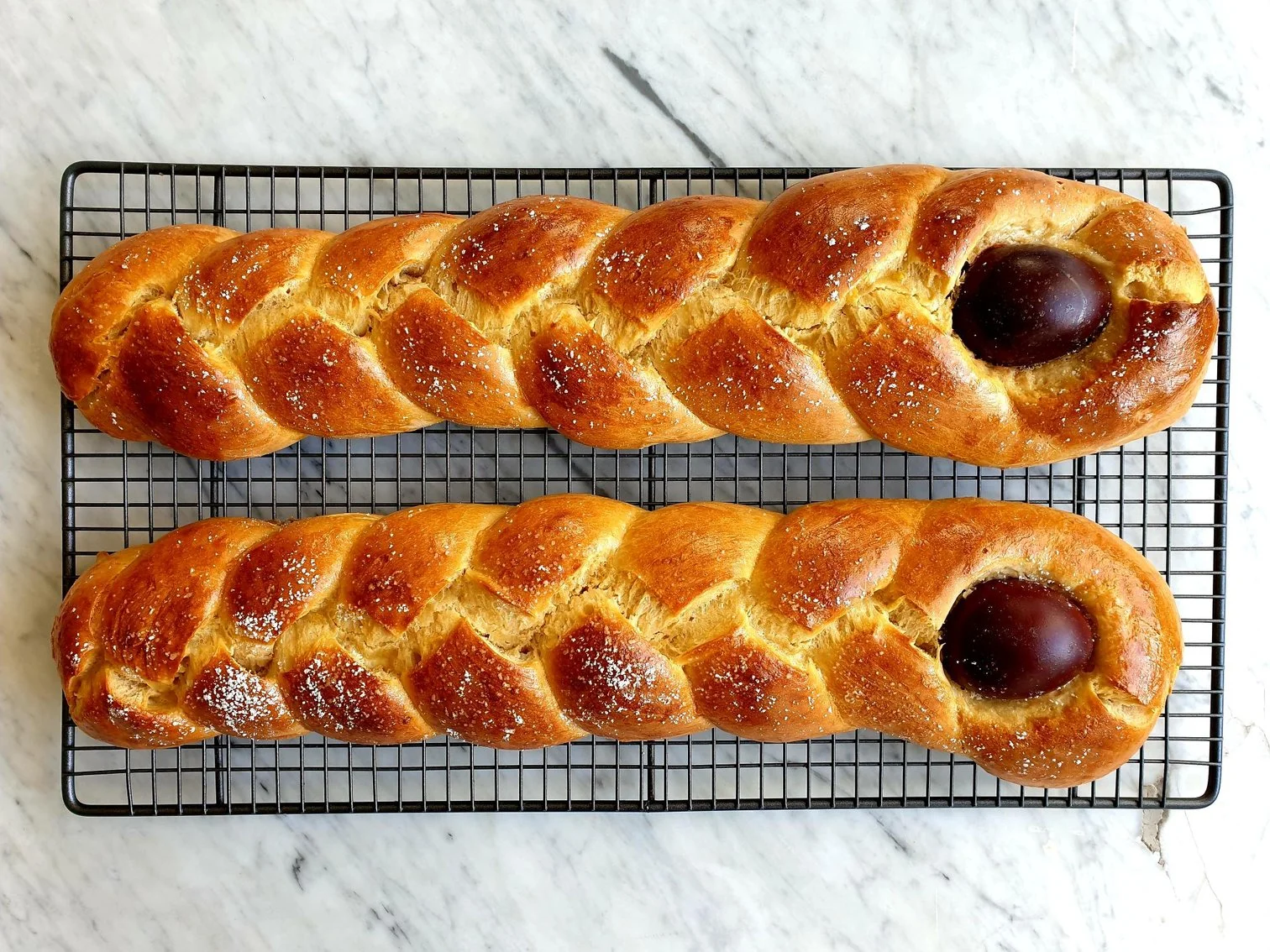
This celebratory sweet bread is similar to Jewish Challah, and is very flavoursome, soft and fluffy. It is made with yeasted enriched dough, and is shaped into a plait (or braid), and decorated with hard boiled eggs. It is very popular and traditionally baked during Easter festivities in Slovenian and Croatian Istra, Dalmatia (in Croatia) and in neighbouring Trieste in Italy and its surrounding areas.

It is best eaten fresh straight away, on its own with tea, coffee, or sweet wine, or paired with, as is traditionally the case, with cooked ham, and a selection of cheeses or cold dry cured meats. It is equally very delicious toasted the following day with some butter or jam.

This traditional recipe for sweet bread can be distinguished from other recipes for sweet bread across Europe by the addition of dark rum or grappa in the dough for extra flavour, and by the quantity of eggs used. This makes the bread have a heavier and slightly denser texture and richer taste, but this also means that it also requires a longer proofing time.

The eggs in the bread have symbolic significance in Christianity. Eggs represent new birth, new life, and are a reminder of the Passion and Resurrection of Christ. Traditionally, new converts to Christianity were baptised on Easter Sunday, representing their new birth in the faith, and new life in the Church. During the Middle Ages eggs were also a real treat to eat on Easter Sunday since they were forbidden during Lent, the 40 days of fasting before Easter.

Most of the time every household back home would bake two kinds of bread: the dough would be divided in half, and one kind is pinca bread, and is shaped like a regular round type of bread, but with cross-shaped incision on the top (representing Christ’s Crucifixion), and the other kind of bread, using the other half of the dough, is tičice, the braided variation with a hard boiled egg.

I am sharing here the recipe for this very traditional Easter sweet bread that has been made in my family for generations, it will make your holiday even more special!

Recipe

Method

This recipe will make 2 braided breads.

To make sweet bread plait, follow the recipe for basic sweet bread (pinca).

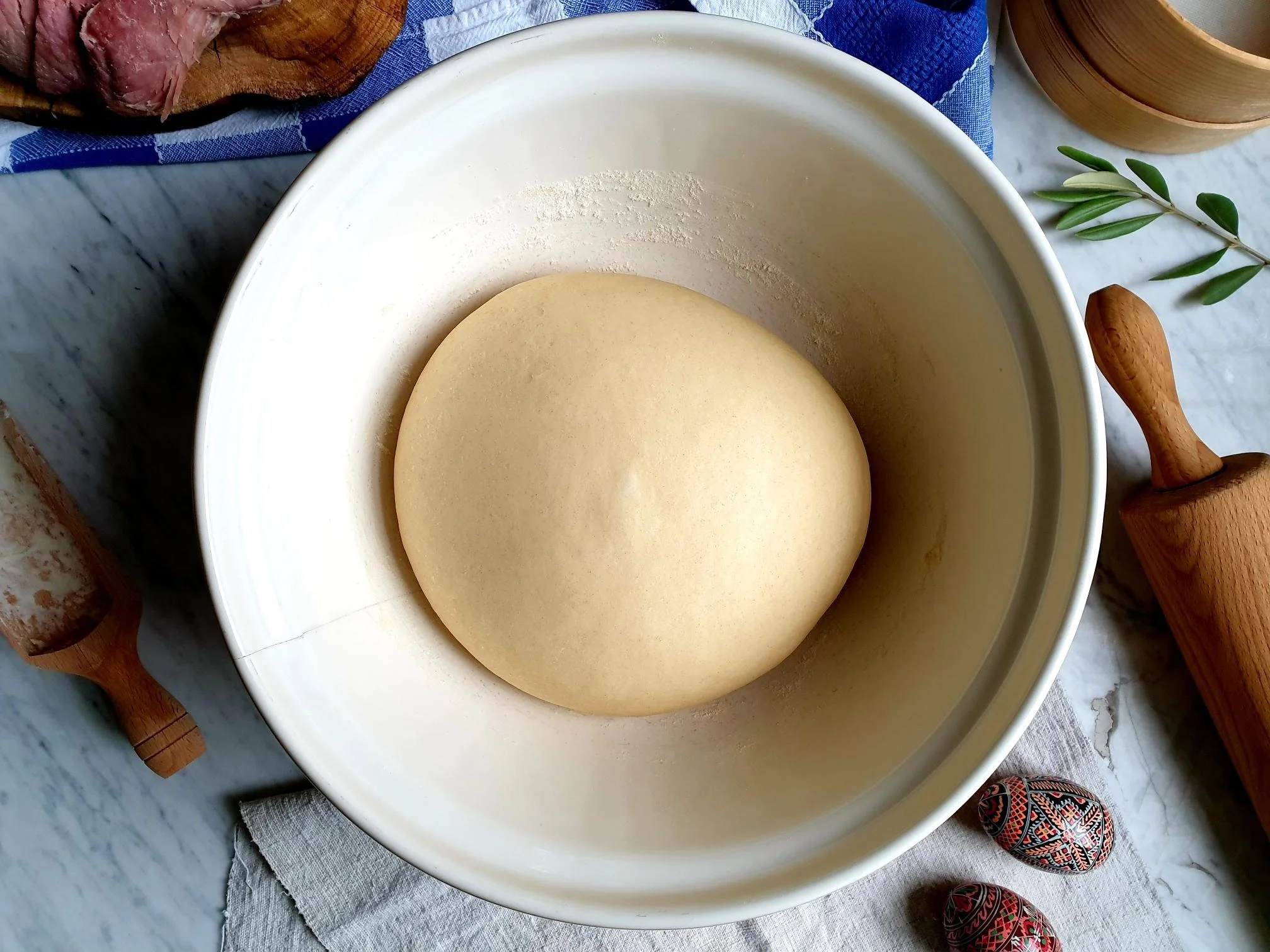
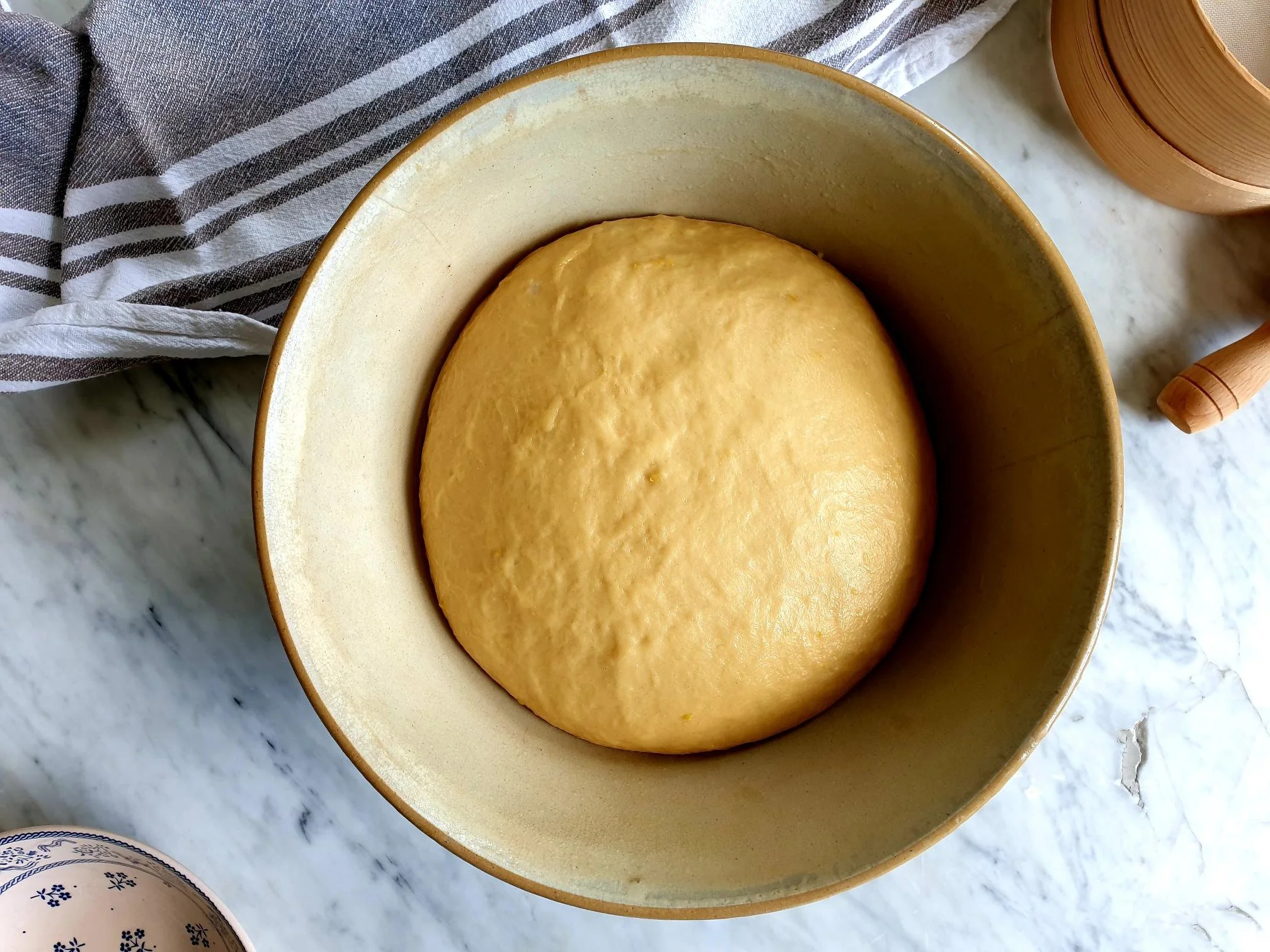
After the dough has risen and doubled in volume, remove it from the bowl.

Tip it onto a lightly floured surface and divide the dough in half.

Divide one half of the dough into 3 equal parts (cover the other half of the dough with the tea towel to prevent it from drying).

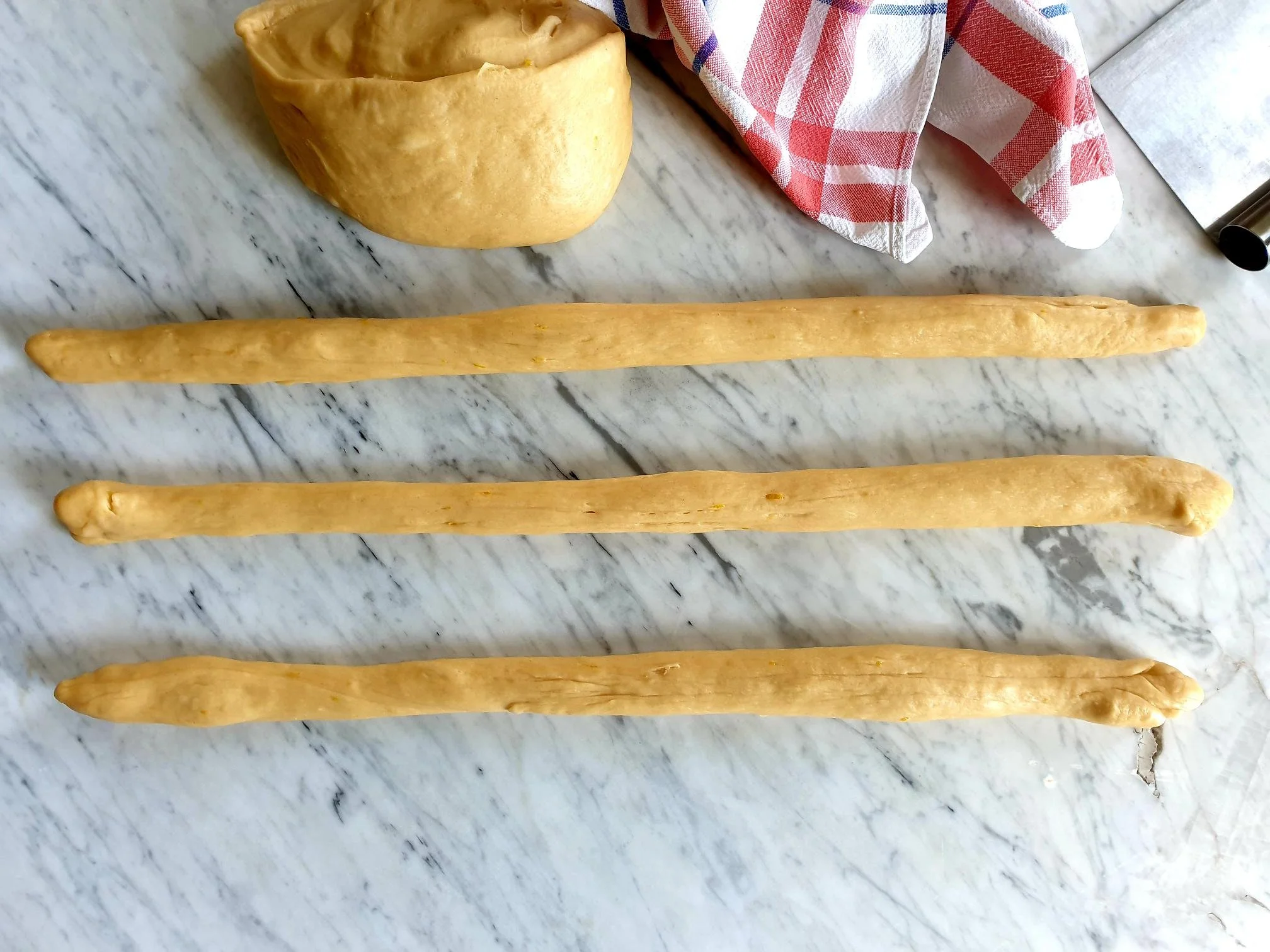
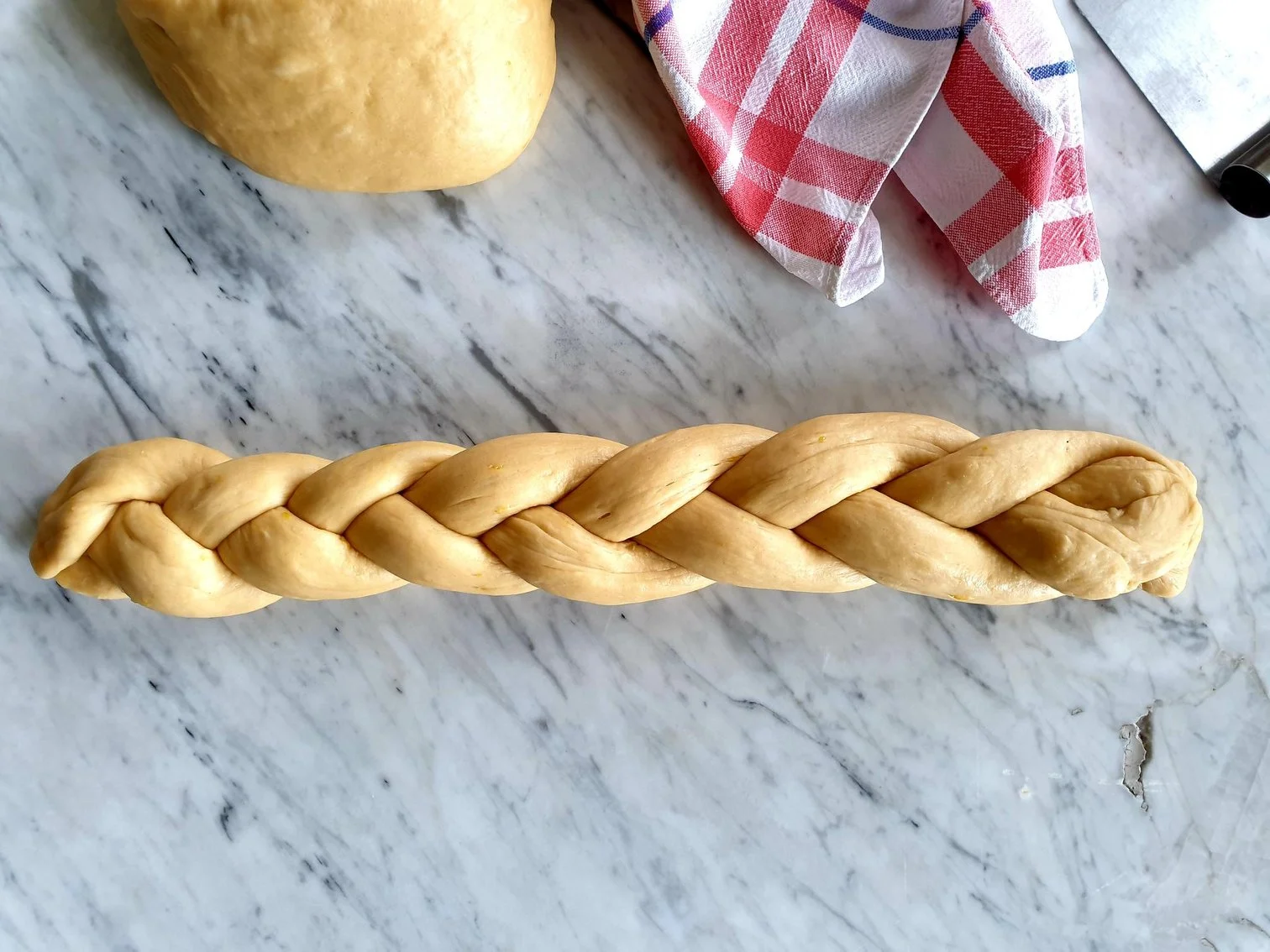
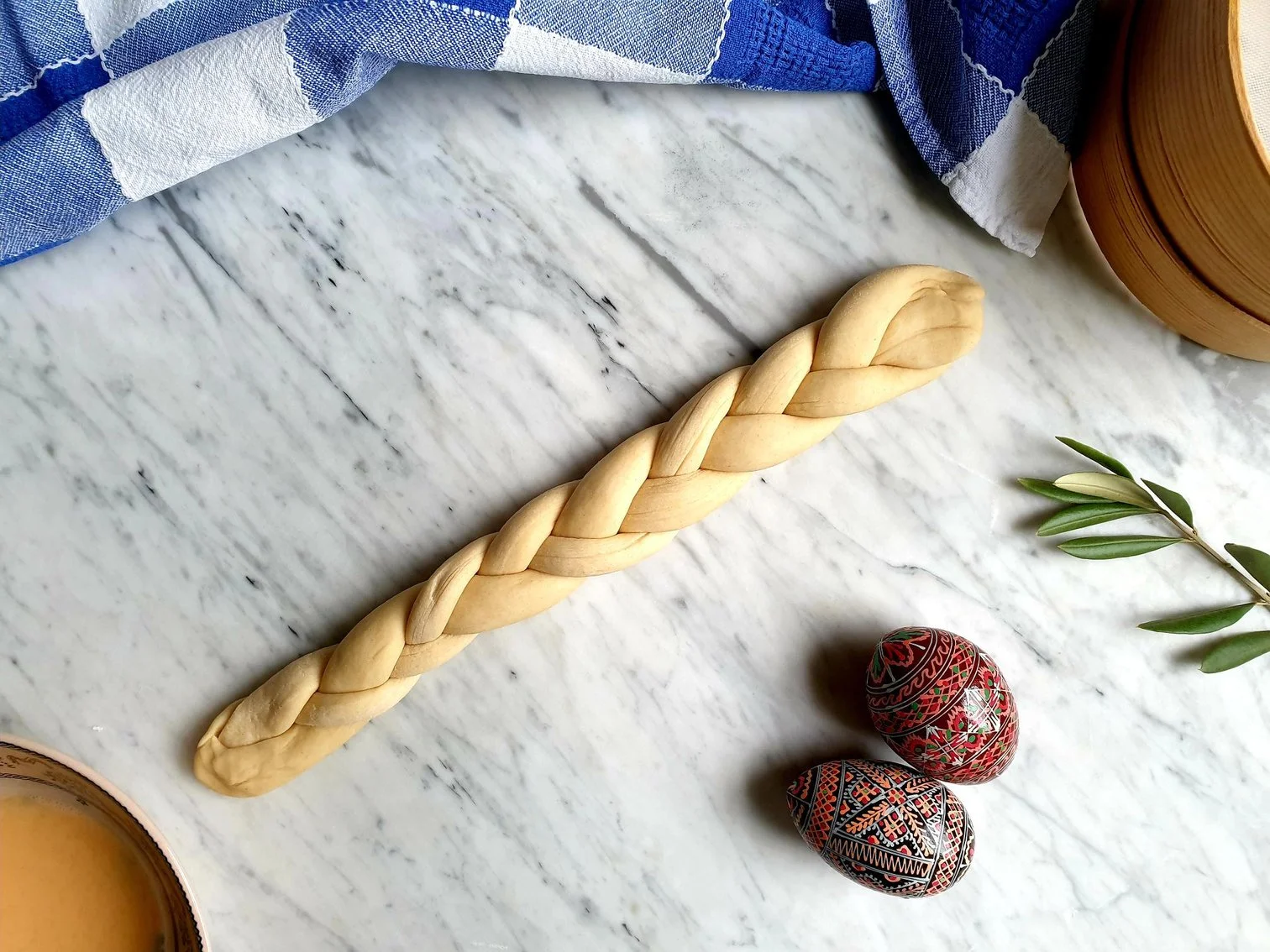
Roll each piece of the dough into 3 logs.

View fullsize Ticice 1.jpg
View fullsize Ticice 2.jpg

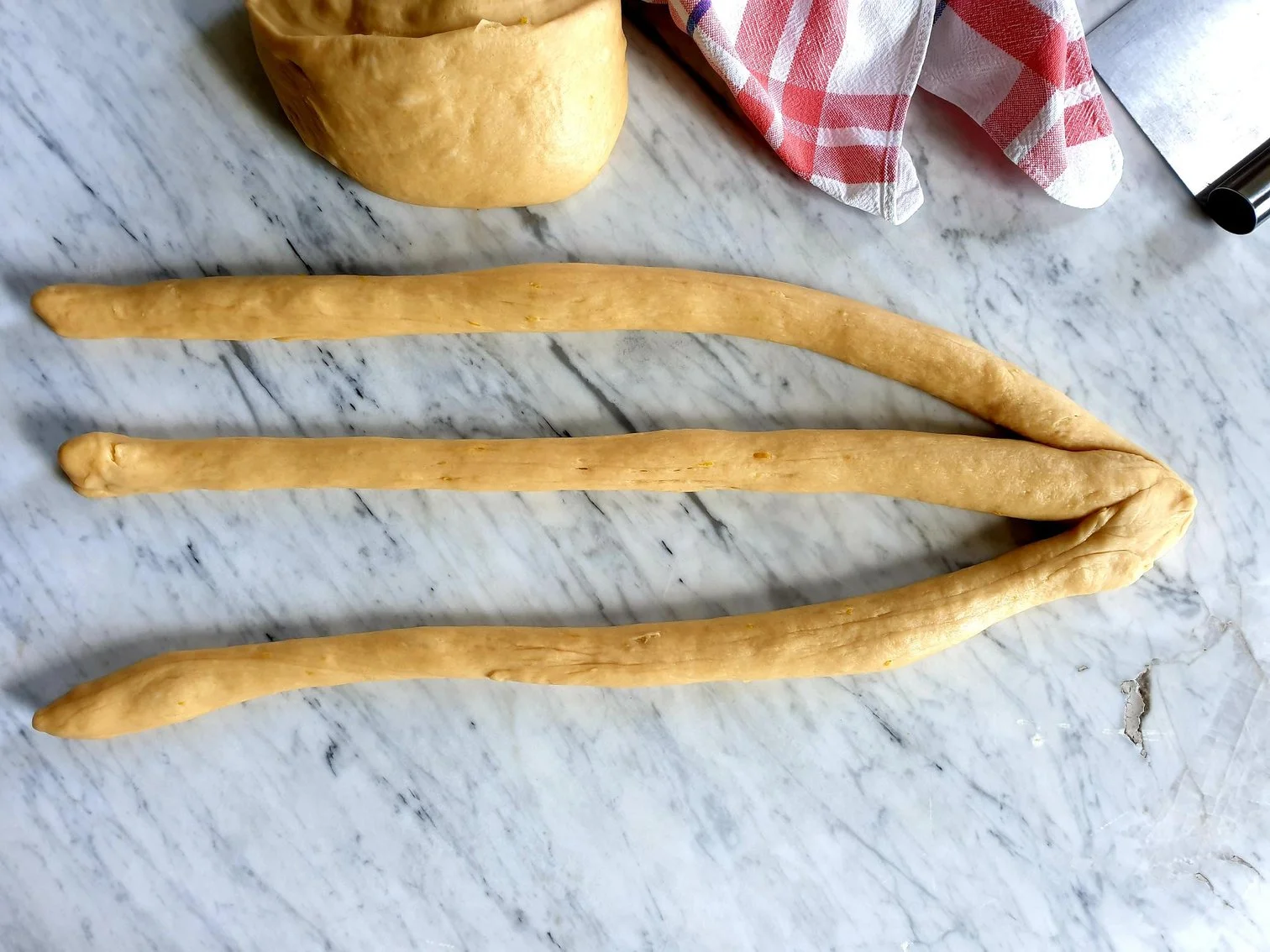
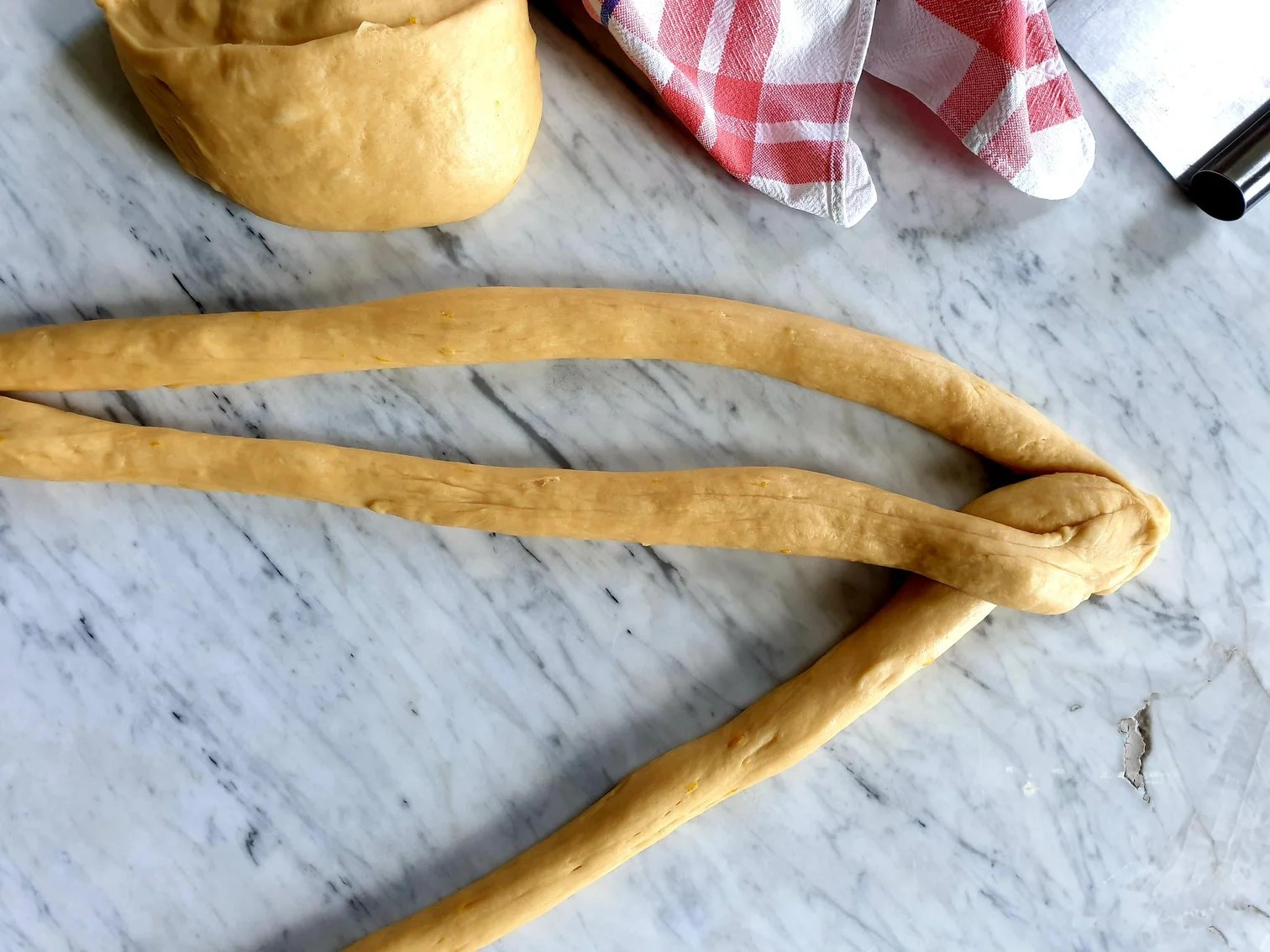
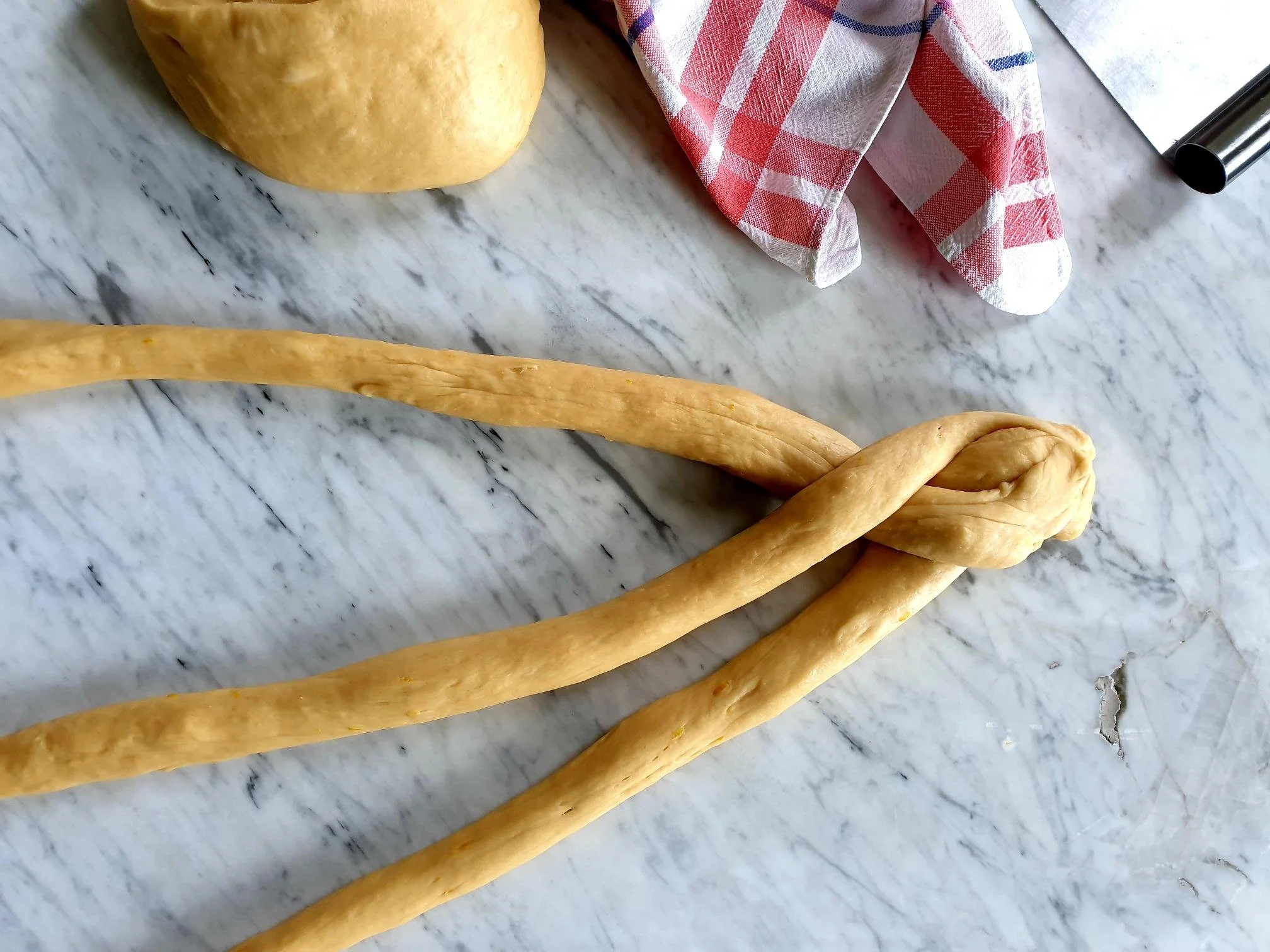
Join and pinch the ends of all 3 logs together to start shaping them into a braid.

View fullsize Ticice 3.jpg
View fullsize Ticice 4.jpg

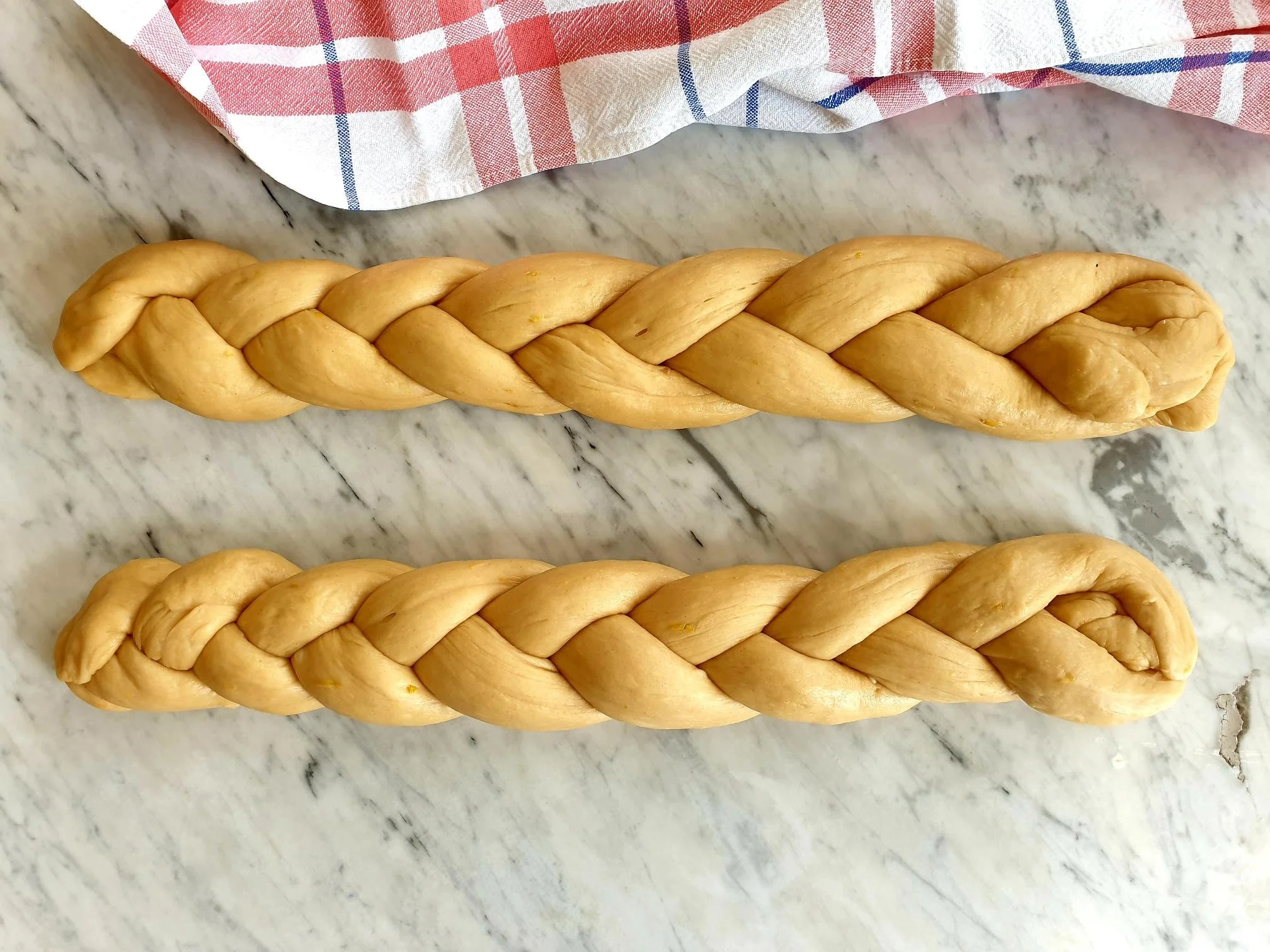
Pinch the opposite end of the braided dough together.

View fullsize Ticice 5.jpg
View fullsize Ticice 6.jpg

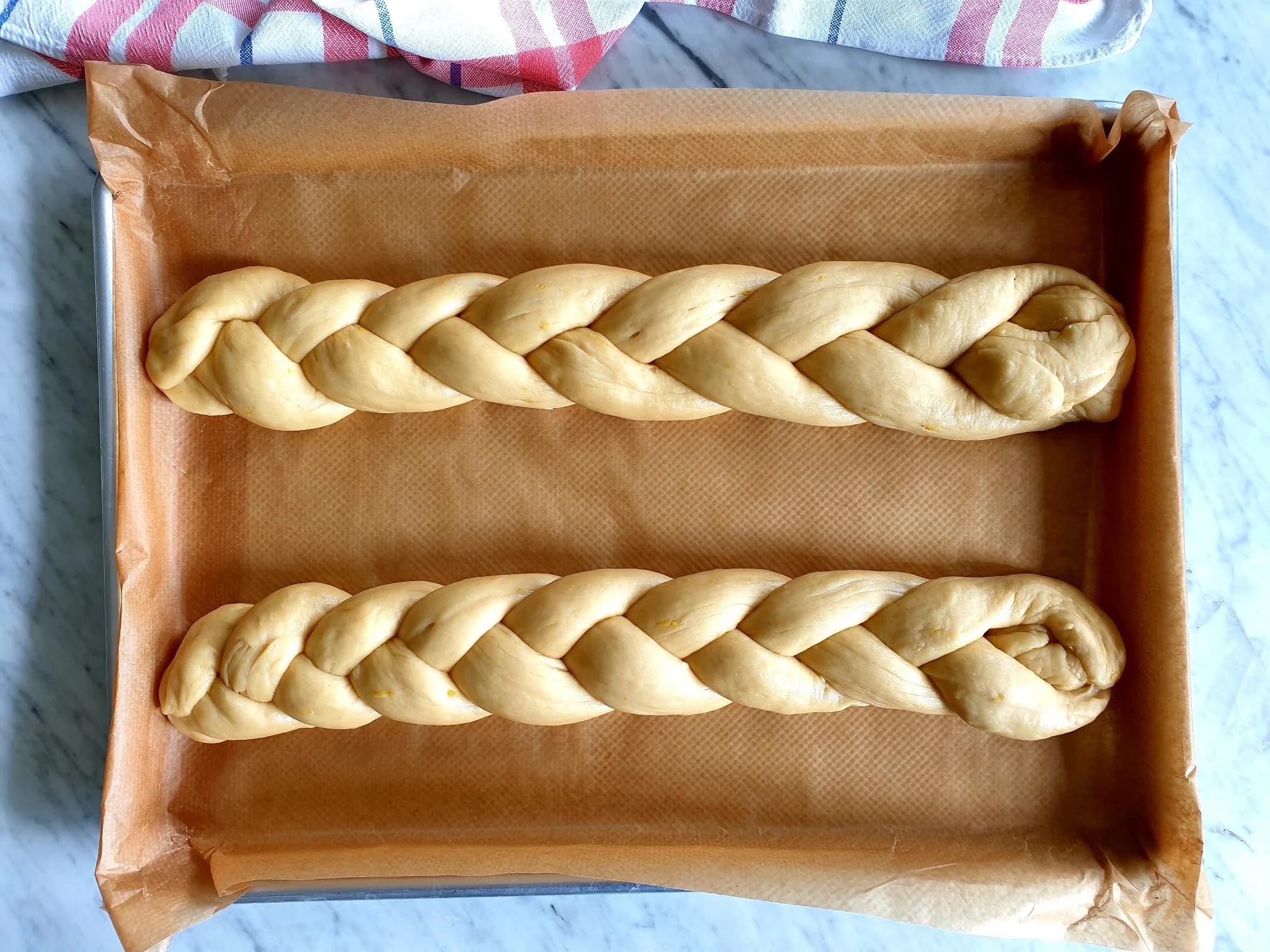
Place it on a baking tray previously lined with baking parchment.

Repeat the process with the other half of the dough.

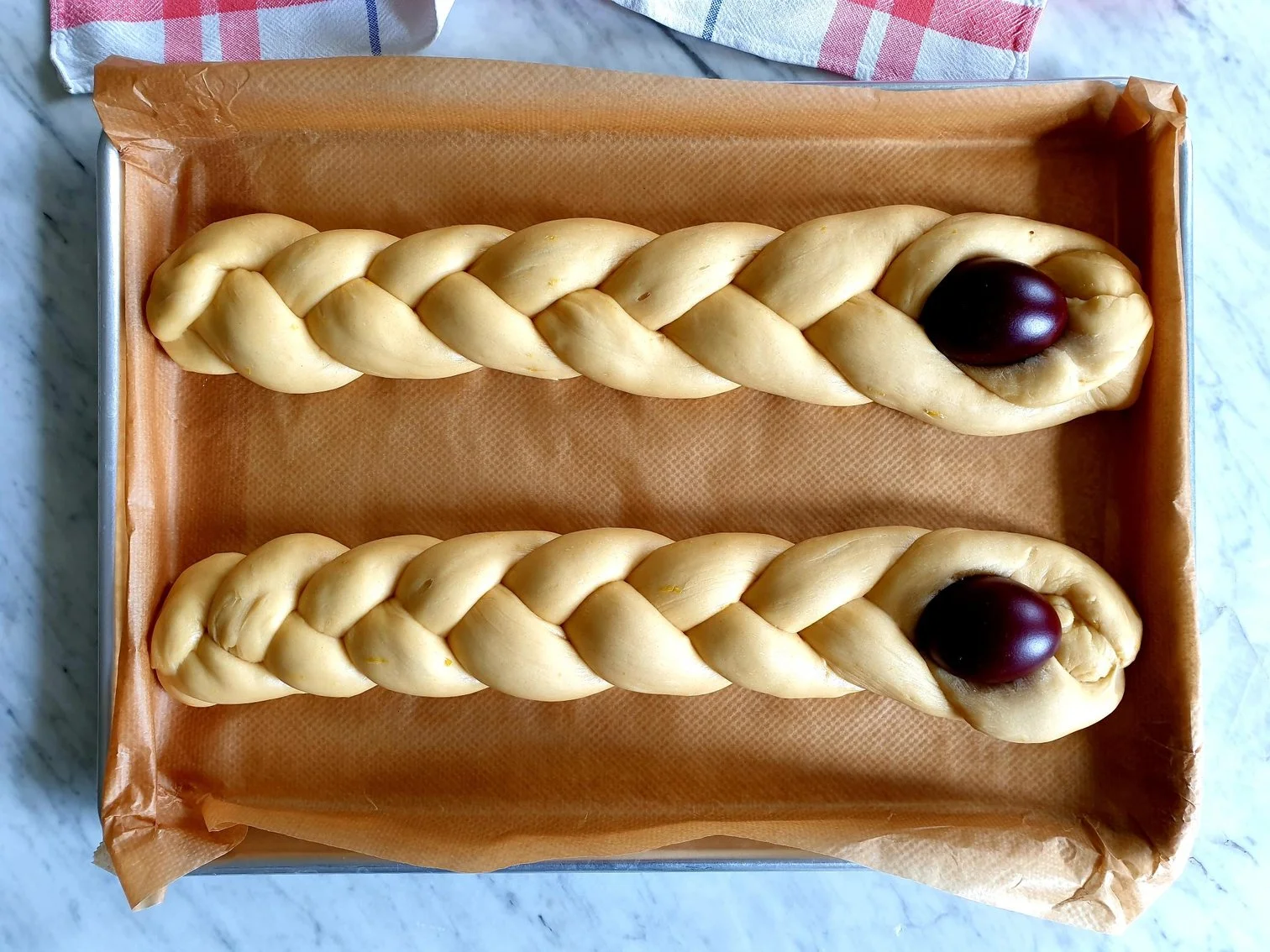
Decorate the plait with hard boiled eggs (you can use the eggs previously decorated and dyed, see my recipe how to decorate and dye the eggs, Easter Eggs Dyed with Onion Skins Recipe). Place hard boiled eggs at the end part of the braid, pressing down a bit, almost creating a little nest where the egg can sit.

Brush both plaits with the egg whites.

Allow braided loaf to rise in warm, draft free, room for about 1 hour.

View fullsize Ticice 7.jpg
View fullsize Ticice 8.jpg

Bake in the preheated oven at 180C for about 30 minutes, tent it with the aluminium foil halfway through if the top starts browning too much.

Once baked, take from the oven.

Transfer on a cooling rack and let it cool a bit.

Best served fresh still a bit warm.

Just a thought

Best eaten freshly baked on the same day.

Store leftover sweet bread in an airtight container for up to three-four days.

You can toast the slices and enjoy them with butter, jam, peanut or almond butter or use it to make French toast or bread and butter pudding, delicious!

Wine suggestion

Fior d'arancio Colli Euganei Spumante Dolce DOCG 2021 - Alla Costiera

April 07, 2023 /tina oblak
Braided sweet bread, plaited sweet bread, Easter sweet bread, Easter sweet braided bread, Easter sweet plaited bread, Tičice, celebratory sweet bread, yeasted dough, enriched dough
Adriatic Recipe, baking, breakfast, brunch, celebratory desserts, Celebratory dish, child friendly dish, dessert, Easter, Easter recipes, Easter treats, easy baking, Easy recipe, Enriched dough, festive bakes, festive dessert, festive sweet things, home baking, Istrian cuisine, Istrian food, Istrian gastronomy, Rustic dish, Slovenian cuisine, Slovenian Easter Sweet Br, Slovenian food, Slovenian gastronomy, Spring recipe, Sweet bread, sweet course, sweet finger food, sweet nibbles, Sweet Things
Comment

Carnival Sweet Crackers Istrian Recipe

Beans and Sardines
February 15, 2023 by tina oblak in Adriatic Recipe, baking, bite-sized nibbles, breakfast, celebratory desserts, Celebratory dish, dessert, Easy recipe, Enriched dough, festive bakes, festive dessert, festive dish, festive sweet things, Finger food, Istrian gastronomy, Pastry, pudding, Rustic dish, simple recipe, Slovenian cuisine, Slovenian gastronomy, Small bites, Snacks, sweet finger food, sweet nibbles, Sweet Things

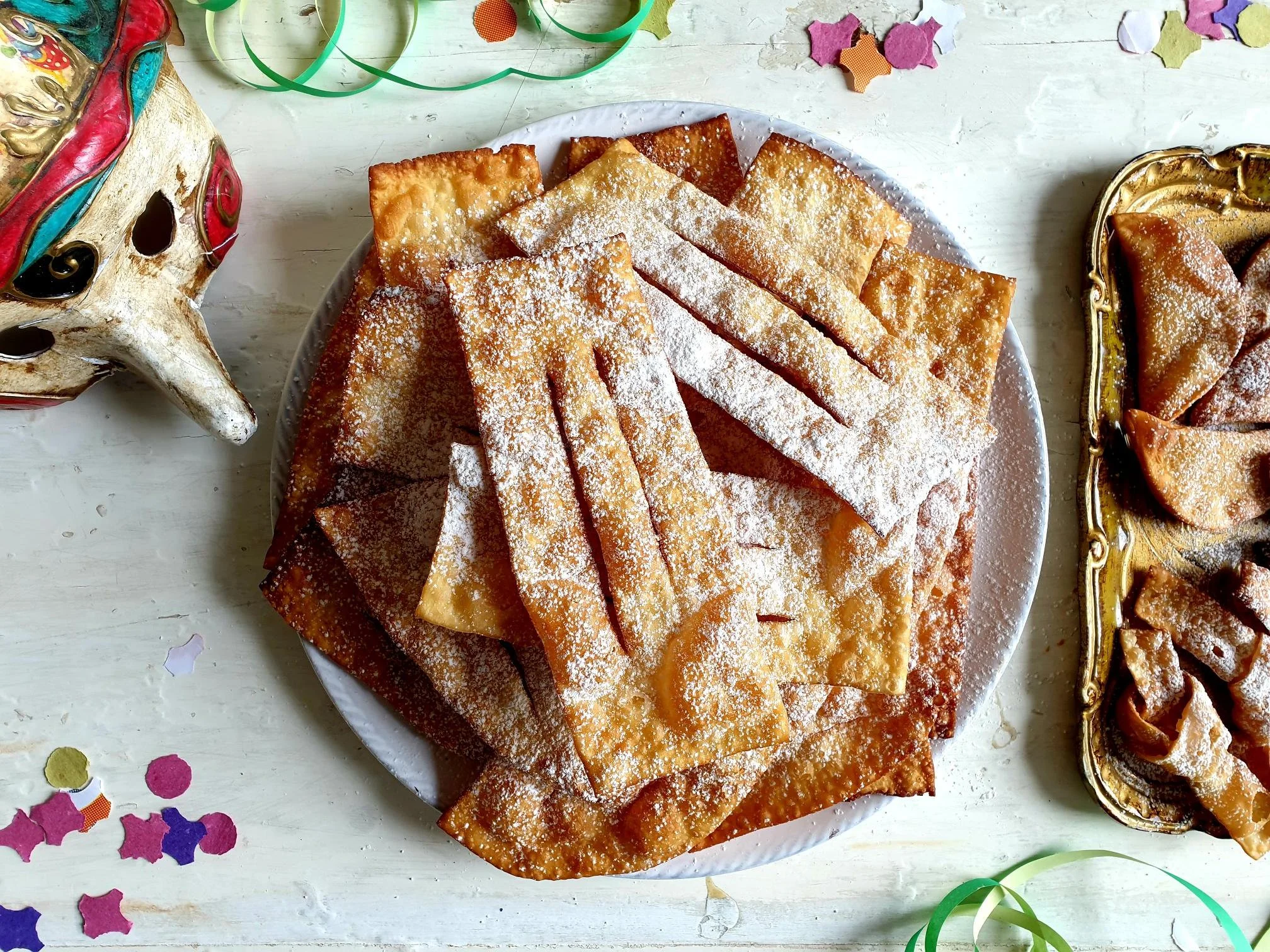
These delicate, fragile, irresistible and crispy pastries are traditionally associated with Carnival (Pust in Slovenian), and they are super tasty, so light and flaky that they just simply melt in your mouth.

They have a deep connection with Christian, especially Catholic, liturgical festivities like the Carnival season, the time of the year in which eating in excess, and gastronomic indulgence was allowed by the Church before the start of fasting and austerity during Lent, culminating with the Easter celebrations.

To make this crumbly sweet dessert is very easy, sweet dough is rolled out very thinly, it then gets very quickly fried, and it is during the frying process that this wafer thin rectangles of pastry contort into the strangest shapes. When they cool down completely they get covered in a generous dusting of icing sugar to delight children and grown-ups alike.

Together with fritole and jam filled doughnuts they are a very common sight in the pastry shop windows offering to by-passers a very cheerful Carnival atmosphere.

There are many different names for these sweet wafer-like treats throughout Italy, bugie in Piedmont, frappe or sfrappole in Emilia, cenci and donzelle in Tuscany, chiacchiere and lattughe in Lombardy to name just a few.

It is believed that they originated in the region of Veneto, where they are known as Galani or Crostoli, although their origin is being disputed and other Italian regions have claimed the credit for them.

On the coastal part of Slovenian Istra, once being part of what was called, “The most Serene Republic of Venice,” these sinfully delicious and and fragrant little delights are almost a symbol of the Carnival season, and are called, and known by the locals as hroštole, hroštule or krhki flancati in standard Slovenian.

Traditionally, they are made in quite large quantities as they are meant to last for the whole period of Lent, you will find them in rectangular shapes, but the strips of dough can be cut in different shapes like diamonds or squares, you can cut thinner strips and make knots (bows) or create rafioi (or rafioji) folded like ravioli biscuits that use jam or preserve as a filling.

These sweet Carnival temptations have been part of my life. My nona used to make them every year in huge quantities, and I am sharing here her recipe, and her little secret, she adds a bit of single cream to the dough mixture...

Recipe

Ingredients

  • 250g all purpose flour (white plain flour)

  • 3 egg yolks (room temperature), lightly beaten

  • 2 Tbsp milk

  • 3 Tbsp dark rum or grappa (can use Marsala, brandy or similar)

  • finely grated lemon zest of 1 unwaxed lemon

  • 2Tbsp lemon juice

  • 50g sugar (caster or granulated)

  • pinch of sea salt

  • vanilla icing sugar or plain icing sugar, for dusting, to serve

  • oil for frying

Method

Sift the flour in a fairly large mixing bowl and add lightly beaten egg yolks, milk, rum or grappa, finely grated lemon zest, lemon juice, sugar and a pinch of sea salt.

View fullsize Crostoli 1.jpg
View fullsize Crostoli 2.jpg

Mix well with the fork to incorporate all the ingredients, then gather with your hands to form a fairly firm dough.

Adjust the wetness of the dough by either adding a little flour at the time if the dough is too wet, and on the contrary, gradually adding a bit of milk if the dough is too dry.

View fullsize Crostoli 3.jpg
View fullsize Crostoli 4.jpg

Transfer the dough onto a working surface and work the pastry mix quite intensely for about 10-15 minutes. You should end up with a smooth and elastic dough that does not stick to your hands or the surface, it should be firm, bur fairly soft to the touch.

Shape it into a ball and wrap in cling film and leave it to rest at room temperature for at least 30 minutes, ideally about 1 hour.

Divide the dough into smaller portions (about 150g).

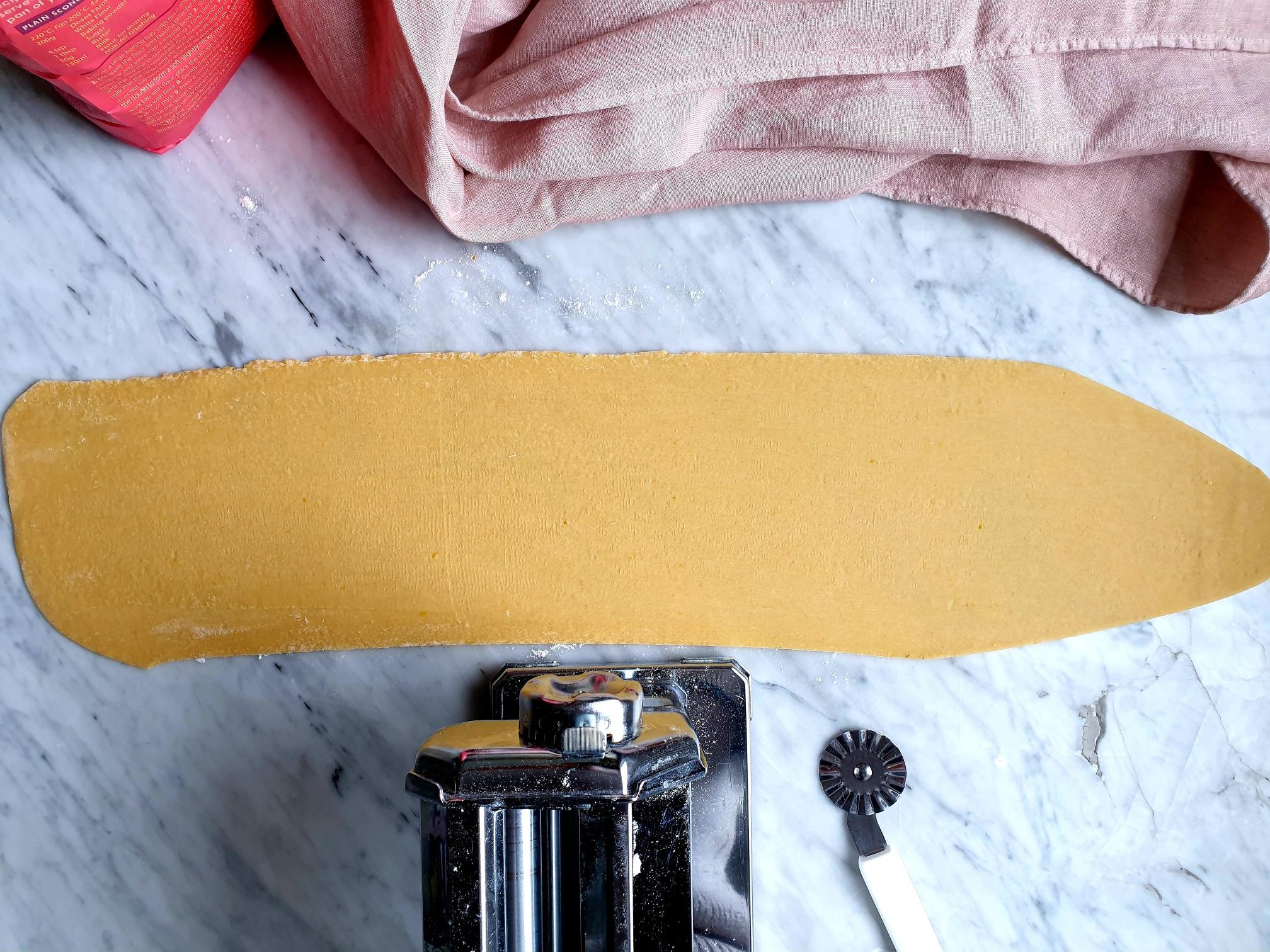
If you have a pasta machine, this is the time to use it, alternatively a rolling pin will do the job just fine.

With the palm of your hand flatten slightly the first portion of the dough.

Sprinkle with a little bit of flour and roll it out with the pasta machine to the widest thickness.

View fullsize Crostoli 6.jpg
View fullsize Crostoli 7.jpg

Fold the short sides of the sheet of dough towards the centre.

View fullsize Crostoli 9.jpg
View fullsize Crostoli 10.jpg

Continue to roll the sheet of dough using an increasingly thinner setting on the pasta machine each time.

Stop rolling when you reach the last and the thinnest setting, and the dough sheet reaches the thickness of about 2mm.

Repeat the process with the remaining portions of the dough.

If you are using rolling pin, roll each portion of the dough to the thickness of a coin, roughly 2mm.

Using a knife or a pastry (cutting) wheel, cut the rolled sheets of dough into rectangles (about 5 x 10 or 2-inch x 4-inch).

Make a couple of incisions in the middle of each strip (parallel to the long side on each one).

This will help the sweet crackers to expand during frying.

View fullsize Crostoli 12.jpg
View fullsize Crostoli 13.jpg

Strips of dough can be cut in different shapes, you can cut thinner strips and make knots (bows).

View fullsize Crostoli 18.jpg
View fullsize Crostoli 19.jpg

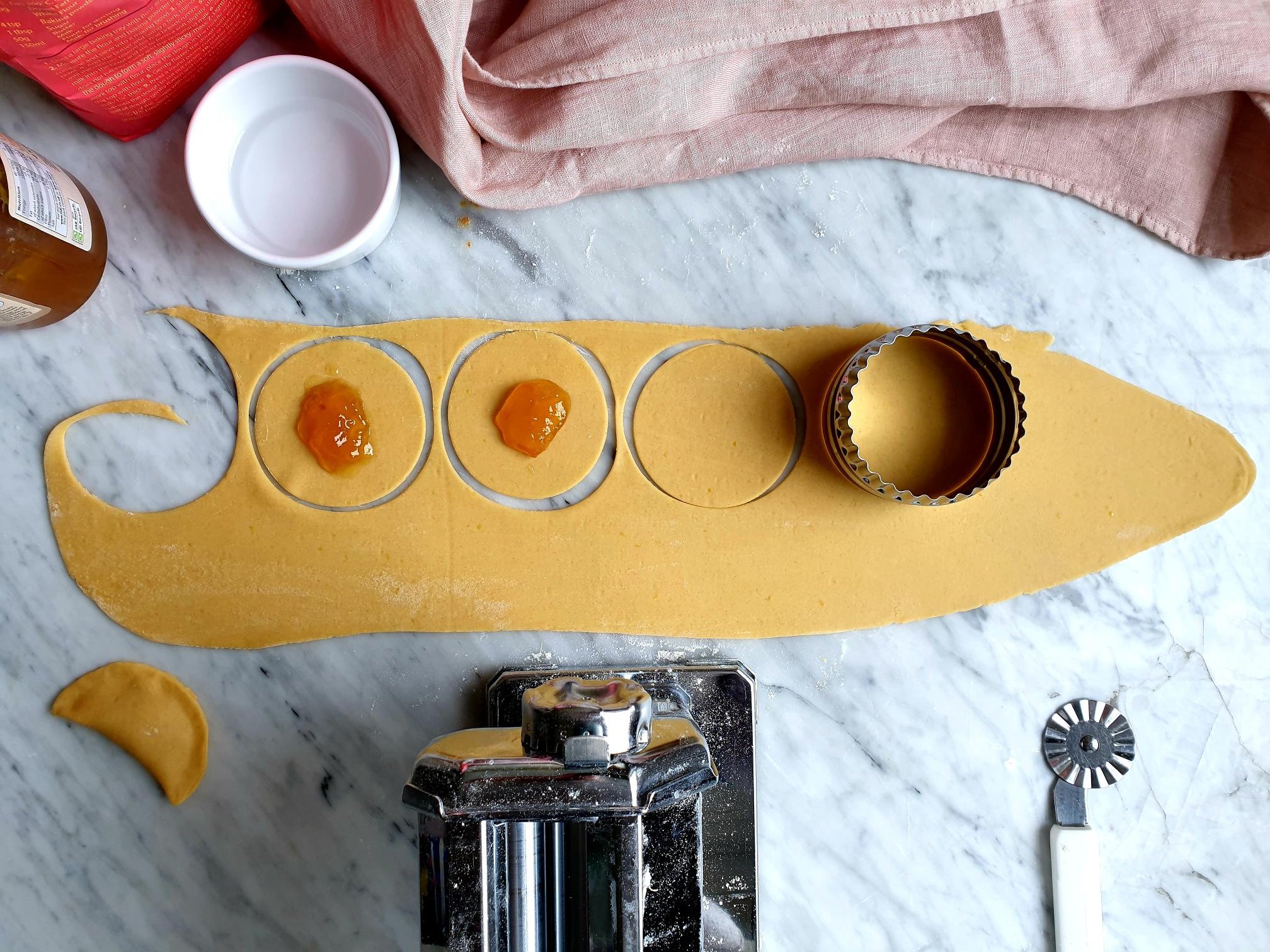
You can also create rafioi (or rafioji) folded like ravioli biscuits (to make these, you do not want your pastry to be rolled out too thin). Cut out circles (size of your preference). Place a dab of jam or preserve of your choice in the centre of each circle, fold in half. Pinch well to close and fry.

View fullsize Crostoli 14.jpg
View fullsize Crostoli 15.jpg
View fullsize Crostoli 16.jpg
View fullsize Crostoli 17.jpg

Heat the oil in a frying pan, bring it to the temperature of 170° C.

When the oil reaches the right temperature, place 2-3 (this will depend on the size of your frying pan) rectangles of the dough into the oil.

Fry them turning them on both sides until they are golden brown.

View fullsize Crostoli 24.jpg
View fullsize Crostoli 25.jpg

With the help of slotted spoon or a skimmer remove the crackers.

Place them on a tray or a big plate previously lined with kitchen paper allowing to drain.

View fullsize Crostoli 27.jpg
View fullsize Crostoli 28.jpg

Allow to cool completely, sprinkle with plenty of icing sugar.

Pile them in criss-cross layers on a plate and serve.

They are very fragile so be careful not to break them.

And be mindful of the fact that when you eat them you will be, almost inevitably, covered slightly in a bit of crumbs and icing sugar, is all part of the experience, it is Carnival after all!

Just a thought

These sweet Carnival crackers are best enjoyed as soon as they are made.

They can be stored for about 2-3 days in an airtight containers.

February 15, 2023 /tina oblak
Carnival sweet crackers, Pust, Carnevale, Carnival, Carnival sweet treats, fried sweet pastry, bugie, frappe, sfrappole, cenci, donzelle, chiacchiere, lattughe, hroštoli, hroštule, krhki flancati, rafioi, rafioji, Carnival season sweets
Adriatic Recipe, baking, bite-sized nibbles, breakfast, celebratory desserts, Celebratory dish, dessert, Easy recipe, Enriched dough, festive bakes, festive dessert, festive dish, festive sweet things, Finger food, Istrian gastronomy, Pastry, pudding, Rustic dish, simple recipe, Slovenian cuisine, Slovenian gastronomy, Small bites, Snacks, sweet finger food, sweet nibbles, Sweet Things
Comment

Dried Fig and Walnut Bread Istrian Recipe

Beans and Srdines
December 21, 2022 by tina oblak in Adriatic Recipe, All year round recipe, Appetizers, baking, breakfast, brunch, Canapés, child friendly dish, child friendly meal, Christmas bakes, dessert, easy baking, Enriched dough, festive bakes, Istrian cuisine, Istrian dish, Istrian food, Istrian gastronomy, Rustic dish, simple recipe, Slovenian cuisine, Slovenian food, Slovenian gastronomy, Small bites, Snacks, Starters, sweet finger food, sweet nibbles, Sweet Things

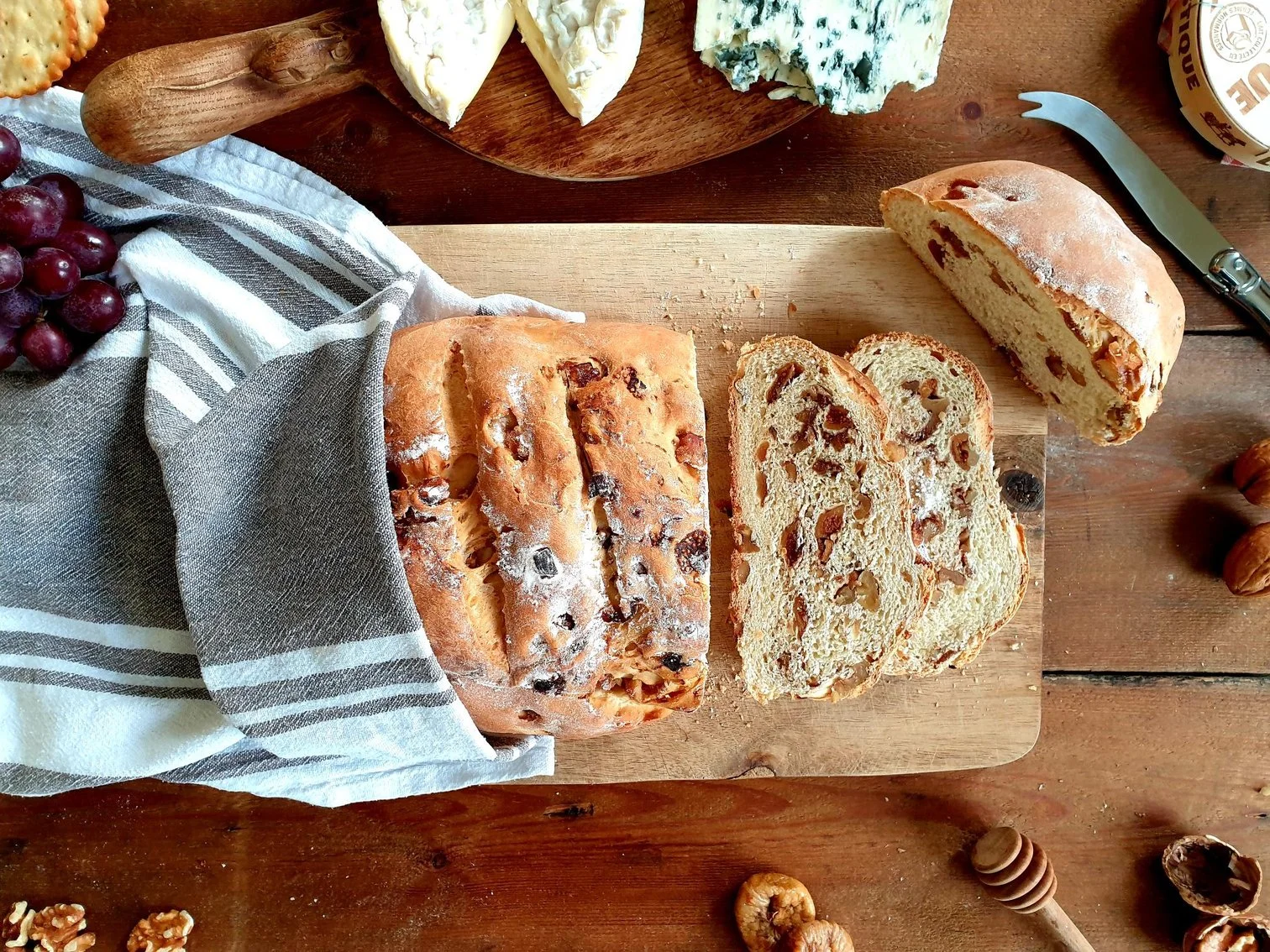
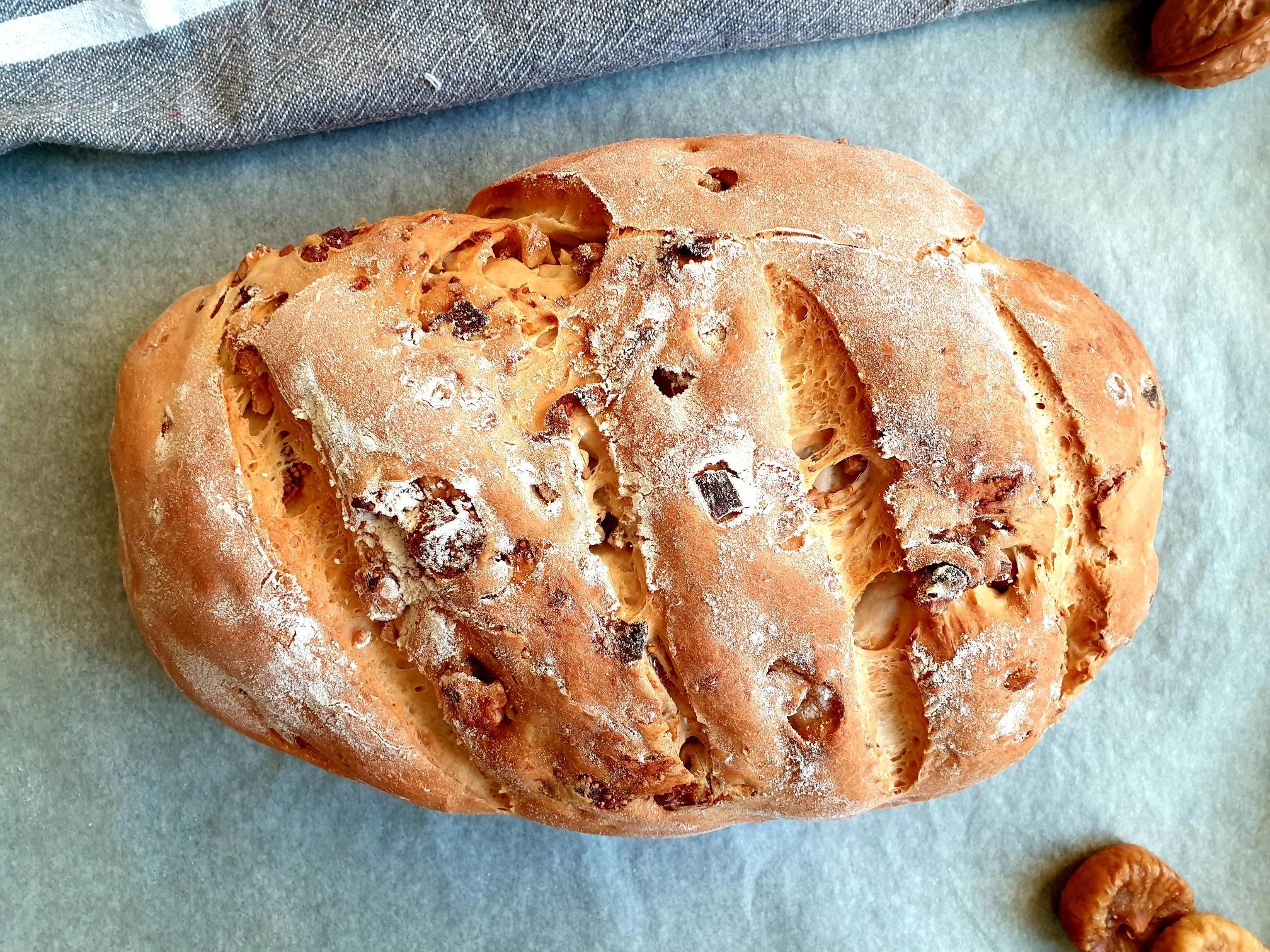
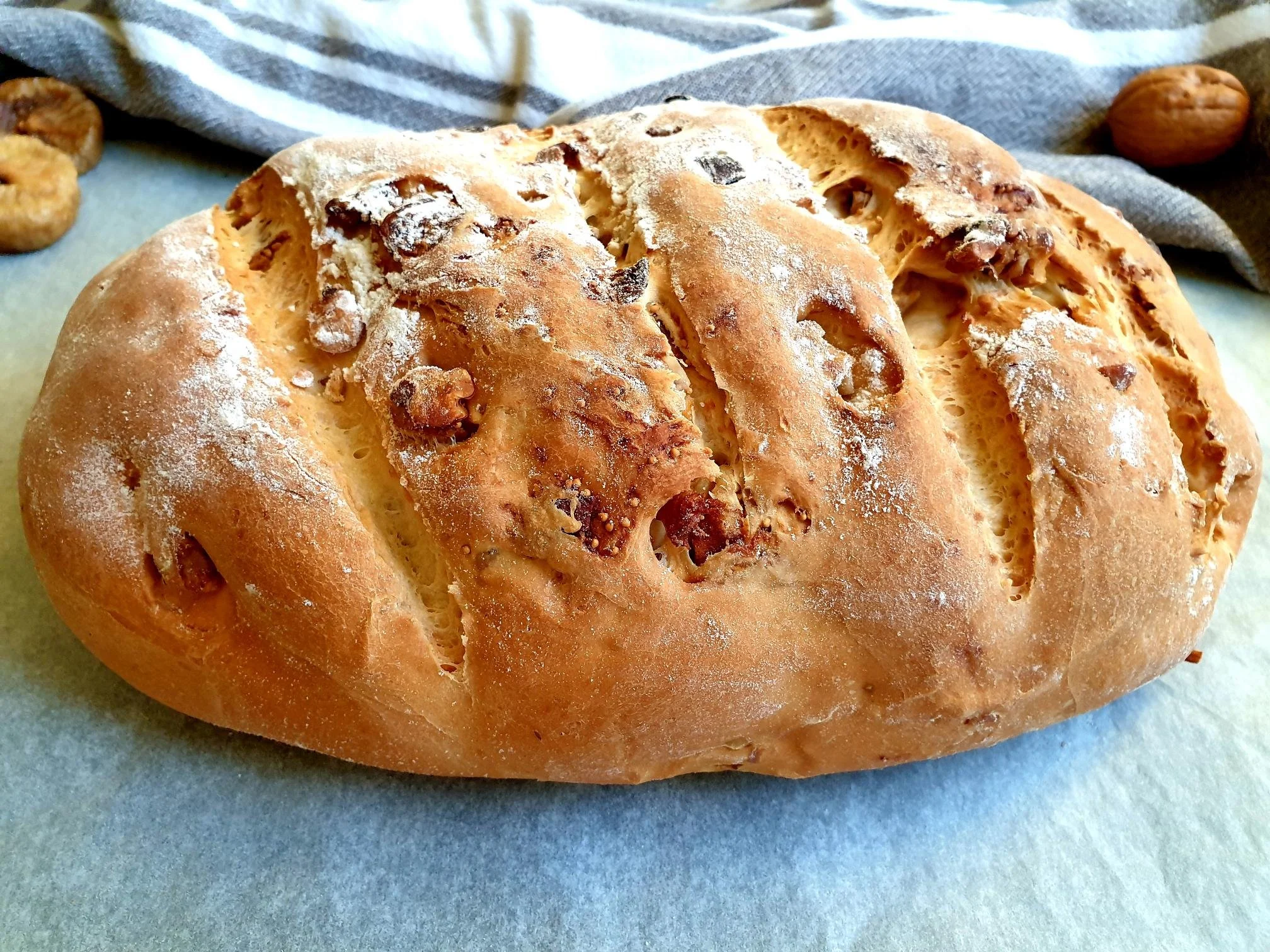
This rustic, rich and dense loaf filled with dried figs and walnuts, will be a fantastic addition to your cheese platter, it is delicious toasted and buttered for breakfast, makes a nice foodie gift, and it is a great snack. Dried figs give a light sweetness to the bread while the walnuts add a very pleasant crunchy texture. If you are intimidated by bread making, I can assure you, this a foolproof recipe, there is nothing complicated about it!

My 96 year old nona told me that in Slovenian Istra, when she was small, the children were given a slice of this bread as a snack for a special treat. The locals call it in the dialect Pan de Fighi, and it was bought in bakeries, and not usually baked in the household, as one might think. Ripe fresh figs, when in full season at the end of the summer were sold in the Farmer's market which provided an extra income for the family.

Nowadays in Slovenian Istra, this bread is not commonly found in bakeries and supermarkets.

I am sharing here my nona's recipe for this super delicious, enriched, special bread.

Recipe

Ingredients

  • 500g white all purpose (plain) flour, plus extra for dusting and coating

  • 30g caster sugar

  • 10g (2Tsp) instant dried yeast

  • 260ml lukewarm milk or water (or half and half)

  • 60g unsalted butter, melted and slightly cooled

  • 1 Tsp sea salt

  • 150g dried figs, roughly chopped

  • 100g walnut kernels, roughly chopped

Method

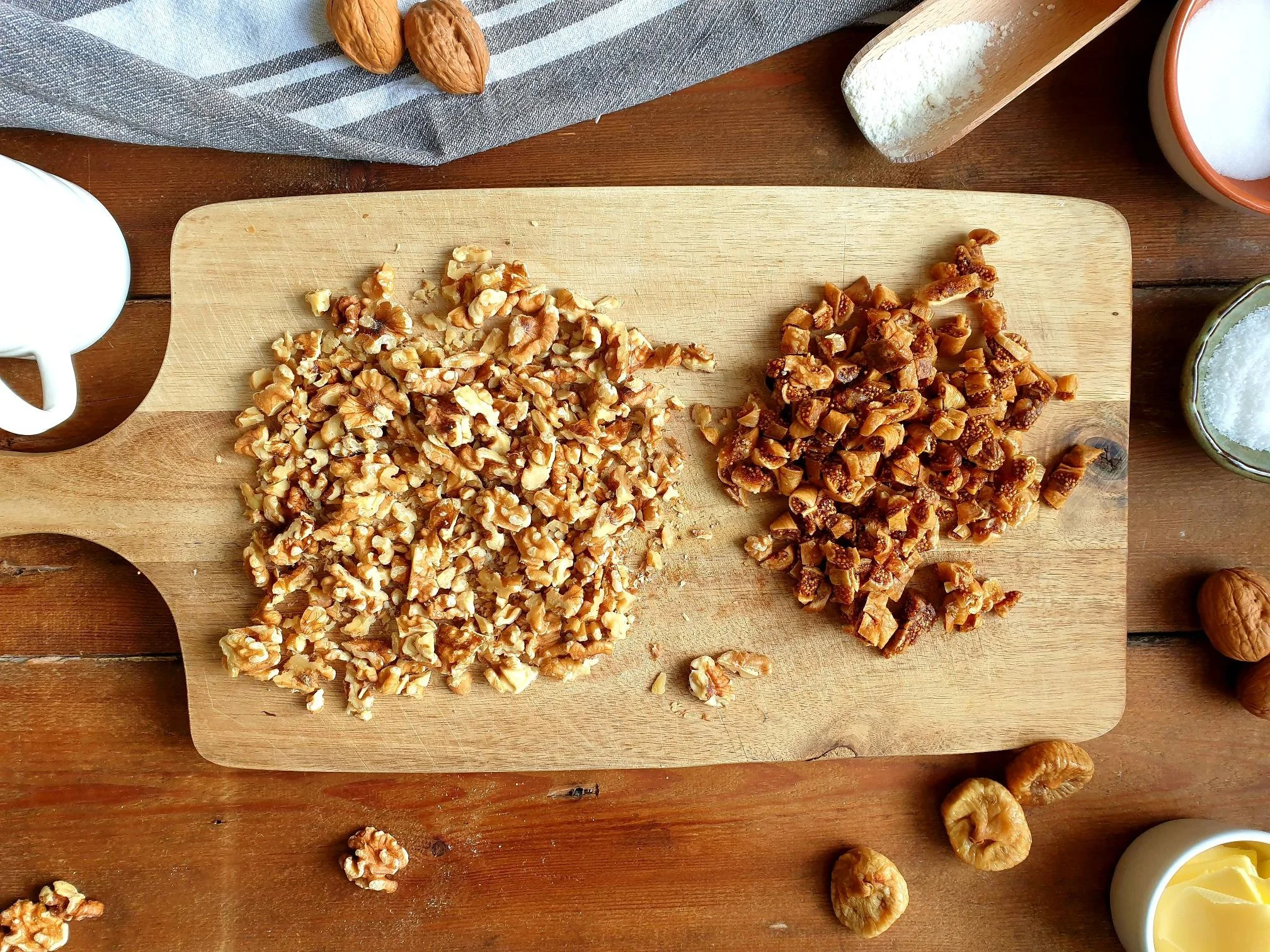
With the knife roughly chop the walnuts.

Remove the hard stem from the figs, if there are any, and chop into smaller pieces.

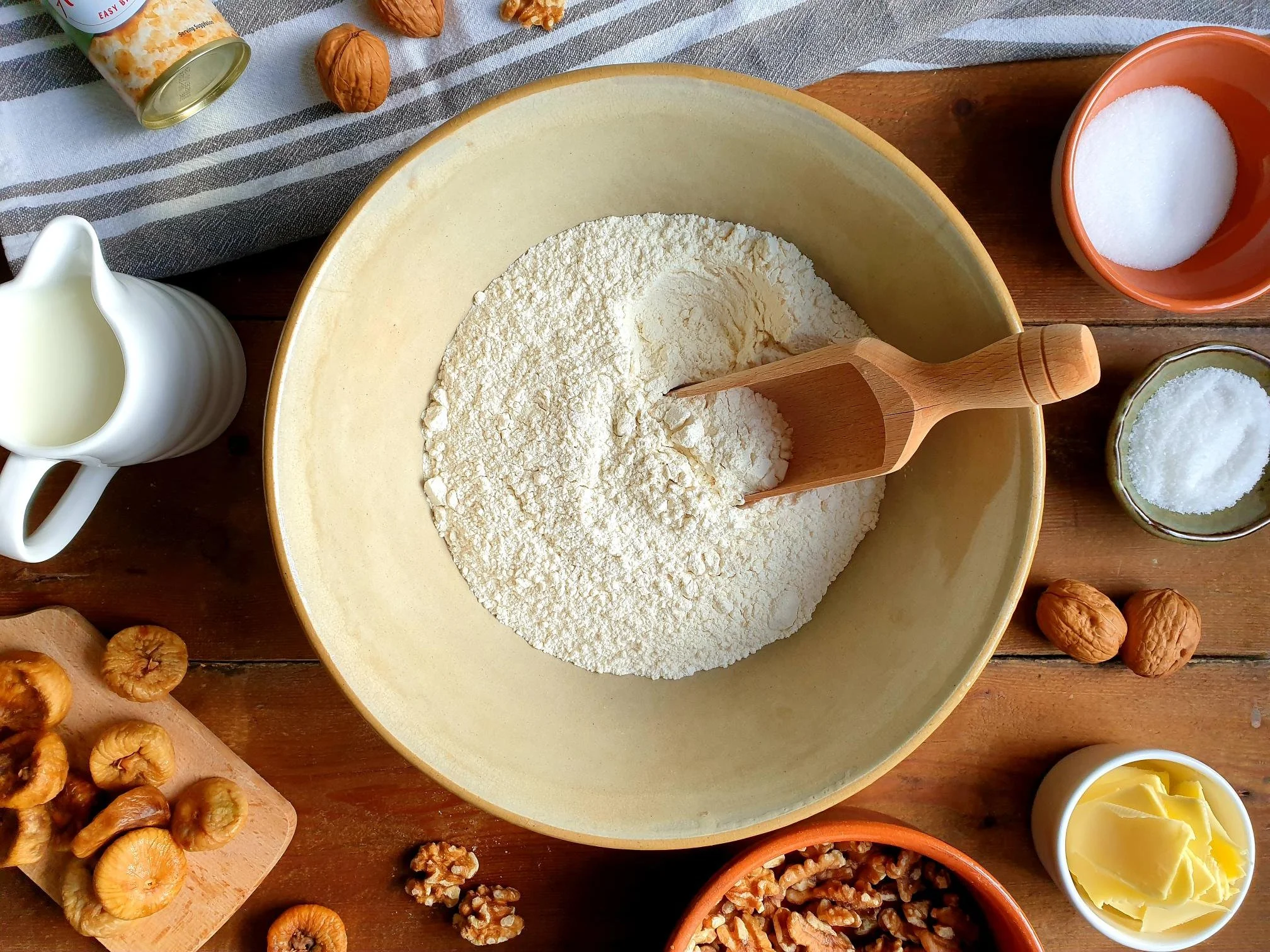
Place the flour, sugar, yeast, milk (water or half and half) and butter in a large bowl. Stir with a fork or a wooden spoon to combine the ingredients then bring together with your hands.

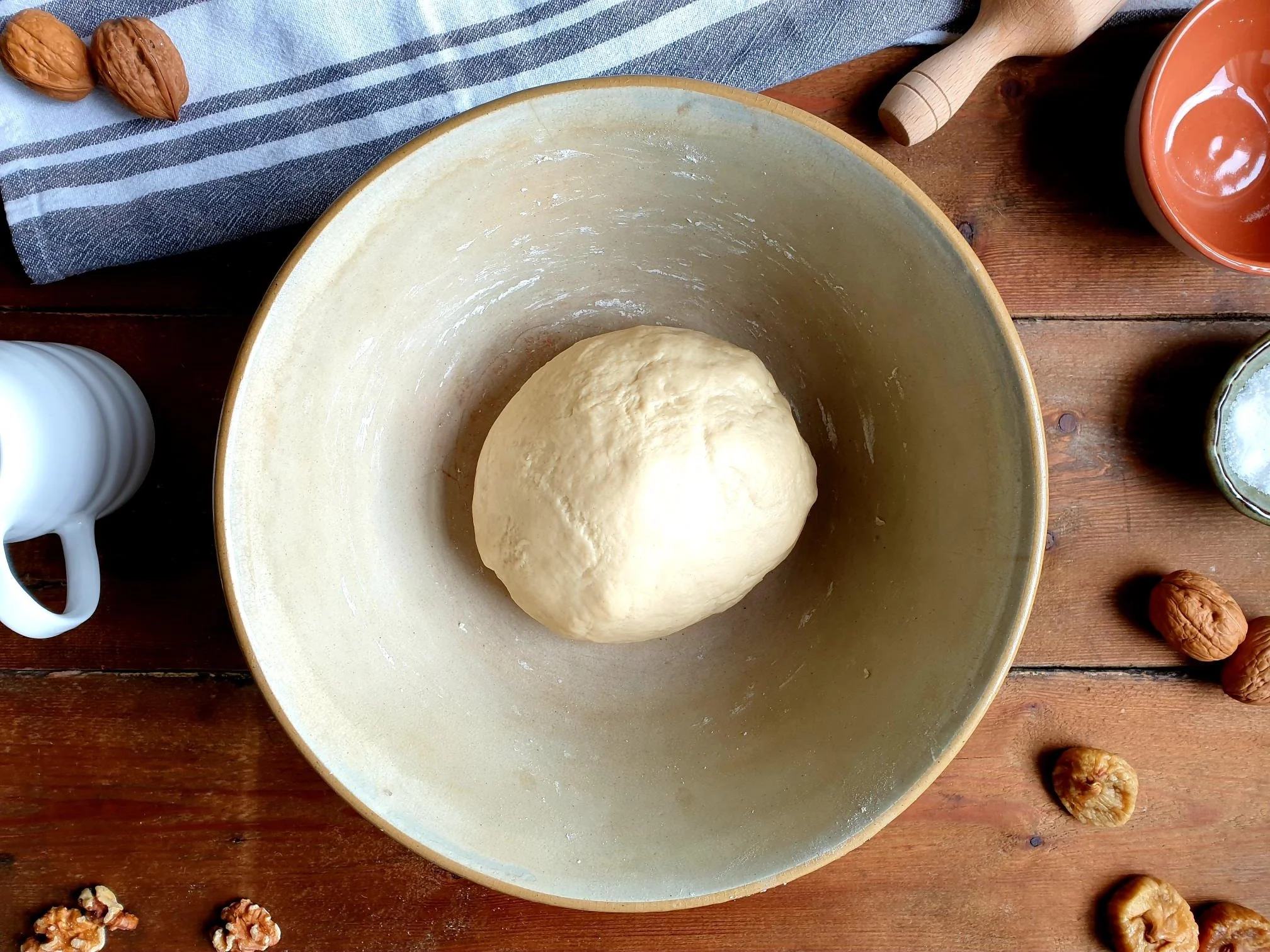
Tip onto a lightly floured work surface, add sea salt and knead for about 10 minutes, pulling and stretching the dough, until it becomes smooth, elastic, and no longer sticks to your fingers or the surface.

View fullsize Dried Fig and Walnut Bread 3.jpg
View fullsize Dried Fig and Walnut Bread 4.jpg

Roll the dough, or press out to flatten slightly into a roughly rectangular or oval shape.

Top with chopped figs and walnuts.

View fullsize Dried Fig and Walnut Bread 6.jpg
View fullsize Dried Fig and Walnut Bread 7.jpg

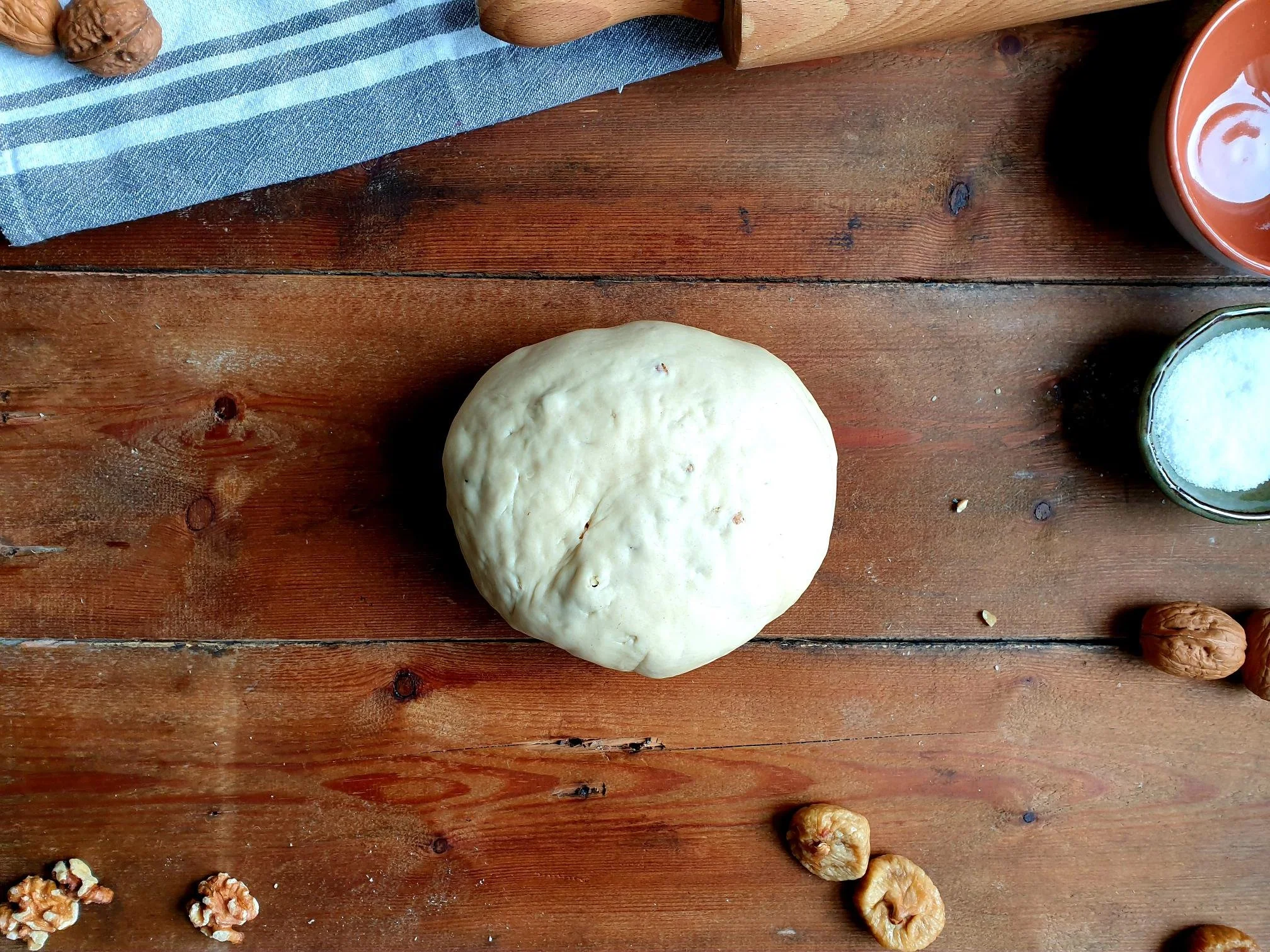
Knead back into the dough.

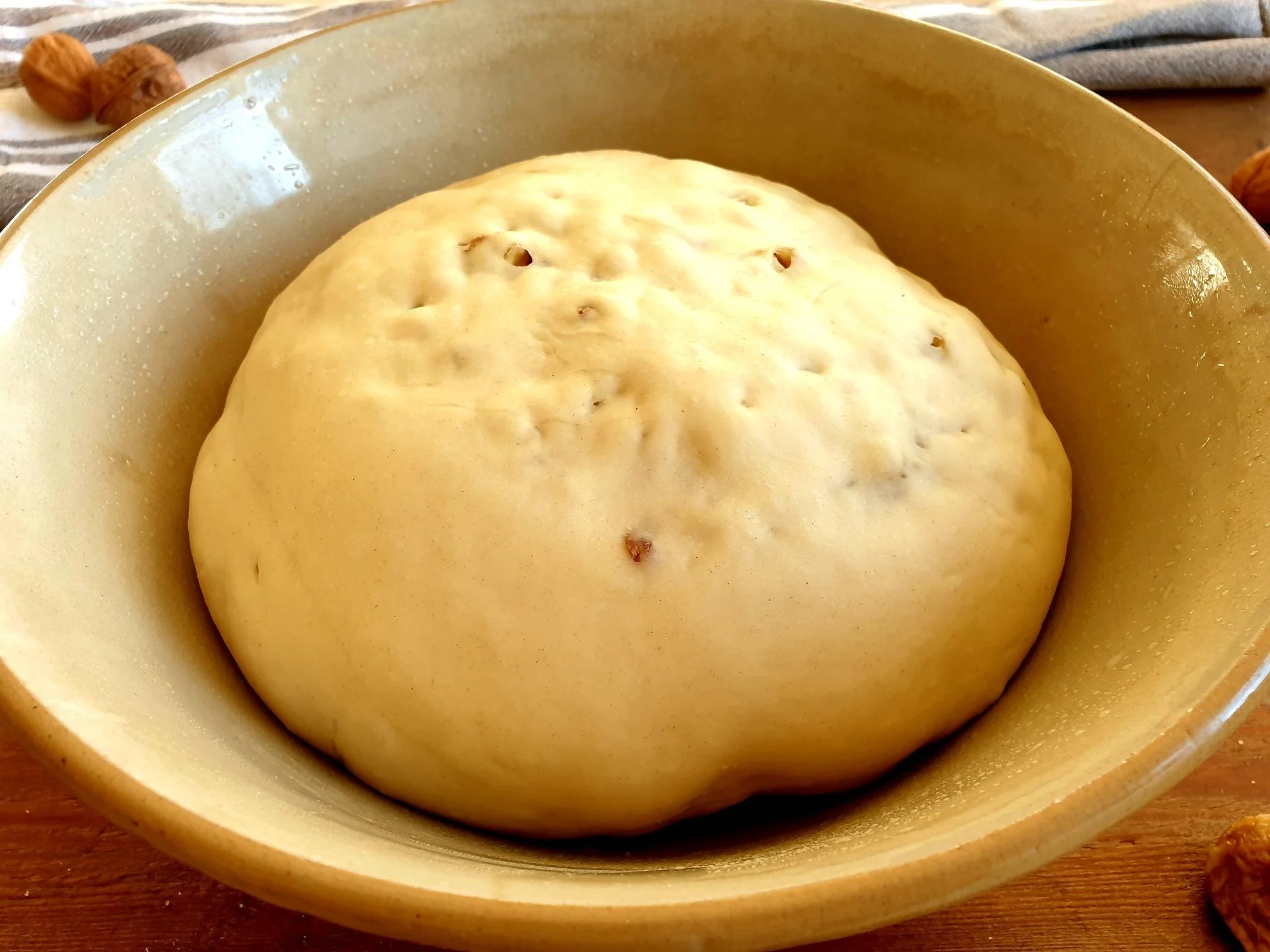
Place the dough in a slightly oiled big bowl, cover with cling film (I use plastic shower cap) and leave it to rest in a warm, draught-free room for about 1 hour, or until the dough doubles in size.

View fullsize Dried Fig and Walnut Bread 9.jpg
View fullsize Dried Fig and Walnut Bread 14.jpg

Place the dough onto a lightly floured surface, knock the air out and shape it into a loaf, oval shape.

View fullsize Dried Fig and Walnut Bread 16.jpg
View fullsize Dried Fig and Walnut Bread 17.jpg

Put the loaf onto a baking tray, previously lined with baking parchment, cover with clean tea towel and leave to rest and prove for further 30 minutes, or until risen slightly.

Preheat the oven to 180C static or equivalent.

Sprinkle the top with a little extra flour.

Using a very sharp knife, make a shallow cut along the length of the loaf.

View fullsize Dried Fig and Walnut Bread 18.jpg
View fullsize Dried Fig and Walnut Bread 19.jpg

Bake for about 45 minutes, or until golden brown in colour.

If it browning too much tent the loaf with some aluminium foil.

When baked, the loaf should sound hollow when tapped on the base.

December 21, 2022 /tina oblak
bread, sweet bread, enriched bread, dried figs, walnut kernels, rustic bread, cheese board, make ahead
Adriatic Recipe, All year round recipe, Appetizers, baking, breakfast, brunch, Canapés, child friendly dish, child friendly meal, Christmas bakes, dessert, easy baking, Enriched dough, festive bakes, Istrian cuisine, Istrian dish, Istrian food, Istrian gastronomy, Rustic dish, simple recipe, Slovenian cuisine, Slovenian food, Slovenian gastronomy, Small bites, Snacks, Starters, sweet finger food, sweet nibbles, Sweet Things
Comment

Vanillekipferl – Austrian Vanilla Crescent Biscuits Recipe

Beans and Sardines
December 13, 2022 by tina oblak in Adriatic Recipe, All year round recipe, Austrian inspired dishes, Autumnal recipe, baking, biscuits, bite-sized nibbles, Central European recipes, Christmas bakes, cookies, dessert, easy baking, Easy recipe, festive bakes, festive dessert, fancy biscuits, festive sweet things, Finger food, home baking, Istrian cuisine, Istrian food, Istrian gastronomy, Mitteleuropean cuisine, Mitteleuropean food, Mitteleuropean recipes, simple recipe, Slovenian cuisine, Slovenian food, Slovenian gastronomy, sweet finger food, sweet nibbles, Sweet Things

Vanillekipferl are one of the favourite, and by far the most famous Christmas shortbread biscuits that just melt in your mouth. They are delicately crumbly, buttery, generously and luxuriously coated in vanilla flavoured icing sugar which makes them seriously delicious and are a fantastic addition to any biscuit platter during the holiday season.

There is a reason why some recipes come into fashion and then go out of fashion, and why other ones get passed on through the generations. The recipe for Vannilkipfel most defiantly falls into a latter category, and that is why they have been baked in my family for generations, and this is also the reason I make them every Christmas, and not only then!

This biscuits have been popular in most of central and Eastern European countries, where they are also easily found in bigger supermarkets, but nothing can compare to when they are homemade. They originated in Vienna, Austria, and it is believed that they were created about 400 years ago, when the Austro-Hungarian Empire celebrated its victory over the Ottoman Turks. Apparently, the locals created this pastry in the shape of crescent moon (kipferl) as seen on the Turkish banner. Austrians have created quite a variety of crescent shaped goodies, being sweet or savoury, like potato gnocchi crescents.

For me, they bring back wonderful memories during the festive period. My maternal grandmother would make a seriously big amount of them. I very vividly remember her making them ahead for the Christmas season and storing them on the small kitchen table in a long hallway, that was not heated (which led to the toilet). Somehow, we children increased the frequency of needing the toilet, and the pile of the biscuits would slowly go down. My grandmother never said anything, in fact, she got great pleasure knowing that we loved her baking, and this is what baking and cooking for others can do. It can create pleasure and memories that sometimes stay with you forever. Well, this type of festive biscuits certainly did just this for me.

These days, in order to make these biscuits, you just go to the food store and buy already milled walnuts and almonds (the most frequently used nuts for this recipe) but this was not quite the case when I was little.

Making Vanillekipferl was a huge deal, my paternal grandparents had a very big walnut and almond tree in the front garden, they had to harvest the nuts in the Autumn, dry them, clean them, crack the shells and remove the kernels, then mill them with mouli grater - quite a job I would say, no wonder they were so special and appreciated!

I am sharing here my maternal grandmother Iva's recipe for these heavenly delicious festive biscuits. If you try to make them this festive season, I will not be surprised if you will continue to pull the recipe out every holiday or Christmas season from now on. I am baking them every year and making sure the traditions stays alive...

Recipe

Ingredients

  • 250g plain white flour, sifted

  • 200g unsalted butter, very cold or frozen

  • 80g caster sugar

  • 2 egg yolks, lightly beaten

  • 120g ground walnuts (hazelnut or almonds or any combination you like)

  • pinch of sea salt

  • 1 ½ Tsp vanilla extract

  • vanilla flavoured icing sugar

Method

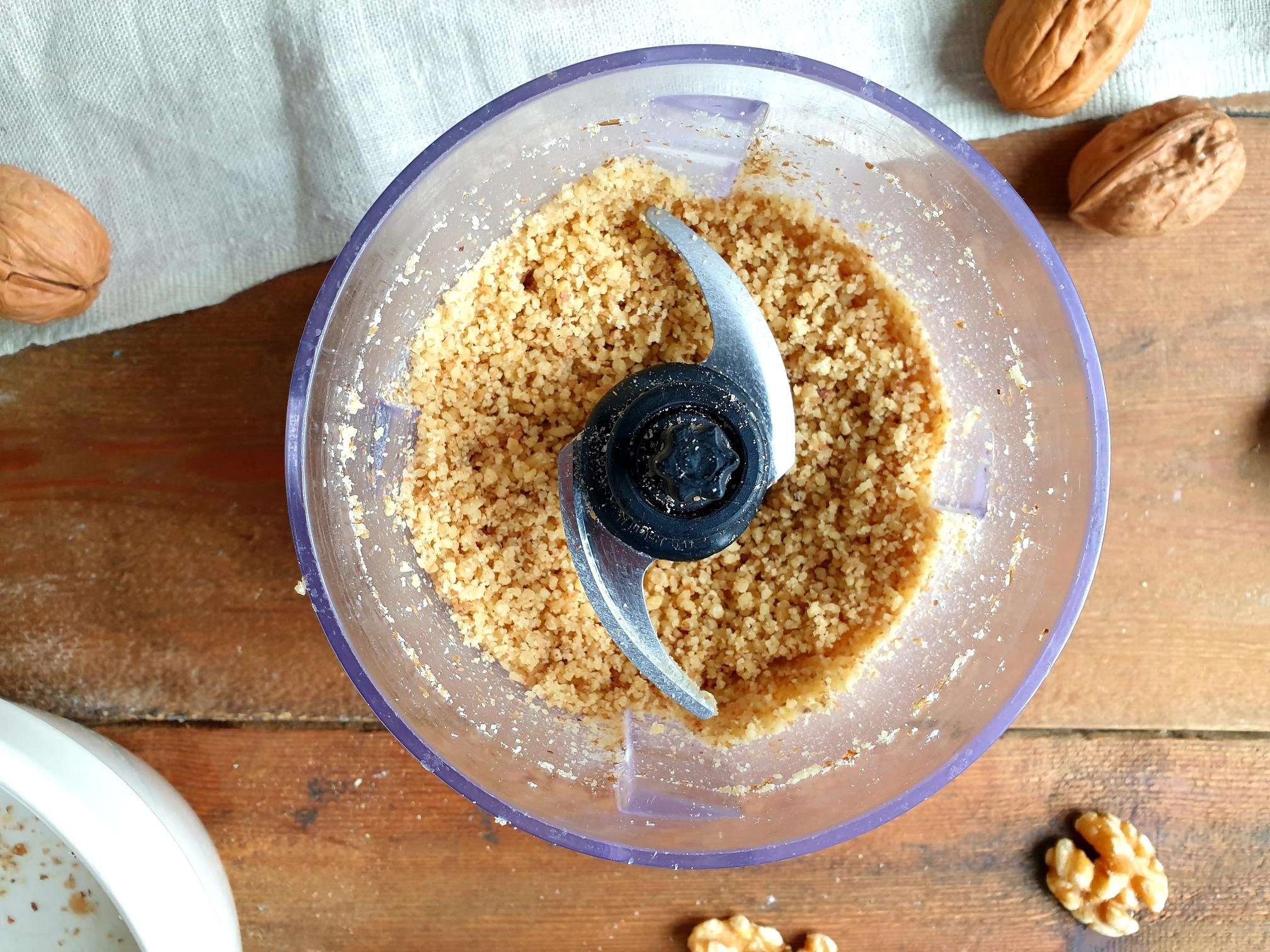
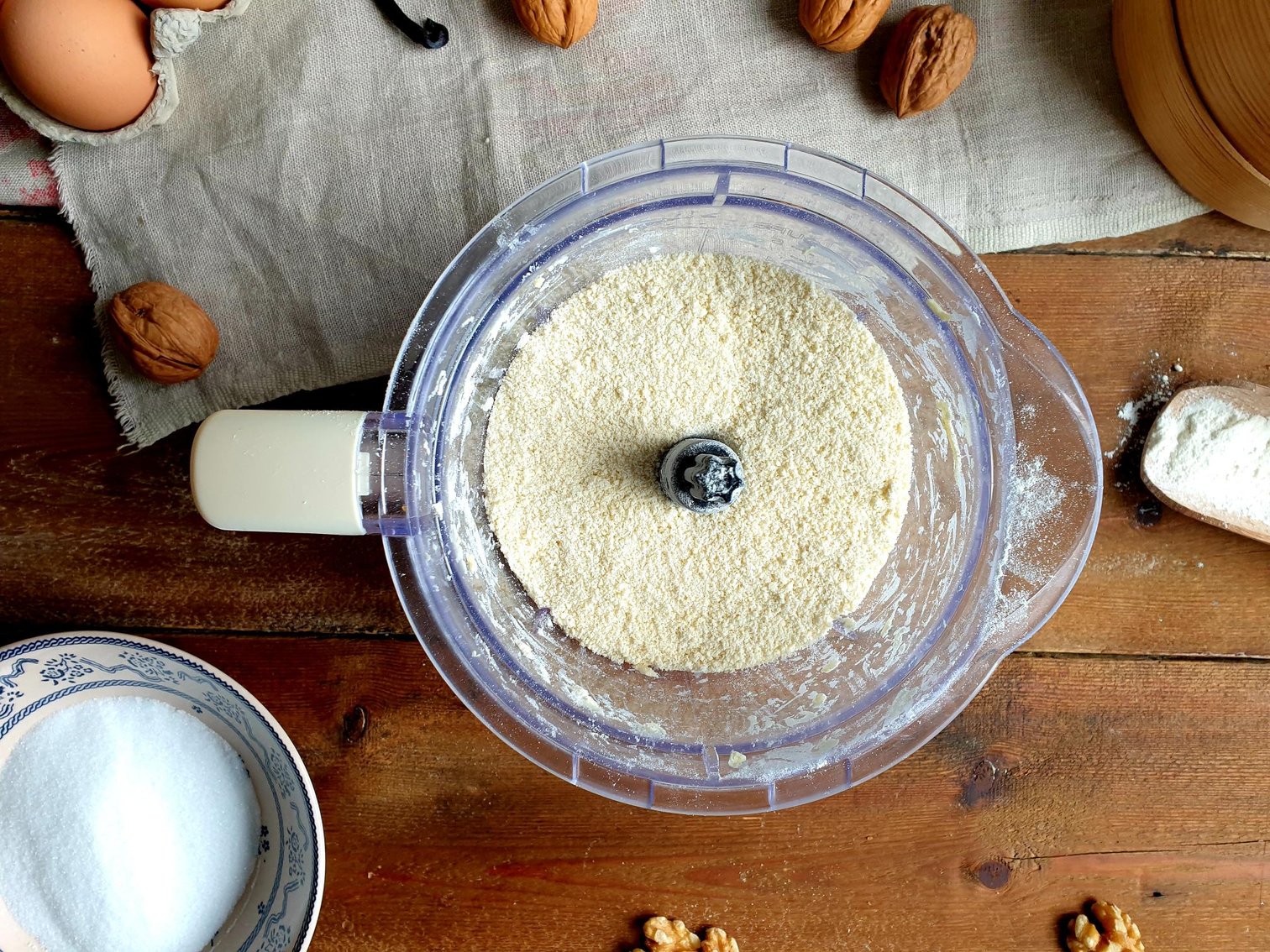
Put the walnuts into a small food processor or mini food chopper and pulse until finely ground. (the texture is really up to your liking, you can pulse and mix the nuts to a finely ground consistency, or leave them to be more coarsely grounded, I prefer the latter). You can also use store bought already ground almond flour.

View fullsize Vanillkipferl 3.jpg
View fullsize Vanillkipferl 4.jpg

Put the sifted flour into a food processor or a mixing bowl. Add cold butter cut into small pieces or coarsely grate it, if using frozen butter.

View fullsize Vanillkipferl 6.jpg
View fullsize Vanillkipferl 7.jpg

If using a food processor, pulse and mix, until the mixture resembles fine breadcrumbs.

Alternatively, if not using a food processor, rub in the butter together with four fingertips.

View fullsize Vanillkipferl 8.jpg
View fullsize Vanillkipferl 9.jpg

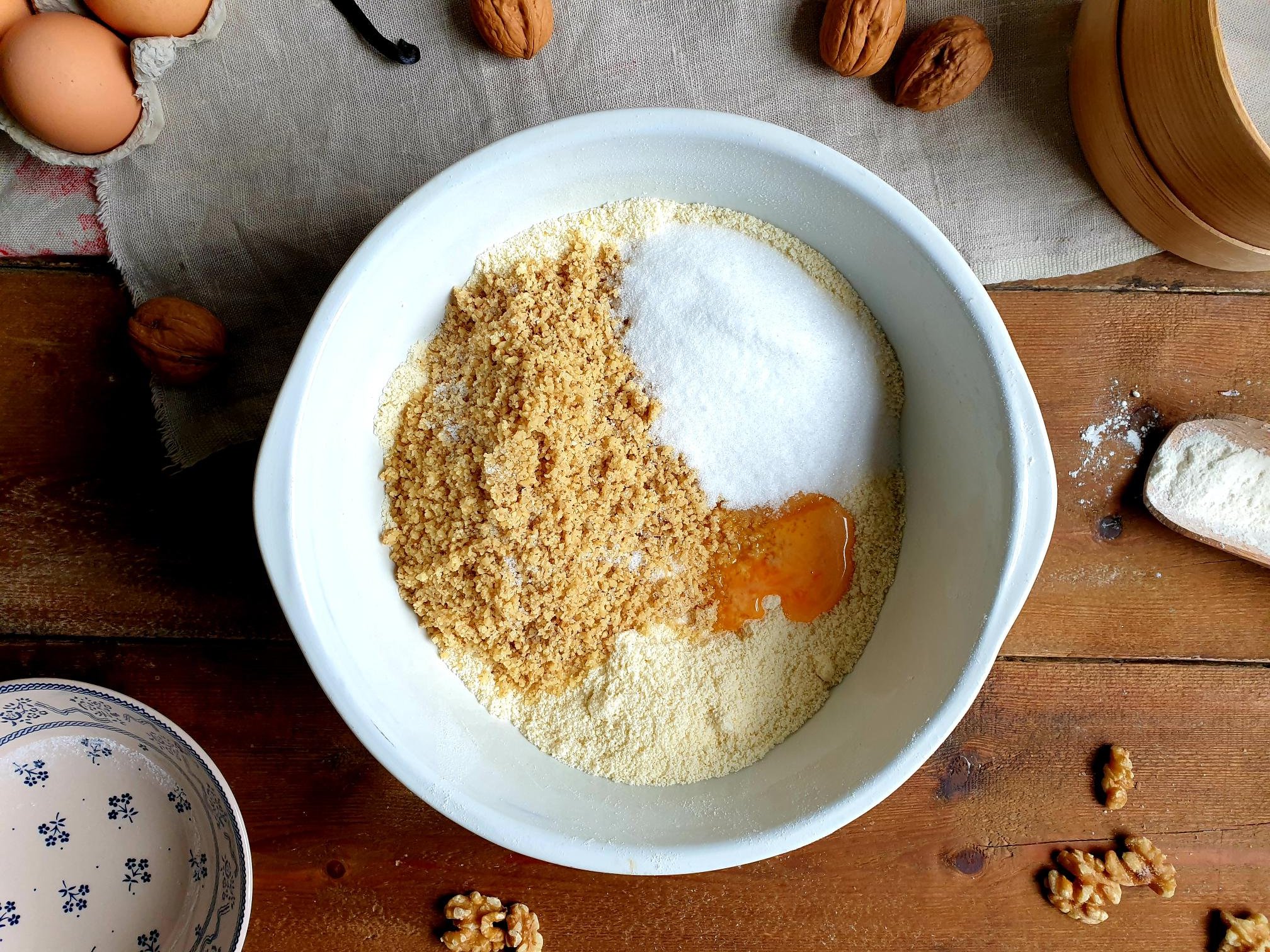
Add caster sugar, lightly beaten egg yolks, vanilla extract, ground walnuts and a pinch of sea salt. Stir with the fork first to combine all the ingredients and allow them to bind together.

View fullsize Vanillkipferl 12.jpg
View fullsize Vanillkipferl 13.jpg

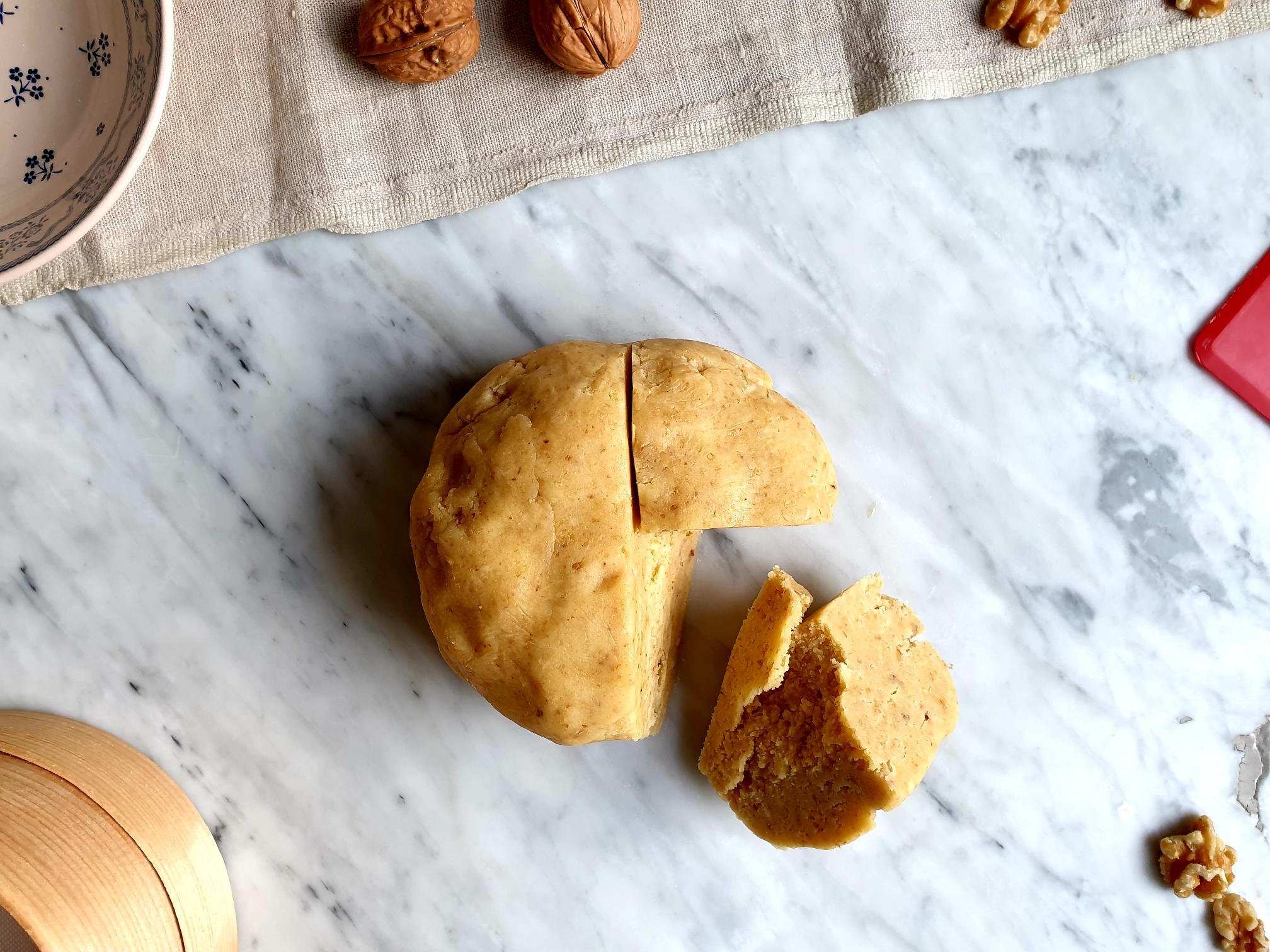
Knead lightly until the mixture forms a smooth dough. You can do this in a bowl or transfer onto a working surface.

Wrap the dough in a cling film, put it in a fridge and let it chill and rest for 30 minutes.

Preheat the oven to 180C static or equivalent.

Cut the chilled dough into quarters. Take one quarter and wrap the rest of the dough in cling film and put it back in the fridge, so the dough stays nice and cold.

Pinch a small piece of the dough, roughly the size of a small walnut (if you want to weight, 14g will give you biscuits that are not too small nor too big)

View fullsize Vanillkipferl 15.jpg
View fullsize Vanillkipferl 17.jpg

Roll each piece of pastry into a small strip (sausage) and twist it into a crescent or horse shoe shape. Do not use any flour on the working surface when rolling and shaping the crescents (if the dough is quite wet and sticky use tiny amounts of flour).

View fullsize Vanillkipferl 18.jpg
View fullsize Vanillkipferl 19.jpg

Arrange crescents on a baking sheet or tray previously lined with baking parchment (do not grease or flour the baking sheet) leaving some space apart, as they will rise a bit during the baking.

View fullsize Vanillkipferl 20.jpg
View fullsize Vanillkipferl 21.jpg

Bake until lightly golden in colour, about 15 minutes.

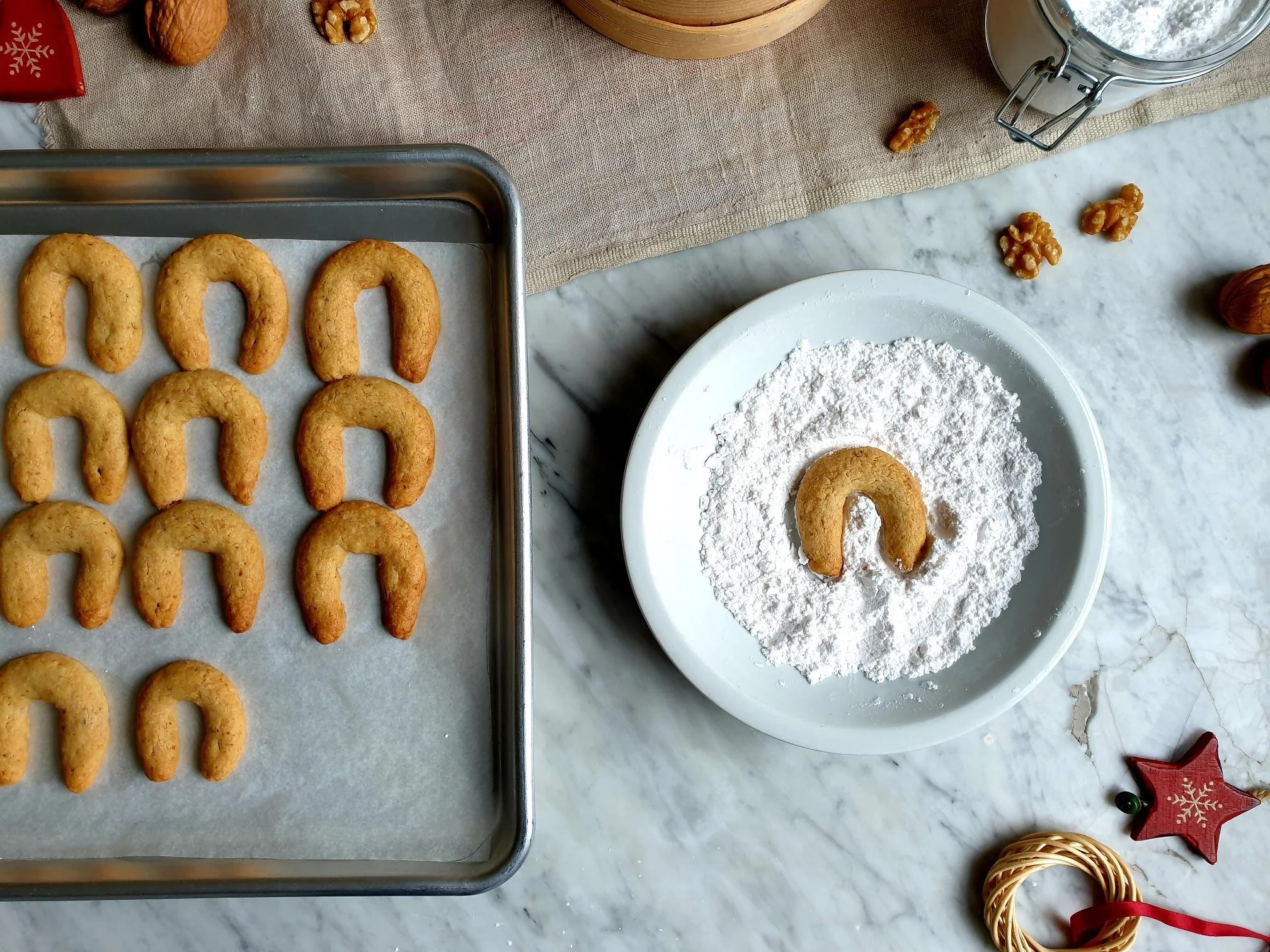
Leave them on the tray for about a minute or so, and let them cool ever so slightly, but you want the biscuits to be still fairly warm for coating them with sugar (the sugar will stick best, when the biscuits are still warm at the moment of rolling them into vanilla flavoured icing sugar).

Put the vanilla floured icing sugar in shallow dish or bowl.

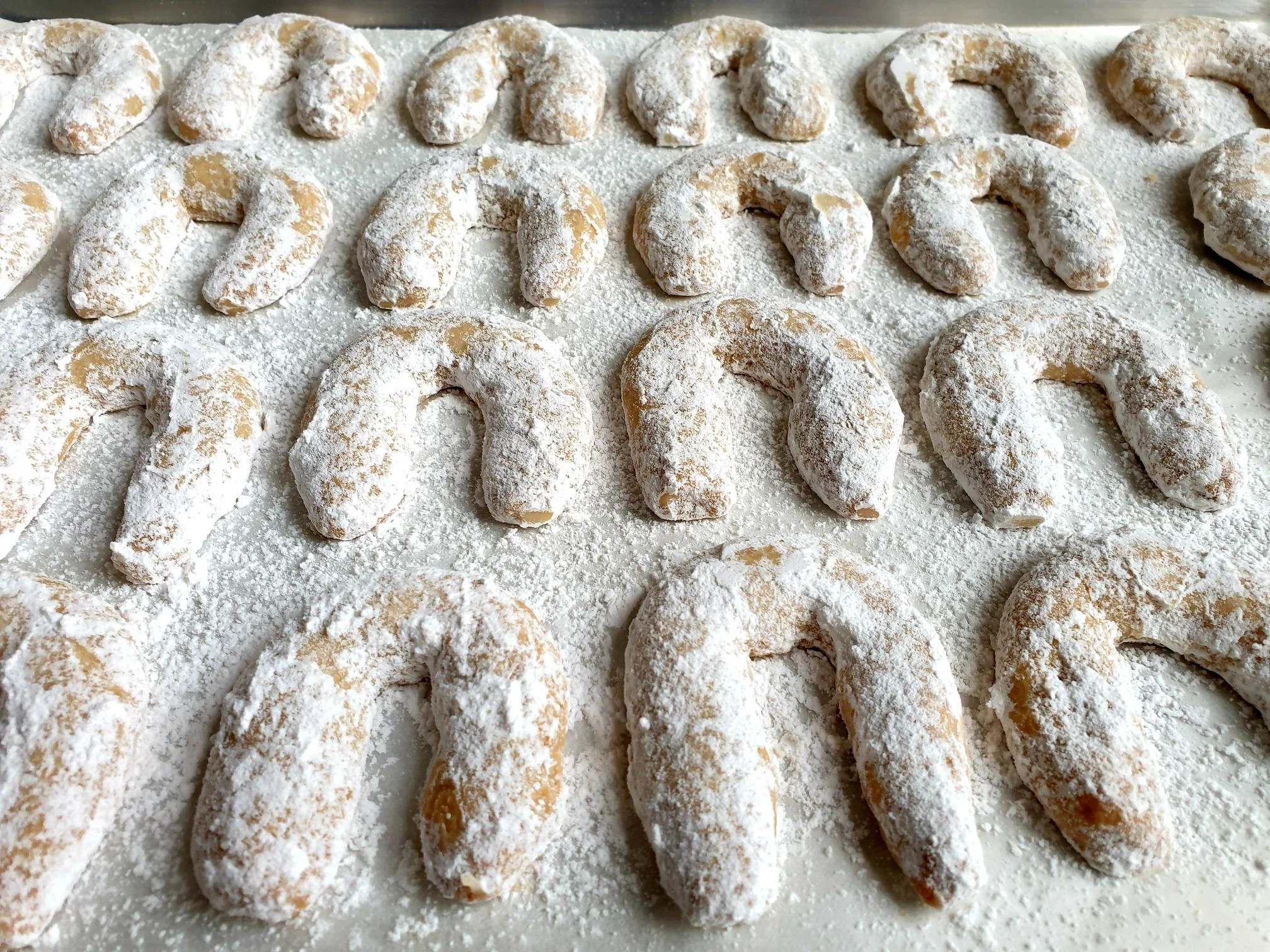
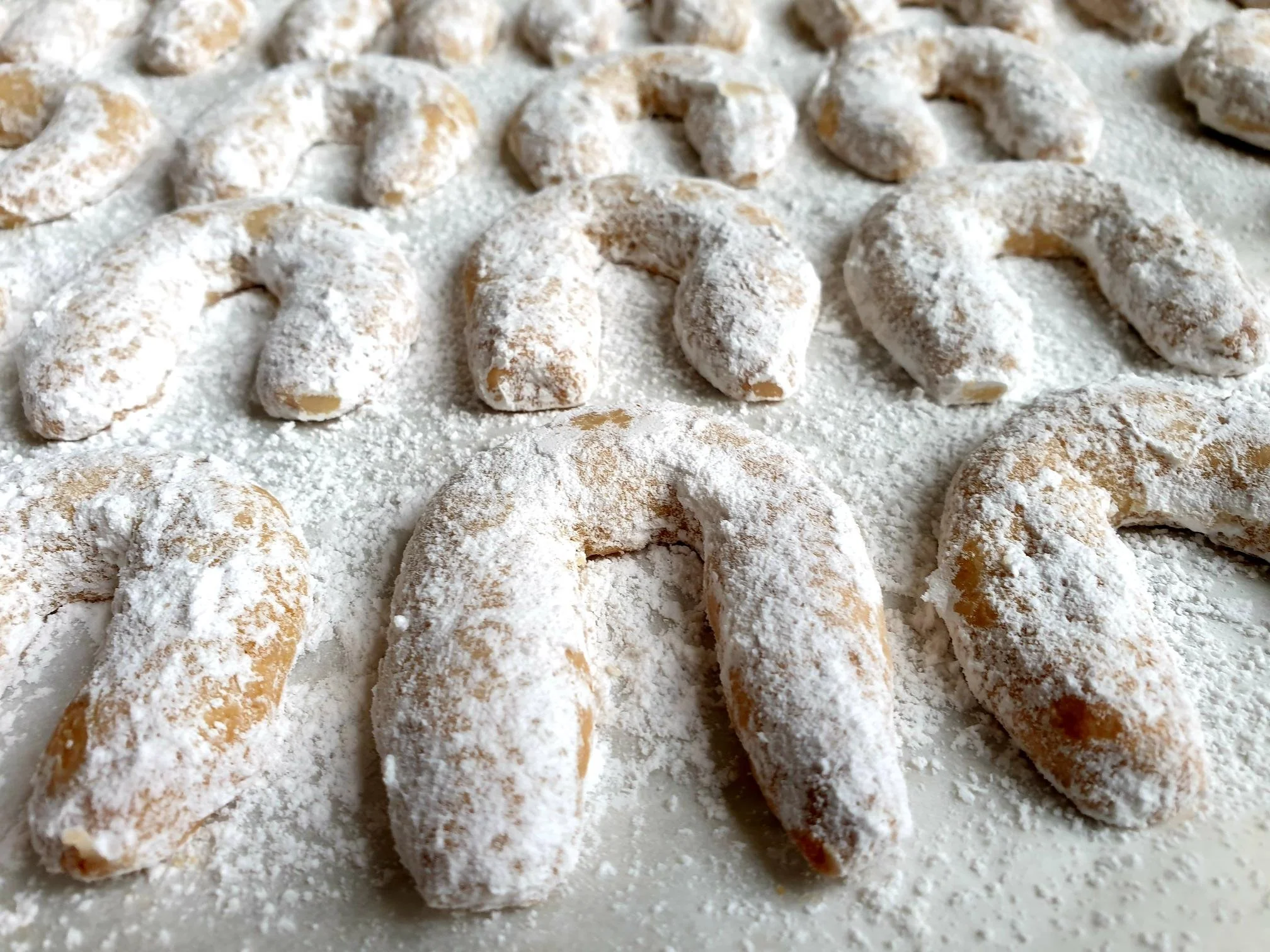
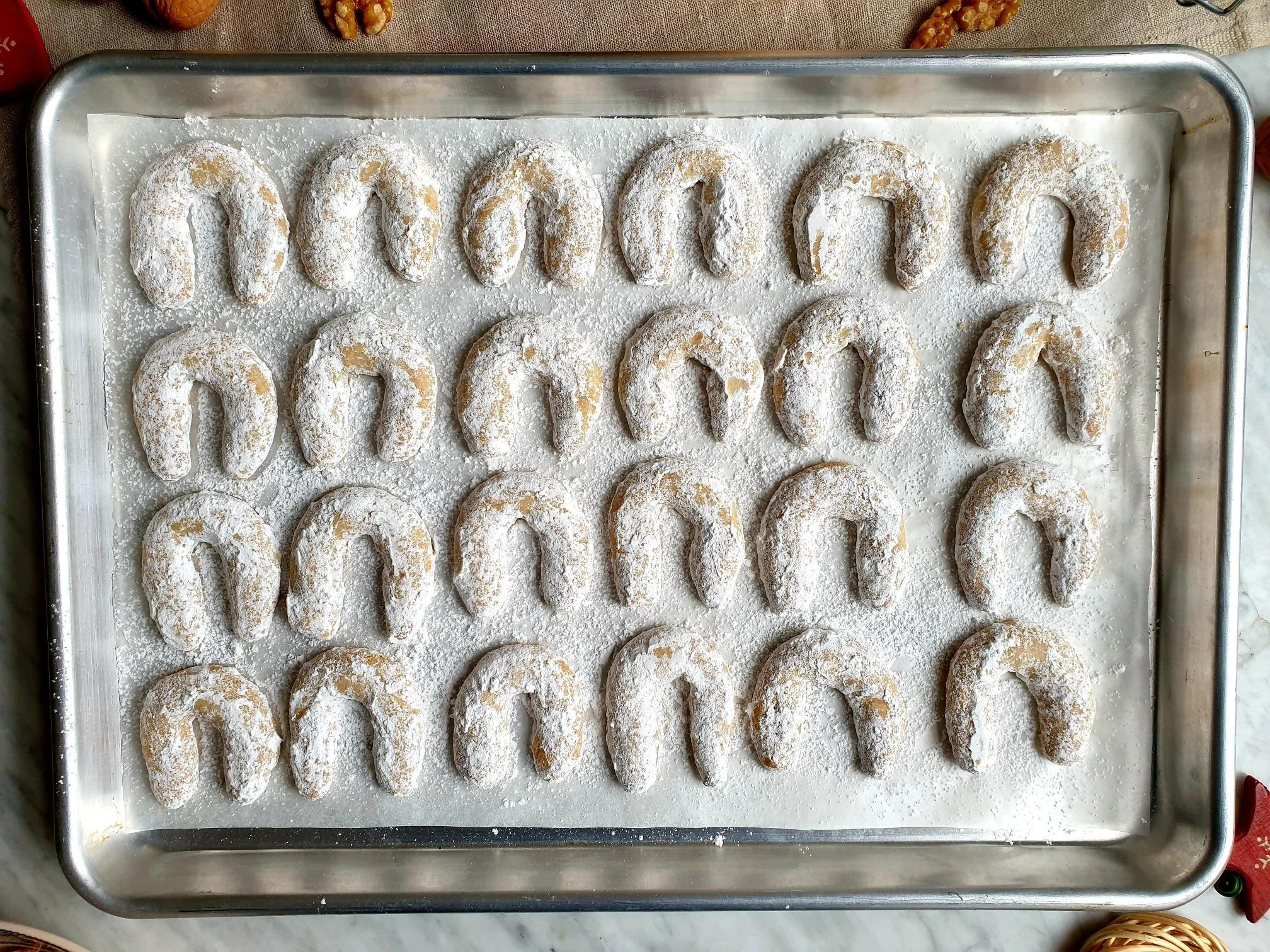
Put warm walnut crescents, one by one, into the icing sugar and coat them completely. Handle the biscuits very gently, they are fragile and break easily.

View fullsize Vanillkipferl 28.jpg
View fullsize Vanillkipferl 29.jpg

Place the coated crescents onto a plate or a tray.

View fullsize Vanillkipferl 30.jpg
View fullsize Vanillkipferl 25.jpg

Leave to cool and store in an airtight container or a cookie box.

December 13, 2022 /tina oblak
ground walnuts, ground almonds, vanilla icing sugar, christmas buiscuits, vanilla crescent buiscuits, walnut crescent buiscuits, vaniljevi rogljicki
Adriatic Recipe, All year round recipe, Austrian inspired dishes, Autumnal recipe, baking, biscuits, bite-sized nibbles, Central European recipes, Christmas bakes, cookies, dessert, easy baking, Easy recipe, festive bakes, festive dessert, fancy biscuits, festive sweet things, Finger food, home baking, Istrian cuisine, Istrian food, Istrian gastronomy, Mitteleuropean cuisine, Mitteleuropean food, Mitteleuropean recipes, simple recipe, Slovenian cuisine, Slovenian food, Slovenian gastronomy, sweet finger food, sweet nibbles, Sweet Things
Comment

Homemade Vanilla Icing Sugar Recipe

Beans and Srdines
December 01, 2022 by tina oblak in Adriatic Recipe, All year round recipe, baking, Central European recipes, condiment, cookies, dessert, Eastern Europe cakes, easy baking, Easy recipe, festive bakes, festive dessert, Pantry, Sweet Things

Vanilla icing sugar is widely used in a lot of European baking recipes. It is a very common and a staple baking ingredient. It is added to batters and dough, to whipped cream, sprinkled on top of fresh strawberries, used to dust the cakes, biscuits and other sweets treats. Could not be simpler to make at home, regular icing sugar gets infused with vanilla seeds from a vanilla bean.

On the continent, it is easily available in just about every supermarket, and is so popular that supermarkets sell their own brand of vanilla sugar. This commercially produced vanilla sugar uses vanillin, (primary substance of natural vanilla extract or bean, which is cheaper) rather than vanilla beans (vanilla bean seeds). However, here in the UK, where I currently live, this type of sugar is a bit of a struggle to find, you can almost exclusively buy it in continental food stores or speciality stores.

Vanilla extract, paste, and vanilla beans, in most cases, easily replace vanilla sugar when making custard or when baking cakes or biscuits, but there is one recipe that vanilla icing sugar simply cannot be replaced, and that is for the Austrian Vanilla Crescent Biscuits.

When making these biscuits you can easily add vanilla extract or vanilla paste or seeds from vanilla pod to the biscuit dough, but once the biscuits are baked, they need to be coated in vanilla icing sugar that simply cannot be replaced or substituted by anything else.

Preparing your own vanilla icing sugar offers a very practical solution if you cannot get hold of vanilla sugar, but also makes a lovely homemade gift for your foodie friends and family. It is very quick and easy to make, and you know exactly what goes in it.

Ingredients

  • 400g icing sugar

  • 2 vanilla pods

Method

Put icing sugar in a food processor (small food chopper or blender, coffee bean or spice grinder will work too). If you do not have any of the above, a bowl and a whisk will do just fine. Food processor helps to break up vanilla seeds that can stick together and clump up a bit.

Cut the vanilla pod in half lengthwise but try not to cut all the way through. Scrape the seeds out of the pod with a knife, keep and reserve the empty pods for later use.

Add the seeds to the sugar .

View fullsize Vanilla Icing Sugar 6.jpg
View fullsize Vanilla Icing Sugar 8.jpg

Pulse and mix, (or whisk if using a bowl and a whisk).

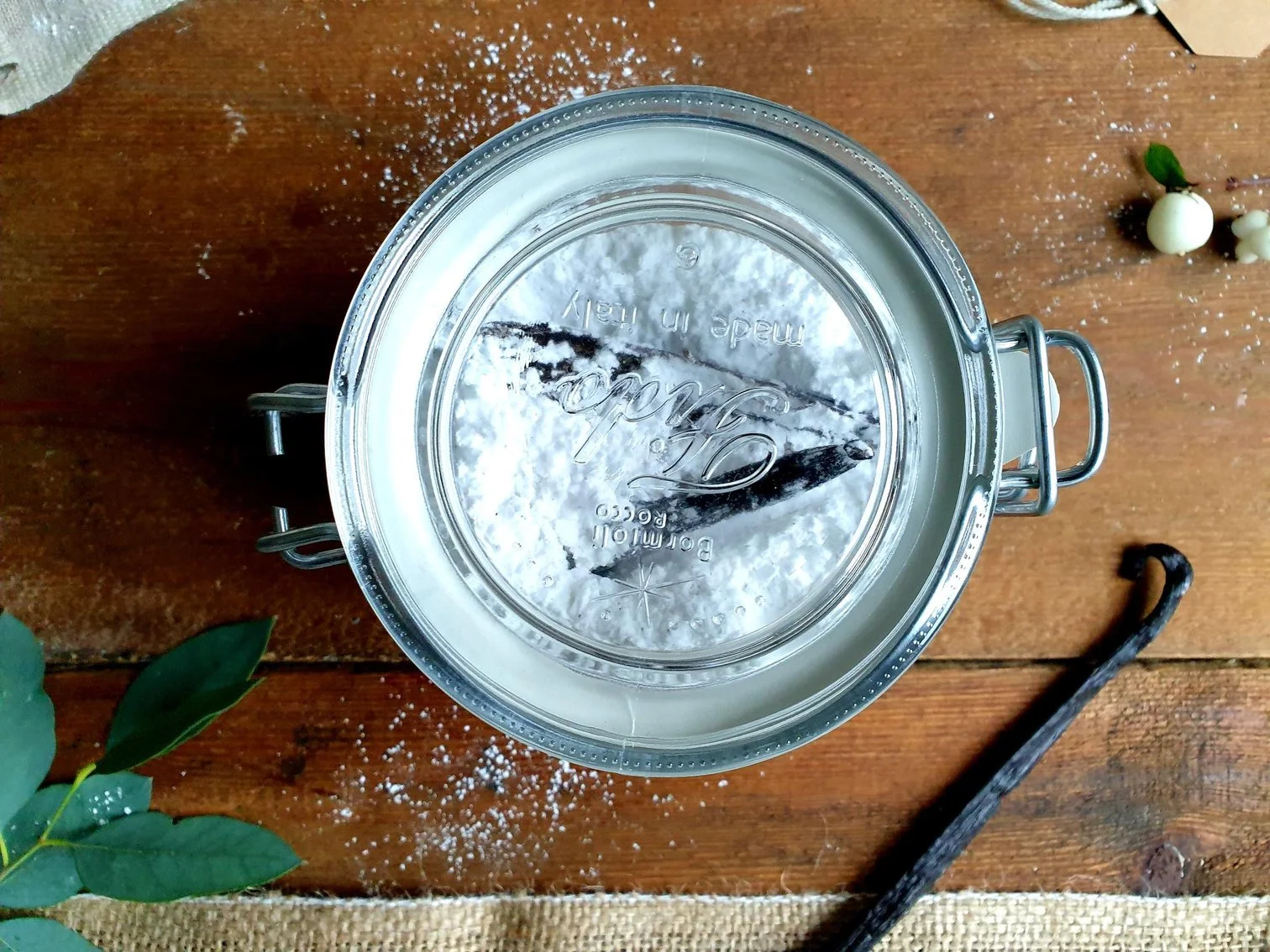
Put the sugar into an airtight container or divide between the glass jars with airtight lids (size and shape of your choice).

View fullsize Vanilla Icing Sugar 10.jpg
View fullsize Vanilla Icing Sugar 13.jpg

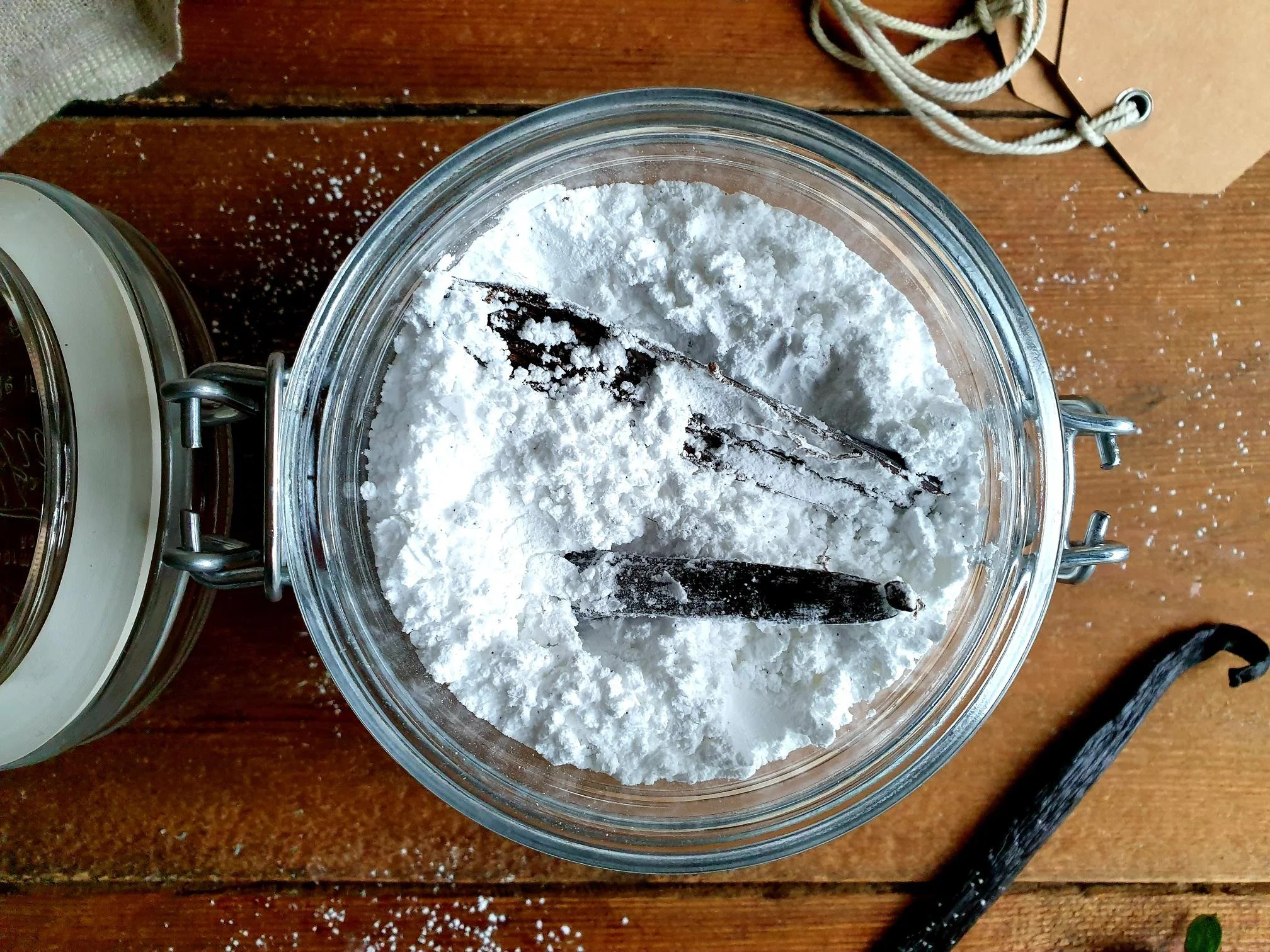
Cut the rest of the vanilla pod in pieces and add them to the sugar, this will add more flavour.

View fullsize Vanilla Icing Sugar 14.jpg
View fullsize Vanilla Icing Sugar 15.jpg

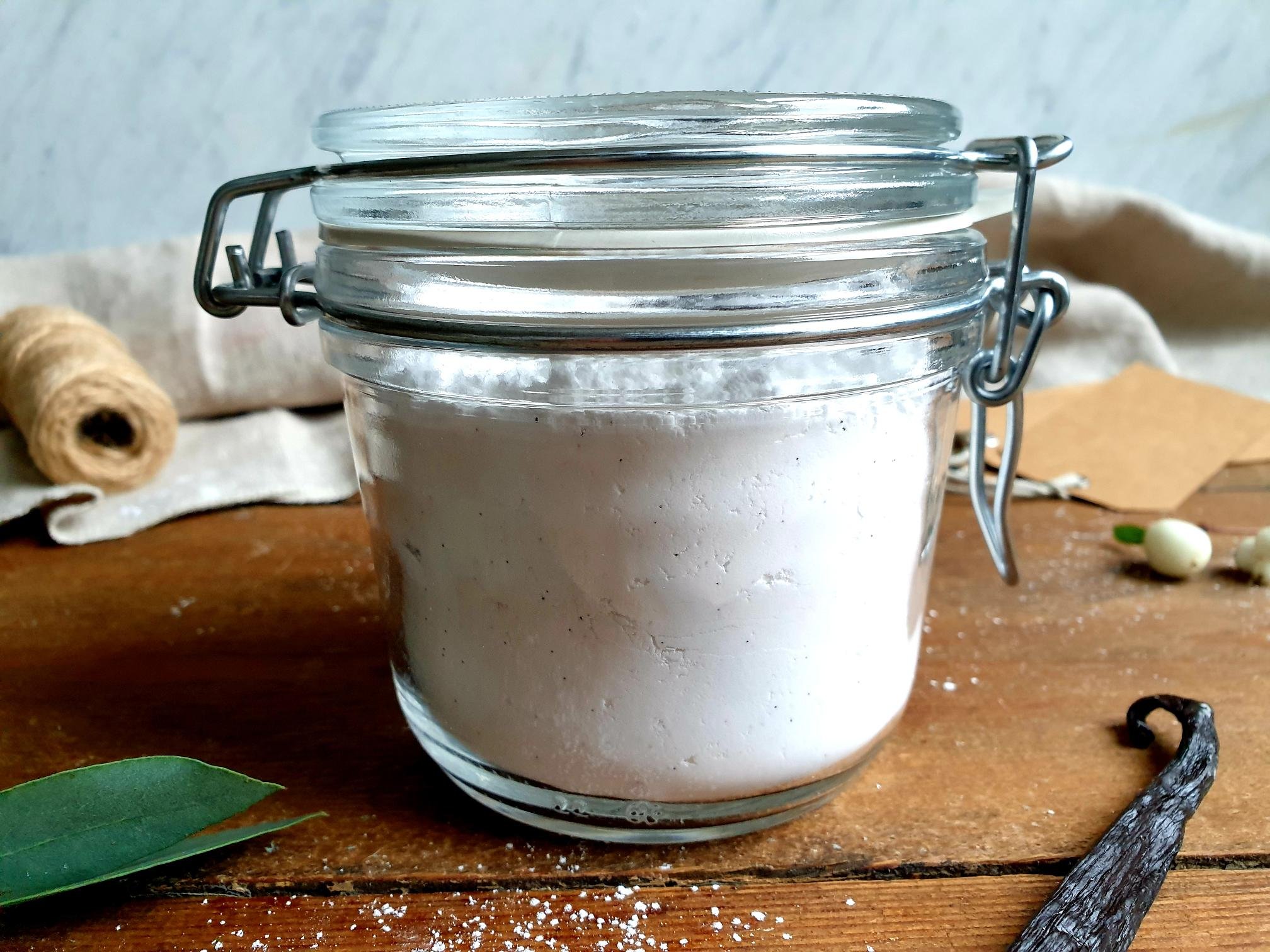
You can use the sugar immediately or leave overnight. For optimal flavour leave about two weeks for the sugar to fully absorb the vanilla flour.

Store the vanilla sugar at room temperature in a dry and cool place and give a jar a little shake now and again as the sugar can possibly clump together a bit.

Use for anything you want to add vanilla flavour and particularly indicated for coating Vanilla Crescents Biscuits.

December 01, 2022 /tina oblak
icing sugar, dusting sugar, confectionary sugar, vanilla pod, vanilla bean, vanilla extract, vanilla sugar, vanilla paste, vanilla seeds, vanillin
Adriatic Recipe, All year round recipe, baking, Central European recipes, condiment, cookies, dessert, Eastern Europe cakes, easy baking, Easy recipe, festive bakes, festive dessert, Pantry, Sweet Things
Comment

Traditional Istrian Fig Strudel made from sweet yeast dough Recipe 

Beans and Sardines
October 12, 2022 by tina oblak in Adriatic Recipe, Autumnal dish, Autumnal recipe, baked dish, baking, breakfast, celebratory desserts, dessert, easy baking, Enriched dough, festive bakes, festive dessert, festive sweet things, Istrian cuisine, Istrian dish, Istrian food, Istrian gastronomy, Rustic dish, Slovenian cuisine, Slovenian food, Slovenian gastronomy, Small bites, Snacks, summer dish, summer recipe, Sweet bread, sweet course, sweet finger food, sweet nibbles, Sweet Things

This rustic bake is one of the most traditional and authentic sweet treats in the cuisine of Slovenian Istra, it is called by the locals kvašen štrudelj s figami or kvašen štrukelj s figami, and it is made from soft, brioche like sweet yeast dough and fig filling. 

It is usually baked towards the end of summer and early autumn, when the figs are in abundance, and although fig filling is the most common and most traditional, other fruits can be used like apples, pears or plums, and different type of nuts can be added too.   

This sweet fig log is a bit of a “gastronomic hybrid”, it looks like a strudel in a way that is rolled into a log like a strudel, but it is made from yeast dough, resembling quite strongly, in terms of flavour, to the dough that is used to make a traditional Slovenian nut roll, Potica. 

This sweet bake used to be prepared and offered for special occasions as a dessert at the end of a big meal, and given to children as a snack and a special treat. Nowadays, it is also eaten for breakfast and offered with tea and coffee, but it is not commonly found in the restaurants and almost exclusively baked in the household. 

Istrian cuisine is a no waste cuisine, so juicy figs, with their delicately perfumed flavour, when fully ripen and plentiful, would get picked, chopped, cooked down in a frying pan with some butter to bring out their innate sweetness, cooled completely and then frozen to be used during late autumn and winter season, when fresh figs are no longer available. 

As a child, on the Slovenian coast, where I grew up, I would eat figs straight from the tree and the common sight of ripe figs slowly started to mark the end of summer and the start of cooler days, back to school days... 

I am sharing here this slightly off the beaten track, very special recipe, passed to me by my nona Nada and her dear friend Arnanda. It was truly touching listening to them, deep in  conversation about the recipe, and its different variations, even when the villages only a few kilometres apart from each another. 

Celebrate this wonderful fruit that marks the transition into autumn and try this delicious bake,. However, if you cannot get hold of fresh figs, you can just use fig jam, or any other jam of your preference for the filling. Your friends and family will be seriously impressed. 

Recipe 

Ingredients for the dough 

  • 500g plain all purpose white flour 

  • 7g fast-action dried yeast (also called instant yeast) or 20g fresh yeast 

  • 100g unsalted butter, melted 

  • 100g caster sugar 

  • 250ml lukewarm milk or water or a combination of the two (125ml milk and 125ml water) 

  • 2 eggs, room temperature, slightly beaten 

  • grated lemon zest of 1 unwaxed lemon   

  • 1 Tsp sea salt 

Ingredients for the filling 

The filling is made from fresh figs, you can use other fresh fruit like apples, pears, plums or fig jam instead, or any other jam of your preference. 

  • 1kg, roughly, of fresh figs   

  • 20g unsalted butter 

  • grated lemon zest of 1 unwaxed lemon 

  • 200ml single cream or ricotta

Method 

The dough 

In a fairly large bowl, sift the flour, make a little well in the centre and add lukewarm milk, instant yeast melted butter, sugar, lightly beaten eggs, grated lemon zest and a pinch of sea salt on the side of the bowl. 

View fullsize Fig Strukelj 4.jpg
View fullsize Fig Strukelj 5.jpg

Mix and combine well all the ingredients with the fork or a wooden spoon. 

(If using fresh yeast, place it into a small bowl and slightly break it down into smaller pieces with your fingers. Add a few tablespoons of tepid milk, ¼ tea spoon of sugar, gently stir and leave for about 15-20 minutes or until gentle bubbles form on the surface). 

Transfer the mixture onto a well floured  working surface and start kneading, for about 10 minutes, adding a little flour at a time if the mixture is too wet and sticky (this will partially depend on the flour and the size of the eggs)

Alternatively, use a mixer fitted with a dough hook and leave running for about 5 minutes. 

View fullsize Fig Strukelj 6.jpg
View fullsize Fig Strukelj 7.jpg

The dough is ready when it ends up being really smooth and elastic. It should not stick to your hands or working surface and should leave the bowl clean, if using a mixer. 

Transfer the dough back into a very lightly oiled bowl and cover with cling film (I use a shower cap, works really well). 

Put the bowl in a warm room free of drafts for at least one hour and leave the dough to rest and rise, the dough should increase in volume and double in size. 

While the dough is resting and rising start preparing the filling. 

View fullsize Fig Strukelj 8.jpg
View fullsize Fig Strukelj 9.jpg

The filling 

Wash the figs and pat dry them. 

Transfer the figs onto a chopping board, half them, quarter them and then roughly chop them. 

In a fairly large frying pan melt the butter and add chopped figs. 

Cook them for a few minutes on a gentle heat, stirring occasionally, until they become completely soft and break down. (if the skin of the figs is still a bit hard, break it down with the help of a wooden spoon). 

Cool completely and set aside. 

View fullsize Fig Strukelj 11.jpg
View fullsize Fig Strukelj 13.jpg

Transfer cooked figs into a bowl, add the cream and the lemon zest, stir and mix until all the ingredients are well combined. 

View fullsize Fig Strukelj 14.jpg
View fullsize Fig Strukelj 16.jpg

Flour well your working surface and rolling pin. Put your dough onto a working surface and roll it out to a more or less rectangular shape (40cmx50cm) to the thickness of about or not more than 1cm. 

This will give you a one big loaf, this is how it is traditionally made, and this is the size I made for this recipe. 

Because of its size, it could be a bit tricky to handle if you are not familiar with the recipe. 
I suggest you might want to divide the dough and the filling in half and make two logs instead.  

Take the fig mixture and spread it evenly on the rolled dough but leave some space around the edge so the filling does not come out when rolling the dough. 

View fullsize Fig Strukelj 17.jpg
View fullsize Fig Strukelj 18.jpg

Gently roll the filled dough quite tightly into a log and tuck well in the edges. 

View fullsize Fig Strukelj 19.jpg
View fullsize Fig Strukelj 20.jpg

Place the log onto a baking tray, previously lined with baking parchment. 

Cover with a clean kitchen towel , place it in a warm, draft free room and leave to prove for the second time for about 30 minutes or until well risen, not necessarily doubling in size. 

Take a toothpick and make a little holes in the dough on the whole surface and brush with either some melted butter or beaten egg. 

Bake in the preheated oven at 180C static, or equivalent, for about 50-60 minutes. Halfway through baking, tent the roll with the aluminium foil to prevent it browning too much and starting to burn. 

Leave on a baking tray until completely cool. 

Transfer on a serving plate, dust with icing sugar and serve. 

Just a thought 

For a more modern version of this traditional fig based sweet treat you can use ricotta instead of the single cream for preparing fig mixture filling and adding a splash of vanilla extract to both the filling and the dough mixture. 

Fig roll tastes at its best the day after has been baked. 

You can store it in an airtight container for up to five days and is suitable for freezing. 

Wine suggestion

Alto Adige Moscato Rosa Passito DOC 2018 - Laimburg

October 12, 2022 /tina oblak
kvašen štrudelj s figami, kvašen štrukelj s figami, fresh figs, fig jam, fruit strudel with sweet yeast dough, Istrian fig strudel, sweet yeast dough strudel, Apple strudel made from yeast sweet dough, plum strudel made from sweet yeast dough, Pear strudel made from sweet yeast dough, Istrian sweet treats, strudel with enriched dough, enriched dough, sweet enriched dough
Adriatic Recipe, Autumnal dish, Autumnal recipe, baked dish, baking, breakfast, celebratory desserts, dessert, easy baking, Enriched dough, festive bakes, festive dessert, festive sweet things, Istrian cuisine, Istrian dish, Istrian food, Istrian gastronomy, Rustic dish, Slovenian cuisine, Slovenian food, Slovenian gastronomy, Small bites, Snacks, summer dish, summer recipe, Sweet bread, sweet course, sweet finger food, sweet nibbles, Sweet Things
Comment

Cooked ham in bread dough Recipe

Beans and Sardines
April 06, 2022 by tina oblak in Adriatic Recipe, All year round recipe, Appetizers, baked dish, baking, breakfast, brunch, Celebratory dish, Central European recipes, child friendly dish, child friendly meal, Easter dish, Easter treats, easy baking, Easy recipe, Enriched dough, entrée course, family friendly dish, family friendly meal, festive bakes, Festive dish, Finger food, home baking, Istrian cuisine, Istrian dish, Istrian food, Istrian gastronomy, main course, main dish, Meat, Mitteleuropean cuisine, Mitteleuropean dish, Mitteleuropean food, Mitteleuropean recipes, Rustic dish, Slovenian cuisine, Slovenian food, Slovenian gastronomy, Starters, Easter, Easter recipes

Cooked ham in bread dough is a real show stopper and a crowd pleaser, this recipe goes back to medieval times when it was customary cooking various types of meats in bread dough.

This dish consists of a piece of ham being cooked first and then wrapped in bread dough and baked in the oven allowing the aroma and the flavours of the ham to travel into the dough during the baking process.

On the Slovenian coast, where I come from, there is no Easter without this dish. This baked delicacy is so deeply rooted in Slovenian gastronomic culture that it is traditionally cooked and eaten around Easter period (with freshly grated horseradish or horseradish cream and mustard) and served as part of Easter breakfast on actual Easter day, in just about every corner of the country, together with hard boiled eggs, Pinca (Easter sweet bread) and Potica (traditional Slovenian festive nut roll).

This dish is also typically found in Trieste, and province of Trieste in Italy, in local osterie (informal, usually family run eating places serving simple local specialities), on a daily basis and typically served with a a glass of wine or locally produced artisan beer.

I studied in Trieste and had this dish on my graduation day as part of the buffet.

This recipe is so popular and delicious that it is nowadays enjoyed all year round, it is also ideal for picnics, as it can be made ahead of time and travels well.

Ingredients

Serves

For the dough

  • 500g strong white bread flour

  • 7g (one sachet) fast-action dried yeast

  • sea salt, a pinch

  • 300ml lukewarm milk (full fat, semi skimmed or skimmed)

  • 25g butter, unsalted or slightly salted, melted

You also need

  • 1.4kg, roughly, unsmoked or smoked Gammon joint

  • 1 carrot, optional

  • 1 celery stick, optional

  • ½ onion, optional

  • 1egg, beaten

  • a bit of extra milk (about 2 Tbsp)

Method

Place the ham in a big pot and add enough cold water to completely cover the ham.

Add a whole carrot, celery stick and half an onion for extra flavour, if desired.

Bring to boil, lower the heat, cover with the lid and gently boil for required time, this will depend on the size of the ham. (Weight your meat to calculate and work out your cooking times, allow 20 minutes per 450g)

While the ham is cooking, make the dough. (You can cook the ham in advance and wrap it in aluminium foil to keep it moist, and use when needed.

Drain cooked ham in a colander and let it cool completely.

Pat dry the ham well with the kitchen paper.

Put the flour in a large mixing bowl, add dried yeast on one side of the bowl and sea salt on the other. Add the milk, melted butter and mix to combine well all the ingredients.

View fullsize Ham in bread dough 2.jpg
View fullsize Ham in bread dough 3.jpg

The dough at this point will be a bit sticky, but should not be soggy. The dough will become less sticky as you knead.

View fullsize Ham in bread dough 4.jpg
View fullsize Ham in bread dough 5.jpg

Transfer the mixture on to a lightly floured (or lightly oiled) work surface and knead for about 10-15 minutes until the dough is nice and smooth and has an elastic texture. Your hands should not stick to the dough, if they do add a bit of flour at a time.

Put the dough in a lightly oiled large bowl and cover with a cling film. Stand in a warm place, free of drafts, and let it rise for at least 1-1 ½ hours until the dough has doubled or tripled in size.

Turn the dough on to lightly floured surface and knock back by hand for few minutes. Flour well the surface and with the rolling pin roll the dough to about 2cm thick. At this point you can pinch a bit of dough for decorating if you wish (I made a little dough plait, as it is done traditionally).

View fullsize Ham in bread dough 10.jpg
View fullsize Ham in bread dough 11.jpg

Preheat the oven to 180C static or equivalent and line the baking tray with the non stick baking parchment.

In a small bowl mix the beaten egg with a bit of milk and brush the centre of the rolled dough.

Place the ham in the centre on the brushed area.

Brush the rest of the ham with egg and milk mixture.

Wrap the ham with the dough all around, a bit like a parcel. Seal well the edges to avoid the dough opening up during the baking.

View fullsize Ham in bread dough 8.jpg
View fullsize Ham in bread dough 9.jpg

Place your ham and dough parcel on a baking tray with the junctions facing downwards.

Glaze the ham and dough parcel on all sides with the egg and milk mixture.

Prick the ham and dough parcel with a toothpick.

If you created a small Easter themed dough decoration, place it on top of the dough parcel and brush with egg and milk mixture.

Put the ham dough parcel in the preheated oven and bake for 60 minutes. Half way the baking time cover with aluminium foil and bake further until golden in colour.

View fullsize Ham in bread dough 13.jpg
View fullsize Ham in bread dough 14.jpg

Take out of the oven, leave to cool on the baking tray for a few minutes, then remove from the baking tray and leave to cool on a wire rack.

Best served warm with horse radish sauce, freshly grated horse radish root or/and mustard.

Wine suggestion

Collio Pinot Bianco DOC 2020 - Doro Princic

April 06, 2022 /tina oblak
ham, cooked ham, gammon joint, unsmoked gammon joint, smoked gammon joint, Easter bread, cooked ham in bread dough, prosciutto in crosta, kuhana sunka v testu, Easter breakfast, Easter brunch
Adriatic Recipe, All year round recipe, Appetizers, baked dish, baking, breakfast, brunch, Celebratory dish, Central European recipes, child friendly dish, child friendly meal, Easter dish, Easter treats, easy baking, Easy recipe, Enriched dough, entrée course, family friendly dish, family friendly meal, festive bakes, Festive dish, Finger food, home baking, Istrian cuisine, Istrian dish, Istrian food, Istrian gastronomy, main course, main dish, Meat, Mitteleuropean cuisine, Mitteleuropean dish, Mitteleuropean food, Mitteleuropean recipes, Rustic dish, Slovenian cuisine, Slovenian food, Slovenian gastronomy, Starters, Easter, Easter recipes
Comment

Austrian style Curd Cheesecake Recipe

Beans and Sardines
February 16, 2022 by tina oblak in Adriatic Recipe, baked dish, baking, celebratory desserts, dessert, Easy recipe, festive bakes, festive dessert, festive sweet things, pudding, Sweet Things, easy cakes, no flour cakes, home baking, easy baking, Central Europe cakes, Eastern Europe cakes

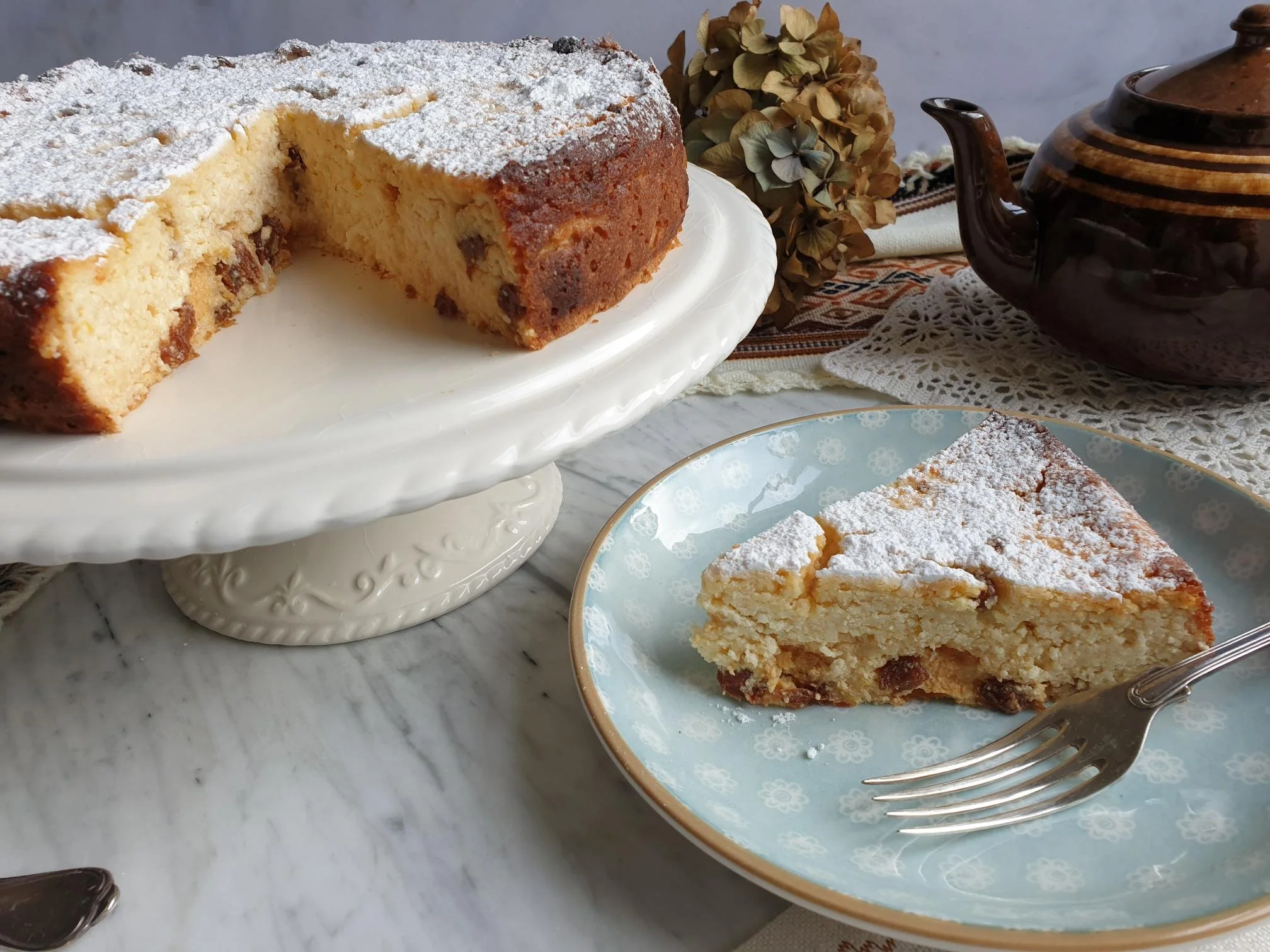
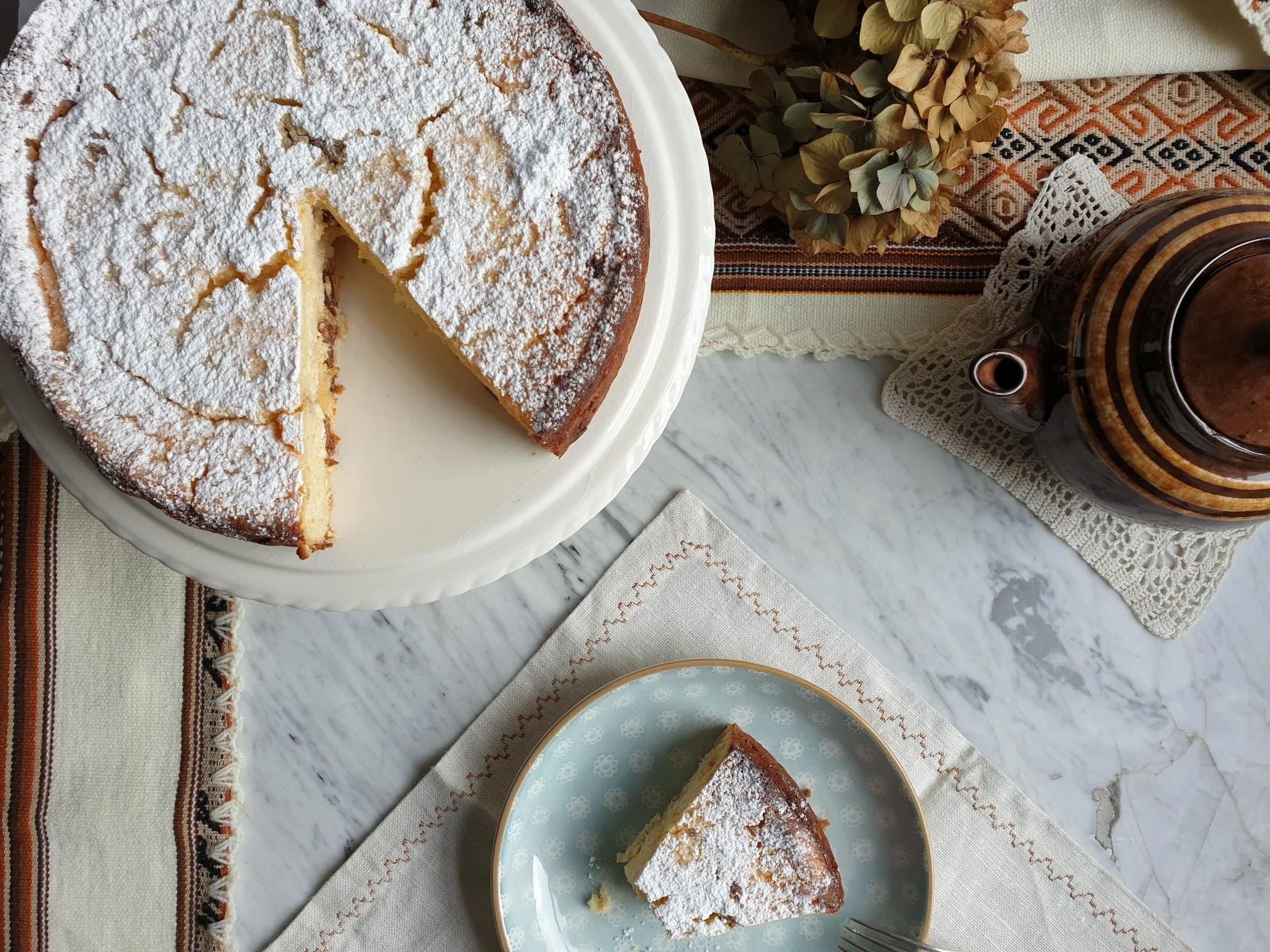
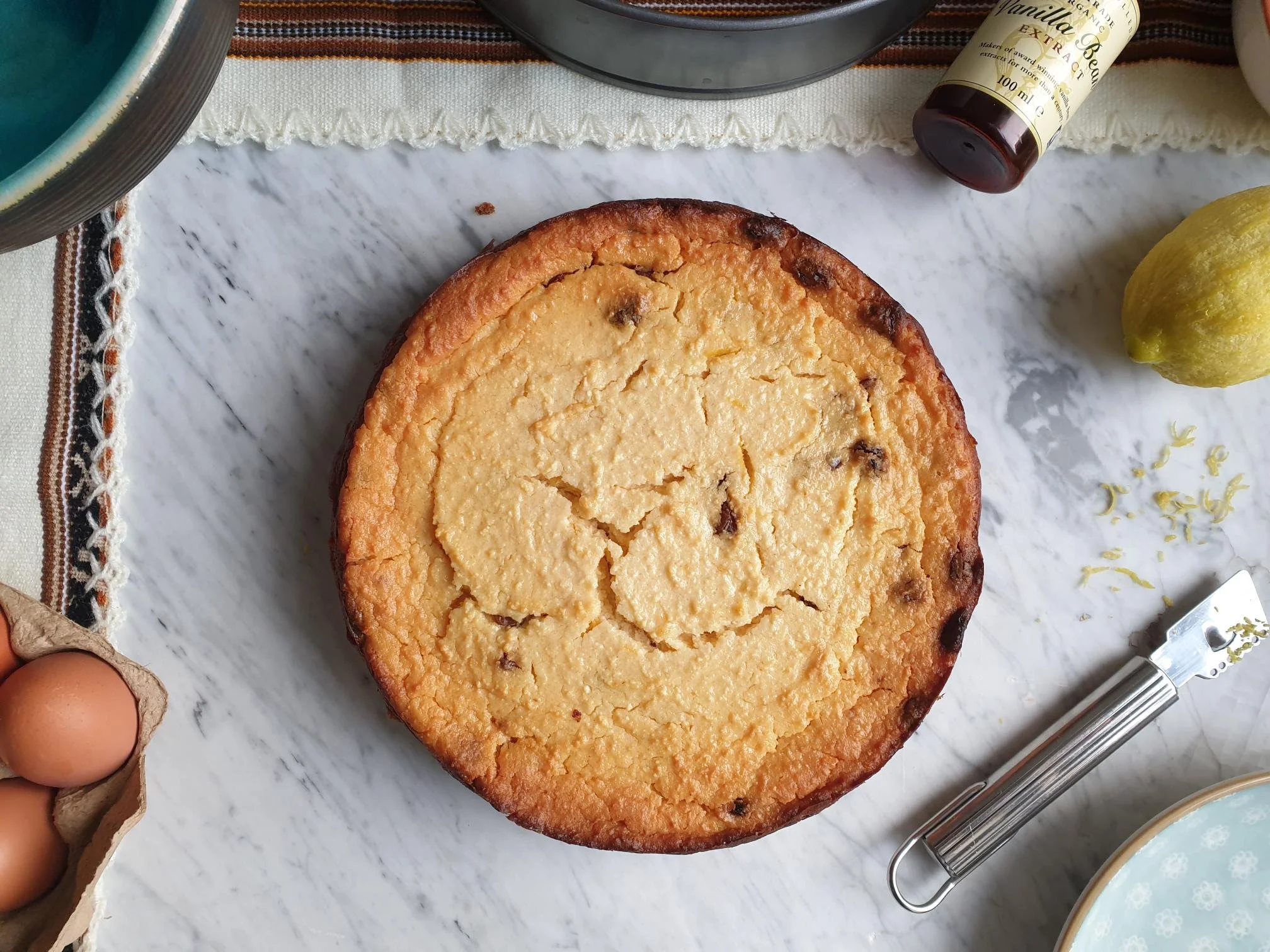
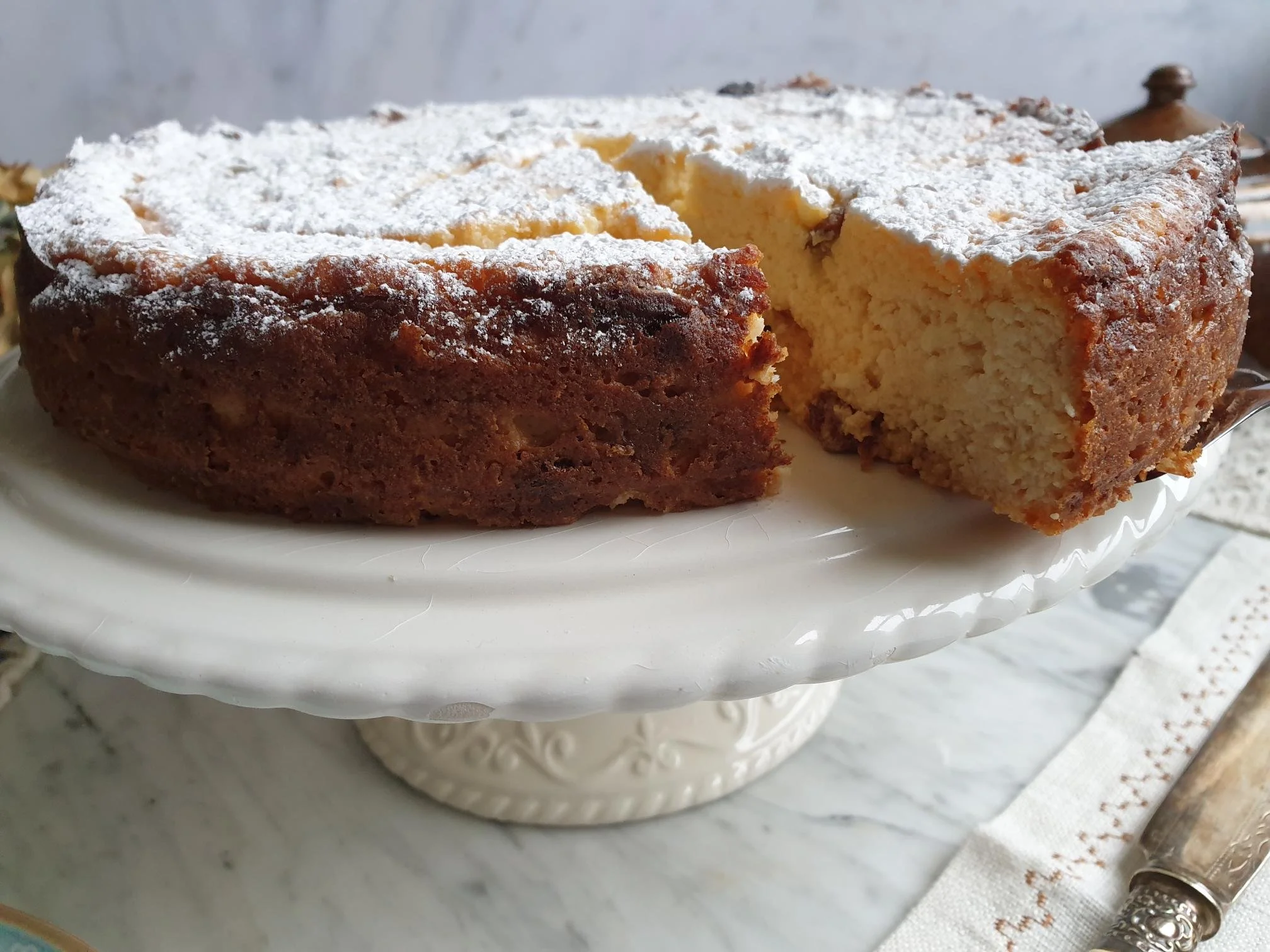
This Austrian style Curd Cheesecake is a sweet dessert, delicious in its simplicity, consisting of one main layer mixture of curd cheese or ricotta, flavoured with sugar, lemon zest, vanilla extract, eggs and the raisins that have been luxuriously soaked in dark rum.

This cake is quite moist, therefore refreshing and perfect for any occasion, it is very easy to make and a great recipe to keep in the repertoire for cakes that require minimum effort but deliver maximum satisfaction.

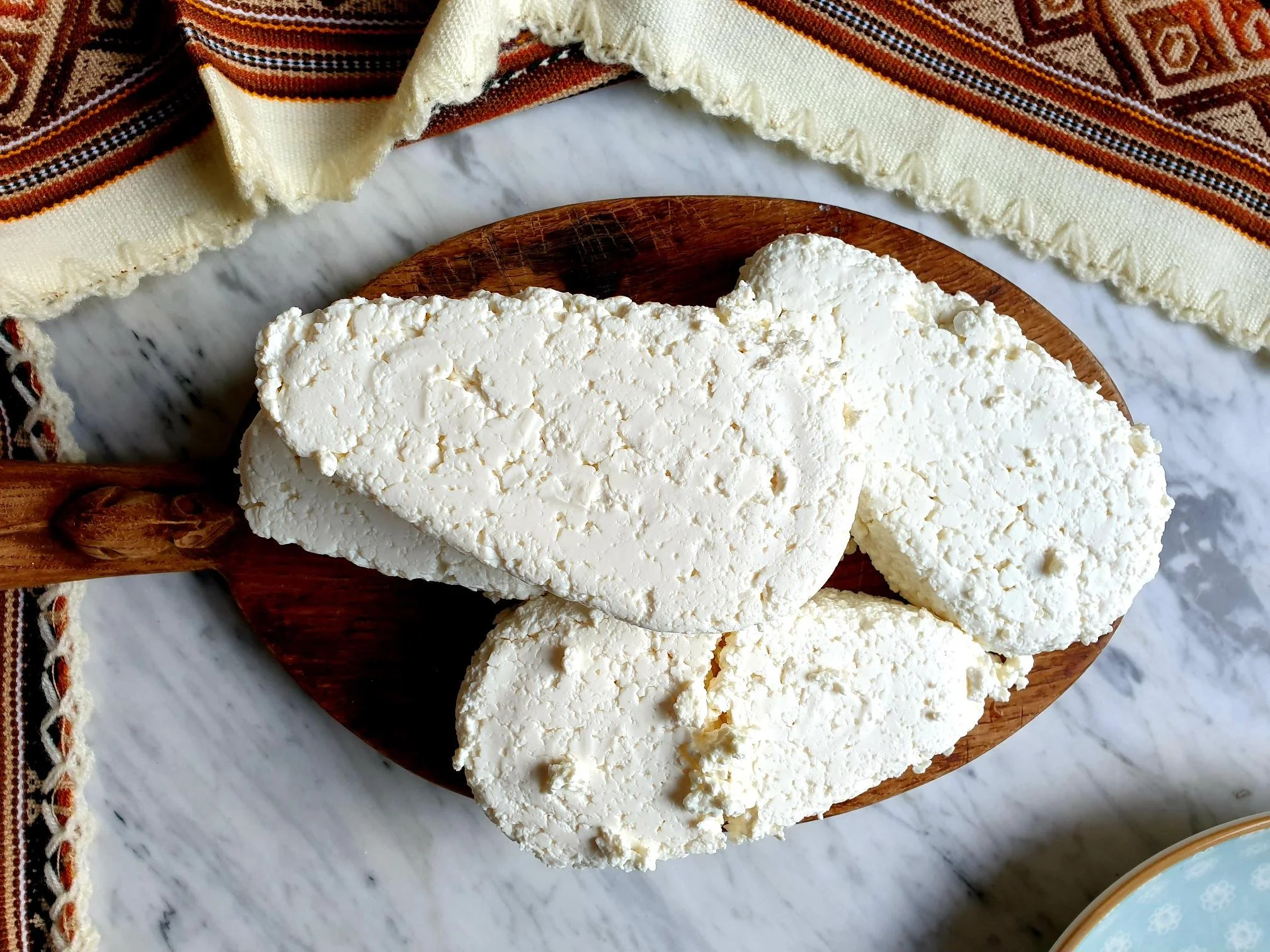
In Slovenia, where I come from, curd cheese, in Slovenian called skuta (also referred to as farmer's cheese or baker's cheese) has always been a very popular and commonly used ingredient in baking.

For this recipe, you can easily replace curd cheese for ricotta, which is what I used to do when I first arrived in England, and struggled to find curd cheese, but it is now available these days in most bigger supermarkets or Polish food stores.

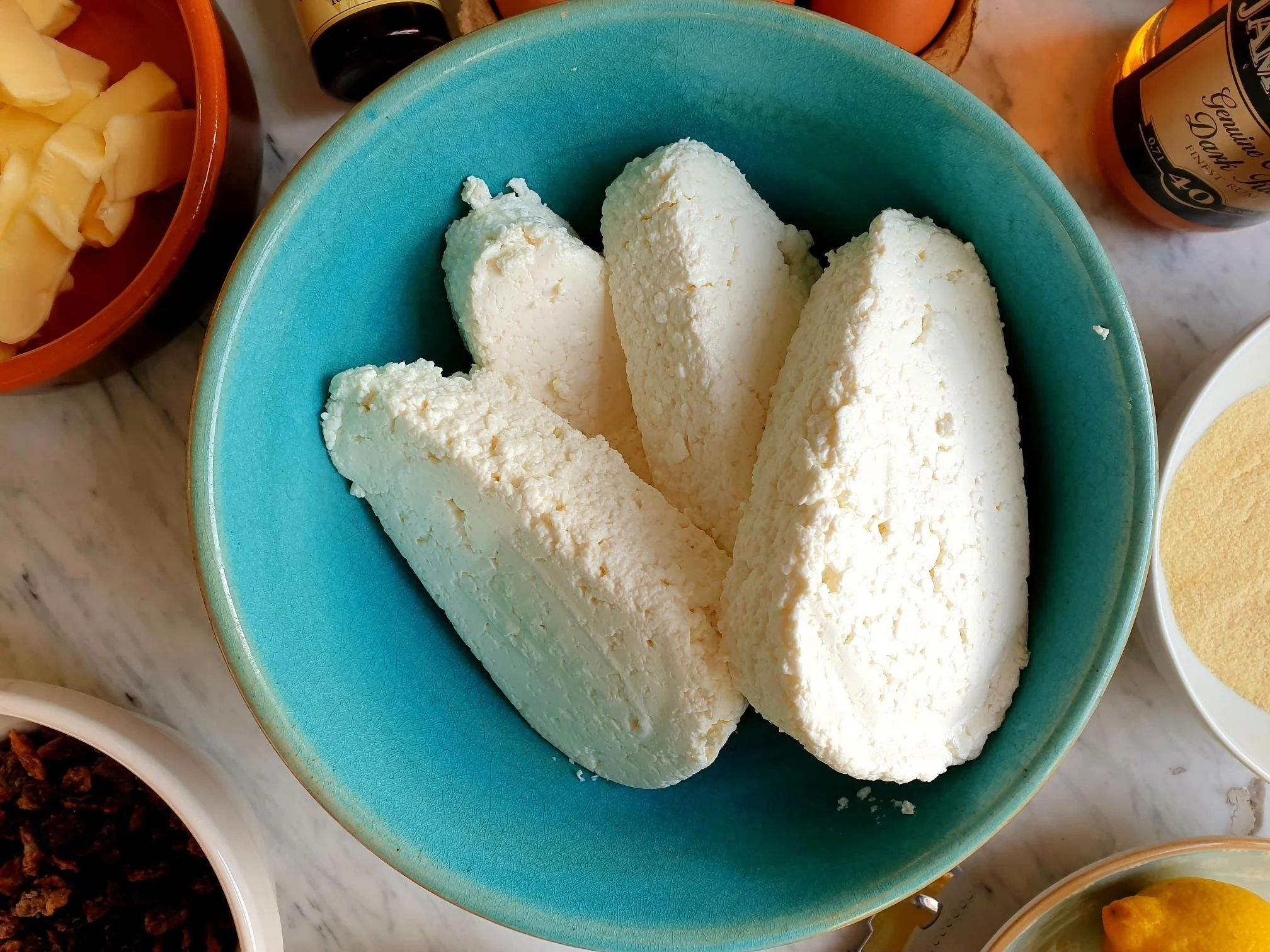
Curd cheese

My mother and my maternal grandmother would make this cake very often, this is proper home made rustic baking, and I am sharing here this nostalgic and special family recipe.

Give it a go and try this wonderful cake, but please do remember, despite the temptation, it is really important to completely cool down the cake before cutting it into slices.

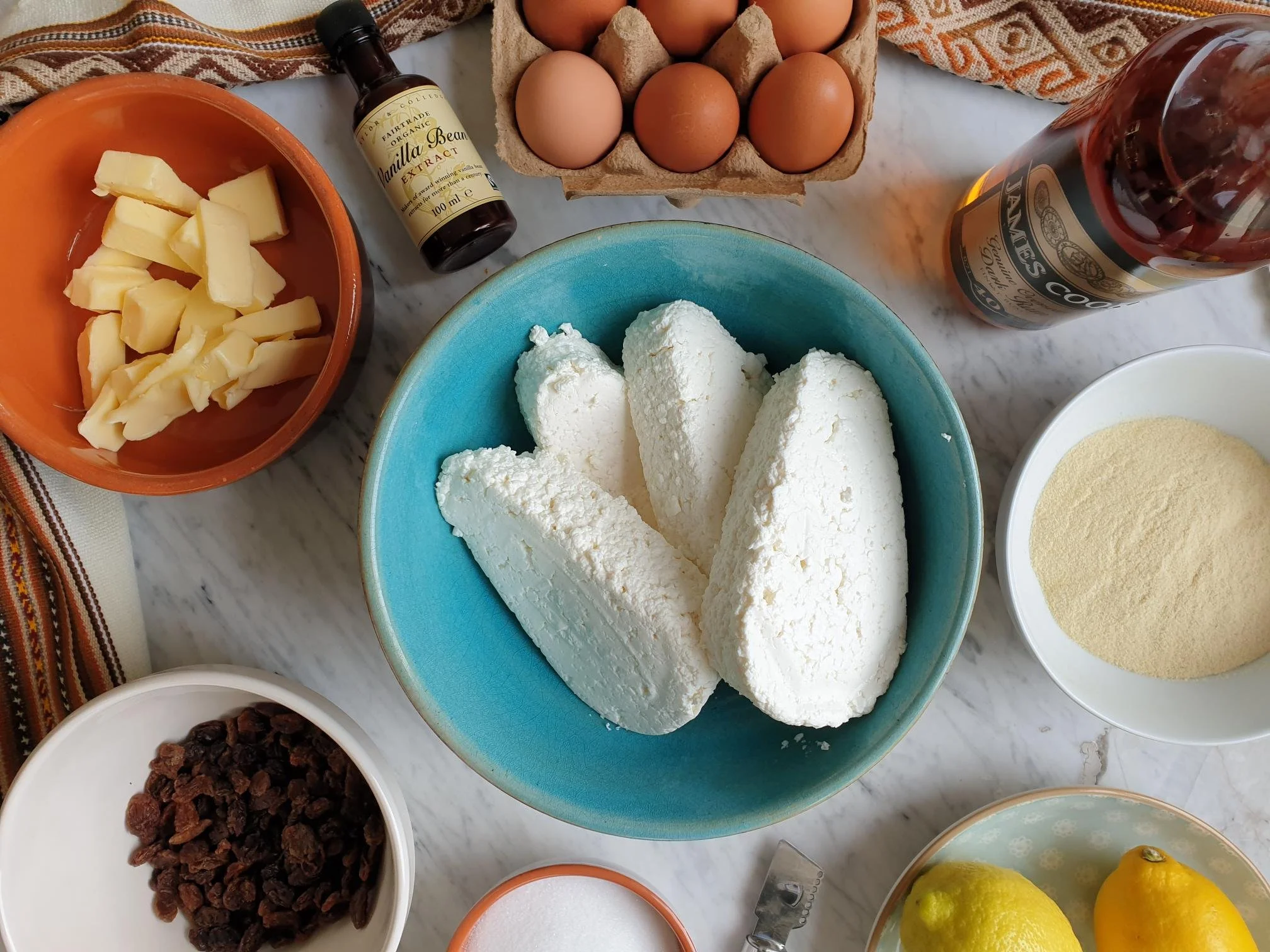
Ingredients

Serves 10

  • 120g butter, softened

  • 200g caster sugar

  • 4 eggs, separated

  • 1kg curd cheese or ricotta

  • 100g semolina

  • 3 Tsp vanilla bean extract or seeds of one vanilla pod

  • finely grated lemon zest of 2 unwaxed lemons

  • 120g raisins or sultanas

  • 4 Tbsp dark rum or lukewarm water (for soaking the raisins)

  • icing sugar for dusting

Curd Cheese

Method

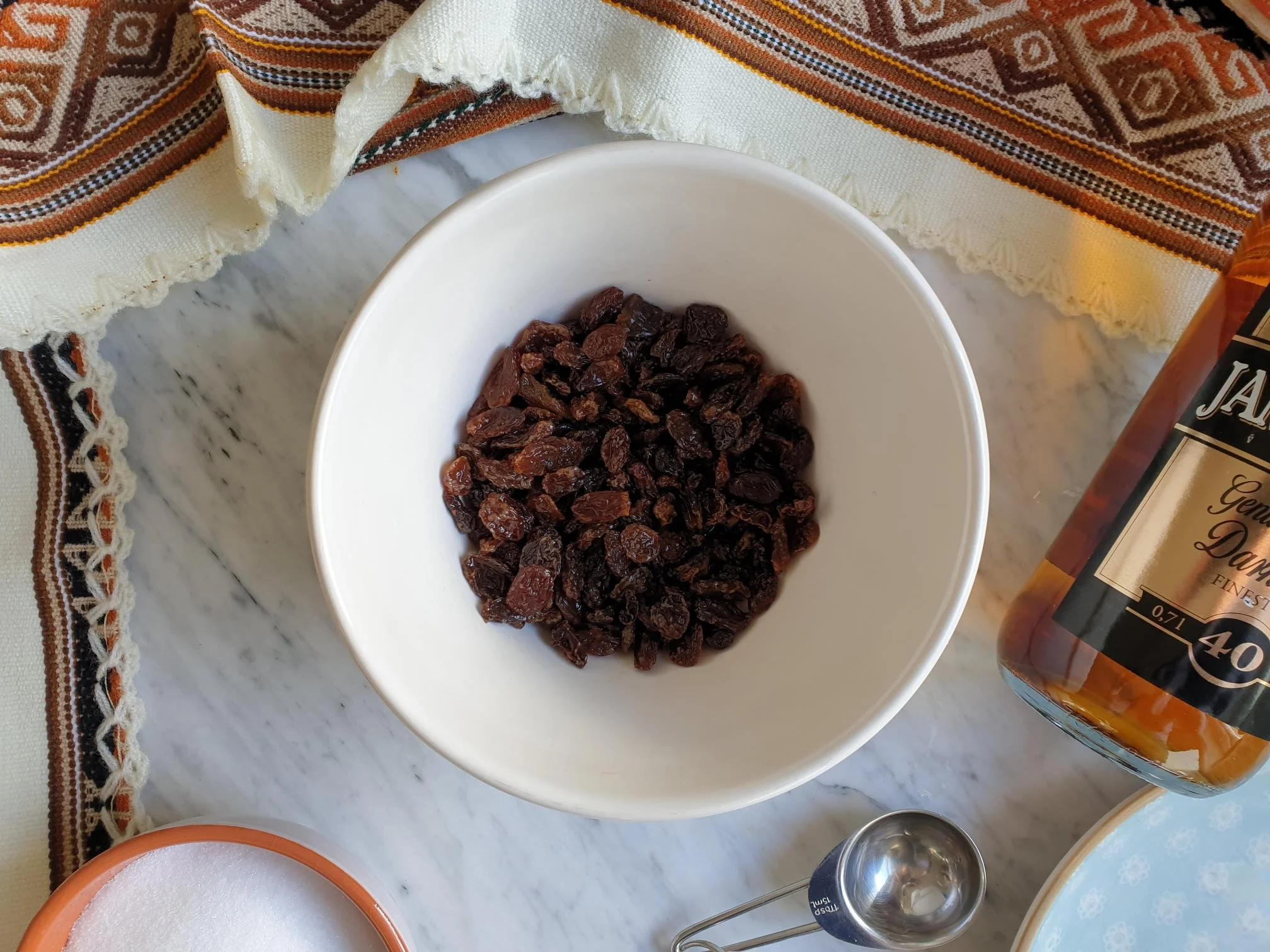
Place the raisins in a small bowl, pour dark rum or lukewarm water over them and let them soak and plump up for about 30 min.

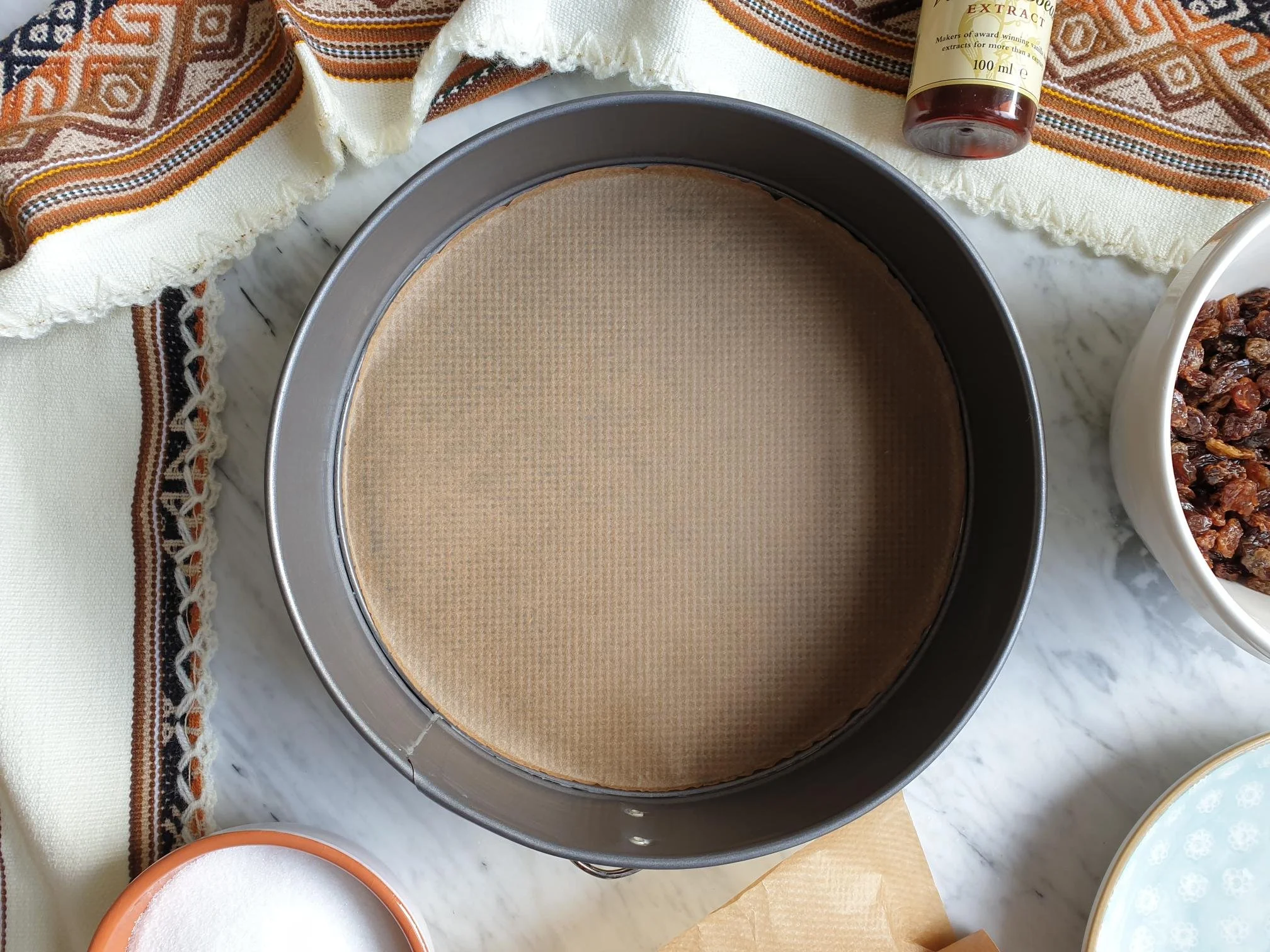
Preheat the oven to 200C static or equivalent. Lightly grease a 23cm springform tin or loose-bottomed tin and line the base with baking parchment.

Put the softened butter and sugar in a large bowl and mix well. Beat together until light and creamy.

Start adding to the sugar and butter mixture the egg yolks, one at a time, making sure the egg yolk is fully absorbed before adding the next one.
View fullsize Curd cheescake 7.jpg
View fullsize Curd cheescake 8.jpg

Add grated lemon zest, curd cheese or ricotta, semolina and vanilla extract and mix well all the ingredients.
View fullsize Curd cheescake 9.jpg
View fullsize Curd cheescake 10.jpg

Drain the raisins, remove excess liquid, and add them to the mixture.

View fullsize Curd cheescake 11.jpg
View fullsize Curd cheescake 12.jpg

Put the egg whites in a separate large bowl, add a pinch of salt and whisk the egg whites until stiff but not dry.

View fullsize Curd cheescake 13.jpg
View fullsize Curd cheescake 14.jpg

Fold very gently and lightly into the mixture.

View fullsize Curd cheescake 15.jpg
View fullsize Curd cheescake 16.jpg

Turn the mixture into a prepared tin.

Bake the cake in a preheated oven for 30min on 200C then lower the temperature to 180C and bake further for another 30min. Cake should be golden in colour on the surface and firm to the touch.

If halfway through baking time the cake is browning too fast, cover the top of the cheesecake loosely with the aluminium foil, to prevent the top from becoming too brown.

When the cake is baked, turn off the oven but leave the cheesecake in the oven for about 1 hour allowing it to cool a bit.

Take the cake out of the oven and allow it to cool completely.

View fullsize Curd cheescake 17.jpg
View fullsize Curd cheescake 18.jpg

Loosen the sides of the cake, using a palette knife if needed, and remove the tin.

Invert the cheesecake, then remove the base of the tin and the baking parchment.

Turn the cake back the right way up.

Dust with sifted icing sugar just before serving. This cake is very moist and the icing sugar will dissolve if you dust the cake too soon, no permanent damage though.

Wine suggestion

Montefalco Sagrantino Passito DOCG 2015 - Lungarotti


February 16, 2022 /tina oblak
curd cheese, ricotta, skuta, no flour cakes, moist cakes, baker's cheese, farmer's cheese
Adriatic Recipe, baked dish, baking, celebratory desserts, dessert, Easy recipe, festive bakes, festive dessert, festive sweet things, pudding, Sweet Things, easy cakes, no flour cakes, home baking, easy baking, Central Europe cakes, Eastern Europe cakes
Comment

Potica – traditional Slovenian festive nut roll Recipe

Beans and Sardines
December 20, 2021 by tina oblak in Adriatic Recipe, Autumnal dish, Autumnal recipe, baked dish, baking, breakfast, celebratory desserts, Celebratory dish, Christmas dish, dessert, Easter dish, Easter treats, Enriched dough, festive dessert, Festive dish, festive sweet things, Istrian dish, Istrian food, Istrian gastronomy, Slovenian food, Slovenian gastronomy, Sweet bread, sweet course, sweet finger food, sweet nibbles, Sweet Things, Vegetarian, Winter dish, Winter recipe, festive bakes, Christmas bakes

Potica – traditional Slovenian festive nut roll Recipe

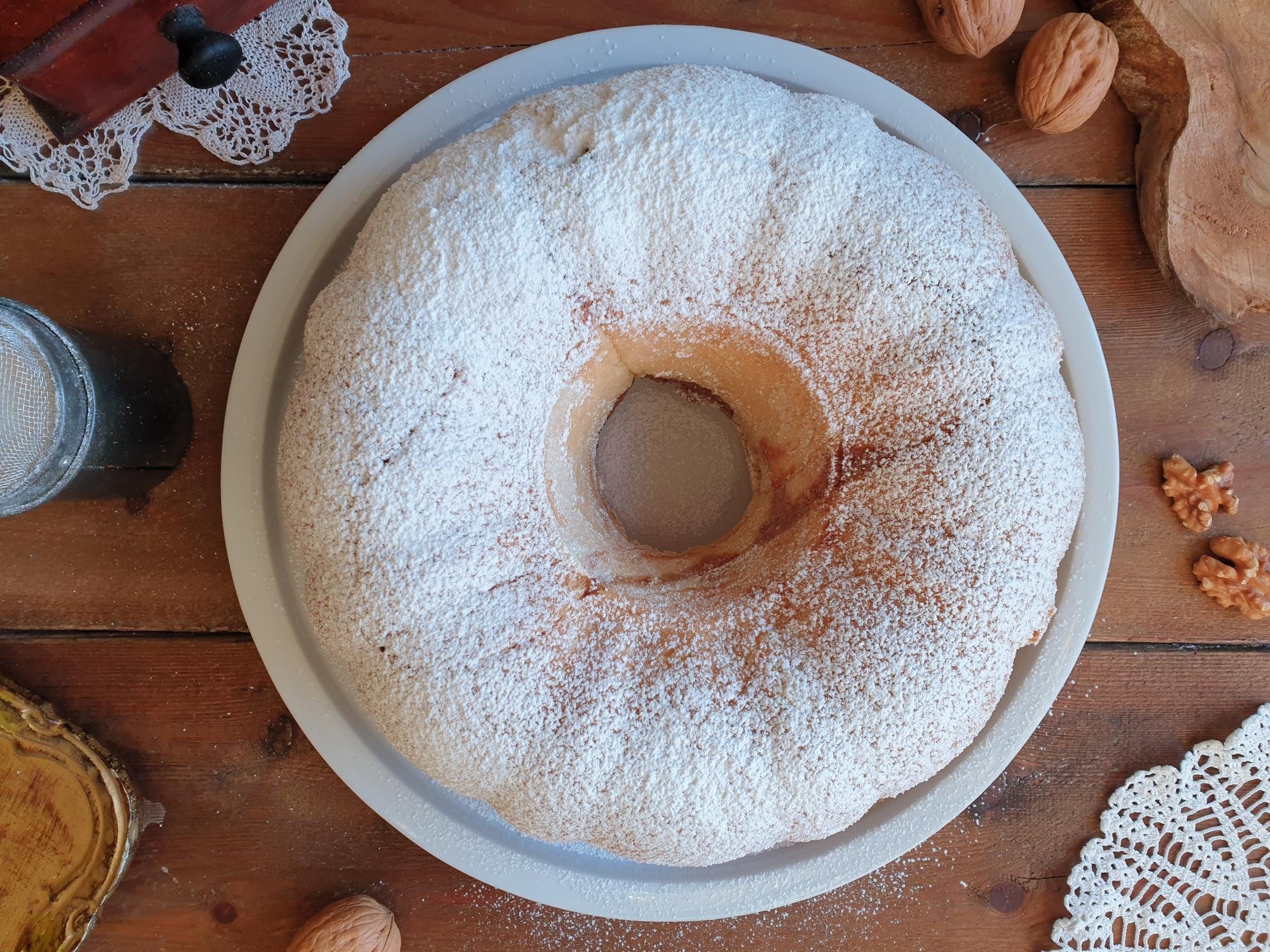
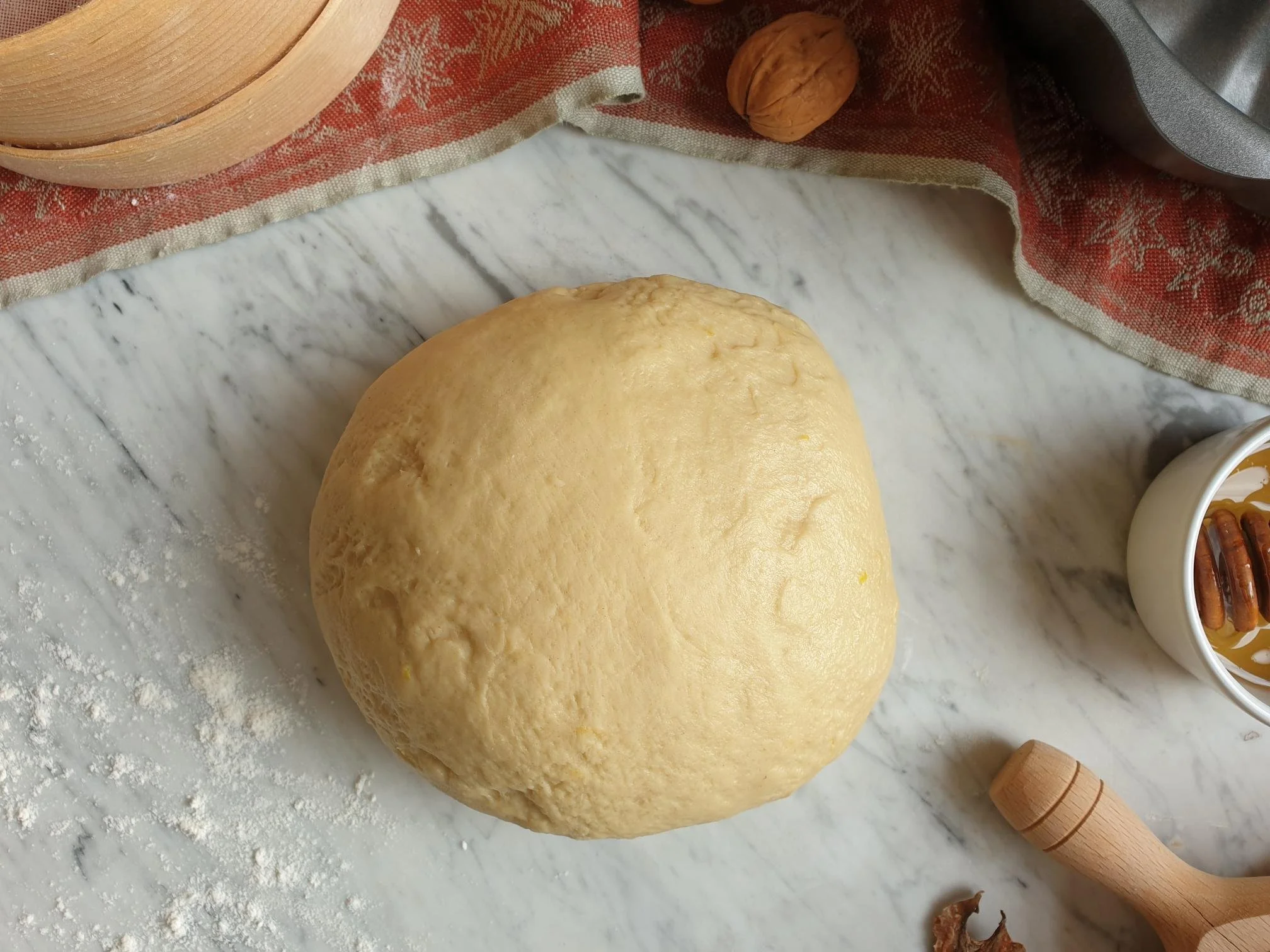
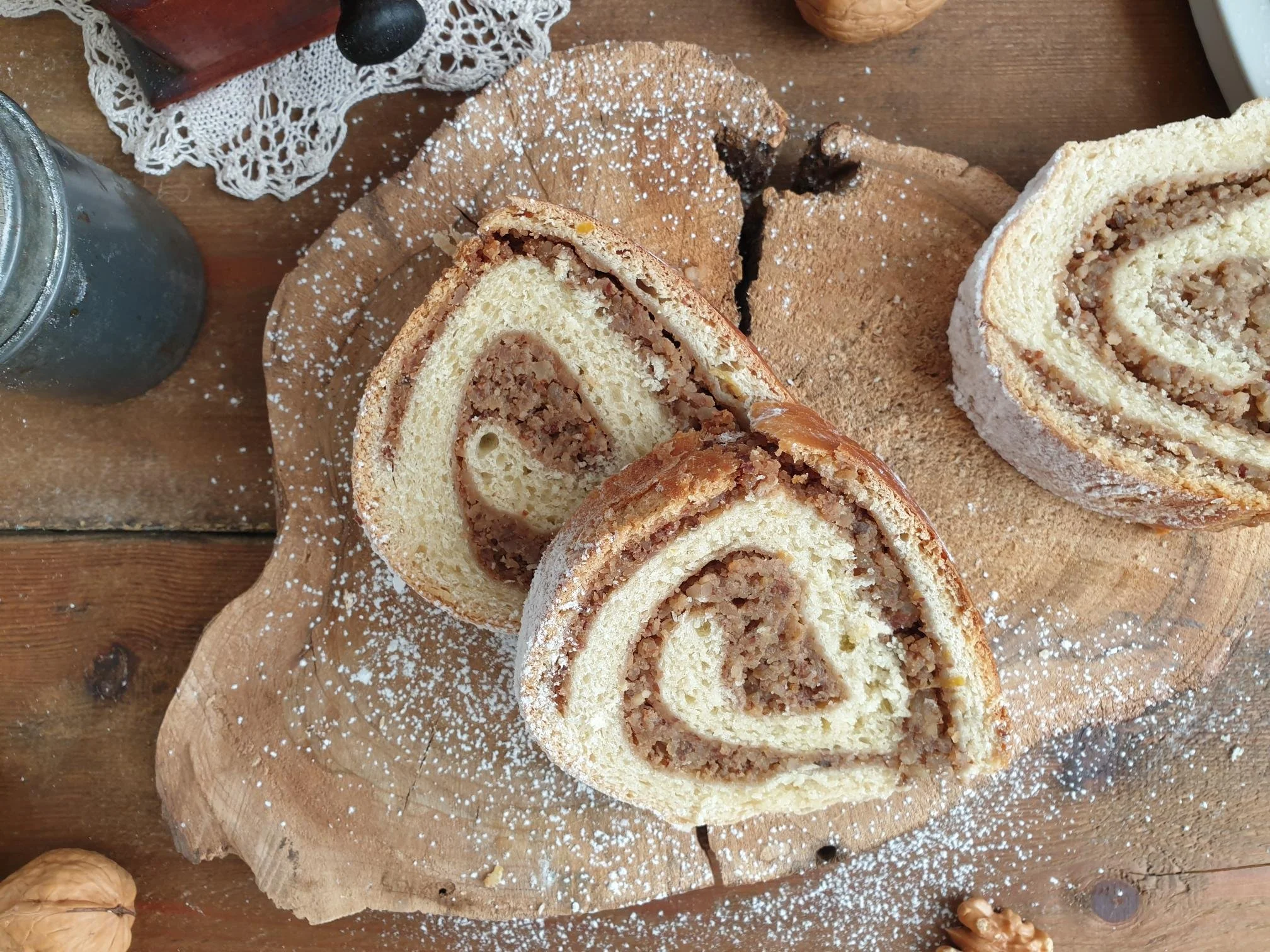
Potica is a light brioche like roll filled with rich and very tasty walnut filling, it is the most famous Slovenian dessert and the queen of festive sweet treats.

This cake is traditionally prepared and eaten around Christmas and Easter or other special and festive occasions like the weddings, Christening, family celebrations like birthdays and the birth of a new baby, but these days potica is available to buy in bakeries and supermarkets all year round.

Most loved and well-known is walnut potica, with or without raisins, but other regional sweet and savoury varieties are also very popular, where fillings are most commonly made with poppy seeds, pork crackling, cottage cheese and tarragon. They are all super delicious and recipes for potica are proudly passed from generation to generation.

The name "potica" derives from a Slovenian word “poviti” which means to roll up or to wrap and goes back as far as 16th century when it was baked in Slovenian monasteries.

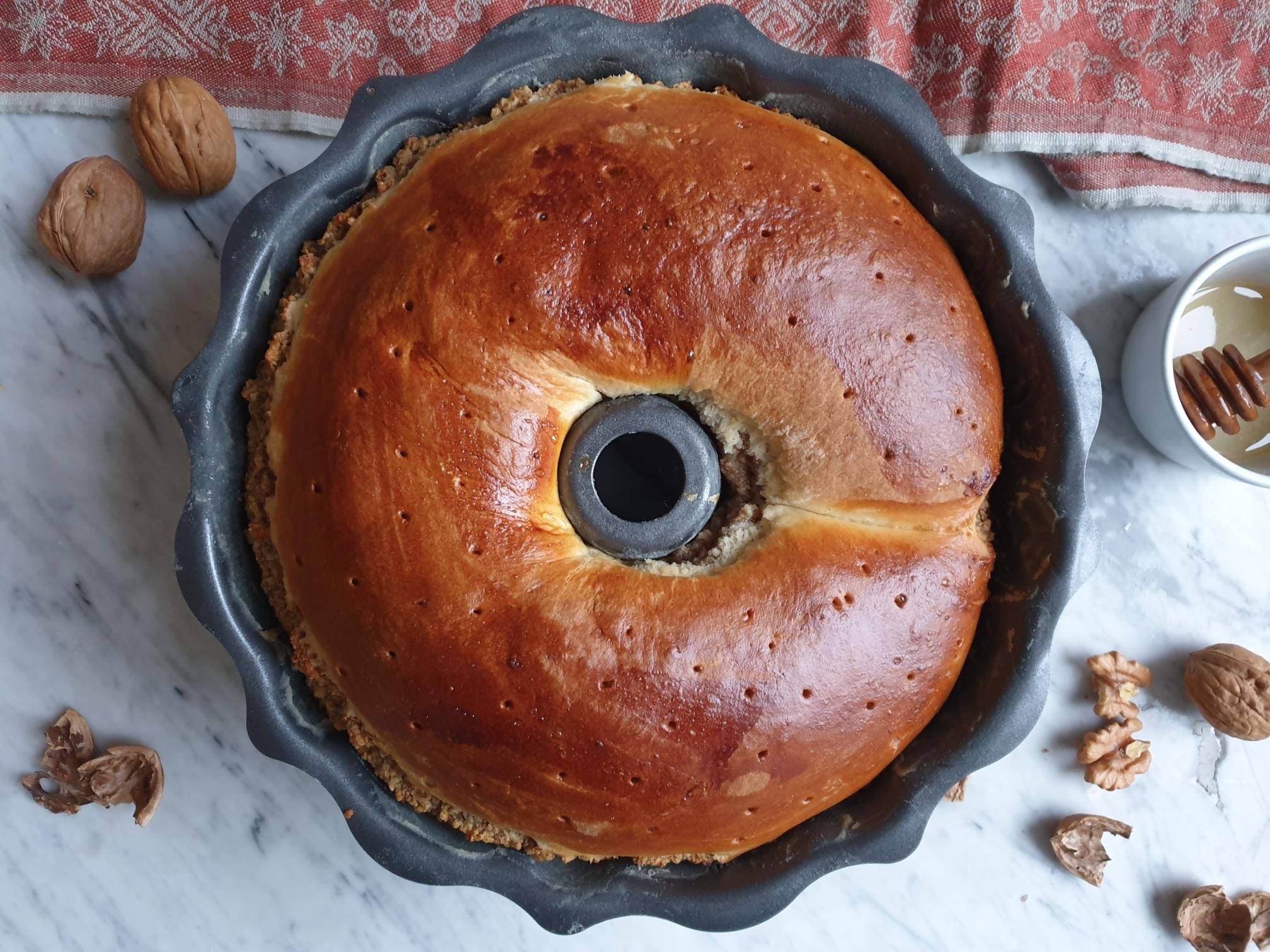
In Slovenia, potica is traditionally baked in “potičnik” which is a round bundt-style baking dish made from ceramic, but it is also very commonly baked in a simple bundt cake tin, loaf tin or cake pan.

Potica, this Slovenian national treasure, has been registered as a Traditional speciality guaranteed (TSG) in the European Union since April 2001.

A slice of potica can be a great choice for breakfast, is ideal as an afternoon treat with coffee or tea, or like me, you will find any excuse, or none at all, to eat it.

I am sharing here the recipe of my nona's grandmother that made the filling for potica using a mixture of walnuts and almonds, the latter being widely available in Istria.

The mild Mediterranean climate makes almond trees a very common sight. My nona told me that the filling for potica was made with a mixture of those nuts that were most readily available, and sometimes raisins and a little bit of grated apple were also added to the nut mixture, and very rarely, a piece of a chocolate bar (not the whole bar), might be grated into the mixture, which then made the potica particularly luxurious. She reminded me that in the olden days, when she was small, (in the 30s and 40s) seasonal and home grown produce were used to create a wonderful array of dishes, shopping lists, as we know them today, just simply did not exist...

Ingredients for the dough

  • 500g all purpose flour or 00 type flour

  • 20g of fresh yeast or 7g fast-action dried yeast (also called instant yeast)

  • 100g unsalted butter, melted

  • 80g caster sugar

  • 250ml lukewarm full fat or semi skimmed milk

  • 2 eggs, separated (egg yolks slightly beaten, keep the whites for brushing potica just before putting in the oven)

  • 1 Tbsp dark rum

  • grated lemon zest of 1 unwaxed lemon

  • pinch of sea salt

Ingredients for the filling

  • 250g walnuts

  • 250g almonds (skin on or peeled)

  • 200ml single cream (can use semi skimmed or full fat milk instead)

  • 100g caster sugar

  • 1Tbsp dark rum

  • 2Tbsp of honey (about 50g)

  • 2 eggs, separated (egg yolks slightly beaten and egg whites whisked to soft peaks)

  • finely grated lemon zest of 1 unwaxed lemon

  • icing sugar for dusting

Method

The dough

In a fairly large bowl, sift the flour, make a little well in the centre and add instant yeast, melted butter, caster sugar, lightly beaten egg yolks, grated lemon zest, dark rum and a pinch of sea salt. Mix and combine well all the ingredients.

(If using fresh yeast, slightly brake it down into smaller pieces with your fingers and place it into a small bowl. Add few tablespoons of tepid milk, ¼ Tsp of sugar, gently stir and leave for about 15-20 minutes or until gentle bubbles form on the surface).

View fullsize Potica2.jpg
View fullsize Potica3.jpg

Transfer the mixture onto a well floured working surface and start kneading, for about ten minutes, adding a little flour at a time if the mixture is too wet and sticky.

Alternatively, use a mixer fitted with a dough hook and leave running for about 5 minutes.

The dough is ready when it ends up being really smooth and elastic. It should not stick to your hands or working surface and should leave the bowl clean if using a mixer.

Transfer the dough back into a very lightly oiled bowl and cover with cling film or clean kitchen towel.

Put the bowl in a warm room free of drafts for at least one hour and leave the dough to rest and rise, the dough should double in size.

View fullsize Potica12.jpg
View fullsize Potica13.jpg

While the dough is resting and rising start preparing the filling.

The filling

Place walnuts and almonds in a food processor and mix to a coarse consistency.

View fullsize Potica5.jpg
View fullsize Potica6.jpg

Transfer ground walnuts and almonds into a bowl, pour over lukewarm single cream and mix well.

Add caster sugar, dark rum, honey, 2 lightly beaten egg yolks and 2 egg whites (previously whisked to soft peaks and not too stiff) and grated lemon zest. Mix all the ingredient until very well combined and set aside.

View fullsize Potica7.jpg
View fullsize Potica8.jpg
View fullsize Potica9.jpg
View fullsize Potica10.jpg

Flour well your working surface and rolling pin. Put your dough onto a working surface and roll it out to a more or less rectangular shape (40cmx50cm) to the thickness of about not more than 1cm.

View fullsize Potica16.jpg
View fullsize Potica17.jpg
View fullsize Potica18.jpg
View fullsize Potica19.jpg

Take the walnut-almond mixture and spread it evenly on the rolled dough but leave some space around the edge so the filling does not come out when rolling the dough.

View fullsize Potica20.jpg
View fullsize Potica21.jpg

Gently roll the filled dough quite tightly into a log.

Cut off or tuck well in the edges.

View fullsize Potica22.jpg
View fullsize Potica24.jpg
View fullsize Potica25.jpg

Prepare the bundt pan (for the quantities in this recipe I use a 24cm round bundt cake tin).

Grease it very well with butter, make sure you reach all the nooks and crannies and coat it well with the flour. Shake the excessive flour out of the bundt tin.

If you do not have a bundt pan you can use:

  1. loaf tins (cut the roll into two or three parts, depending on the size of the loaf tins you are using)

  2. greased spring form cake tin (24cm for the quantity in this recipe)

  3. or simply use a baking tray previously greased with butter (in this case model the log into a U shape)

View fullsize Potica14.jpg
View fullsize Potica15.jpg

Very gently place your rolled dough (seam side down) into a bundt pan, cake tin or baking tray. Cover with a clean kitchen towel, place it in a warm, draft free room and leave to prove for the second time for 30min to 1h or until well risen (not necessarily doubling in size, just filling out nicely the tin).

View fullsize Potica26.jpg
View fullsize Potica27.jpg

Take a toothpick and make little holes in the dough on the whole surface and brush with egg whites.

View fullsize Potica28.jpg
View fullsize Potica29.jpg

Bake in the preheated oven at 180C static for about 50-60 minutes. Halfway through baking, tent the potica with the aluminium foil to prevent it browning too much and starting to burn.

Leave until completely cold in a tin.

To remove the potica more easily, take a little plastic knife and run it around the edges to loosen the cake.

Transfer on a serving plate, dust with icing sugar and serve.

Just a thought

Potica tastes at its best the day after has been baked.

You can store it in an airtight container for up to five days and is suitable for freezing.

Wine suggestion

Friuli Colli Orientali Picolit Cialla DOC 2008 - Ronchi di Cialla (0.5l - astuccio)

December 20, 2021 /tina oblak
Christmas cakes, nut bakes, walnut bakes, almond bakes, Potica, festive nut roll, traditional Slovenian bakes, Traditional Eastern European bakes, Festive Eastern European bakes
Adriatic Recipe, Autumnal dish, Autumnal recipe, baked dish, baking, breakfast, celebratory desserts, Celebratory dish, Christmas dish, dessert, Easter dish, Easter treats, Enriched dough, festive dessert, Festive dish, festive sweet things, Istrian dish, Istrian food, Istrian gastronomy, Slovenian food, Slovenian gastronomy, Sweet bread, sweet course, sweet finger food, sweet nibbles, Sweet Things, Vegetarian, Winter dish, Winter recipe, festive bakes, Christmas bakes
Comment