Beans and Sardines

  • Home
  • About
  • Recipe of the week
  • Recipes
  • Wines
  • Contact

Elderflower fritters Recipe

Beans and Sardines
June 22, 2022 by tina oblak in Adriatic Recipe, Appetizers, Austrian inspired dishes, breakfast, Central European recipes, child friendly dish, child friendly meal, dessert, Easy recipe, family friendly dish, family friendly meal, foraging, Istrian cuisine, Istrian dish, Istrian food, Istrian gastronomy, main course, main dish, main fish course, Rustic dish, Slovenian cuisine, Slovenian food, Slovenian gastronomy, Small bites, Snacks, Spring dish, Spring recipe, sweet course, sweet finger food, sweet nibbles, Sweet Things, Vegetarian

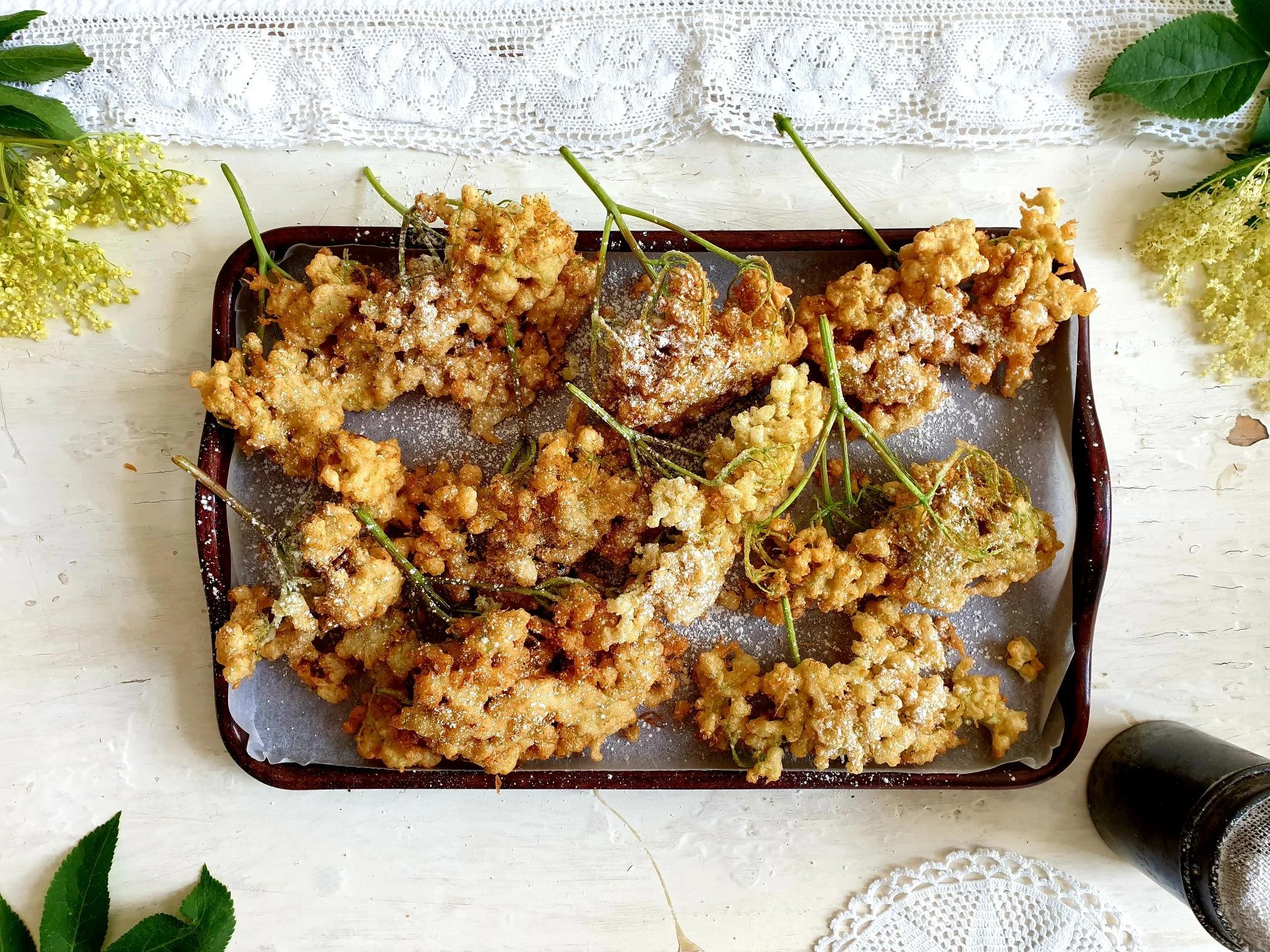
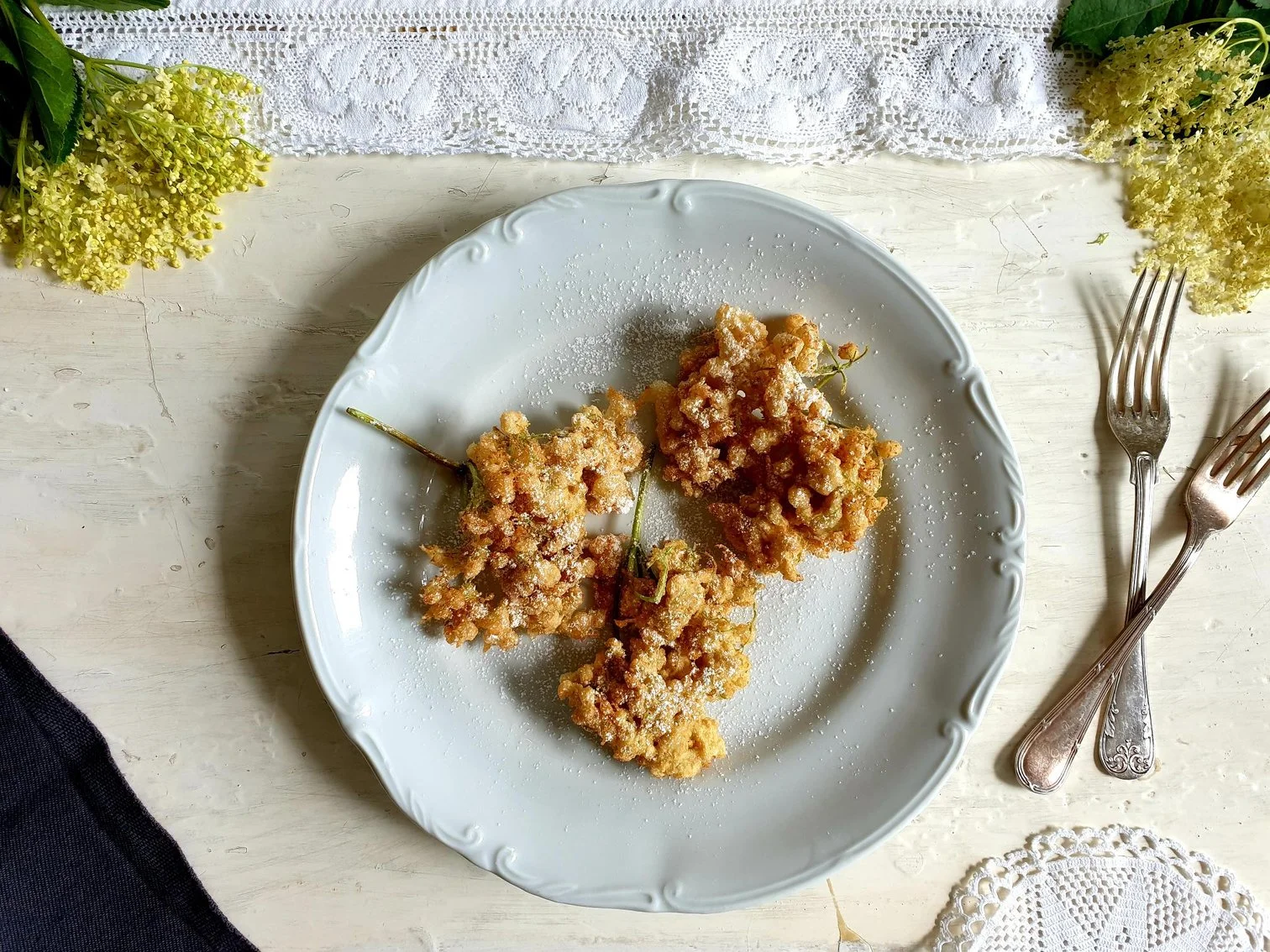
Bring the sunshine and the scent of summer in your kitchen with these elderflower fritters which are lightly fried elderflowers in a pancake batter like, they are golden, crunchy and a delicious dessert with a difference, they are a real treat and a delightful seasonal delicacy.
The culinary use of elderflower has been revolutionized in the past few years, but in the whole of Slovenia, including the Slovenian coast where I come from, elderflower fritters are a dish that is very old and traditional.

Those of you that have been reading my posts on this blog for a while, will know that I come from a family of very passionate foragers, and so there should be no surprise that this fragrant flower ends up on a plate. My maternal grandmother, stara mama Iva, would make them when we were little.

We children got away with eating just that, with a glass of milk, and skipping altogether a main evening meal, which is quite a common practice in neighbouring Austria.
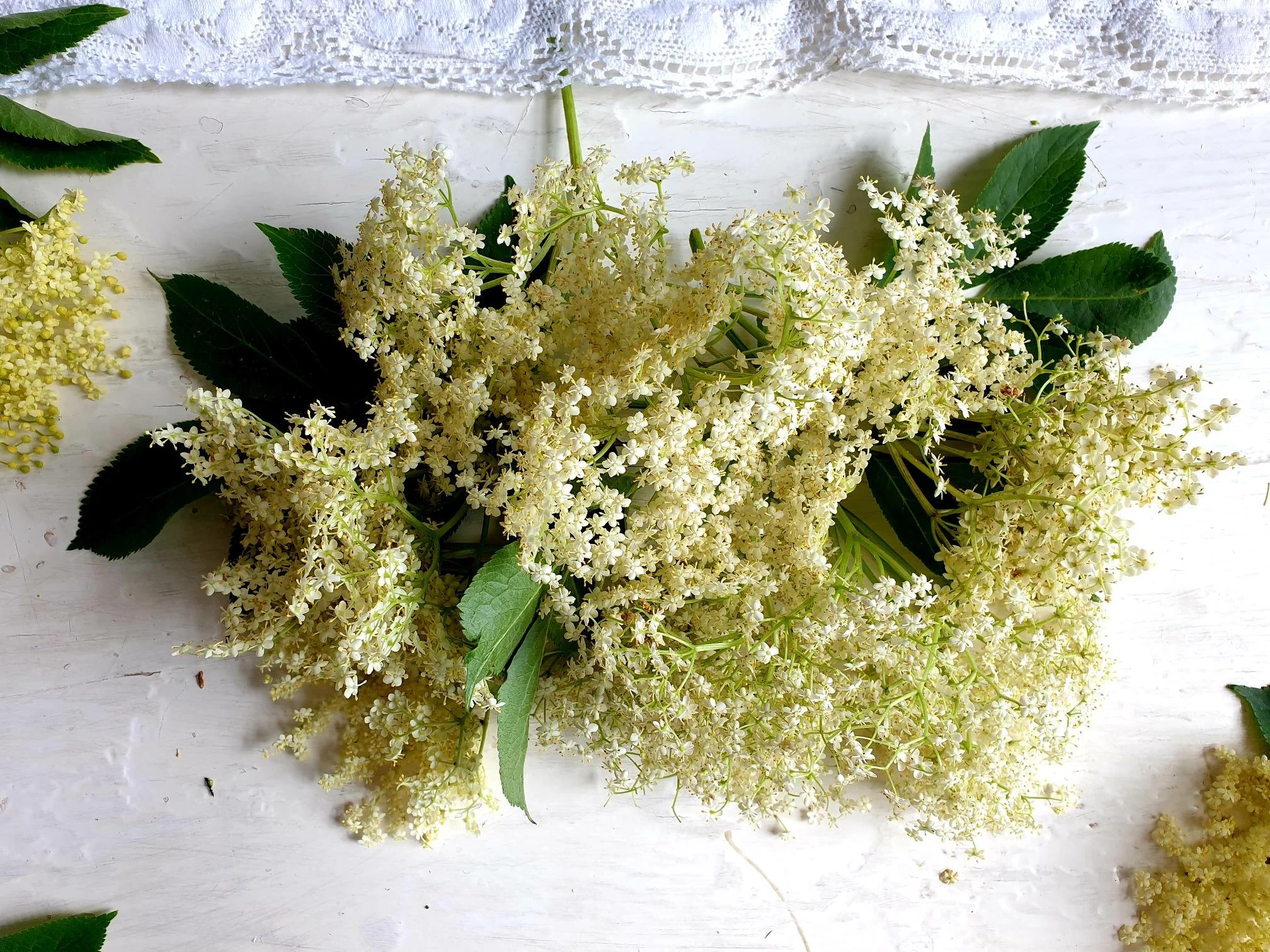
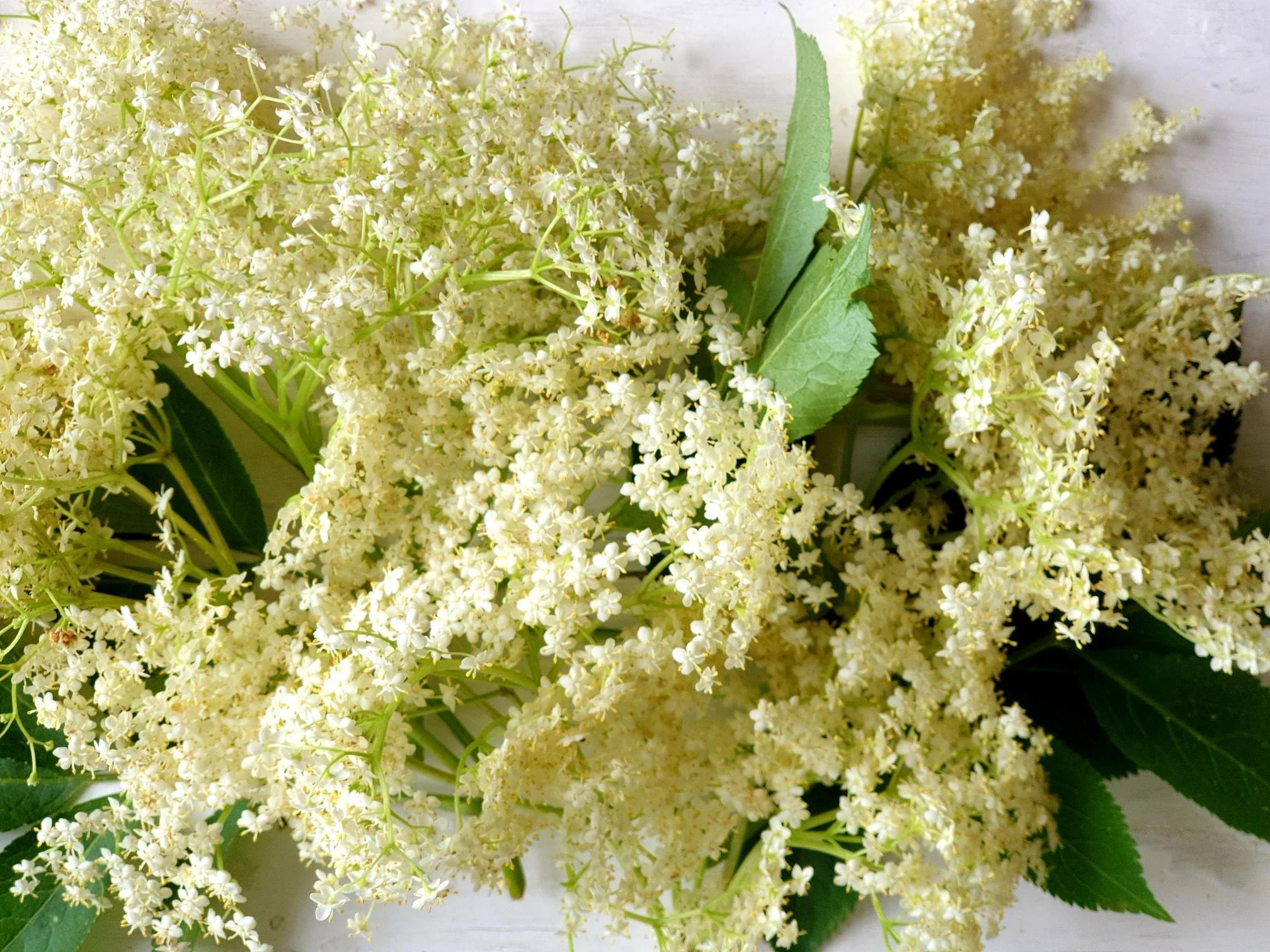
If you are not too familiar with the elderflower, please go and read my page with the recipe for elderflower cordial where I explain a bit more in detail where, when, and how to pick this edible, fragrant, and sweet flower.
What can be better than going on a walk on a sunny day and bring home a free meal...try these elderflower fritters, you will be hooked, and will have another reason to look forward to a following spring/summer.
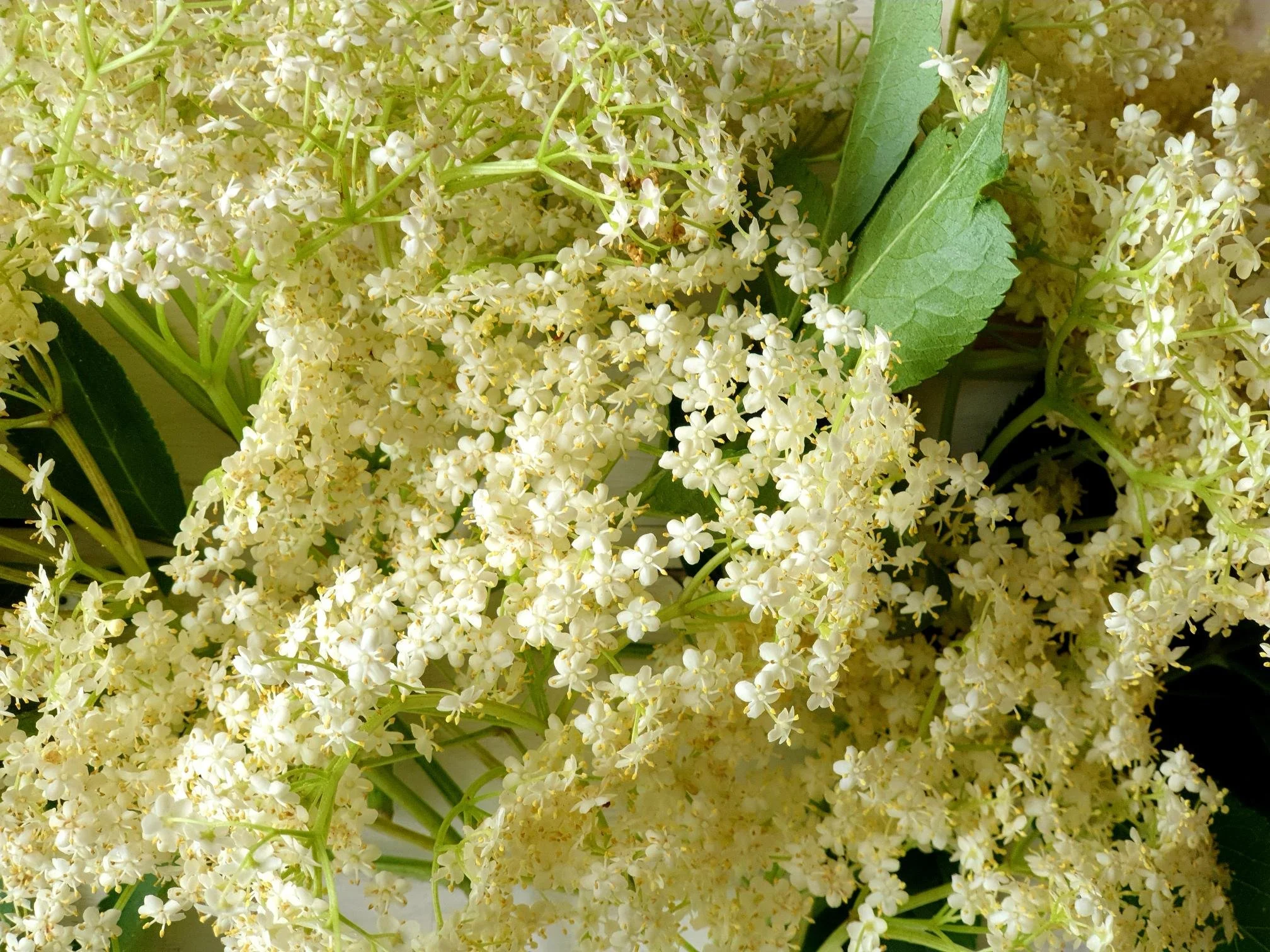
Ingredients

Serves 4-6 as a dessert (2-3 heads per person)

  • about 10-14 elderflower heads with their stems

  • 100g all purpose (plain) flour

  • 1egg

  • 70ml milk

  • 70ml very cold sparkling water

  • sea salt, a pinch

  • 2 tsp caster sugar, optional

  • oil for frying (neutral tasting, I used sunflower oil)

  • icing sugar or vanilla icing sugar, for dusting
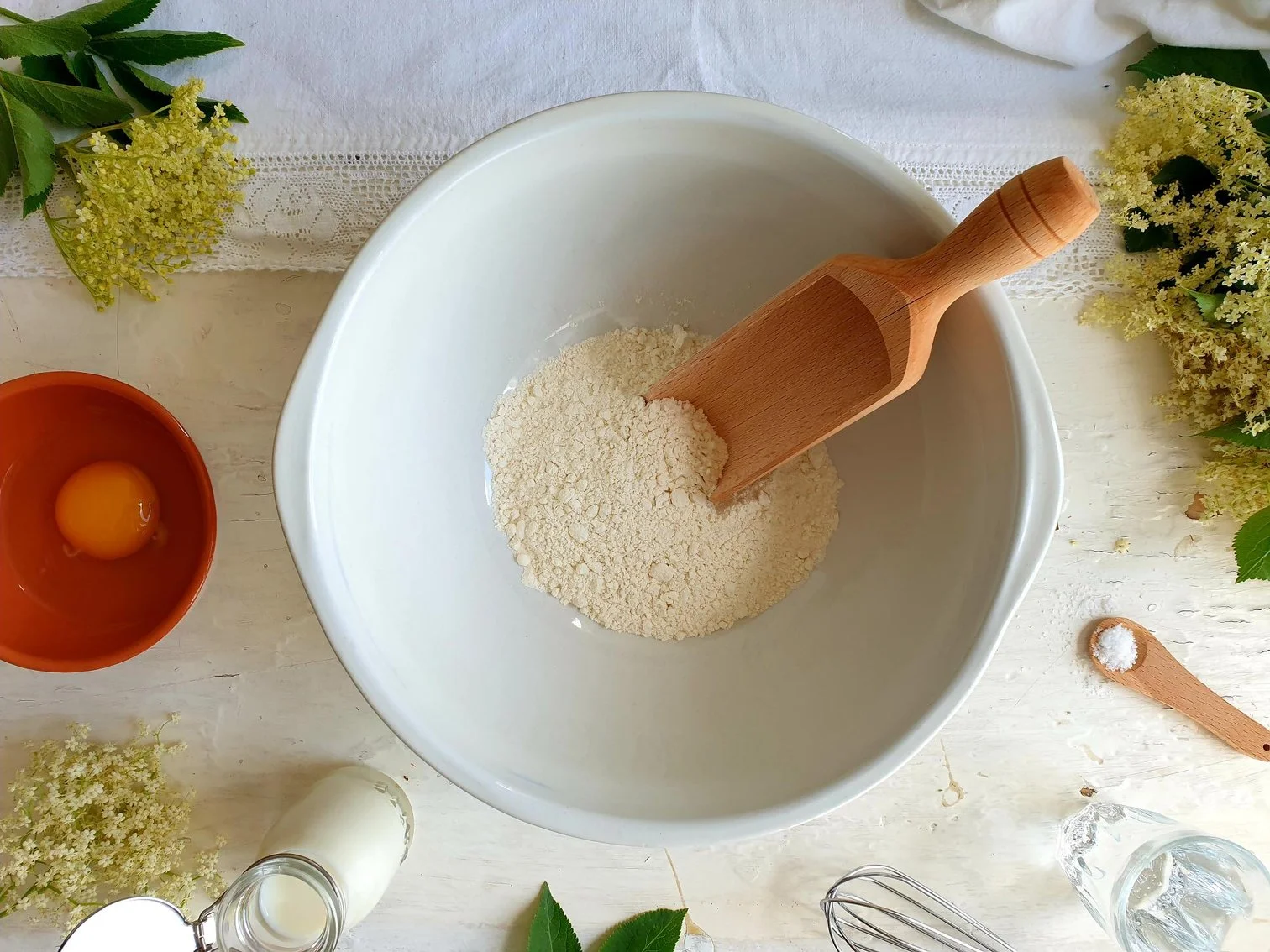
Method

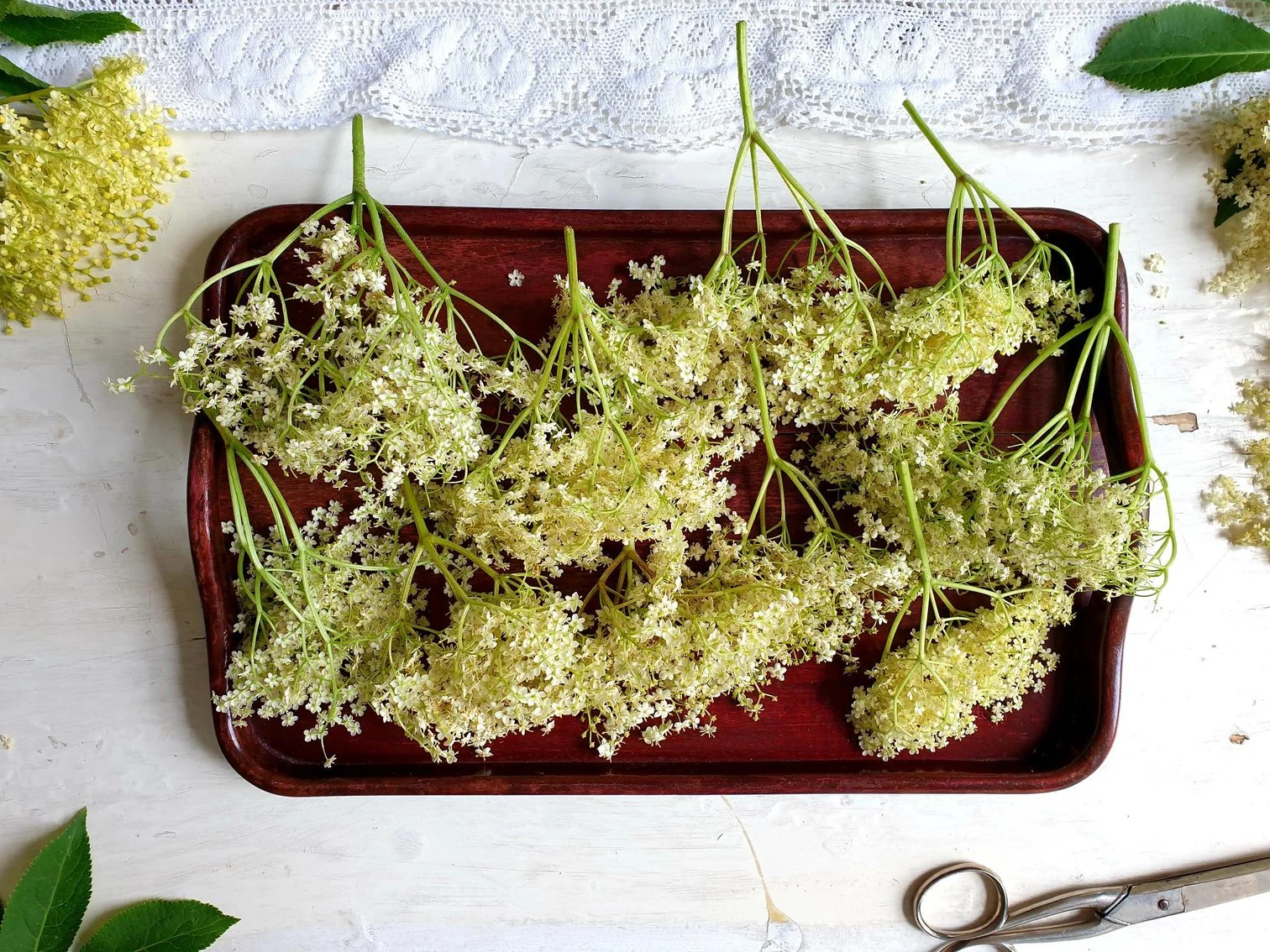
Prepare elderflower heads by cutting the stems with the scissors but leaving at least 5cm of stem for easy handling (in other words enough stem to hold them by). Very gently shake any insects and dirt off your flower heads, but do not be tempted to wash the flower heads as you will loose the flavour.
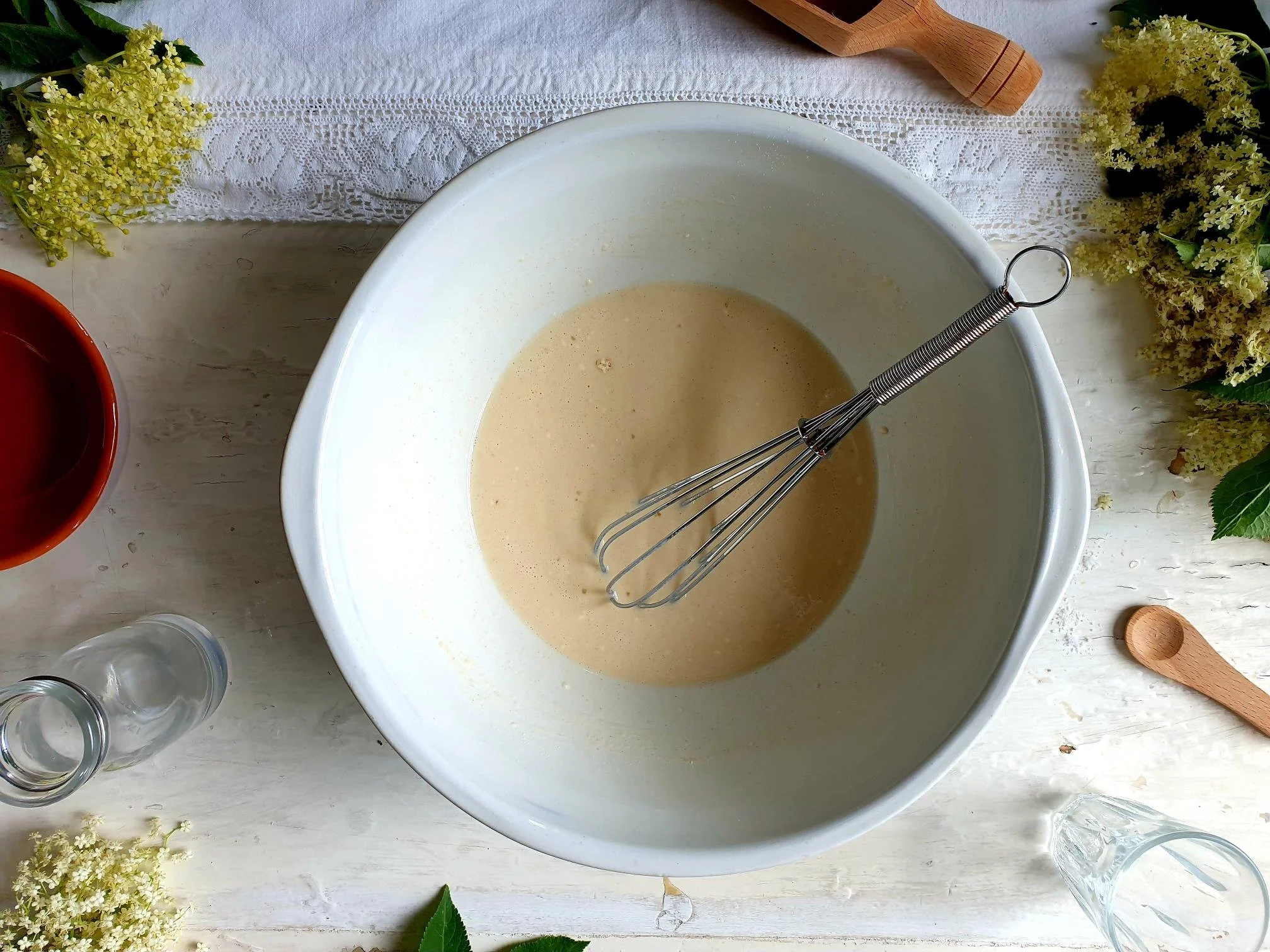
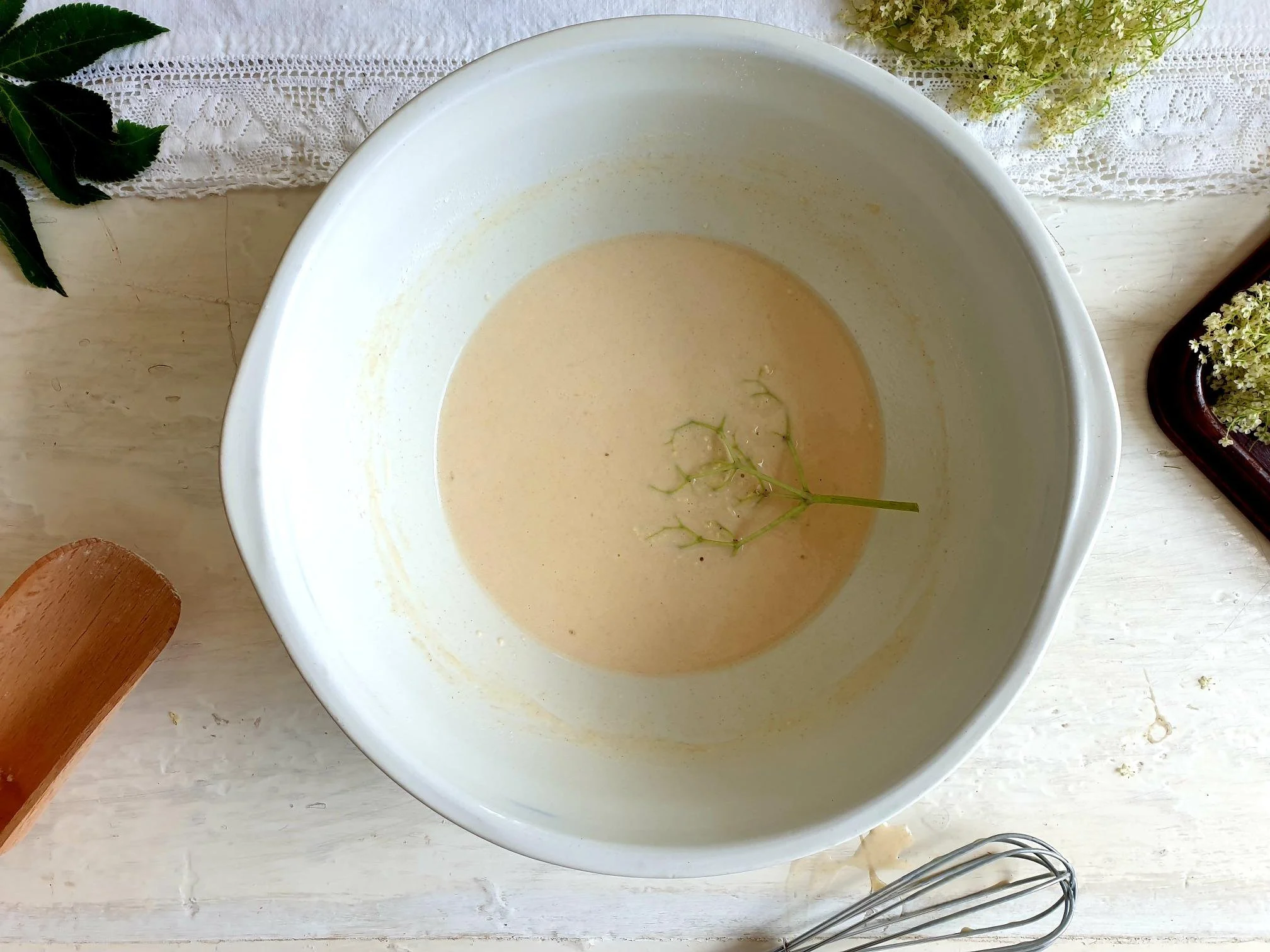
In a mixing bowl, using a hand whisk, whisk the egg, add milk, sea salt and sugar, if using, and mix until well combined.

Add the flour gradually and whisk until smooth with no lumps, then add sparkling water which will help lighten the batter, set aside an leave it to rest for about 30 minutes.

Heat about 5cm of oil a pan (big enough to accommodate the largest elderflower head) until hot (180C on a temperature probe). You will know the oil is ready when a drop of batter bubbles immediately and turns golden in about 5 seconds.

Holding the elderflower by their stems, dip each elderflower head into the batter, so they are coated all over, gently shake off excess batter.
View fullsize Elderflowers fritters 10.jpg
View fullsize Elderflowers fritters 17.jpg

Drop the flowers into the pan with hot oil (flower side down) and fry for about 30 seconds. Fry one flower at a time.

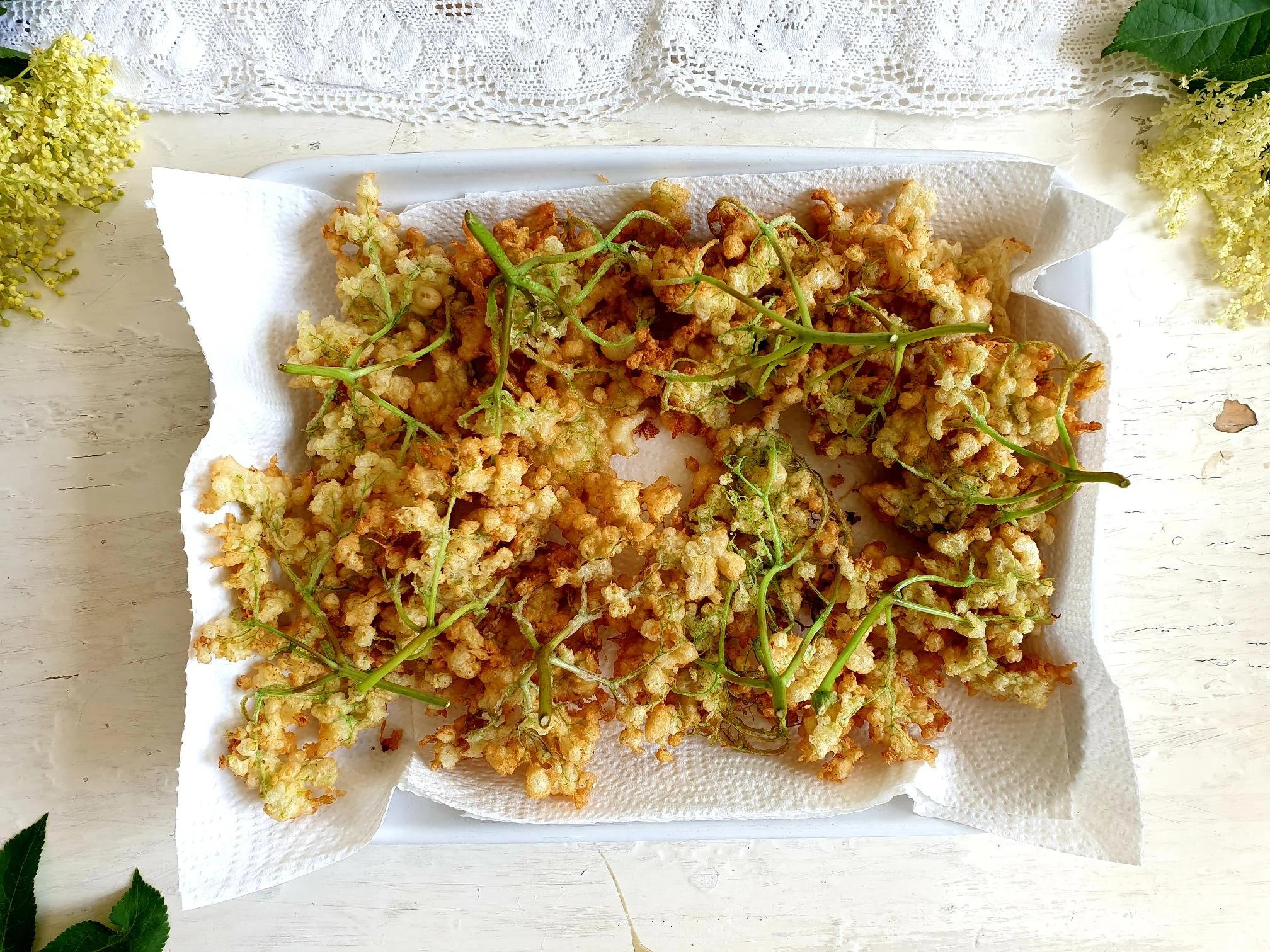
They should be lightly golden in colour and not too brown.

Remove with a slotted spoon and dry on kitchen paper.
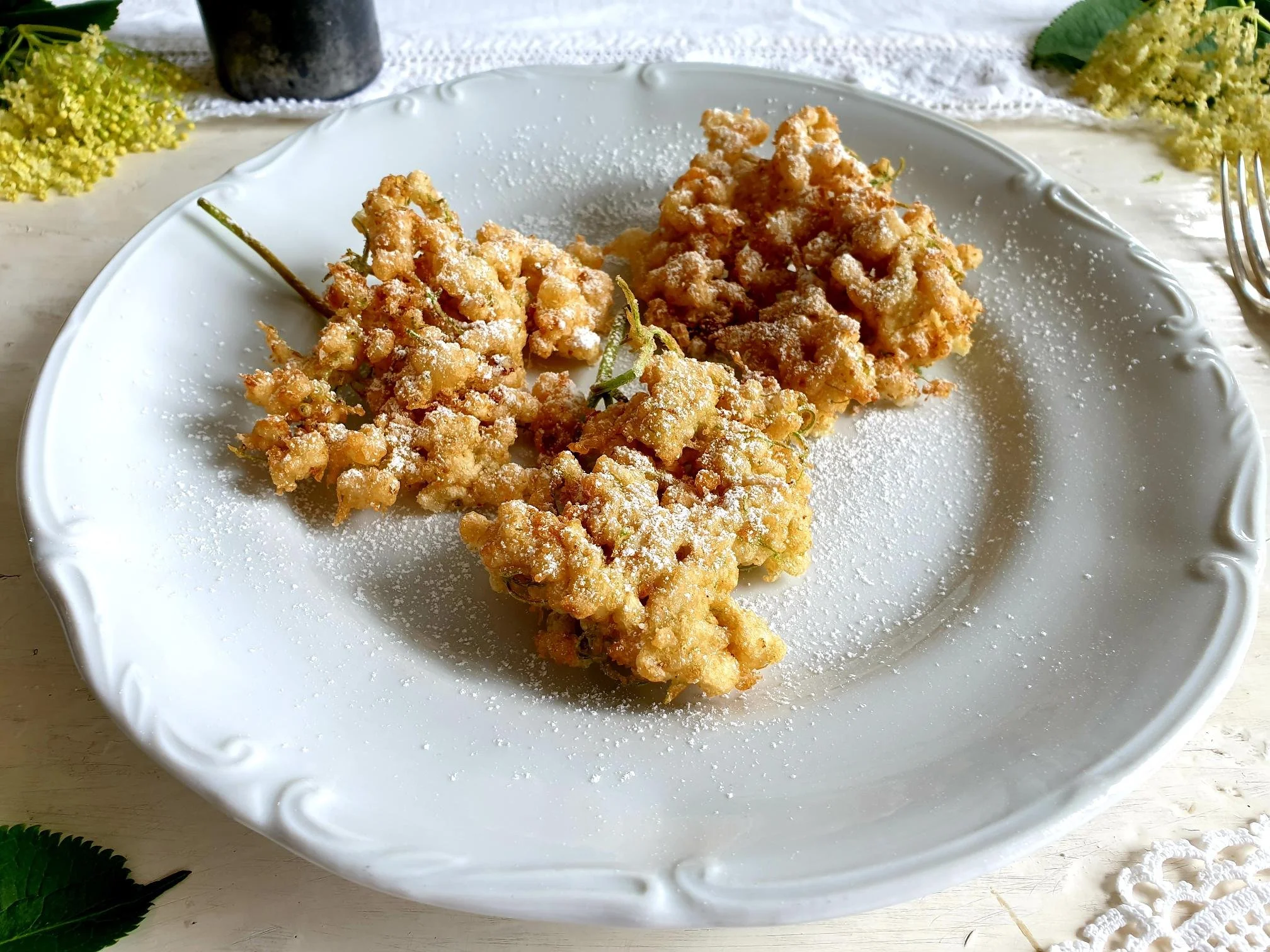
Dust generously with icing sugar, serve and eat while still warm and crunchy.

Delicious also drizzled with honey, accompanied with vanilla ice cream, lemon sorbet or fresh strawberries, cherries or other seasonal fresh fruit of your choice.
Just a thought

Elderflower fritters ideally should not be made well in advance as the batter, which should be crisp, will become soft.

Wine suggestion

Friuli Colli Orientali Traminer Aromatico DOC 2021-Zorzettig

June 22, 2022 /tina oblak
edible flower, elderflower, deep fried desserts, deep fried elerflower, fiori di sanbuco fritti, ocvrti bezgovi cvetovi
Adriatic Recipe, Appetizers, Austrian inspired dishes, breakfast, Central European recipes, child friendly dish, child friendly meal, dessert, Easy recipe, family friendly dish, family friendly meal, foraging, Istrian cuisine, Istrian dish, Istrian food, Istrian gastronomy, main course, main dish, main fish course, Rustic dish, Slovenian cuisine, Slovenian food, Slovenian gastronomy, Small bites, Snacks, Spring dish, Spring recipe, sweet course, sweet finger food, sweet nibbles, Sweet Things, Vegetarian
Comment

Fritole - Istrian small doughnuts Recipe

Beans and Sardines
December 23, 2021 by tina oblak in Adriatic Recipe, Autumnal dish, Autumnal recipe, Celebratory dish, Central European recipes, Christmas dish, dessert, Easter dish, Easter treats, Eastern European recipes, Easy recipe, Enriched dough, Festive dish, Finger food, Istrian cuisine, Istrian dish, Istrian food, pudding, Rustic dish, Slovenian cuisine, Slovenian food, Slovenian gastronomy, Small bites, Snacks, sweet course, Sweet Things, Winter dish, Winter recipe, festive sweet things, festive dessert, celebratory desserts

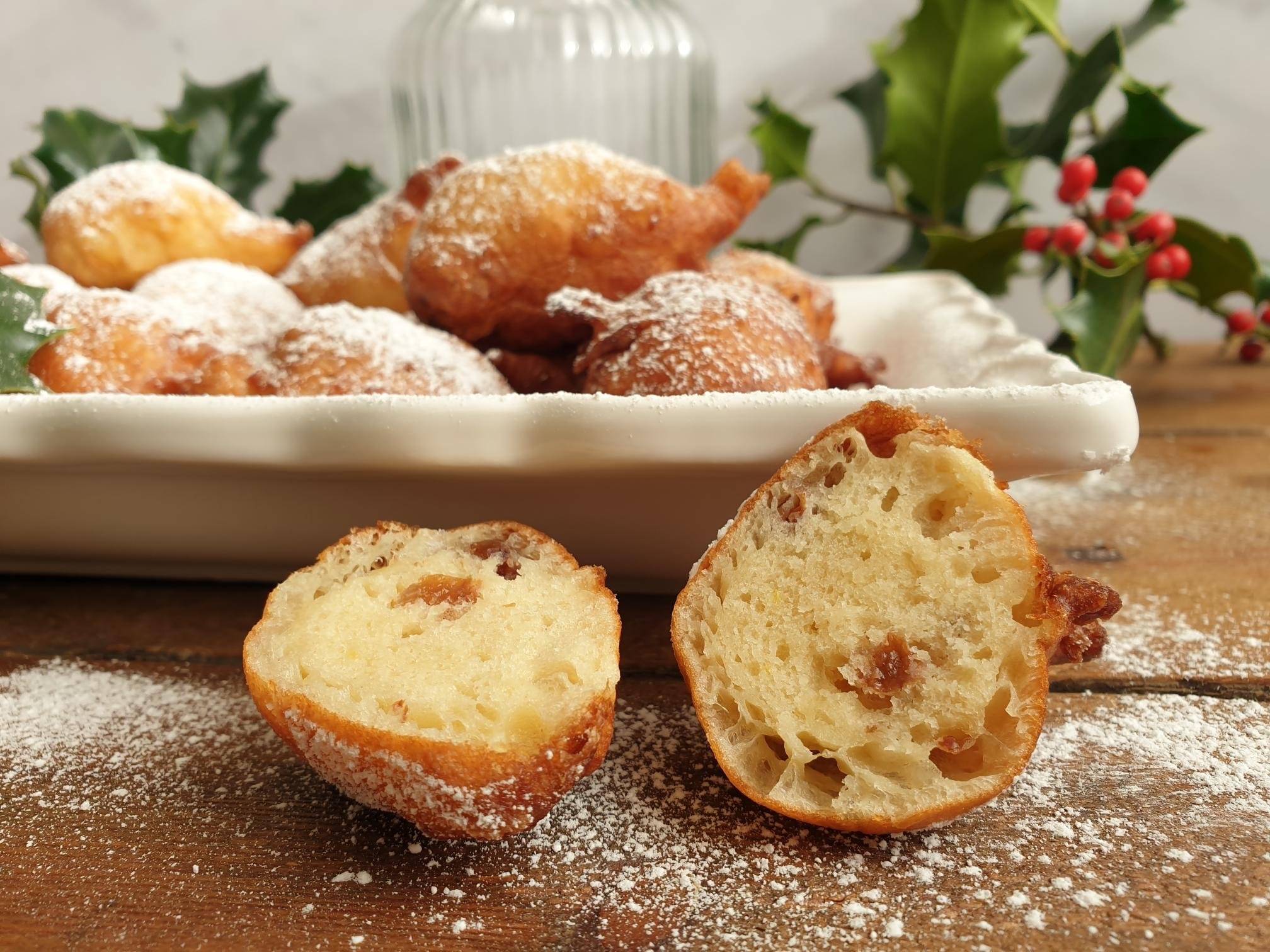
Fritole are a type of small fried doughnuts made of thick batter-like dough enriched with raisins and served warm covered in icing sugar, they are light and crunchy on the outside and soft and aromatic on the inside, they just melt in your mouth.

This sinfully delicious and fragrant little delights have a very deep connection with Christian, especially Catholic liturgical festivities like the Carnival season, the time of the year in which eating in excess, and gastronomic indulgence was allowed by the Church before the start of fasting and austerity during Lent, and ending with Easter.

In Venice, where this sweet treats are a synonym of Carnival, fritole used to be prepared and served strictly during the days of Carnival. Nowadays, they appear not only in Venice but also in the region of Veneto and north-east region of Friuli-Venezia Giulia, Italy, and Istria where fritole are also very popular and start appearing as soon as Christmas festivities are over and remain around on offer as a irresistible sweet temptation until Ash Wednesday begins the Lent season.

However, on the coastal part of Slovenian Istra, once being part of what was called, ‘The most Serene Republic of Venice,’ fritole hold a very special place on Christmas Eve and this is when my nona would make fritole as the tradition called upon her to do.

In dialect they could also be called Fritle, Fritule or miške, meaning little mice in standard Slovenian, as when you drop the batter in hot oil, there is a little trail on the end, resembling little mice.

My father adored them and everyone in the family simply loves fritole, and whoever also grew up with fritole knows this very well. I am sure they can share with me the fact that they get eaten far faster than they can ever be made! When my nona started to get ready for the frying process, the kitchen would suddenly get crowded, we would get louder, and more excited, and our eyes would sparkle with joy just waiting in anticipation for them to be finished, and ready to eat!

My nona would be carefully scooping fritole out of hot oil and they would be disappearing in front of her yes and my nona, being incredibly experienced and fast could hardly keep up with us.

My nona made fritole with raisins but like most recipes fritole have few variation where pine nuts, cinnamon and candied fruit is added to a basic batter.

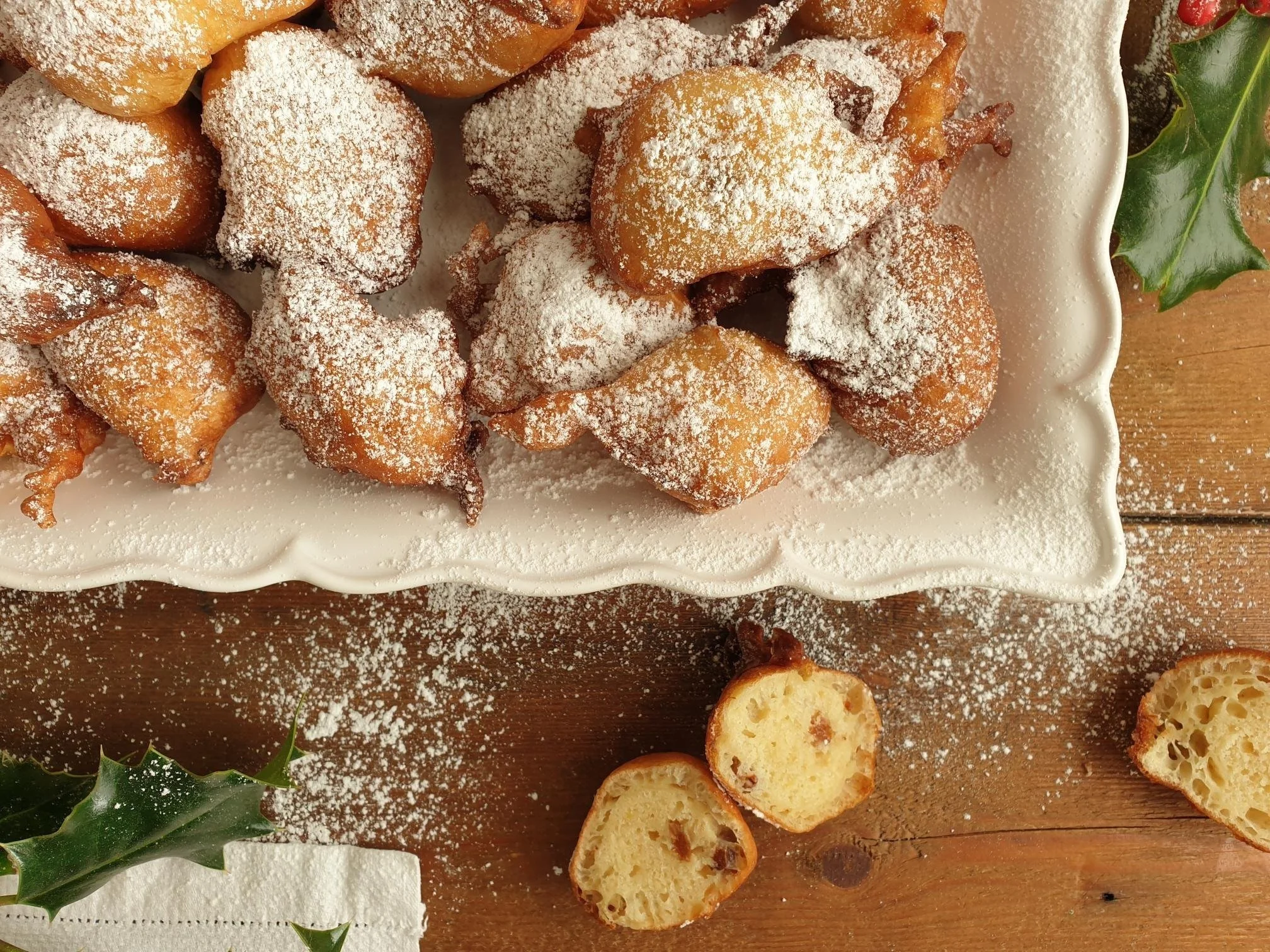
We would eventually get full, our greediness would decrease, the kitchen would be less noisy and less crowded but she kept frying, ending up layering the fritole on a big plate and dusting them with sugar looking like a snowy mountain, and this vision will stay with me forever...

She would then lovingly packed them for us to take home...

I am miles away from her kitchen, and years have passed by, but when I close my eyes I get transported immediately right back there ... I can smell and feel all of it, and in the stillness of these thoughts I can fully recollect all the nostalgic flavours, and the emotions so closely tied to my family.

My nona is now 93 years old, and her hands sadly are no longer able to make fritole, and so I feel privileged to be have learned how to make them from her, and since she gave me the family recipe, I am to able to keep making them and keep this family tradition alive.

This is why for me these sweet treats hold a very special place in my heart, they are more than just another recipe, they are part of who I am, and who I have become as a person ...

I am sharing here my nona's recipe that was passed down to her by her nona, and so try to make them, and delight your family and friends.

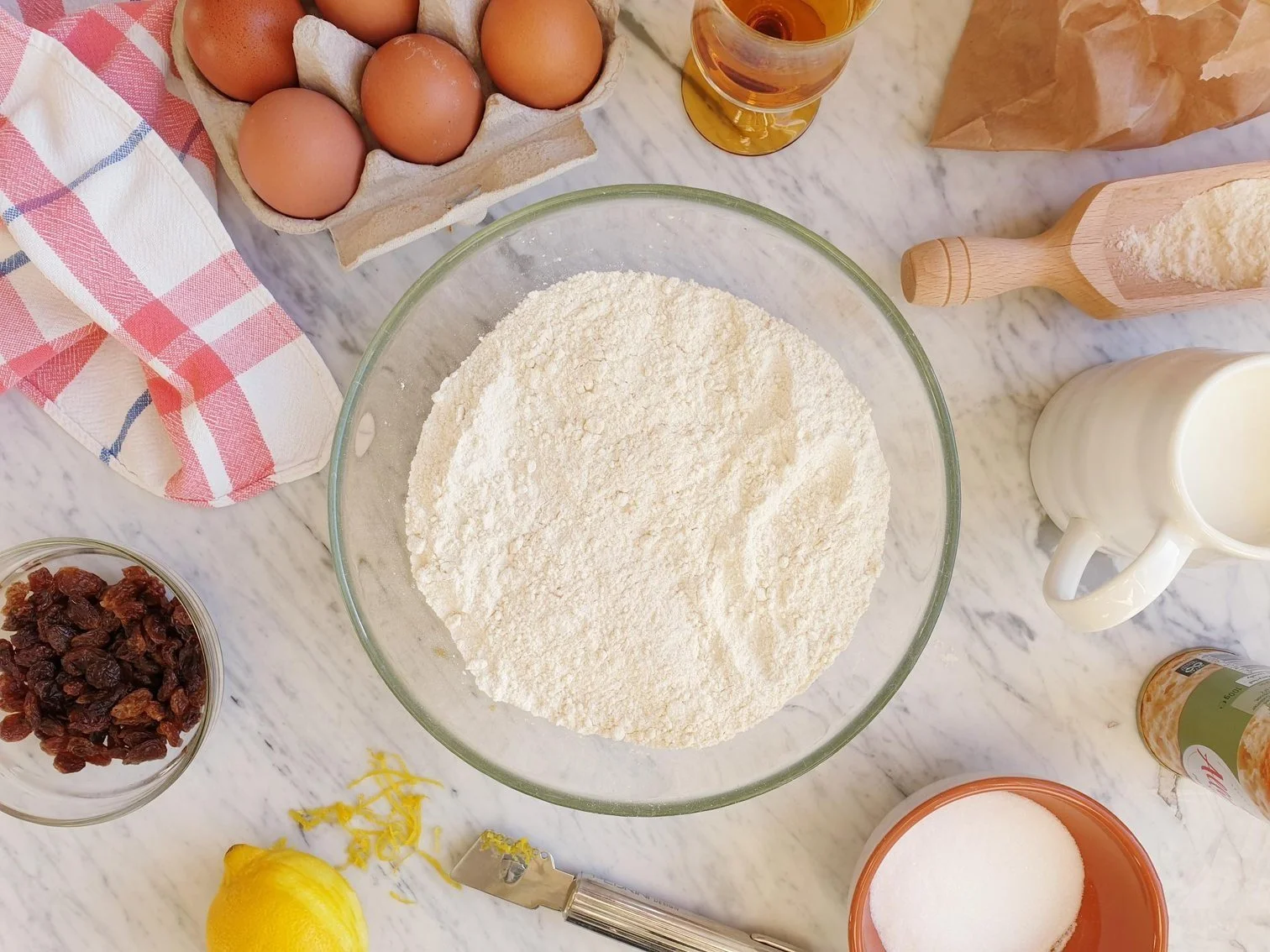
Ingredients

Makes about 40 small doughnuts

  • 400g plain flour

  • 3 eggs, (room temperature) beaten

  • 50g granulated sugar

  • 60-70g raisins or sultanas

  • 3 Tsp fast action dried yeast (also called instant yeast) or 40 g of fresh yeast

  • 250ml milk, lukewarm (full fat or semi skimmed)

  • 4 Tbsp of dark rum or grappa

  • finely grated lemon zest of one unwaxed lemon

  • sea salt, a pinch

  • sunflower or corn oil for frying

  • icing sugar for dusting

Method

Put the raisins in a small bowl, add warm water to completely cover and soak them for at least 20 minutes or until they plump up.

In a large bowl place the flour, beaten eggs, sugar, pinch of salt, yeast, grated lemon zest.

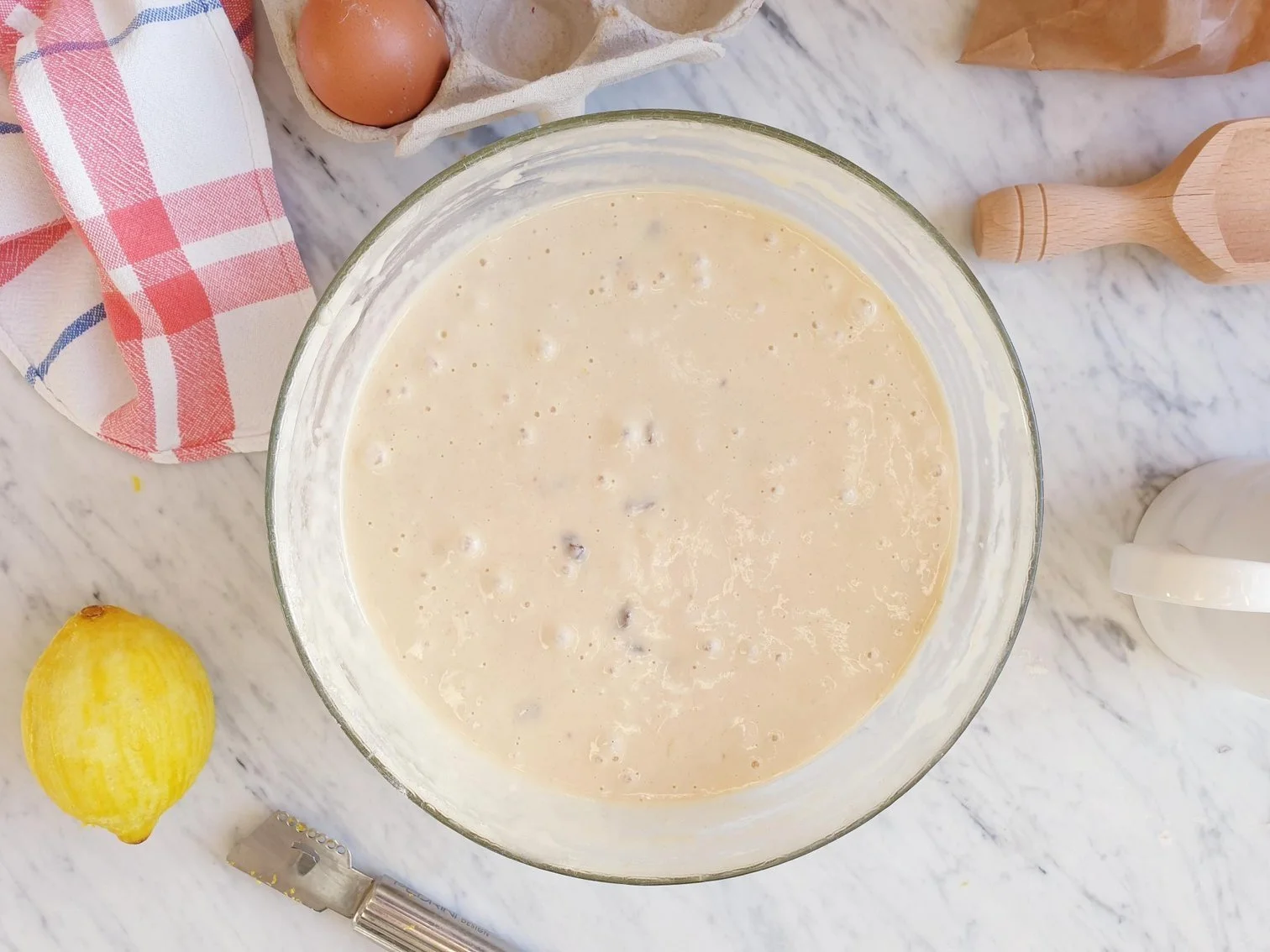
Gradually start adding the milk, mixing constantly until all the ingredients are well incorporated and you end up with a sticky dough that will be soft but thick resembling batter-like dough or a thick cake mix.

Adjust the dough by adding more milk if the dough is too thick, on the contrary, if you find the dough too runny add a bit more flour.

Add to the dough drained soaked raisins (squeeze out the all the excess liquid).

Cover the bowl with cling film or clean tea towel and place it in a warm place free of drafts from any open window.

Let the dough rest for at least 1 hour.

After this time the dough should rise a bit and have a bubbly surface.

Take a medium- sized deep skillet. Add the oil and heat it up over a medium heat to about 180C.

(If you do not have a thermometer, drop a cube of bread into the oil, it is ready when bread turns golden brown in 15 seconds).

Fritole are fried by dropping a small spoonfuls of dough/batter into the hot oil.

Take two tablespoons, with the first spoon scoop up the sticky dough from the bowl, with the second spoon slip off the dough from the first spoon into the hot oil.

Do not overcrowd the skillet with fritole and fry them in small batches, a few at the time, (4-6) this will obviously depend on the size of your pan. Fry them on both sides, fitole are fried in no time, about a minute on each size, so help them to flip over by using a fork or some tongs, however fritole will sometimes flip over themselves.

Whne you drop the batter/dough into a hot oil they will most probably not form perfect shaped balls but instead will leave a little trail on the end.

Fry until dark-ish brown in colour, puffed and well cooked through. I suggest you do a little test to make sure they are not raw inside. Simply open up a cooked fritola, if still gooey inside the oil is probably too hot and the heat too high.

Line a large plate with absorbent kitchen paper towels. Drain fried fritole with a slotted spoon and transfer them on a plate.

Allow the fritole to cool a bit.

Dust them with icing sugar or roll them in caster sugar.

Serve warm or at room temperature.

Just a thought

Fritole are to best enjoyed served still warm, however they are still delicious at room temperature.

Fritole can be warmed up in a microwave or in the oven. My nona put a plate of fritole on the radiator.

Wine suggestion

Moscato del Veneto IGT "Dindarello"2020 - Maculan'

December 23, 2021 /tina oblak
fritole, fritule, deep fried desserts, miske, miške, Fritle, Traditional Istrian doughnuts, small doughnuts, doughnuts, Venetian desserts, Venetian frittole
Adriatic Recipe, Autumnal dish, Autumnal recipe, Celebratory dish, Central European recipes, Christmas dish, dessert, Easter dish, Easter treats, Eastern European recipes, Easy recipe, Enriched dough, Festive dish, Finger food, Istrian cuisine, Istrian dish, Istrian food, pudding, Rustic dish, Slovenian cuisine, Slovenian food, Slovenian gastronomy, Small bites, Snacks, sweet course, Sweet Things, Winter dish, Winter recipe, festive sweet things, festive dessert, celebratory desserts
Comment