Beans and Sardines

  • Home
  • About
  • Recipe of the week
  • Recipes
  • Wines
  • Contact

Sea Bass Baked in Sea Salt Crust Recipe

Beans and Sardines
May 22, 2024 by tina oblak in Adriatic Recipe, All year round recipe, baked dish, baked fish, Celebratory dish, child friendly dish, child friendly meal, dinner, Easy recipe, family friendly dish, family friendly meal, Fish & Seefood, Healthy, healthy mael, Istrian cuisine, Istrian dish, Istrian food, Istrian gastronomy, light fish course, light meal, main course, main dish, main fish course, Nutritious, Nutritious dish, recipe from Northern Ital, Rustic dish, simple recipe, Slovenian cuisine, Slovenian food, Slovenian gastronomy, Venetian dish

Cooking sea bass, or any medium to large fish, covered in sea salt is one of the best ways of preparing it. The crust that forms during the baking helps to seal in the fish juices resulting in the fish meat having a very delicate taste and staying very moist and succulent which makes it incredibly flavoursome and deliciously tender to eat.

Sea salt crust prevents and shelters the fish in the oven from direct heat and allows it to bake evenly without the risk of overbaking it and therefore drying the fish. This recipe is also incredibly healthy as there is no need for additional fats or condiments.

This recipe for sure is a real showstopper and meant for special occasions. When you break the sea salt crust in front of your guests you create a bit of drama and bring a bit of theatre to your meal, it will leave them very impressed indeed!

The recipe has a very cheffy feel to it, but on the contrary to what you might think, the recipe is surprisingly simple.

This simple method of cooking the fish has been widely known and practised in various countries in the Mediterranean. It would have been expensive to prepare this dish, as quite a large amount of salt is needed. The dish would have been reserved as a feast dish for prosperous and wealthy, but it is believed that the recipe originated from the people on a more modest budget living in the areas where sea salt was produced.

This way of cooking is very popular in the Venetian area where preparing the fish this way is traced back before the end of the Roman Empire, during which time the salt pans were fully operating in the lagoon of Venice.

This practice of cooking the fish covered in sea salt crust has been also very popular along the Slovenian coastline since the time when La Serenissima (the Most Serene Republic of Venice) occupied this territory which is also blessed with the presence of the salt pans and the abundance of sea salt.

This recipe is not really suggested as your mid-week dinner. The locals would sometimes prepare the fish baked in sea salt crust in the households to mark and celebrate special occasions, but most of the time it would be enjoyed and ordered as a treat in the restaurants specialised in serving fish and sea food where you can find this dish on the menu in Slovenian as Brancin v soli or in Italian (due to present bilingualism) as Branzino al sale.

I am sharing here my family recipe to enjoy.

Recipe

Ingredients

Serves 2-4 people

  • 2 whole sea bass (each weighing about 400g), clean, gutted and ideally not scaled, however, you can use the fish that has been scaled already. Ask the fishmonger to help you with this task if uncomfortable tackling it yourself.

  • 2kg sea salt

  • fresh rosemary or parsley sprigs, optional

  • pepper, optional

Method

Preheat the oven to 180 °C.

Gut and clean the fish.

Rinse well the fish inside and out under cold running water and pat dry with kitchen paper.

If you wish you can stuff the inside of the fish belly (cavity) with fresh spring of parsley or rosemary and season with pepper.

Prepare the salt mixture to make the salt crust by putting the sea salt in a bowl and add enough water (about 100ml but you might need a bit more) so the mixture is wet and moist enough to be moulded. A bit like the sand on the beach when you are trying to build a sandcastle, if the sand is too dry or too wet you cannot shape it.

The principal for making sea salt mixture is similar, use a little bit of your judgment how much water you should use.

View fullsize Sea Bass Baked in sea salt crust Recipe 2.jpg
View fullsize Sea Bass Baked in sea salt crust Recipe 3.jpg

Line a baking tray (large enough to fit the fish comfortably) with baking parchment.

Put half of the salt mixture into a lined baking tray and flatten to make a bed for the fish.

Place the fish on top.

Cover completely with the remaining salt mixture.

Press with your hands to mould and seal.

View fullsize Sea Bass Baked in sea salt crust Recipe 5.jpg
View fullsize Sea Bass Baked in sea salt crust Recipe 6.jpg

Bake in the oven for about 50 minutes, or until the crust is crisp and lightly golden.

Remove the fish from the oven and bring it to the table in its crust.

Carefully crack the salt crust, remove it from the fish and discard.

Peel and remove the skin from the fish and discard that too.

Brush off any excess salt to avoid getting on to the fish.

View fullsize Sea Bass Baked in sea salt crust Recipe 7.jpg
View fullsize Sea Bass Baked in sea salt crust Recipe 10.jpg

Flake the fish from the bone in large pieces and place them onto a serving plate.

Spoon over a simple green sauce made with olive oil and finely chopped fresh parsley, and serve with some boiled new potatoes, spinach or chard with garlic and olive oil, salad, creamed spinach, bean salad, green beans salad, peperonata Istrian style.

Just a thought

You can stuff the cavity of the fish with herbs of your preference like fresh parsley, rosemary or thyme, or garlic and a slice of lemon, or a combination.
Wine suggestion

Vermentino di Sardegna DOC 2023 - Selezione Argiolas

May 22, 2024 /tina oblak
Sea Bass, Fresh whole Sea Bass, Fresh whole Sea Bream, sea salt, fresh herbs, Sea Salt Crust, Fresh whole fish in Sea Salt Crust
Adriatic Recipe, All year round recipe, baked dish, baked fish, Celebratory dish, child friendly dish, child friendly meal, dinner, Easy recipe, family friendly dish, family friendly meal, Fish & Seefood, Healthy, healthy mael, Istrian cuisine, Istrian dish, Istrian food, Istrian gastronomy, light fish course, light meal, main course, main dish, main fish course, Nutritious, Nutritious dish, recipe from Northern Ital, Rustic dish, simple recipe, Slovenian cuisine, Slovenian food, Slovenian gastronomy, Venetian dish
Comment

Istrian Pesto Recipe

Beans and Sardines
February 01, 2023 by tina oblak in Adriatic Recipe, All year round recipe, Appetizers, bite-sized nibbles, brunch, Canapés, Fresh herbs, Istrian cuisine, Istrian food, Istrian gastronomy, simple recipe, Slovenian cuisine, Slovenian food, Slovenian gastronomy, Small bites, Snacks, Starters

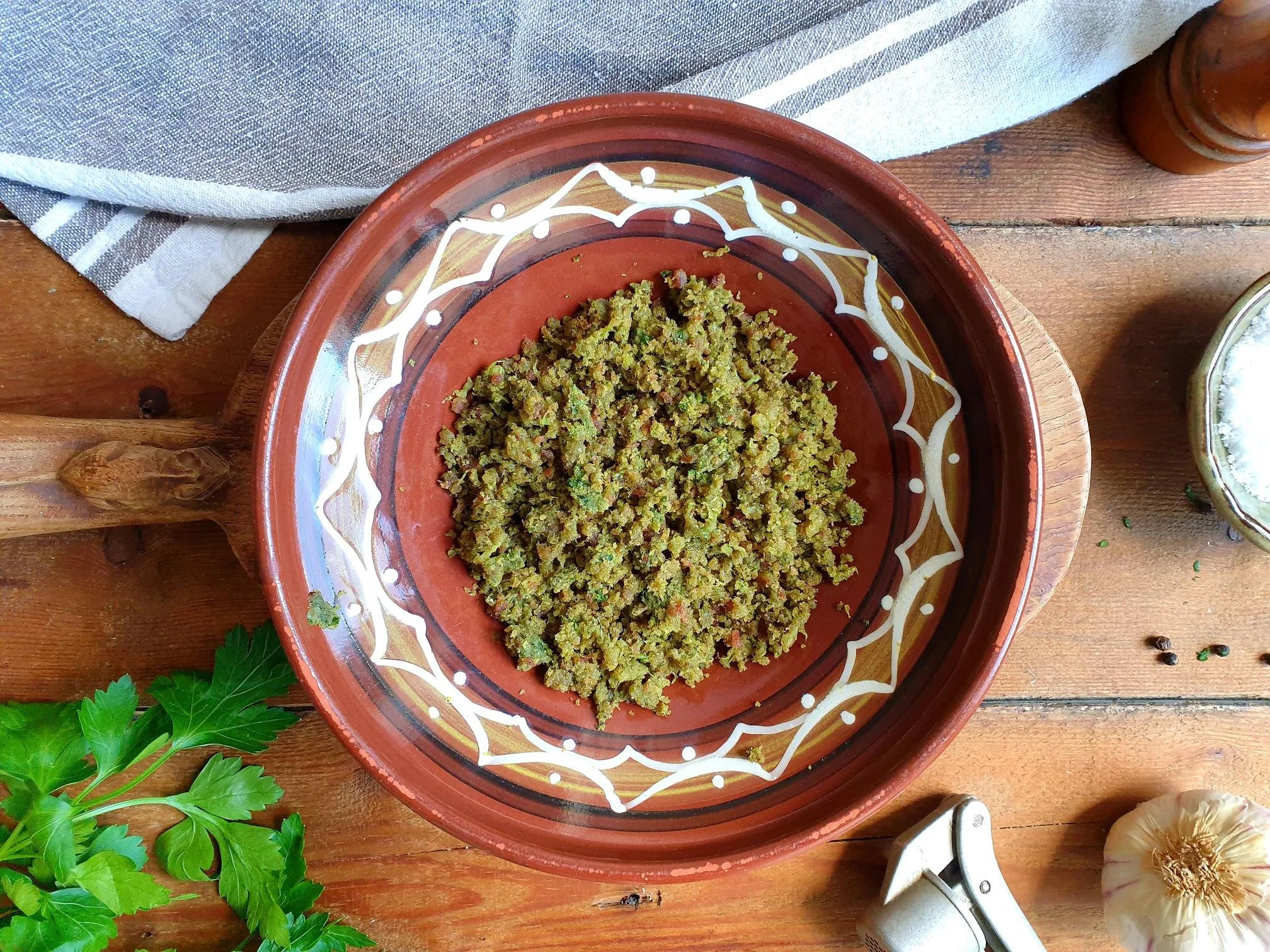
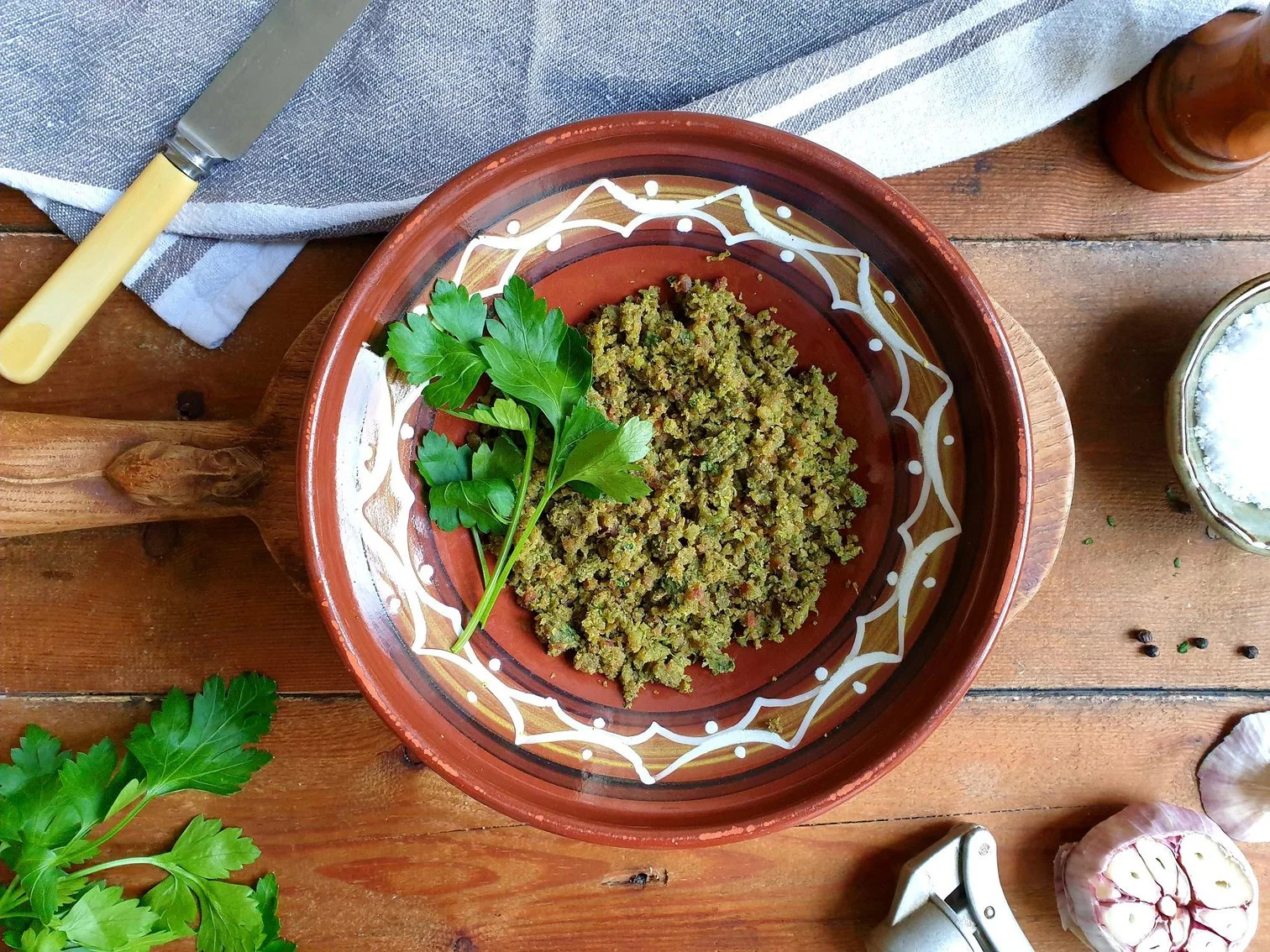
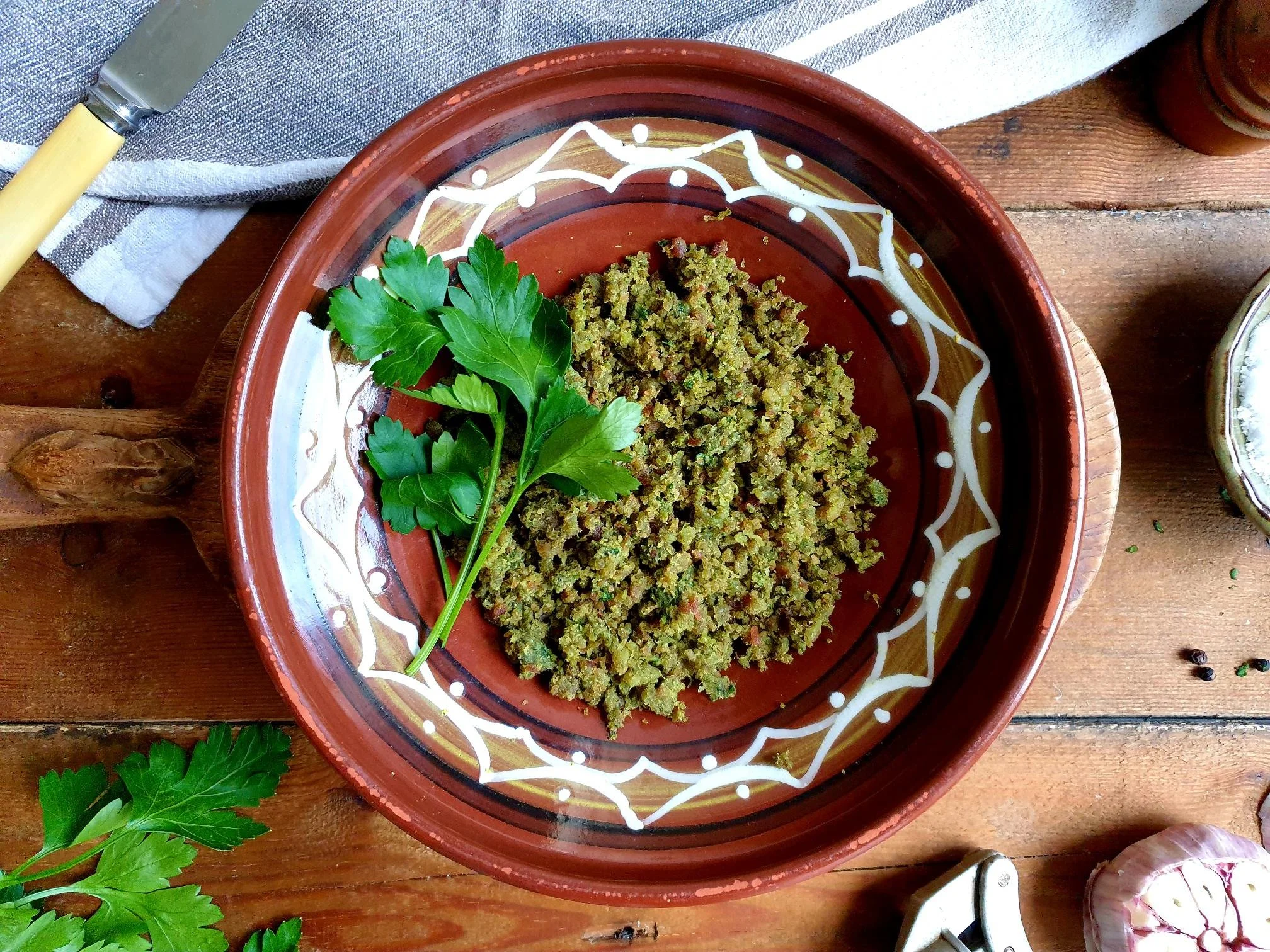
This quintessentially Istrian Pesto, is a paste like mixture, made with cured pork fat or pancetta, garlic, fresh flat leaf parsley, and sea salt, it is used for adding extra flavour and aroma to the dishes, but equally delicious spread on a slice of fresh or toasted bread.

Istrian food and dishes are quite poor, born out of necessity, and were made from what was available and seasonal.

In the past, people of this land had to be very resourceful and creative with the ingredients they had, and think of ways to enrich poor peasant food, and they came up with ways to flavour what could potentially be bland tasting stews and soups. So, a taca or pest, as locals call it in dialect, was created.

Istrian pesto has very little in common with the Italian styles of pesto sauces used as condiments for pasta, except for the name pesto, which originates from the Italian word pestare (to pound or to crush).

My nona told me that taca (as she refers to it) was used instead of precious cuts of various meats, that would otherwise give the most wonderful taste, but was reserved for special occasions and most certainly not added to everyday meals. 

She went on to tell me that this Istrian paste was exclusively made in the households, done by hand using a very sharp knife with which you could cut this fairly soft cured slab of fat, made from the back fat of the pigs. These delicate slabs of fat were then cured in sea salt for a few months, and the fully cured piece of fat, which is predominantly whitish in colour has a hint of pink, and is rather “sweet” in flavour since fresh pig meat does not absorb salt.

There always has been a strong connection in the region, reminiscent in this country, to the rural life described in many of Thomas Hardy’s novels, to the kind of local culture that comes with a life of hard labour on the farms and fields. Farmers would eat the cured fat either for lunch or as a snack, it would be very thinly sliced on a piece of rustic bread and accompanied by fresh tomatoes, and by a bicerin (a dialect word of Italian origin, indicating a small glass) of red wine. This type of eating kept them strong and fit.My nona also explain to me that there have been times when families kept their own pigs, and nearly everyone in the region was curing the fat in their typical Istrian cellars, which provided the right temperature, and the level of the humidity for the optimum results of the curing process. I very clearly remember my grandfather (nono as I used to call him), curing the fat and hanging it on big metal hooks to dry.

This Istrain taca is not available in the food stores to buy, and these days it is very rarely made with home cured fat. This is why I am sharing here the family recipe for pešt, made with pancetta (as alternative to cured fat) to enrich your stews and soups.

Make sure you always add this flavoursome mixture into cold water at the very beginning of cooking, as the fat will gradually dissolve into the dish (without making it fat or greasy!) and it will eventually completely disappear.

When you add the paste to the cold water it will at first most probably float, do not worry since this is quite normal. You can just take a fork and break the lump of paste pressing it against the wall of the pan until you break it completely and give a good stir.

Recipe

Ingredients

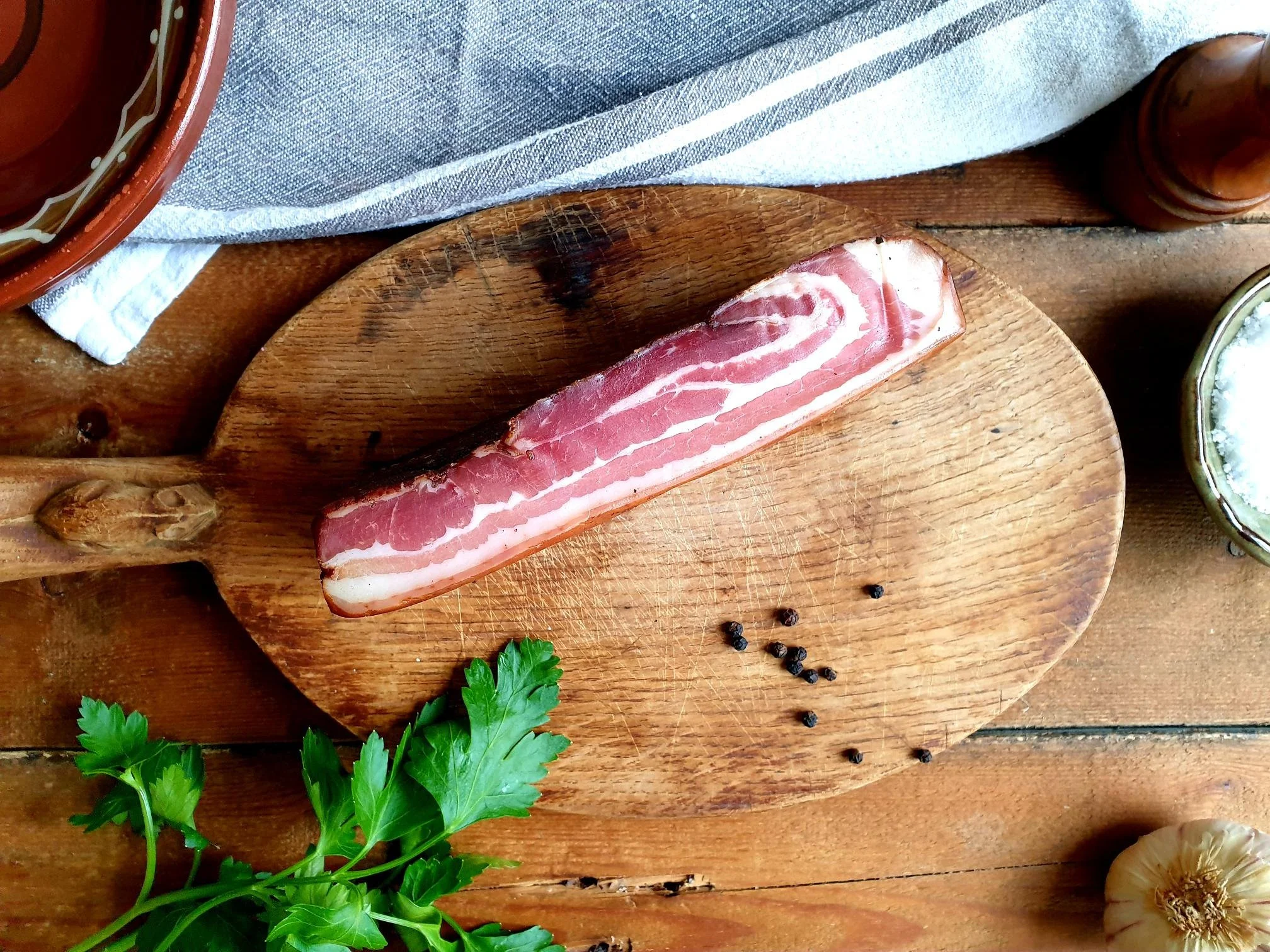
  • 100g pancetta or cured lard in one piece (can use already sliced pancetta)

  • 2-3 cloves of garlic, peeled and pressed 

  • a handful of fresh flat leaf parsley (about 7g), finely chopped 

  • sea salt

  • black pepper

Method

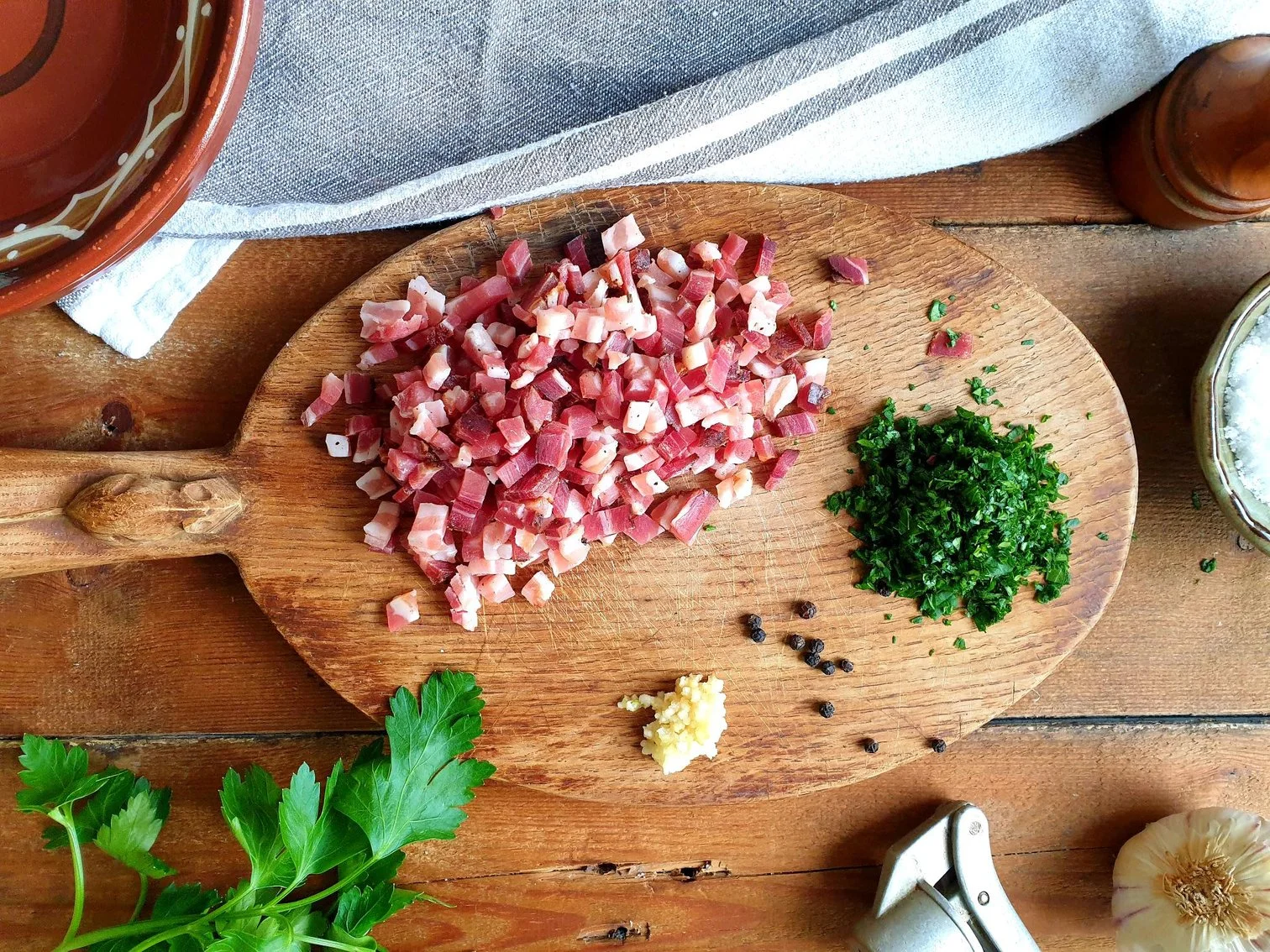
Cut the pancetta into small pieces.

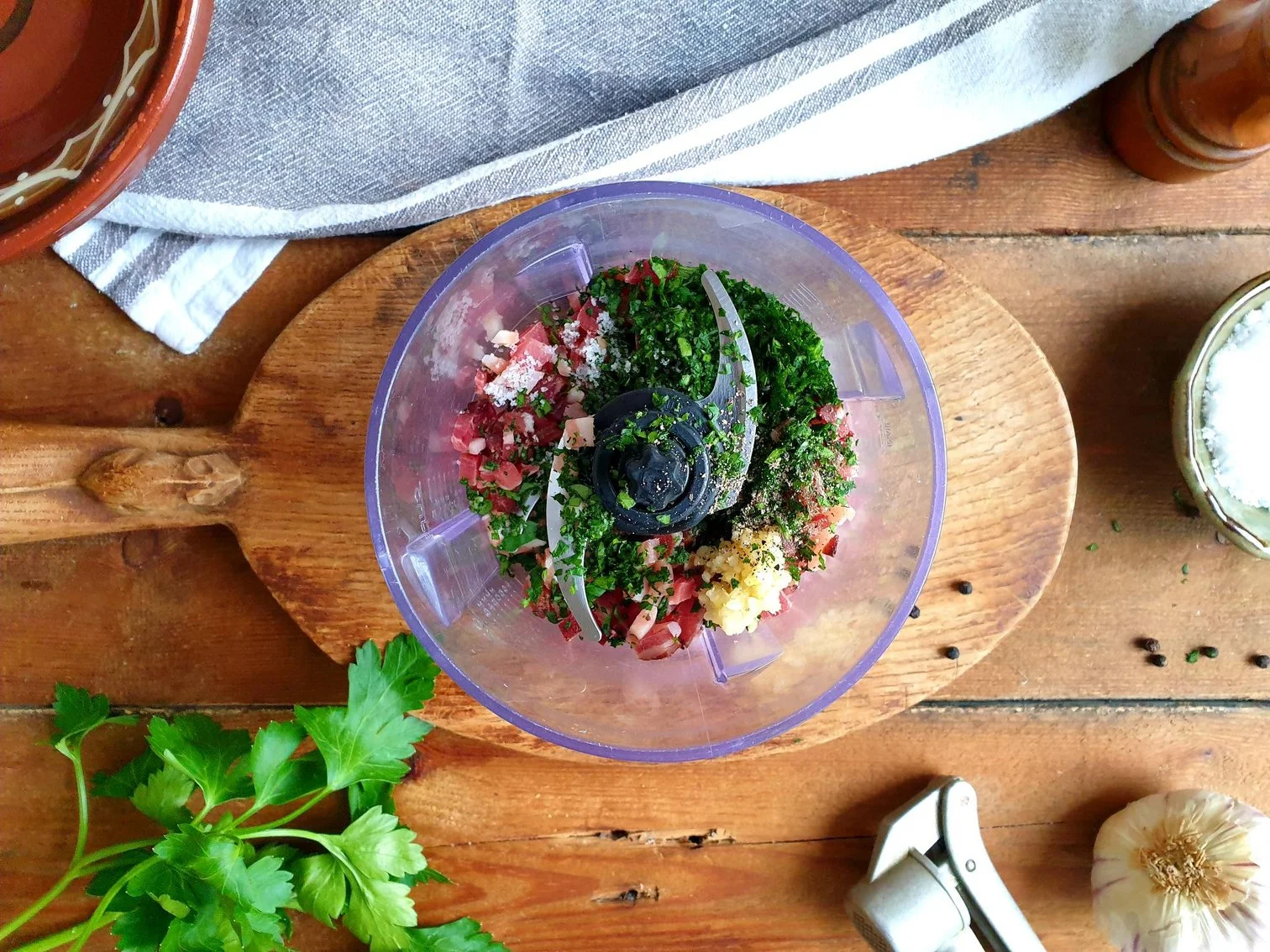
Transfer into a small food processor, add crushed garlic, finely chopped fresh flat leaf parsley, and a pinch of sea salt.

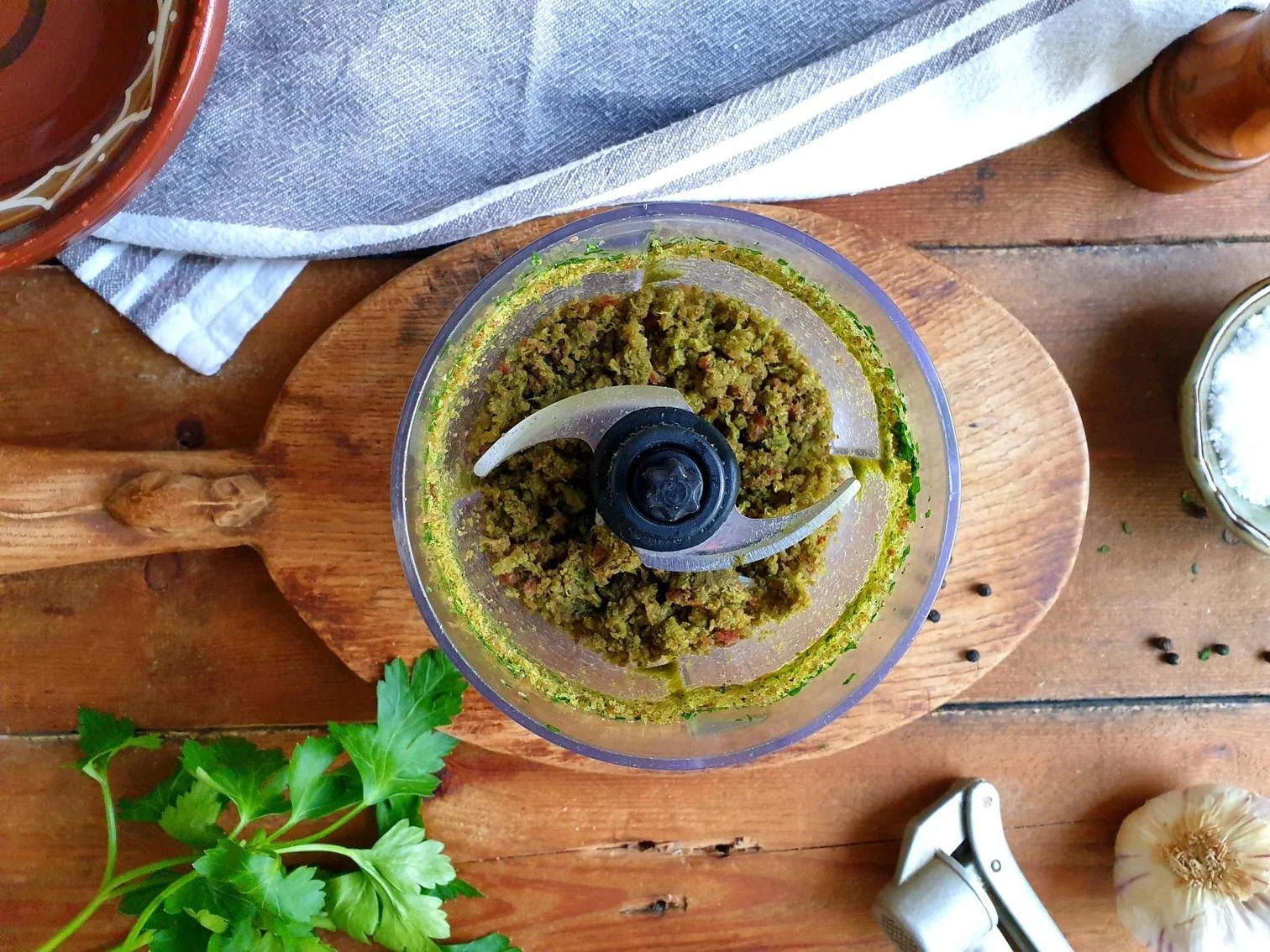
Blitz all the ingredients together until you obtain a paste like consistency. 

View fullsize Istrian Pesto 3.jpg
View fullsize Istrian Pesto 4.jpg

Enjoy spread on a slice of fresh or toasted bread, or add to dishes to enrich the flavour.

February 01, 2023 /tina oblak
fresh flat leaf parsley, sea salt, black pepper, cured lard, pancetta, smoked pancetta, garlic, make ahead
Adriatic Recipe, All year round recipe, Appetizers, bite-sized nibbles, brunch, Canapés, Fresh herbs, Istrian cuisine, Istrian food, Istrian gastronomy, simple recipe, Slovenian cuisine, Slovenian food, Slovenian gastronomy, Small bites, Snacks, Starters
Comment