Beans and Sardines

  • Home
  • About
  • Recipe of the week
  • Recipes
  • Wines
  • Contact

Squid Risotto Adriatic style Recipe

Beans and Sardines
March 30, 2022 by tina oblak in Adriatic Recipe, Appetizers, All year round recipe, brunch, child friendly dish, child friendly meal, dinner, Easy recipe, family friendly dish, family friendly meal, Fish & Seefood, fish starter, Healthy, healthy mael, Istrian cuisine, Istrian dish, Istrian food, Istrian gastronomy, light fish course, light meal, main course, main dish, recipe from Northern Ital, Risotti, Rustic dish, Starters, first course, first course dish, first course meal

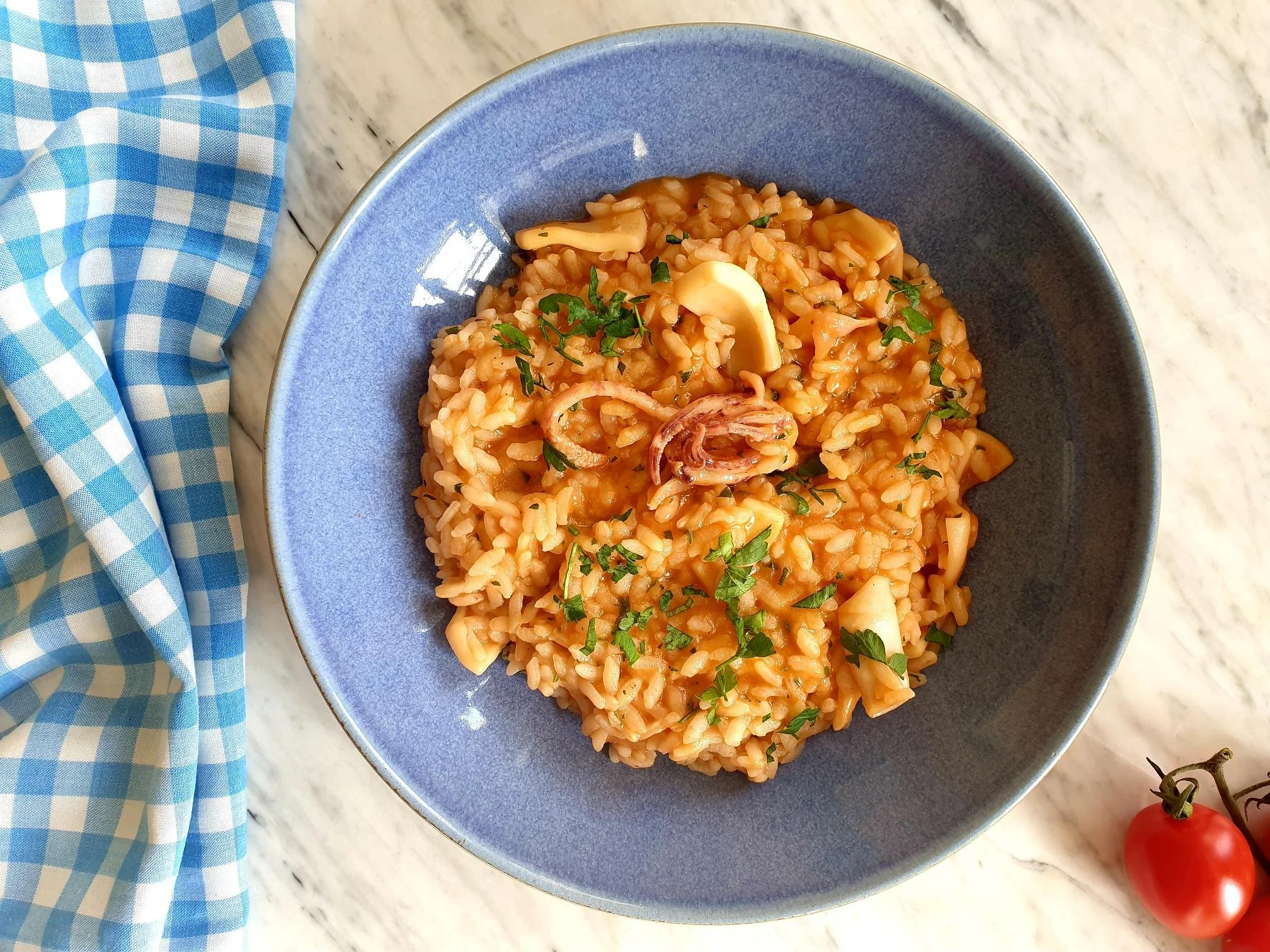
Squid or calamari risotto is very delicate in taste, yet flavoursome, hearty and filling, very quick and easy to make, which makes it a perfect choice for a light lunch or dinner and a staple mid-week dish.
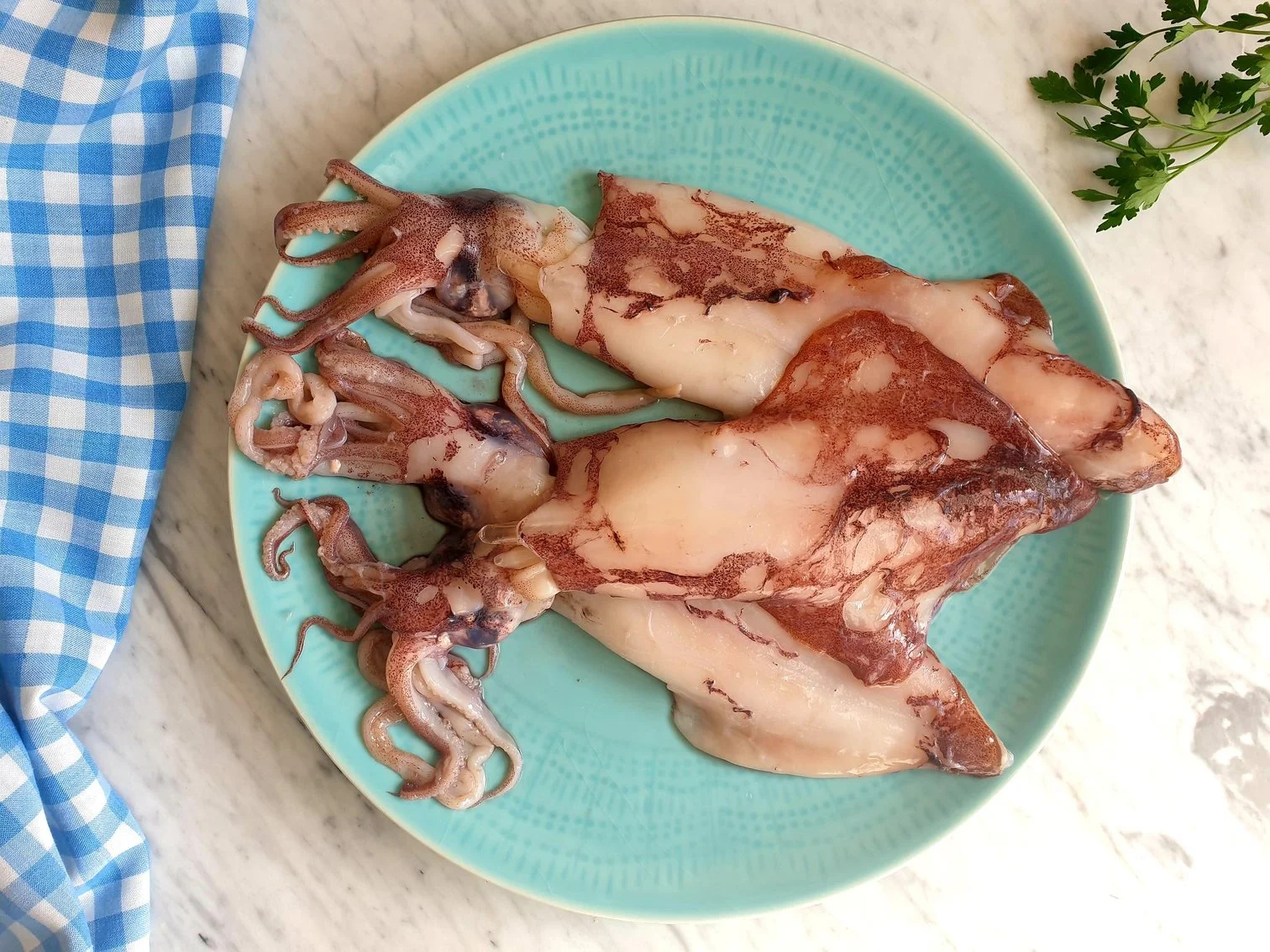
Fresh squid (not cleaned yet)

This risotto is an absolute winner, it will delight the whole family, and it is very pleasant to eat with its creamy texture and sweet and tender squid. It is simply delicious, and it is packed with Mediterranean ingredients that recall holidays by the sea.

I grew up on this type of risotto, it has been made in my family since as long as I can remember. My mother told me I was partially weaned on this risotto, she obviously made sure the squid chunks were cut in miniscule pieces to make it safe for me to eat. I loved it, apparently, and I still do.

The frequency with which this risotto, among many other types of risotti, has been made should come as no surprise. The area where I was born and grew up, the Slovenian coast, it is just under two hours drive from northern region of Veneto in Italy, where the greatest number and variety of risotto recipes can be found.

Squid risotto is very often prepared and cooked in the households, and regularly printed on the menus in the local restaurants, where you will find it as Rižota s kalamari or Rižota z lignji.

I am sharing here my mother's recipe, and do not be put off by the task of cleaning the squid, ask your fishmonger to do it for you and try this fantastic risotto dish.

Ingredients

Serves 4

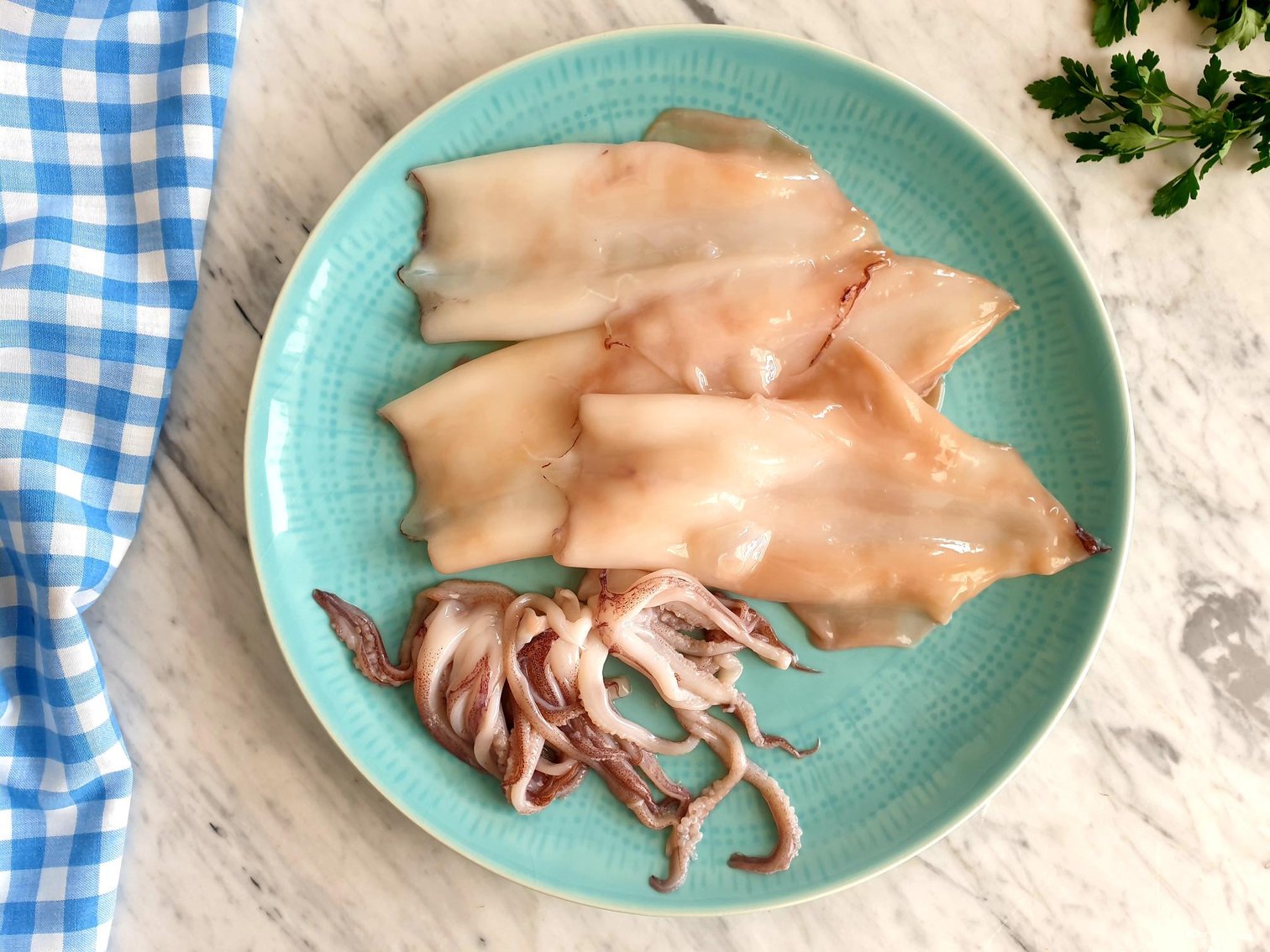
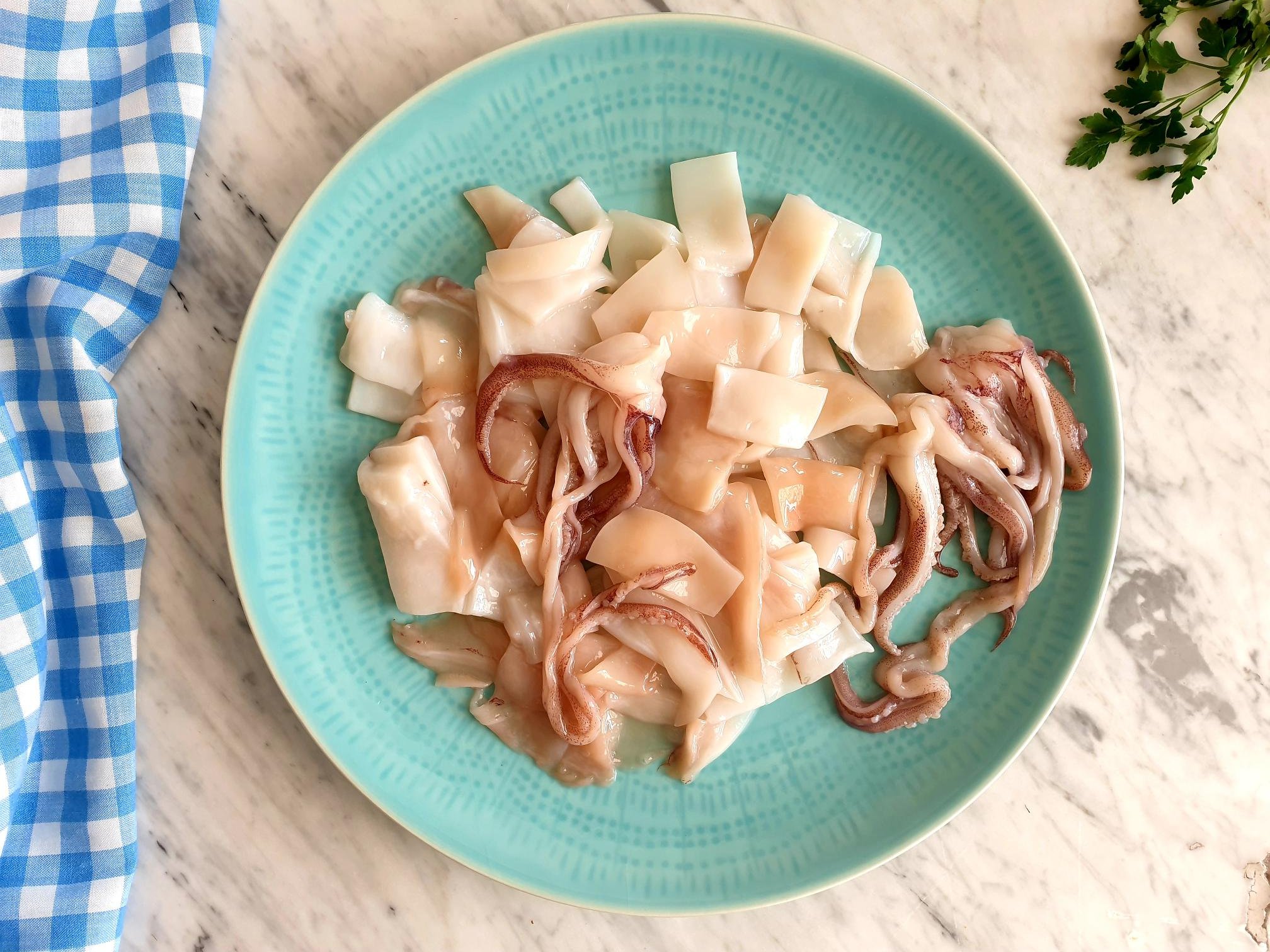
  • 500g roughly, fresh squid, cleaned and cut into smaller pieces or rings (keep the tentacles). For this recipe you can also use frozen raw already cleaned squid tubes available in most bigger supermarkets.

  • 1 small onion (about 80g), peeled and finely chopped

  • 1 clove garlic, peeled and crushed

  • 4 Tbsp extra virgin olive oil

  • 1 Tbsp tomato purée

  • 300g risotto rice (like Vialone Nano, Arborio or Carnaroli)

  • fresh flat leaf parsley, about a handful (roughly 8g), some extra for garnish

  • 1 litre hot vegetable stock or hot water

  • sea salt

  • ground black pepper

View fullsize Squid risotto 2.jpg
View fullsize Squid risotto 3.jpg

Method

Before starting making risotto, it is a good idea to have your boiling hot stock or hot water ready to hand for later.

Put extra virgin olive oil in a pan, add finely chopped onions and sauté on a gentle heat until soft.

Add crushed garlic and cook for about a minute together with the onions.

Place clean pieces of squid in a pan and cook for about three minutes or so, until opaque.

Add the rice, mix well with the onion, garlic and squid mixture, and toast it for few minutes stirring constantly to avoid sticking to the pan.
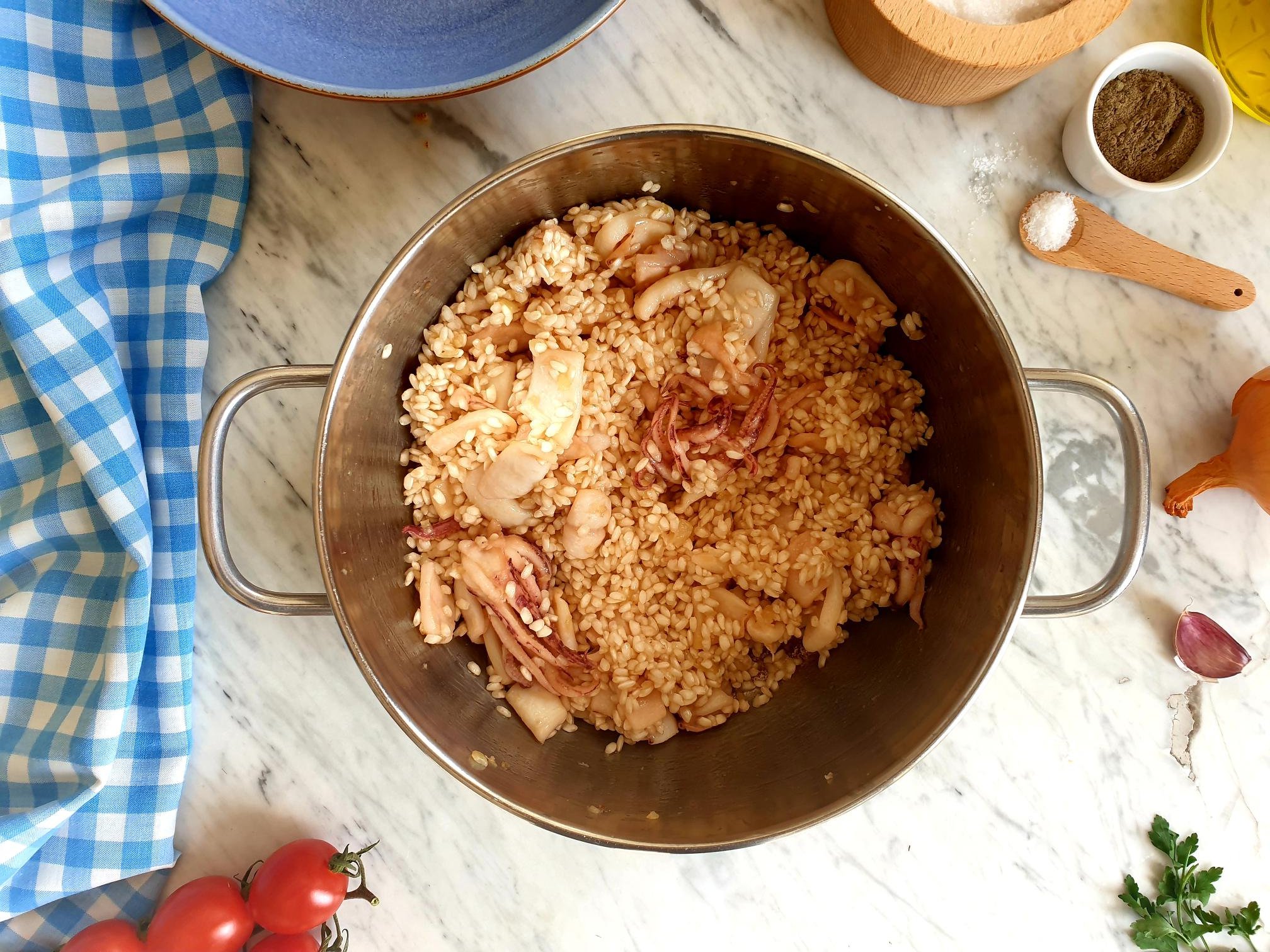
Add tomato purée, pour in the pan all the hot stock or hot water and add chopped parsley.

If you have made a risotto before and have a clear idea of how moist you like it to be, you can control the moisture of the risotto by gradually adding ladles of hot stock or water, one at a time, allowing the liquid to be absorbed before adding more, rather than pouring the whole quantity of liquid over toasted rice, like I did in this recipe.

Cook on a medium heat, stirring almost constantly, until the rice is cooked al dente (fully cooked but still firm when bitten). It will generally take about 15-18 minutes for a risotto to be cooked.

There should be enough liquid just to cover the risotto, the Italians say that risotto should be smooth and runny enough to be described as all'onda, on the wave. Quite right, eating dry risotto is not particularly enjoyable.

Taste and adjust the seasoning with sea salt and ground pepper.

Serve hot and garnish with roughly chopped fresh flat parsley.
Just a thought

You can add to the risotto a small amount of chilli to give it an extra kick, but in small amounts, as you do not want to overpower the delicate flavour of the squid and of the dish in general.
Wine suggestion

Colli di Luni Vermentino “Etichetta Nera” 2021 - Lunae

March 30, 2022 /tina oblak
fresh squid, frozen squid, fresh calamari, frozen calamari, squid risotto
Adriatic Recipe, Appetizers, All year round recipe, brunch, child friendly dish, child friendly meal, dinner, Easy recipe, family friendly dish, family friendly meal, Fish & Seefood, fish starter, Healthy, healthy mael, Istrian cuisine, Istrian dish, Istrian food, Istrian gastronomy, light fish course, light meal, main course, main dish, recipe from Northern Ital, Risotti, Rustic dish, Starters, first course, first course dish, first course meal
Comment

Bread dumplings Recipe

Beans and Sardines
March 23, 2022 by tina oblak in Adriatic Recipe, Austrian inspired dishes, Autumnal dish, Autumnal recipe, casserole, Celebratory dish, Central European recipes, dinner, Dumplings, Eastern European dishes, Eastern European recipes, Easy recipe, Istrian cuisine, Istrian dish, Istrian food, Istrian gastronomy, main course, main dish, Mitteleuropean cuisine, Mitteleuropean dish, Mitteleuropean food, Mitteleuropean recipes, one pot meal, Rustic dish, Side Dishes, Slovenian cuisine, Slovenian food, Slovenian gastronomy, stew, supper, Vegetarian, Winter dish, Winter recipe, family friendly meal, child friendly meal, child friendly dish, family friendly dish

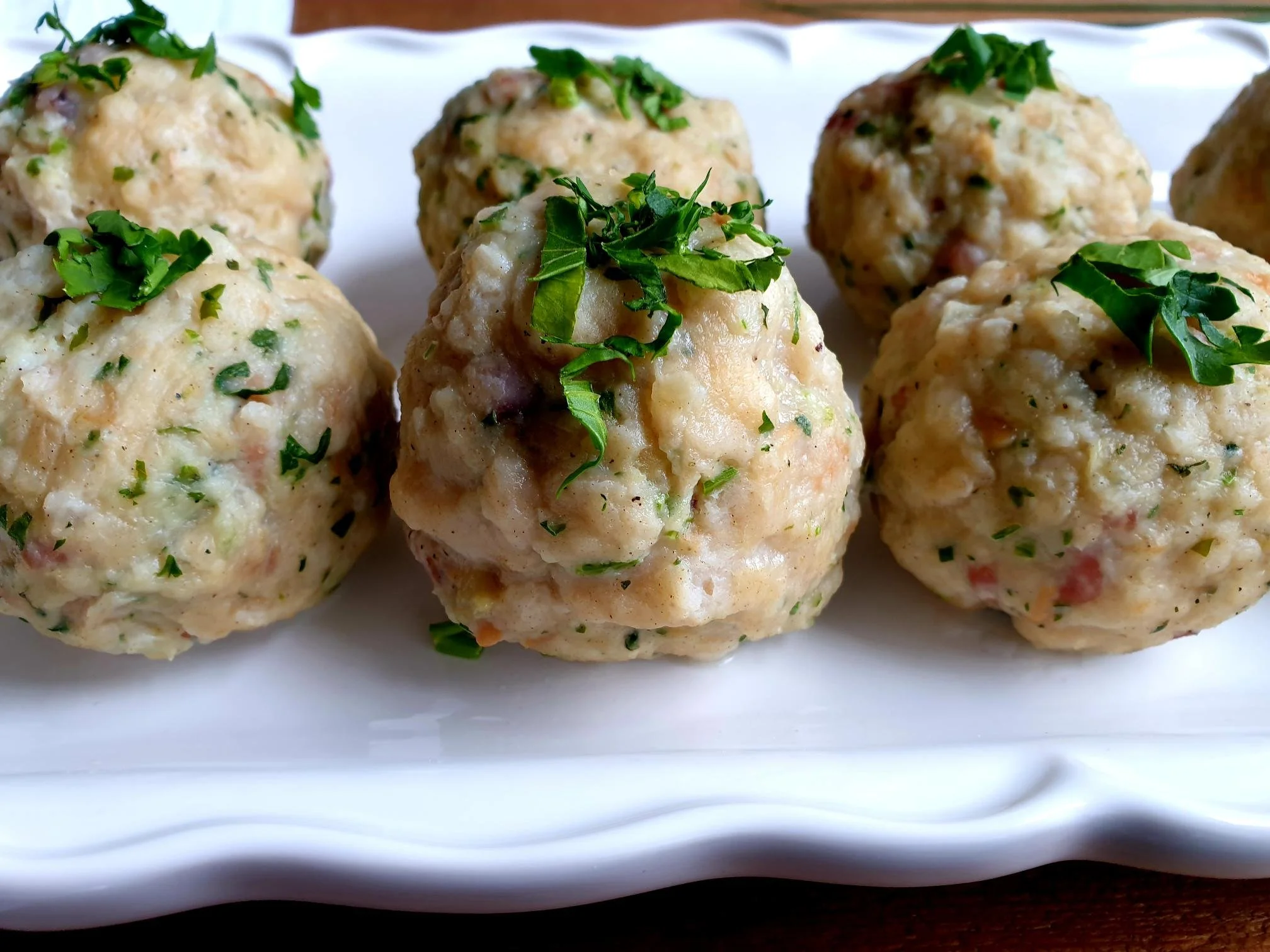
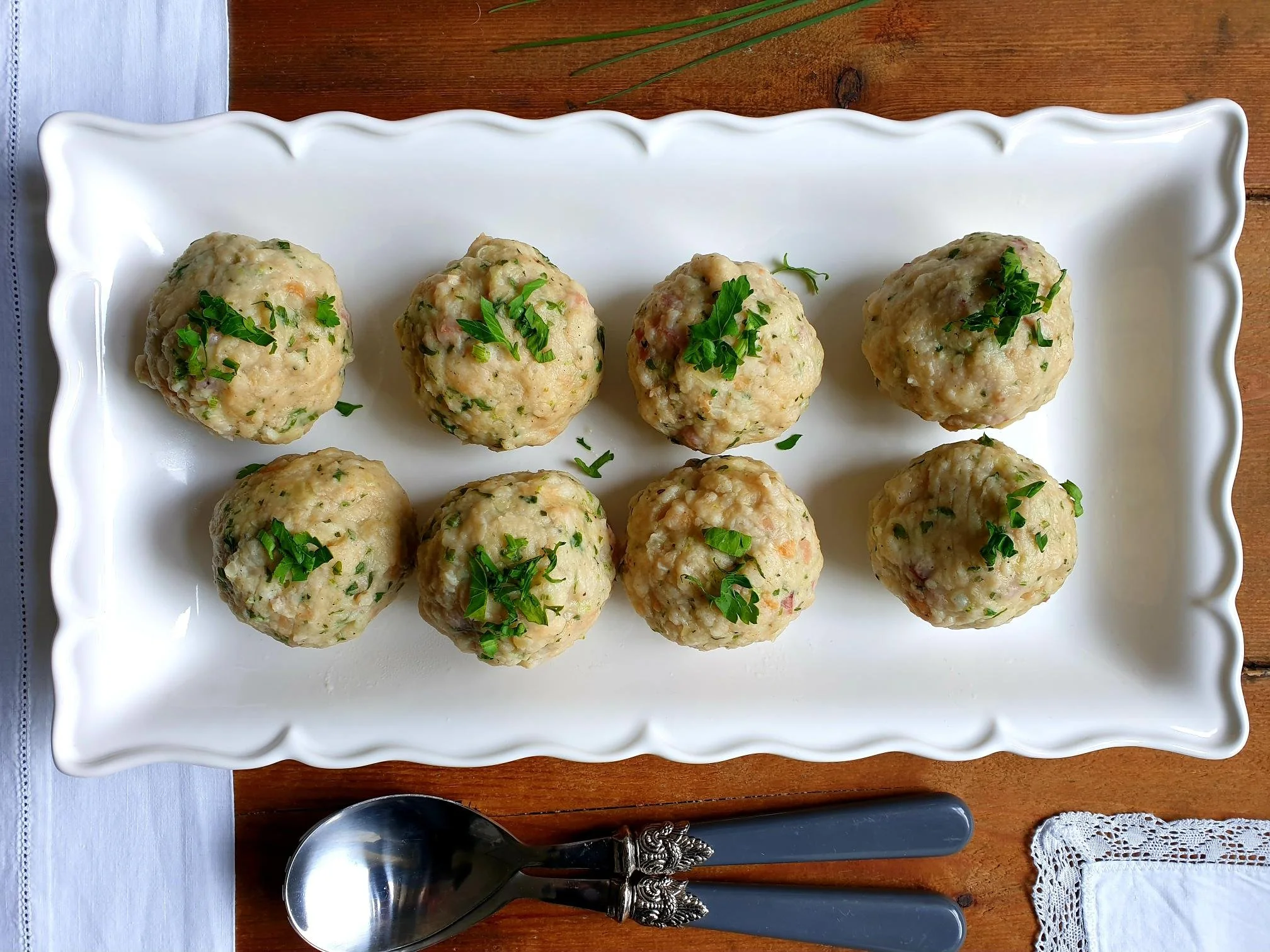
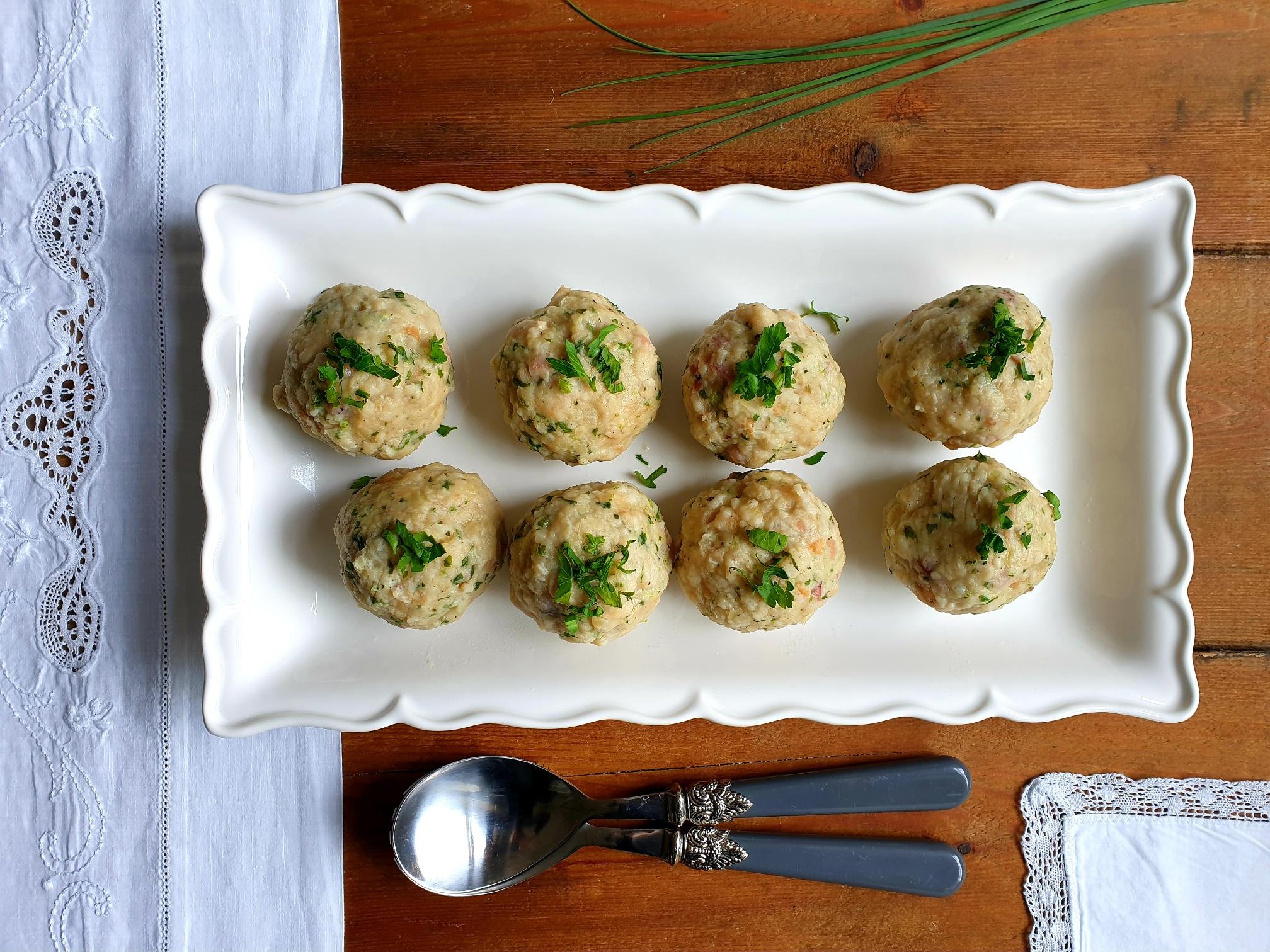
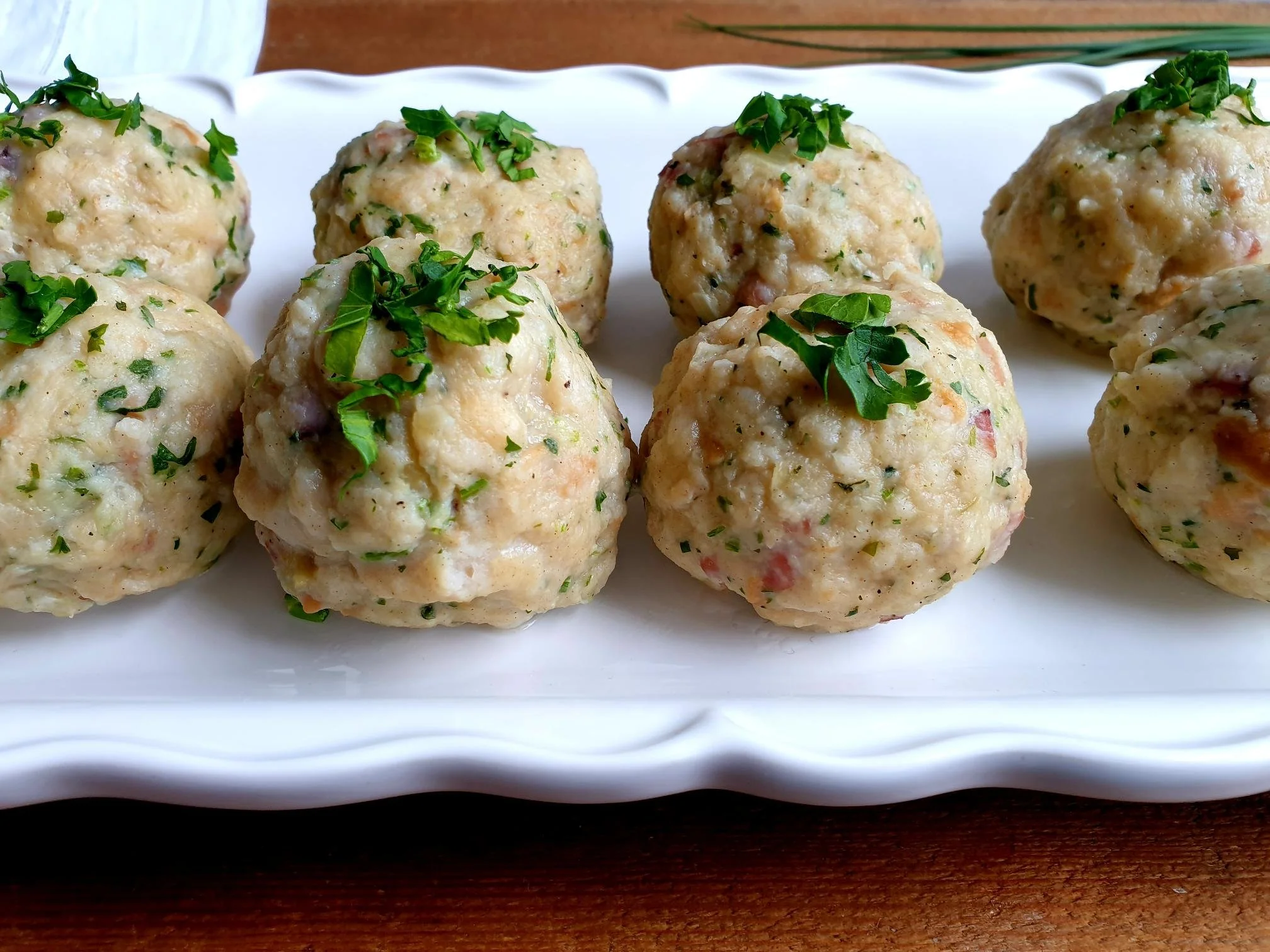
Bread dumplings are a real crowd pleaser, they are made from a mixture of stale bread soaked in milk and combined with fresh parsley, marjoram, onions, pancetta, beaten egg, seasoned with sea salt and black pepper, then formed into a ball shape and gently cooked in simmering water.

They can be easily turned into a vegetarian friendly option by simply omitting the meaty element and adding, if prefer, a bit of grated cheese, depending on your preference.

They are served as a perfect companion to stews, braised meats and roasted meats with a gravy. The idea behind these dumplings is to squash them with the fork, and this will soak up all the juices of whatever is accompanying them. In other words, it is an ideal side dish for almost anything that has some kind of sauce with it.

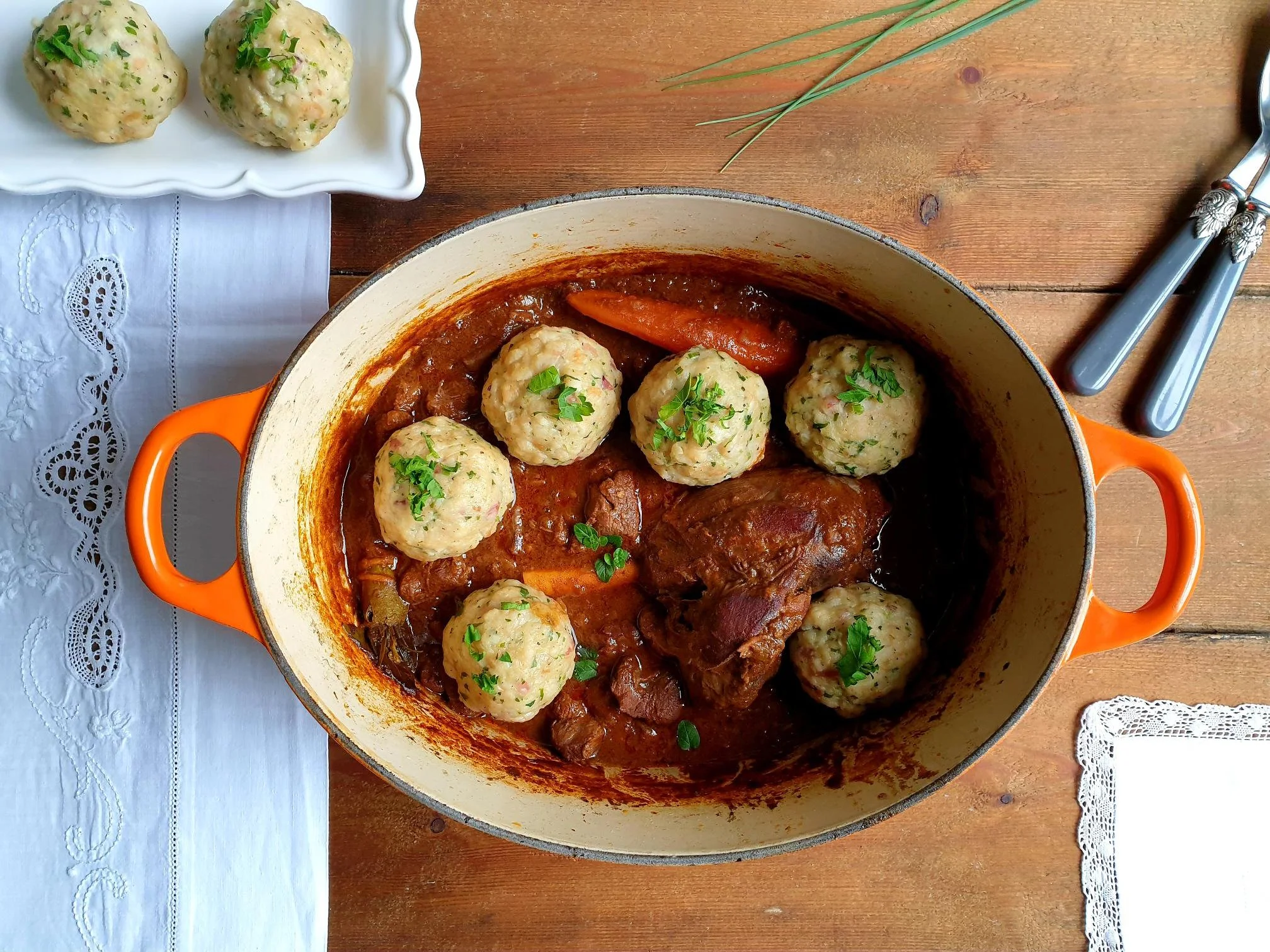
Bread dumplings with Venison stew

I simply love the recipes that provide some kind of a solution to the “problem” of avoiding food waste, and in this case the recipe is a brilliant side dish that uses - nothing more than stale bread as the key ingredient.

This is one of those recipes that you do not really need to plan since you can make bread dumplings when you simply end up with old bread and do not know what to do with it. If you have quite a bit of it to use up, then double or triple the ingredients since you can freeze a big batch of bread dumplings.

These rustic and elegant bread dumplings became a staple dish in a lot of cuisines of Eastern and Central Europe where stale bread has been very cleverly turned into a pure delicacy.

In Slovenia, where I was born and grew up, bread dumplings, called Kruhovi cmoki, have been so popular they almost became a national dish, and this recipe is most similar, or actually almost identical to the Austrian and South German( Bavarian) variety, where it is believed bread dumplings originated from, and are referred to as Semmelknödel.

There are a variety of bread dumpling recipes, for example, in the Czech Republic, fresh herbs, onions and the meaty element is not added to the bread mixture, which is also not shaped into small balls, but instead into a roll, then boiled and sliced.

Similar to bread dumplings are Canederli, found in Italy, in Trentino Alto Adige, an autonomous province of Italy, and in Austria, where small pieces of speck (lightly smoked cured meat) and cheese are added to the basic bread mixture, then they are shaped into small balls and typically cooked and served in hot beef or chicken broth.

This dish was one of my favourite dishes when I was a child, and it really does take me down memory lane. My mother would prepare them quite often, and I am sharing here her recipe, a typical Istrian variation of bread dumplings, in which fresh marjoram is added to the basic bread mixture.

Ingredients

Will make about 8 dumplings, depending on the size.

  • 310g roughly of stale bread (for this recipe I used 5 stale white baps)

  • 250-300ml milk (skimmed, semi skimmed or full fat)

  • 1 egg, beaten

  • 2 Tbsp olive oil

  • a handful of fresh flat leaf parsley (about 10g), finely chopped

  • 1 medium onion (about 100g), peeled and finely chopped

  • sea salt

  • ground black pepper

  • 40-50g sliced pancetta, cut into very small pieces (can use bacon or lardons), optional

  • 1 Tbsp fresh marjoram, very finely chopped, optional

  • all purpose flour (enough to coat the bread dumplings)

  • 1 Tbsp white dry breadcrumbs (only if needed)

Method

Cut or tear with your hands white baps (or any other type of stale bread you are using) into small pieces and put them in a fairly large bowl. Pour over the milk, mix well and leave to soak for about 20-30 minutes or until the bread is completely softened.

View fullsize Bread Dumplings 2.jpg
View fullsize Bread Dumplings 3.jpg

While the bread is soaking in milk, prepare the onion and pancetta mixture.

Put olive oil, finely chopped onions and small pieces of pancetta in a frying pan. Gently fry the mixture until the onions become nice and soft and transparent but not brown. Cool the pancetta and onion mixture and set aside.

View fullsize Bread Dumplings 4.jpg
View fullsize Bread Dumplings 5.jpg

Add to the bowl with the soaked bread, the beaten egg, onion and pancetta mixture, finely chopped parsley and marjoram and season with sea salt and black pepper.

With your hand(s) mix very well all the ingredients, almost using a squeezing action, to thoroughly combine the mixture. You should end up with a bread mixture that is soft, and with a fairly smooth consistency (if you end up with bigger bread pieces just break them with your fingers).

Adjust the mixture, adding a bit of breadcrumbs (and never the flour, as the mixture will get too sticky and will become unworkable), one tablespoon at the time, if the bread mixture is too wet.

On the contrary, if you feel the mixture is too hard and dry, add a bit of milk.

It is important to use a bit of personal judgment and intuition here. The idea behind this recipe is using the stale bread or a combination of different types of stale bread which will absorb a slightly different quantity of liquid, therefore the moisture of the bread mixture needs to be adjusted accordingly.

View fullsize Bread Dumplings 6.jpg
View fullsize Bread Dumplings 7.jpg

Wet you hands (this will prevent the dough to stick to your hands).

Take roughly a handful of the mixture and shape it into a compact ball, about the size of a tennis ball.

Repeat the process until you run out of the mixture.

Put some flour into a deep plate or a bowl.

Gently coat each dumpling into a flour and remove excess flour (this will prevent sticking).

View fullsize Bread Dumplings 8.jpg
View fullsize Bread Dumplings 9.jpg

Fill a large pot of water and bring to boil. Turn down the heat and leave the water to a gentle boil.

With a slotted spoon, drop one dumpling at the time in a simmering water and cook for about 15 minutes. Do not allow the dumplings to cook in a strong boiling water as they might loose the shape and fall apart.

Remove cooked dumplings with a slotted spoon and transfer onto a serving plate or directly on the plates, serve warm.

Just a thought

Bread dumplings are suitable for freezing.

You can freeze uncooked dumplings by freezing them individually first, and then transfer them into freezing bags or containers. Do not defrost the dumplings when you need them, just plop them frozen directly into a simmering water and cook them slightly longer, and they are cooked when they float on the surface.

Alternatively, you can freeze already cooked dumplings. Cool them first, freeze them individually and place in freezing bags or containers. When you want to use the dumplings, let them thaw first and then reheat covered, in order to get some steam, using a microwave works well.

You can “recycle” this dish even further, if you end up with some left over cooked dumplings, slice them up and fry the slices on both sides lightly in a frying pan with some butter or olive oil.

You really could not ask anything more from stale bread!

Wine suggestion

Alto Adige Schiava DOC "Menzen" 2020 - Colterenzio

March 23, 2022 /tina oblak
stale bread, old bread, dumplings, savory dumplings, Kruhovi cmoki, Semmelknödel, Canederli
Adriatic Recipe, Austrian inspired dishes, Autumnal dish, Autumnal recipe, casserole, Celebratory dish, Central European recipes, dinner, Dumplings, Eastern European dishes, Eastern European recipes, Easy recipe, Istrian cuisine, Istrian dish, Istrian food, Istrian gastronomy, main course, main dish, Mitteleuropean cuisine, Mitteleuropean dish, Mitteleuropean food, Mitteleuropean recipes, one pot meal, Rustic dish, Side Dishes, Slovenian cuisine, Slovenian food, Slovenian gastronomy, stew, supper, Vegetarian, Winter dish, Winter recipe, family friendly meal, child friendly meal, child friendly dish, family friendly dish
  • Newer
  • Older