Beans and Sardines

  • Home
  • About
  • Recipe of the week
  • Recipes
  • Wines
  • Contact

Scampi in tomato (buzara style) sauce Istrian Recipe

Beans and Sardines
August 07, 2025 by tina oblak in Adriatic Recipe, All year round recipe, Appetizers, casserole, Celebratory dish, comfort, dinner, entrée course, family friendly dish, family friendly meal, festive dish, first course, first course meal, Fish & Seefood, fish starter, Healthy, healthy mael, Istrian cuisine, Istrian dish, Istrian gastronomy, light fish course, light meal, main course, main dish, main fish course, main fish meal, make ahead, one pot meal, one post fish recipe, Rustic dish, shellfish, simple recipe, Slovenian cuisine, Slovenian food, Slovenian gastronomy, Starters, stew, supper, weekend

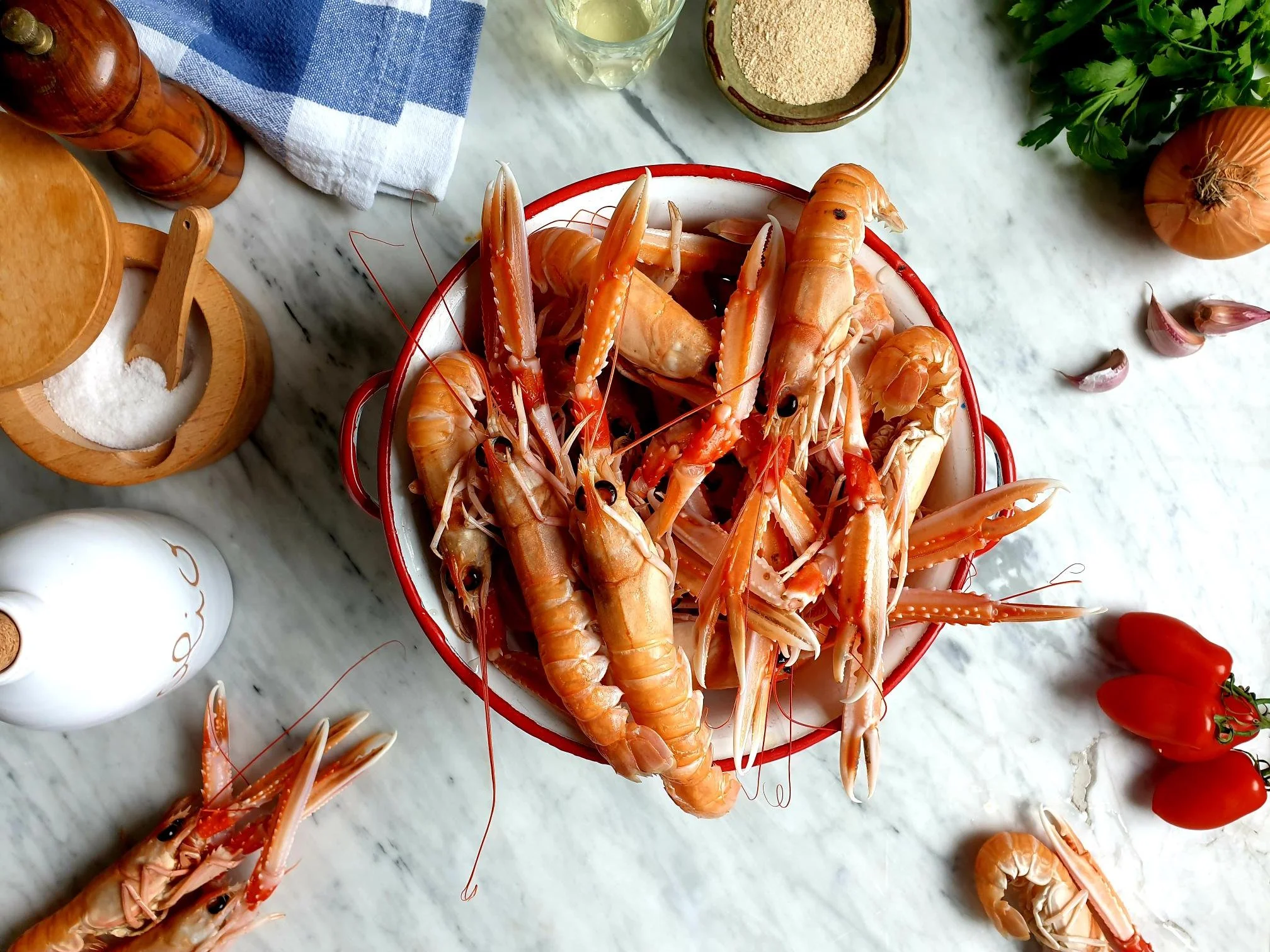
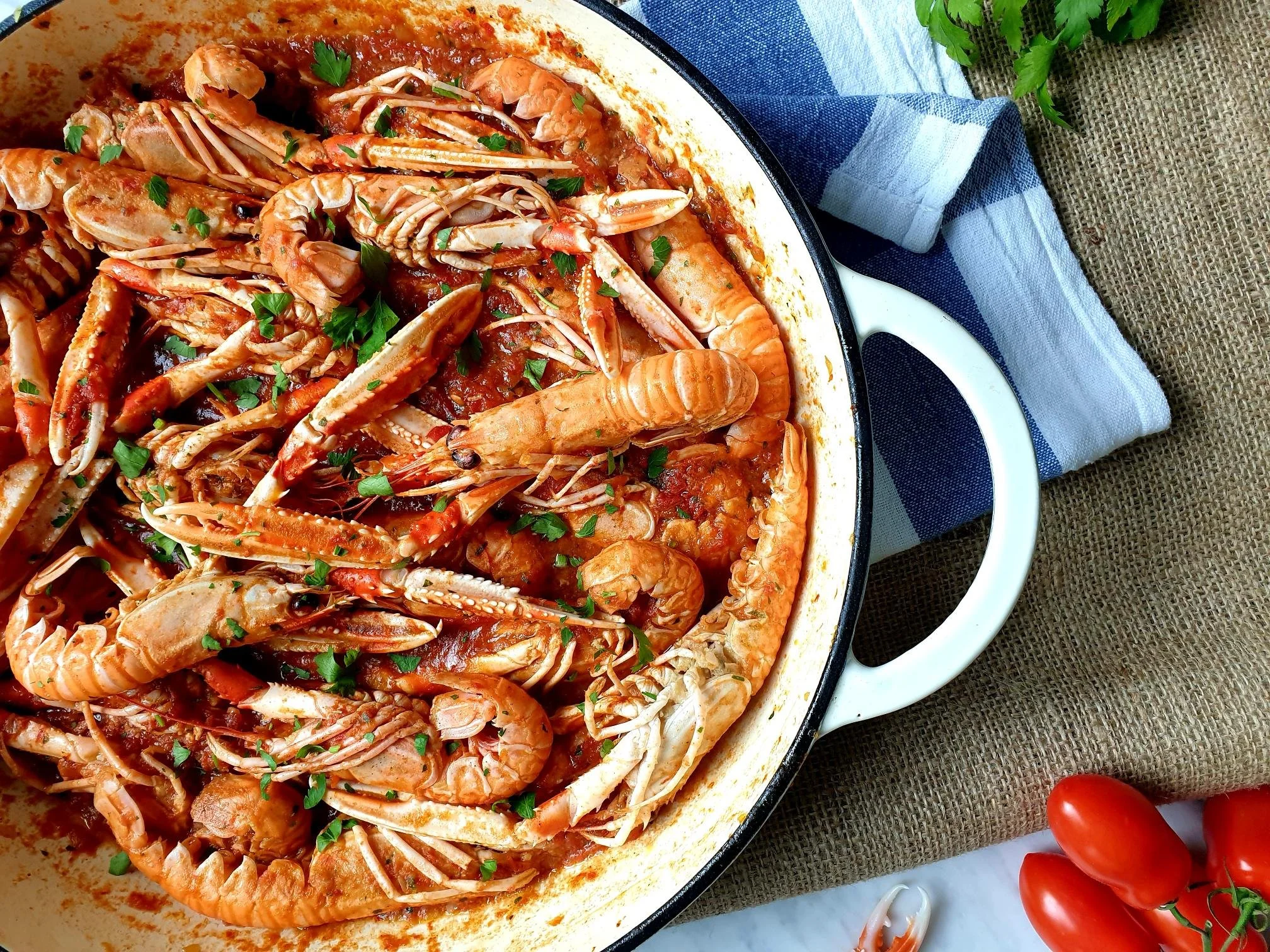
Scampi/langoustines in buzara (busara) sauce is a one pot main fish course, and a recipe that proofs that cooking fish can be incredibly easy.

This is a very simple, flavourful and delicious dish that makes seafood lovers very happy indeed.

The dish is kind of a super tasty stew where the scampi are cooked in a simple tomato sauce, known as red buzara sauce (as supposed to white buzara sauce without the addition of tomatoes traditionally used to cook the mussels).

During the cooking process the langoustines release their juices and together with the rest of the ingredients make the most delicious sauce.

You will need plenty of fresh rustic crunchy bread or polenta to soak up all the sauce. It is a very informal dish as it it traditionally eaten with hands.

Great for dinner parties and kids have great fun unpeeling the langoustine tails. They feel a bit special and grown up, and it is a great way to get them familiar with the seafood from a very early age.
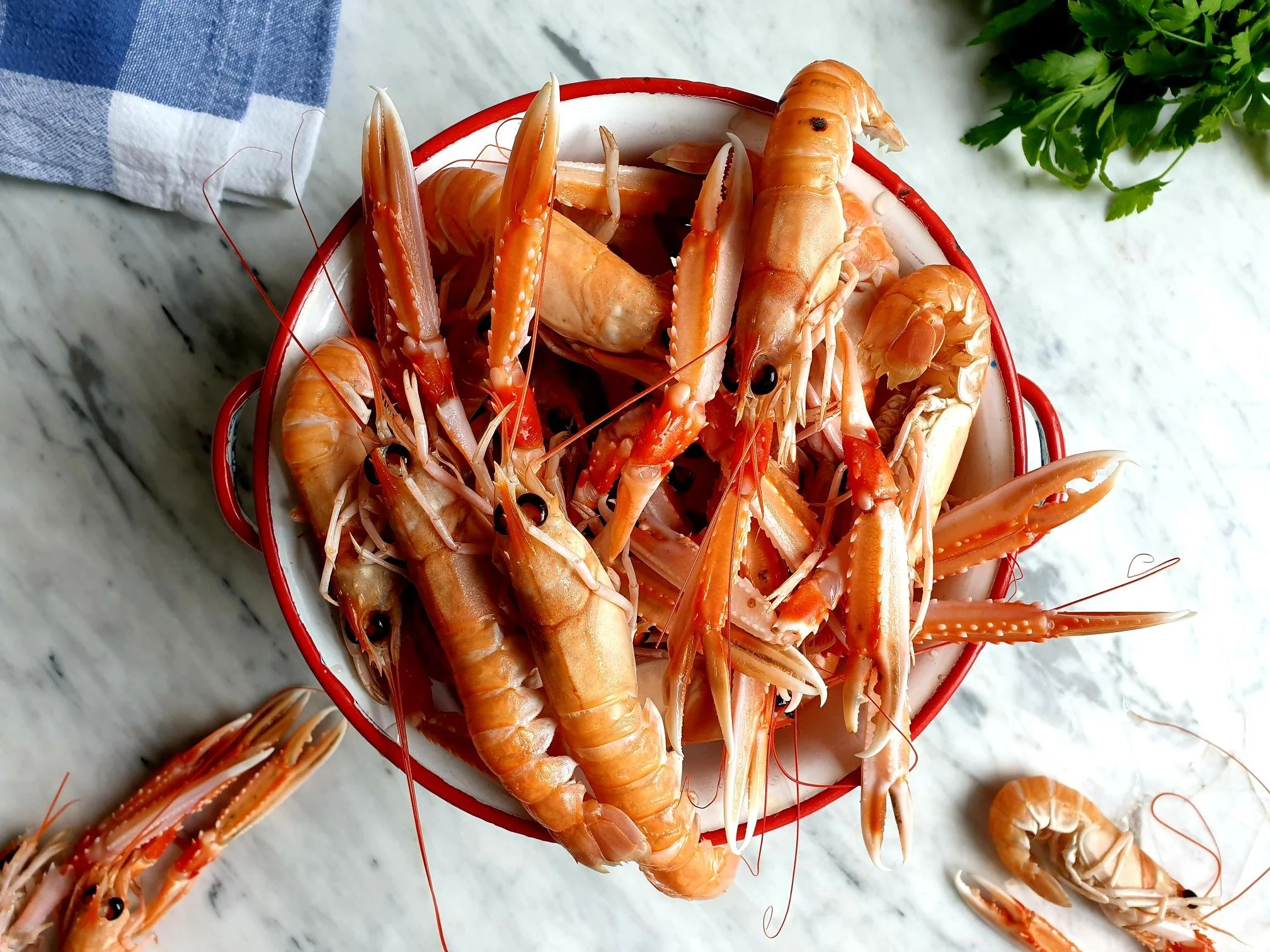
This special dish is very much loved and typically found and enjoyed in Dalmatia (Croatia), along the coast of Istria (In Croatia and Slovenia), in the town of Trieste and in the regions of Friuli Venezia Giulia and Veneto in Italy. The meaning and the origin of the term busara or buzara is still unclear.

It is not surprising that this dish is so popular in this areas as scampi found ideal conditions in the Kvarner Bay, offering the perfect environment for the scampi, being renowned to be the best in the world.

Along the Slovenian coast this dish is normally prepared and cooked in the households to mark a special occasion, as the langoustines, although readily available, could be a bit pricey. It can also be found on the menu in almost every seafood based restaurant as Škampi na buzaro.
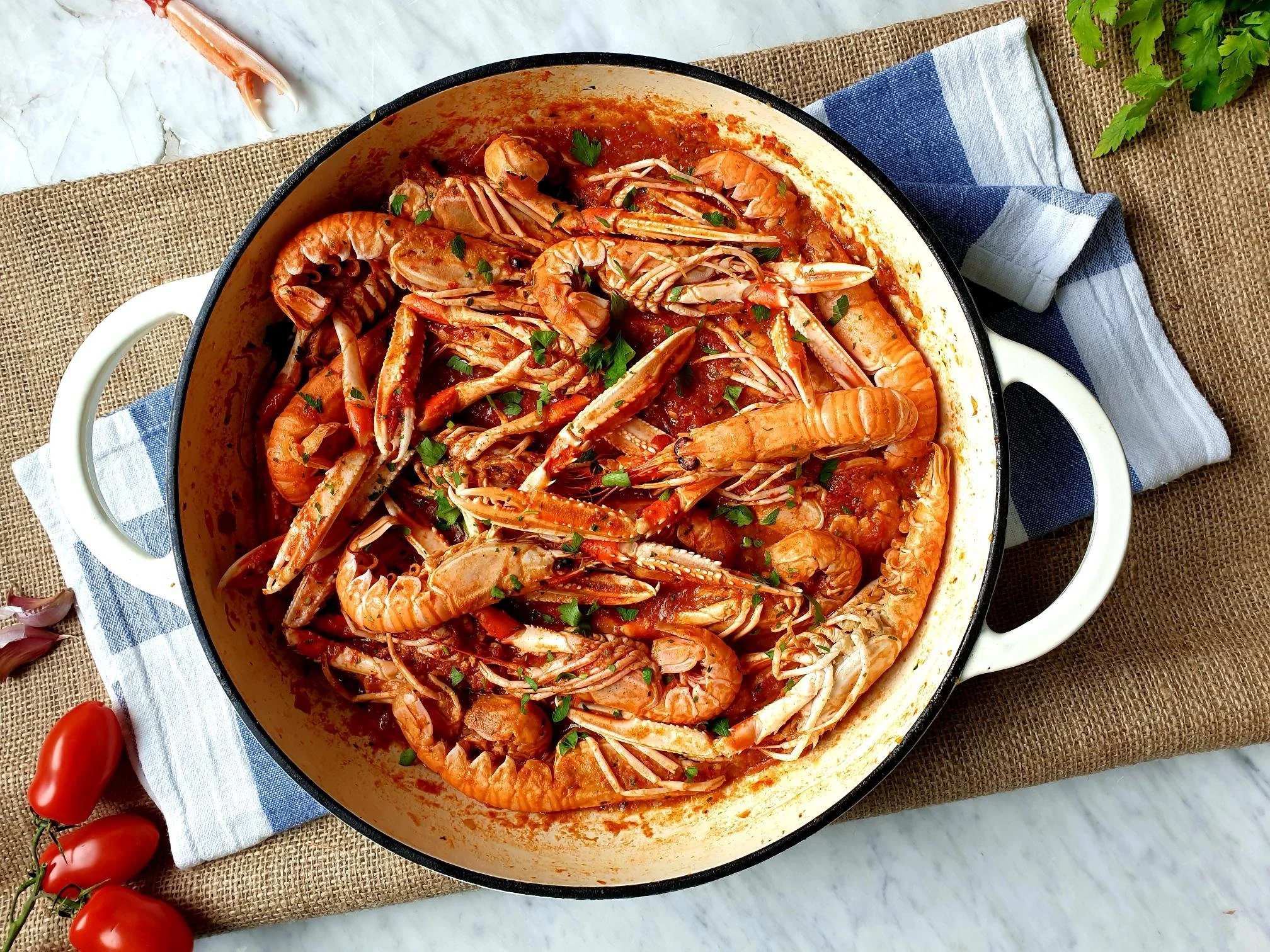
My dad used to make the best one. On Saturday morning he would go to the local fish market and come back with full bag of fresh langoustines. Keeping the quantities small when it came to food was surely not his strength. We all knew there would be a feast in the evening with friends coming over. When my father cooked langoustines our family friends never minded a last minute invitation.

I am sharing here the family recipe for this simple yet wonderful and successful dish.

Recipe

Ingredients

Serves 4

  • 5 Tbsp extra virgin olive oil

  • 1 onion (about 70g), peeled and finely chopped

  • 1kg langoustines, fresh or frozen (can use prawns instead) If using frozen langoustines or prawns make sure they are defrosted safely beforehand.

  • 400g tin good quality chopped tomatoes or plum tomatoes, chopped (you can use fresh tomatoes if you prefer, but make sure they are well ripen and sweet, remove the skin and chop them)

  • 100ml white wine

  • 1-2 Tbsp dry breadcrumbs

  • fresh flat leaf parsley, a handful (about 10g), finely chopped, plus some extra for garnishing, optional

  • 1-2 cloves of garlic, peeled and crushed

  • sea salt, to taste

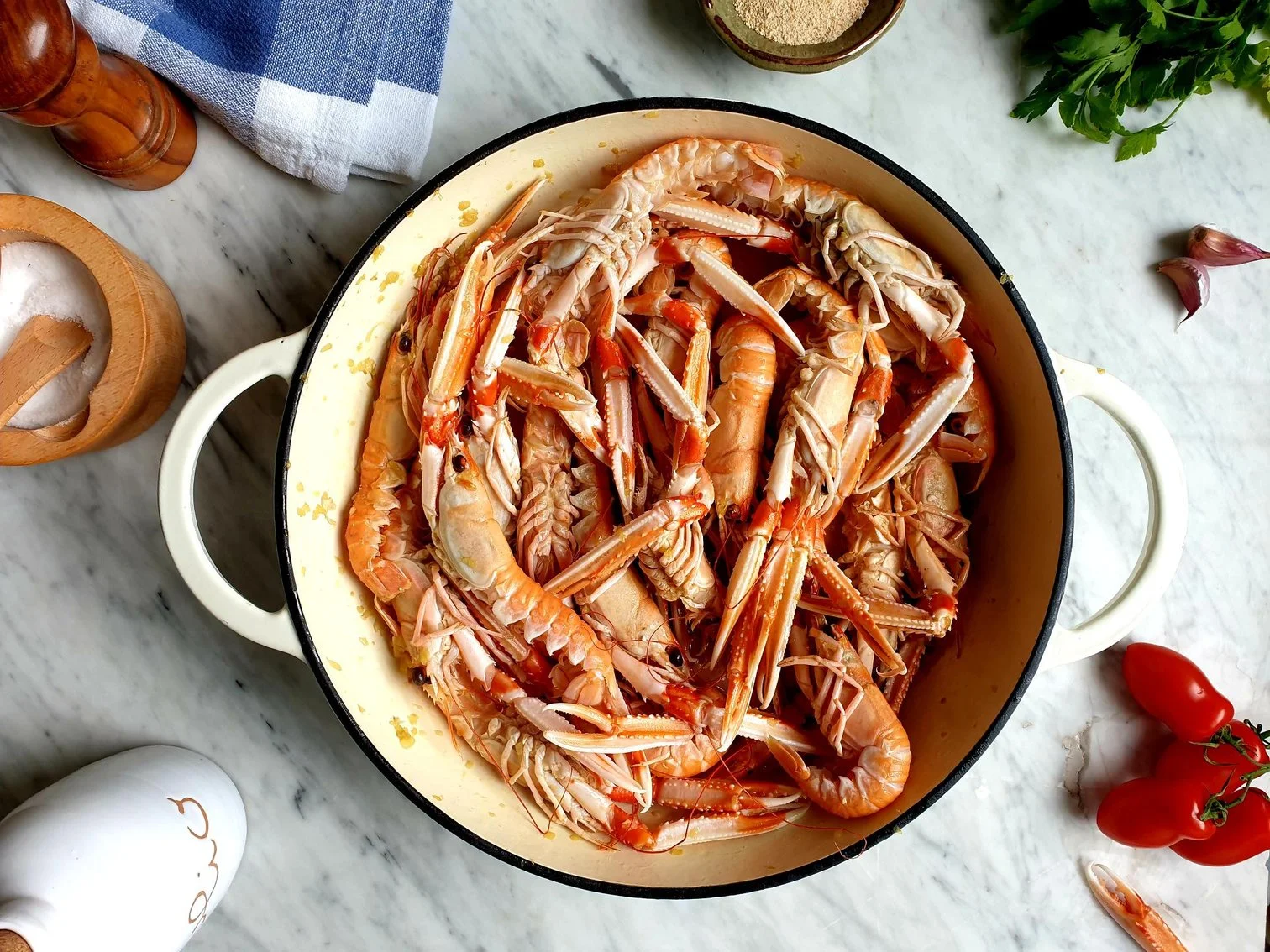
Wash the langoustines under cold running water and place them into a colander.

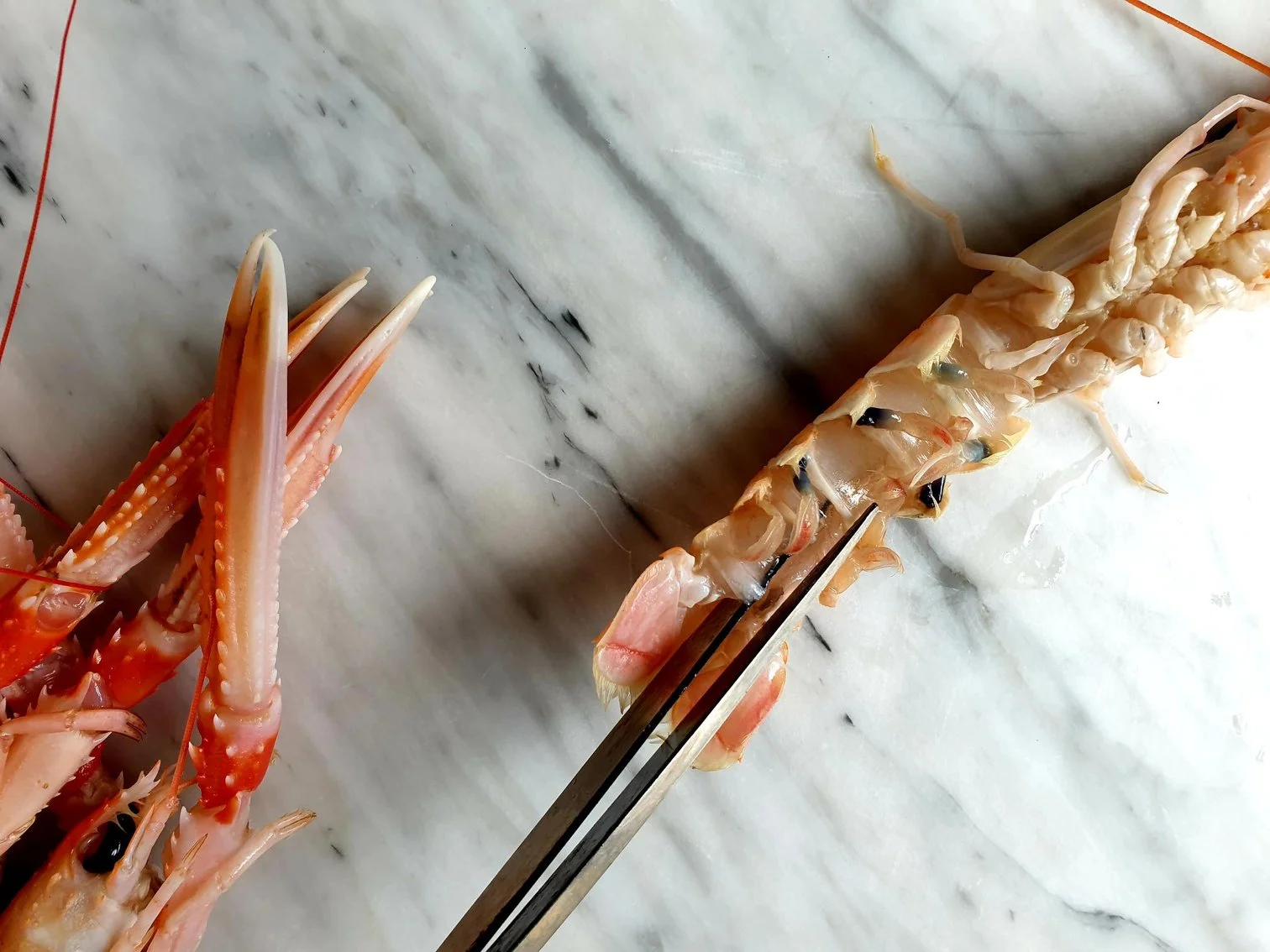
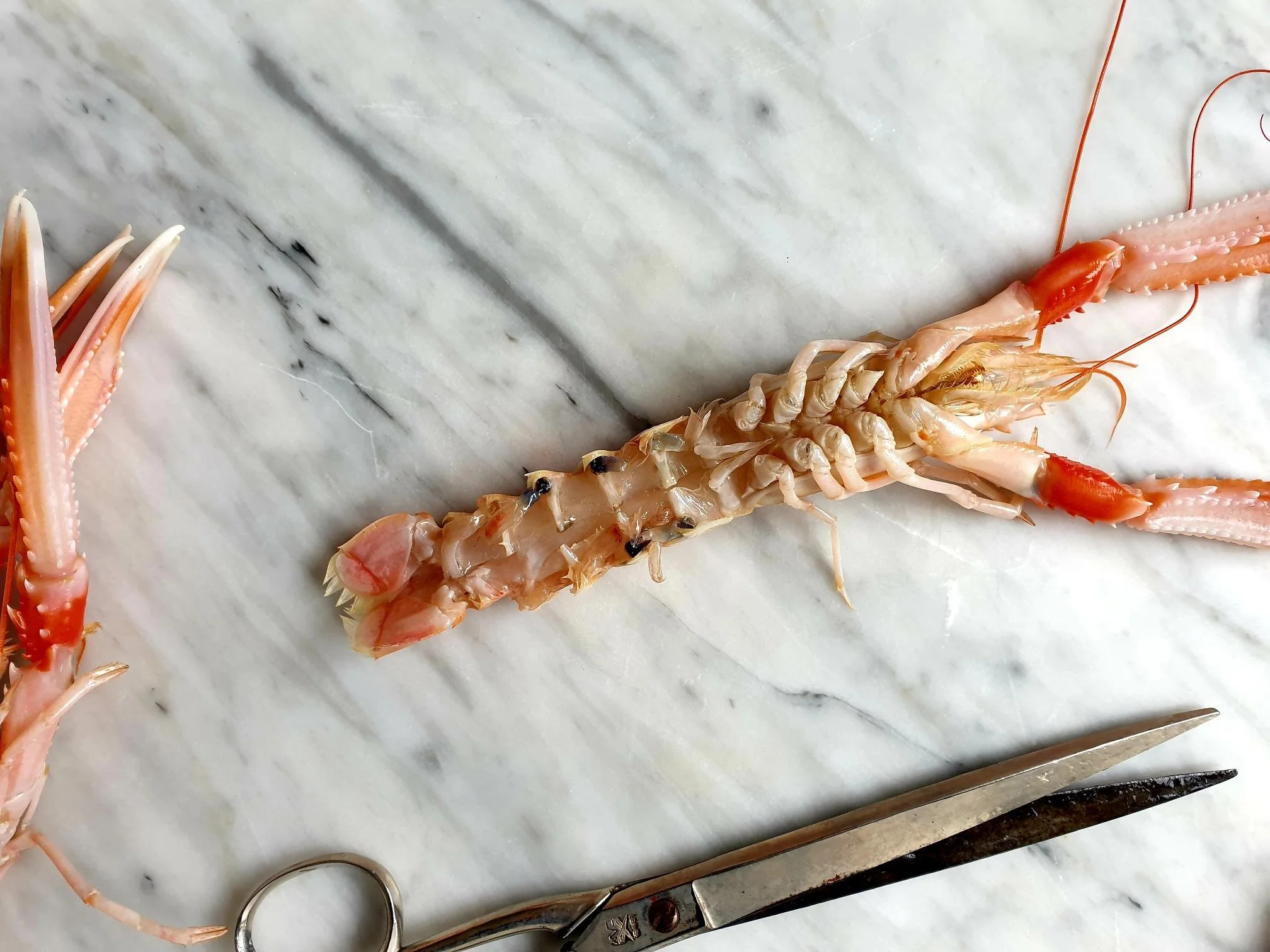
Take a pair of kitchen scissors and one individual langoustine in your hand, turn it upside down, facing the soft shell side of the tail towards you. Insert the scissors at the bottom of it and cut through along the length of the entire tail.

This is quite an essential part as the juices will go out of the langoustines and give a sauce a rich taste, but it will also really help you to remove the tails once cooked.
View fullsize Langoustine Buzara Sauce Recipe 6.jpg
View fullsize Langoustine Buzara Sauce Recipe 7.jpg

Put extra virgin olive oil in a large skillet or saucepan, big enough to accommodate all the langoustines, preferably in one layer, they can overlap a bit.

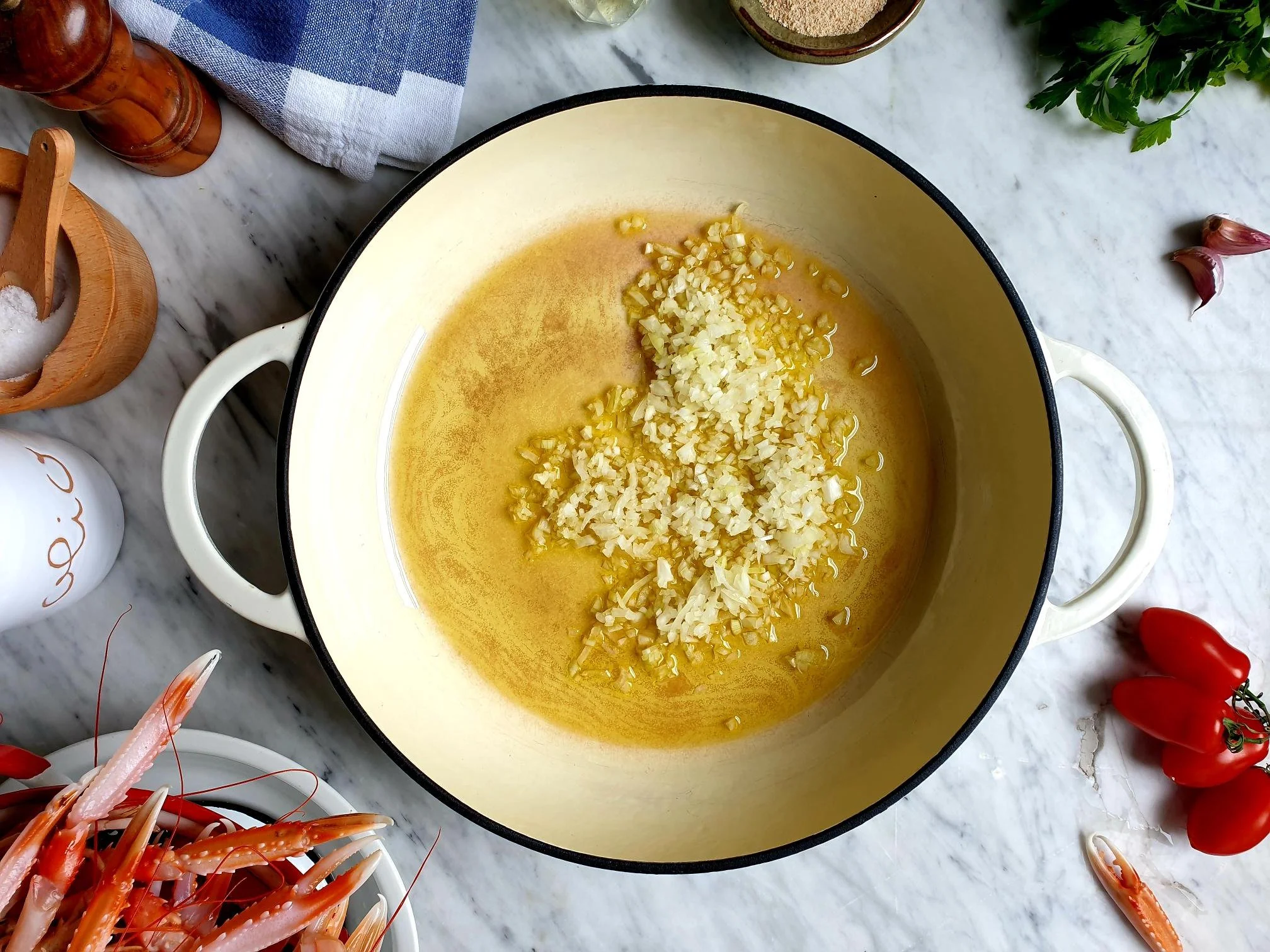
Add finely chopped onions and cook on a medium-law heat until the onions are translucent and soft. Add crushed garlic and cook together with the onions for a minute or so stirring constantly in order to avoid garlic burning.

Place the langoustines in a pan and cook for about 10 minutes giving a pan a good shake now and again.

Pour white wine, deglaze the pan and let it evaporate.
View fullsize Langoustine Buzara Sauce Recipe 8.jpg
View fullsize Langoustine Buzara Sauce Recipe 10.jpg

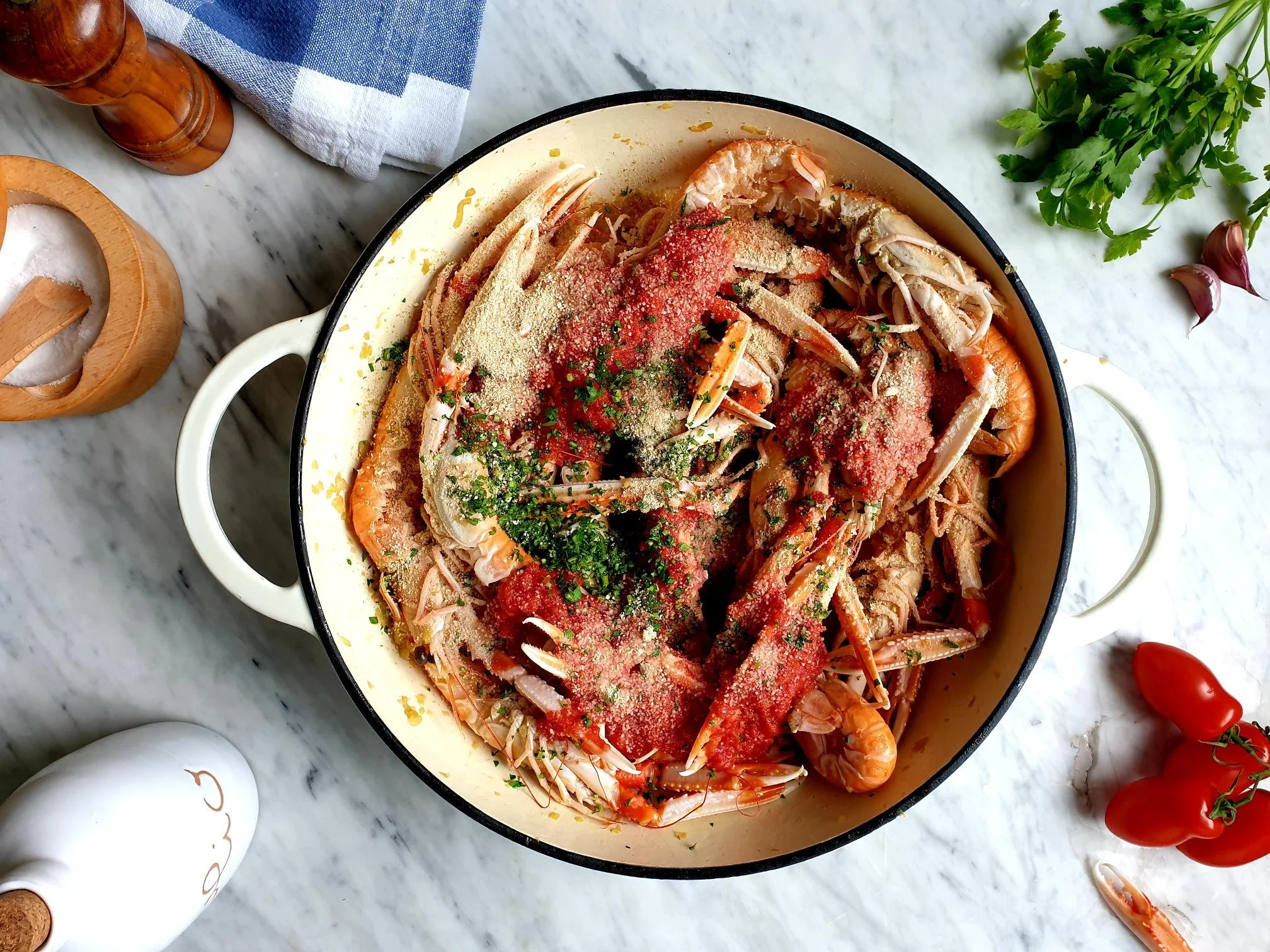
Add chopped tomatoes, dry breadcrumbs, finely chopped parsley, 400ml of water and a pinch of sea salt.

Cook with the lid partially uncovered on a gentle heat for about 15-20 minutes.

During the cooking give a pan a little shake now and again. Taste the sauce and adjust the seasoning. If the sauce is too thick just add a splash of water or, on the contrary, if you think the sauce is too thin, add a pinch of breadcrumbs.
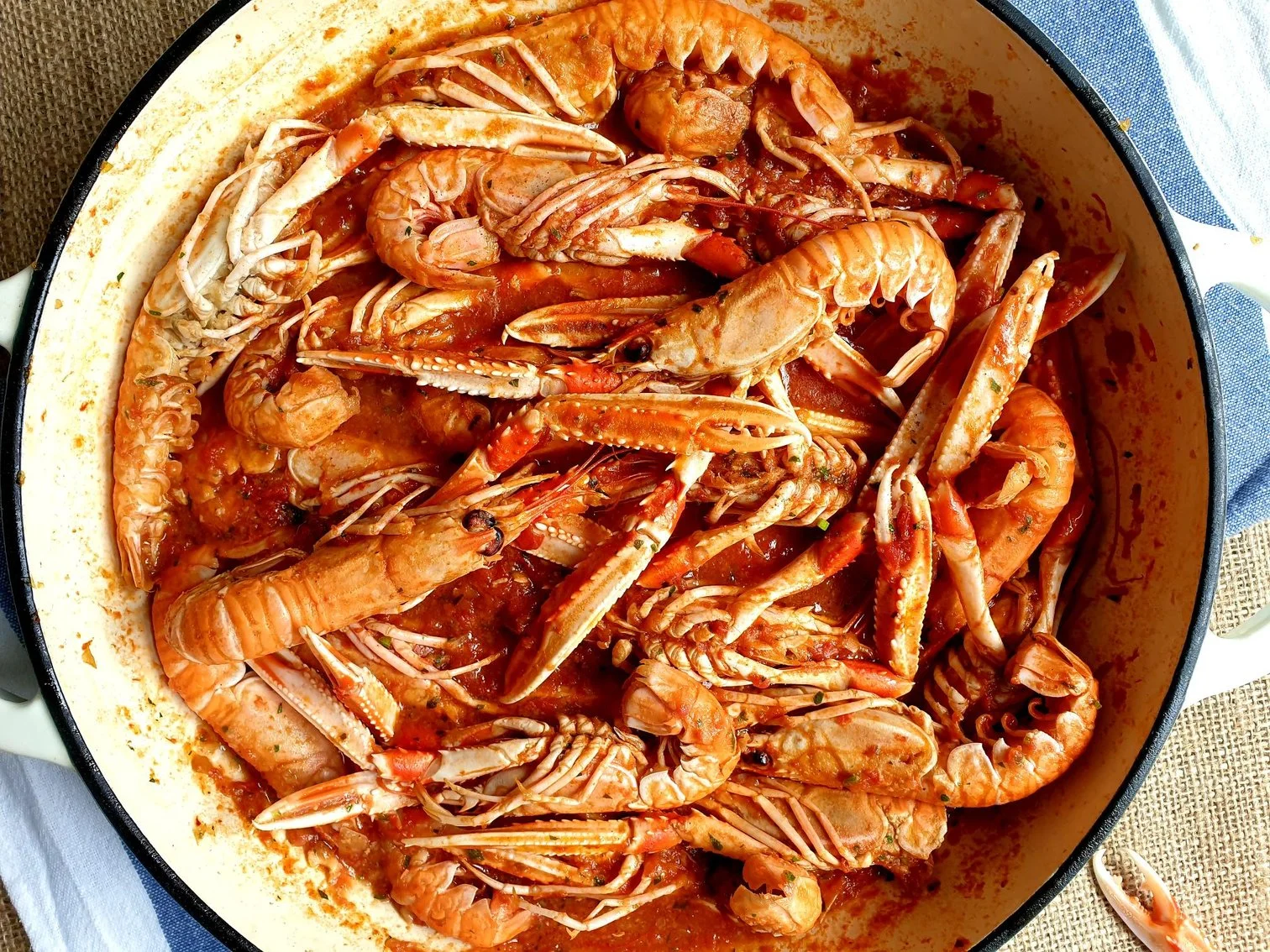
View fullsize Langoustine Buzara Sauce Recipe 11.jpg
View fullsize Langoustine Buzara Sauce Recipe 13.jpg

Serve the dish with soft cooked or grilled polenta, or simply, how it is traditionally done, with plenty of rustic crunchy bread. Not cutlery needed here, the dish should be enjoyed eaten with your hands.
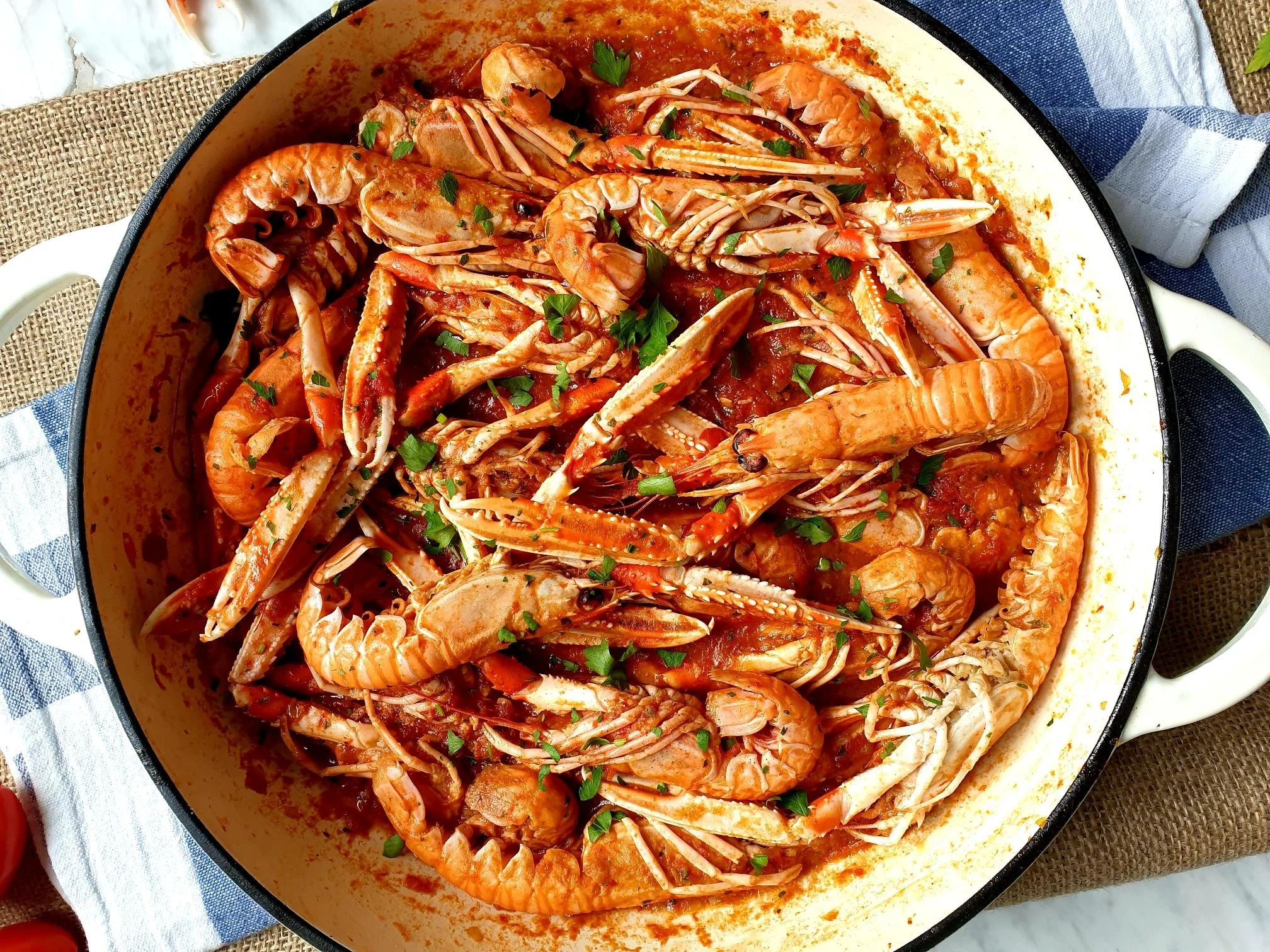
Just a thought

You can use a bit of dry chilli flakes if you like a bit of a heat in your food and wish to add a bit of a kick to the dish. The langoustines, however, are quite mild and delicate in taste with a sweet note, so try to not over do it with the chilli as you will cover the taste.

August 07, 2025 /tina oblak
scampi, langoustines, buzara sauce, busara sauce, red buzara sauce, Škampi na buzaro, Scampi alla busara
Adriatic Recipe, All year round recipe, Appetizers, casserole, Celebratory dish, comfort, dinner, entrée course, family friendly dish, family friendly meal, festive dish, first course, first course meal, Fish & Seefood, fish starter, Healthy, healthy mael, Istrian cuisine, Istrian dish, Istrian gastronomy, light fish course, light meal, main course, main dish, main fish course, main fish meal, make ahead, one pot meal, one post fish recipe, Rustic dish, shellfish, simple recipe, Slovenian cuisine, Slovenian food, Slovenian gastronomy, Starters, stew, supper, weekend
1 Comment

Easy Lamb Casserole Istrian Recipe

Beans and Sardines
June 07, 2024 by tina oblak in Adriatic Recipe, All year round recipe, baked dish, casserole, Celebratory dish, child friendly dish, child friendly meal, dinner, Easter, Easter dish, Easter recipes, Easy recipe, family friendly dish, family friendly meal, festive dish, hearty dish, Istrian cuisine, Istrian dish, Istrian food, Istrian gastronomy, main course, main dish, main meat course, Meat, one pot meal, one pot meat recipe, roasted dish, Rustic dish, simple recipe, Slovenian cuisine, Slovenian food, Slovenian gastronomy, supper, make ahead, weekend, slow cook, comfort, batch cooking

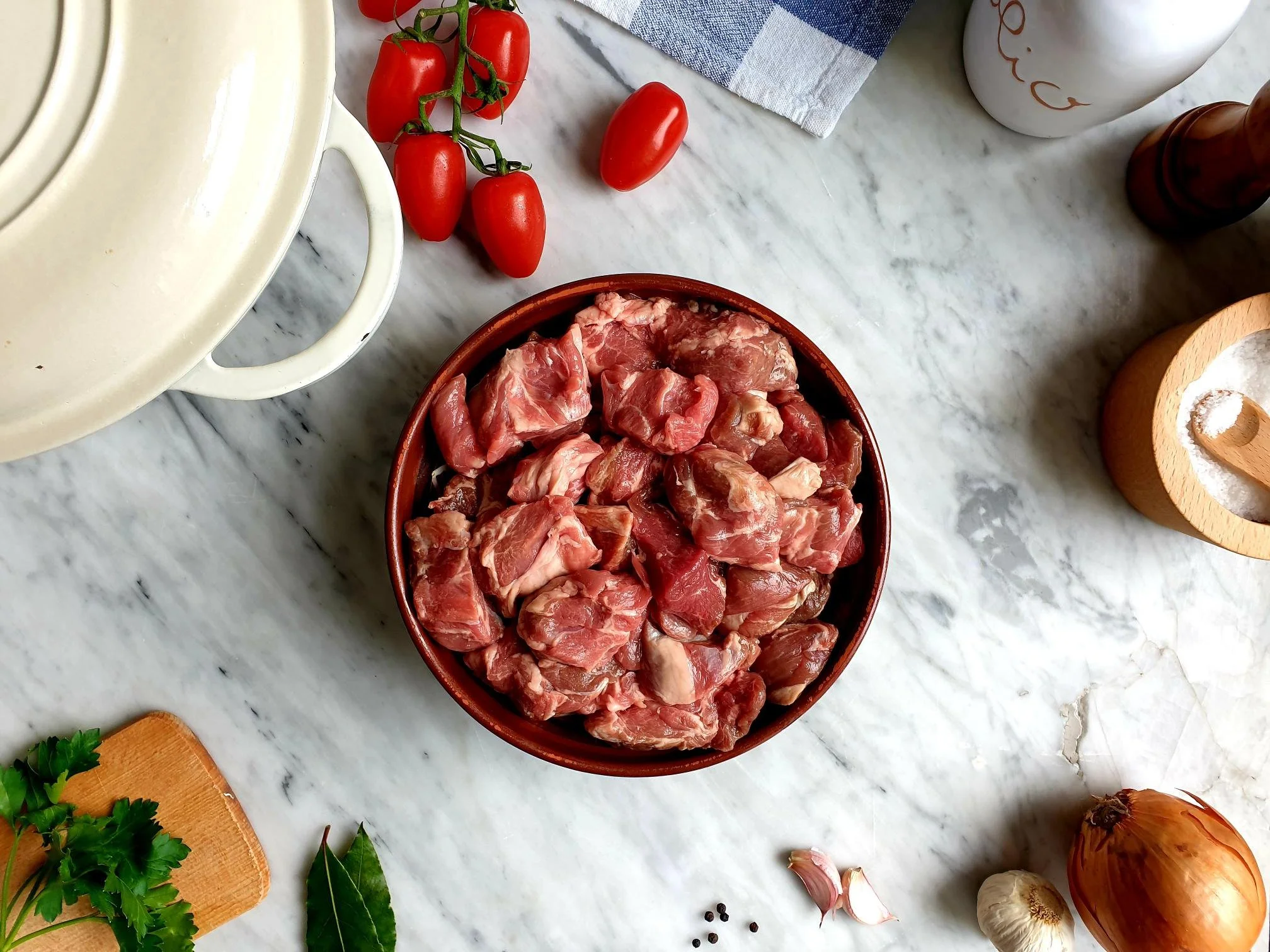
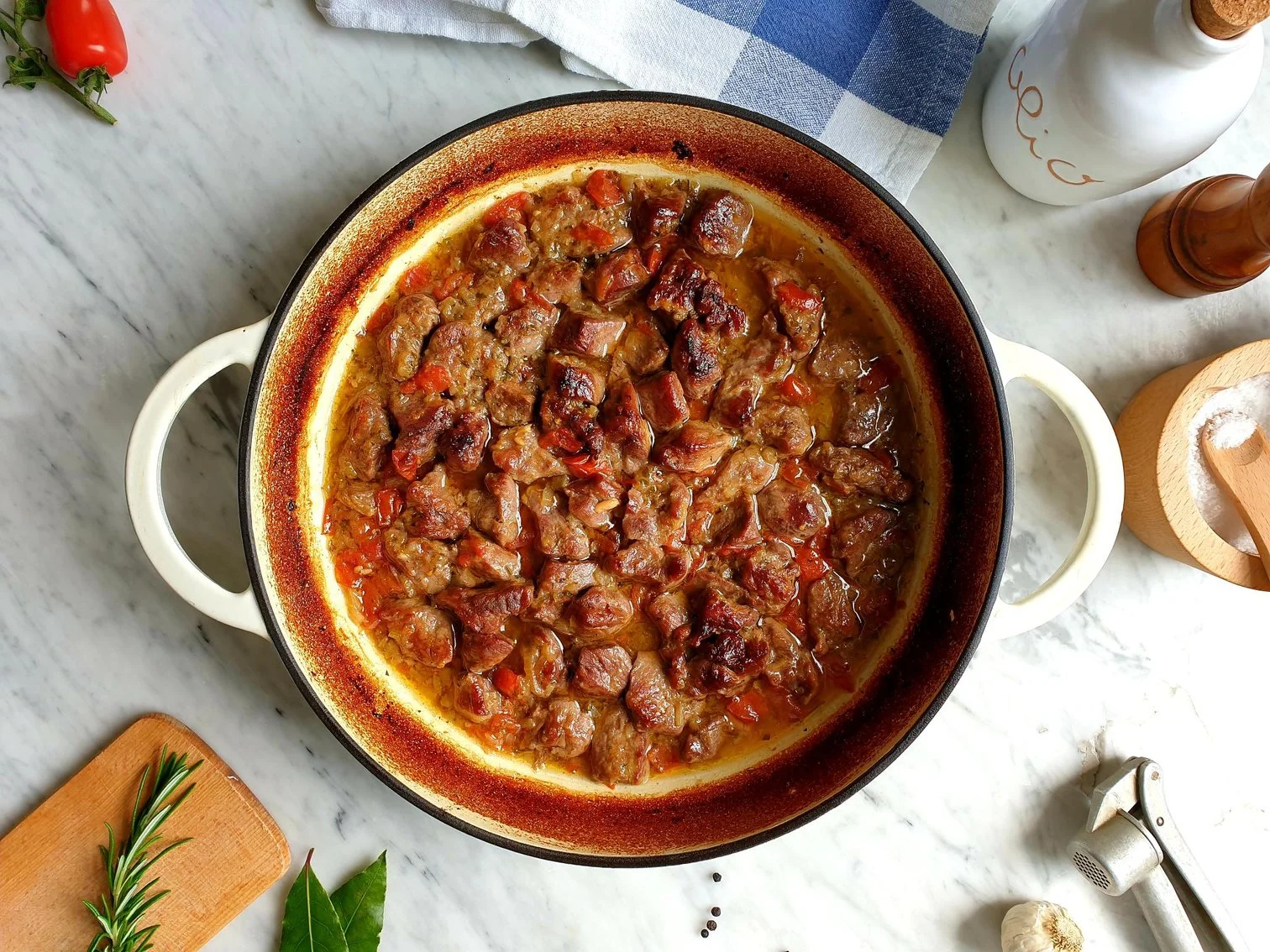
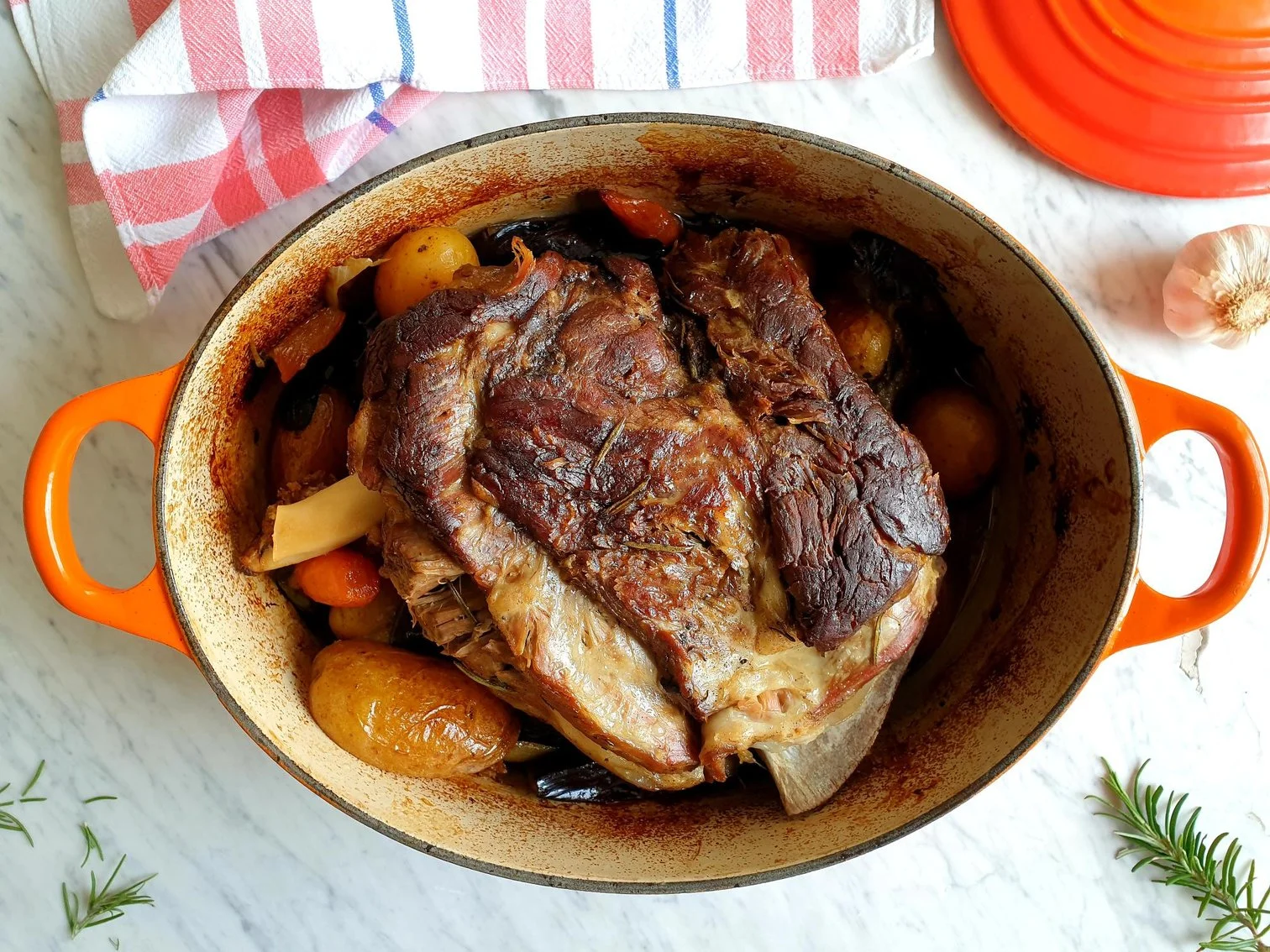
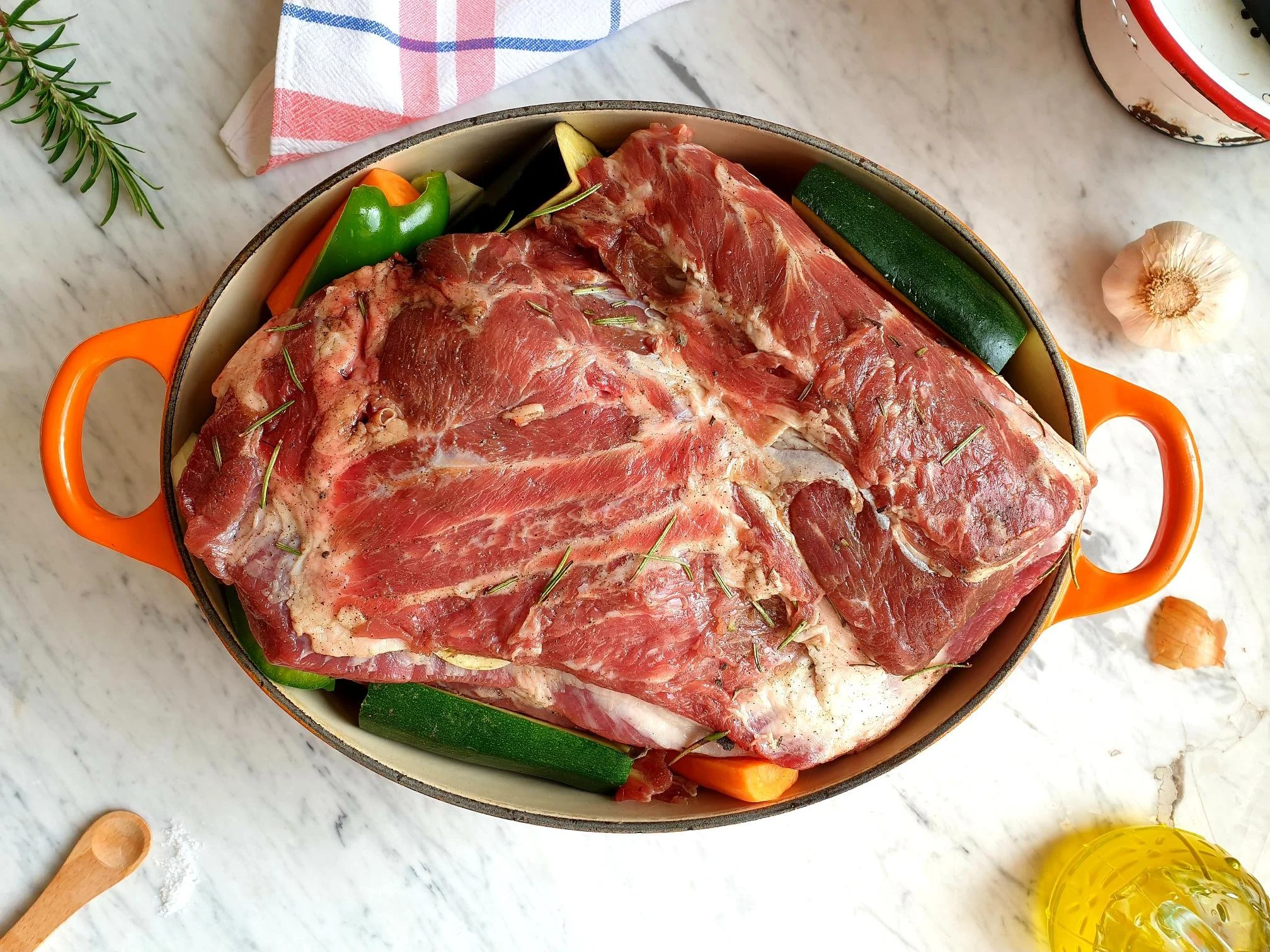
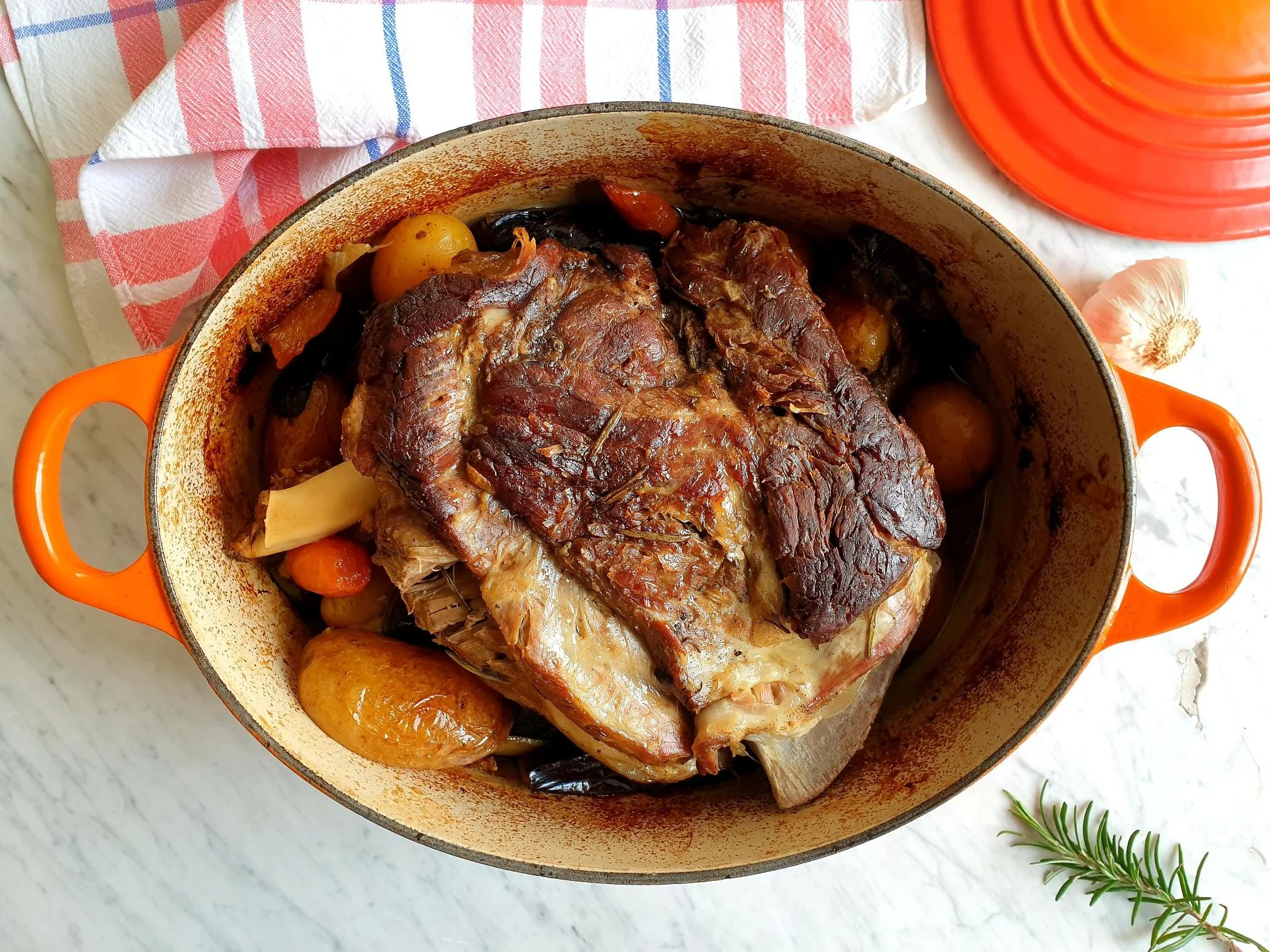
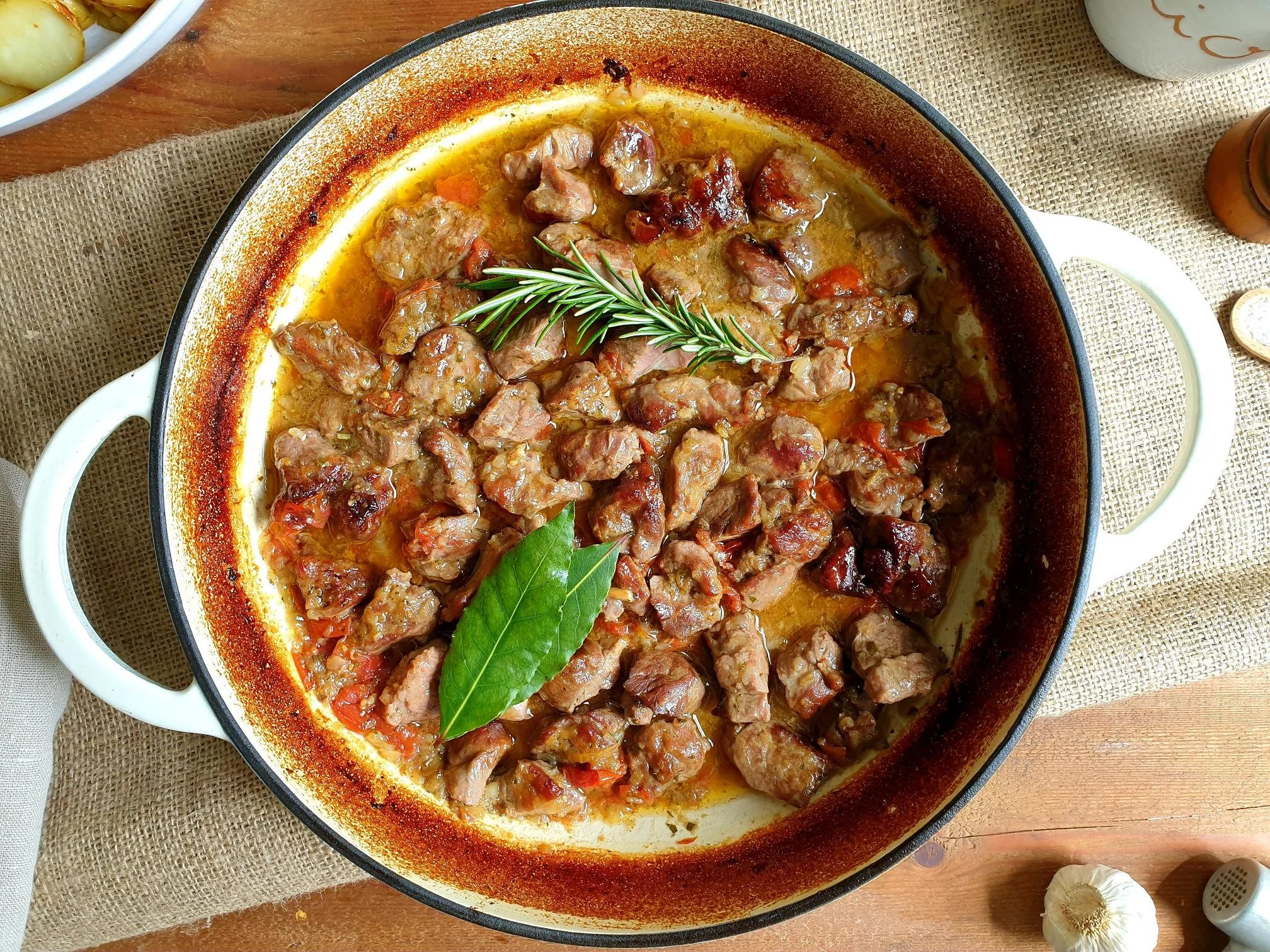
This slow-cooked lamb casserole recipe is absolutely amazing, it is incredibly easy to make using cheaper and tougher cuts of lamb that by the end of cooking become so tender they truly melt into your mouth.

It is a simple dish to put together, perfect for a cosy and satisfying meal, and great to make ahead of time as the flavours will have the chance to mingle, develop fully and intensify.

Along the Slovenian coast you might find this dish in more informal and rustic style restaurants called in local dialect Janje or Jančić na rošto or referred to as Pečeno Jagnje in standard Slovenian.

This very popular and much-loved dish is frequently prepared in the households during the weekends, and when the family and friends get together for special celebrations. It is also a recipe that is understandably appropriate for an Easter menu.

I am sharing here my family recipe with you. It only needs a few basic ingredients and you are ready to go.

You will come back to this recipe time and time again, as the best things about this incredibly flavourful lamb casserole is that the oven will take over and do the work for you.

Recipe

Ingredients

Serves 4

  • 1kg diced lamb meat of your choice (I used neck fillet). You can use boneless shoulder or leg of lamb, trimmed of excess fat and diced.

  • 1 medium onion (about 150g), peeled and finely chopped

  • 2 cloves of garlic, peeled and crushed

  • 3 Tbsp olive oil

  • 100 ml white wine, optional

  • 100g ripe and sweet tomatoes of your choice, roughly chopped (I used mini-San Marzano tomatoes)

  • If you cannot get hold of ripe and sweet tomatoes, you can use high quality tinned chopped tomatoes instead.

  • a sprig of fresh parsley, finely chopped

  • leaves from a small sprig of fresh rosemary (about 1 Tsp), very finely chopped or ¼ Tsp of dry rosemary

  • sea salt

  • black pepper

Method

Heat the oven to 250°C static or equivalent.

Trim off the excess fat from the diced meat if necessary to avoid the final dish being too greasy and potentially unpleasant to eat.

Put the olive oil in a fairly large flameproof casserole dish or Dutch Oven.

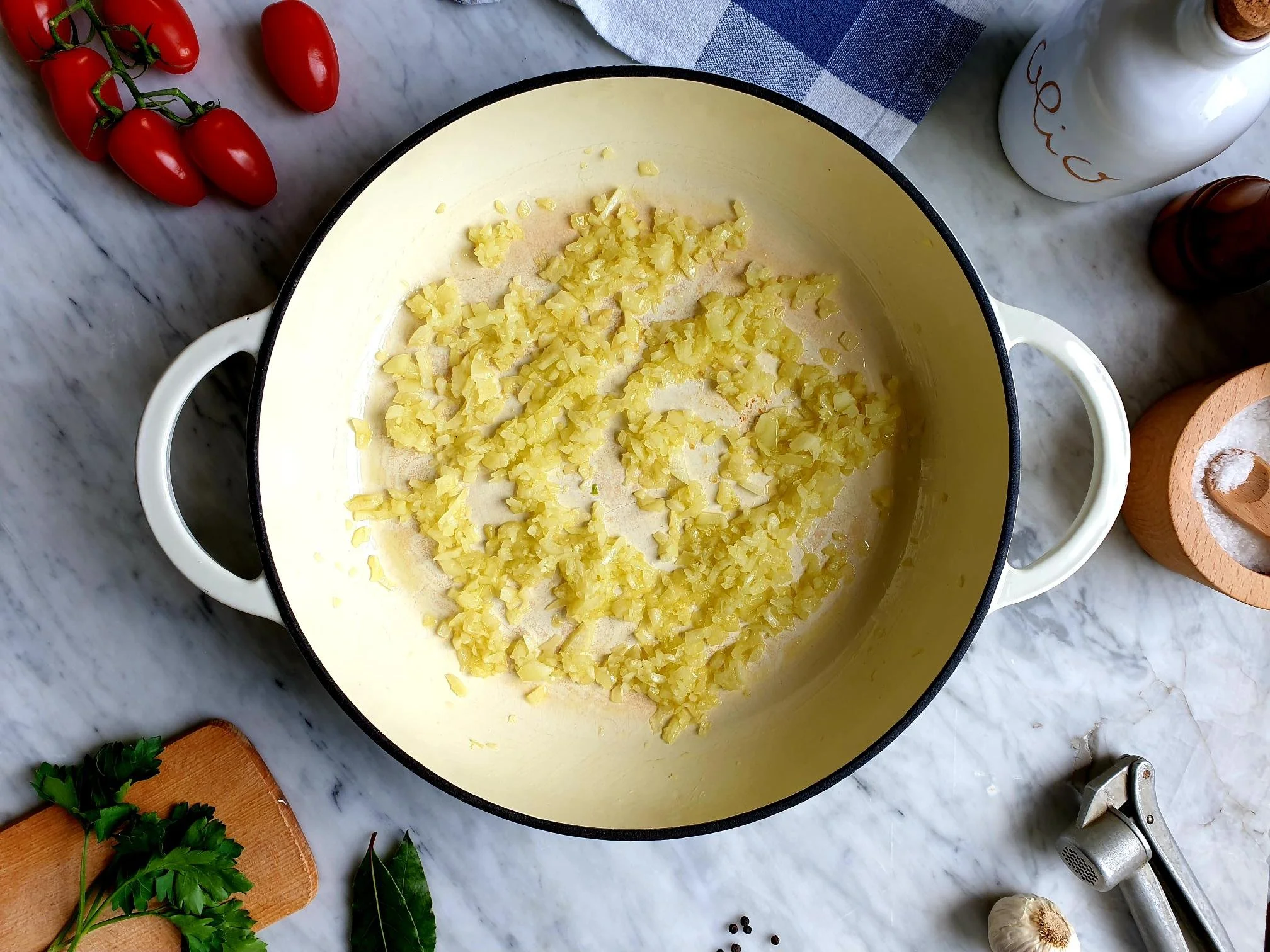
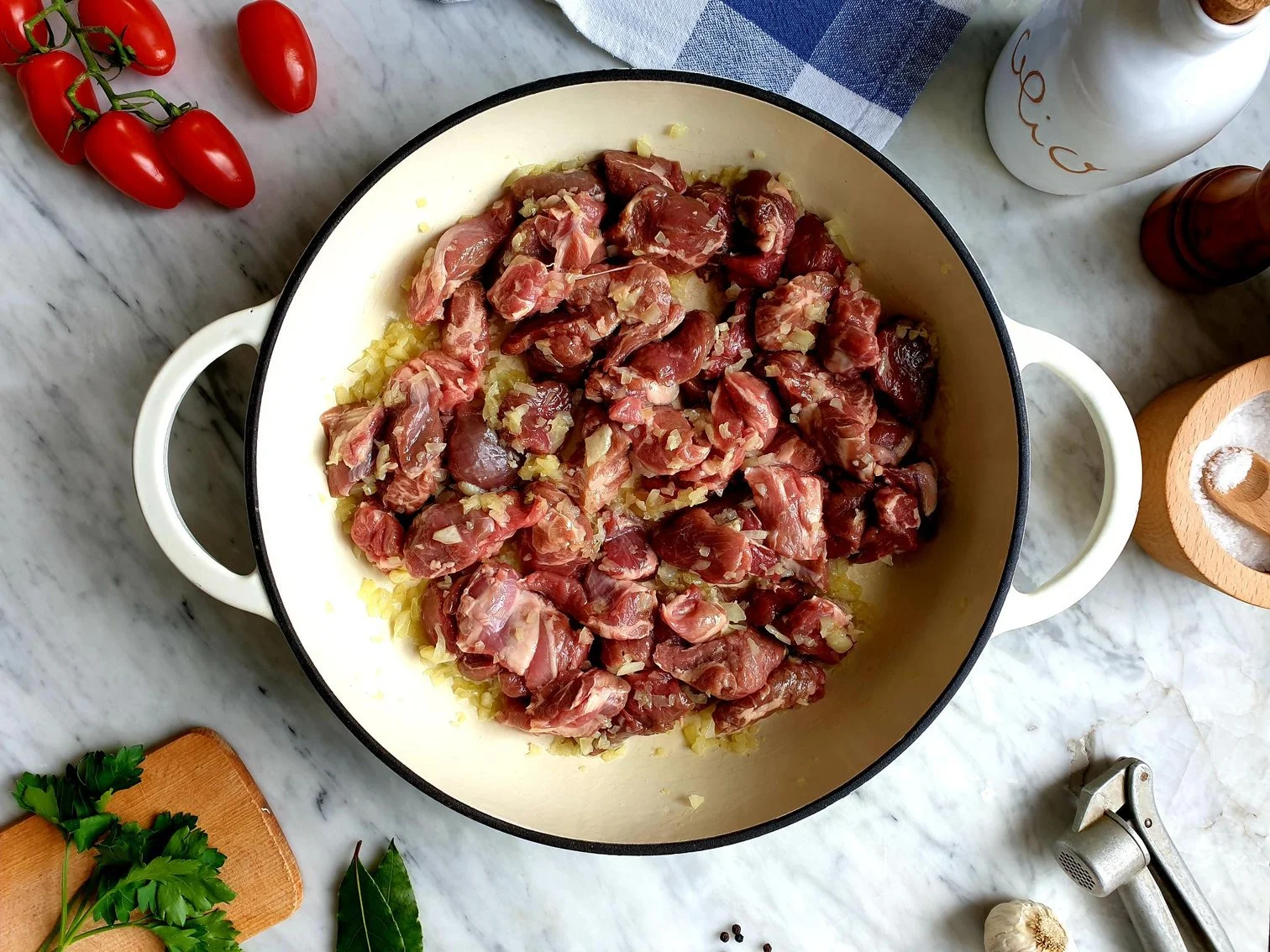
Add finely chopped onions, crushed garlic, a pinch of sea salt, and gently fry until soft and transparent.

View fullsize Lamb Roast 3.jpg
View fullsize Lamb Roast 4.jpg

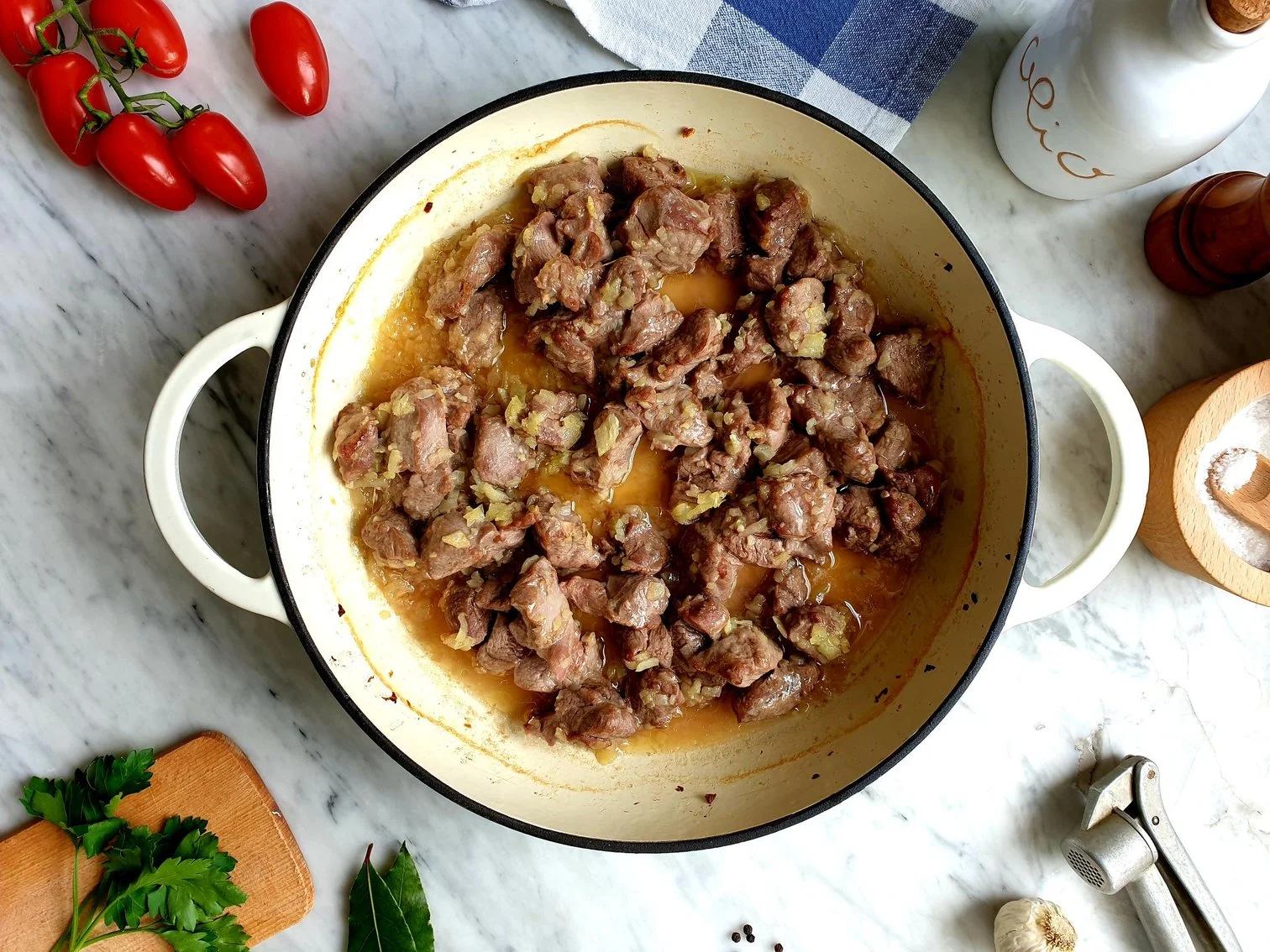
Place diced lamb meat in a casserole dish and mix with the onions.

Transfer in the oven and bake for 15 minutes.

View fullsize Lamb Roast 5.jpg
View fullsize Lamb Roast 6.jpg

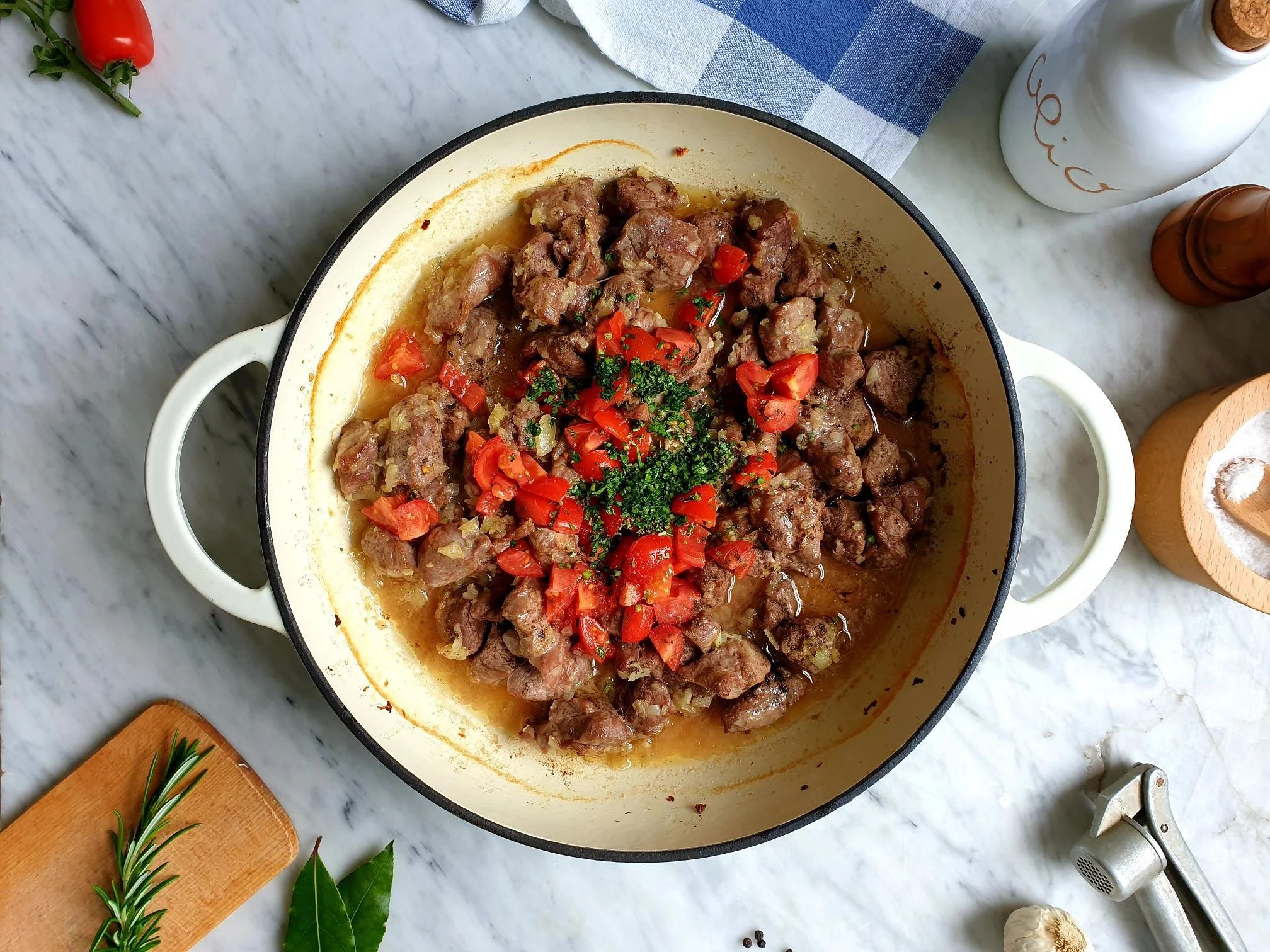
Remove from the oven and add chopped tomatoes, the herbs, and season with sea salt and black pepper.

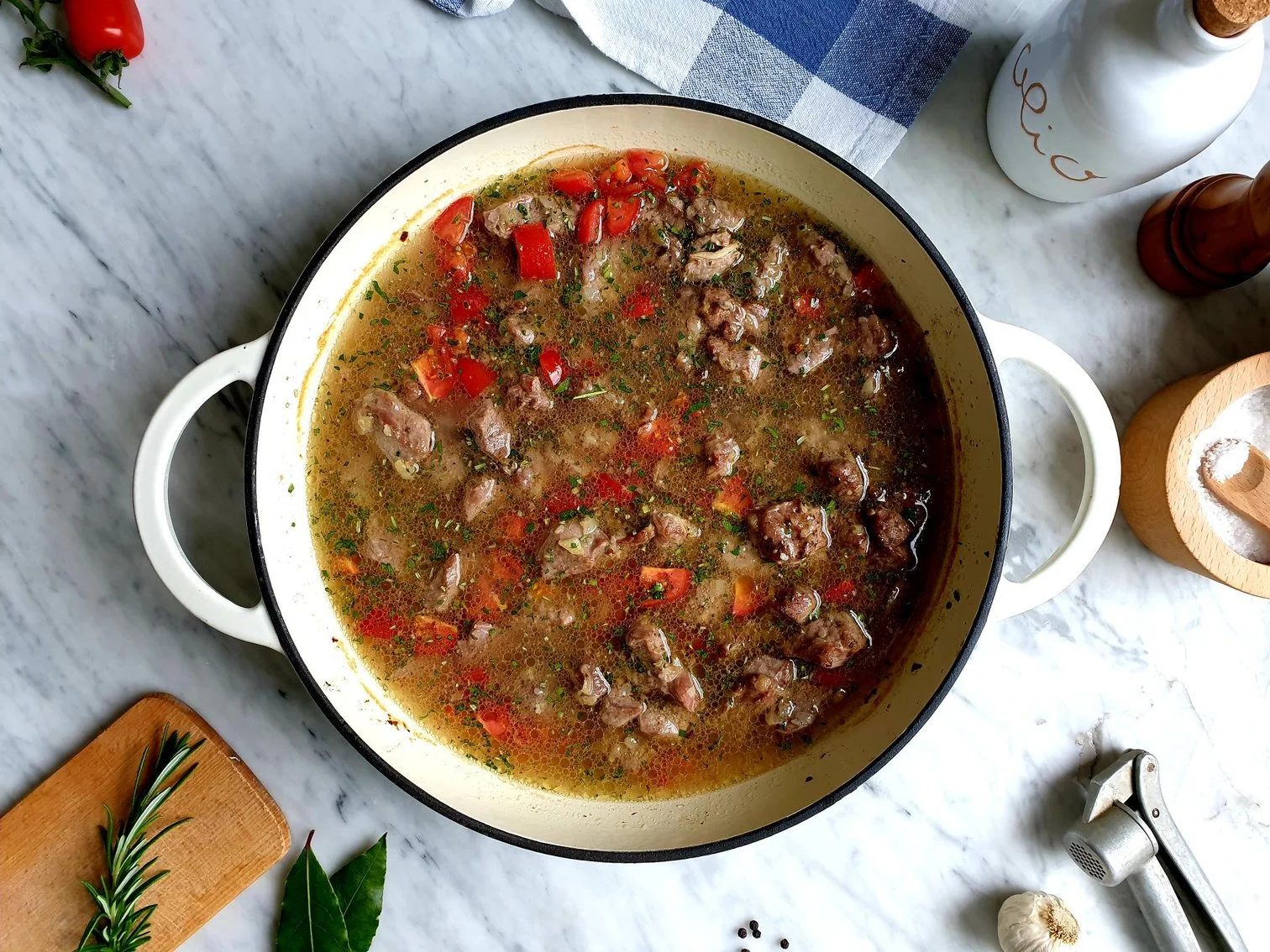
Add white wine, if you are including it, and pour enough water to almost completely cover the meat.

Stir gently so all the ingredients are mixed together.

Turn the heat down to 220ºC.

Transfer the casserole dish back into the oven and cook for about 1 hour or until the meat is very tender.

Check the casserole now and again, giving it a good stir making sure there is always enough liquid.

If the casserole gets too dry, top up with a bit more water.

View fullsize Lamb Roast 7.jpg
View fullsize Lamb Roast 8.jpg

When the dish is ready you can spoon out any excess oil at the surface of the casserole.

Great served with oven baked potatoes, mashed potatoes, soft cooked polenta, some crusty rustic bread, sautéed peas, and other green vegetables like beans, broccoli, curly kale, and cavolo nero just to mention a few possible vegetables.

Just a thought

This lamb casserole is great for freezing. Once fully cooked, allow it to cool completely, and then freeze for up to three months.

June 07, 2024 /tina oblak
lamb, lamb meat, tougher cuts of lamb, cheap cuts of lamb, diced lamb neck fillet, lamb neck fillet, lamb shoulder, leg of lamb, Janje or Jančić na rošto, Pečeno Jagnje
Adriatic Recipe, All year round recipe, baked dish, casserole, Celebratory dish, child friendly dish, child friendly meal, dinner, Easter, Easter dish, Easter recipes, Easy recipe, family friendly dish, family friendly meal, festive dish, hearty dish, Istrian cuisine, Istrian dish, Istrian food, Istrian gastronomy, main course, main dish, main meat course, Meat, one pot meal, one pot meat recipe, roasted dish, Rustic dish, simple recipe, Slovenian cuisine, Slovenian food, Slovenian gastronomy, supper, make ahead, weekend, slow cook, comfort, batch cooking
Comment

Panada - Venetian Style Bread Soup Recipe

Beans and Sardines
January 31, 2024 by tina oblak in Adriatic Recipe, All year round recipe, child friendly dish, child friendly meal, dinner, Easy recipe, family friendly dish, family friendly meal, hearty dish, Hearty soups, Istrian cuisine, Istrian dish, Istrian food, Istrian gastronomy, main course, main dish, main vegetarian course, main vegetarian dish, one pot meal, recipe from Northern Ital, Rustic dish, simple recipe, Slovenian cuisine, Slovenian food, Slovenian gastronomy, Soups, supper, Vegan, Venetian dish

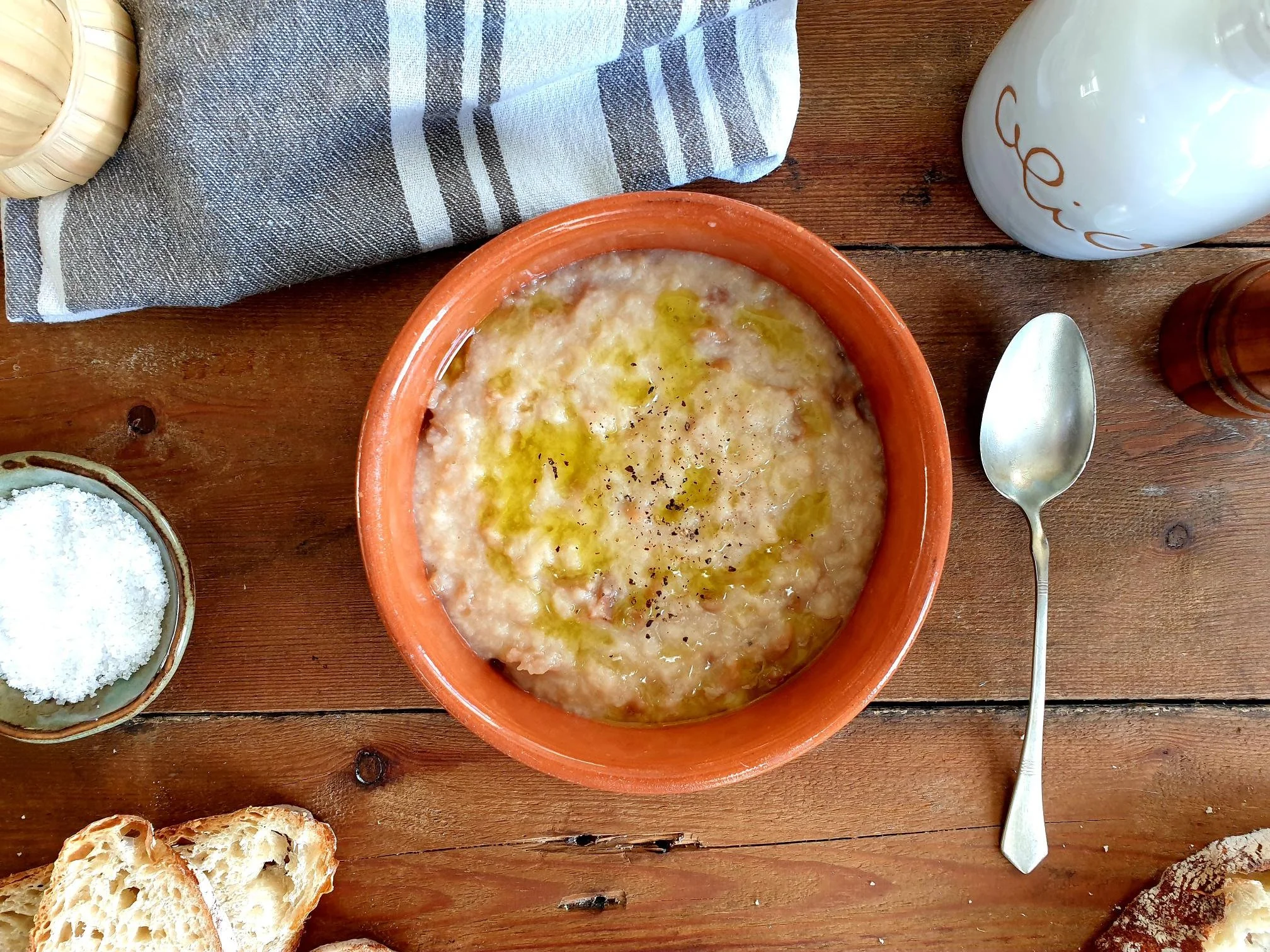
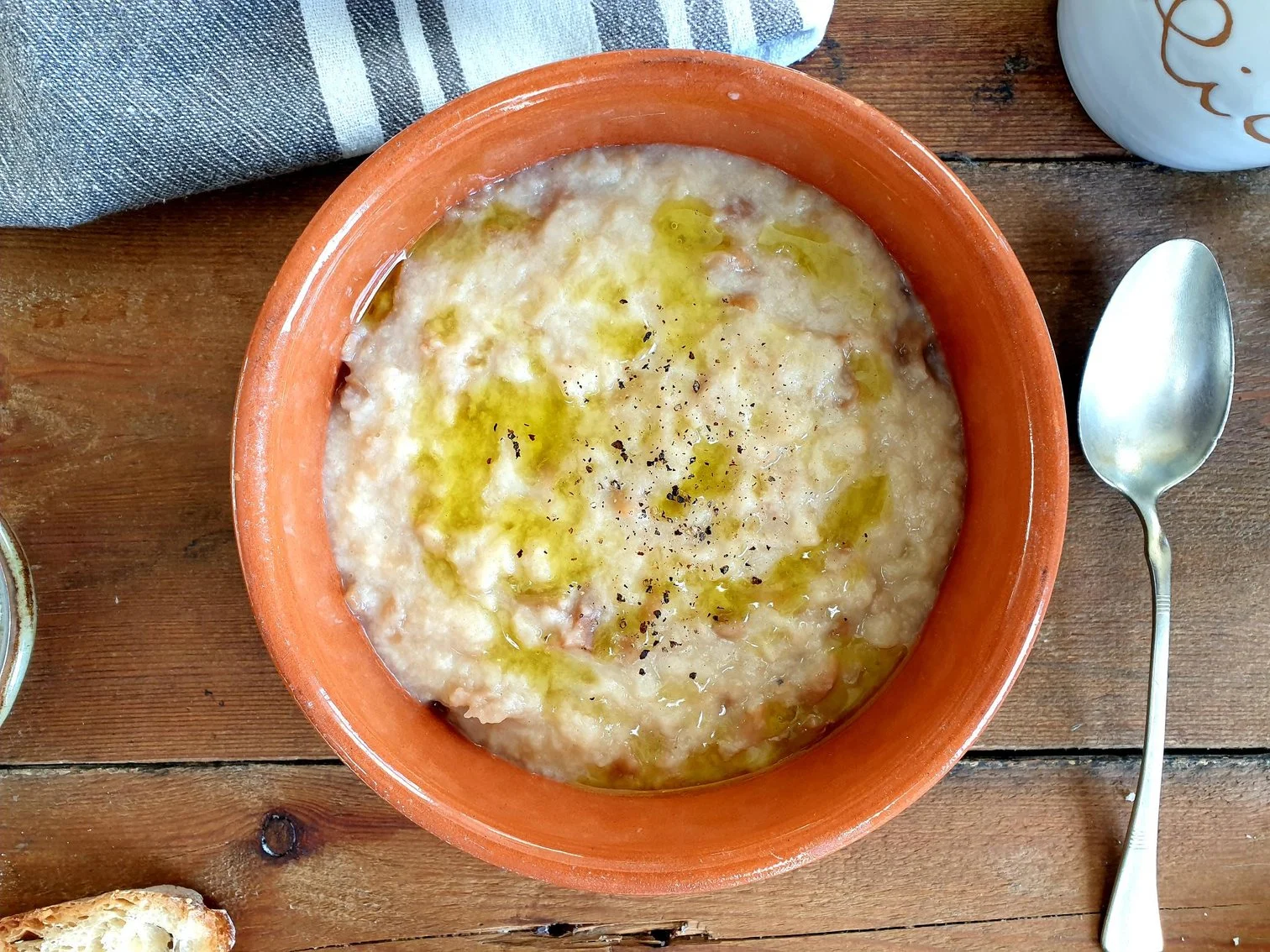
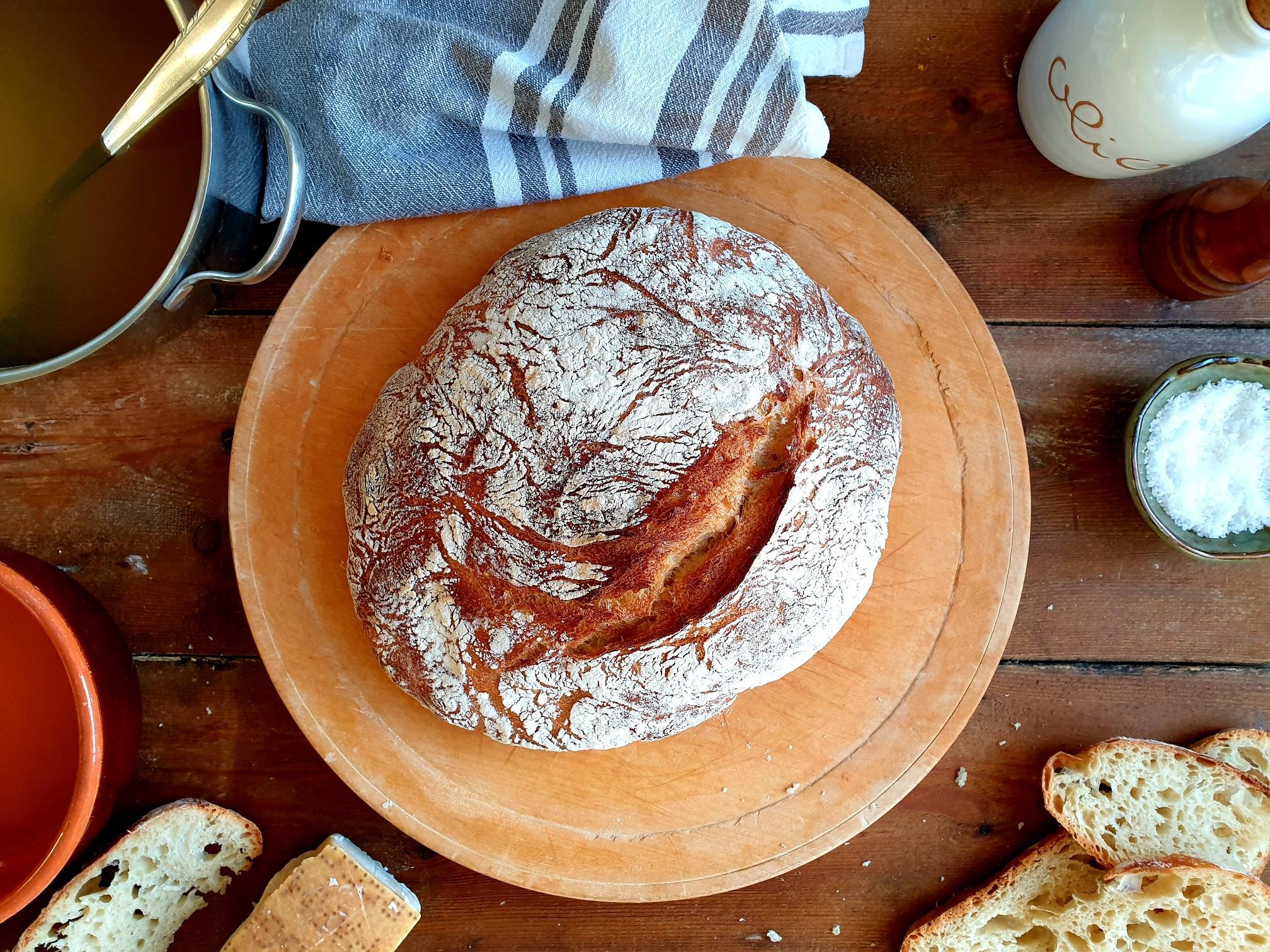
Panada is a bread soup that has porridge like consistency, it is smooth and delicate in flavour, it is perfect for colder months as it is filling, and great when you want to use up and recycle all that stale bread you are not quite sure what to do with it.

It is similar to other types of soups, where stale bread is used as a main ingredient, like Soupe valpellinentze (Valle d'Aosta), Suppa cauta from the Italian island of Sardegna and Tuscan Pancotto (pancotto literally meaning cooked bread) just to mention a few.

In all honesty, this dish would not quite qualify to fall into a category of the most appealing of dishes at a first glance. The recipe for this soup only calls for three main ingredients, stale bread, broth or stock and extra virgin olive oil, and the success of this dish, as it is so simple, really lies in using exceptionally good quality ingredients.

It is hard to imagine that this incredibly humble soup that fed the poorest of the poor was created in today's one of the wealthiest regions of Italy, Veneto. This was not always the case as Veneto used to be one of the least prosperous regions of Italy where people had to be incredibly resourceful and creative with the ingredients they had. This is the dish that older generations, including my nona, remembers with both great fondness and melancholy, as it was prepared very often in their youth, during the World War II, but also during the years that followed.It was ideal for small children and the elderly, and it was traditionally also prepared during the Lent.

My nona shared with me that in Slovenian Istra, Panada (without the use of cheese) used to be a common site on the dinner tables. This would come as no surprise as this part of land used to be ruled by the Serenissima, ‘The most Serene Republic of Venice,’ which significantly shaped the gastronomic habits in this region.

Nowadays, Panada is one of those dishes that most of the younger generation have never heard of or even never tasted. This is an almost forgotten dish, in this day and age, it is a rarely cooked soup in homes, and most certainly not offered, or found on the menus in restaurants.

I am sharing here this much treasured family recipe.

Recipe

Ingredients

Serves 4

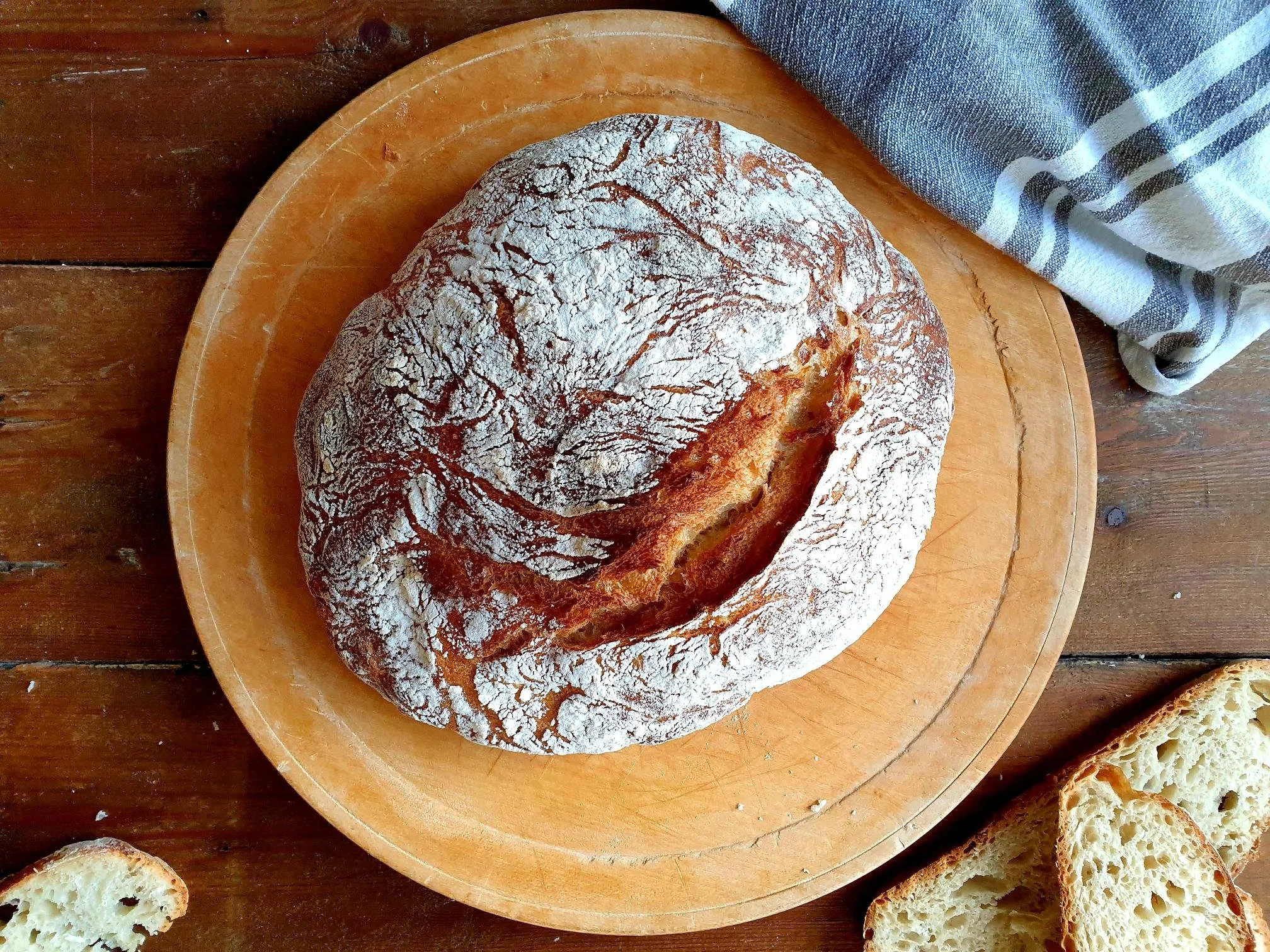
  • 400g stale bread (rustic type of loaf is particularly indicated)

  • extra virgin olive oil, a generous drizzle or to taste, and some extra to serve

  • 1.5 litre beef, chicken or vegetable broth (preferably homemade but you can use a really good quality store bought stock)

  • sea salt

  • black pepper

  • grated Parmiggiano Reggiano cheese, to serve, optional (you can use any hard cheese you like)

Method

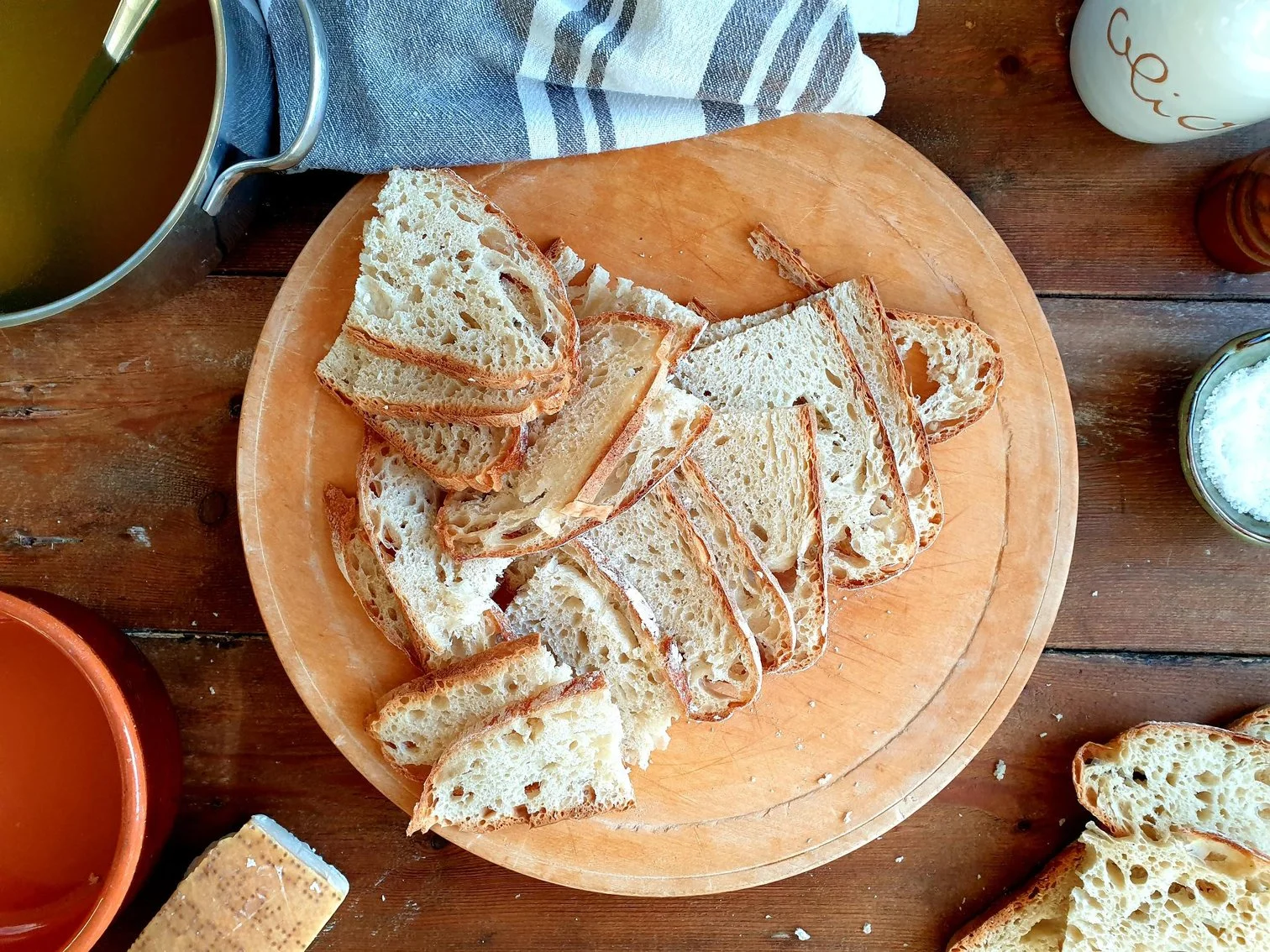
Thinly slice stale loaf of bread.

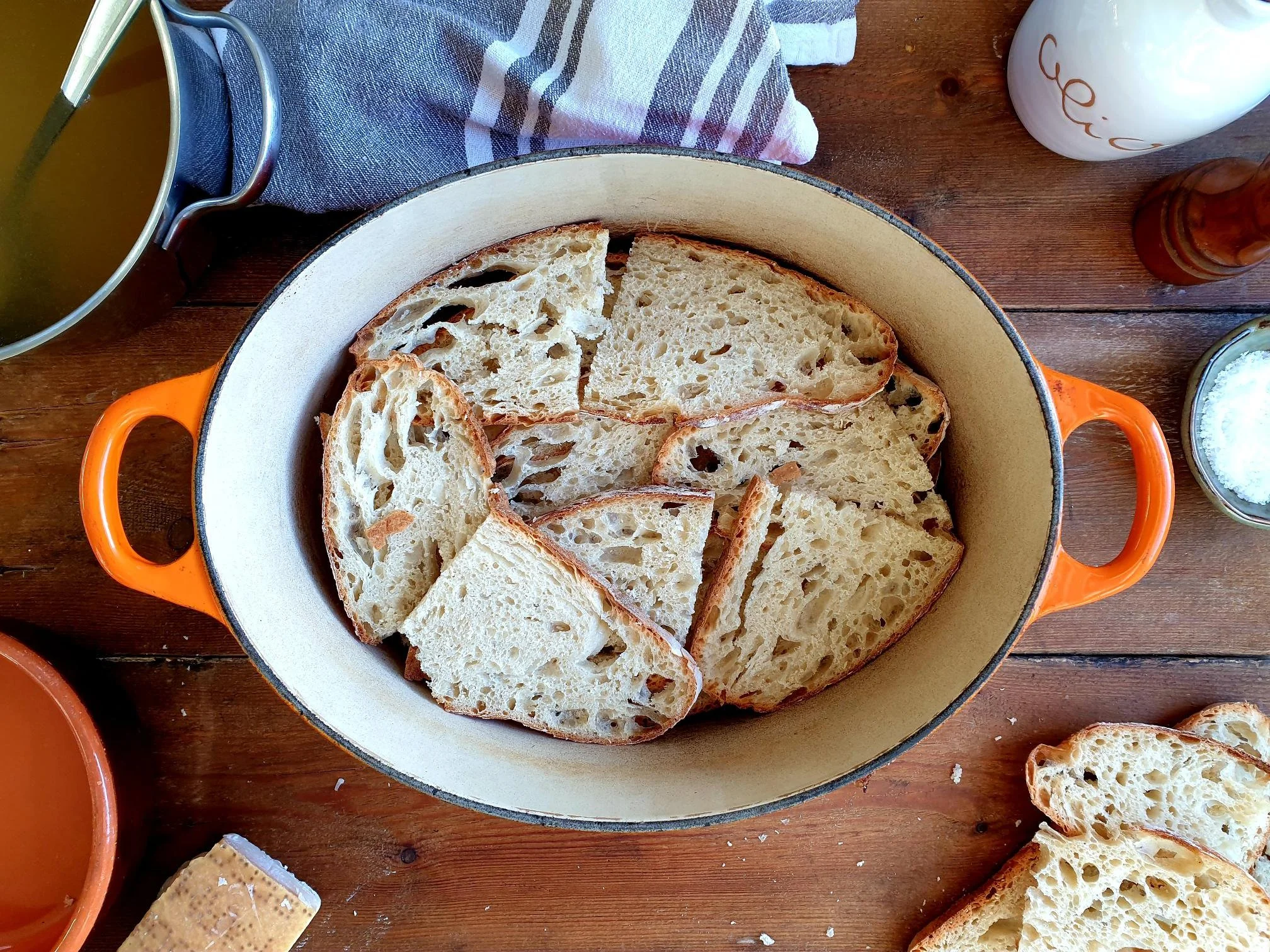
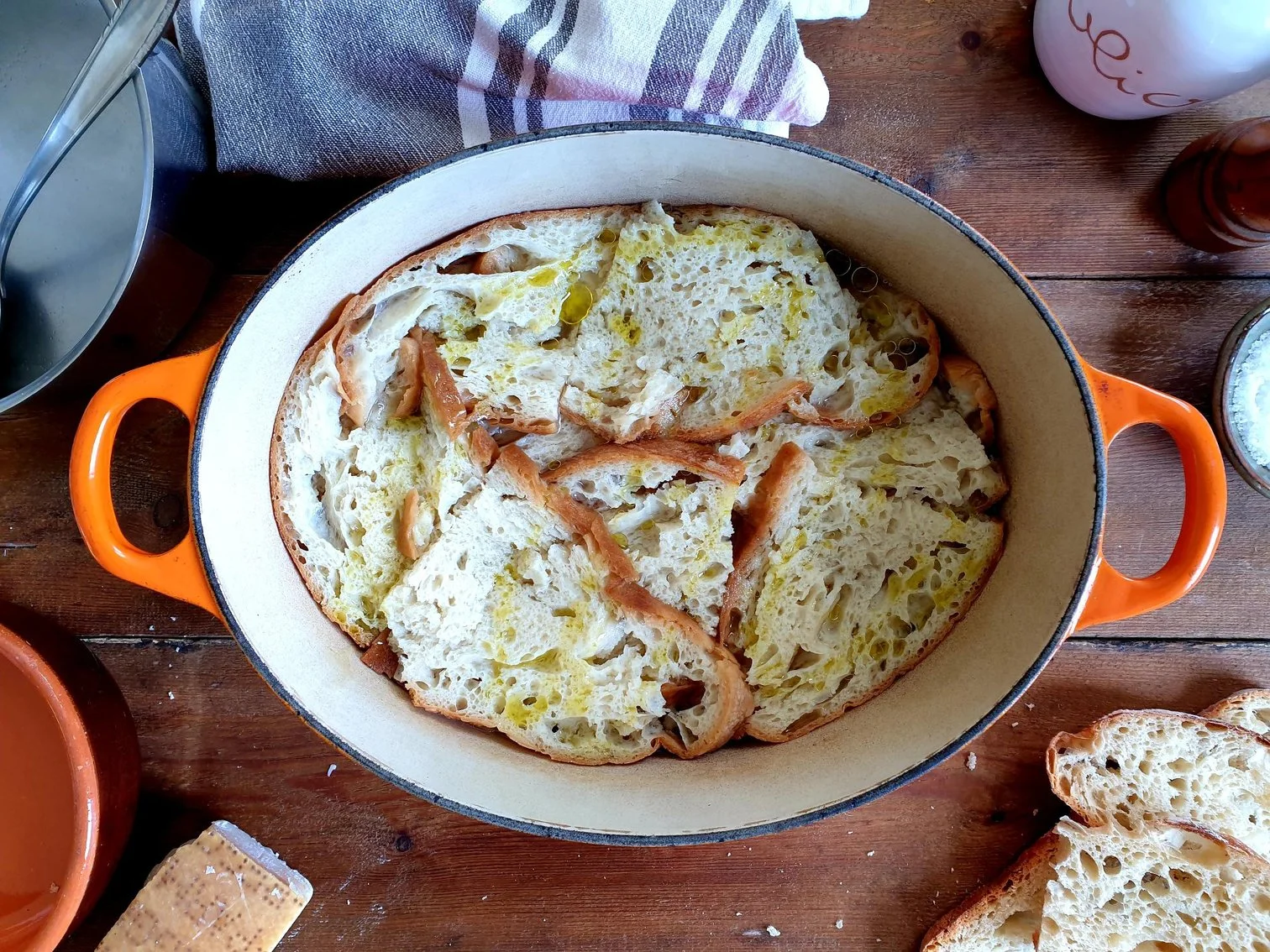
Place the slices in a pan in layers.

View fullsize 20240123_112603.jpg
View fullsize 20240123_112627.jpg

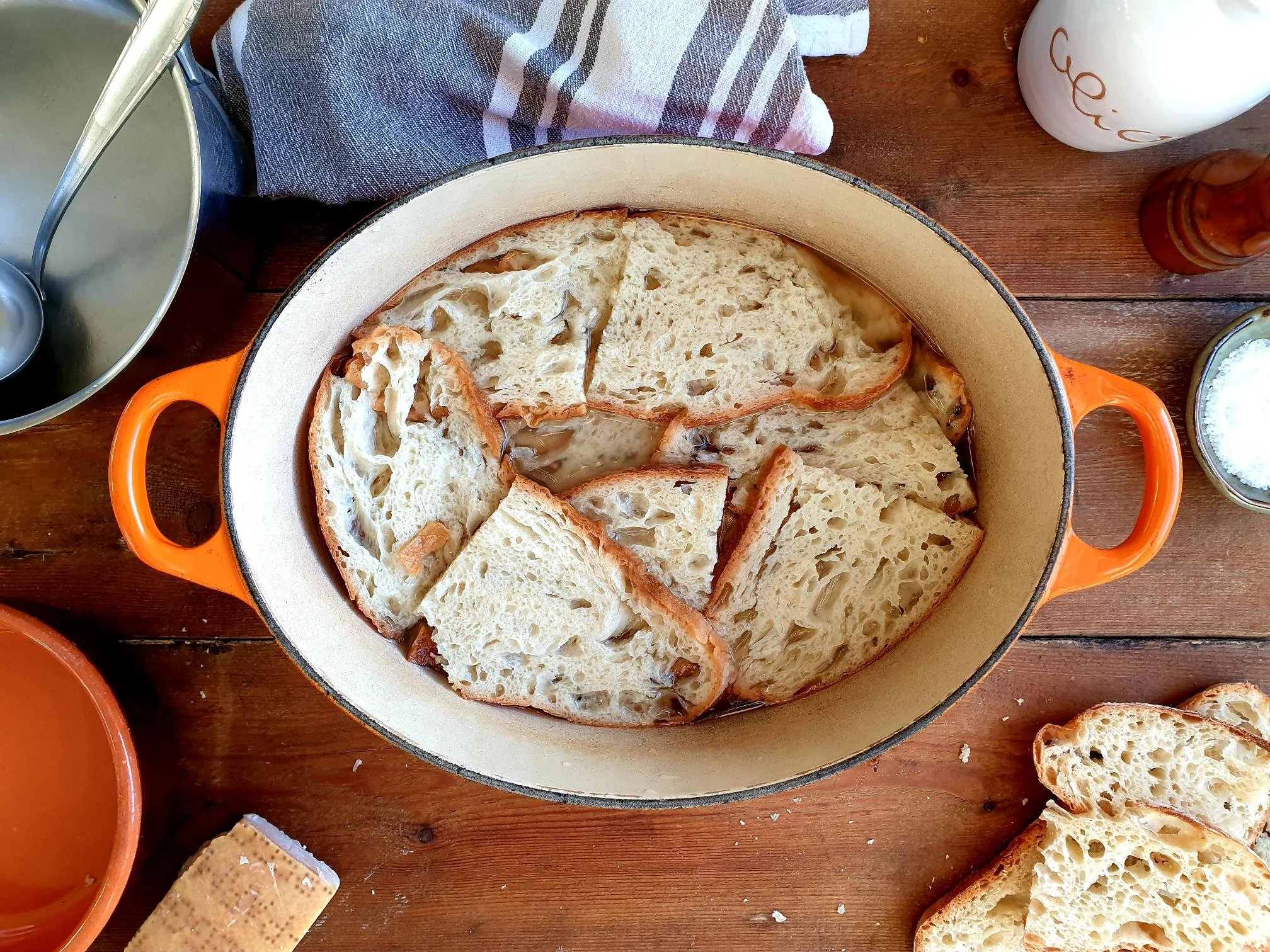
Cover with beef, chicken or vegetable warm broth or stock, and drizzle generously with extra virgin olive oil.

Leave to stand for about 40 minutes and allow the bread to thoroughly absorb the liquid.

View fullsize 20240123_112650.jpg
View fullsize 20240123_112714.jpg

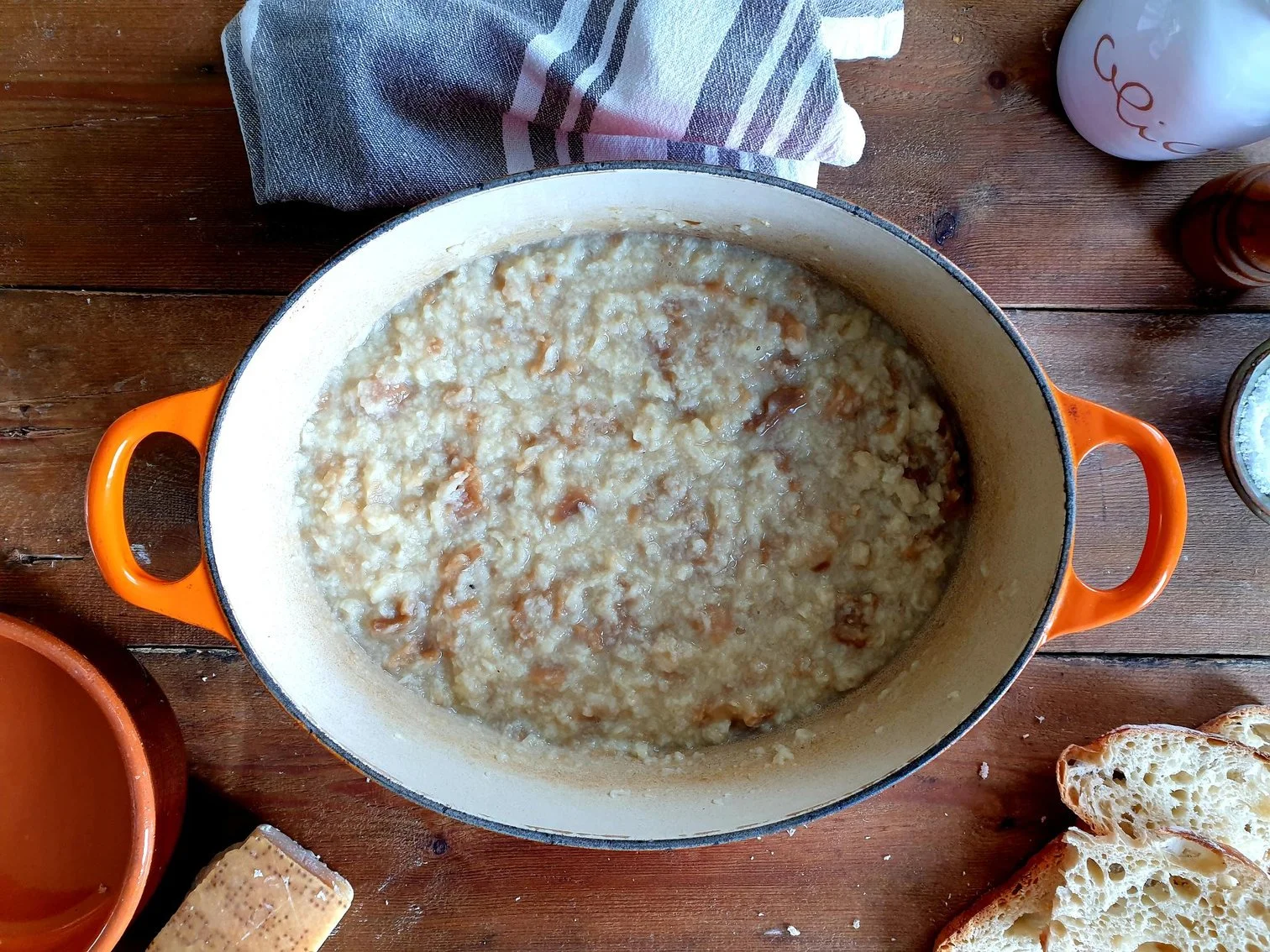
Place the pan on a stove and cook on a very gentle heat for about 45 minutes stirring quite frequently but gently.

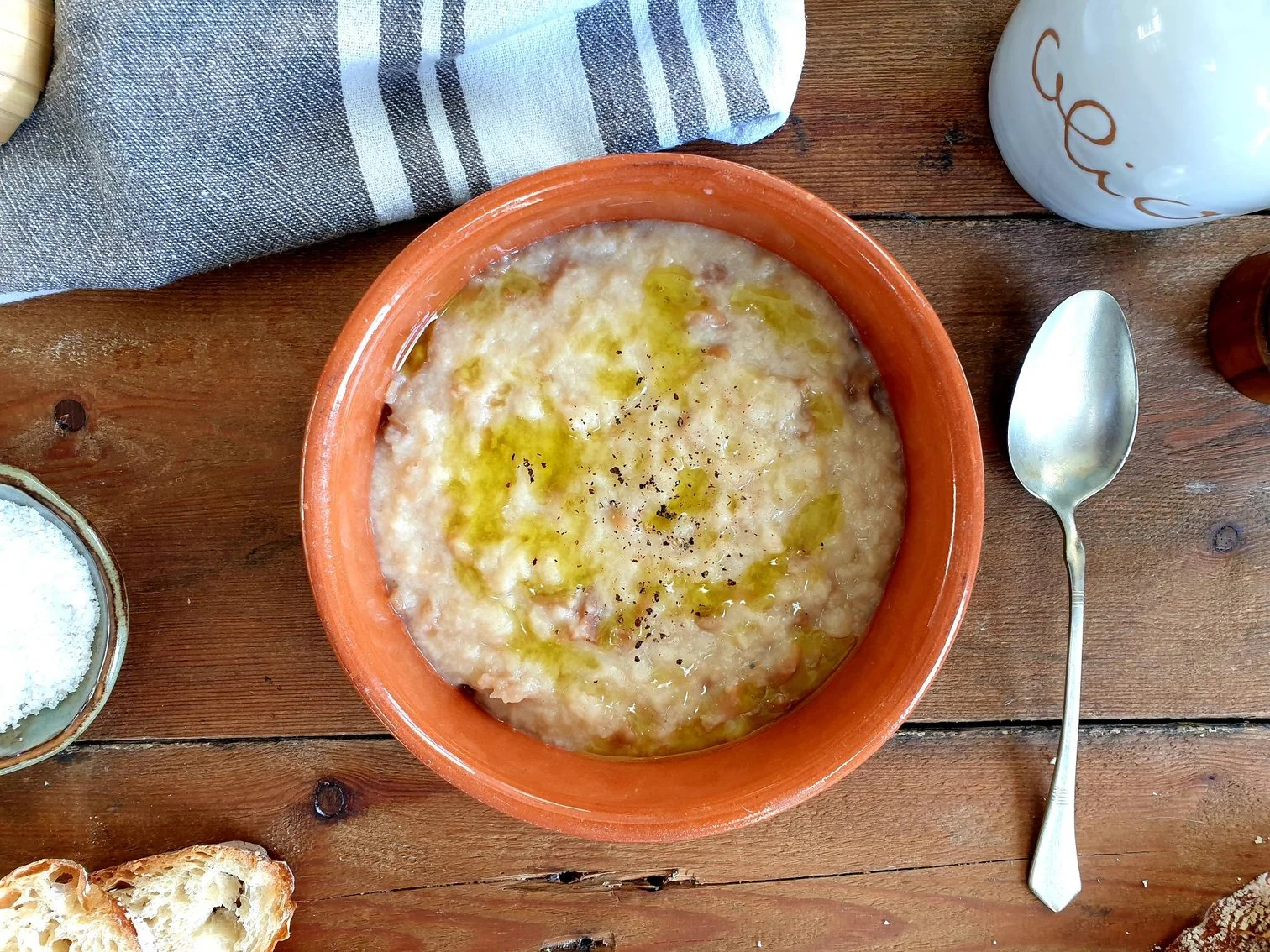
When is fully cooked you should end up with a smooth, creamy and velvety bread soup.

Taste and season with sea salt and black pepper.

Serve hot with grated Parmiggiano Reggiano cheese or other type of hard cheese of your preference, optional, and a drizzle with extra virgin olive oil.

Just a thought

If you want to make this recipe intentionally, and not because of the left over bread, you can also buy a fresh rustic loaf from the shop and keep it out until it dries a bit, and then use it.

January 31, 2024 /tina oblak
stale bread, dry bread, old bread, leftover bread, rustic loaf of bread, bread soup, cooked bread, Lent, Soupe valpellinentze, Suppa cauta, Pancotto
Adriatic Recipe, All year round recipe, child friendly dish, child friendly meal, dinner, Easy recipe, family friendly dish, family friendly meal, hearty dish, Hearty soups, Istrian cuisine, Istrian dish, Istrian food, Istrian gastronomy, main course, main dish, main vegetarian course, main vegetarian dish, one pot meal, recipe from Northern Ital, Rustic dish, simple recipe, Slovenian cuisine, Slovenian food, Slovenian gastronomy, Soups, supper, Vegan, Venetian dish
Comment

Venetian style Rice and Peas Recipe (Risi e Bisi)

Beans and Sradines
September 20, 2023 by tina oblak in Adriatic Recipe, All year round recipe, Central European recipes, child friendly dish, child friendly meal, dinner, Easter, Easter dish, Easter recipes, Easy recipe, entrée course, family friendly dish, family friendly meal, festive dish, first course, first course dish, first course meal, healthy mael, hearty dish, Istrian cuisine, Istrian dish, Istrian food, Istrian gastronomy, main course, main dish, one pot meal, one pot meat recipe, recipe from Northern Ital, Risotti, Risotto, Rustic dish, simple recipe, Slovenian cuisine, Slovenian food, Slovenian gastronomy, Starters, supper, Vegetables, Venetian dish

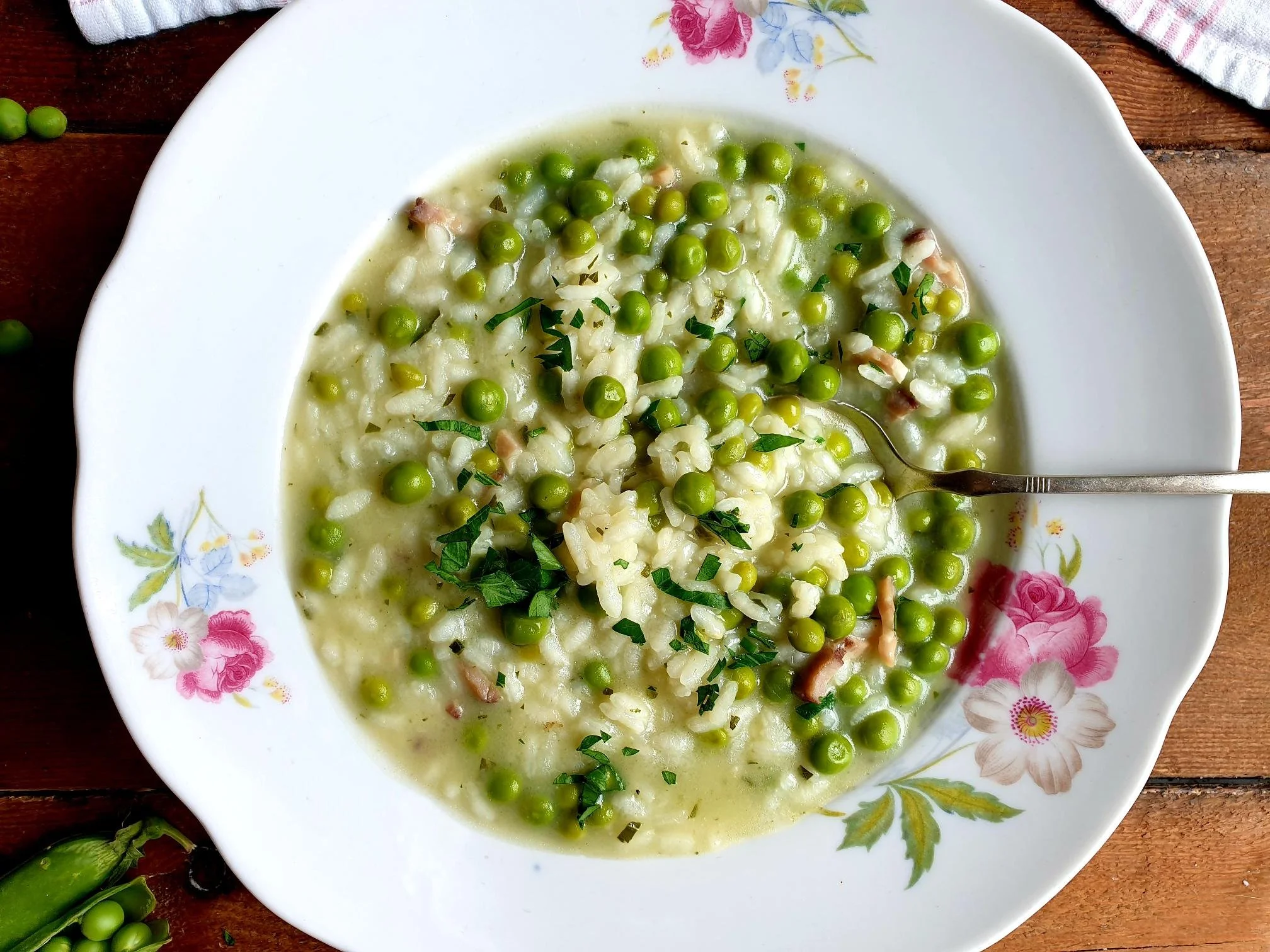
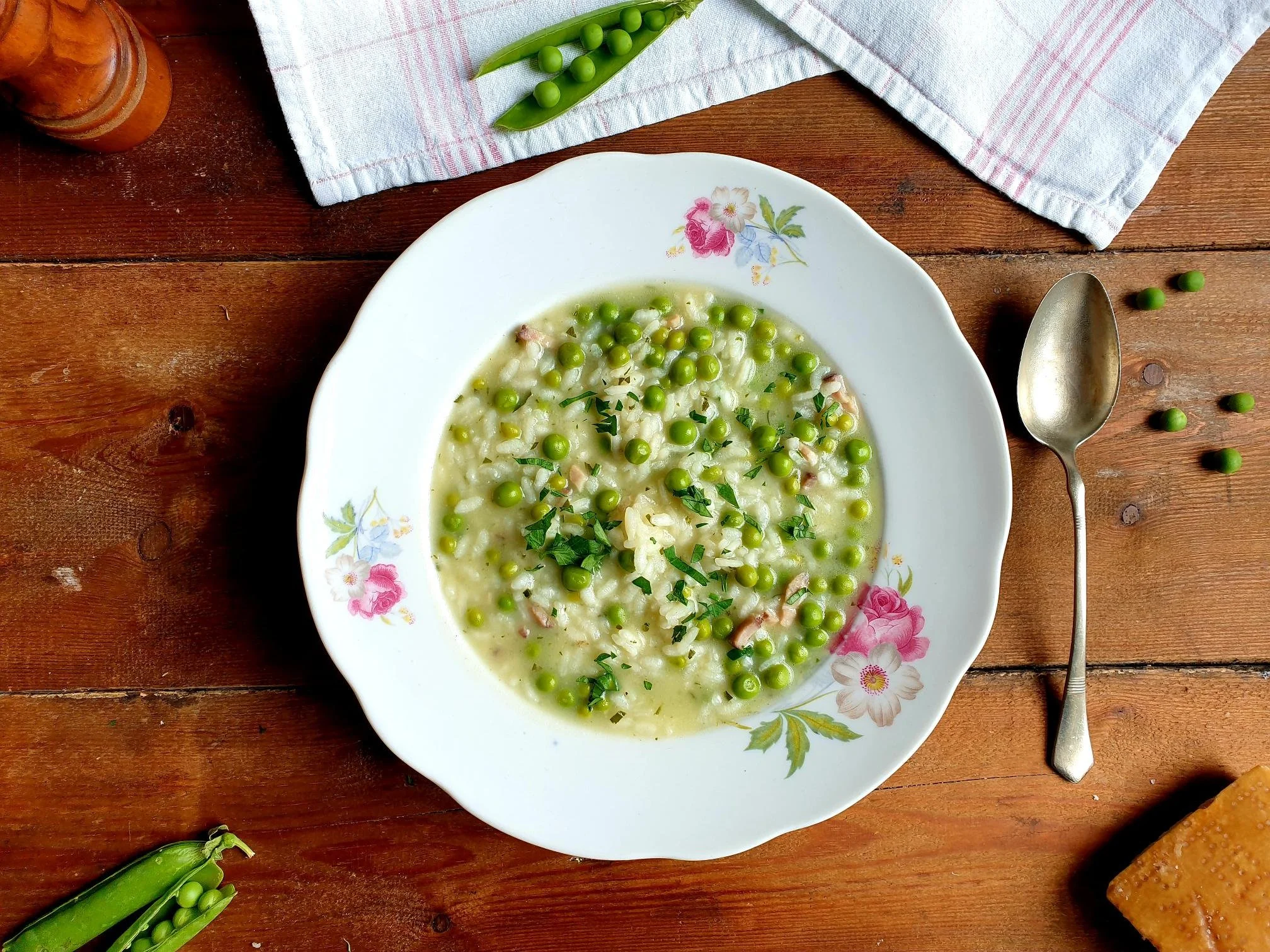
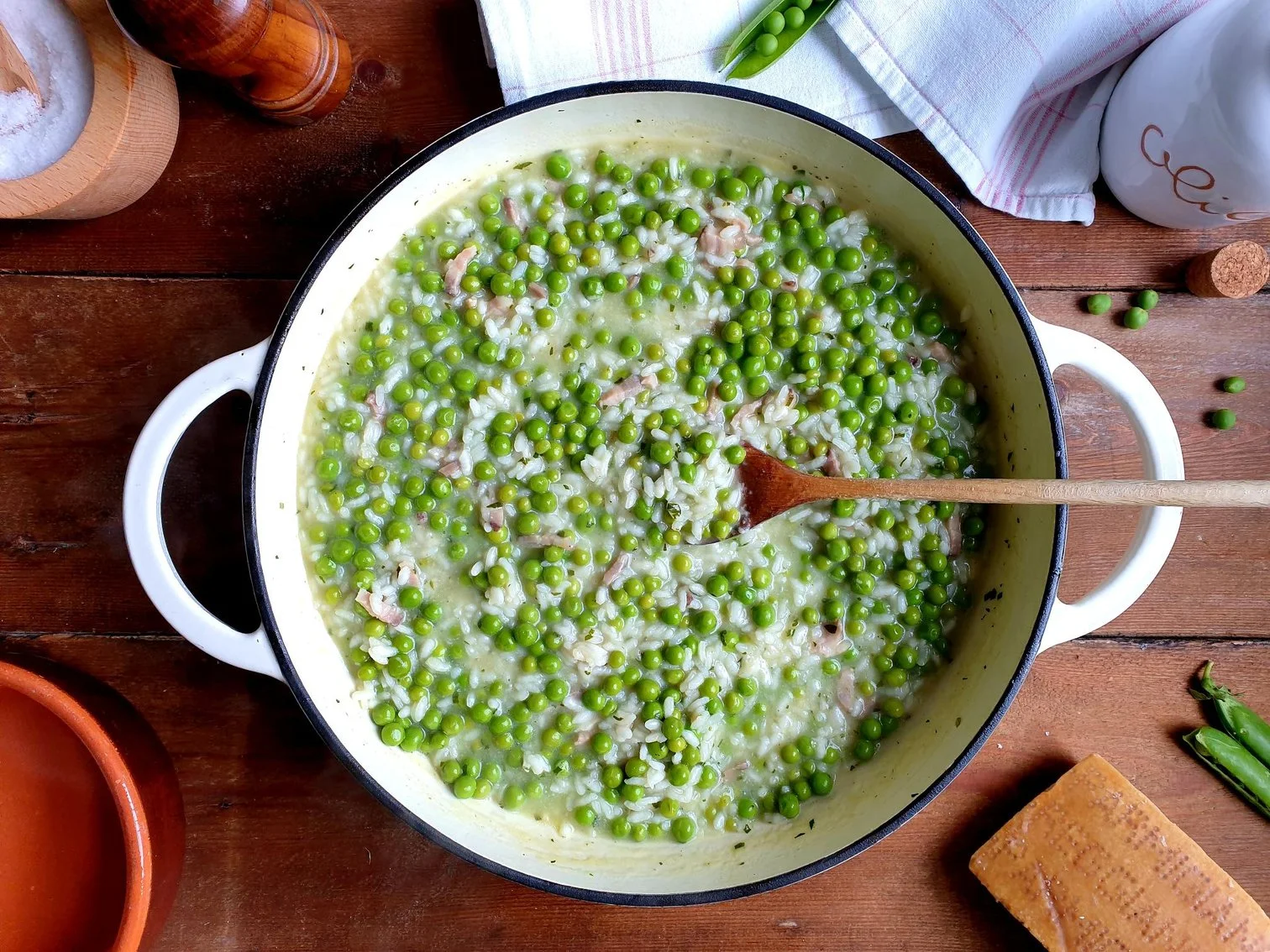
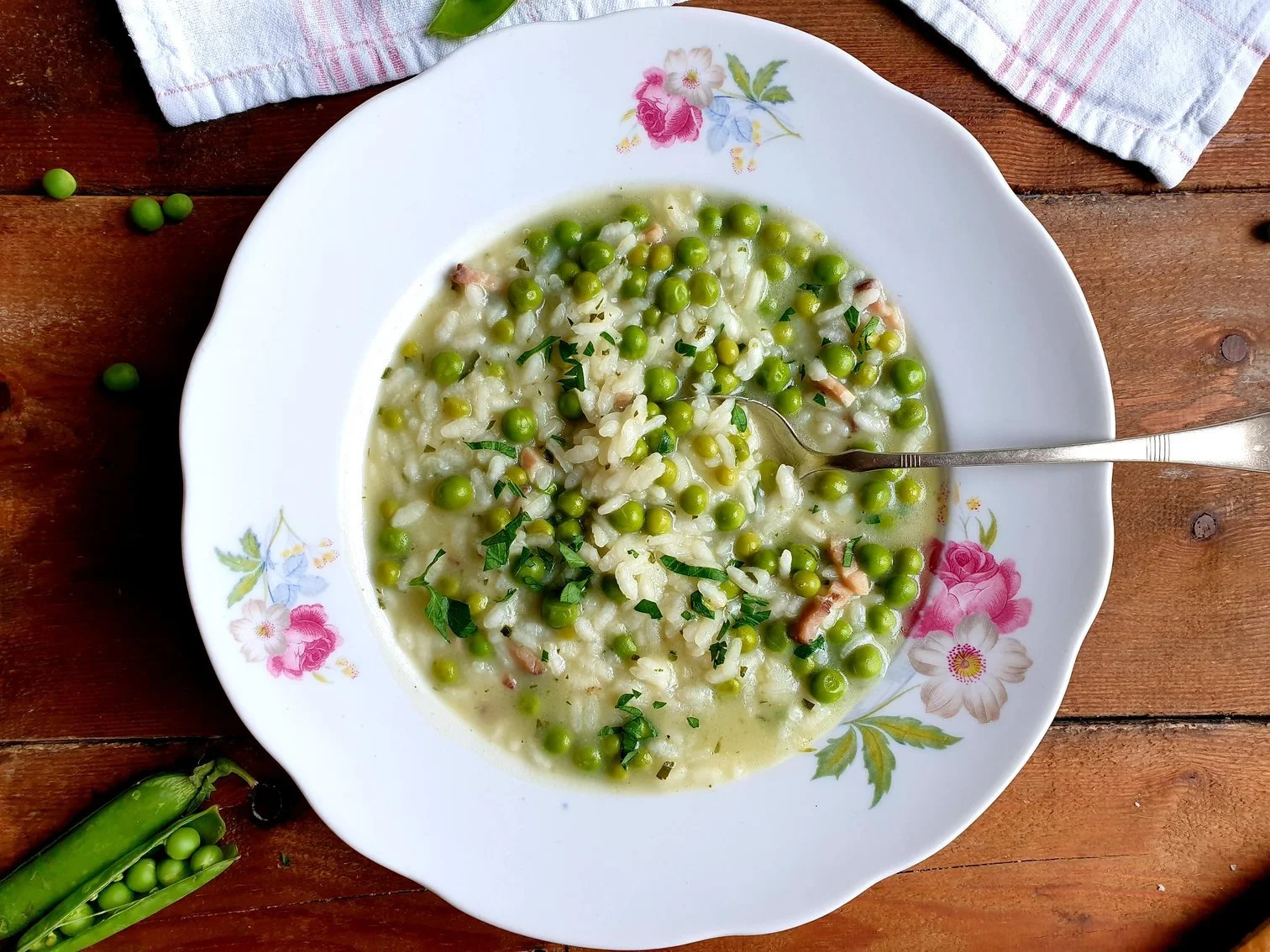
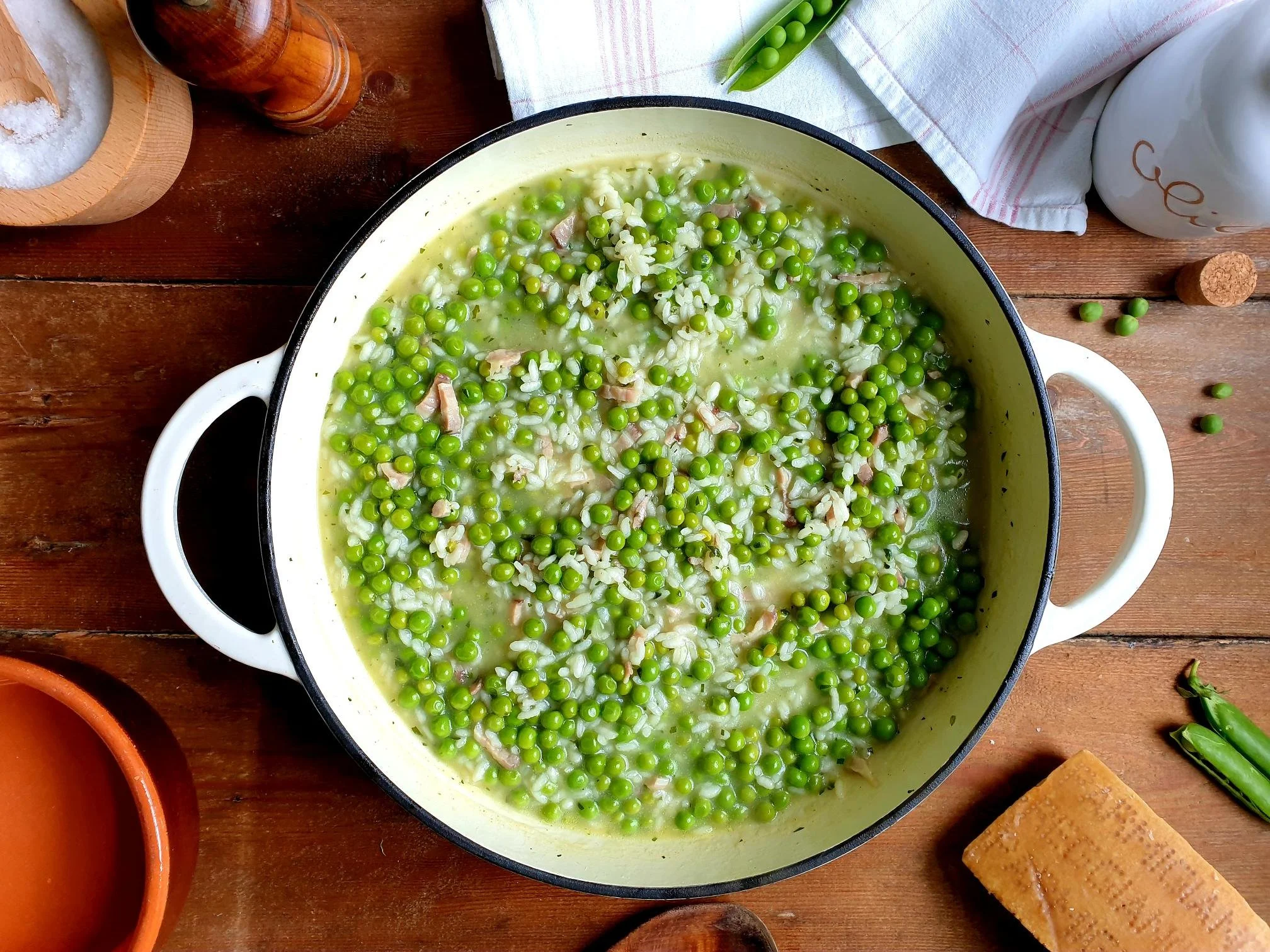
This springtime speciality dish Risi e Bisi, meaning rice and peas in Venetian dialect, originated in the north-eastern region of Veneto in Italy. It is a dish that has been long disputed in the culinary world whether it is a very ‘runny’ risotto or a very ‘thick’ soup, and hence whether you should eat it with the fork or with a spoonBeing a risotto or a soup, this dish is absolutely delicious, incredibly satisfying and deeply rooted in the history of the region. It has such a profound cultural significance to the point of being celebrated by the Venetian poet Domenico Varagnolo:

To bless the holy spring,

which makes a garden a paradise,

all I need is a soup bowl,

a soup bowl of our own risi e bisi...

There, in hundreds of tiny little globes,

I savour a tender green jewel of the earth

scattered in a white sea of tender smiles.

Risi e Bisi was one of the key dishes, among a menu of more sophisticated foods and fine wines, that used to be served at the Doge's banquet (Doge is the highest official of the republic of Venice for more than 1,000 years, from the 8th to the 18th century, and symbol of the sovereignty of the Venetian state) on April 25th to mark and celebrate Venice's patron Saint, St. Mark, the Evangelist, since he is the saint who evangelised the people of the Veneto.

This traditional dish served on a feast day also marked the period approaching Easter, the end of winter, and the arrival of Spring, which provided the very first peas in the new season, renowned for being small, sweet and tender.

This dish has been very popular and very much loved along the Slovenian coastline where it is known as Rizi e Bizi. This should come as no surprise since this area is bordering with Italy and was once dominated and ruled by the majestic La Serenissima (‘The most Serene Republic of Venice’) which left behind a significant “foodprint” in the region.

A pea and rice dish is a very family friendly meal and was cooked by my mother on a regular basis when the peas where in season and at their best. Shelling the peas was worth the effort since the final dish is divine in its simplicity and humbleness.

This recipe has remained one of the top favourites among family and friends. Try to make it and you will understand what the fuss is all about and why the Doge requested it every year at his palace...

This is not the dish I would normally cook in springtime as peas are a long way off in the UK where I currently live, but are widely available a bit later in the season. It is well worth waiting for them, and you will end up with unbeatable (late) summer or early autumn supper!

Recipe

Ingredients

Serves 4

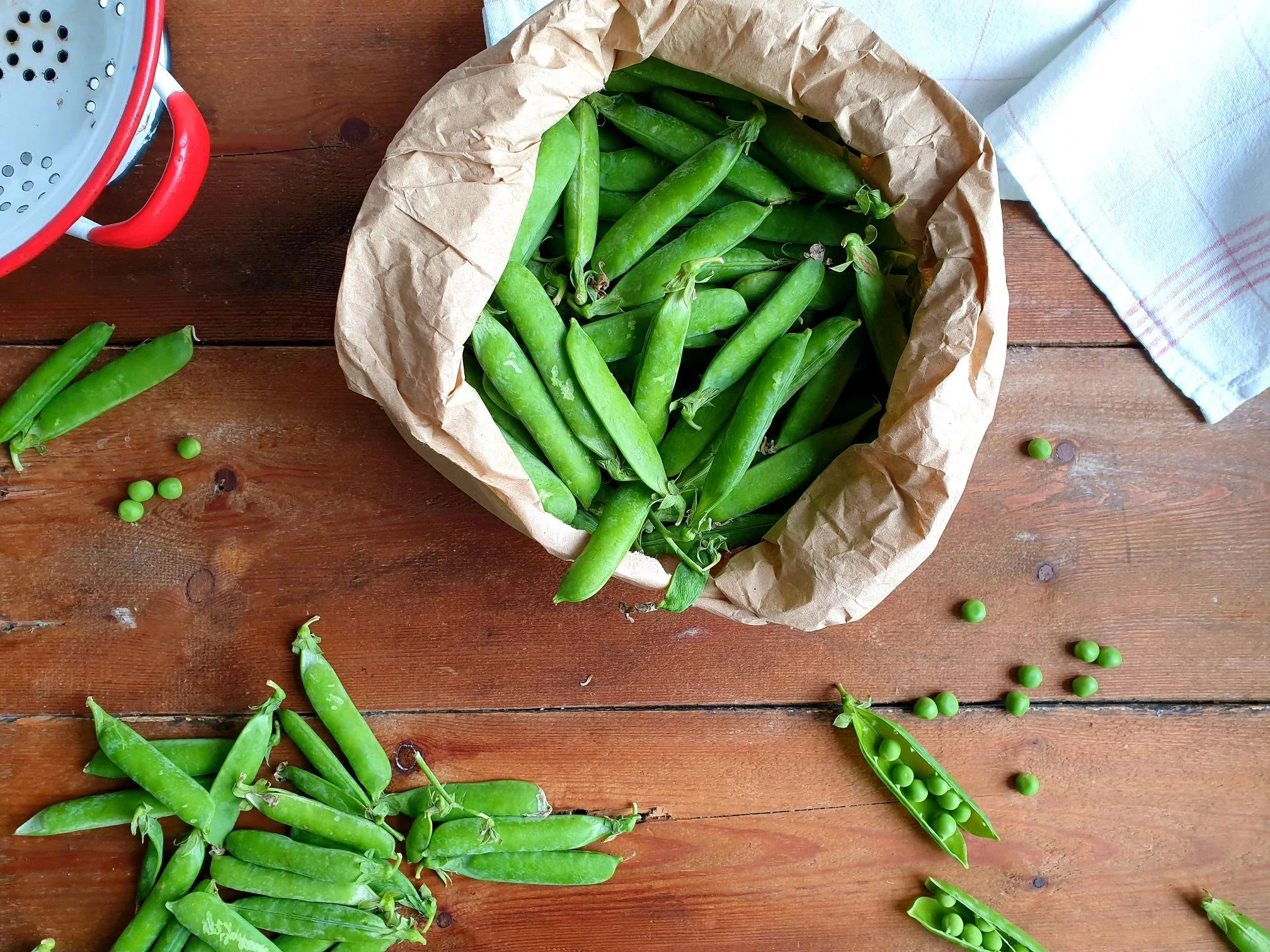
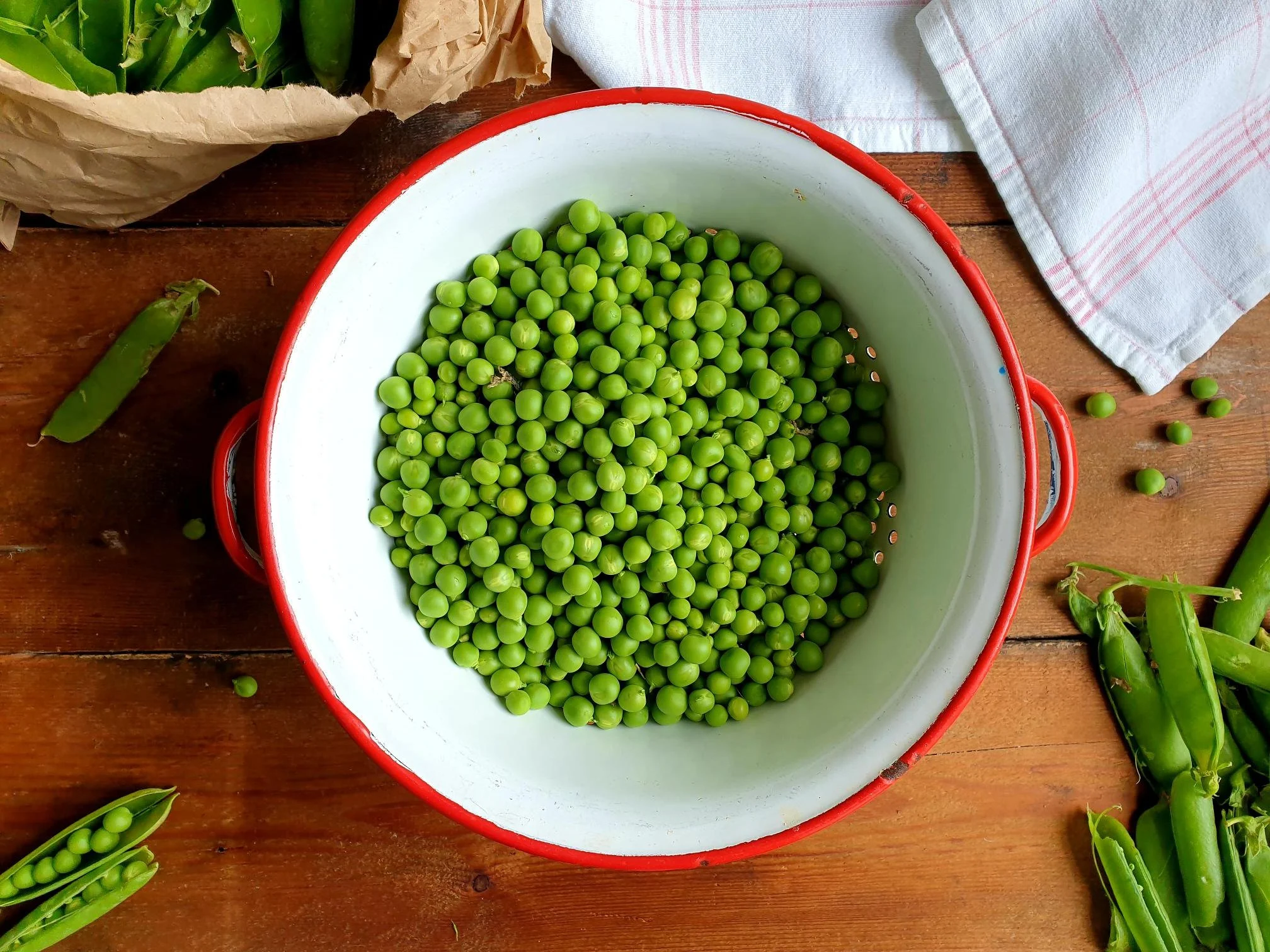
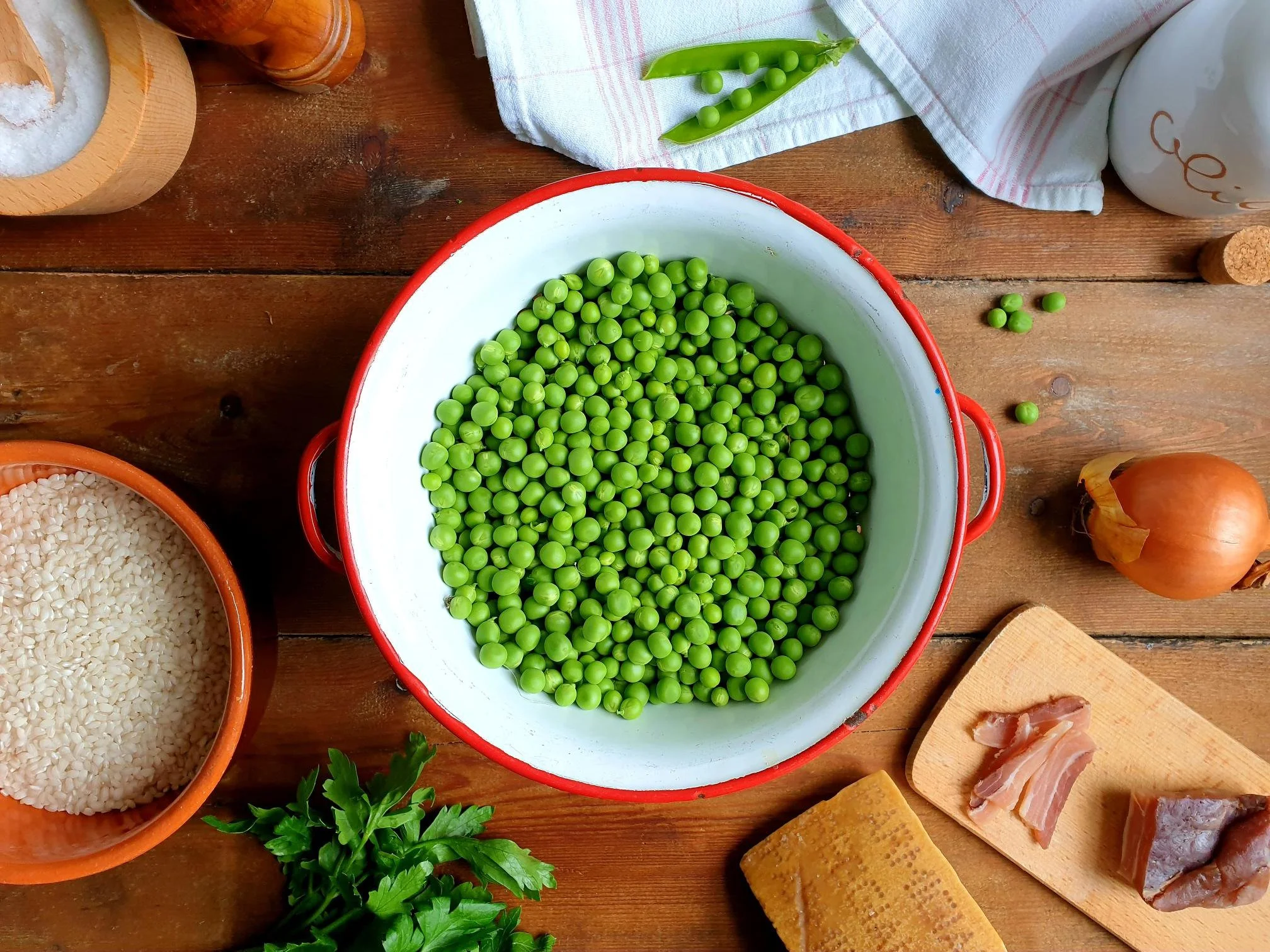
  • 1 kg fresh young peas in their pods, shelled (can use 400g of frozen petits pois)

  • 1.2 litres good vegetable, chicken or beef stock

  • 4 Tbsp olive oil

  • 1 small onion (about 100g), peeled and finely chopped

  • 50-100g pancetta (salt-cured pork belly) or ham, cubed

  • 250g risotto rice like Vialone Nano, Arborio or Carnaroli

  • 40-50g Parmiggiano Reggiano or Grana Padano cheese, freshly finely grated

  • small handful of fresh flat leaf parsley leaves (about 15g), finely chopped and some extra for garnish

  • a knob of butter, optional

  • sea salt

  • black pepper

Method

Before starting to make the risotto have your boiling hot stock ready to hand for later.

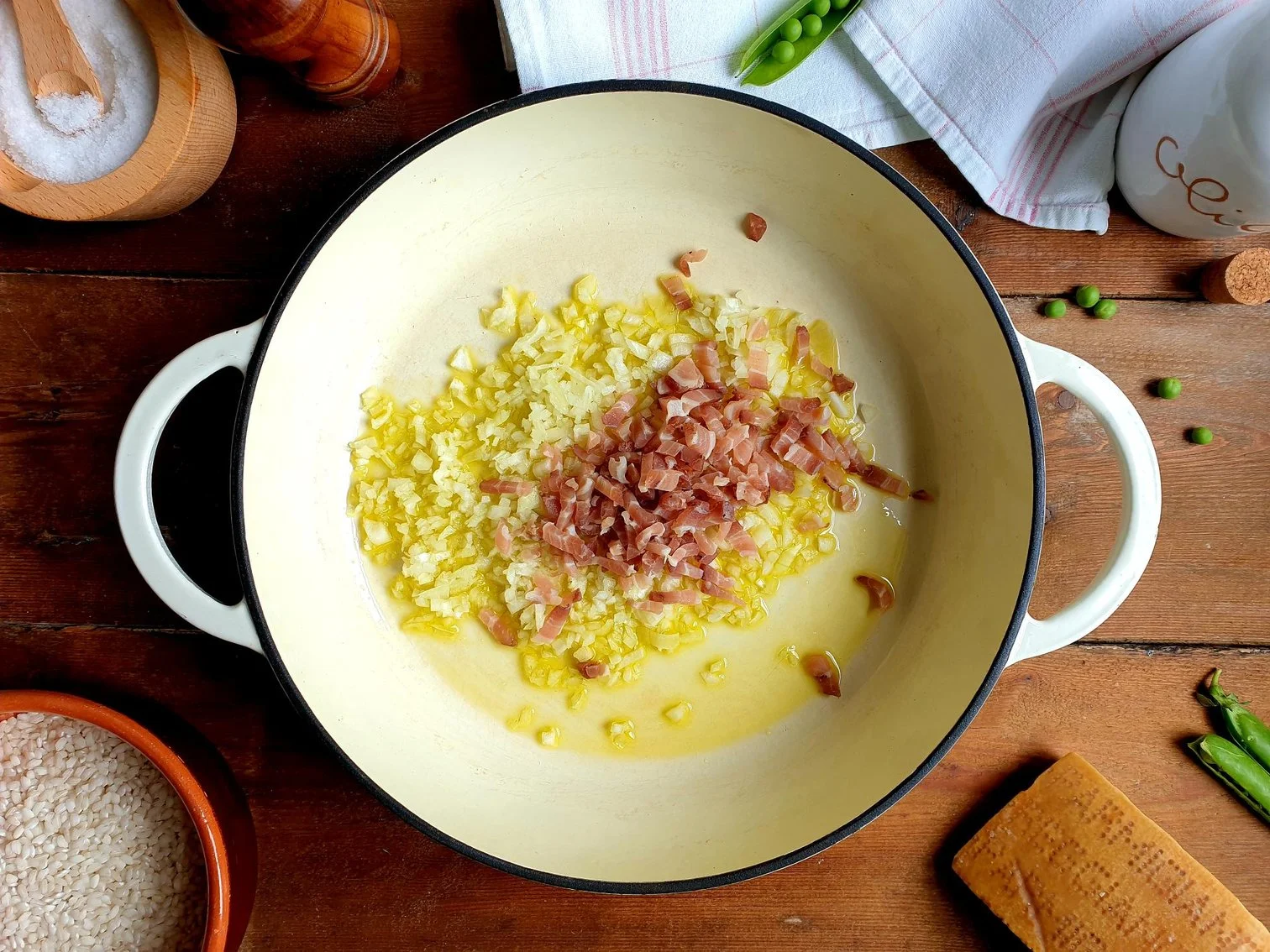
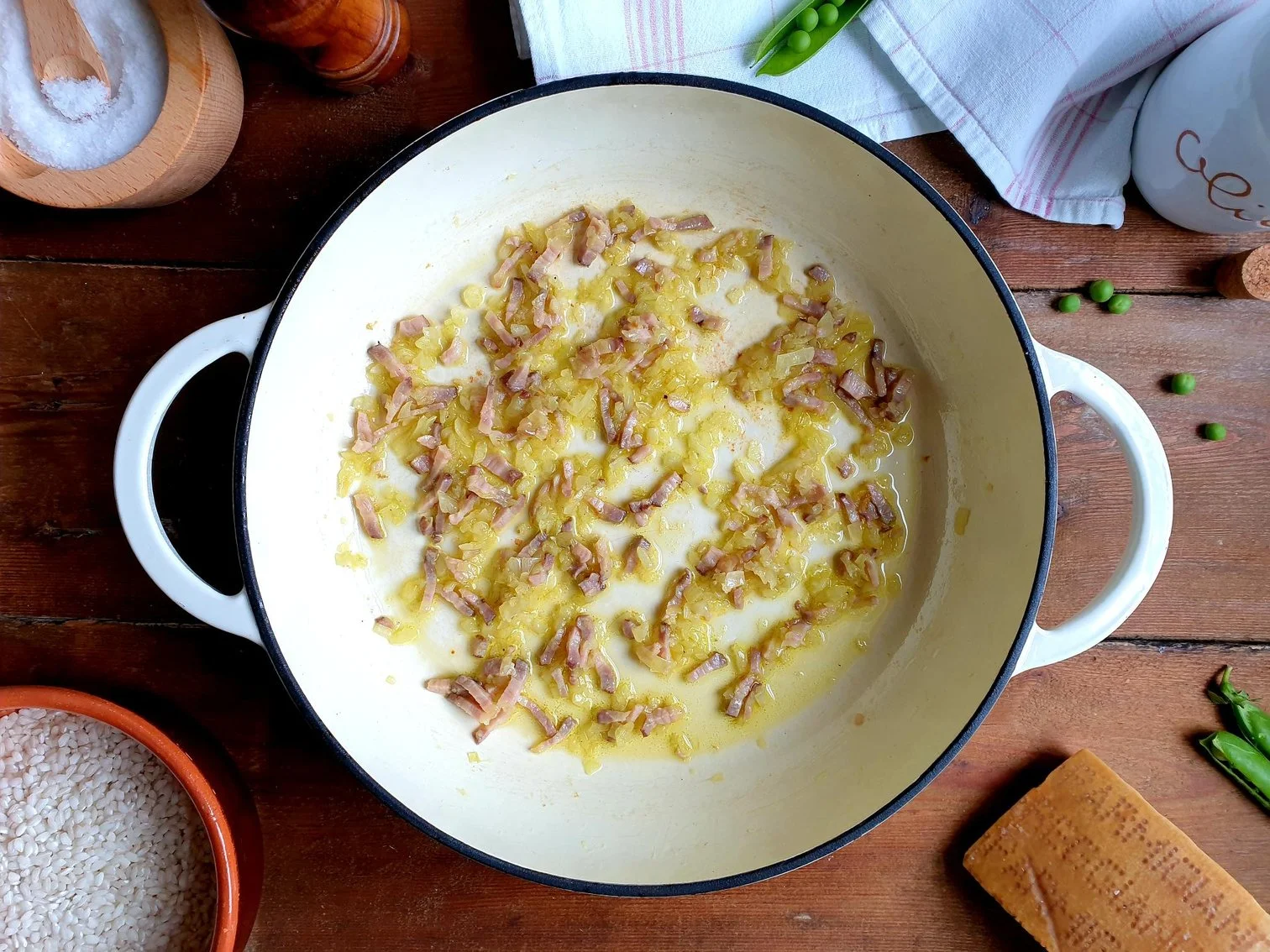
Pour the oil in a low-sided pan, add finely chopped onions and cubed pancetta.

Cook for a few minutes until the onions become soft and translucent and the pancetta begins to release its fat.

View fullsize Risi e Bisi 5.jpg
View fullsize Risi e Bisi 6.jpg

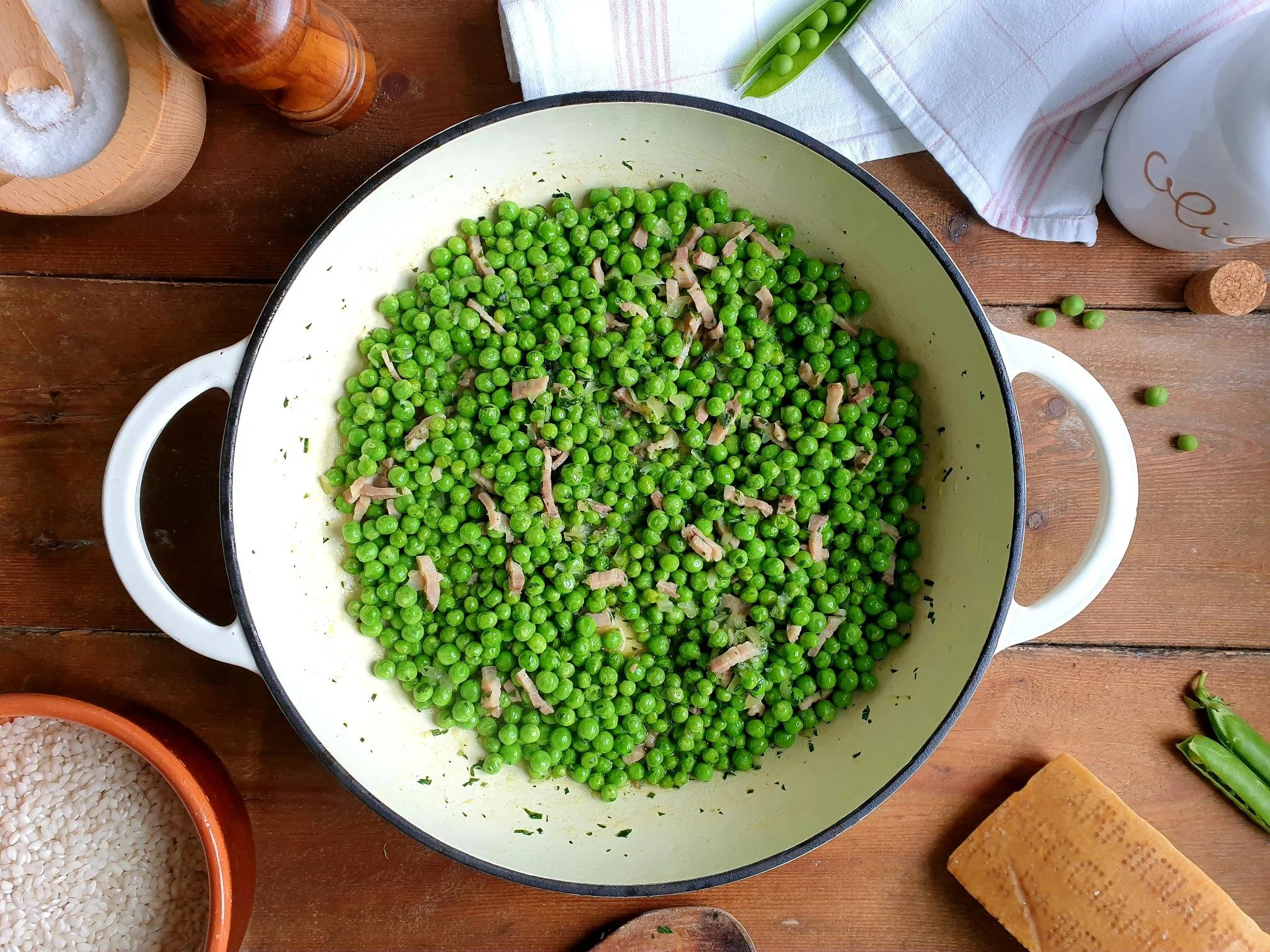
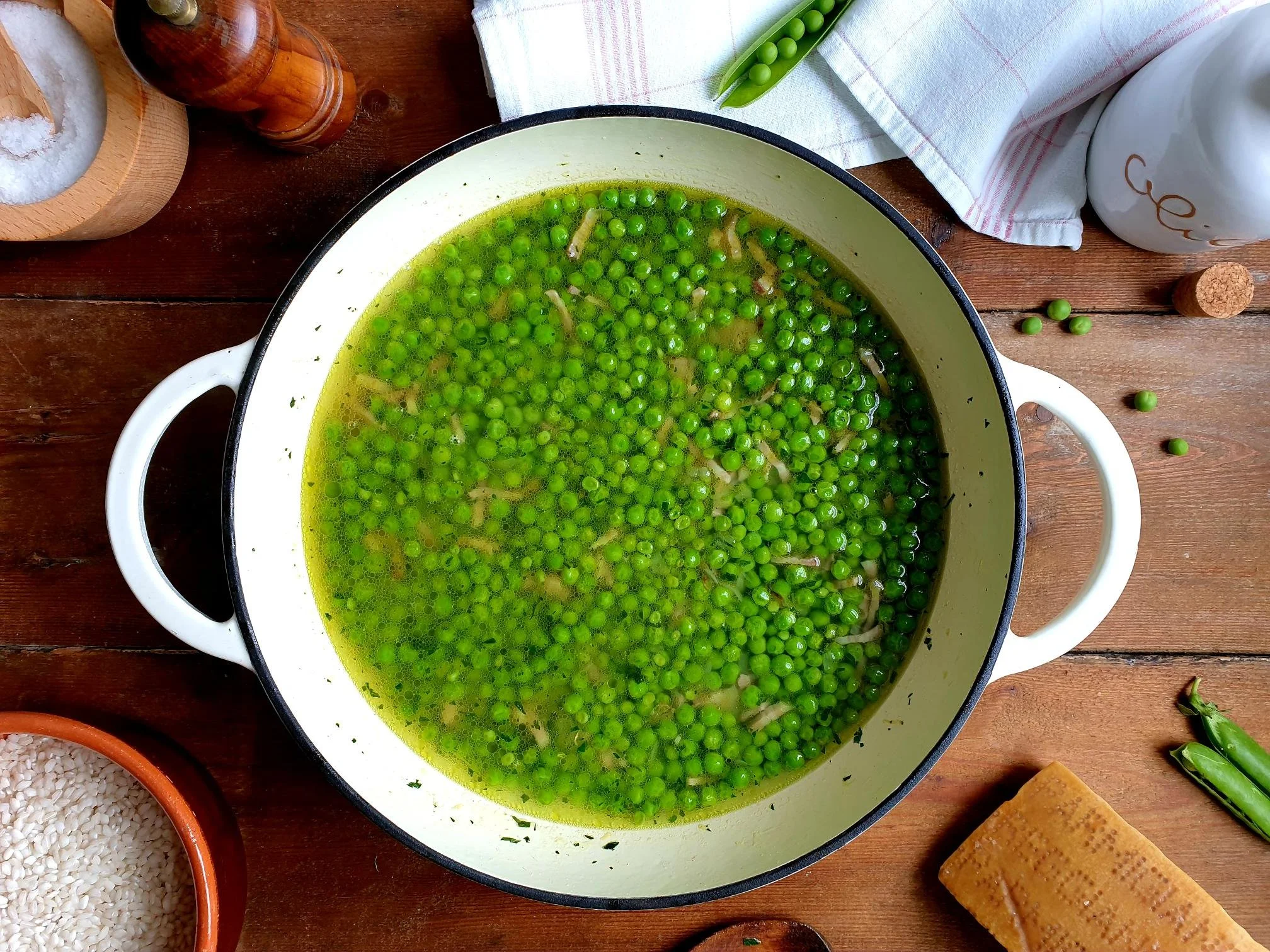
Add the peas and the chopped parsley, sauté for a few minutes, stirring constantly and making sure that the mixture does not start to stick to the bottom of the pan.

Season with black pepper and add roughly a glass of stock.

Cook the mixture over a fairly high heat so that the liquid evaporates quickly.

View fullsize Risi e Bisi 8.jpg
View fullsize Risi e Bisi 9.jpg

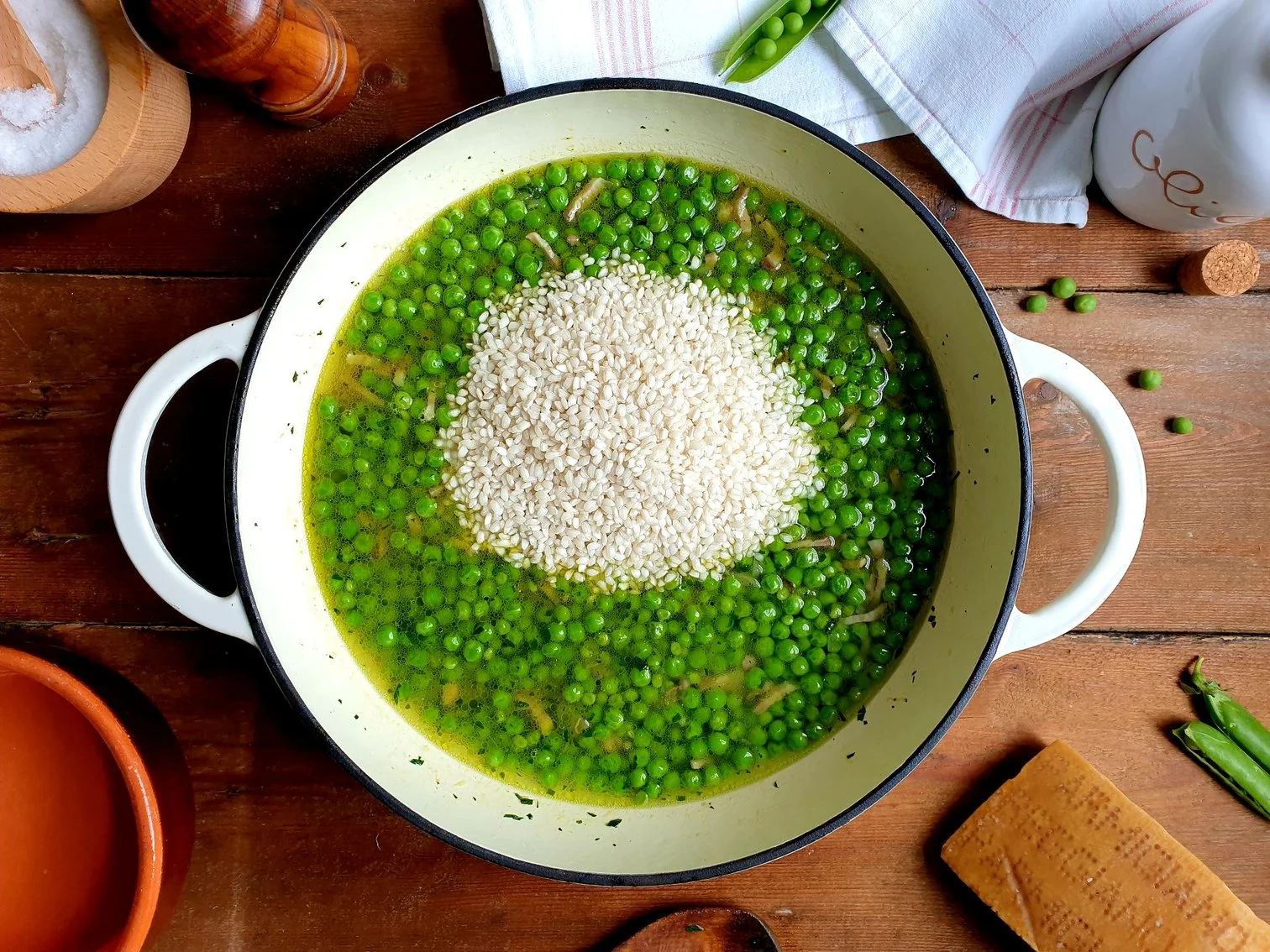
Add more stock and the rice. Cook, stirring constantly to prevent sticking to the pan, until the first amount of liquid is absorbed.

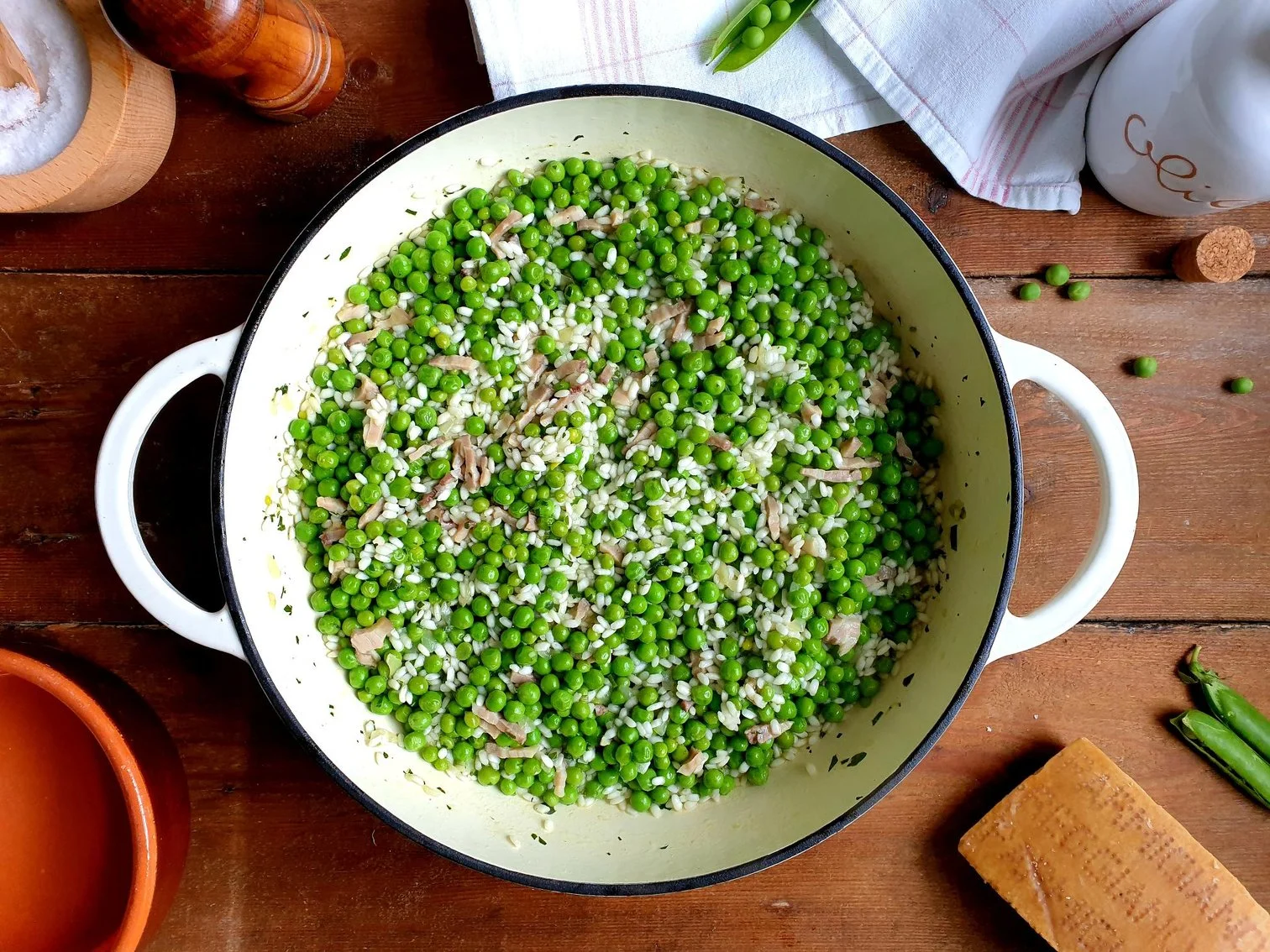
Start gradually adding ladles of hot stock, one at a time, allowing the liquid to be absorbed before adding more.

View fullsize Risi e Bisi 10.jpg
View fullsize Risi e Bisi 11.jpg

Cook on a medium heat, stirring almost constantly, until the rice is cooked and ready, and the mixture has a distinctly runny consistency.

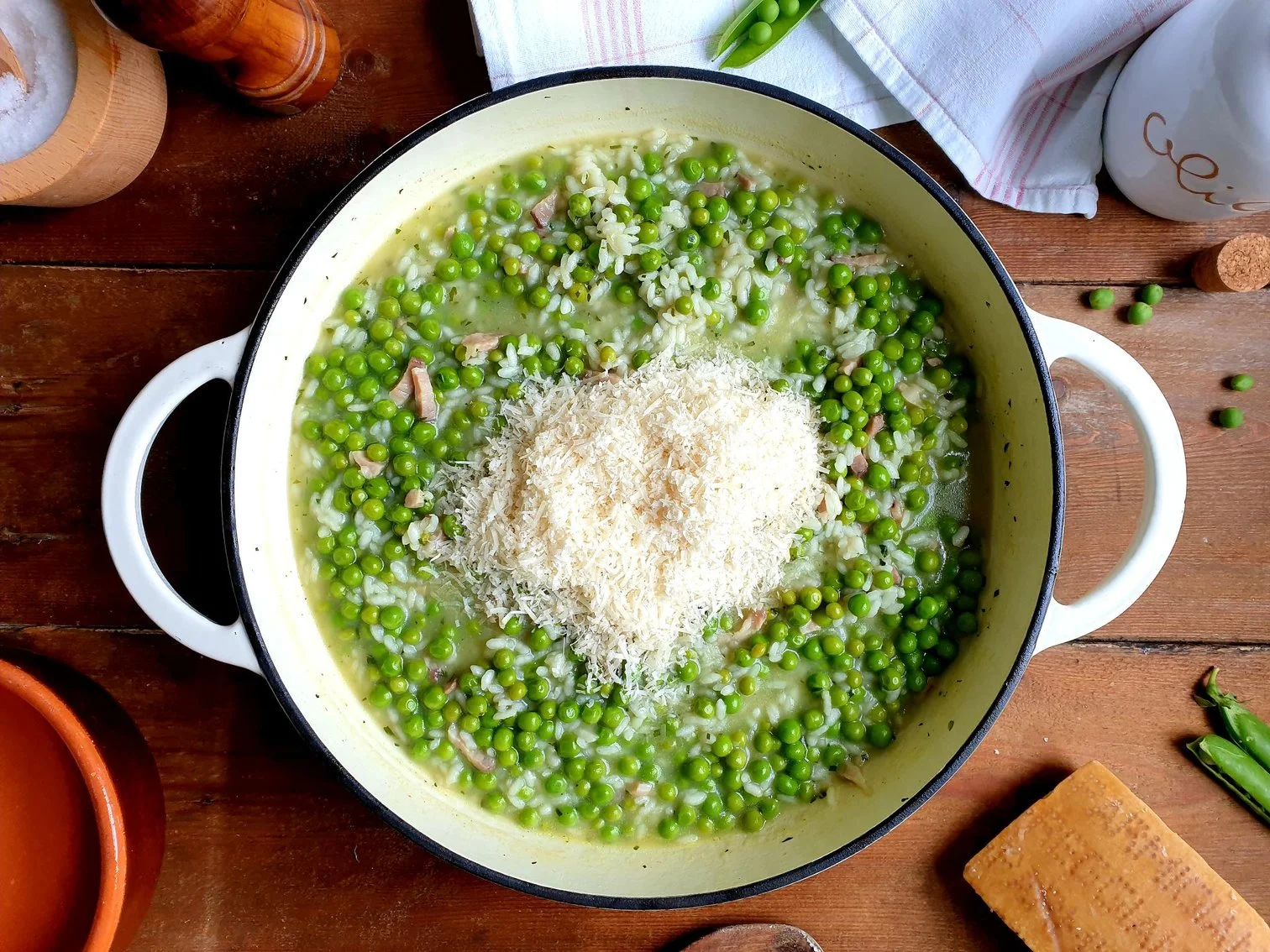
Finish the dish with a typical Italian “mantecare phase” (when the rice is cooked, remove the saucepan from the heat, add a knob of butter (if using), and finely grated Parmiggiano Reggiano or Grana Padano cheese. Stir quite vigorously with a wooden spoon to obtain a creamy consistency).

Taste and adjust the seasoning with black pepper (if using) and the sea salt, but the latter might not be necessary since the stocks from the stores, generally speaking, pancetta and the cheese contain salt already.

View fullsize Risi e Bisi 13.jpg
View fullsize Risi e Bisi 14.jpg

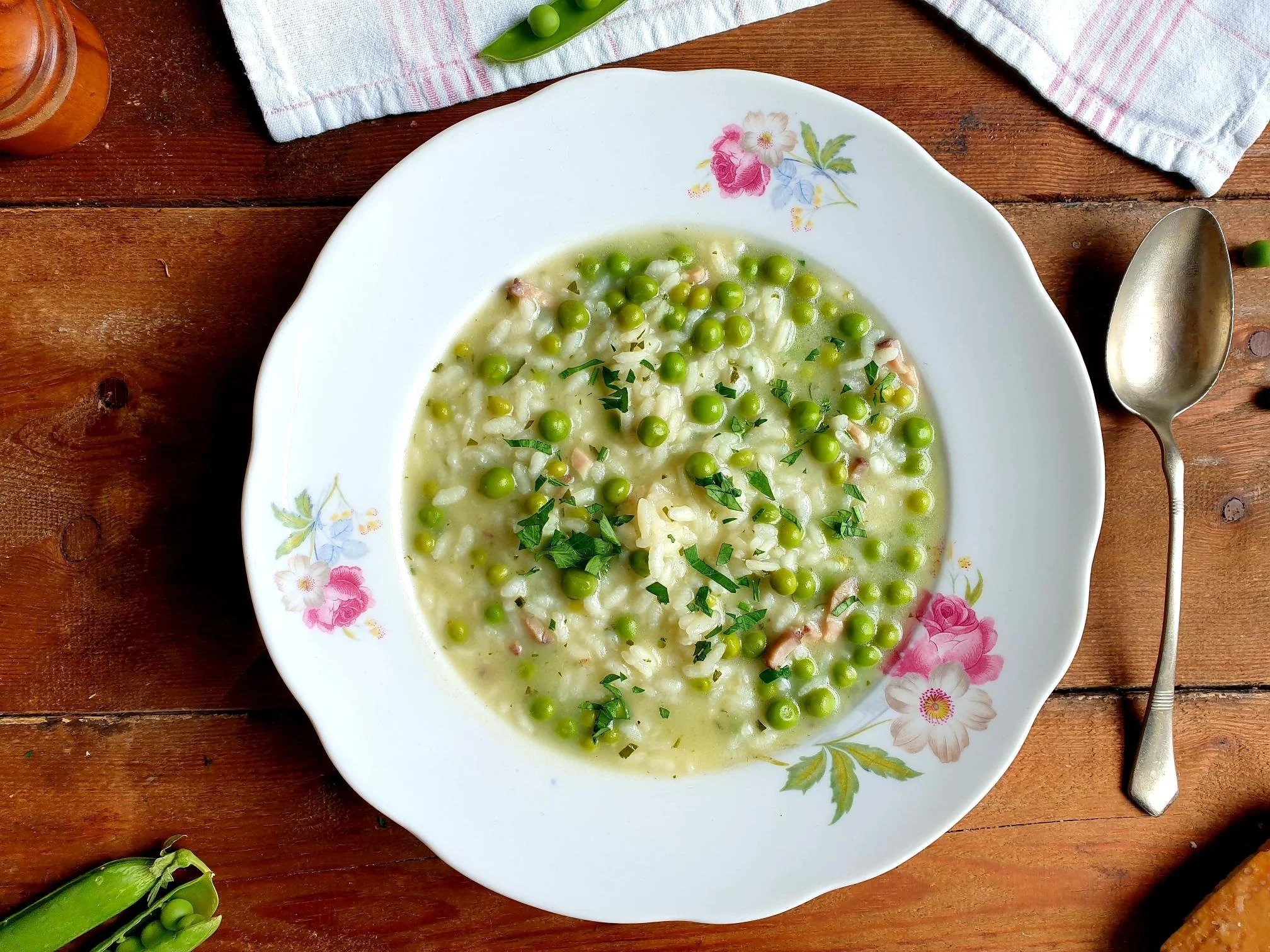
Serve immediately while still hot and distinctly runny in consistency.

Ladle onto the plates and sprinkle with some roughly chopped fresh parsley to garnish (optional).

Just a thought

A variation of this recipe, which further refines the dish, involves the use of the empty pea pods which get washed, placed in pan with a plenty of cold water and boiled for roughly an hour.

Then they get drained in a colander and the inside of the shells get scraped with the spoon obtaining the green paste which is added to the onion, pancetta, pea and parsley mixture.

I have not been familiar with this process and made aware that this is only done if the peas are organically produced.

Apparently, all the pesticides residues concentrate on the inside of the pea shell and the farmers are very keen on the use of the chemicals as peas are particularly susceptible to pests.

Wine suggestion

Soave Classico DOC "Vin Soave" 2022 - Inama

September 20, 2023 /tina oblak
Risi e bisi, Rizi in bizi, Rice and Peas, fresh young peas, peas in pods, frozen petits pois, pancetta, salt-cured pork belly, ham, risotto, risotto rice, pea risotto, Vialone Nano rice, Arborio rice, Carnaroli rice, Parmiggiano Reggiano cheese, Grana Padano cheese
Adriatic Recipe, All year round recipe, Central European recipes, child friendly dish, child friendly meal, dinner, Easter, Easter dish, Easter recipes, Easy recipe, entrée course, family friendly dish, family friendly meal, festive dish, first course, first course dish, first course meal, healthy mael, hearty dish, Istrian cuisine, Istrian dish, Istrian food, Istrian gastronomy, main course, main dish, one pot meal, one pot meat recipe, recipe from Northern Ital, Risotti, Risotto, Rustic dish, simple recipe, Slovenian cuisine, Slovenian food, Slovenian gastronomy, Starters, supper, Vegetables, Venetian dish
Comment

Summer Risotto with Fresh Tomatoes Istrian Recipe

Beans and Sardines
June 21, 2023 by tina oblak in Adriatic Recipe, Appetizers, child friendly dish, child friendly meal, dinner, Easy recipe, family friendly dish, family friendly meal, first course, first course dish, first course meal, Healthy, healthy mael, Istrian cuisine, Istrian dish, Istrian food, Istrian gastronomy, light meal, main course, main dish, main vegetarian course, main vegetarian dish, main vegetarian meal, Nutritious, Nutritious dish, one pot meal, recipe from Northern Ital, Risotti, Risotto, Rustic dish, simple recipe, Slovenian cuisine, Slovenian food, Slovenian gastronomy, Starters, summer dish, summer recipe, supper, Vegan, Vegetables, Vegetarian

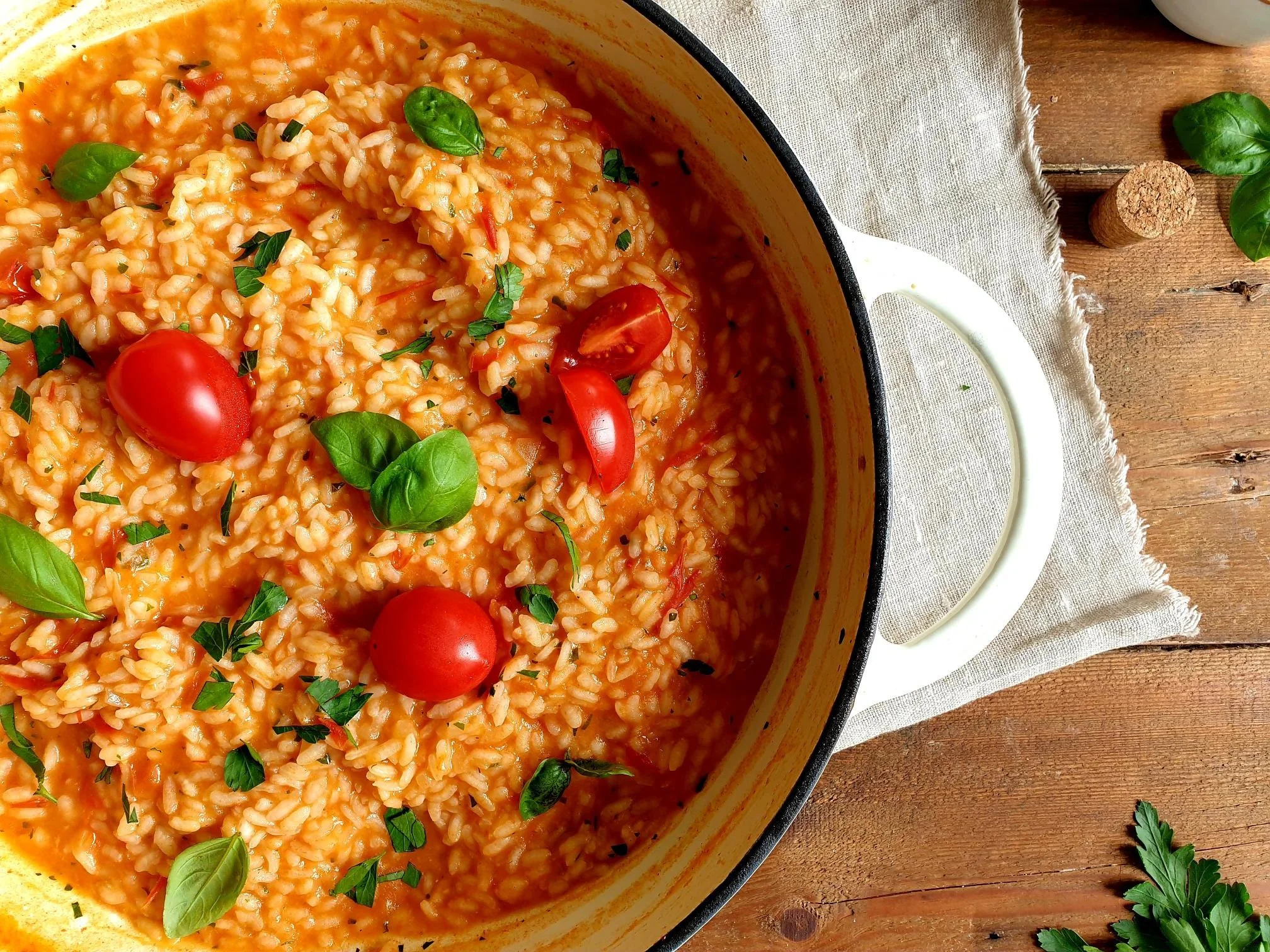
This light and fresh summer risotto is made with juicy and ripe tomatoes that are in season, and it is a great alternative to a very much loved and more common pasta with tomatoes sauce.

It is low in budget, healthy, incredibly easy and simple to make, an ideal solution for a midweek lunch or dinner, it can be served as first course or as a main paired with grilled or pan fried fish or meat.

During the whole of the summer season, and especially during the summer holidays, my mother would make this colourful risotto quite often, this is the time of the year when the the tomatoes are at their peak, the ripest and the sweetest, and they are in abundance.

I am sharing here my mother's recipe for this humble and delicious summer tomato risotto served with freshly torn fragrant basil leaves and a drizzle of olive oil, you will come back to this recipe time and time again.

Recipe

Ingredients

  • 4 Tbsp extra virgin olive oil

  • 1 onion (about 100g), peeled and finely chopped

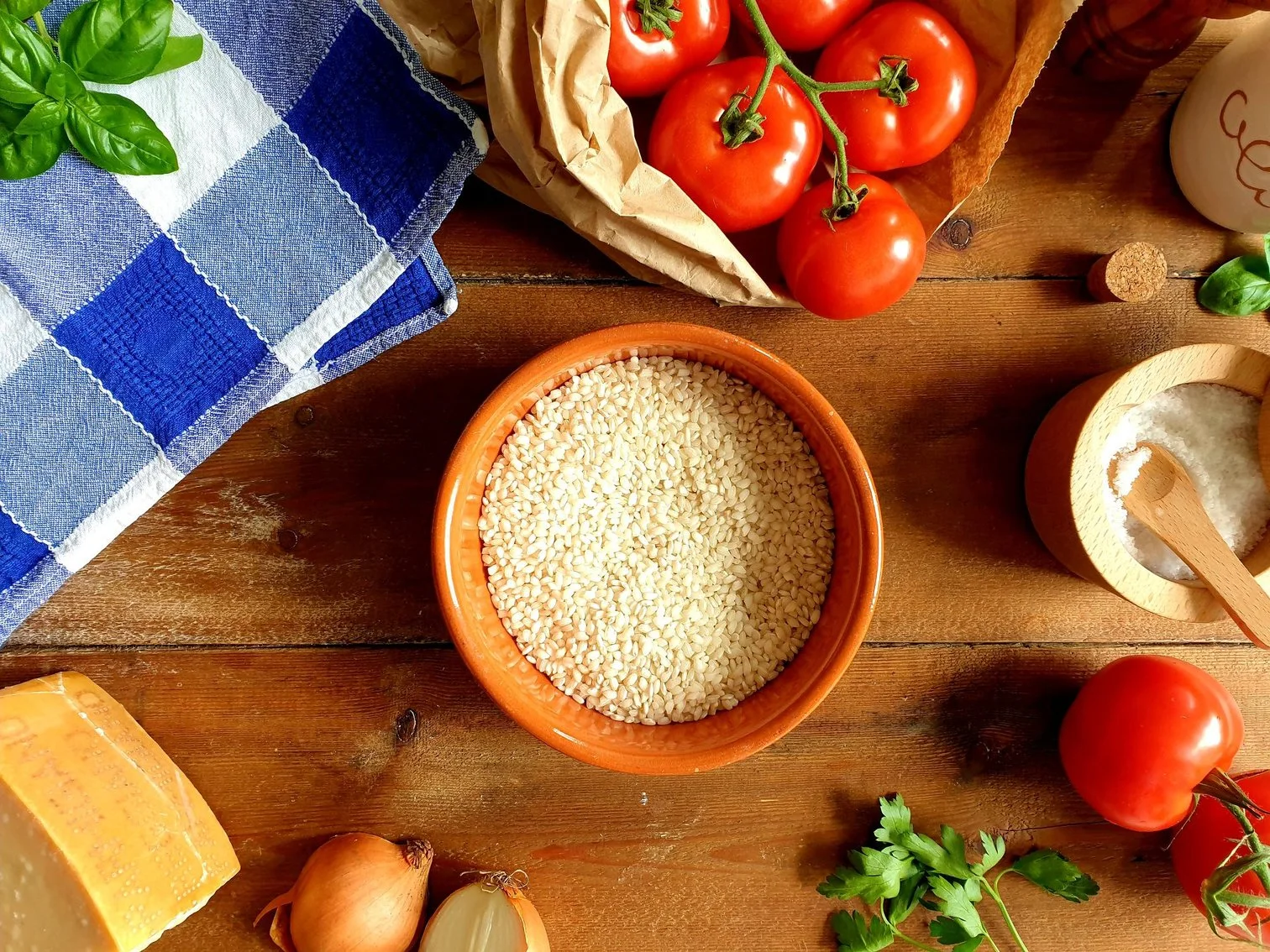
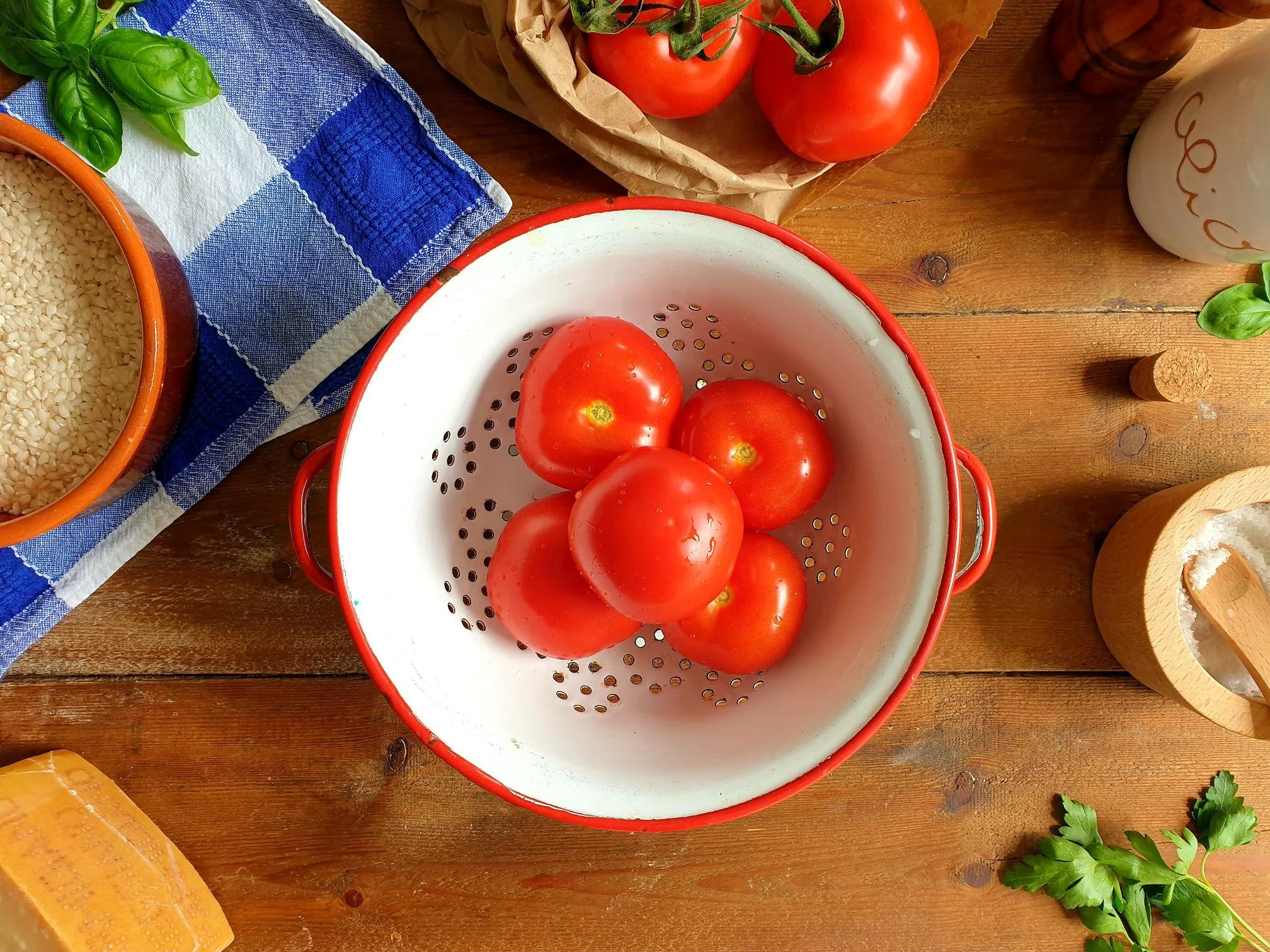
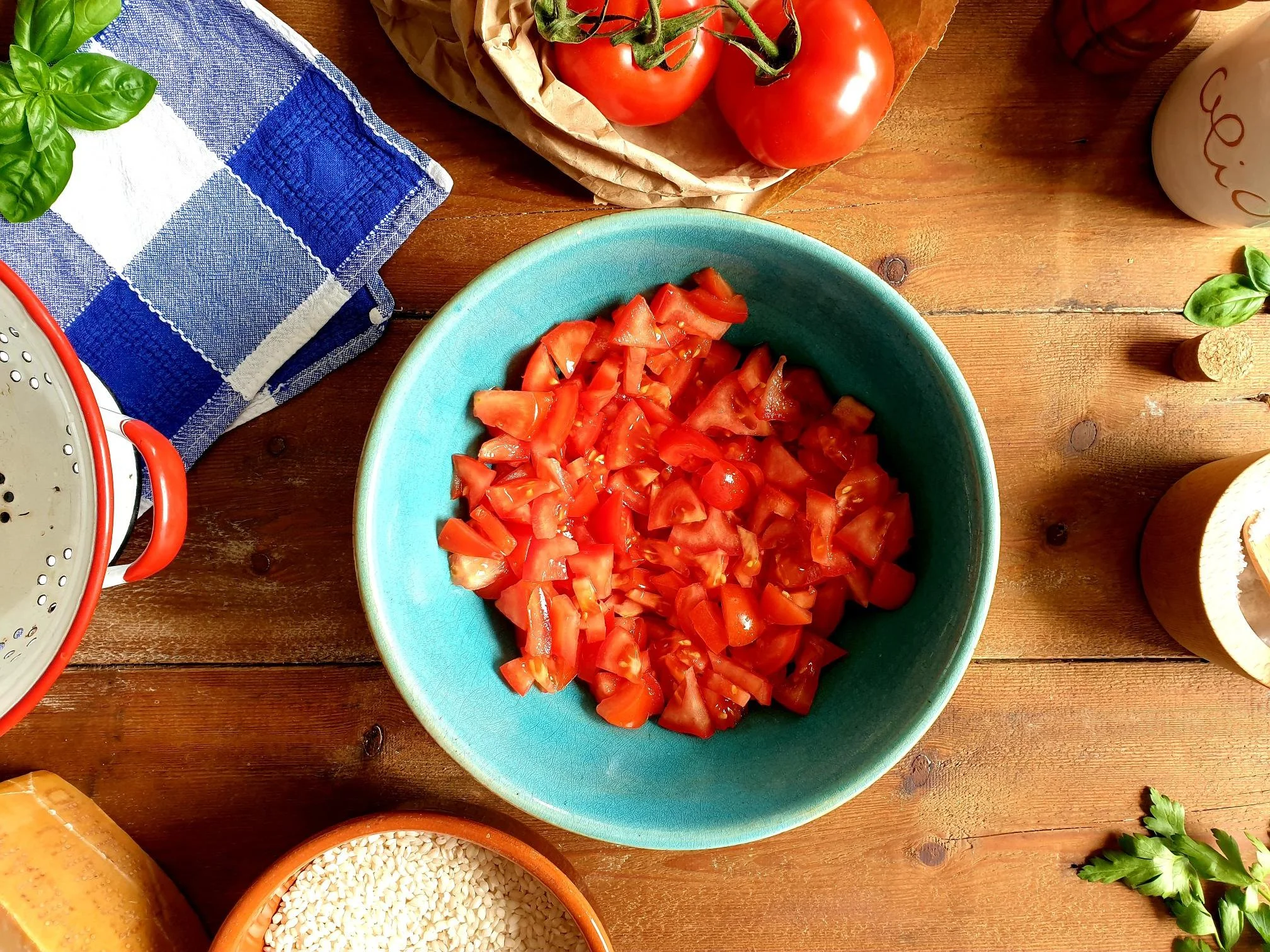
  • 500g vine tomatoes or other variety of ripe and sweet tomatoes, washed and roughly chopped

  • 300g risotto rice (like Vialone Nano, Arborio or Carnaroli)

  • a few fresh basil leaves

  • 1 litre of hot vegetable broth or stock (you can use instant vegetable stock powder)

  • a bit of fresh flat leaf parsley, finely chopped

  • sea salt

  • ground black pepper

  • a handful of Parmiggiano Reggiano or Grana Padano cheese, finely grated, optional

  • a knob of butter, optional

Method

Before starting making risotto have your boiling hot vegetable stock ready to hand for later.

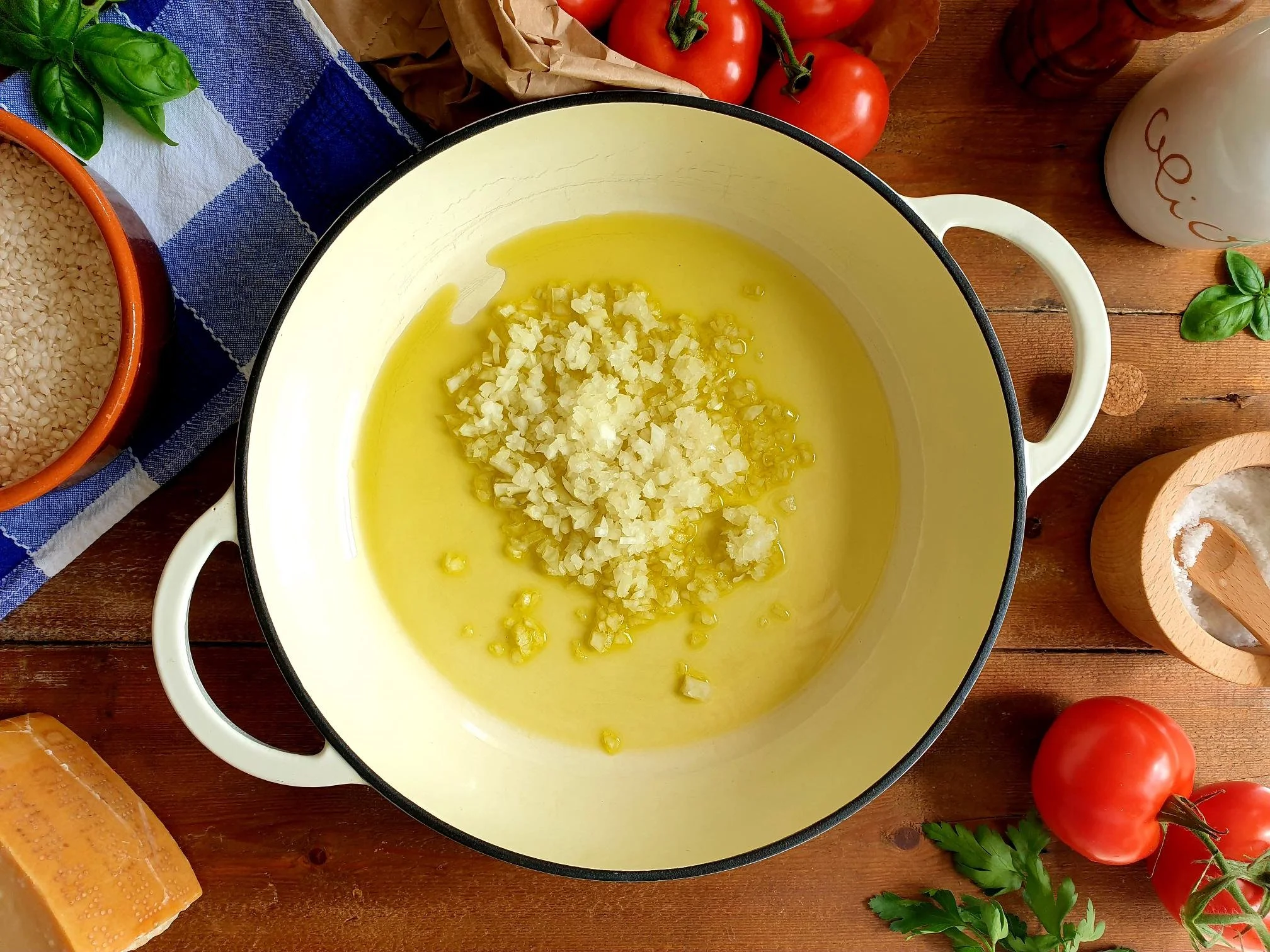
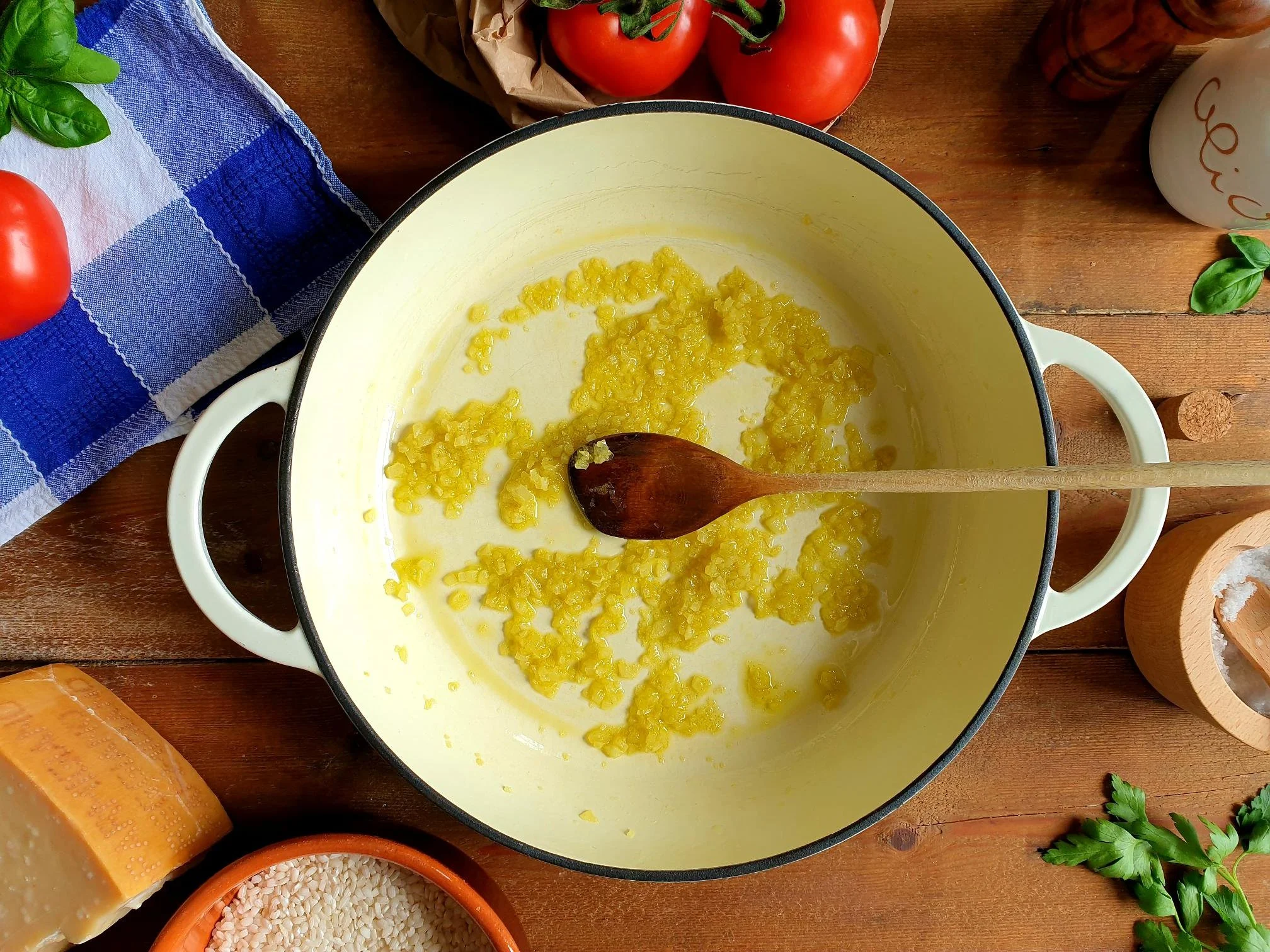
Put extra virgin olive oil in a pan, add finely chopped onions, a pinch of salt, and sauté for a few minutes on a gentle heat until cooked down and soft.

View fullsize Tomato Risotto 3.jpg
View fullsize Tomato Risotto 7.jpg

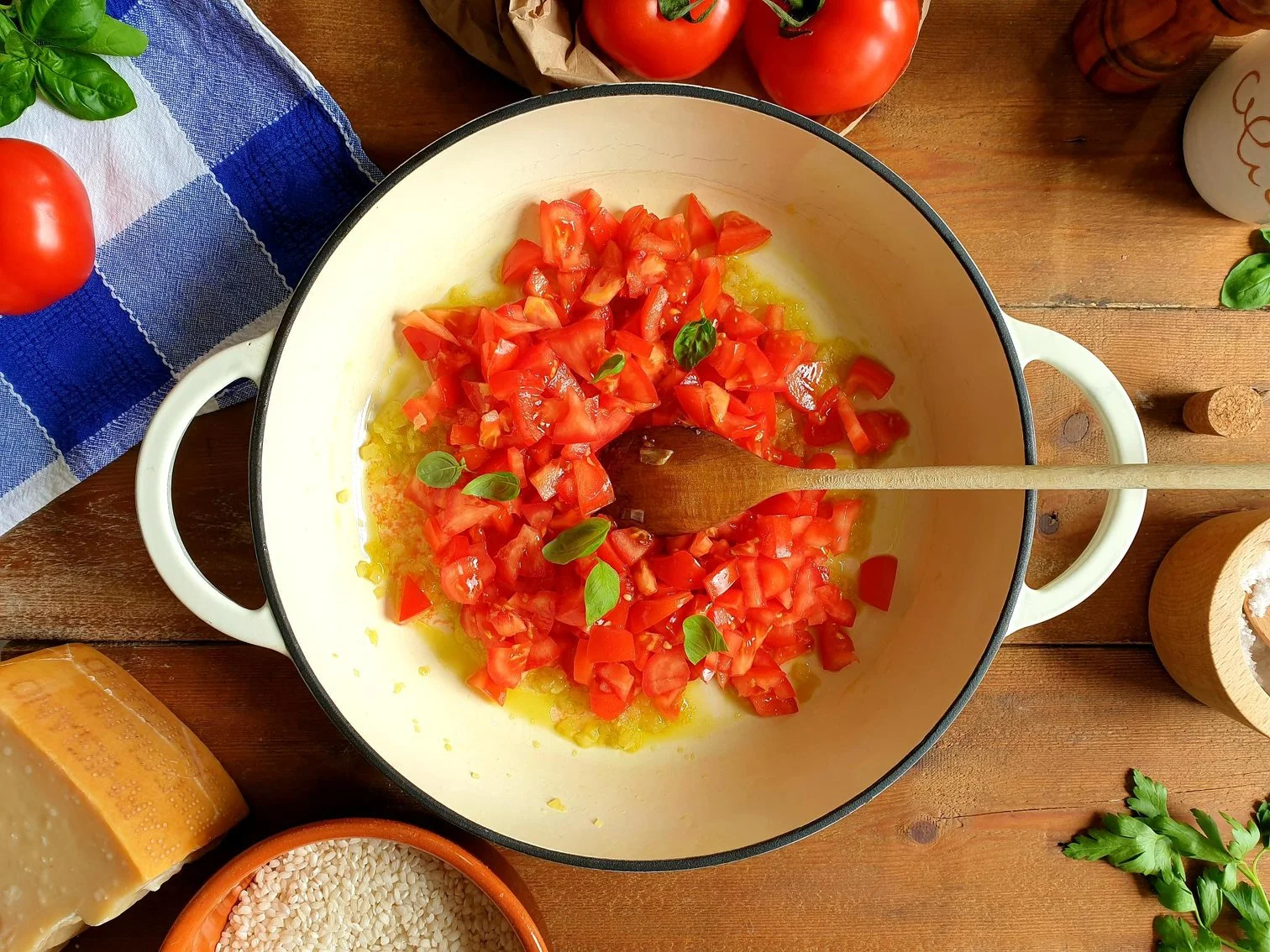
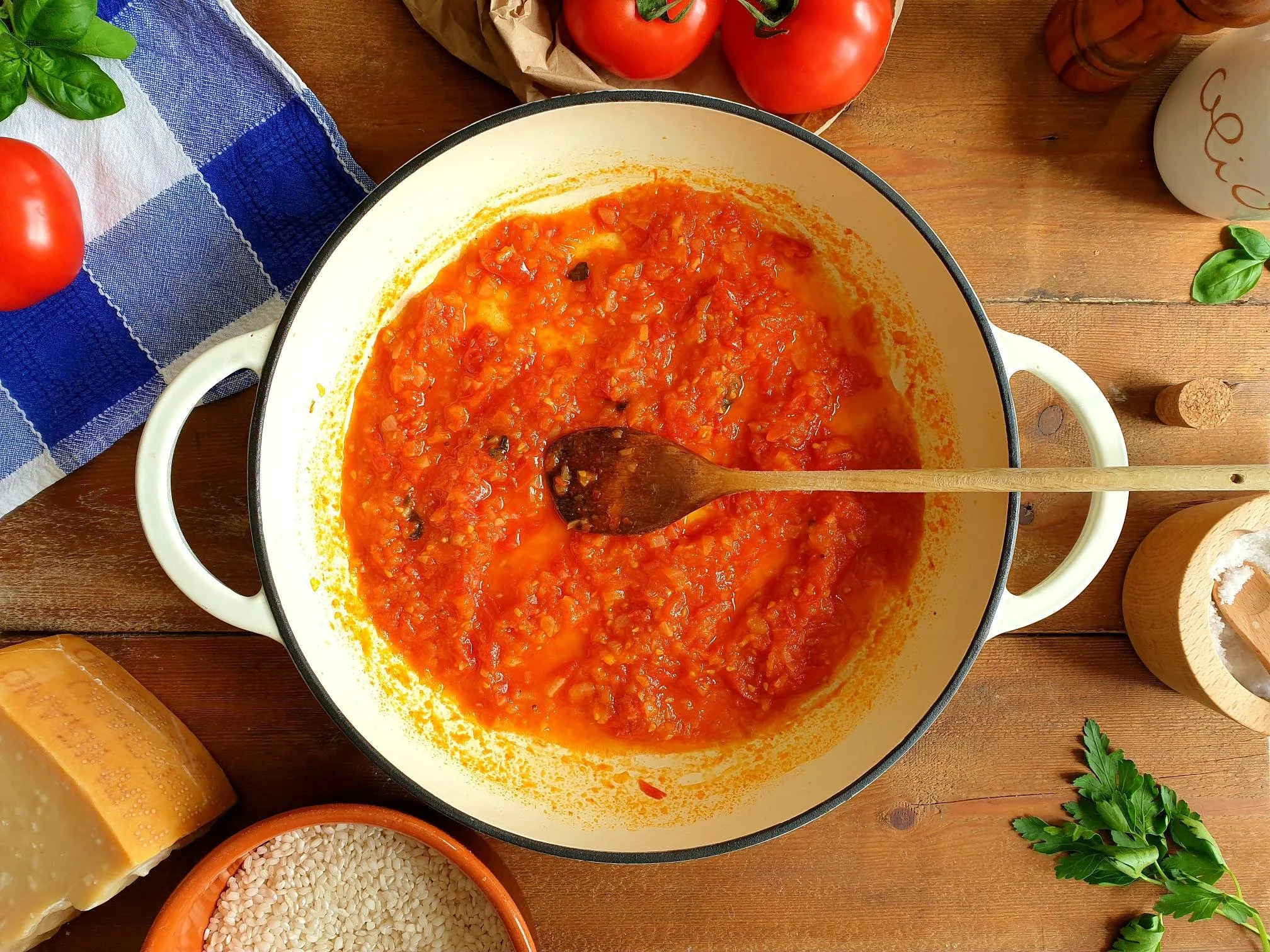
Add roughly chopped tomatoes, a few basil leaves, put the lid on and cook for about 10-15 minutes stirring occasionally. The tomatoes should be fully cooked and broken down.

View fullsize Tomato Risotto 4.jpg
View fullsize Tomato Risotto 6.jpg
View fullsize Tomato Risotto 9.jpg
View fullsize Tomato Risotto 10.jpg

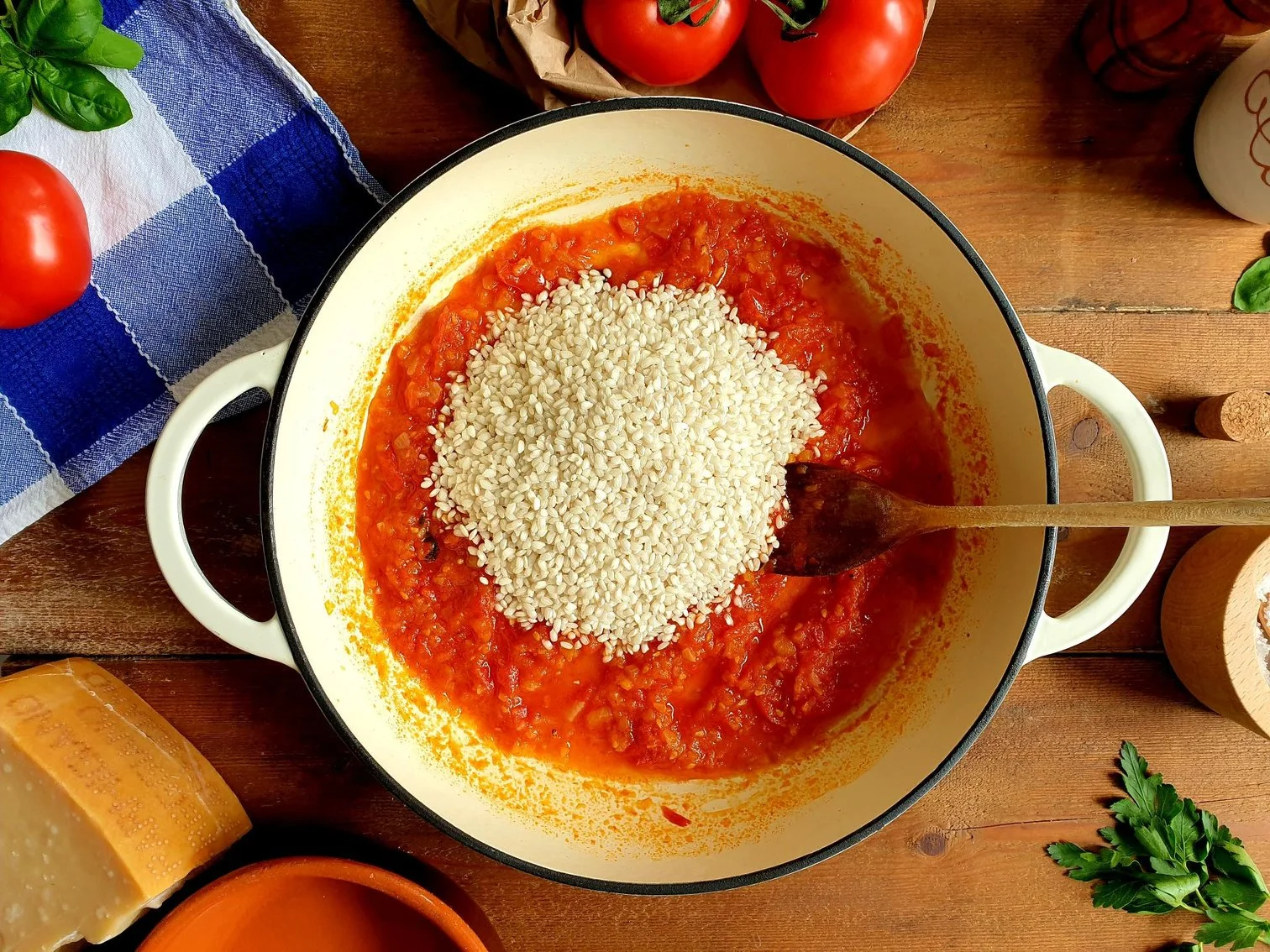
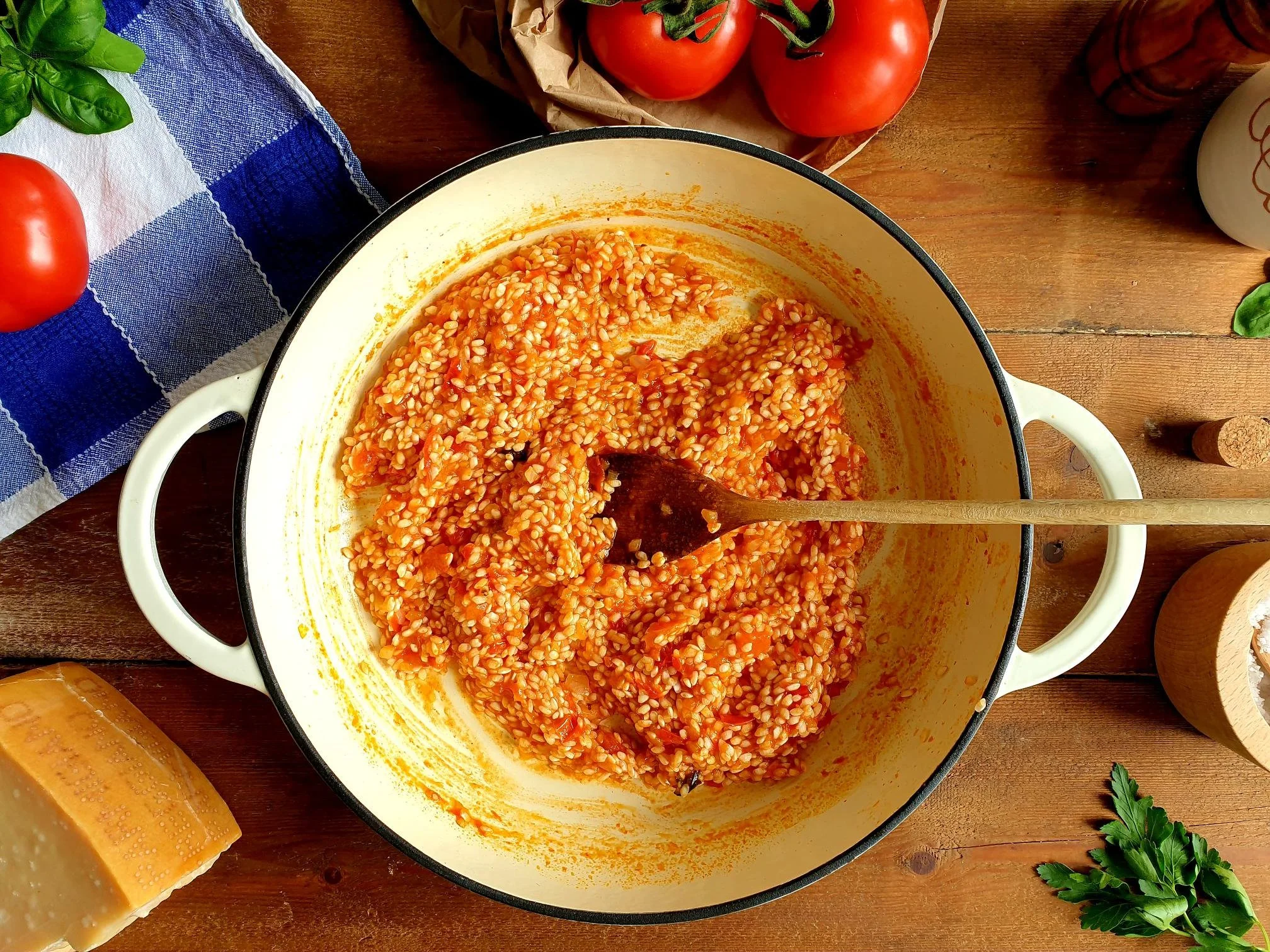
Add the rice and toast it for a few minutes, stirring constantly to avoid sticking to the bottom of the pan.

View fullsize Tomato Risotto 11.jpg
View fullsize Tomato Risotto 12.jpg

Pour or ladle a bit of hot vegetable stock and cook until the first amount of liquid is absorbed.

Start gradually adding ladles of hot stock, one at a time, allowing the liquid to be absorbed before adding more (you might not need all the stock).

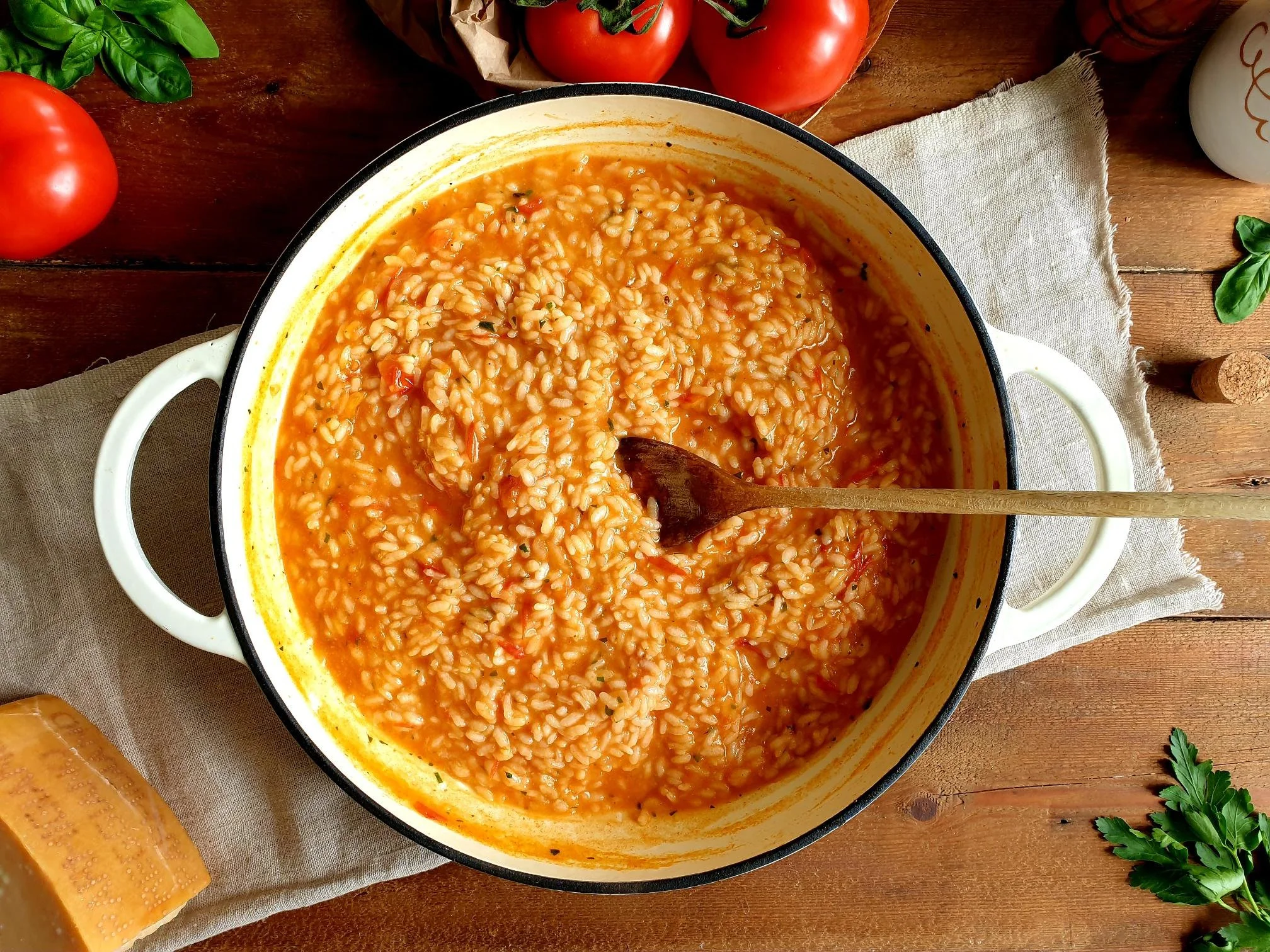
There should be enough liquid just to cover the risotto, the Italians say that a risotto should be smooth and runny enough to be described as all'onda, on the wave.

Cook on a medium heat, siring almost constantly, until the rice is cooked al dente (meaning fully cooked but still a bit firm when bitten).

It should roughly take between 15-18 minutes for a risotto to be cooked.

Taste and adjust the seasoning with black pepper (if using) and sea salt, but this might not be necessary since the stocks from the stores generally speaking contain salt already.

Stir in finely chopped fresh leaf parsley.

For even creamier texture and a slightly richer flavour you can finish cooking the tomato risotto with a typical Italian mantecare phase (as soon as the risotto is cooked, remove the saucepan from the heat, add grated cheese and a knob of cold butter to the risotto, and stir with a wooden spoon quite vigorously).

Serve immediately while the risotto is still hot and a bit runny in consistency.

Ladle the risotto onto the plates and sprinkle with some roughly chopped fresh parsley and a few basil leaves for garnish and drizzle with extra virgin olive oil.

Wine suggestion

Alto Adige Valle Isarco Müller Thurgau DOC "Sass Rigais" 2021 - Manni Nössing

June 21, 2023 /tina oblak
fresh tomatoes, ripe tomatoes, sweet tomatoes, San Marzano tomatoes, fresh vine tomatoes, risotto rice, Arborio rice, Carnaroli rice, light risotto, tomato risotto
Adriatic Recipe, Appetizers, child friendly dish, child friendly meal, dinner, Easy recipe, family friendly dish, family friendly meal, first course, first course dish, first course meal, Healthy, healthy mael, Istrian cuisine, Istrian dish, Istrian food, Istrian gastronomy, light meal, main course, main dish, main vegetarian course, main vegetarian dish, main vegetarian meal, Nutritious, Nutritious dish, one pot meal, recipe from Northern Ital, Risotti, Risotto, Rustic dish, simple recipe, Slovenian cuisine, Slovenian food, Slovenian gastronomy, Starters, summer dish, summer recipe, supper, Vegan, Vegetables, Vegetarian
Comment

Mackerel in a Pan with Olive oil, Lemon juice and Fresh parsley Recipe

Beans and Sardines
May 11, 2023 by tina oblak in Adriatic Recipe, All year round recipe, Appetizers, brunch, child friendly dish, child friendly meal, dinner, family friendly dish, family friendly meal, Fish & Seefood, fish starter, Healthy, healthy mael, Istrian cuisine, Istrian dish, Istrian food, Istrian gastronomy, light fish course, light meal, main course, main dish, main fish course, main fish meal, Nutritious, Nutritious dish, one pot meal, simple recipe, Slovenian cuisine, Slovenian food, Slovenian gastronomy, supper

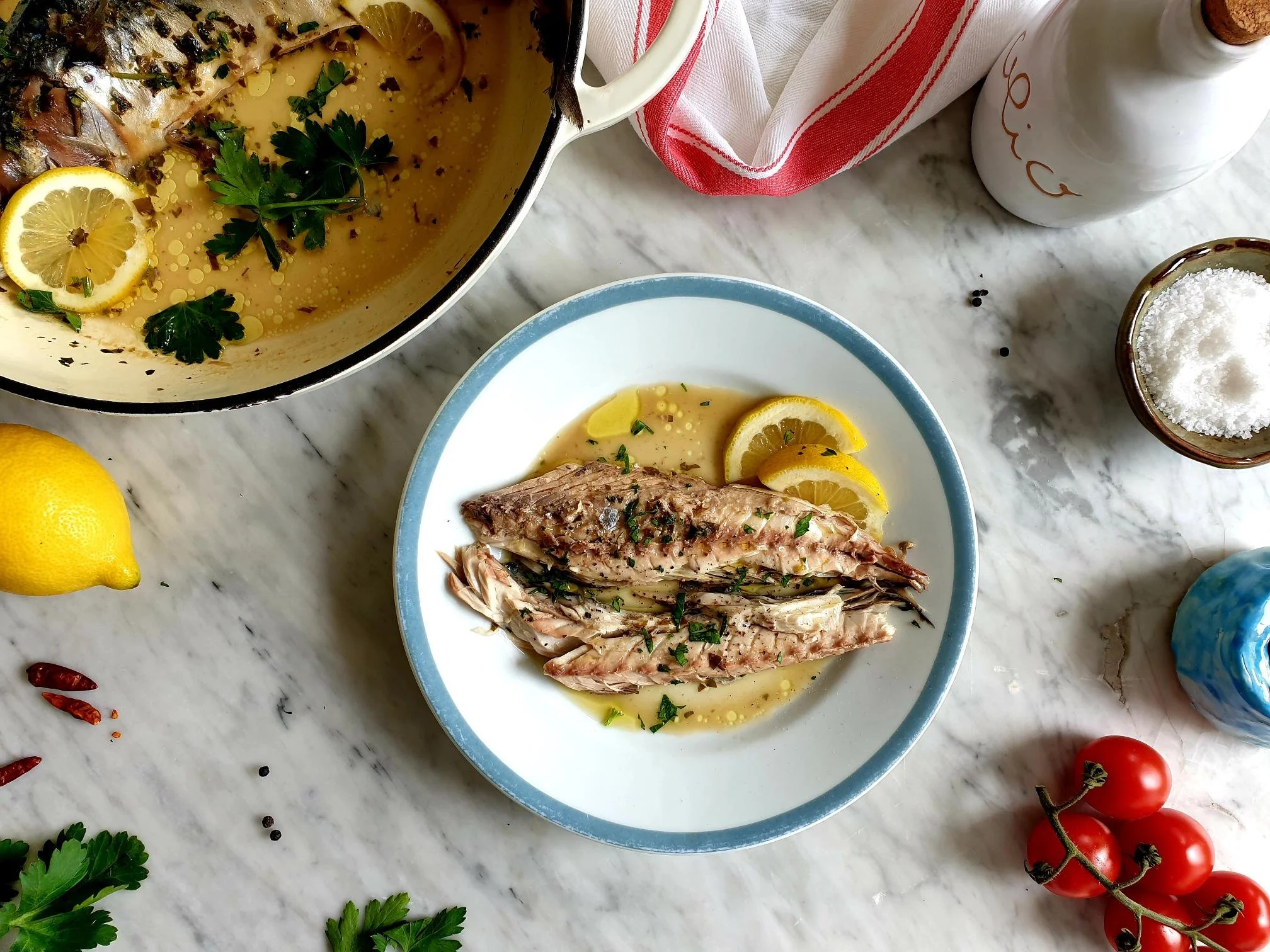
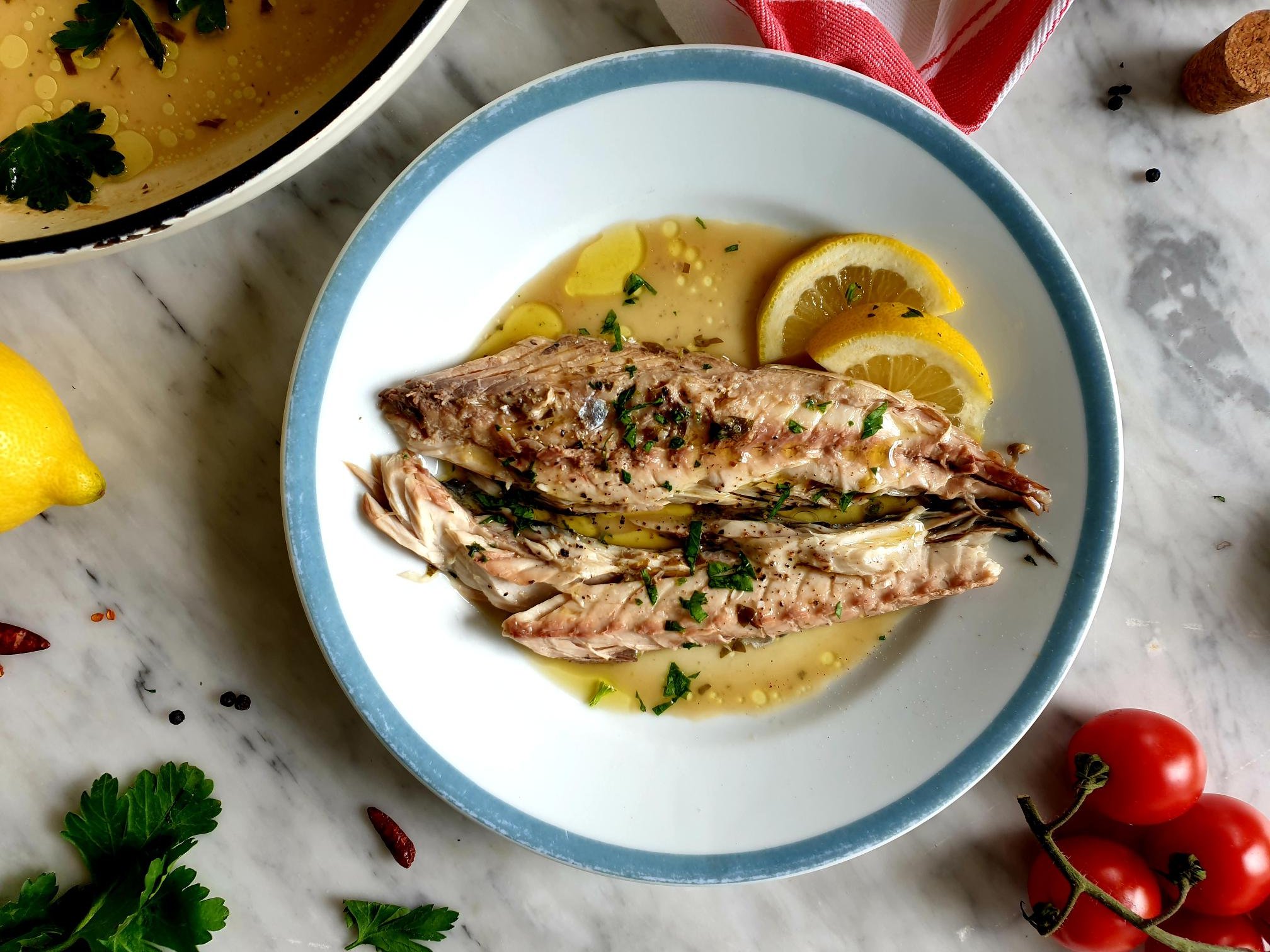
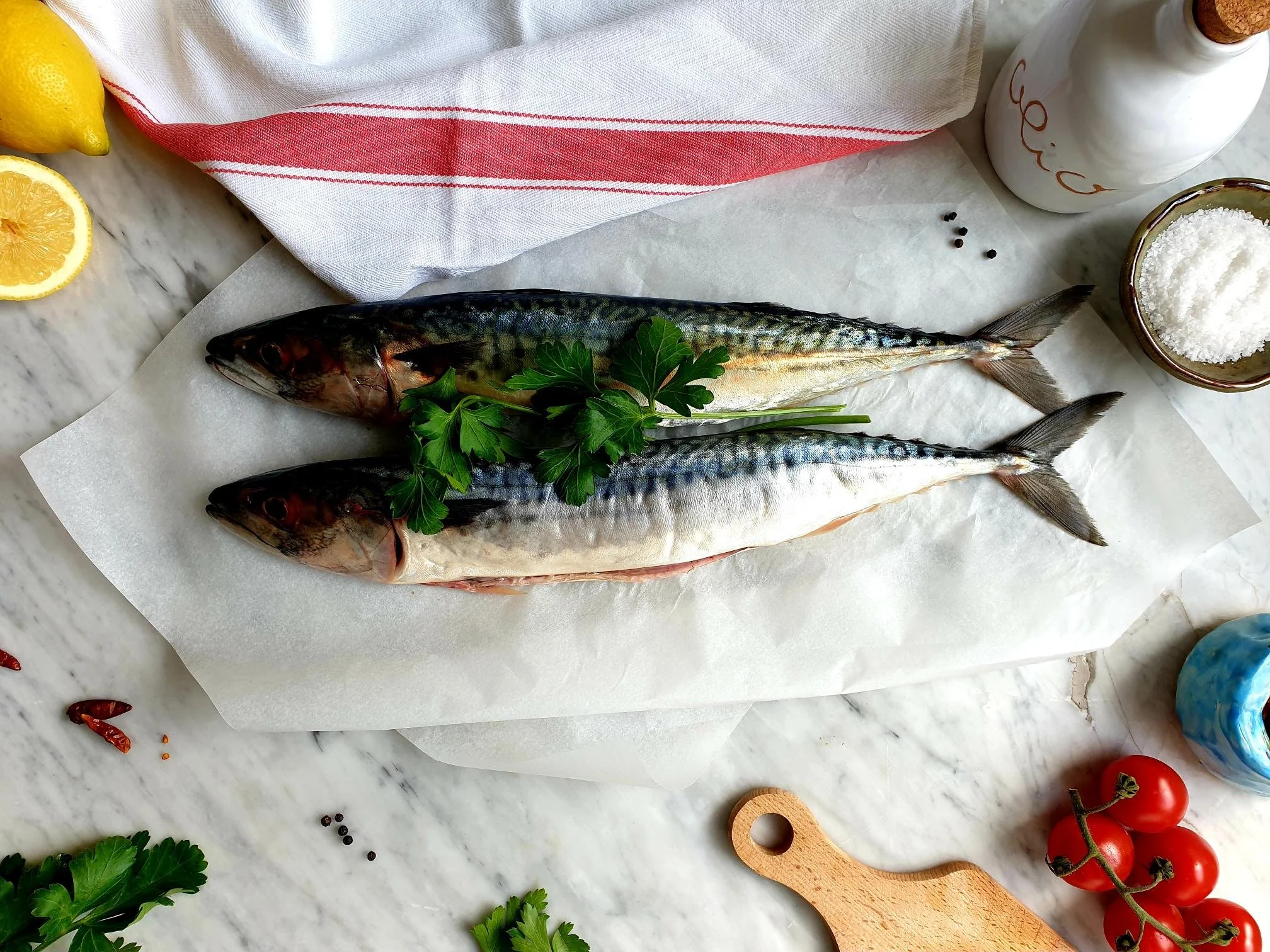
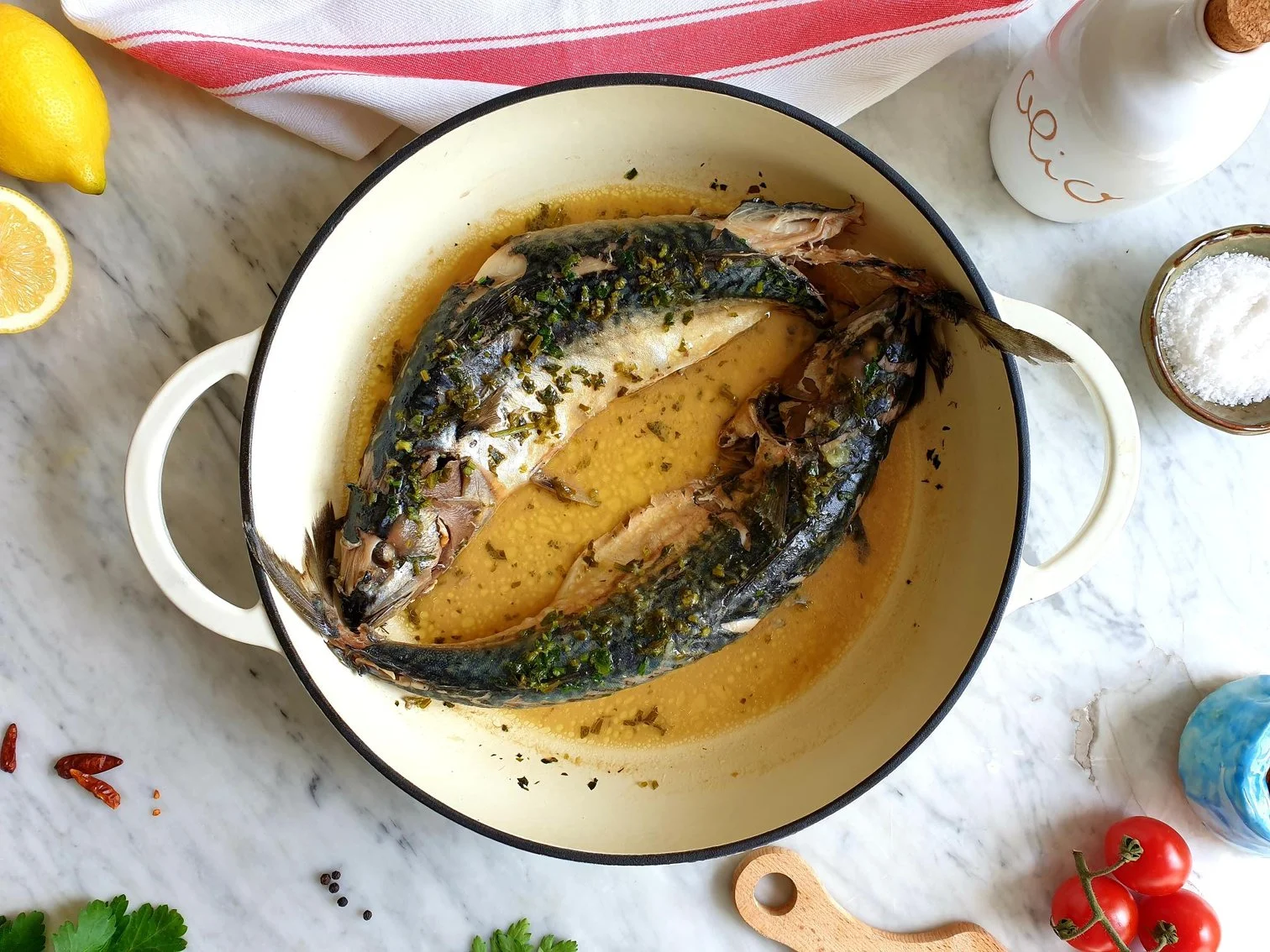
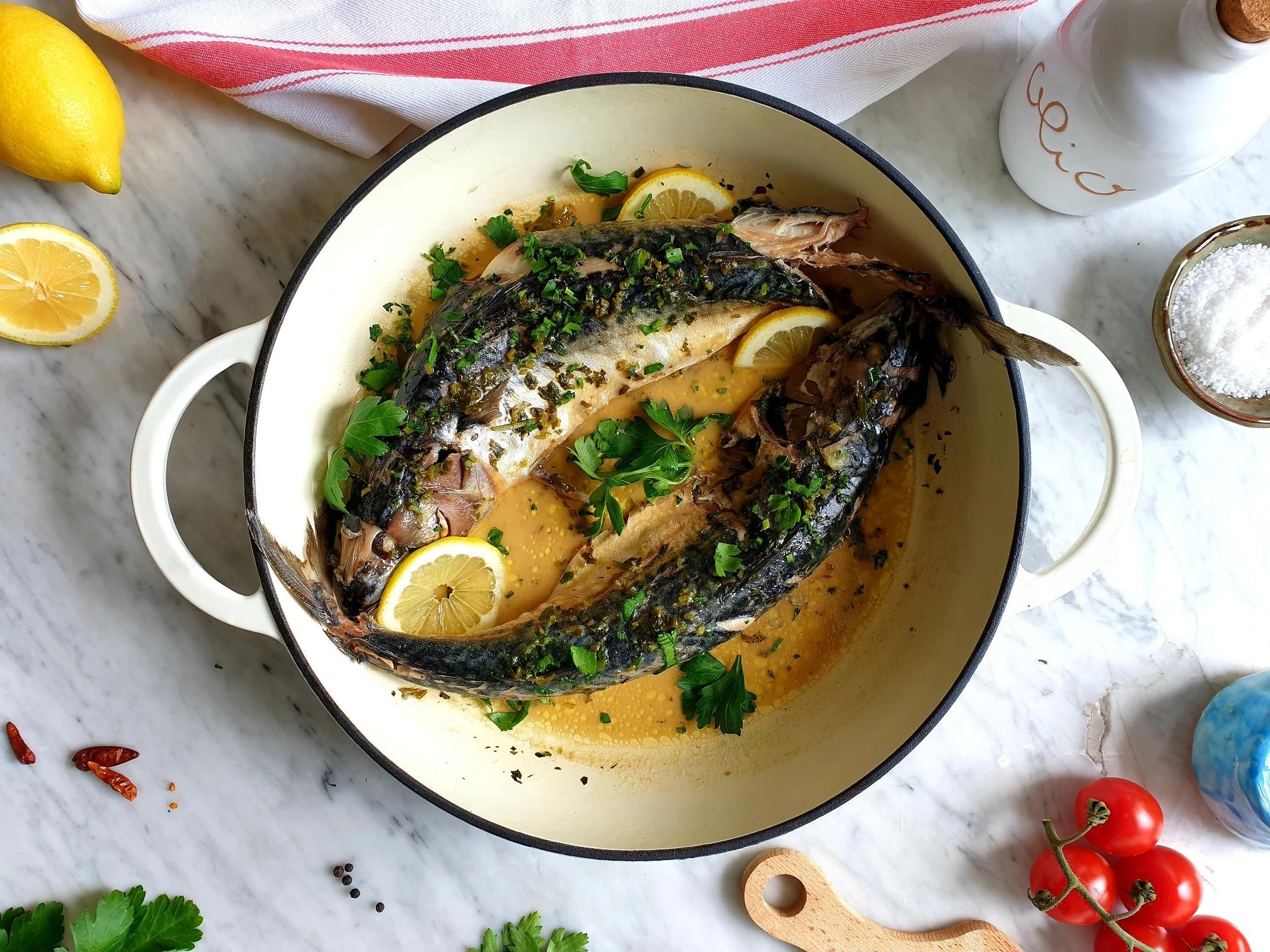
Mackerel, or any other type of fish, cooked in a pan with olive oil, fresh parsley, lemon juice and a splash of water is probably the simplest fish-based recipe, and it is absolutely perfect for all of those who are slightly intimidated and generally not too confident cooking with fish.

It is a no-fuss dish and a great choice for a quick and uncomplicated rustic lunch or dinner, it is very nutritious and healthy as it contains beneficial fats (omega-3 fatty acids).

This dish is of Venetian influence and the success of it lies in seasoning well the fish and using the freshest and best quality ingredients you can find and afford to buy.

Mackerel is an inexpensive, affordable, massively underrated fish, and far too often overlooked by the shoppers, maybe perhaps it is an oily fish that carries a slightly stronger and distinctive flavours compared to some other fish.

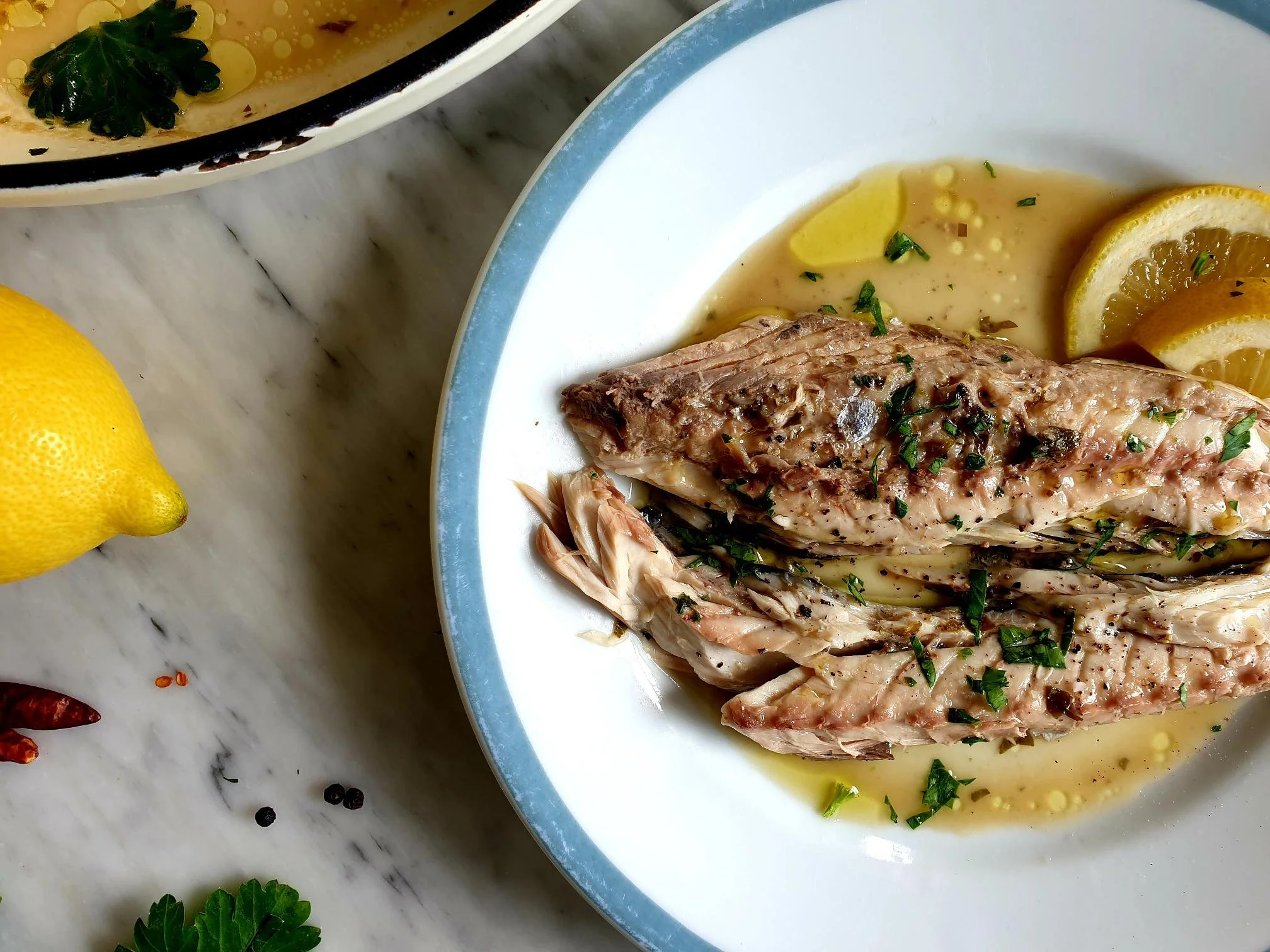
In this one pan recipe the fresh and citrusy ingredients like parsley and lemon juice, cut through the richness, “oiliness” and “fishiness” of the mackerel, and when combined with the juices released from the fish during the cooking process. This combination of the flavours produces the most stunning plate of food.

I am sharing here this very simple family recipe, which is an absolute winner. Fish cooked this way has been prepared and loved in my family for generations using different types of fish depending on what was found fresh in the fish market on the day.

Recipe

Ingredients

Serves 4

  • 1kg fresh mackerel, gutted, cleaned, washed, and dried (the fishmonger will be happy to do this for you, alternatively you can use the fillets).

    For this recipe you can easily replace mackerel for other types of fish or fillets of your choice like sea bream, sea bass, sardines, trout, and monkfish to name just a few.

  • 4 Tbsp extra virgin olive oil

  • a handful of fresh flat leaf parsley (about10g, plus some extra for serving), finely chopped

  • lemon juice of ½ lemon or to taste

  • sea salt

  • black pepper

Method

Season the outside and the inside (the cavity) of the mackerel with sea salt.

Put the olive oil in a pan (big enough to accommodate the mackerel).

Place the whole fish or the fillets in a pan in a single layer.

Sprinkle with fresh parsley, add the lemon juice, a splash of water and black pepper to taste (optional).

Cover with the lid and cook the fish on a gentle heat for about 25 minutes (if using the fillets cooking time will reduce to about 15 minutes).

View fullsize Mackerel with lemon juice, olive oil and parsley 2.jpg
View fullsize Mackerel with lemon juice, olive oil and parsley 3.jpg

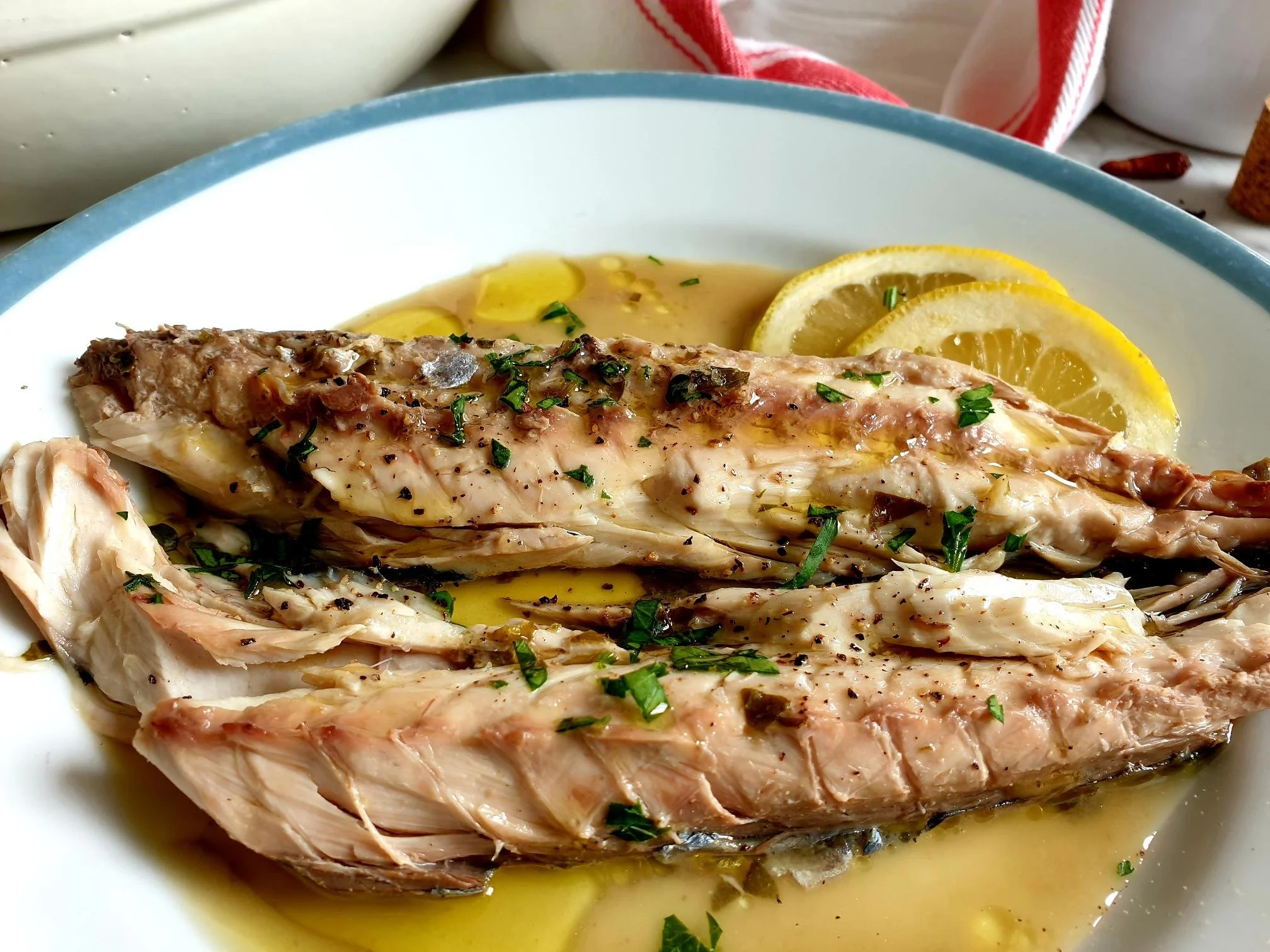
To serve, lay the whole mackerel, or the fillets, on a plate and pour the juices they have released during the cooking process, over them.

Best enjoyed warm with some crunchy rustic bread, boiled potatoes, cooked rice, grilled polenta, and a side salad of your choice.

Wine suggestion

Venezia Giulia Bianco Sivi IGT 2018 - Dario Princic

May 11, 2023 /tina oblak
whole mackerel, whole fresh mackerel, fresk mackerel fillets, trout, sea bass, sea bream, monkfish, lemon juice, fresh parsley, skuša
Adriatic Recipe, All year round recipe, Appetizers, brunch, child friendly dish, child friendly meal, dinner, family friendly dish, family friendly meal, Fish & Seefood, fish starter, Healthy, healthy mael, Istrian cuisine, Istrian dish, Istrian food, Istrian gastronomy, light fish course, light meal, main course, main dish, main fish course, main fish meal, Nutritious, Nutritious dish, one pot meal, simple recipe, Slovenian cuisine, Slovenian food, Slovenian gastronomy, supper
Comment

Chicken Stew with Simple Dumplings (Obara) Istrian Style Recipe

Beans and Srdines
April 26, 2023 by tina oblak in Adriatic Recipe, All year round recipe, Austrian inspired dishes, casserole, child friendly dish, child friendly meal, dinner, Dumplings, Easy recipe, family friendly dish, family friendly meal, first course, first course dish, first course meal, Gnocchi, hearty dish, Hearty soups, Istrian cuisine, Istrian dish, Istrian food, Istrian gastronomy, main course, main dish, Meat, Mitteleuropean cuisine, Mitteleuropean dish, Mitteleuropean food, Mitteleuropean recipes, no egg fresh pasta, one pot meal, one pot meat recipe, Pasta, Rustic dish, simple recipe, Slovenian cuisine, Slovenian food, Slovenian gastronomy, Soups, stew

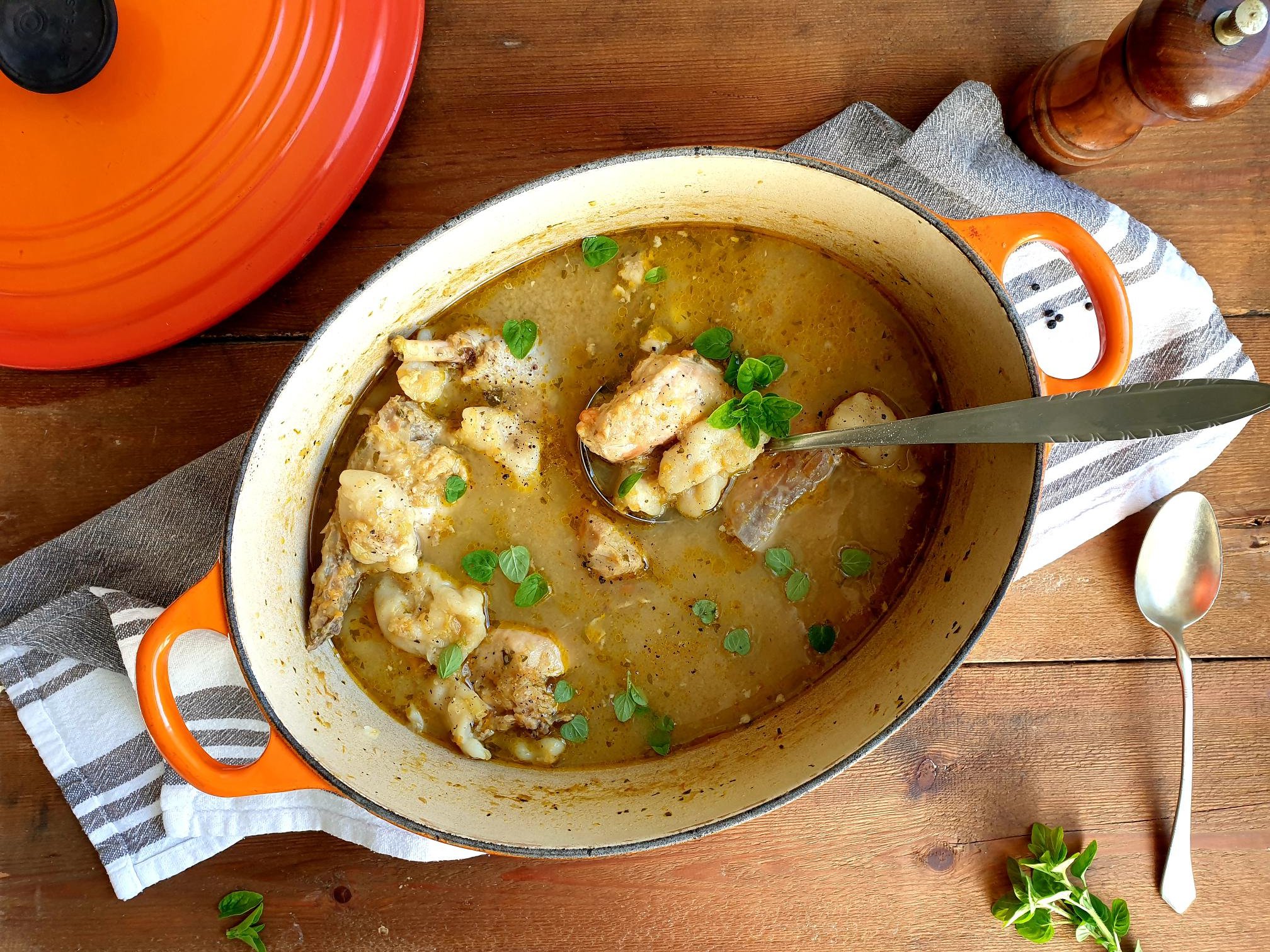
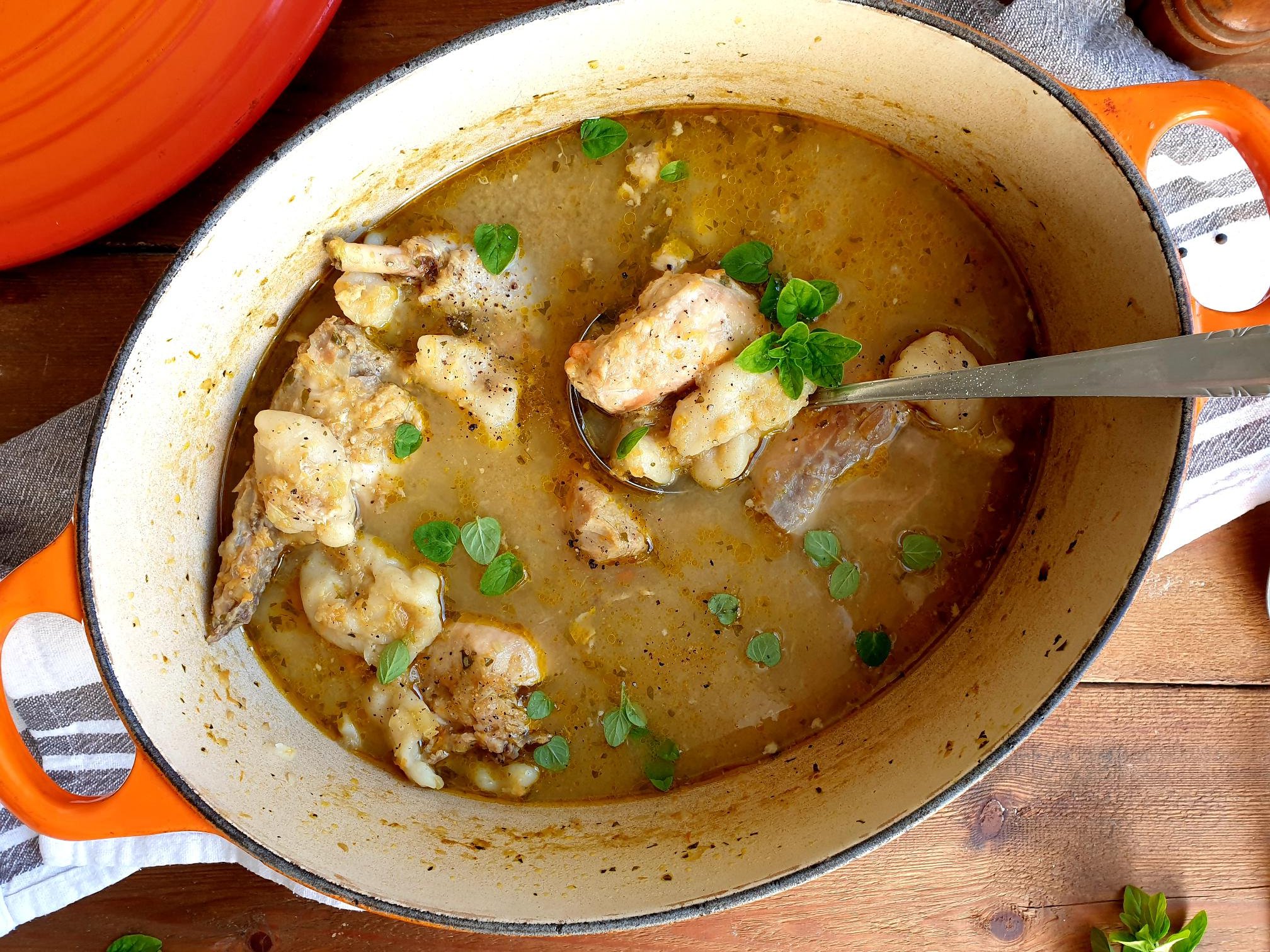
This dish must be one of the most comforting foods ever. It is rustic, homely, authentic, it showcases true simplicity at its best, and best of all it is incredibly easy to make.

Onions, celery, carrots, and pieces or chunks of chicken are slowly cooked until the vegetables are completely soft and the chicken slightly browned. Then the water, fresh marjoram, and the seasoning are added, and the stew is then gently boiled for less than an hour. The simple dumplings are then cooked in the hot stew giving it a slightly thicker and velvety consistency.

This dish is part of the traditional Slovenian cuisine (known as Piščančja or Kokošja obara or simply known as Obara) and is very popular up and down the country, with a different regional variations along the way. An array of vegetables (peas, celeriac, cauliflower, leeks etc.) and herbs (thyme, bay leaf, parsley) can be added to the stew. It is cooked in households on a regular basis and can sometimes be found in rustic style restaurants, and then it is eaten as independent meal (main dish).

My paternal grandmother (nona Nada) and my maternal grandfather (deda Anton) made the very best, and they always took a great care and pride to cook one of the humblest peasant dishes.

They both told me that this stew was made from the old chickens that no longer laid the eggs – so everything was used, and nothing was wasted. The meat was quite hard, and tuff and it needed hours of cooking in order to become more tender, but it did provide a very flavoursome and tasty stew. It was then served with simple flour dumplings floating elegantly on top, and sometimes an egg would be added to the basic flour batter for extra richness (one of the variations on the dumplings recipe calls for semolina flour).

This stew is one of the top favourite dishes in the family, and here I am sharing the recipe of my grandparents from Slovenian Istra.

The recipe for the dumplings used for this stew are inspired and originated from Austrian style gnocchi called Nockerel (the batter is made with eggs and flour, then they are cooked in hot boiling water and eaten as a main dish with different sauces, beef goulash being the most common one).

This gastronomic influence will come as no surprise as Slovenia is geographically very close to Austria and was once also ruled by the Austro- Hungarian Empire.

Recipe

Ingredients for the stew

Serves 4-6

  • 1 big onion (about 220g), peeled and finely chopped

  • 1 carrot (about 100g), peeled and finely chopped or finely grated

  • 1 celery stick (about 40g), finely chopped

  • 2 Tbsp olive oil

  • 700g roughly of chicken meat like tights, drumsticks, wings, breast

    (chicken pieces that you choose can be on the bone or without, with the skin or skinless, bear in mind that the skin will give the stew more flavour but can also make it too oily and greasy and potentially unpleasant to eat).

    For this recipe I used ½ of the whole chicken and cut it in smaller random sized chunks and removed most of the skin.

  • 1 generous Tbsp fresh marjoram, very finely chopped (you can also use dry marjoram)

  • 1 Tbsp white flour

  • 2 litres of water

  • sea salt

  • black pepper

    Ingredients for the dumplings

  • 200g white plain flour

  • 150ml roughly water

  • sea salt

Method

Place the olive oil in a stewing pan and add finely chopped onions, celery, finely grated carrots, and the chicken meat.

Season with sea salt and black pepper and cook altogether, very slowly on gentle heat, stirring quite frequently until the vegetables cook down completely and become soft and the chicken is lightly brown and caramelized on the outside. This could take up to 45 minutes, but it is crucial for the success of the dish.

View fullsize Obara 2.jpg
View fullsize Obara 4.jpg

Sprinkle with flour and stir, then add the water, chopped marjoram, and bring to boil.

Turn the heat down, partially cover with the lid, and cook gently for about 45 minutes.

While the stew is cooking prepare the batter for the dumplings.

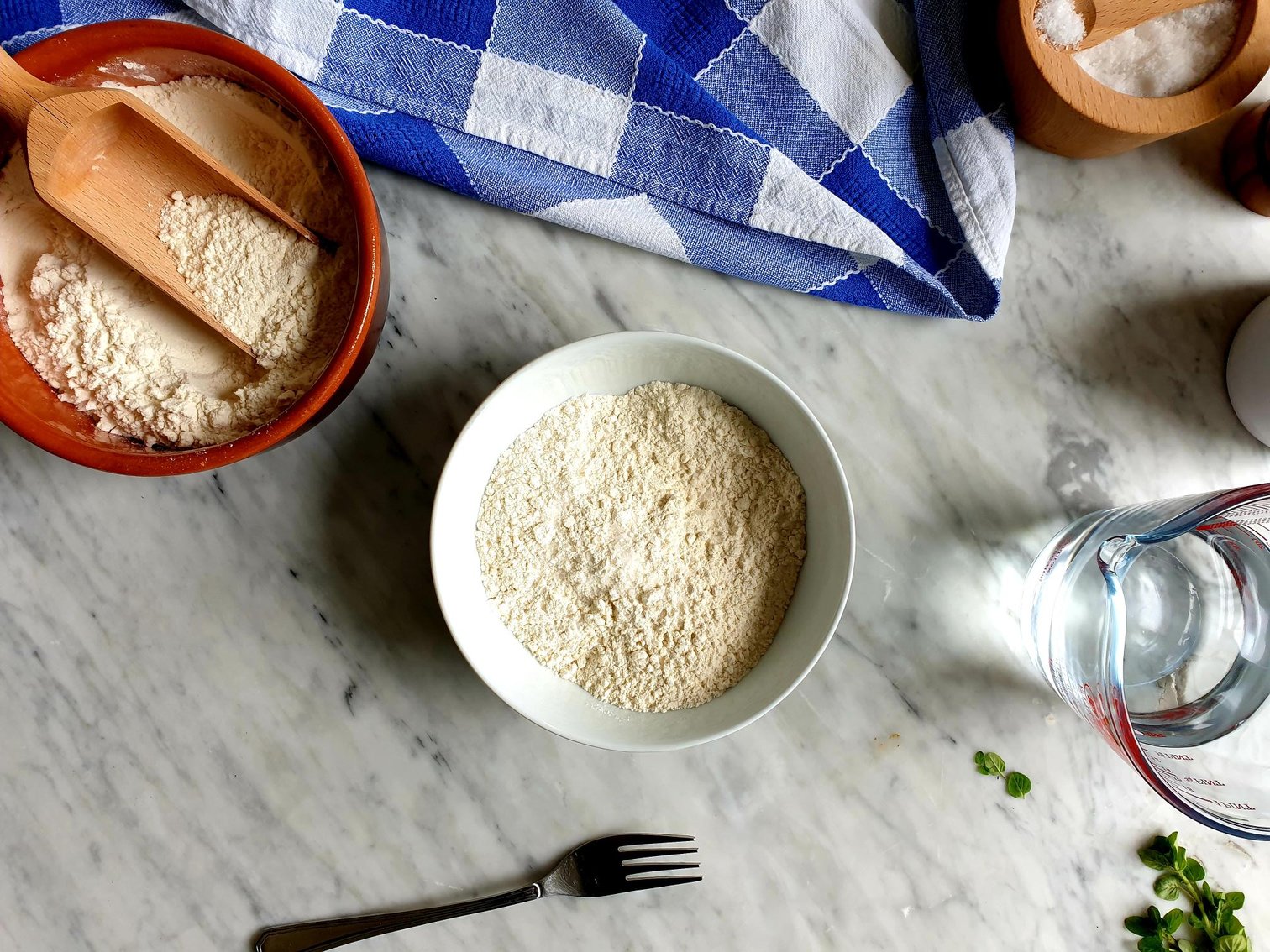
Put the flour in a bowl and add a pinch of sea salt.

Gradually start pouring the water and mix with the fork until you get the consistency of a quite thick pancake batter. Beat the batter until it gets quite stiff and lump free. Set aside and leave to rest until the chicken stew is cooked.

View fullsize Obara 6.jpg
View fullsize Obara 7.jpg

Taste the stew and adjust the seasoning with sea salt and black pepper.

Remove the chicken pieces form the stew. Remove the skin and the bones.

To make the dumplings dip the spoon into the gentle boiling chicken stew (this should prevent the batter sticking to the spoon).

Simply scoop up with a side of a teaspoon a bit of batter and gently drop it in the stew (dipping the teaspoon into the hot stew will help the batter just slide off the spoon, if it does not, help yourself with another spoon).

View fullsize Obara 8.jpg
View fullsize Obara 9.jpg

Repeat the process and drop the dumplings into the hot stew one by one until you finish all the batter.

Cook the dumplings for about 5 minutes in gently boiling stew (do not boil the stew aggressively).

Put back in the stew the pieces of chicken (free of bones and skin) and serve hot immediately.

Just a thought

This stew, like most stew and soups, is best made in advance.

You can keep cooked chicken stew in the fridge in an airtight container for about two days.

This dish freezes very well.

Dumplings can be made using buckwheat flour instead of white plain flour and the amount of water needs to be adjusted accordingly (different types of flour absorb different quantities of liquid).

Dumplings can also be made using the eggs. Crack one egg into a bowl and whisk gently. Add a pinch of sea salt, plain white flour and water as needed to obtain a fairly thick batter.

You can also use two eggs and white flour without the addition of water.

Wine suggestion

Alto Adige Pinot Grigio DOC "Porer" 2021 - Alois Lageder

April 26, 2023 /tina oblak
Obara, Piščančja obara, Kokošja obara, Chicken stew, Obara Istrian style, chicken meat, chicken tights, chicken drumsticks, flour dumplings, made ahead, chicken wings, chicken breast, plain flour dumplings, buckwheat flour, buckwheat dumplings, Nockerel, Austrian style gnocchi, fresh marjoram, root vegetables
Adriatic Recipe, All year round recipe, Austrian inspired dishes, casserole, child friendly dish, child friendly meal, dinner, Dumplings, Easy recipe, family friendly dish, family friendly meal, first course, first course dish, first course meal, Gnocchi, hearty dish, Hearty soups, Istrian cuisine, Istrian dish, Istrian food, Istrian gastronomy, main course, main dish, Meat, Mitteleuropean cuisine, Mitteleuropean dish, Mitteleuropean food, Mitteleuropean recipes, no egg fresh pasta, one pot meal, one pot meat recipe, Pasta, Rustic dish, simple recipe, Slovenian cuisine, Slovenian food, Slovenian gastronomy, Soups, stew
Comment

Sea Bass Risotto Istrian Recipe

Beans and Sardines
January 18, 2023 by tina oblak in Adriatic Recipe, All year round recipe, Appetizers, child friendly dish, child friendly meal, dinner, Easy recipe, entrée course, family friendly dish, family friendly meal, first course, first course dish, first course meal, Fish & Seefood, fish starter, Healthy, healthy mael, hearty dish, Istrian cuisine, Istrian dish, Istrian food, Istrian gastronomy, light fish course, light meal, main course, main dish, main fish course, main fish meal, one pot meal, one post fish recipe, recipe from Northern Ital, Risotto, Rustic dish, simple recipe, Slovenian cuisine, Slovenian food, Slovenian gastronomy, Starters, supper, Venetian dish

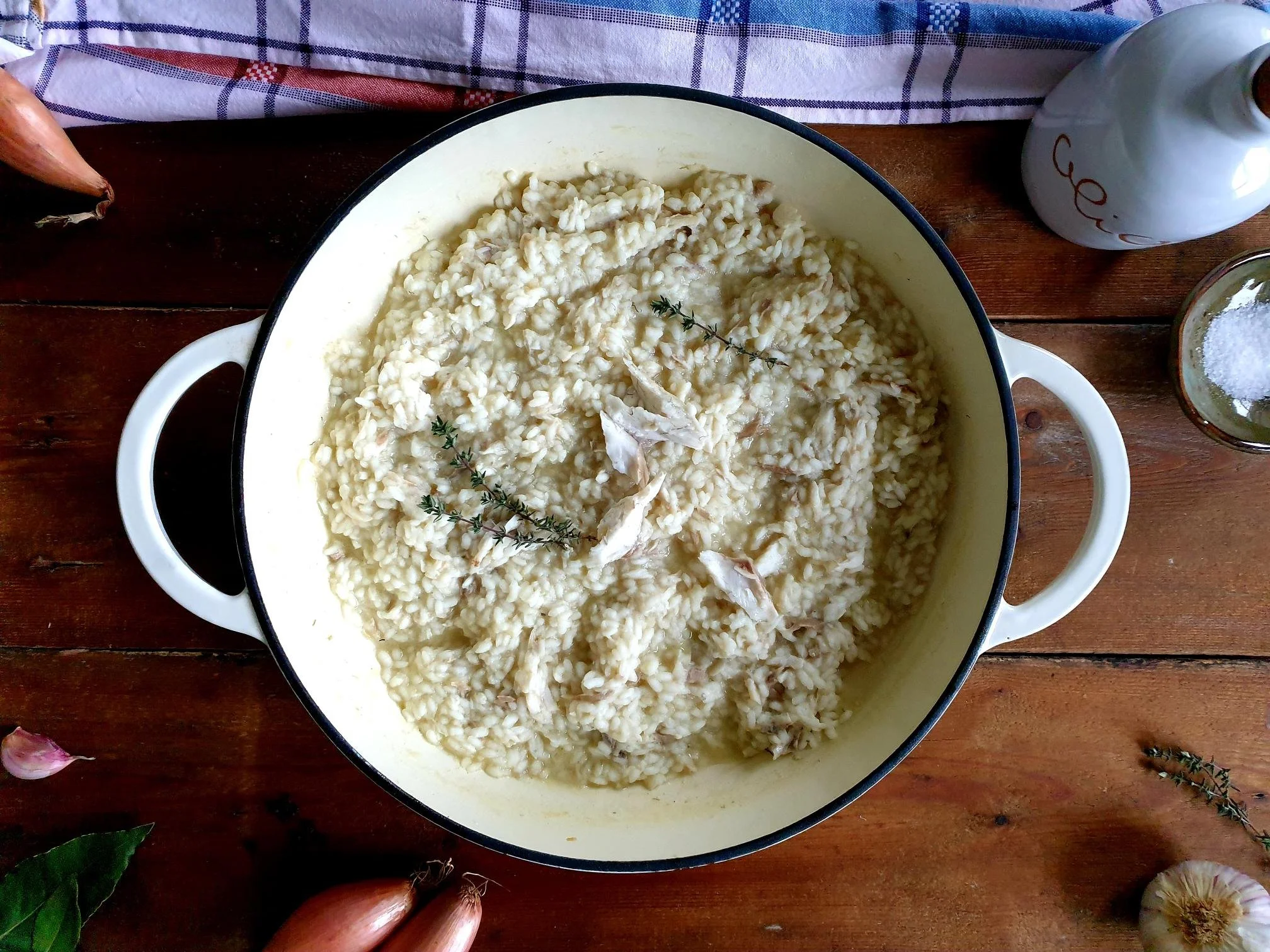
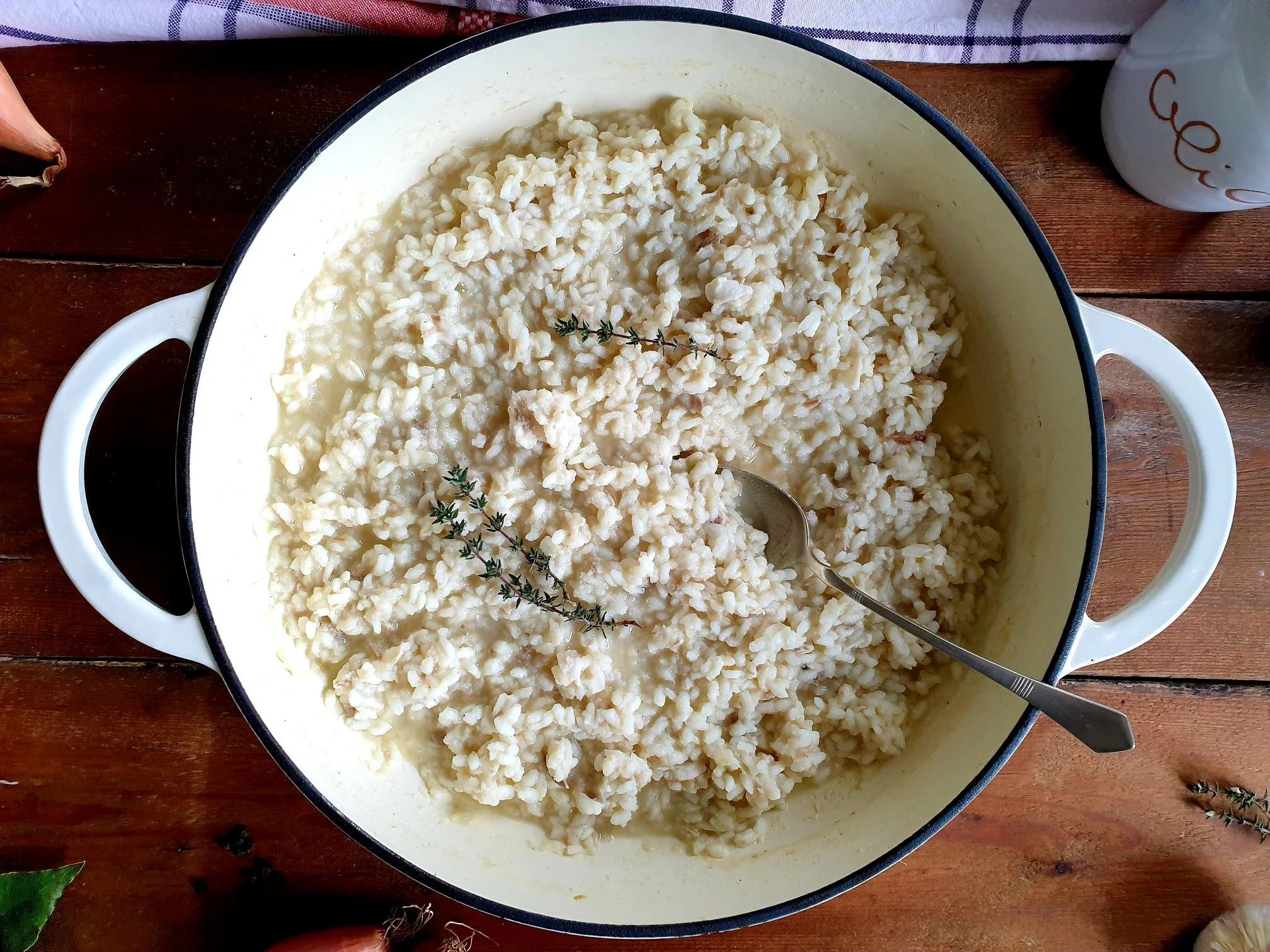
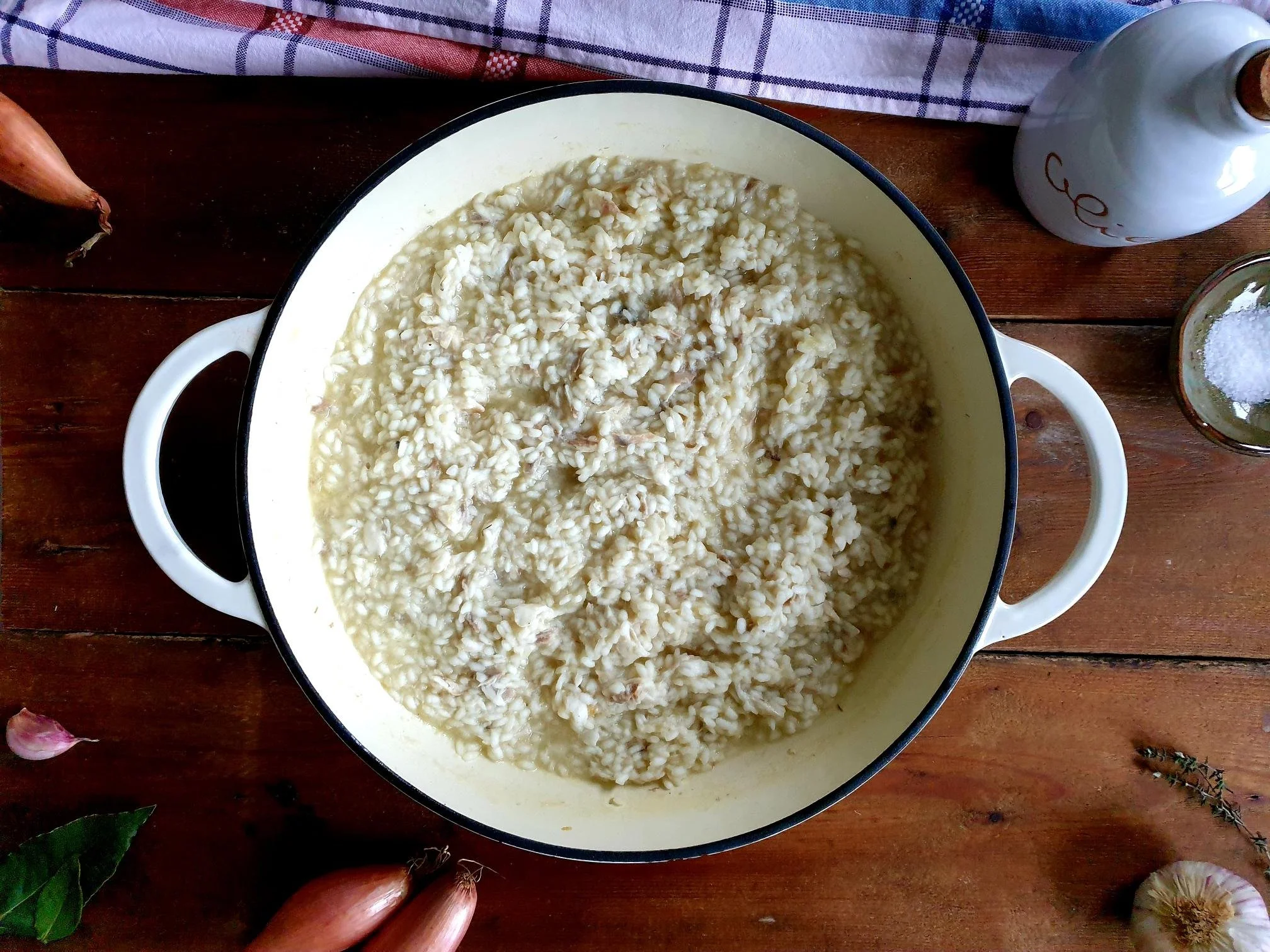
Sea bass risotto is light, creamy and flavoursome, it is made with very simple and delicate in flavour ingredients.

This dish is a true testimony to honest and uncomplicated cooking. It might not be the most colourful dish, it is modest, and humble in its appearance, but it most surely delivers in flavour. It will delight all the generations around the dinner table and will be enjoyed by the most reluctant fish eaters due to its very mild “fishy taste”.

This Venetian inspired risotto is made with fresh sea bass, a very much appreciated fish. It is one that is considered to be a real delicacy, and is very often represented in the antique mosaics by the Romans. A good quality fish stock is pretty much essential to the success of this risotto. Home made fish stock is very easy and quick to make, it is fresh, resourceful, sustainable and incredibly satisfying and economical since you are using up every part of the fish.

What are the origins of this type of risotto? The fishermen sold the precious filets of fish in the market, and so to provide for their families, they used the left-over bones and heads, which they cooked to form the most delicious stock that was then used for cooking this type of risotto.

Venetian style risotto is very popular along the Slovenian coast, where I come from, an area once part of ‘La Serenissima,’ the Most Serene Republic of Venice. Sea bass or sea bream risotto is found in most good fish restaurants and cooked in local households on a regular basis.

I am sharing here my family's recipe for this rustic fish based risotto, that can equally, and proudly sit on elegant plates during a more formal dining setting.

Recipe

Ingredients

Serves 4

Fish Stock

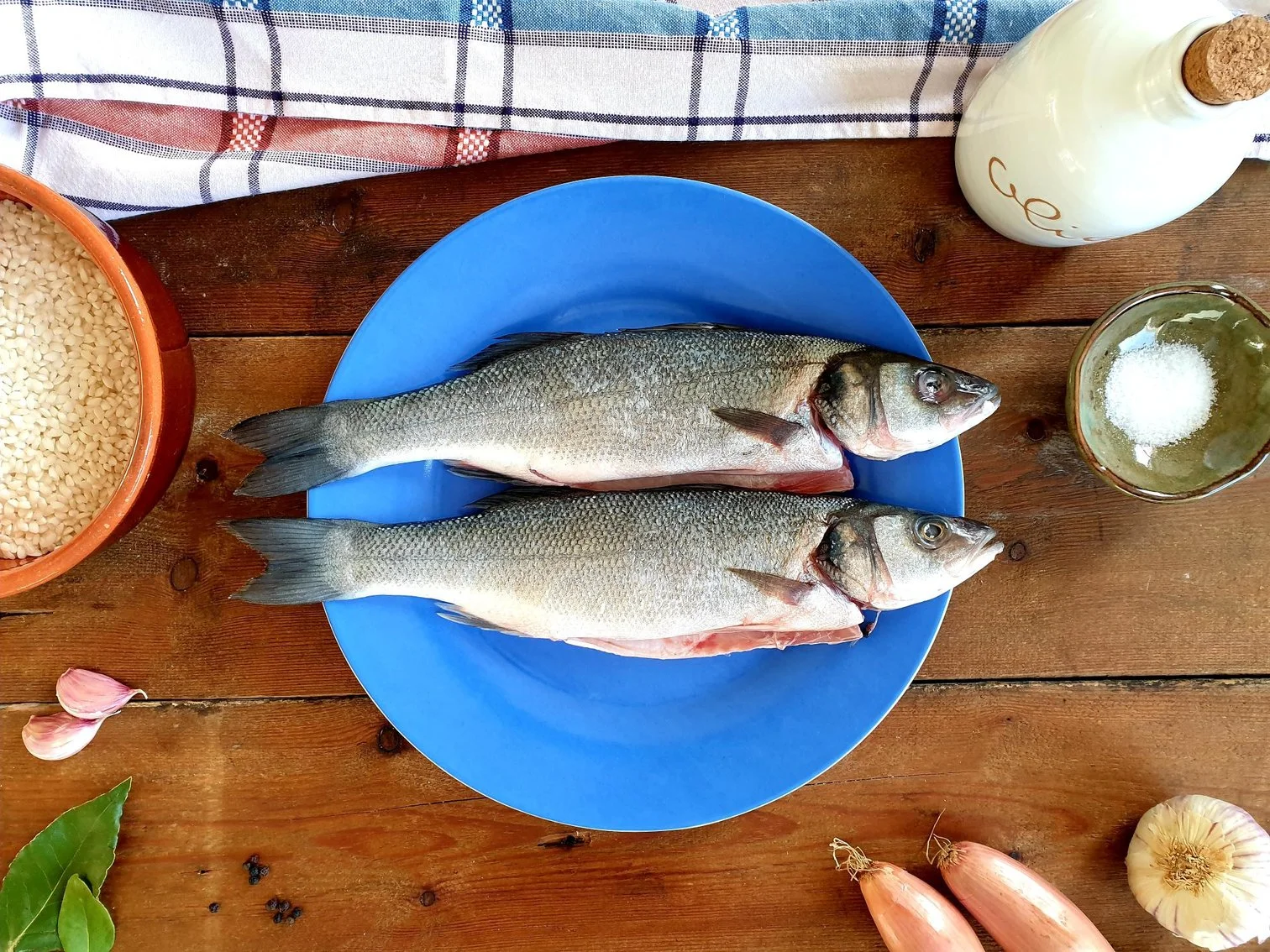
  • 500g roughly, sea bass or sea bream (1 big fish or two smaller in size) washed, cleaned, gutted and scaled (fishmonger will be happy to do this for you)

    You can use other type of sustainable white fish like hake, pollack, and flat fish, avoid oily fish such as salmon, mackerel, and tuna, as they are too fatty and will make your stock greasy and unpleasant.

    You can make the stock using just the bones, again only from the white fish. You will need about 1kg of these, the fishmonger will sell them very cheaply or even given for free.

  • 1 small bay leaf or ½ of big one (fresh or dry)

  • a few whole black peppercorns (about 6)

  • 1 clove of garlic, peeled

  • 1 carrot (about 40g), peeled

  • stick of celery (about 40g)

  • 1 shallot or a piece of anion (about 40g)

  • small handful of fresh flat leaf parsley, washed

  • extra virgin olive oil, a drizzle

  • sea salt

Risotto

  • 3 Tbsp extra virgin olive oil

  • 1 shallot or onion (about 40g), peeled and finely chopped

  • 300g risotto rice (like Vialone Nano, Arborio, Carnaroli)

  • fish chunks removed from previously cooked sea bass or sea bream

  • 1 litre of hot fish stock

  • knob of butter

  • handful of freshly grated Parmiggiano Reggiano or Grana Padano cheese, optionala

  • small handful of fresh flat leaf parsley (about 4g), finely chopped

Method

Fish Stock

Start by preparing the fish stock.

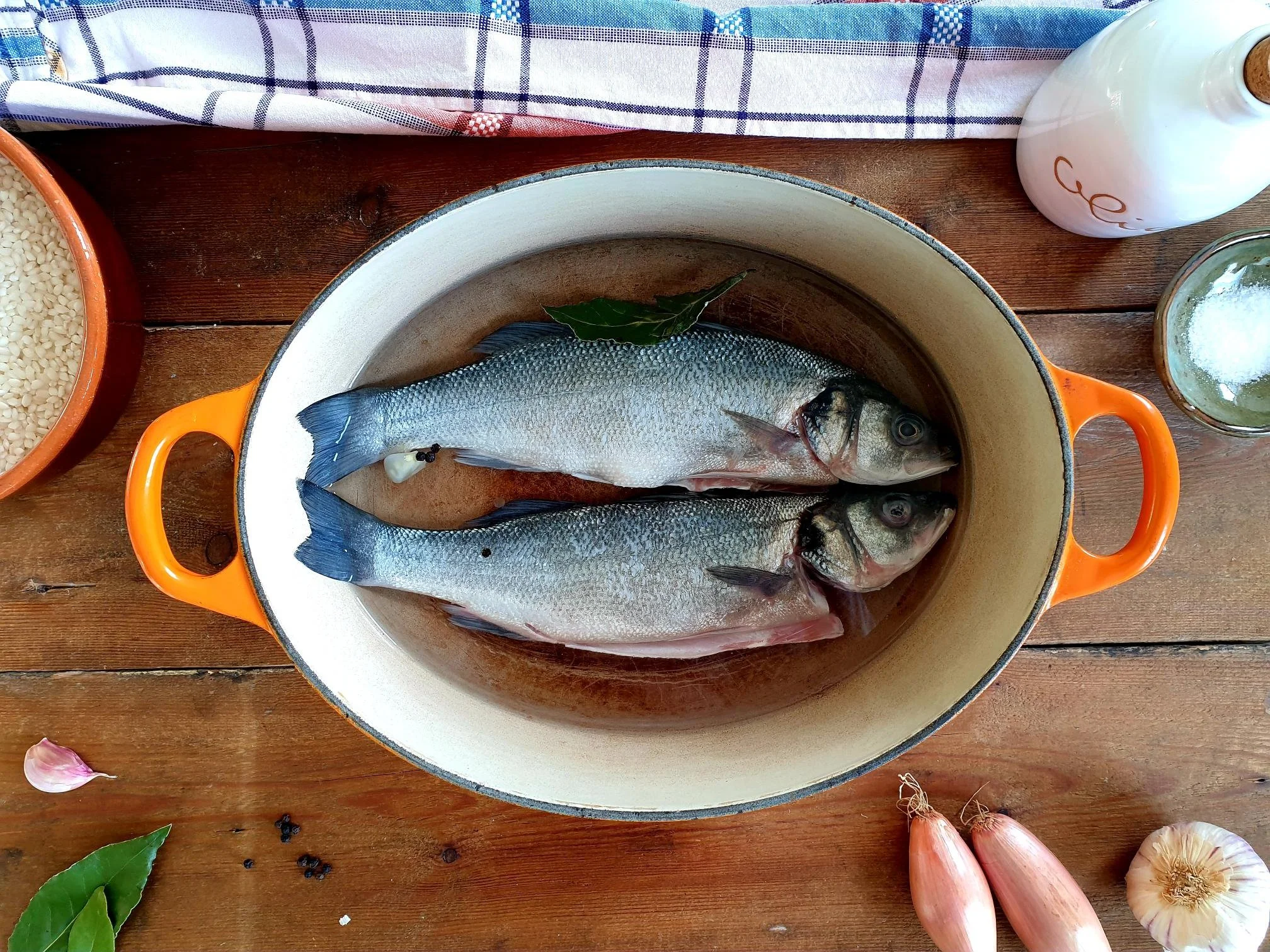
Place the fish in a pan, big enough to accommodate the fish lying flat (if using 2 fishes lie them next to each other or one on top of the other).

Add a few black whole peppercorns, clove of garlic, bay leaf, a generous pinch of sea salt and about 1.5 litres of cold water.

Bring to boil, turn down the heat, cover with the lid, and gently cook the fish for about 10-15 minutes.

When almost cooked, remove from the water, place on a big plate and allow to cool a bit.

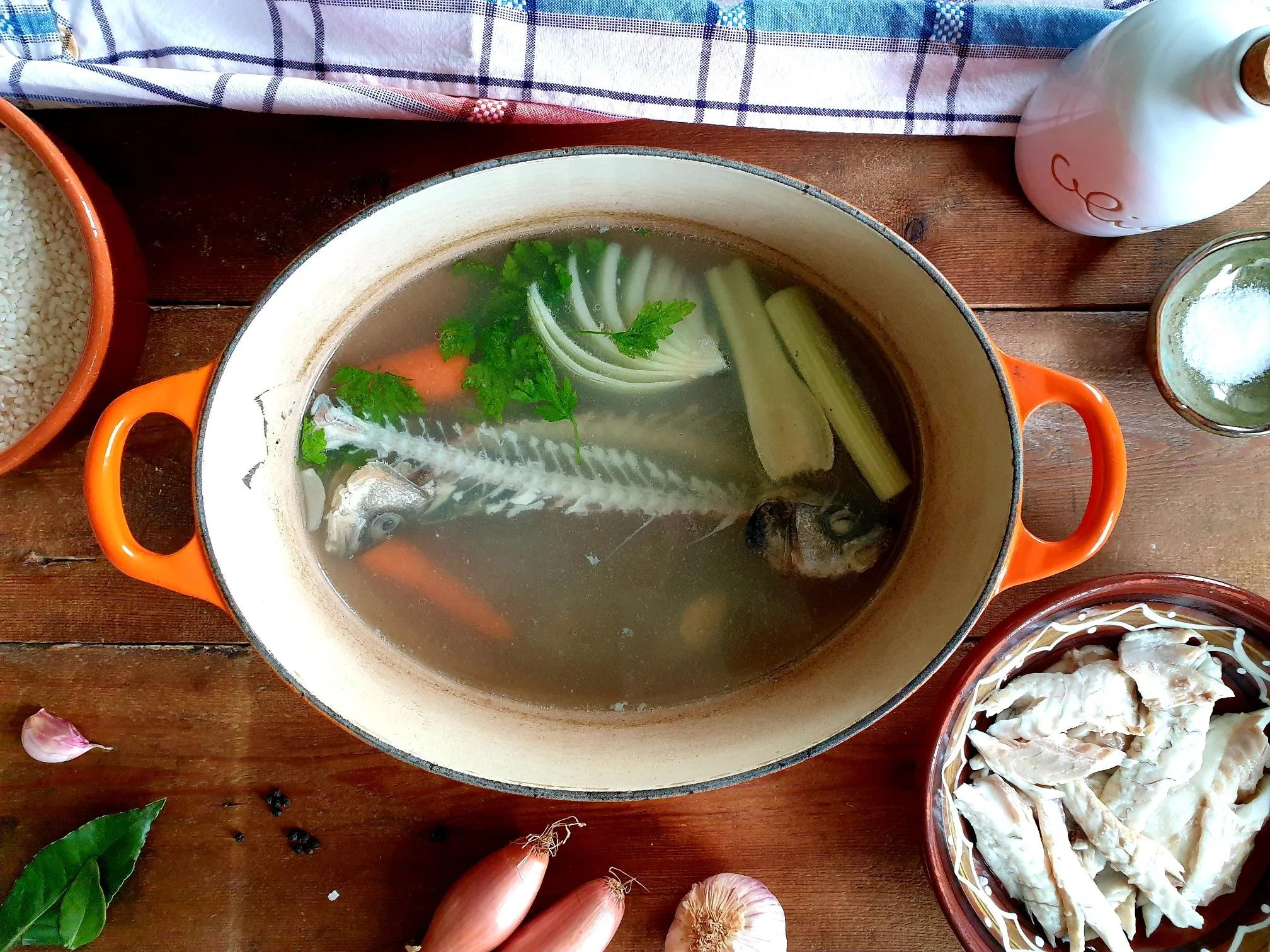
When cool enough to handle, remove the skin and the fish meat from the bones in medium size chunks, put them in the bowl, cover so the fish pieces do not dry, and set aside for later use.

Put the head and the bones back in the pot, in the same water in which the fish was cooked.Add a carrot, celery stick, shallot or onion, fresh flat leaf parsley and a drizzle of extra virgin olive oil. Cover with the lid and gently simmer for about 30 minutes.

Taste and adjust the seasoning.

View fullsize Sea Bass Risotto 2.jpg
View fullsize Sea Bass Risotto 3.jpg

Place the fine sieve over a saucepan and pass the stock through a sieve. Discard the head, bones and cooked down vegetables.

Put the saucepan with the stock back on the stove, on a very minimum heat, put the lid on and keep it warm and ready to hand for later use.

View fullsize Sea Bass Risotto 4.jpg
View fullsize Sea Bass Risotto 5.jpg

Risotto

Place the oil in a pan and gently sauté chopped shallots or onions until soft.

Add the risotto rice and toast a bit, stirring constantly to avoid sticking to the pan.

View fullsize Sea Bass Risotto 6.jpg
View fullsize Sea Bass Risotto 7.jpg

Add the fragments of sea bass or sea bream.

Start gradually adding ladles of hot fish stock, one at a time, allowing the liquid to be absorbed before adding more.

There should always be enough liquid just to cover the risotto.

Cook on a medium heat, stirring almost constantly, until the rice is cooked al dente, meaning fully cooked but still a bit firm when bitten.

Removing from the stove, add a knob of cold butter and a handful of freshly grated Parmiggiano Reggiano cheese and finely chopped fresh flat leaf parsley. Stir with a wooden spoon, quite vigorously, in order to develop its delicious creamy texture.

The risotto should be smooth and runny enough to be described by the Italians as risotto all'onda, meaning risotto on the wave.

Serve immediately while the risotto is still hot.

Just a thought

To cut the corners, you can make this risotto by using fresh sea bass or sea bream fillets and using a high quality store bought fish stock.

Sea bass risotto will keep in the fridge for a couple of days in an airtight container.

It can be enjoyed at room temperature as well, and is not suitable for freezing.

Wine Suggestion

Soave Classico DOC "Calvarino" 2020 - Pieropan

January 18, 2023 /tina oblak
Fresh Sea Bass, Sea Bass, Sea Bream, white flesh fish, fish risotto, fish stock, risotto rice, Arborio rice, Carnaroli rice, Vialone nano rice
Adriatic Recipe, All year round recipe, Appetizers, child friendly dish, child friendly meal, dinner, Easy recipe, entrée course, family friendly dish, family friendly meal, first course, first course dish, first course meal, Fish & Seefood, fish starter, Healthy, healthy mael, hearty dish, Istrian cuisine, Istrian dish, Istrian food, Istrian gastronomy, light fish course, light meal, main course, main dish, main fish course, main fish meal, one pot meal, one post fish recipe, recipe from Northern Ital, Risotto, Rustic dish, simple recipe, Slovenian cuisine, Slovenian food, Slovenian gastronomy, Starters, supper, Venetian dish
Comment

Peas with Ham Istrian Recipe

Beans and Sardines
January 11, 2023 by tina oblak in Adriatic Recipe, All year round recipe, Appetizers, child friendly dish, child friendly meal, dinner, Easy recipe, family friendly dish, family friendly meal, Healthy, healthy mael, hearty dish, Istrian cuisine, Istrian dish, Istrian food, Istrian gastronomy, light meal, main course, main dish, Nutritious, Nutritious dish, one pot meal, recipe from Northern Ital, Rustic dish, Side Dishes, simple recipe, Slovenian cuisine, Slovenian food, Slovenian gastronomy, Spring dish, Spring recipe, stew, supper, Vegetable side dish, Vegetables, Winter dish, Winter recipe

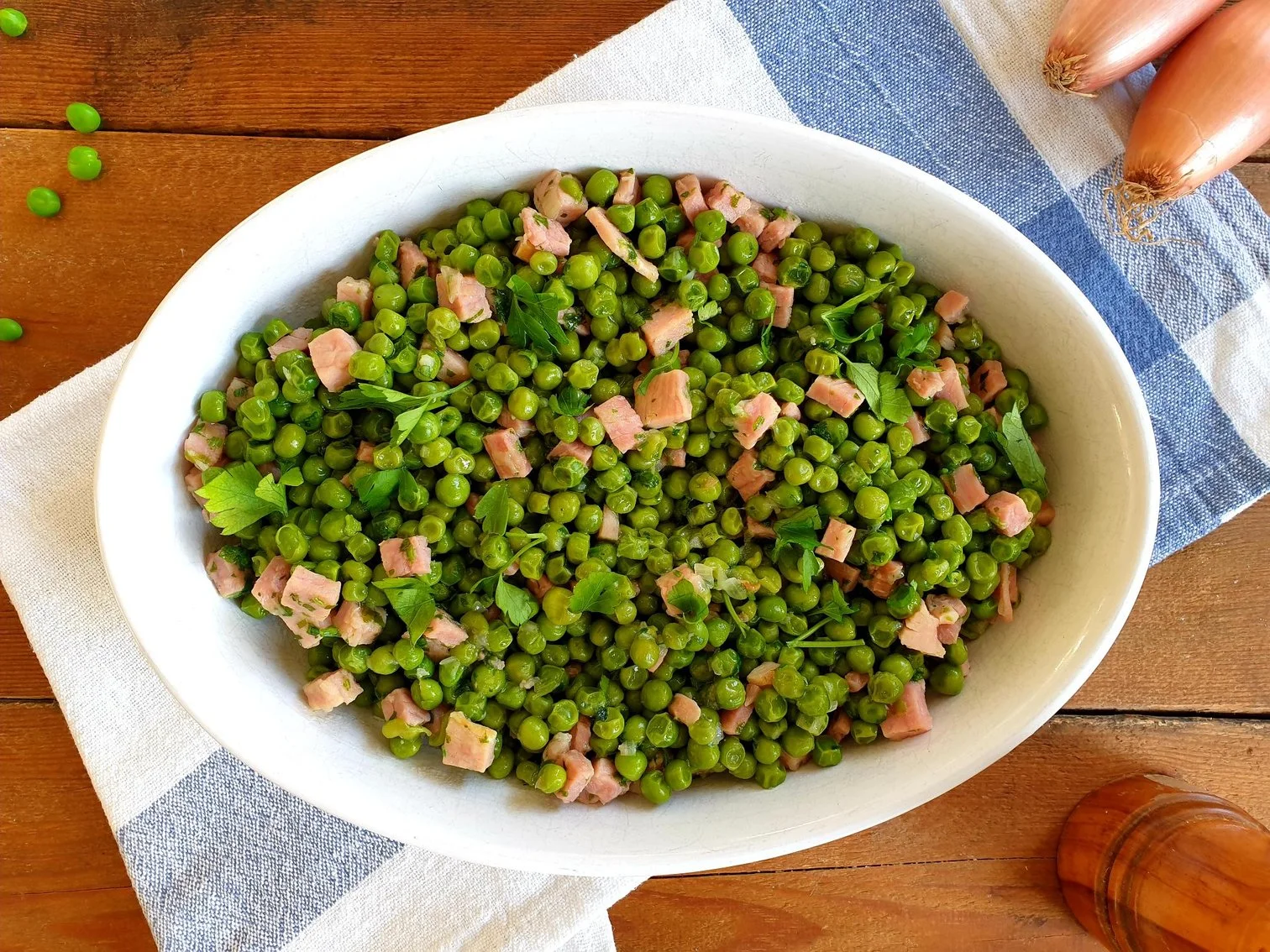
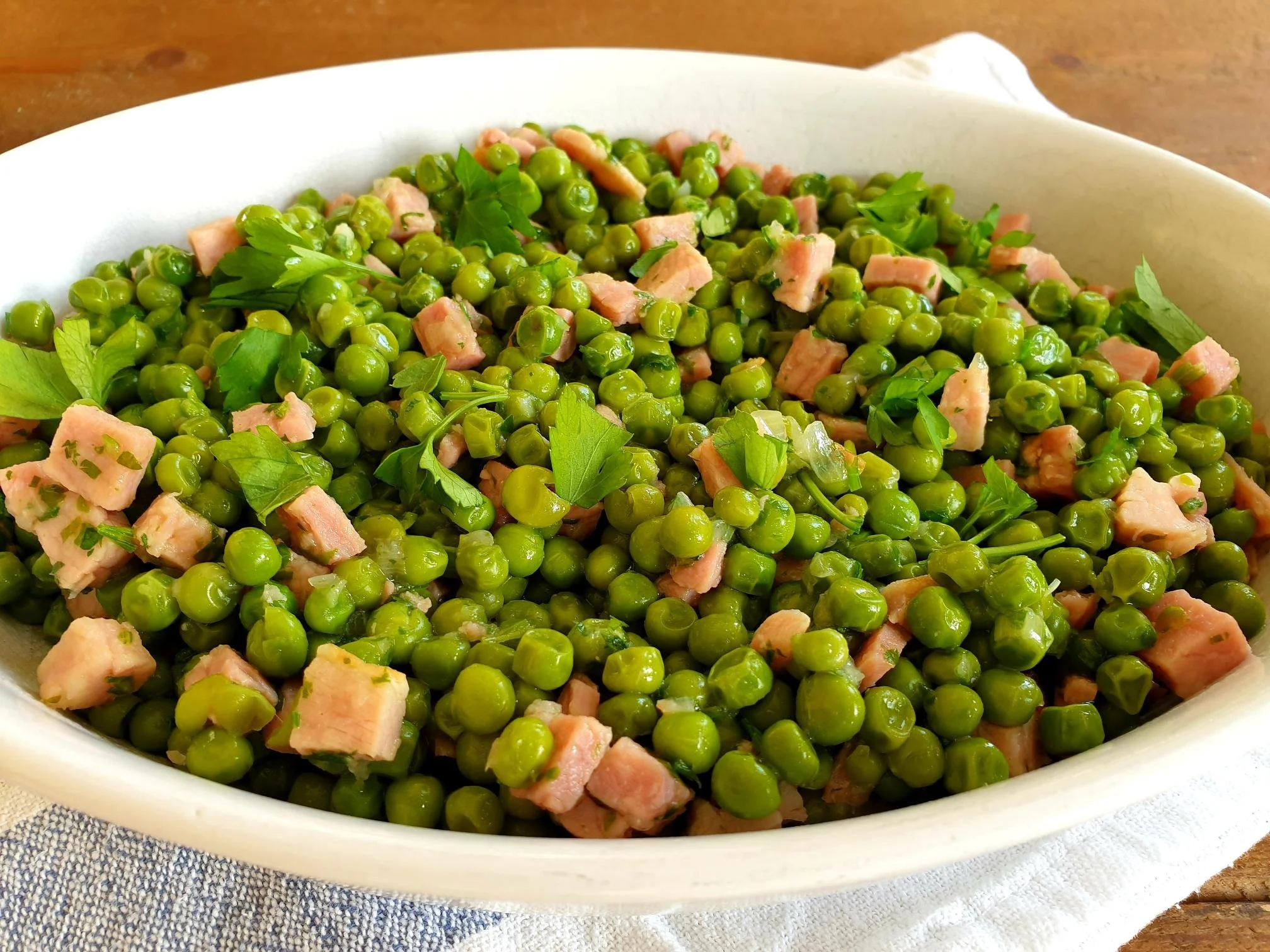
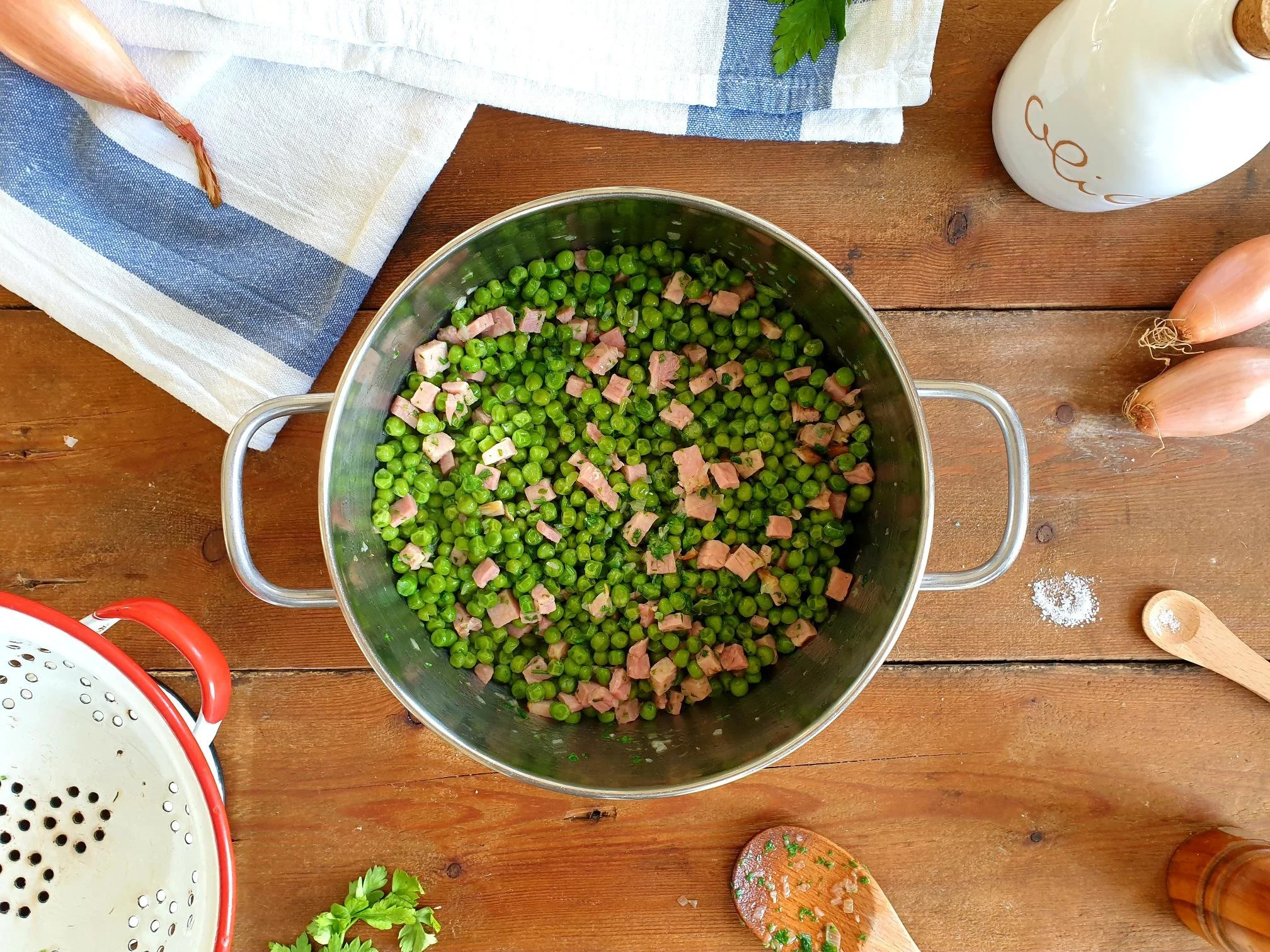
This mouthwatering recipe for peas with ham is easy, uncomplicated and super fast to prepare, as it can be made in no time at all, with fresh or frozen peas.

With this Italian style dish, referred as Piselli con prosciutto cotto, you might win over the most reluctant vegetable eaters.

It can be served as a side dish or as a main with boiled, oven roasted or mashed potatoes, fried or hard boiled eggs, a salad, or simply with plenty of fresh, crunchy rustic bread.

My mother used to make peas with ham very often when I was little, as this vegetable dish is particularly appetizing for small children because of the “sweetness” of the peas and cooked ham.

I am sharing here her recipe with which you can delight all generations around the dinner table with this fresh and very pleasant dish.

Recipe

Ingredients

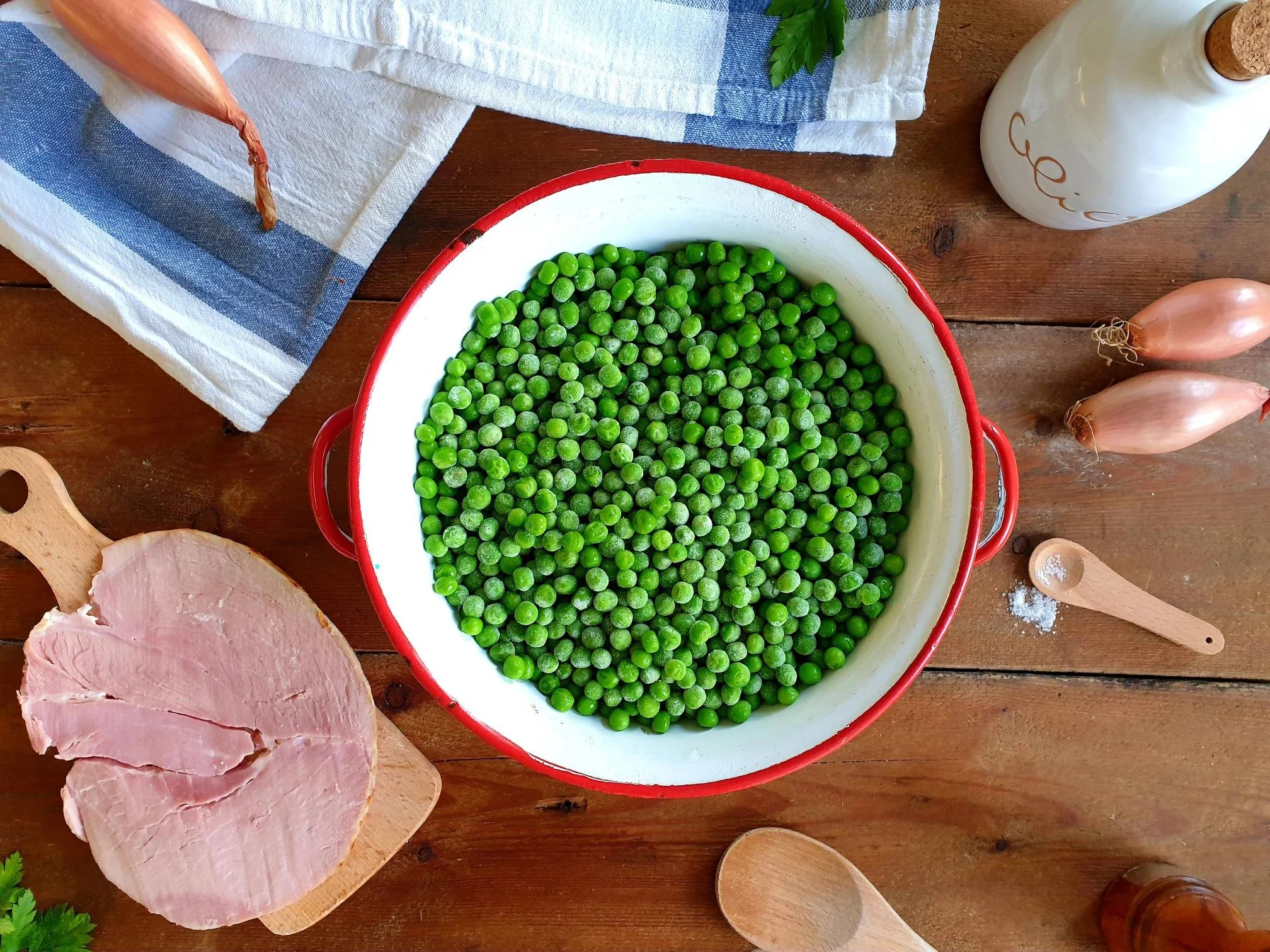
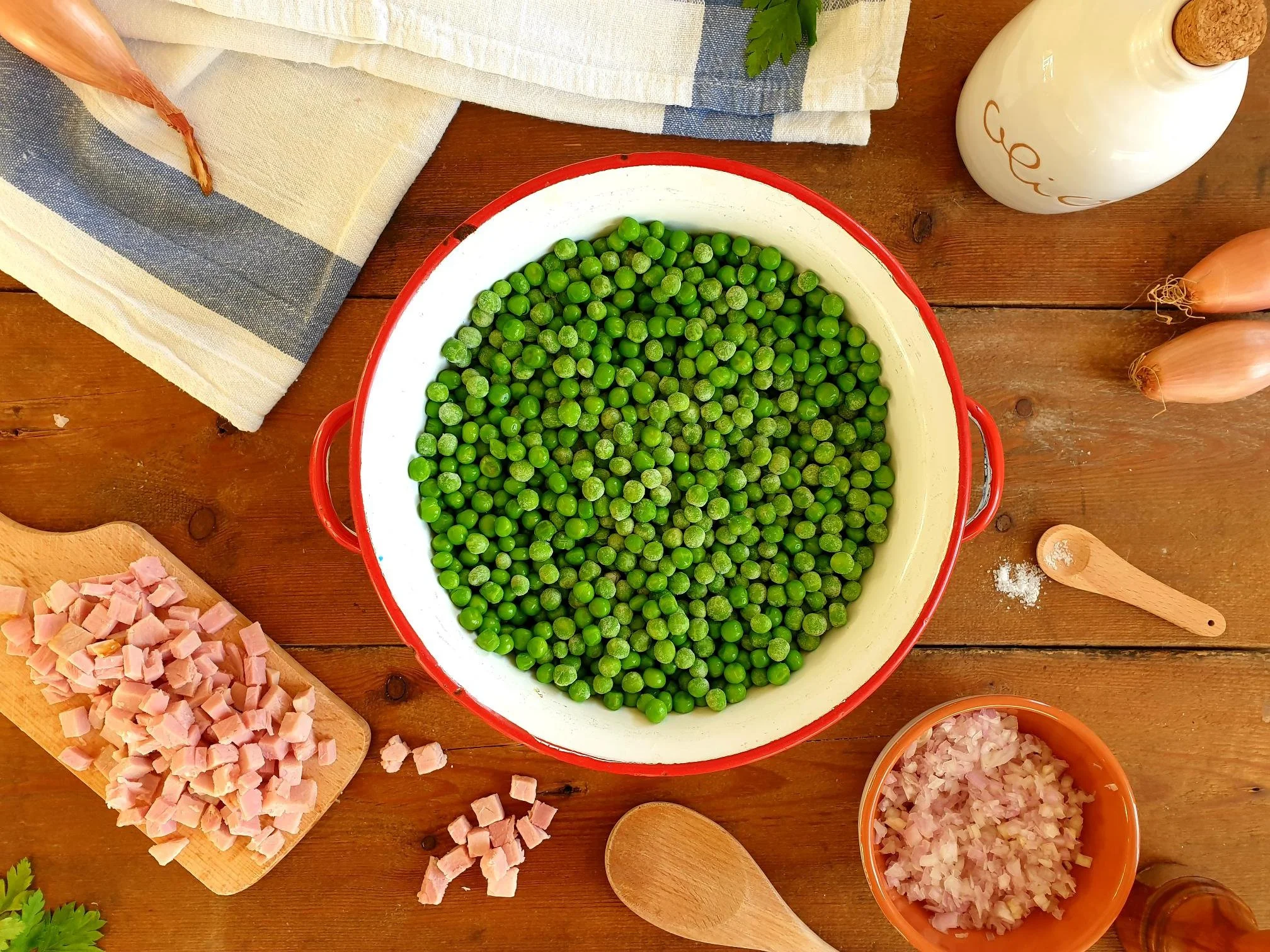
  • 2 shallots or onions (about 75g), peeled and finely chopped

  • 3 Tbsp extra virgin olive oil

  • 500g fresh or frozen petits pois, defrosted (can use garden peas)

  • 150g thick slice of cooked or roasted ham, diced

  • 200ml vegetable, chicken stock or water

  • handful of fresh flat leaf parsley (about 7g), finely chopped

  • sea salt

  • black pepper

Method

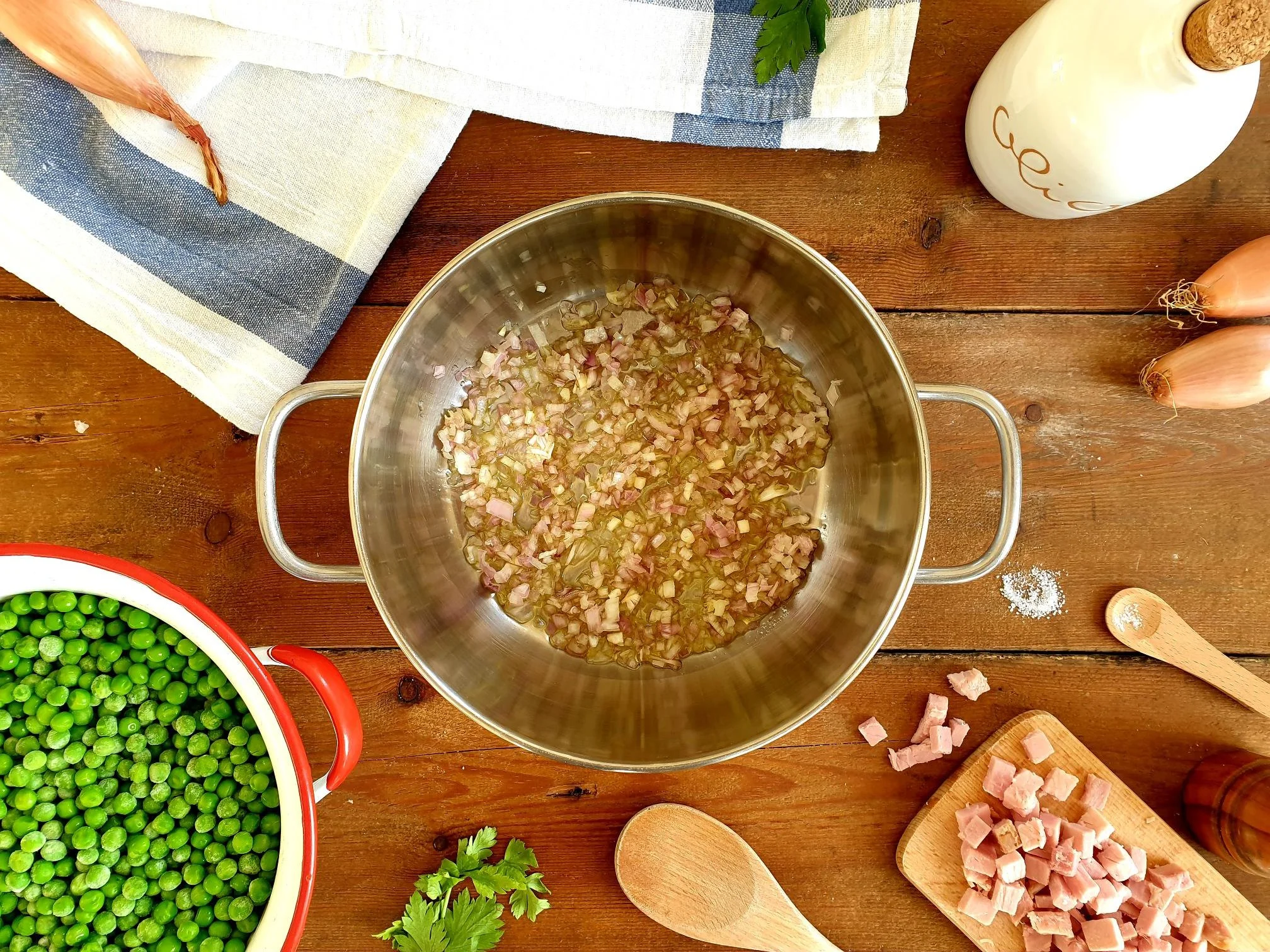
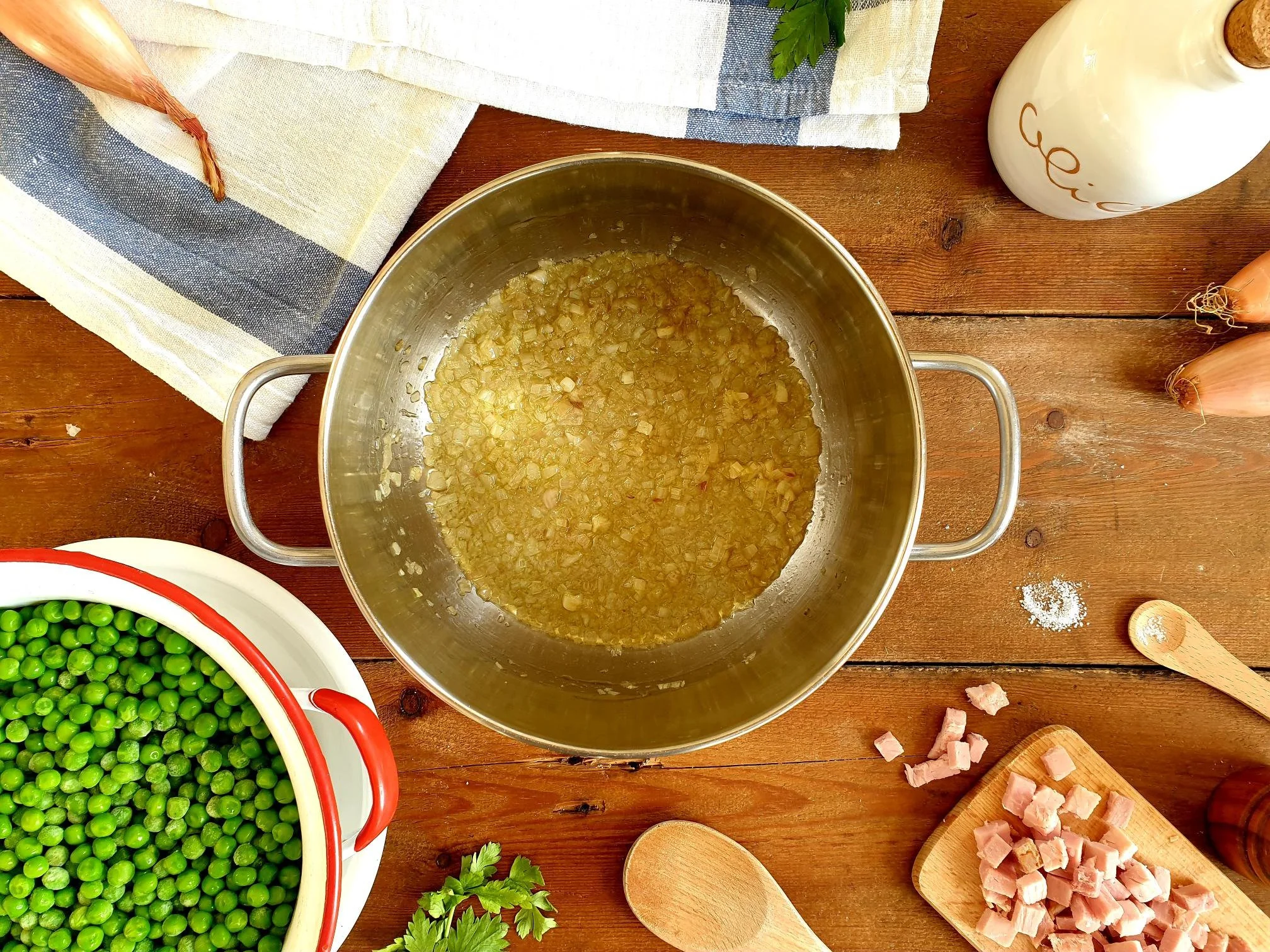
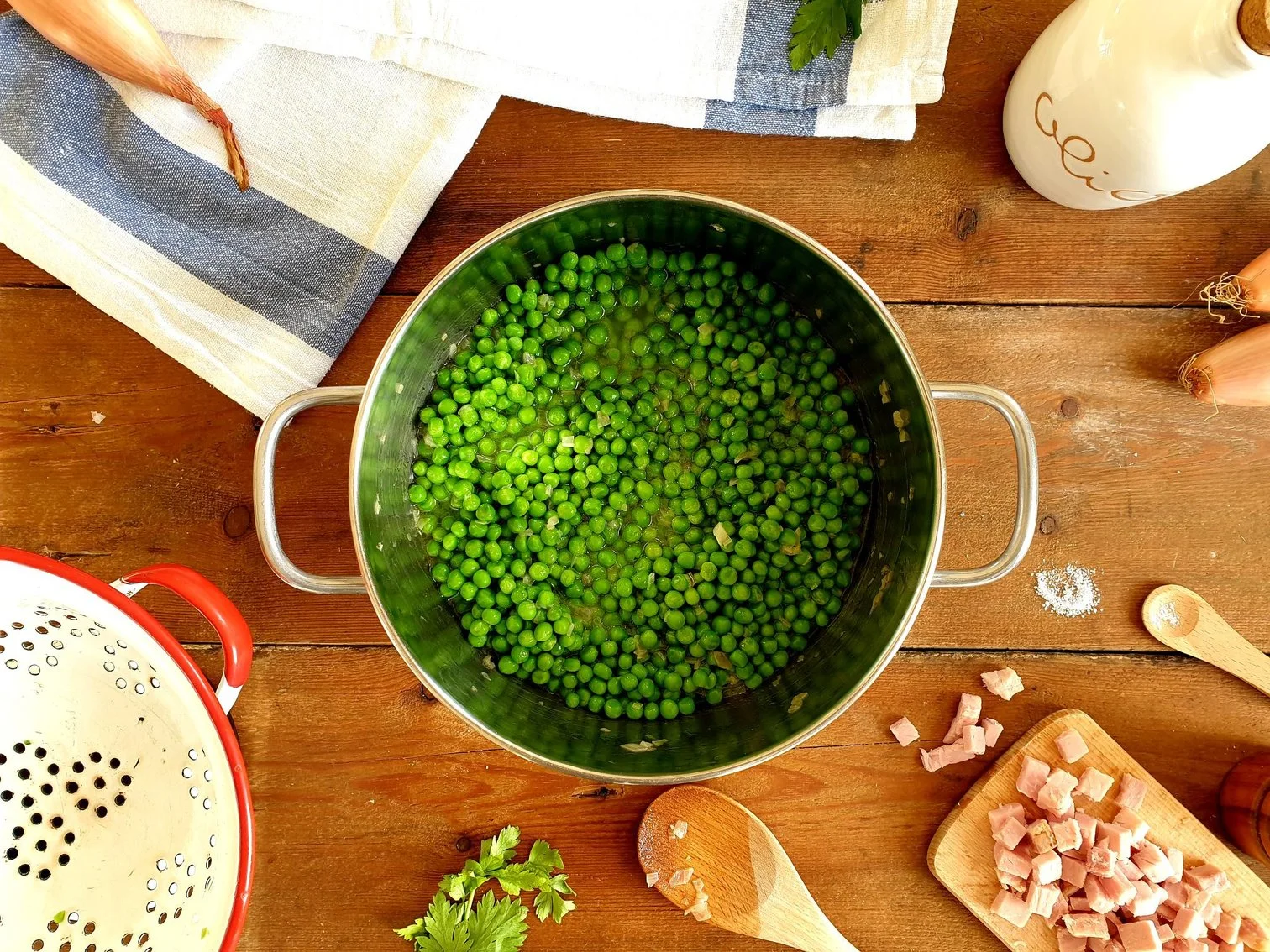
Place the oil in a frying or sauce pan, add the onion, a pinch of sea salt and black pepper.

Cook for a few minutes on a gentle heat until soft and translucent.

View fullsize Peas with Ham 3.jpg
View fullsize Peas with Ham 4.jpg

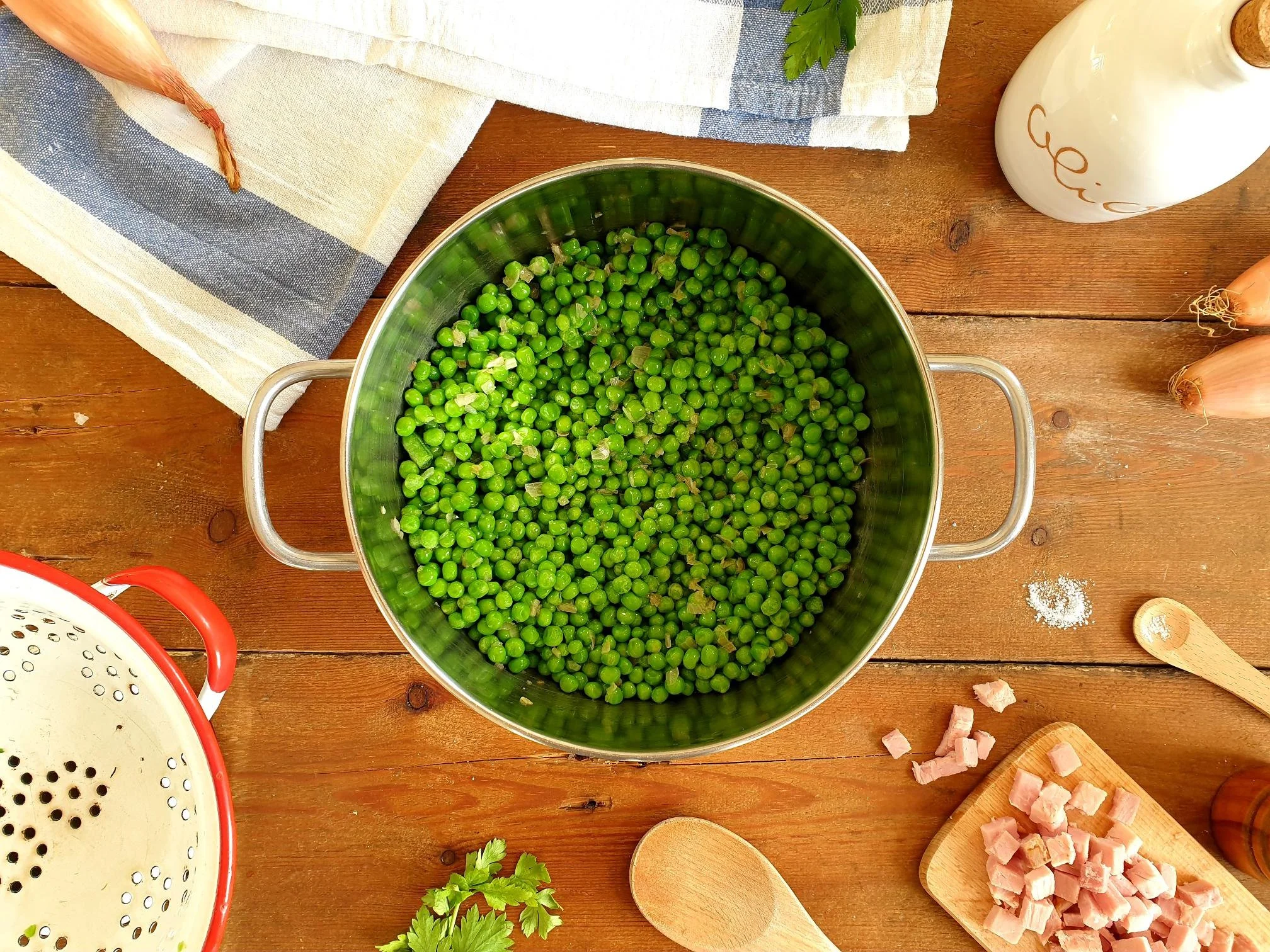
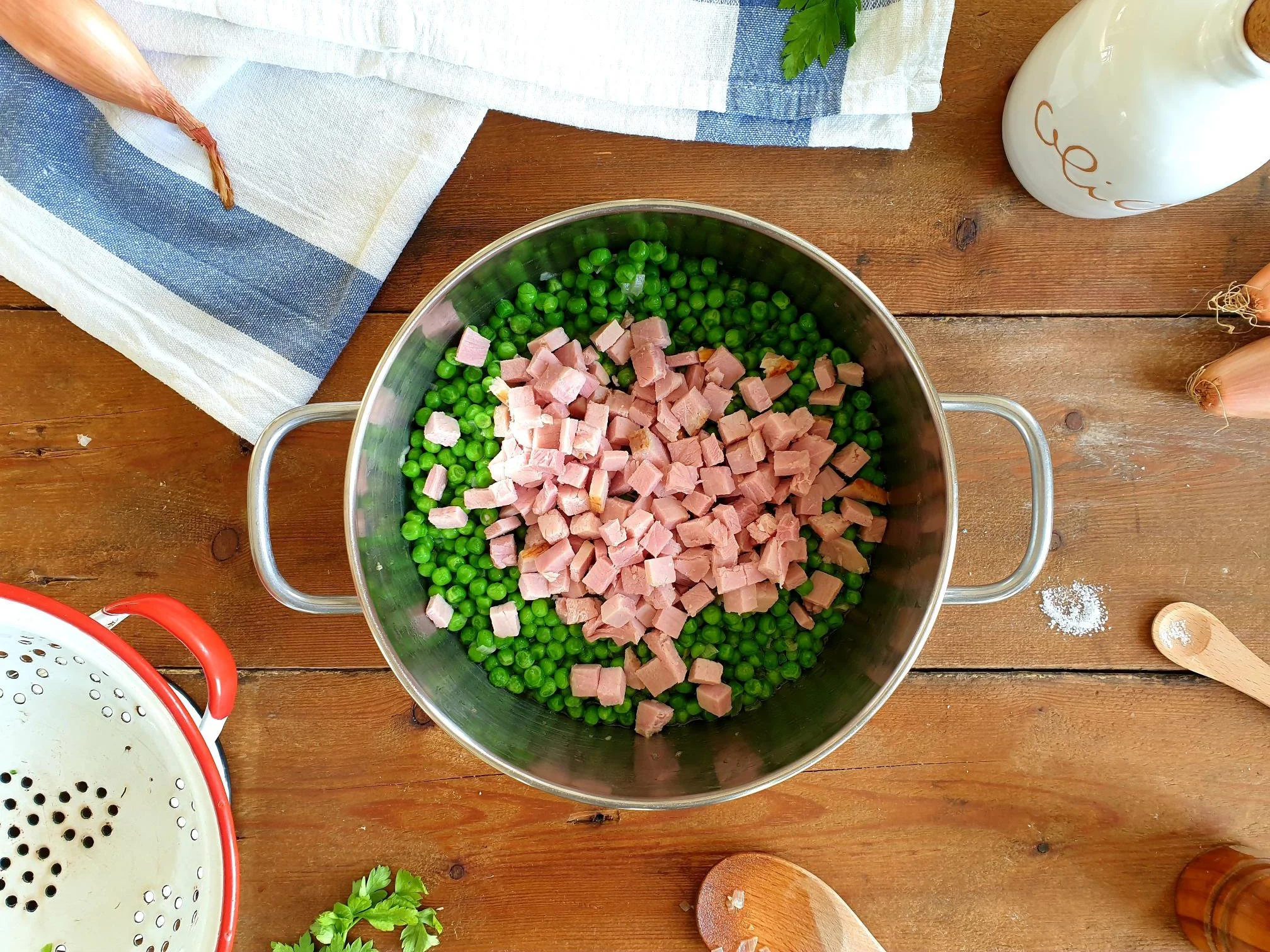
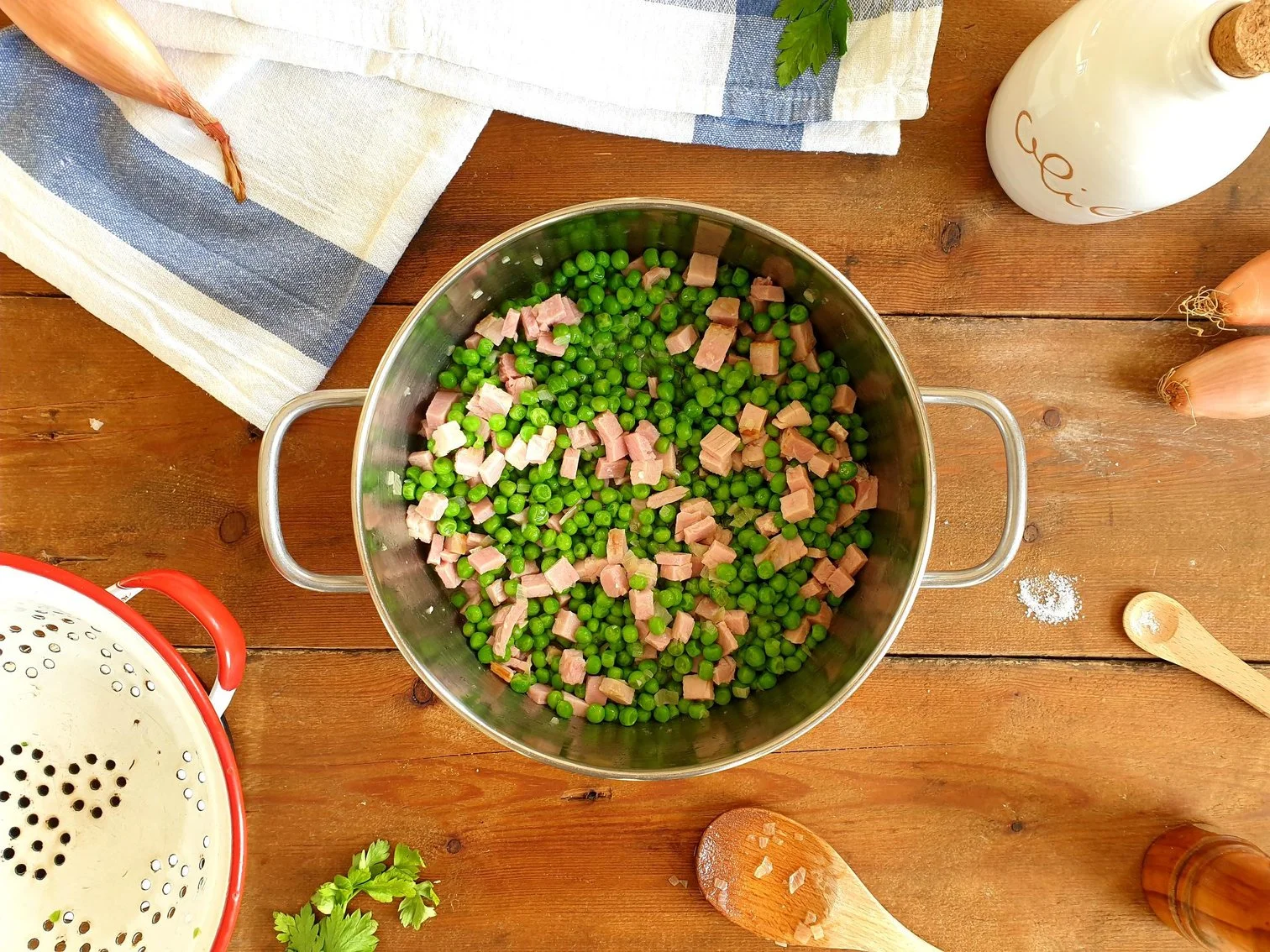
Add the peas, stock or water, and cubed ham.

View fullsize Peas with Ham 5.jpg
View fullsize Peas with ham 6.jpg
View fullsize Peas with Ham 7.jpg
View fullsize Peas with Ham 8.jpg

Simmer gently for about 10-15 minutes until the peas are tender and almost all of the liquid has evaporated.

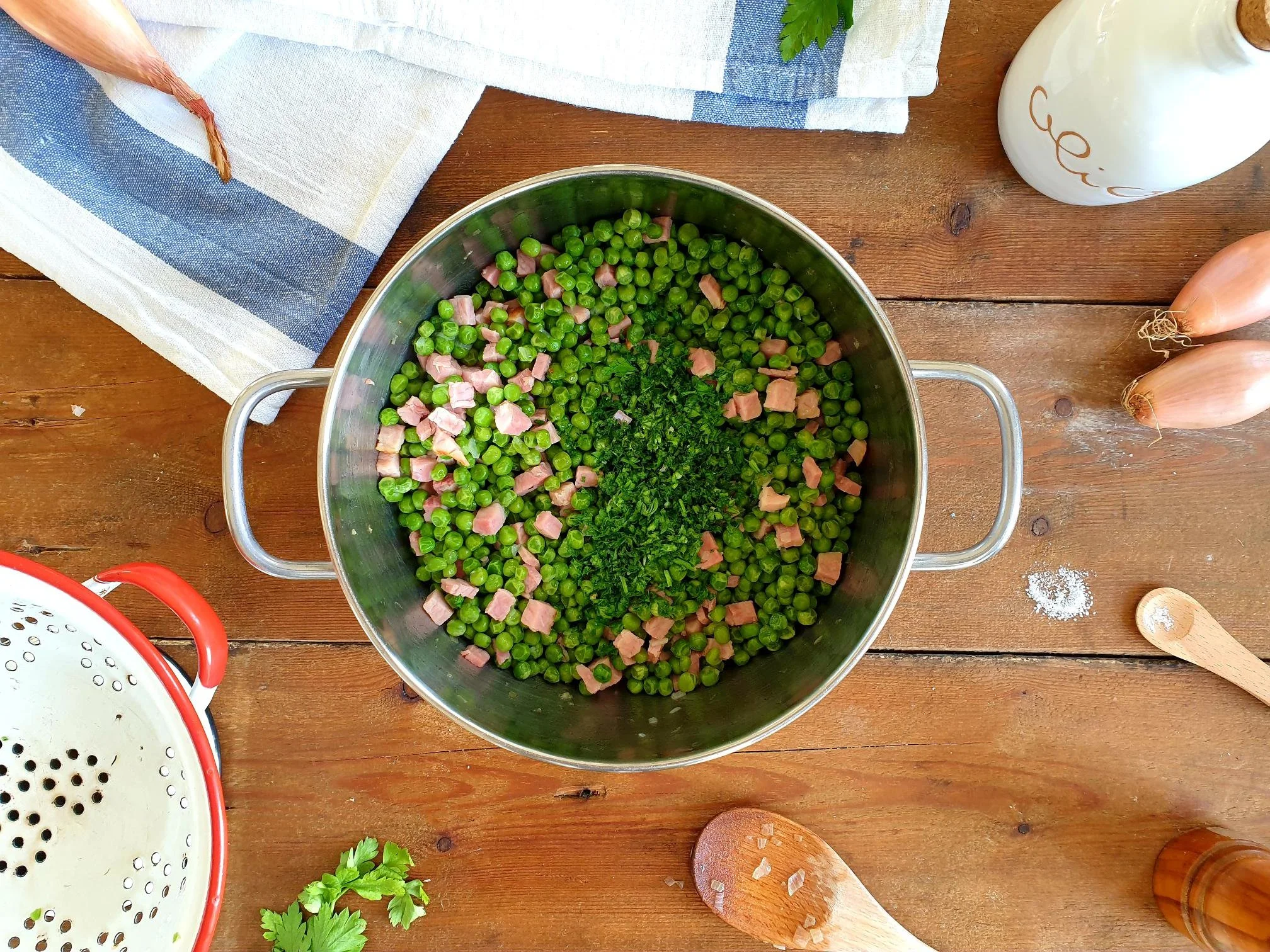
Stir in fresh chopped parsley, adjust the seasoning, and serve hot immediately.

View fullsize Peas with Ham 9.jpg
View fullsize Peas with Ham 10.jpg

Just a thought

For this dish you can use pancetta, bacon or lardons instead of cooked or roasted ham, in which case you sauté the meaty element together with the onions first and then follow the other steps of the recipe.

January 11, 2023 /tina oblak
frozen garden peas, fresh garden peas, peas, frozen petits pois, fresh petits pois, early spring peas, peas in pods, make in advance, cooked ham, roasted ham, pancetta, lardons, fresh flat leaf parsley
Adriatic Recipe, All year round recipe, Appetizers, child friendly dish, child friendly meal, dinner, Easy recipe, family friendly dish, family friendly meal, Healthy, healthy mael, hearty dish, Istrian cuisine, Istrian dish, Istrian food, Istrian gastronomy, light meal, main course, main dish, Nutritious, Nutritious dish, one pot meal, recipe from Northern Ital, Rustic dish, Side Dishes, simple recipe, Slovenian cuisine, Slovenian food, Slovenian gastronomy, Spring dish, Spring recipe, stew, supper, Vegetable side dish, Vegetables, Winter dish, Winter recipe
Comment

Stuffed Squid Istrian Recipe

Beans and Sardines
December 16, 2022 by tina oblak in Adriatic Recipe, All year round recipe, Appetizers, Autumnal dish, Autumnal recipe, casserole, Celebratory dish, child friendly dish, child friendly meal, dinner, Easter, Easter dish, Easter recipes, Easy recipe, family friendly dish, family friendly meal, Festive dish, Fish & Seefood, Healthy, healthy mael, hearty dish, Istrian cuisine, Istrian dish, Istrian food, Istrian gastronomy, light fish course, light meal, main course, main dish, main fish course, main fish meal, one post fish recipe, one pot meal, Rustic dish, simple recipe, Slovenian cuisine, Slovenian food, Slovenian gastronomy, stew, stuffed dishes, summer recipe, supper, Winter dish, Winter recipe

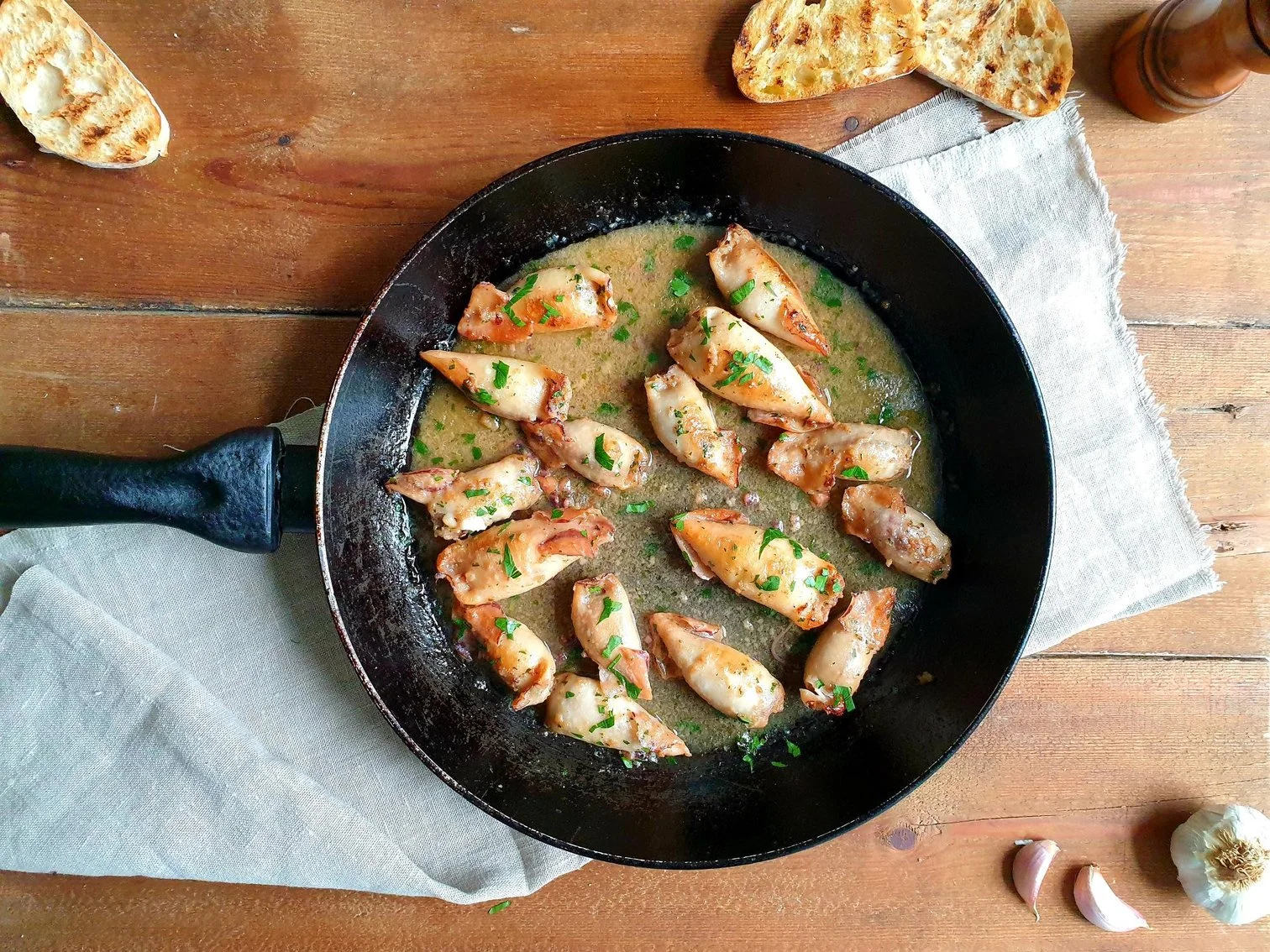
Stuffed squid is a light and delicate fish based dish packed full of flavour, with simple ingredients being used for the stuffing mixture to maximise the scent and flavour of the squid.

This is a very tasty seafood recipe, perfect for any occasion and any season, and makes a fantastic centrepiece, you will surely impress your family and friends.

Works for both rustic style eating or slightly more formal and elegant dining, whether for big parties or small groups alike.

Squid is a highly popular ingredient in Istrian cooking, it is used to make rosotti, fish soups and stews, grilled and deep fried squid are very much loved.

Stuffed squid represents one of the most quintessentially Istrian seafood based dishes, it is made in the households, maybe not perhaps as your average mid week supper but prepared during the weekends or festivities or to mark a special occasion. Along the Slovenian coast stuffed squid would be traditionally briefly cooked in white busara sauce (simple sauce made with olive oil, hint of garlic, white wine and fresh parsley), as supposed to the red busara sauce variation where tomato element is added to the basic white busara sauce.

This is the dish that would be prepared and cooked instead of a meat roast, and also commonly found on the menus in the restaurants (polnjeni kalamari or nadevani lignji, calamari ripien).

Stuffed squid has been very much loved in the family, my father especially adored cooking this dish, and here I am sharing his recipe, serve this dish to your guests and and you will most certainly not fail to impress.

Recipe

Ingredients

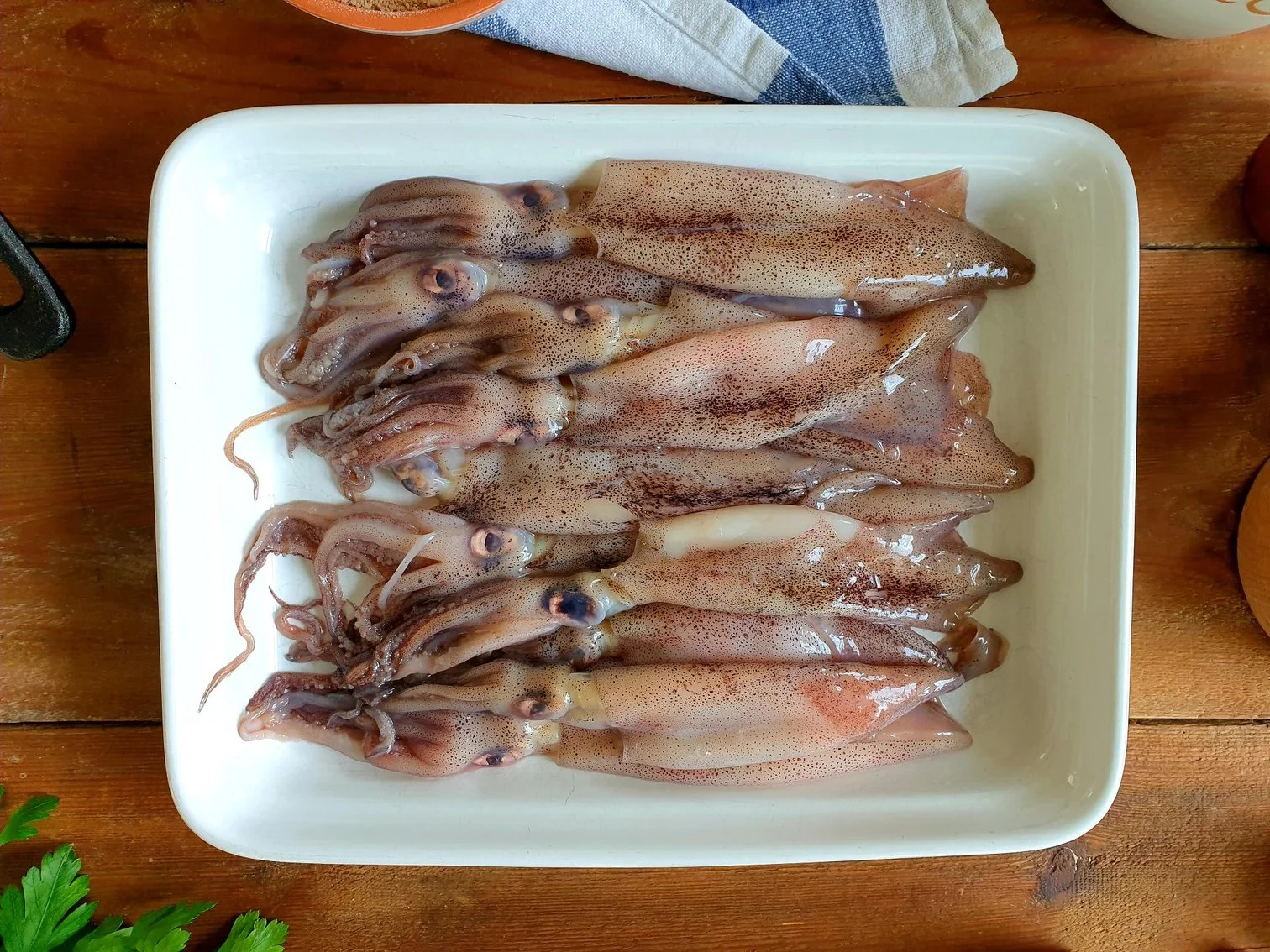
  • about 1 kg fresh medium size squid

    (the sacks of the squid should be long between 13-15cm, if they are too short and small you will find it a bit tricky to fill, very big squid not particularly suitable for this recipe), bodies and tentacles separated, if using frozen squid, defrost first

  • about 80g dry breadcrumbs

  • 4 Tbsp extra virgin olive oil, plus some extra

  • 1 small clove of garlic, peeled and very finely chopped

  • small handful (about 3g) fresh flat leaf parsley, finely chopped, plus some extra for the sauce

  • 50ml white wine, optional

  • sea salt

  • black pepper

Method

Clean and prepare the fresh squid and separate the tentacles. When cleaning the squid be careful not to damage the pockets (sacks), as the filling might come out during the cooking process.

If uncomfortable tackling this task, your fishmonger will be happy to do it for you.

Tap dry cleaned squid pockets with kitchen paper.

View fullsize Stuffed Squid 4.jpg
View fullsize Stuffed Squid 5.jpg

Start by making the stuffing.

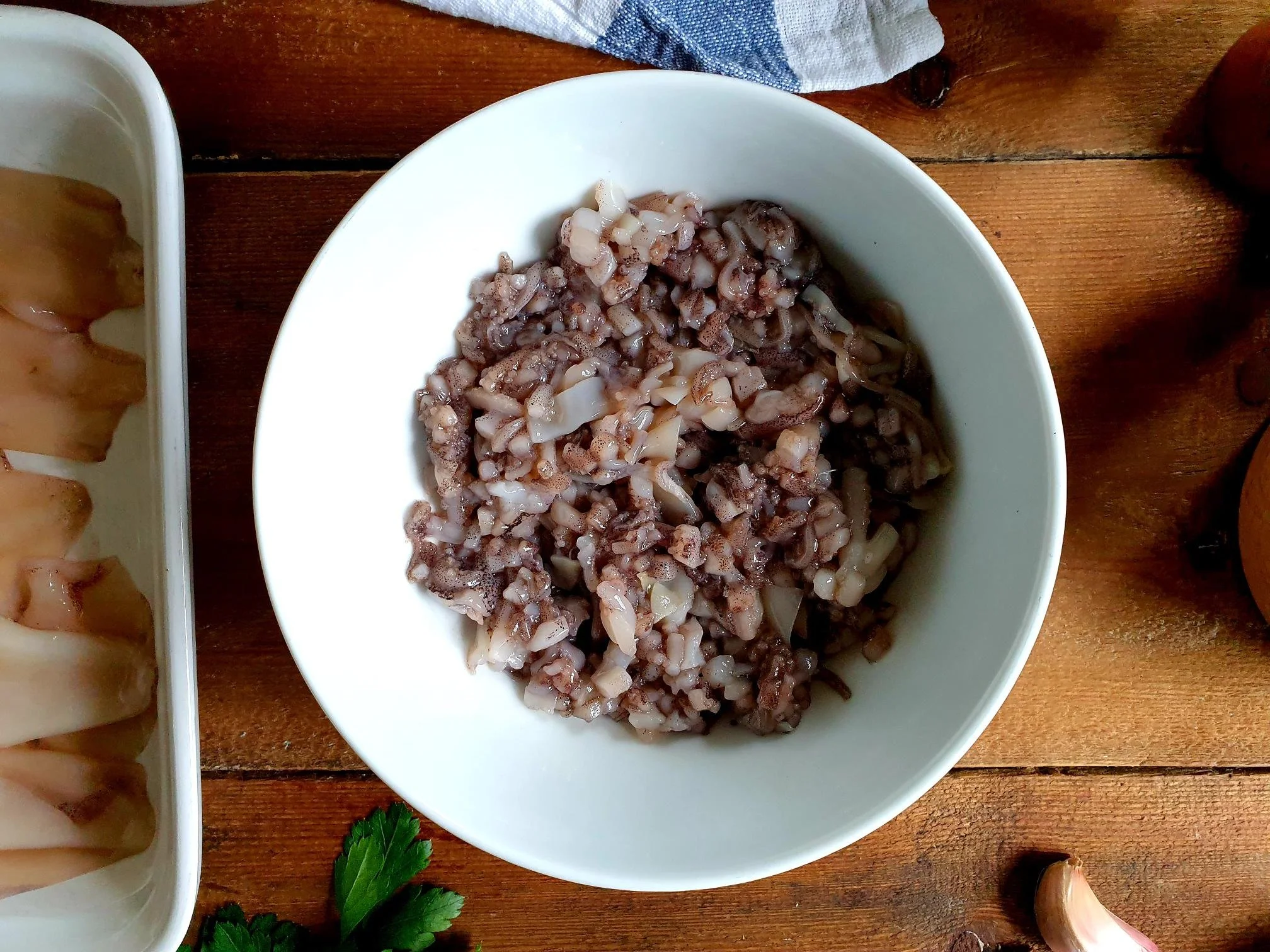
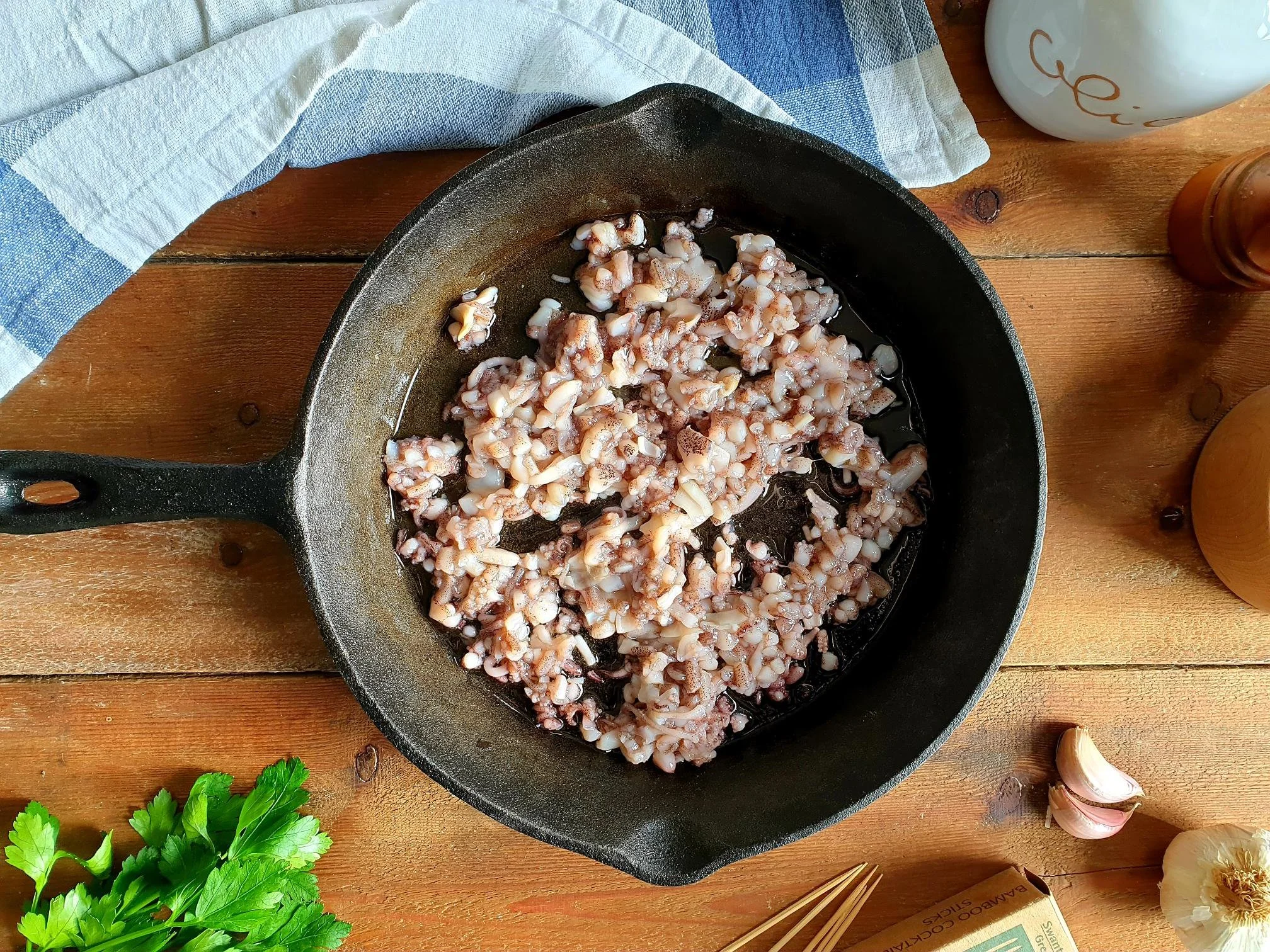
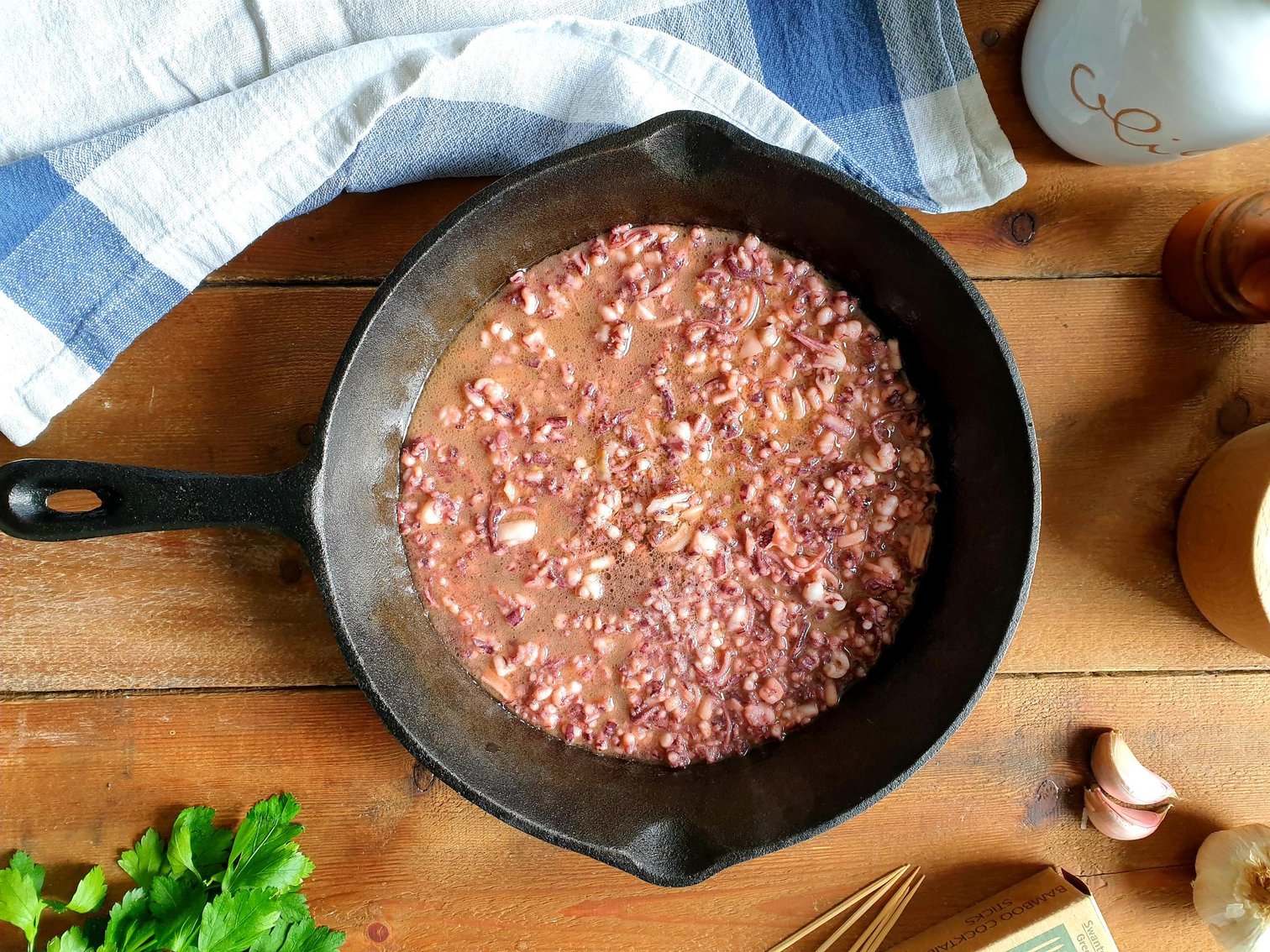
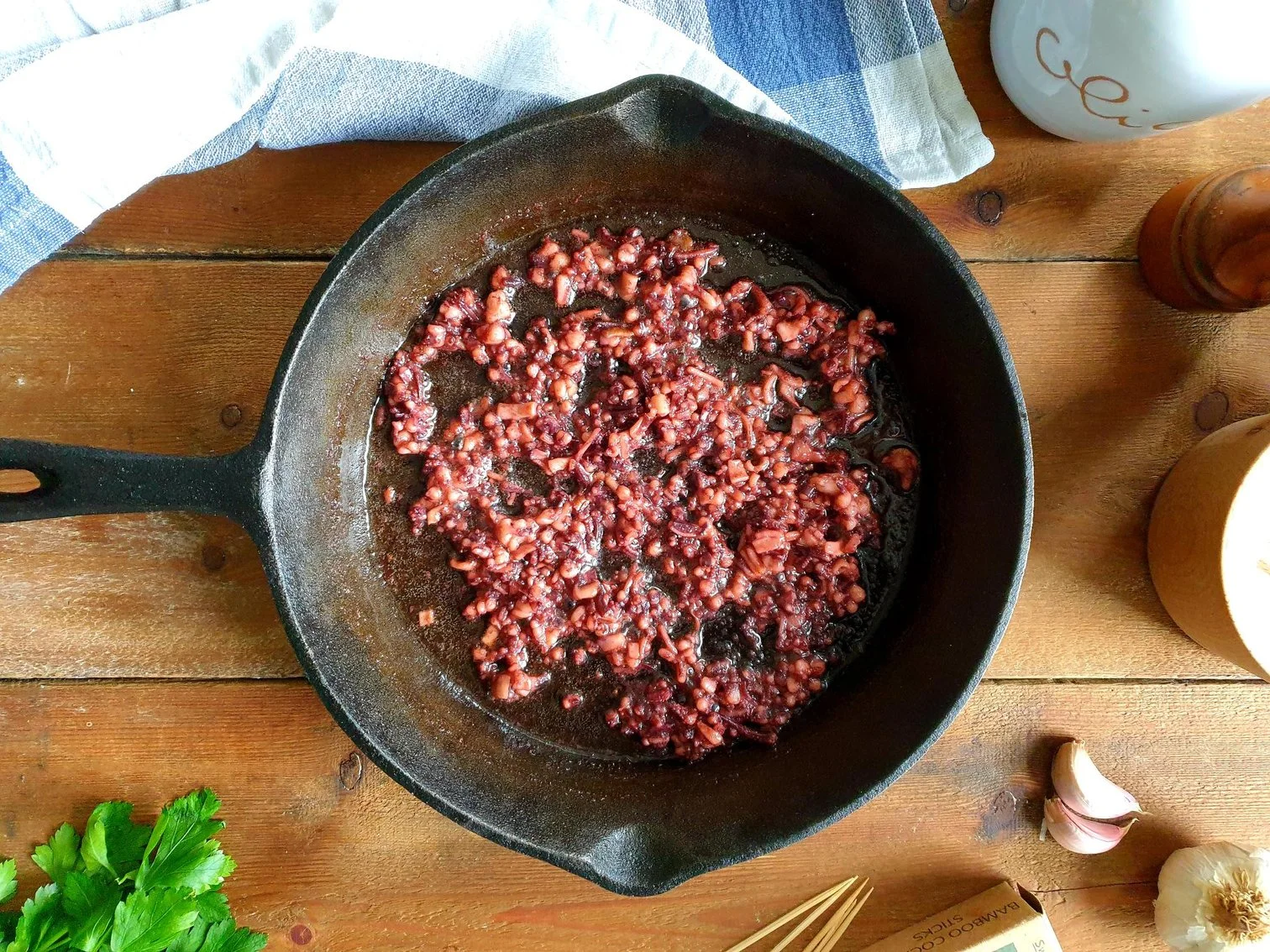
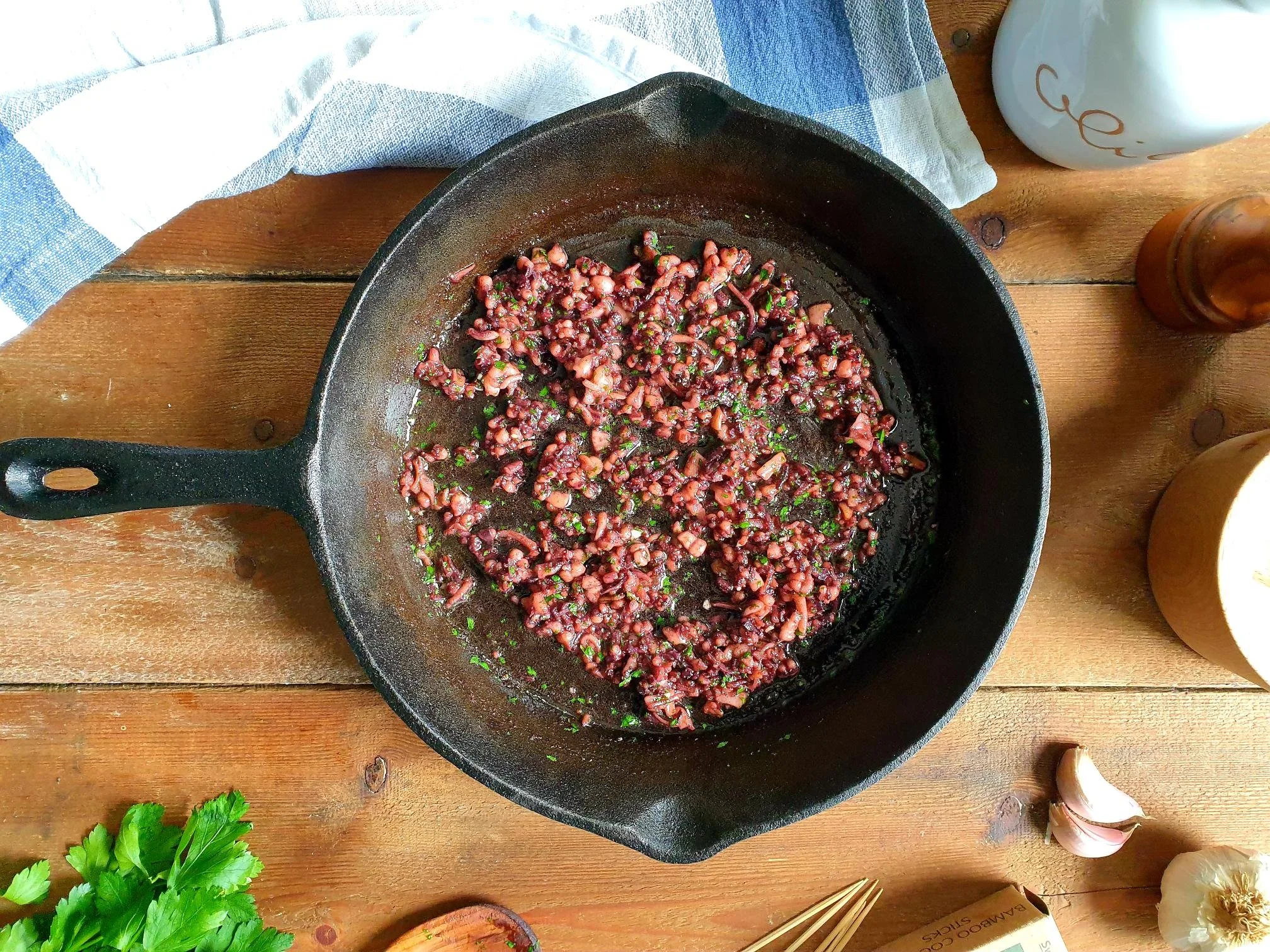
Place the oil in a large non stick frying pan. Weight the squid tentacles, then chop quite finely and add to the pan. Cook for a few minutes, add white wine if using, and cook further until all the wine evaporates.

View fullsize Stuffed Squid 6.jpg
View fullsize Stuffed Squid 7.jpg
View fullsize Stuffed Squid 8.jpg
View fullsize Stuffed Squid 9.jpg

Turn off the heat and add an equal wight of breadcrumbs.

Add finely chopped fresh flat leaf parsley, crushed garlic and season with sea salt and black pepper to taste. Mix well so all the ingredients are well incorporated.
Taste the mixture and adjust the seasoning, set aside.

View fullsize Stuffed Squid 10.jpg
View fullsize Stuffed Squid 11.jpg

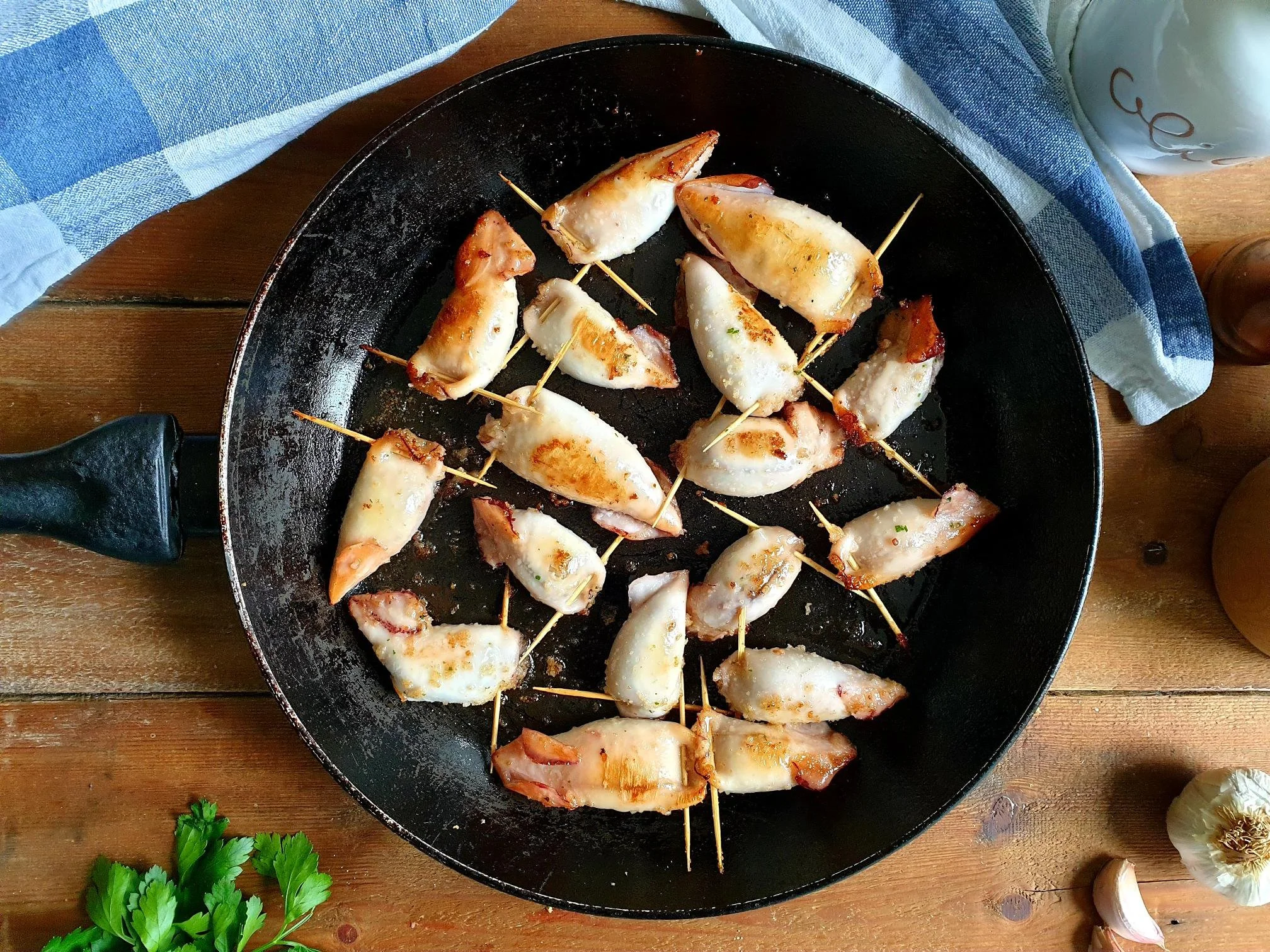
Stuff the squid sacks with the mixture, using the teaspoon, not too full, or they can potentially burst during the cooking.

View fullsize Stuffed Squid 12.jpg
View fullsize Stuffed Squid 14.jpg

Close the openings of the sacks with cocktail sticks (toothpick).

View fullsize Stuffed Squid 15.jpg
View fullsize Stuffed Squid 16.jpg

Use the same non stick large frying pan and pour a generous drizzle of extra virgin olive oil.

Gently fry stuffed squid in batches, if making large quantity, (do not overcrowd the pan) for about a minute or so on each side until they start to colour.

If you have leftover stuffing mixture, add it to the pan.

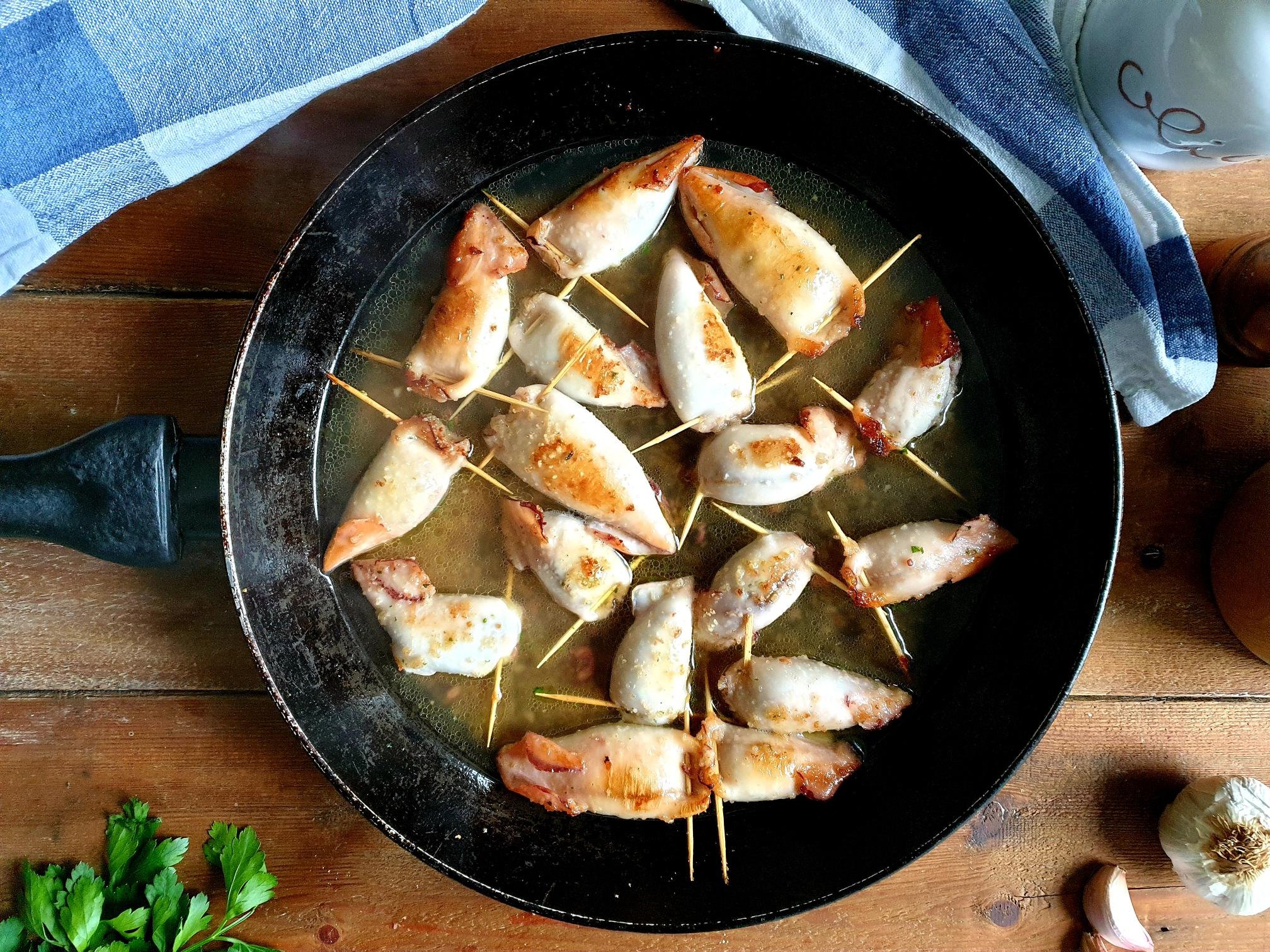
Add a touch of water, cover with the lid (ideally a lid with a steam whole) and cook on a gentle heat for about 20 minutes.

Move them around gently, now and gain, taking care not to break them.

View fullsize Stuffed Squid 18.jpg
View fullsize Stuffed Squid 20.jpg

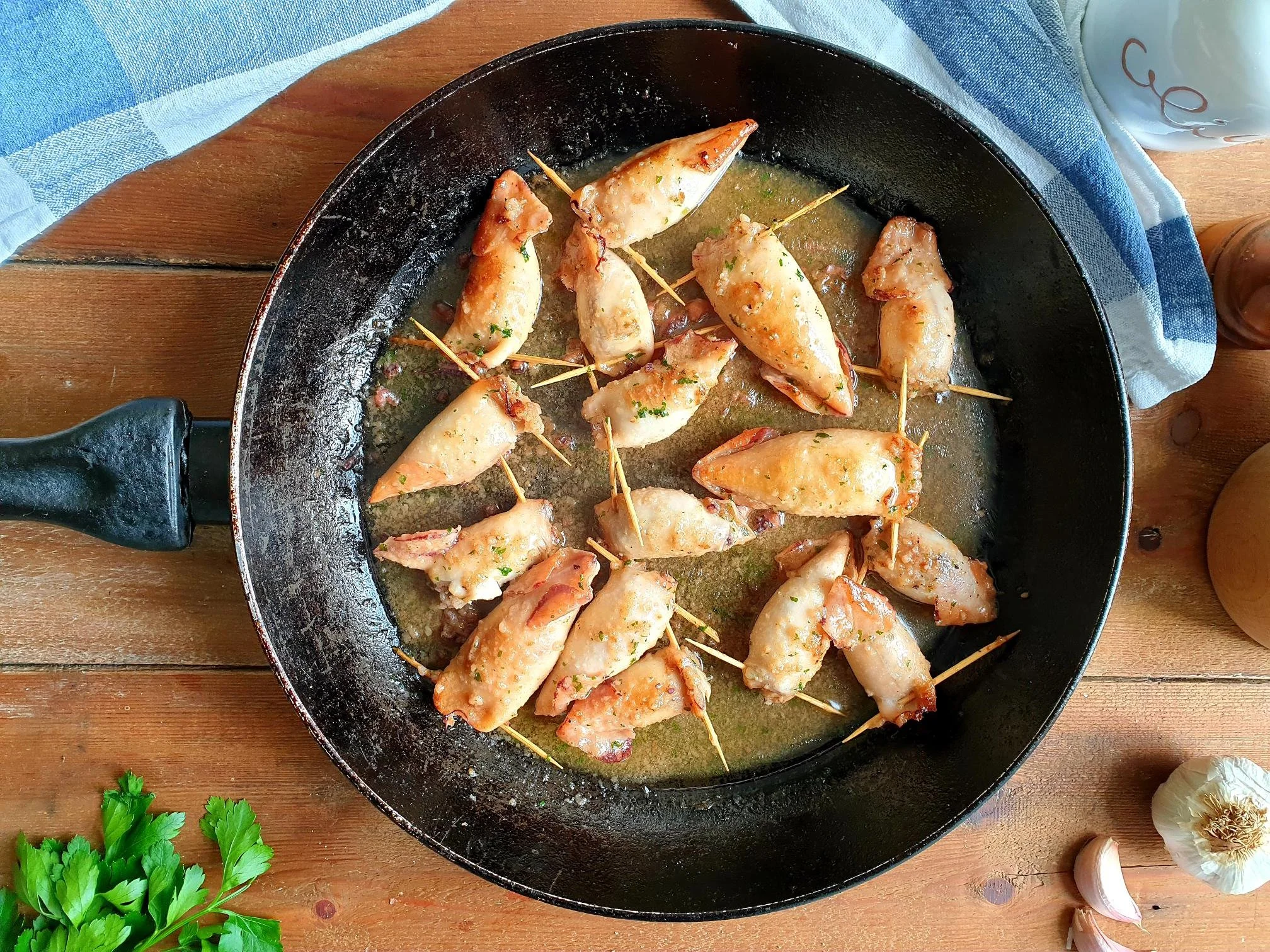
During the cooking a small amount of the filling will come out and become part of a delicious sauce that should not be too thick nor to watery.

If your sauce is too watery, cook for a short while until the sauce thickens to your desire, if on the other hand you think the sauce is too thick for your liking, just dilute a bit by adding a splash of water.

View fullsize Stuffed Squid 21.jpg
View fullsize Stuffed Squid 23.jpg

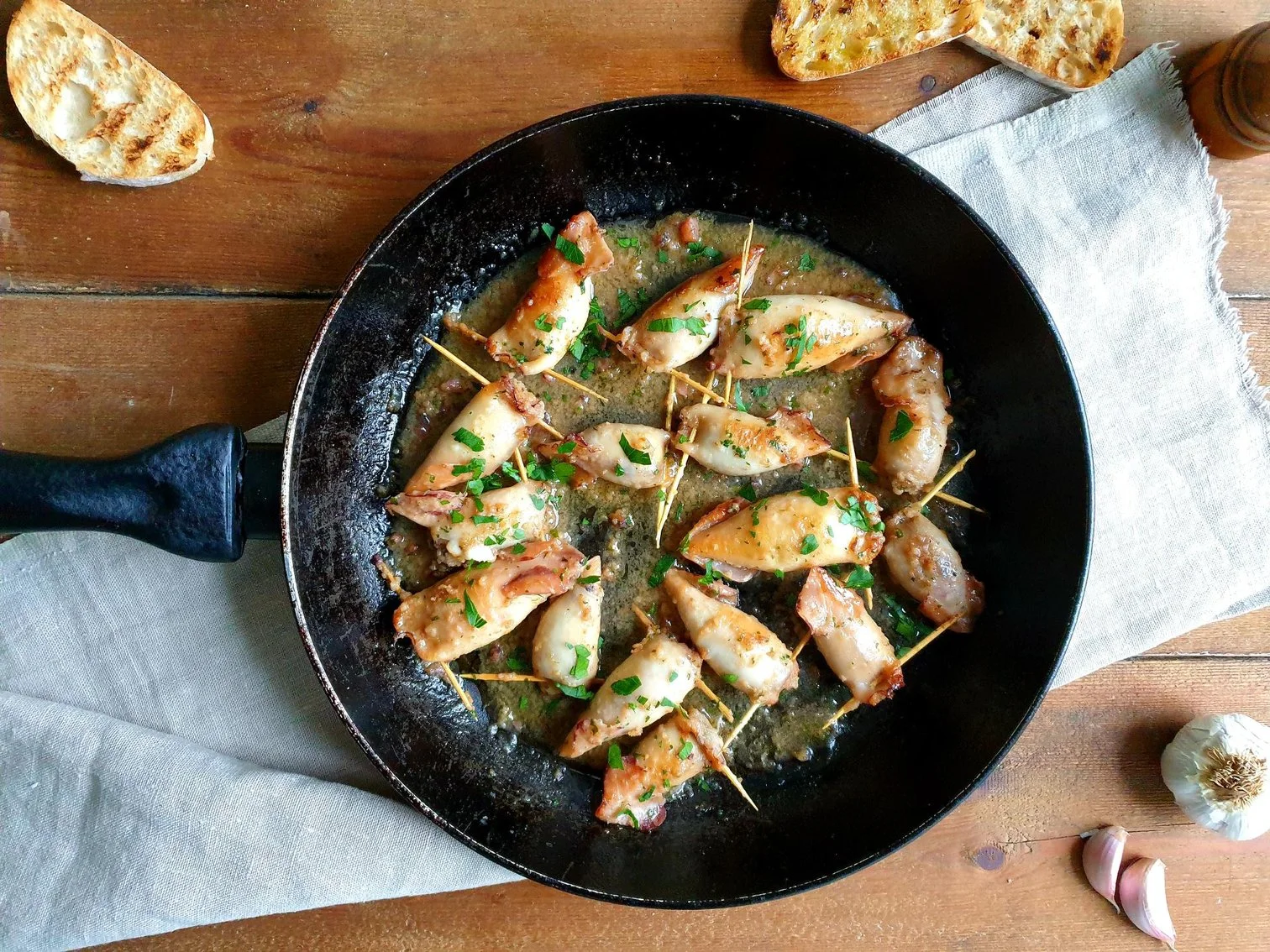
When the squid is cooked , remove the cocktail sticks (toothpicks).

Sprinkle with some extra roughly chopped parsley and serve hot with some fresh crunchy rustic bread, toasted bread, bruschetta or soft cooked or grilled yellow or white polenta.

Just a thought

You can add a bit of freshly grated Parmiggiano Reggiano cheese to the breadcrumb mixture.

Sometimes when you buy frozen squid, they come with no tentacles. In this case you can replace the tentacles for the filling with 1-2 thin slices of finely chopped Prosciuutto crudo (Italian dry ham). Be mindful of the seasoning as the prosciutto crudo is quite salty.

It is quite common also to use parboiled white rice (cooked al dente) instead of dry breadcrumbs to make the filling, and you can also substitute bread crumbs with some old and stale bread (no crust) soaked in a bit of water, squeeze well to remove the excess, 1 lightly beaten egg.

This dish is best eaten fresh, when just cooked, but can be stored in a fridge for a day or two at most, in an airtight container, and it is not really suitable for freezing.

If you do want to be ahead of time you can clean the squid and make the filling a day before and store them overnight in the refrigerator in an airtight container or covered with cling film.

You can add some chopped tomatoes to the white busara sauce if you prefer red busara sauce variation.

Wine suggestion

Collio Friulano DOC 2019 - Borgo del Tiglio

December 16, 2022 /tina oblak
stuffed squid, stuffed calamari, polnjeni kalamari, nadevani lignji, calamari ripien), fresh squid, frozen squid, white busara sauce, white buzara souce
Adriatic Recipe, All year round recipe, Appetizers, Autumnal dish, Autumnal recipe, casserole, Celebratory dish, child friendly dish, child friendly meal, dinner, Easter, Easter dish, Easter recipes, Easy recipe, family friendly dish, family friendly meal, Festive dish, Fish & Seefood, Healthy, healthy mael, hearty dish, Istrian cuisine, Istrian dish, Istrian food, Istrian gastronomy, light fish course, light meal, main course, main dish, main fish course, main fish meal, one post fish recipe, one pot meal, Rustic dish, simple recipe, Slovenian cuisine, Slovenian food, Slovenian gastronomy, stew, stuffed dishes, summer recipe, supper, Winter dish, Winter recipe
2 Comments

Szegedin Goulash – Hungarian style Sauerkraut and Pork meat stew Recipe 

Beans and Sardines
November 09, 2022 by tina oblak in Adriatic Recipe, All year round recipe, Austrian inspired dishes, Autumnal dish, Autumnal recipe, casserole, Central European recipes, child friendly dish, child friendly meal, dinner, Eastern European dishes, Eastern European recipes, Easy recipe, family friendly dish, family friendly meal, hearty dish, Hungarian inspired dishes, Istrian cuisine, Istrian dish, Istrian food, Istrian gastronomy, main course, main dish, main vegetarian course, main vegetarian dish, main vegetarian meal, Meat, Mitteleuropean cuisine, Mitteleuropean dish, Mitteleuropean food, one pot meal, one pot meat recipe, Rustic dish, simple recipe, Slovenian cuisine, Slovenian food, Slovenian gastronomy, stew, supper, Vegan, Vegetarian, Winter dish, Winter recipe

This traditional, Hungarian in origin stew, is flavourful, hearty and comforting, made by slowly simmering sauerkraut with pork  and enriched by adding sweet ground Hungarian paprika and caraway seeds. If you are a lover of a sauerkraut, this stew could not be more perfect during colder months,  and it can easily become a vegetarian and vegan friendly dish, just by omitting the meat , however, Rosl Philpot in her book, Viennese Cookery, Hodder and Stoughton Limited 1965, indicates that this dish, “It's definitely not for dainty appetites, nor for those who dislike Sauerkraut”. 

Although this particular type of goulash is well known and famous in Hungary, it is also very popular in Germany and Austria, where it is called Szegedinergoulash,  and in all the other countries that were once part of the Austro-Hungarian Empire, including Slovenia, where this stew has established itself, and it is a very much loved dish and simply called Segedin. 

It is cooked, up and down the country with slight variations, mainly in households, although it is sometimes found on the menus in more informal family run restaurants where more rustic dishes are served. 

Variations of this stew could include the use of smoked or unsmoked lardons or sliced bacon which is fried together with the onions and the garlic and sometimes all-purpose flour would be used to thicken the stew. 

The origin of this dish is disputed and it is believed that the stew was originated in the Hungarian town of Szeged, hence the dish is called 'Szeged goulash,' the other theory leads us to believe the legend that says that the dish was accidentality invented  by the famous 19th century Hungarian poet, lawyer, and journalist  Jozseff Székély, and consequently the name of the dish could also be called Székelygulyása or  Székely Gulyás.  

The legend says the poet once walked into a guest house where he was told, due to late hours, they only had some sauerkraut and some cooked meat left. He ordered them to mix the two together and to heat it up, and this is how the sauerkraut goulash was born. 

I simply love this stew and grew up with it. My mum would always make a huge pot of it, ideally a day in advance, so all the flavours can mix well and absorb. This dish has such a distinctive aroma that when I was coming home from school, I could smell it even before I walked through the door. I knew very well that I would soon be having a very warm, comforting meal, especially welcome on cold days.   

This is an old peasant food at its very best and I am sharing here my mother's recipe. 

Recipe

Ingredients 

  • 4 Tbsp olive oil or vegetable oil 

  • onions (about 200g), peeled and finely chopped 

  • 3 cloves of garlic, peeled and crushed 

  • about 500g pork shoulder or pork shoulder steaks, trimmed off excessive fat and diced 

  • 1 jar of sauerkraut (about 650g drained sauerkraut) Taste the sauerkraut before cooking it, if too acidic for your liking, put it in a colander and give it a quick rinse under cold running water. 

  • 1 bay leaf, fresh or dry 

  • 1 Tbsp sweet ground Hungarian paprika, or to taste 

  • 1 Tbsp tomato paste 

  • ¼ Tsp caraway seeds, crushed in pestle and mortar (can use whole caraway seeds if you do not have pestle and mortar) 

  • 5 black peppercorn or juniper berries 

  • sea salt 

  • black ground pepper 

  • sour cream, for serving, optional 

Method 

Put the oil in a fairly large pan, stewing pot or casserole dish. Add finely chopped onions, crushed garlic, a pinch of sea salt and cook, on a medium-low heat stirring occasionally,  until golden in colour and soft. 

Add diced pork and brown the meat on all sides. 

View fullsize Segedin 2.jpg
View fullsize Segedin 3.jpg

Lower the heat and add sauerkraut, bay leaf, sweet paprika, tomato paste, crushed caraway seeds, peppercorns or juniper berries, a pinch of sea salt and a pinch of ground black pepper. 

Add enough water to completely cover the sauerkraut and pork, stir with a wooden spoon. 

View fullsize Segedin 5.jpg
View fullsize Segedin 6.jpg

Bring to a boil, partially cover with the lid and gently simmer for about two hours, giving it a little stir now and again. 

Sauerkraut and pork meat stew is ready when you achieve the desired consistency, most of the liquid should evaporated but you should not end up with a dry dish. 

If you think the stew is too thick simply add some more water. If on the other hand you like your stew thicker cook further without the lid. 

Serve hot with mashed potatoes, cooked rice, bread dumplings, fried potato gnocchi crescents, boiled or oven roasted potatoes or simply with some nice rustic crunchy bread. 

Just a thought 

For this stew you can use different quantity of meat and sauerkraut, it really is a question of preference, you cannot get the recipe wrong. 

Sauerkraut and pork meat goulash will keep well in the fridge in the airtight container for up to four days and is suitable for freezing. 

If serving with a dollop of sour cream do that just before serving. 

Wine suggestion

Cannonau di Sardegna Riserva DOC “Senes” 2017 - Argiolas

November 09, 2022 /tina oblak
sauerkraut, Szegedin Goulash, Szegedinergoulash, sauerkraut stew, vegan sauerkraut stew, vegetarian sauerkraut stew, sweet ground Hungarian paprika, caraway seeds, sour cream, pork meat, pork shoulder
Adriatic Recipe, All year round recipe, Austrian inspired dishes, Autumnal dish, Autumnal recipe, casserole, Central European recipes, child friendly dish, child friendly meal, dinner, Eastern European dishes, Eastern European recipes, Easy recipe, family friendly dish, family friendly meal, hearty dish, Hungarian inspired dishes, Istrian cuisine, Istrian dish, Istrian food, Istrian gastronomy, main course, main dish, main vegetarian course, main vegetarian dish, main vegetarian meal, Meat, Mitteleuropean cuisine, Mitteleuropean dish, Mitteleuropean food, one pot meal, one pot meat recipe, Rustic dish, simple recipe, Slovenian cuisine, Slovenian food, Slovenian gastronomy, stew, supper, Vegan, Vegetarian, Winter dish, Winter recipe
Comment

Djuvec Rice with Bell Peppers and Tomatoes Istrian Recipe

October 05, 2022 by tina oblak in Adriatic Recipe, Appetizers, Autumnal dish, Autumnal recipe, Balkan dish, brunch, child friendly dish, child friendly meal, dinner, Easy recipe, entrée course, family friendly dish, family friendly meal, first course, first course dish, first course meal, Healthy, healthy mael, hearty dish, Istrian cuisine, Istrian dish, Istrian food, main course, main dish, main vegetarian course, main vegetarian dish, main vegetarian meal, Nutritious, Nutritious dish, one pot meal, Rustic dish, Side Dishes, simple recipe, Slovenian cuisine, Slovenian food, Slovenian gastronomy, Starters, summer dish, summer recipe, supper, Vegan, Vegetable side dish, Vegetables, Vegetarian

Djuvec (frequently spelled Ðuveč and pronounced Joo-vetch) is a one pot rice dish, and a bit of a hidden gem in the gastronomic world.  It is very commonly found in South-Eastern Europe in countries like Slovenia, Croatia, Serbia and other Balkan countries, and  perhaps it is not very well known to the rest of the world. 

This vegetarian and vegan friendly dish is one of my absolute favourites, it is incredibly simple and quick to make, healthy, and is really delicious. It is also a very practical dish. It can be prepared ahead of time, and it makes a fantastic addition to more familiar picnic foods and buffets at parties. 

Djuvec is always a big hit with friends and family at the barbecue gatherings, as it is  traditionally served at a room temperature as a side dish, and makes a great paring to pan fried or grilled vegetables, fish or  different type of meats like Ćevapčići (small pieces of rolled grilled mince meat) and Ražnjići (grilled pork meat on skewers). 

It can also be served hot or warm as a main mail, maybe with a side salad, as an alternative to a tasty, and perhaps,  more frequently cooked, well known and much loved a classic Italian risotto. 

It is often made during the summer, end of summer and early autumn with main ingredients being onions, red, orange or yellow bell peppers and tomatoes, and often peas, ajvar (sweet roasted red pepper spread) and powdered paprika is added to a basic recipe to create a very common variations of this dish. 

I am sharing here my mum's super delicious one pot pepper and tomato rice dish that she used to make time and time again, just try it, I promise you, you will came back to this “off the beaten track recipe” that my family and my friends simply adore, and cannot get enough of it. 

Recipe

Ingredients 

Serves 4-6 

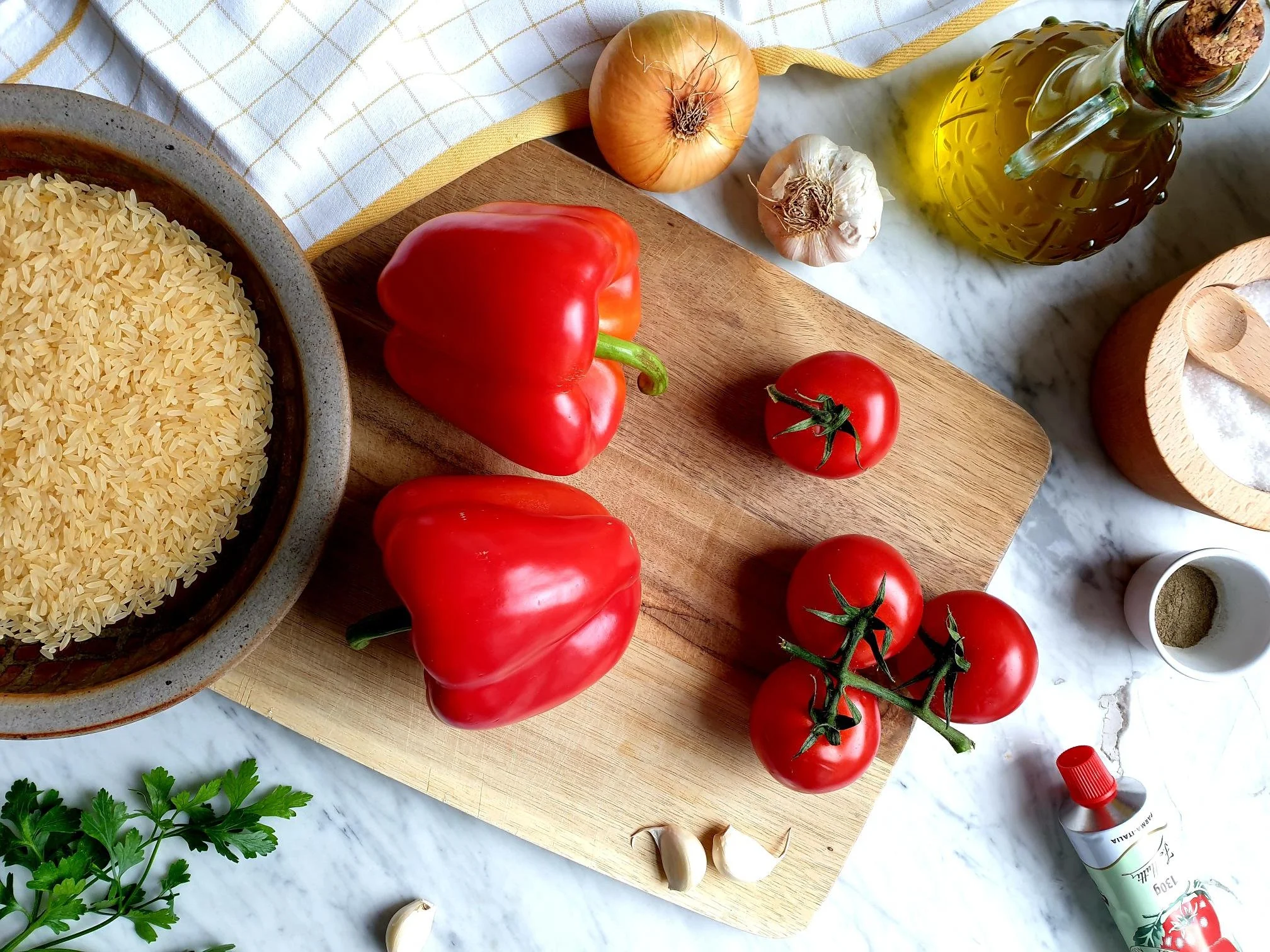
  • 3 Tbsp virgin olive oil or olive oil 

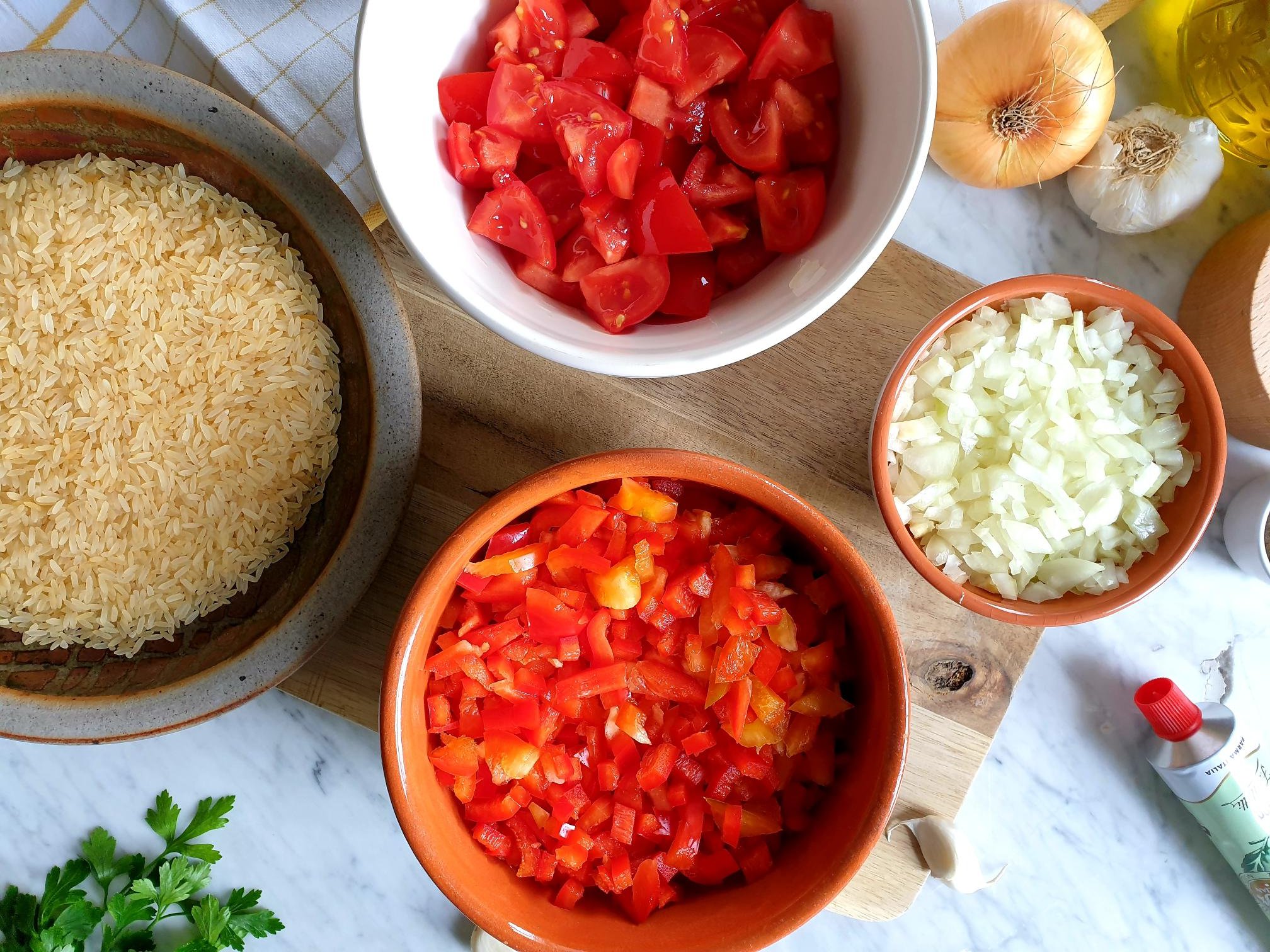
  • 1-2 onions (about 250g), peeled and finely chopped 

  • 1 clove garlic, peeled and crushed 

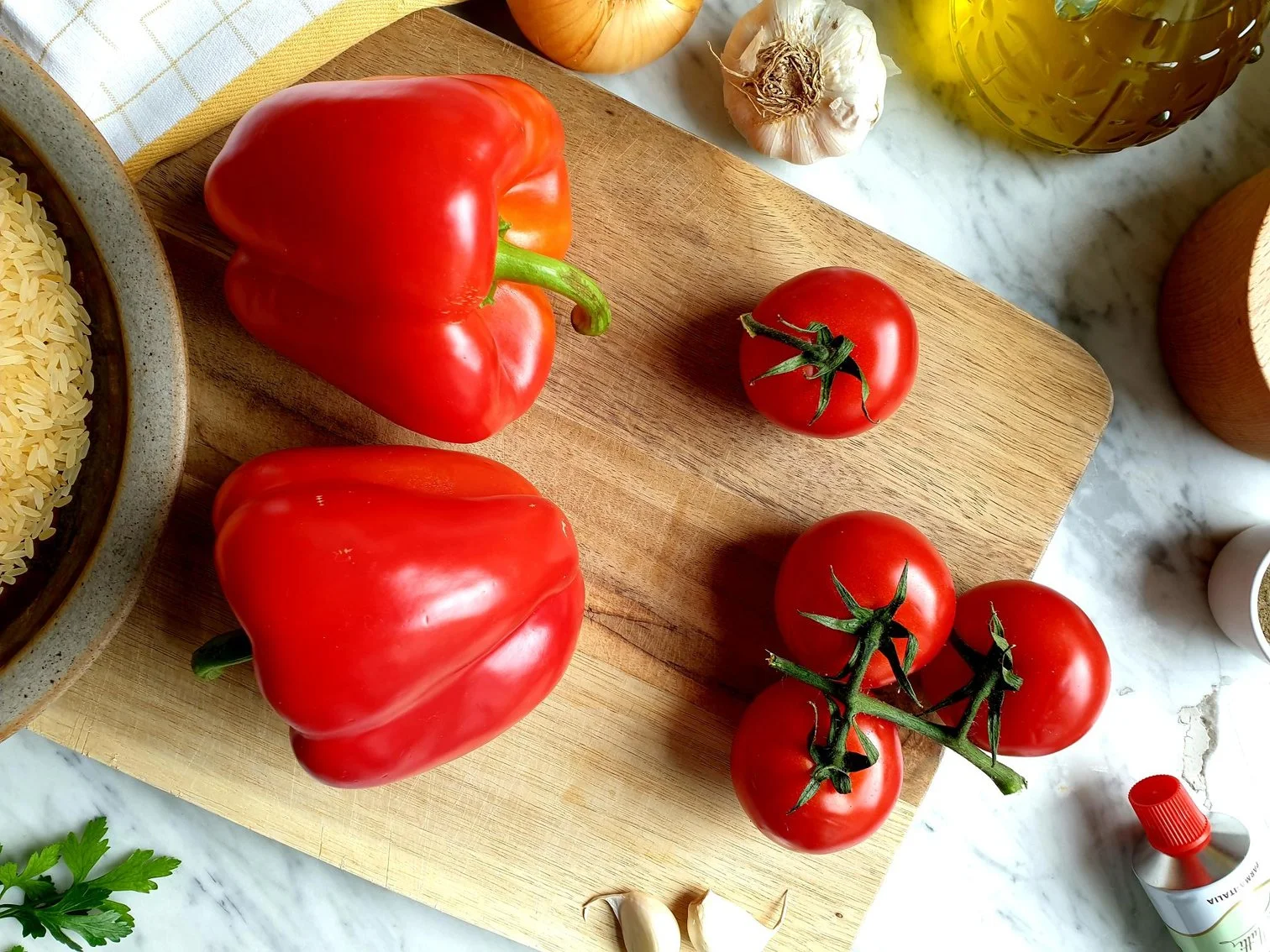
  • 2 red bell peppers (about 400g), wash, dry, remove the seeds and white filaments and cut into small cubes (for this recipe you can also use yellow or orange bell peppers or a combination) 

  • few vine tomatoes or other types of ripe and sweet tomatoes (about 300g) washed, quartered and roughly chopped 

  • 1 Tbsp tomato paste 

  • 300g long grain rice 

  • 600ml vegetable stock or instant vegetable stock powder 

  • sea salt 

  • black pepper 

  • fresh flat leaf parsley for serving, roughly chopped, optional 

Method 

Place olive oil in a fairly large shallow cast iron casserole dish or frying pan, add finely chopped onions, crushed garlic, a generous pinch of sea salt and  cook for about 10 minutes on a gentle heat until the onions become soft and translucent, stirring occasionally. 

View fullsize Djuvec 4.jpg
View fullsize Djuvec 5.jpg

Add small cubes of bell peppers and stir in with the onions and garlic, cook further for about 15 minutes, stirring occasionally. 

View fullsize Djuvec 6.jpg
View fullsize Djuvec 7.jpg

Transfer roughly chopped tomatoes to the pan, add tomato paste, mix and cook for 10 minutes or so  or until the tomatoes are soft and cooked down, stirring occasionally. 

View fullsize Djuvec 8.jpg
View fullsize Djuvec 9.jpg

Add the rice to the pan, stir with the onion, pepper and tomato mixture 

Toast the rice for about 2 minutes, stirring constantly. 

View fullsize Djuvec 10.jpg
View fullsize Djuvec 11.jpg

Pour vegetable stock in the pan and bring to boil. 

Turn the heat down to a minimum, put the lid on and cook for about 20 minutes without stirring. 

Halfway through cooking time, very gently move about the rice with the fork. 

Serve hot or at room temperature. 

View fullsize Djuvec 12.jpg
View fullsize Djuvec 14.jpg

Sprinkle some roughly chopped fresh flat leaf parsley, optional.

Just a thought 

This dish is not suitable for freezing and will keep in an airtight container in a fridge for a few days. 

Wine suggestion

Alto Adige Valle Isarco Kerner DOC 2021 - Pacher Hof

October 05, 2022 /tina oblak
Djuvec Rice, Ðuveč, Ðuveč Rice, Red Bell Peppers, tomatoes, fresh tomatoes, Djuvec Istrian Recipe, Djuvec Balkan Recipe, picnic food, rice salad, rice salad with bell peppers and tomatoes, buffet foods
Adriatic Recipe, Appetizers, Autumnal dish, Autumnal recipe, Balkan dish, brunch, child friendly dish, child friendly meal, dinner, Easy recipe, entrée course, family friendly dish, family friendly meal, first course, first course dish, first course meal, Healthy, healthy mael, hearty dish, Istrian cuisine, Istrian dish, Istrian food, main course, main dish, main vegetarian course, main vegetarian dish, main vegetarian meal, Nutritious, Nutritious dish, one pot meal, Rustic dish, Side Dishes, simple recipe, Slovenian cuisine, Slovenian food, Slovenian gastronomy, Starters, summer dish, summer recipe, supper, Vegan, Vegetable side dish, Vegetables, Vegetarian
Comment

Chicken Goulash traditional Istrian Recipe 

Beans and Sardines
September 28, 2022 by tina oblak in Adriatic Recipe, All year round recipe, Autumnal dish, Autumnal recipe, casserole, child friendly dish, child friendly meal, dinner, family friendly dish, family friendly meal, Fresh herbs, hearty dish, Istrian cuisine, Istrian dish, Istrian food, Istrian gastronomy, main course, main dish, main meat course, Meat, one pot meal, one pot meat recipe, Rustic dish, simple recipe, Slovenian cuisine, Slovenian food, Slovenian gastronomy, supper, Winter dish, Winter recipe

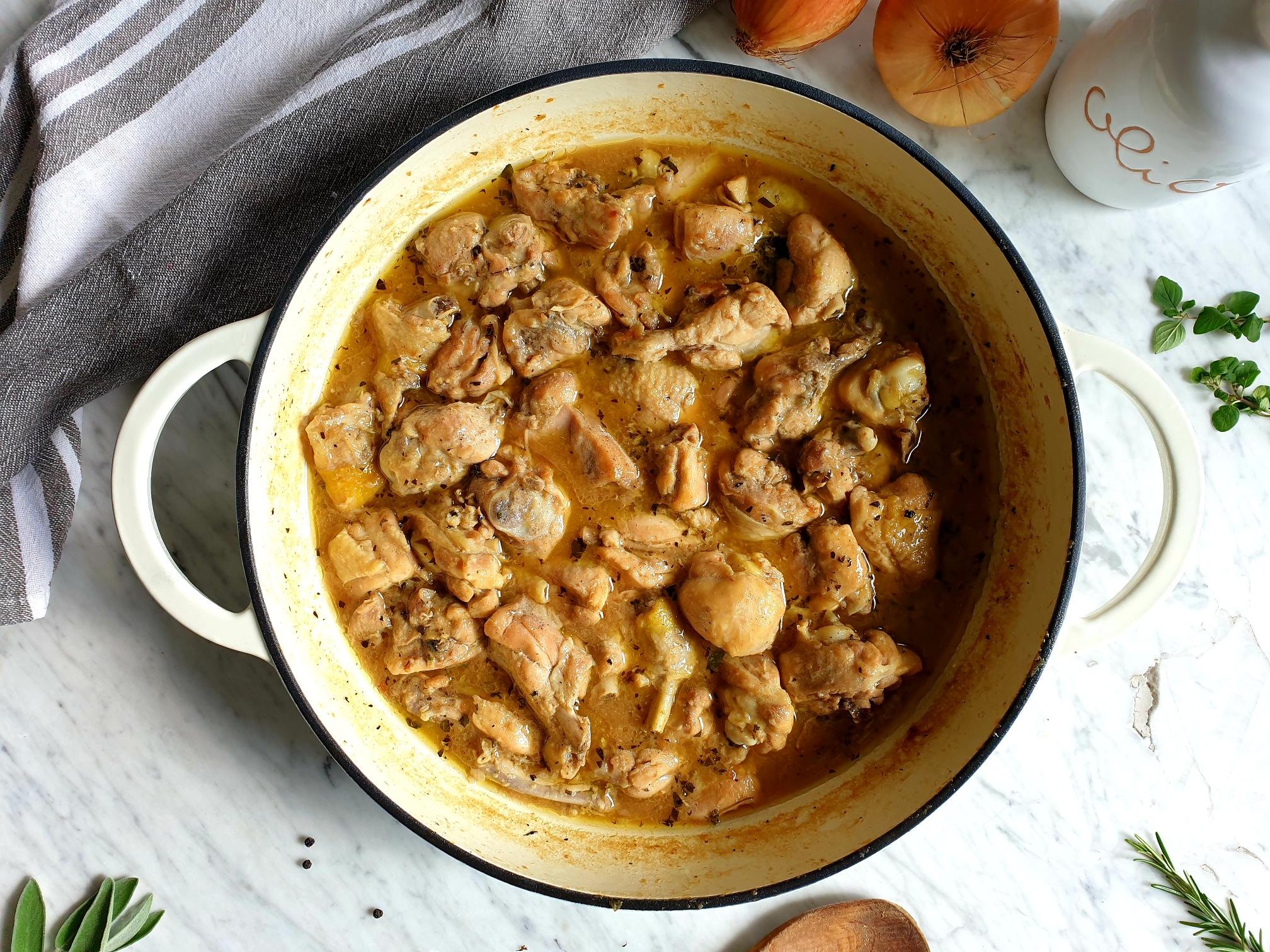
This hearty, comforting, succulent, and delicious meat dish, is as rustic or as elegant as you want to make it. It is made with only a few ingredients, fresh marjoram, being one of them, which gives this dish a distinguished flavour, very often found in Istrian cooking. 

Chicken goulash is one of the most representative dishes of Slovenian Istra, known in local dialect as Kakušji šugo  or in standard Slovenian Kokošji golaž, and it is a part of Istrian Žgvacet or Žvarcet, a collective term indicating traditional stew or goulash made with different kinds of meat like chicken, beef, venison, rabbit and then cooked in a sauce. 

Nowadays, chicken goulash is prepared in the households on a regular basis, but this certainly was not the case in the past, as my nona told me. When she was a child,  meat dishes were a rare sight on the dining table, and this particular dish was no exception, served exclusively to mark special occasion and during festivities. This may be a concept a bit difficult to grasp, as in today's world chicken meat is easily affordable and accessible for most people. 

My nona also told me that in the past, in more rural settings, on small land holdings, even if not a farm, chickens were a very common sight, and were most common animal around. They roamed freely around the courtyards of the farmhouses, and kept safe during night time in fenced spaces (called in local dialect Kapunere). They were fed exclusively on corn or scraps from home grown vegetables, which made the meat particularly tasty. This was the reason, my nona explained, why a long list of ingredients were not used for this dish, as you really want to taste, elevate and appreciate the flavour of the chicken meat of such high quality. 

Old chickens, no longer able to lay eggs would “disappear” from the courtyards and appeared in pots and pans in a slightly different form. Traditionally, for this recipe, the whole chicken is used, even the parts that have very little or no meat on them like ribs, but will truly add crucial flavour to the goulash and are removed and discarded when the dish is fully cooked. 

This once festive food was accompanied by home made potato gnocchi, polenta, typical Istrian home made fresh pasta like bleki, fuzi, pljukanci or bigoli, pan-fried potatoes with onions and pancetta, or simply with some crunchy bread to soak up the sauce. This recipe for Chicken goulash can be served with mashed potatoes or oven baked potatoes, although these alternatives are slightly a less traditional, but are still quite common side dishes. These days this dish is still enjoyed in this same way!  

I am sharing here my nona's recipe, a very simple but very special recipe, as it has been in the family for generations. My nona learned how to cook this dish from her nona, and as the story goes for most of the recipes, this one also has variations and ingredients like white wine, a bit of chopped fresh tomatoes or a tablespoon of tomato concentrate, crushed garlic and other fresh herbs like a bit of finely chopped fresh rosemary, sage, basil and parsley, few celery leaves finely chopped can be added to the basic recipe. 

Recipe 

Ingredients 

Serves 4-6 

  • 1 whole chicken (roaster or cockerel) 1kg-1.5kg, skinned, jointed and cut into chunks (your butcher will be more than happy to do this for you) 

    You can use just chicken thighs or drumsticks on the bone (or boneless pieces) or a combination of the two, and some chicken wings. 

    If you skin yourself, make sure you remove most of the skin to avoid the dish becoming to oily and greasy, and potentially unpleasant to eat. 

  • 2 Tbsp olive oil 

  • 2 medium onions (about 240g) peeled and finely chopped 

  • 1 Tbsp white all purpose plain flour 

  • 1 Tbsp fresh marjoram, finely chopped  (can use dry marjoram) 

  • sea salt 

  • black pepper 

Method 

Put olive oil, finely chopped onions, and chunks of chicken in a fairly large shallow cast iron casserole dish or frying pan. 

Add salt and pepper, and cook on a gentle heat until the onions become soft and caramelized, and meat is golden brown in colour, stir occasionally. This process should take around 45 minutes. 

If it starts catching at the bottom, add a tiny bit of water. 

View fullsize Chicken Goulash traditional Istrain Recipe 3.jpg
View fullsize Chicken Goulash traditional Istrain Recipe 4.jpg

Sprinkle flour and add finely chopped fresh marjoram (or dry if using), stir with a wooden spoon. 

Add water to the pan, about ¾ full, and scrap with a wooden spoon bits and pieces that attached to the bottom and the sides of the pan. 

Simmer for a few more minutes until the sauce thickens a bit. 

View fullsize Chicken Goulash traditional Istrain Recipe 5.jpg
View fullsize Chicken Goulash traditional Istrain Recipe 6.jpg

The dish is fully cooked when the sauce becomes nice and velvety in consistency, it should not be either too thick nor to watery and too thin. 

If you are using whole jointed chicken, fish out and discard pieces that you are not going to serve, like knuckles and chunks of ribs for example. 

Taste and adjust seasoning with sea salt and black pepper. 

Serve hot with potato gnocchi , soft cooked or grilled polenta, typical Istrian home made fresh pasta like bleki, fuzi, pljukanci or bigoli, pan-fried potatoes with onions and pancetta , mashed or oven roasted potatoes or simply with some crunchy bread to soak up the sauce. 

Wine suggestion

Provincia di Pavia Pinot Nero IGT “Junior” 201 - Monsupello

September 28, 2022 /tina oblak
chicken, whole chicken, roaster, cockerel, chicken goulash, Istrian chicken goulash, chicken with fresh marjoram, fresh marjoram, dry marjoram, Kakušji šugo, Kokošji golaž, Istrian Žgvacet, Istrian Žvarcet, chicken thighs, chicken thighs on the bone, chicken drumsticks on the bone, chicken wings
Adriatic Recipe, All year round recipe, Autumnal dish, Autumnal recipe, casserole, child friendly dish, child friendly meal, dinner, family friendly dish, family friendly meal, Fresh herbs, hearty dish, Istrian cuisine, Istrian dish, Istrian food, Istrian gastronomy, main course, main dish, main meat course, Meat, one pot meal, one pot meat recipe, Rustic dish, simple recipe, Slovenian cuisine, Slovenian food, Slovenian gastronomy, supper, Winter dish, Winter recipe
Comment

One Pot Roasted Octopus with Potatoes and Vegetables Istrian Recipe (Octopus Peka)

Beans and Sardines
August 31, 2022 by tina oblak in Adriatic Recipe, All year round recipe, baked dish, child friendly dish, child friendly meal, dinner, Easy recipe, family friendly dish, family friendly meal, Fish & Seefood, Healthy, healthy mael, hearty dish, Istrian cuisine, Istrian dish, Istrian food, Istrian gastronomy, light fish course, light meal, main course, main dish, main fish course, main fish meal, Nutritious, Nutritious dish, one post fish recipe, one pot meal, roasted dish, Rustic dish, simple recipe, Slovenian cuisine, Slovenian food, Slovenian gastronomy, supper

One pot roasted octopus with potatoes and vegetables called Octopus Peka (dish found in Slovenian and Croatian Istria and along Dalmatian coast in Croatia) is seriously delicious, very aromatic and one of the easiest and simplest recipe for a one pot roast where the preparation for it requires minimal effort but the finished dish is a serious show stopper, and although this dish is very rustic and formal, for locals it feels very special and celebratory, as it is usually prepared for a large number of people, for friends and family to mark a special occasion

The word Peka, in Slovenian (also called črpinja) and in Croatian, refers to a large metal baking dish with a lid that resembles a bell-shaped dome but it is also a name given to the finished dish (lamb peka, octopus peka etc.) cooked with this very ancient method (in an open fireplace) and the oldest roasting technique which ensures the slow and even cooking as hot coals and embers are placed on top of the dome.

Most of us do not have a possibility to make this dish with the authentic and traditional peka method, but I am sharing here the recipe that would come as close as you can get to the “real deal octopus peka” using Dutch oven, cast iron casserole dish, even a baking tray and some aluminium foil will do.

Serve this dish hot, place the pot in the centre of the table and make sure there is plenty of crunchy bread to soak up the juices, prepare a mixed salad to accompany the dish, and you are ready to go.

I am sharing here this traditional one pot roasted octopus using potatoes, carrots, onions and garlic as basic selection of vegetables, together with fresh fennel bulb that can be replaced by courgettes, aubergines, and bell peppers. Play around and use the vegetables, or a combination of vegetables that you like or prefer. There really is no wrong or right way here, the most important thing is that you enjoy the dish!

Ingredients

Serves 4

  • octopus, cleaned, 1 big or a few smaller ones, about 2kg in weight (fishmongers will be happy to clean it for you).

  • For this recipe it is best if the octopus has been previously frozen and then thawed, or buy an already frozen octopus if you can.

  • 1 kg potatoes, peeled and cut into chunks

  • onion (about 150g) peeled and cut into chunks

  • carrots (about 280g) peeled and roughly cut into chunks

  • 3 cloves of garlic, peeled

  • tomatoes (I used 6 mini San Marzano Tomatoes), you can use other variety of small tomatoes or use one bigger in size and cut into chunks

  • one fresh fennel bulb, trimmed and cut into chunks. You can also replace fennel with other vegetables, such as courgettes, aubergines and bell peppers, or you can use fennel in addition to other vegetables. Few black pitted olives are a tasty addition too.

  • 50ml white wine, optional

  • extra virgin olive oil, a very generous drizzle

  • one small sprig of fresh or dry rosemary

  • sea salt

  • black pepper

Method

Place clean and defrosted octopus (or octopuses) in a pan, put the lid on and cook the octopus on a medium-low heat for about 30 minutes. There will be quite a lot of liquid coming out of the octopus. Drain in a colander and set aside.

Preheat the oven to 200C static or equivalent.

View fullsize Octopus Peka 3.jpg
View fullsize Octopus Peka 6.jpg

Put all the vegetables in a Dutch oven, baking dish or tray, and very generously drizzle with extra virgin olive oil.

Season with sea salt and black pepper and mix well.

View fullsize Octopus Peka 5.jpg
View fullsize Octopus Peka 7.jpg

Place previously cooked octopus on top of the vegetable and drizzle lightly with olive oil.

Put the lid on and roast for 60 minutes.

View fullsize Octopus Peka 8.jpg
View fullsize Octopus Peka 9.jpg

Take the lid off and roast for further 10 minutes, or a bit more if there is still a lot of liquid. This will partially depend on the type of vegetables you are using and personal preference.

You want enough liquid so the final dish is juicy and moist.

Place the dish at the centre of the table, so everyone can help themselves, with some crunchy bread to soak up the juices and maybe a nice fresh salad.

Just a thought

This dish is best served hot immediately.

It can be reheated but the dish will be slightly drier as the potatoes and other vegetables will soak up all the juices, although it will still be tasty though.

This recipe is not suitable for freezing.

Wine suggestion

Vitovska 2019 - Čotar

August 31, 2022 /tina oblak
octopus, cooking octopus, roasted octopus, octopus peka, octopus peka with vegetables, roasted seafood, hobotnica pod peko, hobotnica z zelenjavo v pecici, polipo al forno con le verdure
Adriatic Recipe, All year round recipe, baked dish, child friendly dish, child friendly meal, dinner, Easy recipe, family friendly dish, family friendly meal, Fish & Seefood, Healthy, healthy mael, hearty dish, Istrian cuisine, Istrian dish, Istrian food, Istrian gastronomy, light fish course, light meal, main course, main dish, main fish course, main fish meal, Nutritious, Nutritious dish, one post fish recipe, one pot meal, roasted dish, Rustic dish, simple recipe, Slovenian cuisine, Slovenian food, Slovenian gastronomy, supper
Comment

Courgette risotto Istrian Recipe

Beans and Sardines
August 24, 2022 by tina oblak in Adriatic Recipe, Appetizers, child friendly dish, child friendly meal, dinner, Easy recipe, entrée course, family friendly dish, family friendly meal, first course, first course dish, first course meal, Healthy, healthy mael, hearty dish, Istrian cuisine, Istrian dish, Istrian food, Istrian gastronomy, light meal, main course, main dish, main vegetarian dish, main vegetarian meal, Nutritious, Nutritious dish, one pot meal, recipe from Northern Ital, Risotti, Risotto, Rustic dish, simple recipe, Slovenian cuisine, Slovenian food, Slovenian gastronomy, Spring dish, Spring recipe, Starters, summer dish, summer recipe, supper, Vegan, Vegetables, Vegetarian, Venetian dish

Courgette risotto is a perfect choice if you want to make a light and elegant dish, but one that is delicate in taste and yet filling. Summer risotto is incredibly easy to make, and during the summer months, when courgettes are in full season and in abundance, choosing this delicious vegetable to cook with seems almost an obvious choice.

This is not a risotto you will find in the restaurant menus on the Slovenian coast, it is cooked in the households that almost always keep a slab of pancetta in the fridge, and whenever possible grow courgettes. This recipe, since Istria is geographically so close to Veneto region in Italy, where there are a great variety of risotti recipes, it should be no surprise that courgette risotto has been created, and cooked on a regular basis and enjoyed by generations.

This risotto will cover all occasions, it is a perfect rustic and informal choice for a mid week lunch or dinner, but has nothing to dread if it is served in a more formal setting.

I am sharing here my mother's summer courgette risotto, most of the time made with freshly picked courgette that my paternal grandfather used to grow in his vegetable patch.

If you happen to grow your own courgettes and have courgettes flowers as well, and not quite sure what to do with them, use them in the risotto, just chop them roughly and cook together with sliced courgettes.

Ingredients

Serves 4

  • 300g risotto rice (like Vialone Nano, Arborio or Carnaroli)

  • courgettes 430g roughly, sliced

  • 2 Tbsp olive oil

  • 1 onion, 80g roughly

  • 50g pancetta, finely sliced (can use cubed pancetta, sliced bacon, lardons or pork sausage meat), optional for a vegetarian variation

  • small clove of garlic, peeled and crushed

  • 1 litre of hot chicken broth or stock (can use vegetable broth or stock)

  • sea salt

  • fresh flat leaf parsley, roughly chopped, optional (for garnish)

  • generous knob of butter, optional

  • a handful of Parmiggiano Reggiano cheese, finely grated, optional

Method

Before starting to make the risotto have your boiling hot chicken or vegetable broth or stock ready to hand for later.

Wash the courgettes and pat dry them with kitchen paper or clean kitchen towel.

Trim off the ends of the courgettes and slice or cut into smaller pieces (if the courgette is big, cut in half first, then slice lengthways into quarters, then chop into smaller chunks)

View fullsize Courgette risotto 4.jpg
View fullsize Courgette risotto 5.jpg

Put olive oil in a pan, add finely chopped onions, pancetta, crushed garlic, a pinch of salt and cook on a gentle heat, stirring occasionally, until the onions become soft and translucent.

View fullsize Courgette risotto 6.jpg
View fullsize Courgette risotto 7.jpg

Add courgette pieces and cook for a few minutes until they soften a bit.

View fullsize Courgette Risotto 7a.jpg
View fullsize Courgette risotto 8.jpg

Add the risotto rice and toast for a bit , stirring constantly to avoid sticking to the pan.

View fullsize Courgette risotto 9.jpg
View fullsize Courgette risotto 10.jpg

Pour or ladle ½ litre (500ml) of hot chicken or vegetable broth or stock.

Cook until the first amount of liquid is absorbed then start gradually adding ladles of hot stock, one at a time, allowing the liquid to be absorbed before adding more.

There should always be enough liquid just to cover the risotto.

Cook on a medium heat, stirring almost constantly, until the rice is cooked al dente, meaning fully cooked but still a bit firm when bitten, it should roughly take between 15 -18 minutes for a risotto to be cooked.

Taste and adjust the seasoning with sea salt, but this might not be necessary since the stocks that come from the store generally speaking are salty already!

For even creamier texture, you can finish cooking the courgette risotto with a typical Italian mantecare phase. Remove the saucepan from the heat, add grated cheese and a bit of cold butter to the risotto when it is almost finished, and stir with a wooden spoon quite vigorously in order to develop its delicious creamy texture. This phase is optional.

Sprinkle with some roughly chopped fresh flat leaf parsley and finely grated Parmiggiano Reggiano Cheese (only if you have not used it already in the mantecare phase) and serve immediately while the risotto is still hot.

Just a thought

Courgette risotto can be kept in the fridge for a couple of days in an airtight container.

It can be enjoyed at room temperature as well and is not suitable for freezing.

You can freeze the onion, courgettes and pancetta base and defrost when deciding to make a risotto.

With a leftover courgette risotto you can make some arancini (staple Sicilian stuffed rice ball, coated in breadcrumbs and fried)

Wine suggestion

Roero Arneis DOCG 2021 - Malvirà

August 24, 2022 /tina oblak
fresh courgettes, risotto rice, zucchini risotto, creamy courgette risotto, vegetarian risotto, vegan risotto, courgette risotto with pancetta
Adriatic Recipe, Appetizers, child friendly dish, child friendly meal, dinner, Easy recipe, entrée course, family friendly dish, family friendly meal, first course, first course dish, first course meal, Healthy, healthy mael, hearty dish, Istrian cuisine, Istrian dish, Istrian food, Istrian gastronomy, light meal, main course, main dish, main vegetarian dish, main vegetarian meal, Nutritious, Nutritious dish, one pot meal, recipe from Northern Ital, Risotti, Risotto, Rustic dish, simple recipe, Slovenian cuisine, Slovenian food, Slovenian gastronomy, Spring dish, Spring recipe, Starters, summer dish, summer recipe, supper, Vegan, Vegetables, Vegetarian, Venetian dish
Comment

Peperonata Istrian style Recipe

Beans and Sardines
August 10, 2022 by tina oblak in Adriatic Recipe, brunch, child friendly dish, child friendly meal, dinner, Easy recipe, entrée course, family friendly dish, family friendly meal, Healthy, healthy mael, Istrian cuisine, Istrian dish, Istrian food, Istrian gastronomy, light meal, main course, main dish, main vegetarian dish, main vegetarian meal, Nutritious, Nutritious dish, one pot meal, Rustic dish, Side Dishes, simple recipe, Slovenian cuisine, Slovenian food, Slovenian gastronomy, Starters, stew, summer dish, summer recipe, supper, Vegan, Vegetable side dish, Vegetables, Vegetarian, vegetarian summer stew, Venetian dish

This quintessentially summer dish gets devoured and seems to be a real hit every single time, it is a very “practical” dish, as it usually prepared in advance, and takes central stage on the tables of the locals back home on the Slovenian coast, where during the summer months the heat can be terrible but it is also during this time of the year that the ingredients for this dish are most abundant and taste their best.

Peperonata is cooked by the locals during the fresh, cooler, hours of the day, usually early in the morning or in the evening when it cools down a bit (there is a different rhythm of life, a different way of doing things, when you live in a climate that can regularly be very hot).

Moreover, better cooking follows this different, summer, rhythm of daily activities, since the following day the dish tastes even better as all the ingredients have a chance to mingle together!

Peperonata is so delicious you can just eat it on its own with some fresh crunchy or toasted bread, it is great paired with grilled meats and fish, cheeses, cold meats, cooked rice, makes a great base for a risotto or a pasta dish and incredibly tasty spread on bruschetta.

I am sharing here my mother's recipe for Istrian style peperonata, which is different from the Venetian variety where a little white wine is added to the dish.

When I cook this dish, I get immediately transported back home, to the sound of cicadas, to the fragrance of salty air, and to the childhood memories of long summers that never seemed to end...

Ingredients

Serves 4

  • 1 clove of garlic, peeled and crushed

  • 5 Tbsp olive olive

  • onions (about 300g) peeled and finely sliced

  • 400g aubergines, diced

  • 500g yellow or green bell peppers, washed, deseeded and sliced into strips or cut into chunks)

  • 300g tomatoes (juicy, ripe and sweet) roughly chopped

  • sea salt

  • few fresh basil leaves, optional

  • fresh flat leaf parsley, roughly chopped for garnish, optional

Method

Place the oil in a fairly large pan, add sliced onions, crushed garlic, a generous pinch of sea salt and cook the onions on a gentle heat (for about 10 minutes) or until soft and translucent stirring now and again (do not rush this process as the slowly caramelized onions will add a final taste of the dish).

View fullsize Peperonata 6.jpg
View fullsize Peperonata 7.jpg

Add cubed aubergines and cook gently for about 10-15 minutes or until cooked down and soft, stirring occasionally, making sure they do not catch to the bottom of the pan.

View fullsize Peperonata 8.jpg
View fullsize Peperonata 9.jpg

Transfer sliced bell peppers to the pan and cook together with the onions and aubergines for about 10-15 minutes or until softened a bit and cooked down, stirring now and again (if onion, aubergine and pepper mixture starts to catch at the bottom of the pan add a splash of water).

View fullsize Peperonata 10.jpg
View fullsize Peperonata 11.jpg

Add chopped tomatoes, a few fresh basil leaves, a splash of water and cover with the lid.

View fullsize Peperonata 12.jpg
View fullsize Peperonata 13.jpg

Simmer on a very gentle heat for about 40minutes, checking and stirring now and again making sure it does not stick to the bottom.

Taste and adjust the seasoning with sea salt.

Let it cool, sprinkle with some roughly chopped fresh flat leaf parsley and some basil leaves (optional) and serve tepid, at room temperature or cold.

Just a thought

Peperonata will keep very well in a fridge in an airtight container for a few days and is suitable for freezing especially if you make a large quantity, and want to eat it again in the near future; or, indeed, you want to bring back summer memories in the middle of winter.

The traditional way of preparing this dish does not call for chill, however, if you wish to add a bit of a kick to this dish it is perfectly fine to do so during the cooking process.

You can also add courgettes, some olives and capers to taste as a variation of this dish.

Wine suggestion

Calabria Rosato IGT "Terre Lontane" 2021 - Librandi

August 10, 2022 /tina oblak
bell peppers, yellow bell peppers, green bell peppers, aubergines, tomatoes, fresh basil, bell peppers summer stew
Adriatic Recipe, brunch, child friendly dish, child friendly meal, dinner, Easy recipe, entrée course, family friendly dish, family friendly meal, Healthy, healthy mael, Istrian cuisine, Istrian dish, Istrian food, Istrian gastronomy, light meal, main course, main dish, main vegetarian dish, main vegetarian meal, Nutritious, Nutritious dish, one pot meal, Rustic dish, Side Dishes, simple recipe, Slovenian cuisine, Slovenian food, Slovenian gastronomy, Starters, stew, summer dish, summer recipe, supper, Vegan, Vegetable side dish, Vegetables, Vegetarian, vegetarian summer stew, Venetian dish
Comment

Lamb Peka – One pot slow roasted lamb with potatoes and vegetables Istrian style Recipe

Beans and Sardines
April 13, 2022 by tina oblak in Adriatic Recipe, All year round recipe, baked dish, baking, Celebratory dish, child friendly dish, child friendly meal, dinner, Easter, Easter dish, Easter recipes, Easy recipe, family friendly dish, family friendly meal, Festive dish, Istrian cuisine, Istrian dish, Istrian food, Istrian gastronomy, main dish, main meat course, Meat, one pot meal, one pot meat recipe, Rustic dish, Slovenian cuisine, Slovenian food, Slovenian gastronomy

The word Peka, in Slovenian (also called črpinja) and in Croatian, refers to a large metal baking dish with a lid that resembles a bell-shaped dome but it is also a name given to the finished dish (lamb peka, octopus peka etc.) cooked with this very ancient method (in an open fireplace) and the oldest roasting technique which ensures the slow and even cooking as hot coals and embers are placed on top of the dome.

Any Peka type of recipe, traditionally, is usually for a large number of people, when family and friends come together to mark a special occasion. It is a very informal and rustic way of cooking, and yet, feels very special and celebratory. Various types of meats and poultry, as well as fish, octopus being the most popular choice, can be cooked this way, always paired with potatoes and vegetables to soak up the juices, preparation for which takes minimal effort but offers a spectacular one pot meal feast and an unforgettable experience.

Food prepared with the “peka method” recipe, typically found in Slovenian and Croatian Istria and along Dalmatian coast, will give you the finished dish that it is neither baked or cooked, but something in between, will be slightly crispy outside and very tender inside, it falls apart and almost melts in your mouth.

Most of you, including myself, as I currently live in England, will not have the possibility to make this dish with the authentic and traditional peka method, but where there is a will there is a way.

Here I am sharing with you the recipe for lamb peka in the oven, using a Dutch oven or cast iron casserole dish, even a baking tray and aluminium foil will do, that will give us the possibility to come as close as we can can to a “real deal lamb peka”, just as delicious and aromatic!

This is probably the easiest recipe for the “roast”, you can use chicken thighs, or smaller chunks of any other meat, lamb chops for example, in which case the cooking time will be between 1 -2 hours.

You really need to adjust the cooking time according to the type and size of the meat you are using.

Serve this dish hot, place the pot in the centre of the table and make sure there is plenty of crunchy bread to soak up the juices, prepare a mixed salad to accompany the dish, and you are ready to go.

Try this recipe, this is one of those dishes you will get a lot of 'oohs' and 'aahs'!

Ingredients

Serves 6 people

  • 2 – 2.5kg lamb meat (lamb shoulder with bone in or leg of lamb) For this recipe I used shoulder of lamb with the bone weighing 2.350kg.

  • 1kg baby potatoes (or regular potatoes, peeled and quartered)

  • 1 medium onion (about 150g) peeled and quartered (you can use red onion or shallots)

  • 3 cloves of garlic, peeled

  • carrots (about 150g) peeled and cut into chunks

  • small courgette (about 220g) cut into chunks

  • small aubergine (about 240g) quartered

  • small green pepper (about 130g) deseeded and quartered

  • fresh rosemary sprig

  • 100ml white wine, optional

  • sea salt

  • black ground pepper

Method

Marinating the meat (optional)

Before making this dish you can marinate the meat the evening before for extra flavour (I always do it but this is not necessary).

Put the lamb in a container, drizzle with extra virgin olive oil and with your hands rub the oil into the meat.

Season with sea salt and pepper and add 2 peeled cloves of garlic and some fresh herbs like rosemary and sage.

Close the lid, put in the fridge for a few hours or ideally overnight.

Take the meat out of the fridge and bring it to the room temperature at least an hour before cooking it.

Preheat the oven to 170C static or equivalent.

Prepare the vegetables, wash them, quarter them or cut them into bigger chunks (if you are using baby potatoes cut the bigger ones in half lengthwise).

View fullsize Lamb Peka 2.jpg
View fullsize Lamb Peka 3.jpg

Place the potatoes and roughly half of the vegetables in the Dutch oven, stick the fresh rosemary sprig in the middle of the potatoes and vegetables, season with sea salt and black pepper, pour white wine if using, and place the meat on the top.

Arrange the rest of the vegetables around the meat.

Close Dutch oven with the lid, or cover well with the aluminium foil if using a baking tray, put in the oven and bake for 4 hours until the meat becomes so tender it falls off the bone.

Turn the meat half way cooking time.

Remove the meat from the Dutch oven or baking tray, and wrap it into the aluminium foil to rest and keep warm.

While the lamb is resting, take a big spoon and scoop/spoon out the excessive fat.

View fullsize Lamb Peka 5.jpg
View fullsize Lamb Peka 6.jpg

Return the Dutch oven or baking tray back in the oven (without the lid or aluminium foil) and bake further for a few minutes allowing the potatoes to colour a bit and and liquids to dry.

Take the potatoes and the vegetables from the oven, unwrap the lamb, place it back in the Dutch oven, or tray, on top of the potatoes and vegetables.

Place the pot in the middle of the table and serve or let everyone help themselves.

Just a thought

You can play around with this recipe a bit, use the vegetables that you particularly like and adjust the quantity of the potatoes and the vegetables according to the size of a pot or a dish/tray you are using.

Wine suggestion

Alto Adige Cabernet Riserva DOC 2019 - Alois Lageder

April 13, 2022 /tina oblak
lamb peka, peka, one post slow roasted lamb, Istrian lamb peka, izpod peke, jagenček izpod peke, roasted lamb in Dutch oven, lamb meat, shoulder of lamb, slow roasted shoulder of lamb peka, shoulder of lamb bone in
Adriatic Recipe, All year round recipe, baked dish, baking, Celebratory dish, child friendly dish, child friendly meal, dinner, Easter, Easter dish, Easter recipes, Easy recipe, family friendly dish, family friendly meal, Festive dish, Istrian cuisine, Istrian dish, Istrian food, Istrian gastronomy, main dish, main meat course, Meat, one pot meal, one pot meat recipe, Rustic dish, Slovenian cuisine, Slovenian food, Slovenian gastronomy
Comment

Bread dumplings Recipe

Beans and Sardines
March 23, 2022 by tina oblak in Adriatic Recipe, Austrian inspired dishes, Autumnal dish, Autumnal recipe, casserole, Celebratory dish, Central European recipes, dinner, Dumplings, Eastern European dishes, Eastern European recipes, Easy recipe, Istrian cuisine, Istrian dish, Istrian food, Istrian gastronomy, main course, main dish, Mitteleuropean cuisine, Mitteleuropean dish, Mitteleuropean food, Mitteleuropean recipes, one pot meal, Rustic dish, Side Dishes, Slovenian cuisine, Slovenian food, Slovenian gastronomy, stew, supper, Vegetarian, Winter dish, Winter recipe, family friendly meal, child friendly meal, child friendly dish, family friendly dish

Bread dumplings are a real crowd pleaser, they are made from a mixture of stale bread soaked in milk and combined with fresh parsley, marjoram, onions, pancetta, beaten egg, seasoned with sea salt and black pepper, then formed into a ball shape and gently cooked in simmering water.

They can be easily turned into a vegetarian friendly option by simply omitting the meaty element and adding, if prefer, a bit of grated cheese, depending on your preference.

They are served as a perfect companion to stews, braised meats and roasted meats with a gravy. The idea behind these dumplings is to squash them with the fork, and this will soak up all the juices of whatever is accompanying them. In other words, it is an ideal side dish for almost anything that has some kind of sauce with it.

Bread dumplings with Venison stew

I simply love the recipes that provide some kind of a solution to the “problem” of avoiding food waste, and in this case the recipe is a brilliant side dish that uses - nothing more than stale bread as the key ingredient.

This is one of those recipes that you do not really need to plan since you can make bread dumplings when you simply end up with old bread and do not know what to do with it. If you have quite a bit of it to use up, then double or triple the ingredients since you can freeze a big batch of bread dumplings.

These rustic and elegant bread dumplings became a staple dish in a lot of cuisines of Eastern and Central Europe where stale bread has been very cleverly turned into a pure delicacy.

In Slovenia, where I was born and grew up, bread dumplings, called Kruhovi cmoki, have been so popular they almost became a national dish, and this recipe is most similar, or actually almost identical to the Austrian and South German( Bavarian) variety, where it is believed bread dumplings originated from, and are referred to as Semmelknödel.

There are a variety of bread dumpling recipes, for example, in the Czech Republic, fresh herbs, onions and the meaty element is not added to the bread mixture, which is also not shaped into small balls, but instead into a roll, then boiled and sliced.

Similar to bread dumplings are Canederli, found in Italy, in Trentino Alto Adige, an autonomous province of Italy, and in Austria, where small pieces of speck (lightly smoked cured meat) and cheese are added to the basic bread mixture, then they are shaped into small balls and typically cooked and served in hot beef or chicken broth.

This dish was one of my favourite dishes when I was a child, and it really does take me down memory lane. My mother would prepare them quite often, and I am sharing here her recipe, a typical Istrian variation of bread dumplings, in which fresh marjoram is added to the basic bread mixture.

Ingredients

Will make about 8 dumplings, depending on the size.

  • 310g roughly of stale bread (for this recipe I used 5 stale white baps)

  • 250-300ml milk (skimmed, semi skimmed or full fat)

  • 1 egg, beaten

  • 2 Tbsp olive oil

  • a handful of fresh flat leaf parsley (about 10g), finely chopped

  • 1 medium onion (about 100g), peeled and finely chopped

  • sea salt

  • ground black pepper

  • 40-50g sliced pancetta, cut into very small pieces (can use bacon or lardons), optional

  • 1 Tbsp fresh marjoram, very finely chopped, optional

  • all purpose flour (enough to coat the bread dumplings)

  • 1 Tbsp white dry breadcrumbs (only if needed)

Method

Cut or tear with your hands white baps (or any other type of stale bread you are using) into small pieces and put them in a fairly large bowl. Pour over the milk, mix well and leave to soak for about 20-30 minutes or until the bread is completely softened.

View fullsize Bread Dumplings 2.jpg
View fullsize Bread Dumplings 3.jpg

While the bread is soaking in milk, prepare the onion and pancetta mixture.

Put olive oil, finely chopped onions and small pieces of pancetta in a frying pan. Gently fry the mixture until the onions become nice and soft and transparent but not brown. Cool the pancetta and onion mixture and set aside.

View fullsize Bread Dumplings 4.jpg
View fullsize Bread Dumplings 5.jpg

Add to the bowl with the soaked bread, the beaten egg, onion and pancetta mixture, finely chopped parsley and marjoram and season with sea salt and black pepper.

With your hand(s) mix very well all the ingredients, almost using a squeezing action, to thoroughly combine the mixture. You should end up with a bread mixture that is soft, and with a fairly smooth consistency (if you end up with bigger bread pieces just break them with your fingers).

Adjust the mixture, adding a bit of breadcrumbs (and never the flour, as the mixture will get too sticky and will become unworkable), one tablespoon at the time, if the bread mixture is too wet.

On the contrary, if you feel the mixture is too hard and dry, add a bit of milk.

It is important to use a bit of personal judgment and intuition here. The idea behind this recipe is using the stale bread or a combination of different types of stale bread which will absorb a slightly different quantity of liquid, therefore the moisture of the bread mixture needs to be adjusted accordingly.

View fullsize Bread Dumplings 6.jpg
View fullsize Bread Dumplings 7.jpg

Wet you hands (this will prevent the dough to stick to your hands).

Take roughly a handful of the mixture and shape it into a compact ball, about the size of a tennis ball.

Repeat the process until you run out of the mixture.

Put some flour into a deep plate or a bowl.

Gently coat each dumpling into a flour and remove excess flour (this will prevent sticking).

View fullsize Bread Dumplings 8.jpg
View fullsize Bread Dumplings 9.jpg

Fill a large pot of water and bring to boil. Turn down the heat and leave the water to a gentle boil.

With a slotted spoon, drop one dumpling at the time in a simmering water and cook for about 15 minutes. Do not allow the dumplings to cook in a strong boiling water as they might loose the shape and fall apart.

Remove cooked dumplings with a slotted spoon and transfer onto a serving plate or directly on the plates, serve warm.

Just a thought

Bread dumplings are suitable for freezing.

You can freeze uncooked dumplings by freezing them individually first, and then transfer them into freezing bags or containers. Do not defrost the dumplings when you need them, just plop them frozen directly into a simmering water and cook them slightly longer, and they are cooked when they float on the surface.

Alternatively, you can freeze already cooked dumplings. Cool them first, freeze them individually and place in freezing bags or containers. When you want to use the dumplings, let them thaw first and then reheat covered, in order to get some steam, using a microwave works well.

You can “recycle” this dish even further, if you end up with some left over cooked dumplings, slice them up and fry the slices on both sides lightly in a frying pan with some butter or olive oil.

You really could not ask anything more from stale bread!

Wine suggestion

Alto Adige Schiava DOC "Menzen" 2020 - Colterenzio

March 23, 2022 /tina oblak
stale bread, old bread, dumplings, savory dumplings, Kruhovi cmoki, Semmelknödel, Canederli
Adriatic Recipe, Austrian inspired dishes, Autumnal dish, Autumnal recipe, casserole, Celebratory dish, Central European recipes, dinner, Dumplings, Eastern European dishes, Eastern European recipes, Easy recipe, Istrian cuisine, Istrian dish, Istrian food, Istrian gastronomy, main course, main dish, Mitteleuropean cuisine, Mitteleuropean dish, Mitteleuropean food, Mitteleuropean recipes, one pot meal, Rustic dish, Side Dishes, Slovenian cuisine, Slovenian food, Slovenian gastronomy, stew, supper, Vegetarian, Winter dish, Winter recipe, family friendly meal, child friendly meal, child friendly dish, family friendly dish

Venison Stew with red wine and fresh herbs - Istrian Recipe

Beans and Sardines
March 16, 2022 by tina oblak in Adriatic Recipe, Autumnal dish, Autumnal recipe, casserole, Central European recipes, dinner, Easy recipe, healthy mael, Istrian cuisine, Istrian dish, Istrian food, Istrian gastronomy, main course, main dish, main meat course, Meat, Mitteleuropean cuisine, Mitteleuropean dish, Mitteleuropean food, Mitteleuropean recipes, one pot meal, one pot meat recipe, Rustic dish, Slovenian cuisine, Slovenian food, Slovenian gastronomy, stew, supper, Winter recipe, Wild game meat, Game meat

Venison goulash is simply a lovely dish, perfect for colder days, and is very comforting and warming. It is slow cooked and braised for a long time with onions, garlic, fresh herbs, juniper berries, and red wine until the meat becomes so soft and tender it almost melts, and falls apart easily.

Venison meat, as it is very lean and low in saturated fat, works great in recipes requiring long cooking times which prevents drying the meat too much and helps to further develop the flavour.

Venison goulash is a great alternative to most common lamb or beef stews cooked on a more regular basis, and it is really super delicious as venison meat is packed with flavour because wild deer feed on apples, chestnuts, fruits, berries and acorns.

Venison Stew with Bread Dumplings

I am sharing here my paternal grandmother's recipe that has been in the family since .... forever. I grew up eating game meat that was provided very generously by my paternal grandfather's friends who were hunters. My nono, as I used to call him, would provide his hunter friends with a delicious extra virgin olive produced by him, and in exchange he would receive venison meat, an easy, uncomplicated trade, which everyone seemed to be happy with, especially the beneficiaries of the cooked venison goulash!

Ingredients

Serves 4-6

  • 1kg stewing venison (I used ready-cubed venison for stewing and a small shank)

  • 4 Tbsp olive oil

  • 1 medium size onion (about 180g), peeled and finely chopped

  • 2 big (or 4 small) cloves of garlic, peeled and crushed

  • 2 Tbsp tomato purée

  • 2 Tbsp all purpose flour

  • 100 ml red wine

  • 1 small whole carrot, peeled

  • few juniper berries (about 4), crushed

  • 1 sprig of fresh rosemary, made in bouquet garni or leaves picked and finely chopped

  • 1 bay leaf, fresh or dry, made in bouquet garni or just placed in a pot

  • few fresh sage leaves, made in bouquet garni or finely chopped

  • sea salt

  • black pepper, freshly ground

Method

In a large pot put the oil, finely chopped onions, a pinch of salt, and cook on a gentle heat, stirring quite often, until the onions are soft.

Add crushed garlic and cook for a further minute.
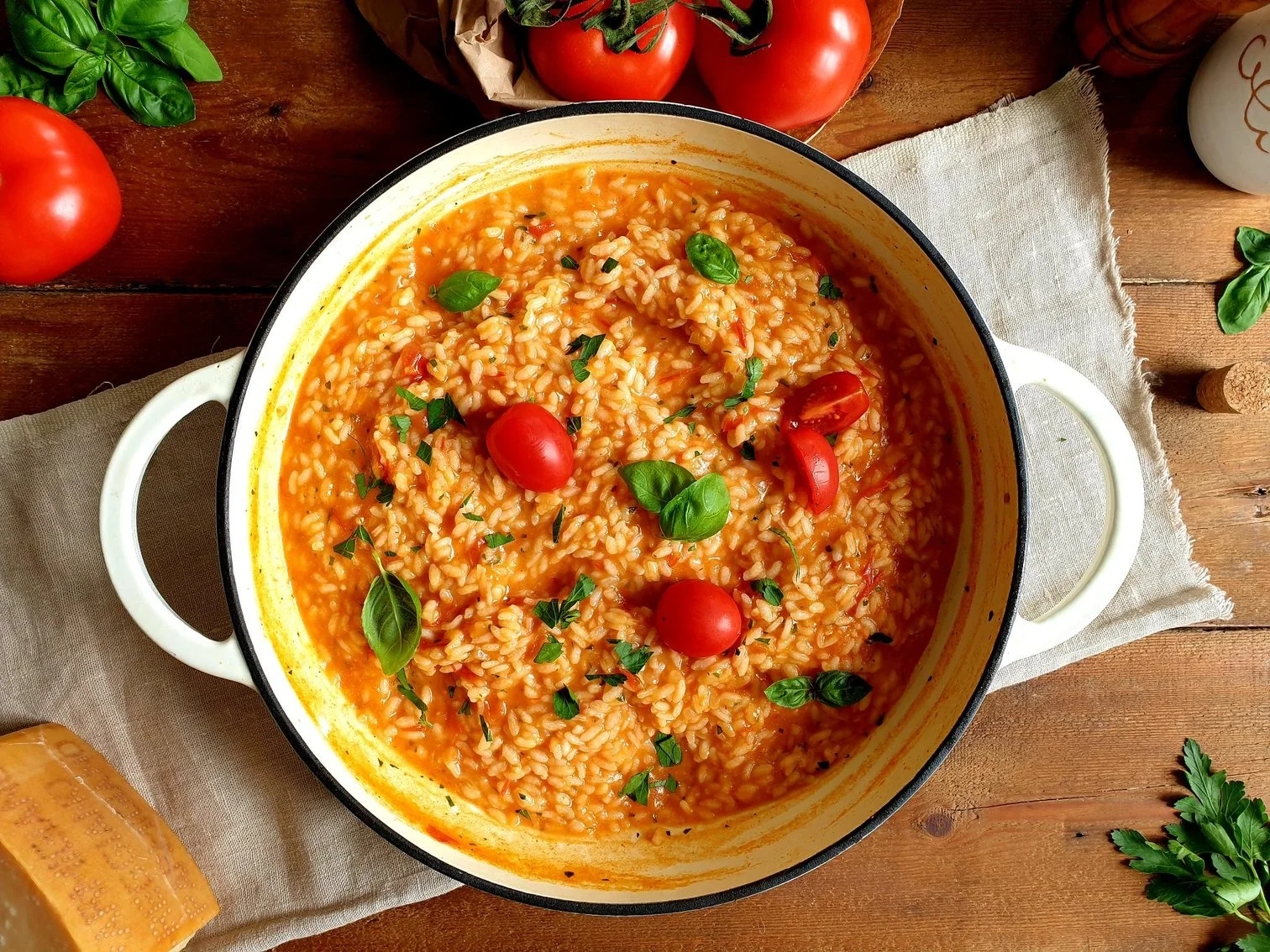
Add the venison meat, turn up the heat a bit and brown it and seal it on all sides, stirring and turning quite frequently.

Pour in the pot red wine and deglaze the pan, scrap with the wooden spoon all the bits and pieces that have stuck to the bottom of the pan.

Stir in the flour, add tomato purée, a carrot, juniper berries, bouquet garni or finely chopped herbs, sea salt and black pepper.

Add water, just enough to cover the meat, bring to boil, turn the heat down and gently simmer for about 2-3 hours, with the lid partially uncovered, or until the meat falls apart easily.

Keep an eye on the goulash during the simmering, and add splashes of water if you think it gets too thick and dry.

On the contrary, if you think the sauce is too thin, make a paste with some more flour and a bit of water, and add as much of the paste to venison goulash as needed to thicken the sauce.
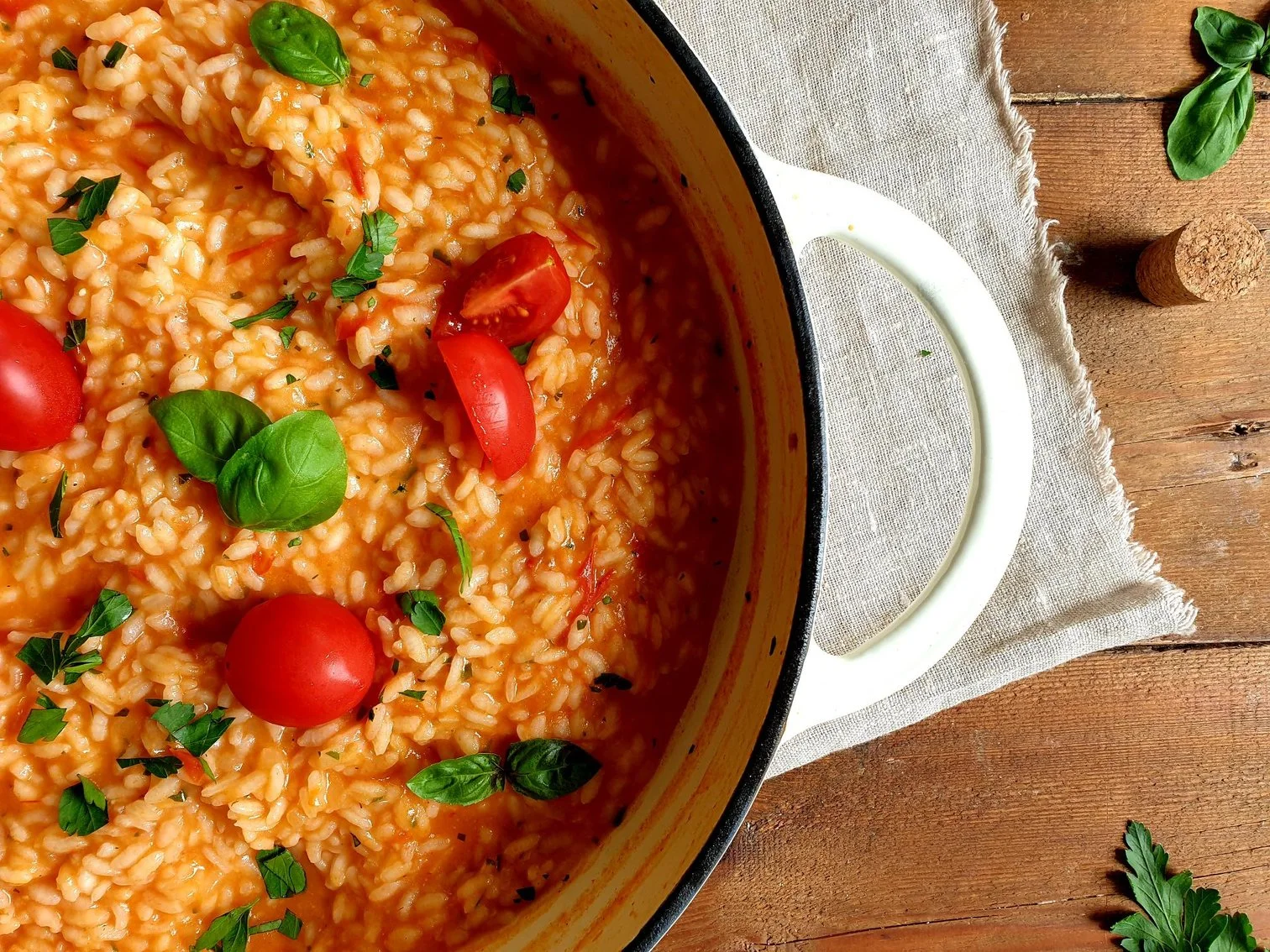
Taste and adjust the seasoning with sea salt and black pepper.
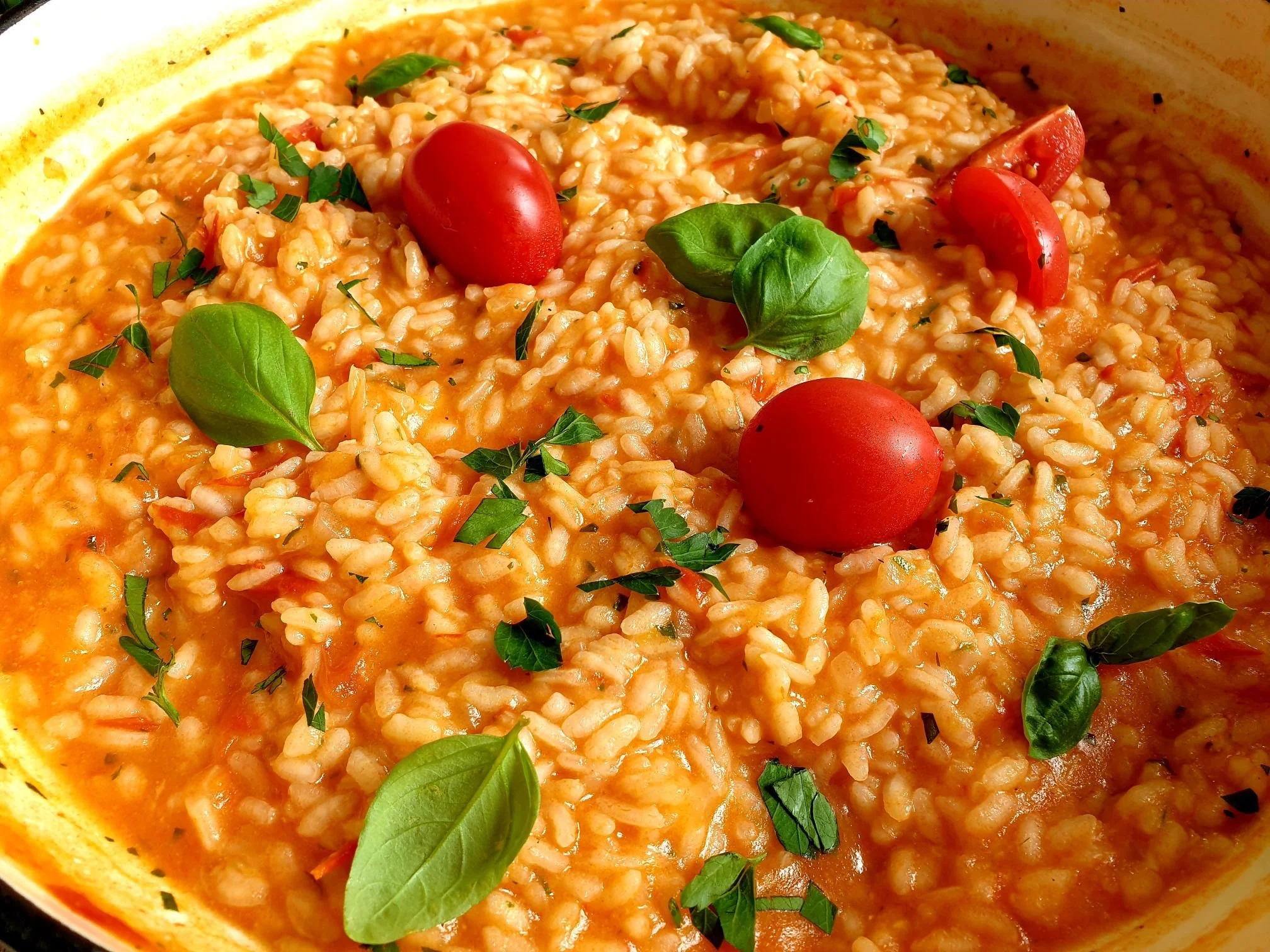
Serve hot with some crusty bread, potato gnocchi, soft cooked polenta or grilled polenta, mashed, boiled or roasted potatoes, rice or with bread dumplings.

Just a thought

This is a great dish to make ahead of time and suitable for freezing.

If you have a bit of leftover goulash, shred the meat and use it as a venison ragù, delicious served with your favourite shape of pasta or potato gnocchi.

Wine suggestion

Teroldego Rotaliano DOC 2019 - De Vescovi Ulzbach

March 16, 2022 /tina oblak
Venison stew, slow cooked venison, braised venison, venison goulash, venison shank, cubed venison, venison for stewing, venison in red wine sauce, venison with fresh herbs, venison stew on a hob, juniper berries, jelenov golaz
Adriatic Recipe, Autumnal dish, Autumnal recipe, casserole, Central European recipes, dinner, Easy recipe, healthy mael, Istrian cuisine, Istrian dish, Istrian food, Istrian gastronomy, main course, main dish, main meat course, Meat, Mitteleuropean cuisine, Mitteleuropean dish, Mitteleuropean food, Mitteleuropean recipes, one pot meal, one pot meat recipe, Rustic dish, Slovenian cuisine, Slovenian food, Slovenian gastronomy, stew, supper, Winter recipe, Wild game meat, Game meat
1 Comment

Sarme - Pickled cabbage leaves stuffed with minced meat and rice in a light tomato sauce

Beans and Sardines
March 11, 2022 by tina oblak in Adriatic Recipe, Austrian inspired dishes, Hungarian inspired dishes, Autumnal dish, Autumnal recipe, Celebratory dish, Central European recipes, dinner, Eastern European dishes, Winter recipe, Winter dish, stew, Slovenian gastronomy, Slovenian food, Slovenian cuisine, Rustic dish, one pot meal, main dish, stuffed dishes, Mitteleuropean dish, Mitteleuropean cuisine, Mitteleuropean food

Sarme, which is a plural form of sarma, but also holding the name of the dish, is made of a mixture of minced meat and white rice wrapped in pickled cabbage leaves, and then slow cooked on a bed of shredded sauerkraut in a light tomato sauce.

This dish takes a special place in my recipe collection for comfort food, it is easy to make, hearty and satisfying, especially popular during colder months, it will wrap you in warmth like a woollen blanket. It used to be commonly served for lunch or dinner during the holidays and special occasions but nowadays it is also eaten as midweek meal.
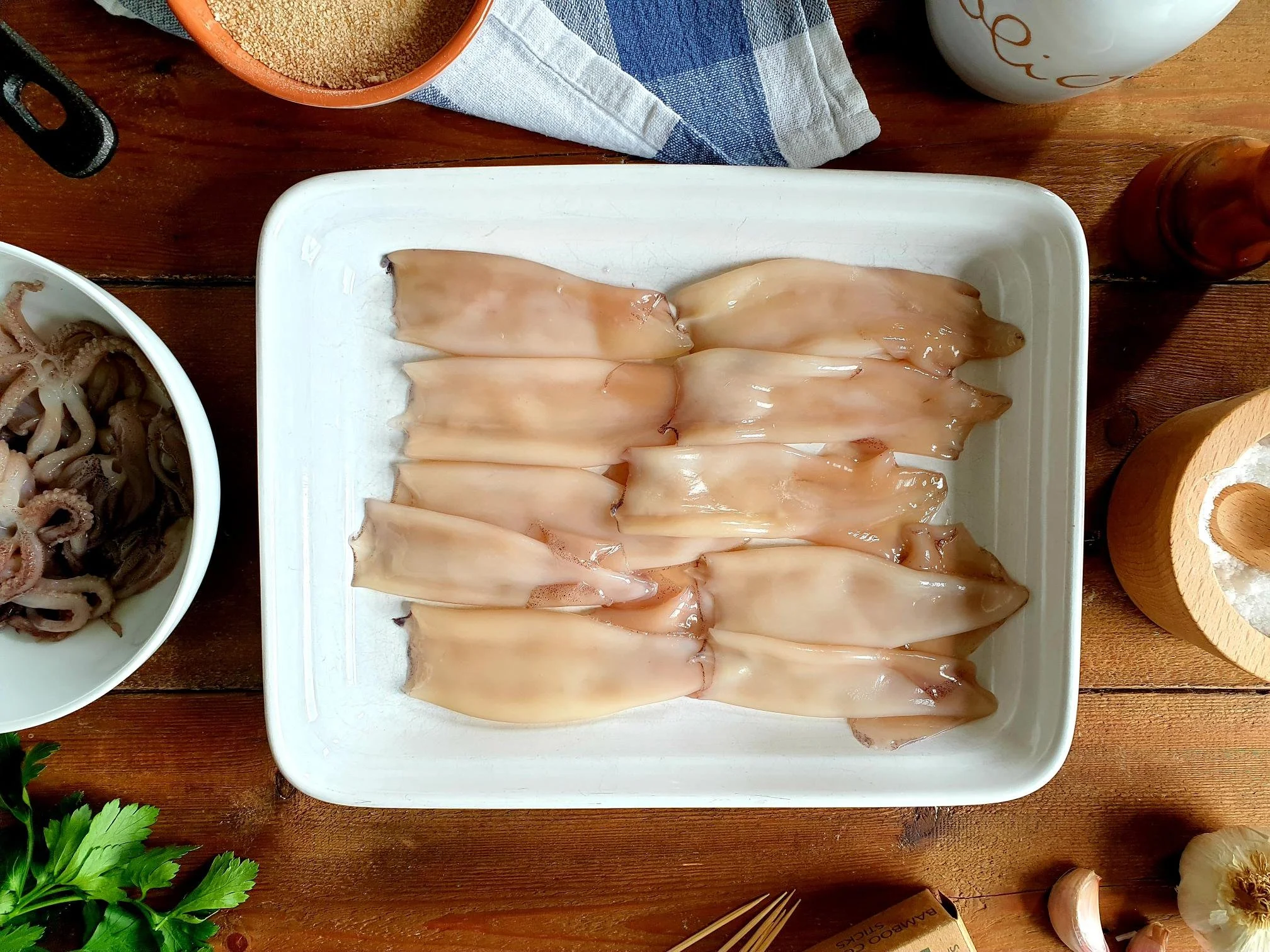
Taking into account the historical context, it is quite clear, that Sarma probably originated in Turkey (the name sarma derives from a Turkish word sarmak, meaning to roll) and belongs to the dolma food family (stuffed dishes) spread in the cuisines in territories of the former Ottoman Empire from the Middle East to the Balkans and Central Europe, but like with most dishes, different places developed different versions of the same basic recipe.

When I first arrived to England, I was quite nostalgic about this dish as I could not find the whole sauerkraut head to buy. When my mother visited me she would buy it back home for me, put it in a suitcase and bring it with her on a plane. We would then prepare and cook sarme together. In Slovenia, where I come from, it is quite common to pickle large quantities of cabbage heads and buy them in the supermarkets in plastic bags or on farmer's markets directly from barrels available to make sarme during the winter.

View fullsize Sarme 1.jpg
View fullsize Sarme 3.jpg

In the family this dish would very often be made for big family gatherings in a big batch with the hope that some of it could be frozen and taken out on a lazy day, but that almost never happened!

I am Sharing here a version of sarme my maternal grandmother and my mother always cooked. It is highly recommended to make ahead as it tastes even better the following day, and serve sarme with mashed or boiled potatoes, or crusty bread and a dollop of sour cream on top.

It is very common to add in a pot of simmering sarme some lardons, bacon (thick cut), pancetta or pork ribs, smoked or unsmoked, this will give an additional meaty taste to the dish.

If you live in the UK and happened to watch on the television Rick's Steins Long Weekends short holiday and cooking series a few years ago, this dish was prepared for him in Vienna and described by him as one of his absolute favourites of all his long weekend programmes.

Ingredients

Serves 4-6 (about 12 rolls)

  • 1 pack of whole pickled cabbage head (you will find this on line or European delicatessens, especially Polish in the chilled section)

  • 250g minced beef

  • 250g minced pork

  • 100g white rice

  • 1 onion (about 100g), peeled and finely chopped

  • 2-3 cloves of garlic, peeled and crushed

  • 3 Tbsp olive oil

  • sea salt

  • ground black pepper

  • 2 bay leaves, fresh or dry

  • 2 Tbsp tomato concentrate

  • 1 Tbsp (or to taste) sweet Hungarian paprika

  • 1-2 Tbsp all purpose flour

  • sour cream for serving, optional

Method

The filling

Place the rice in a pan and cover with plenty of water.

Cook the rice as instructed on the pack, but cut the cooking time in half, as you only want the rice to be part-cooked.

Drain the rice in a colander and let it cool completely.

Put the oil, finely chopped onions and crushed garlic in a frying pan and sauté on a gentle heat until the onions become nice and soft.

Turn the heat to medium, add minced beef and pork, season with sea salt and black pepper and cook for about 20 minutes until the meat is browned.

Remove the frying pan from the heat, set aside and cool completely.

When both the rice and the meat mixture are cooled completely, put them in a bowl and mix them well together.

This is now your filling ready to fill the cabbage leaves.

Prepare the cabbage leaves for stuffing.

View fullsize Sarme 4.jpg
View fullsize Sarme 5.jpg

Carefully unpeel the leaves from the whole pickled cabbage head and gently open them up without breaking them. This is quite important so you do not have breakage and holes in the leaves, as the filling might come out once rolled. If you end up damaging quite badly the leaf, do not worry about it, just thinly shred it and use it later as a part of a sauce.

You will only need bigger and medium size leaves that come off the head quite easily. How many leaves you can obtain it really depends on the size of the whole pickled cabbage head (from the medium size cabbage head you should get around 12 leaves, this is the amount I used for this recipe).

View fullsize Sarme 8.jpg
View fullsize Sarme 9.jpg

Once you peel off the leaves, you will end up with smaller inner cabbage head. Shred it with a sharp knife and set aside, this will be part of your sauce later on.

Place each leaf on a chopping board and cut out the thick and hard part of the stem, this will allow you to roll the leaf easily.

View fullsize Sarme 10.jpg
View fullsize Sarme 11.jpg

Take one leaf, place it on a working surface and spoon the filling on the edge of each leaf. It is tricky to give the exact amount, maybe 3 Tbsp for bigger leaves and a bit less for smaller leaves. You really want to use a bit of judgement here and just put the amount of filling you think the size of the leaf you are using can hold.

First fold inwards (away from you) the leaf section.

View fullsize Sarme 15.jpg
View fullsize Sarme 16.jpg

Then fold over the two flaps on the side. Then you simply roll forward until you get a cabbage roll.

View fullsize Sarme 17.jpg
View fullsize Sarme 18.jpg

Set aside the rolls and keep repeating the process until you use up all the leaves.

Put half the shredded pickled cabbage over the base of a fairly large casserole dish or pan with a lid.

Place and arrange the stuffed leaves, fold-side down, next to each other, nice and tightly.

Scatter the other half of shredded cabbage on top of the rolls.

View fullsize Sarme 20.jpg
View fullsize Sarme 21.jpg

Add a bit of water, about half way to 1/3 way up the dish.

In a small cereal bowl put the flour, few tables spoons of lukewarm water and mix well to avoid lumps.

Add sweet paprika, tomato paste and mix.

Pour the mixture over the stuffed leaves.

Stick 1 or 2 bay leaf between sarma, add sea salt and black pepper.

Cover with the lid and gently simmer for about 2 hours. It is important not to stir and keeping the gas on a fairly low as high heat might cause aggressive boil causing the rolls to open up and break. Just shake the pot gently a few times during the cooking process.

If after two hours you think the sauce is too watery just dissolve 1 Tbsp of flour in a bit of lukewarm water, pour it in the pot and continue simmering. This should thicken a bit the sauce.

Taste and adjust the seasoning with sea salt and black pepper.

Lift the cabbage rolls gently out of the pot, with the help of the spoon and a fork and serve warm with mashed or boiled potatoes or plenty of crunchy bread to soak up the juices.

For extra flavour top the rolls with a dollop of sour cream.

Just a thought

Sarme will keep in the fridge up to 3-4 days in an airtight container.

The dish also freezes very well, but before using it, defrost in the fridge overnight and reheat well.

Wine suggestion

Venezia Giulia Malvasia Istriana IGT 2017 - Damijan Podversic

March 11, 2022 /tina oblak
Sarma, Sarme, sauerkraut, Sauerkraut recipe, minced meat, mince pork, mince beef, rice, shredded sauerkraut, pickled cabbage leaves, hearty dish
Adriatic Recipe, Austrian inspired dishes, Hungarian inspired dishes, Autumnal dish, Autumnal recipe, Celebratory dish, Central European recipes, dinner, Eastern European dishes, Winter recipe, Winter dish, stew, Slovenian gastronomy, Slovenian food, Slovenian cuisine, Rustic dish, one pot meal, main dish, stuffed dishes, Mitteleuropean dish, Mitteleuropean cuisine, Mitteleuropean food
Comment
  • Newer
  • Older