Beans and Sardines

  • Home
  • About
  • Recipe of the week
  • Recipes
  • Wines
  • Contact

Hungarian-Style Sauerkraut, Mince Pork and Rice Oven Baked Casserole Recipe

Beans and Sardines
January 07, 2026 by tina oblak in casserole, child friendly dish, child friendly meal, comfort, dinner, Eastern European dishes, Eastern European recipes, Easy recipe, family friendly dish, family friendly meal, Healthy, hearty dish, Hungarian inspired dishes, main course, main dish, main meat course, make ahead, Mitteleuropean cuisine, Mitteleuropean dish, Mitteleuropean food, Mitteleuropean recipes, Rustic dish, simple recipe, Slovenian cuisine, Slovenian food, Slovenian gastronomy, weekend, Winter dish, Winter recipe

This slightly “off the beaten track” recipe is absolutely wonderful but, since it contains sauerkraut, which could have quite a penetrating cooking smell, I do appreciate this dish might not be to everybody's liking.

It's definitely not food for dainty appetites, nor for those who dislike sauerkraut. It is one of those that you either love or hate...

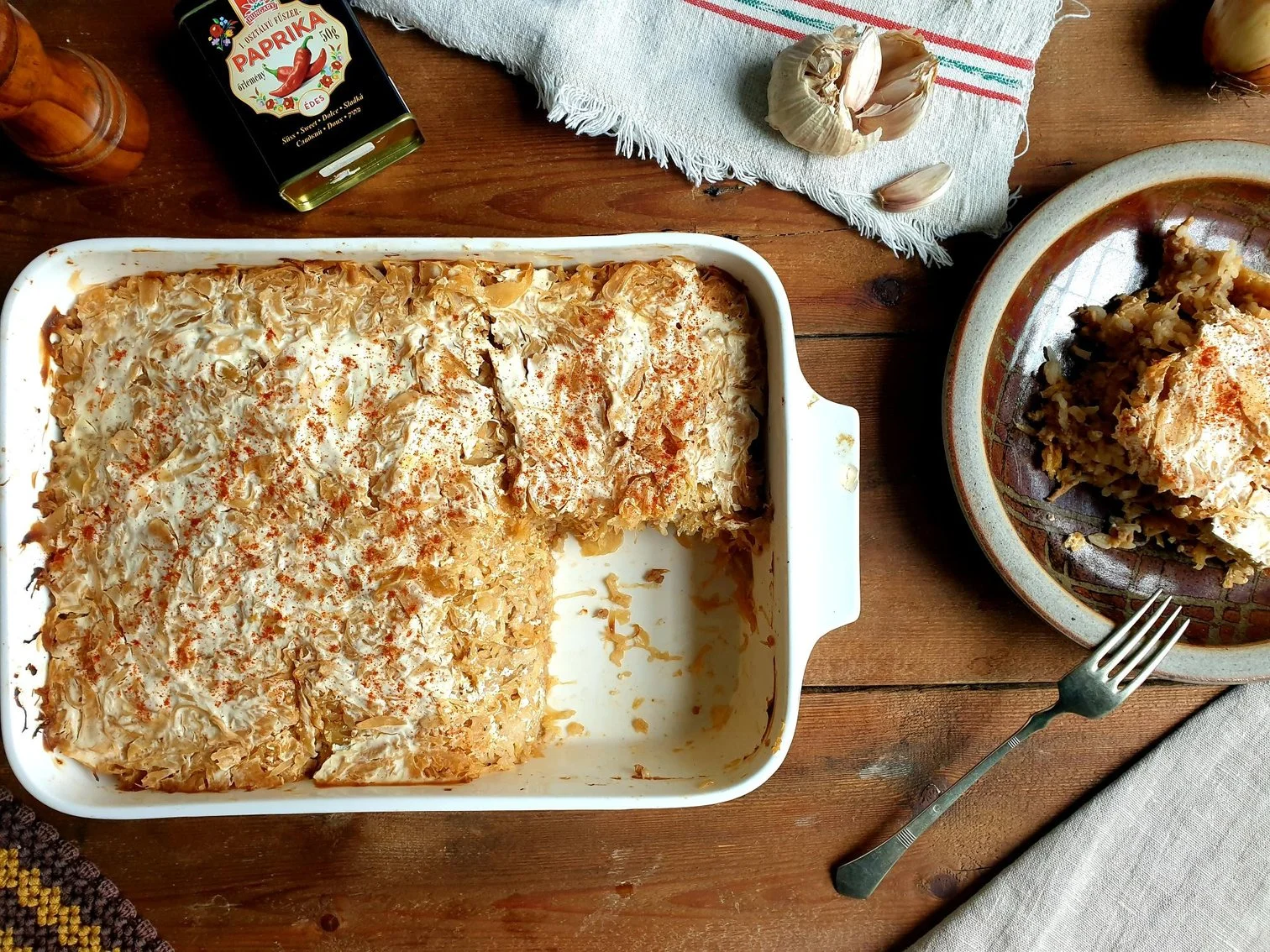
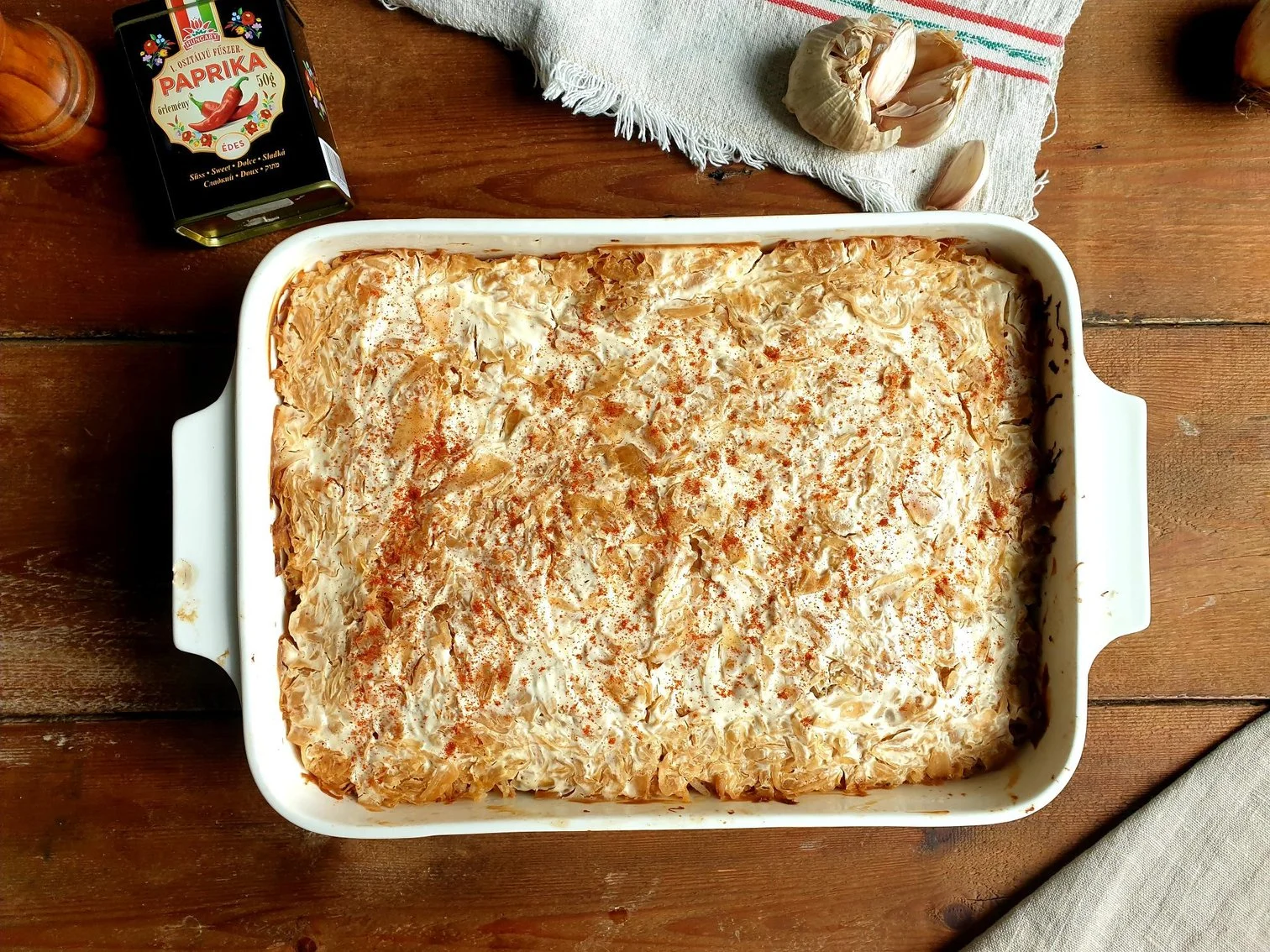
If, on the other hand, sauerkraut is your thing, I need little persuasion to tell you how delicious and unique this comforting casserole is.It is a great make-ahead dish, very rustic, perfect if you want to invite your family and friends and create a very relaxed and informal atmosphere. Put the casserole in the middle of the table with a big serving spoon and let everyone help themselves. The combination of pork meat with smoked sausage, rice and sauerkraut, spiced up with Hungarian sweet paprika, makes this layered oven baked casserole a complete meal in one plate. It is very cosy, rich, filling and warming food for colder months.
Until quite recently, I honestly thought that this dish was a bit of an invention by my maternal grandmother Ivanka, known as Iva, using leftovers.

I had almost forgotten about this dish, as nobody in the family has made it since she passed away many years ago.

It reappeared in my gastronomic memory the moment I decided to collect and make a list of all the dishes I grew up with, some very popular and some less. I had no name for it. There was no recipe in the family for it, but somehow I remembered very well the smell and aroma it had. I remembered very well the ingredients. I also had vivid memories of how the end result should look and taste.

I sat down with my mum and tried to recreate the recipe with her. Luckily, she remembered it very well, and on this occasion, I made sure it got written down.

Later research revealed that the dish is of Hungarian origin, called rakott káposzta.

The fact that my grandmother cooked this dish made complete sense as Iva was born and raised in inland Slovenia, not too far away from the Hungarian border, where many recipes were of Hungarian origin and influenced the local cuisine.

Soon after the Second World War, she moved, like many others, in search of opportunities and a better life along the Slovenian coast, and brought along with her many recipes that were not so typical for the region.

I am sharing here my grandmother's recipe. She made it with the meat and the rice in separate layer. I, however, mixed the two, only for practical reasons.

If, by any chance, you end up with some leftovers, I can reassure you, this casserole improves with reheating.

Recipe

Ingredients

Serves 6-8

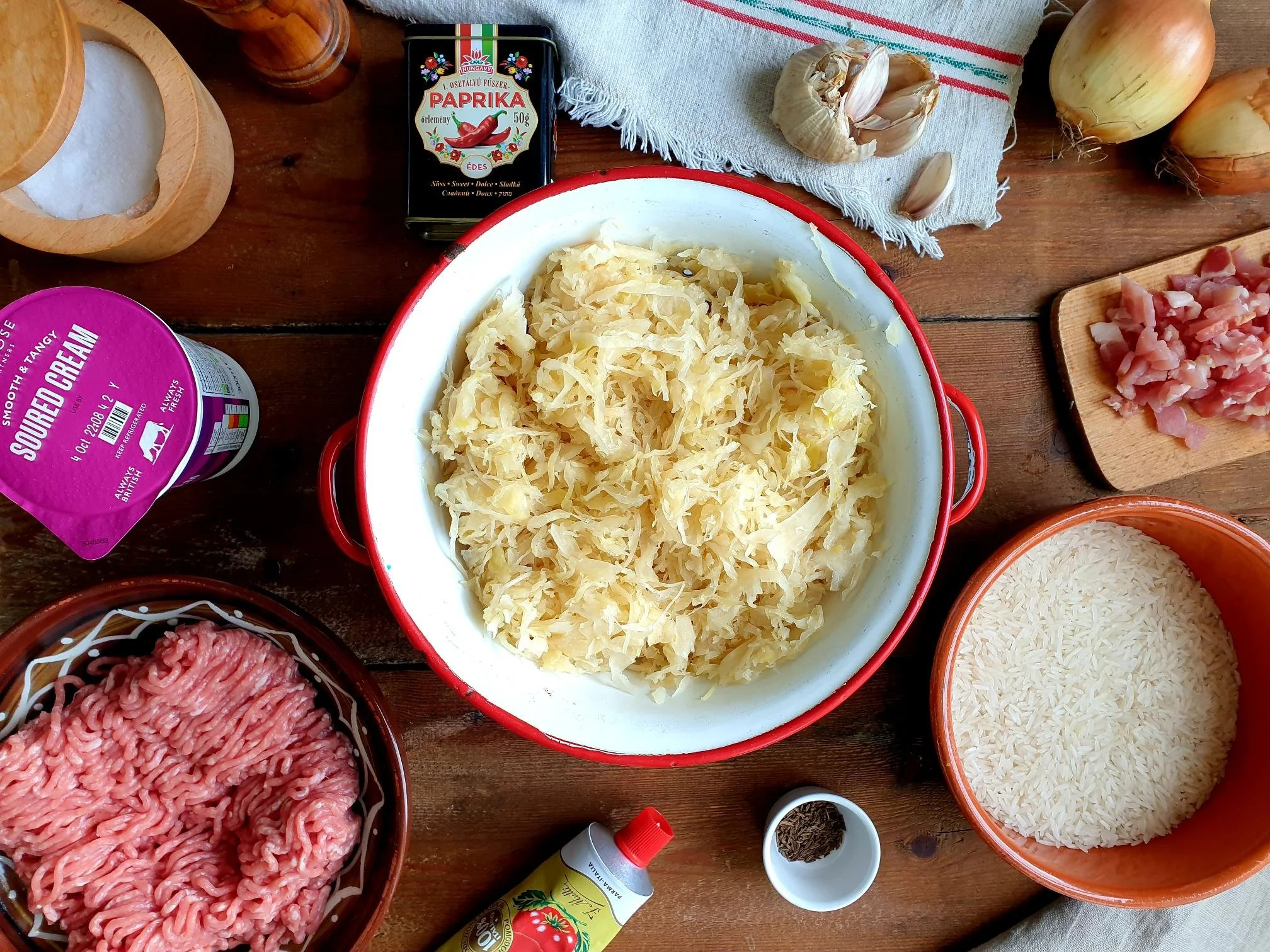
  • 200ml (roughly) sour cream

For the Sauerkraut Layer

  • 1 jar of sauerkraut (drained weight roughly 640g)

  • 2 Tbsp oil, butter or lard

  • 1 onion (about 100g), peeled and finely chopped

  • 2 cloves of garlic, peeled and pressed

  • ¼ Tsp, or to taste, caraway seeds, whole or crushed in pestle and mortar, optional

  • 1 Tsp, or to taste, Hungarian sweet paprika (unsmoked)

  • sea salt, to taste

  • ground black pepper, to taste

    For the meat layer

  • 200g long grain rice

  • 500g minced pork

  • 1 Tbsp oil, butter or lard

  • 1 onion, about 100g, peeled and finely chopped

  • 2 cloves of garlic peeled and pressed

  • 100g smoked or unsmoked bacon or lardons or pancetta, diced (you can use Hungarian smoked sausage or other types of smoked sausage like chorizo, cut into discs and then into smaller pieces)

  • 1 Tbsp, or to taste, Hungarian sweet paprika (unsmoked)

  • 1 Tbsp concentrated tomato paste

  • sea salt, to taste

  • ground black pepper, to taste

Method

Prepare the sauerkraut

Remove the sauerkraut from the jar and transfer it to a colander to drain.

Quickly rinse once under running cold water, drain well and set aside until needed.

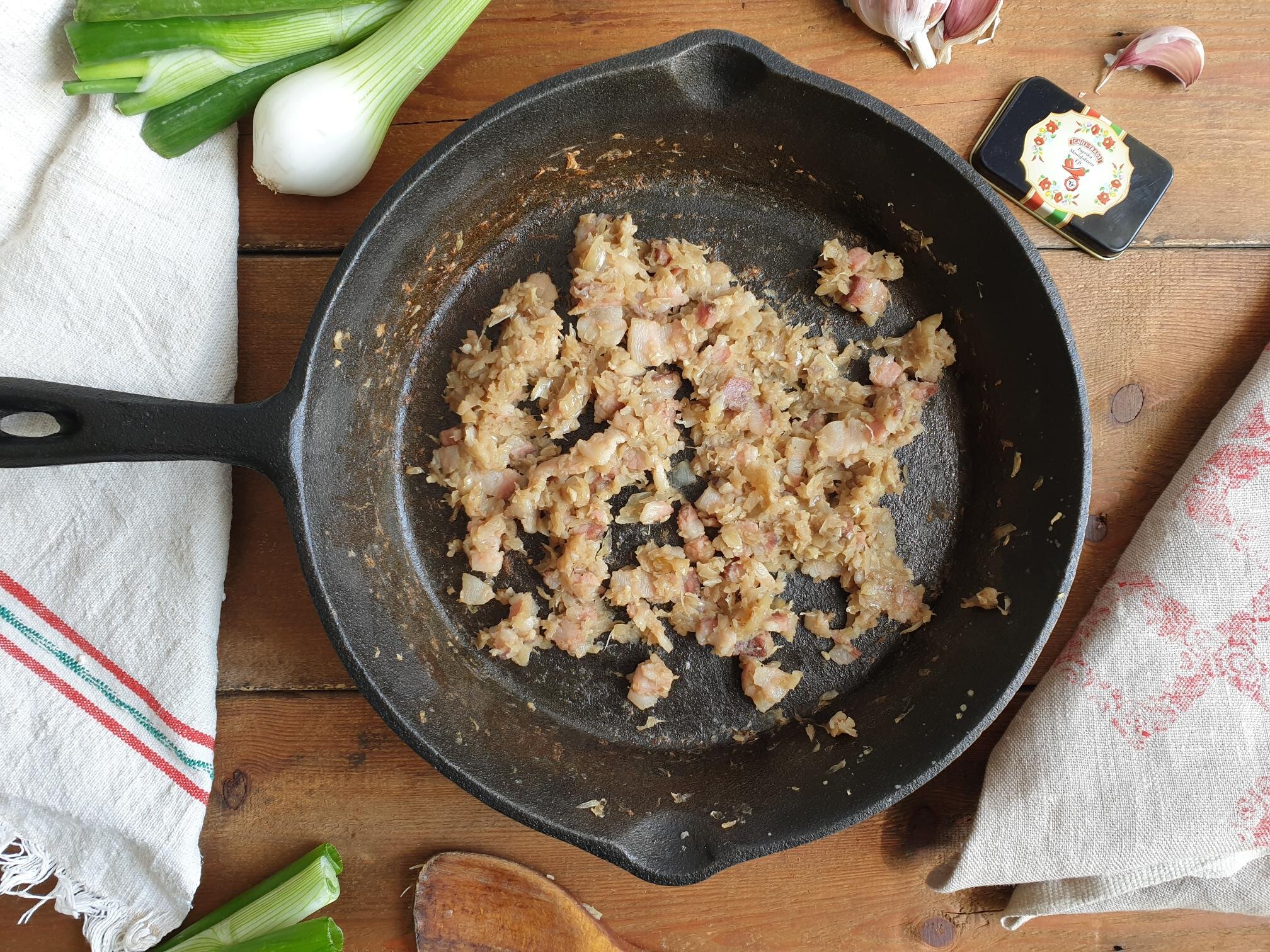
Put the lard (butter or oil) in a saucepan, large enough to accommodate the sauerkraut, and heat it up a bit.

Add finely chopped onions, a pinch of sea salt, and cook on a gentle heat until soft, then add pressed garlic and cook for another a minute or so (try not to burn the garlic).

Stir in sweet paprika, then add drained sauerkraut.

Season with sea salt and ground black pepper to taste and add caraway seeds, if using.

Add water, just enough to cover the sauerkraut, and bring to boil.

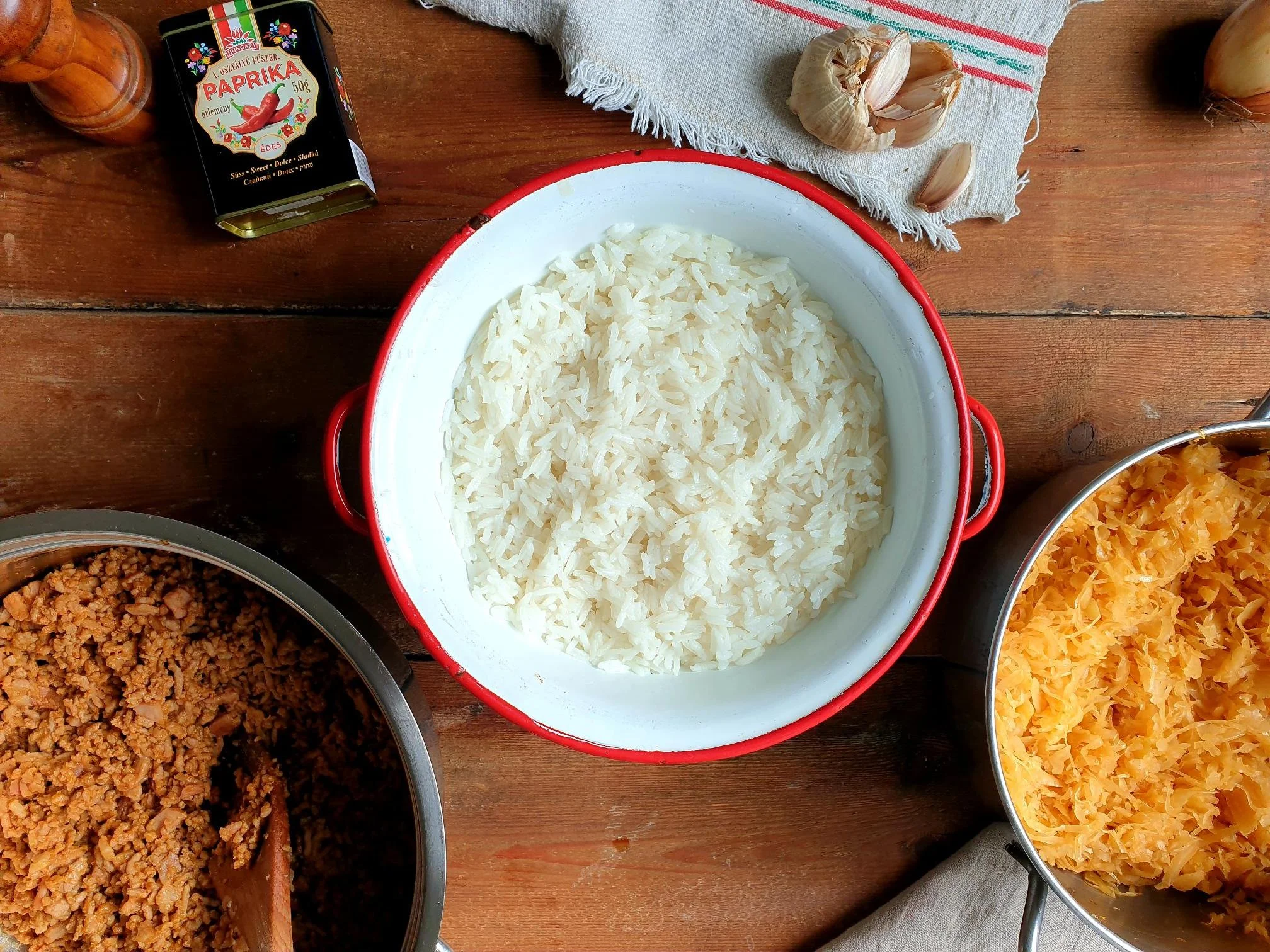
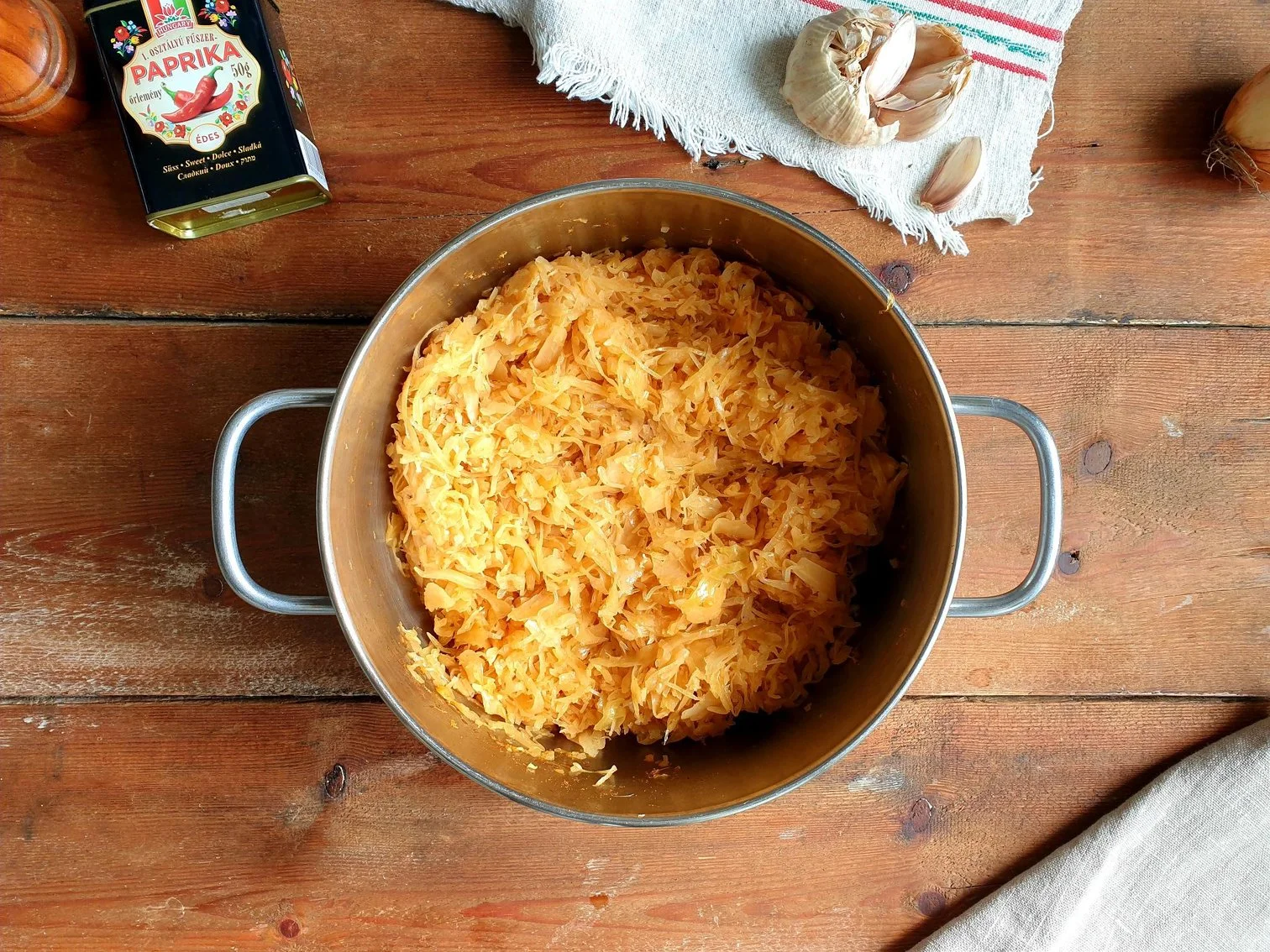
Lower the heat and gently cook the sauerkraut with the lid partially covering the saucepan for about 45 minutes or until all the water has completely evaporated and the sauerkraut appears translucent and glossy.

When cooked, remove from heat and set aside until needed. Remove the lid for the sauerkraut to cool.
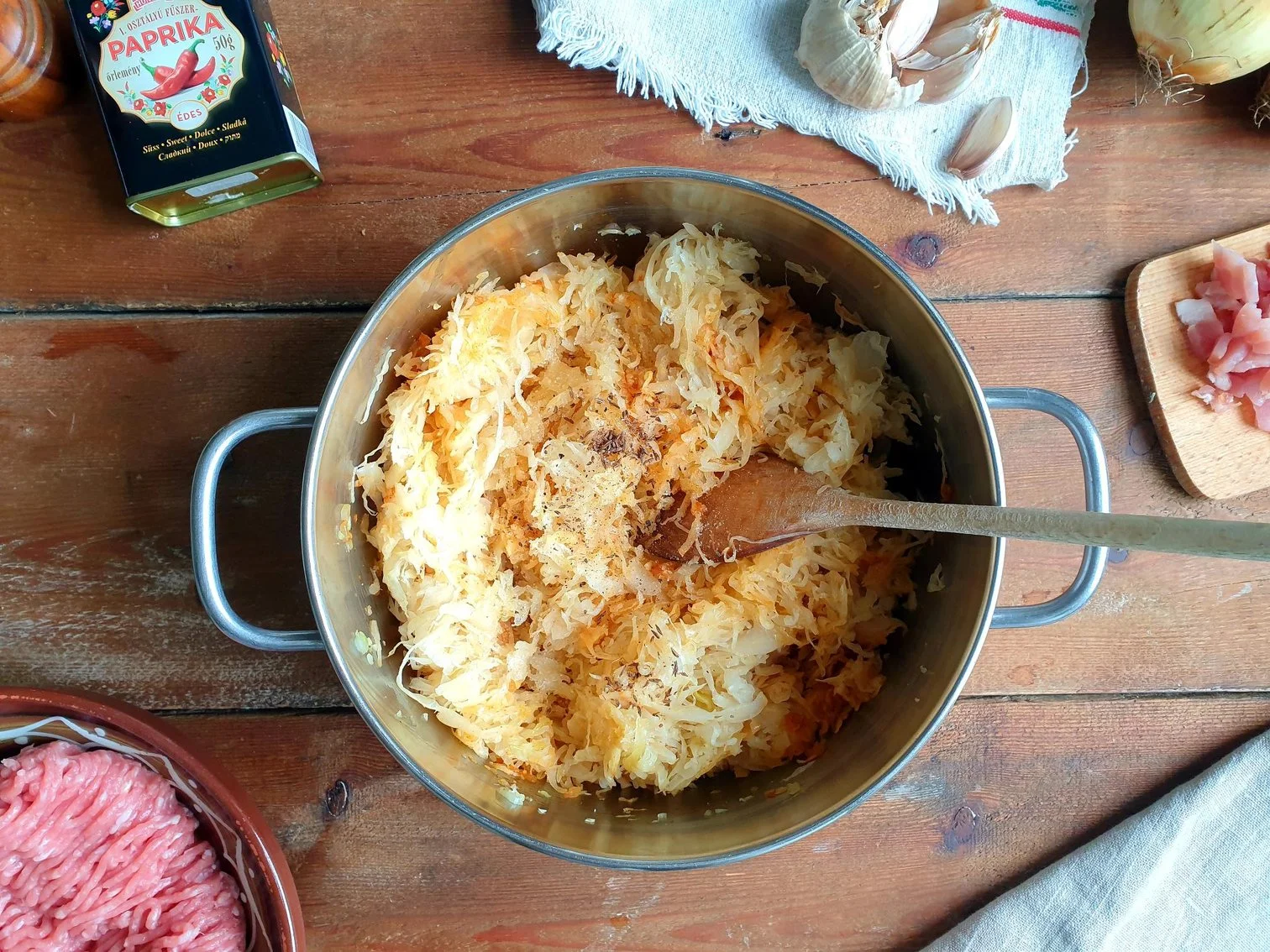
View fullsize Hungarian Sauerkraut, Mince pork and rice casserole Recipe 2.jpg
View fullsize Hungarian Sauerkraut, Mince pork and rice casserole Recipe 6.jpg

Prepare the rice and meat

Cook rice as instructed on the package.

Drain and set aside until needed.

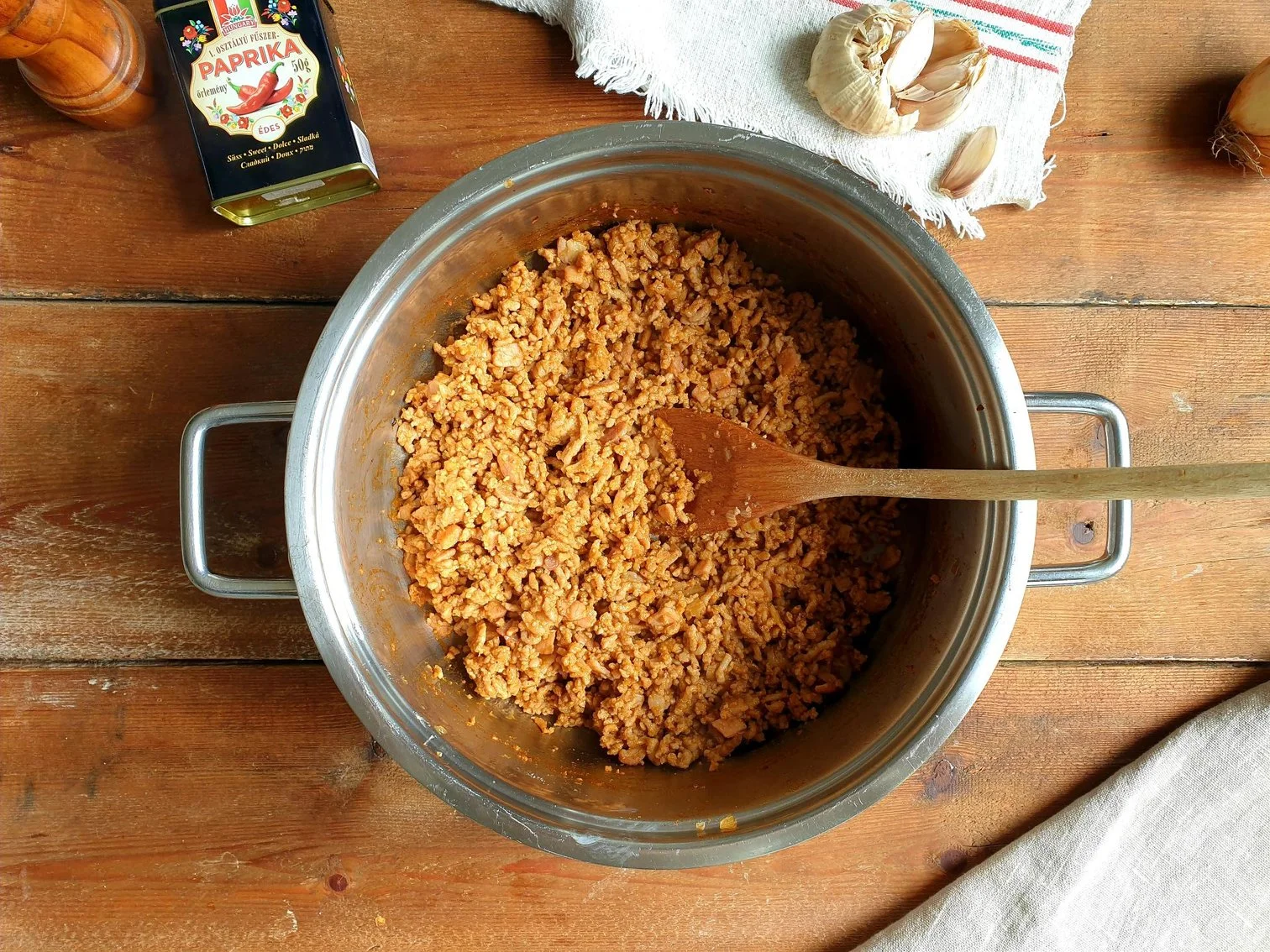
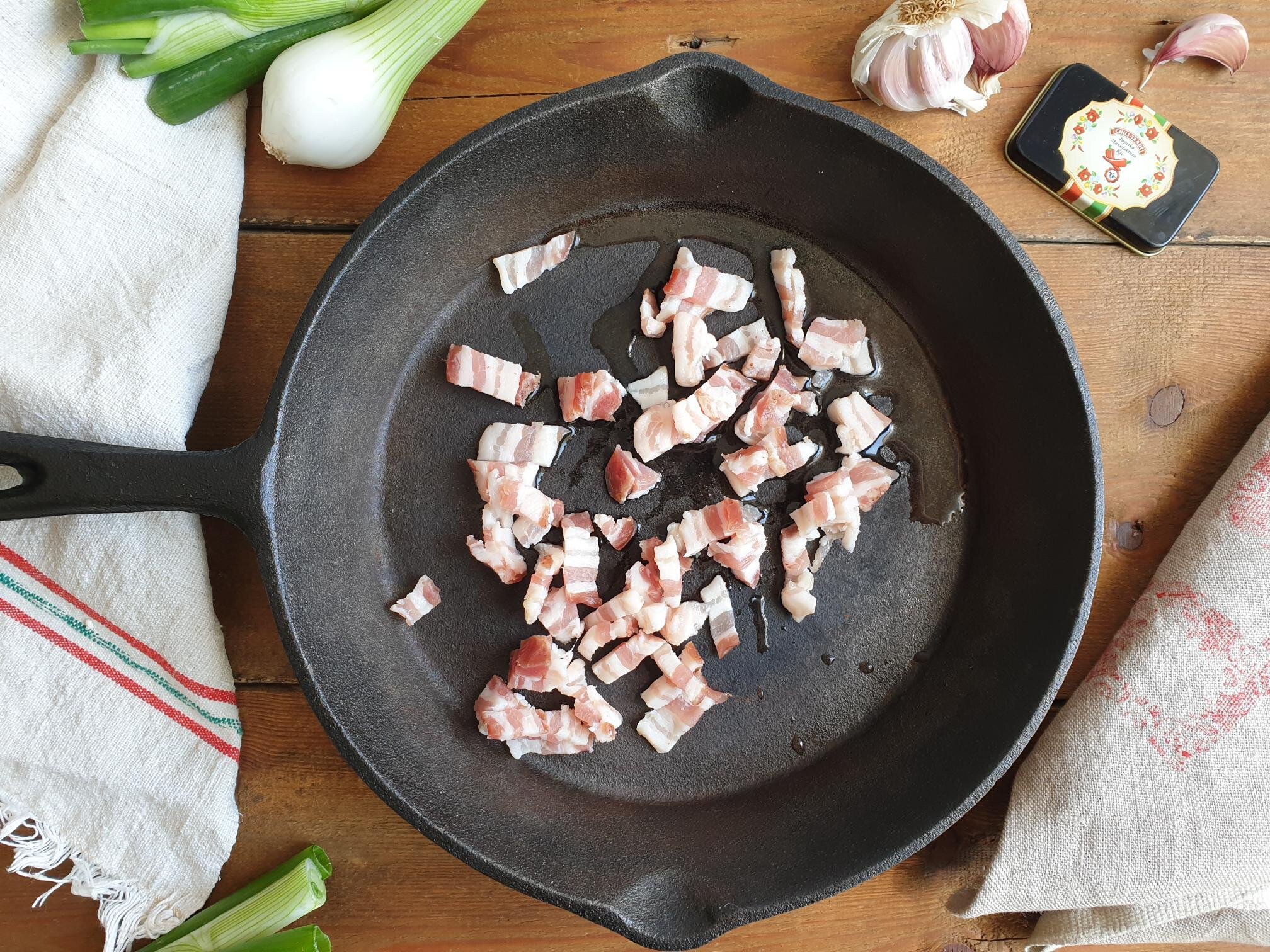
Put the lard (butter or oil) in a saucepan. Heat it up a bit, then add finely chopped onions, a pinch of sea salt, and pieces of bacon, sausage or lardons.

Fry the onions until they become soft, then add pressed garlic and cook for another minute or so, making sure to avoid burning the garlic.

Add minced pork and cook on medium heat until lightly brown in colour.

Add sweet paprika and stir in concentrated tomato paste. Mix well.

Season with sea salt and ground black pepper and add enough water just to cover the meat.

Stir well and cook the meat for about 20 minutes or until all the evaporates and the pork is nice and tender.

When the meat mixture is cooked, remove from heat.

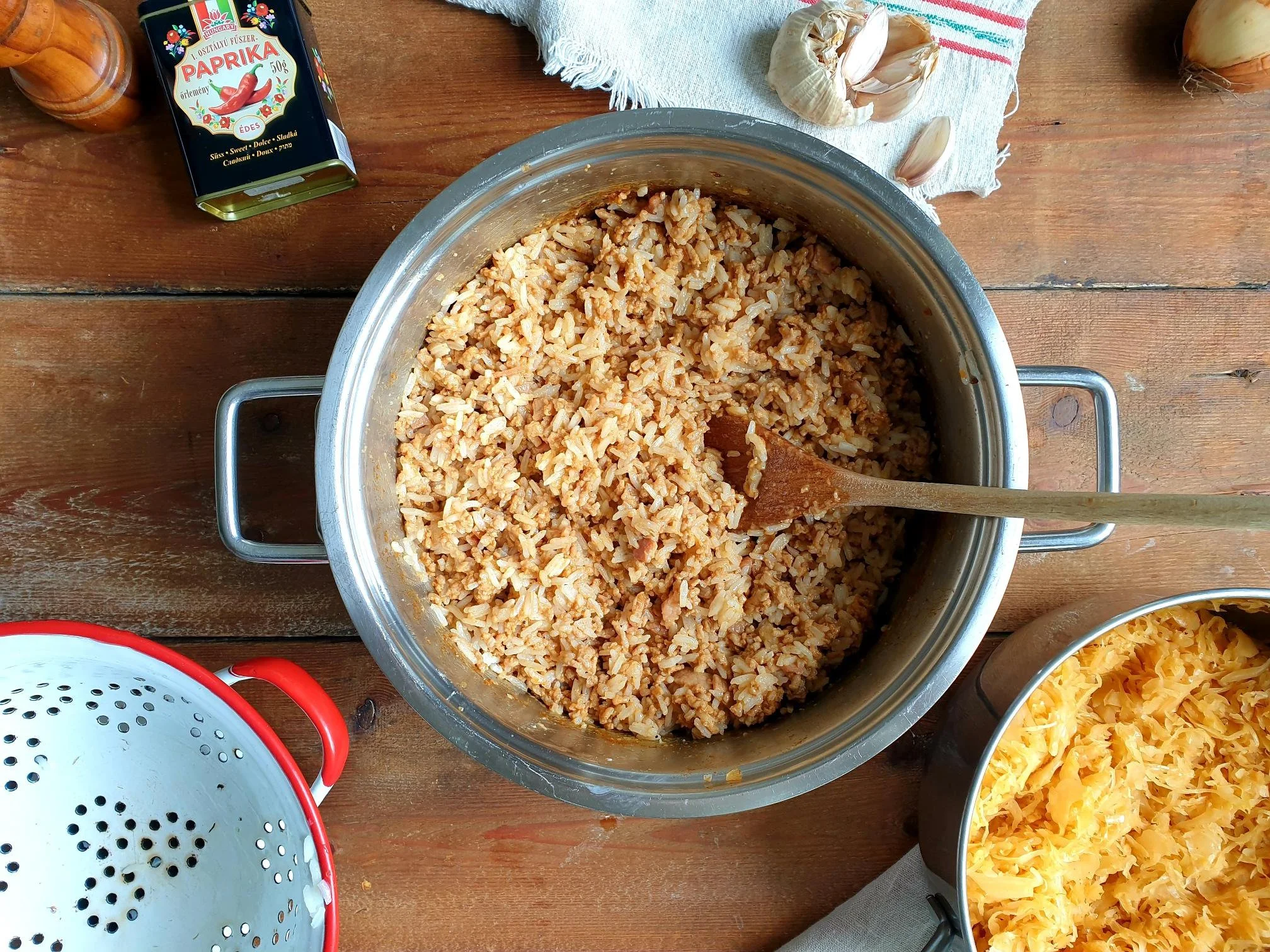
Add cooked and drained rice to meat mixture and stir well.
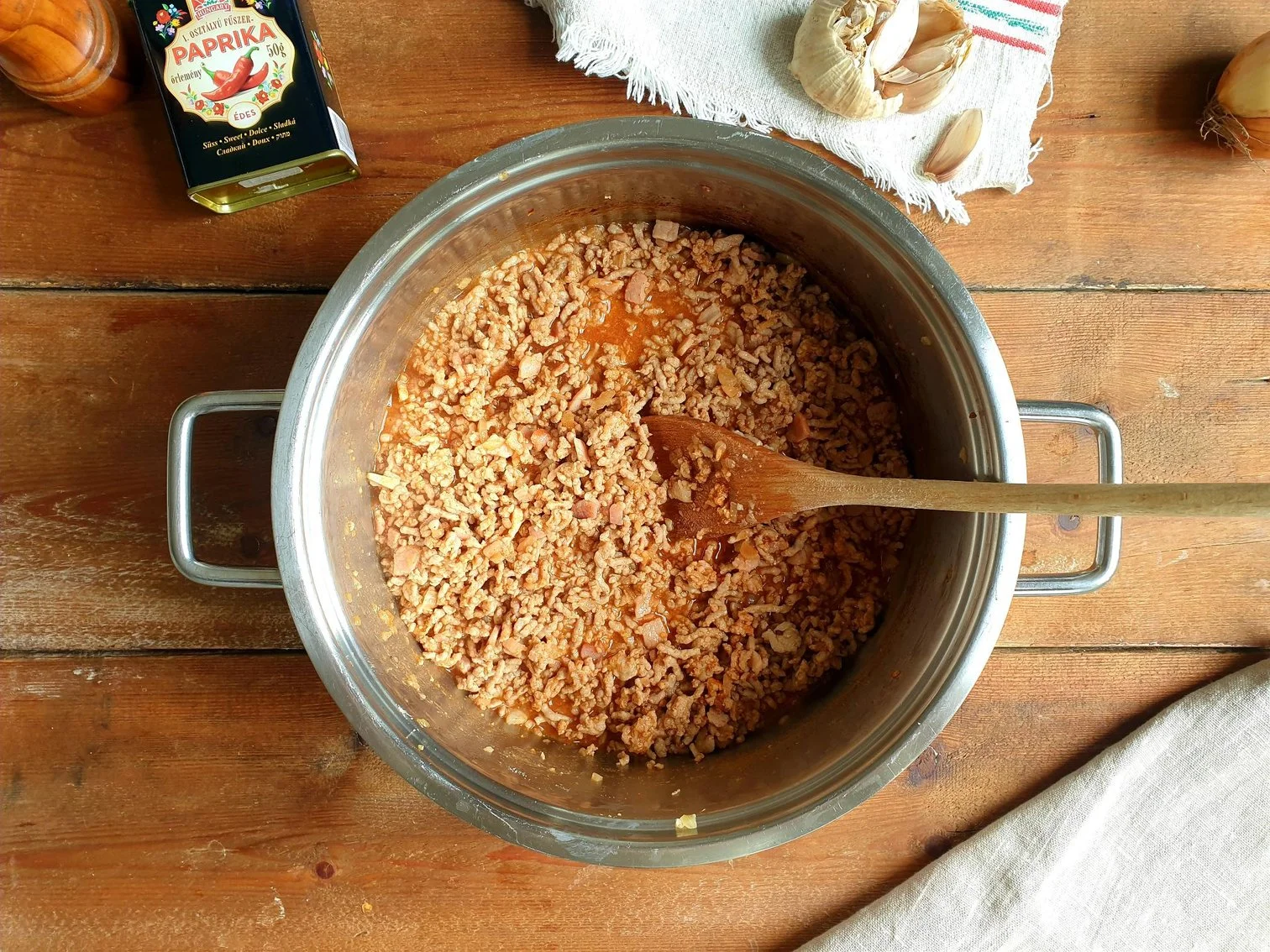
View fullsize Hungarian Sauerkraut, Mince pork and rice casserole Recipe 4.jpg
View fullsize Hungarian Sauerkraut, Mince pork and rice casserole Recipe 5.jpg

Assemble the casserole

View fullsize Hungarian Sauerkraut, Mince pork and rice casserole Recipe 7.jpg
View fullsize Hungarian Sauerkraut, Mince pork and rice casserole Recipe 8.jpg

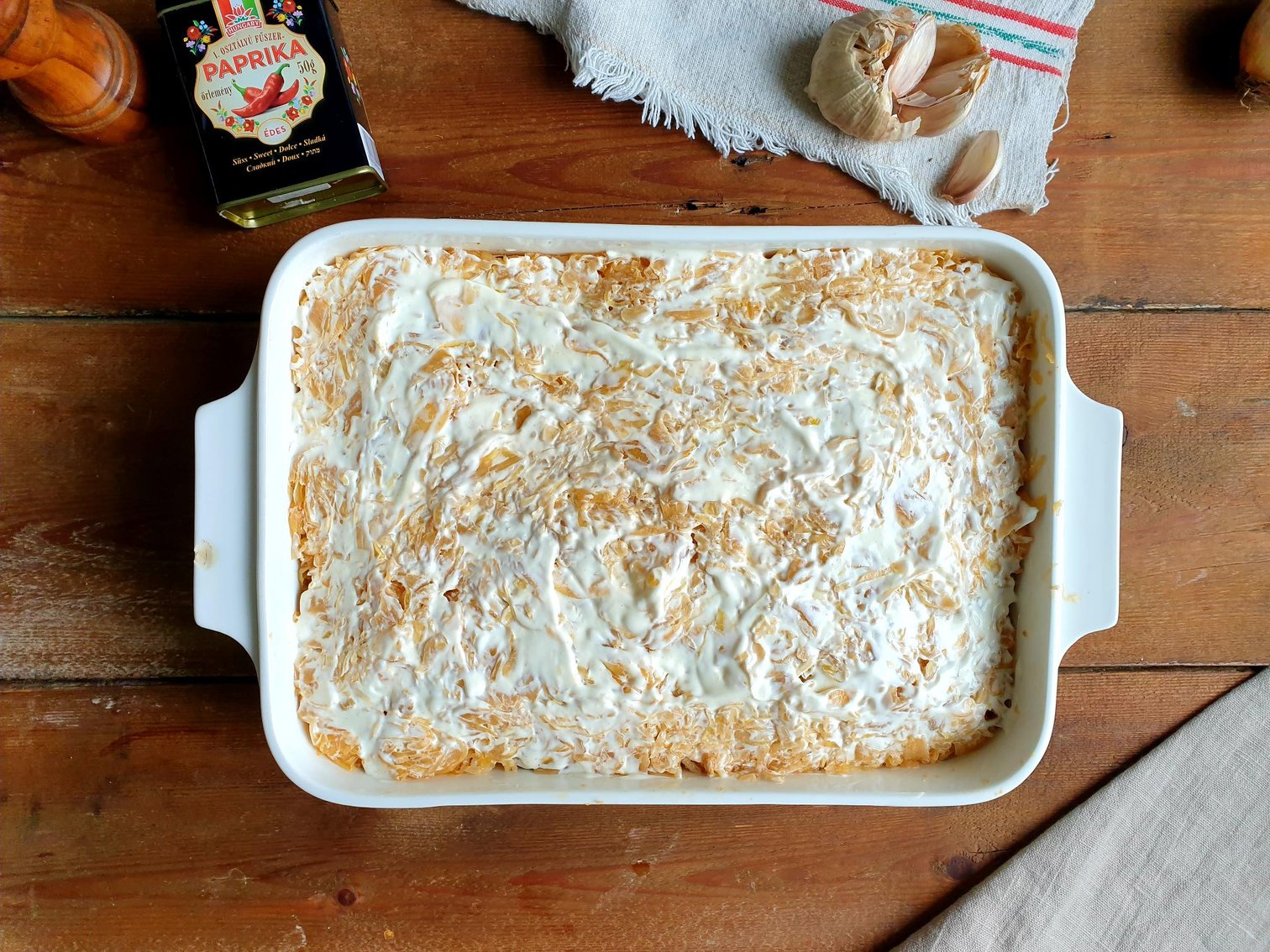
Layer the dish in a large, deep roasting tin roughly 28x20cm in size.

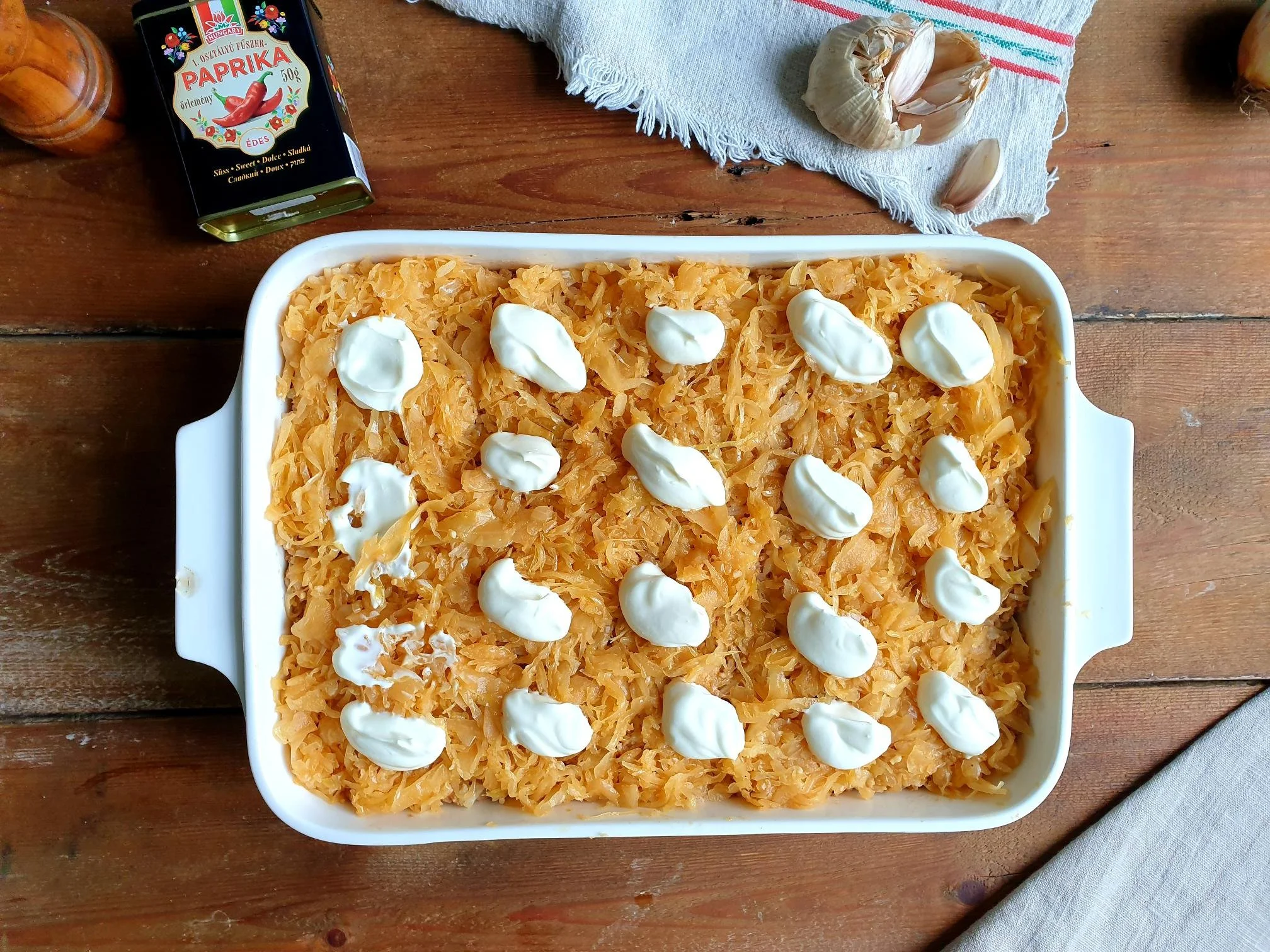
1/3 sauerkraut

½ meat mixture

1/3 sauerkraut

½ sour cream

½ meat mixture

1/3 sauerkraut

½ sour cream
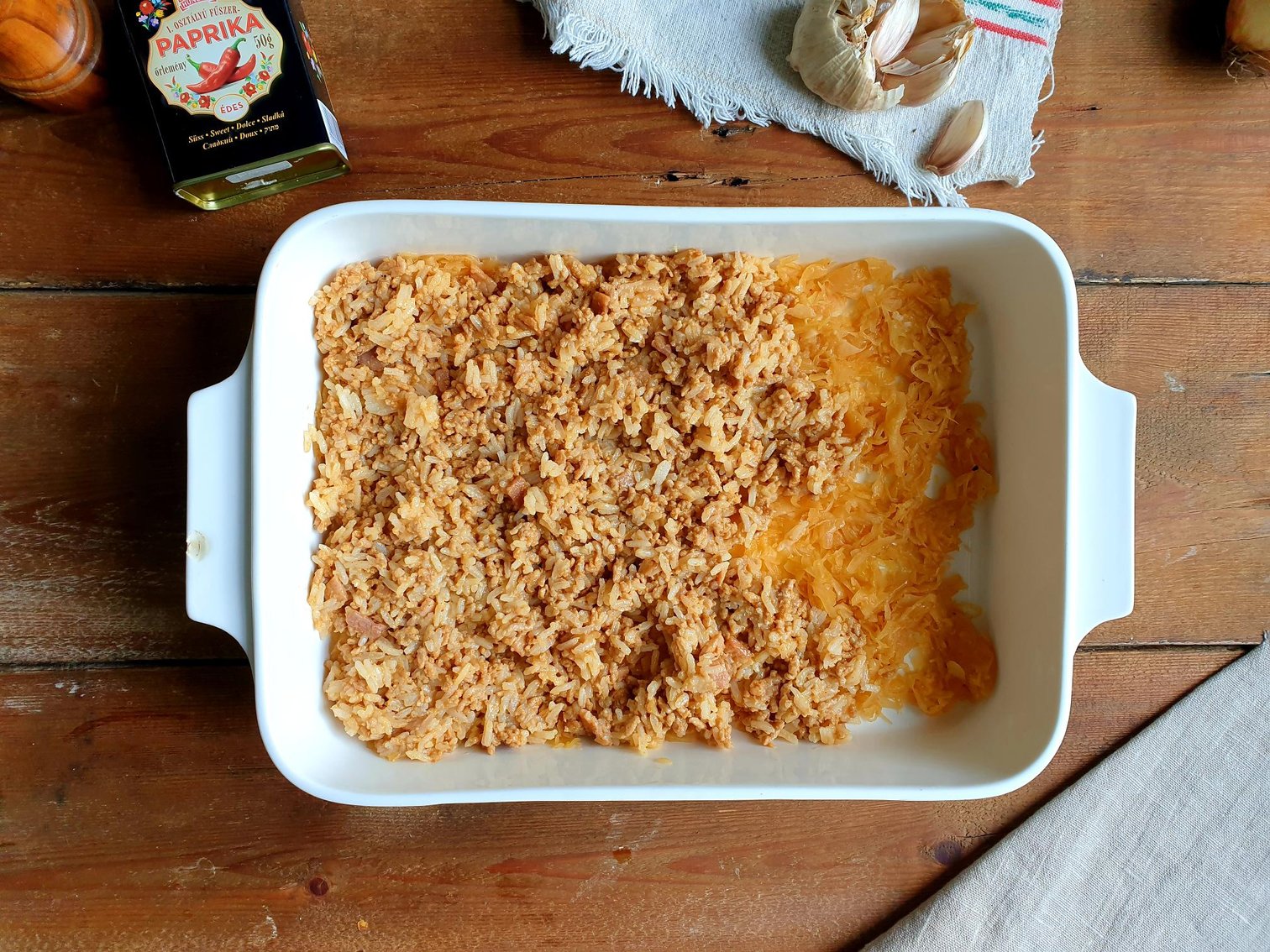
View fullsize Hungarian Sauerkraut, Mince pork and rice casserole Recipe 9.jpg
View fullsize Hungarian Sauerkraut, Mince pork and rice casserole Recipe 11.jpg

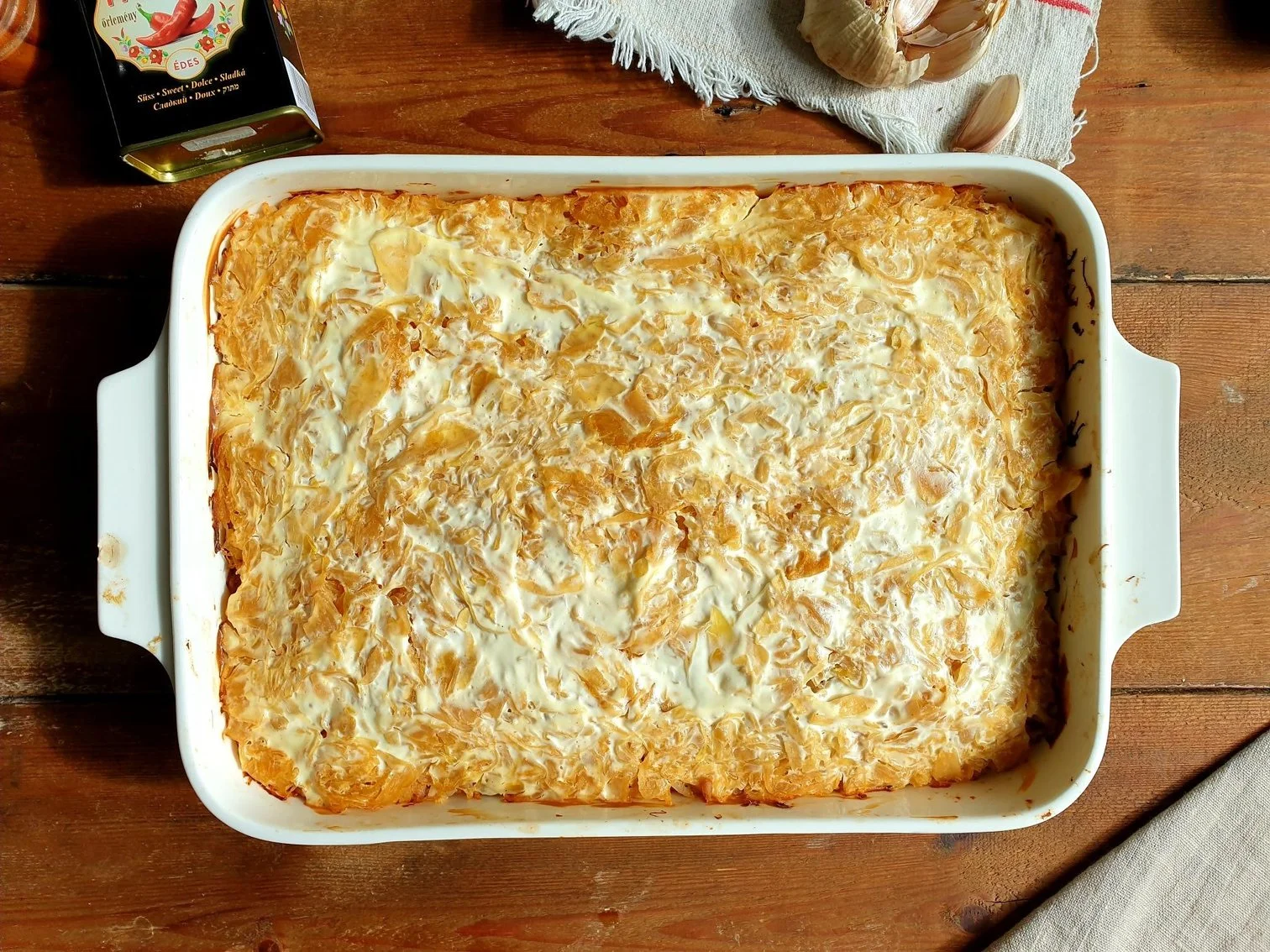
Cover with aluminium foil and bake in preheated oven at 200ºC static, or equivalent, for about 20 minutes.

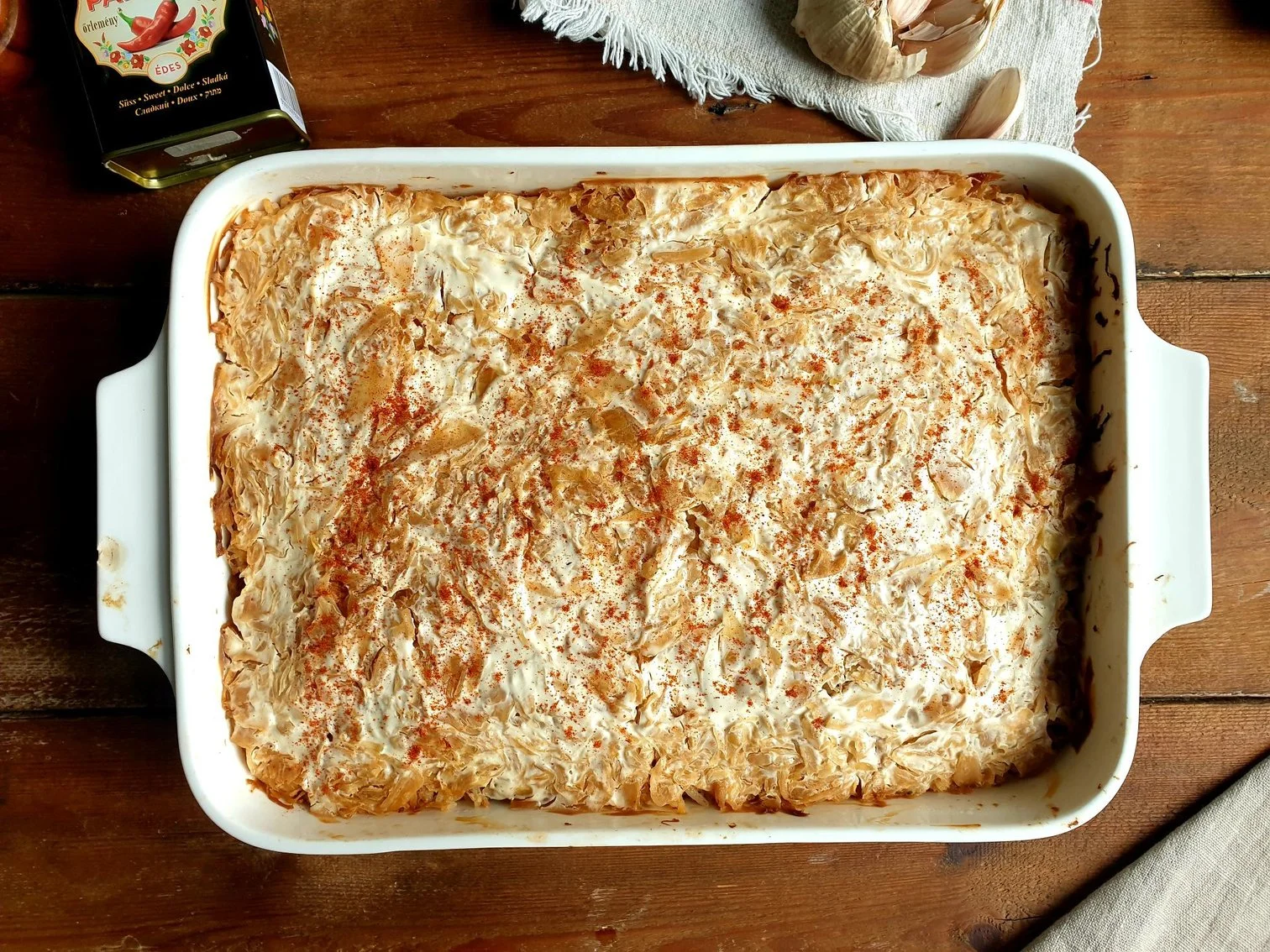
Remove foil and bake for another 25 minutes or until the edges start to brown and the dish is thoroughly heated through.

When baked, remove from the oven and allow the dish to rest for a few minutes.
View fullsize Hungarian Sauerkraut, Mince pork and rice casserole Recipe 12.jpg
View fullsize Hungarian Sauerkraut, Mince pork and rice casserole Recipe 14.jpg

Sprinkle a bit of sweet unsmoked or smoked Hungarian paprika and serve.
January 07, 2026 /tina oblak
sauerkraut, mince pork, Hungarian sweet paprika, unsmoked sweet paprika, long grain rice, smoked bacon, unsmoked bacon, lardonds, pancetta, casserole, baked casserole, layered casserole, oven baked layered casserole, complete meal recipe, warming food
casserole, child friendly dish, child friendly meal, comfort, dinner, Eastern European dishes, Eastern European recipes, Easy recipe, family friendly dish, family friendly meal, Healthy, hearty dish, Hungarian inspired dishes, main course, main dish, main meat course, make ahead, Mitteleuropean cuisine, Mitteleuropean dish, Mitteleuropean food, Mitteleuropean recipes, Rustic dish, simple recipe, Slovenian cuisine, Slovenian food, Slovenian gastronomy, weekend, Winter dish, Winter recipe
1 Comment

Meatloaf with Hard Boiled Eggs and Oven Baked Potatoes Istrian Recipe 

Beans and Sardines
December 23, 2022 by tina oblak in Adriatic Recipe, All year round recipe, Autumnal dish, Autumnal recipe, baked dish, Celebratory dish, child friendly dish, child friendly meal, dinner, Easter, Easter dish, Easter recipes, Easy recipe, family friendly dish, family friendly meal, hearty dish, Istrian cuisine, Istrian dish, Istrian food, Istrian gastronomy, main course, main dish, main meat course, Meat, roasted dish, Rustic dish, simple recipe, Slovenian cuisine, Slovenian food, Slovenian gastronomy, supper, Winter dish, Winter recipe, Starters

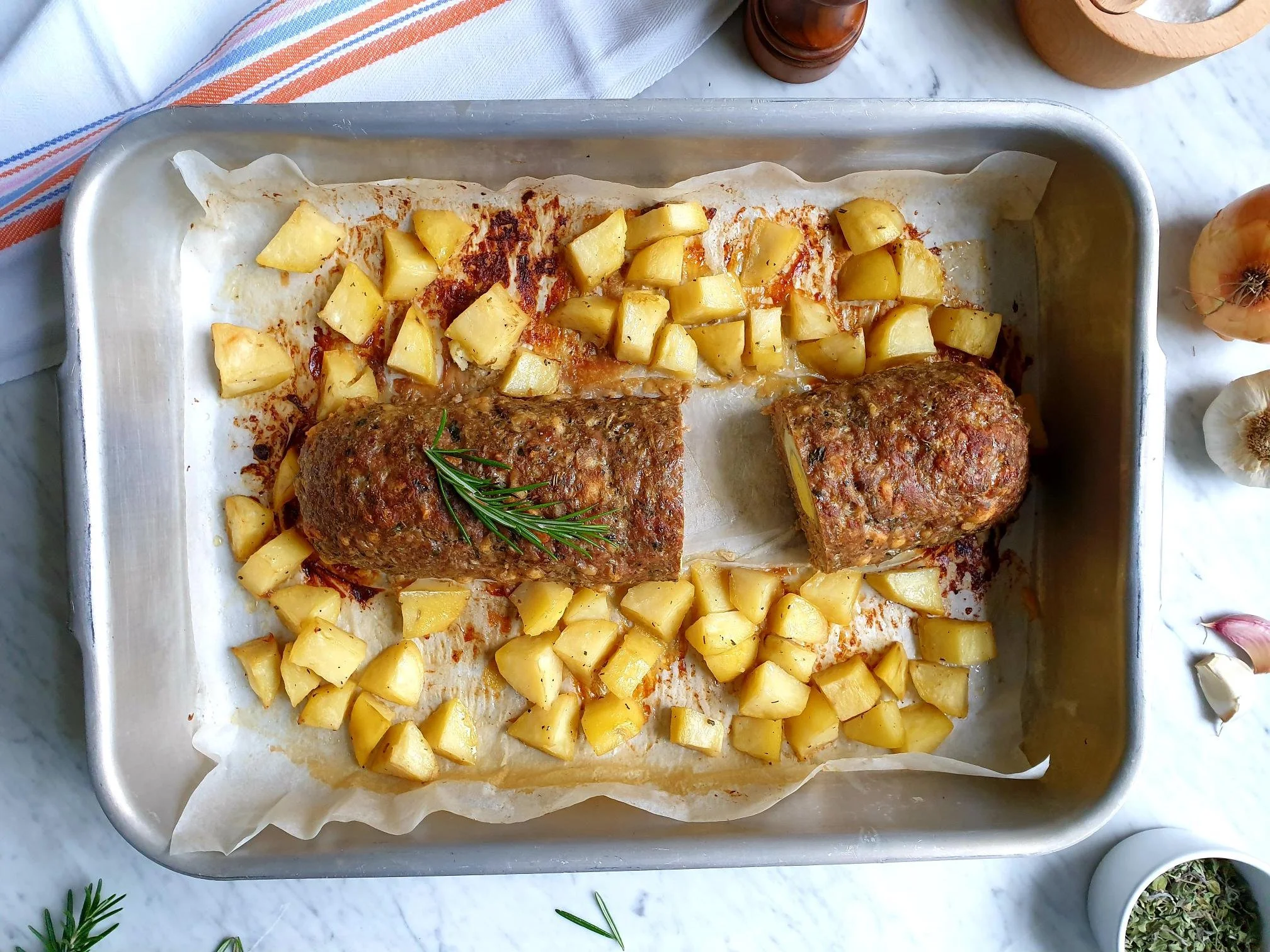
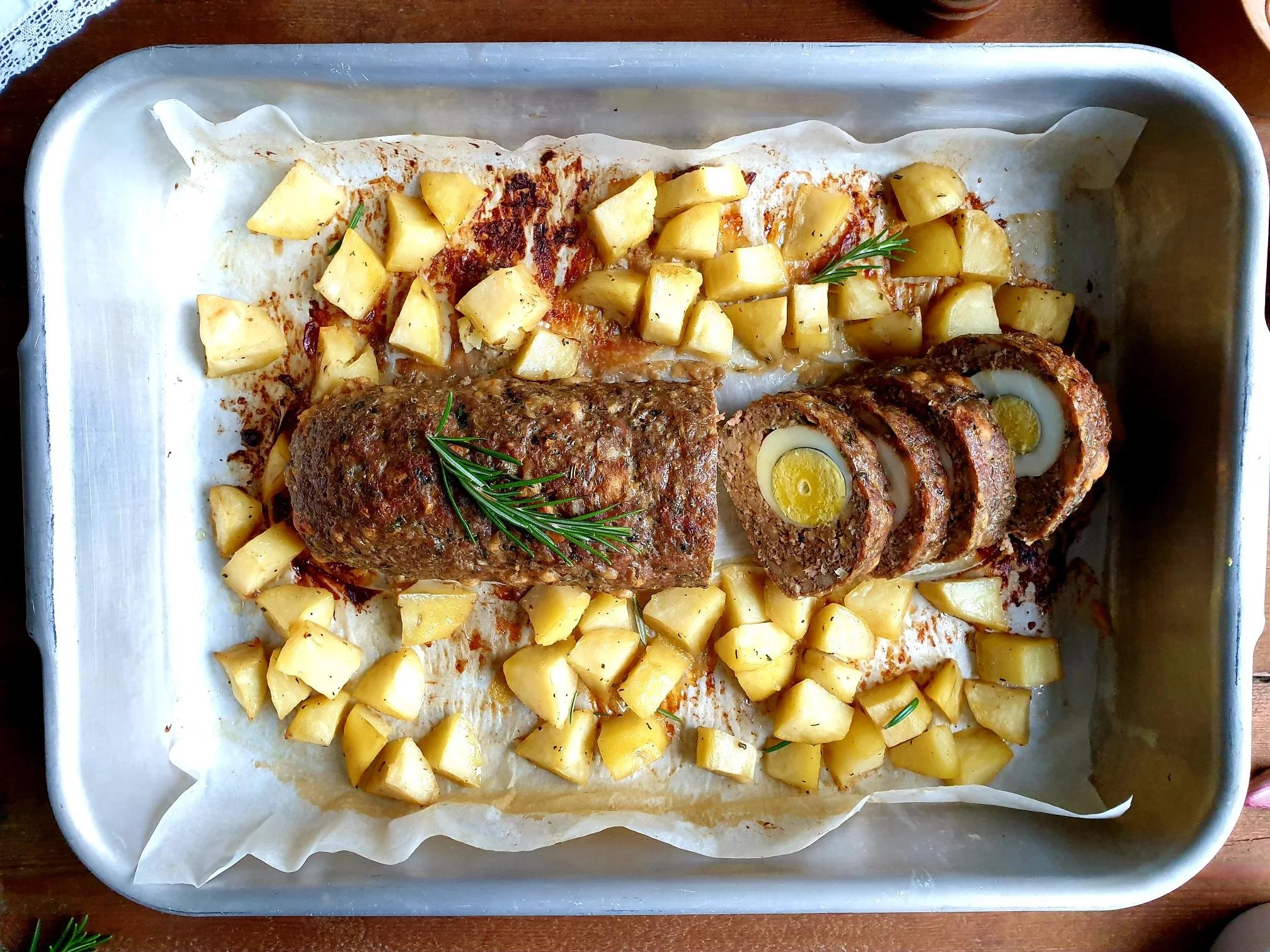
Meatloaf with hard boiled eggs is a real crowd pleaser.  It is moist, tender, satisfying, and comforting, and when eaten hot, it will warm you up body and soul. It is equally delicious cold, and it makes a fantastic starter. Slices of leftover meatloaf are a great sandwich filler, and it is also brilliant to take on picnics, as it transports very well. 

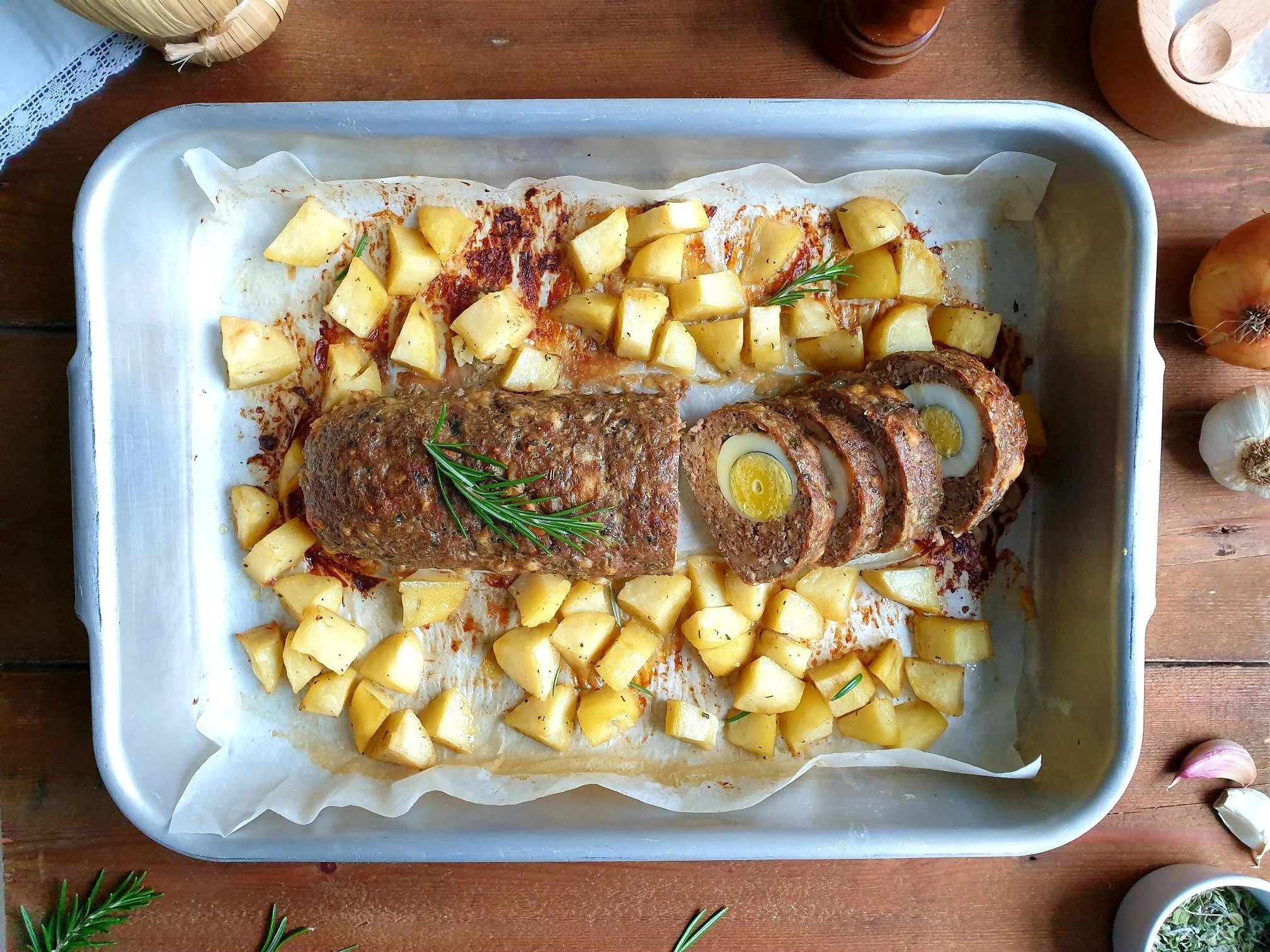
This dish is made with minced beef and pork combined with stale pieces of bread previously softened in milk, fresh parsley, marjoram, onions, garlic, salt and pepper, it is then shaped in a log and cooked. It has a rustic appearance from the outside but when you cut through it, it looks quite elegant and sophisticated, presenting itself quite cheffy, elaborate and complicated to make, but this meatloaf dish could not be easier to prepare. 

Nowadays, this dish might be considered and perceived to be a regular family midweek meal, or a weekend dinner, but this was not always the case. In fact, my nona  told me that in Slovenian Istra, meatloaf stuffed with hard boiled eggs was exclusively reserved for festivities and to celebrate special occasions. To make it extra special finely chopped pancetta would be added to the meat mix and it could also be baked wrapped inside bread dough, almost resembling Beef Wellington. Another way of cooking the meatloaf is wrapping it in a cloth and boiling it in plenty of simmering water. 
This dish is called Polpeton by the locals, a dialect word clearly influenced by the neighbouring Italian Polpettone, which has numerous regional variations from North to South of Italy. 

Regardless of what it is called, Polpettone in Italian, or Polpeton in Istrian , they both showcase a very humble but creative way of using stale bread or breadcrumbs, the latter one, once again, being home made from old bread. 

The Istrian meatloaf distinguishes itself from the others by adding fresh or dry marjoram, a herb very commonly grown along the Slovenian coast, and characterizes quite specifically many savoury dishes in Istrian cooking, offering distinctive flavour. 

I am sharing here my nona's recipe for this delicious meat loaf which is traditionally served and enjoyed with sone oven roasted potatoes, a selection of vegetables and a side salad. 

This is easier to make than it looks, give it a go, it will become one of your favourite recipes for meatloaves, and you will be asked to share the recipe by your family and friends. 

Recipe 

Ingredients 

Serves 4-6 

  • 250g minced beef 

  • 250g minced pork 

  • 2 soft white baps or some stale bread (roughly 120g) 

  • 150ml milk

  • 1 Tbsp marjoram (fresh or dry), finely chopped 

  • a handful of fresh flat leaf parsley (about 12g), finely chopped 

  • 1 onion (about 100g), peeled and finely chopped 

  • 1 clove of garlic, peeled and pressed 

  • 1 egg, slightly beaten 

  • 4 eggs, hard boiled and peeled 

  • sea salt 

  • black pepper 

Oven baked potatoes (optional) 

  • 500g potatoes, peeled and cut into cubes 

  • extra virgin olive oil, generous drizzle 

  • sea salt, to taste 

  • black pepper, to taste 

Method 

Preheat the oven to 180C or equivalent. 

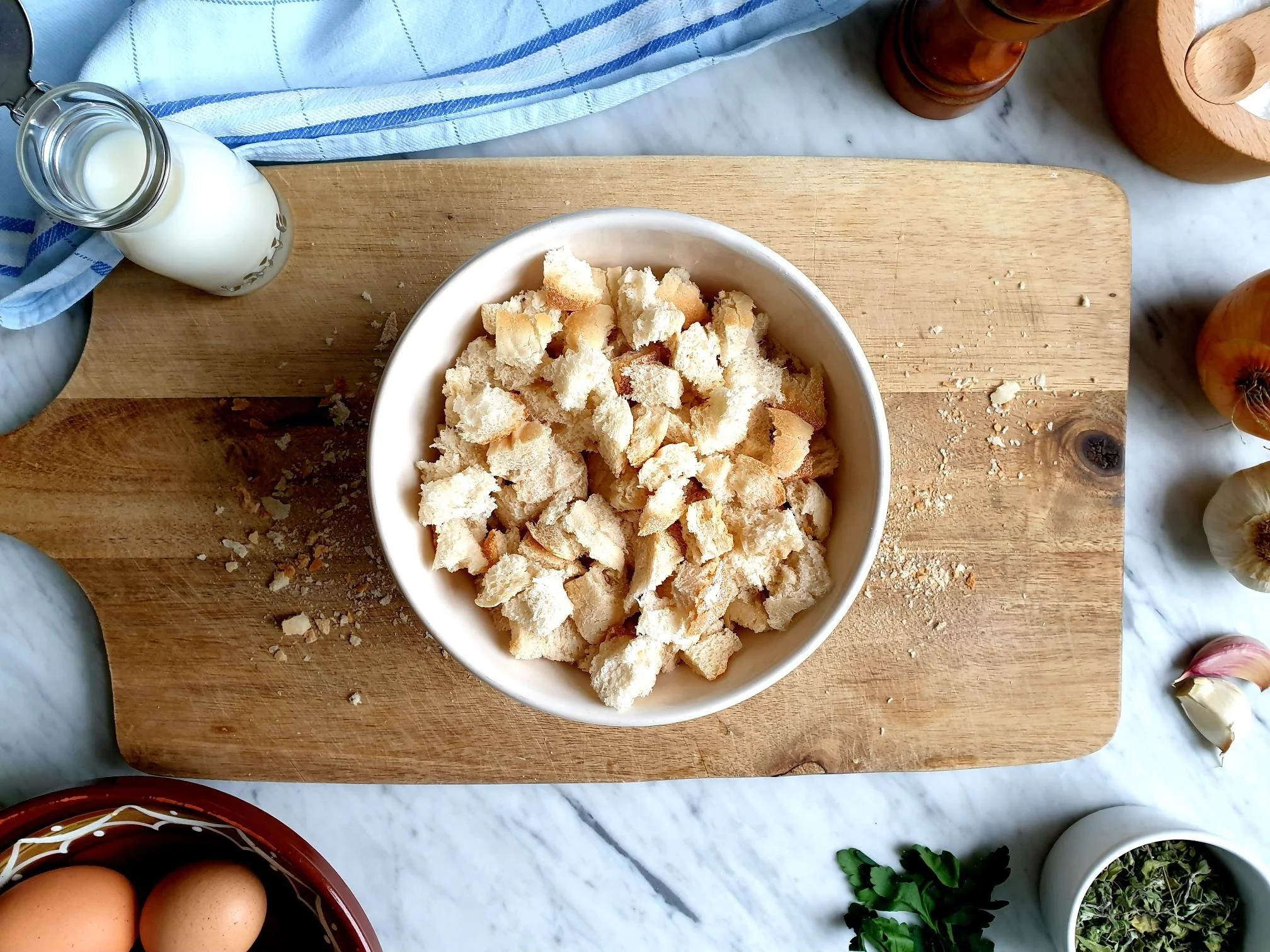
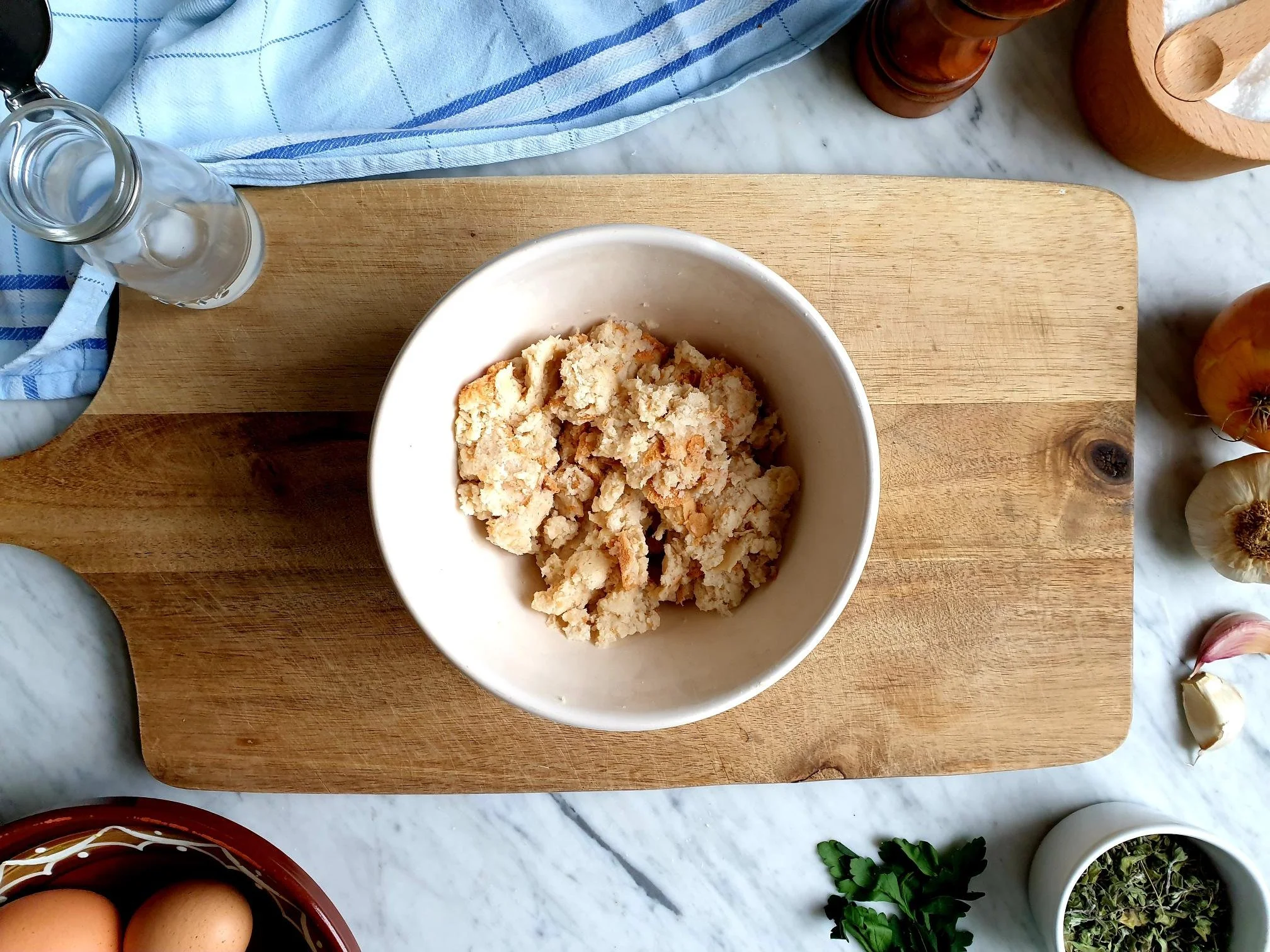
Cut or tear with your hands white baps (or any other type of stale bread you are using) into small pieces and put them into a bowl. Pour over the milk, mix well and leave to soak for a few minutes until the bread is completely softened (if necessary squeeze out gently with your hands excessive milk). 

While the bread is soaking in milk, prepare the meat mixture. 

View fullsize Meatlof 2.jpg
View fullsize Meatlof 3.jpg

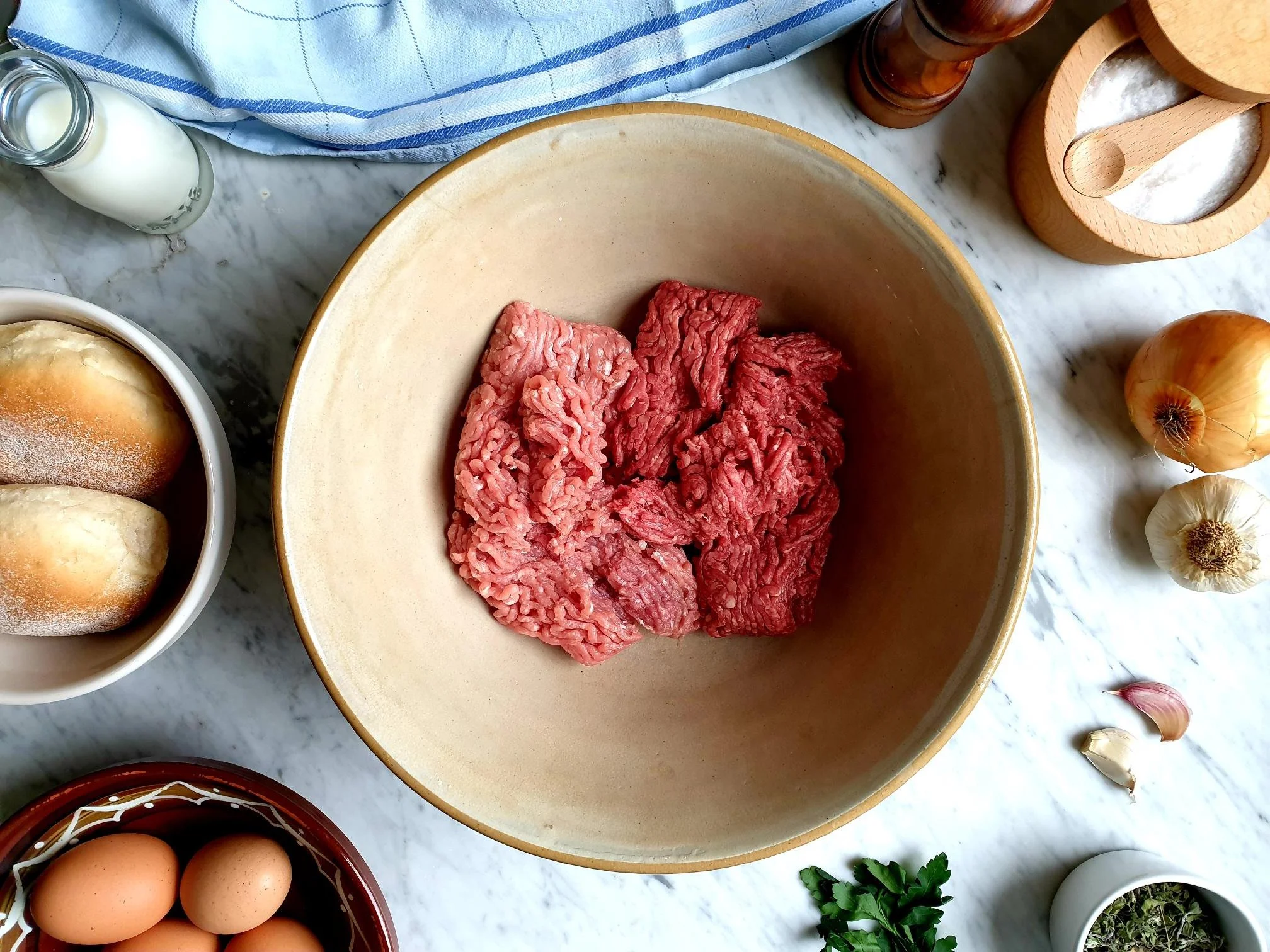
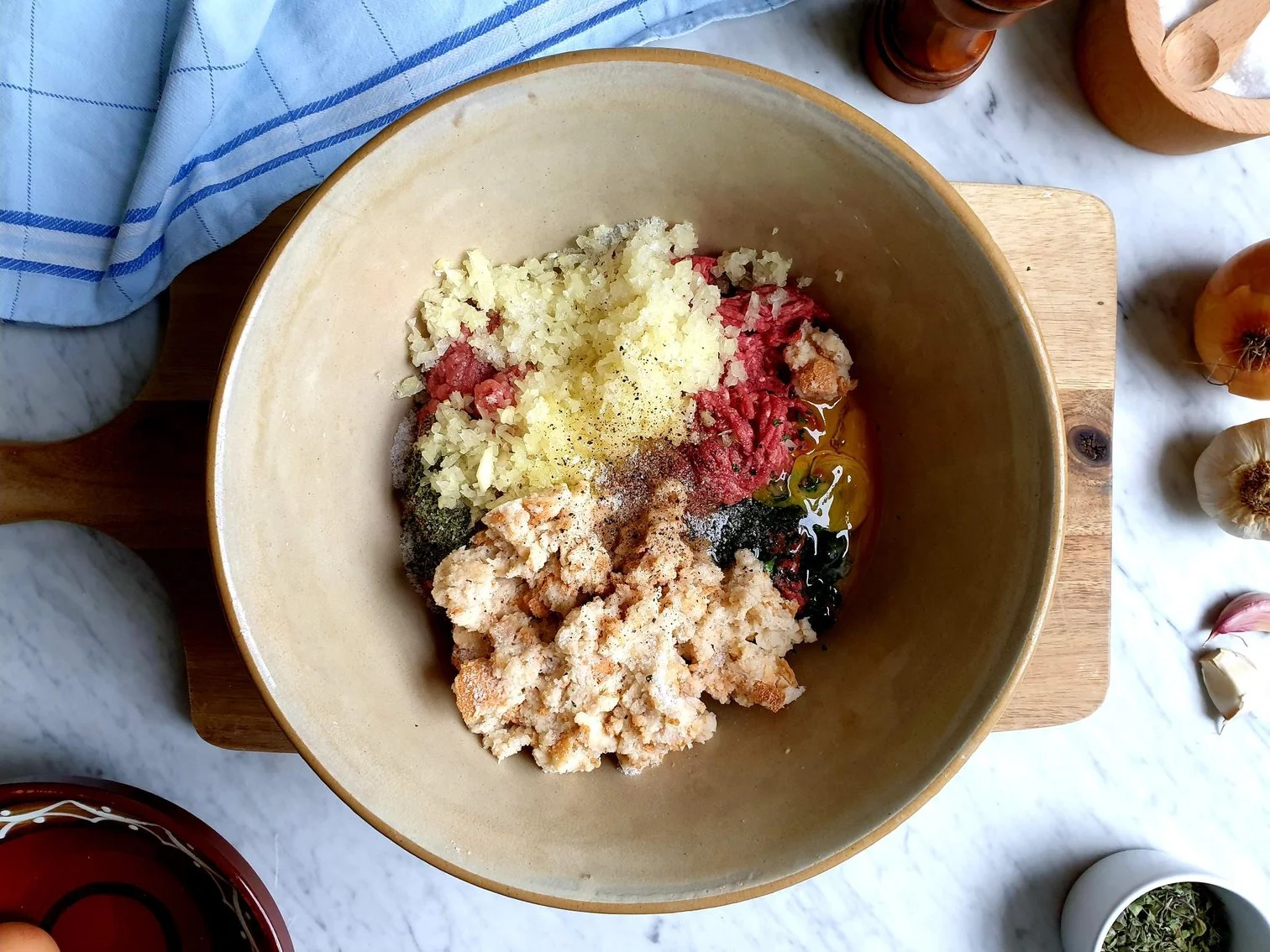
Put both minced beef and minced pork in a fairly large bowl. Add finely chopped onions, crashed garlic, finely chopped fresh parsley and marjoram, lightly beaten egg, generous pinch of sea salt, black pepper and softened pieces of bread.    

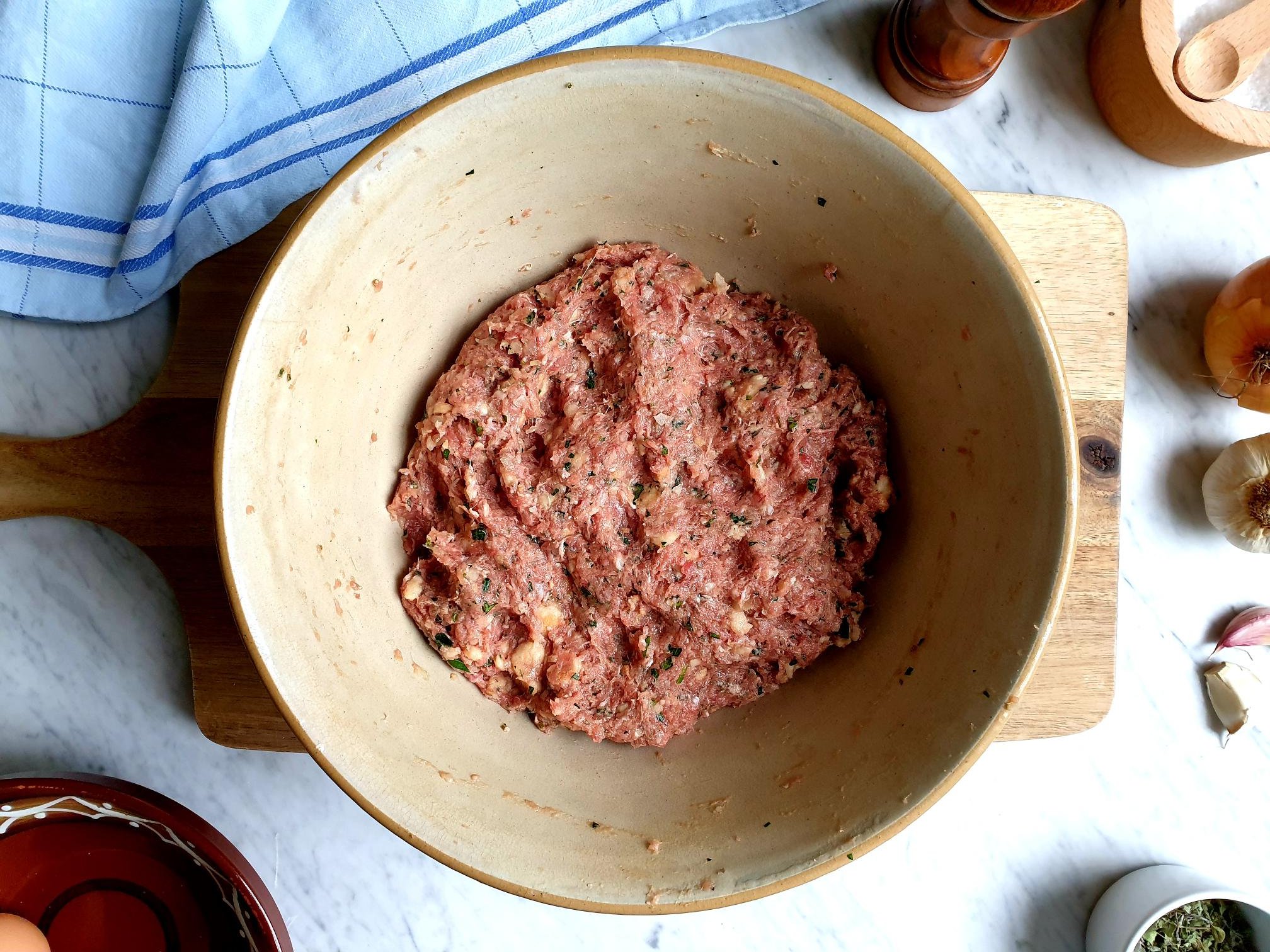
With your hand mix very well all the ingredients, almost using a squeezing action, to thoroughly combine the mixture (if you end up with bigger bread pieces just break them with your fingers). 

View fullsize Meatlof 4.jpg
View fullsize Meatlof 5.jpg

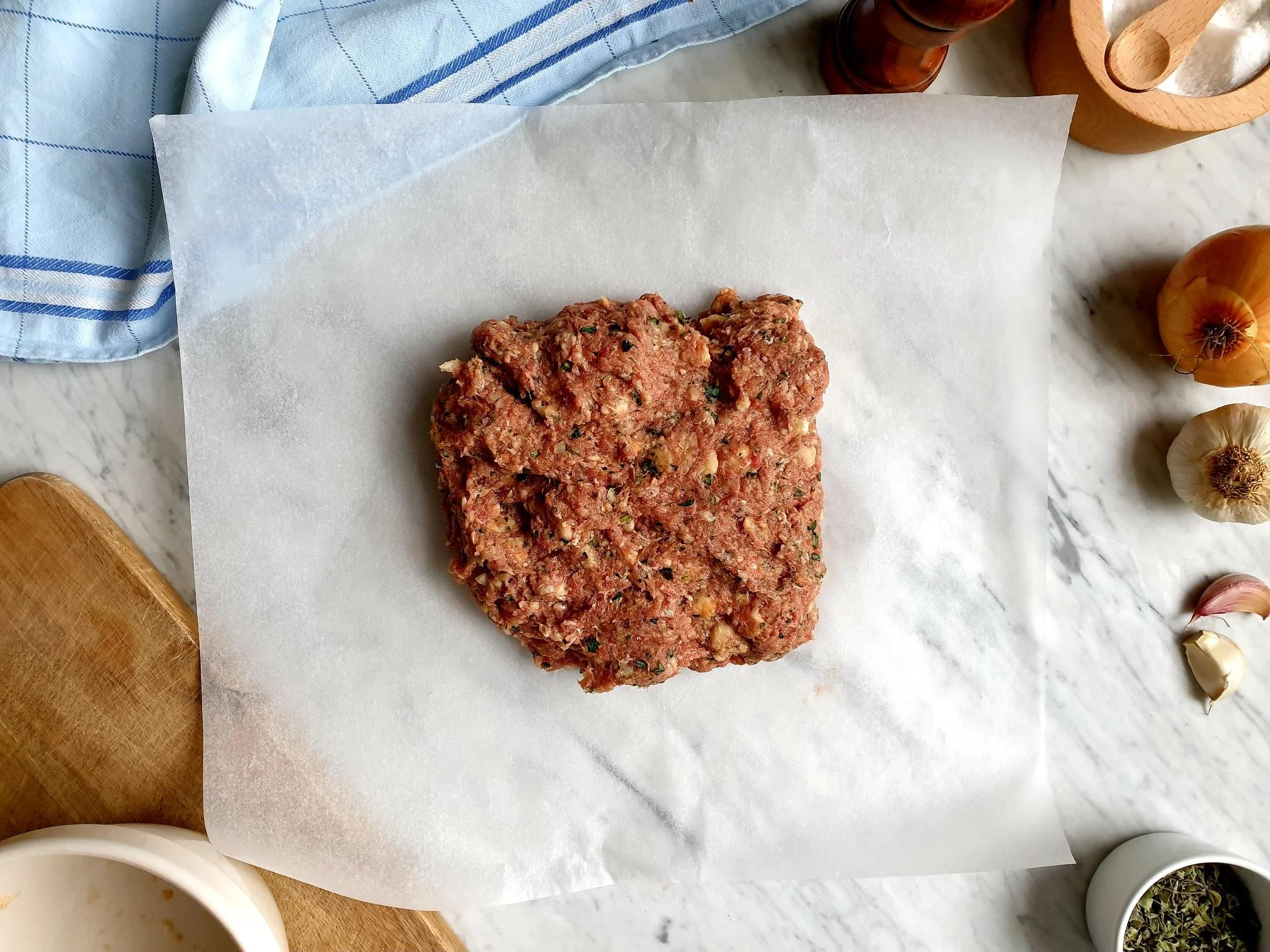
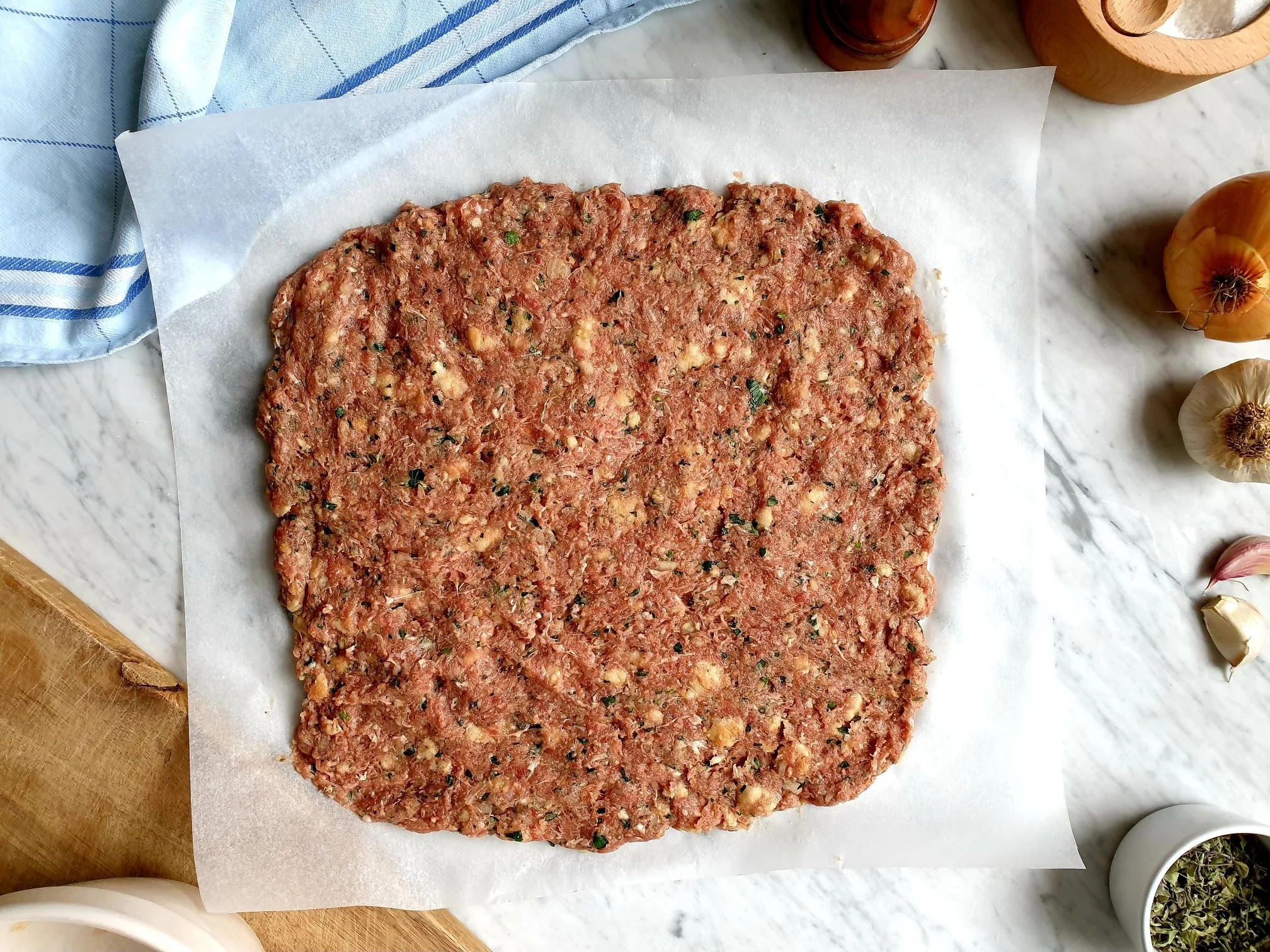
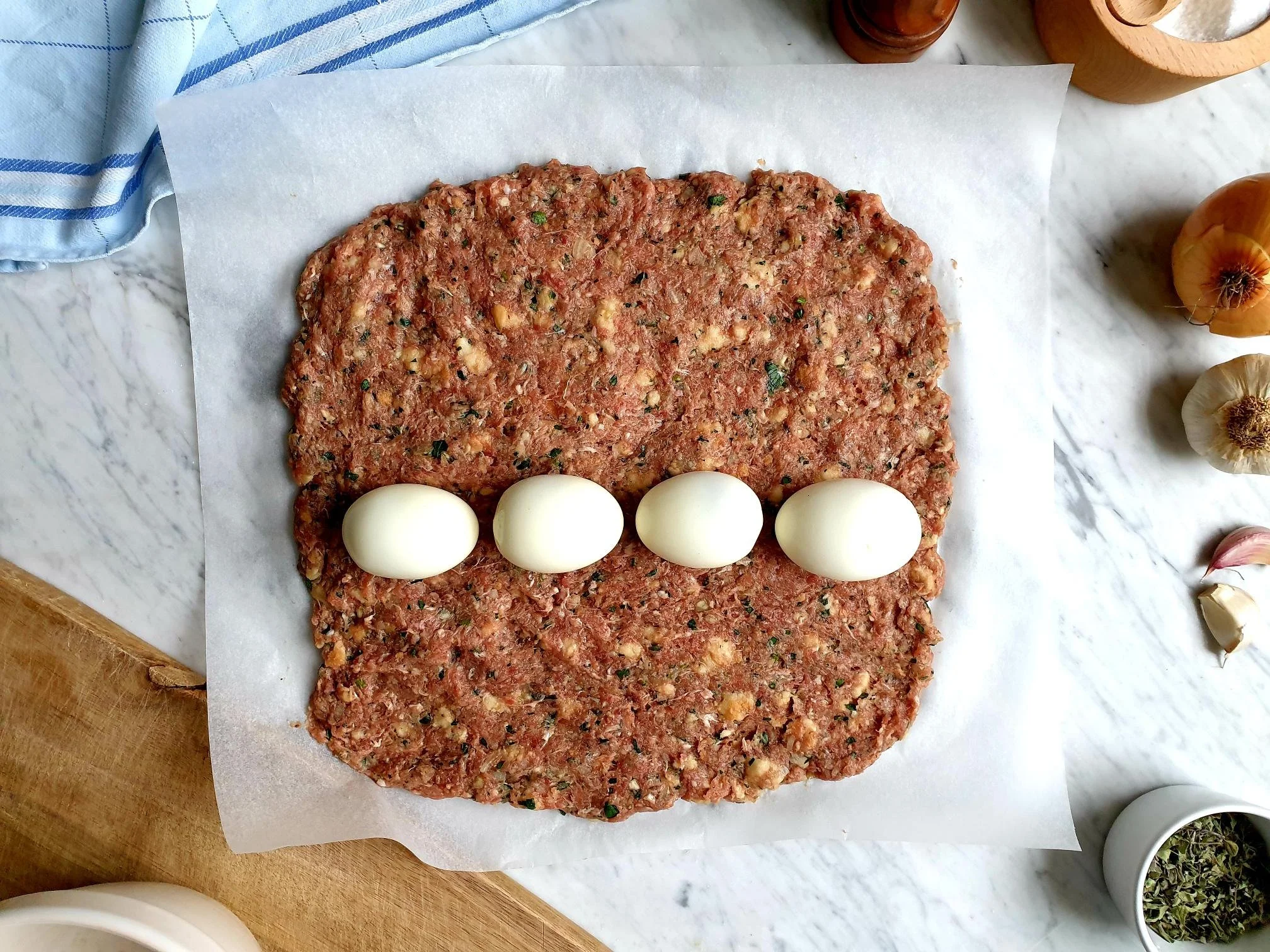
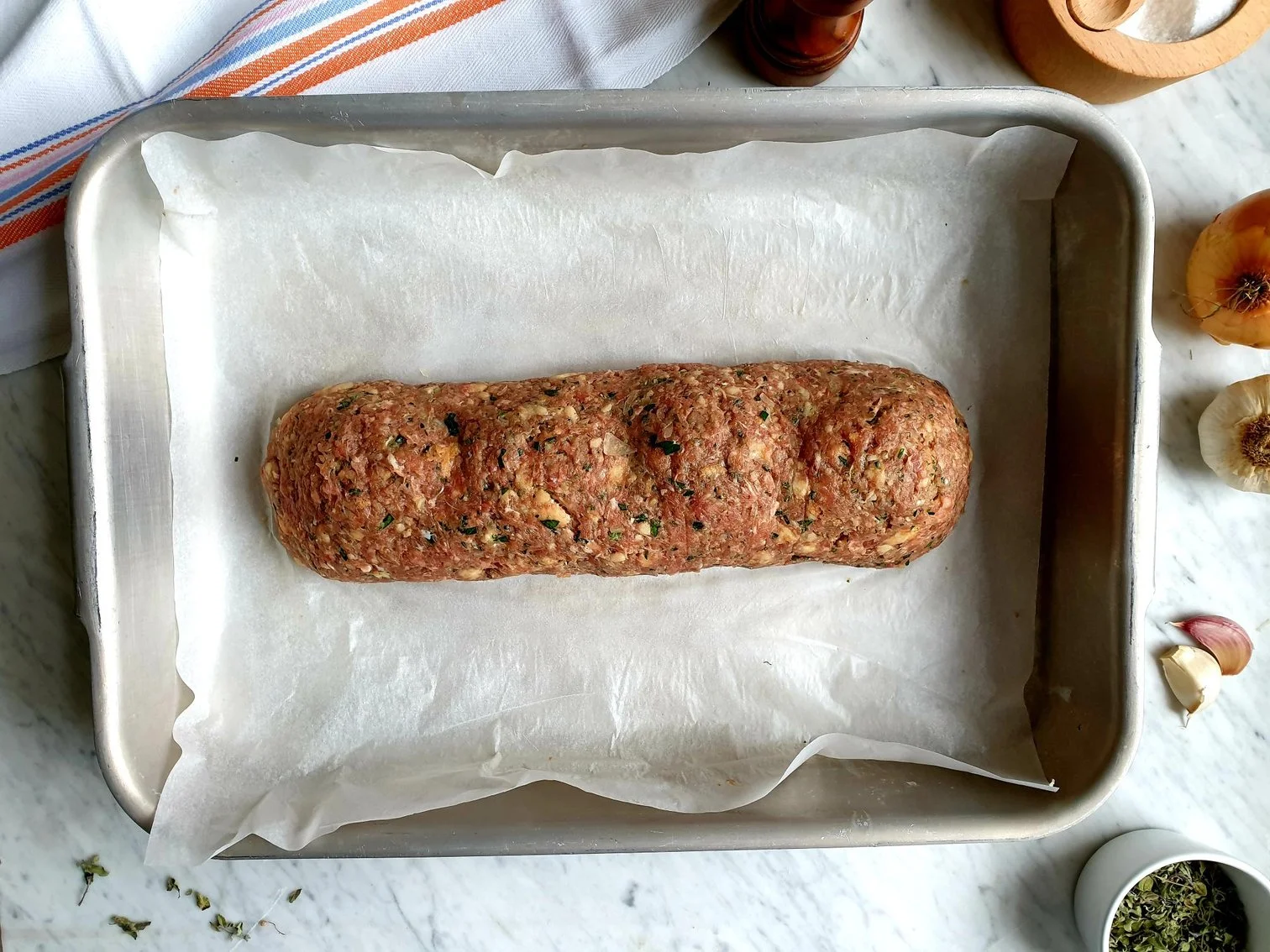
Transfer the meat mixture onto a large sheet of baking parchment (roughly the size of your baking tray) and flatten it with your hands into an approximate 30x25cm (12 x 10 inch) rectangle. 

View fullsize Meatlof 7.jpg
View fullsize Meatlof 8.jpg

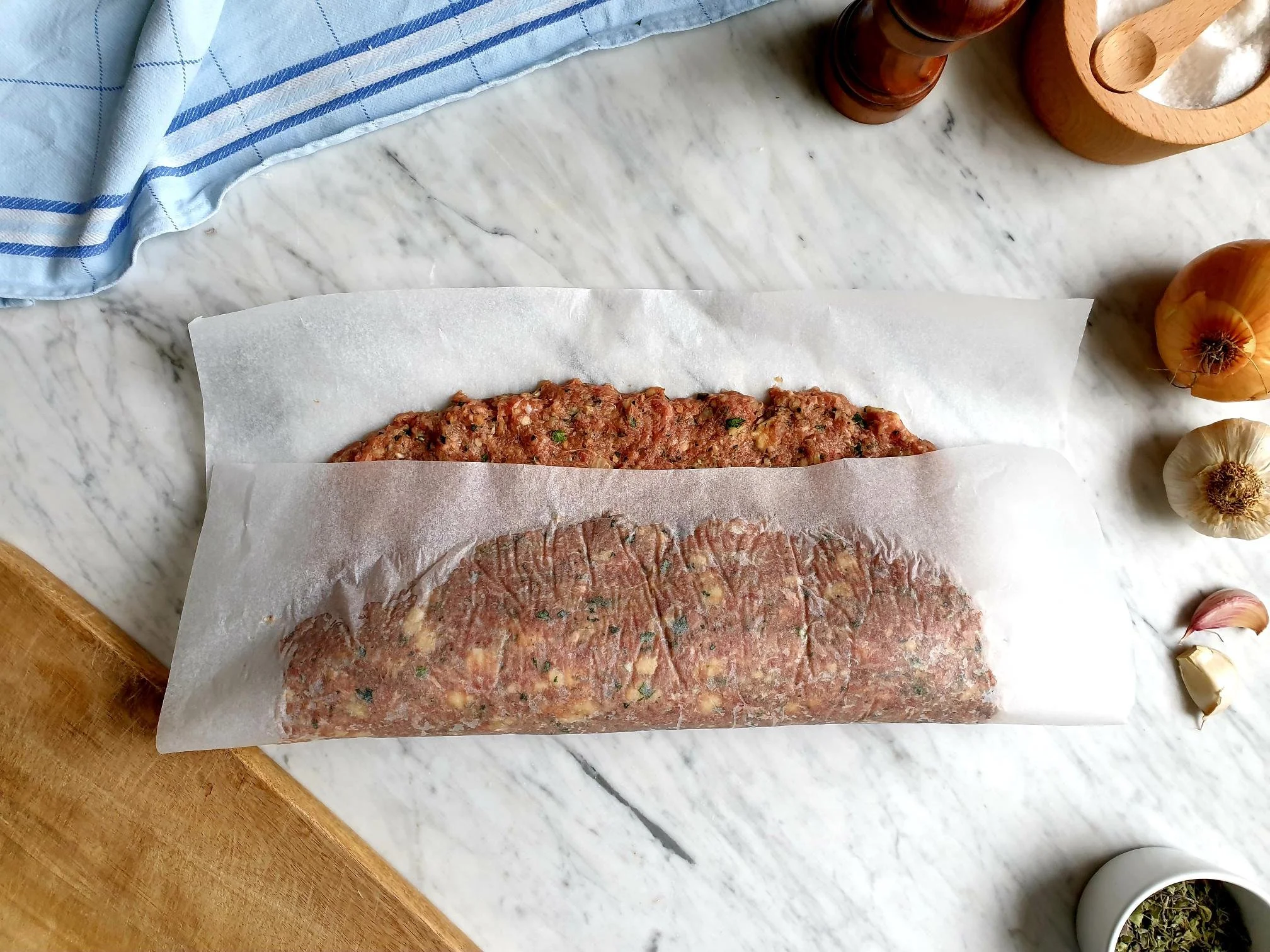
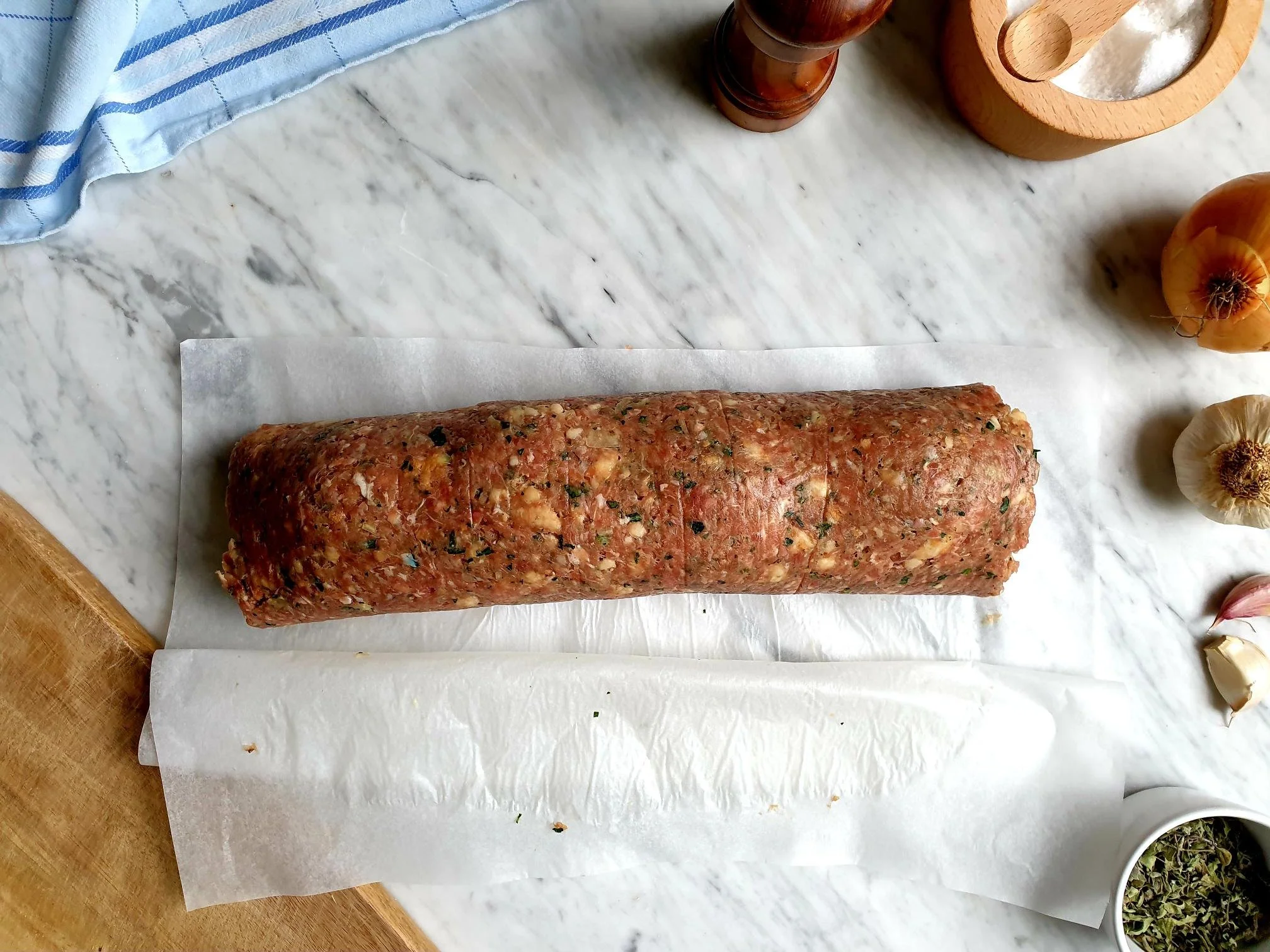
Place 4 whole hard boiled eggs in a row, along the centre and form the meatloaf around the eggs using the baking parchment.

View fullsize Meatlof 9.jpg
View fullsize Meatlof 10.jpg

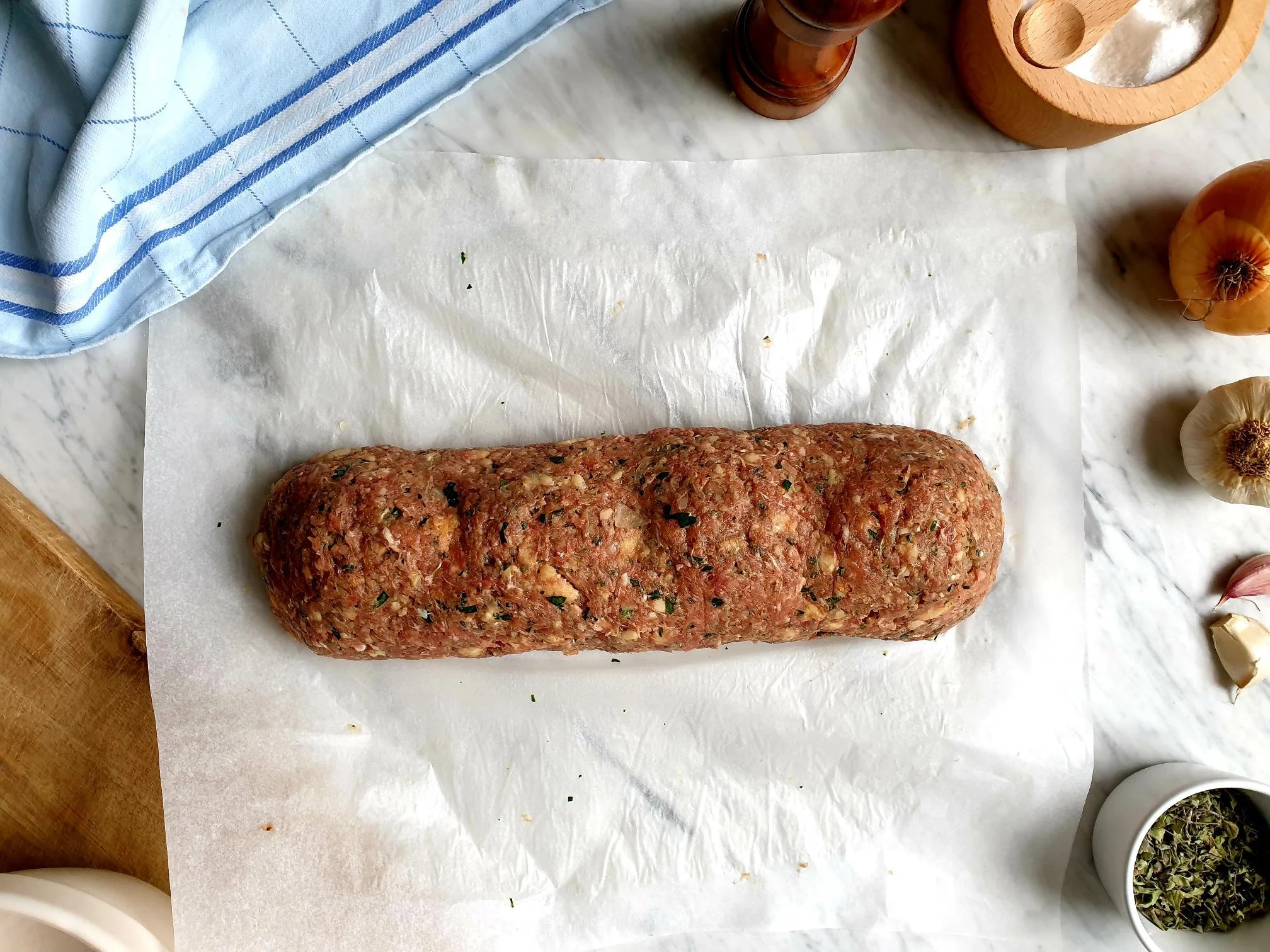
Press it gently to seal any seams, and tuck well the edges. 

View fullsize Meatlof 11.jpg
View fullsize Meatlof 12.jpg

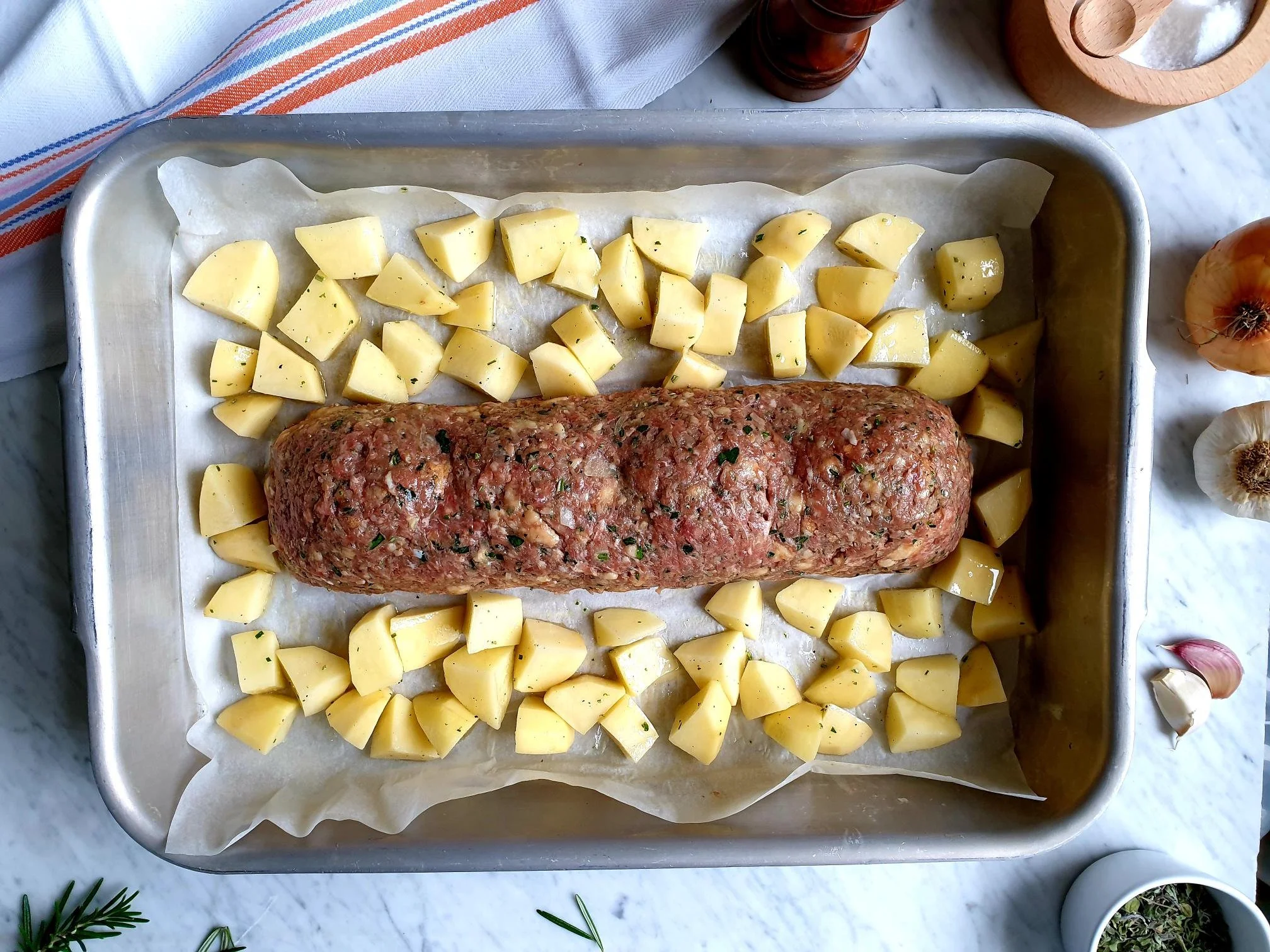
Transfer the meat loaf, seam side down (together with the baking parchment) on to a baking tray. 

Place cubed potatoes around the meatloaf, drizzle with extra virgin olive oil and season with sea salt and black pepper to taste. With your hands arrange them in a single layer and mix and toss so all the cubed potatoes are evenly coated in olive oil and the seasoning. 

View fullsize Meatlof 12a.jpg
View fullsize Meatlof 14.jpg

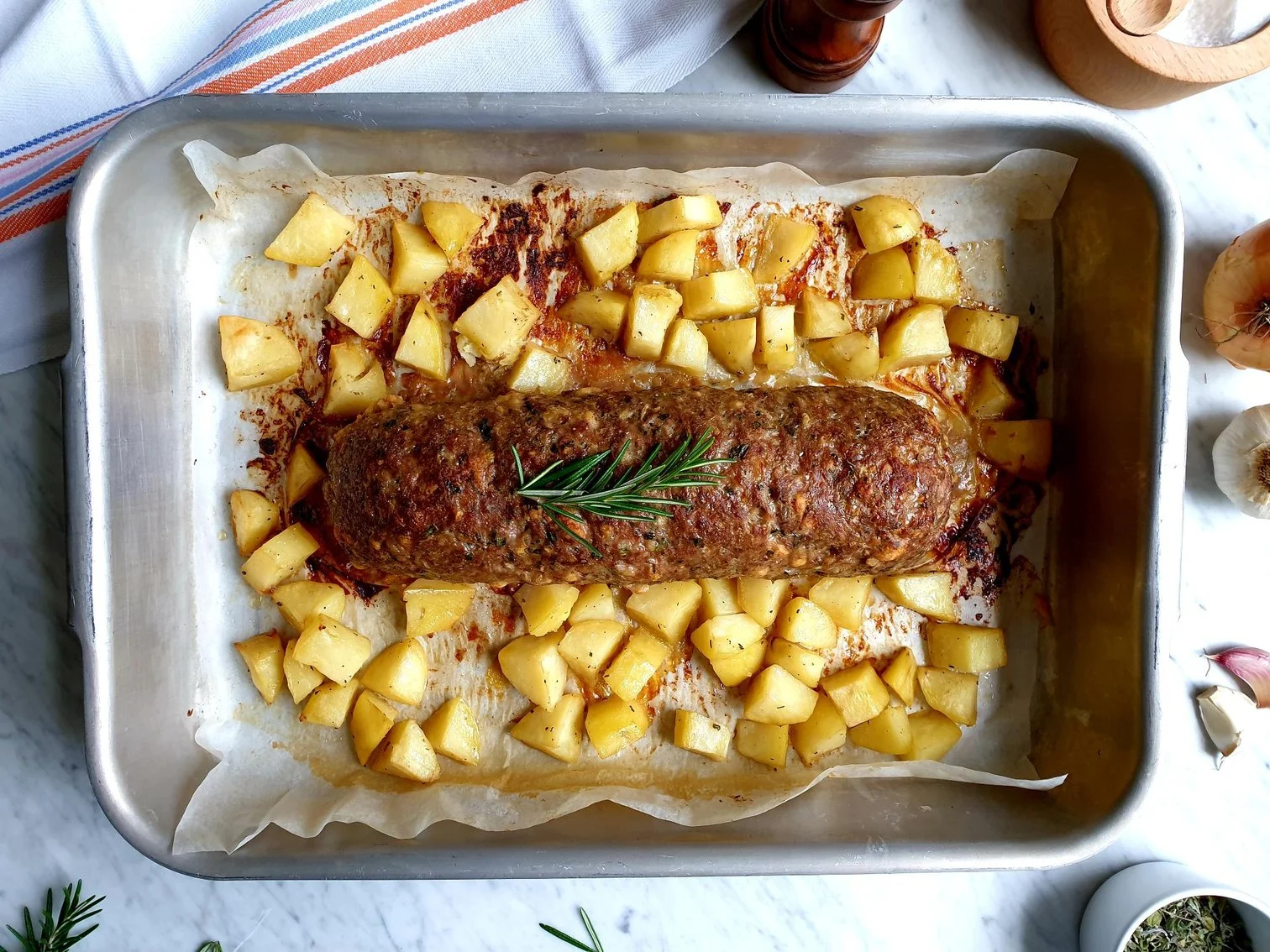
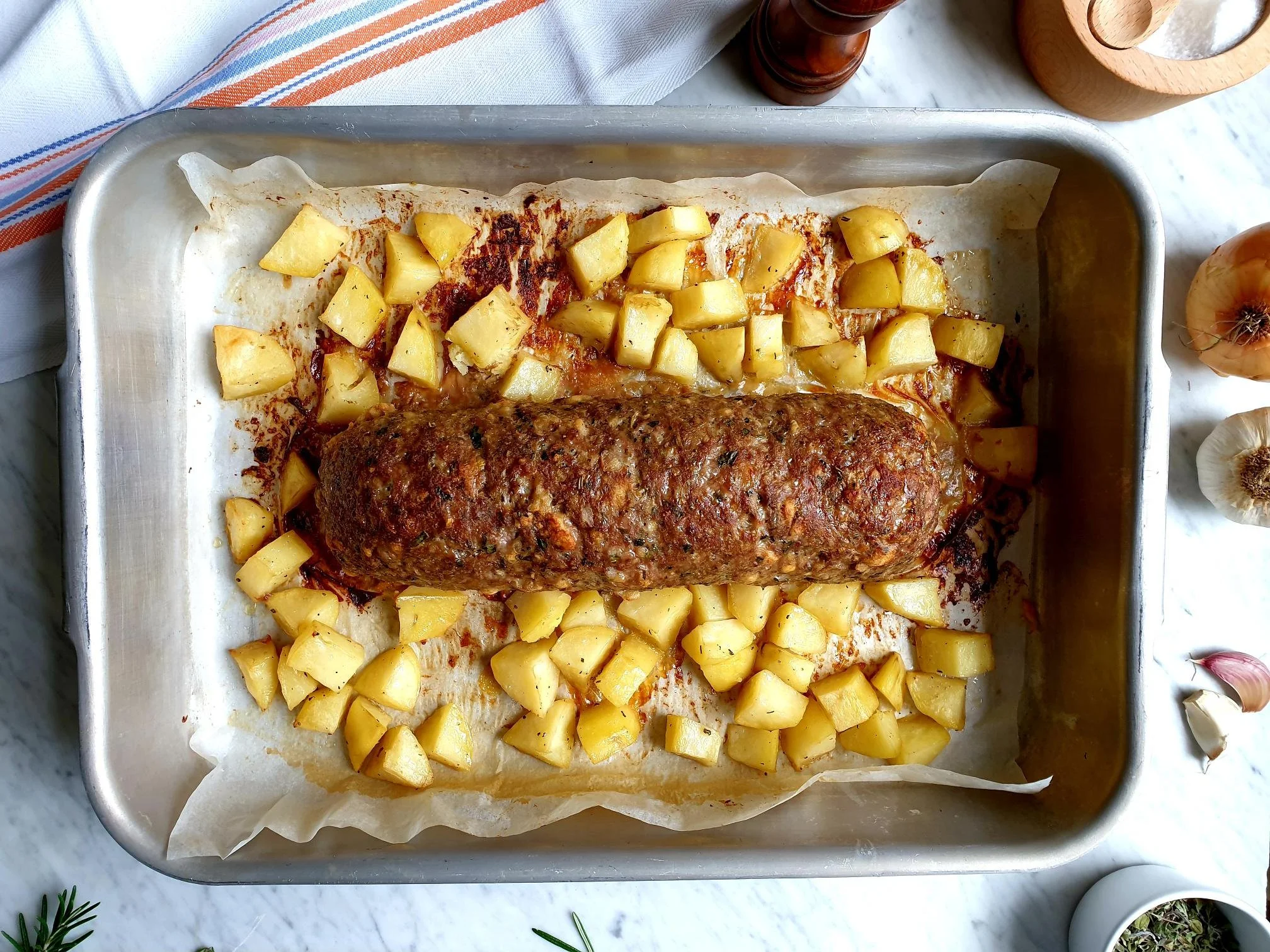
Bake at180C static or equivalent for 60 minutes. 

Halfway through baking, check the colour of the meatloaf, if it is browning too much, tent it with some aluminium foil to prevent it from browning too much and starting to burn. 

When baked, cover the meat loaf with the aluminium foil to keep it warm and allow it to rest for a bit before slicing it. 

Just a thought 

Meatloaf will keep in the fridge, in an airtight container, for about 3-4 days. Best reheat it in a microwave, covered. 

Before baking the meatloaf you can “dress it up” by topping it with overlapping slices of pancetta giving it that additional festive look and flavour. 

Wine suggestion

Chianti Colli Senesi DOCG 2021 - Poliziano

December 23, 2022 /tina oblak
mince beef, mince pork, hard boiled eggs, Meatloaf, Festive Meatloaf, Christmas meatloaf, Polpettone, Polpeton, stale bread, old bread, Oven baked potatoes, Potatoes, picnic food, sandwich filler, meat starter
Adriatic Recipe, All year round recipe, Autumnal dish, Autumnal recipe, baked dish, Celebratory dish, child friendly dish, child friendly meal, dinner, Easter, Easter dish, Easter recipes, Easy recipe, family friendly dish, family friendly meal, hearty dish, Istrian cuisine, Istrian dish, Istrian food, Istrian gastronomy, main course, main dish, main meat course, Meat, roasted dish, Rustic dish, simple recipe, Slovenian cuisine, Slovenian food, Slovenian gastronomy, supper, Winter dish, Winter recipe, Starters
Comment

Sarme - Pickled cabbage leaves stuffed with minced meat and rice in a light tomato sauce

Beans and Sardines
March 11, 2022 by tina oblak in Adriatic Recipe, Austrian inspired dishes, Hungarian inspired dishes, Autumnal dish, Autumnal recipe, Celebratory dish, Central European recipes, dinner, Eastern European dishes, Winter recipe, Winter dish, stew, Slovenian gastronomy, Slovenian food, Slovenian cuisine, Rustic dish, one pot meal, main dish, stuffed dishes, Mitteleuropean dish, Mitteleuropean cuisine, Mitteleuropean food

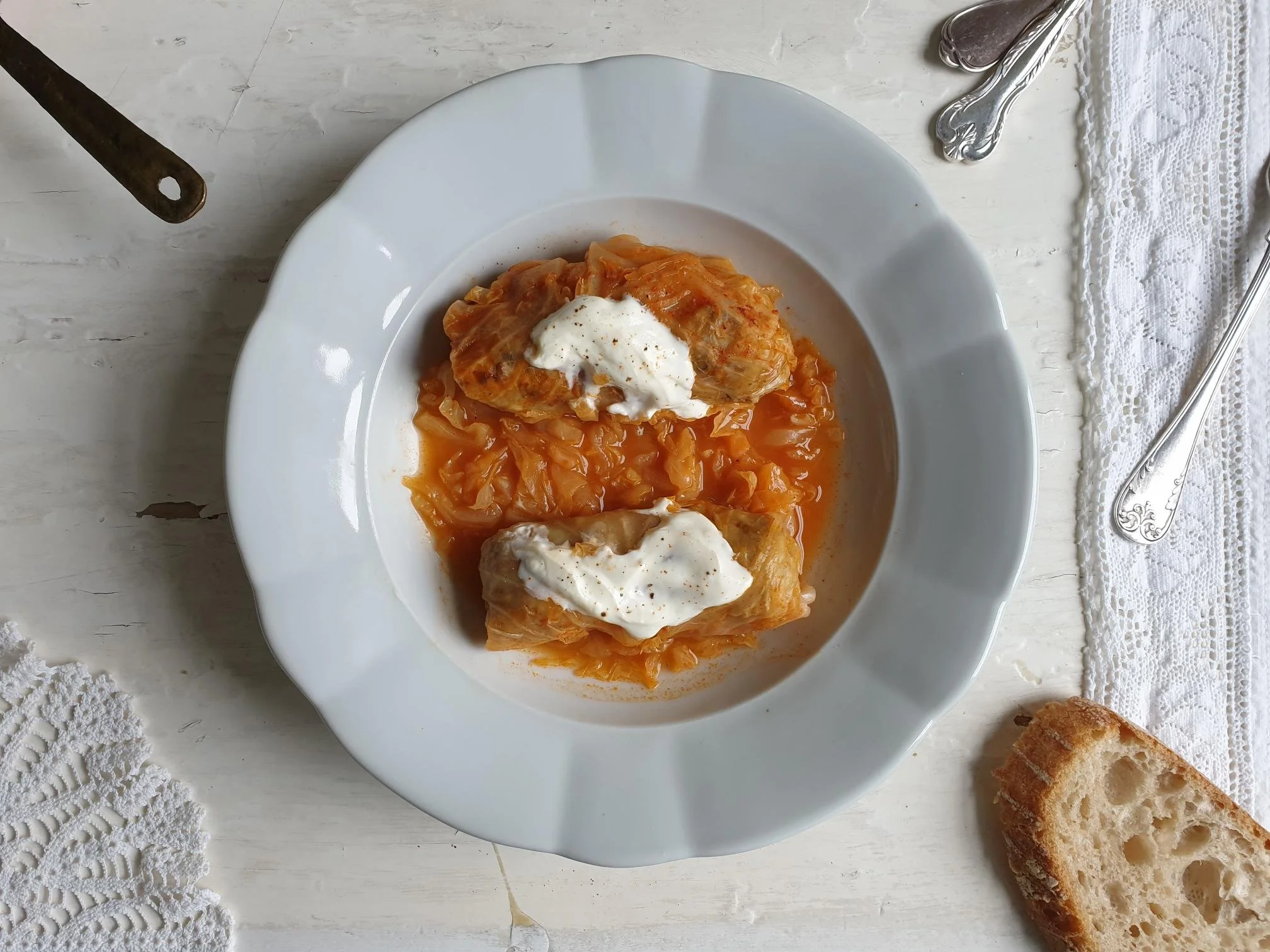
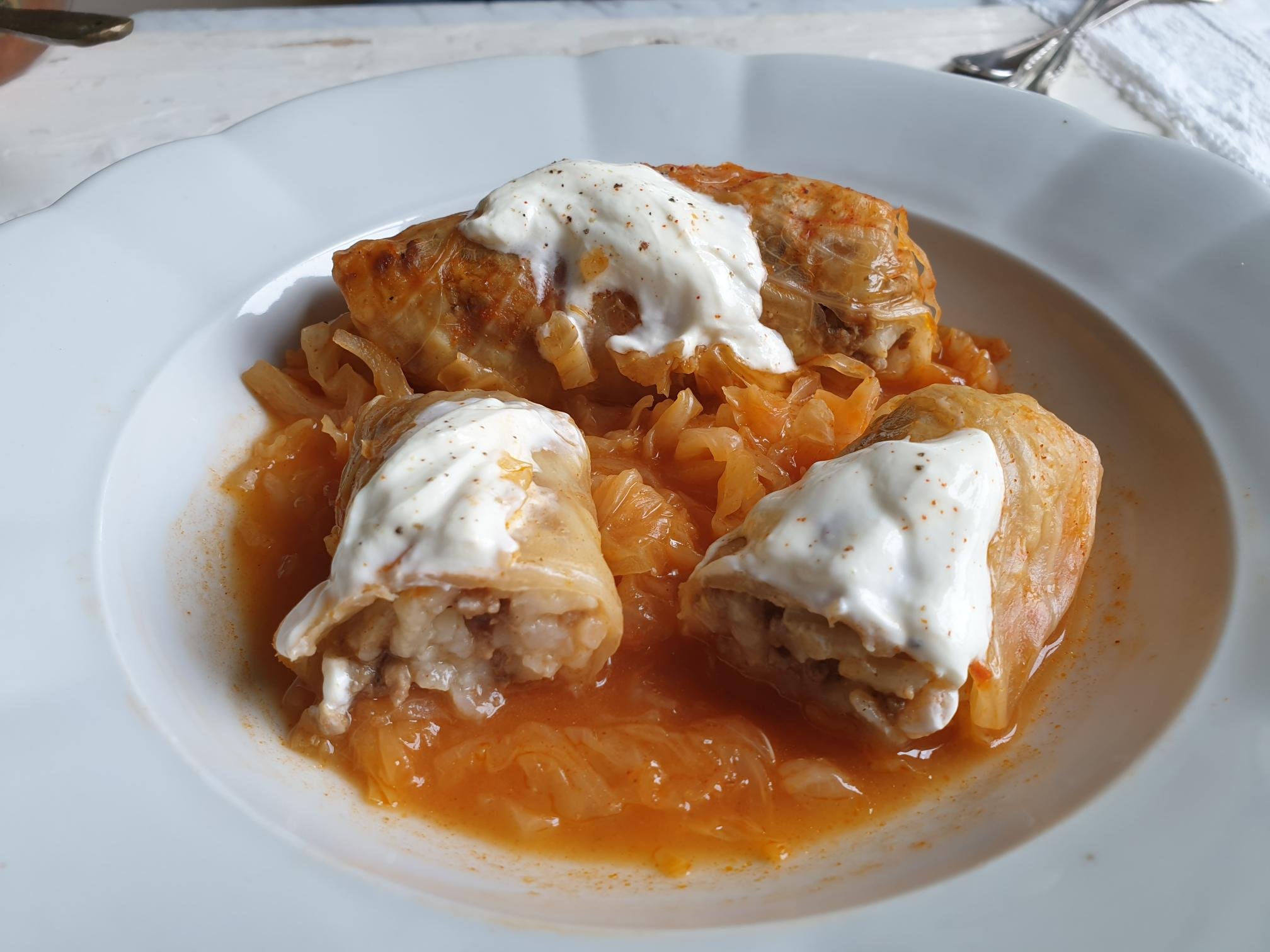
Sarme, which is a plural form of sarma, but also holding the name of the dish, is made of a mixture of minced meat and white rice wrapped in pickled cabbage leaves, and then slow cooked on a bed of shredded sauerkraut in a light tomato sauce.

This dish takes a special place in my recipe collection for comfort food, it is easy to make, hearty and satisfying, especially popular during colder months, it will wrap you in warmth like a woollen blanket. It used to be commonly served for lunch or dinner during the holidays and special occasions but nowadays it is also eaten as midweek meal.

Taking into account the historical context, it is quite clear, that Sarma probably originated in Turkey (the name sarma derives from a Turkish word sarmak, meaning to roll) and belongs to the dolma food family (stuffed dishes) spread in the cuisines in territories of the former Ottoman Empire from the Middle East to the Balkans and Central Europe, but like with most dishes, different places developed different versions of the same basic recipe.

When I first arrived to England, I was quite nostalgic about this dish as I could not find the whole sauerkraut head to buy. When my mother visited me she would buy it back home for me, put it in a suitcase and bring it with her on a plane. We would then prepare and cook sarme together. In Slovenia, where I come from, it is quite common to pickle large quantities of cabbage heads and buy them in the supermarkets in plastic bags or on farmer's markets directly from barrels available to make sarme during the winter.

View fullsize Sarme 1.jpg
View fullsize Sarme 3.jpg

In the family this dish would very often be made for big family gatherings in a big batch with the hope that some of it could be frozen and taken out on a lazy day, but that almost never happened!

I am Sharing here a version of sarme my maternal grandmother and my mother always cooked. It is highly recommended to make ahead as it tastes even better the following day, and serve sarme with mashed or boiled potatoes, or crusty bread and a dollop of sour cream on top.

It is very common to add in a pot of simmering sarme some lardons, bacon (thick cut), pancetta or pork ribs, smoked or unsmoked, this will give an additional meaty taste to the dish.

If you live in the UK and happened to watch on the television Rick's Steins Long Weekends short holiday and cooking series a few years ago, this dish was prepared for him in Vienna and described by him as one of his absolute favourites of all his long weekend programmes.

Ingredients

Serves 4-6 (about 12 rolls)

  • 1 pack of whole pickled cabbage head (you will find this on line or European delicatessens, especially Polish in the chilled section)

  • 250g minced beef

  • 250g minced pork

  • 100g white rice

  • 1 onion (about 100g), peeled and finely chopped

  • 2-3 cloves of garlic, peeled and crushed

  • 3 Tbsp olive oil

  • sea salt

  • ground black pepper

  • 2 bay leaves, fresh or dry

  • 2 Tbsp tomato concentrate

  • 1 Tbsp (or to taste) sweet Hungarian paprika

  • 1-2 Tbsp all purpose flour

  • sour cream for serving, optional

Method

The filling

Place the rice in a pan and cover with plenty of water.

Cook the rice as instructed on the pack, but cut the cooking time in half, as you only want the rice to be part-cooked.

Drain the rice in a colander and let it cool completely.

Put the oil, finely chopped onions and crushed garlic in a frying pan and sauté on a gentle heat until the onions become nice and soft.

Turn the heat to medium, add minced beef and pork, season with sea salt and black pepper and cook for about 20 minutes until the meat is browned.

Remove the frying pan from the heat, set aside and cool completely.

When both the rice and the meat mixture are cooled completely, put them in a bowl and mix them well together.

This is now your filling ready to fill the cabbage leaves.

Prepare the cabbage leaves for stuffing.

View fullsize Sarme 4.jpg
View fullsize Sarme 5.jpg

Carefully unpeel the leaves from the whole pickled cabbage head and gently open them up without breaking them. This is quite important so you do not have breakage and holes in the leaves, as the filling might come out once rolled. If you end up damaging quite badly the leaf, do not worry about it, just thinly shred it and use it later as a part of a sauce.

You will only need bigger and medium size leaves that come off the head quite easily. How many leaves you can obtain it really depends on the size of the whole pickled cabbage head (from the medium size cabbage head you should get around 12 leaves, this is the amount I used for this recipe).

View fullsize Sarme 8.jpg
View fullsize Sarme 9.jpg

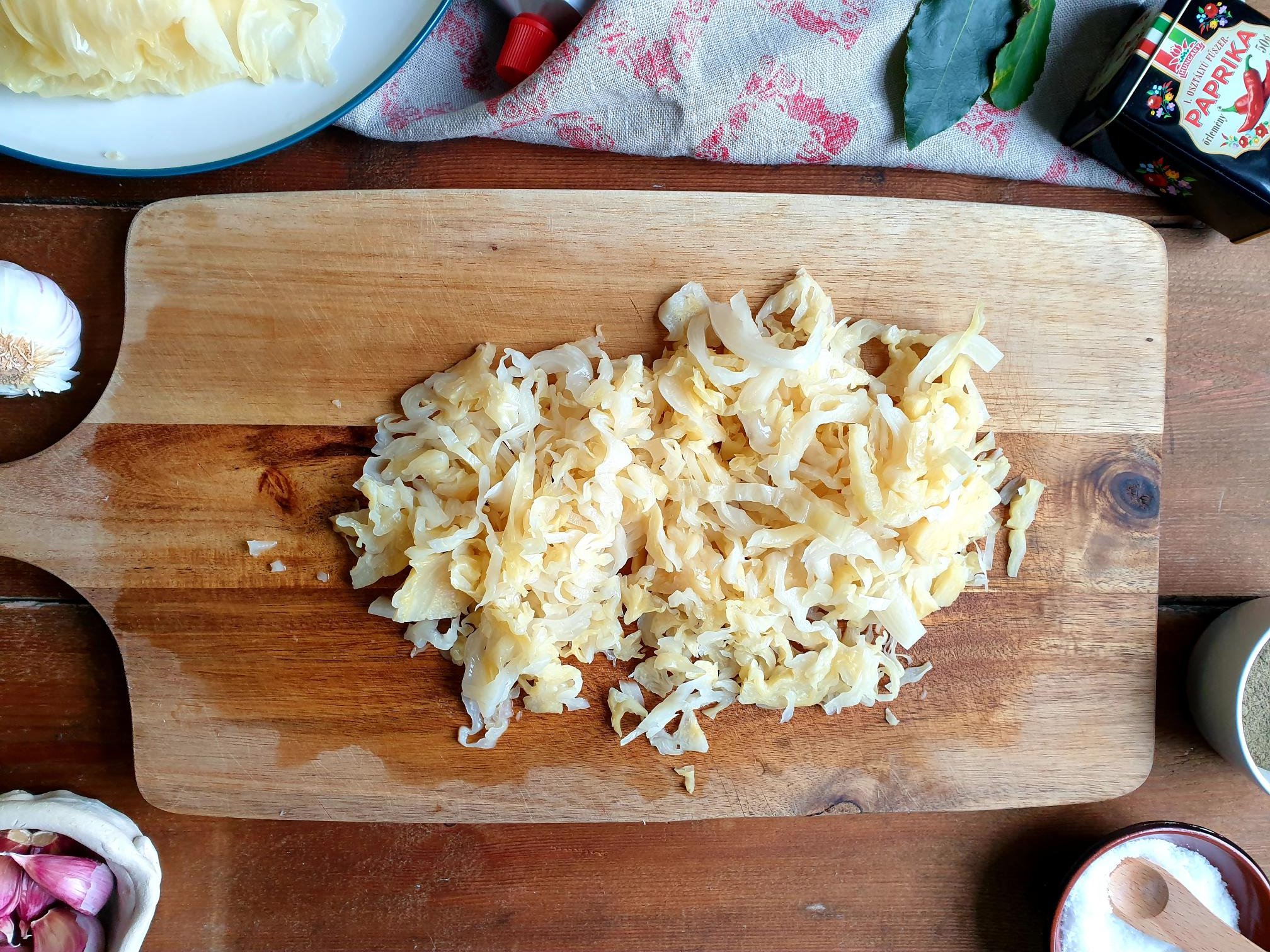
Once you peel off the leaves, you will end up with smaller inner cabbage head. Shred it with a sharp knife and set aside, this will be part of your sauce later on.

Place each leaf on a chopping board and cut out the thick and hard part of the stem, this will allow you to roll the leaf easily.

View fullsize Sarme 10.jpg
View fullsize Sarme 11.jpg

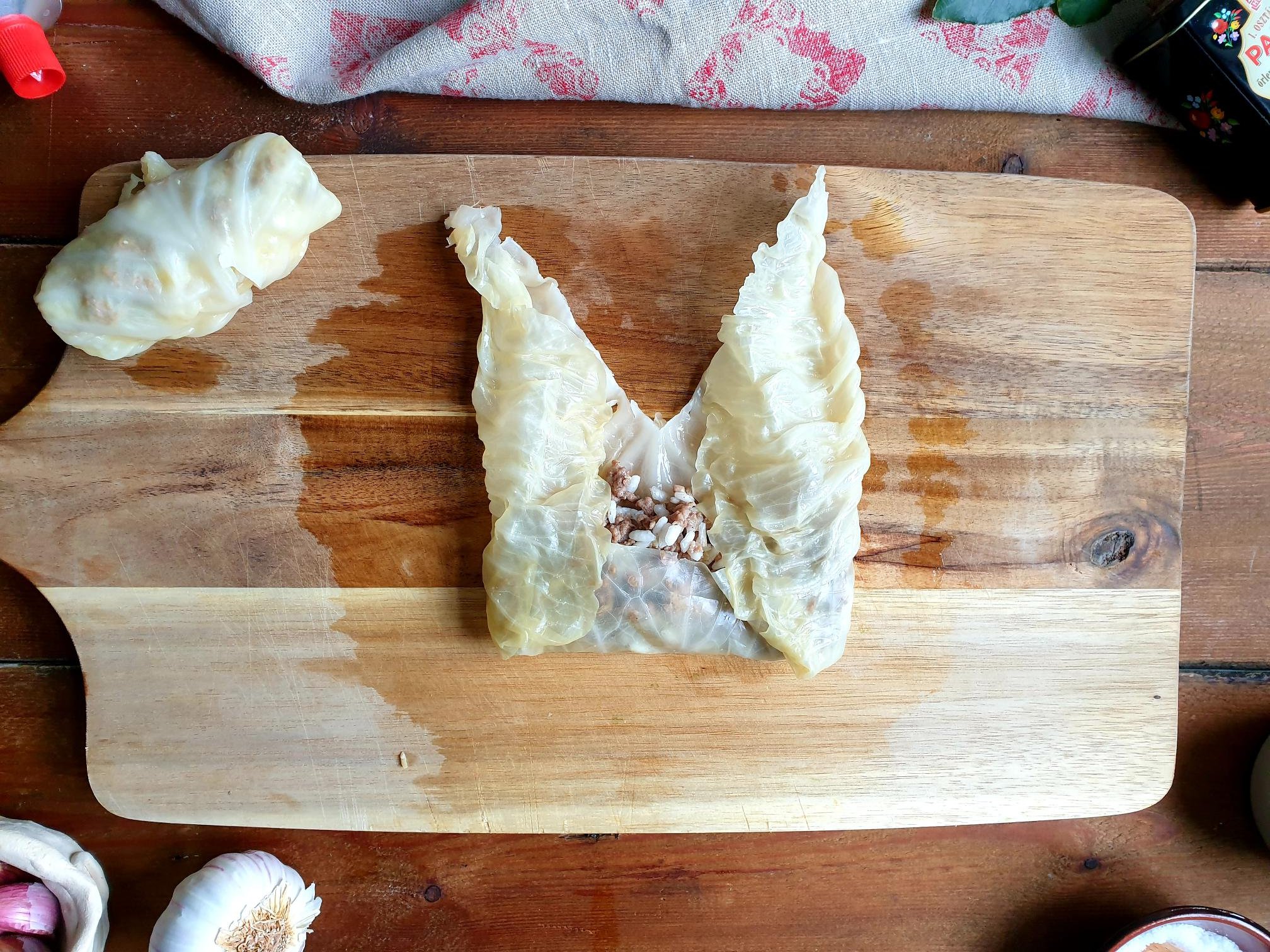
Take one leaf, place it on a working surface and spoon the filling on the edge of each leaf. It is tricky to give the exact amount, maybe 3 Tbsp for bigger leaves and a bit less for smaller leaves. You really want to use a bit of judgement here and just put the amount of filling you think the size of the leaf you are using can hold.

First fold inwards (away from you) the leaf section.

View fullsize Sarme 15.jpg
View fullsize Sarme 16.jpg

Then fold over the two flaps on the side. Then you simply roll forward until you get a cabbage roll.

View fullsize Sarme 17.jpg
View fullsize Sarme 18.jpg

Set aside the rolls and keep repeating the process until you use up all the leaves.

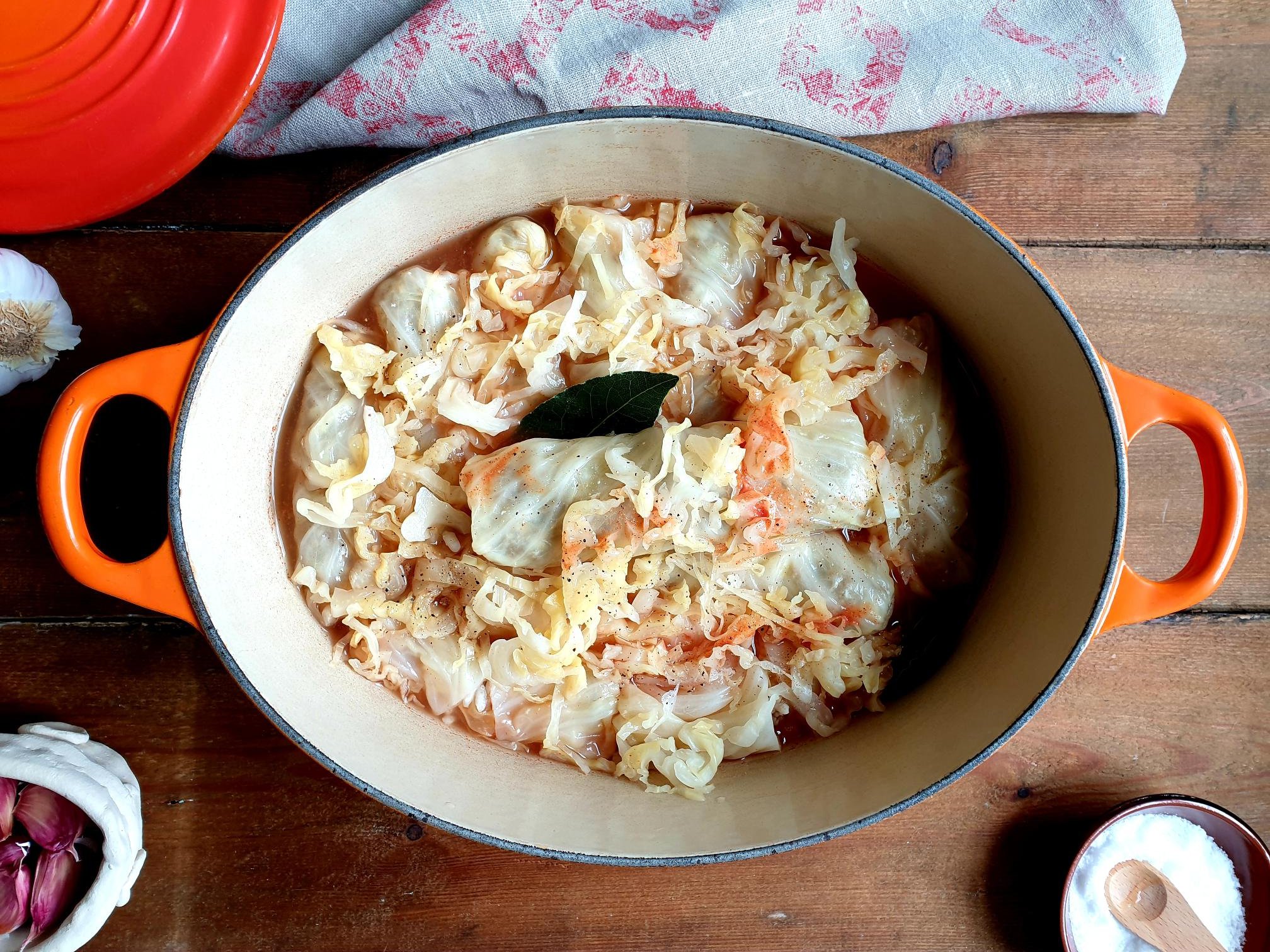
Put half the shredded pickled cabbage over the base of a fairly large casserole dish or pan with a lid.

Place and arrange the stuffed leaves, fold-side down, next to each other, nice and tightly.

Scatter the other half of shredded cabbage on top of the rolls.

View fullsize Sarme 20.jpg
View fullsize Sarme 21.jpg

Add a bit of water, about half way to 1/3 way up the dish.

In a small cereal bowl put the flour, few tables spoons of lukewarm water and mix well to avoid lumps.

Add sweet paprika, tomato paste and mix.

Pour the mixture over the stuffed leaves.

Stick 1 or 2 bay leaf between sarma, add sea salt and black pepper.

Cover with the lid and gently simmer for about 2 hours. It is important not to stir and keeping the gas on a fairly low as high heat might cause aggressive boil causing the rolls to open up and break. Just shake the pot gently a few times during the cooking process.

If after two hours you think the sauce is too watery just dissolve 1 Tbsp of flour in a bit of lukewarm water, pour it in the pot and continue simmering. This should thicken a bit the sauce.

Taste and adjust the seasoning with sea salt and black pepper.

Lift the cabbage rolls gently out of the pot, with the help of the spoon and a fork and serve warm with mashed or boiled potatoes or plenty of crunchy bread to soak up the juices.

For extra flavour top the rolls with a dollop of sour cream.

Just a thought

Sarme will keep in the fridge up to 3-4 days in an airtight container.

The dish also freezes very well, but before using it, defrost in the fridge overnight and reheat well.

Wine suggestion

Venezia Giulia Malvasia Istriana IGT 2017 - Damijan Podversic

March 11, 2022 /tina oblak
Sarma, Sarme, sauerkraut, Sauerkraut recipe, minced meat, mince pork, mince beef, rice, shredded sauerkraut, pickled cabbage leaves, hearty dish
Adriatic Recipe, Austrian inspired dishes, Hungarian inspired dishes, Autumnal dish, Autumnal recipe, Celebratory dish, Central European recipes, dinner, Eastern European dishes, Winter recipe, Winter dish, stew, Slovenian gastronomy, Slovenian food, Slovenian cuisine, Rustic dish, one pot meal, main dish, stuffed dishes, Mitteleuropean dish, Mitteleuropean cuisine, Mitteleuropean food
Comment

Ćevapčići (Grilled Minced Meat Sausages of the Balkans) recipe

Beams and Sardines
July 13, 2021 by tina oblak in brunch, Central European recipes, dinner, Eastern European recipes, Easy recipe, Finger food, Istrian cuisine, Istrian dish, Istrian food, Istrian gastronomy, main course, main dish, main meat course, Meat, Mitteleuropean recipes, Slovenian cuisine, Slovenian food, Slovenian gastronomy, Small bites, supper, Balkan dish

Ćevapčići (plural and diminutive form of Ćevapčić) or Ćevapi (pronounced [ʨɛ'va:pi]) are small pieces of rolled grilled mince meat, type of Turkish kofte kebab, originally made in the Balkans during the Ottoman period. They are oriental in origin but can be traditionally found in the countries of what was formerly Yugoslavia, the Czech republic, Austria, Slovakia and the Italian province of Trieste and Gorizia.

Ćevapčići must be one of everyone's absolute favourite dishes back home in Slovenia and it is hard to imagine a barbecue without them. In fact, they are so popular, you can buy them ready made in almost every butcher shop or supermarket. They are popular street food (fast food) and became part of everyday diet in Slovenia. For meat lovers this little skinless sausages are a real dream.

As a child I have very vivid memories of going to a skiing holiday to a capital of Bosnia and Herzegovina, Sarajevo, and having the best ever, and I mean the best ever Ćevapčići in Baščaršija which is Sarajevo's old bazaar and the historical and cultural centre of the city. I was utterly fascinated by the place being so different from my native small Venetian looking coastal town of Koper. That was the first time I saw a real mosque and was captured by the beautiful Ottoman architecture.

Ćevapčići are grilled and served as a main course in groups of five to ten pieces on a plate or in a lepinja (traditional flatbread). They are commonly eaten with Ajvar (cream of roasted red peppers), chips, flat breads, pieces of spring onions or thinly sliced yellow or white onions and kajmak (type of cream cheese). What accompanies really well this dish is a fresh salad of tomatoes, cucumber, onions and any feta type of cheese, it completes the meal well.

I currently live in England where I cannot buy ready made Ćevapčići so I have decided to make them fresh from scratch, there is a great sense of satisfaction as you can tweak the ingredients to your taste.

The main ingredient is mince meat, lamb, veal pork or beef, you can mix two or three types of minced meat and there could be a variation of meat content and seasoning.

I am sharing here my father's recipe, he used to love Ćevapčići and he loved preparing them for the family.

Ingredients

Serves 4

  • 500g mince lamb

  • 500g mince beef (can use 250g of mince beef and 250g of mince pork)

  • 60g unsmoked pancetta or bacon, cut in small pieces (can use smoked alternative if prefer)

  • 180g roughly of onions (very finely chopped)

  • 1-2 clove of garlic (pressed)

  • 1 egg (slightly beaten)

  • 1 Tbsp powdered Hungarian sweet paprika

  • ¼ Tsp baking soda

  • sunflower oil for brushing

  • sea salt

  • black pepper (freshly ground)

Method

Put a table spoon of water in a frying pan and sautée on a medium heat pieces of pancetta or bacon. Turn the heat down, add the onions, garlic, a pinch of salt and fry gently, stirring frequently, until they become golden in colour and soft. It should take 10-15min, then set aside and cool.

View fullsize Cevapcici 2.jpg
View fullsize Cevapcici 3.jpg
View fullsize Cevapcici 4.jpg

Transfer the pancetta/bacon and onion mixture into a food processor, add mince meat and mix at a low speed. Pulse if you can, as you do not want a completely smooth paste but a mixture with still a bit of a texture. If you have a smaller food processor you might have to do this in batches.

View fullsize Cevapcici 5.jpg
View fullsize Cevapcici 6.jpg

Transfer the mixture from the food processor into a big bowl. Add the egg, pinch of salt, black pepper, baking soda and sweet paprika. With your hands mix well to combine all the ingredients, no food processor will do better job!

View fullsize Cevapcici 6a.jpg
View fullsize Cevapcici 6b.jpg
View fullsize Cevapcici 7.jpg

Take a size of a golf ball, weighing roughly between 30-40g and shape into small sausages of about 7-8cm long.

Place your Ćevapčići onto a big plate or a tray and refrigerate for about 1hour.

Ćevapčići are ideal for barbecuing but as this is not always possible you can cook them in a grill pan.

Barbecue or grill the Ćevapčići on the hot grill pan for about 14 minutes, turning them often in between. They are ready when nice and brown on the outside and cooked through. It might be a good idea to check by cutting one in the middle. In this way you can calculate the grilling time for the following batches.

No matter which way you choose to cook them, make sure you lightly brush them with oil during the cooking process and try not over cook them as they will go hard.

View fullsize Cevapcici 9.jpg
View fullsize Cevapcici 10.jpg

Just a thought

Ćevapčići freeze well, just make sure you freeze them individually first on a plate or a tray to avoid them sticking to each other, and then place them in a freezing bag...... and you are all set for your next BBQ outside with friends or family, or for an enjoyable meal indoors!

Wine suggestion

Carso-Kras DOC "Terra Rossa" 2009 by Branko & Vasja Čotar, Carso-Kras

July 13, 2021 /tina oblak
mince pork, mince beef, mince lamb, grilled meat, grilled sausages, BBQ, Ćevapčići, Grilled Minced Sausages of the Balkans
brunch, Central European recipes, dinner, Eastern European recipes, Easy recipe, Finger food, Istrian cuisine, Istrian dish, Istrian food, Istrian gastronomy, main course, main dish, main meat course, Meat, Mitteleuropean recipes, Slovenian cuisine, Slovenian food, Slovenian gastronomy, Small bites, supper, Balkan dish
1 Comment