Beans and Sardines

  • Home
  • About
  • Recipe of the week
  • Recipes
  • Wines
  • Contact

Hungarian-Style Sauerkraut, Mince Pork and Rice Oven Baked Casserole Recipe

Beans and Sardines
January 07, 2026 by tina oblak in casserole, child friendly dish, child friendly meal, comfort, dinner, Eastern European dishes, Eastern European recipes, Easy recipe, family friendly dish, family friendly meal, Healthy, hearty dish, Hungarian inspired dishes, main course, main dish, main meat course, make ahead, Mitteleuropean cuisine, Mitteleuropean dish, Mitteleuropean food, Mitteleuropean recipes, Rustic dish, simple recipe, Slovenian cuisine, Slovenian food, Slovenian gastronomy, weekend, Winter dish, Winter recipe

This slightly “off the beaten track” recipe is absolutely wonderful but, since it contains sauerkraut, which could have quite a penetrating cooking smell, I do appreciate this dish might not be to everybody's liking.

It's definitely not food for dainty appetites, nor for those who dislike sauerkraut. It is one of those that you either love or hate...

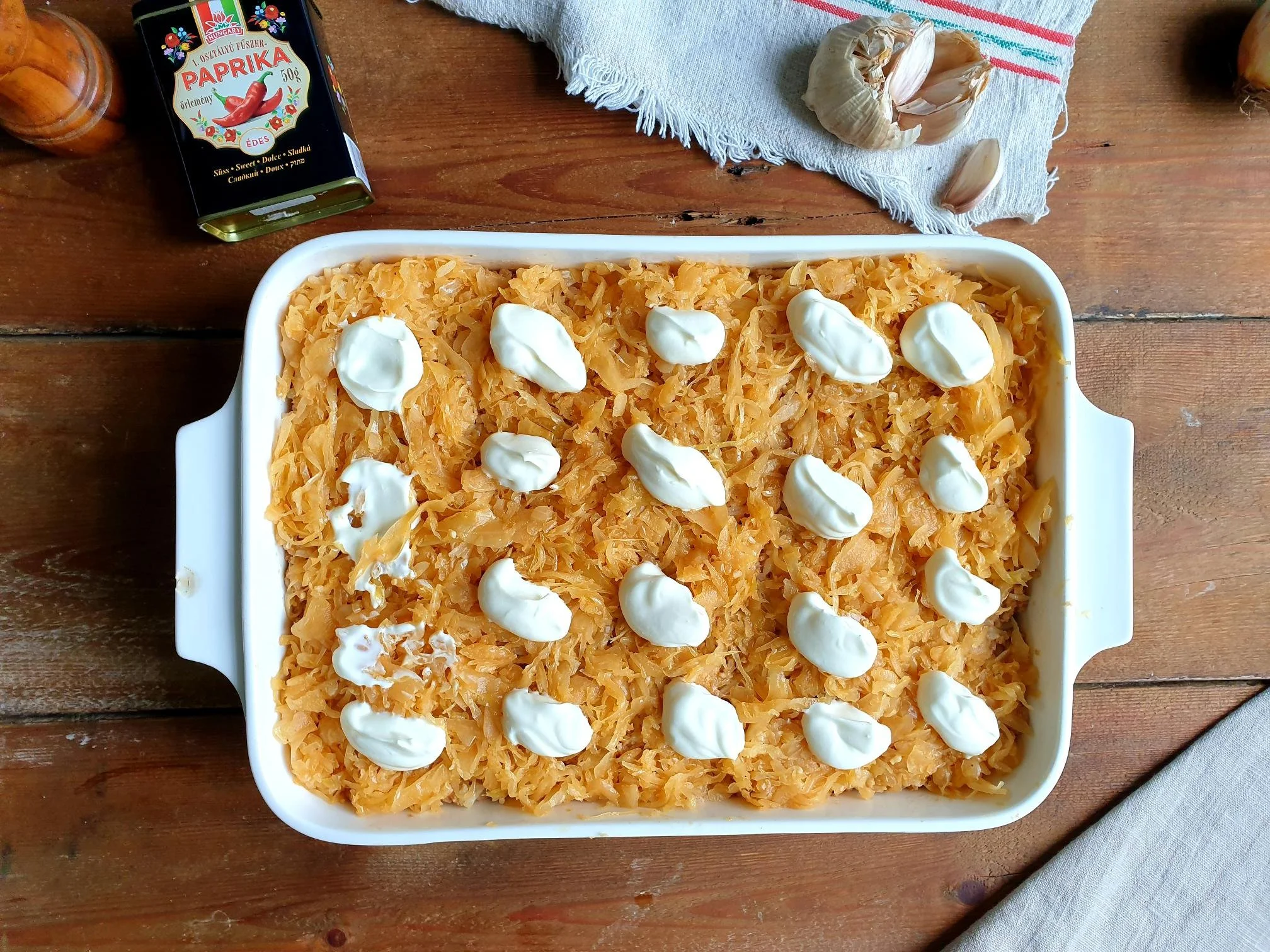
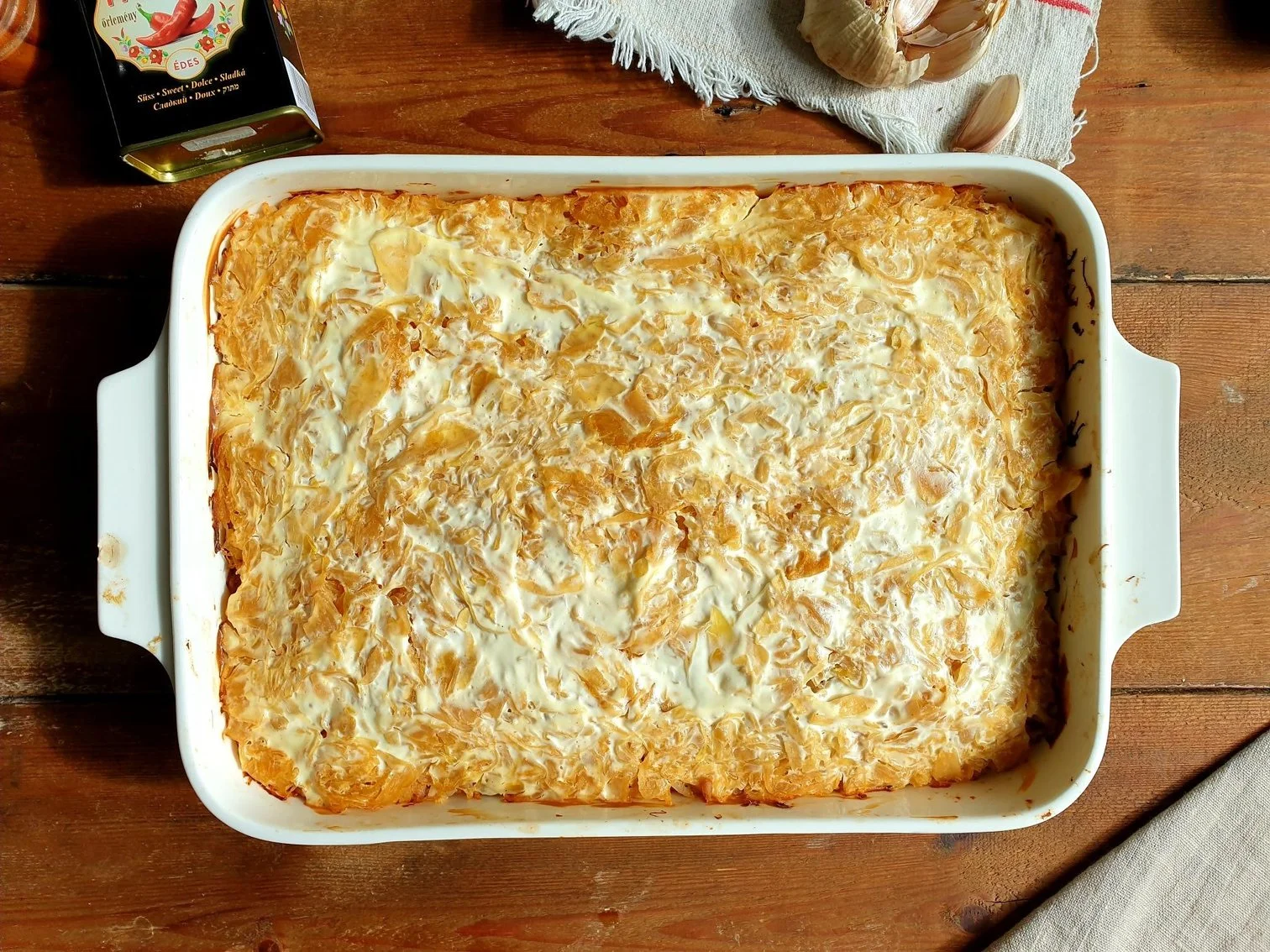
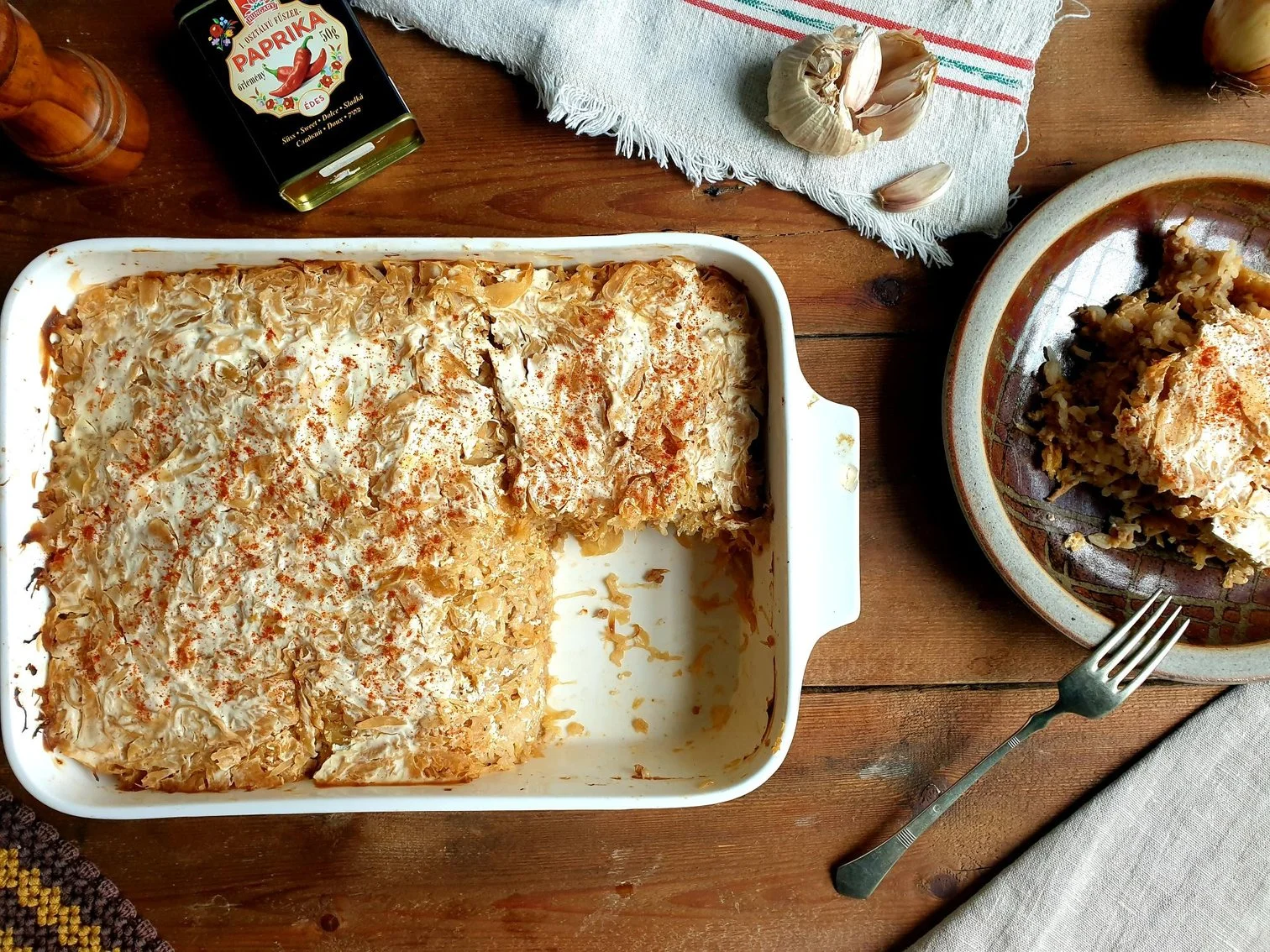
If, on the other hand, sauerkraut is your thing, I need little persuasion to tell you how delicious and unique this comforting casserole is.It is a great make-ahead dish, very rustic, perfect if you want to invite your family and friends and create a very relaxed and informal atmosphere. Put the casserole in the middle of the table with a big serving spoon and let everyone help themselves. The combination of pork meat with smoked sausage, rice and sauerkraut, spiced up with Hungarian sweet paprika, makes this layered oven baked casserole a complete meal in one plate. It is very cosy, rich, filling and warming food for colder months.
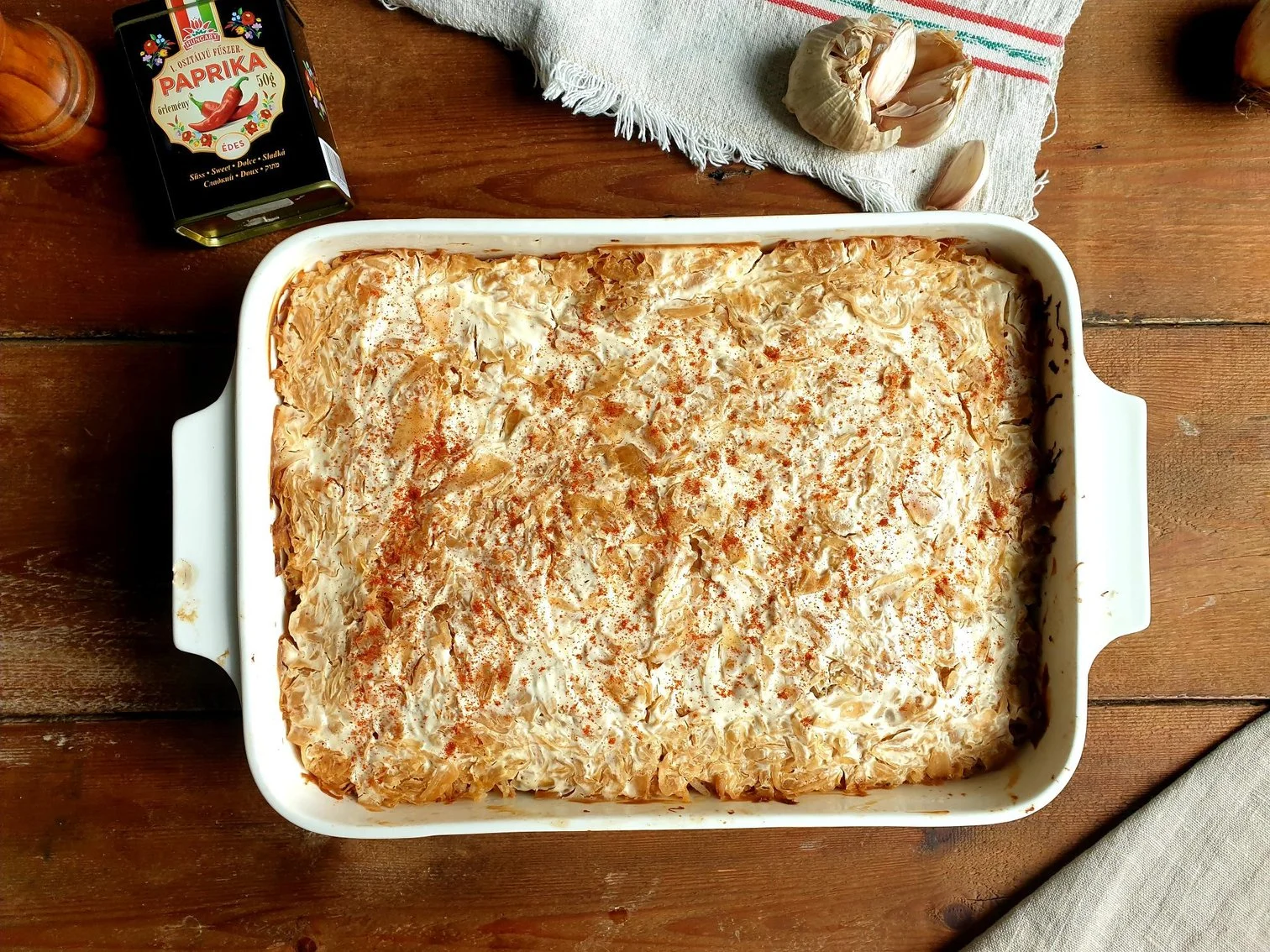
Until quite recently, I honestly thought that this dish was a bit of an invention by my maternal grandmother Ivanka, known as Iva, using leftovers.

I had almost forgotten about this dish, as nobody in the family has made it since she passed away many years ago.

It reappeared in my gastronomic memory the moment I decided to collect and make a list of all the dishes I grew up with, some very popular and some less. I had no name for it. There was no recipe in the family for it, but somehow I remembered very well the smell and aroma it had. I remembered very well the ingredients. I also had vivid memories of how the end result should look and taste.

I sat down with my mum and tried to recreate the recipe with her. Luckily, she remembered it very well, and on this occasion, I made sure it got written down.

Later research revealed that the dish is of Hungarian origin, called rakott káposzta.

The fact that my grandmother cooked this dish made complete sense as Iva was born and raised in inland Slovenia, not too far away from the Hungarian border, where many recipes were of Hungarian origin and influenced the local cuisine.

Soon after the Second World War, she moved, like many others, in search of opportunities and a better life along the Slovenian coast, and brought along with her many recipes that were not so typical for the region.

I am sharing here my grandmother's recipe. She made it with the meat and the rice in separate layer. I, however, mixed the two, only for practical reasons.

If, by any chance, you end up with some leftovers, I can reassure you, this casserole improves with reheating.

Recipe

Ingredients

Serves 6-8

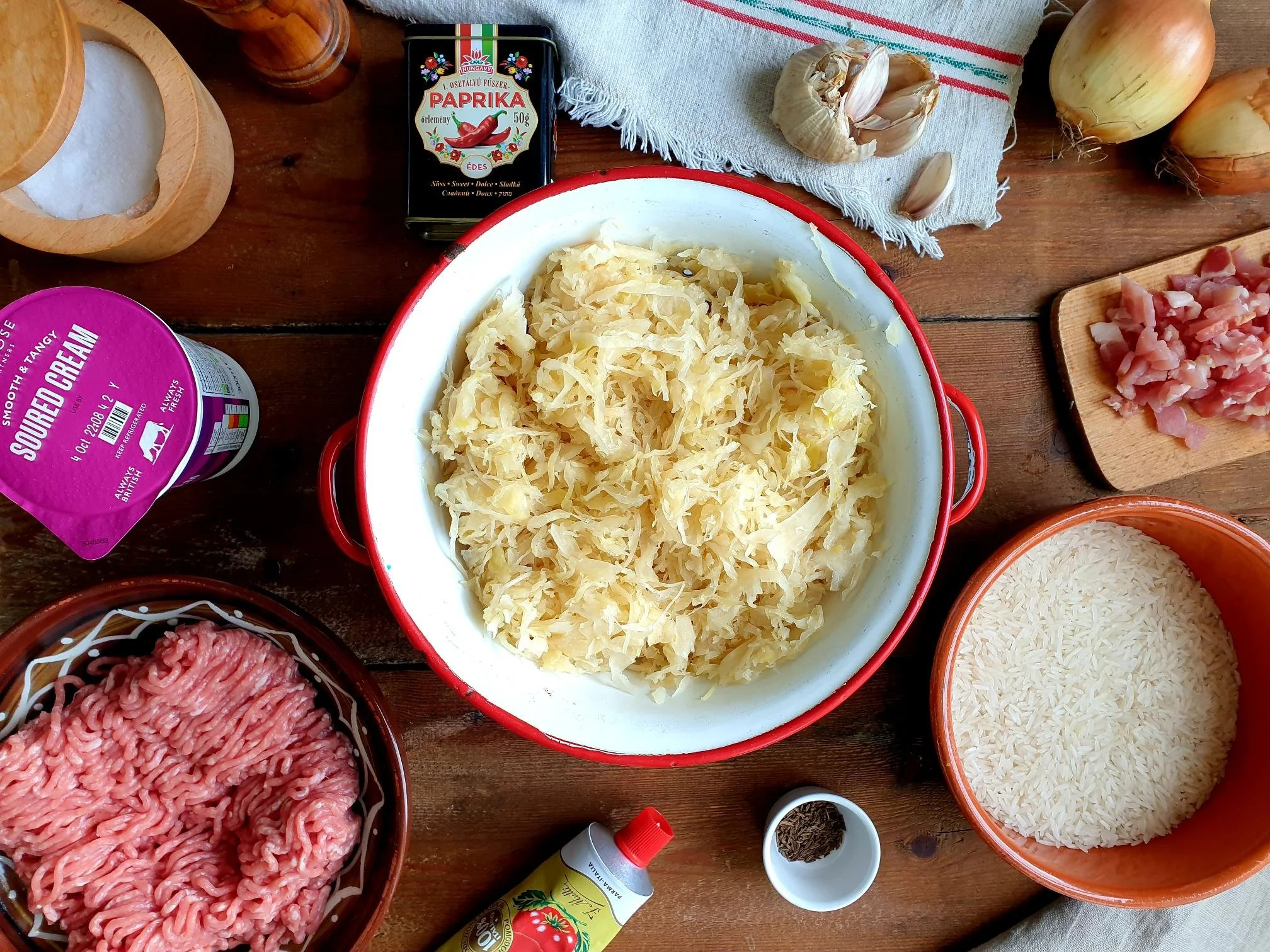
  • 200ml (roughly) sour cream

For the Sauerkraut Layer

  • 1 jar of sauerkraut (drained weight roughly 640g)

  • 2 Tbsp oil, butter or lard

  • 1 onion (about 100g), peeled and finely chopped

  • 2 cloves of garlic, peeled and pressed

  • ¼ Tsp, or to taste, caraway seeds, whole or crushed in pestle and mortar, optional

  • 1 Tsp, or to taste, Hungarian sweet paprika (unsmoked)

  • sea salt, to taste

  • ground black pepper, to taste

    For the meat layer

  • 200g long grain rice

  • 500g minced pork

  • 1 Tbsp oil, butter or lard

  • 1 onion, about 100g, peeled and finely chopped

  • 2 cloves of garlic peeled and pressed

  • 100g smoked or unsmoked bacon or lardons or pancetta, diced (you can use Hungarian smoked sausage or other types of smoked sausage like chorizo, cut into discs and then into smaller pieces)

  • 1 Tbsp, or to taste, Hungarian sweet paprika (unsmoked)

  • 1 Tbsp concentrated tomato paste

  • sea salt, to taste

  • ground black pepper, to taste

Method

Prepare the sauerkraut

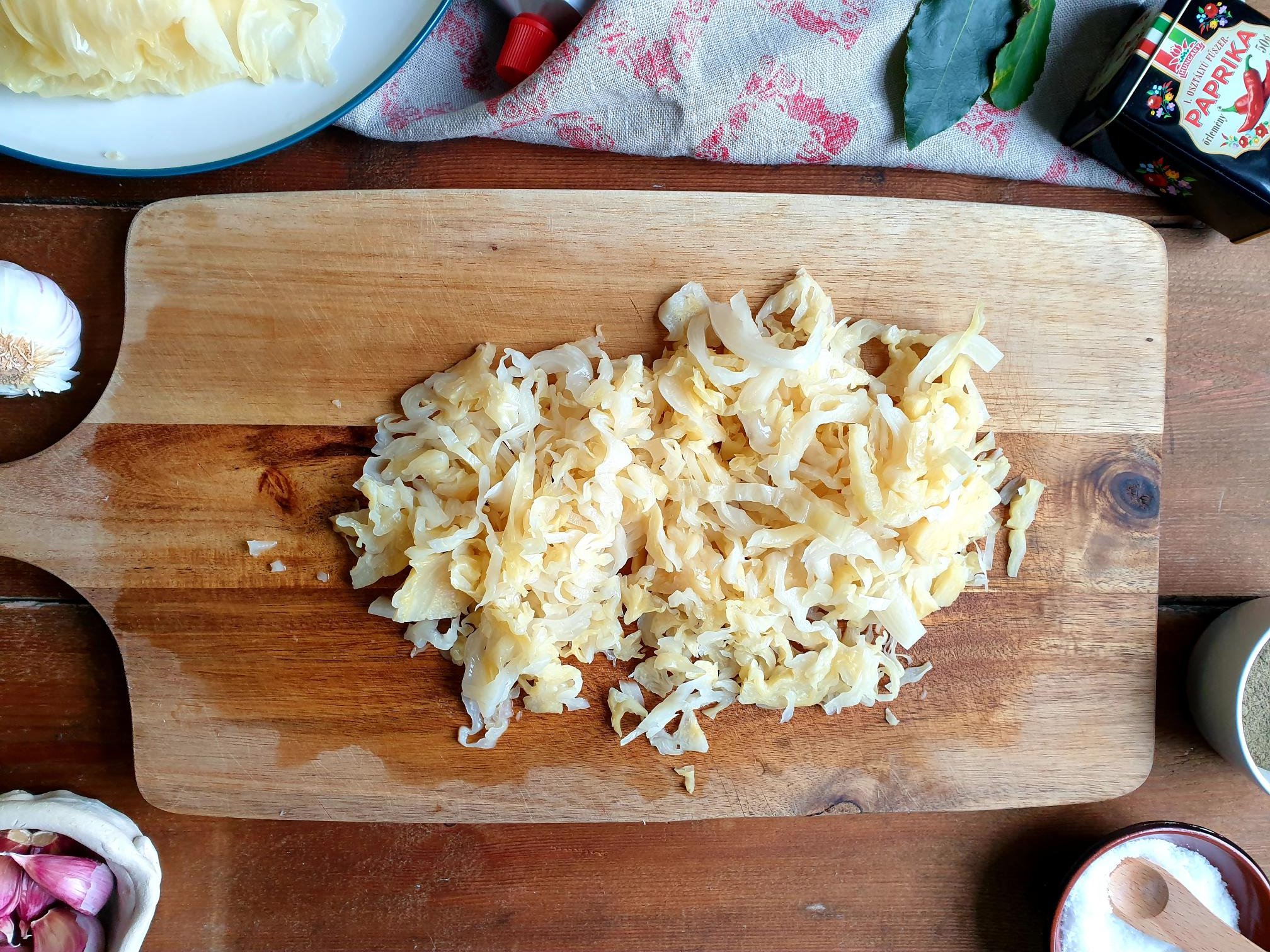
Remove the sauerkraut from the jar and transfer it to a colander to drain.

Quickly rinse once under running cold water, drain well and set aside until needed.

Put the lard (butter or oil) in a saucepan, large enough to accommodate the sauerkraut, and heat it up a bit.

Add finely chopped onions, a pinch of sea salt, and cook on a gentle heat until soft, then add pressed garlic and cook for another a minute or so (try not to burn the garlic).

Stir in sweet paprika, then add drained sauerkraut.

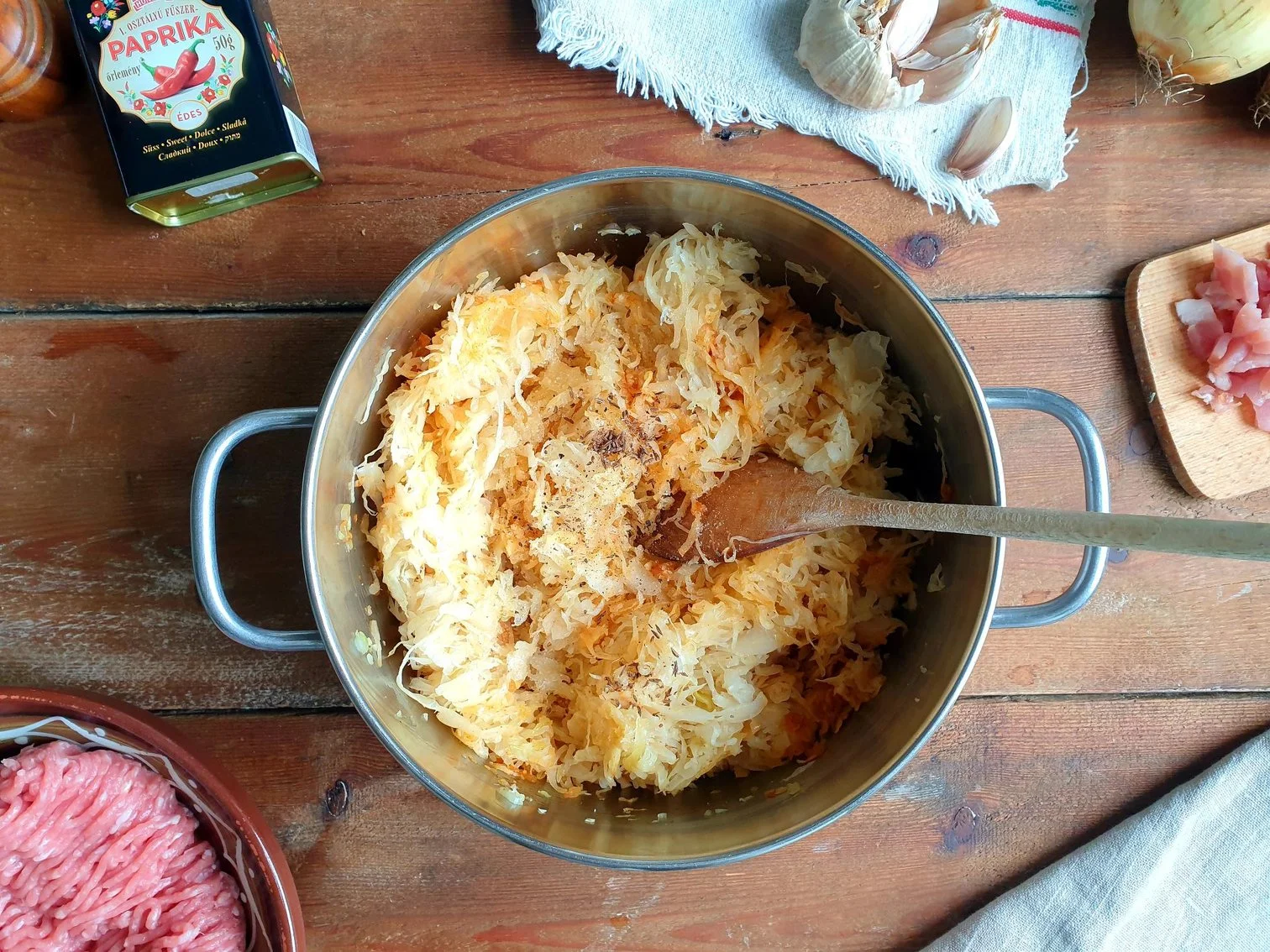
Season with sea salt and ground black pepper to taste and add caraway seeds, if using.

Add water, just enough to cover the sauerkraut, and bring to boil.

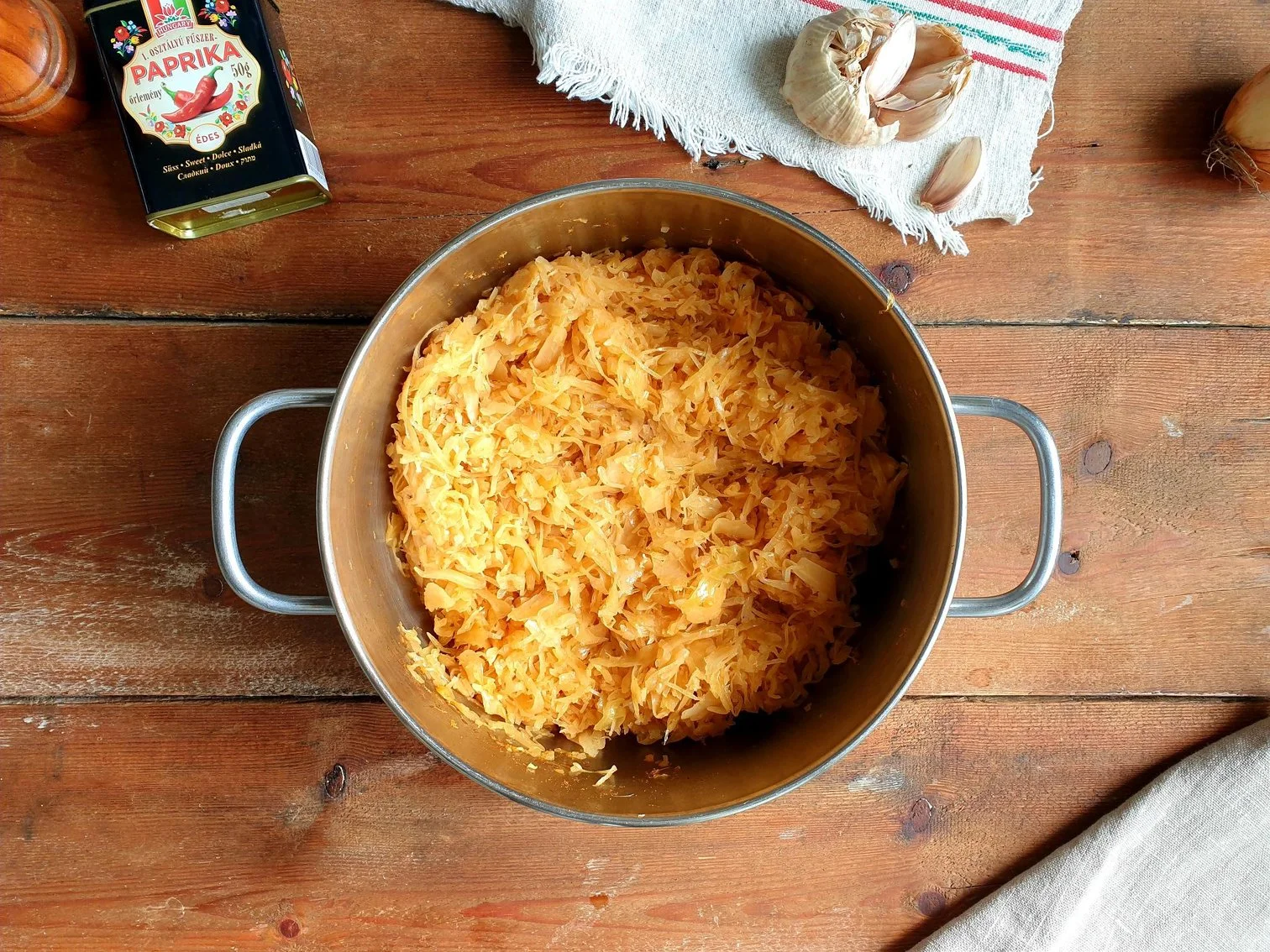
Lower the heat and gently cook the sauerkraut with the lid partially covering the saucepan for about 45 minutes or until all the water has completely evaporated and the sauerkraut appears translucent and glossy.

When cooked, remove from heat and set aside until needed. Remove the lid for the sauerkraut to cool.
View fullsize Hungarian Sauerkraut, Mince pork and rice casserole Recipe 2.jpg
View fullsize Hungarian Sauerkraut, Mince pork and rice casserole Recipe 6.jpg

Prepare the rice and meat

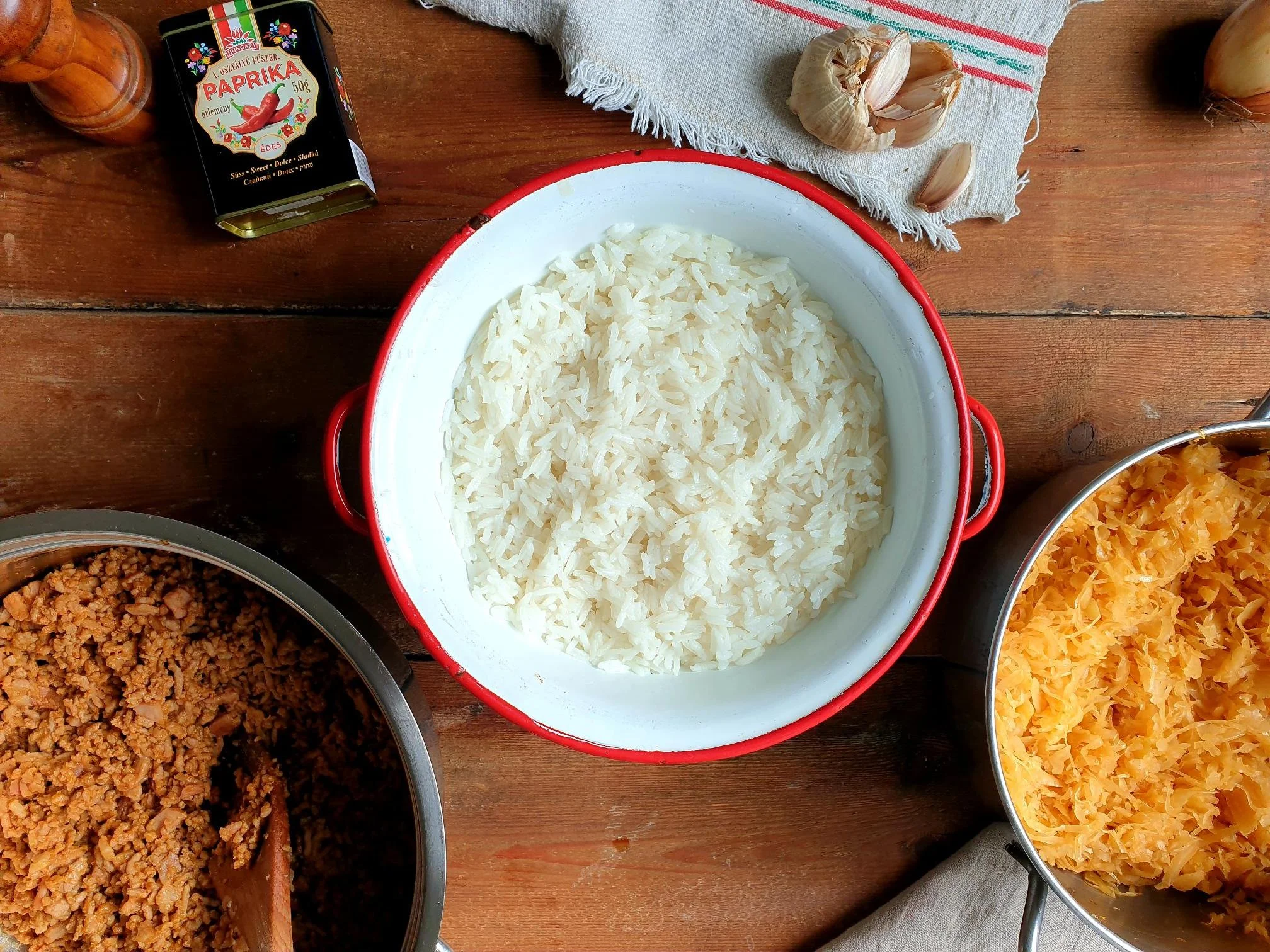
Cook rice as instructed on the package.

Drain and set aside until needed.

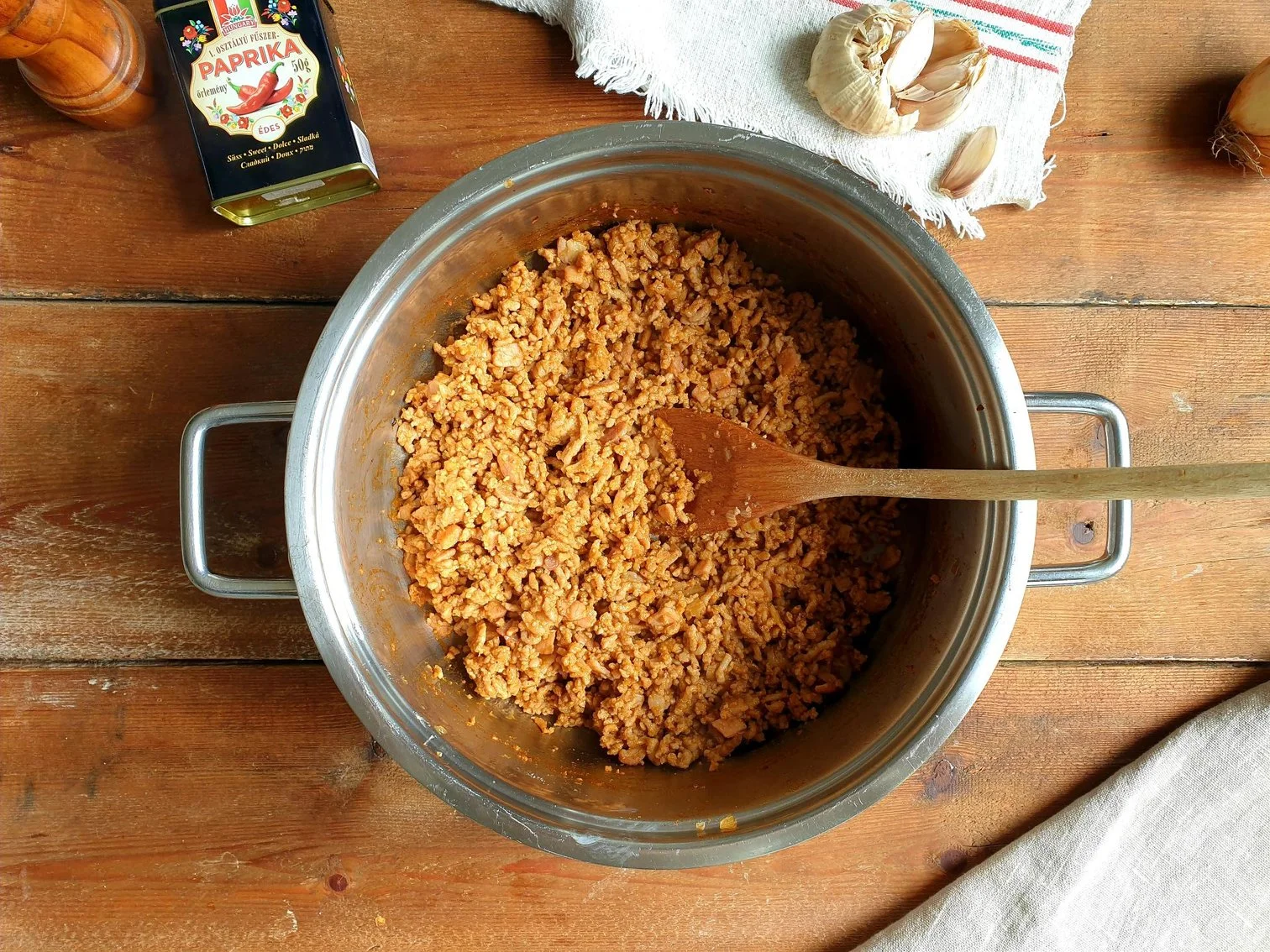
Put the lard (butter or oil) in a saucepan. Heat it up a bit, then add finely chopped onions, a pinch of sea salt, and pieces of bacon, sausage or lardons.

Fry the onions until they become soft, then add pressed garlic and cook for another minute or so, making sure to avoid burning the garlic.

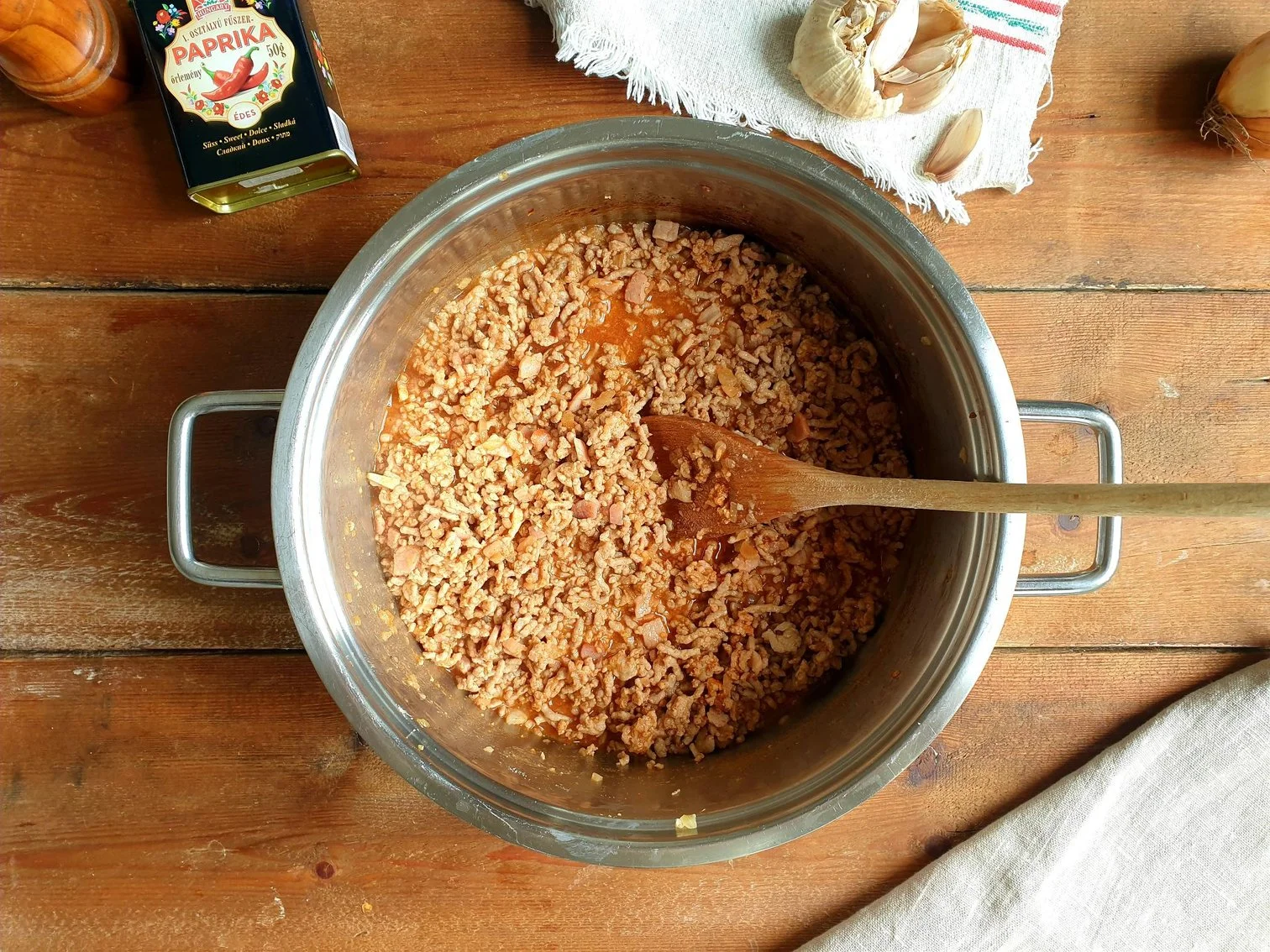
Add minced pork and cook on medium heat until lightly brown in colour.

Add sweet paprika and stir in concentrated tomato paste. Mix well.

Season with sea salt and ground black pepper and add enough water just to cover the meat.

Stir well and cook the meat for about 20 minutes or until all the evaporates and the pork is nice and tender.

When the meat mixture is cooked, remove from heat.

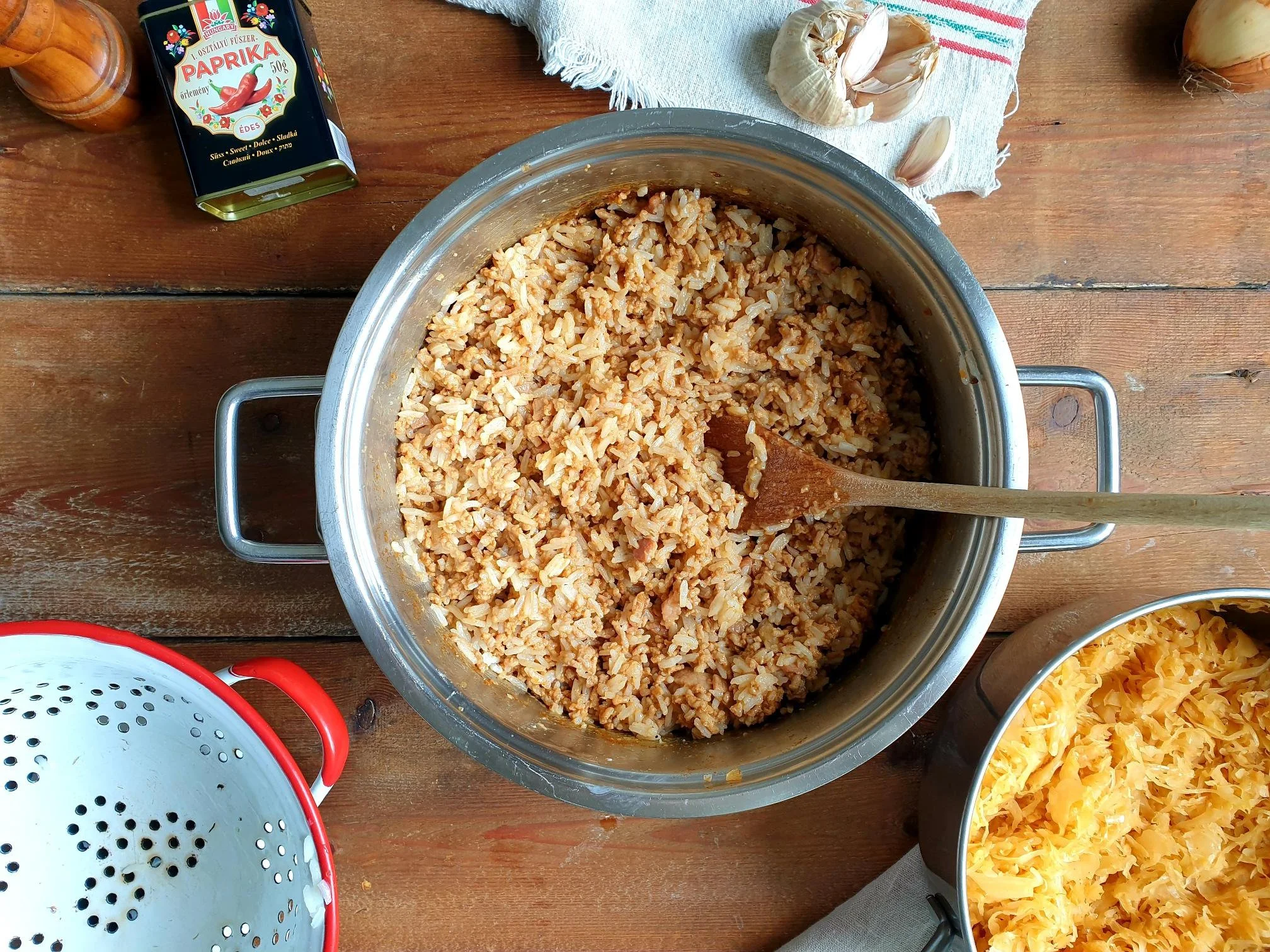
Add cooked and drained rice to meat mixture and stir well.
View fullsize Hungarian Sauerkraut, Mince pork and rice casserole Recipe 4.jpg
View fullsize Hungarian Sauerkraut, Mince pork and rice casserole Recipe 5.jpg

Assemble the casserole

View fullsize Hungarian Sauerkraut, Mince pork and rice casserole Recipe 7.jpg
View fullsize Hungarian Sauerkraut, Mince pork and rice casserole Recipe 8.jpg

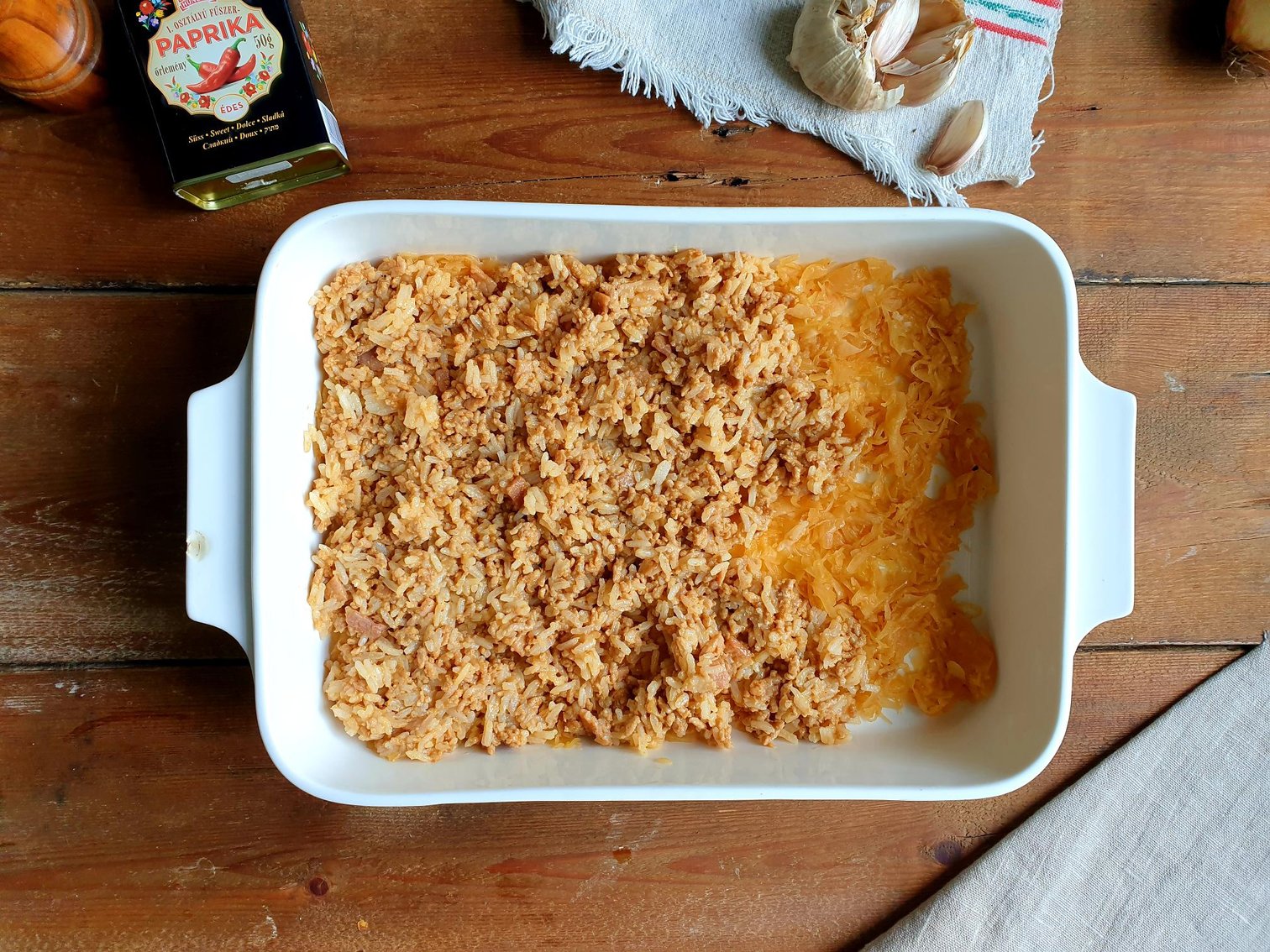
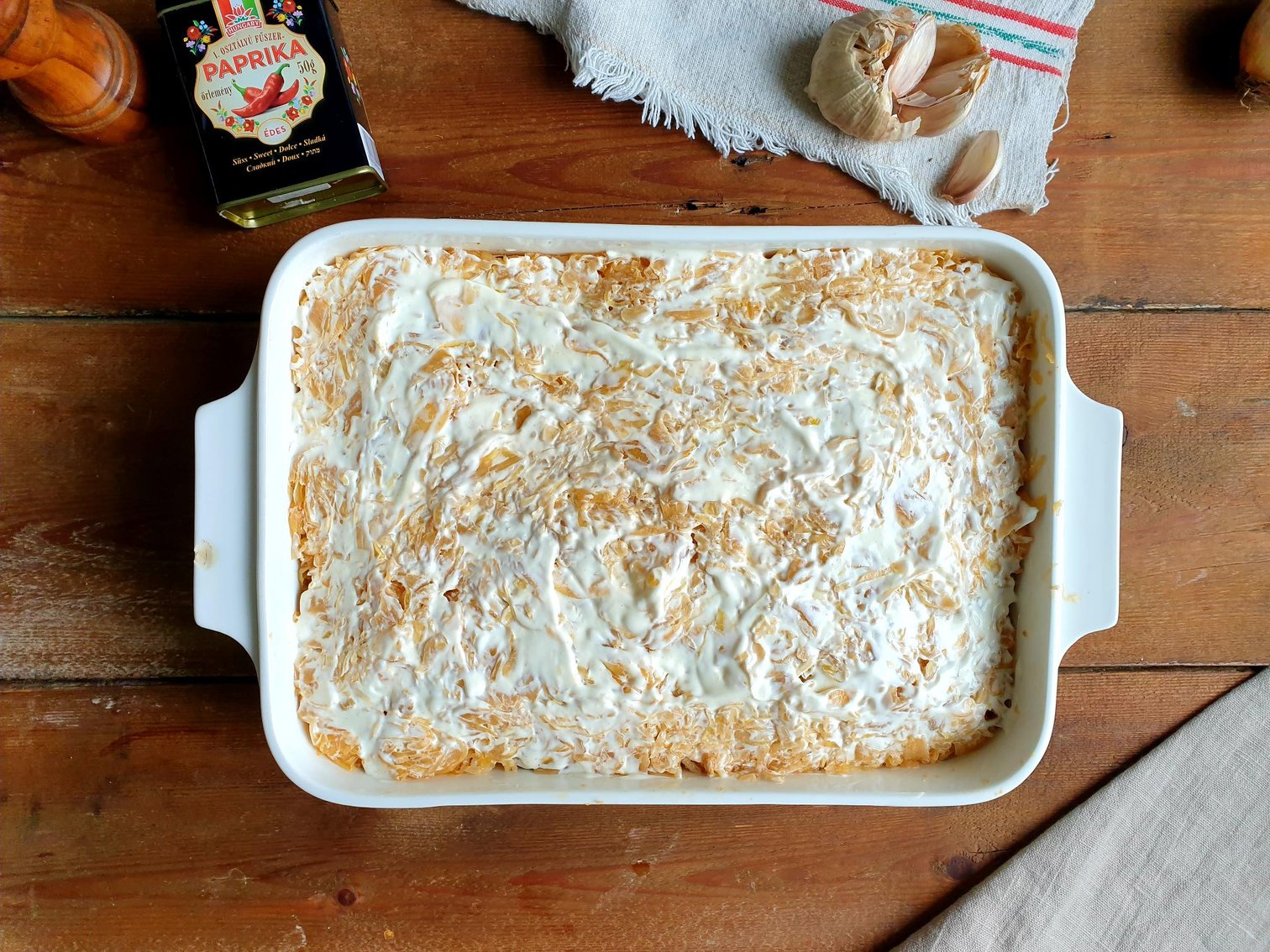
Layer the dish in a large, deep roasting tin roughly 28x20cm in size.

1/3 sauerkraut

½ meat mixture

1/3 sauerkraut

½ sour cream

½ meat mixture

1/3 sauerkraut

½ sour cream
View fullsize Hungarian Sauerkraut, Mince pork and rice casserole Recipe 9.jpg
View fullsize Hungarian Sauerkraut, Mince pork and rice casserole Recipe 11.jpg

Cover with aluminium foil and bake in preheated oven at 200ºC static, or equivalent, for about 20 minutes.

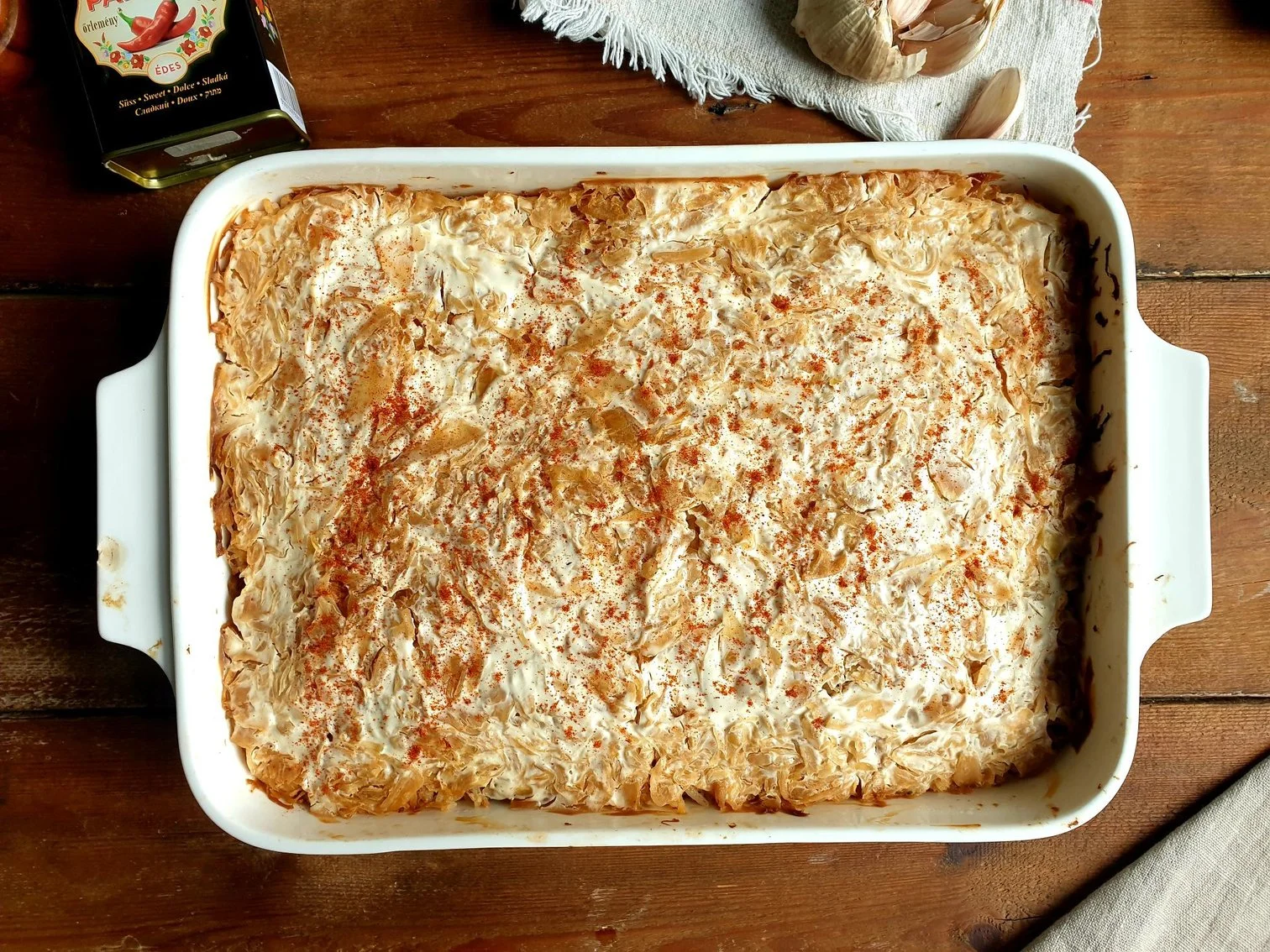
Remove foil and bake for another 25 minutes or until the edges start to brown and the dish is thoroughly heated through.

When baked, remove from the oven and allow the dish to rest for a few minutes.
View fullsize Hungarian Sauerkraut, Mince pork and rice casserole Recipe 12.jpg
View fullsize Hungarian Sauerkraut, Mince pork and rice casserole Recipe 14.jpg

Sprinkle a bit of sweet unsmoked or smoked Hungarian paprika and serve.
January 07, 2026 /tina oblak
sauerkraut, mince pork, Hungarian sweet paprika, unsmoked sweet paprika, long grain rice, smoked bacon, unsmoked bacon, lardonds, pancetta, casserole, baked casserole, layered casserole, oven baked layered casserole, complete meal recipe, warming food
casserole, child friendly dish, child friendly meal, comfort, dinner, Eastern European dishes, Eastern European recipes, Easy recipe, family friendly dish, family friendly meal, Healthy, hearty dish, Hungarian inspired dishes, main course, main dish, main meat course, make ahead, Mitteleuropean cuisine, Mitteleuropean dish, Mitteleuropean food, Mitteleuropean recipes, Rustic dish, simple recipe, Slovenian cuisine, Slovenian food, Slovenian gastronomy, weekend, Winter dish, Winter recipe
1 Comment

Szegedin Goulash – Hungarian style Sauerkraut and Pork meat stew Recipe 

Beans and Sardines
November 09, 2022 by tina oblak in Adriatic Recipe, All year round recipe, Austrian inspired dishes, Autumnal dish, Autumnal recipe, casserole, Central European recipes, child friendly dish, child friendly meal, dinner, Eastern European dishes, Eastern European recipes, Easy recipe, family friendly dish, family friendly meal, hearty dish, Hungarian inspired dishes, Istrian cuisine, Istrian dish, Istrian food, Istrian gastronomy, main course, main dish, main vegetarian course, main vegetarian dish, main vegetarian meal, Meat, Mitteleuropean cuisine, Mitteleuropean dish, Mitteleuropean food, one pot meal, one pot meat recipe, Rustic dish, simple recipe, Slovenian cuisine, Slovenian food, Slovenian gastronomy, stew, supper, Vegan, Vegetarian, Winter dish, Winter recipe

This traditional, Hungarian in origin stew, is flavourful, hearty and comforting, made by slowly simmering sauerkraut with pork  and enriched by adding sweet ground Hungarian paprika and caraway seeds. If you are a lover of a sauerkraut, this stew could not be more perfect during colder months,  and it can easily become a vegetarian and vegan friendly dish, just by omitting the meat , however, Rosl Philpot in her book, Viennese Cookery, Hodder and Stoughton Limited 1965, indicates that this dish, “It's definitely not for dainty appetites, nor for those who dislike Sauerkraut”. 

Although this particular type of goulash is well known and famous in Hungary, it is also very popular in Germany and Austria, where it is called Szegedinergoulash,  and in all the other countries that were once part of the Austro-Hungarian Empire, including Slovenia, where this stew has established itself, and it is a very much loved dish and simply called Segedin. 

It is cooked, up and down the country with slight variations, mainly in households, although it is sometimes found on the menus in more informal family run restaurants where more rustic dishes are served. 

Variations of this stew could include the use of smoked or unsmoked lardons or sliced bacon which is fried together with the onions and the garlic and sometimes all-purpose flour would be used to thicken the stew. 

The origin of this dish is disputed and it is believed that the stew was originated in the Hungarian town of Szeged, hence the dish is called 'Szeged goulash,' the other theory leads us to believe the legend that says that the dish was accidentality invented  by the famous 19th century Hungarian poet, lawyer, and journalist  Jozseff Székély, and consequently the name of the dish could also be called Székelygulyása or  Székely Gulyás.  

The legend says the poet once walked into a guest house where he was told, due to late hours, they only had some sauerkraut and some cooked meat left. He ordered them to mix the two together and to heat it up, and this is how the sauerkraut goulash was born. 

I simply love this stew and grew up with it. My mum would always make a huge pot of it, ideally a day in advance, so all the flavours can mix well and absorb. This dish has such a distinctive aroma that when I was coming home from school, I could smell it even before I walked through the door. I knew very well that I would soon be having a very warm, comforting meal, especially welcome on cold days.   

This is an old peasant food at its very best and I am sharing here my mother's recipe. 

Recipe

Ingredients 

  • 4 Tbsp olive oil or vegetable oil 

  • onions (about 200g), peeled and finely chopped 

  • 3 cloves of garlic, peeled and crushed 

  • about 500g pork shoulder or pork shoulder steaks, trimmed off excessive fat and diced 

  • 1 jar of sauerkraut (about 650g drained sauerkraut) Taste the sauerkraut before cooking it, if too acidic for your liking, put it in a colander and give it a quick rinse under cold running water. 

  • 1 bay leaf, fresh or dry 

  • 1 Tbsp sweet ground Hungarian paprika, or to taste 

  • 1 Tbsp tomato paste 

  • ¼ Tsp caraway seeds, crushed in pestle and mortar (can use whole caraway seeds if you do not have pestle and mortar) 

  • 5 black peppercorn or juniper berries 

  • sea salt 

  • black ground pepper 

  • sour cream, for serving, optional 

Method 

Put the oil in a fairly large pan, stewing pot or casserole dish. Add finely chopped onions, crushed garlic, a pinch of sea salt and cook, on a medium-low heat stirring occasionally,  until golden in colour and soft. 

Add diced pork and brown the meat on all sides. 

View fullsize Segedin 2.jpg
View fullsize Segedin 3.jpg

Lower the heat and add sauerkraut, bay leaf, sweet paprika, tomato paste, crushed caraway seeds, peppercorns or juniper berries, a pinch of sea salt and a pinch of ground black pepper. 

Add enough water to completely cover the sauerkraut and pork, stir with a wooden spoon. 

View fullsize Segedin 5.jpg
View fullsize Segedin 6.jpg

Bring to a boil, partially cover with the lid and gently simmer for about two hours, giving it a little stir now and again. 

Sauerkraut and pork meat stew is ready when you achieve the desired consistency, most of the liquid should evaporated but you should not end up with a dry dish. 

If you think the stew is too thick simply add some more water. If on the other hand you like your stew thicker cook further without the lid. 

Serve hot with mashed potatoes, cooked rice, bread dumplings, fried potato gnocchi crescents, boiled or oven roasted potatoes or simply with some nice rustic crunchy bread. 

Just a thought 

For this stew you can use different quantity of meat and sauerkraut, it really is a question of preference, you cannot get the recipe wrong. 

Sauerkraut and pork meat goulash will keep well in the fridge in the airtight container for up to four days and is suitable for freezing. 

If serving with a dollop of sour cream do that just before serving. 

Wine suggestion

Cannonau di Sardegna Riserva DOC “Senes” 2017 - Argiolas

November 09, 2022 /tina oblak
sauerkraut, Szegedin Goulash, Szegedinergoulash, sauerkraut stew, vegan sauerkraut stew, vegetarian sauerkraut stew, sweet ground Hungarian paprika, caraway seeds, sour cream, pork meat, pork shoulder
Adriatic Recipe, All year round recipe, Austrian inspired dishes, Autumnal dish, Autumnal recipe, casserole, Central European recipes, child friendly dish, child friendly meal, dinner, Eastern European dishes, Eastern European recipes, Easy recipe, family friendly dish, family friendly meal, hearty dish, Hungarian inspired dishes, Istrian cuisine, Istrian dish, Istrian food, Istrian gastronomy, main course, main dish, main vegetarian course, main vegetarian dish, main vegetarian meal, Meat, Mitteleuropean cuisine, Mitteleuropean dish, Mitteleuropean food, one pot meal, one pot meat recipe, Rustic dish, simple recipe, Slovenian cuisine, Slovenian food, Slovenian gastronomy, stew, supper, Vegan, Vegetarian, Winter dish, Winter recipe
Comment

Sarme - Pickled cabbage leaves stuffed with minced meat and rice in a light tomato sauce

Beans and Sardines
March 11, 2022 by tina oblak in Adriatic Recipe, Austrian inspired dishes, Hungarian inspired dishes, Autumnal dish, Autumnal recipe, Celebratory dish, Central European recipes, dinner, Eastern European dishes, Winter recipe, Winter dish, stew, Slovenian gastronomy, Slovenian food, Slovenian cuisine, Rustic dish, one pot meal, main dish, stuffed dishes, Mitteleuropean dish, Mitteleuropean cuisine, Mitteleuropean food

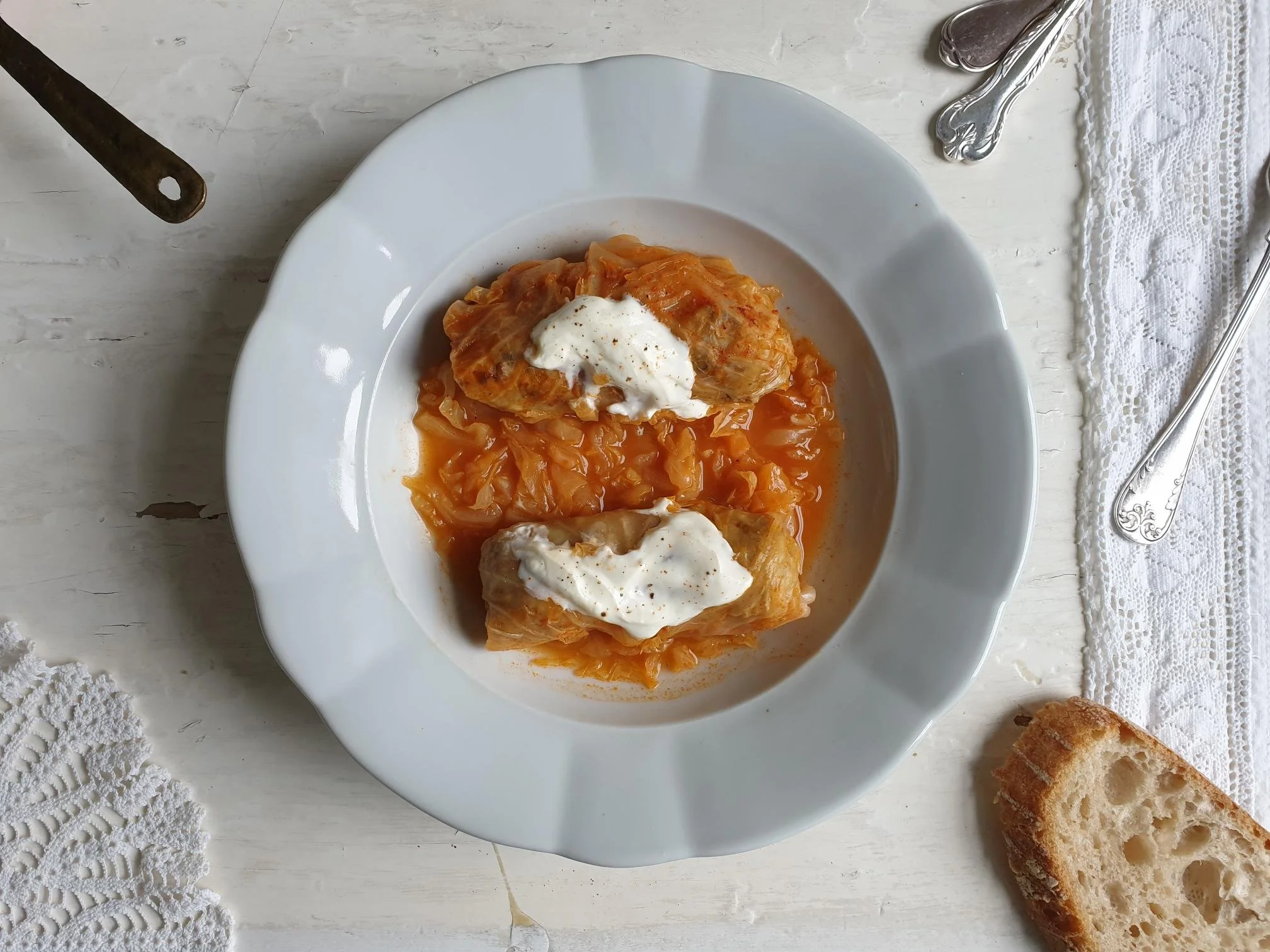
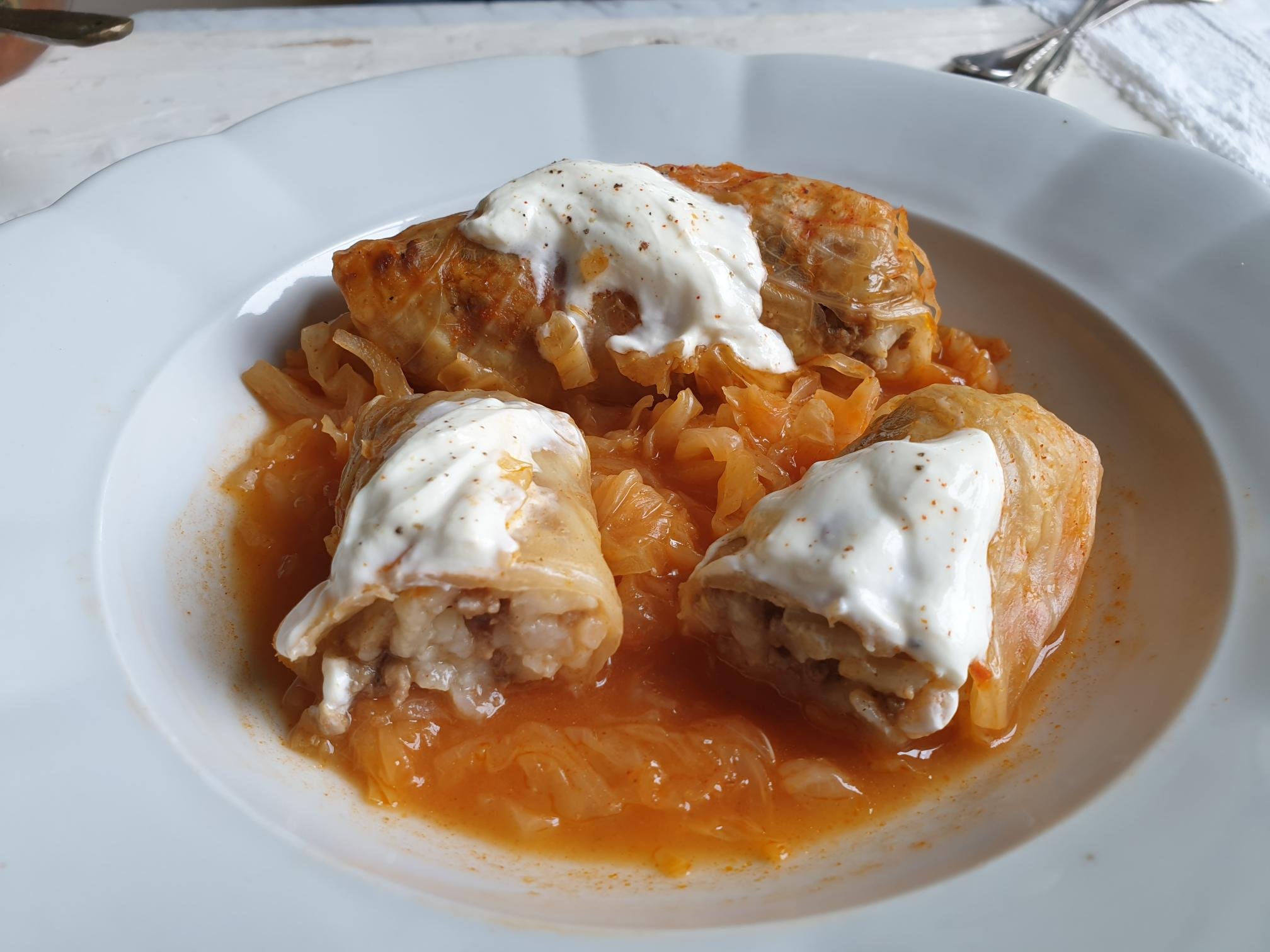
Sarme, which is a plural form of sarma, but also holding the name of the dish, is made of a mixture of minced meat and white rice wrapped in pickled cabbage leaves, and then slow cooked on a bed of shredded sauerkraut in a light tomato sauce.

This dish takes a special place in my recipe collection for comfort food, it is easy to make, hearty and satisfying, especially popular during colder months, it will wrap you in warmth like a woollen blanket. It used to be commonly served for lunch or dinner during the holidays and special occasions but nowadays it is also eaten as midweek meal.

Taking into account the historical context, it is quite clear, that Sarma probably originated in Turkey (the name sarma derives from a Turkish word sarmak, meaning to roll) and belongs to the dolma food family (stuffed dishes) spread in the cuisines in territories of the former Ottoman Empire from the Middle East to the Balkans and Central Europe, but like with most dishes, different places developed different versions of the same basic recipe.

When I first arrived to England, I was quite nostalgic about this dish as I could not find the whole sauerkraut head to buy. When my mother visited me she would buy it back home for me, put it in a suitcase and bring it with her on a plane. We would then prepare and cook sarme together. In Slovenia, where I come from, it is quite common to pickle large quantities of cabbage heads and buy them in the supermarkets in plastic bags or on farmer's markets directly from barrels available to make sarme during the winter.

View fullsize Sarme 1.jpg
View fullsize Sarme 3.jpg

In the family this dish would very often be made for big family gatherings in a big batch with the hope that some of it could be frozen and taken out on a lazy day, but that almost never happened!

I am Sharing here a version of sarme my maternal grandmother and my mother always cooked. It is highly recommended to make ahead as it tastes even better the following day, and serve sarme with mashed or boiled potatoes, or crusty bread and a dollop of sour cream on top.

It is very common to add in a pot of simmering sarme some lardons, bacon (thick cut), pancetta or pork ribs, smoked or unsmoked, this will give an additional meaty taste to the dish.

If you live in the UK and happened to watch on the television Rick's Steins Long Weekends short holiday and cooking series a few years ago, this dish was prepared for him in Vienna and described by him as one of his absolute favourites of all his long weekend programmes.

Ingredients

Serves 4-6 (about 12 rolls)

  • 1 pack of whole pickled cabbage head (you will find this on line or European delicatessens, especially Polish in the chilled section)

  • 250g minced beef

  • 250g minced pork

  • 100g white rice

  • 1 onion (about 100g), peeled and finely chopped

  • 2-3 cloves of garlic, peeled and crushed

  • 3 Tbsp olive oil

  • sea salt

  • ground black pepper

  • 2 bay leaves, fresh or dry

  • 2 Tbsp tomato concentrate

  • 1 Tbsp (or to taste) sweet Hungarian paprika

  • 1-2 Tbsp all purpose flour

  • sour cream for serving, optional

Method

The filling

Place the rice in a pan and cover with plenty of water.

Cook the rice as instructed on the pack, but cut the cooking time in half, as you only want the rice to be part-cooked.

Drain the rice in a colander and let it cool completely.

Put the oil, finely chopped onions and crushed garlic in a frying pan and sauté on a gentle heat until the onions become nice and soft.

Turn the heat to medium, add minced beef and pork, season with sea salt and black pepper and cook for about 20 minutes until the meat is browned.

Remove the frying pan from the heat, set aside and cool completely.

When both the rice and the meat mixture are cooled completely, put them in a bowl and mix them well together.

This is now your filling ready to fill the cabbage leaves.

Prepare the cabbage leaves for stuffing.

View fullsize Sarme 4.jpg
View fullsize Sarme 5.jpg

Carefully unpeel the leaves from the whole pickled cabbage head and gently open them up without breaking them. This is quite important so you do not have breakage and holes in the leaves, as the filling might come out once rolled. If you end up damaging quite badly the leaf, do not worry about it, just thinly shred it and use it later as a part of a sauce.

You will only need bigger and medium size leaves that come off the head quite easily. How many leaves you can obtain it really depends on the size of the whole pickled cabbage head (from the medium size cabbage head you should get around 12 leaves, this is the amount I used for this recipe).

View fullsize Sarme 8.jpg
View fullsize Sarme 9.jpg

Once you peel off the leaves, you will end up with smaller inner cabbage head. Shred it with a sharp knife and set aside, this will be part of your sauce later on.

Place each leaf on a chopping board and cut out the thick and hard part of the stem, this will allow you to roll the leaf easily.

View fullsize Sarme 10.jpg
View fullsize Sarme 11.jpg

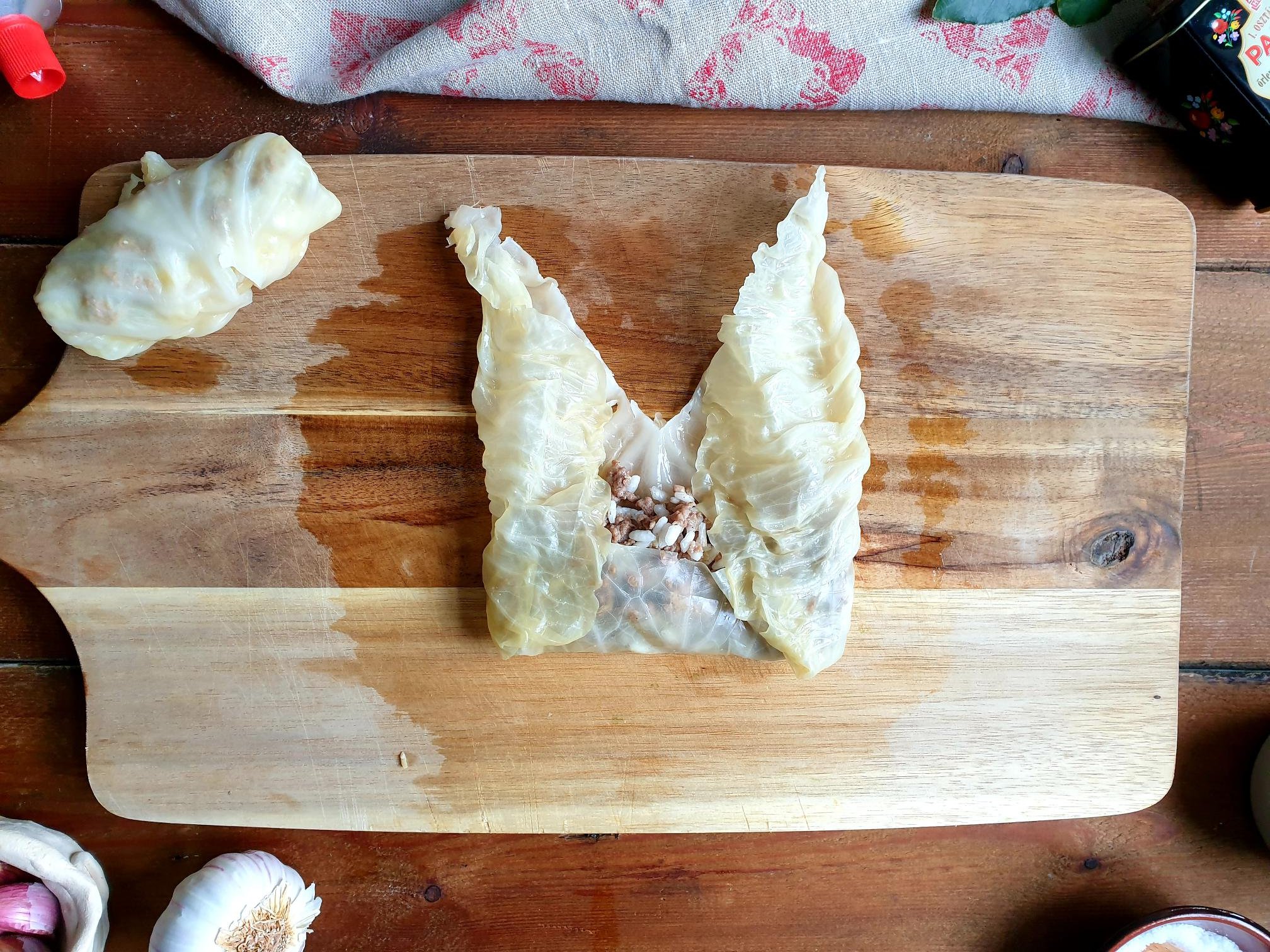
Take one leaf, place it on a working surface and spoon the filling on the edge of each leaf. It is tricky to give the exact amount, maybe 3 Tbsp for bigger leaves and a bit less for smaller leaves. You really want to use a bit of judgement here and just put the amount of filling you think the size of the leaf you are using can hold.

First fold inwards (away from you) the leaf section.

View fullsize Sarme 15.jpg
View fullsize Sarme 16.jpg

Then fold over the two flaps on the side. Then you simply roll forward until you get a cabbage roll.

View fullsize Sarme 17.jpg
View fullsize Sarme 18.jpg

Set aside the rolls and keep repeating the process until you use up all the leaves.

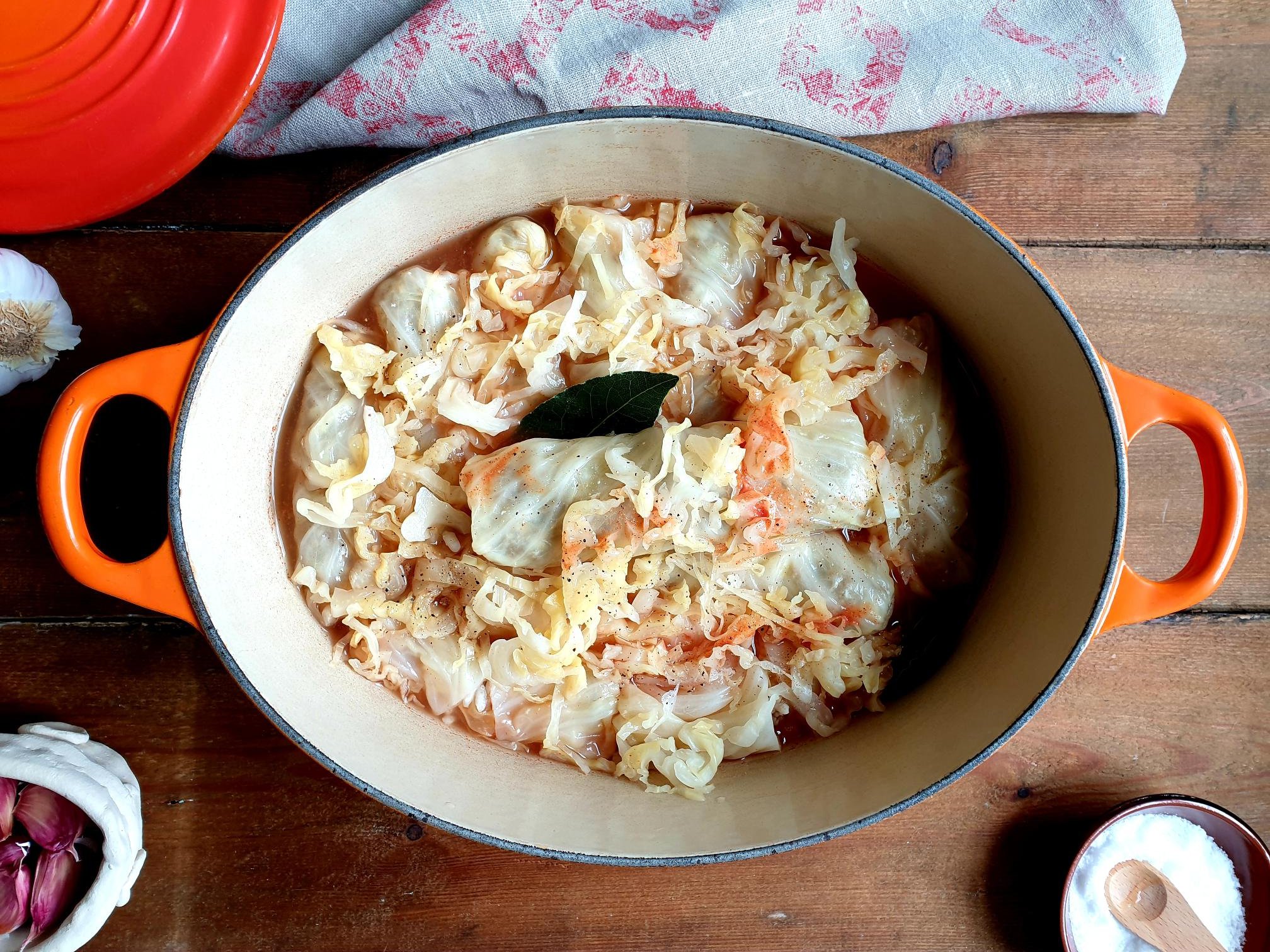
Put half the shredded pickled cabbage over the base of a fairly large casserole dish or pan with a lid.

Place and arrange the stuffed leaves, fold-side down, next to each other, nice and tightly.

Scatter the other half of shredded cabbage on top of the rolls.

View fullsize Sarme 20.jpg
View fullsize Sarme 21.jpg

Add a bit of water, about half way to 1/3 way up the dish.

In a small cereal bowl put the flour, few tables spoons of lukewarm water and mix well to avoid lumps.

Add sweet paprika, tomato paste and mix.

Pour the mixture over the stuffed leaves.

Stick 1 or 2 bay leaf between sarma, add sea salt and black pepper.

Cover with the lid and gently simmer for about 2 hours. It is important not to stir and keeping the gas on a fairly low as high heat might cause aggressive boil causing the rolls to open up and break. Just shake the pot gently a few times during the cooking process.

If after two hours you think the sauce is too watery just dissolve 1 Tbsp of flour in a bit of lukewarm water, pour it in the pot and continue simmering. This should thicken a bit the sauce.

Taste and adjust the seasoning with sea salt and black pepper.

Lift the cabbage rolls gently out of the pot, with the help of the spoon and a fork and serve warm with mashed or boiled potatoes or plenty of crunchy bread to soak up the juices.

For extra flavour top the rolls with a dollop of sour cream.

Just a thought

Sarme will keep in the fridge up to 3-4 days in an airtight container.

The dish also freezes very well, but before using it, defrost in the fridge overnight and reheat well.

Wine suggestion

Venezia Giulia Malvasia Istriana IGT 2017 - Damijan Podversic

March 11, 2022 /tina oblak
Sarma, Sarme, sauerkraut, Sauerkraut recipe, minced meat, mince pork, mince beef, rice, shredded sauerkraut, pickled cabbage leaves, hearty dish
Adriatic Recipe, Austrian inspired dishes, Hungarian inspired dishes, Autumnal dish, Autumnal recipe, Celebratory dish, Central European recipes, dinner, Eastern European dishes, Winter recipe, Winter dish, stew, Slovenian gastronomy, Slovenian food, Slovenian cuisine, Rustic dish, one pot meal, main dish, stuffed dishes, Mitteleuropean dish, Mitteleuropean cuisine, Mitteleuropean food
Comment