Beans and Sardines

  • Home
  • About
  • Recipe of the week
  • Recipes
  • Wines
  • Contact

Hungarian style Creamy Potato and Beef Goulash Soup Recipe

Beans and Sardines
February 23, 2022 by tina oblak in Appetizers, Autumnal dish, Autumnal recipe, casserole, Central European recipes, dinner, Eastern European recipes, Easy recipe, entrée course, main course, main dish, Mitteleuropean recipes, one pot meal, Slovenian cuisine, Slovenian food, Slovenian gastronomy, Starters, stew, supper, Vegan, Winter dish, Winter recipe, winter soup, Hungarian inspired dishes

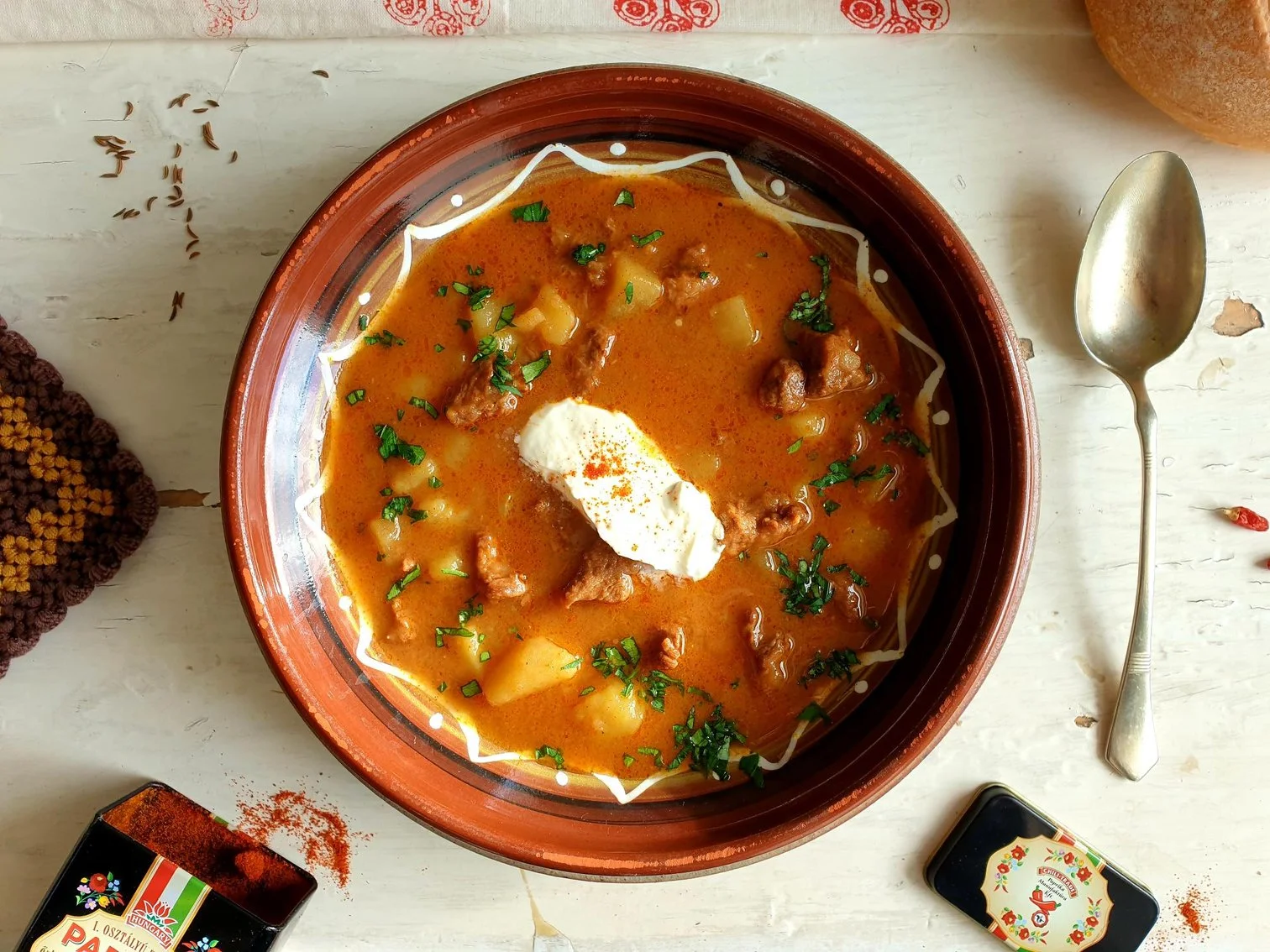
This soup, warm, wholesome, and rich in flavour, can be used as a main meal, especially on those cold days when it will be much appreciated. It is made with only a few simple ingredients, and when cooked well and simmered slowly, it makes a perfect meal choice for body and soul, it is also quite filling, so there is no need to plan a main course.

This Hungarian soup, Gulyásleves, is generally made of beef, vegetables, ground paprika and other spices, but originates from a dish, a thicker stew (what is commonly known as beef goulash) that was cooked outside in the cauldron over an open fire, by the cattlemen, the Hungarian cowboys, who camped with their cattle in the Great Hungarian Plain.

This dish, although native to Hungary, became very popular in the countries around Hungary, which, like in most cases, gave a little twist to the original recipe, and is the origin of variety of new regional variations.

For example in Austria, where this dish is called Goulaschsuppe, it is common to cook this soup without its meat component, which makes a fantastic vegetarian and vegan friendly meal.

In Slovenia, where I come from however, this soup (called kromprjev golaž) which is a real crowd pleaser and became part of Slovenian food culture, testimony of the strong presence of the Austro-Hungarian Empire in the the territory, is almost always cooked with the meat component, where beef can be substituted by dry meats, i.e. some sort or sausages (smoked varieties are often used for a deeper, smokier, and more “imperial” flavour).

In Slovenia, like in Italy (mountainous parts of some regions like of Trentino-Alto Adige, Veneto and Friuli-Venezia Giulia bordering with Austria), this soup is generally served in the informal mountainside restaurants to the delight of hikers and skiers, as well as cooked in the households.

This seriously delicious one pot meal is quite nostalgic for me and reminds me of my childhood. It was served in the school canteens for lunch, and what were called 'dinner ladies, cooked the soup from scratch with fresh ingredients, and the aroma would travel around the school, into the classrooms, destructing the minds of us children struggling with some impossible maths sexercises, especially when approaching lunch time, when you could hear growling in the little tummies.

The soup would be followed by the Austrian inspired pudding, Buchteln, sweet yeast buns filled with apricot jam. This is the type of lunch, among many others, we children really looked forward to...

When I moved to England, goulash soup is one of those dishes, which for some strange reason has been a bit forgotten, and it was not until our skiing trip to Austria, when I saw this soup on the menu that all my childhood memories suddenly came back to me, this is what food does...

As soon as we got back to England I cooked this wonderful tasting goulash soup, it was a hit. I have been making it on a regular basis since then, and I will most definitely make sure this time it stays on the menu.

It is just so hearty, comforting and cosy, the whole family loves this one pot soup and it is cooked very often for my husband and my son who simply adore it. When I serve it, we get transported to the skiing memories we created together as a family, and the table conversations would start ....

I am sharing here a family recipe how my maternal grandmother used to make it, and how my mother still makes it. If you never had this soup before, try it and it will become one of your favourites, and all you need to serve the soup with is a nice rustic bread to dunk it, yes .... this is 'home' for me...

Ingredients

Serves 4

  • 4 Tbsp extra virgin olive oil

  • 3 medium size potatoes (about 500g) peeled and chopped into small cubes

  • 1 onion (about 120g) peeled and finely chopped

  • 1 clove of garlic, peeled and crushed

  • 2 Tbsp Hungarian sweet paprika

  • 2 Tsp red or white wine vinegar

  • 2 Tbsp tomato purée

  • 1 Tsp fresh marjoram (a few springs) finely chopped, (can use dry marjoram)

  • 3 Tsp caraway seeds, crashed with mortar and pestle (can use spice or coffee grinder)

    whole caraway seeds can be used if you have none of the above ways to ground the seeds

  • 400-500g braising steak or shin of beef, trim any hard fat off the beef and dice finely

  • sea salt

  • black pepper, freshly ground

  • 2 fresh or dry bay leaves

  • 2l water or vegetable stock

  • sour cream (optional)

  • fresh flat leaf parsley, roughly chopped, for garnish (optional)

Method

Put the oil in a fairly large pan, add chopped onions, crushed garlic, a pinch of salt and gently sauté until the onions are soft and translucent.

Pour wine vinegar and cook for a minute or so stirring the onion and garlic mixture. The vinegar will help to deglaze and release any bits stuck to the bottom of the pan.

Add diced beef and continue to cook, turning and stirring regularly, until the meat is nicely browned on all sides.

View fullsize Goulash soup 4.jpg
View fullsize Goulash soup 5.jpg

Add cubed potatoes and cook briefly for a few minutes together with meat and onions mixture.

View fullsize Goulash soup 7.jpg
View fullsize Goulash soup 8.jpg
View fullsize Goulash soup 9.jpg
View fullsize Goulash soup 10.jpg

Add paprika, tomato purée, fresh or dry marjoram, crushed caraway seeds and bay leaves, sea salt and black pepper.

Add water or vegetable stock, bring to a boil.

View fullsize Goulash soup 11.jpg
View fullsize Goulash soup 12.jpg
View fullsize Goulash soup 13.jpg
View fullsize Goulash soup 14.jpg

Cover with the lid and simmer on a gentle heat for about 2 hours. After this time, the soup will become slightly thicker and the meat will become so tender it will just melt in your mouth.

To make the goulash soup slightly “creamier” in consistency, you can press with a fork few cubes of potatoes on the side of the casserole pan and give it a good stir.

Taste and adjust the seasoning with sea salt and black pepper and add more paprika to your liking, if you wish.

Serve hot with a spoonful of sour cream, if desired, sprinkle some roughly chopped fresh parsley for garnish and a bit more paprika. Place some crunchy rustic bread on the table to dunk in the goulash soup and life just cannot get any better.
Just a thought

Double the amount of the ingredients in the recipe, if serving for 6-8 people or, if you wish to make a bigger batch and freeze.

Like most stews and soups, this goulash soup is best made in advance, as it tastes better every time you reheat it.

Wine suggestion

Vigneti delle Dolomiti Rosso IGT "Fojaneghe" 2015 - Bossi Fedrigotti, Masi

February 23, 2022 /tina oblak
potatoes, beef, stewing beef, shin of beef, caraway seeds, paprika, sweet Hungarian paprika, Gulyásleves, Goulaschsuppe, kromprjev golaž, Goulash soup, Goulash soup without meat, Hungarian beef and potato stew
Appetizers, Autumnal dish, Autumnal recipe, casserole, Central European recipes, dinner, Eastern European recipes, Easy recipe, entrée course, main course, main dish, Mitteleuropean recipes, one pot meal, Slovenian cuisine, Slovenian food, Slovenian gastronomy, Starters, stew, supper, Vegan, Winter dish, Winter recipe, winter soup, Hungarian inspired dishes
Comment

Home made Baked Beans Istrian Recipe

Beans and Sardines
January 26, 2022 by tina oblak in Adriatic Recipe, Appetizers, Autumnal dish, Autumnal recipe, brunch, Central European recipes, Eastern European recipes, Easy recipe, Healthy, healthy mael, Istrian cuisine, Istrian dish, Istrian food, Istrian gastronomy, main course, main dish, Nutritious dish, Nutritious, one pot meal, one pot meat recipe, Rustic dish, Side Dishes, Slovenian cuisine, Slovenian food, Slovenian gastronomy, Small bites, Starters, stew, Vegan, Vegetarian, Winter dish, Winter recipe, casserole

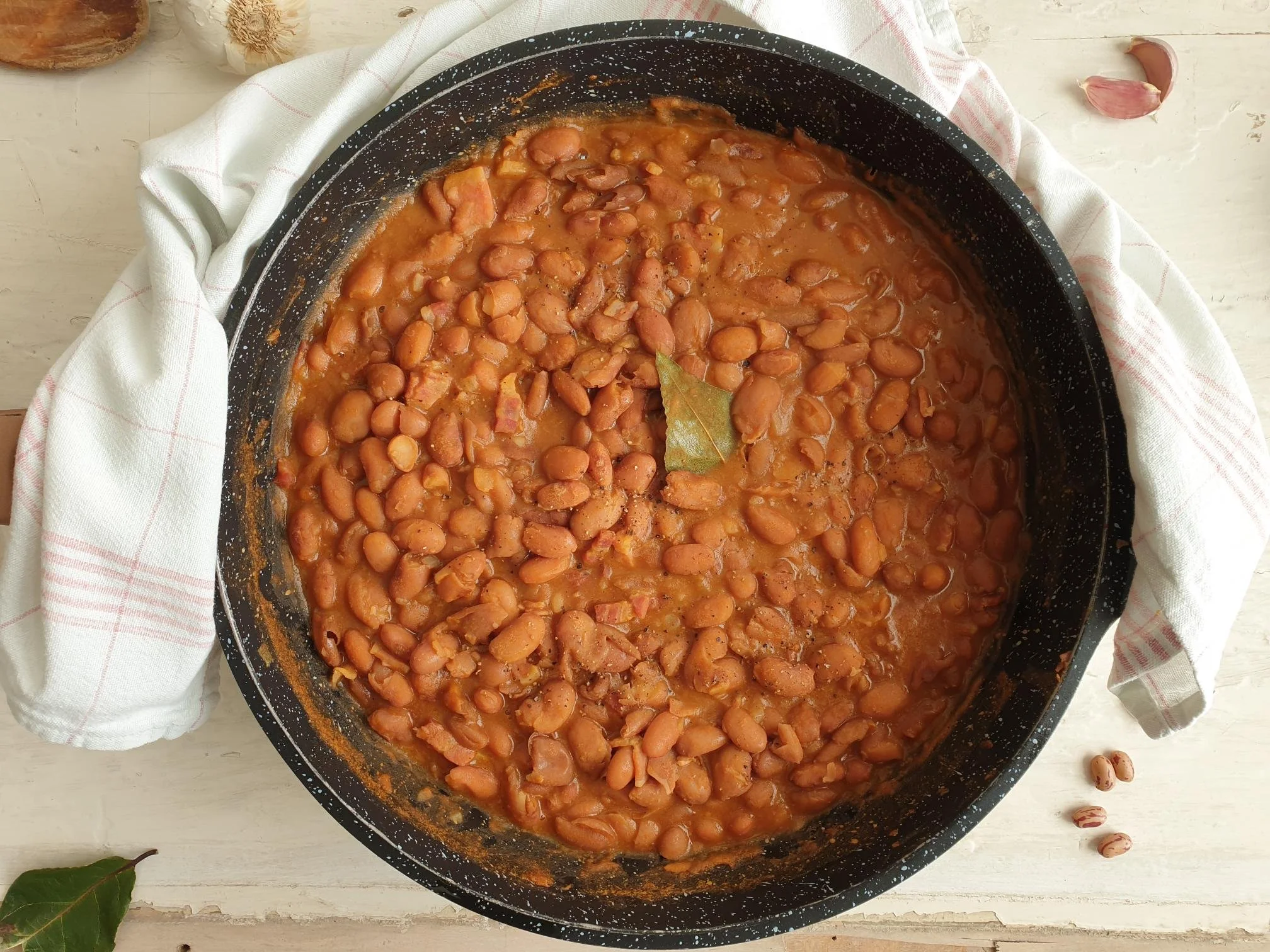
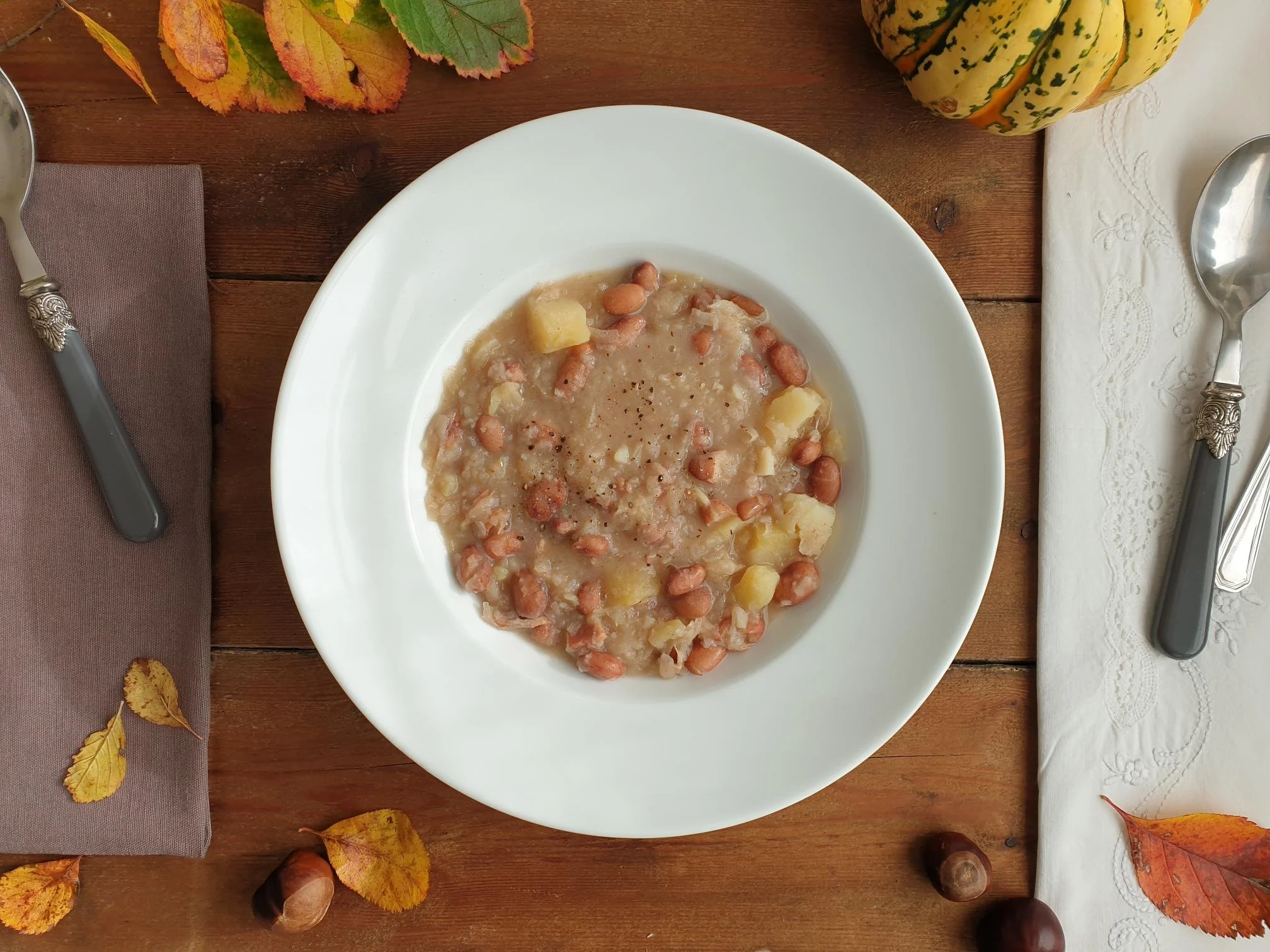
Home made baked beans is one of the most humble staple dishes in Slovenian Istra, the peninsula located at the head of the Adriatic Sea. This dish is nutritious, as full of fibre and protein, wholesome, super delicious, cheap and simple to make, and what it may lack in appearance it most certainly makes up in flavour.

This dish is classic comfort food, quintessentially rustic, a truly peasant food since it used to be made by farmers during colder months to help them to get warm, and to partially replenish their energy used up during the very hard, physical and laborious jobs required in the fields during the day.

This borlotti beans casserole is made with beautifully caramelized onions and sautéed pancetta and flavoured with garlic, bay leaf and a touch of tomato paste, it is typically served with polenta or crusty bread and a fantastic companion to grilled meats.
My nona grew up with this dish, as borlotti beans were consistently cooked as a part of the Mediterranean diet, the recipe was passed down to my father who adored baked beans and would prepare them regularly when there was a family barbecue, normally in such a huge quantities that we would eat them on a toasted bread for days to follow, nobody seemed to mind or complained about it, on the contrary...

This home made baked beans are known in standard Slovenian as Praženi Fižol, but the locals would refer to this dish simply in the dialect as Pražen Fežu.

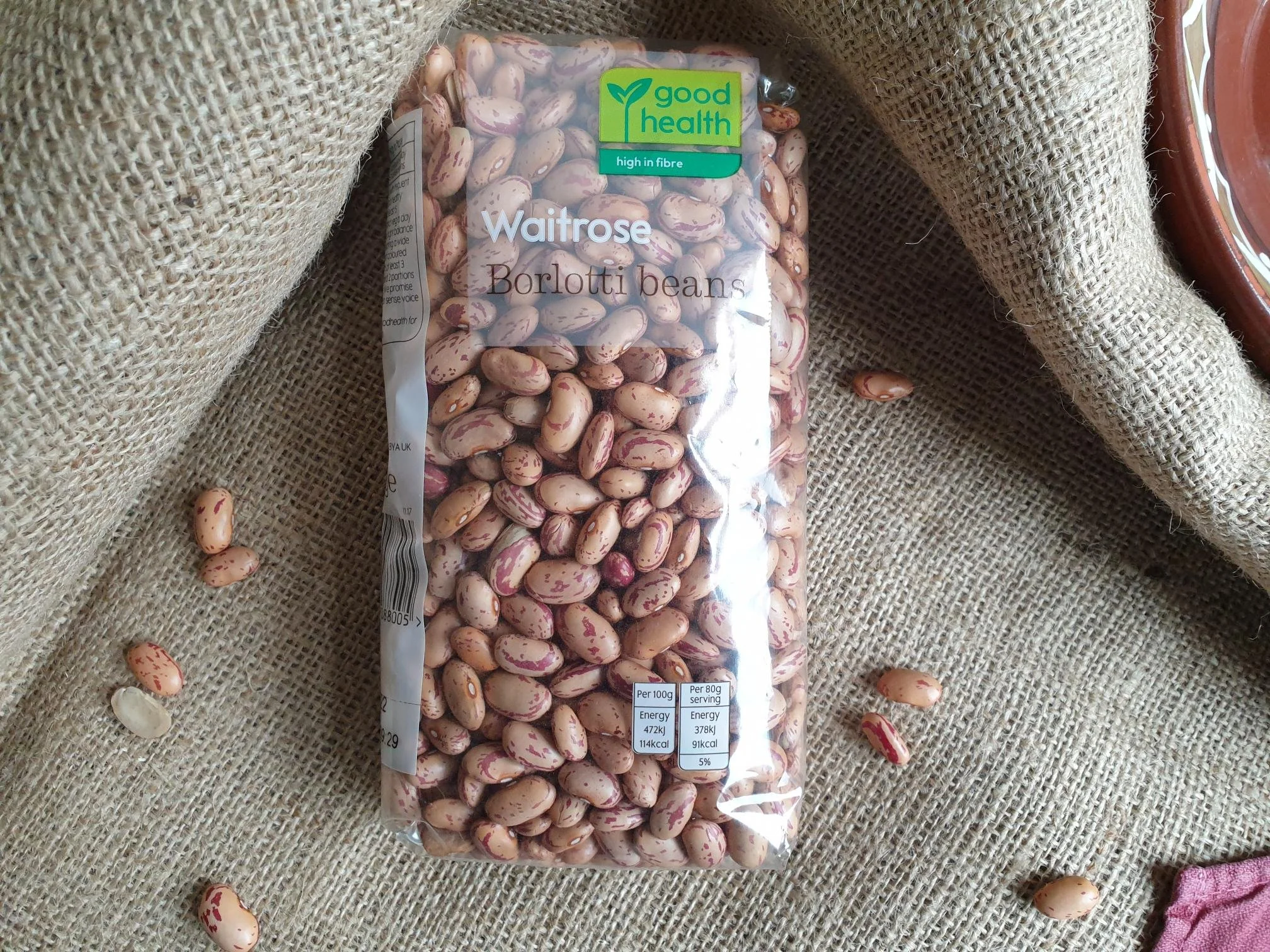
This very traditional dish calls for dry borlotti beans, but you can use canned beans to cut down on time without compromising the deliciousness of the final dish, it can also be made with or without the meat component, in which case, this version makes an excellent vegetarian and vegan meal option.

I am sharing here the traditional, local family recipe which uses only few simple ingredients, however, you can take this dish slightly off the beaten track and jazz it up a bit by adding few chilli flakes or powdered sweet or smoked Hungarian paprika, which will give a more “Imperial” and “Balcanic” flavour. My father attempted this only once and was severely told off by his mother, my famous nona, for “corrupting” the traditional recipe making it too “exotic” for her to eat, this version of baked beans, although very delicious indeed, was never cooked again by my father in her presence...

Whether you go for a traditional or more exotic version of the recipe for home made baked beans, give it a go, a store bought tinned baked beans might just become a thing of a past...

Ingredients

Serves 6-8

  • 500g dry borlotti beans, (or other dry beans of your choice) soaked overnight or for about 8 hours

    For this recipe you can also use tinned borlotti beans or other tinned beans of your choice 4 x 400g)

  • 1 medium onion, (about 130g) finely chopped

  • 4 Tbsp extra virgin olive oil

  • 2 cloves of garlic, peeled and crushed

  • 100g pancetta, (smoked or unsmoked) thinly sliced and chopped

  • You can replace pancetta for smoked or unsmoked bacon or lardons

  • 1 Tsp white all purpose flour

  • 2 Tbsp tomato paste

  • 2 bay leaves (fresh or dry)

  • sea salt

  • black pepper

Method

Place dry borlotti beans, or other dry beans of your choice, in a big bowl, cover completely with plenty of cold water and soak for about 8 hours or overnight.

Drain soaked beans in a colander and rinse with cold running water.

View fullsize Baked borlotti beans 4.jpg
View fullsize Baked borlotti beans 5.jpg

Transfer soaked beans in a pot.

View fullsize Baked borlotti beans 6.jpg
View fullsize Baked borlotti beans 7.jpg

Add plenty of cold water, to completely cover the beans, a bay leaf and bring to boil.

Turn the heat down to medium-low and cook the beans for about 1 -1 ½ hour or until the beans are fully cooked and soft but not falling apart. Skim any foam if it rises to the surface. Towards the end of cooking time add sea salt.

Fish out the bay leaf and discard. Turn the heat off, leaving the pot with the beans in their liquid on the stovetop for later use.

View fullsize Baked borlotti beans 8.jpg
View fullsize Baked borlotti beans 11.jpg

Put extra virgin olive oil in a fairly large and deep skillet or casserole dish (both preferably non stick). Add finely chopped onion, crushed garlic, finely sliced and chopped pancetta or similar, if using, and sauté on a gentle heat, stirring occasionally, until the onions become soft and translucent.

Add the flour and stir well with the onion, garlic and pancetta mixture.

View fullsize Baked borlotti beans 10.jpg
View fullsize Baked borlotti beans 12.jpg

With the slotted spoon, (or a regular big serving spoon) transfer the beans to the skillet with the onion, garlic and pancetta mixture.

Pour the liquid from the beans into the skillet to completely cover the beans. If you are left with more liquid from the beans as needed at this stage, keep it aside and do not discard it. You might use it later on, if the beans during the cooking process get too dry. On the contrary, if you end up using all the liquid from the beans, and the beans get too dry, you can simply use water.

Add sea salt, black pepper, bay leaf, tomato paste and bring to a gentle boil.

View fullsize Baked borlotti beans 13.jpg
View fullsize Baked borlotti beans 14.jpg

Lower the heat and gently simmer for about 30 minutes stirring occasionally.

Taste and adjust the seasoning with sea salt and black pepper.

Serve hot or at room temperature.

Just a thought

Home made baked beans are suitable for freezing.

Wine suggestion

Schiava Alto Adige DOC "Kolbenhofer" 2020 - Hofstater

January 26, 2022 /tina oblak
borlotti beans, baked beans, baked borlotti beans, baked beans with pancetta, baked beans with lardons, baked beans with bacon, rustic baked beans, beaked beans on a hob, baked beans on stove, Stovetop baked beans, Skillet baked beans, baked beans in a frying pan, Praženi Fižol, Pražen Fežu, Istrian borlotti beans
Adriatic Recipe, Appetizers, Autumnal dish, Autumnal recipe, brunch, Central European recipes, Eastern European recipes, Easy recipe, Healthy, healthy mael, Istrian cuisine, Istrian dish, Istrian food, Istrian gastronomy, main course, main dish, Nutritious dish, Nutritious, one pot meal, one pot meat recipe, Rustic dish, Side Dishes, Slovenian cuisine, Slovenian food, Slovenian gastronomy, Small bites, Starters, stew, Vegan, Vegetarian, Winter dish, Winter recipe, casserole

Green Split Peas Soup Istrian Recipe

Beans and Srdines
January 19, 2022 by tina oblak in Adriatic Recipe, Appetizers, Autumnal dish, Autumnal recipe, brunch, dinner, entrée course, healthy mael, Istrian cuisine, Istrian dish, Istrian food, Istrian gastronomy, main course, main dish, Nutritious dish, one pot meal, Rustic dish, Slovenian cuisine, Slovenian food, Slovenian gastronomy, Soups, Starters, supper, Vegan, Vegetarian, Winter dish, winter soup

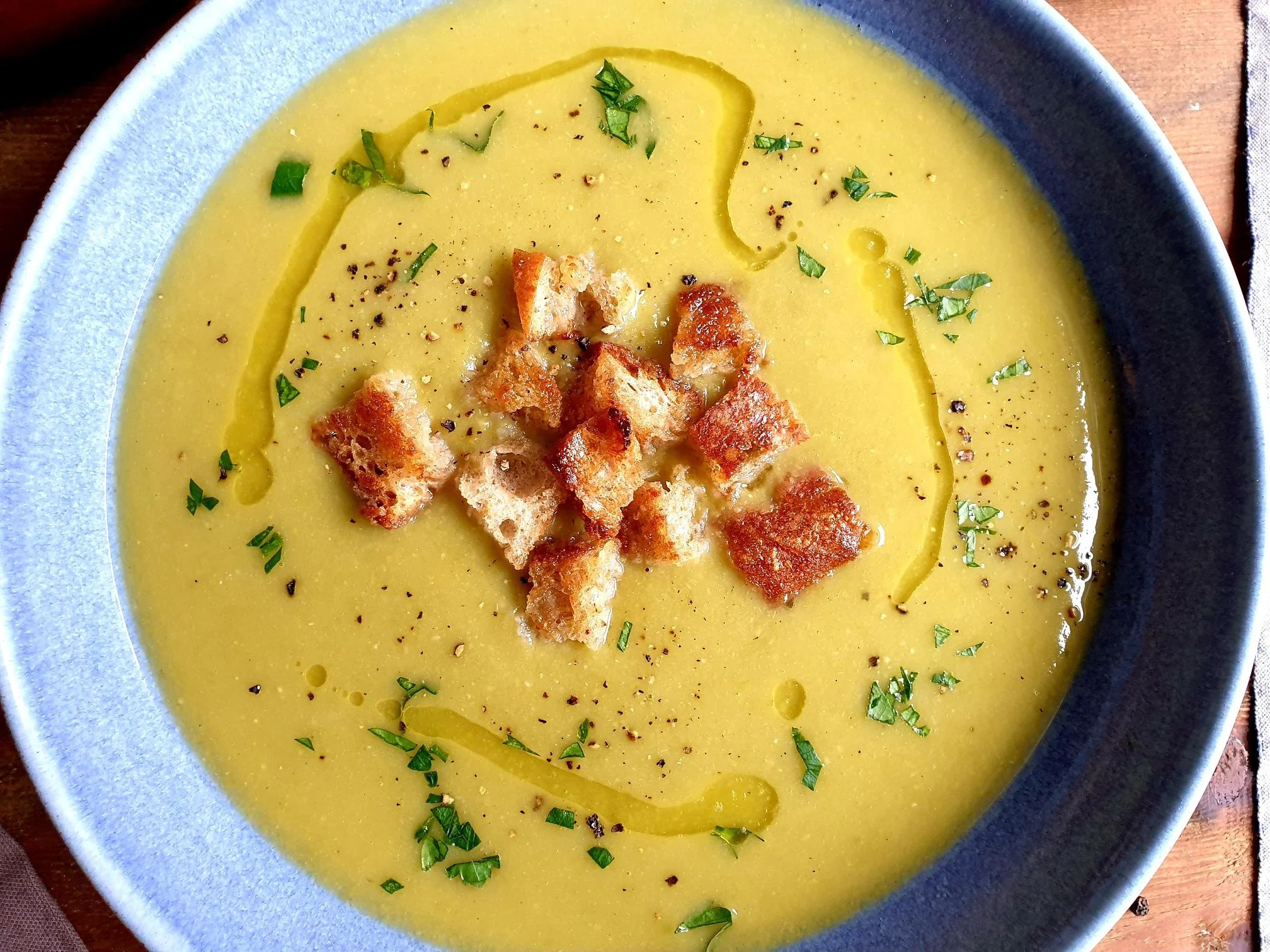
This comforting, filling and hearty soup is a perfect winter warmer, incredibly easy to make, super delicious in its simplicity, and once you try it, you will add it to your soups recipe collection!

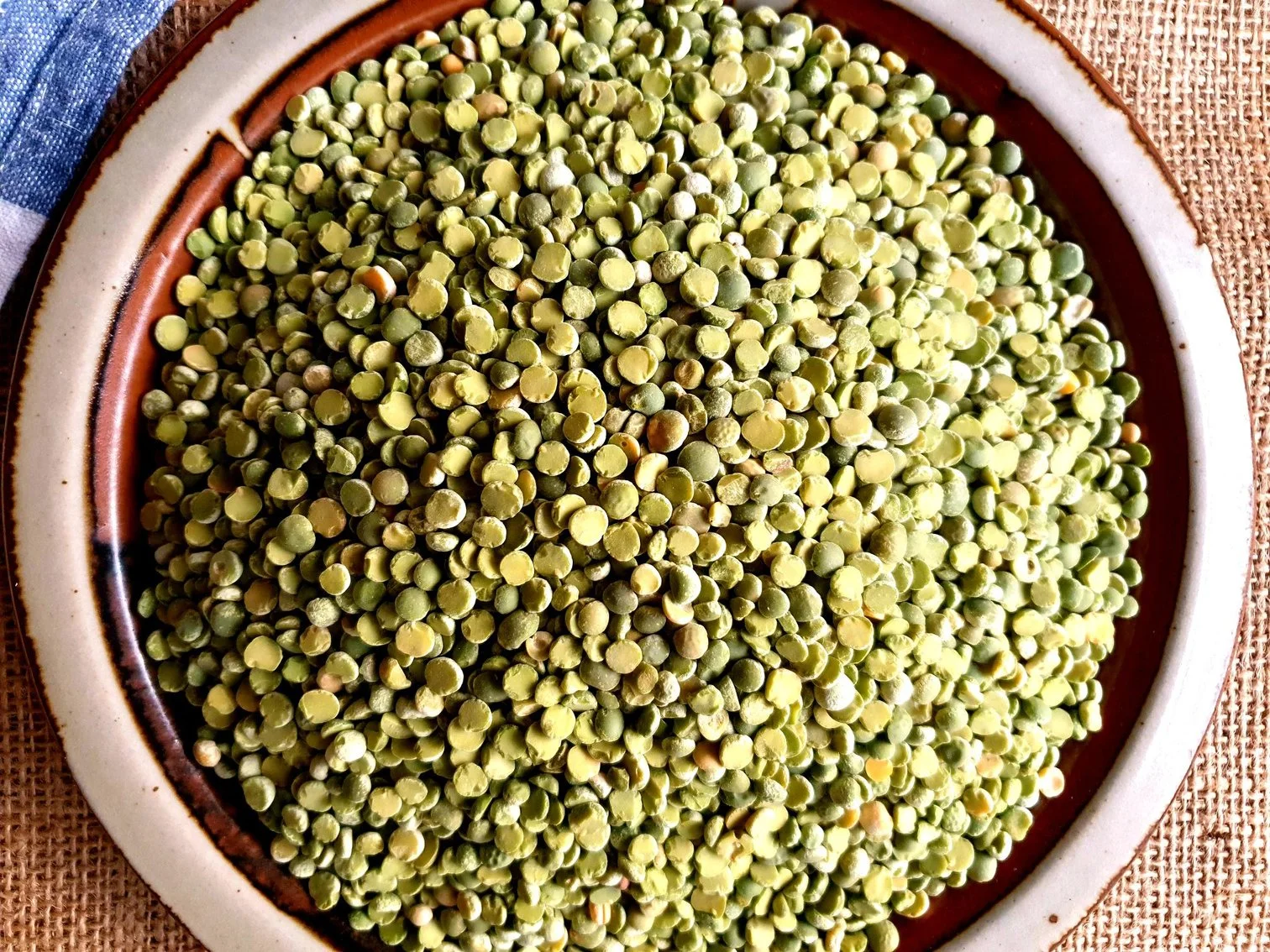
Split peas are quite different from their fresh counterpart, they are a specific kind of field pea, which are dried in order to be stored for a longer period. They are called split peas because after the outer hull is removed the peas are then split in half along a natural seam.

This wonderful soup is protein packed and here I am sharing my nona's recipe. For her, this dish represents a good “old fashioned” basic recipe and is a real staple in the gastronomic repertoire since she learned to make this soup from her grandmother, and so this is a very old family recipe.

She told me that when she was a child, this soup was very often on the tables, as it is a a traditional and classic soup made in Slovenian Istra, where locals refer to it in dialect as Maneštra iz biži špakaj while in standard Slovenian is called Mineštra iz suhega graha.

My nona also shared with me that when she was small, most of the ingredients were home made but this is not the case for dried green split peas, they were bought at the local food market or in a small family run food shop, since for both types of local businesses it was a crucial time for the local microeconomy.

This soup is normally home made and not typically found on the menus in the restaurants.

Try this very tasty one pot soup, and you will think twice before you open a can of soup bought in the supermarket!

Ingredients

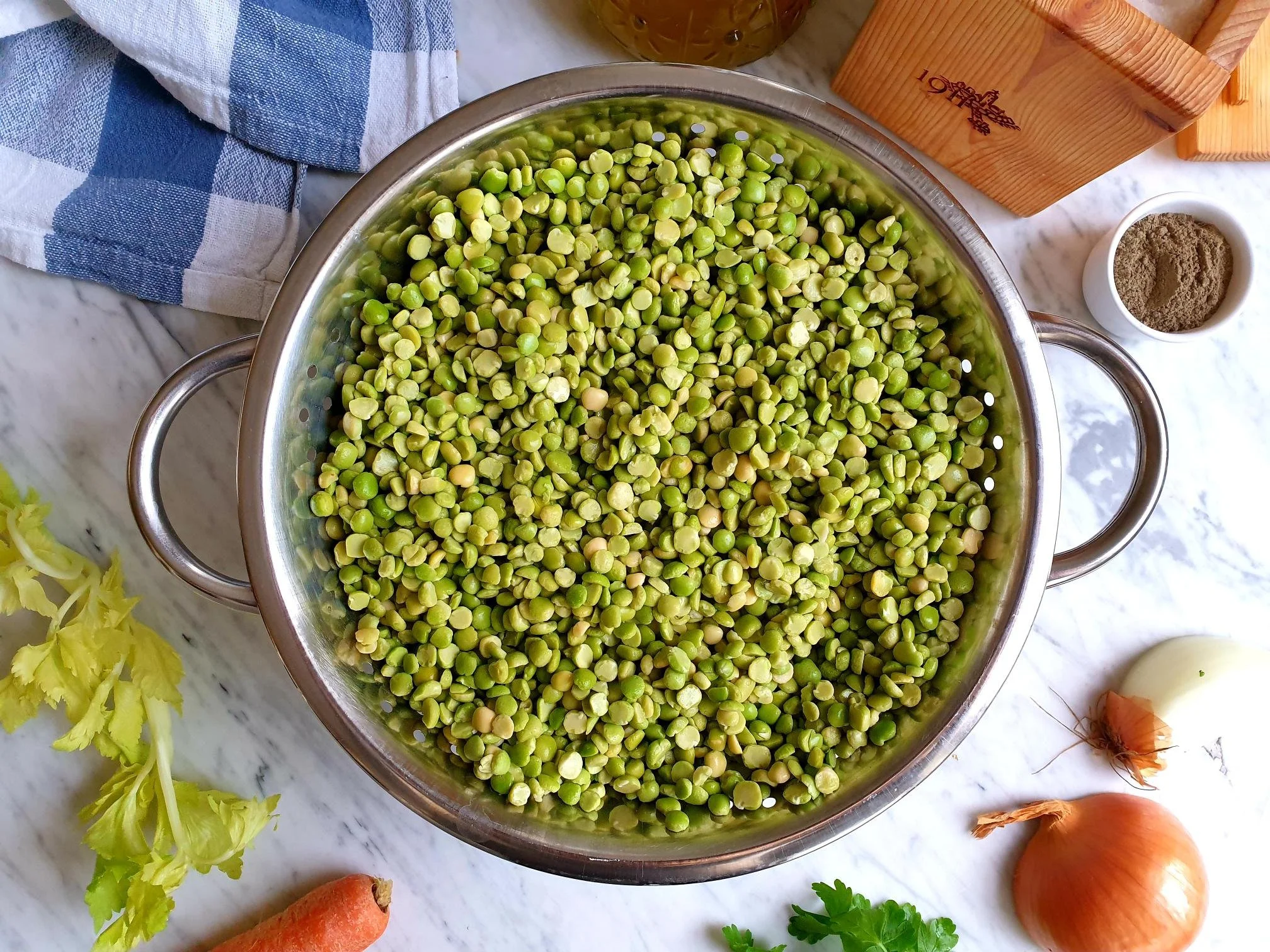
  • 500g green split peas, soaked for about 8 hours or overnight

  • 1 medium potato (about 200g), peeled and roughly diced

  • 1 medium onion (about 100g), peeled and roughly chopped

  • few celery leaves

  • fresh flat leaf parsley, a handful (about 10g), roughly chopped

  • 1 small carrot (about 50g), peeled and finely grated

  • tip of fresh or dry bay leaf

  • 4 Tbsp extra virgin olive oil

  • sea salt

  • ground black pepper

  • 2l cold water

Method

Place dried green split peas in a bowl, cover completely with plenty of cold water and soak for about 8 hours or overnight.

Drain soaked peas in a colander and rinse with cold running water.

Transfer soaked peas in a soup pot and add peeled and roughly diced potato, peeled and roughly chopped onion, few celery leaves, roughly chopped parsley, peeled and finely grated carrot, tip of fresh or dry bay leaf, extra virgin olive oil, pinch of sea salt and ground black pepper.

Add 2 litres of cold water and bring to boil.

View fullsize Green split peas soup 5.jpg
View fullsize Green split peas soup 6.jpg

Turn the heat down, partially cover with the lid and gently simmer for about 1 ½ - 2 hours or until the peas are completely tender and disintegrated. Stir occasionally to avoid peas sticking to the bottom of the pan.

Taste and adjust the seasoning with sea salt and black pepper and fish out the tip of bay leaf.

View fullsize Green split peas soup 7.jpg
View fullsize Green split peas soup 8.jpg

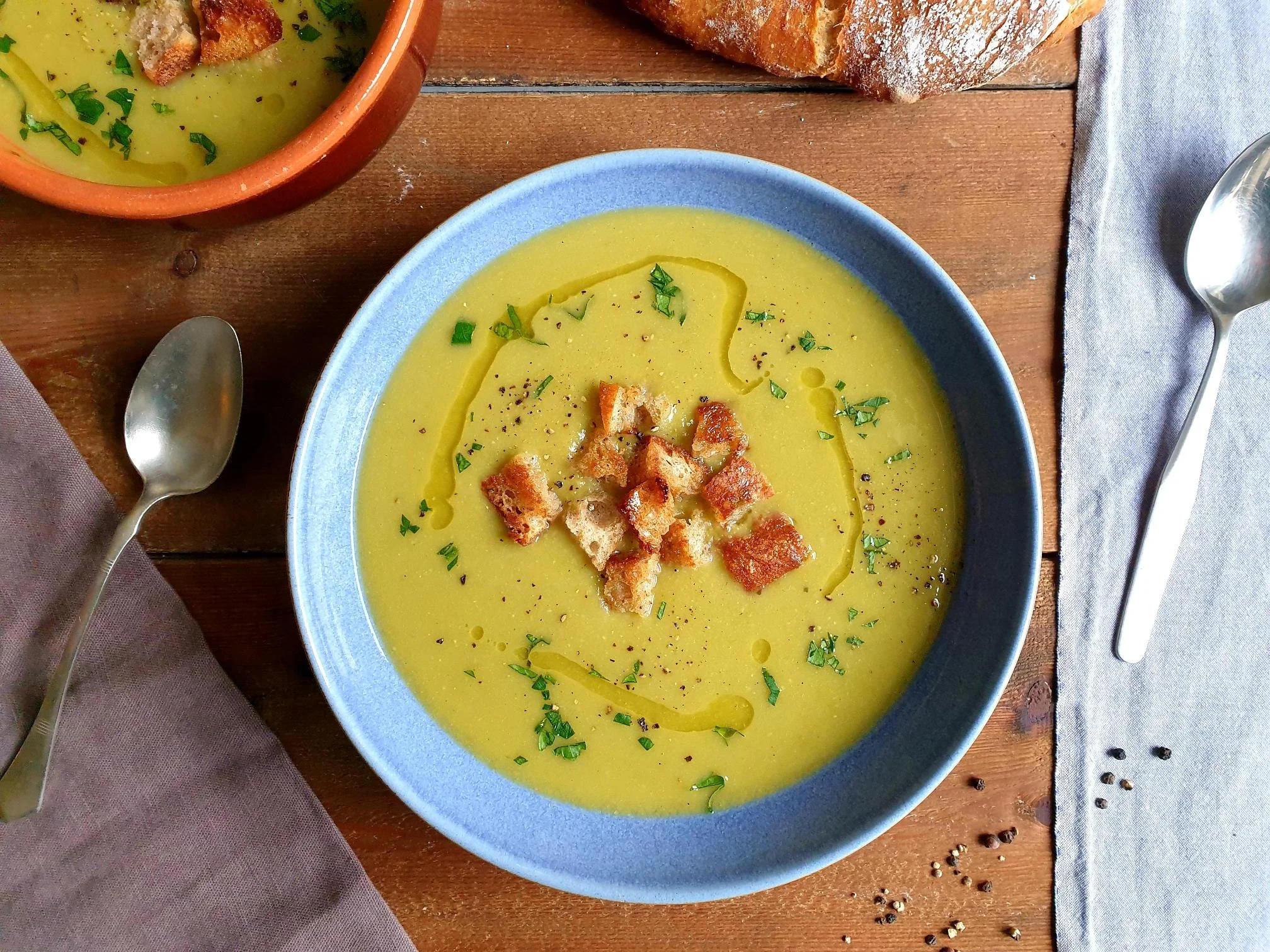
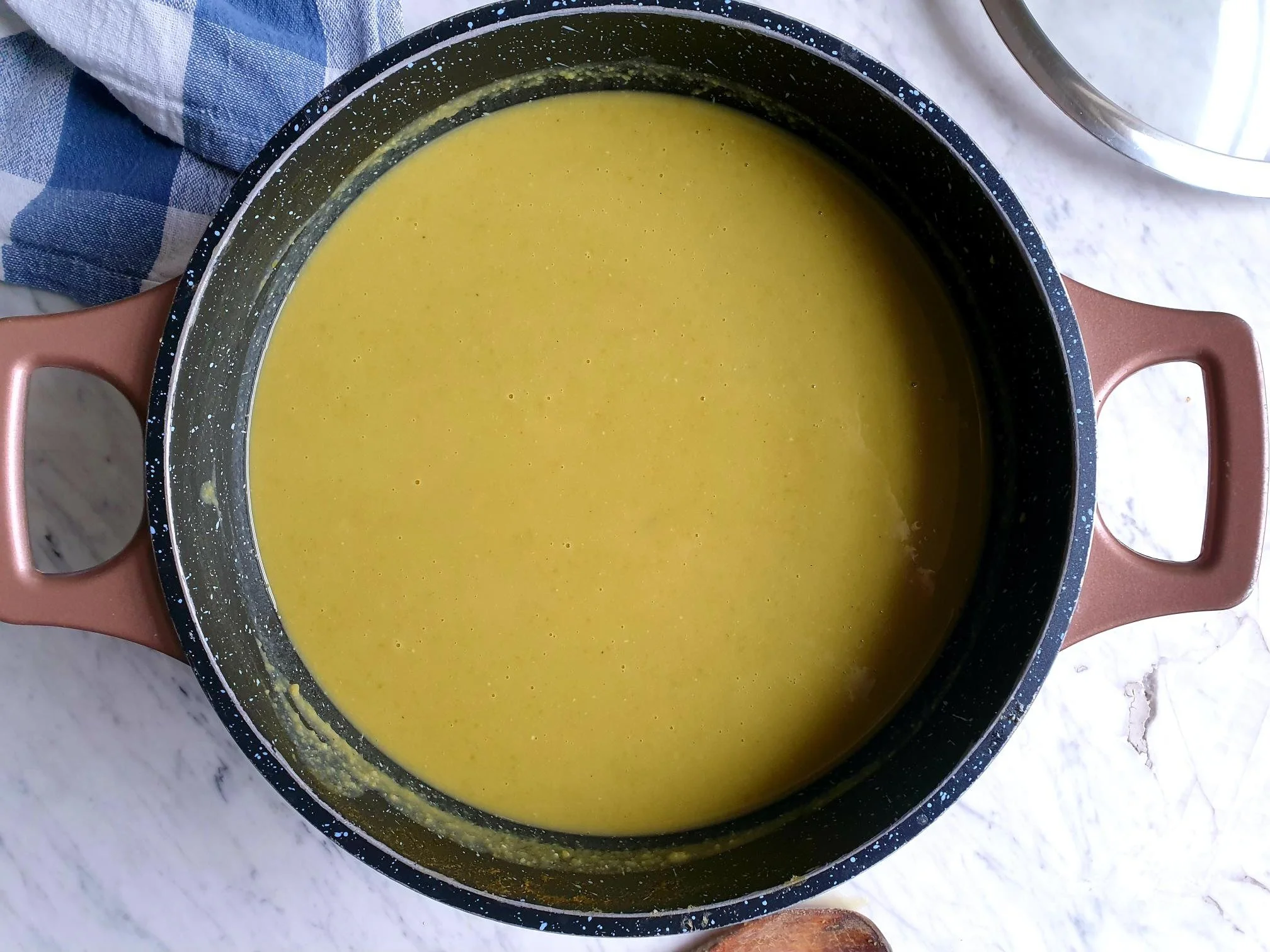
You can serve this soup as it is with a bit of texture or if you prefer a creamier texture purée the soup using an immersion blender (like I did for this recipe) or a regular blender.

For a smoother texture you can also use food mill or pass the puréed soup through a sieve which will result in an exceptionally smooth soup.

The soup should generally have a nice thickish consistency, but not too thick, in which case, dilute it adding a bit of water.

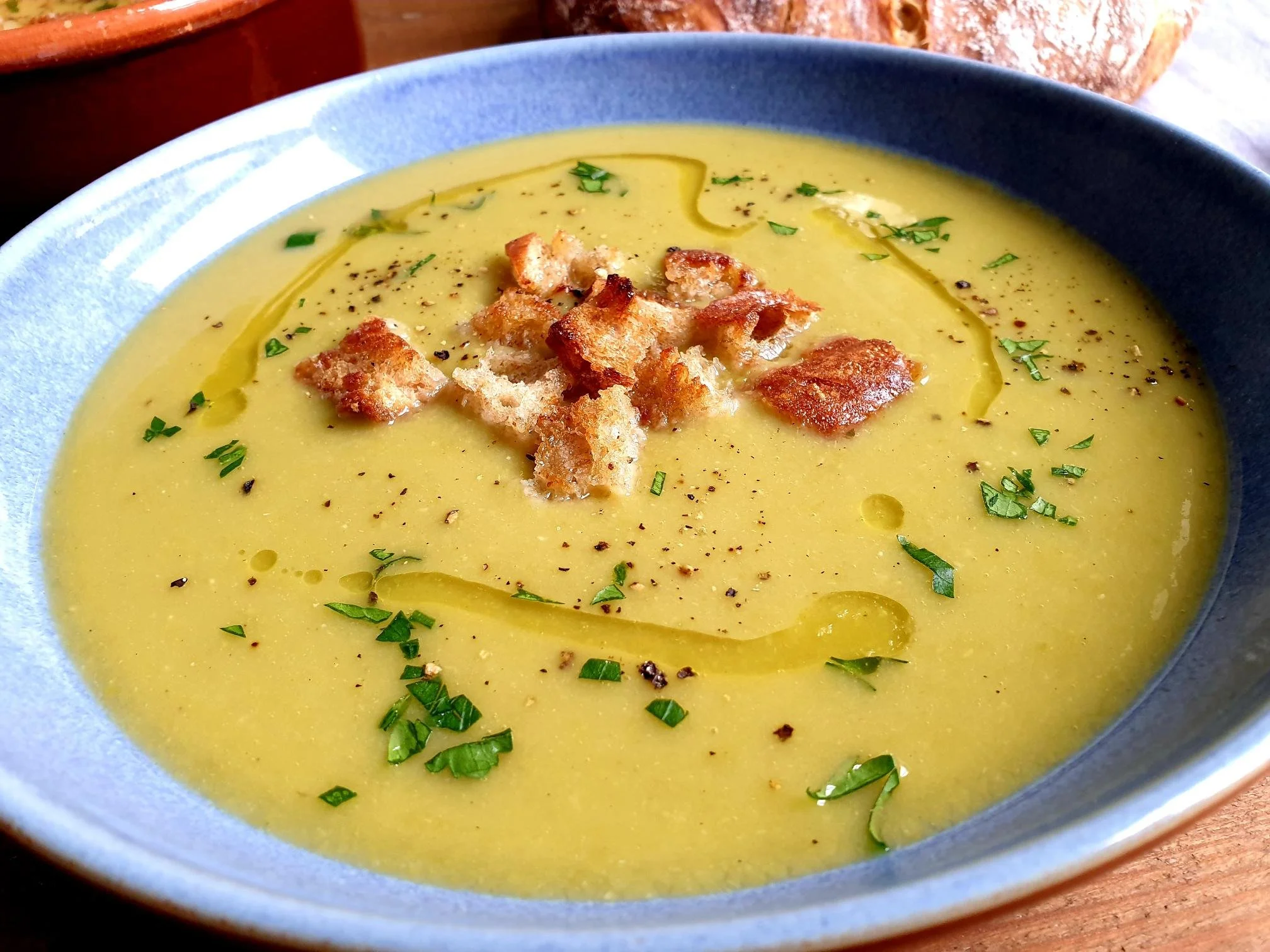
This soup is great served hot with some bread croutons, roughly chopped parsley and a drizzle of extra virgin olive oil.

Traditionally it is served with small shaped pasta (ditalini, stelline, orzo, ect.) or rice, both cooked previously and separately and then added to the soup.

Just a thought

This soup is great made in advance and freezes very well.

Wine suggestion

Alto Adige Valle Isarco Sylvaner DOC 2020 - San Michele Appiano

January 19, 2022 /tina oblak
green split peas, dried split green peas, dried split peas creamed soup, cream of green split peas soup, Maneštra iz biži špakaj, Mineštra iz suhega graha
Adriatic Recipe, Appetizers, Autumnal dish, Autumnal recipe, brunch, dinner, entrée course, healthy mael, Istrian cuisine, Istrian dish, Istrian food, Istrian gastronomy, main course, main dish, Nutritious dish, one pot meal, Rustic dish, Slovenian cuisine, Slovenian food, Slovenian gastronomy, Soups, Starters, supper, Vegan, Vegetarian, Winter dish, winter soup
Comment

Braised Pheasant with fresh herbs Recipe

Beans and Srdines
January 12, 2022 by tina oblak in Adriatic Recipe, Autumnal dish, Autumnal recipe, Celebratory dish, Central European recipes, Christmas dish, dinner, Eastern European recipes, Easy recipe, Festive dish, Istrian cuisine, Istrian dish, Istrian food, Istrian gastronomy, main dish, main meat course, Meat, one pot meal, Rustic dish, Slovenian cuisine, Slovenian food, Slovenian gastronomy, Winter dish, Winter recipe, one pot meat recipe

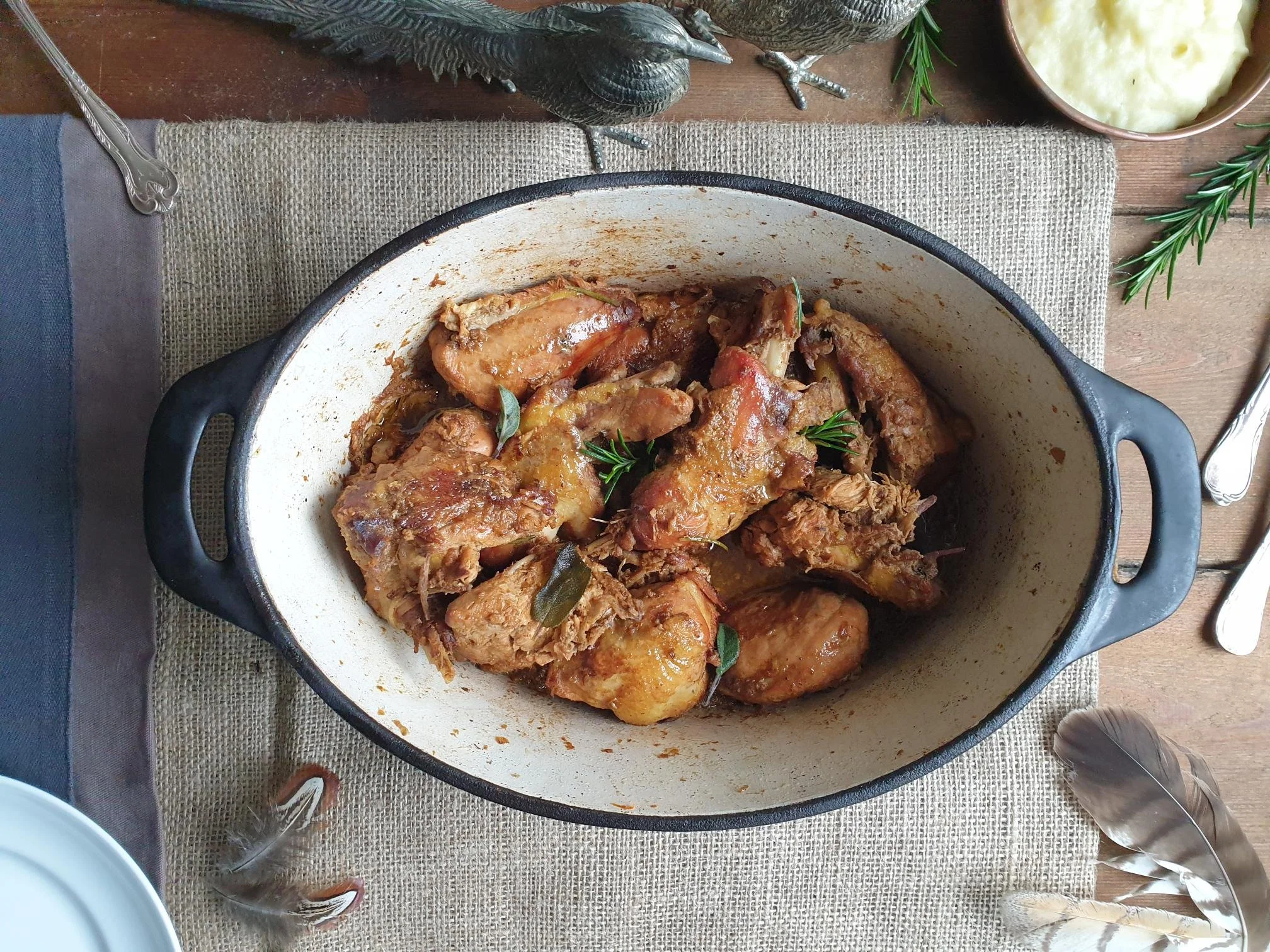
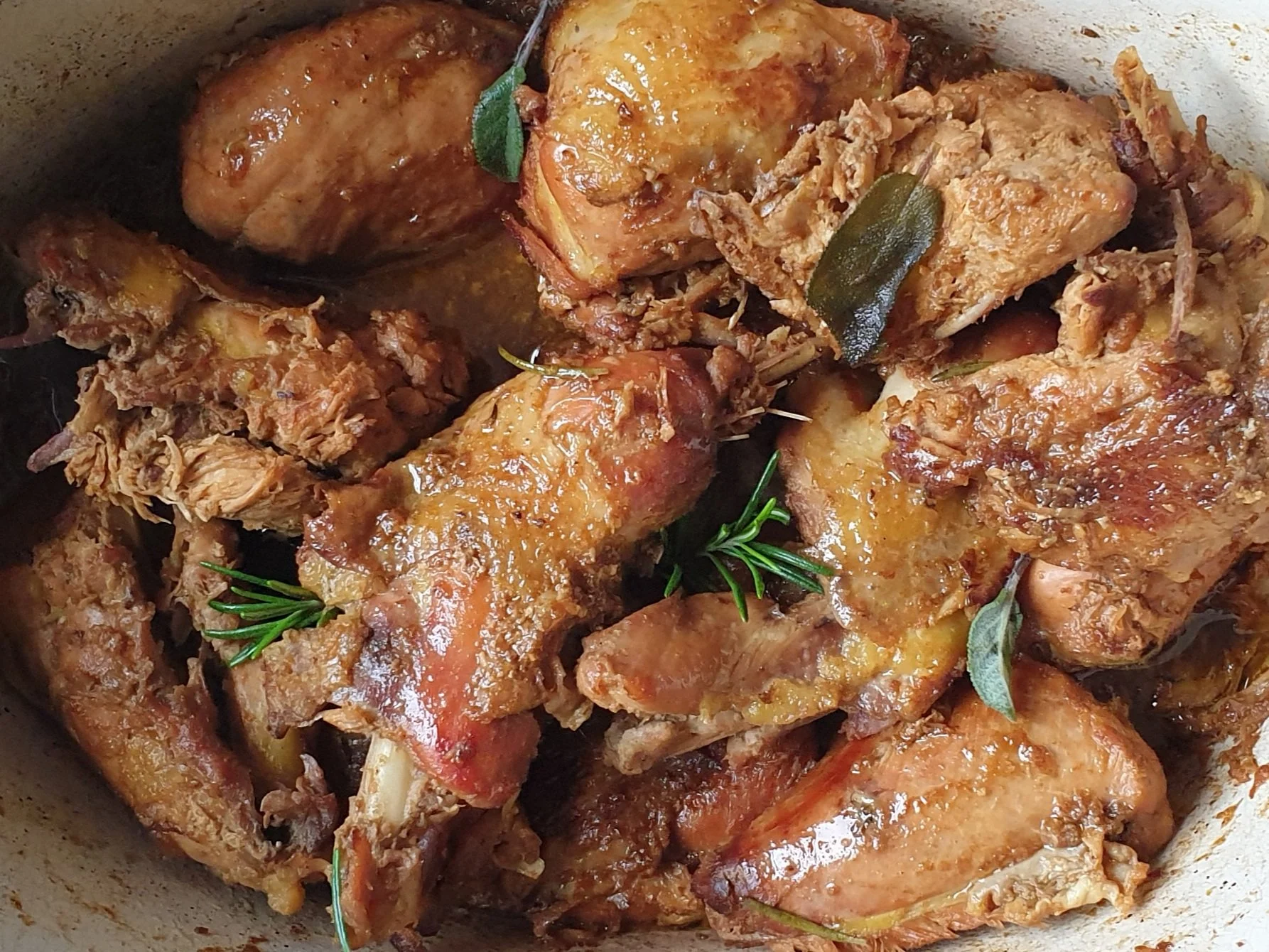
Braised pheasant is a fantastic winter warmer, comforting and hearty, made with only few fresh ingredients evoking seasonal flavours.

First, the pheasant meat is browned and then slowly cooked with fresh herbs in a beautiful sauce allowing the meat to be tenderised.

This simple and rustic dish offers and provides full and rich but delicate flavour and it is best made ahead of time as it improves when cooked in advance and then re-heated gently before serving.

Braised pheasant has been a very much loved traditional dish in Slovenian Istra where its gentle landscape has provided many opportunities for hunting, a pheasant representing one of the foremost preys among the local hunters.

This area was once part of The Republic of Venice, and it is believed that this gamebird with oriental plumage, was introduced to the West via Venice, as this majestic city had very close links with the Byzantine empire.

Moreover, some sources report that the name pheasant, Fasan, in venetian dialect, and Fazan, in standard Slovenian, comes from the fact that the pheasant was originally a native of the river Phasis in Colchis (in present day Western Georgia).

Cooking pheasant meat, in general, used to be a rare treat and was reserved for festivities and very special occasions, and although nowadays pheasant meat is a bit more accessible and affordable, it is still served to mark more special events, and is not presented on your plate as a average midweek dinner. Pheasant dishes can be enjoyed and found on menus in formal and informal restaurants during autumn and winter pheasant hunting months.

Braised pheasant is a very much appreciated dish in the family and here I am sharing my nona and my mother's recipe.

Ingredients

Serves 4-6

  • 2 small pheasants (about 1.5kg) jointed (your butcher will be more than happy to do this for you)

  • 3 Tbsp extra virgin olive oil

  • 1 medium onion (about 150g), roughly chopped

  • 2 celery sticks (about 40g), finely chopped

  • carrot (about 50g), finely grated

  • 2 cloves of garlic, peeled and crushed

  • sea salt

  • ground black pepper

  • 1 fresh rosemary spring (tied with the cooking string as this makes it easier to remove after cooking and prevents the needles to fall off the spring)

  • 2-3 fresh sage leafs

  • 100 ml white wine

  • chicken or vegetable stock (can use just water) It is perfectly fine to use a good quality instant stock .

Method

In a heavy, lidded casserole pan add extra virgin olive oil, chopped onions, finely grated carrot, finely chopped celery sticks, crushed garlic, jointed pheasants and mix well.

On a low and gentle heat, fry, stirring occasionally and moving around the meat. Scrape the bits off the bottom of the pan with the wooden spoon if it starts to catch to avoid burning (this will get deglazed later and become part of the sauce).

This stage of very gently frying and browning the meat on all sides can take up to one hour (the longer you brown the meat the darker the sauce will be).

View fullsize Braised pheasant 2.jpg
View fullsize Braised pheasant 3.jpg

Deglaze the pan with white wine and let it completely evaporate.

Add fresh spring of rosemary, fresh sage leafs and stock or water, just enough to cover halfway up.

Place the casserole pan over a medium heat and bring to a simmering point.

Cover with a lid, lower the heat and gently simmer for about 1 hour, stirring occasionally, until the pheasant meat is tender and cooked through. Cooking the pheasant with the lid covered partially or completely will ensure the pheasant meat stays moist as the moisture will be kept in the pan, gently steaming the meat during the simmering process.

If excess fat is formed during cooking process skim it off using a spoon.

Remove rosemary spring and sage leafs.

Taste and adjust the seasoning with sea salt and black pepper.

If the sauce is too liquidy, increase the heat allowing it to reduce and thicken slightly. On the contrary, if the sauce has a thick consistency dilute it a bit with the stock or water.

Serve hot with soft cooked or grilled polenta, mashed potato, potato gnocchi, egg based pasta like bleki or simply nice fresh crunchy rustic style bread to soak up the juices.

Just a thought

This is a great dish to make ahead of time and suitable for freezing.

Wine suggestion

Friuli Colli Orientali Merlot DOC 2017 - Livio Felluga

January 12, 2022 /tina oblak
Pheasant, Pheasant meat, game meat, Braised pheasant, Slow cooked pheasant, Istrian style braised pheasant
Adriatic Recipe, Autumnal dish, Autumnal recipe, Celebratory dish, Central European recipes, Christmas dish, dinner, Eastern European recipes, Easy recipe, Festive dish, Istrian cuisine, Istrian dish, Istrian food, Istrian gastronomy, main dish, main meat course, Meat, one pot meal, Rustic dish, Slovenian cuisine, Slovenian food, Slovenian gastronomy, Winter dish, Winter recipe, one pot meat recipe
Comment

Braised Cuttlefish Recipe

Beans and Srdines
December 30, 2021 by tina oblak in Adriatic Recipe, Autumnal dish, Autumnal recipe, dinner, Easy recipe, Festive dish, Fish & Seefood, healthy mael, Istrian cuisine, Istrian dish, Istrian food, Istrian gastronomy, main dish, Nutritious dish, one post fish recipe, one pot meal, Rustic dish, recipe from Northern Ital, Slovenian cuisine, Slovenian food, Slovenian gastronomy, stew, Winter dish, Winter recipe, main fish meal

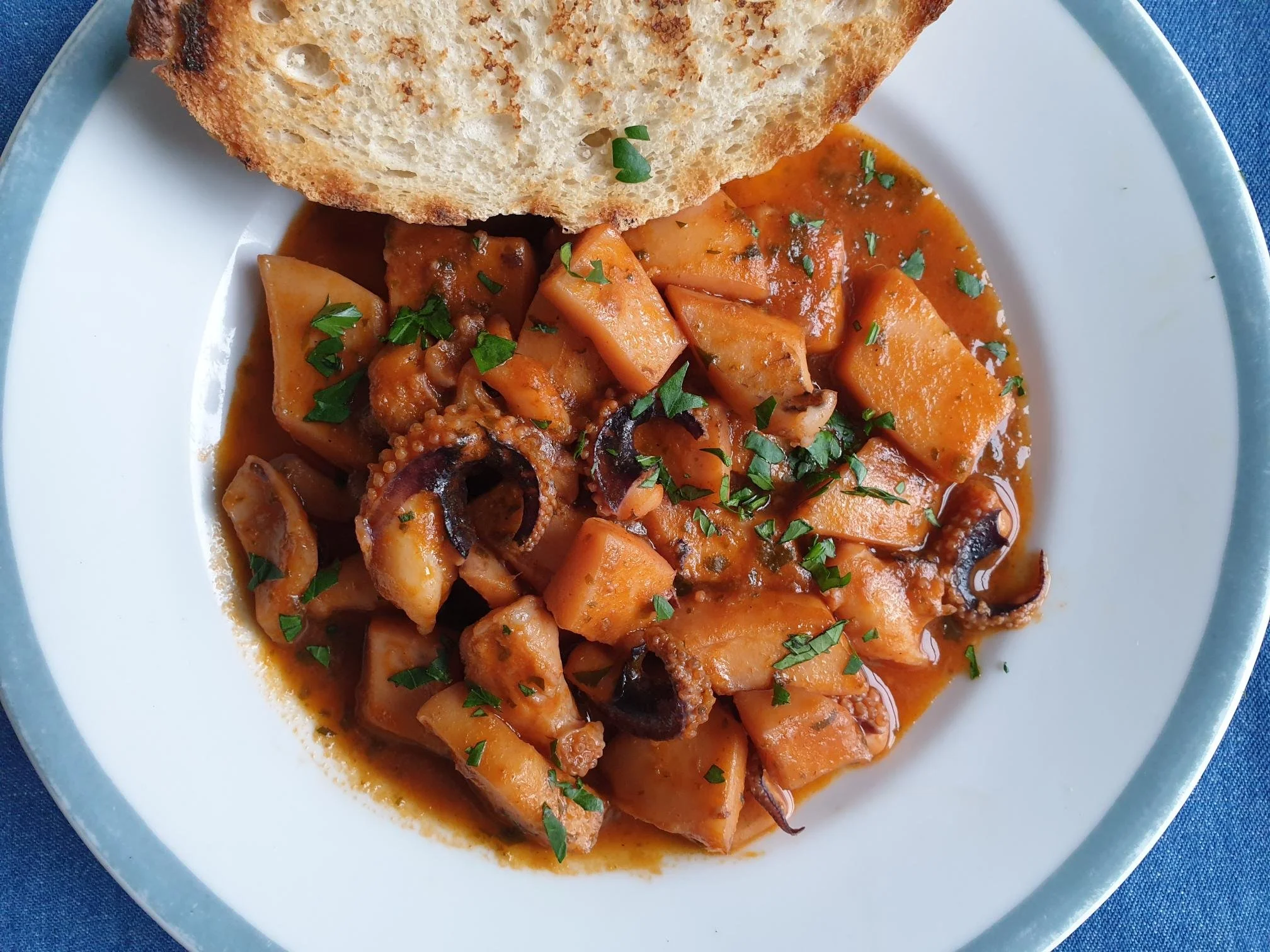
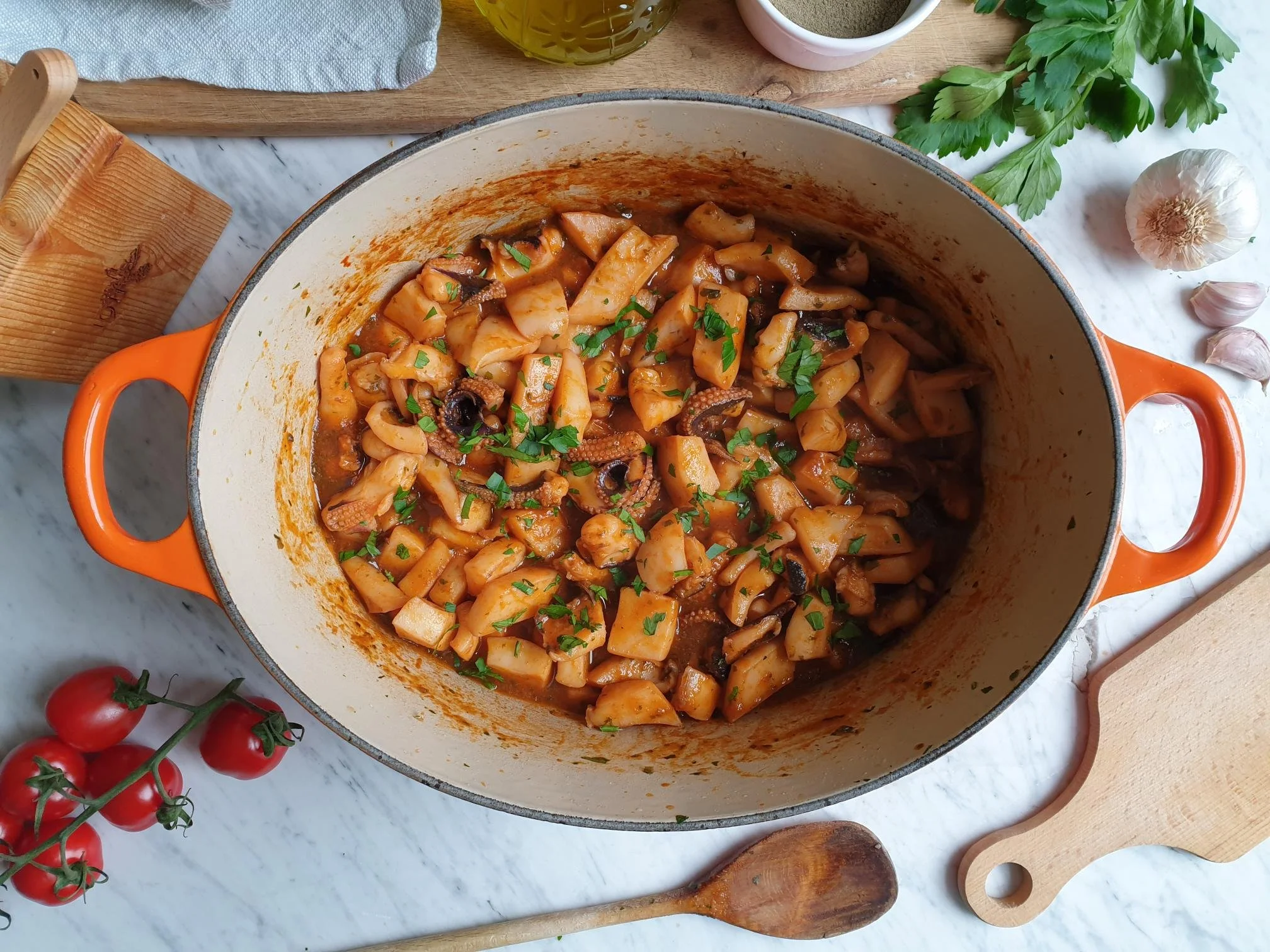
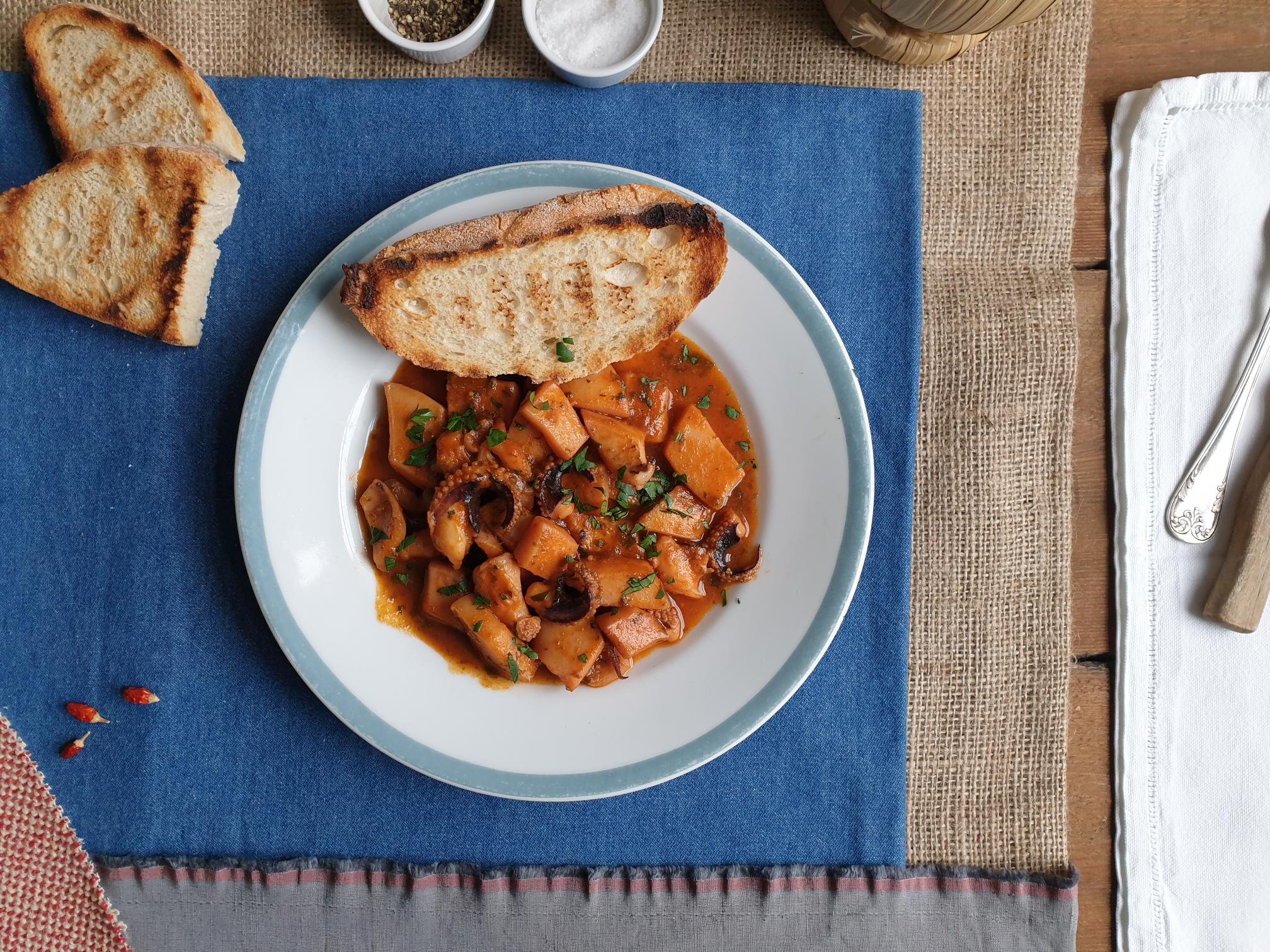
Braised cuttlefish is a simple, comforting and rustic dish, and it uses only few ingredients. The cuttlefish is slow cooked in a light tomato sauce with white wine to the point of becoming so tender that the cuttlefish almost melts into your mouth and you hardly need a knife to cut it. It is very easy to prepare and a fantastic recipe if you want to make a seafood based meal ahead of time. Cuttlefish stew is a staple dish in Venice and a real delicacy, famous in particular for being cooked in its black ink.

Cuttlefish are plentiful in British waters but the majority are sent to the continent where there is a high demand, and it is greatly appreciated.

Braised cuttlefish is a dish that is prepared in particular in coastal towns and villages in Slovenian Istra, since there is a cuttlefish habitat along the Adriatic coast. The tides push the fish towards the sandy shallows where it becomes an easy catch for the fishermen.

Braised cuttlefish play an important role in the local gastronomy and the locals are very grateful to the Venetians to have “left behind” this aspect of the marine and coastal ecology, given the very lengthy and strong presence of the Venetian Republic in the territory. Cuttlefish is not as frequently found in local restaurants as one might expect, although it is one of the most loved meals in the family.

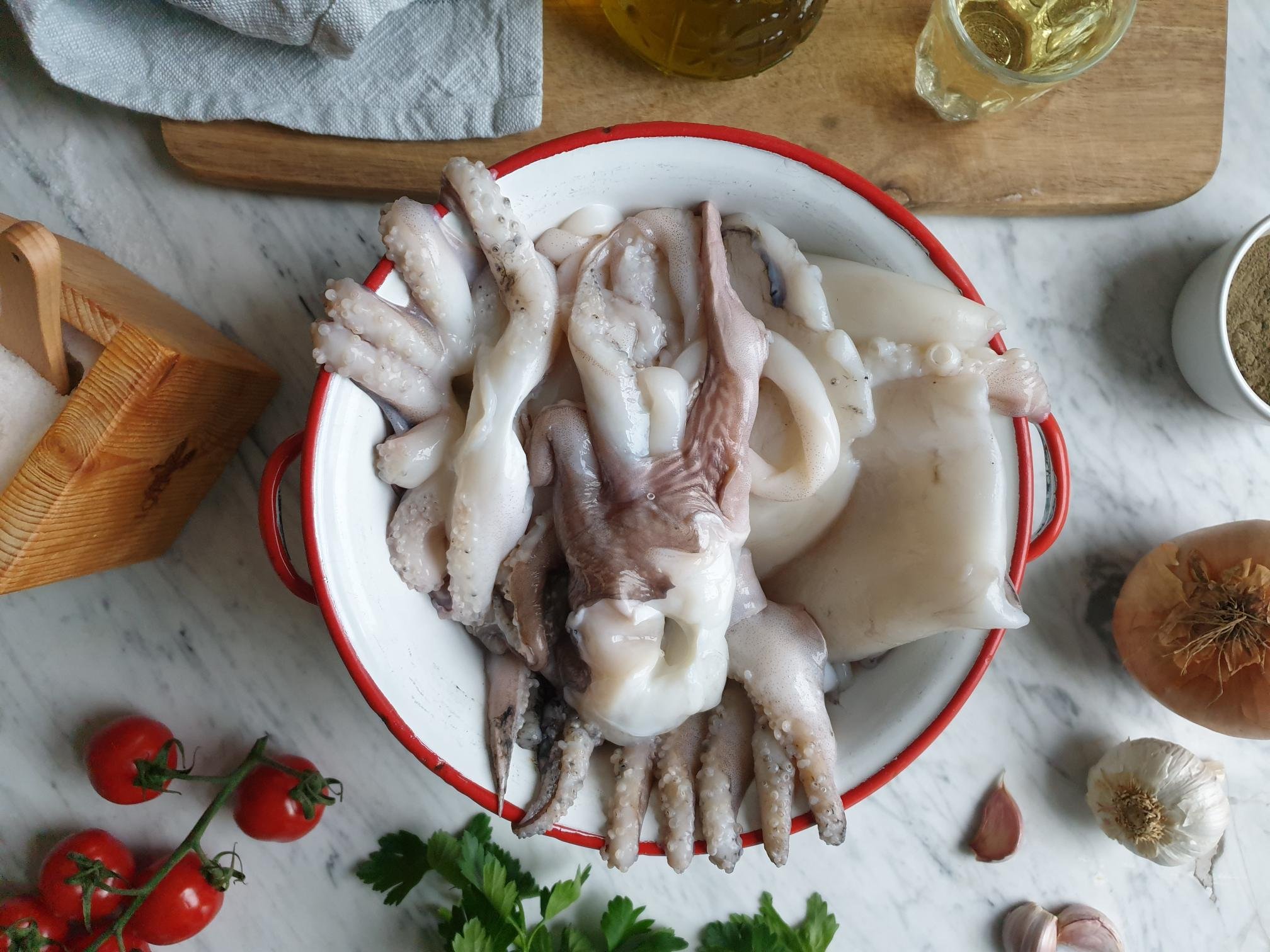
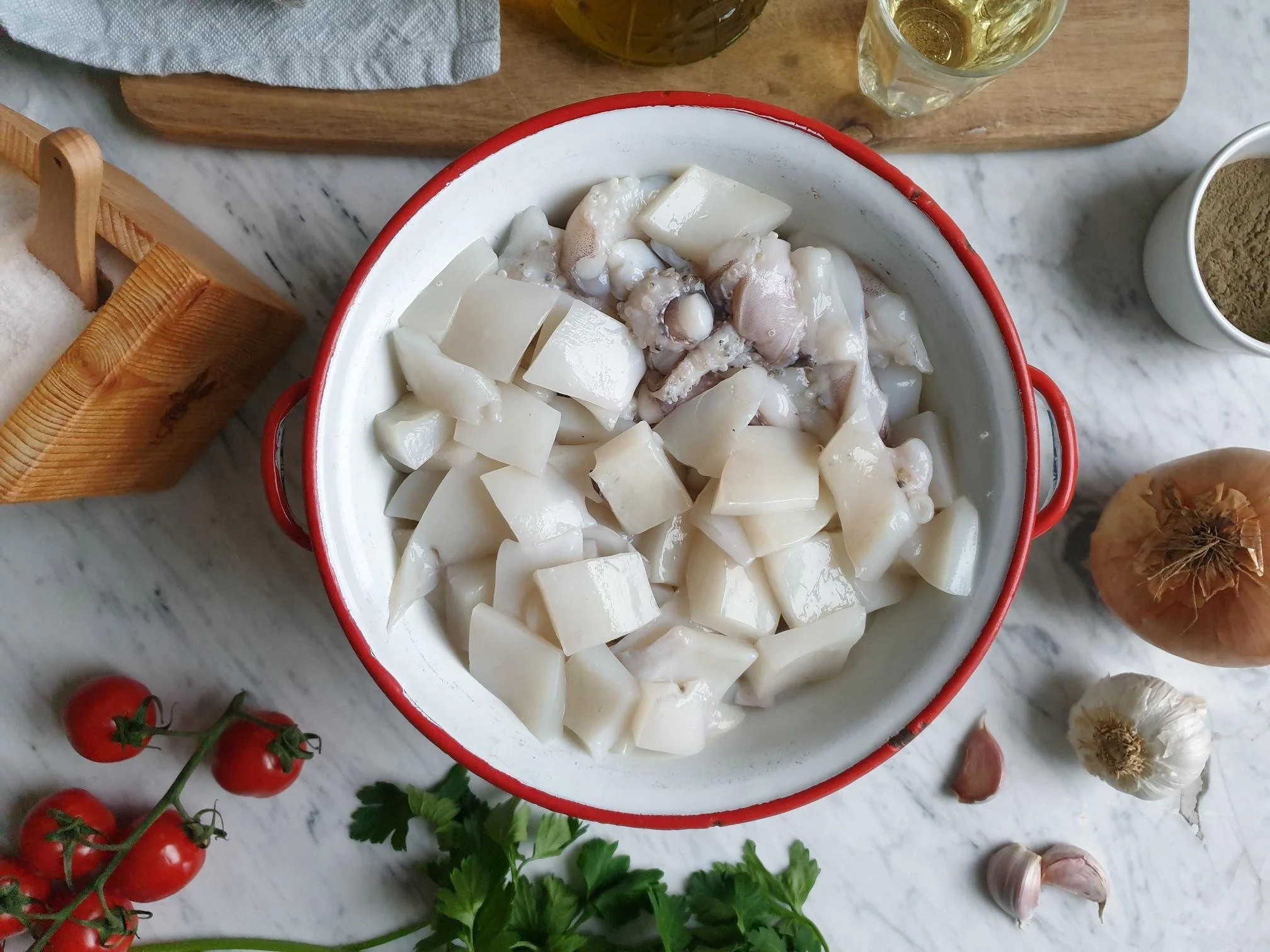
If you have never had cuttlefish before or had it but were put off for whatever reason, try my nona's family recipe, you might just change your mind. If you are worried about handling fresh cuttlefish, fishmongers in general, will be more than happy to prepare the cuttlefish for you, they will clean all the ink off the cuttlefish, remove the skin and wash thoroughly the tentacles.

All you will be left with is beautifully cleaned cuttlefish that only needs to be cut into bite size pieces or strips, easy!

Ingredients

Serves 4

  • 5 Tbsp extra virgin olive oil

  • 1 onion (about 130g), finely chopped

  • 1 clove garlic, peeled and crushed

  • handful of fresh flat leaf parsley, stalks included (about 10g), finely chopped, plus some extra when serving

  • 1 kg (roughly) cuttlefish, cleaned and cut into bite size pieces or strips. Already cleaned frozen cuttlefish as a alternative works well for this recipe

  • 100 ml white wine

  • 300 ml water

  • 2 Tbsp tomato purée

  • sea salt

  • finely ground black pepper

  • red chilli, a tiny bit, optional

Method

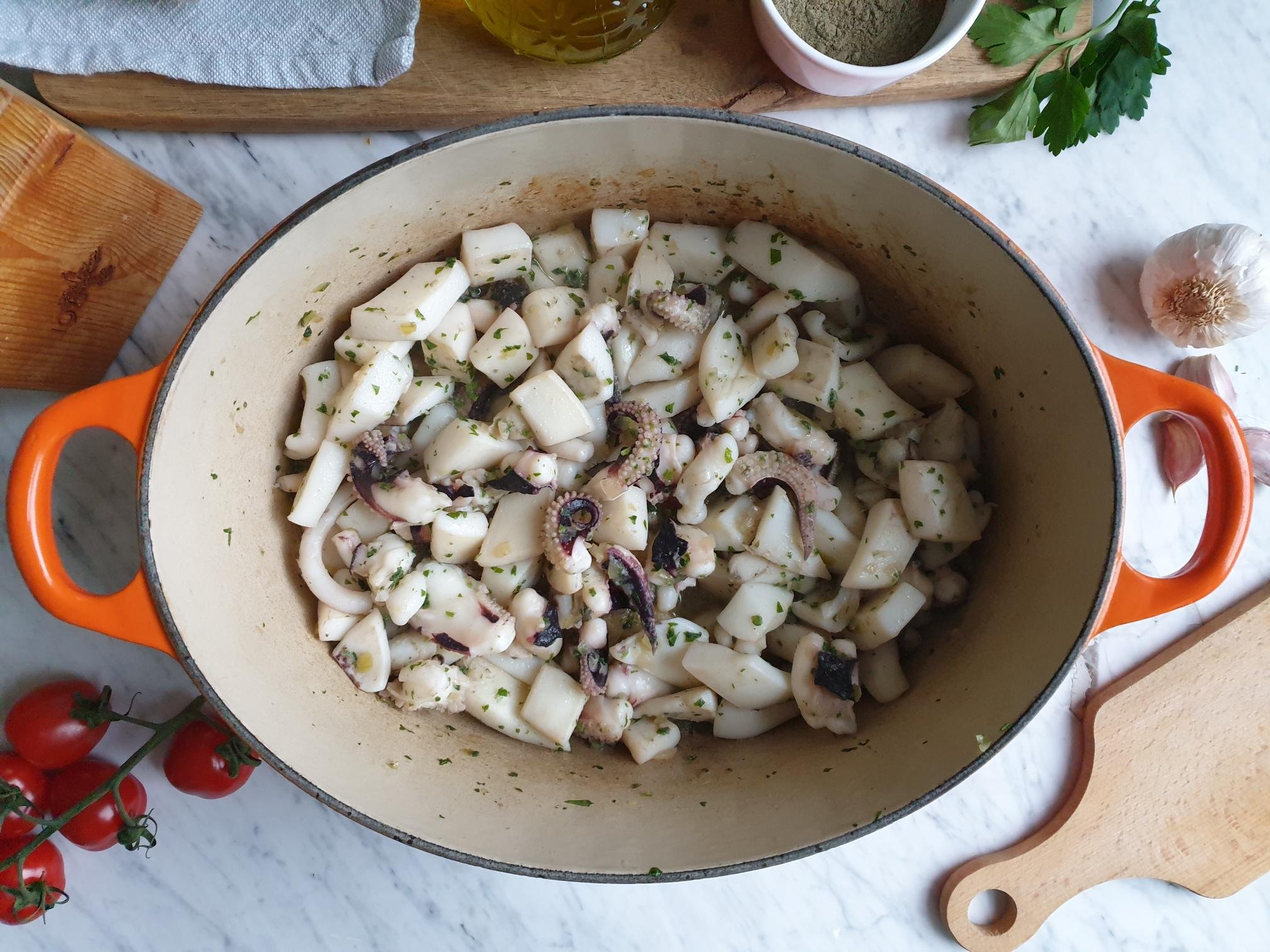
Put extra virgin olive oil in a pan or casserole dish, add finely chopped onion, crushed garlic, generous pinch of sea salt and fry gently until soft and lightly golden in colour.

Add finely chopped fresh parsley and mix together with fried onions and garlic.

View fullsize Cuttlefish 3.jpg
View fullsize Cuttlefish 4.jpg

Add the cuttlefish and fry further for about 2 minutes.

View fullsize Cuttlefish 5.jpg
View fullsize Cuttlefish in sauce 5a.jpg

Cuttlefish will start turning whitish in colour and release liquid.

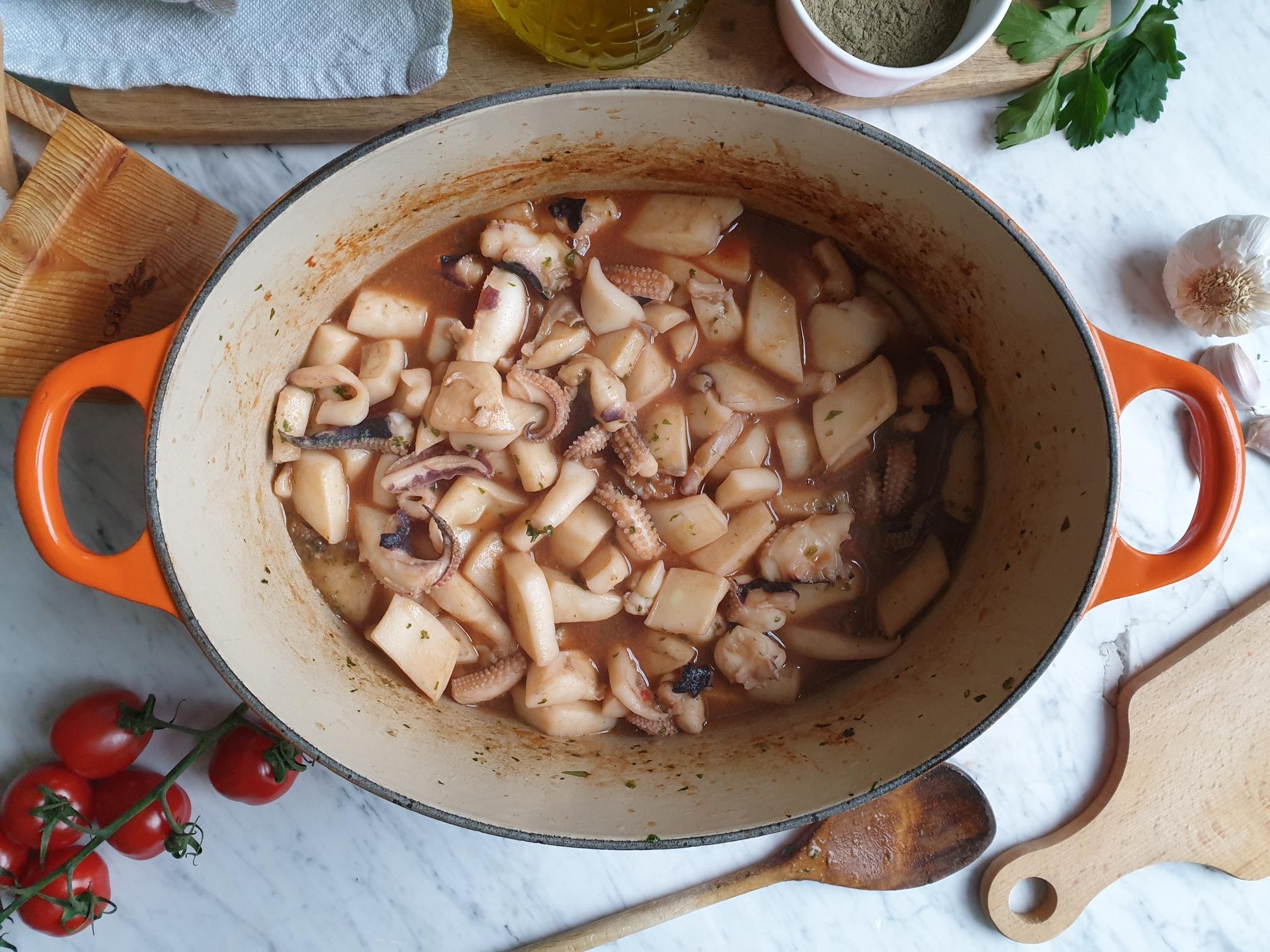
Add white wine, allow it to evaporate and reduce roughly by half.

Add tomato purée, water, sea salt and black pepper and stir together to combine. Bring to boil.

View fullsize Cuttlefish in sauce 6.jpg
View fullsize Cuttlefish  in sauce 7.jpg

Turn down the heat, partially cover with the lid and gently simmer for about 45minute to 1 hour, stirring occasionally. By this time the cuttlefish should be really very tender when you insert the fork into it. The final texture of the sauce should be velvety and thick and not too runny when you spoon it onto serving plates.

If the sauce is too thick add a little a bit of water to dilute it slightly, on the contrary, if the sauce is too runny and watery in consistency, cook further until the sauce thickens a bit.

Adjust the seasoning with sea salt and black pepper.

Sprinkle with some roughly chopped fresh parsley and serve hot with crusty bread, white or yellow polenta, soft cooked or grilled, or some boiled potatoes or cooked rice.

Just a thought

Braised cuttlefish can also be used as a base for making risotto or tossed with egg based fresh pasta.

Store in the fridge in an airtight container for no longer than two day suitable for freezing.

The traditional recipe does not call for red chilli but adding a tiny bit gives this dish a real nice kick without overpowering the “sweetness” of the cuttlefish.

Wine suggestion

"Gardelin" 2016 - Aleks Klinec

December 30, 2021 /tina oblak
cuttlefish, cuttlefish in light tomato sauce, slow cooked cuttlefish, seppia in umido, seppia in rosso, sipa na rdece
Adriatic Recipe, Autumnal dish, Autumnal recipe, dinner, Easy recipe, Festive dish, Fish & Seefood, healthy mael, Istrian cuisine, Istrian dish, Istrian food, Istrian gastronomy, main dish, Nutritious dish, one post fish recipe, one pot meal, Rustic dish, recipe from Northern Ital, Slovenian cuisine, Slovenian food, Slovenian gastronomy, stew, Winter dish, Winter recipe, main fish meal
Comment

Salted Cod in tomato sauce Istrian Recipe

Beans and Sardines
December 08, 2021 by tina oblak in Adriatic Recipe, Autumnal dish, Autumnal recipe, dinner, Easy recipe, Fish & Seefood, healthy mael, Istrian cuisine, Istrian dish, Istrian food, Istrian gastronomy, main course, main dish, Nutritious, Nutritious dish, one pot meal, Rustic dish, Slovenian cuisine, Slovenian food, Slovenian gastronomy, stew, Winter dish, Winter recipe, one post fish recipe, Christmas dish, Easter dish, Celebratory dish, Festive dish

Salted Cod in tomato sauce Istrian Recipe

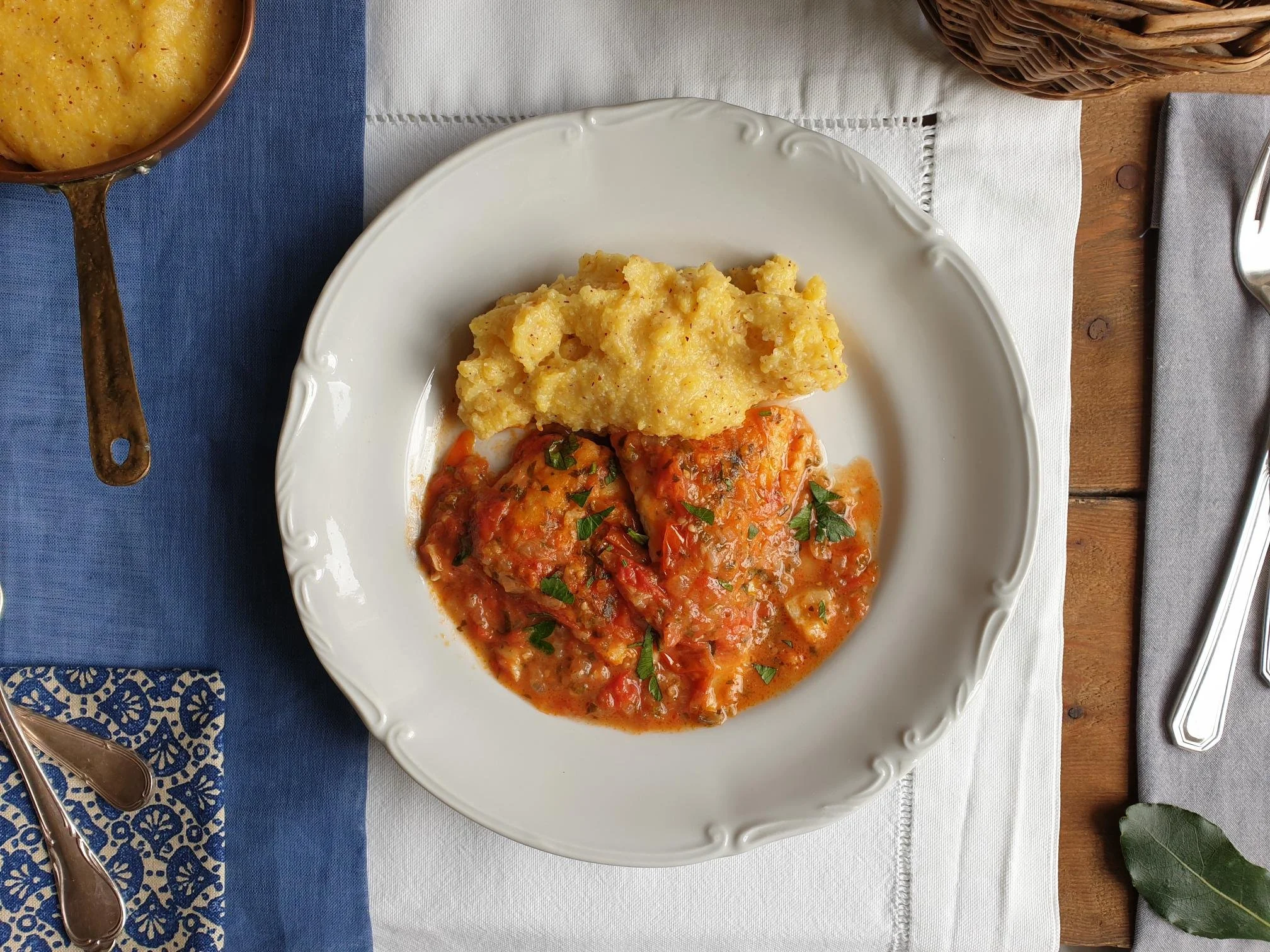
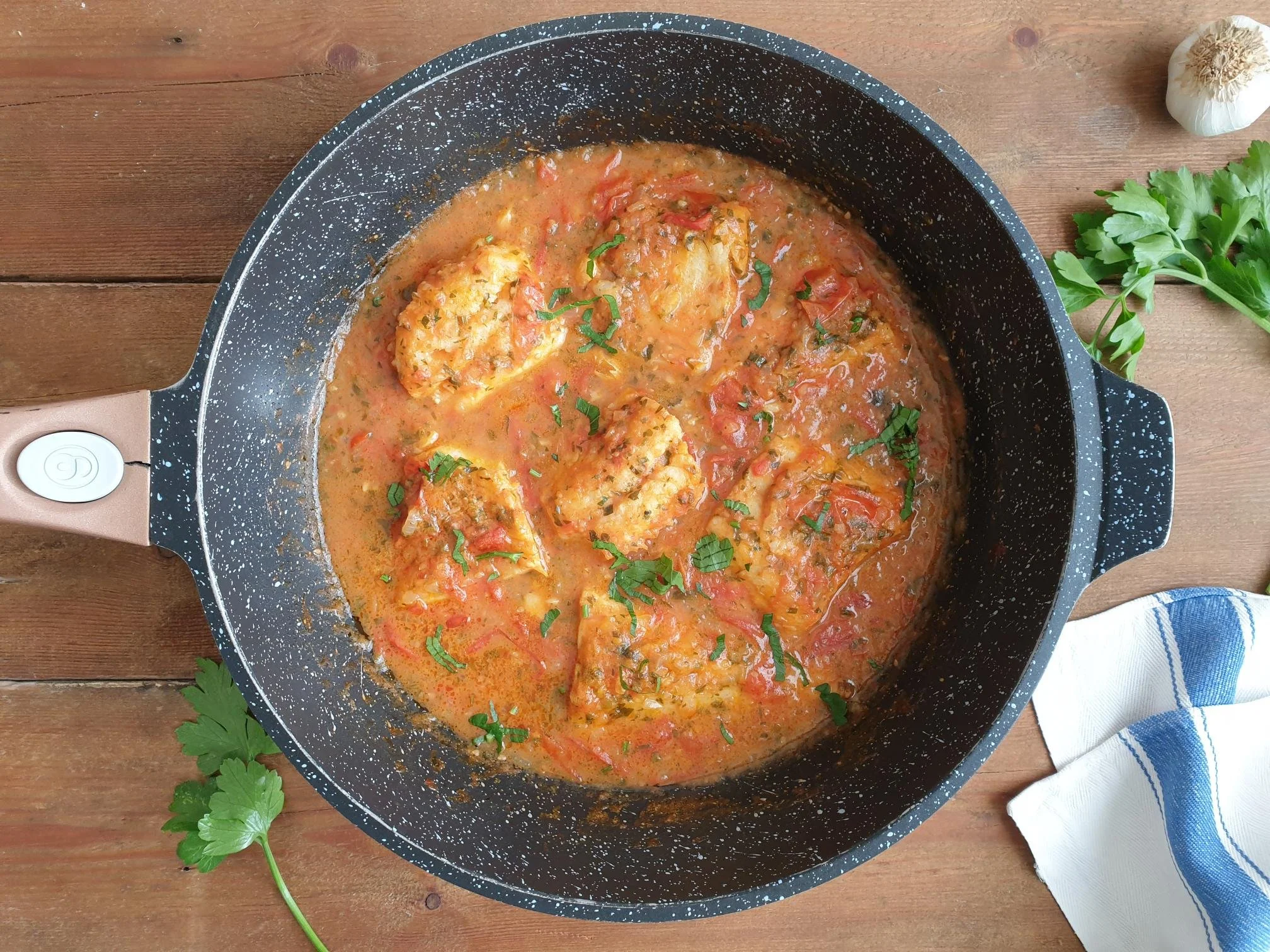
This main, fish based dish is absolutely delicious and very special! It is rustic but delicate and elegant at the same time - cod is cooked in a simple tomato sauce enriched with onions, garlic, and fresh parsley. It is very easy to make but it does require a bit of organization and planning ahead since it is traditionally prepared with dried stockfish or salted cod that needs to be soaked and hydrated, although in this recipe you have the option to use fresh cod or similar.

This recipe is a real classic holiday and festive dish in Slovenian Istra, and holds a very special place among the locals. Dried stockfish was once a food for the poor but nowadays is a staple dish and considered a delicacy taking central stage on household tables during Christmas and Easter as it is cooked on holy days during the fasting from meat.

Dried stockfish was introduced in Istria in 15th century from Venetian cuisine, and this should not be surprising since the Venetians established a monopoly in the Adriatic Sea.

The origins of this fish, however, is far away from being local dish. It can be traced to the extreme north of Norway, to the Lofoten Islands where the Vikings, most probably the earliest inhabitants of the area, had to find a solution to the perpetual problem of hunger. They fished enormous cod shoals, then they dried the headed and gutted fish in the strong winds of the north, hanging them by their tails, the fish turned as hard as a plank of wood and it would last for a very, very long time.

This dried fish eventually started to be sold by the Norwegians to the rest of Europe, sometime in the eleven century. Gastronomically speaking, and perhaps surprisingly, dried stockfish has not been particularly well appreciated by the Scandinavians. On the contrary, in the Mediterranean countries, stockfish became an elevated dish, it was highly valued, and much more appreciated.

The biggest consumers of dry cod, just to mention a few, are Italy, Spain, Portugal, Brazil, West Africa, Caribbean, and many other countries.

Local people back home, on the Slovenian coast, are very traditional and conservative when it comes to the choice of the ingredients and cooking, therefore the use of dried stockfish would be the first choice to prepare this dish. The use of less traditional salted pieces of cod would be the second choice influenced mainly by simplicity, practicality and speed, and this is the type of cod I I use for this recipe.

In the recipe description below I am also giving you the option to use fresh cod or a similar fish, if you have difficulty finding dried stockfish, salted cod or pre-soaked cod, or simply prefer to use fresh fish instead.

Here, in the United Kingdom, where I currently live, you can find and buy dried stockfish or salted cod (sold vacuum packed) in Italian delicatessen shops especially around Christmas and Easter or alternatively order it from your trusted fishmonger or from an on-line specialist shop.

I am sharing here this very special family festive recipe in honour of my father, who very sadly is no longer with us, and who absolutely adored preparing and enjoying this dish.

At the start of Christmas season, my father would buy dried stockfish, soaked it, cooked it, removed the skin and all the bones to be left with bite size pieces that would get vacuum packed and I would take the pack on the plane back to the UK...

Ingredients

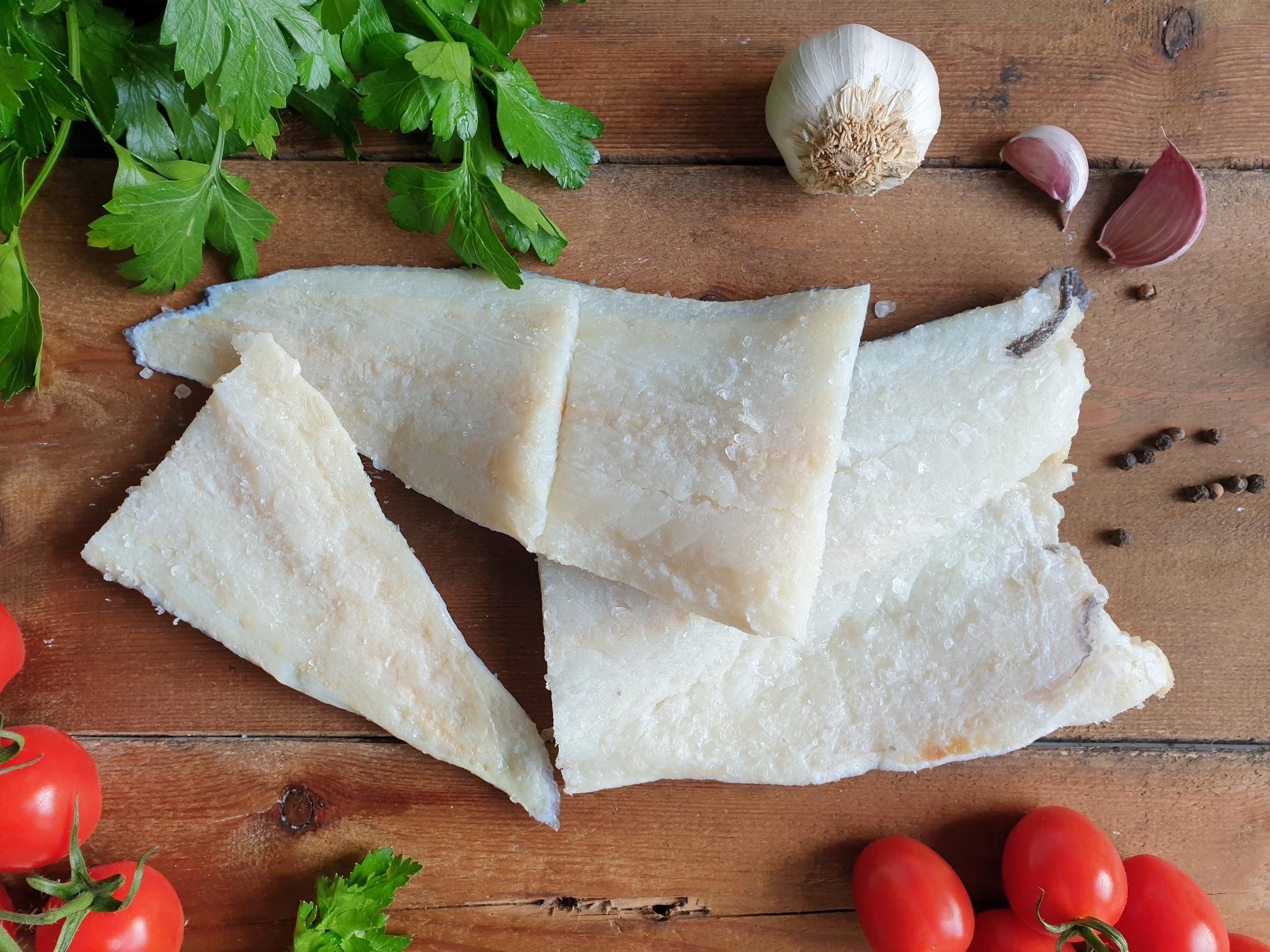
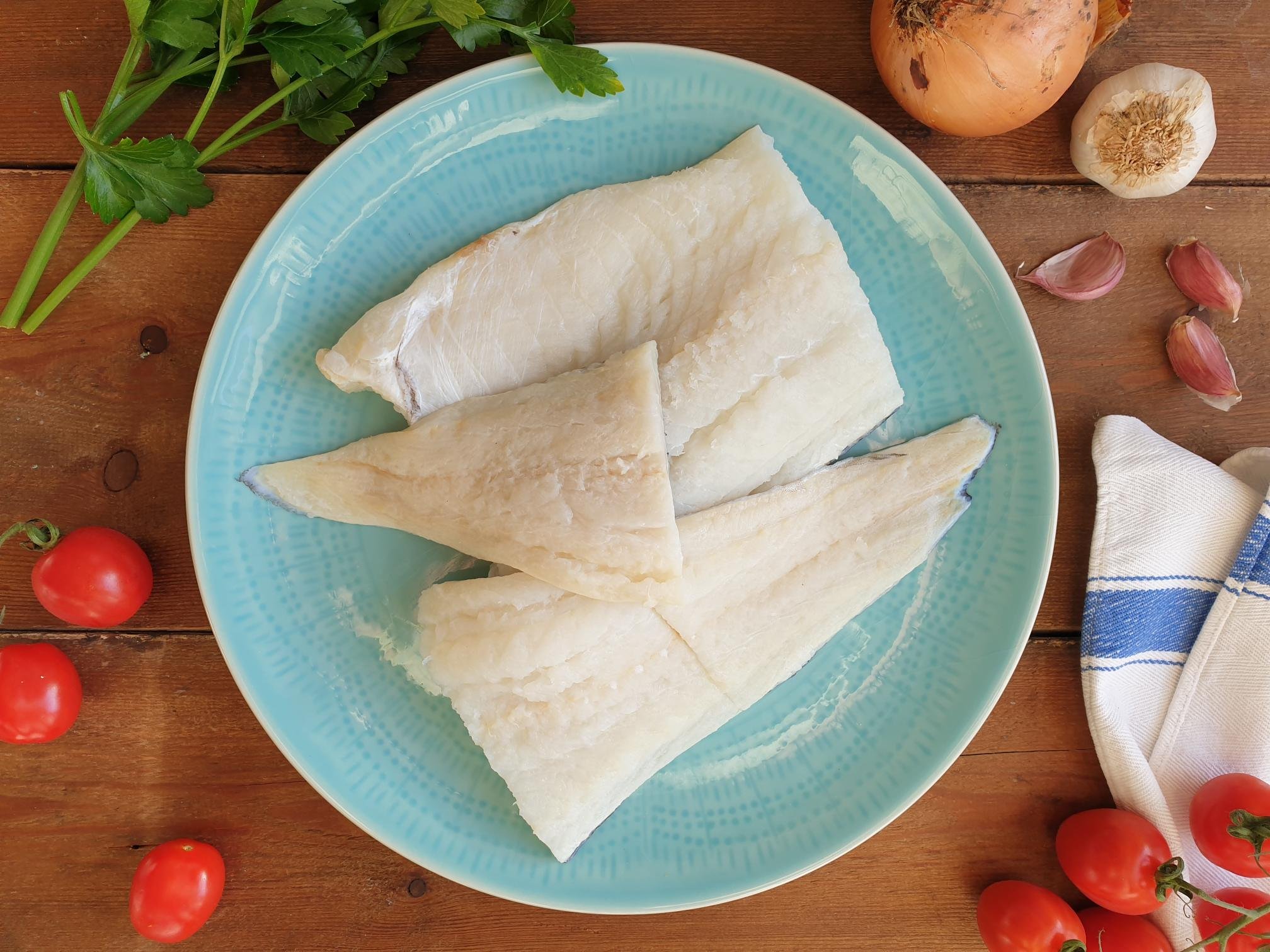
  • 500g salted cod or about 800g of already pre-soaked cod (soaked and rehydrated cod almost doubles its original weight) Both varieties are sold vacuum packed in form of fillets with no bones.

    (can use about 800g of fresh cod fillets or similar like haddock or pollock instead)

    Whole stockfish (unsalted, dry cod) is traditionally used for this recipe.

  • white flour (for coating the fish)

  • 2 Tbsp extra virgin oil

  • 1 medium onion (about 140g) finely chopped

  • 1 clove of garlic, peeled and crushed

  • 1 handful of fresh flat leaf parsley (about 12g)

  • 250g plum or other types of tomatoes (when in season), quartered or chopped. Use tomato passata, tinned chopped or plum tomatoes as alternative.

  • sea salt, if needed

Method

Serves 4

How you start this recipe will really depend on what type of cod you have.

1. If you have salted cod (I used this type for the recipe) first you need to rinse well the salted cod under very cold running water. Place rinsed cod in an airtight container, fill it completely with freezing cold water, and with some ice, if you have it, so the fillets are completely submerged. Close the lid and put the container in the fridge. Change the water after 24 hours and place in the fridge for another day. After 48 hours, the cod will be completely soaked. Remove the cod from the container, rinse well with cold water and tap dry with kitchen paper. Cut the fillet in portion size.

View fullsize Bacala in tomato sauce 1.jpg
View fullsize Bacala in tomato sauce 2.jpg

2. You can buy (a bit trickier to find, at least in the United Kingdom) already soaked and rehydrated cod. In this case just rinse with running cold water, tap dry and cut in portion size.

3. You can simply use fresh cod or similar like haddock or pollock fillets and cut it into portion size.

4. You can buy a whole dried stockfish. This could prove the trickiest option as the stock fish might be quite long and you need quite a big stock pot to fit it in, fill completely with very cold water and soak for at least 3 days, changing the water every day. If you do not have a very big pot to fit the whole stockfish you can use a smaller pot, like a regular 5 litre stock pot, and then place the stockfish in a pot, half of it will probably stick out, and half will be submerged in the water. Soak the submerged part of stockfish for 24 hours and after this time the soaked part of the stockfish will get soft enough to bend, which will allow you to bend it in a such a way for the whole stockfish to be completely submerged into the water in order to get properly rehydrated.

No need for rinsing as the dried stockfish is not salted. Soaked and rehydrated cod needs then to be cooked until tender, for about 1 hour or just over. When is cooked take the skin off and remove all the bones. You are left with portion size or smaller bite size piece ready to be used for this recipe.

Very lightly coat the pieces of cod in flour and shake off the excess.

Place oil in a pan (the pan should be big enough so all the pieces of cod are nicely tucked next to each other and do not overlap).

Add finely chopped onions, crashed garlic and sauté very gently until soft.

Place chopped tomatoes or passata in a pan and cook further for about 10 minutes stirring occasionally. If using fresh tomatoes make sure they are soft and use the back of a fork to squash a bit.

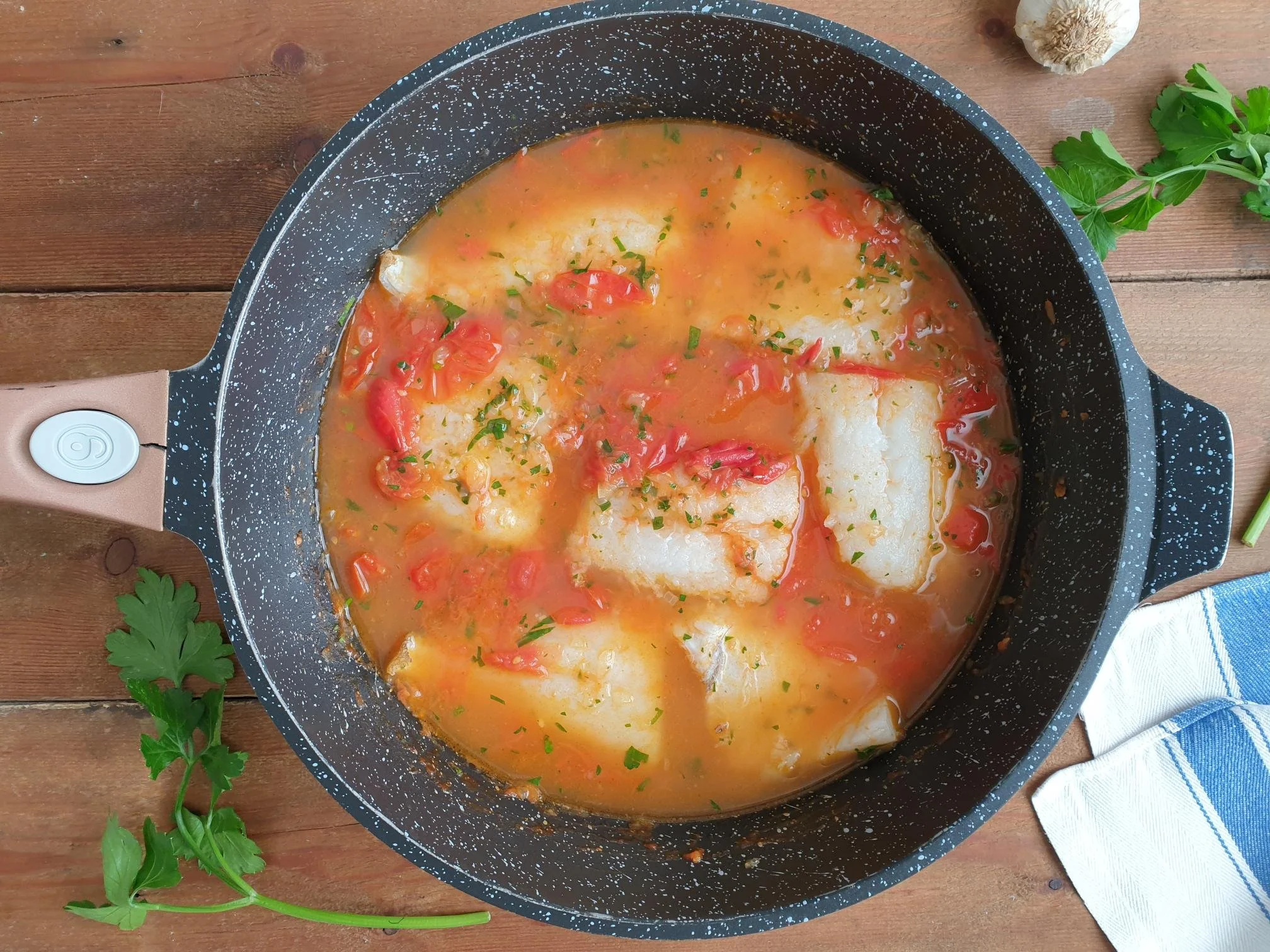
Place cod pieces in a tomato sauce, add finely chopped parsley and enough water to almost cover the cod fillets. If using fresh cod add the water half way up as it cooks quicker.

View fullsize Bacala in tomato sauce 3.jpg
View fullsize Bacala in tomato sauce 4.jpg

Partially cover with the lid and on a gentle heat cook for about 40 minutes, shaking the pan now and again. If using fresh cod the cooking time will be slightly reduced.

After this time you should end up with the velvety sauce that is not too thick nor too thin and liquidy.

If the the sauce, however, is too thin sprinkle a bit of flour or breadcrumbs and cook further briefly until you get the desired consistency.

Contrary, if the sauce gets too thick dilute it with a bit of water.

Taste and adjust the seasoning with sea salt especially if preparing this dish using dried stockfish or fresh fish. If using salted cod you will most probably not need any extra sea salt for seasoning, as although the fish gets soaked and desalinated, the fish still retains some of the salt, and this gets released during cooking.

Just a thought

This dish is traditionally served with soft cooked polenta or some crunchy bread to soak up the sauce.

Salted cod in tomato sauce can also be eaten with the pasta of your choice or it can be used as a base to make a risotto.

This dish will keep well in the fridge for few days in an airtight container and is suitable for freezing.

Wine suggestion

Pinot Bianco DOC 2020- Doro Princic

December 08, 2021 /tina oblak
salted cod in tomato sauce, dry stockfish in tomato sauce, pollock in tomato sauce, cod in to, cod in tomato sauce, haddock in tomato sauce, easy fish recipe, Istrian fish recipe, traditional Istrian fish recipe
Adriatic Recipe, Autumnal dish, Autumnal recipe, dinner, Easy recipe, Fish & Seefood, healthy mael, Istrian cuisine, Istrian dish, Istrian food, Istrian gastronomy, main course, main dish, Nutritious, Nutritious dish, one pot meal, Rustic dish, Slovenian cuisine, Slovenian food, Slovenian gastronomy, stew, Winter dish, Winter recipe, one post fish recipe, Christmas dish, Easter dish, Celebratory dish, Festive dish
Comment

Barley, potato and borlotti beans Istrian soup Recipe

Beans and Sardines
December 01, 2021 by tina oblak in Adriatic Recipe, Appetizers, Autumnal dish, Autumnal recipe, Central European recipes, dinner, Eastern European recipes, Easy recipe, entrée course, healthy mael, Istrian cuisine, Istrian dish, Istrian food, Istrian gastronomy, main course, main dish, Nutritious dish, one pot meal, Rustic dish, Slovenian cuisine, Slovenian food, Slovenian gastronomy, Soups, Starters, stew, supper, Vegan, Vegetarian, Winter dish, Winter recipe, winter minestrone, winter soup

This hearty and filling one pot barley soup is a traditional soup from Slovenian Istra, a perfect choice to warm you up on a cold day, delicious in its simplicity, and it could not be easier to make.

Barley soup is a very popular choice in many households and is found on the menus as Ječmenova mineštra in more rustic, informal, mountainside, and family run restaurants.

Barley soup together with other types of soups like Jota (sauerkraut, borlotti beans and potato stew), Bobići (Sweet corn soup), Pasta e fasoi (Pasta and borlotti beans soup) play an incredibly important role in Istrian cooking as the soups were eaten as a main dish and sometimes the only hot meal of the day. The choice of the ingredients to make mineštre/maneštre (Istrian dialect word, from Italian minestra, indicating thicker soup) would rely exclusively on the type of vegetables and pulses that were available during a particular season.

Barley soup is traditionally made during colder autumn and winter months using dry borlotti beans, potatoes and barley that were harvested by the end of summer and autumn and appropriately stored to be used later in the year when the cold weather did not allow you to grow a vast array of vegetables, unlike during the spring, when it was warmer, and you could grow them in abundance to make even a lighter Minetrone Primavera.

In Slovenian Istra it is very common to put in some soups, besides different pork cuts, dried ham bone or pešto or taca (smooth paste made with pancetta, crushed garlic and very finely chopped parsley) to boost the flavour of the dish.

Traditionally this recipe calls for some unsmoked or smoked pork meat cuts to be added to the soup however you can turn this soup into a vegetarian and vegan friendly dish by simply leaving out the meaty component.

This family recipe really goes back generations. I am sharing with you the recipe for barley soup from my paternal nona's grandmother.

Ingredients

Serves 8-12

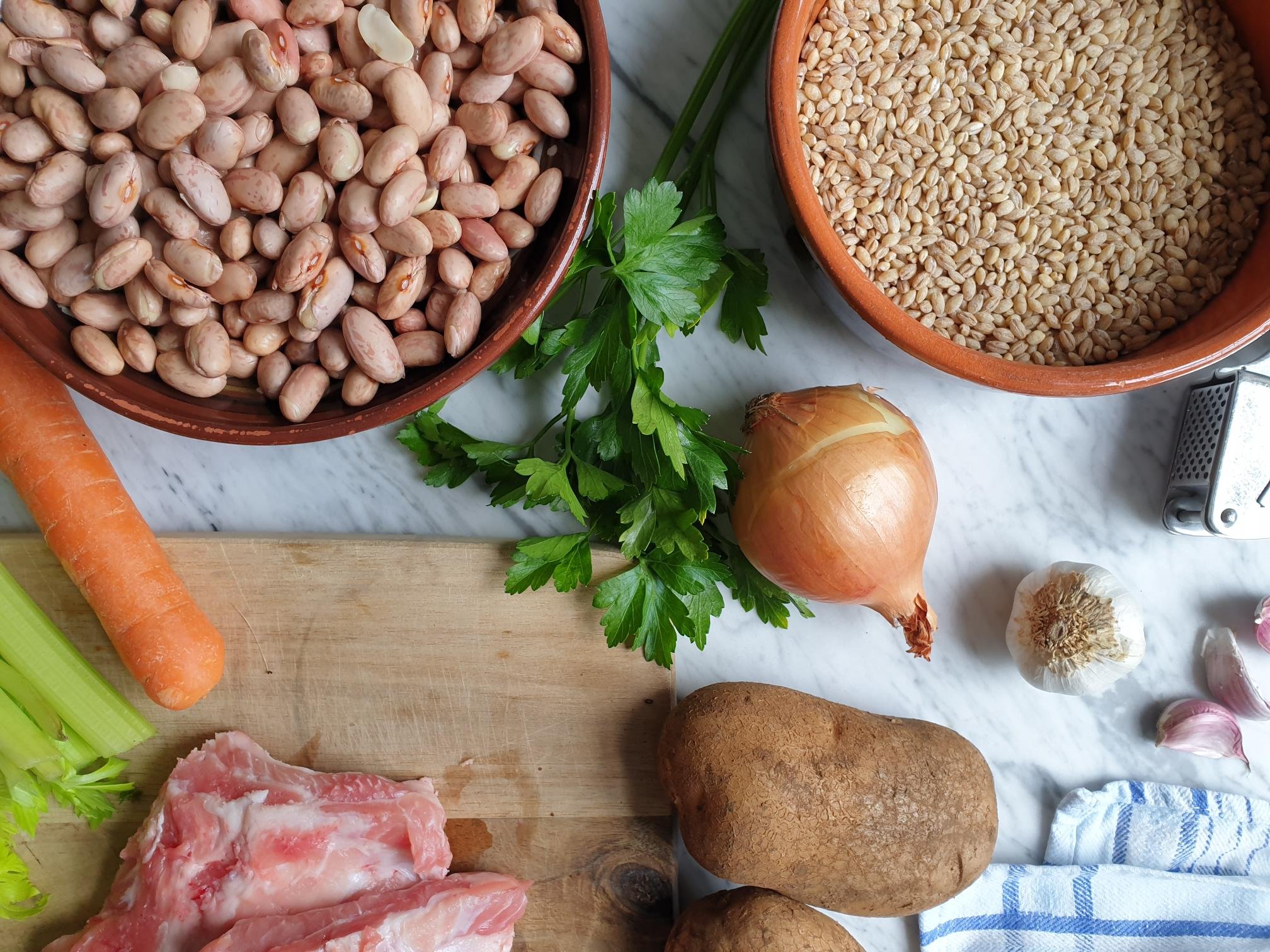
  • 300g dried borlotti beans, soaked overnight

  • 300g pearl barley

  • 500g roughly of pork ribs, ham hock, pig trotters or similar (slab of pancetta or bacon, about 130g). You can use smoked version of the meats if you prefer a slightly deeper smoky flavour or a combination of both.

  • 2 medium size potatoes (about 300g), peeled and cubed

  • leaves from 2-3 sticks of celery

  • 1 medium size onion (about 130g), finely chopped

  • 1 clove of garlic, peeled and crushed

  • 1 medium size carrot (about80g) peeled and finely grated

  • handful of fresh flat leaf parsley (about 15g) finely chopped

  • 1 bay leaf, fresh or dry

  • sea salt

  • black pepper

Method

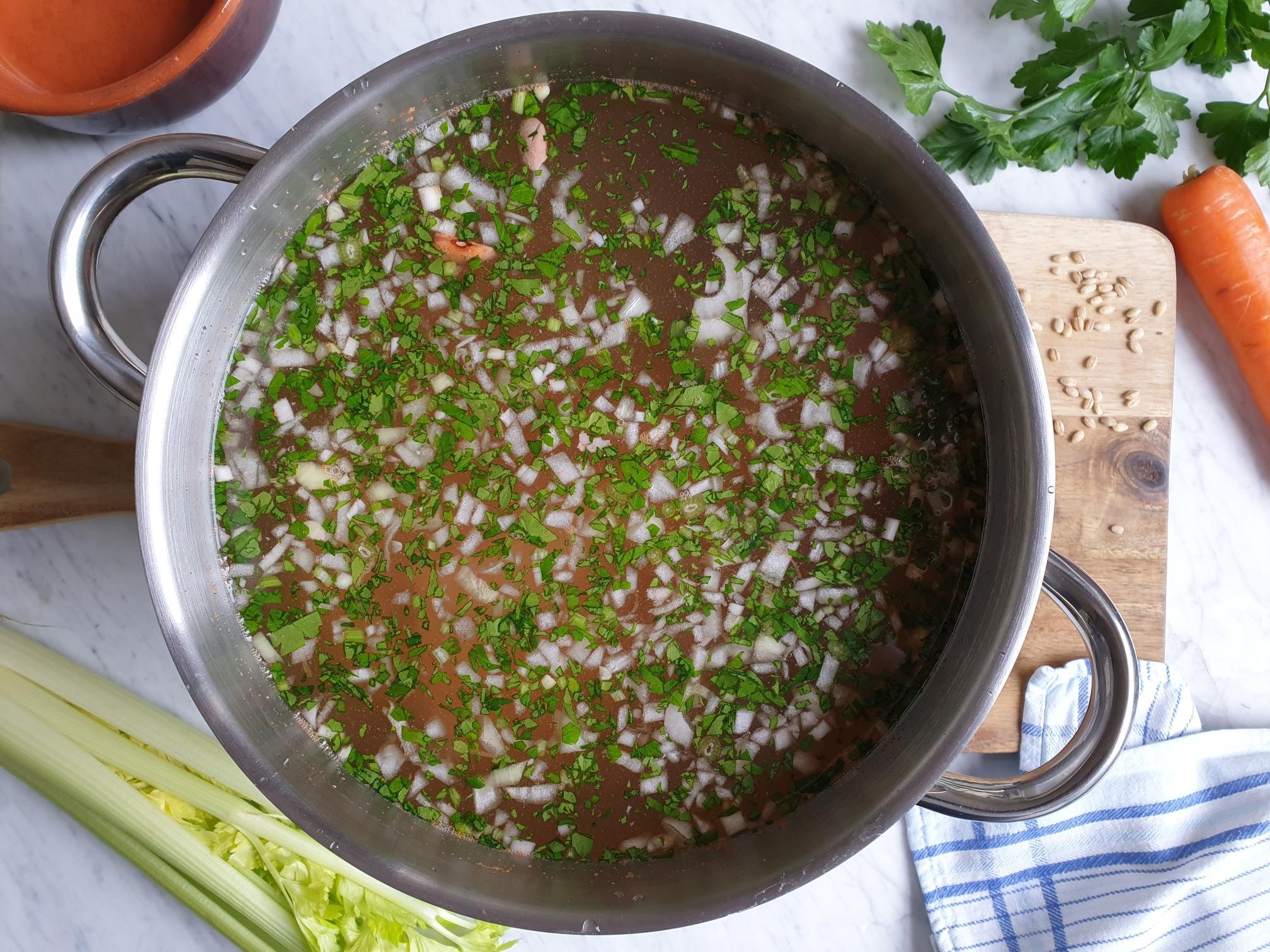
In a fairly big stock pot place all the ingredients, except the sea salt and black pepper, add 4 ½ litres of cold water and bring to boil.

Turn the heat down and skim the surface as needed.

Cover partially with the lid and cook the soup on a gentle heat for about 1h ½.

View fullsize Barley soup 2.jpg
View fullsize Barley soup 3.jpg

After this time the soup should have a nice thicker velvety consistency as the potatoes and the barley release the starch. If the soup gets too thick simply dilute it with a bit of water.

Season with sea salt and black pepper, taste and adjust the seasoning.

Just a thought

Barley soup will keep well in a fridge for few days and is suitable for freezing.

Wine suggestion

Search results for 'Refosco dal Peduncolo Rosso DOC "Villa Locatelli" 2019 - Tenuta di Angoris

December 01, 2021 /tina oblak
barley soup, barley, potato and borlotti beans soup, barley minestrone, barley potato and borlotti beans minestrone, one pot barley soup, Istrian barley soup, Istrian barley minestrone
Adriatic Recipe, Appetizers, Autumnal dish, Autumnal recipe, Central European recipes, dinner, Eastern European recipes, Easy recipe, entrée course, healthy mael, Istrian cuisine, Istrian dish, Istrian food, Istrian gastronomy, main course, main dish, Nutritious dish, one pot meal, Rustic dish, Slovenian cuisine, Slovenian food, Slovenian gastronomy, Soups, Starters, stew, supper, Vegan, Vegetarian, Winter dish, Winter recipe, winter minestrone, winter soup
Comment

Rabbit Goulash Istrian Recipe

Beans and Sardines
November 18, 2021 by tina oblak in Adriatic Recipe, Autumnal dish, Autumnal recipe, Central European recipes, dinner, Eastern European recipes, Easy recipe, Istrian cuisine, Istrian dish, Istrian food, Istrian gastronomy, main course, main dish, main meat course, Meat, one pot meal, Rustic dish, Slovenian cuisine, Slovenian food, Slovenian gastronomy, stew, Winter dish, Winter recipe

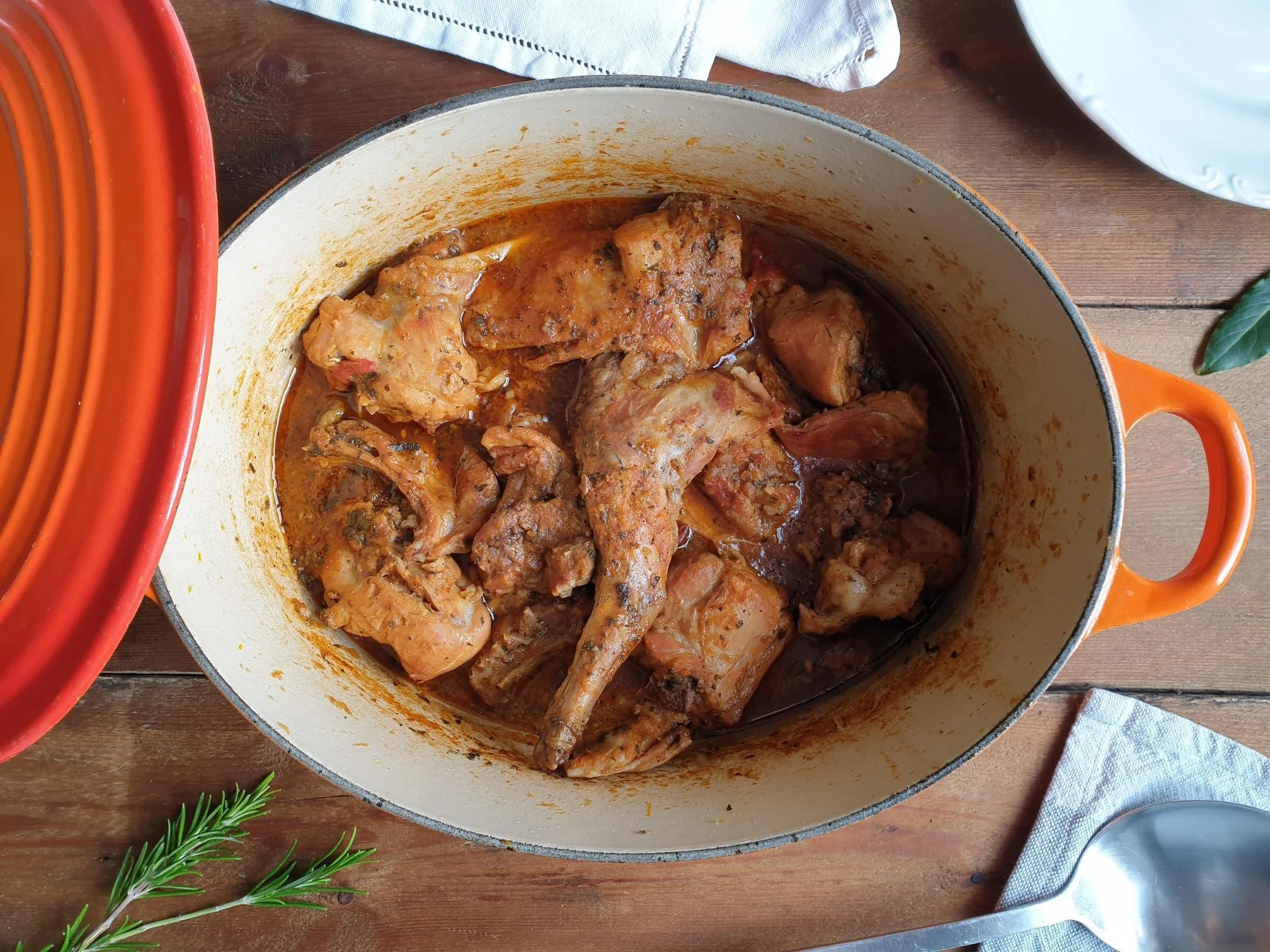
Rabbit goulash is a hearty, peasant meal, and a real comfort dish for the coming cold winter evenings. It is made with only few ingredients, but when cooked well, it makes a delicious one pot meal that is fit for a king (and not only a peasant), and even for these cooler autumn days, it will warm you up nicely and make you feel cosy.

This dish is a part of Istrian žgvacet, collective term indicating traditional stew or goulash made with pieces of meat like chicken, beef, or venison, and is cooked in a sauce.

In Istria, rabbit goulash is one of the staple dishes and can also be called by locals šugo z zajcem (zajec meaning wild rabbit) or kunčji golaž (kunec meaning home bred rabbit).

My paternal nona shared with me that in rural households it was very common to keep a small holding of chickens, rabbits, and turkeys, to name just a few animals, that represented a vital source of meat, although this hearty meat dish was almost strictly reserved for special occasions and festivities, and traditionally eaten accompanied with home made potato gnocchi or home made pasta like bleki or soft cooked polenta or some crunchy bread to soak up the sauce.

Serving rabbit goulash with mashed or roasted potatoes is less traditional but quite common.

Rabbit meat, which can be a great alternative to a chicken, is available to buy fresh at speciality markets and can be ordered by your local butcher who will be more than happy to prepare it for you.

In this recipe the whole rabbit is used, even the parts that have very little or no meat on them like the ribs. They will truly add crucial flavour to the goulash, even though you can remove them, and discard these bits later on.

This dish, like most stews, tastes almost better the following day when is reheated as the all the flavours get the chance to mix and fully develop.

Rabbit goulash has always been a classic in Istria and in my family during colder autumn and winter months, served very often during the days leading up the Christmas and New Year.

I am sharing here my family traditional recipe for rabbit goulash made with wild or farmed rabbit that can be replaced by chicken if you cannot get hold of a rabbit, or are simply not keen on this type of meat.

Ingredients

Serves 4-6

  • 1-1.5kg wild or farmed rabbit, skinned and jointed (your butcher will be more than happy to do that for you), even though you can use chicken instead.

  • 1 onion, medium size (about 200g), finely chopped

  • 1 clove of garlic, peeled and crushed

  • ½ carrot (about 40g) finely grated

  • 4 Tbps extra virgin olive oil

  • fresh herbs (about a handful), finely chopped (rosemary, sage, marjoram and thyme, tip of fresh or dry bay leaf)

  • 2-3 fresh plum tomatoes, quartered, or half of tomato, roughly chopped, optional

  • 1 Tbsp tomato purée

  • sea salt

  • round black pepper

Method

Place extra virgin olive oil in a big casserole or stewing pan, add finely chopped onions, finely grated carrot, crushed garlic and jointed pieces of rabbit.

On a gentle heat, fry all together until the onions are soft and caramelised and rabbit deep golden in colour on both sides, stir occasionally.

Add finely chopped fresh herbs, quartered tomatoes, tomato purée, sea salt and ground black pepper.

View fullsize Rabbit Goulash 2.jpg
View fullsize Rabbit Goulash 3.jpg

Add about 500ml water, or enough to almost cover the rabbit meat. Scrape with the wooden spoon all the bits that stuck to the bottom of the pan. Bring to boil and then lower the heat.

Cover partially with the lid and gently simmer for 1-1½ hour.

After this time, the meat will be so tender and just fall off the bone and the sauce should of a nice consistency, not too thick nor too thin. You should end up with enough sauce to be used for potato gnocchi or pasta.

Taste and adjust seasoning with sea salt and black ground pepper.

View fullsize Rabbit Goulash 4.jpg
View fullsize Rabbit Goulash 5.jpg

There are two ways of serving this dish.

You can leave whole pieces of rabbit and serve it with soft cooked polenta, roasted or mashed potatoes or simply with nice crunchy bread.

Alternatively, you can take all the meat off the bone, put it back in a pan and mix with the sauce adding to it potato gnocchi or pasta. Reserve some of the starchy cooking liquid from pasta or gnocchi to dilute the meaty sauce to obtain a velvety consistency. Dish served like this might not look the most attractive but you will be well reworded by the taste and flavours.

Just a thought

Rabbit goulash will keep in the fridge up to 3-4 days in an airtight container. This dish also freezes very well, but before using it, defrost in the fridge overnight and reheat well.

Wine suggestion

Friuli Colli Orientali Merlot DOC "Vigne Cinquant’anni" 2016 - Le Vigne di Zamò

November 18, 2021 /tina oblak
hearty dish, wild rabbit, rabbit, rabbit meat
Adriatic Recipe, Autumnal dish, Autumnal recipe, Central European recipes, dinner, Eastern European recipes, Easy recipe, Istrian cuisine, Istrian dish, Istrian food, Istrian gastronomy, main course, main dish, main meat course, Meat, one pot meal, Rustic dish, Slovenian cuisine, Slovenian food, Slovenian gastronomy, stew, Winter dish, Winter recipe
Comment

Jota – Sauerkraut, beans and potato stew Istrian Recipe

Beans and Sardines
November 10, 2021 by tina oblak in Adriatic Recipe, Central European recipes, dinner, Eastern European recipes, Easy recipe, entrée course, healthy mael, Istrian cuisine, Istrian dish, Istrian food, Istrian gastronomy, main course, main dish, Mitteleuropean recipes, Nutritious dish, one pot meal, recipe from Northern Ital, Rustic dish, Slovenian cuisine, Slovenian food, Slovenian gastronomy, Soups, Starters, stew, supper, Vegan, Vegetarian, Autumnal recipe, Autumnal dish, Winter recipe, Winter dish

Jota, pronounced 'yota,' is a very old recipe for a stew made of sauerkraut, dried borlotti beans, potatoes and some kind of pork cuts. It is believed that the word jota derives from Celtic word “jutta” indicating a liquidy soup.

Jota is filling and makes a perfect choice for a comfort food when the first cold starts as it will warm your body and soul. It is really easy to make, healthy, inexpensive, and it has become a staple and much loved dish in Slovenian households. Jota, being also very nutritious, is served in nurseries, schools, care homes for elderly, and family run informal restaurants, as well as being one of the most requested dishes from hikers and skiers in mountainside restaurants.

This hearty stew is incredibly humble and proper peasant food as it was born out of necessity and from what was available. My paternal nona told me that most of the households in the countryside, where she was growing up (a little village called Marezige just a few kilometres from the coastal town Koper), would have a wooden barrel of home made sauerkraut, sacks of potatoes and dried borlotti beans, and if you were lucky enough, a pig or a few pigs that would eventually get slaughtered and provided a very precious meat. The better cuts of pork meat were used for drying and curing and for what was considered a very rare and luxurious roasts while less prestigious cuts were put in soups and stews to enrich the flavour.

This very poor dish comes from the region of Primorska near the Adtriatic Sea and it is considered a quintessentially, one of the most famous Istrian peasant dishes, also enormously popular in Trieste and province of Trieste in Italy.

According to Anna Gosetti della Salda, in her book, Le ricette regionali Italiane, Jota (or Jote) was widely made over the whole region of Friuli (Italy), the area bordering with Slovenia, but towards the end of last century the use of jota was limited almost exclusively to the Valli di Gorto and Pesarina in Carnia.

The use of sauerkraut in all these regions, referred to as kapus in the Istrian dialect, is a testimony to how strongly the Austro-Hungarian Empire influenced the dishes in these areas.

Like with most dishes in the culinary world, it is no surprise that there are some variations in the recipe for Jota as well. The most common variation of Jota is without potatoes, and instead, a bit of flour is used to thicken the soup, and another common variation is making jota using sour turnip (called kisla repa in Slovenian).

In some variations, also used by both my mother and my nona, besides the use of different pork cuts, pešto or taca (smooth paste made with pancetta, crushed garlic and fresh, very finely chopped parsley) would be used. This was done, once again, to boost the flavour of the dish.

In some parts of Slovenia that are geographically closer to Hungary, a small quantity of powdered smoked sweet Hungarian paprika will be added to jota.

Before serving this sauerkraut stew, different cuts of pork, that have been cooked in jota, are removed from the bone, sometimes shredded and then returned and mixed into a soup. It is also very common to remove the meats from the soup and serve it later as a separate course.

Different cuts of pork can be used to enrich the flavour of this stew, but it is equally delicious without the meaty element and so it makes a lovely vegetarian and vegan meal.

My nona also “jokingly” shared with me, that to make a really good jota you need three days. The first day for soaking the beans, the second day for cooking Jota and the third for eating it, and enjoying it after it has rested, and all the flavours had a chance to fully develop. It is up to you whether you want to follow my nona three day rule.

I do, no wonder it turns out delicious...

Here I am sharing my family recipe for jota.

Ingredients

Serves 6-8

  • 300g dry borlotti beans, soaked overnight or least for 4 hours

  • 650g -1kg sauerkraut, drained and rinsed

    (I am giving you an approximate amount of sauerkraut to be used in this recipe as it can be flexible. The amount you use will depend on what you can find in your local food store. Sauerkraut is normally sold in either glass jars or sometimes in sealed plastic bags and they will indicate on the label both total net weight (with the liquid) and drained weight, and the latter is the weight you need to look for.

  • For this recipe I bought a glass jar of sauerkraut with total weight of 680g and 650g drained weight which is the amount of sauerkraut I used for the soup).

  • 2 bay leaves, fresh or dry

  • 500g or more, pork ribs (can use ham hocks or similar)

  • 100-200g g smoked bacon lardons (can use smoked cubed pancetta, a slab of bacon or pancetta, chopped strips of smoked bacon or similar)

    (The use of combination of smoked and unsmoked meat element is quite important, as it really gives that traditional and typical Jota flavour, but it is also very flexible. You can, if you prefer, only use unsmoked meats or all smoked for a deeper smoky flavour. Traditionally a bone or outer rind of dry cured ham would be used in order not to waist anything, and it is also packed full of flavour.

  • few black peppercorns, 4-6

  • 2 cloves of garlic, peeled and crushed

  • 3 fairly big potatoes about 600-800g, peeled and cubed

  • 2 Tbsp extra virgin olive oil

  • 2 tbsp tomato paste (optional)

  • sea salt

Method

There are three simple stages to make jota.

Stage 1

Drain previously soaked beans in a colander, rinse with cold running water and drain again.

Transfer the beans to a very big pot (5 litre at least, where jota will be cooked), add the meats, bay leaf and 5 litre of cold water. Bring to boil over high heat, turn the heat down to a medium low and cook the beans, partially covered with the lid for about 1 hour until the beans are just soft. Skim any foam that rises to the surface, you might have to repeat this process few times.

Do not add sea salt at this point as this will make the skin of the beans hard causing them to crack during the cooking.

Stage 2

Place the sauerkraut in a colander and drain, rinse briefly but thoroughly with cold running water and drain again.

Transfer the sauerkraut in a pan, add a pinch of salt, peppercorns, crashed garlic, bay leaf, olive oil and cold water just enough to cover the sauerkraut.

Bring to a boil, lower the heat and cook for about 30 minutes. After this time, transfer the sauerkraut to a big bean pot.

Stage 3

Peel, wash, cube the potatoes and place them in pan. Cover completely with water, bring to boil, turn the heat down and cook for about 30 minutes until the potatoes are soft when pierced with the tip of a knife.

Drain the potatoes in a colander or with the slotted spoon transfer the potatoes to a large plate or bowl. With the back of the fork coarsely mash half of the potatoes and leave the other half cubed.

Transfer coarsely mashed and cubed potatoes in a big pot with beans.

Partially cover with a lid the big pot with beans, sauerkraut and potatoes and continue cooking on a gentle heat for another hour. All three elements will mix and blend together and the soup will start thickening. Taste and adjust seasoning with sea salt and freshly ground black pepper.

The soup should be quite thick but still have enough liquid to be able to ladle it nicely on the plate.

If jota gets too thick just add a bit of water to dilute it.

When jota is cooked, depending on what type of meats you use, take the meat of the bones, discard skin and bones and transfer pieces of shredded meat to the soup if you wish.

Discard the bay leaves before serving jota hot with a nice piece of crunchy bread.

Just a thought

Jota will keep well in a fridge for few days and is suitable for freezing.

If jota gets too thick, simply dilute it adding a bit of water, bring to boil and serve hot.

Wine suggestion

Venezia Giulia Pinot GrigioIGT 2019 – Azienda Agricola Pierpaolo Pecorari

November 10, 2021 /tina oblak
Sauerkraut recipe, Istrian sauerkraut stew, Istrian sauerkraut soup, hearty stew, comforting stew, borlotti beans, potatoes, autumnal stew, winter stew, winter dish
Adriatic Recipe, Central European recipes, dinner, Eastern European recipes, Easy recipe, entrée course, healthy mael, Istrian cuisine, Istrian dish, Istrian food, Istrian gastronomy, main course, main dish, Mitteleuropean recipes, Nutritious dish, one pot meal, recipe from Northern Ital, Rustic dish, Slovenian cuisine, Slovenian food, Slovenian gastronomy, Soups, Starters, stew, supper, Vegan, Vegetarian, Autumnal recipe, Autumnal dish, Winter recipe, Winter dish
2 Comments
Stuffed Peppers 7.jpg

Stuffed peppers with minced meat and rice in a tomato sauce Istrian Recipe

Beans and Sardines
October 20, 2021 by tina oblak in Adriatic Recipe, Appetizers, Balkan dish, Central European recipes, Eastern European recipes, Easy recipe, Istrian cuisine, Istrian dish, Istrian food, Istrian gastronomy, main dish, Rustic dish, Slovenian cuisine, Slovenian food, Slovenian gastronomy, Starters, one pot meal, baked dish

This Balkan dish made of peppers, stuffed with a mix of minced meat and rice and cooked or baked in a rich tomato sauce is very rustic, unpretentious, hearty and traditionally made during summer months, end of summer and early autumn.

Yes, there are a few steps to this recipe, but it is very simple to make and there is absolutely nothing complicated about it.

Stuffed peppers is a dish that is common in many cuisines around the world and generally consists of peppers getting halved or hollowed and then stuffed with a variety of different fillings such as meat, rice, vegetables, cheese, fish etc.

This dish, with its many variations, can be found in Greece, Central and Southeast Europe, Scandinavian and Baltic countries, Guatemala, North America Eastern Mediterranean, India and Spain.

It is in Eastern Mediterranean that stuffed peppers are part of Dolma, a word of Turkish origin, meaning “something stuffed” and it indicates a family of stuffed dishes originating from Ottoman Cuisine. The Ottoman Empire directly administered a vast territory, and eventually reached the Balkans and the area not far from the Istrian peninsula, where I come from, and this is why they strongly shaped the local cuisine.

As a result of this historical influence, there is no surprise that in the whole of Slovenia and in coastal Istria, stuffed peppers, known as Filana paprika or Polnjena paprika become integral part of the local diet and can be found on the menus informal family run restaurants, and it is one of the most frequently made dishes in many households.

I like to call this dish “a generational dish” since it is very much loved across different generations in the family, so when stuffed peppers are on the menu, everyone leaves the table happy.

Stuffed peppers are traditionally served with plenty of creamy mashed potatoes or just a lot of rice and bread. What is not to like about this dish?

Everyone in the family makes delicious stuffed peppers but this dish tastes super special and extra delicious when my brother cooks them. They are most often made a day in advance so all the flavours can fully develop and then gently reheat it. This is when they taste at their best.

I am sharing here my brother's recipe for stuffed peppers baked in the oven.

Ingredients

Serves 4-8 (depending if you are serving one or two stuffed peppers per person)

  • 7-9 bell peppers, mixed colour or use just the ones that you prefer. The number of the peppers will depend on their size and also on the size of the dish you will use for this recipe and into which they need to fit. I used 8 medium size mixed peppers. (Babura type of peppers is a variety of peppers most commonly used for this recipe).

  • 400g mince beef

  • 400 mince pork

  • 100g rice, any risotto type rice like Arborio, Vialone Nano, Carnaroli will work well

  • bigger size onion (about 170g), finely chopped

  • 4 cloves of garlic, peeled and crushed

  • 2 Tbsp extra virgin olive oil

  • sea salt

  • black pepper, finely ground

Sauce

  • 2 tinned finely chopped tomatoes (2x400g), the best quality you can afford

  • medium size onion, finely chopped

  • 2 cloves of garlic, peeled and crushed

  • 4 Tbsp extra virgin olive oil

  • few fresh basil leaves

  • sea salt

Method

Before starting this recipe, I suggest you do a little test to see how many peppers will you actually need. Take the ovenproof dish you intend to bake the stuffed peppers in and see how many peppers will fit in it.

For this recipe you can use a deep baking tray and cover stuffed peppers with an aluminium foil.

Stuffed Peppers 1.jpg

Start by making a simple tomato sauce. Put extra virgin olive oil in a pan, add finely chopped onions, a pinch of salt and fry on a gentle heat until the onions become soft. Add crushed garlic and fry gently together with the onions just for a minute or so. Add tinned tomatoes, few fresh basil leaves, bring to the boil, turn the heat down, partially cover with the lid and gently simmer for about 30 minutes, stirring occasionally. By this time, the sauce should have a nice rich velvety consistency.

Prepare and clean the peppers. Cut off the top part and remove white little seeds from inside the peppers. Rinse the outside and the inside of the peppers with cold running water. Dry the peppers a bit with a kitchen towel or kitchen paper.

Stuffed Peppers 2.jpg

Take a griddle pan (if you have it, otherwise non stick pan will work just fine) and heat it until very hot. Place the peppers in a pan and charcoal grill them on all sides. The skin of the peppers will burst slightly and turn a bit black giving the peppers a slightly smoky flavour. Cool the peppers and set aside.

Charcoal grilling the peppers first will really give and extra dimension in terms of the flavour to the dish, however, you can skip this step.

Stuffed Peppers 5.jpg

Cook the rice, following the instruction on the packet, but only halfway through. This will avoid the rice to become too mushy in the stuffing. Rinse in a small colander, cool and keep aside.

Put extra virgin olive oil in a pan, add finely chopped onions, a pinch of salt and fry on a gentle heat until the onions become soft. Add crushed garlic and fry gently together with the onions just for a minute or so. Place mince beef and mince pork in a pan and fry until brown, stirring occasionally. With the back of wooden spoon break bigger lumps of meat. Taste and adjust the seasoning with sea salt and finely ground black pepper. Cool a bit and set aside.

Transfer cooked rice and browned mince meat in a big mixing bowl. Mix well and set aside.

View fullsize Stuffed Peppers 3.jpg
View fullsize Stuffed Peppers 4.jpg

Transfer the tomato sauce in a ovenproof dish.

Turn the oven on and preheat it to 180C static or equivalent.

With the help of a spoon, fill each pepper with meat and rice mixture. With the back of the spoon press the mixture down as you go along, this will allow you to get more mixture in a pepper.

Place each filled pepper in the ovenproof dish filled with tomato sauce.

Stuffed Peppers 6.jpg

Cover with the lid and bake for 2 hours. Check occasionally giving a dish a gentle shake.

Stuffed Peppers 8.jpg

Just a thought

If you are left with meat and rice mixture you can use it in frittata or make scrambled eggs with it and there is another meal sorted.

You can store stuffed peppers for few days in an airtight container and they also freeze very well.

Wine suggestion

Collio Cabernet Sauvignon DOC 2018 - Muzic

October 20, 2021 /tina oblak
bell peppers, stuffed peppers, mince meat and rice, pepperoni ripieni, polnjene paprike, filane paprike, one pot meal, baked peppers
Adriatic Recipe, Appetizers, Balkan dish, Central European recipes, Eastern European recipes, Easy recipe, Istrian cuisine, Istrian dish, Istrian food, Istrian gastronomy, main dish, Rustic dish, Slovenian cuisine, Slovenian food, Slovenian gastronomy, Starters, one pot meal, baked dish
Comment
  • Newer
  • Older