Beans and Sardines

  • Home
  • About
  • Recipe of the week
  • Recipes
  • Wines
  • Contact

Potica – traditional Slovenian festive nut roll Recipe

Beans and Sardines
December 20, 2021 by tina oblak in Adriatic Recipe, Autumnal dish, Autumnal recipe, baked dish, baking, breakfast, celebratory desserts, Celebratory dish, Christmas dish, dessert, Easter dish, Easter treats, Enriched dough, festive dessert, Festive dish, festive sweet things, Istrian dish, Istrian food, Istrian gastronomy, Slovenian food, Slovenian gastronomy, Sweet bread, sweet course, sweet finger food, sweet nibbles, Sweet Things, Vegetarian, Winter dish, Winter recipe, festive bakes, Christmas bakes

Potica – traditional Slovenian festive nut roll Recipe

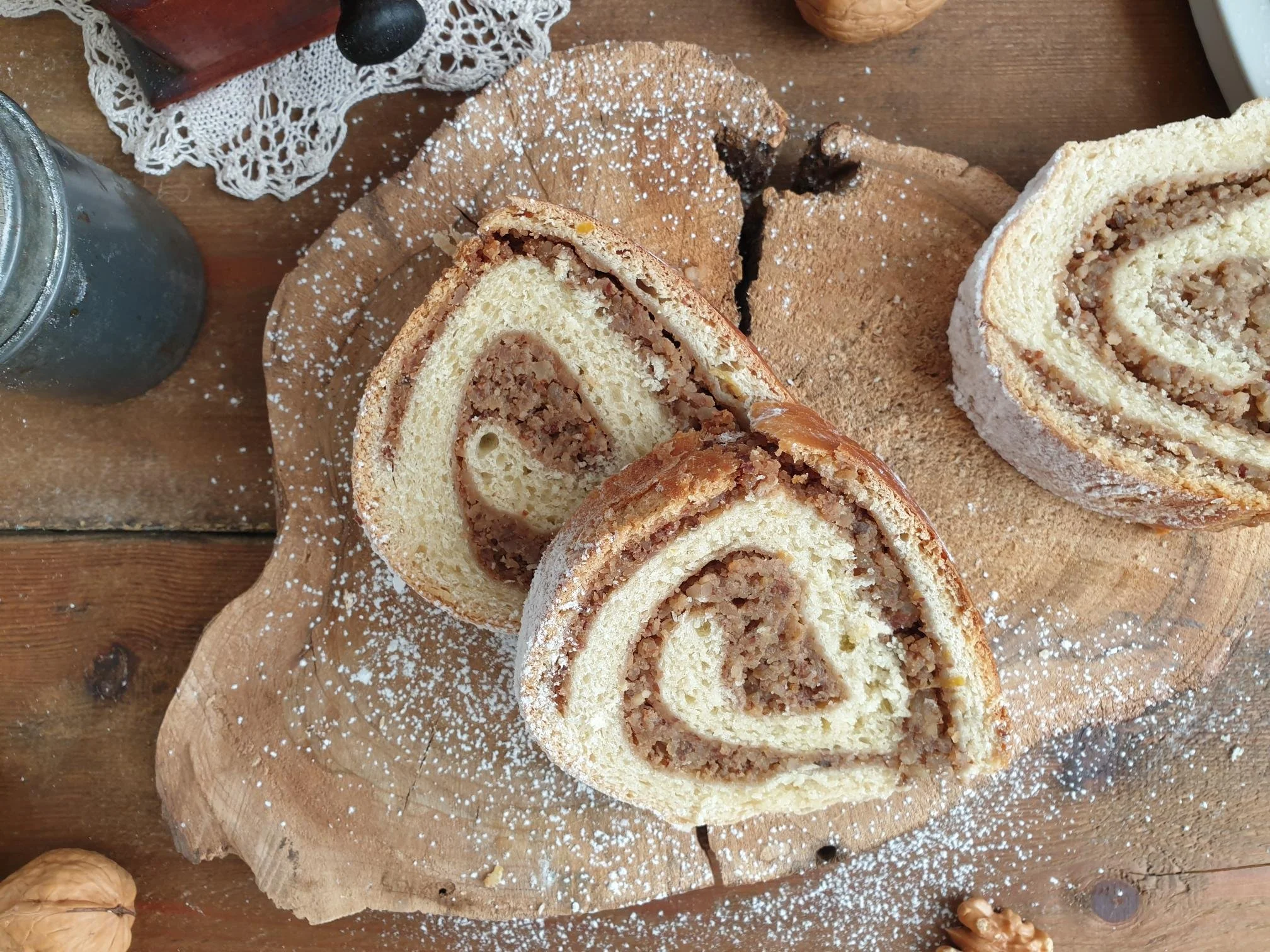
Potica is a light brioche like roll filled with rich and very tasty walnut filling, it is the most famous Slovenian dessert and the queen of festive sweet treats.

This cake is traditionally prepared and eaten around Christmas and Easter or other special and festive occasions like the weddings, Christening, family celebrations like birthdays and the birth of a new baby, but these days potica is available to buy in bakeries and supermarkets all year round.

Most loved and well-known is walnut potica, with or without raisins, but other regional sweet and savoury varieties are also very popular, where fillings are most commonly made with poppy seeds, pork crackling, cottage cheese and tarragon. They are all super delicious and recipes for potica are proudly passed from generation to generation.

The name "potica" derives from a Slovenian word “poviti” which means to roll up or to wrap and goes back as far as 16th century when it was baked in Slovenian monasteries.

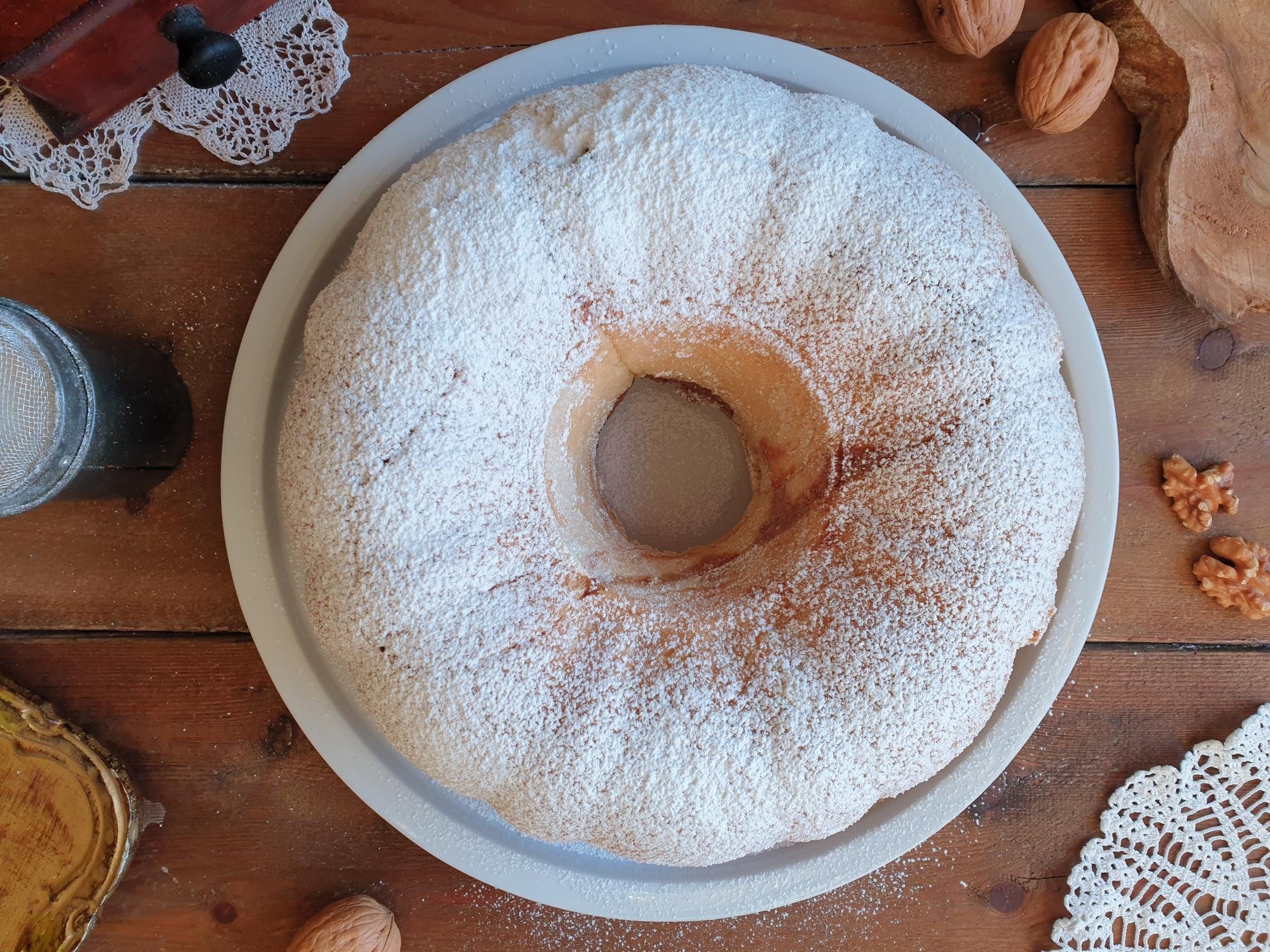
In Slovenia, potica is traditionally baked in “potičnik” which is a round bundt-style baking dish made from ceramic, but it is also very commonly baked in a simple bundt cake tin, loaf tin or cake pan.

Potica, this Slovenian national treasure, has been registered as a Traditional speciality guaranteed (TSG) in the European Union since April 2001.
A slice of potica can be a great choice for breakfast, is ideal as an afternoon treat with coffee or tea, or like me, you will find any excuse, or none at all, to eat it.

I am sharing here the recipe of my nona's grandmother that made the filling for potica using a mixture of walnuts and almonds, the latter being widely available in Istria.

The mild Mediterranean climate makes almond trees a very common sight. My nona told me that the filling for potica was made with a mixture of those nuts that were most readily available, and sometimes raisins and a little bit of grated apple were also added to the nut mixture, and very rarely, a piece of a chocolate bar (not the whole bar), might be grated into the mixture, which then made the potica particularly luxurious. She reminded me that in the olden days, when she was small, (in the 30s and 40s) seasonal and home grown produce were used to create a wonderful array of dishes, shopping lists, as we know them today, just simply did not exist...

Ingredients for the dough

  • 500g all purpose flour or 00 type flour

  • 20g of fresh yeast or 7g fast-action dried yeast (also called instant yeast)

  • 100g unsalted butter, melted

  • 80g caster sugar

  • 250ml lukewarm full fat or semi skimmed milk

  • 2 eggs, separated (egg yolks slightly beaten, keep the whites for brushing potica just before putting in the oven)

  • 1 Tbsp dark rum

  • grated lemon zest of 1 unwaxed lemon

  • pinch of sea salt

Ingredients for the filling

  • 250g walnuts

  • 250g almonds (skin on or peeled)

  • 200ml single cream (can use semi skimmed or full fat milk instead)

  • 100g caster sugar

  • 1Tbsp dark rum

  • 2Tbsp of honey (about 50g)

  • 2 eggs, separated (egg yolks slightly beaten and egg whites whisked to soft peaks)

  • finely grated lemon zest of 1 unwaxed lemon

  • icing sugar for dusting

Method

The dough

In a fairly large bowl, sift the flour, make a little well in the centre and add instant yeast, melted butter, caster sugar, lightly beaten egg yolks, grated lemon zest, dark rum and a pinch of sea salt. Mix and combine well all the ingredients.

(If using fresh yeast, slightly brake it down into smaller pieces with your fingers and place it into a small bowl. Add few tablespoons of tepid milk, ¼ Tsp of sugar, gently stir and leave for about 15-20 minutes or until gentle bubbles form on the surface).

View fullsize Potica2.jpg
View fullsize Potica3.jpg

Transfer the mixture onto a well floured working surface and start kneading, for about ten minutes, adding a little flour at a time if the mixture is too wet and sticky.

Alternatively, use a mixer fitted with a dough hook and leave running for about 5 minutes.

The dough is ready when it ends up being really smooth and elastic. It should not stick to your hands or working surface and should leave the bowl clean if using a mixer.
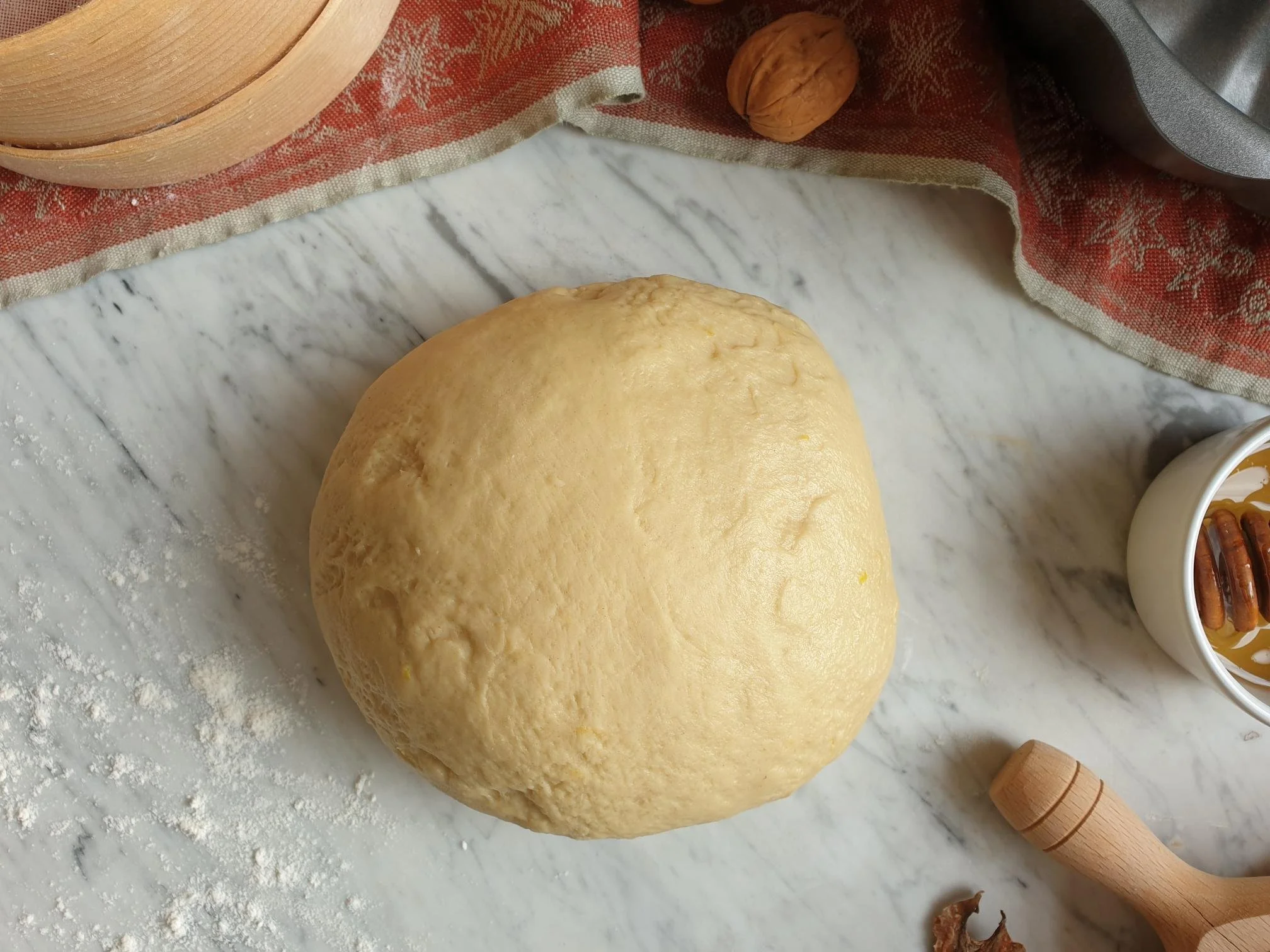
Transfer the dough back into a very lightly oiled bowl and cover with cling film or clean kitchen towel.

Put the bowl in a warm room free of drafts for at least one hour and leave the dough to rest and rise, the dough should double in size.

View fullsize Potica12.jpg
View fullsize Potica13.jpg

While the dough is resting and rising start preparing the filling.

The filling

Place walnuts and almonds in a food processor and mix to a coarse consistency.

View fullsize Potica5.jpg
View fullsize Potica6.jpg

Transfer ground walnuts and almonds into a bowl, pour over lukewarm single cream and mix well.

Add caster sugar, dark rum, honey, 2 lightly beaten egg yolks and 2 egg whites (previously whisked to soft peaks and not too stiff) and grated lemon zest. Mix all the ingredient until very well combined and set aside.

View fullsize Potica7.jpg
View fullsize Potica8.jpg
View fullsize Potica9.jpg
View fullsize Potica10.jpg

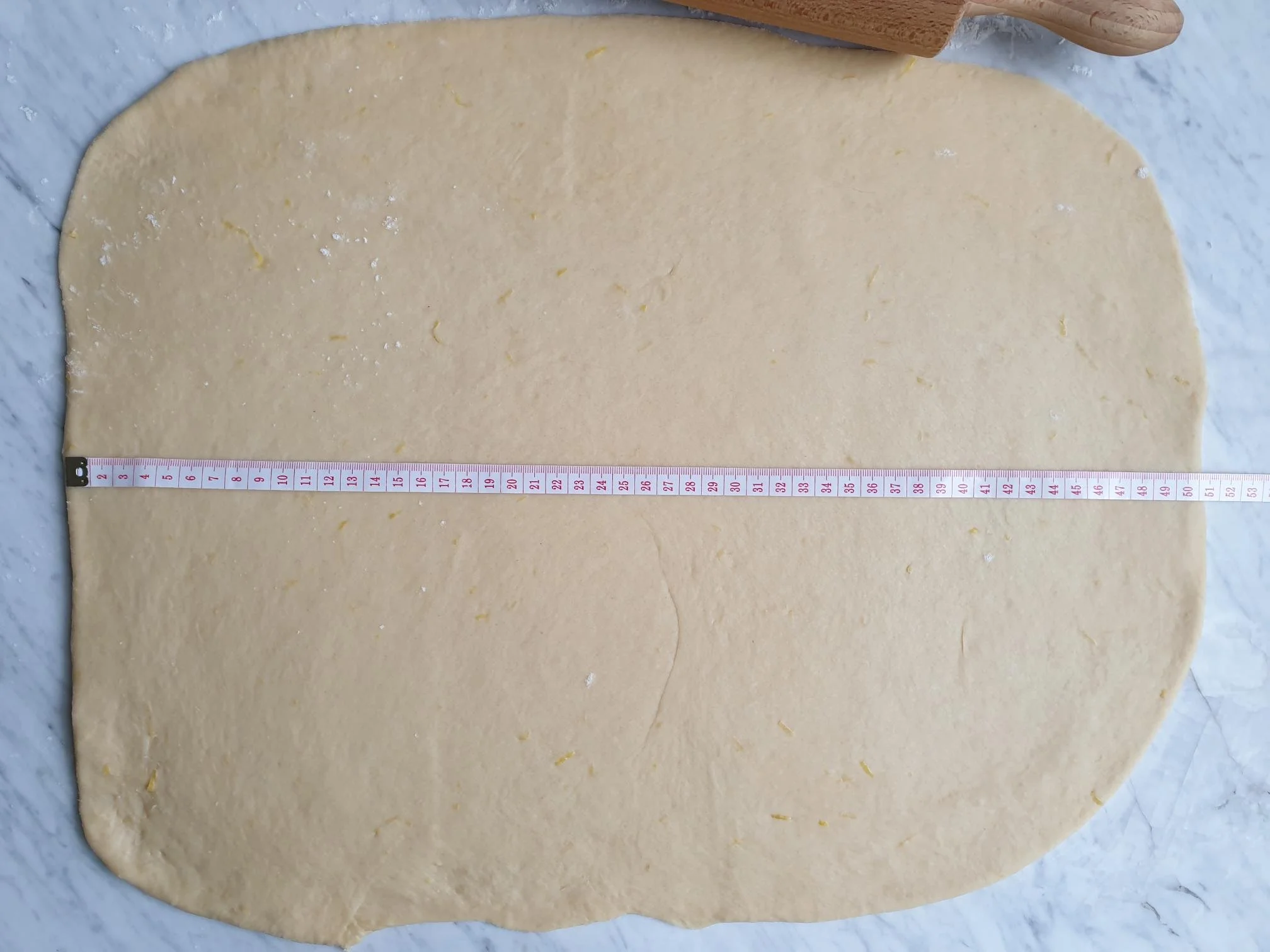
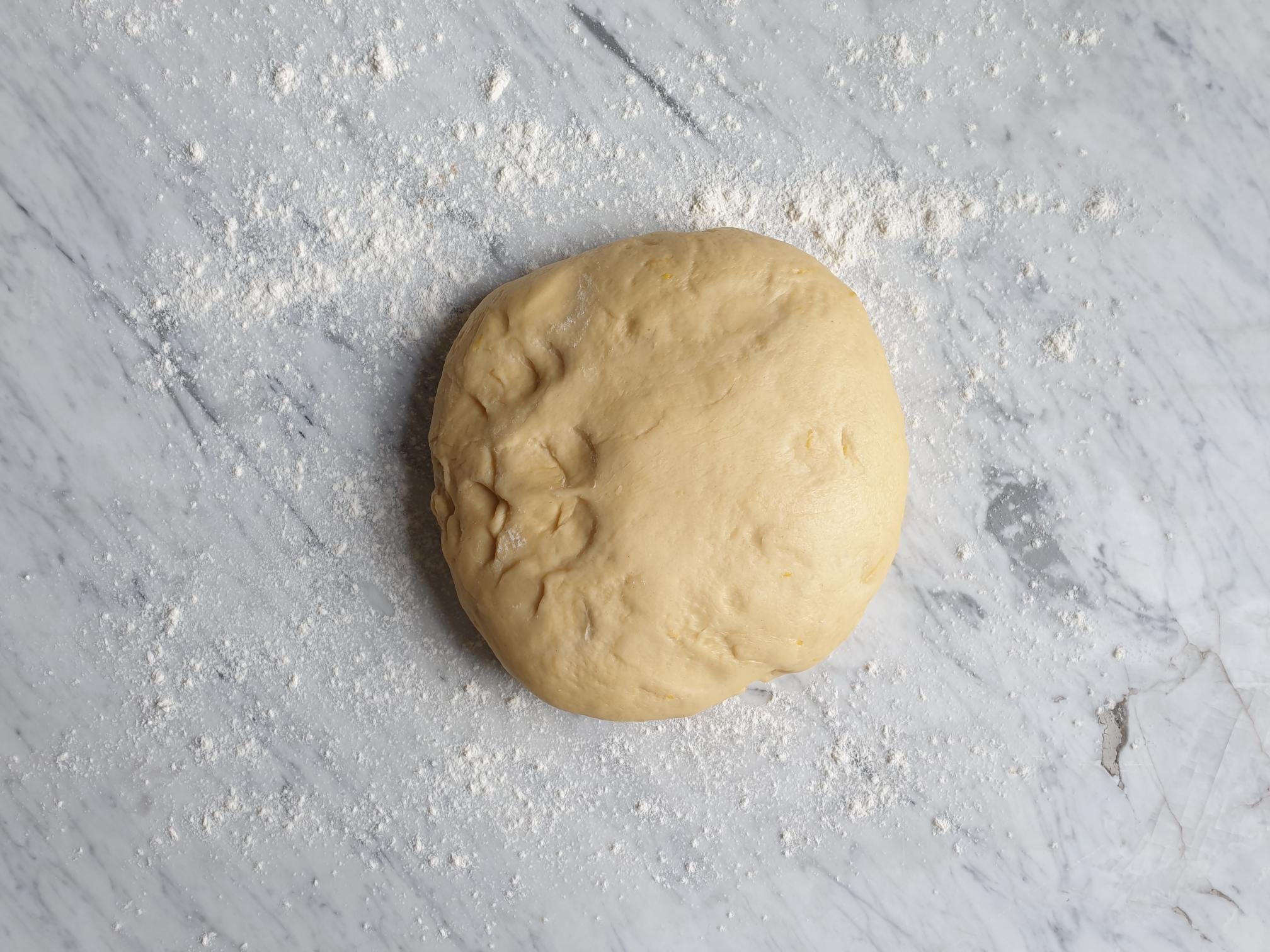
Flour well your working surface and rolling pin. Put your dough onto a working surface and roll it out to a more or less rectangular shape (40cmx50cm) to the thickness of about not more than 1cm.
View fullsize Potica16.jpg
View fullsize Potica17.jpg
View fullsize Potica18.jpg
View fullsize Potica19.jpg

Take the walnut-almond mixture and spread it evenly on the rolled dough but leave some space around the edge so the filling does not come out when rolling the dough.

View fullsize Potica20.jpg
View fullsize Potica21.jpg

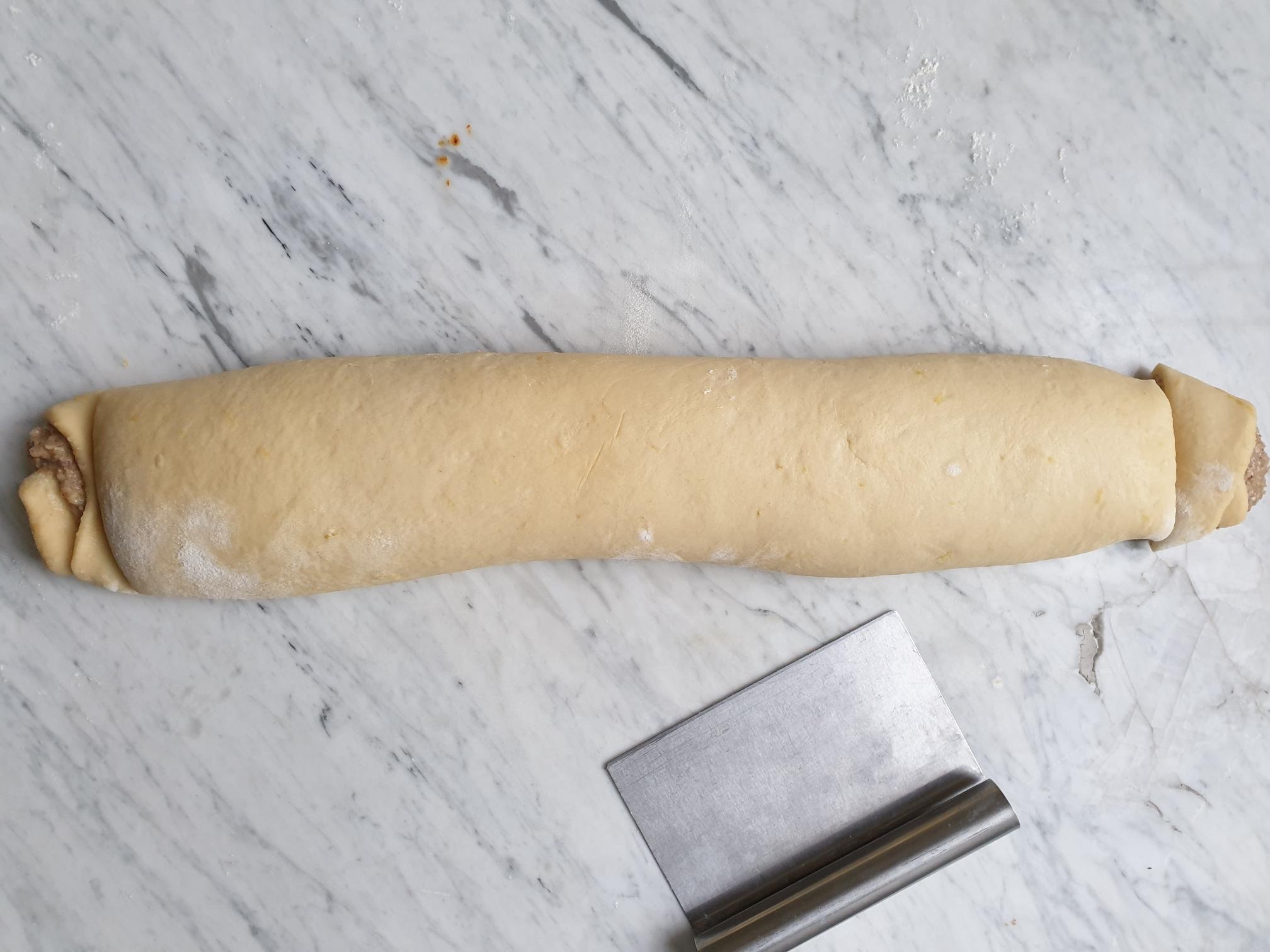
Gently roll the filled dough quite tightly into a log.

Cut off or tuck well in the edges.

View fullsize Potica22.jpg
View fullsize Potica24.jpg
View fullsize Potica25.jpg

Prepare the bundt pan (for the quantities in this recipe I use a 24cm round bundt cake tin).

Grease it very well with butter, make sure you reach all the nooks and crannies and coat it well with the flour. Shake the excessive flour out of the bundt tin.

If you do not have a bundt pan you can use:

  1. loaf tins (cut the roll into two or three parts, depending on the size of the loaf tins you are using)

  2. greased spring form cake tin (24cm for the quantity in this recipe)

  3. or simply use a baking tray previously greased with butter (in this case model the log into a U shape)

View fullsize Potica14.jpg
View fullsize Potica15.jpg

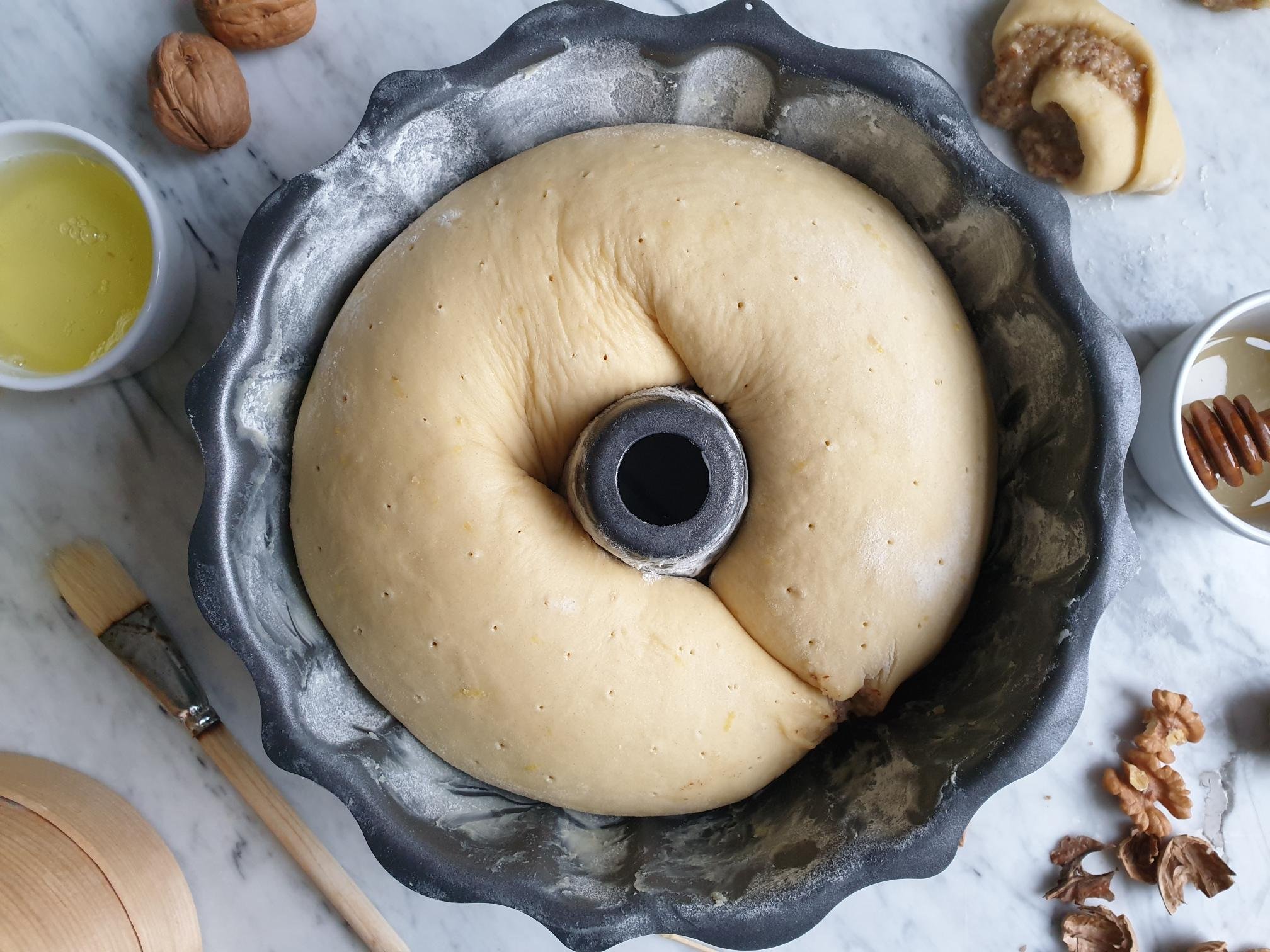
Very gently place your rolled dough (seam side down) into a bundt pan, cake tin or baking tray. Cover with a clean kitchen towel, place it in a warm, draft free room and leave to prove for the second time for 30min to 1h or until well risen (not necessarily doubling in size, just filling out nicely the tin).

View fullsize Potica26.jpg
View fullsize Potica27.jpg

Take a toothpick and make little holes in the dough on the whole surface and brush with egg whites.
View fullsize Potica28.jpg
View fullsize Potica29.jpg

Bake in the preheated oven at 180C static for about 50-60 minutes. Halfway through baking, tent the potica with the aluminium foil to prevent it browning too much and starting to burn.
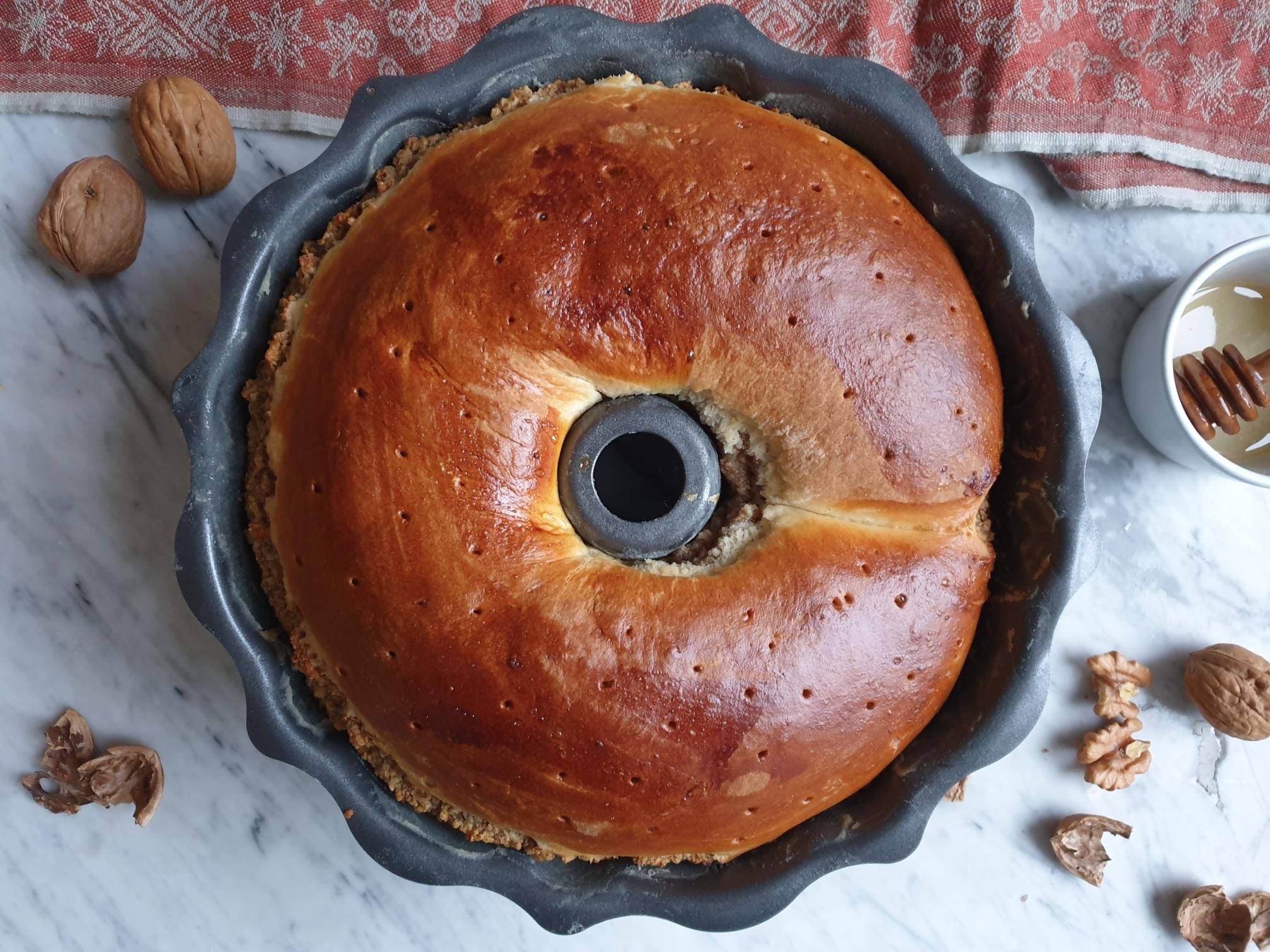
Leave until completely cold in a tin.

To remove the potica more easily, take a little plastic knife and run it around the edges to loosen the cake.

Transfer on a serving plate, dust with icing sugar and serve.
Just a thought

Potica tastes at its best the day after has been baked.

You can store it in an airtight container for up to five days and is suitable for freezing.
Wine suggestion

Friuli Colli Orientali Picolit Cialla DOC 2008 - Ronchi di Cialla (0.5l - astuccio)

December 20, 2021 /tina oblak
Christmas cakes, nut bakes, walnut bakes, almond bakes, Potica, festive nut roll, traditional Slovenian bakes, Traditional Eastern European bakes, Festive Eastern European bakes
Adriatic Recipe, Autumnal dish, Autumnal recipe, baked dish, baking, breakfast, celebratory desserts, Celebratory dish, Christmas dish, dessert, Easter dish, Easter treats, Enriched dough, festive dessert, Festive dish, festive sweet things, Istrian dish, Istrian food, Istrian gastronomy, Slovenian food, Slovenian gastronomy, Sweet bread, sweet course, sweet finger food, sweet nibbles, Sweet Things, Vegetarian, Winter dish, Winter recipe, festive bakes, Christmas bakes
Comment

Apple Strudel with home made pastry Recipe

Beans and Sardines
November 05, 2021 by tina oblak in Adriatic Recipe, baked dish, baking, breakfast, Central European recipes, dessert, Eastern European recipes, Istrian cuisine, Istrian dish, Istrian food, Istrian gastronomy, Mitteleuropean recipes, pudding, recipe from Northern Ital, Rustic dish, Slovenian cuisine, Slovenian food, Slovenian gastronomy, sweet course, Sweet Things

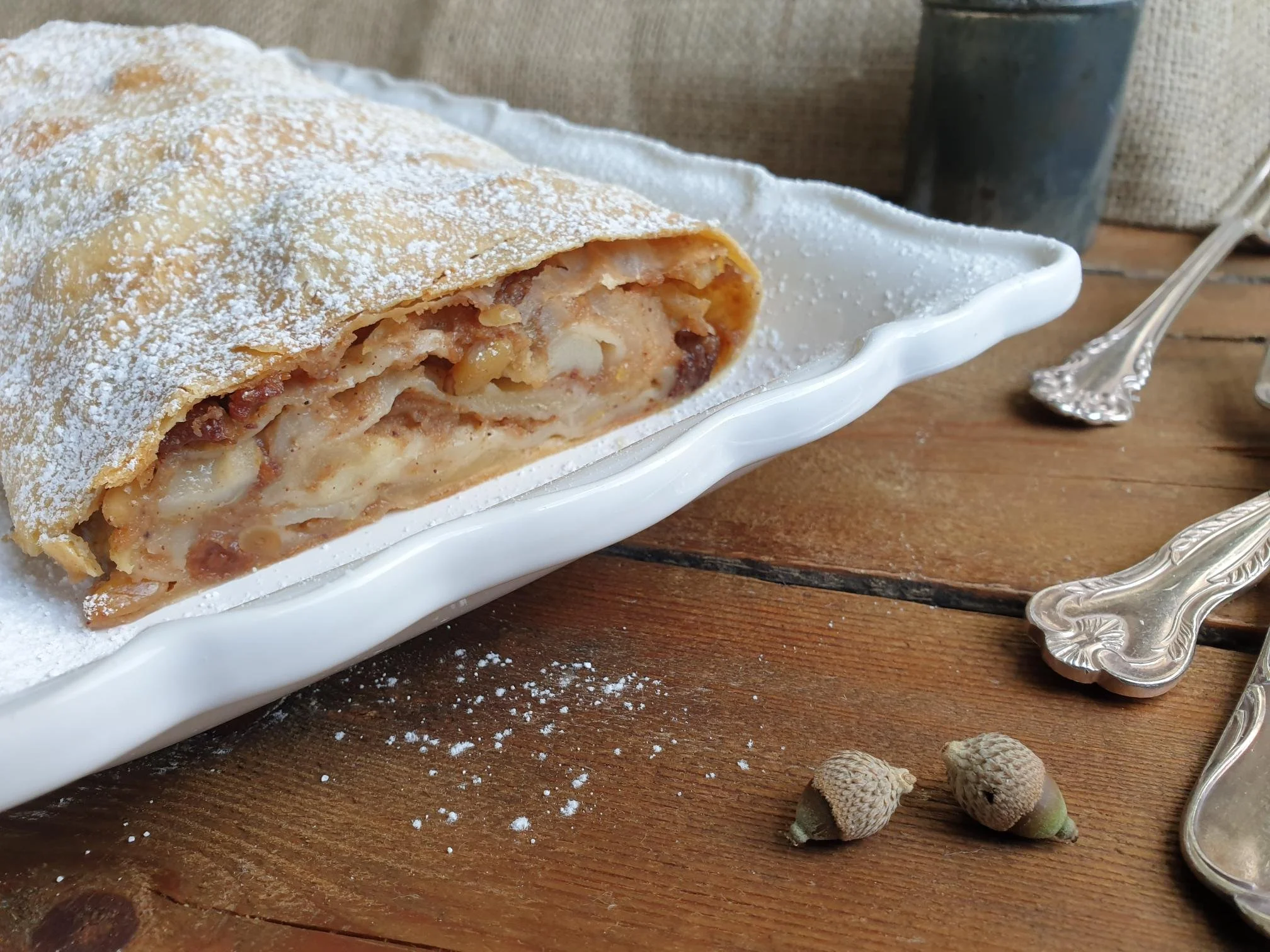
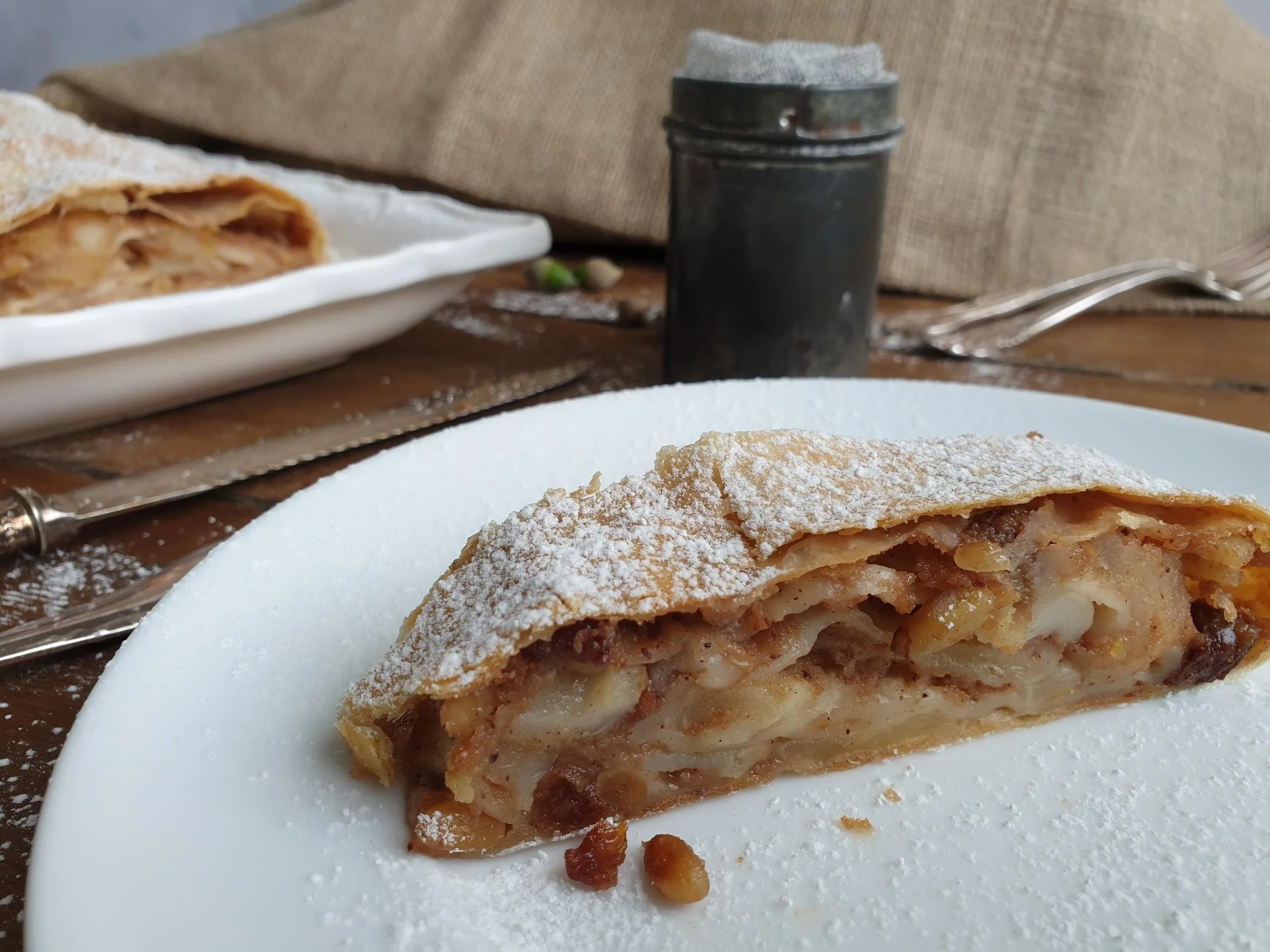
Apple strudel is a traditional Viennese dessert, made of very thin elastic pastry, and the filling contains sliced apples, sugar, cinnamon, raisins (soaked in dark rum), lemon zest, lemon juice and bread crumbs. This popular pastry can also be found in the rest of Austria, Bavaria, Czech Republic, Northern Italy, and in many other countries in Europe that were once part of the Austro-Hungarian Empire.

It is believed that strudel originated from baklava, a very famous Turkish pastry based dessert, that came to Austria with the Ottoman's Empire and through Hungarian cuisine.

Records show that Strudel was first named in 1696 and gained popularity after it was served to Empress Maria Theresia who was the ruler of the Habsburg dominions and the only women to hold the position.

In Slovenia and in coastal Istria, areas that also once belonged to Austro-Hungarian Empire, apple strudel became, and today still is, a very well known sweet treat. It has gained such a high level of popularity that it is almost considered a national dessert. During autumn and winter months, this typical and very much loved dessert would be baked on a regular basis up and down the country, with little variations, and no Sunday roast lunch could be completed without a slice of strudel, dusted, of course, with a generous amount of icing sugar. When this task was left for us children, there would be so much icing sugar on the top that you could hardly see what type of dessert was hiding underneath it. Some things just never change...this is what happens when I leave my 11 year old son with the icing sugar task!

Apple strudel in Slovenia is called Jabolčni štrudelj or Jabolčni zavitek while along the coast of Northwest Istria, where the informal Istrian dialect is also spoken, it can be referred to as Strucolo de pomi.

Strudel made with apples is by far the most popular but in the North Adriatic two variations of strudel have been created and are also very well liked, strudel filled with ricotta cheese filling and strudel with cherries.

In my family we all knew when it was weekend, as apple strudel, this warming autumnal pudding, would be in the oven, and the aromas of apples and cinnamon would travel around the house. This dessert is not just part of my childhood but part of my adulthood as well. It has been the most frequently baked dessert by my mum and even today my friends and family cannot get enough of it. Now that I live abroad it is even more special, and it really does take me right back home to my childhood, and my mum's kitchen.

Apple strudel is traditionally served warm, dusted with regular icing sugar or vanilla floured icing sugar, and when accompanied with whipped cream, vanilla ice cream or vanilla sauce, this rustic pudding soon turns into a complete and very elegant dessert.

This recipe for apple strudel is made with home made pastry, however you can still indulge yourself and cut corners a bit by using a store bought ready made puff pastry, in which case only half the amount of apple filling is enough

Apples can be sliced or coarsely grated and lightly toasted walnuts can replace pine kernels.

View fullsize Apple Strudel 1.jpg
View fullsize Apple Strudel 2.jpg

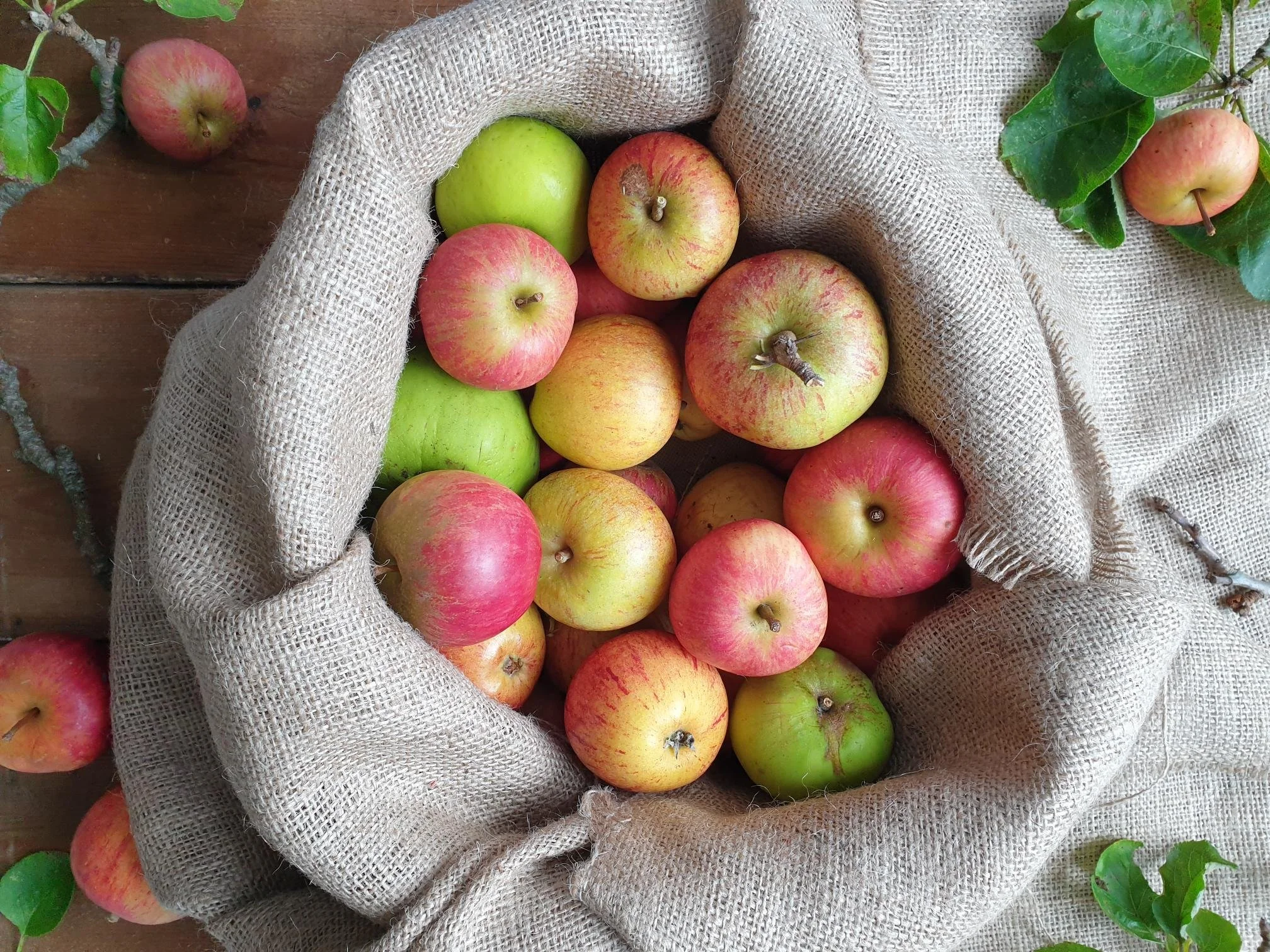
In this recipe I will indicate which apples are appropriate to use for apple strudel, however, I have never used specific type of apples and that is simply because I always bake apple strudel when apples are in season and abundant in nature. Apples would be generously given from neighbours and friends with fruit orchards or apple trees in their gardens, I just make sure I taste them and pick a mixture of sweet and tart apples.

Ingredients

Serves 10-12

Dough

  • 250g all purpose flour or bread flour

  • 1 egg, lightly beaten

  • 3 Tbsp neutral tasting vegetable oil (I used sunflower oil)

  • 2 Tbsp white wine vinegar or lemon juice

  • sea salt, a pinch

  • 50ml-60ml lukewarm water, or as needed

Apple Filling

  • 1kg apples, peeled, cored, quartered and sliced (sweet-tart apples like MacIntosh and Gala in combination) Bramley

  • 1 unwaxed lemon, grated zest and juice (grate lemon zest first and then squeeze the lemon juice, trying to do it the other way round might prove a tricky task)

  • 1 Tsp ground cinnamon

  • 30g pine nut kernels, slightly toasted (can use walnuts)

  • 50g raisins or sultanas

  • 3 Tbsp dark rum or lukewarm water (for soaking the raisins)

  • 60g dry fine breadcrumbs

  • 20g unsalted butter plus extra for brushing

  • 80g caster sugar

  • icing sugar for dusting

Method

To make the dough

Place the flour in a big mixing bowl and make a well.

In a separate, smaller bowl, mix slightly beaten egg, oil, vinegar or lemon juice, (the acidity will help to relax gluten in the flour making the dough more stretchy) a pinch of sea salt and lukewarm water. Pour the mixture into a flour well.

With the fork, stir the mixture with the flour until well combined. Add a little bit of flour at a time, until the dough comes nicely together, then work the dough with your hands.

Transfer the dough on a lightly floured working surface and knead the dough for about 10 minutes or until nice and smooth.

After this time, the dough should be moist and elastic and not sticky. Add a little more flour if the dough is too sticky to knead.

In order to further encourage the development of the gluten, resulting in a very elastic dough, slam the dough onto the working surface a few times.

Shape the dough into a smooth ball and place it in a clean bowl, previously brushed with oil.

Cover the bowl with cling film and let the dough rest for about 1 hour at room temperature.

View fullsize Apple Strudel 4.jpg
View fullsize Apple Strudel 5.jpg

To make the filling

In a small pan, place pine nuts and toast them on a medium-low heat for a few minutes until golden-light brown in colour. Remove from the heat, cool and set aside.

In another pan melt the butter over medium-low heat. When the butter is melted add breadcrumbs, toast them, stirring constantly until golden-brown in colour. Remove from the heat, cool and set aside.

In a small bowl, place raisins or sultanas, add dark rum (traditionally used) or lukewarm water. Leave them to soak and plump up for at least 15 minutes, or until you need them.

Peel, core, quarter and slice the apples. Place sliced apples in a bowl, pour lemon juice over them, toss and mix well. The lemon juice will prevent apples from oxygenating and turning brown.

View fullsize Apple Strudel 6.jpg
View fullsize Apple Strudel 7.jpg

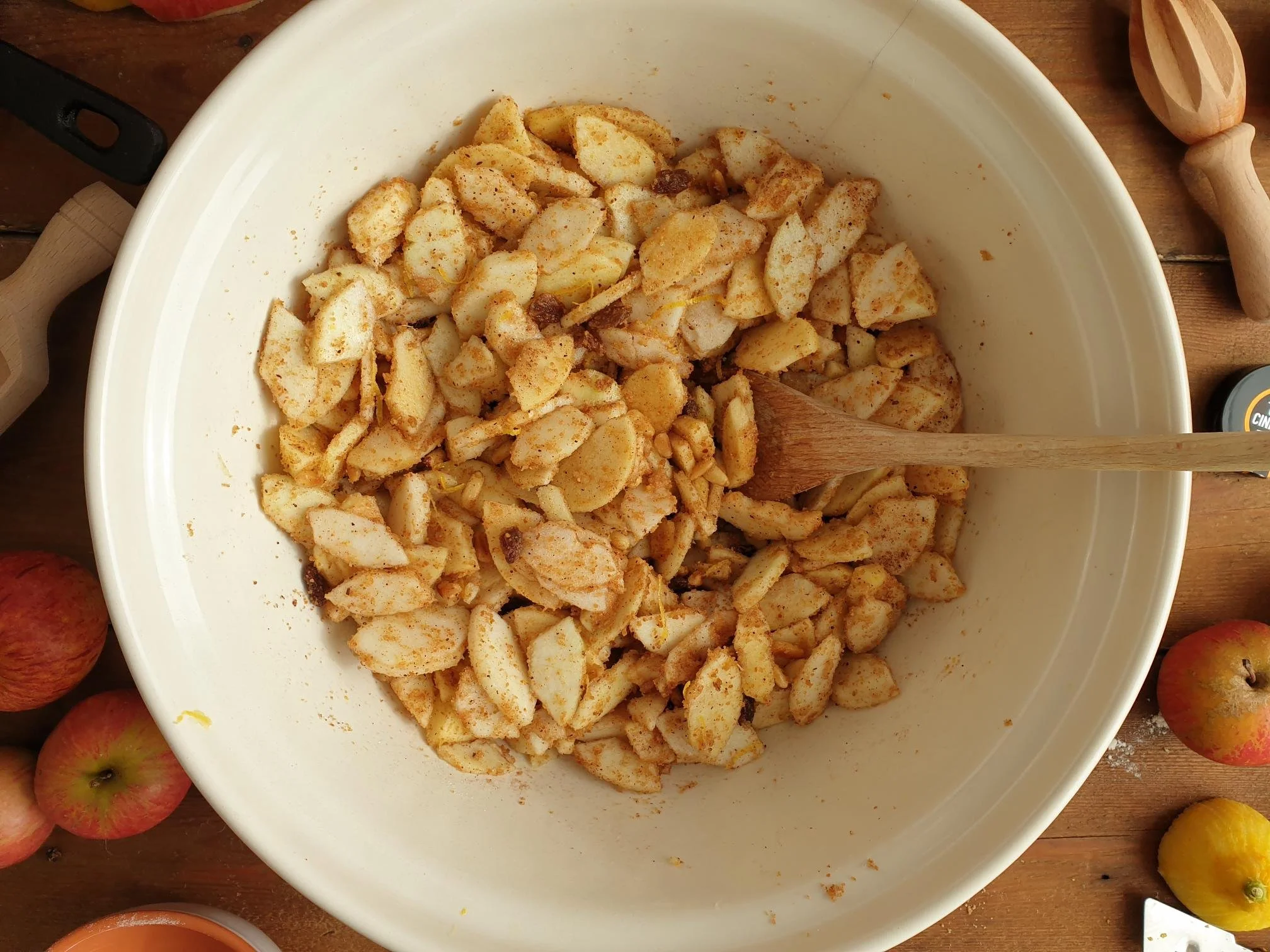
Add lemon zest, roasted pine nuts, breadcrumbs mixture, soaked raisins or sultanas (squeeze out excess rum or water), sugar and cinnamon. Mix well to incorporate all the ingredients.

Preheat the oven to 200C static or equivalent.

Place the dough on a clean and lightly floured table cloth. Flour the rolling pin and start rolling out the dough. While rolling, to prevent sticking, flour the dough and the surface every now and then.

When the dough reaches about 20 cm in diameter pick it up and keep stretching it. The best way to do so is to use the back of your hands and in particular the knuckles but make sure you remove any sharp jewellery first.

View fullsize Apple Strudel 9.jpg
View fullsize Apple Strudel 10.jpg

When the dough becomes difficult to handle as it becomes bigger and thinner, place it on a lightly floured tablecloth.

With your hands (tip of the fingers) keep stretching gently the dough on the tablecloth to paper thin consistency, from the inside to the outside working your way round the sheet of dough.

Keep stretching until the sheet of dough starts to look almost translucent and you will be able to see a pattern of your tablecloth through it.

You should end up with a thin sheet of dough stretched more or less into a rectangular shape with a diameter of approximately 40 cm which will fit into a standard 40 cm baking tray.

If you notice that the edges are still a bit thick, stretch them further very gently or cut them off. If you leave the edged thick, when rolling the strudel, they will form quite a thick layer at the very centre of the strudel risking to remain slightly underbaked.

Place and spoon evenly the apple mixture over one half of the dough sheet leaving about 2-3cm to the edge.

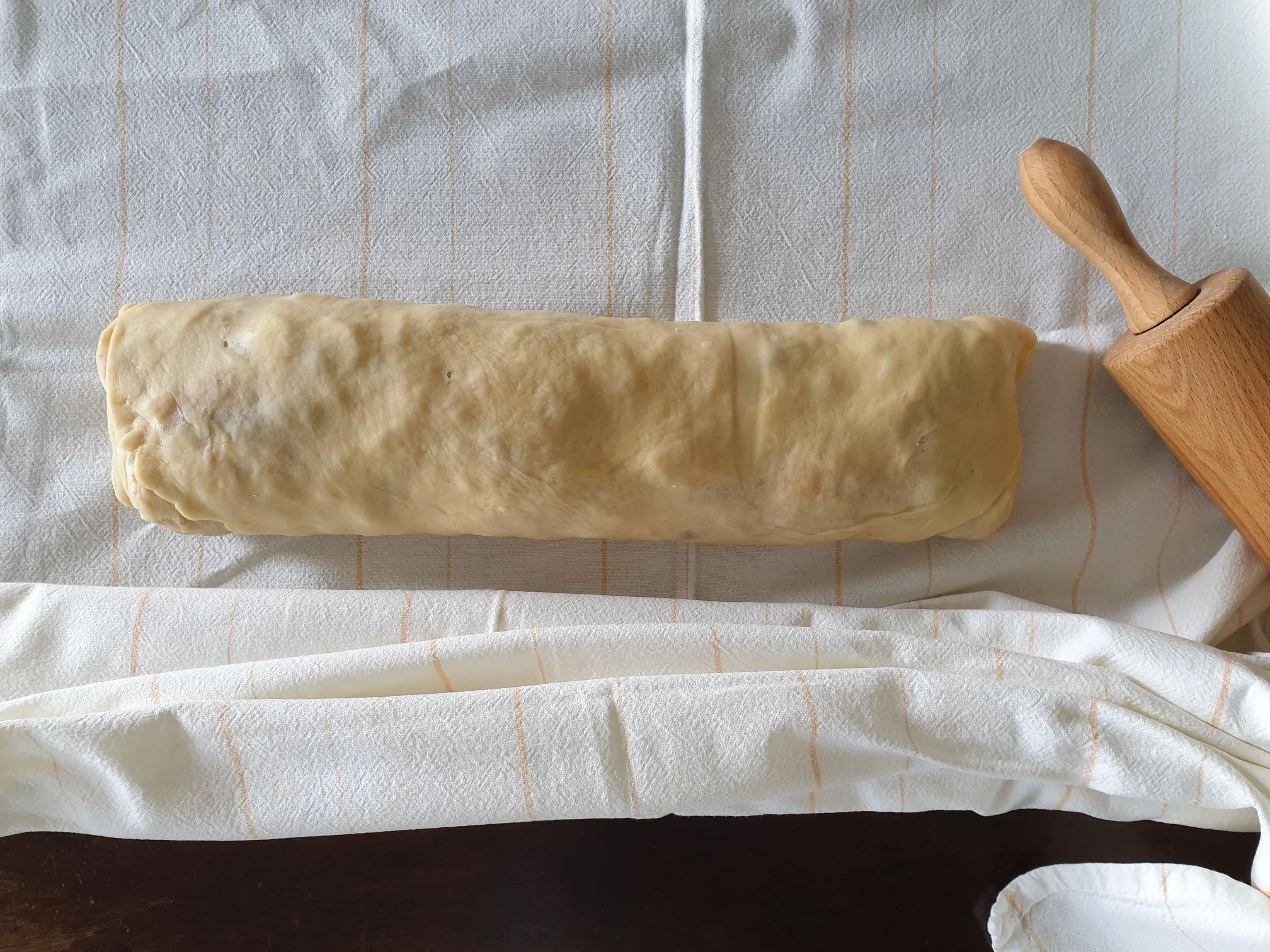
Fold in the side ends of the sheet to prevent filling coming out during rolling. Using the tablecloth to help you, roll the dough all the way and place the rolled strudel very gently on a baking tray previously lined with baking parchment, seam side down.

View fullsize Apple Strudel 11.jpg
View fullsize Apple Strudel 12.jpg
View fullsize Apple Strudel 13.jpg
View fullsize Apple Strudel 14.jpg

Brush it with a bit of melted butter.

View fullsize Apple Strudel 16.jpg
View fullsize Apple Strudel 17.jpg

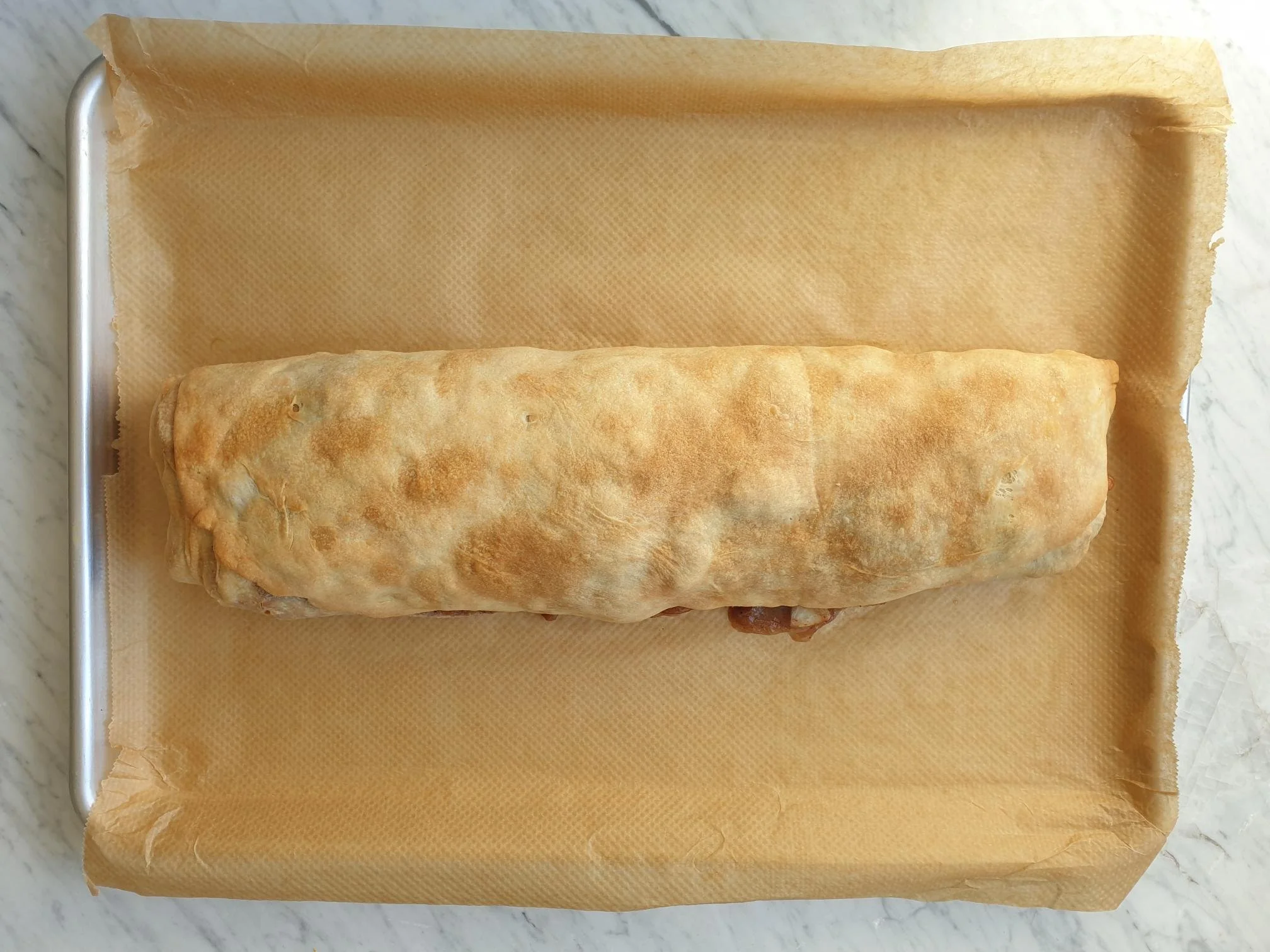
Bake on the middle shelf for 40 45 min.

Apple Strudel is ready when the crust turns nice and golden.

Take it out of the oven, let it cool. Dust it with icing sugar, cut into slices and serve it on its own or with vanilla ice cream or cream.

Just a thought

You can make the strudel dough ahead and keep it refrigerated for up to two days. Before using the dough take it out of the fridge allowing it to come to a room temperature.

Wine suggestion

Alto Adige Gewürztraminer DOC Vendemmia Tardiva "Roen" 2019 - Cantina Tramin (0.375l)

November 05, 2021 /tina oblak
apples, strudel dough, Autumnal dessert, cinnamon, pine nuts kernels, raisins, Apple strudel home made, Strudel di mele, Jabolčni štrudelj, Jabolčni zavitek, Strucolo de pomi
Adriatic Recipe, baked dish, baking, breakfast, Central European recipes, dessert, Eastern European recipes, Istrian cuisine, Istrian dish, Istrian food, Istrian gastronomy, Mitteleuropean recipes, pudding, recipe from Northern Ital, Rustic dish, Slovenian cuisine, Slovenian food, Slovenian gastronomy, sweet course, Sweet Things
Comment
Stuffed Peppers 7.jpg

Stuffed peppers with minced meat and rice in a tomato sauce Istrian Recipe

Beans and Sardines
October 20, 2021 by tina oblak in Adriatic Recipe, Appetizers, Balkan dish, Central European recipes, Eastern European recipes, Easy recipe, Istrian cuisine, Istrian dish, Istrian food, Istrian gastronomy, main dish, Rustic dish, Slovenian cuisine, Slovenian food, Slovenian gastronomy, Starters, one pot meal, baked dish

This Balkan dish made of peppers, stuffed with a mix of minced meat and rice and cooked or baked in a rich tomato sauce is very rustic, unpretentious, hearty and traditionally made during summer months, end of summer and early autumn.

Yes, there are a few steps to this recipe, but it is very simple to make and there is absolutely nothing complicated about it.

Stuffed peppers is a dish that is common in many cuisines around the world and generally consists of peppers getting halved or hollowed and then stuffed with a variety of different fillings such as meat, rice, vegetables, cheese, fish etc.

This dish, with its many variations, can be found in Greece, Central and Southeast Europe, Scandinavian and Baltic countries, Guatemala, North America Eastern Mediterranean, India and Spain.

It is in Eastern Mediterranean that stuffed peppers are part of Dolma, a word of Turkish origin, meaning “something stuffed” and it indicates a family of stuffed dishes originating from Ottoman Cuisine. The Ottoman Empire directly administered a vast territory, and eventually reached the Balkans and the area not far from the Istrian peninsula, where I come from, and this is why they strongly shaped the local cuisine.

As a result of this historical influence, there is no surprise that in the whole of Slovenia and in coastal Istria, stuffed peppers, known as Filana paprika or Polnjena paprika become integral part of the local diet and can be found on the menus informal family run restaurants, and it is one of the most frequently made dishes in many households.

I like to call this dish “a generational dish” since it is very much loved across different generations in the family, so when stuffed peppers are on the menu, everyone leaves the table happy.

Stuffed peppers are traditionally served with plenty of creamy mashed potatoes or just a lot of rice and bread. What is not to like about this dish?

Everyone in the family makes delicious stuffed peppers but this dish tastes super special and extra delicious when my brother cooks them. They are most often made a day in advance so all the flavours can fully develop and then gently reheat it. This is when they taste at their best.

I am sharing here my brother's recipe for stuffed peppers baked in the oven.

Ingredients

Serves 4-8 (depending if you are serving one or two stuffed peppers per person)

  • 7-9 bell peppers, mixed colour or use just the ones that you prefer. The number of the peppers will depend on their size and also on the size of the dish you will use for this recipe and into which they need to fit. I used 8 medium size mixed peppers. (Babura type of peppers is a variety of peppers most commonly used for this recipe).

  • 400g mince beef

  • 400 mince pork

  • 100g rice, any risotto type rice like Arborio, Vialone Nano, Carnaroli will work well

  • bigger size onion (about 170g), finely chopped

  • 4 cloves of garlic, peeled and crushed

  • 2 Tbsp extra virgin olive oil

  • sea salt

  • black pepper, finely ground

Sauce

  • 2 tinned finely chopped tomatoes (2x400g), the best quality you can afford

  • medium size onion, finely chopped

  • 2 cloves of garlic, peeled and crushed

  • 4 Tbsp extra virgin olive oil

  • few fresh basil leaves

  • sea salt

Method

Before starting this recipe, I suggest you do a little test to see how many peppers will you actually need. Take the ovenproof dish you intend to bake the stuffed peppers in and see how many peppers will fit in it.

For this recipe you can use a deep baking tray and cover stuffed peppers with an aluminium foil.

Stuffed Peppers 1.jpg

Start by making a simple tomato sauce. Put extra virgin olive oil in a pan, add finely chopped onions, a pinch of salt and fry on a gentle heat until the onions become soft. Add crushed garlic and fry gently together with the onions just for a minute or so. Add tinned tomatoes, few fresh basil leaves, bring to the boil, turn the heat down, partially cover with the lid and gently simmer for about 30 minutes, stirring occasionally. By this time, the sauce should have a nice rich velvety consistency.

Prepare and clean the peppers. Cut off the top part and remove white little seeds from inside the peppers. Rinse the outside and the inside of the peppers with cold running water. Dry the peppers a bit with a kitchen towel or kitchen paper.

Stuffed Peppers 2.jpg

Take a griddle pan (if you have it, otherwise non stick pan will work just fine) and heat it until very hot. Place the peppers in a pan and charcoal grill them on all sides. The skin of the peppers will burst slightly and turn a bit black giving the peppers a slightly smoky flavour. Cool the peppers and set aside.

Charcoal grilling the peppers first will really give and extra dimension in terms of the flavour to the dish, however, you can skip this step.

Stuffed Peppers 5.jpg

Cook the rice, following the instruction on the packet, but only halfway through. This will avoid the rice to become too mushy in the stuffing. Rinse in a small colander, cool and keep aside.

Put extra virgin olive oil in a pan, add finely chopped onions, a pinch of salt and fry on a gentle heat until the onions become soft. Add crushed garlic and fry gently together with the onions just for a minute or so. Place mince beef and mince pork in a pan and fry until brown, stirring occasionally. With the back of wooden spoon break bigger lumps of meat. Taste and adjust the seasoning with sea salt and finely ground black pepper. Cool a bit and set aside.

Transfer cooked rice and browned mince meat in a big mixing bowl. Mix well and set aside.

View fullsize Stuffed Peppers 3.jpg
View fullsize Stuffed Peppers 4.jpg

Transfer the tomato sauce in a ovenproof dish.

Turn the oven on and preheat it to 180C static or equivalent.

With the help of a spoon, fill each pepper with meat and rice mixture. With the back of the spoon press the mixture down as you go along, this will allow you to get more mixture in a pepper.

Place each filled pepper in the ovenproof dish filled with tomato sauce.

Stuffed Peppers 6.jpg

Cover with the lid and bake for 2 hours. Check occasionally giving a dish a gentle shake.

Stuffed Peppers 8.jpg

Just a thought

If you are left with meat and rice mixture you can use it in frittata or make scrambled eggs with it and there is another meal sorted.

You can store stuffed peppers for few days in an airtight container and they also freeze very well.

Wine suggestion

Collio Cabernet Sauvignon DOC 2018 - Muzic

October 20, 2021 /tina oblak
bell peppers, stuffed peppers, mince meat and rice, pepperoni ripieni, polnjene paprike, filane paprike, one pot meal, baked peppers
Adriatic Recipe, Appetizers, Balkan dish, Central European recipes, Eastern European recipes, Easy recipe, Istrian cuisine, Istrian dish, Istrian food, Istrian gastronomy, main dish, Rustic dish, Slovenian cuisine, Slovenian food, Slovenian gastronomy, Starters, one pot meal, baked dish
Comment
  • Newer
  • Older