Beans and Sardines

  • Home
  • About
  • Recipe of the week
  • Recipes
  • Wines
  • Contact

Sautéed Aubergines with garlic and parsley Istrian Recipe

Beans and Srdines
September 21, 2022 by tina oblak in Adriatic Recipe, Appetizers, Autumnal dish, Autumnal recipe, bite-sized nibbles, brunch, Canapés, child friendly dish, child friendly meal, dinner, Easy recipe, entrée course, family friendly dish, family friendly meal, Finger food, first course, first course dish, first course meal, Healthy, healthy mael, hearty dish, Istrian cuisine, Istrian dish, Istrian food, Istrian gastronomy, main course, main dish, main vegetarian course, main vegetarian dish, main vegetarian meal, Nutritious, Nutritious dish, Rustic dish, Side Dishes, simple recipe, Slovenian cuisine, Slovenian food, Slovenian gastronomy, Small bites, Snacks, Starters, summer dish, summer recipe, supper, Vegan, Vegetable side dish, Vegetables, Vegetarian

This simple and rustic aubergine side dish is light and full of flavour. It can also be enjoyed in less traditional way, spread on bruschetta, toasted bread, as a topping on a pizza, and it can be mixed with rice, or used as a base for a pasta sauce. 
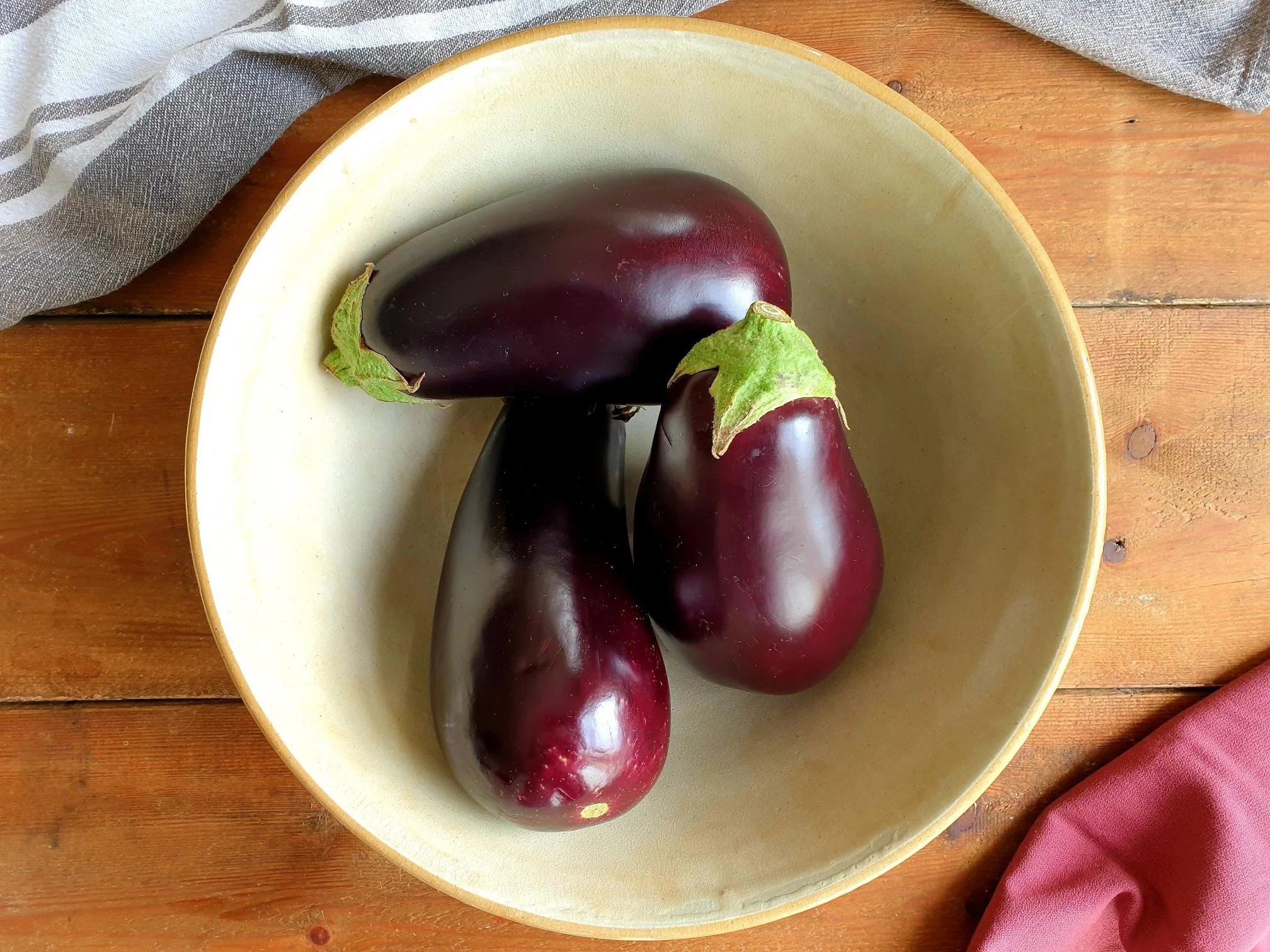
Sautéed aubergines in garlic and parsley infused oil is an unpretentious dish, very easy to make and typically prepared in the households along the Slovenian coast, where my nona lives. She told me that her family had a lovely vegetable garden where aubergines grew during the summer months and early autumn. The best ones were picked and sold on the market, just across the Italian border, in Trieste, where they fetched good money. Only the wonky and imperfect ones, but most certainly not less tasty, were left behind for domestic use. They were cooked in delicious home-made extra virgin olive oil flavoured with garlic and fresh parsley and accompanied by potatoes or polenta. 

This is not the dish that you would normally find in restaurants, with the glimpse of sadness in my nona's eyes, and a slight sense of embarrassment, she explained to me that this dish is “too simple” and  is part of what  “the modern world” defines as “the food of the poor” (more widely known as the Italian concept of Cucina Povera). However, it is slightly intriguing, since without her realizing it, this is precisely one of the kinds of dishes that are becoming increasingly popular and appreciated by many people. 

What is interesting about this dish is that visually cooked aubergines resemble more closely mushrooms than aubergines. This is why Italians call a very similar and typical aubergine side dish from the Campania region in southern Italy, Melanzane a Funghetto (Mushroom-style aubergines ). 

I am sharing here my nona's recipe for this delicious and humble sautéed aubergines with garlic and  fresh parsley. 

Ingredients 

Serves 4 

  • 1 kg aubergines 

  • 5 Tbsp extra virgin olive oil 

  • 1 clove of garlic, peeled 

  • handful of fresh flat leaf parsley (about 13g) plus some extra for garnishing,  finely chopped 

  • sea salt 

  • black pepper, optional 

Method 

Wash the aubergines and dry them, remove the stem. 

Cut each aubergine into quarters lengthwise and check for the amount of seeds. If there is a considerable amount of seeds, eliminate and remove the central part containing the higher concentration of the seeds.   

Cut the rest of the aubergine into a fairly small and thin regular-sized chunks. 

Transfer the aubergine pieces into a colander, sprinkle with a bit of sea salt and place it over a bowl or into the sink so the bitter juices can drain away (avoiding the aubergines to taste bitter) during a sweating process (about 30 minutes).  This phase will help to loose the liquid avoiding the aubergines tasting bitter.   Squeeze very gently. 

View fullsize Sauteed Aubergines with garlic and parsley 5.jpg
View fullsize Sauteed Aubergines with garlic and parsley 6.jpg

Pour the oil in a fairly large frying pan and sauté a whole garlic until golden in colour . 

Stir in chopped parsley and add aubergine pieces. 

Mix well so all the aubergine chunks are coated in oil and parsley. 

View fullsize Sauteed Aubergines with garlic and parsley 7.jpg
View fullsize Sauteed Aubergines with garlic and parsley 8.jpg

Simmer in an open pan, on a fairly gentle heat, for about 30 minutes, stirring occasionally to prevent sticking at the bottom of the pan and burn, or until they release most of their liquid and the skin starts to have the same kind of texture as mushrooms. The aubergine pieces should be nice and  soft but not mushy. 

Taste and adjust the seasoning with sea salt and black pepper. 

Fish out and remove garlic clove, discard. 

Sprinkle with a bit of roughly chopped fresh parsley. 
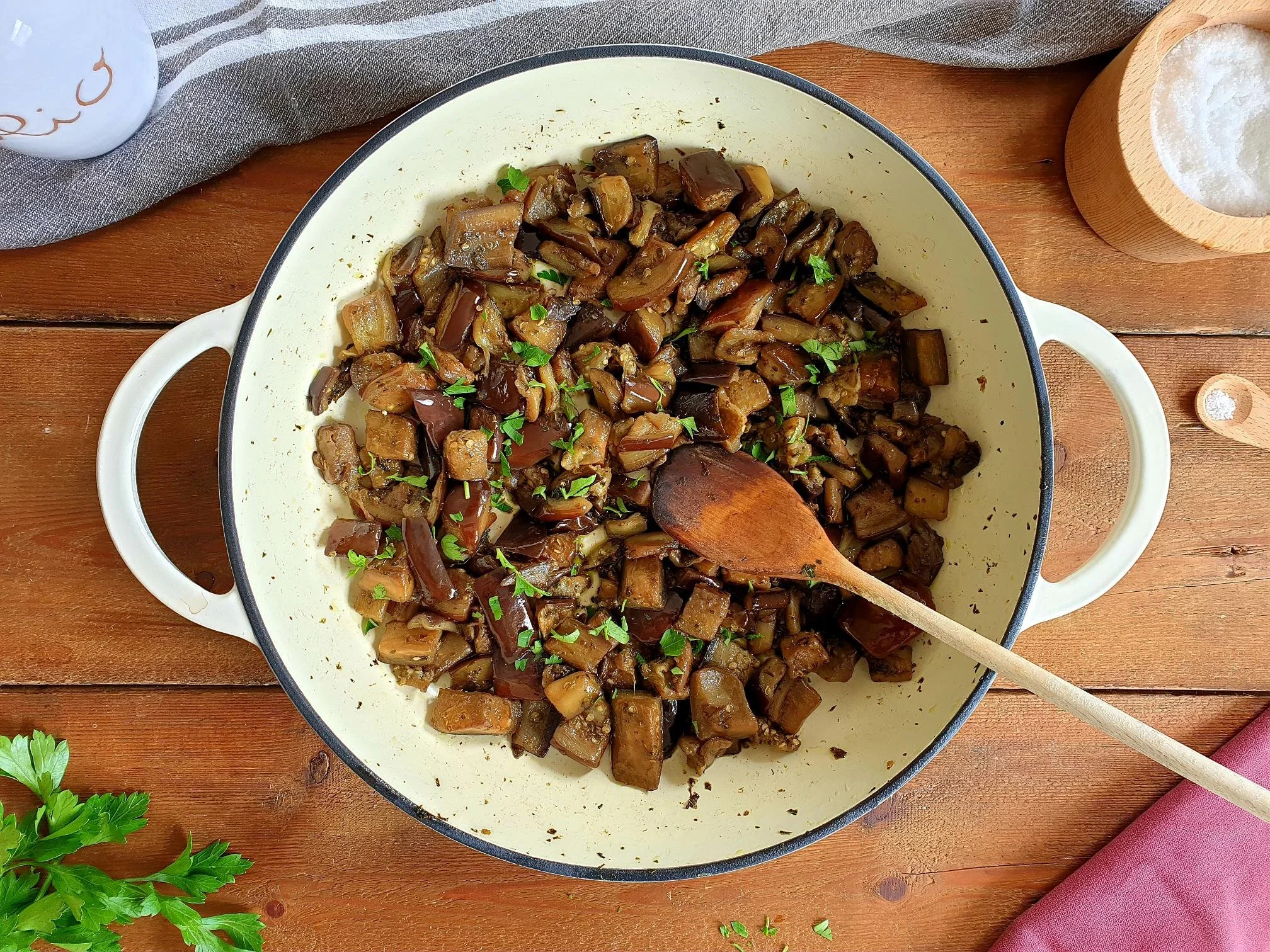
Serve hot, warm or at a room temperature. 

Just a thought

Aubergines cooked this way are mainly served as a side dish but they can also be enjoyed in less traditional way, spread on bruschetta, toasted bread, canapes, as a topping on a pizza, and they can be mixed with rice, or used as a base for a pasta sauce. 

Wine suggestion
Collio Friulano DOC 2021 - Ronchi di Cialla


September 21, 2022 /tina oblak
aubergines, sauteed aubergines with garlic and fresh parsley, Aubergines Istrian Recipe, Istrian style aubergines, easy aubergine recipe, simple aubergine recipe, aubergines vegan, Melanzane a funghetto
Adriatic Recipe, Appetizers, Autumnal dish, Autumnal recipe, bite-sized nibbles, brunch, Canapés, child friendly dish, child friendly meal, dinner, Easy recipe, entrée course, family friendly dish, family friendly meal, Finger food, first course, first course dish, first course meal, Healthy, healthy mael, hearty dish, Istrian cuisine, Istrian dish, Istrian food, Istrian gastronomy, main course, main dish, main vegetarian course, main vegetarian dish, main vegetarian meal, Nutritious, Nutritious dish, Rustic dish, Side Dishes, simple recipe, Slovenian cuisine, Slovenian food, Slovenian gastronomy, Small bites, Snacks, Starters, summer dish, summer recipe, supper, Vegan, Vegetable side dish, Vegetables, Vegetarian
Comment

One Pot Roasted Octopus with Potatoes and Vegetables Istrian Recipe (Octopus Peka)

Beans and Sardines
August 31, 2022 by tina oblak in Adriatic Recipe, All year round recipe, baked dish, child friendly dish, child friendly meal, dinner, Easy recipe, family friendly dish, family friendly meal, Fish & Seefood, Healthy, healthy mael, hearty dish, Istrian cuisine, Istrian dish, Istrian food, Istrian gastronomy, light fish course, light meal, main course, main dish, main fish course, main fish meal, Nutritious, Nutritious dish, one post fish recipe, one pot meal, roasted dish, Rustic dish, simple recipe, Slovenian cuisine, Slovenian food, Slovenian gastronomy, supper

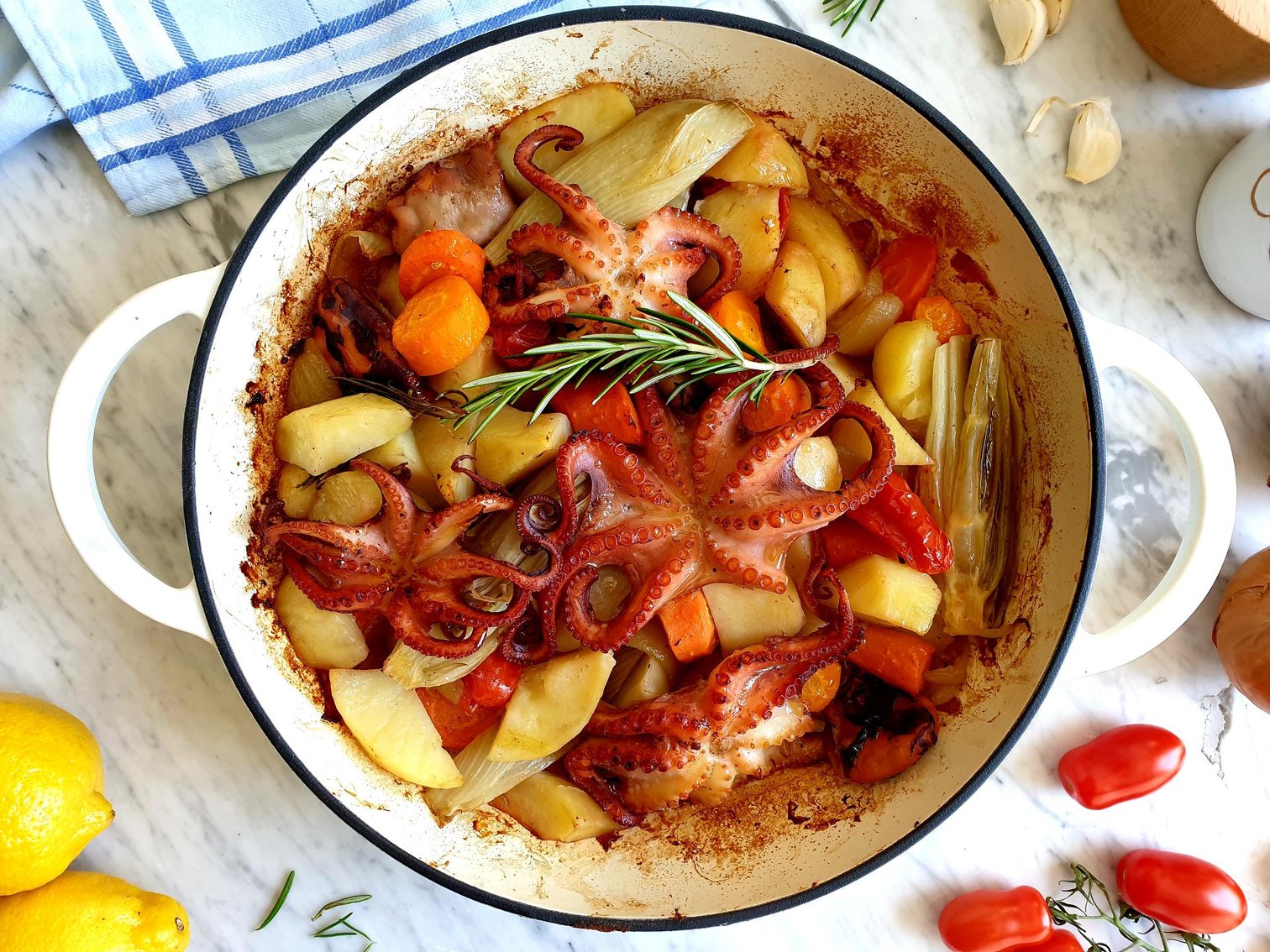
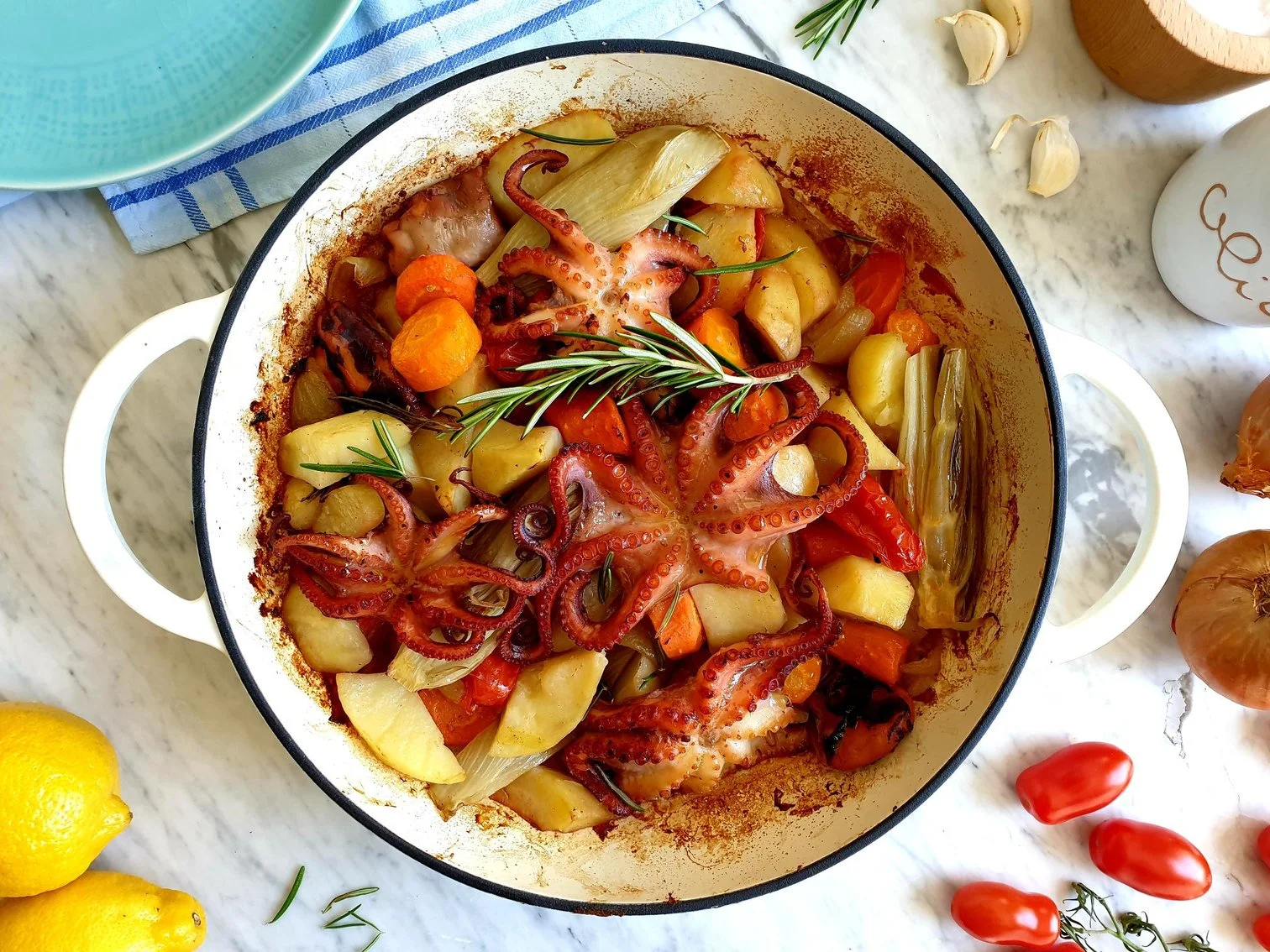
One pot roasted octopus with potatoes and vegetables called Octopus Peka (dish found in Slovenian and Croatian Istria and along Dalmatian coast in Croatia) is seriously delicious, very aromatic and one of the easiest and simplest recipe for a one pot roast where the preparation for it requires minimal effort but the finished dish is a serious show stopper, and although this dish is very rustic and formal, for locals it feels very special and celebratory, as it is usually prepared for a large number of people, for friends and family to mark a special occasion

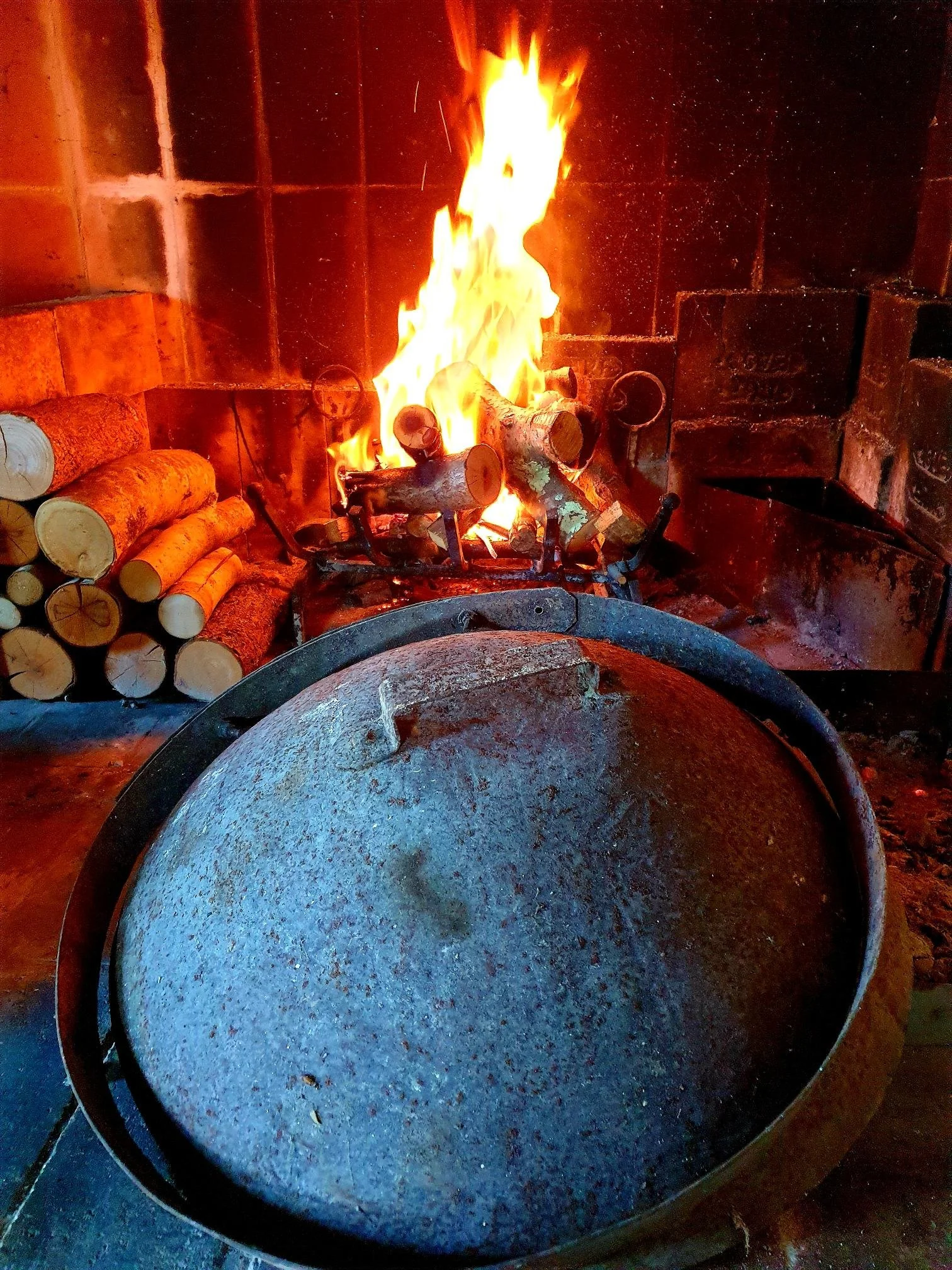
The word Peka, in Slovenian (also called črpinja) and in Croatian, refers to a large metal baking dish with a lid that resembles a bell-shaped dome but it is also a name given to the finished dish (lamb peka, octopus peka etc.) cooked with this very ancient method (in an open fireplace) and the oldest roasting technique which ensures the slow and even cooking as hot coals and embers are placed on top of the dome.

Most of us do not have a possibility to make this dish with the authentic and traditional peka method, but I am sharing here the recipe that would come as close as you can get to the “real deal octopus peka” using Dutch oven, cast iron casserole dish, even a baking tray and some aluminium foil will do.

Serve this dish hot, place the pot in the centre of the table and make sure there is plenty of crunchy bread to soak up the juices, prepare a mixed salad to accompany the dish, and you are ready to go.

I am sharing here this traditional one pot roasted octopus using potatoes, carrots, onions and garlic as basic selection of vegetables, together with fresh fennel bulb that can be replaced by courgettes, aubergines, and bell peppers. Play around and use the vegetables, or a combination of vegetables that you like or prefer. There really is no wrong or right way here, the most important thing is that you enjoy the dish!

Ingredients

Serves 4

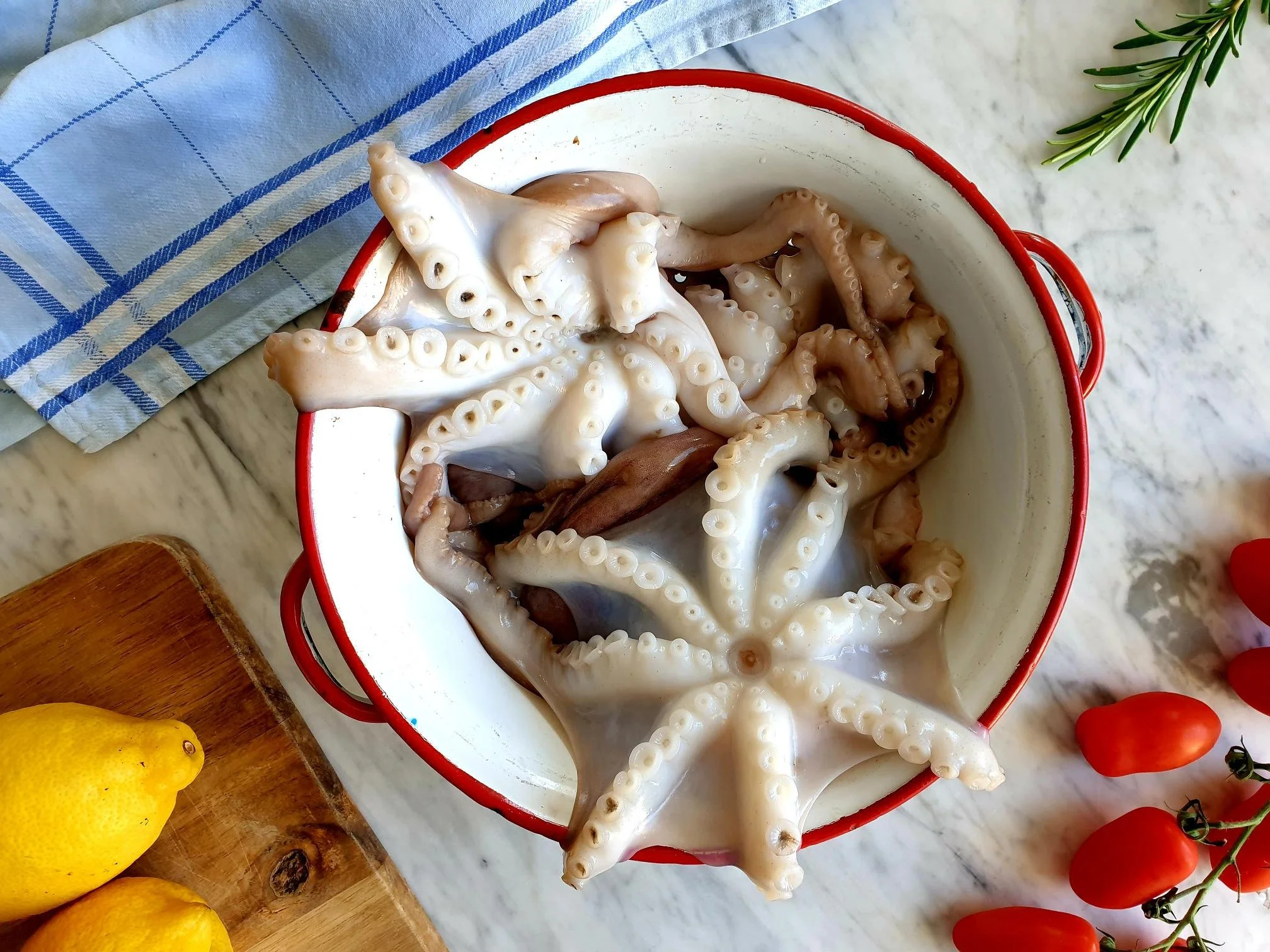
  • octopus, cleaned, 1 big or a few smaller ones, about 2kg in weight (fishmongers will be happy to clean it for you).

  • For this recipe it is best if the octopus has been previously frozen and then thawed, or buy an already frozen octopus if you can.

  • 1 kg potatoes, peeled and cut into chunks

  • onion (about 150g) peeled and cut into chunks

  • carrots (about 280g) peeled and roughly cut into chunks

  • 3 cloves of garlic, peeled

  • tomatoes (I used 6 mini San Marzano Tomatoes), you can use other variety of small tomatoes or use one bigger in size and cut into chunks

  • one fresh fennel bulb, trimmed and cut into chunks. You can also replace fennel with other vegetables, such as courgettes, aubergines and bell peppers, or you can use fennel in addition to other vegetables. Few black pitted olives are a tasty addition too.

  • 50ml white wine, optional

  • extra virgin olive oil, a very generous drizzle

  • one small sprig of fresh or dry rosemary

  • sea salt

  • black pepper

Method

Place clean and defrosted octopus (or octopuses) in a pan, put the lid on and cook the octopus on a medium-low heat for about 30 minutes. There will be quite a lot of liquid coming out of the octopus. Drain in a colander and set aside.

Preheat the oven to 200C static or equivalent.

View fullsize Octopus Peka 3.jpg
View fullsize Octopus Peka 6.jpg

Put all the vegetables in a Dutch oven, baking dish or tray, and very generously drizzle with extra virgin olive oil.

Season with sea salt and black pepper and mix well.

View fullsize Octopus Peka 5.jpg
View fullsize Octopus Peka 7.jpg

Place previously cooked octopus on top of the vegetable and drizzle lightly with olive oil.

Put the lid on and roast for 60 minutes.

View fullsize Octopus Peka 8.jpg
View fullsize Octopus Peka 9.jpg

Take the lid off and roast for further 10 minutes, or a bit more if there is still a lot of liquid. This will partially depend on the type of vegetables you are using and personal preference.

You want enough liquid so the final dish is juicy and moist.

Place the dish at the centre of the table, so everyone can help themselves, with some crunchy bread to soak up the juices and maybe a nice fresh salad.

Just a thought

This dish is best served hot immediately.

It can be reheated but the dish will be slightly drier as the potatoes and other vegetables will soak up all the juices, although it will still be tasty though.

This recipe is not suitable for freezing.

Wine suggestion

Vitovska 2019 - Čotar

August 31, 2022 /tina oblak
octopus, cooking octopus, roasted octopus, octopus peka, octopus peka with vegetables, roasted seafood, hobotnica pod peko, hobotnica z zelenjavo v pecici, polipo al forno con le verdure
Adriatic Recipe, All year round recipe, baked dish, child friendly dish, child friendly meal, dinner, Easy recipe, family friendly dish, family friendly meal, Fish & Seefood, Healthy, healthy mael, hearty dish, Istrian cuisine, Istrian dish, Istrian food, Istrian gastronomy, light fish course, light meal, main course, main dish, main fish course, main fish meal, Nutritious, Nutritious dish, one post fish recipe, one pot meal, roasted dish, Rustic dish, simple recipe, Slovenian cuisine, Slovenian food, Slovenian gastronomy, supper
Comment

Courgette risotto Istrian Recipe

Beans and Sardines
August 24, 2022 by tina oblak in Adriatic Recipe, Appetizers, child friendly dish, child friendly meal, dinner, Easy recipe, entrée course, family friendly dish, family friendly meal, first course, first course dish, first course meal, Healthy, healthy mael, hearty dish, Istrian cuisine, Istrian dish, Istrian food, Istrian gastronomy, light meal, main course, main dish, main vegetarian dish, main vegetarian meal, Nutritious, Nutritious dish, one pot meal, recipe from Northern Ital, Risotti, Risotto, Rustic dish, simple recipe, Slovenian cuisine, Slovenian food, Slovenian gastronomy, Spring dish, Spring recipe, Starters, summer dish, summer recipe, supper, Vegan, Vegetables, Vegetarian, Venetian dish

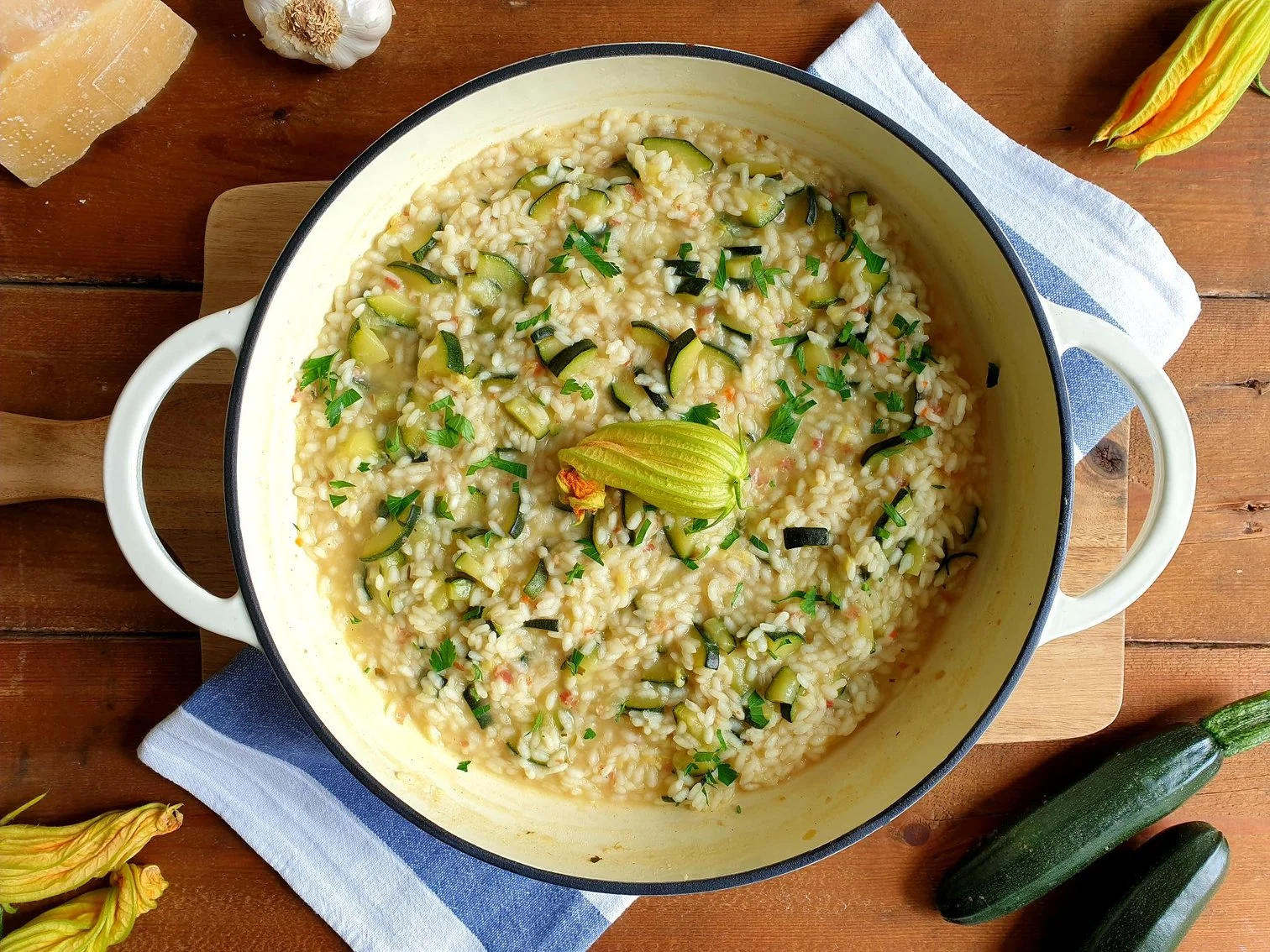
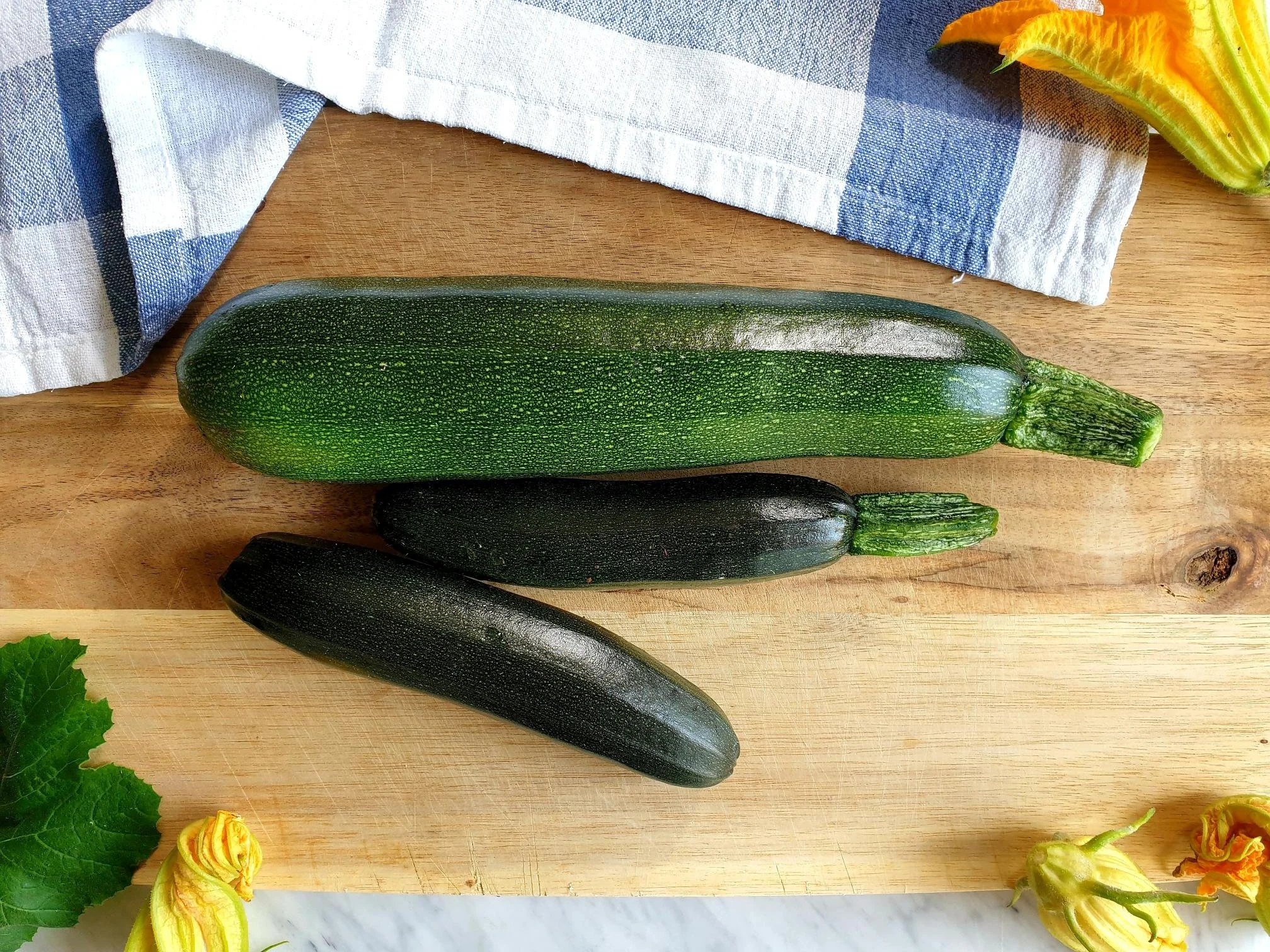
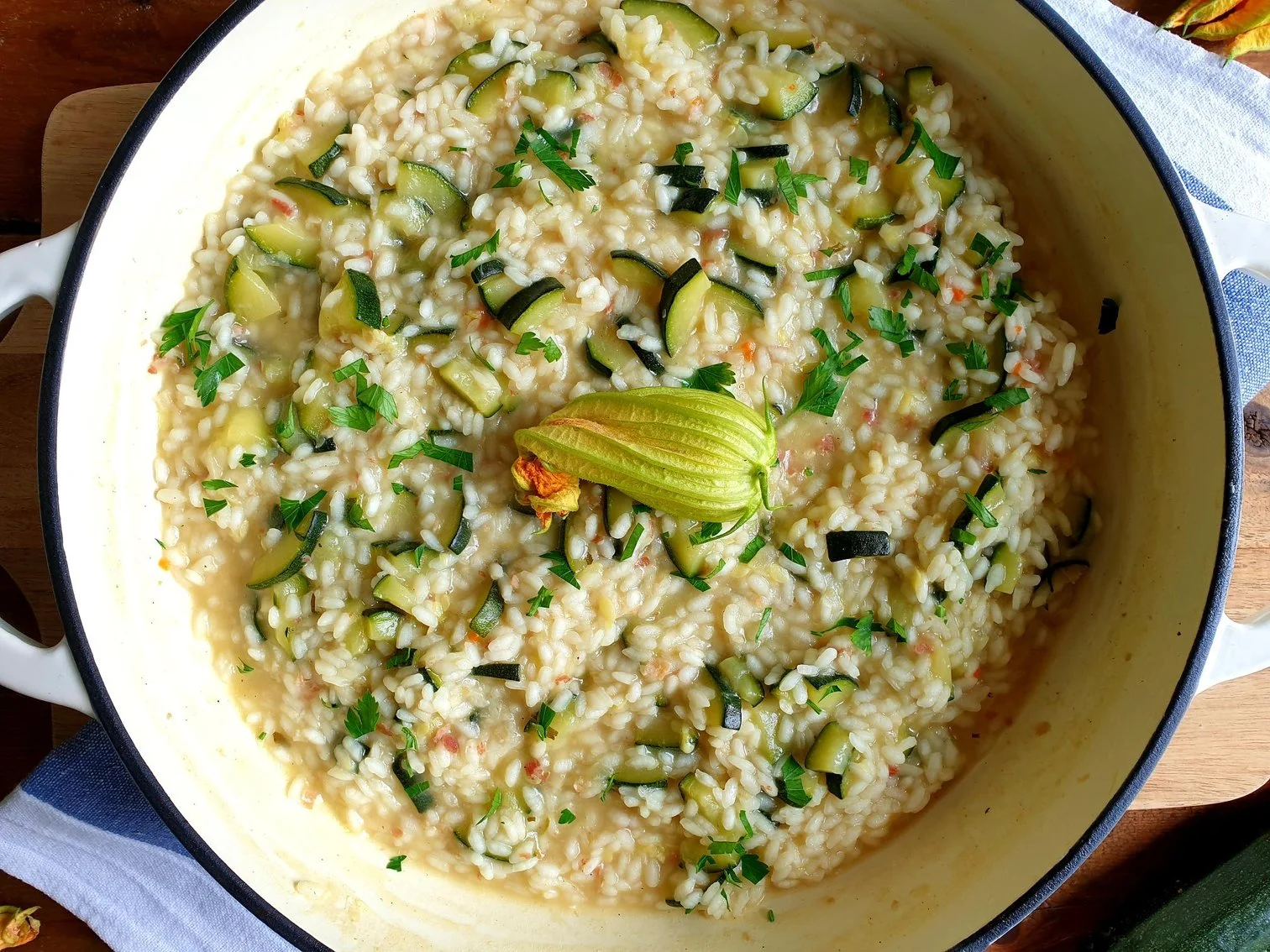
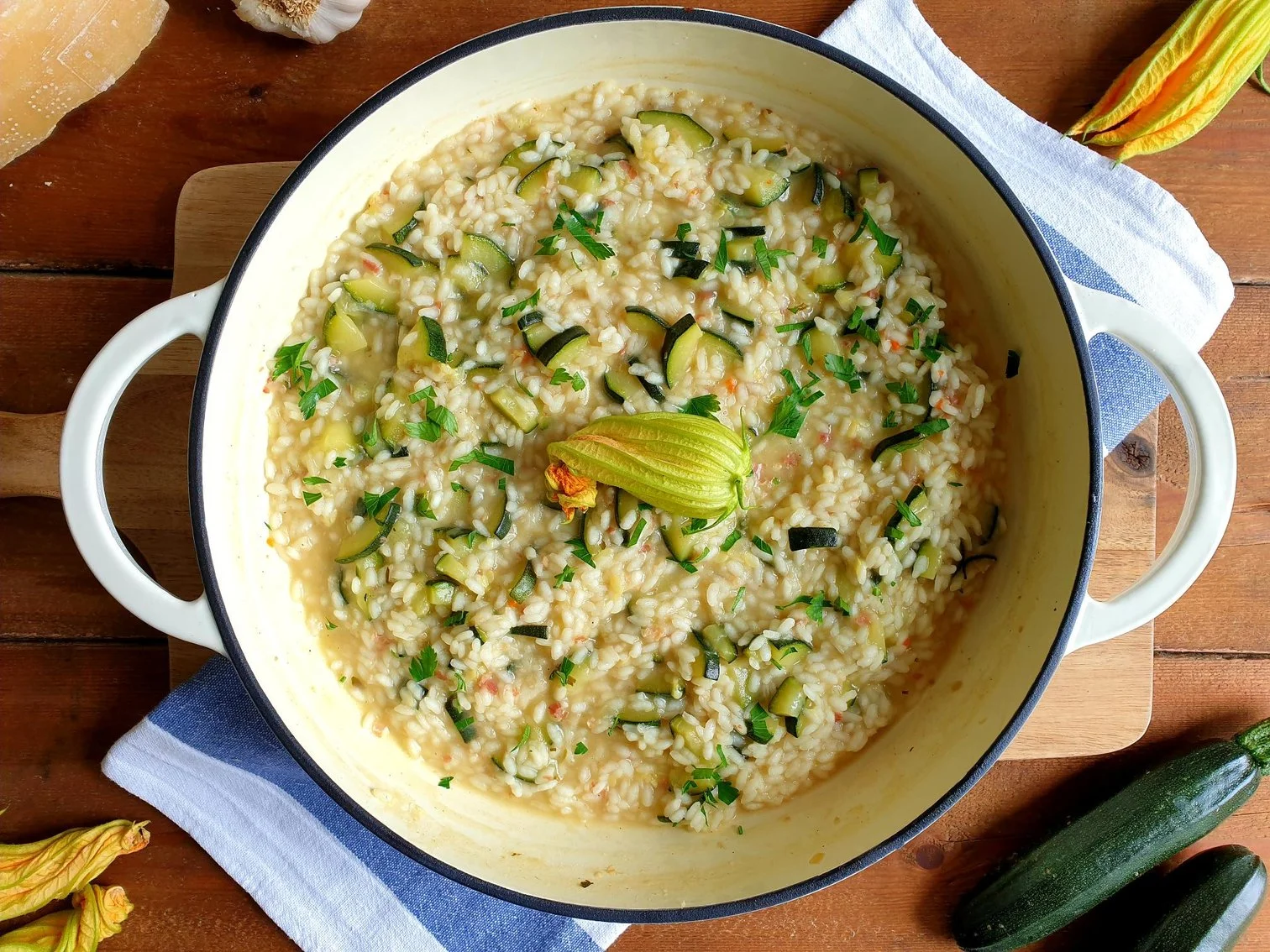
Courgette risotto is a perfect choice if you want to make a light and elegant dish, but one that is delicate in taste and yet filling. Summer risotto is incredibly easy to make, and during the summer months, when courgettes are in full season and in abundance, choosing this delicious vegetable to cook with seems almost an obvious choice.

This is not a risotto you will find in the restaurant menus on the Slovenian coast, it is cooked in the households that almost always keep a slab of pancetta in the fridge, and whenever possible grow courgettes. This recipe, since Istria is geographically so close to Veneto region in Italy, where there are a great variety of risotti recipes, it should be no surprise that courgette risotto has been created, and cooked on a regular basis and enjoyed by generations.

This risotto will cover all occasions, it is a perfect rustic and informal choice for a mid week lunch or dinner, but has nothing to dread if it is served in a more formal setting.

I am sharing here my mother's summer courgette risotto, most of the time made with freshly picked courgette that my paternal grandfather used to grow in his vegetable patch.

If you happen to grow your own courgettes and have courgettes flowers as well, and not quite sure what to do with them, use them in the risotto, just chop them roughly and cook together with sliced courgettes.

Ingredients

Serves 4

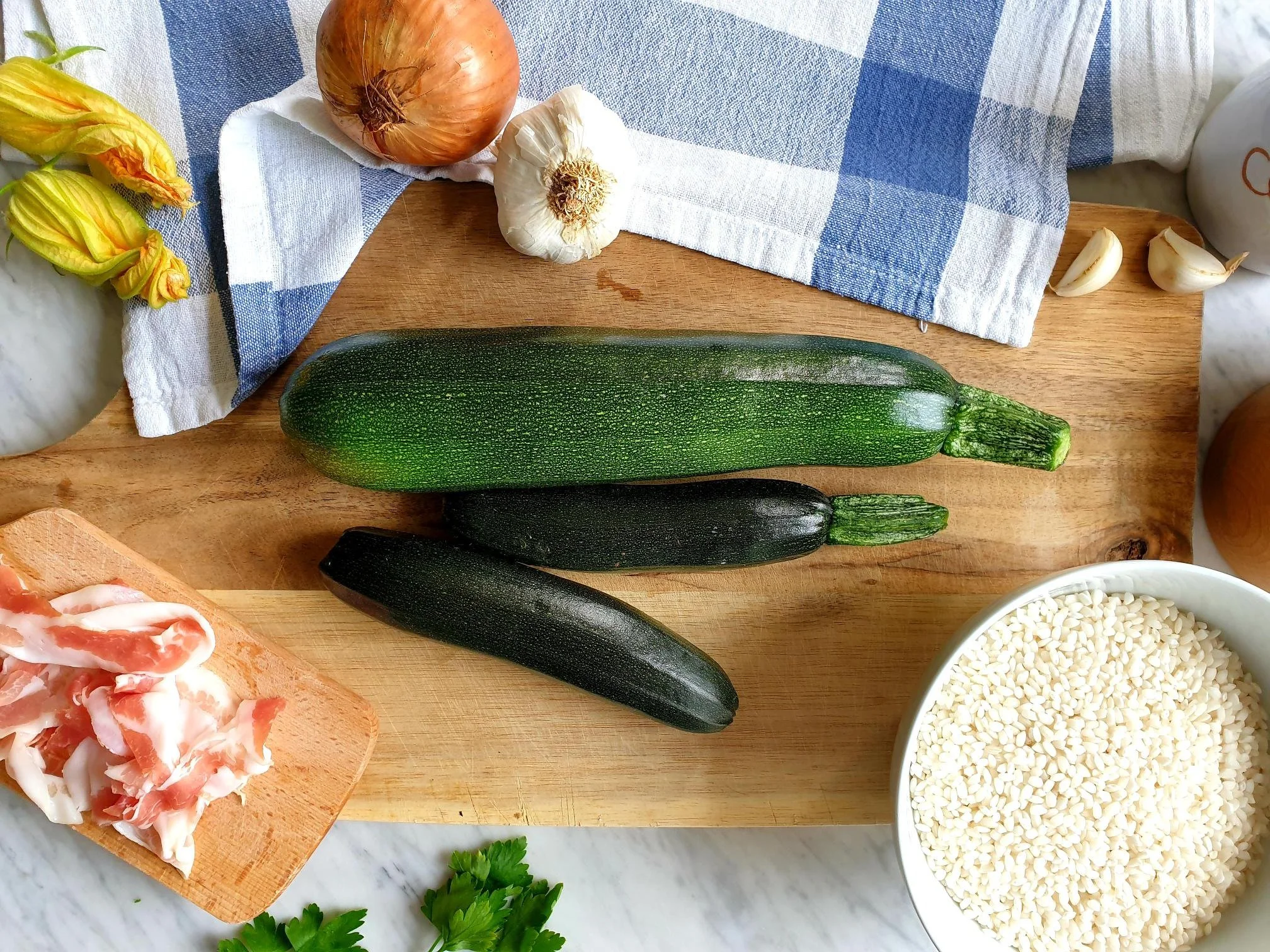
  • 300g risotto rice (like Vialone Nano, Arborio or Carnaroli)

  • courgettes 430g roughly, sliced

  • 2 Tbsp olive oil

  • 1 onion, 80g roughly

  • 50g pancetta, finely sliced (can use cubed pancetta, sliced bacon, lardons or pork sausage meat), optional for a vegetarian variation

  • small clove of garlic, peeled and crushed

  • 1 litre of hot chicken broth or stock (can use vegetable broth or stock)

  • sea salt

  • fresh flat leaf parsley, roughly chopped, optional (for garnish)

  • generous knob of butter, optional

  • a handful of Parmiggiano Reggiano cheese, finely grated, optional

Method

Before starting to make the risotto have your boiling hot chicken or vegetable broth or stock ready to hand for later.

Wash the courgettes and pat dry them with kitchen paper or clean kitchen towel.

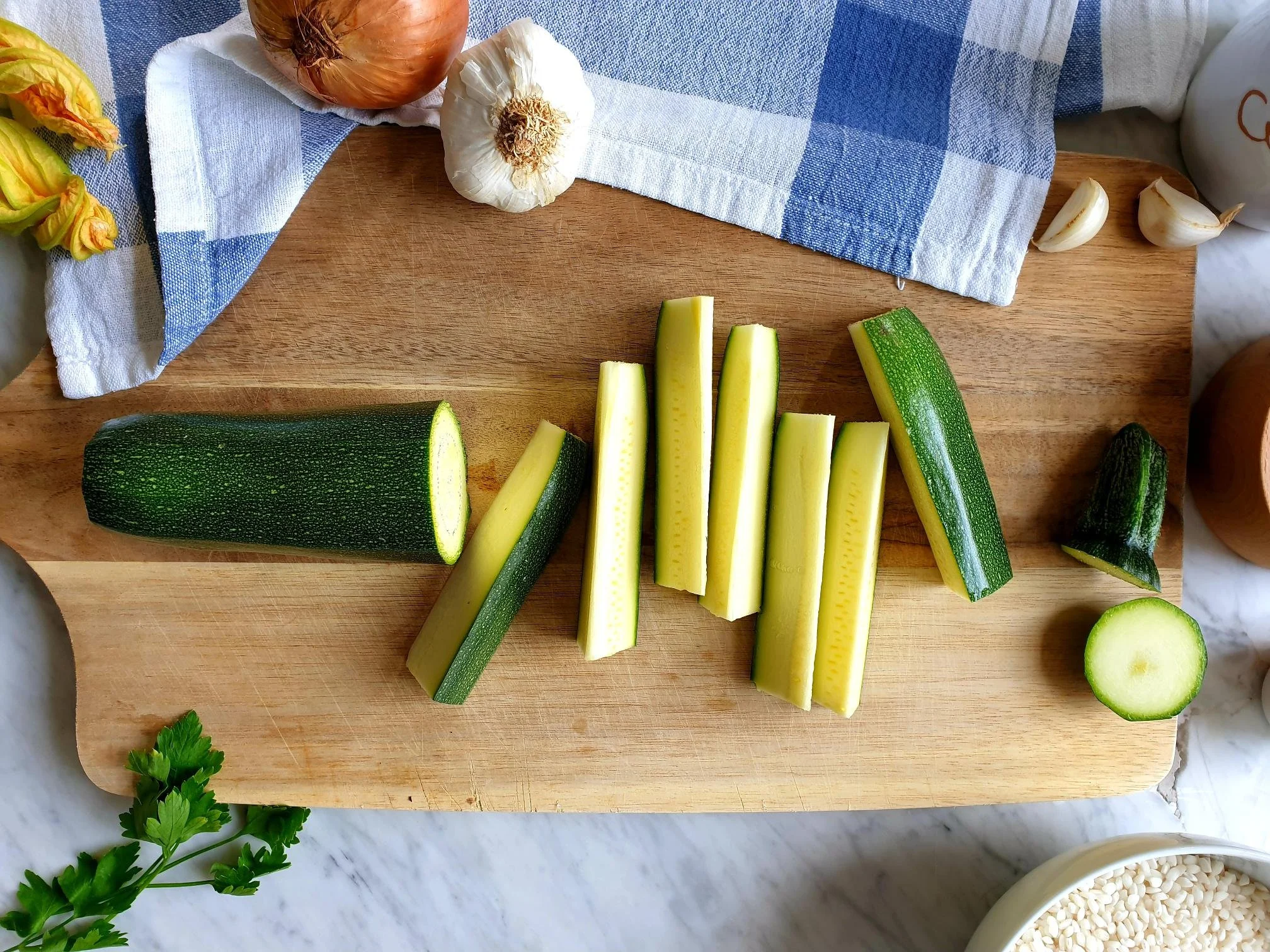
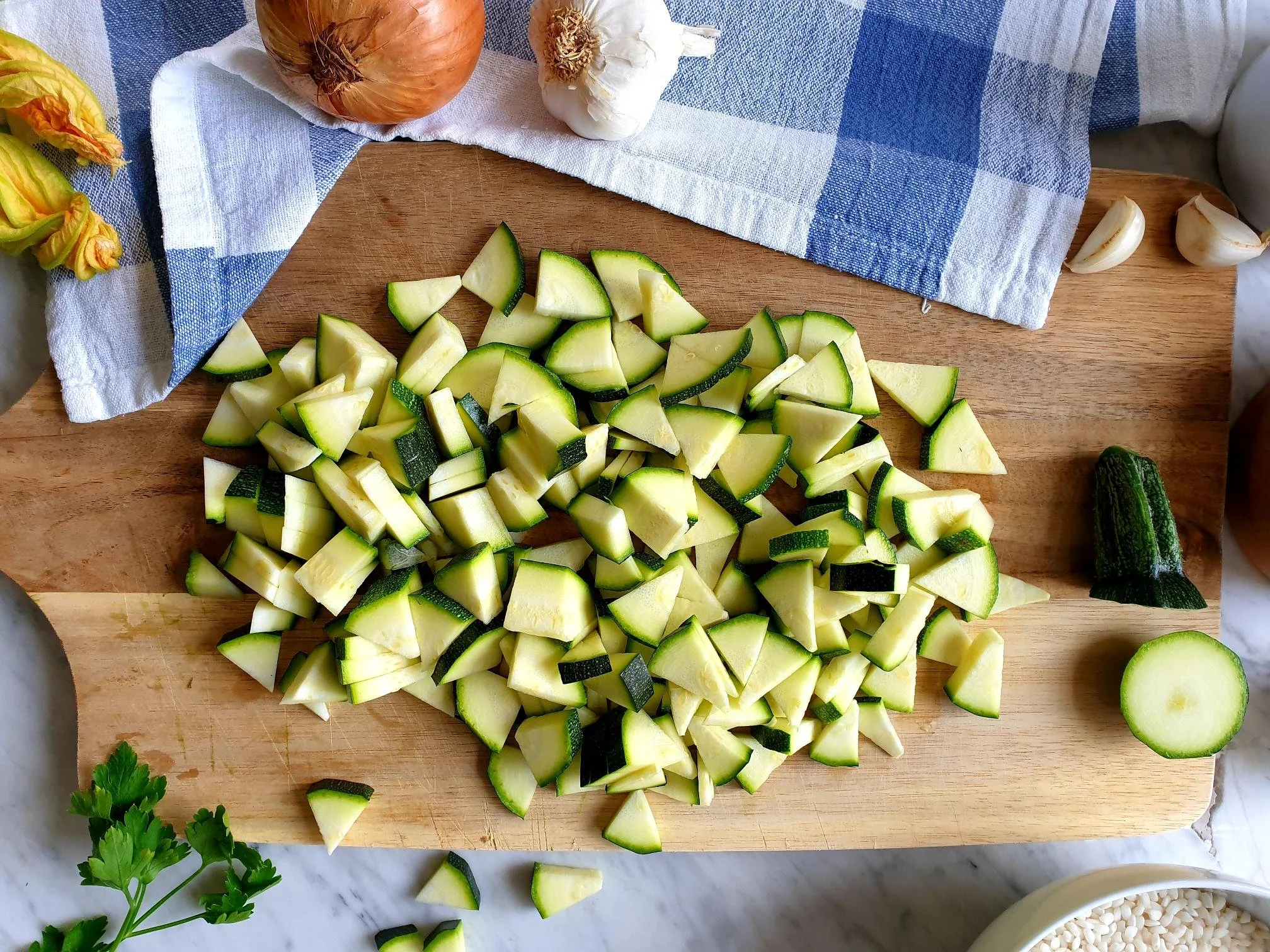
Trim off the ends of the courgettes and slice or cut into smaller pieces (if the courgette is big, cut in half first, then slice lengthways into quarters, then chop into smaller chunks)

View fullsize Courgette risotto 4.jpg
View fullsize Courgette risotto 5.jpg

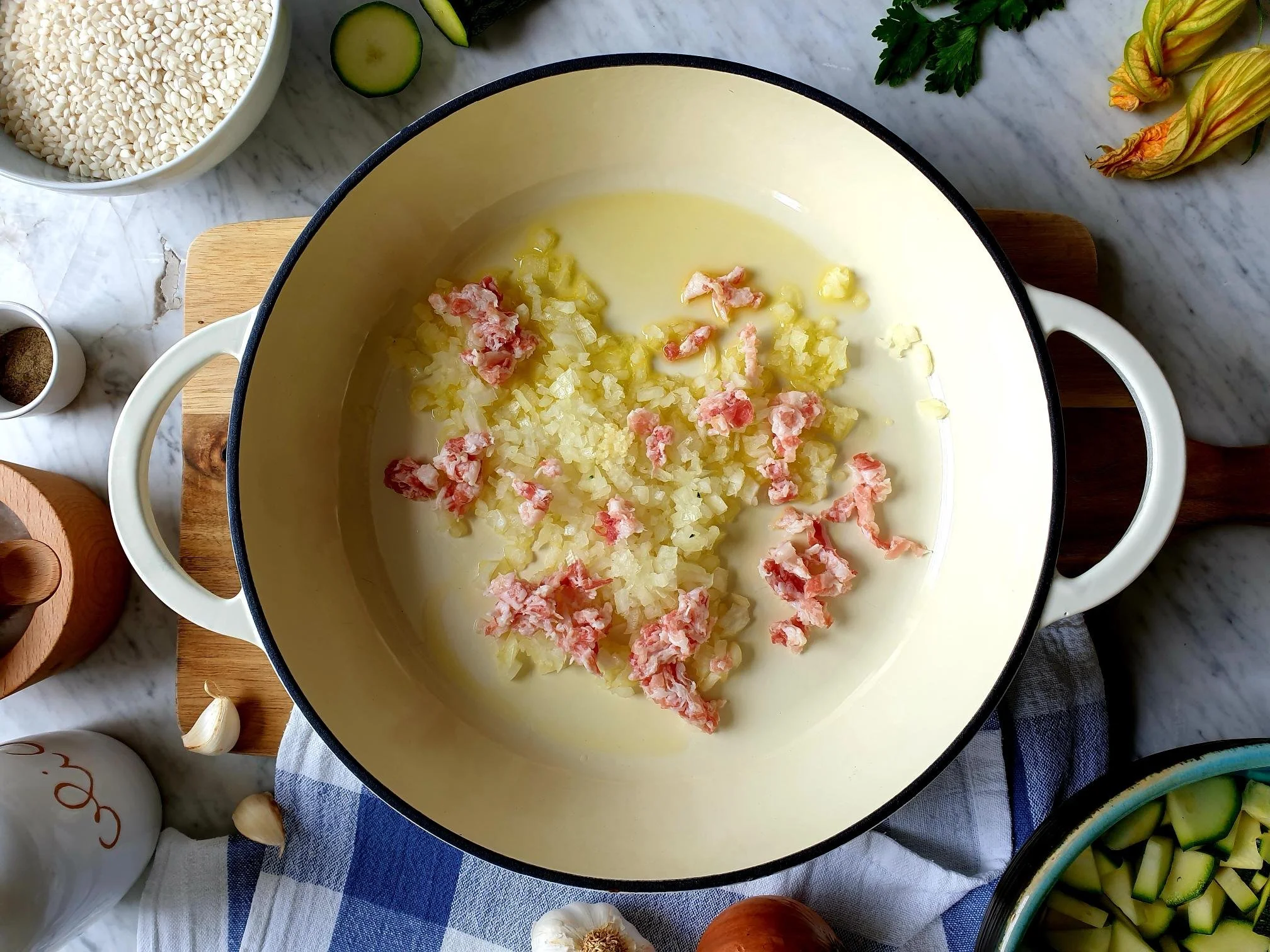
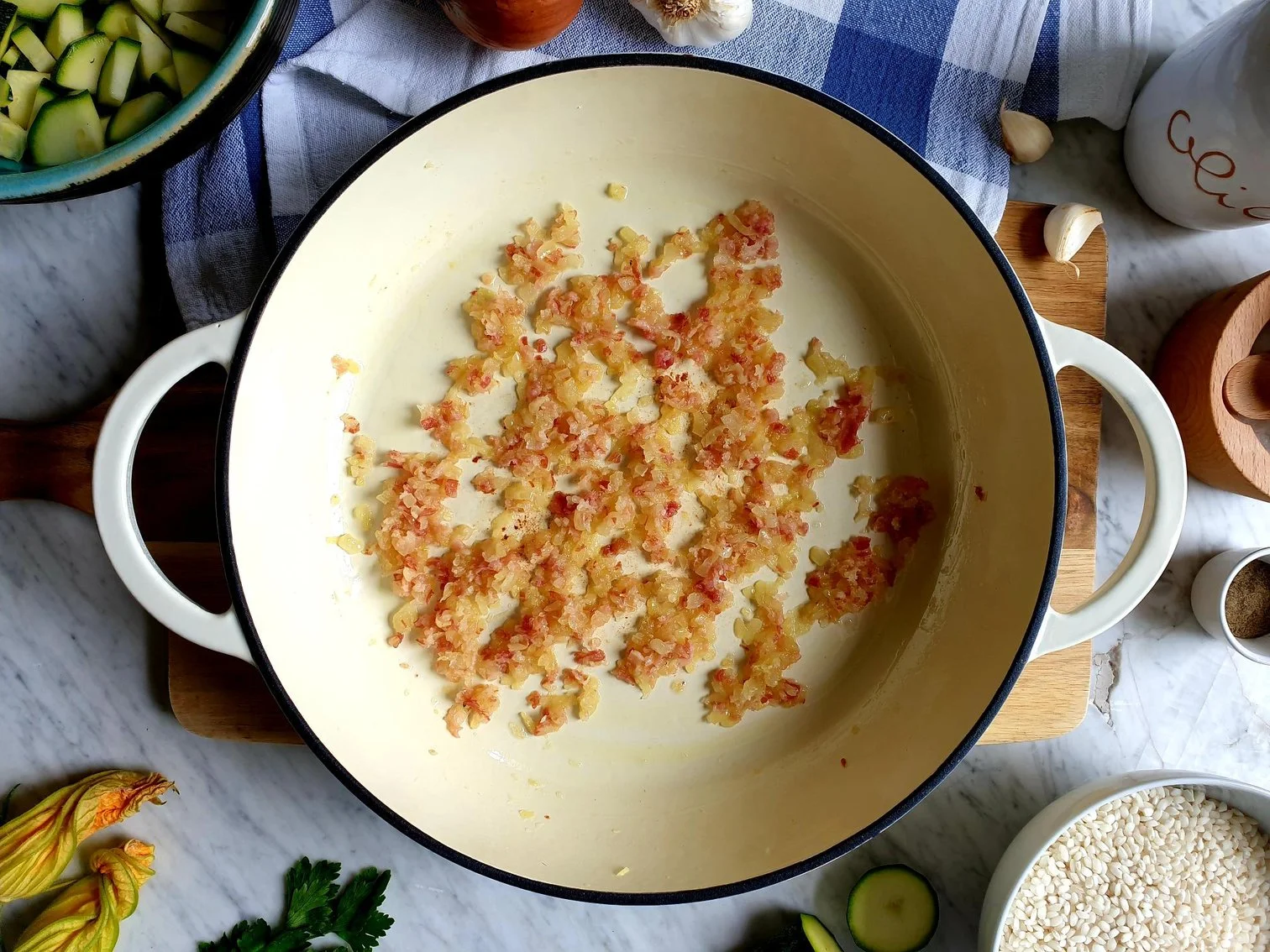
Put olive oil in a pan, add finely chopped onions, pancetta, crushed garlic, a pinch of salt and cook on a gentle heat, stirring occasionally, until the onions become soft and translucent.

View fullsize Courgette risotto 6.jpg
View fullsize Courgette risotto 7.jpg

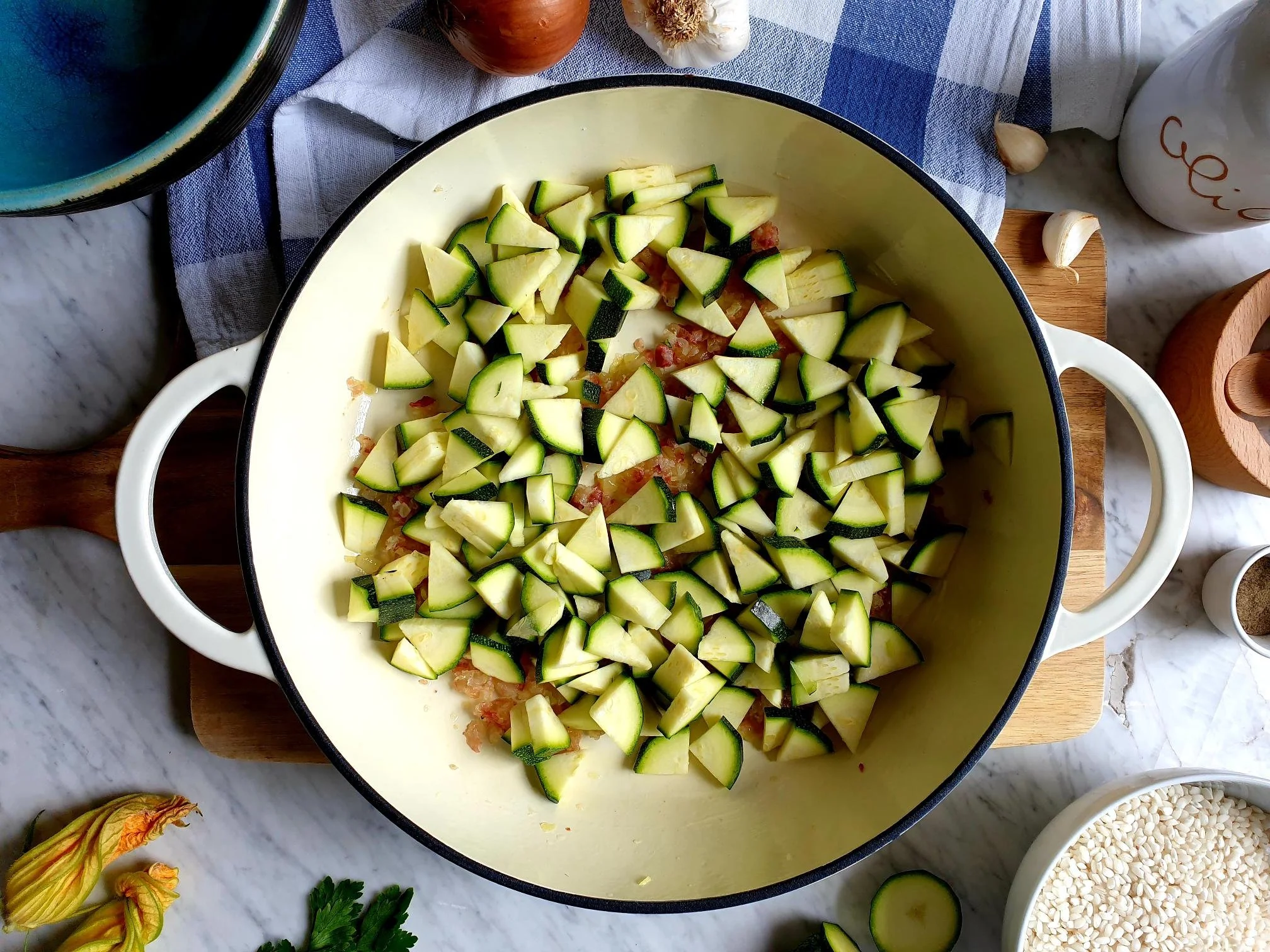
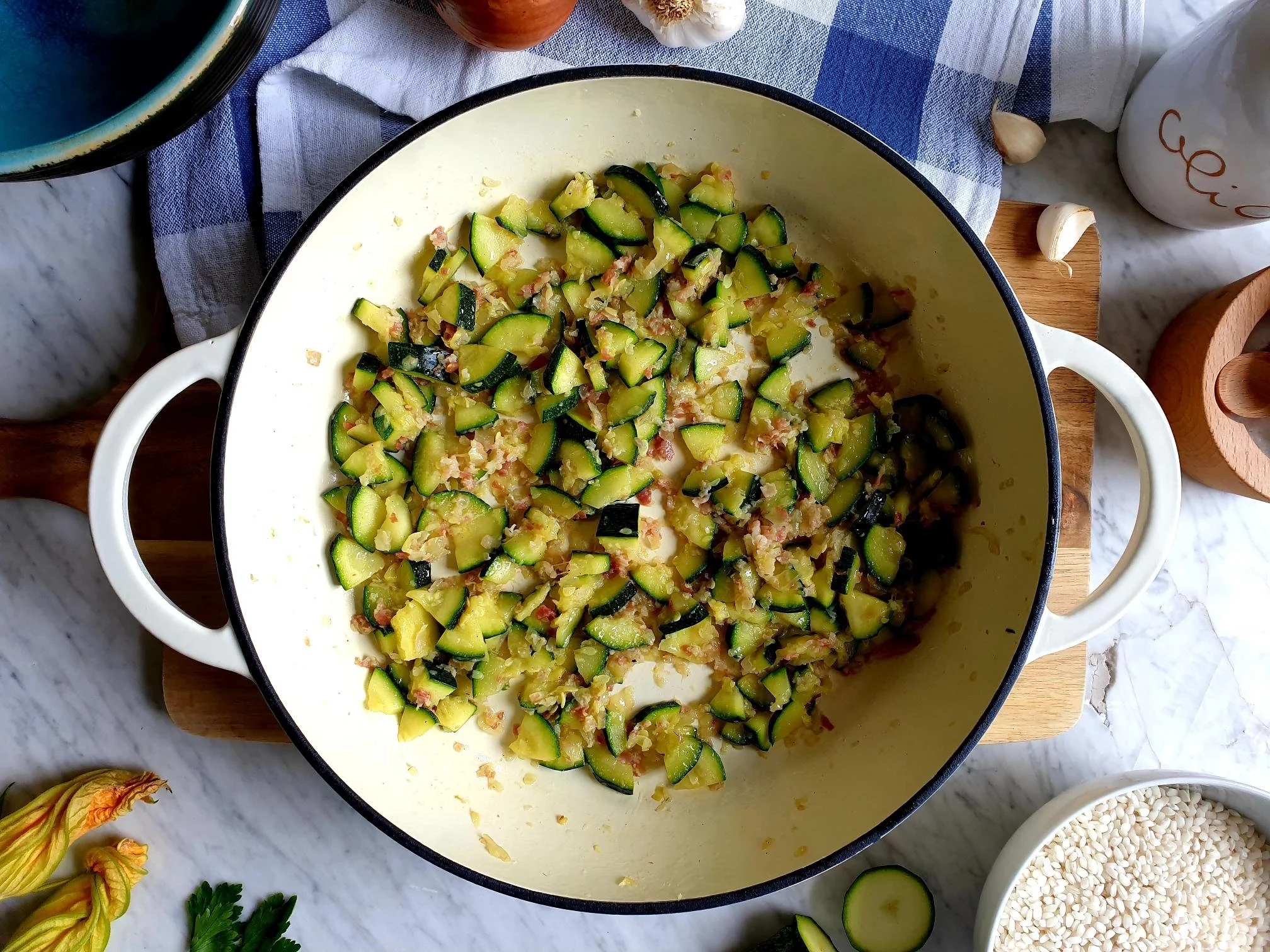
Add courgette pieces and cook for a few minutes until they soften a bit.

View fullsize Courgette Risotto 7a.jpg
View fullsize Courgette risotto 8.jpg

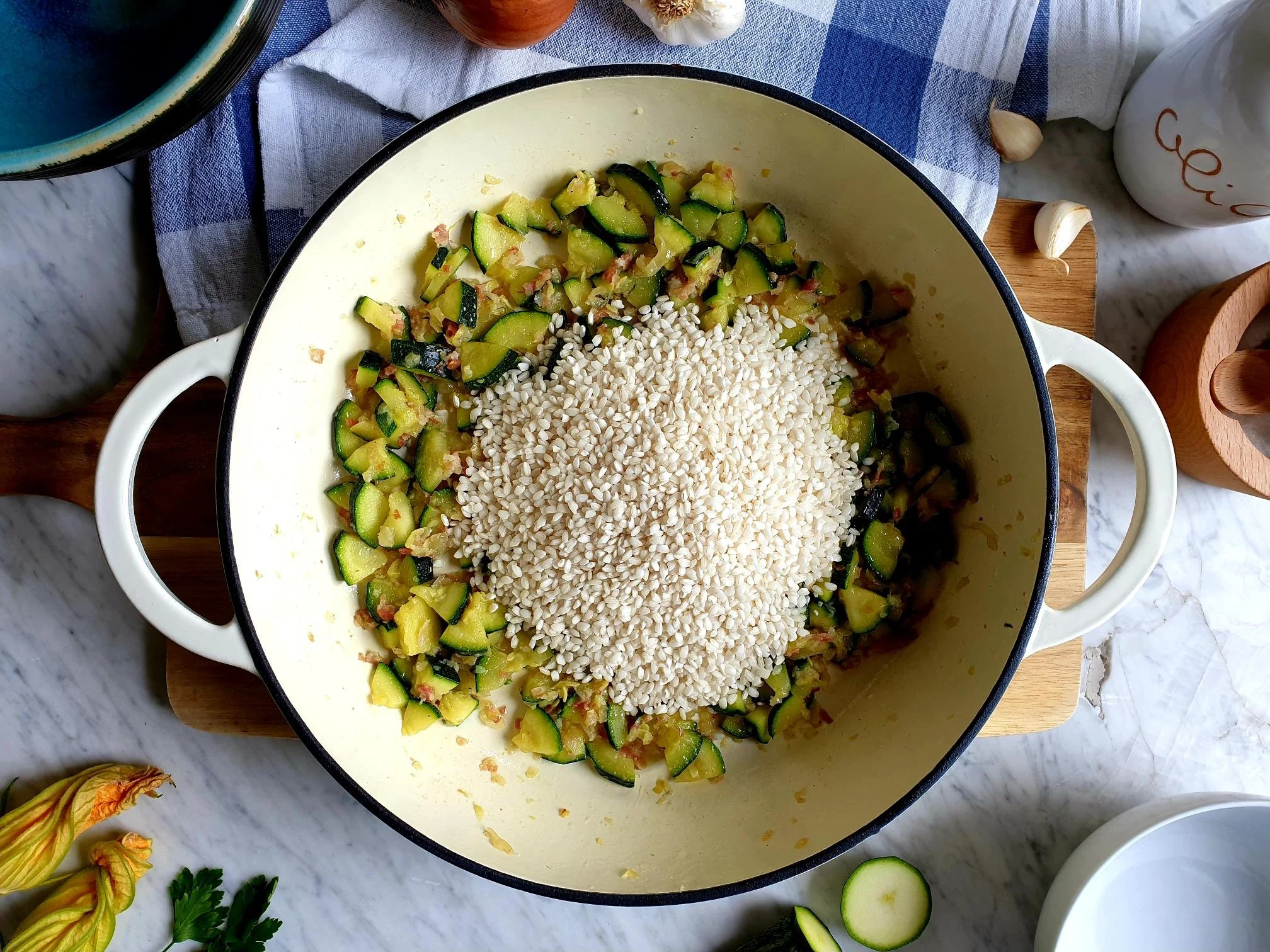
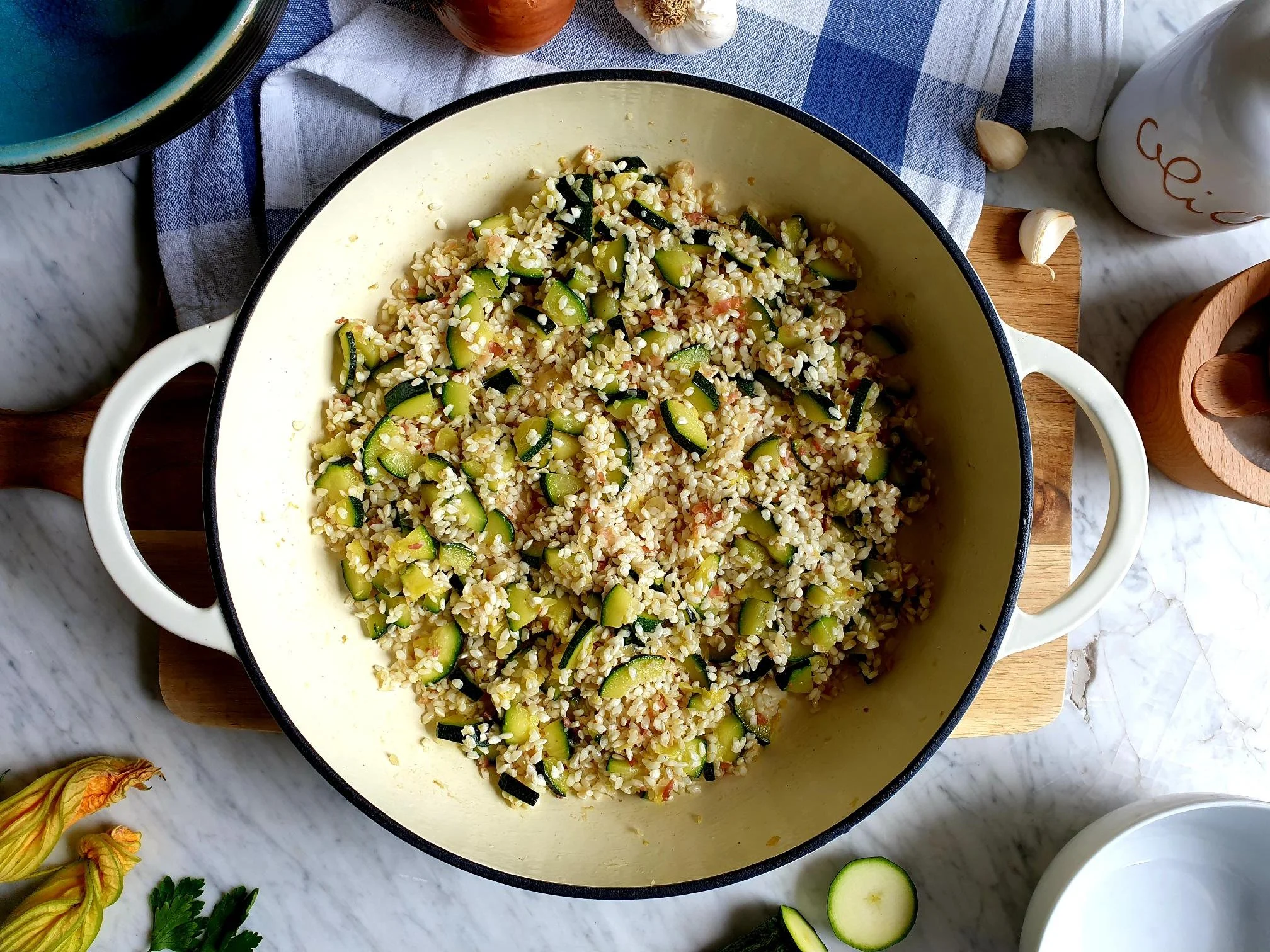
Add the risotto rice and toast for a bit , stirring constantly to avoid sticking to the pan.

View fullsize Courgette risotto 9.jpg
View fullsize Courgette risotto 10.jpg

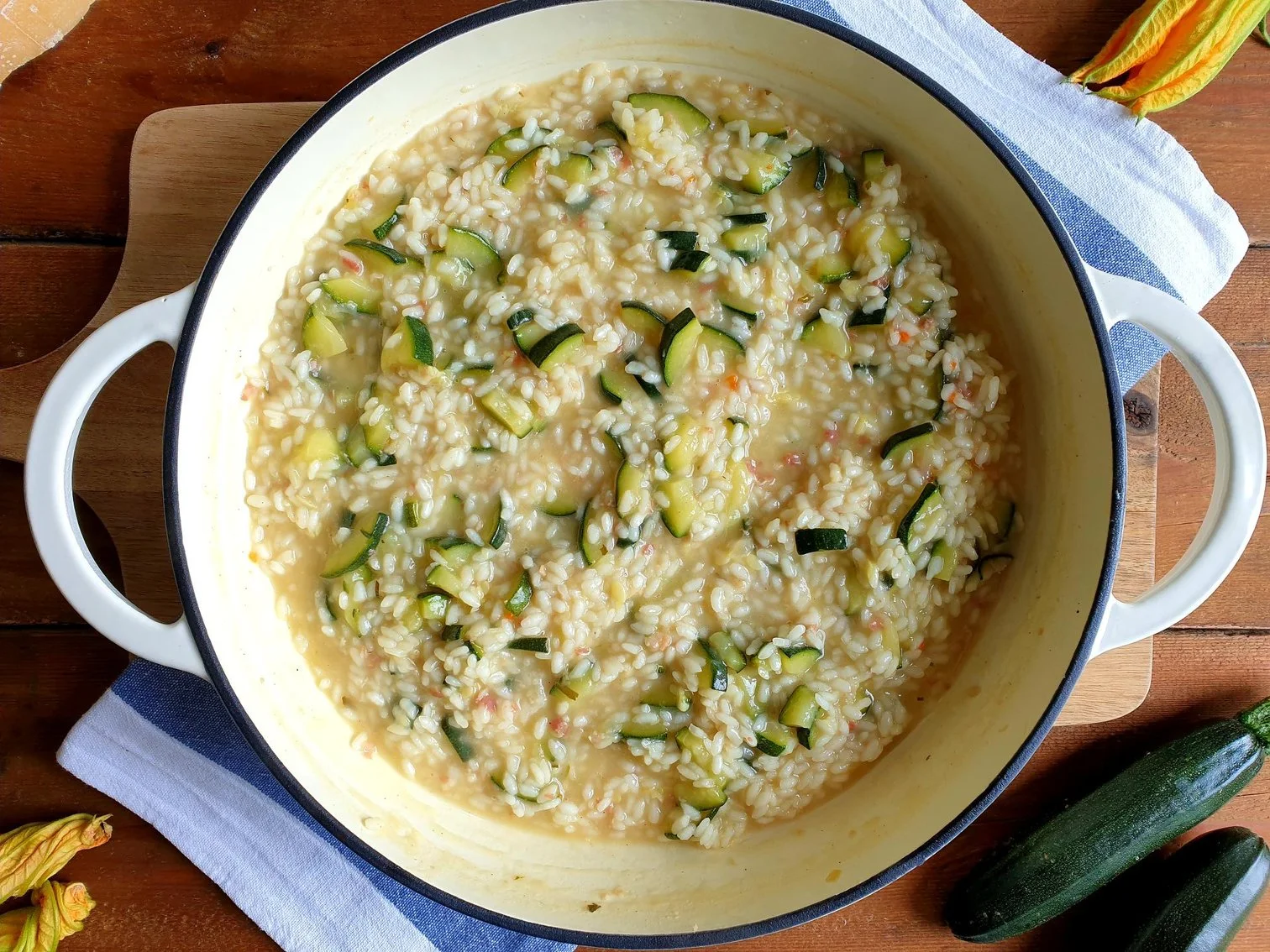
Pour or ladle ½ litre (500ml) of hot chicken or vegetable broth or stock.

Cook until the first amount of liquid is absorbed then start gradually adding ladles of hot stock, one at a time, allowing the liquid to be absorbed before adding more.

There should always be enough liquid just to cover the risotto.

Cook on a medium heat, stirring almost constantly, until the rice is cooked al dente, meaning fully cooked but still a bit firm when bitten, it should roughly take between 15 -18 minutes for a risotto to be cooked.

Taste and adjust the seasoning with sea salt, but this might not be necessary since the stocks that come from the store generally speaking are salty already!

For even creamier texture, you can finish cooking the courgette risotto with a typical Italian mantecare phase. Remove the saucepan from the heat, add grated cheese and a bit of cold butter to the risotto when it is almost finished, and stir with a wooden spoon quite vigorously in order to develop its delicious creamy texture. This phase is optional.

Sprinkle with some roughly chopped fresh flat leaf parsley and finely grated Parmiggiano Reggiano Cheese (only if you have not used it already in the mantecare phase) and serve immediately while the risotto is still hot.

Just a thought

Courgette risotto can be kept in the fridge for a couple of days in an airtight container.

It can be enjoyed at room temperature as well and is not suitable for freezing.

You can freeze the onion, courgettes and pancetta base and defrost when deciding to make a risotto.

With a leftover courgette risotto you can make some arancini (staple Sicilian stuffed rice ball, coated in breadcrumbs and fried)

Wine suggestion

Roero Arneis DOCG 2021 - Malvirà

August 24, 2022 /tina oblak
fresh courgettes, risotto rice, zucchini risotto, creamy courgette risotto, vegetarian risotto, vegan risotto, courgette risotto with pancetta
Adriatic Recipe, Appetizers, child friendly dish, child friendly meal, dinner, Easy recipe, entrée course, family friendly dish, family friendly meal, first course, first course dish, first course meal, Healthy, healthy mael, hearty dish, Istrian cuisine, Istrian dish, Istrian food, Istrian gastronomy, light meal, main course, main dish, main vegetarian dish, main vegetarian meal, Nutritious, Nutritious dish, one pot meal, recipe from Northern Ital, Risotti, Risotto, Rustic dish, simple recipe, Slovenian cuisine, Slovenian food, Slovenian gastronomy, Spring dish, Spring recipe, Starters, summer dish, summer recipe, supper, Vegan, Vegetables, Vegetarian, Venetian dish
Comment

Risotto Primavera Venetian inspired Recipe 

Beans and Sardines
July 27, 2022 by tina oblak in Adriatic Recipe, child friendly dish, child friendly meal, dinner, Easy recipe, entrée course, family friendly dish, family friendly meal, first course, first course dish, first course meal, Healthy, healthy mael, hearty dish, Istrian cuisine, Istrian dish, Istrian food, Istrian gastronomy, light meal, main course, main dish, main vegetarian dish, main vegetarian meal, Nutritious, Nutritious dish, recipe from Northern Ital, Risotti, Risotto, Rustic dish, simple recipe, Slovenian cuisine, Slovenian food, Slovenian gastronomy, Spring dish, Spring recipe, Starters, summer dish, summer recipe, supper, Vegan, Vegetables, Vegetarian

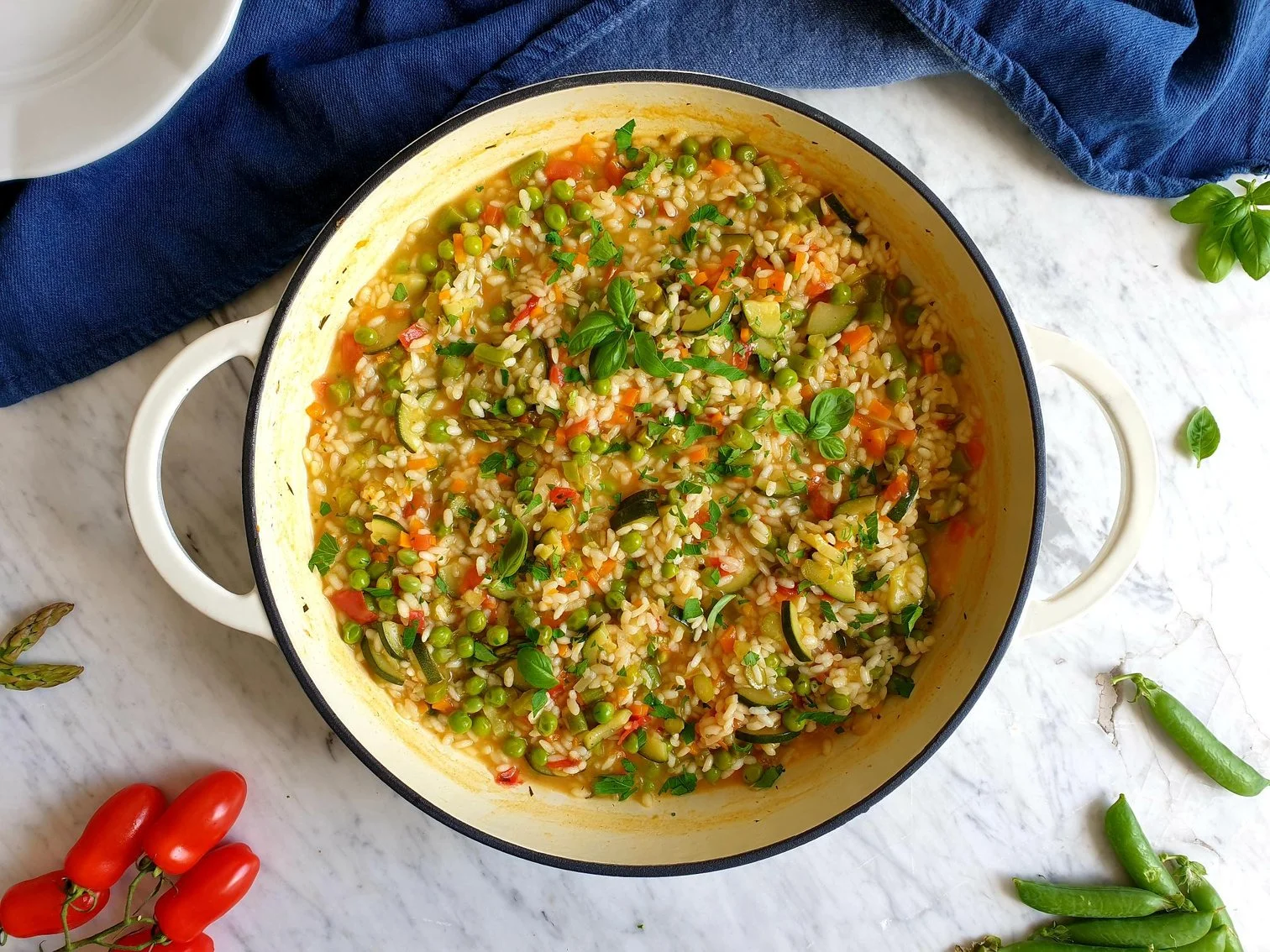
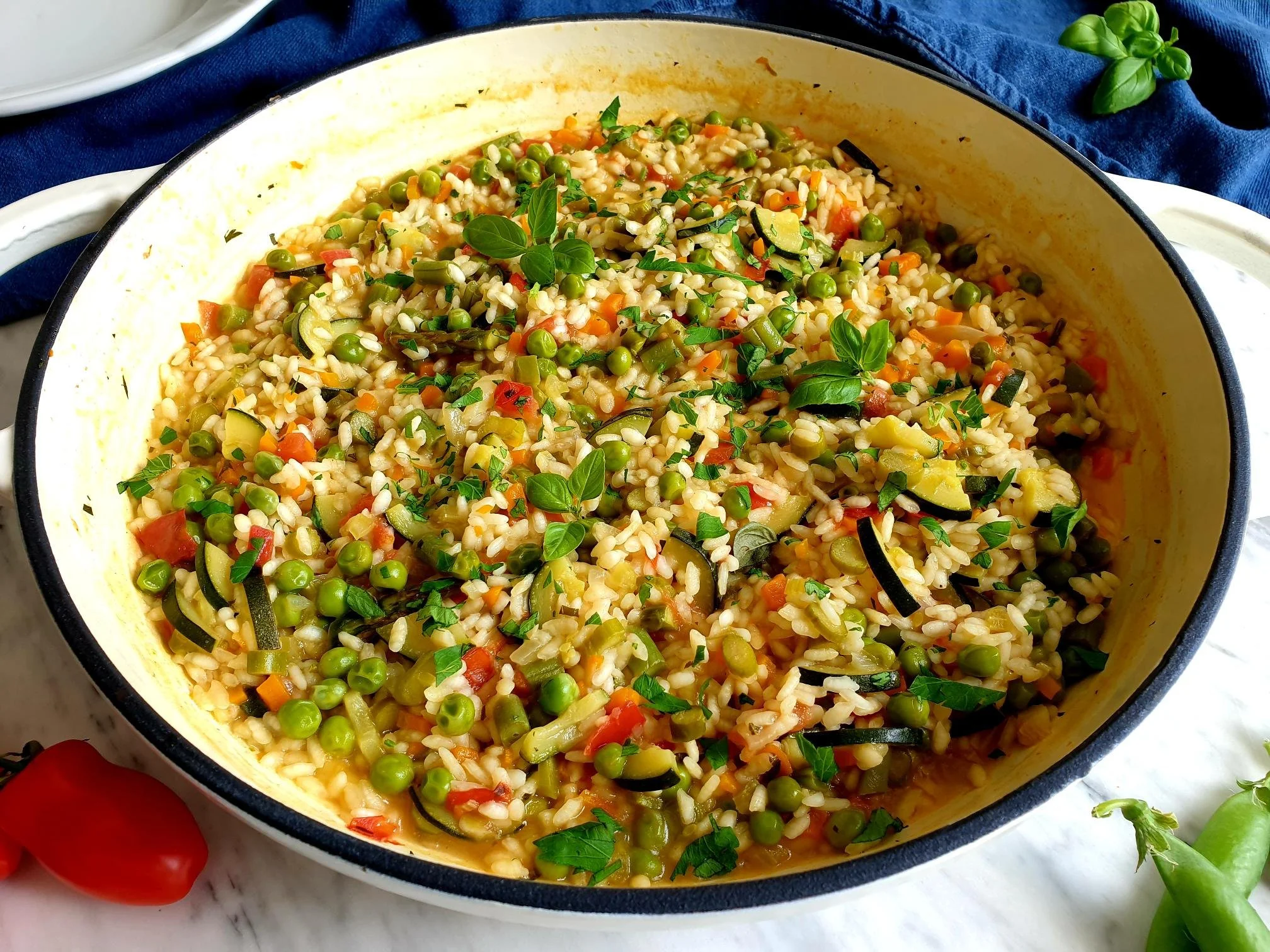
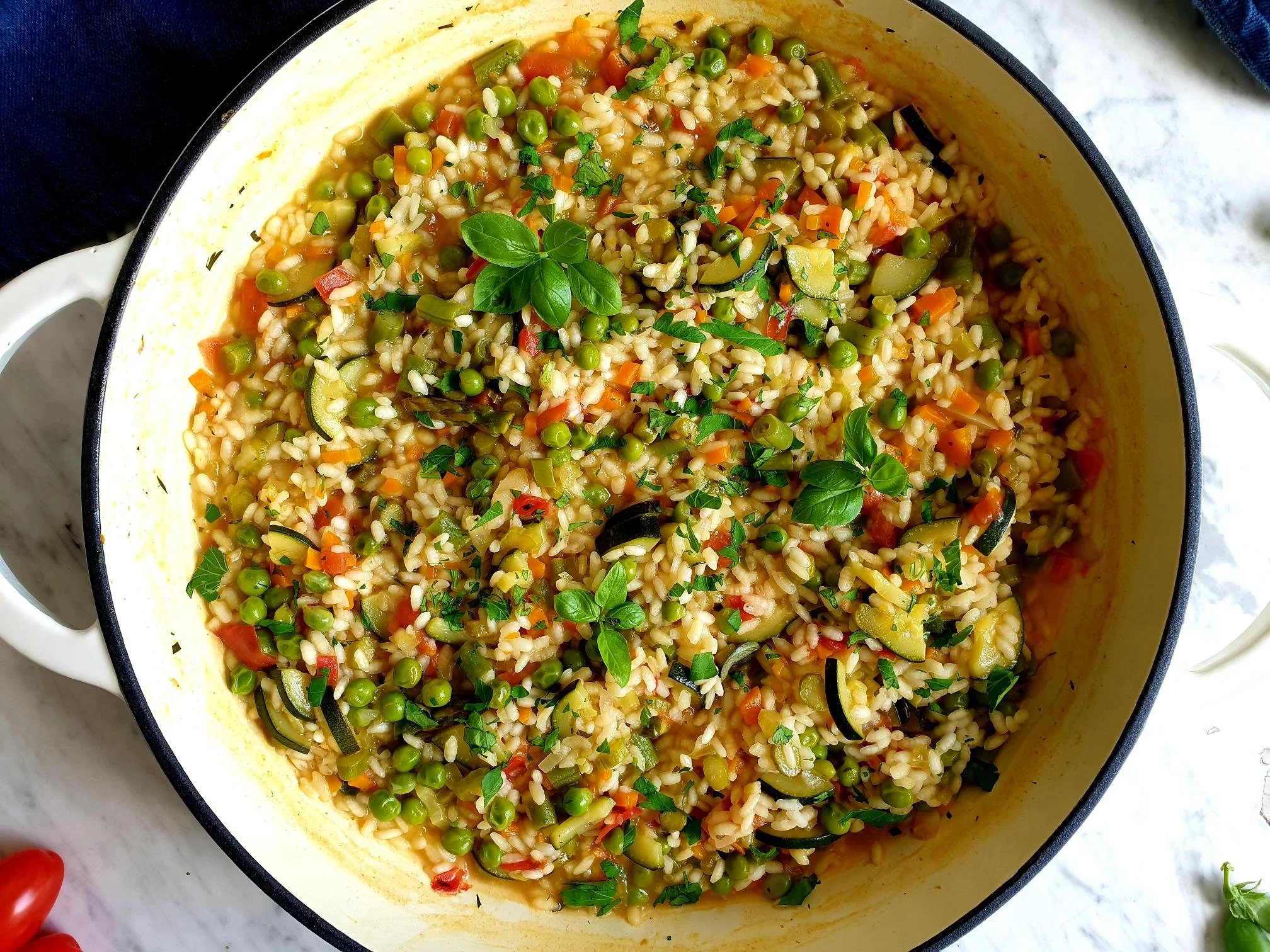
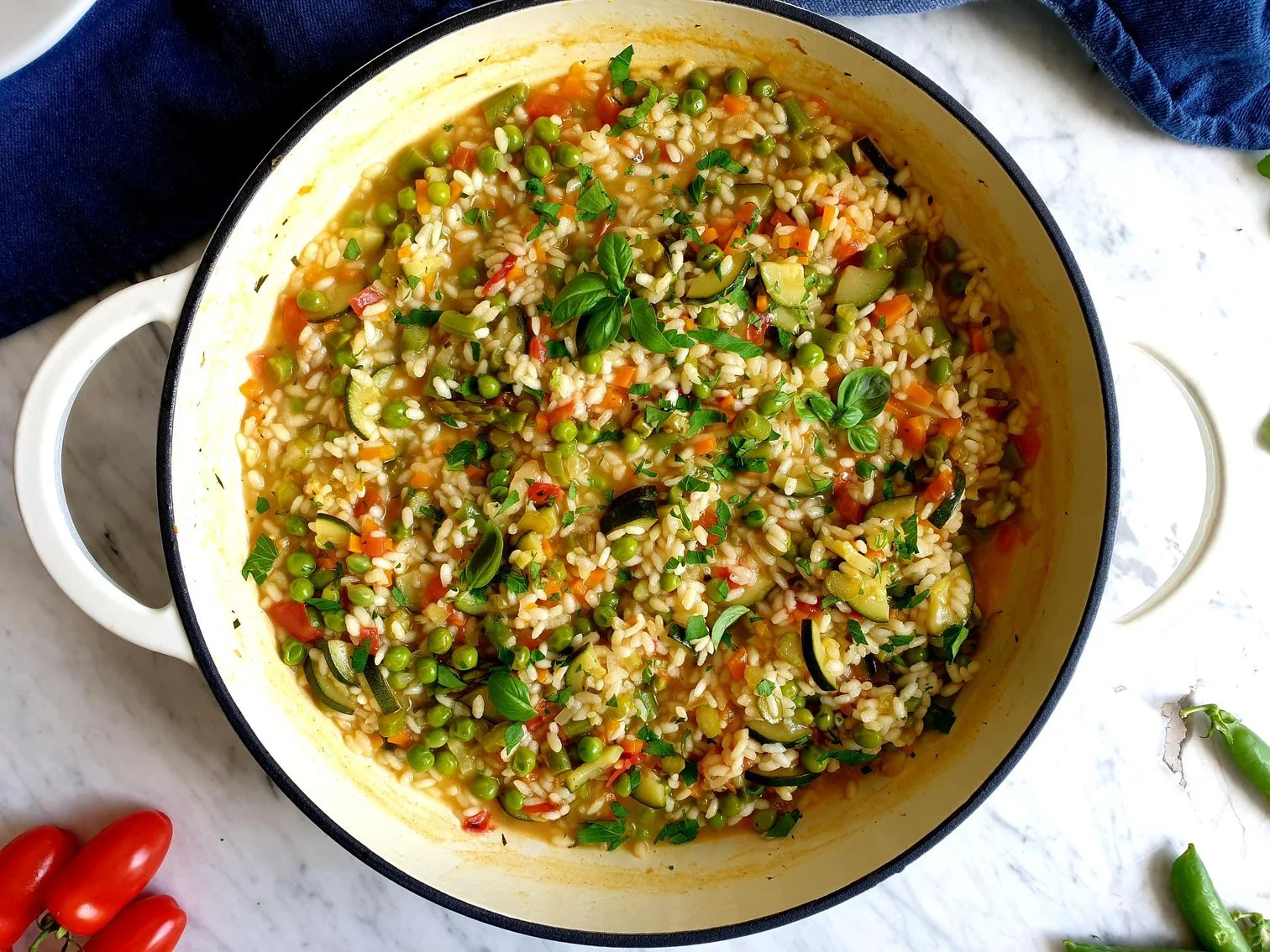
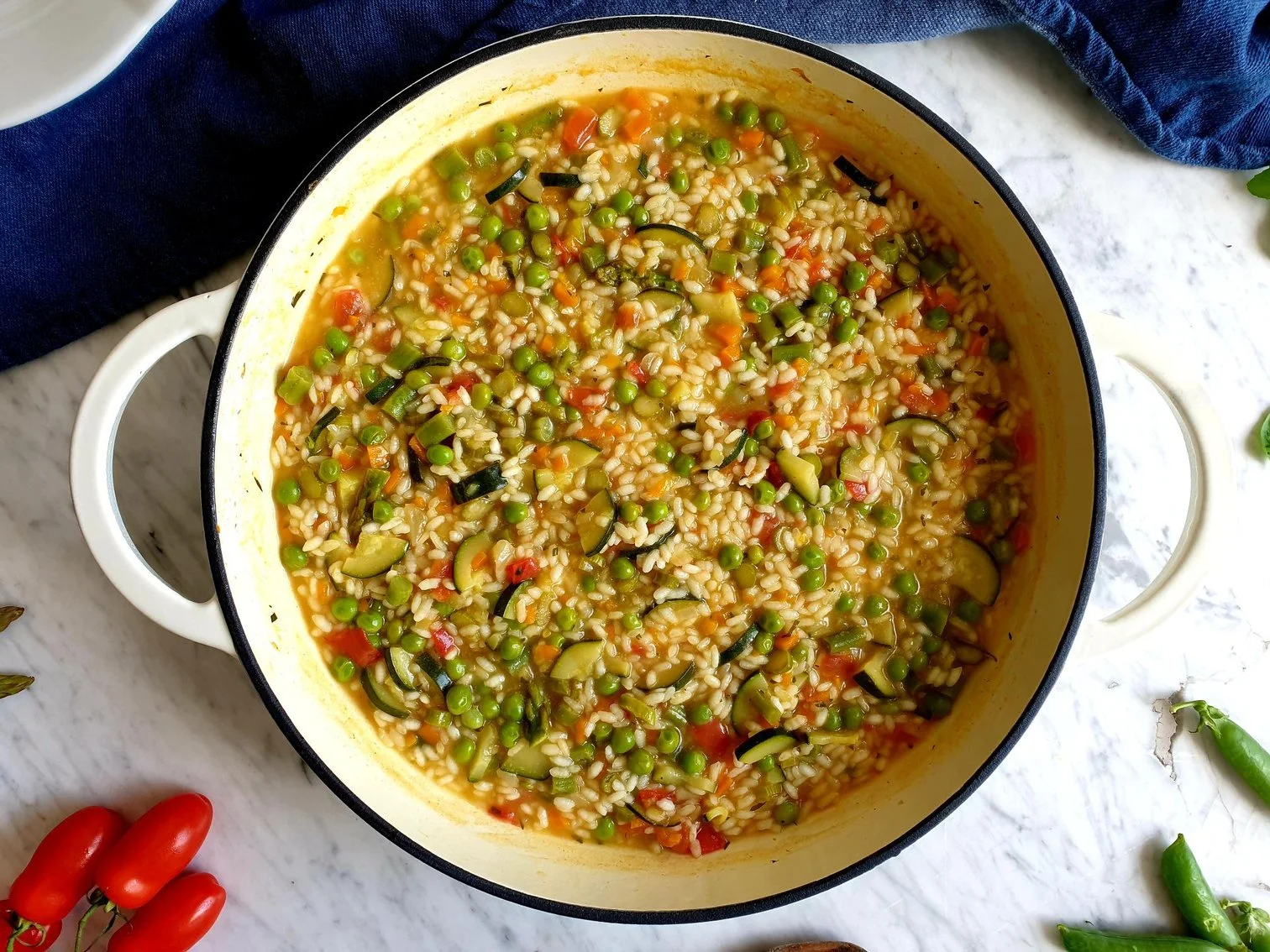
This classic spring vegetable risotto, using any seasonal spring vegetables, must be one of the most loved and popular dishes for all generations. This risotto is rustic, simple, and filling, and represents a genuine plate of food that puts a smile on anyone's face with the array of colours on the plate offered by the vegetables.

It can be enjoyed as a first course meal, which is traditionally what it is in Italy, or as a main course with a nice salad on the side.

This vegetarian risotto really celebrates the new season of vegetables, it is light but full of freshness and flavour and it is very satisfying. You can vary the recipe using different vegetables and combinations according to what is in season, just mix and match the vegetables that are your top favourites, add a handful of fresh roughly chopped baby spinach or broad beans a few radishes for example.

My mother has made this risotto time and time again, it was a regular mid week meal, we knew we had risotto primavera but it would be slightly different every single time depending on the variety of vegetables she would find available in the season from the market or from my paternal grandfather's vegetable patch. 

Ingredients 

Serves 4 

  • 300g risotto rice (like Vialone Nano, Arborio or Carnaroli) 

  • 3 Tbsp extra virgin olive oil 

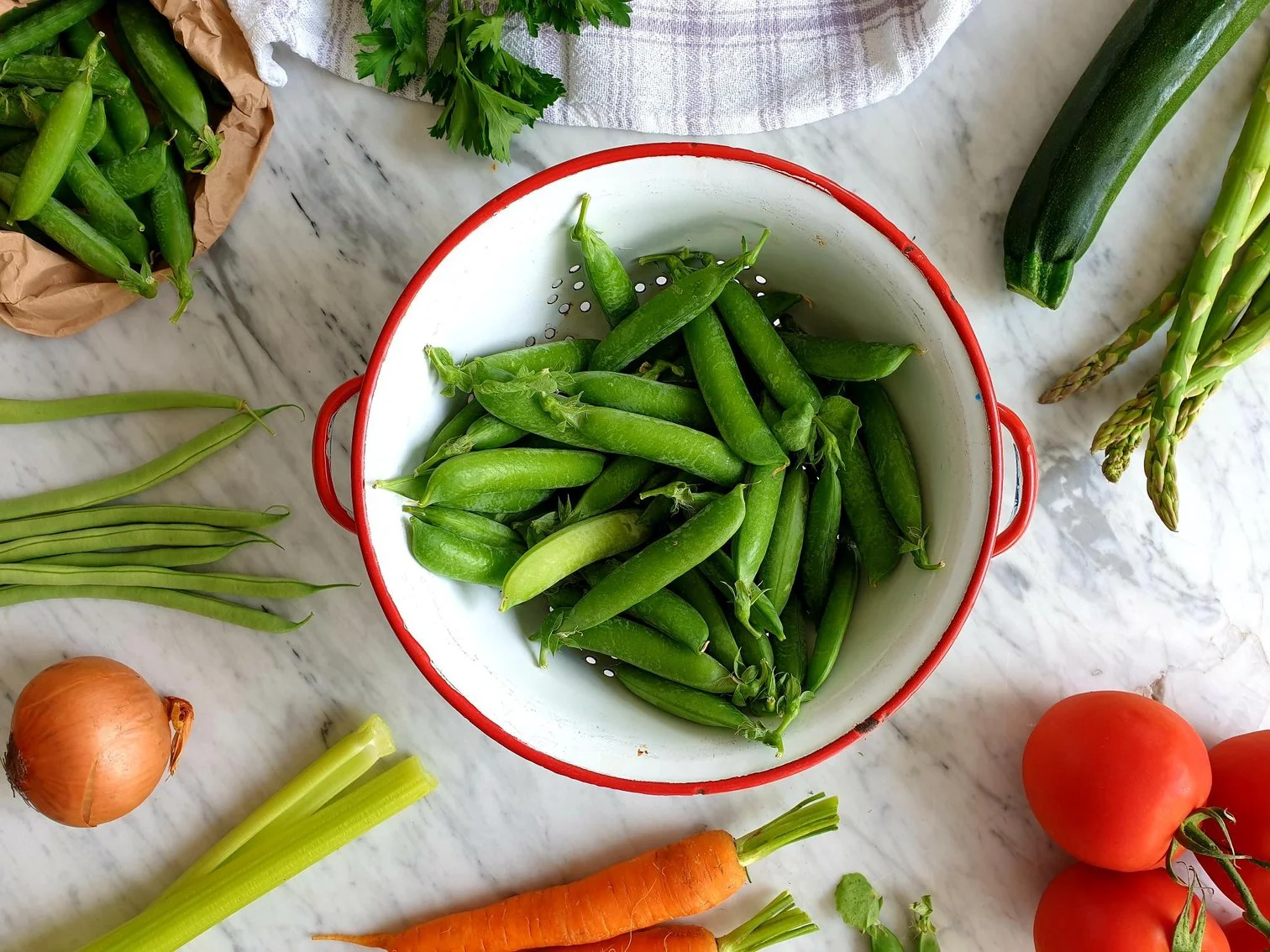
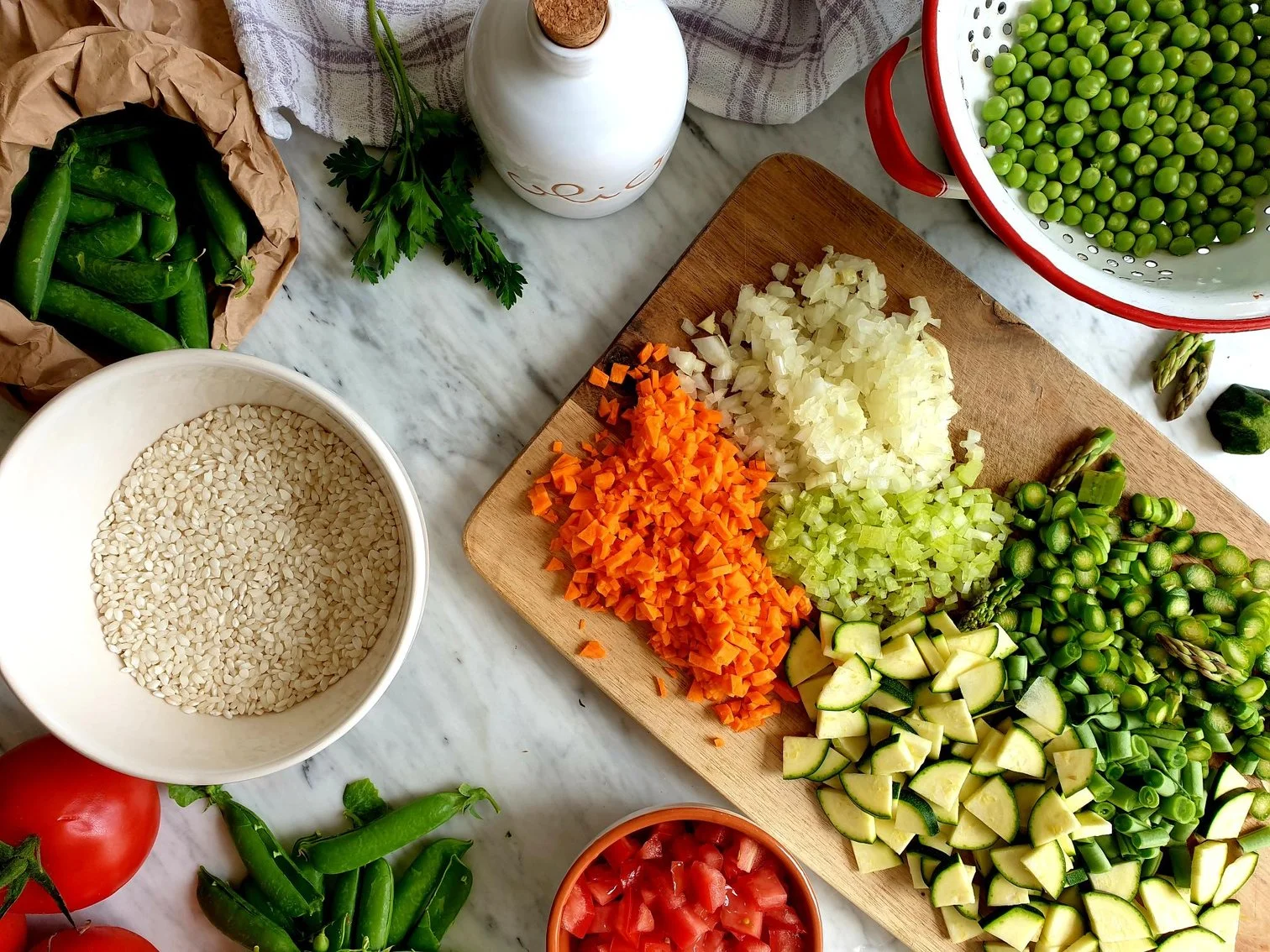
  • 1 celery stick (about 30g), finely chopped 

  • 1 medium courgette (about 113g), sliced or diced 

  • 1 medium carrot (about 90g), peeled and sliced or diced 

  • 1 medium onion (about 100g), peeled and finely chopped 

  • green asparagus (about 100g), wash, trim off the wooden ends and finely slice the stalks leaving the tips whole 

  • green beans (about 50g), sliced 

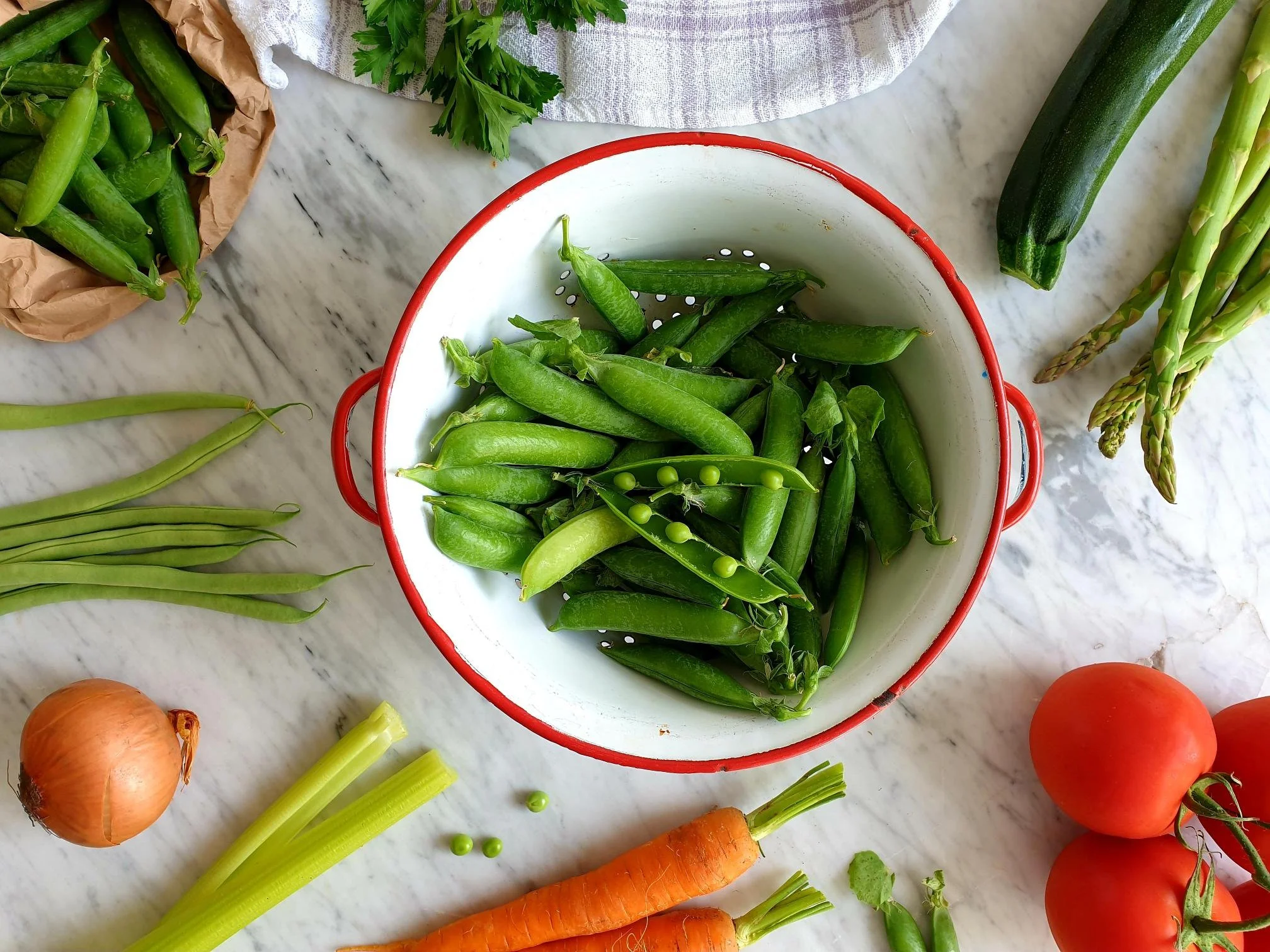
  • fresh peas in pods (about 300g), remove the peas from the pods (can use frozen petits pois, about a handful) 

  • 1 tomato (about 170g), roughly chopped 

  • sea salt 

  • fresh flat leaf parsley (about 4g), finely chopped 

  • 1 litre hot vegetable or chicken broth or stock (you can use instant vegetable or chicken stock powder) or hot water 

  • Parmiggiano Reggiano or Grana Padano cheese, finely grated for serving, optional 

Method 

Before starting making risotto have your boiling hot vegetable or chicken stock (or just hot water) ready to hand for later. 

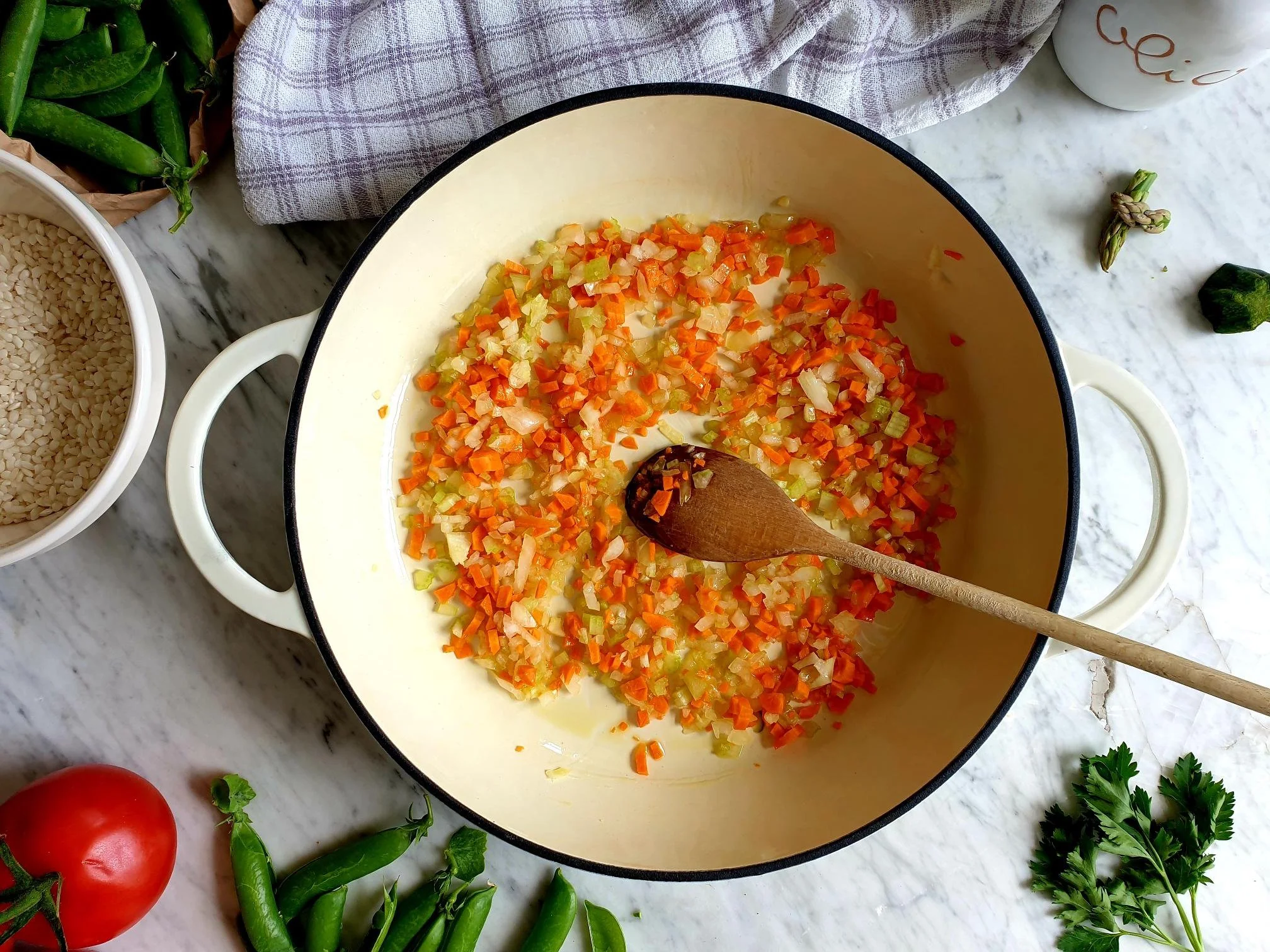
Put extra virgin olive oil in a pan,  add finely chopped onions, carrots and celery and sauté for a few minutes on a gentle heat until cooked down and soft. 

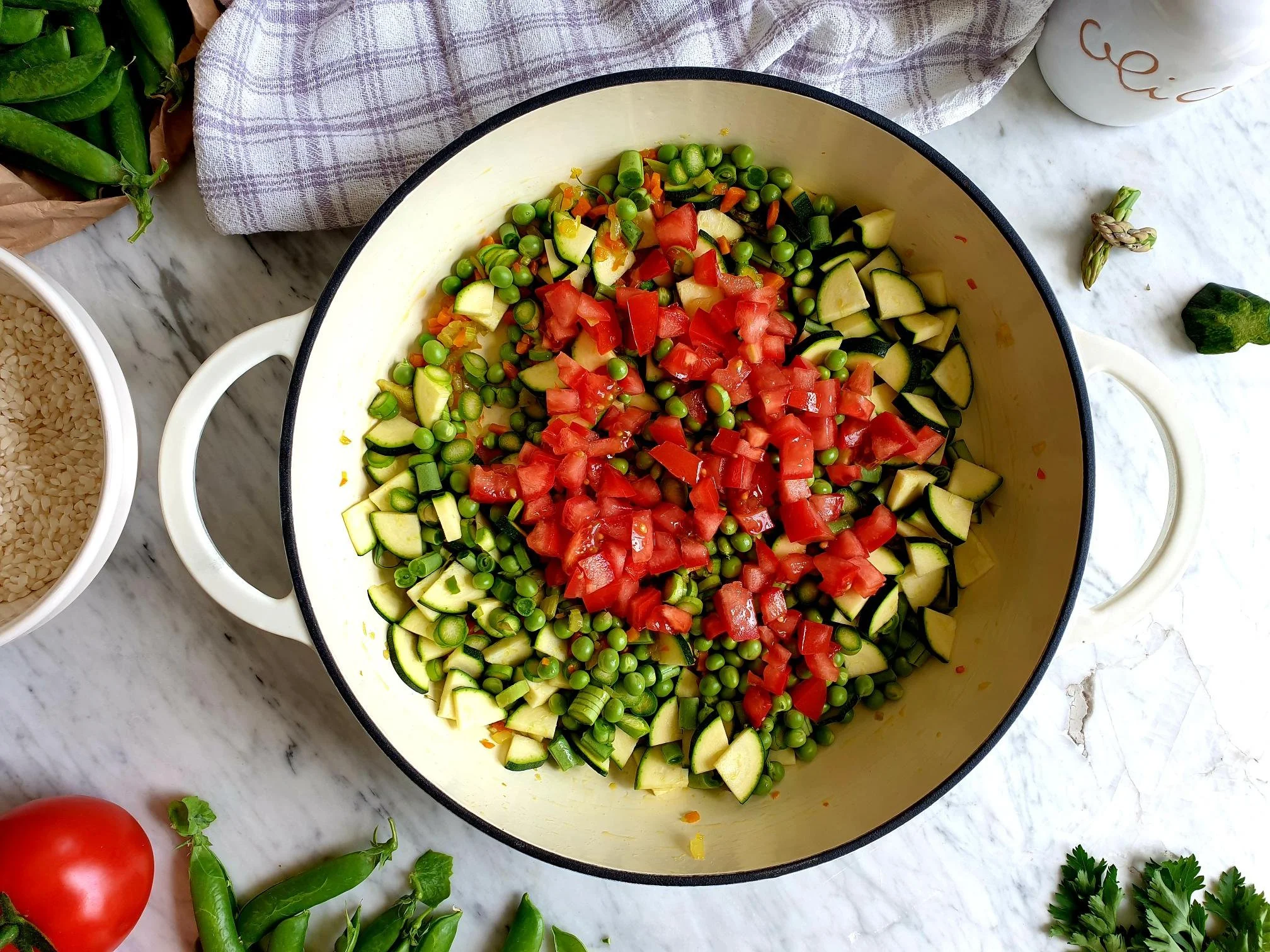
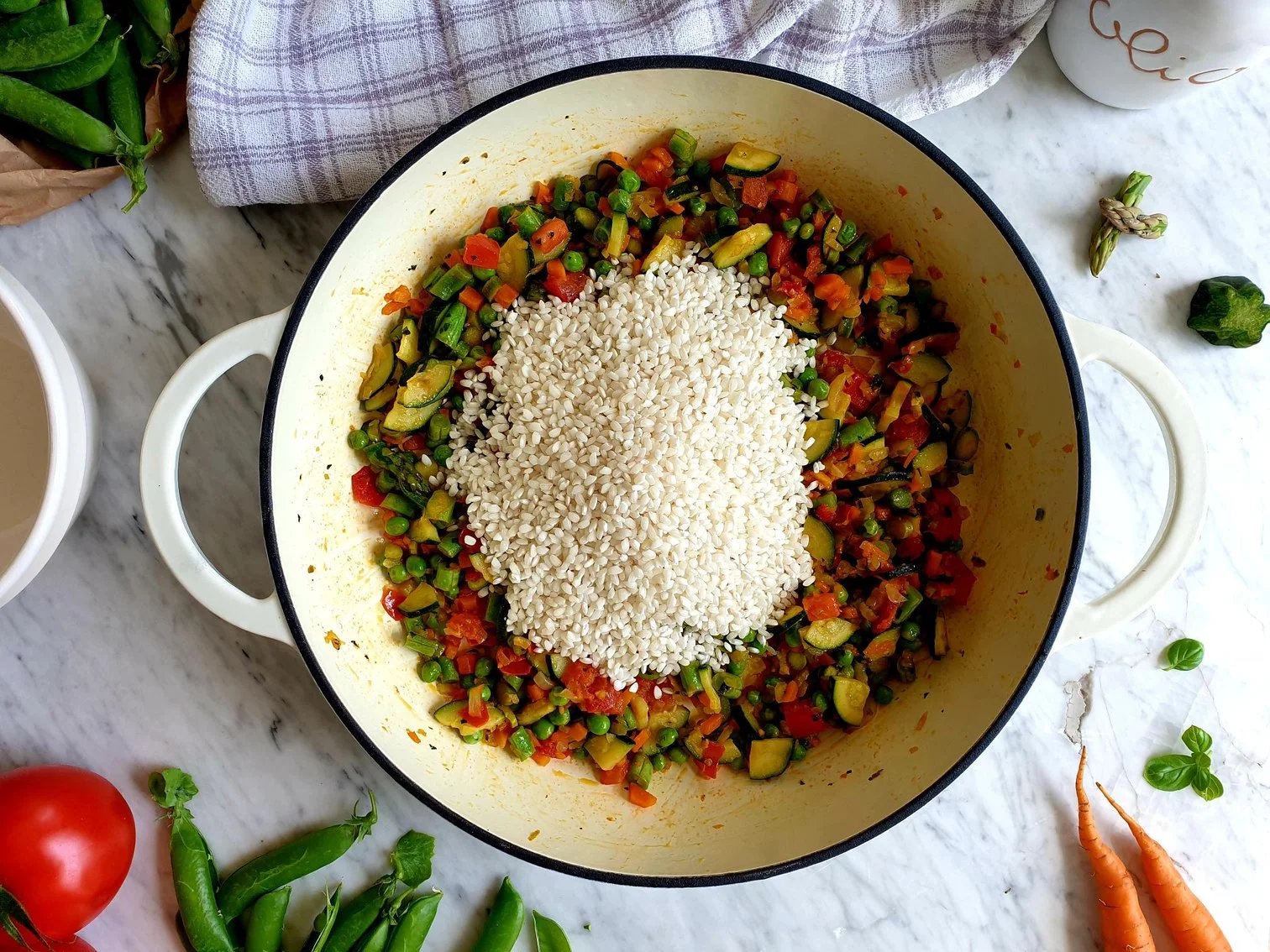
Add all the other vegetables (except asparagus tips, if using).

View fullsize Risotto Primavera 5.jpg
View fullsize Risotto Primavera 7.jpg

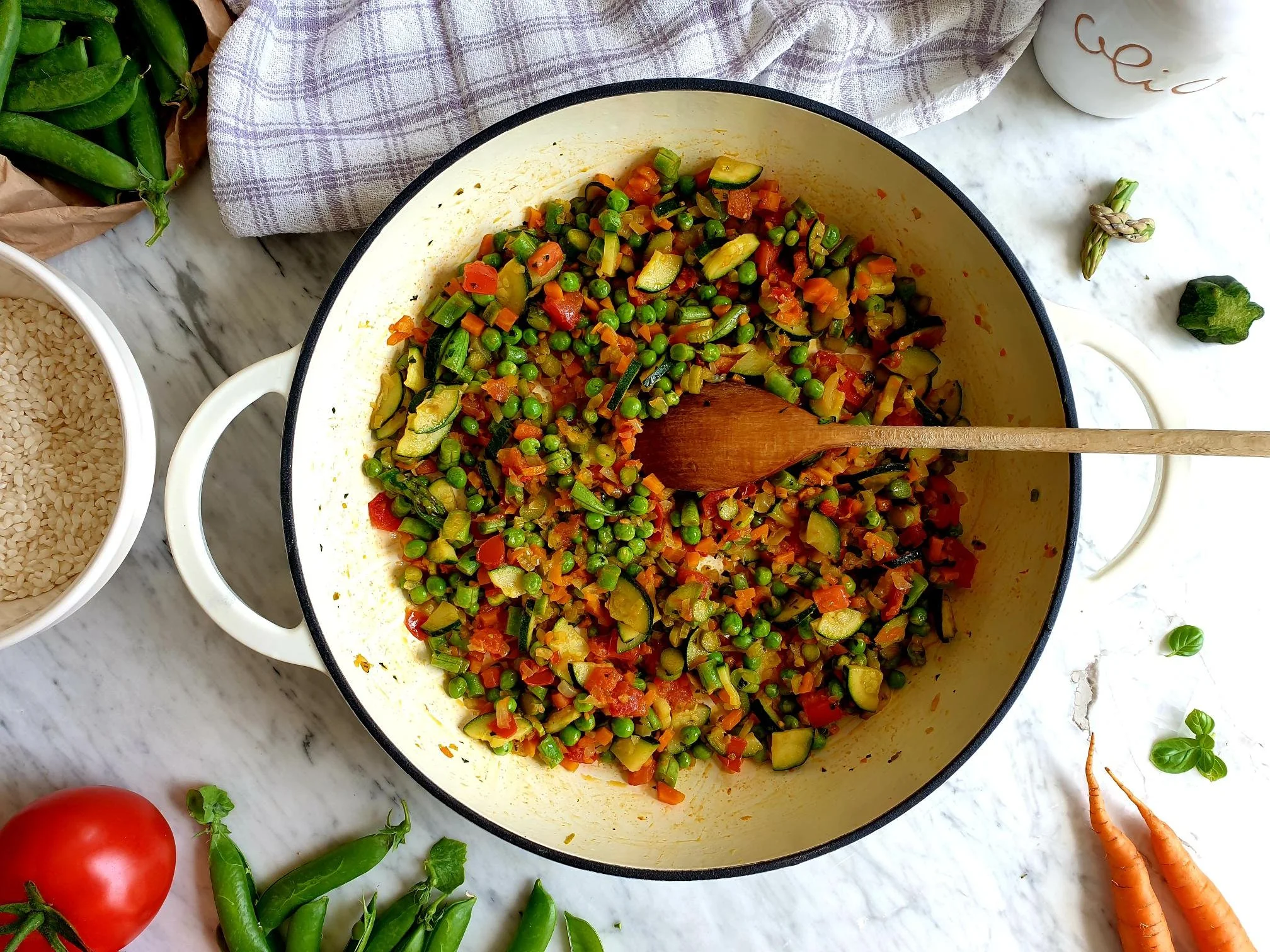
Add the parsley, and cook on a gentle heat for about 10-15 minutes stirring occasionally. 

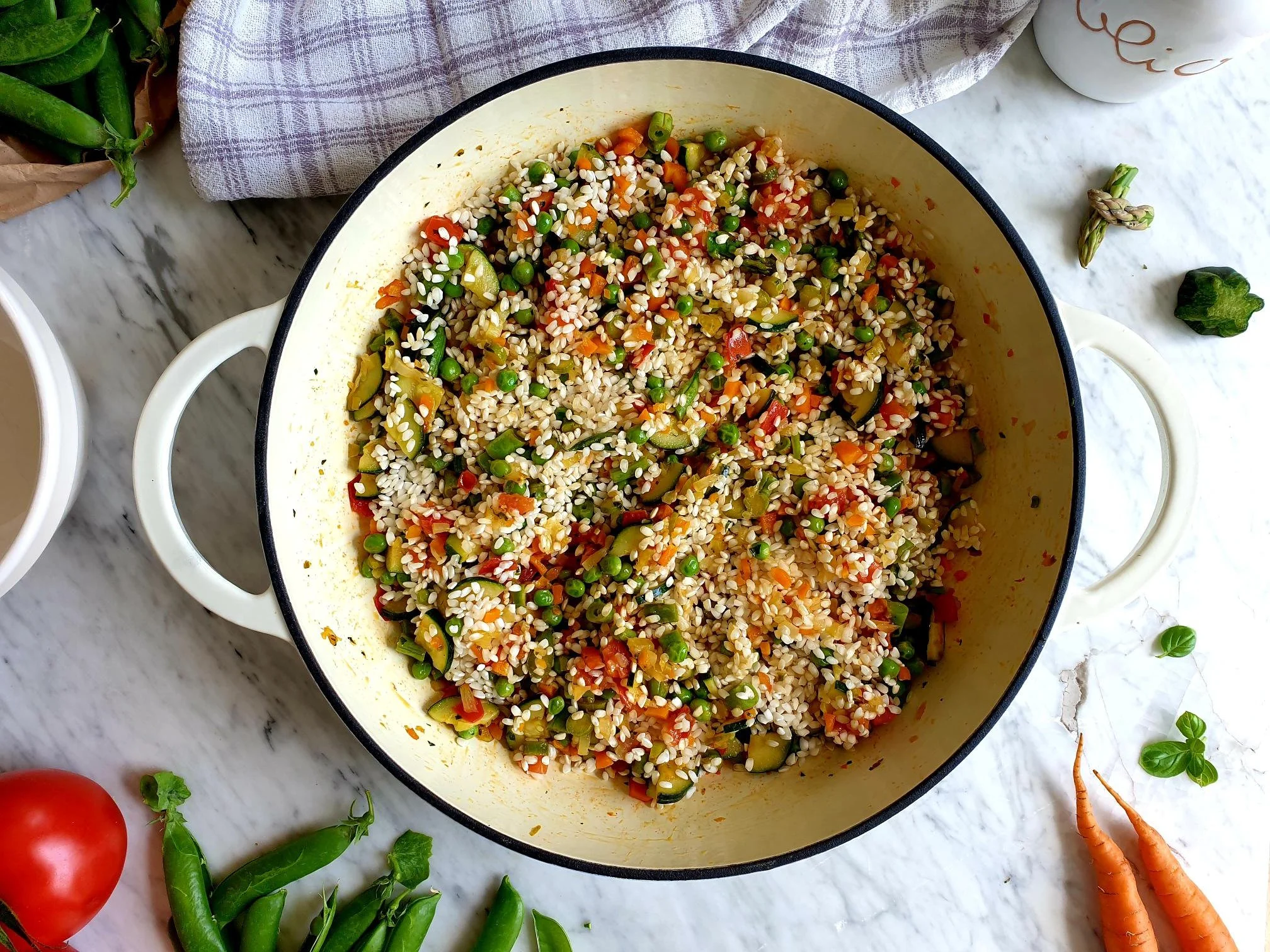
Add the rice and toast it for a few minutes, stirring constantly to avoid sticking to the bottom of a pan. 

View fullsize Risotto Primavera 10.jpg
View fullsize Risotto Primavera 11.jpg

Pour or ladle ½ litre (500ml) of hot vegetable or chicken stock, or hot water. 

Cook until the first amount of liquid is absorbed then start gradually adding ladles of hot stock, one at a time, allowing the liquid to be absorbed before adding more. 

Cook on a medium heat, stirring almost constantly, until the rice is cooked al dente, meaning fully cooked but still a bit firm when bitten, it should roughly take between 15-18 minutes for a risotto to be cooked. 

Add the tips of the asparagus, if using, a few minutes before the end of cooking time. 

Taste and adjust the seasoning with sea salt, but this might not be necessary since the stocks from the stores generally speaking contain salt already. 

Serve immediately while the risotto is still hot and a bit runny in consistency. 

Ladle the risotto onto the plates, sprinkle with freshly grated Parmiggiano Reggiano cheese and garnish with some roughly chopped fresh parsley. 

Just a thought 

For even creamier texture, you can finish cooking the asparagus risotto with a typical Italian mantecare phase. Remove the saucepan from the heat, add grated cheese and a bit of cold butter or cream to the risotto when is almost finished and stir with a wooden spoon quite vigorously in order to develop that delicious creamy texture.

Wine suggestion
July 27, 2022 /tina oblak
riso Arborio, riso Vialone Nano, riso Carnaroli, Spring vegetable risotto, vegetarian risotto, vegan risotto, plant based risotto, fresh tomatoes, fresh sweet peas, carrots, green asparagus, courgettes
Adriatic Recipe, child friendly dish, child friendly meal, dinner, Easy recipe, entrée course, family friendly dish, family friendly meal, first course, first course dish, first course meal, Healthy, healthy mael, hearty dish, Istrian cuisine, Istrian dish, Istrian food, Istrian gastronomy, light meal, main course, main dish, main vegetarian dish, main vegetarian meal, Nutritious, Nutritious dish, recipe from Northern Ital, Risotti, Risotto, Rustic dish, simple recipe, Slovenian cuisine, Slovenian food, Slovenian gastronomy, Spring dish, Spring recipe, Starters, summer dish, summer recipe, supper, Vegan, Vegetables, Vegetarian
Comment

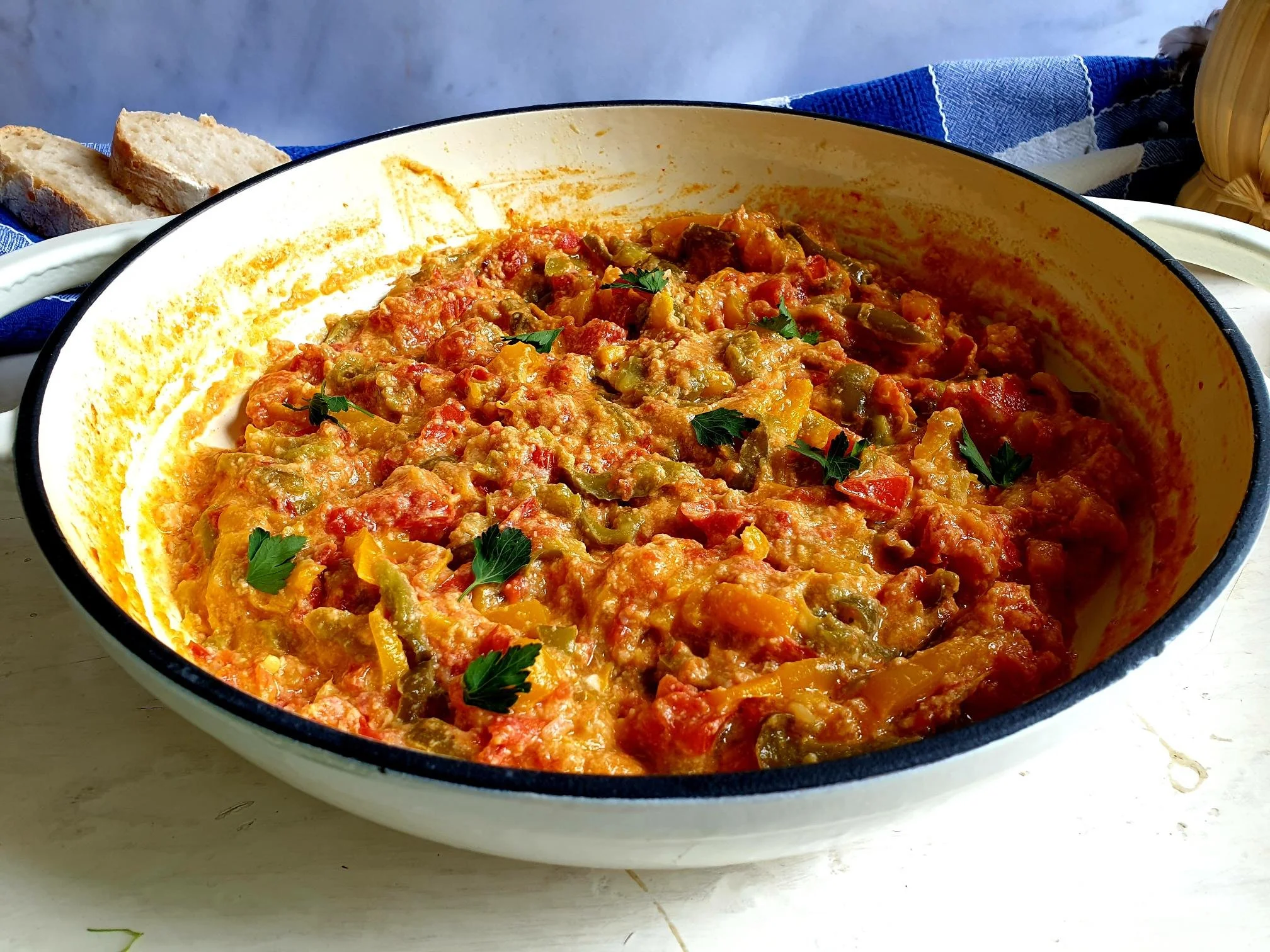
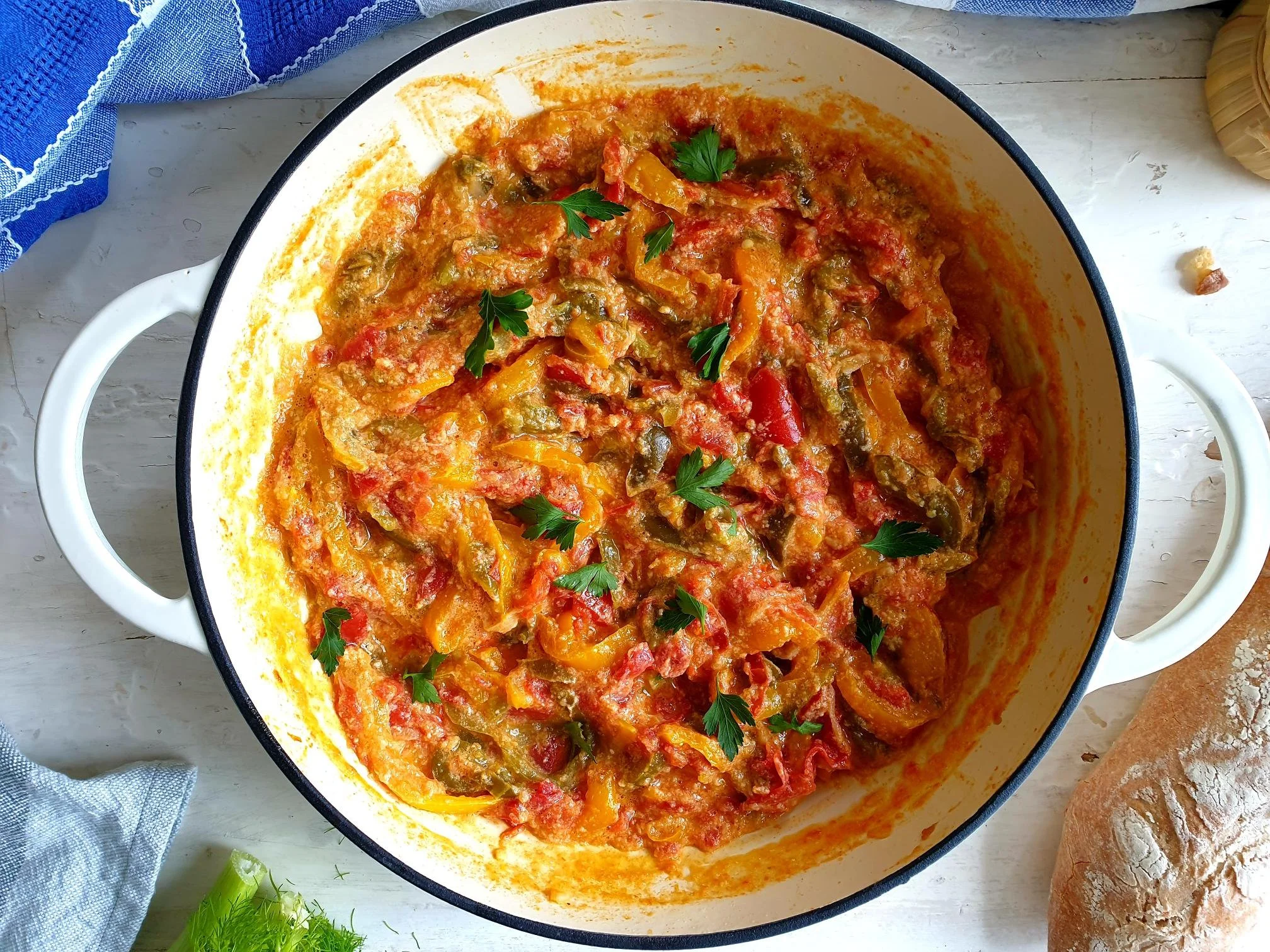
Šataraš - Bell peppers, onions and tomato Balkan inspired stew with scrambled eggs Recipe

Beans and Sardines
July 13, 2022 by tina oblak in Adriatic Recipe, Appetizers, Balkan dish, breakfast, brunch, child friendly dish, child friendly meal, dinner, Easy recipe, entrée course, family friendly dish, family friendly meal, first course, first course dish, first course meal, Healthy, healthy mael, hearty dish, Istrian cuisine, Istrian dish, Istrian food, Istrian gastronomy, main course, main dish, Nutritious, Nutritious dish, Rustic dish, simple recipe, Slovenian cuisine, Slovenian food, Slovenian gastronomy, Spring dish, Spring recipe, Starters, stew, Vegetable side dish, Vegetables, Vegetarian, summer recipe, summer dish, vegetarian summer stew

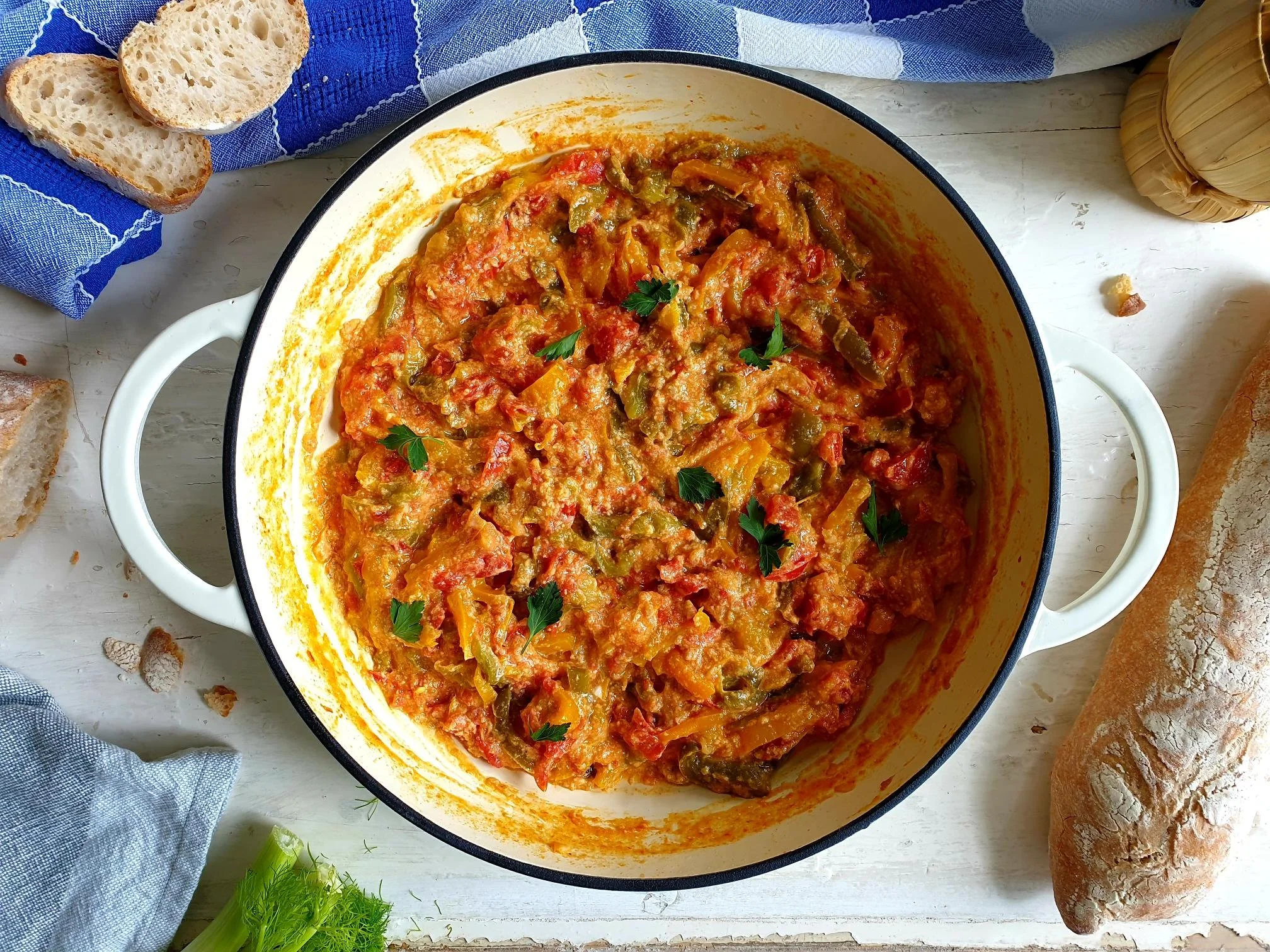
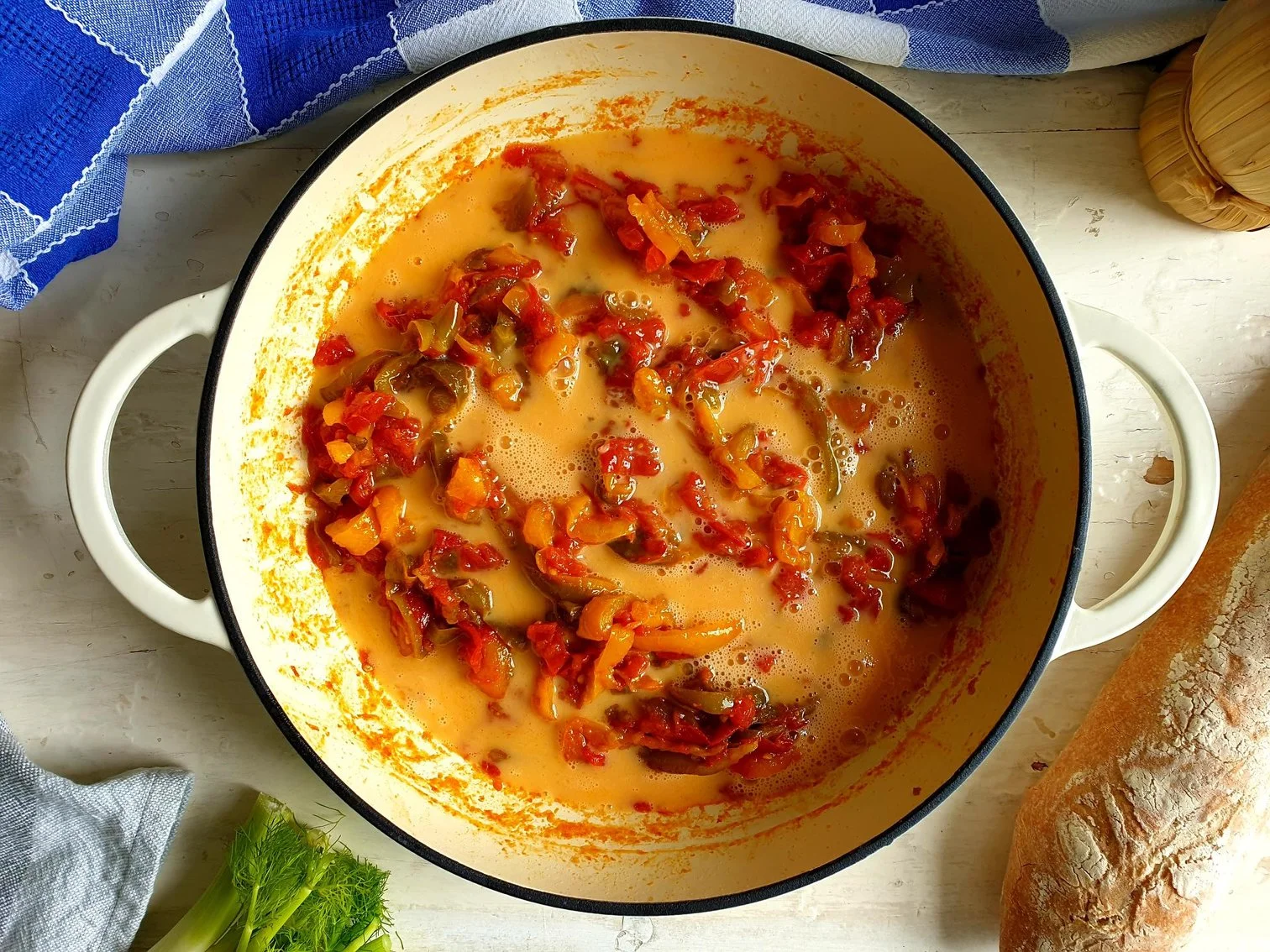
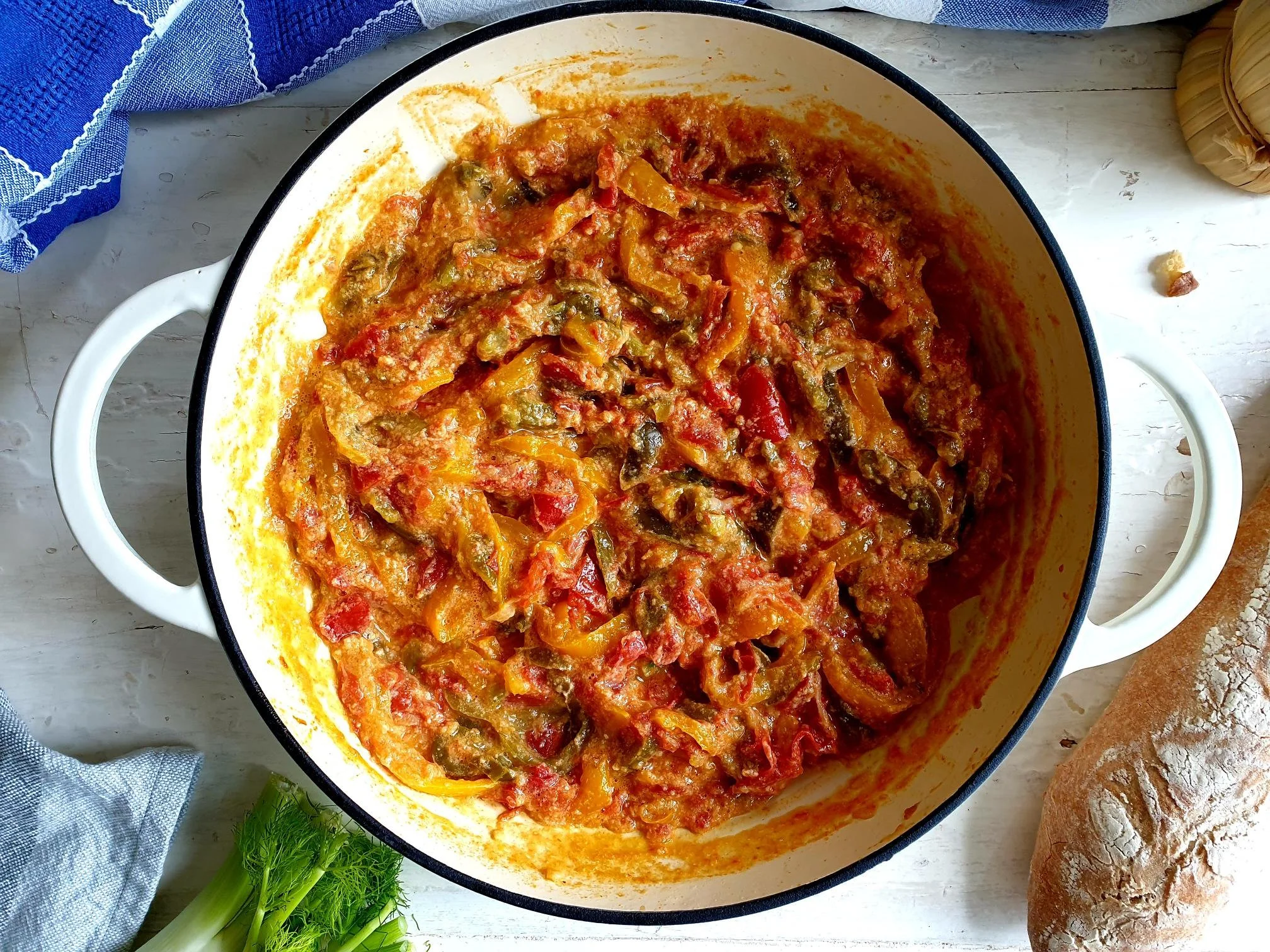
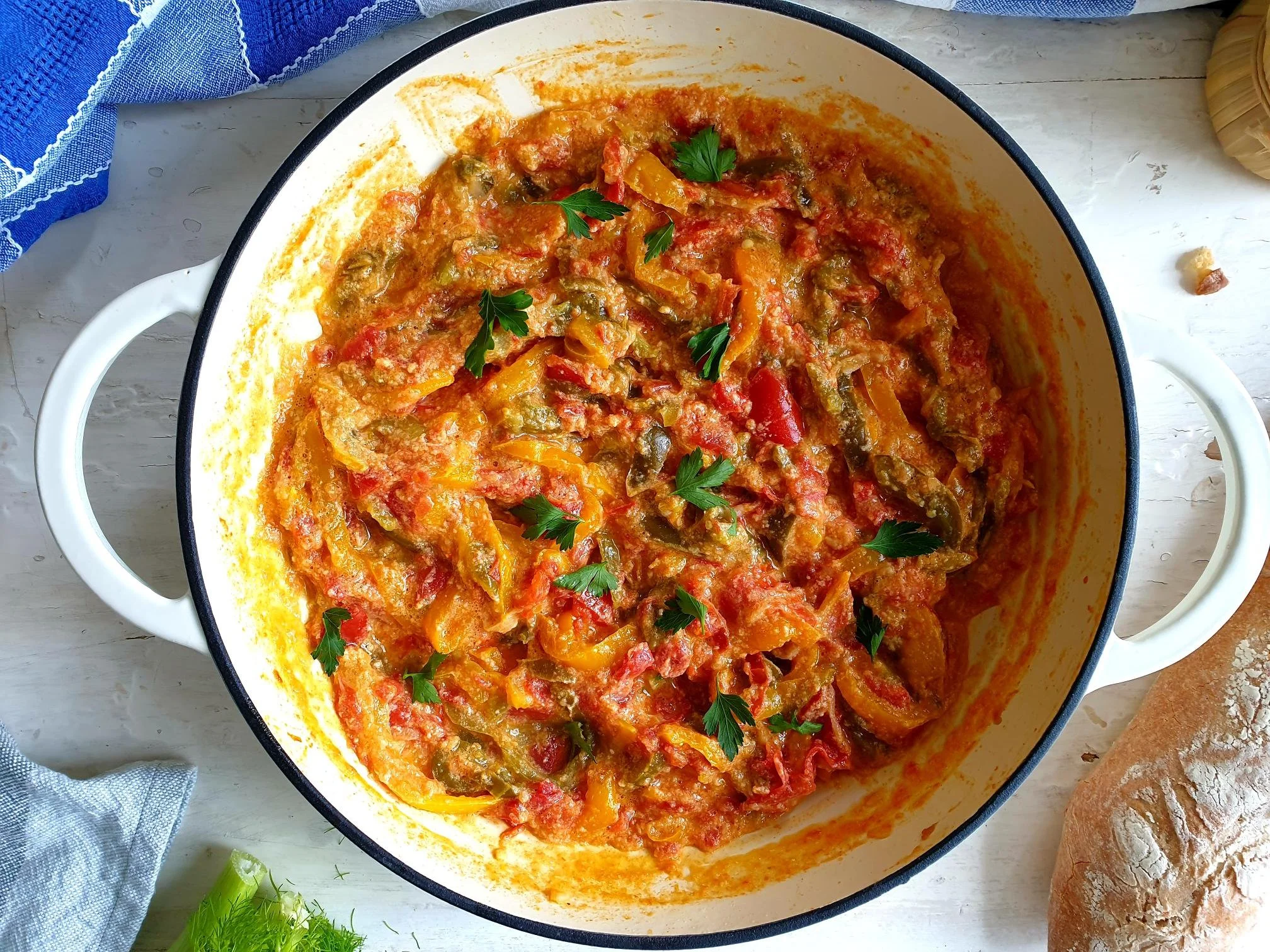
Šataraš (pronounced Satarash) is a stew like dish made with fresh bell peppers, ripe sweet tomatoes, onions, and scrambled eggs, it is similar to Shakshuka which has a sunny-side up eggs and makes a perfect main meal choice in the summer when the vegetables used for the dish are in full season. This dish is very well known in the Balkan regions but not so much to the rest of the world.

Eating šataraš just make you happy, and it feels like having a sunshine on a plate, as the addition of the eggs makes this dish colourful, extra flavourful and filling, it is also healthy and fresh.

This is one of my absolute favourite childhood dishes and if you like bell peppers this recipe is one of those you will come back to it time and time again as the recipe is very easy to make and the base can be cooked well in advance.

This dish is normally homemade and not found in the restaurants, it is typically served for lunch or dinner but it is also a great choice for breakfast or brunch.

Šataraš travelled from the neighbouring Balkans and stayed in Slovenian Istra, where it has been a very welcomed guest and has been enjoyed by the generations of locals in the area where gastronomy has been strongly shaped and enriched by the Balkan culinary traditions as well as Venetian and Austro-Hungarian.

I am sharing here my mother's recipe for šataraš with which she has delighted us during long hot summer months. If you do try it, then I think you will soon realize how delicious this dish truly is in its humble simplicity.

Ingredients

Serves 4

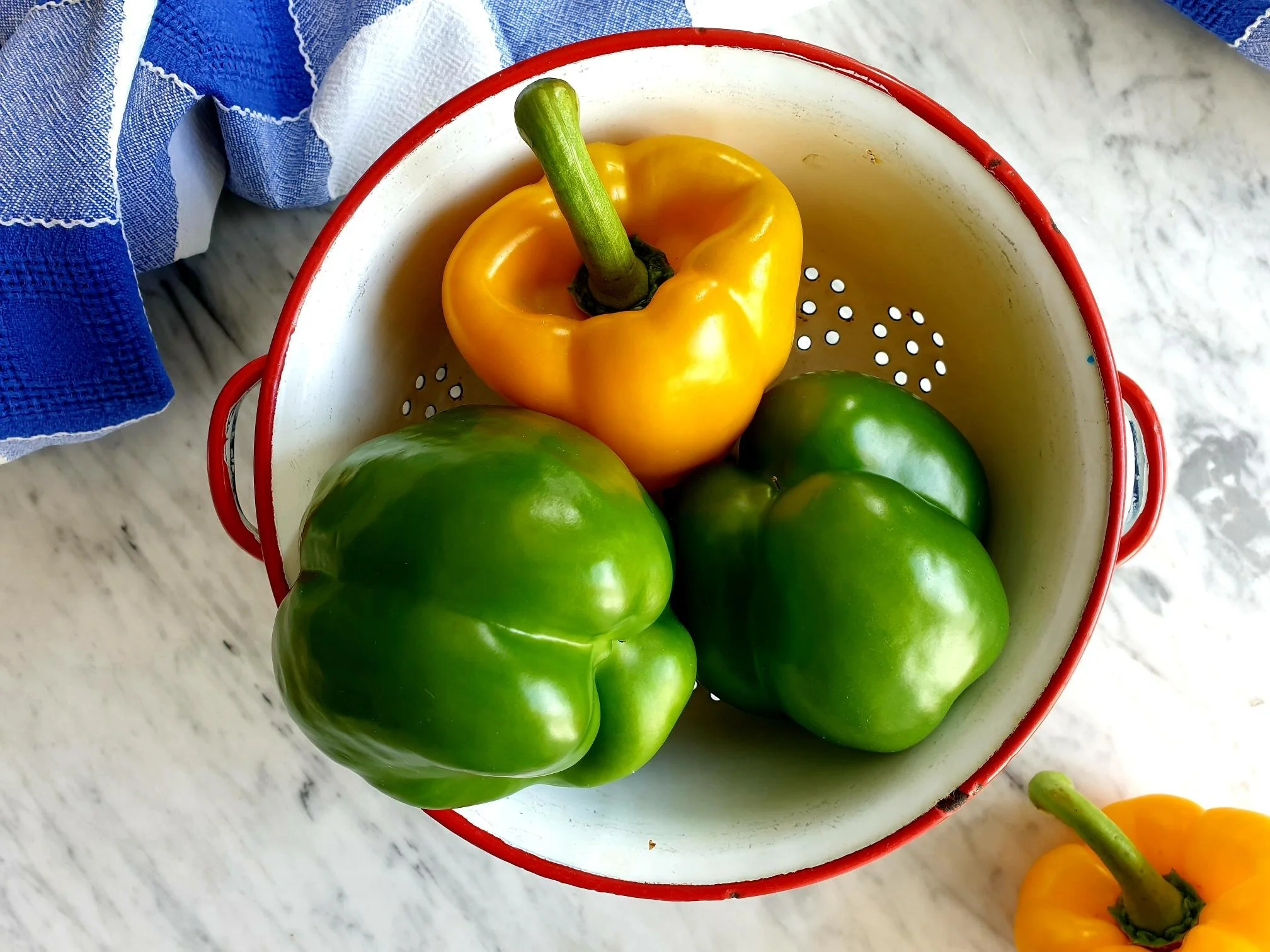
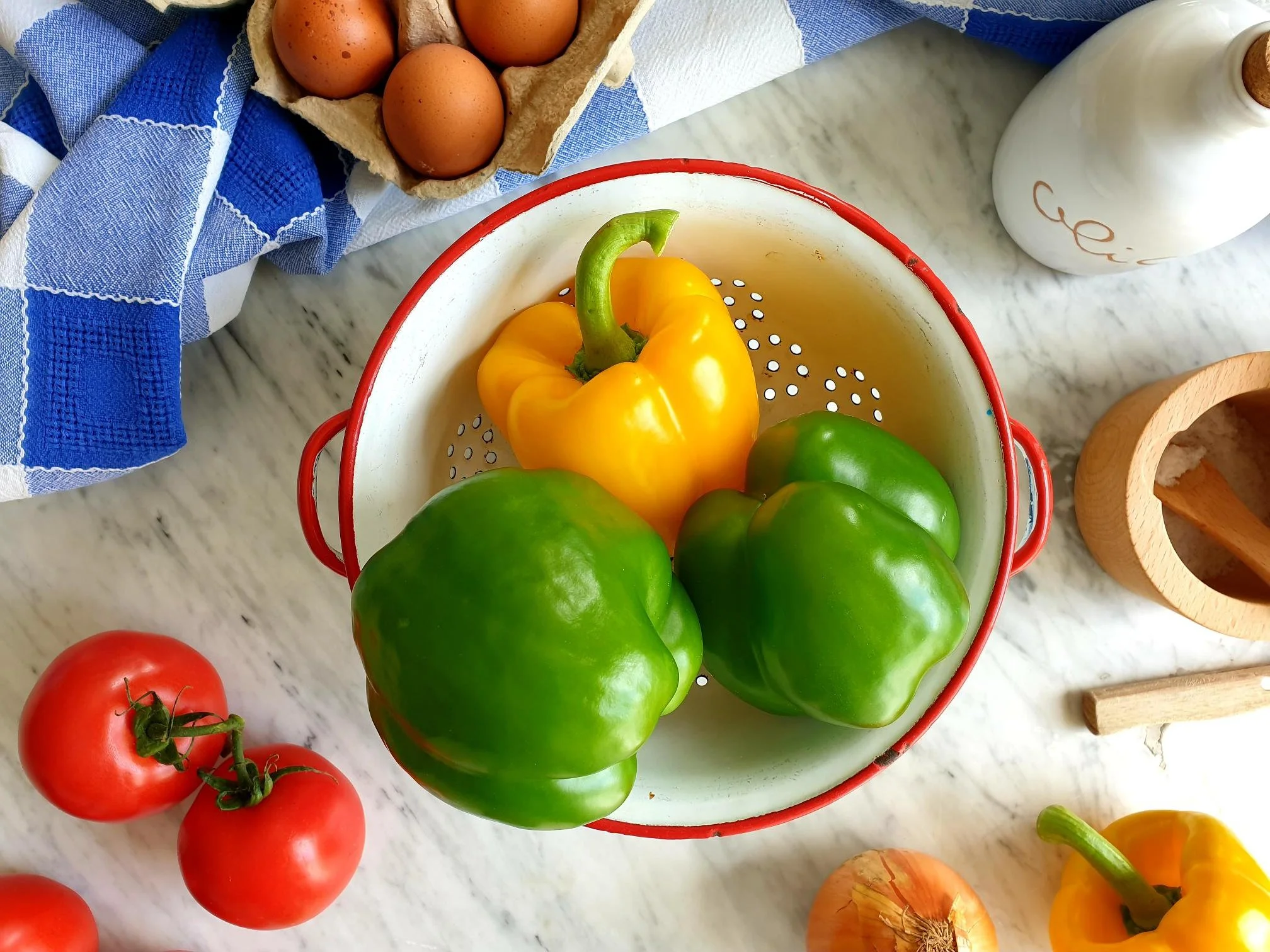
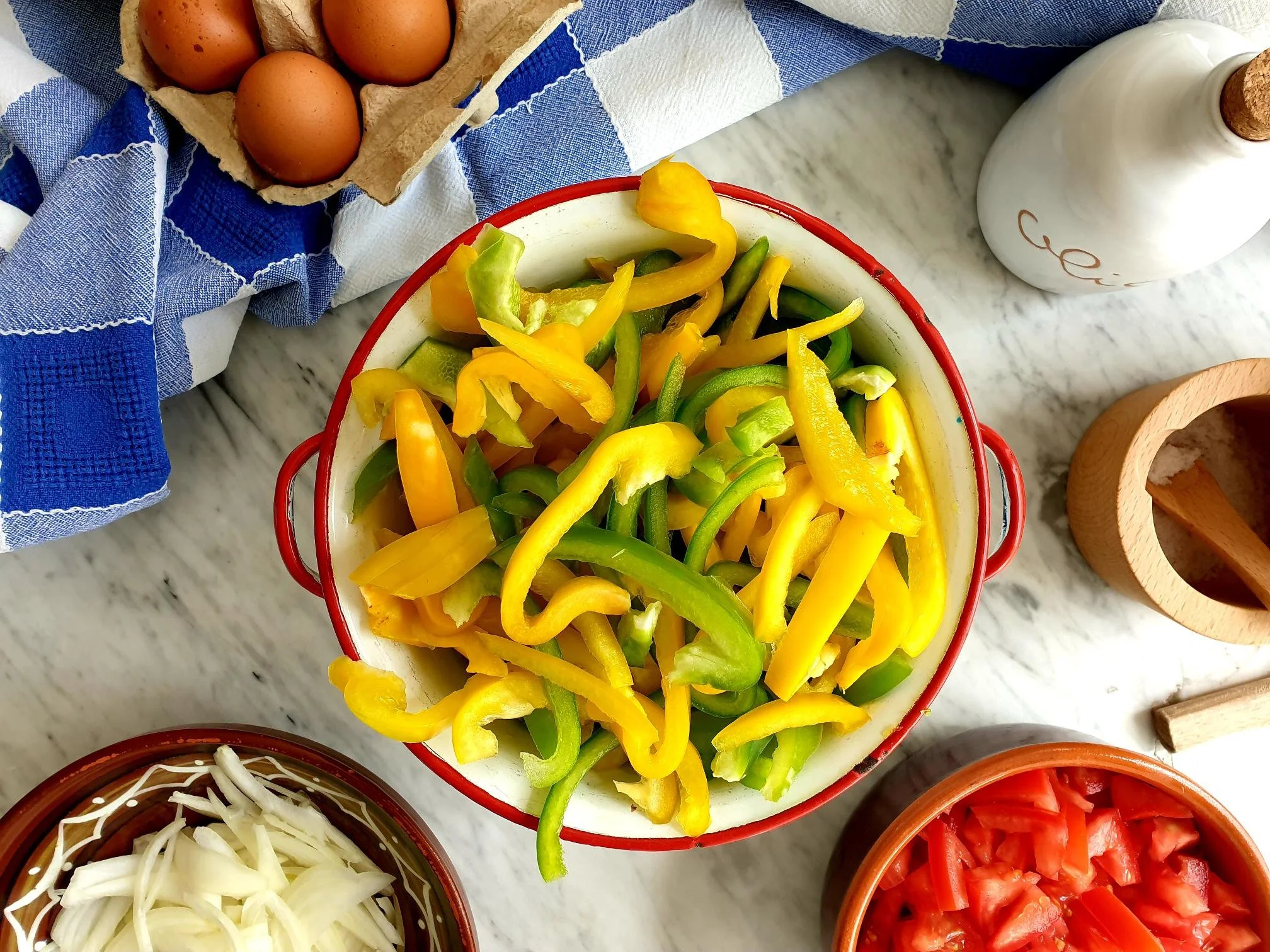
  • 4 bell peppers, a combination of yellow and green (each bell pepper weighing about 200g), wash, dry, remove the seeds and white filaments, and cut into strips (you can use more or less peppers according to your preference)

  • 4 vine tomatoes (each weighing about 150g) or other types of sweet and ripe tomatoes, washed and roughly chopped (use more or less tomatoes according your liking)

  • 1 onion (about 170g), peeled and finely sliced

  • 4 Tbsp extra virgin olive oil

  • 4 eggs

  • sea salt

  • black pepper

  • fresh flat leaf parsley, roughly chopped, for serving, optional

Method

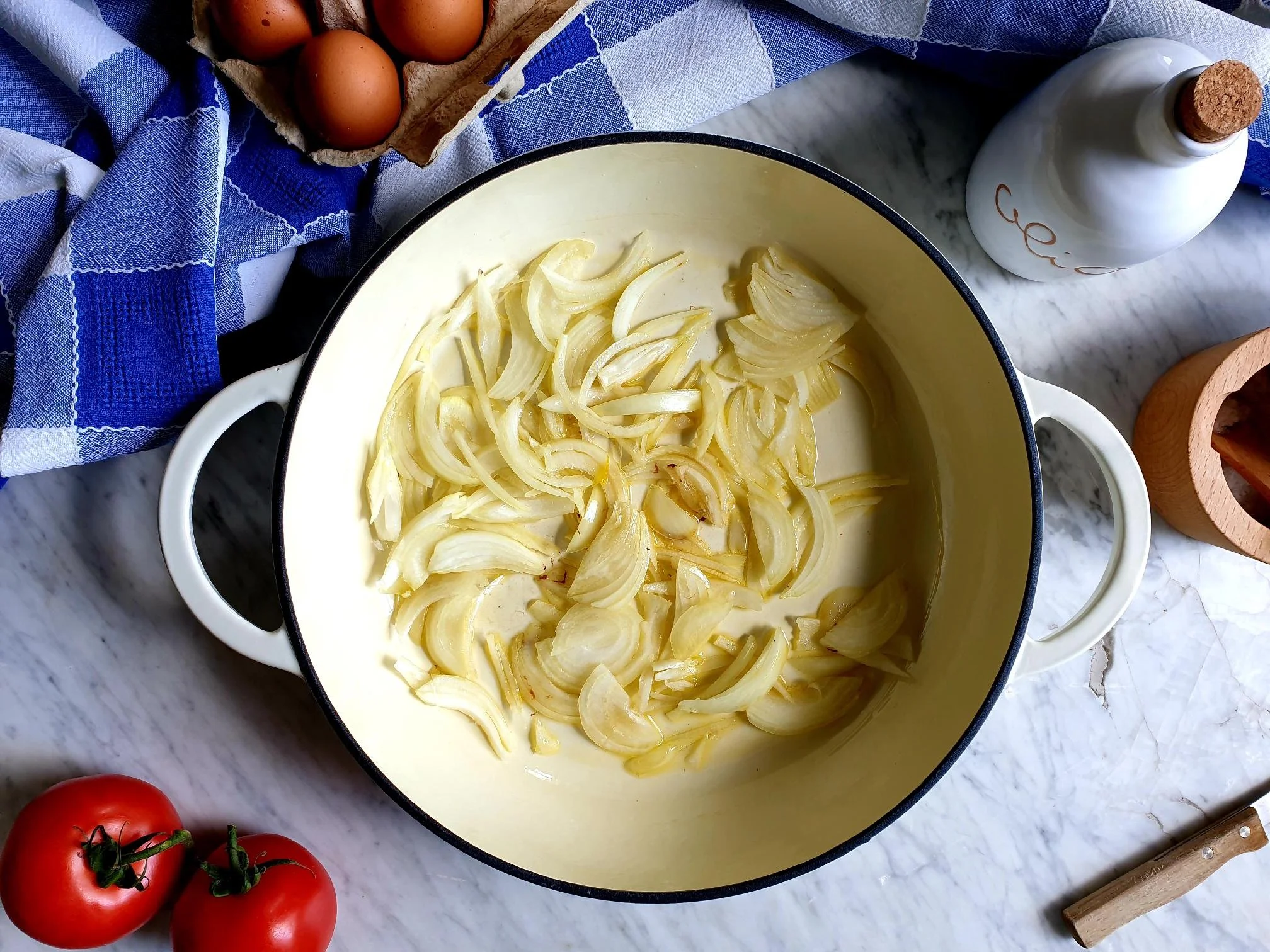
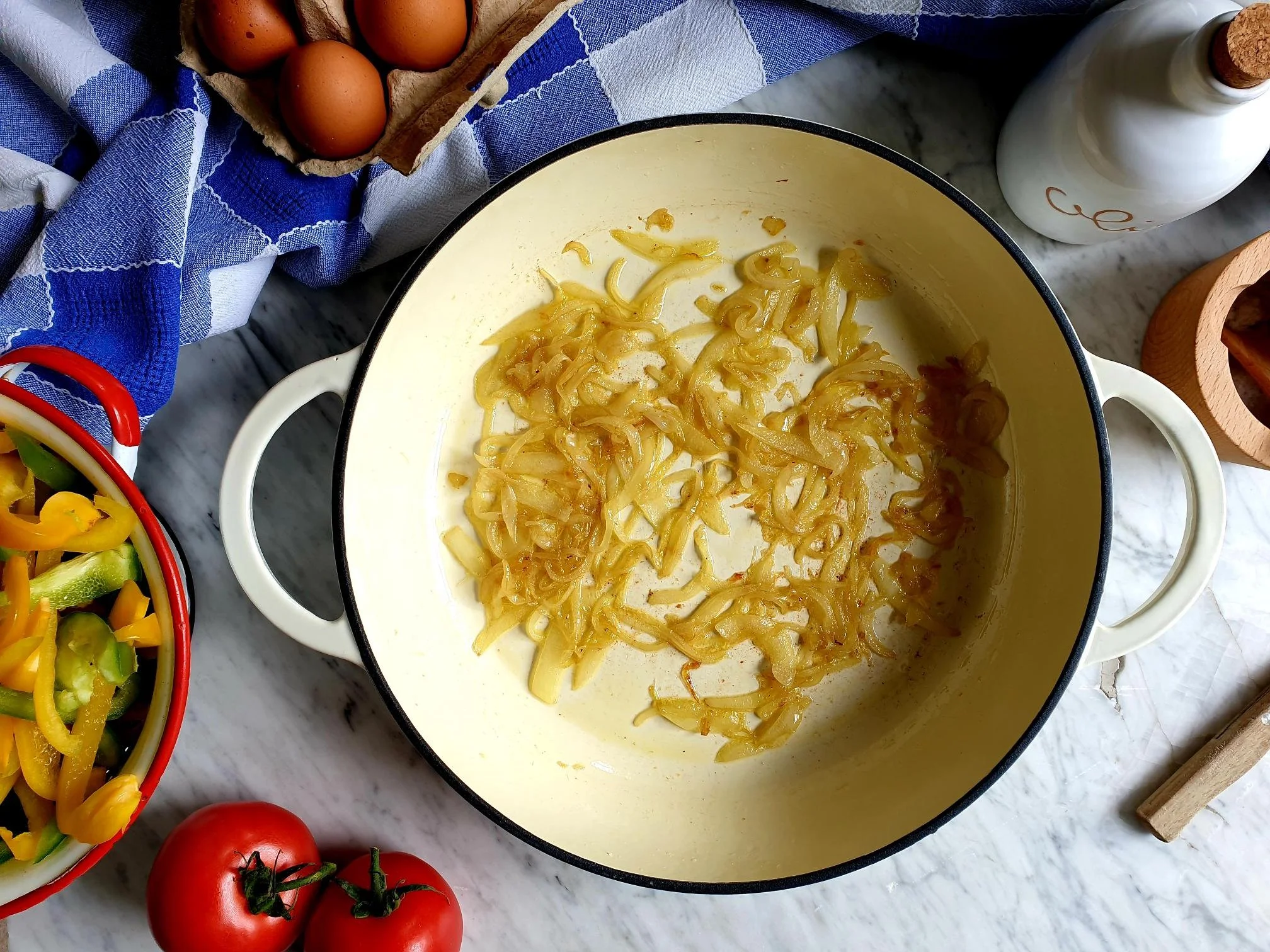
Place extra virgin olive oil in a fairly large frying pan, add sliced onions, a pinch of sea salt and cook for about 10 minutes on a gentle heat until the onions become soft and translucent, stirring occasionally.

View fullsize Sataras 5.jpg
View fullsize Sataras 6.jpg

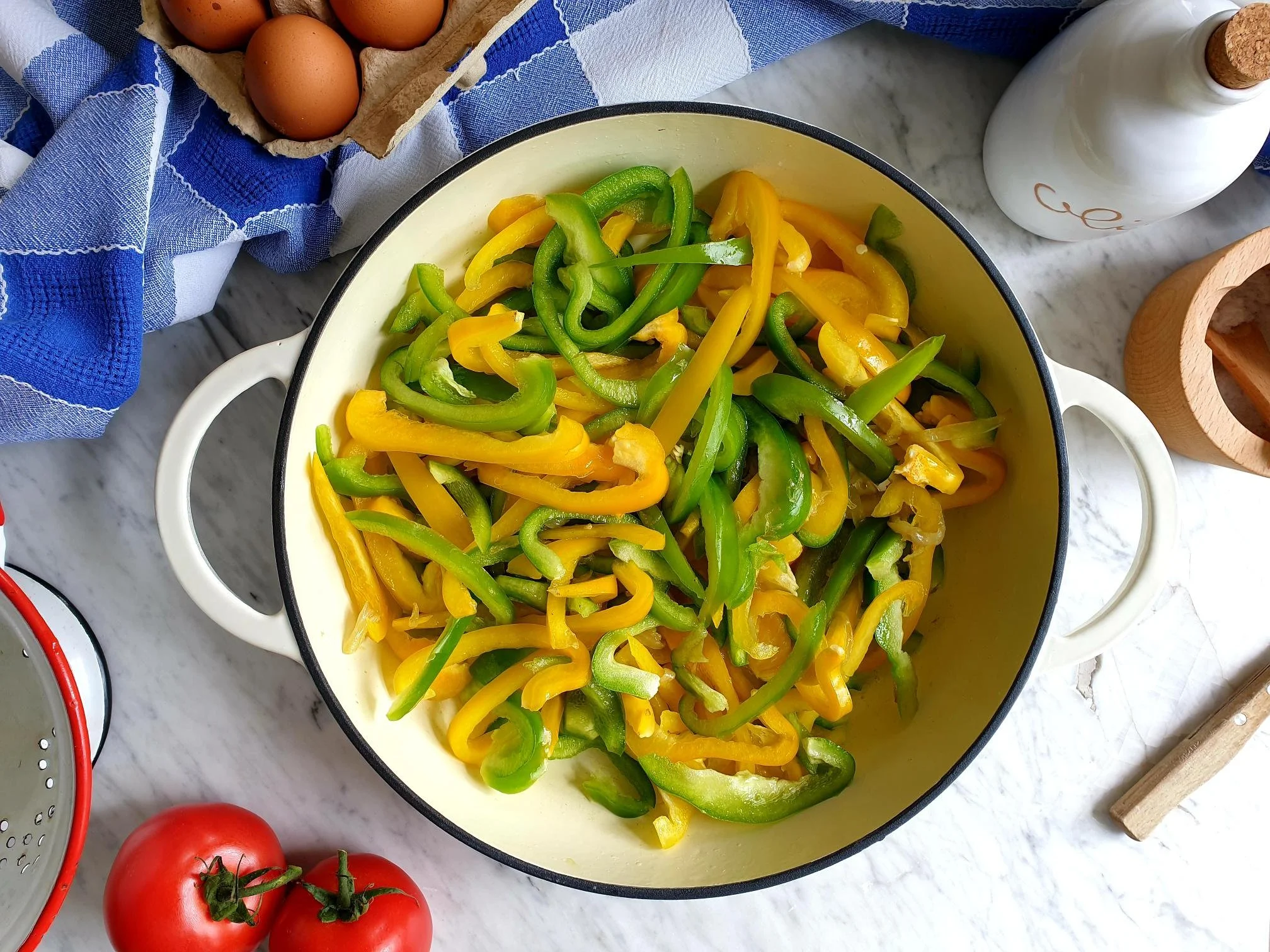
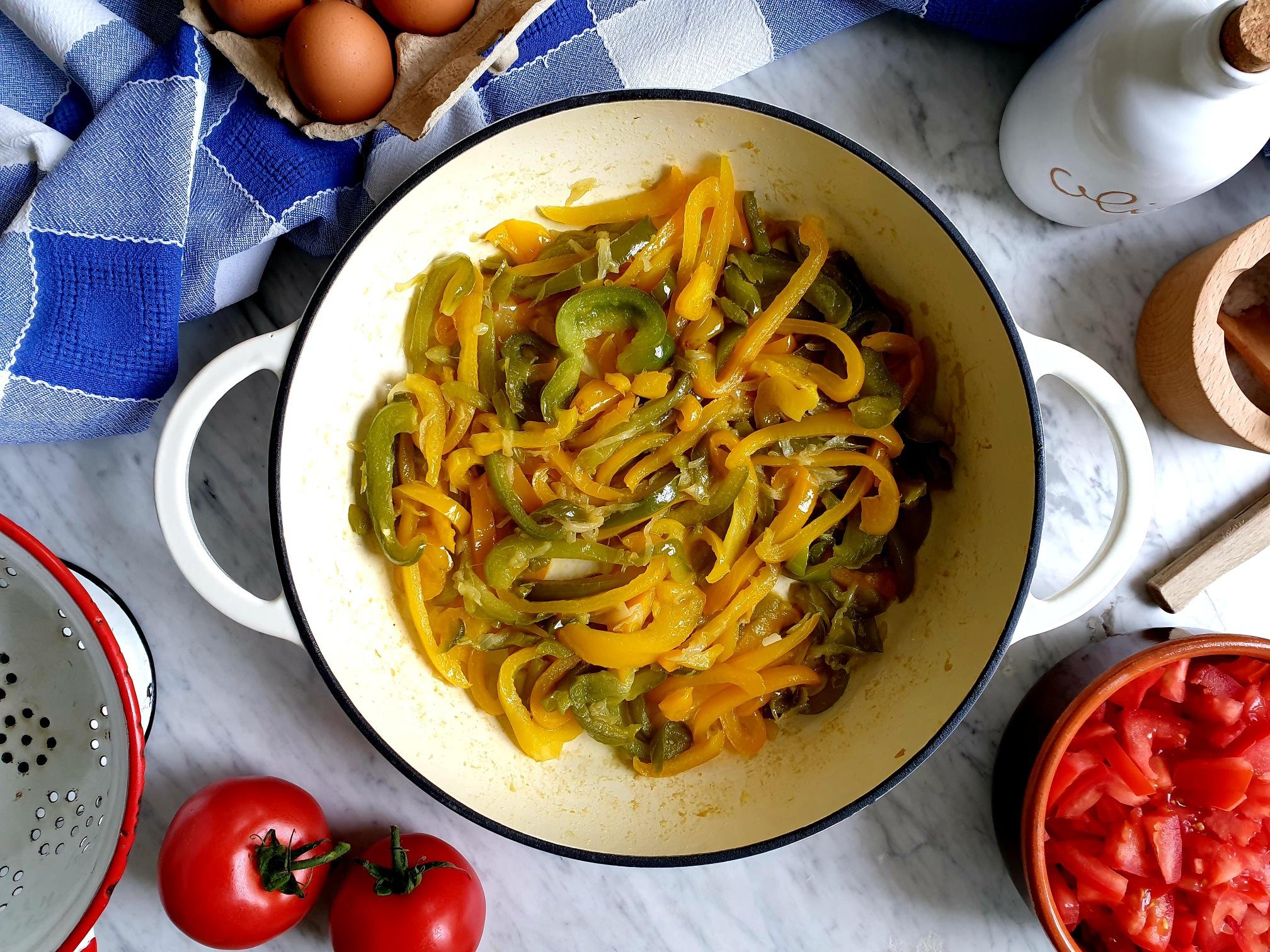
Add strips of bell peppers and stir in with the onions. Cover with the lid (the steam will help to cook down and soften the peppers) and cook on a gentle heat for up to about 30 minutes.

View fullsize Sataras 7.jpg
View fullsize Sataras 8.jpg

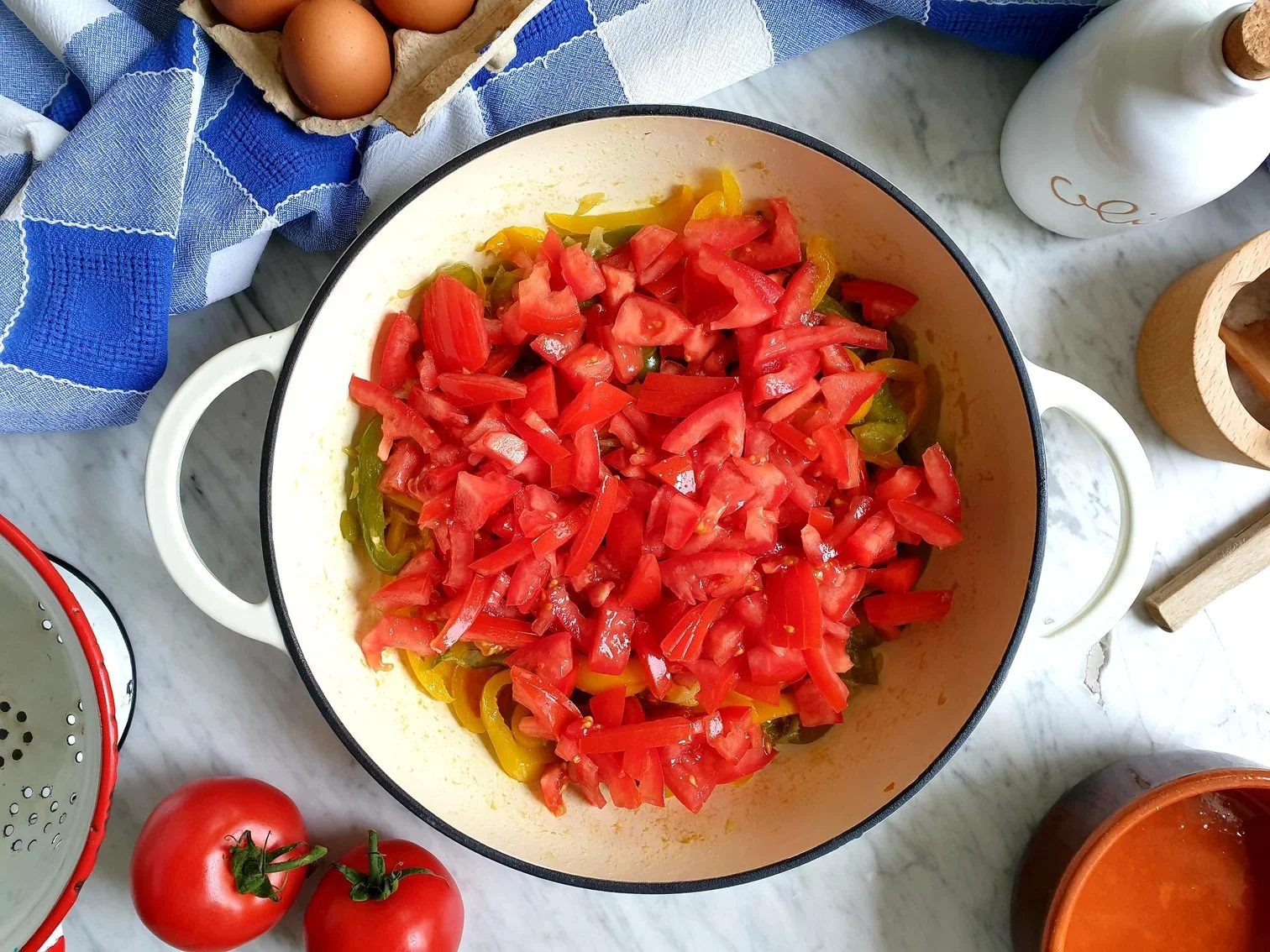
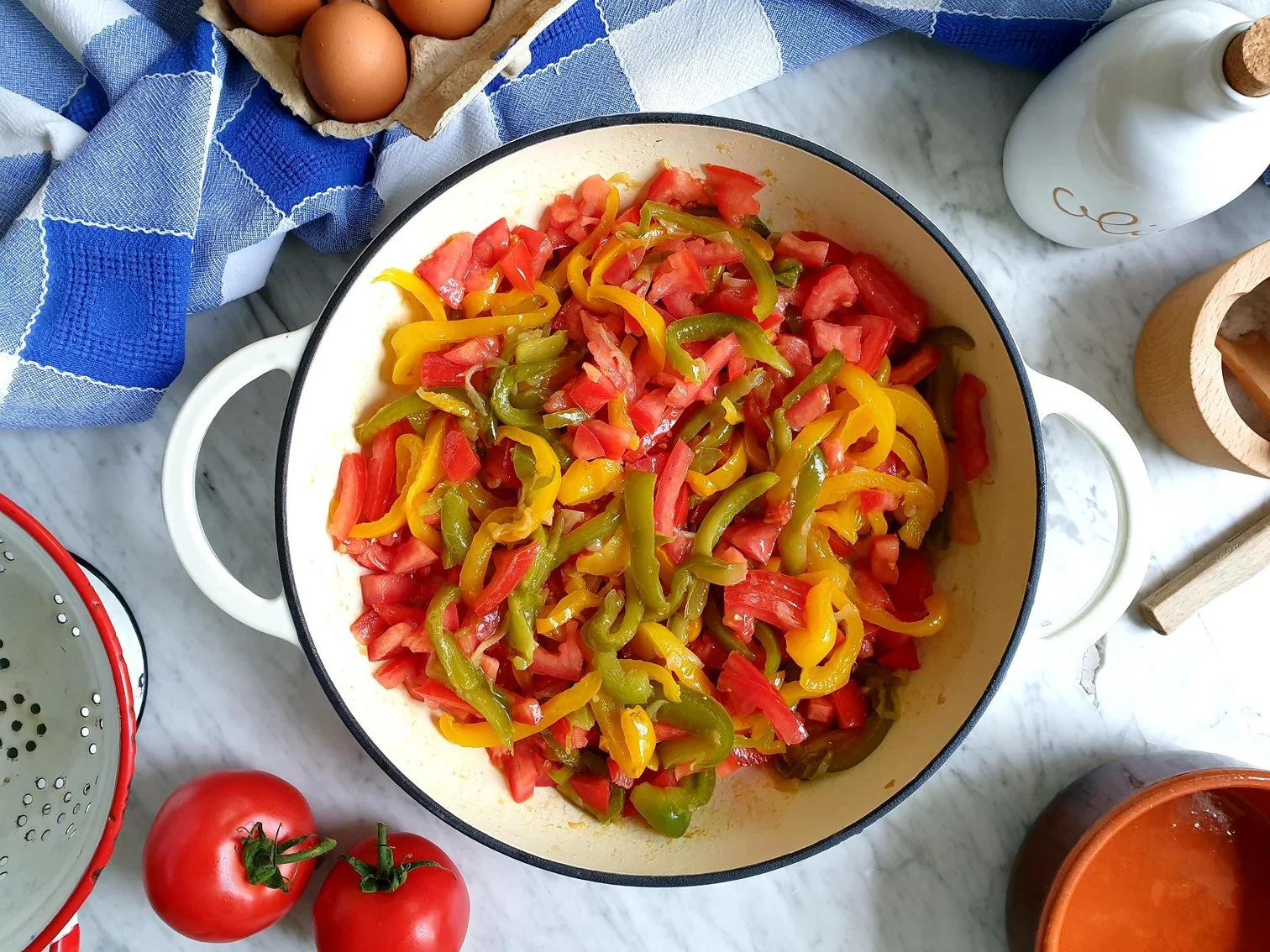
Add chopped tomatoes, cover with the lid, and cook on a gentle heat, stirring occasionally, for about 20-30 minutes, or until tomatoes are cooked down and soft.

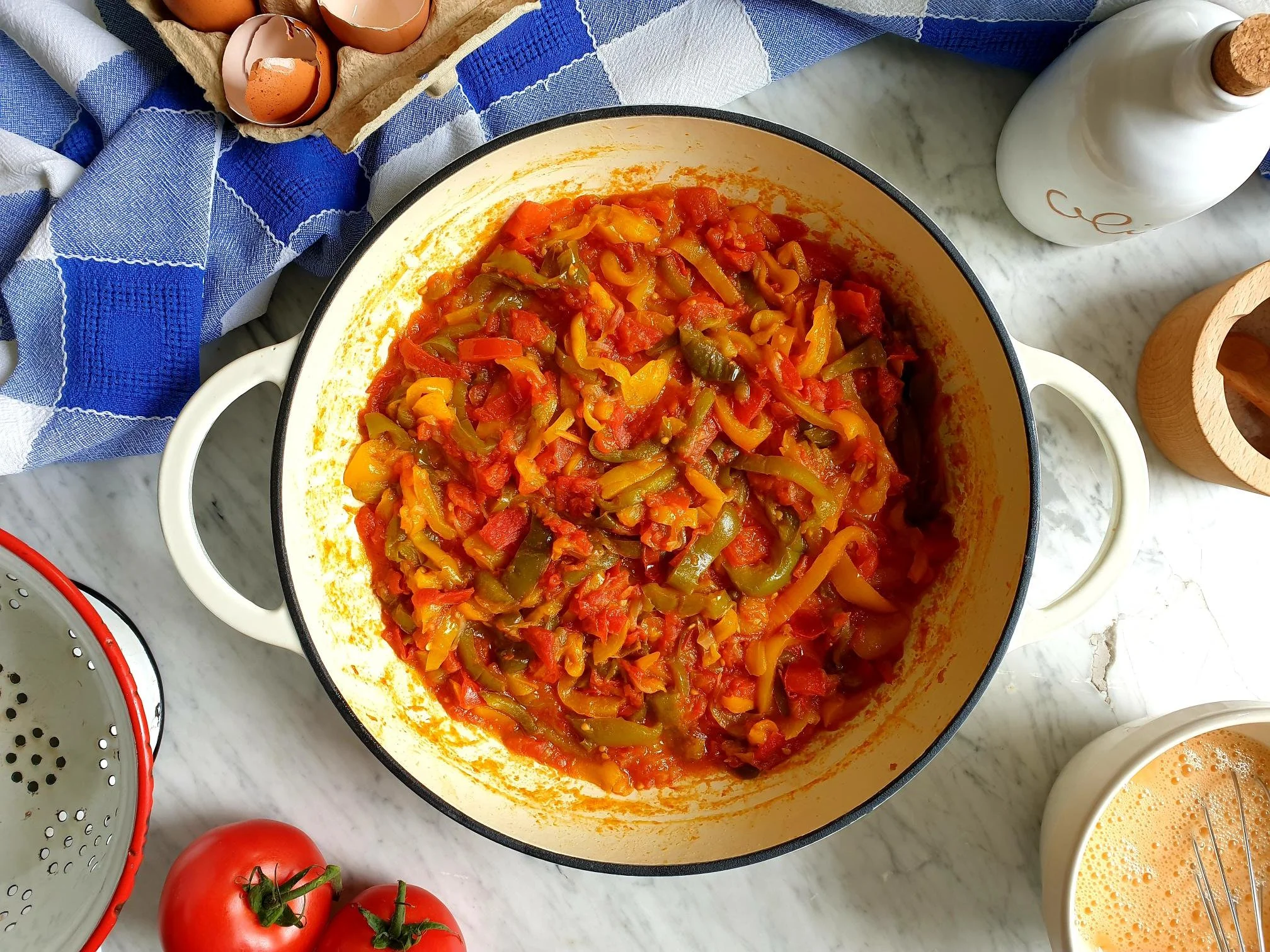
If the mixture has too much liquid (this will depend on how watery the tomatoes you are using are) take the lid off and cook further for a few minutes or until all of the liquid evaporates.

View fullsize Sataras 9.jpg
View fullsize Sataras 10.jpg

In a small bowl crack the eggs, slightly whisk, add sea salt and pepper.

Pour the egg mixture over the pepper stew, mix and stir and cook until desired consistency.

View fullsize Sataras 11.jpg
View fullsize Sataras 12.jpg

Sprinkle with roughly chopped fresh parsley, optional, and serve immediately with plenty of rustic crunchy bread.

Just a thought

This dish is best served hot, equally delicious at room temperature.

You can prepare pepper, onion and tomato stew well in advance, keep it in a fridge in an airtight container for about 3 days, and pour the whisked eggs on a pepper base just before you want to complete the dish and ready to serve it.

The pepper stew (without the egg) is also great served with grilled and barbecued meats, a great base for a risotto or a pasta dish, and it can also be enjoyed with polenta or an egg frittata.

Pepper, onion and tomato base is suitable for freezing.

Wine suggestion
Salento Negroamaro Rosato IGT “Calafuria” 2021 - Tormaresca

July 13, 2022 /tina oblak
bell peppers, fresh bell peppers, yellow peppers, green peppers, tomatoes, scrambled eggs with peppers, peppers stew
Adriatic Recipe, Appetizers, Balkan dish, breakfast, brunch, child friendly dish, child friendly meal, dinner, Easy recipe, entrée course, family friendly dish, family friendly meal, first course, first course dish, first course meal, Healthy, healthy mael, hearty dish, Istrian cuisine, Istrian dish, Istrian food, Istrian gastronomy, main course, main dish, Nutritious, Nutritious dish, Rustic dish, simple recipe, Slovenian cuisine, Slovenian food, Slovenian gastronomy, Spring dish, Spring recipe, Starters, stew, Vegetable side dish, Vegetables, Vegetarian, summer recipe, summer dish, vegetarian summer stew
Comment

Whole baked Sea Bass on roasted potatoes Istrian Recipe

Beans and Sardines
July 06, 2022 by tina oblak in Adriatic Recipe, All year round recipe, baked dish, baked fish, child friendly dish, child friendly meal, dinner, Easy recipe, family friendly dish, family friendly meal, Fish & Seefood, Healthy, healthy mael, hearty dish, Istrian cuisine, Istrian dish, Istrian food, Istrian gastronomy, light fish course, light meal, main course, main dish, main fish course, main fish meal, Nutritious, Nutritious dish, roasted fish, Rustic dish, simple recipe, Slovenian cuisine, Slovenian food, Slovenian gastronomy, supper

Whole baked sea bass on a layer of potatoes is very simple, easy, and healthy recipe for oven-roasted fish that calls for only a few fresh simple ingredients, and it is a perfect choice for a light meal main course option. This delicate fish, baked whole in the oven, is effortless to make, flavoursome and never fails to impress your guests. The recipe gives you a superior taste, the flesh remains really tender and moist and the potatoes, during the baking, absorb all the wonderful flavours and aromas from the garlic, onions, olive oil and the juices from the fish.

This basic method of roasting the whole fish on the bone on a bed of sliced potatoes represents the most common and traditional way of preparing and eating fish along the Slovenian coast in restaurants as well as in the households. It is considered one of the best fish based recipes by the locals, very often made on Sundays as a Sunday roast choice, and as a alternative to a meat roast.

I am sharing here my family recipe for whole baked sea bass with potatoes that would traditionally be accompanied by a vegetable side dish such as (depending on what is available in the season) sautéed courgettes, peas or bell peppers, green beans with tomatoes, borlotti beans salad, creamed spinach, braised fennel and different types of seasonal salads, just to mention a few...

Ingredients

Serves 4

  • 4 fresh whole sea bass (each weighing around 300g), cleaned, scaled and gutted (your fishmonger will be happy to do this for you)

  • potatoes (about 800g), peeled and sliced (roughly3-5mm)

  • 1 small onion (about 50g), peeled and very finely chopped

  • 2 cloves of garlic, peeled and thinly sliced

  • 4 small sprigs of fresh rosemary (small enough to fit into the body cavity of the fish)

  • 4 Tbsp extra virgin olive oil (plus some extra for drizzling)

  • sea salt

  • black pepper

  • 100ml white wine, fish stock or water (I used a ¼ Tsp of dry granulated fish powder and dissolved it into a 100ml of hot water)

  • fresh flat leaf parsley, finely chopped, for serving, optional

  • fresh lemon, for serving, optional

Method

Preheat the oven to 220C static or equivalent.

Line a baking tray with non stick baking parchment.

Peel the potatoes and cut them with the knife or a mandolin slicer into slices the thickness of about 3-5mm.

Place sliced potatoes into a bowl and add finely chopped onions, sliced garlic, extra virgin olive oil, season with sea salt and black pepper and mix well.

Transfer the potato mixture onto a baking tray and with your hands arrange them, distribute evenly more or less, into a single layer (they will overlap a bit).

Put in the oven and bake for 15-20 minutes.

While the potatoes are baking prepare the fish.

View fullsize Roasted sea bass with potatoes 7.jpg
View fullsize Roasted sea bass with potatoes 8.jpg

Wash the fish thoroughly inside and out under cold running water and pat dry well the fish with the kitchen paper.

With a sharp knife, slash the fish 3 to 5 times through the flesh, about 5mm deep, almost to the bone.

Season with sea salt and black pepper and put a small sprig of fresh rosemary into the body cavity of each fish.

Take the potatoes out of the oven (after 15-20 minutes) and place the sea bass on top of the potatoes, side by side, scored side up and drizzle each fish with a bit of extra virgin olive oil.

Cover the baking tray with the aluminium foil, put it back into the oven and bake for 30 minutes.

View fullsize Roasted sea bass with potatoes 9.jpg
View fullsize Roasted sea bass with potatoes 10.jpg

Remove the aluminium foil and bake further for 10 minutes.

View fullsize Roasted sea bass with potatoes 11.jpg
View fullsize Roasted sea bass with potatoes 12.jpg

Pour white wine, fish stock or water over the fish and potatoes and bake further for about 5-6 minutes.

Serve hot with a sprinkle of finely chopped fresh flat leaf parsley and an extra drizzle of extra virgin olive oil and a squeeze of lemon.

Just a thought

If you end up with a leftover baked sea bass, it is delecious eaten cold or at a room temeprature with a drizzle of olive oil and finely chopped fresh flat parsley and accompanied with some cruncy bread, or alternatively you can make a fish spread (see my recipe for Rustic Sea Bream spread)

Wine suggestion
Fiano di Avellino DOCG “Ciro 906” 2019 - Ciro Picariello

July 06, 2022 /tina oblak
fresh sea bass, whole sea bass, whole baked sea bass, whole roasted sea bass, roasted sliced potatoes, branzino al forno con le patate, brancin v pecici s krompirjem, roasted fish
Adriatic Recipe, All year round recipe, baked dish, baked fish, child friendly dish, child friendly meal, dinner, Easy recipe, family friendly dish, family friendly meal, Fish & Seefood, Healthy, healthy mael, hearty dish, Istrian cuisine, Istrian dish, Istrian food, Istrian gastronomy, light fish course, light meal, main course, main dish, main fish course, main fish meal, Nutritious, Nutritious dish, roasted fish, Rustic dish, simple recipe, Slovenian cuisine, Slovenian food, Slovenian gastronomy, supper
Comment

Pork risotto Venetian inspired Recipe

Beans and Sardines
June 08, 2022 by tina oblak in Adriatic Recipe, All year round recipe, Autumnal dish, Autumnal recipe, child friendly dish, child friendly meal, dinner, Easy recipe, entrée course, family friendly dish, family friendly meal, first course, first course dish, first course meal, hearty dish, Istrian cuisine, Istrian dish, Istrian food, Istrian gastronomy, main course, main dish, Meat, recipe from Northern Ital, Risotti, Rustic dish, Spring dish, Spring recipe, Starters, supper, Venetian dish, Winter dish, Winter recipe, Risotto, simple recipe

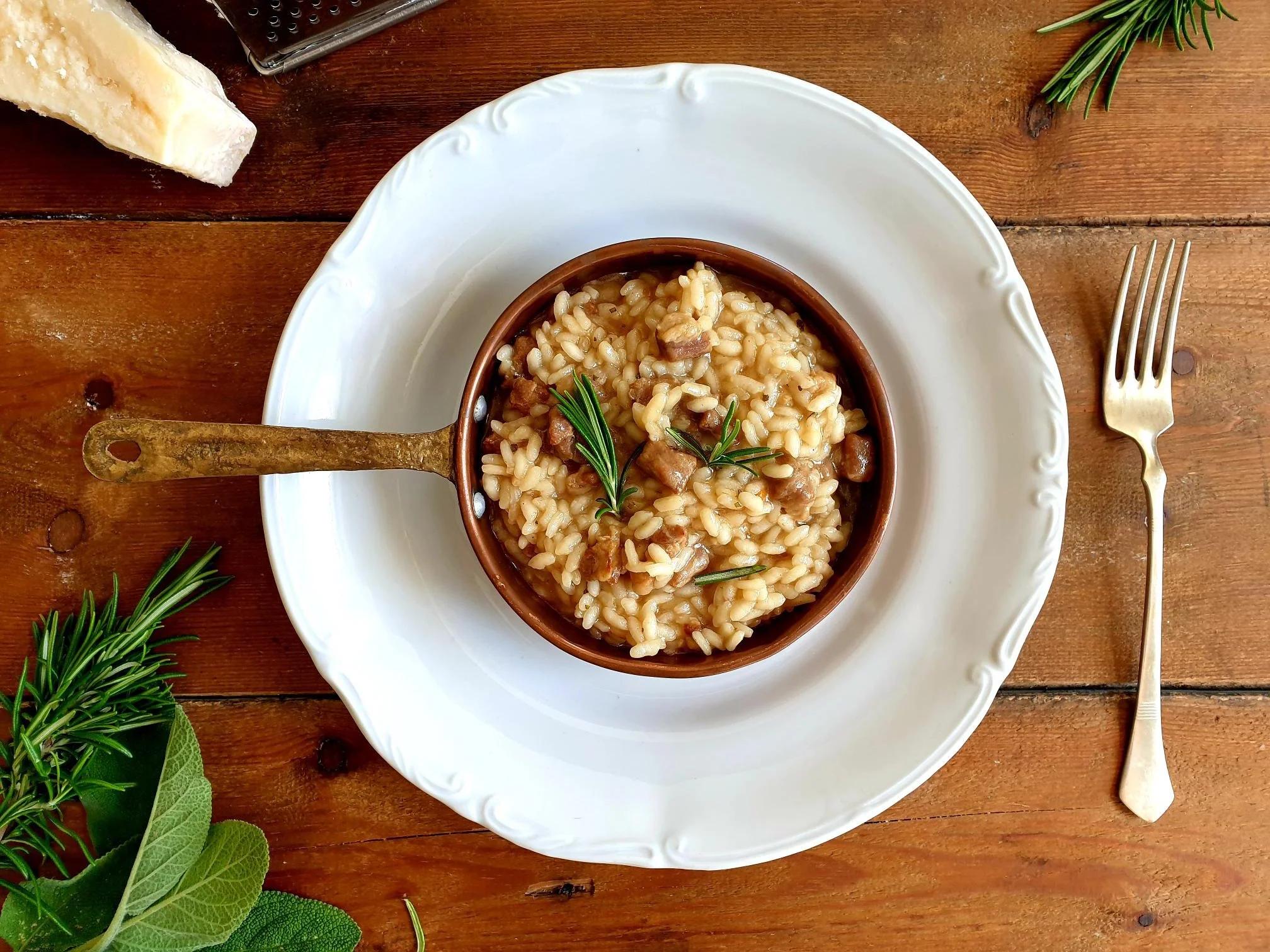
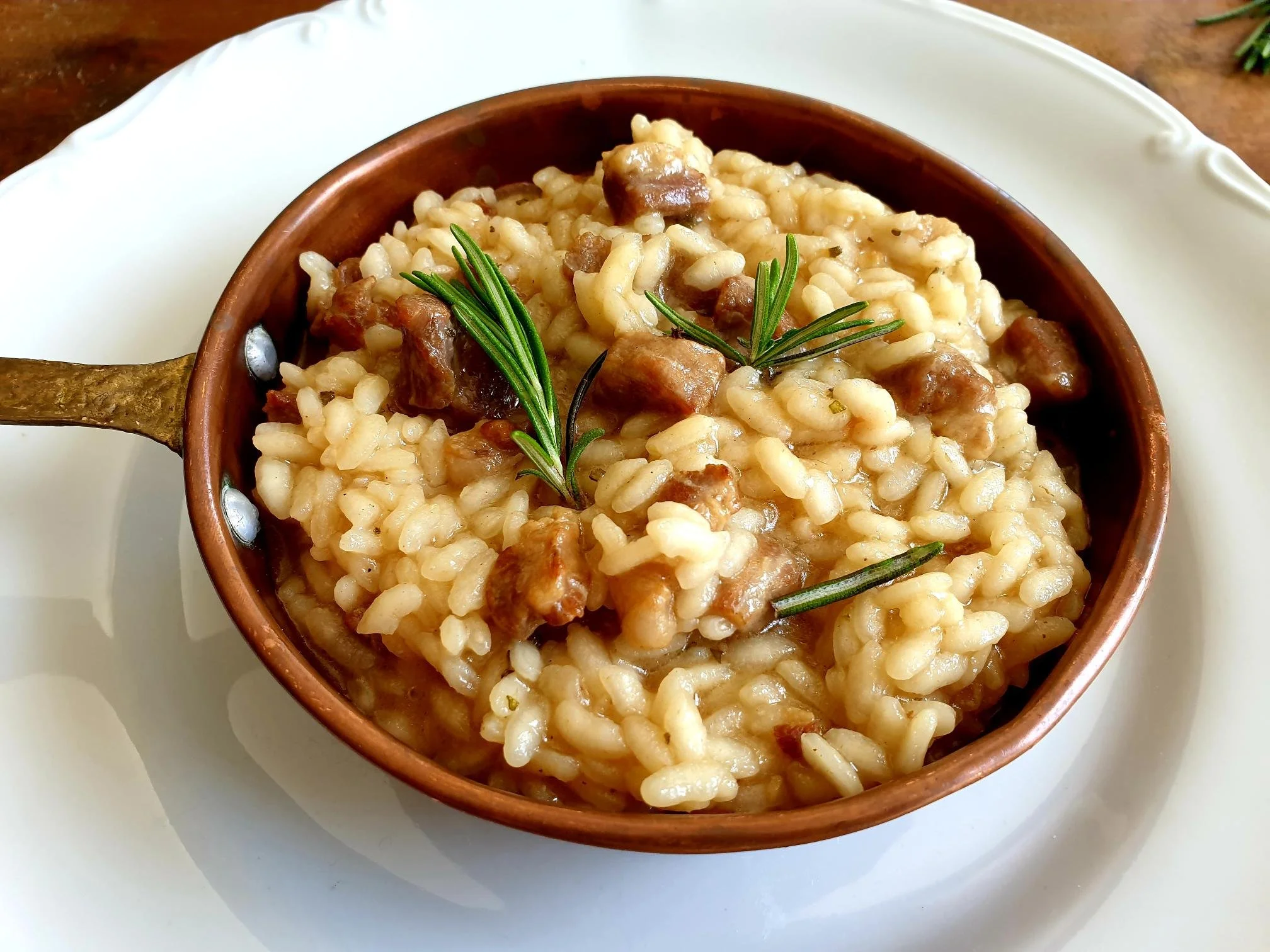
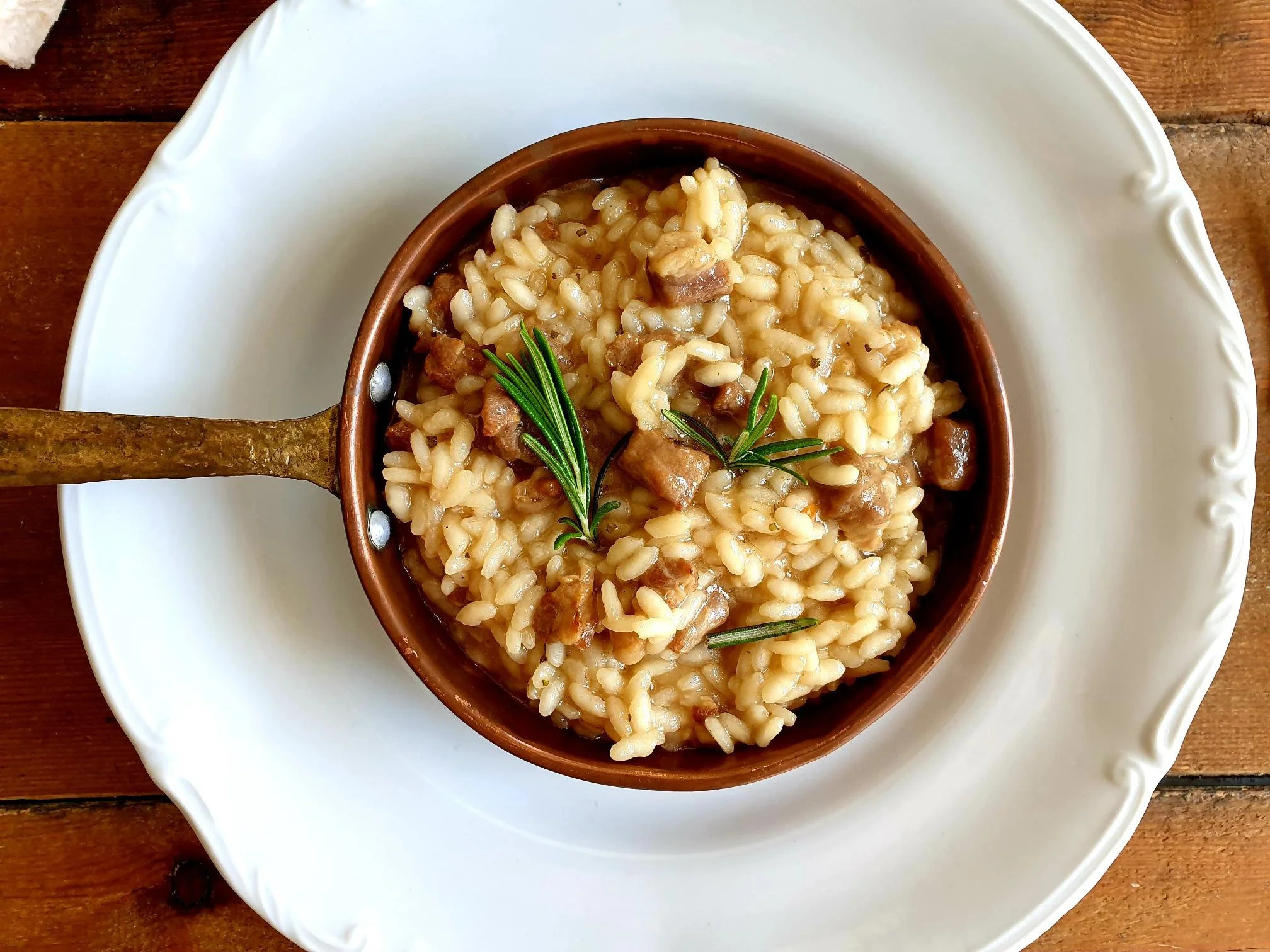
Pork risotto is a perfect recipe when you want to rustle up a quick meal, using only a few fresh simple ingredients. This risotto is easy and uncomplicated to make, and is a delicious, creamy, and very comforting meal. I would not be surprised if it becomes your all time favourite risotto recipe.

The actual name for this pork risotto is Risotto all'Isolana that originated, and is famous in the area of Isola della Scala, situated between Verona and Mantua, in the region of Veneto in Italy. This is where Vialone Nano (type of short grain risotto rice) is widely cultivated. The authentic recipe for this risotto includes the use of two types of meat, a combination of veal and pork, and ground cinnamon, and this is how it is also cooked and eaten in Venice.

In Slovenian Istra, however, where I grew up, and where numerous dishes were inspired from Venetian cooking, it should be no surprise that an Istrian variation of this risotto was created using only pork and omitting ground cinnamon, as this exotic spice was difficult to get hold of, and was out of reach for most locals, and only used to make desserts and puddings.

This type of risotto is a risotto of my childhood and is the one that my mother used to prepare very often, and here I am sharing her recipe.

Ingredients

Serves 4

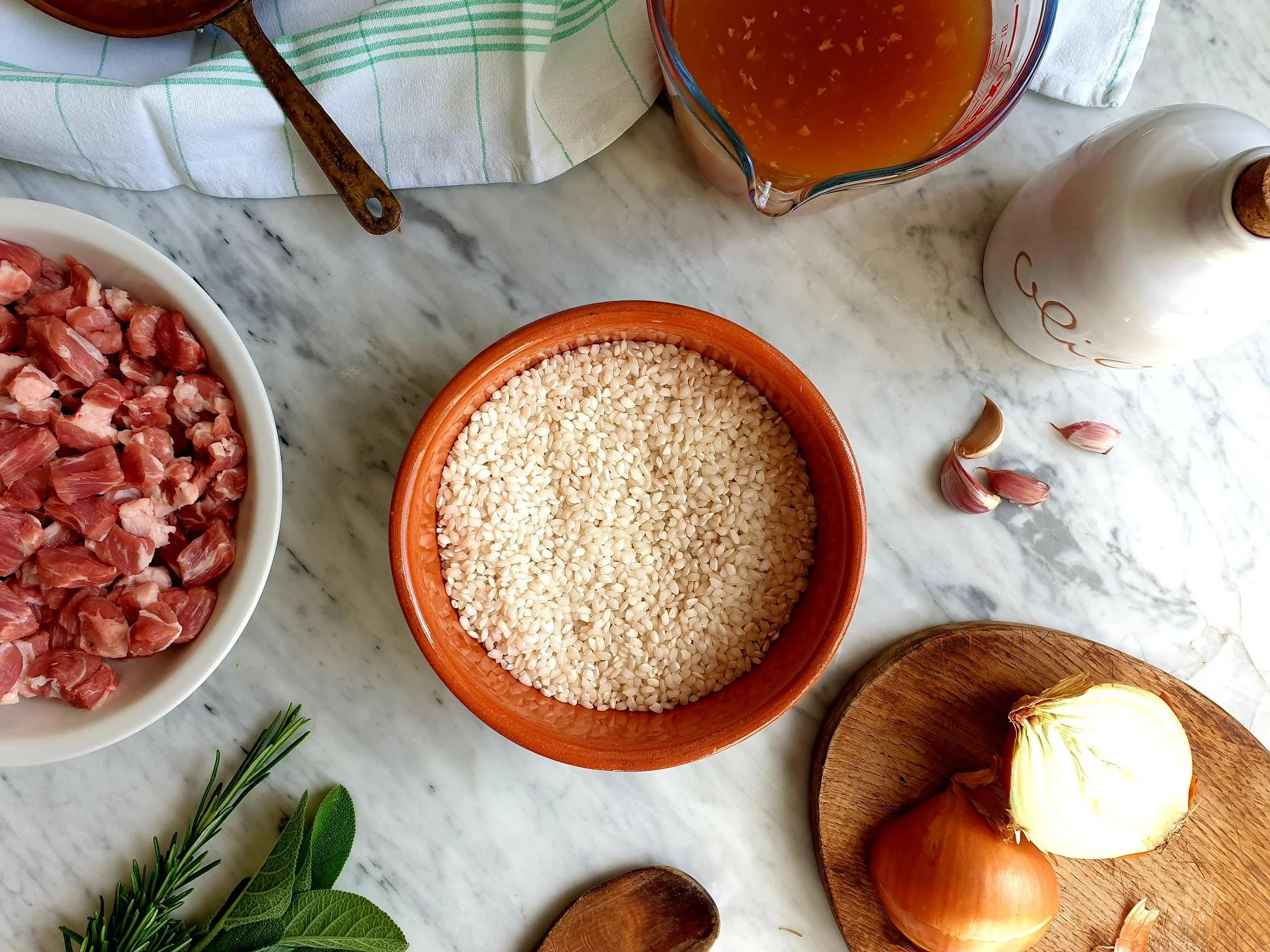
  • 400g pork shoulder steaks, trimmed off excessive fat and diced

  • 300g risotto rice (like Arborio, Vialone Nano or Carnaroli)

  • 1 medium onion (about 150g), peeled and finely chopped

  • 1 clove of garlic, peeled and crushed

  • 2 Tbsp extra virgin olive oil

  • 1 litre of beef or other meat stock (home made or good quality store bought stock)

  • few leaves of fresh sage, finely chopped

  • one sprig of fresh rosemary, needles removed and finely chopped

  • sea salt

  • black pepper

  • Parmiggiano Reggiano or Grana Padano cheese, finely grated, to serve (optional)

Method

Before starting making risotto have your boiling hot beef or other meat stock ready to hand for later.

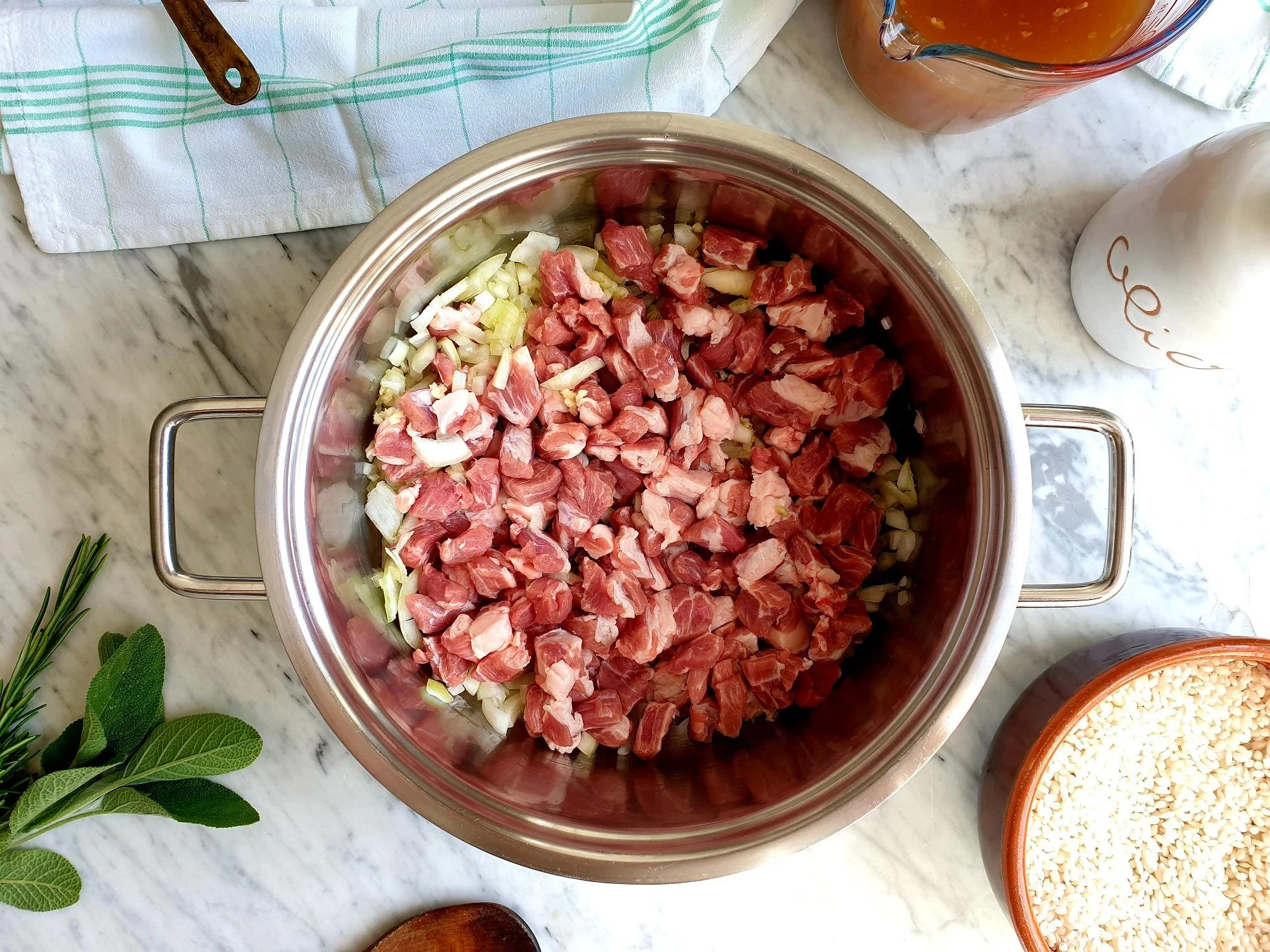
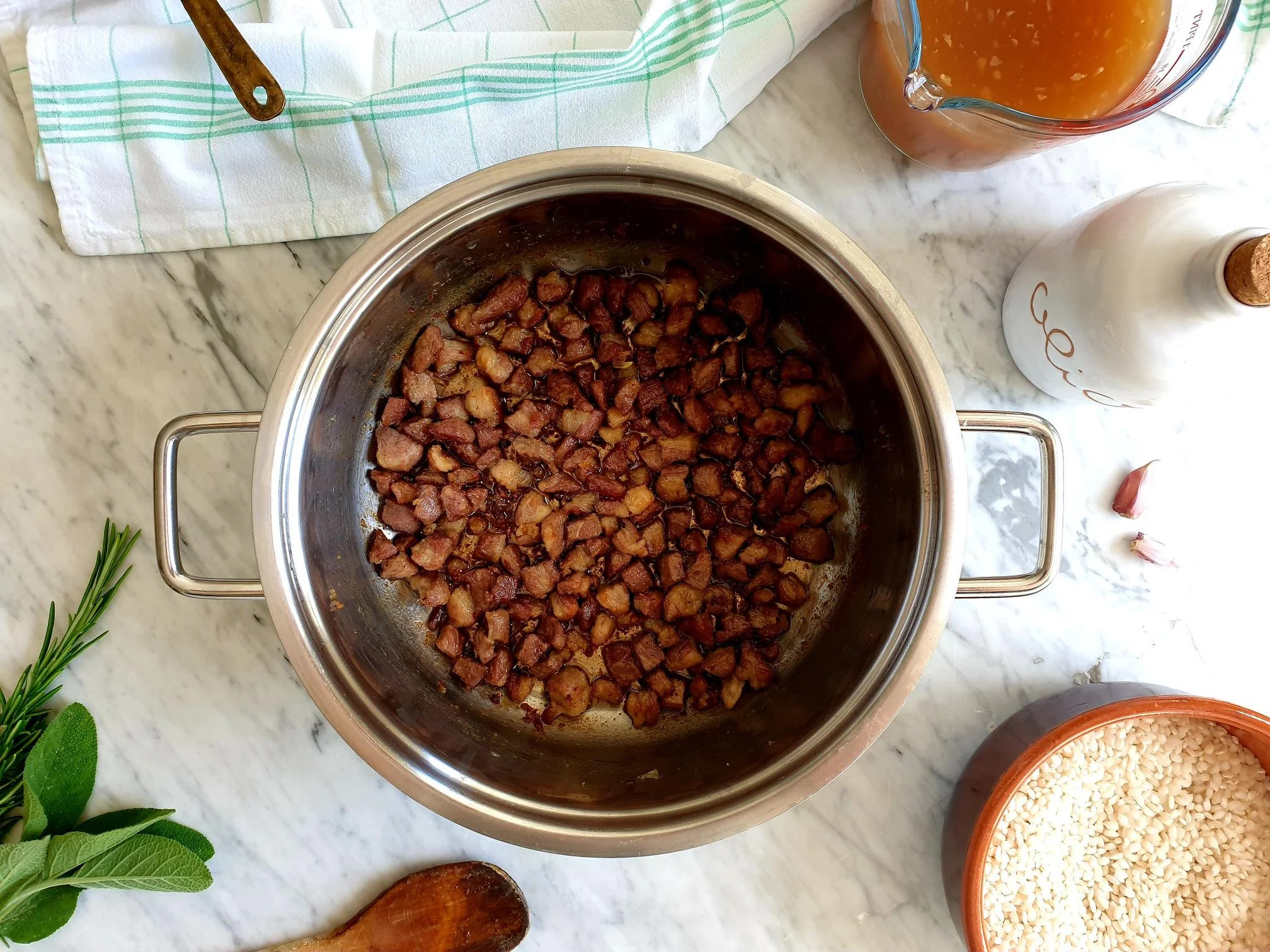
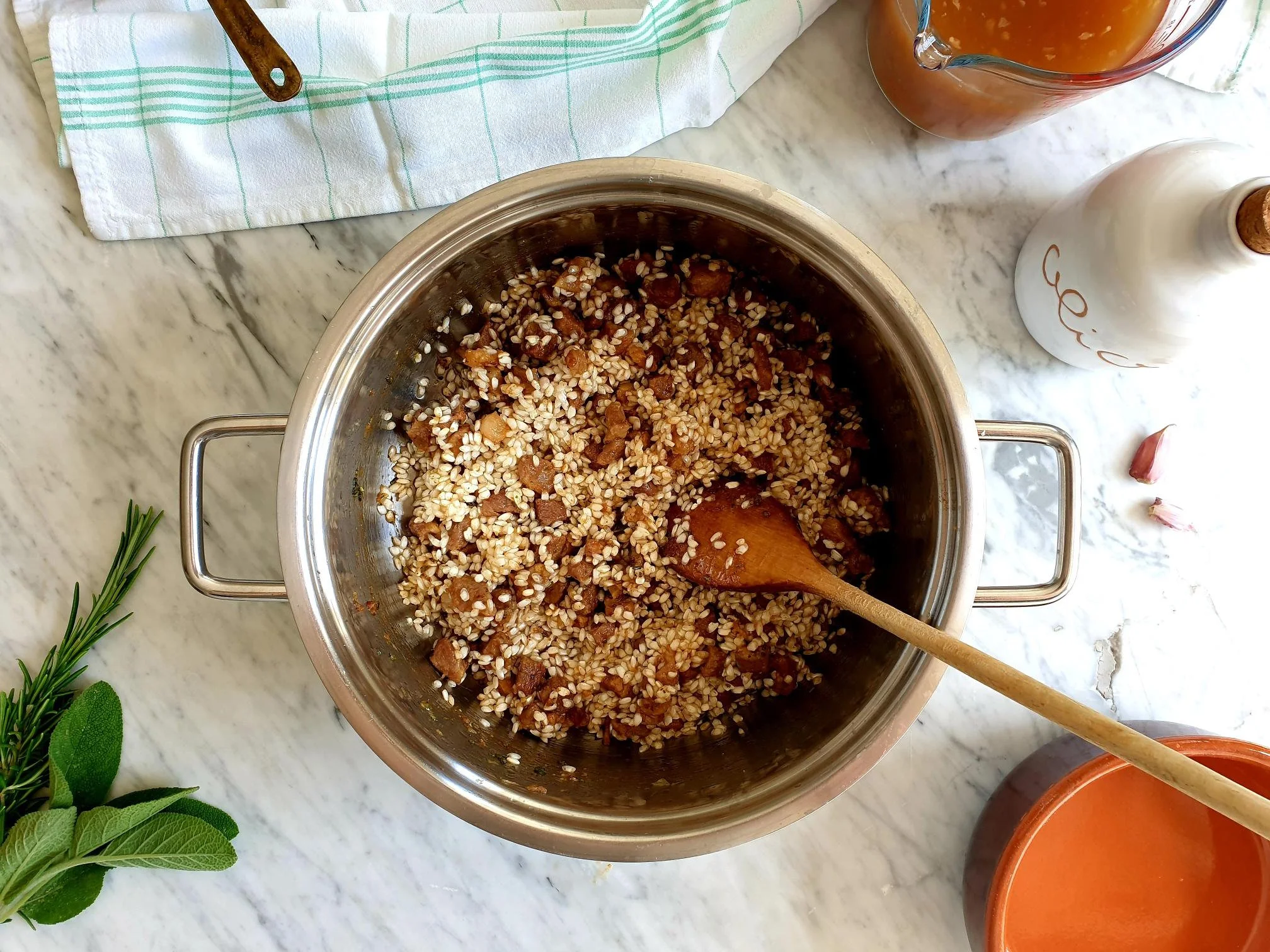
Place in a pan extra virgin olive oil, finely chopped onions, crushed garlic and trimmed and diced pork shoulder steaks.

Add a pinch of salt, a bit of black pepper and gently fry on a fairly low heat until the onions become soft and translucent and the meat light brown in colour.

View fullsize Pork risotto Venetian inspired Recipe 2.jpg
View fullsize Pork risotto Venetian inspired Recipe 4.jpg

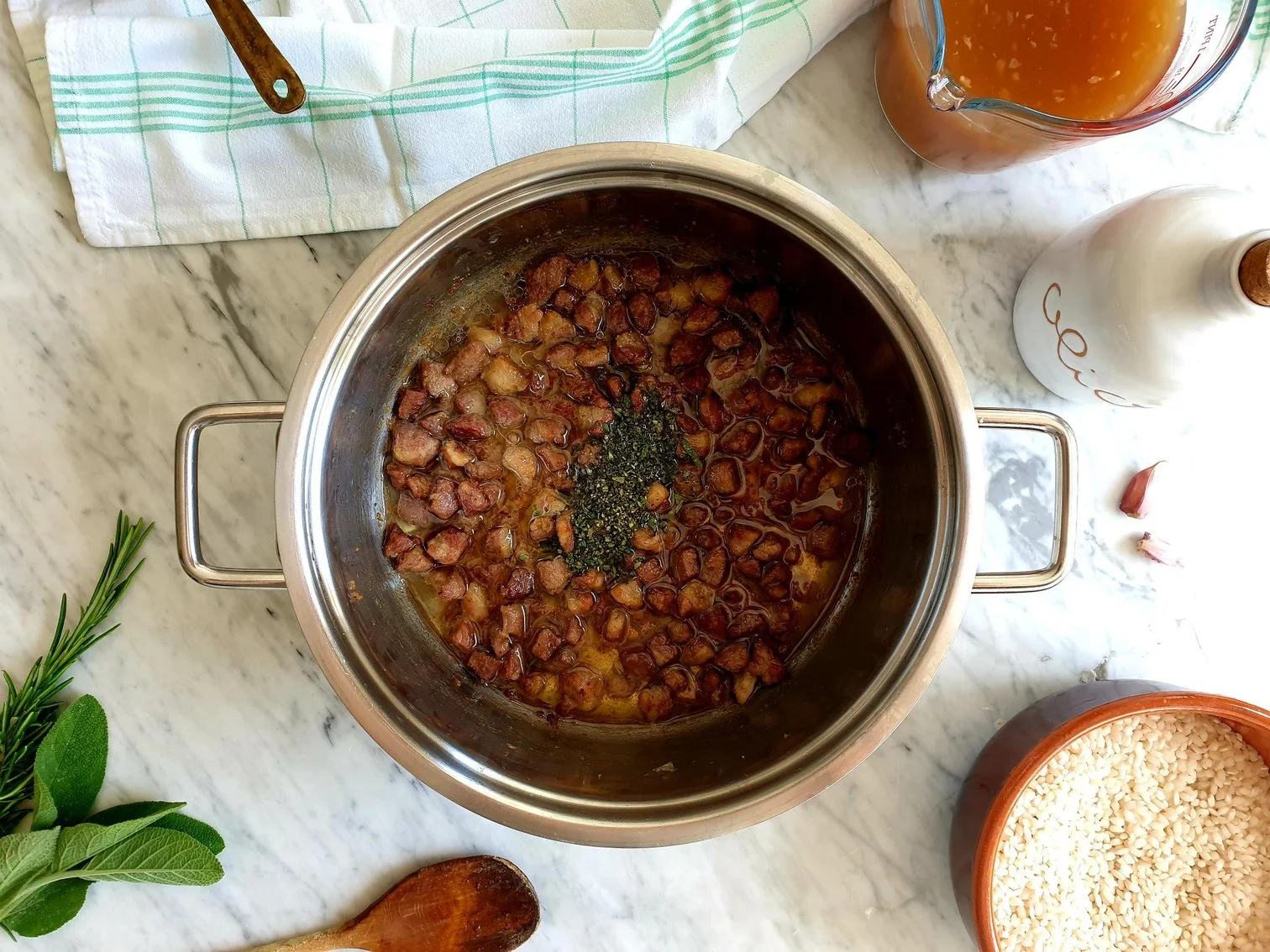
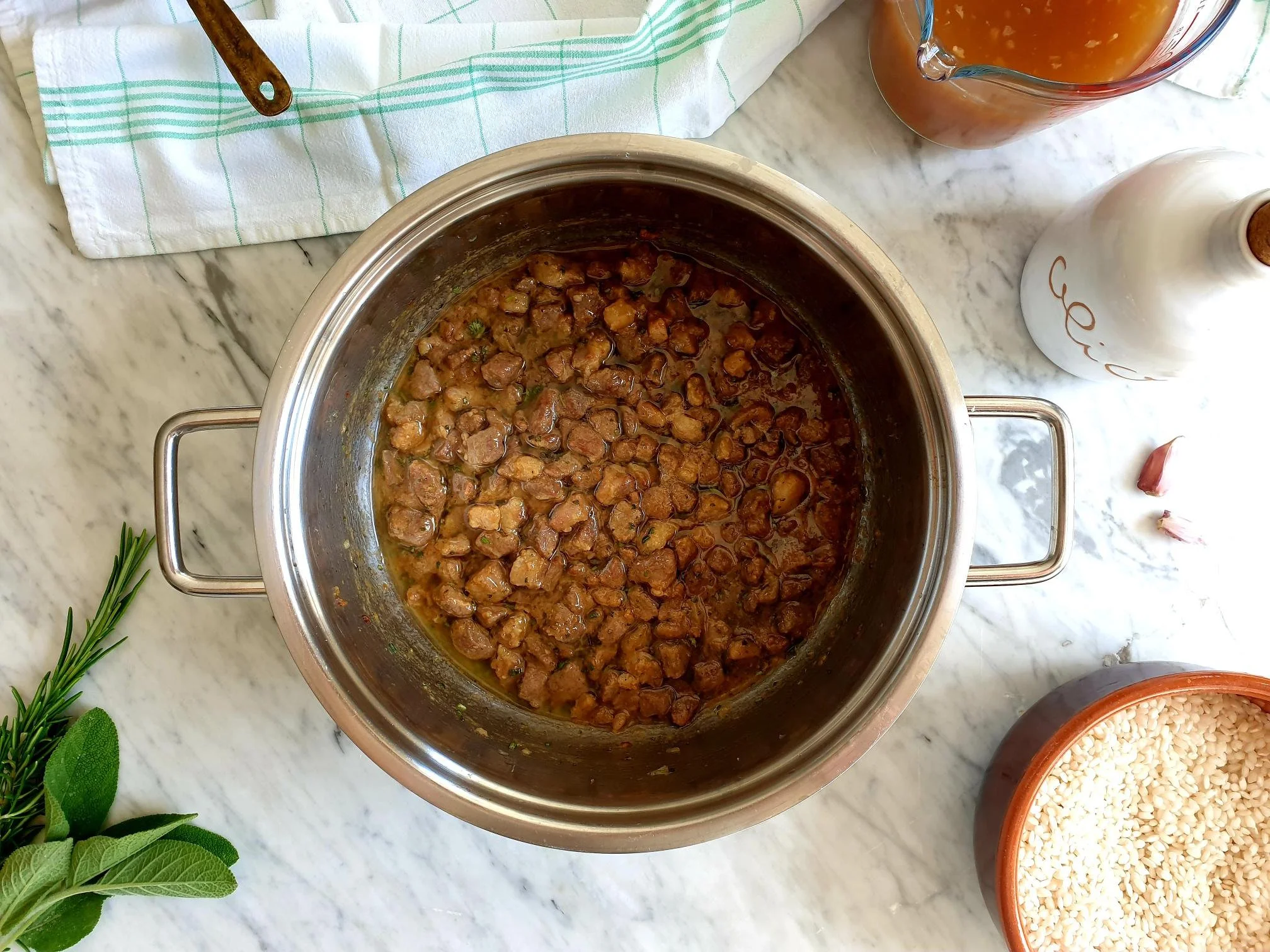
Add finely chopped herbs and about 100ml of water. With a wooden spoon mix and scrap all the bits and pieces from the bottom of the pan, deglaze and cook further for a few minutes on a gentle heat until all the water evaporates.

View fullsize Pork risotto Venetian inspired Recipe 5.jpg
View fullsize Pork risotto Venetian inspired Recipe 6.jpg

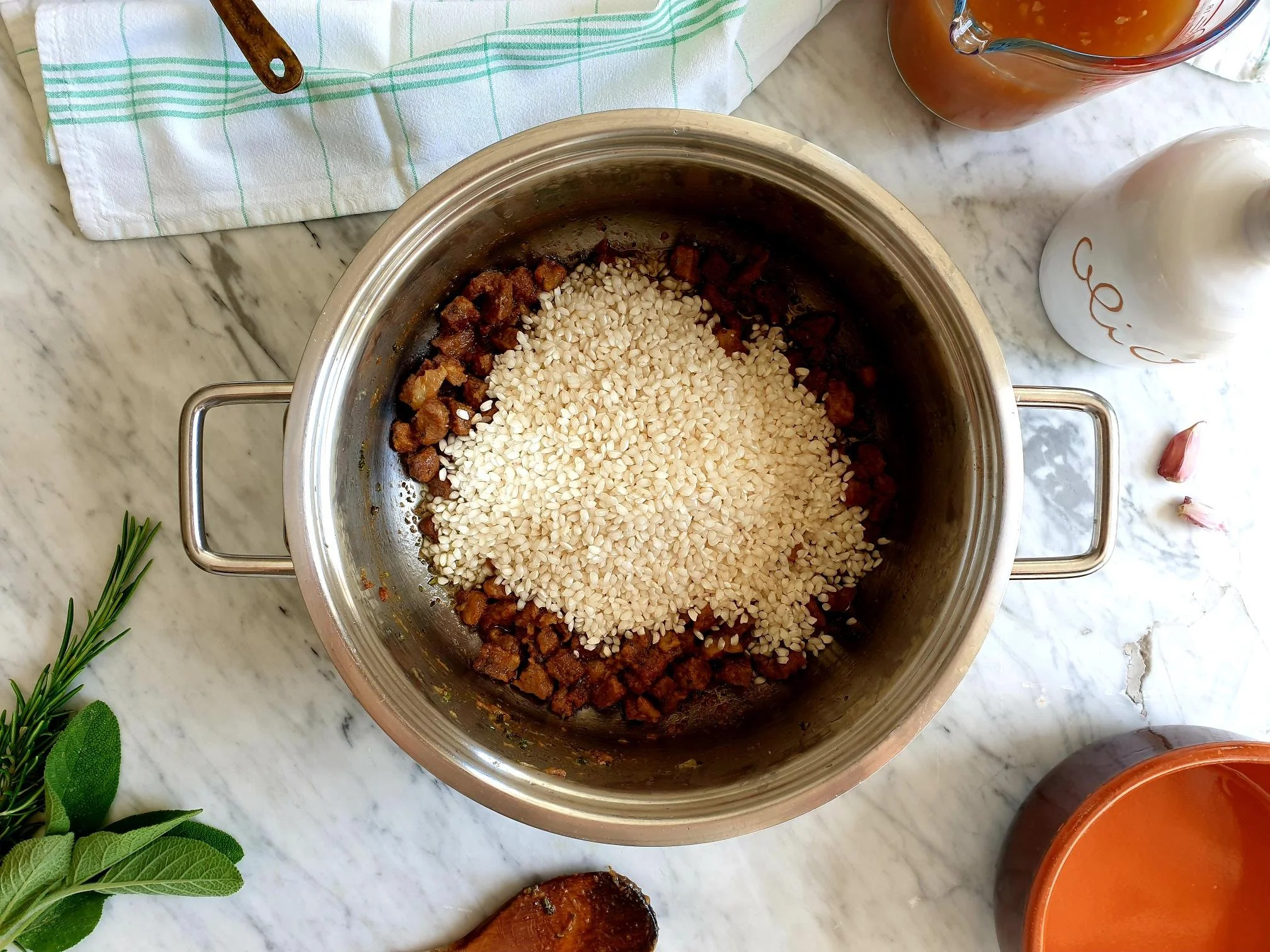
Add risotto rice and toast briefly, stirring constantly to avoid sticking to the pan.

View fullsize Pork risotto Venetian inspired Recipe 7.jpg
View fullsize Pork risotto Venetian inspired Recipe 8.jpg

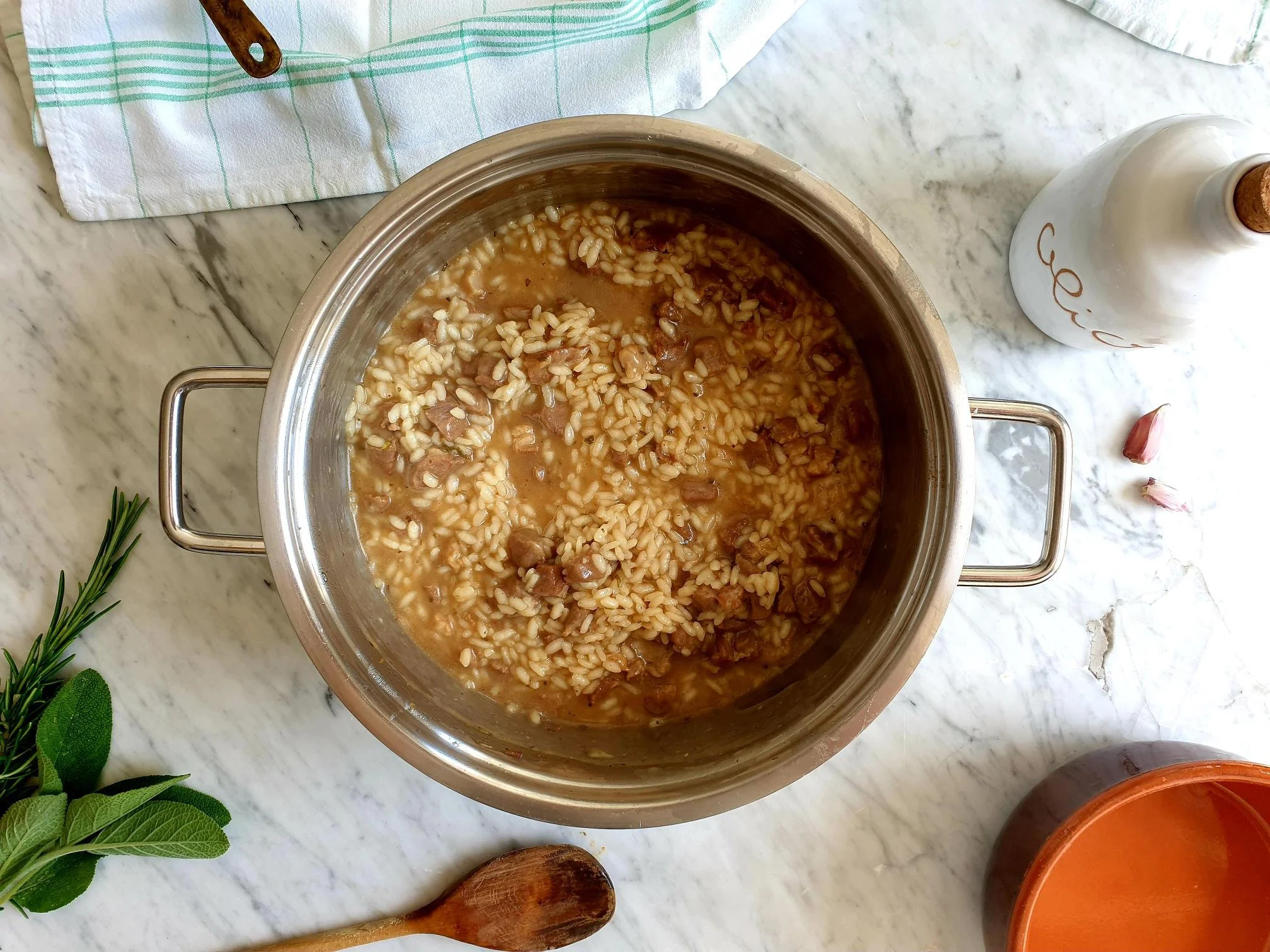
Start gradually adding ladles of hot stock, one at a time, allowing the liquid to be absorbed before adding more.

Cook on a medium heat, stirring almost constantly, until the rice is cooked al dente, meaning fully cooked but still a bit firm when bitten, it should roughly take between 15-18 minutes for a risotto to be cooked.

Taste and adjust the seasoning with sea salt and black pepper, but this might not be necessary since the store bought stocks are, generally speaking, salty already.

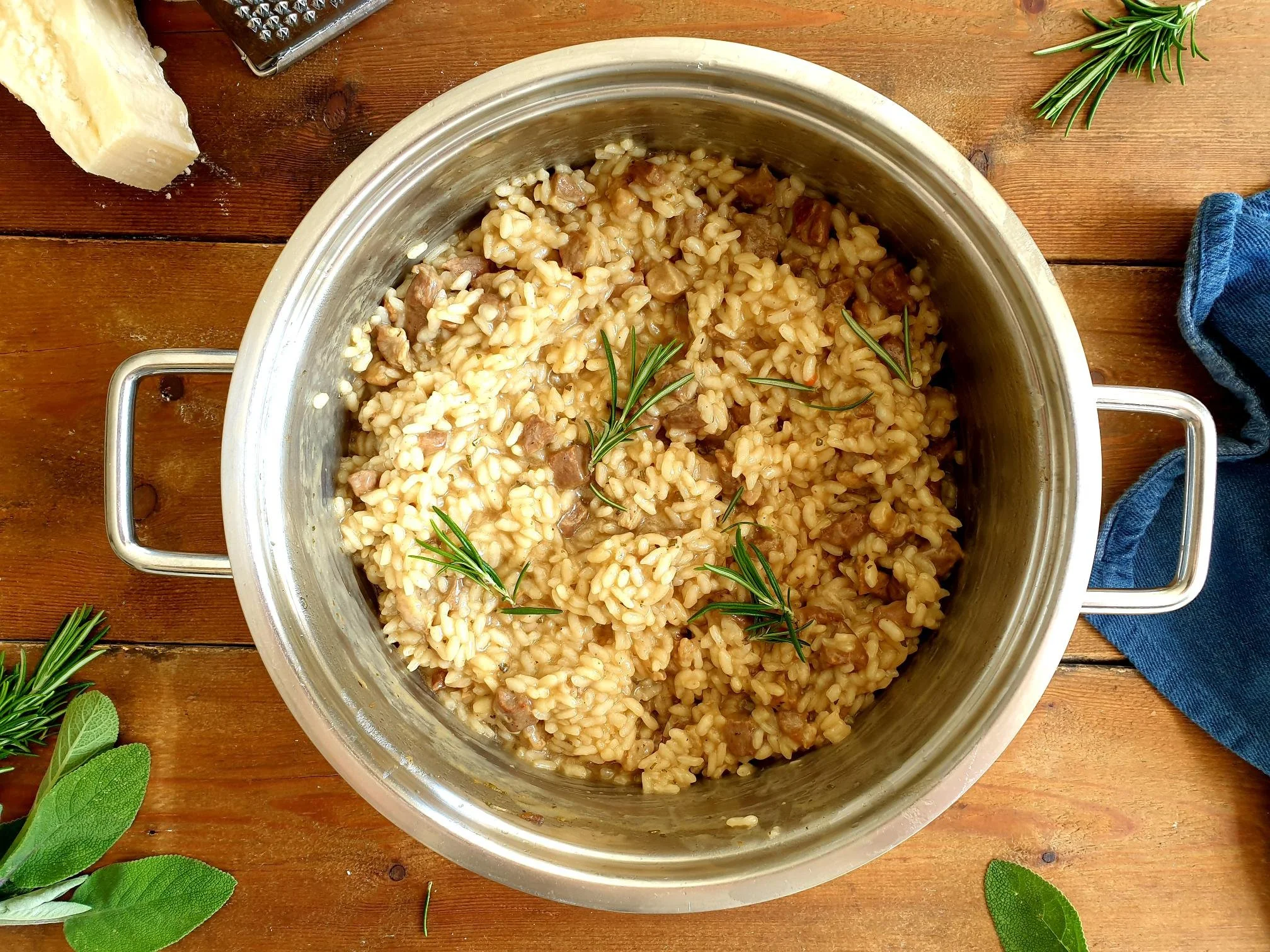
Serve immediately while risotto is still hot and rather liquidy, smooth and runny or as the Italians would describe it, all'onda, meaning on the wave.

Ladle the risotto onto the plates and sprinkle with freshly grated Parmiggiano Reggiano or Grana Padano cheese.

Just a thought

Pork risotto is not suitable for freezing.

Wine suggestion
Marca Trevigiana Raboso IGT 2018 - Gatti

June 08, 2022 /tina oblak
Pork risotto, Venetian style posrk risotto, Istrian style pork risotto, meat based risotto, simple risotto, rustic risotto, Risotto all'Isolana, Arborio, Vialone Nano rice, Carnaroli rice, risotto rice, Rižota s svinjskim mesom
Adriatic Recipe, All year round recipe, Autumnal dish, Autumnal recipe, child friendly dish, child friendly meal, dinner, Easy recipe, entrée course, family friendly dish, family friendly meal, first course, first course dish, first course meal, hearty dish, Istrian cuisine, Istrian dish, Istrian food, Istrian gastronomy, main course, main dish, Meat, recipe from Northern Ital, Risotti, Rustic dish, Spring dish, Spring recipe, Starters, supper, Venetian dish, Winter dish, Winter recipe, Risotto, simple recipe
Comment

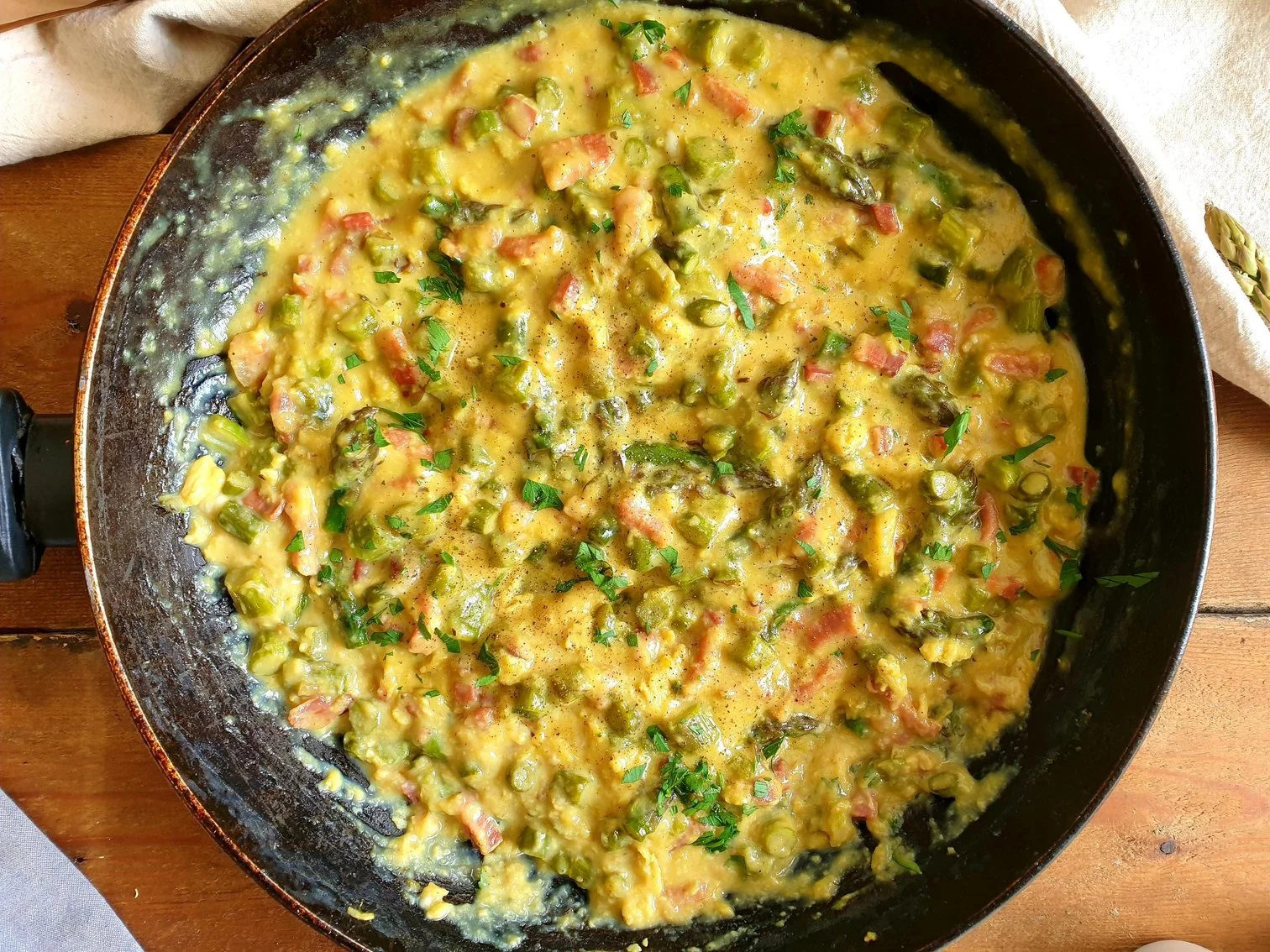
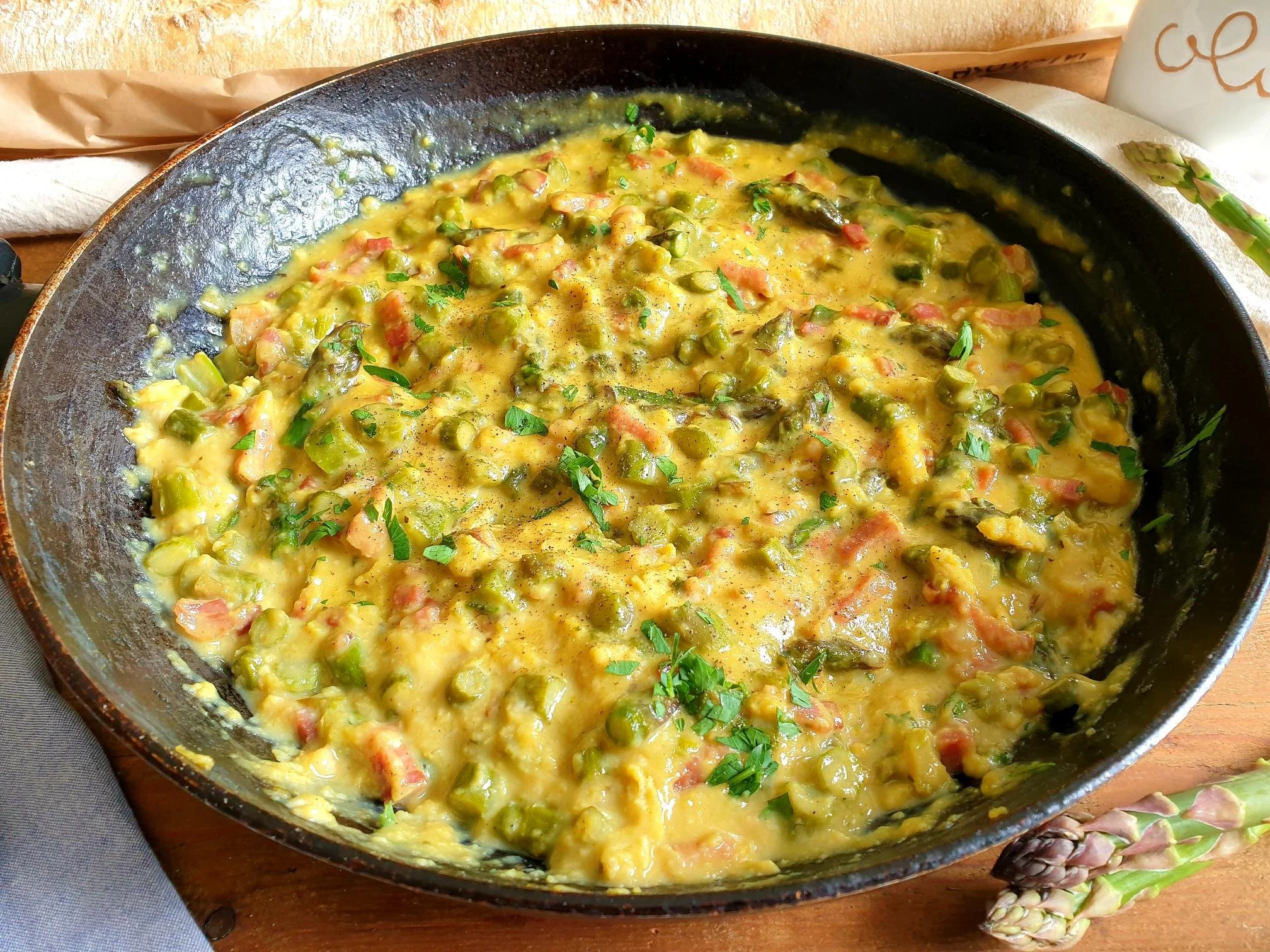
Green asparagus with pancetta and scrambled eggs Istrian Recipe

June 01, 2022 by tina oblak in Adriatic Recipe, breakfast, brunch, child friendly dish, child friendly meal, dinner, Easy recipe, entrée course, family friendly dish, family friendly meal, first course, first course dish, first course meal, hearty dish, Istrian cuisine, Istrian dish, Istrian food, Istrian gastronomy, main course, main dish, Rustic dish, Slovenian cuisine, Slovenian food, Slovenian gastronomy, Spring dish, Spring recipe, Starters, supper, Vegetarian, Vegetables

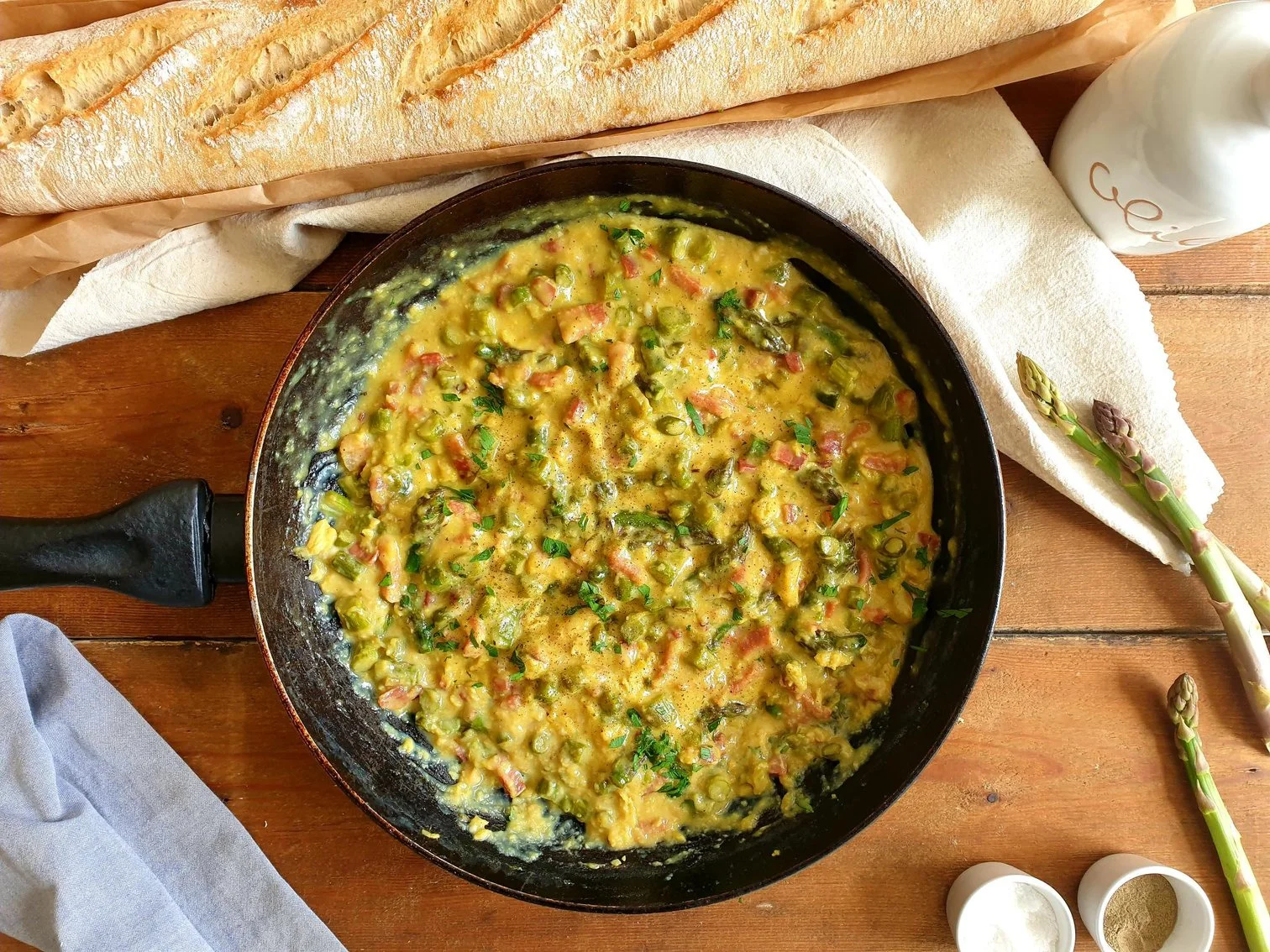
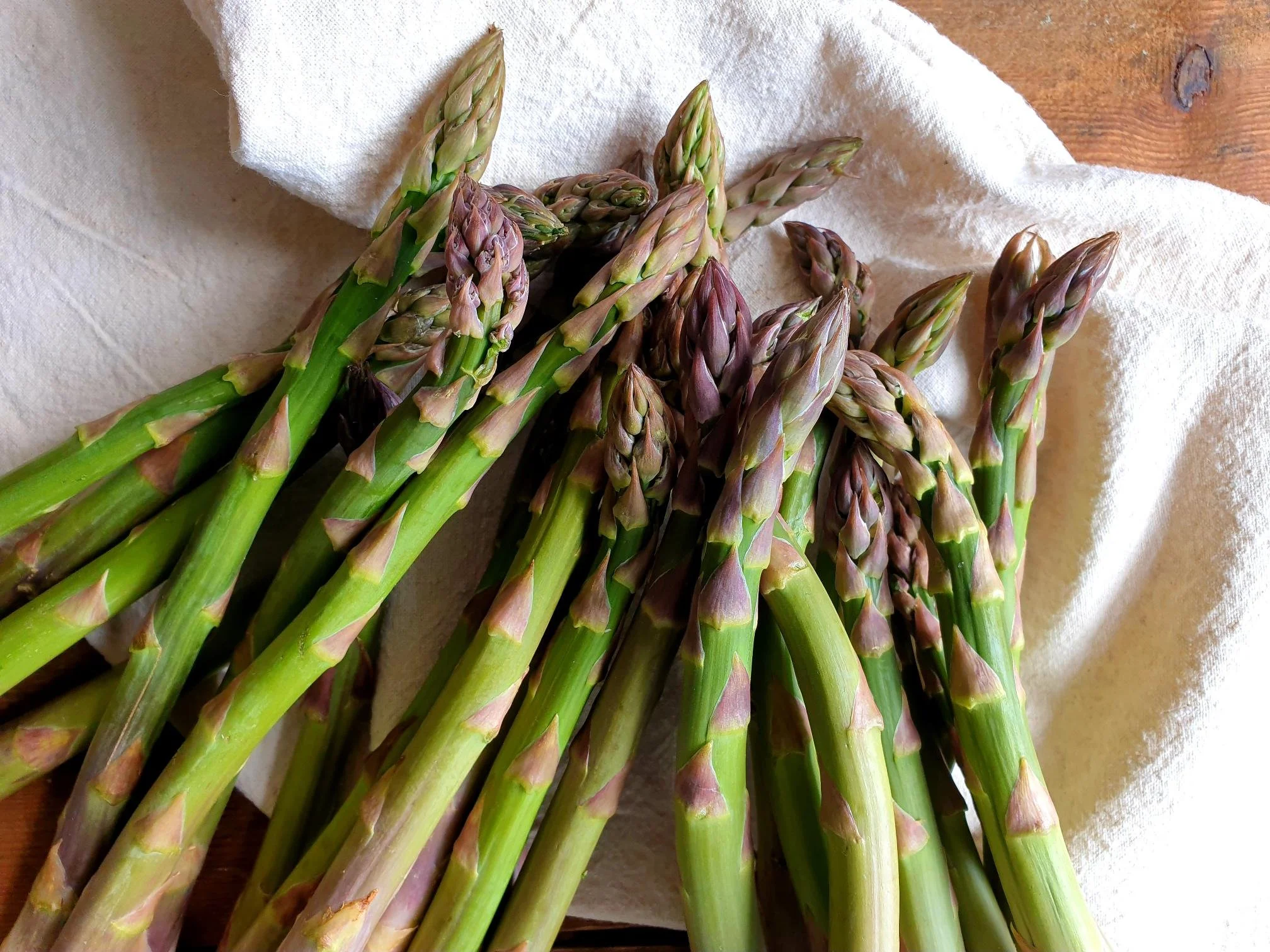
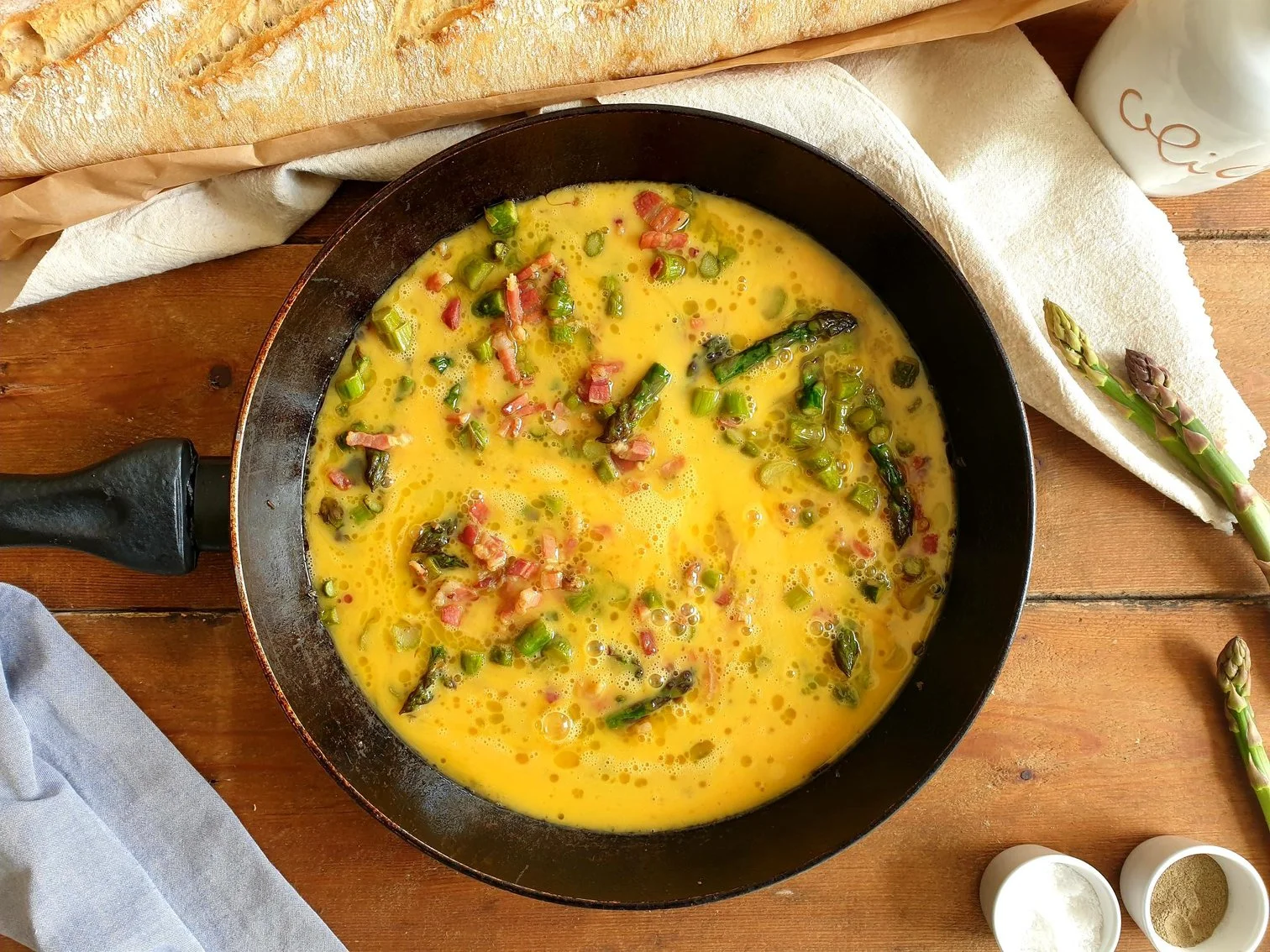
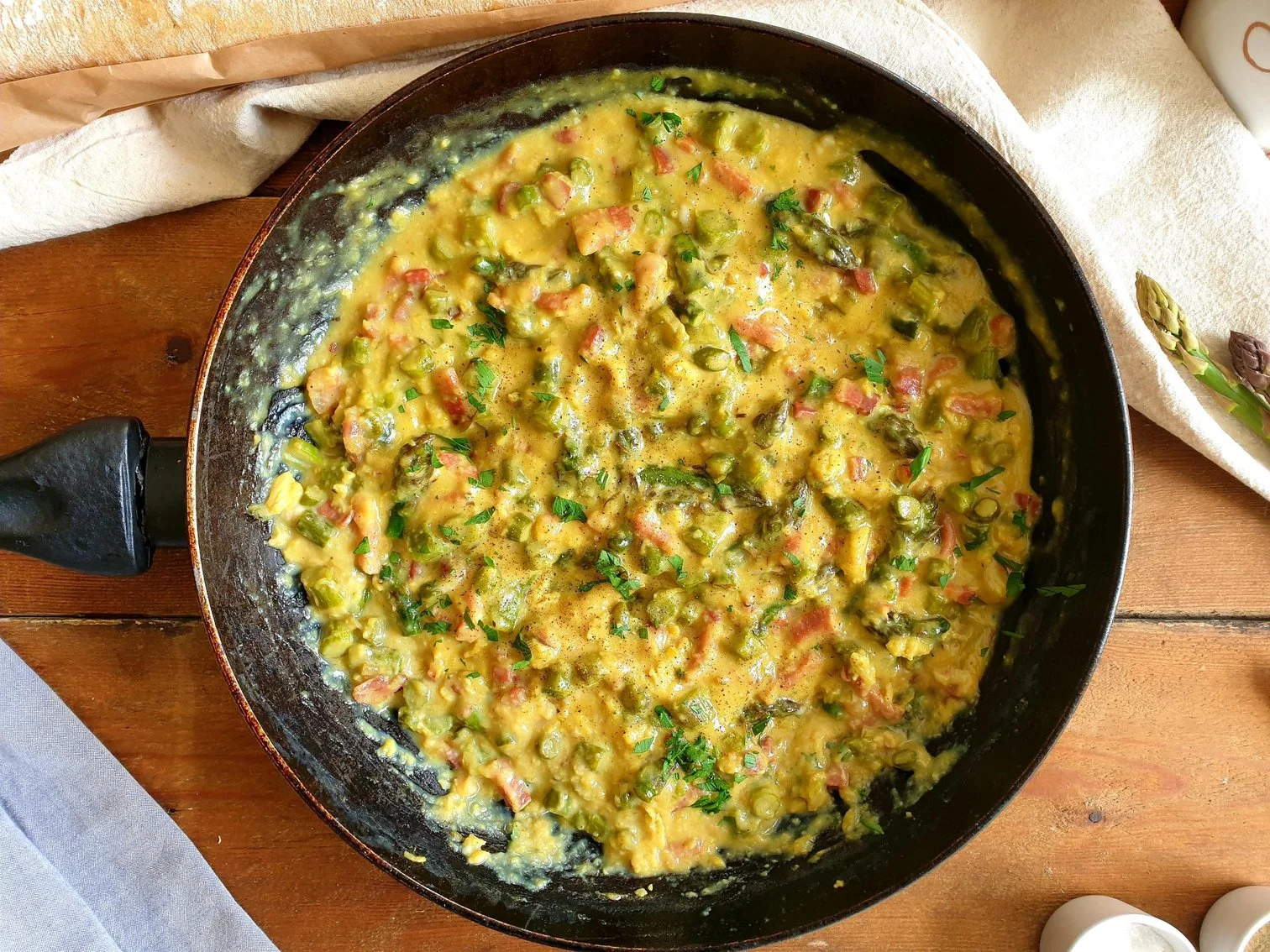
This extraordinarily simple and humble dish is really easy to make and truly sublime. It consists of cooking down the asparagus with some crunchy pancetta and then adding whisked eggs and cooking them to a creamy and smooth consistency, and when served with some fresh crunchy bread, this dish becomes a perfect choice for breakfast, brunch, lunch or dinner.

Green asparagus with pancetta and scrambled eggs (Umešana jajca s šparglji) or Green asparagus frittata with pancetta, know locally as Fritaja s špargljo, Fritata s šparglji or Fritaia coi sparesi, are probably the two of the most representative dishes and part of a unique gastronomic offers of Slovenian Istra, so much so, that a Festival called Šparga Fest is dedicated to these two dishes, traditionally using exclusively wild asparagus (divji šparglji).

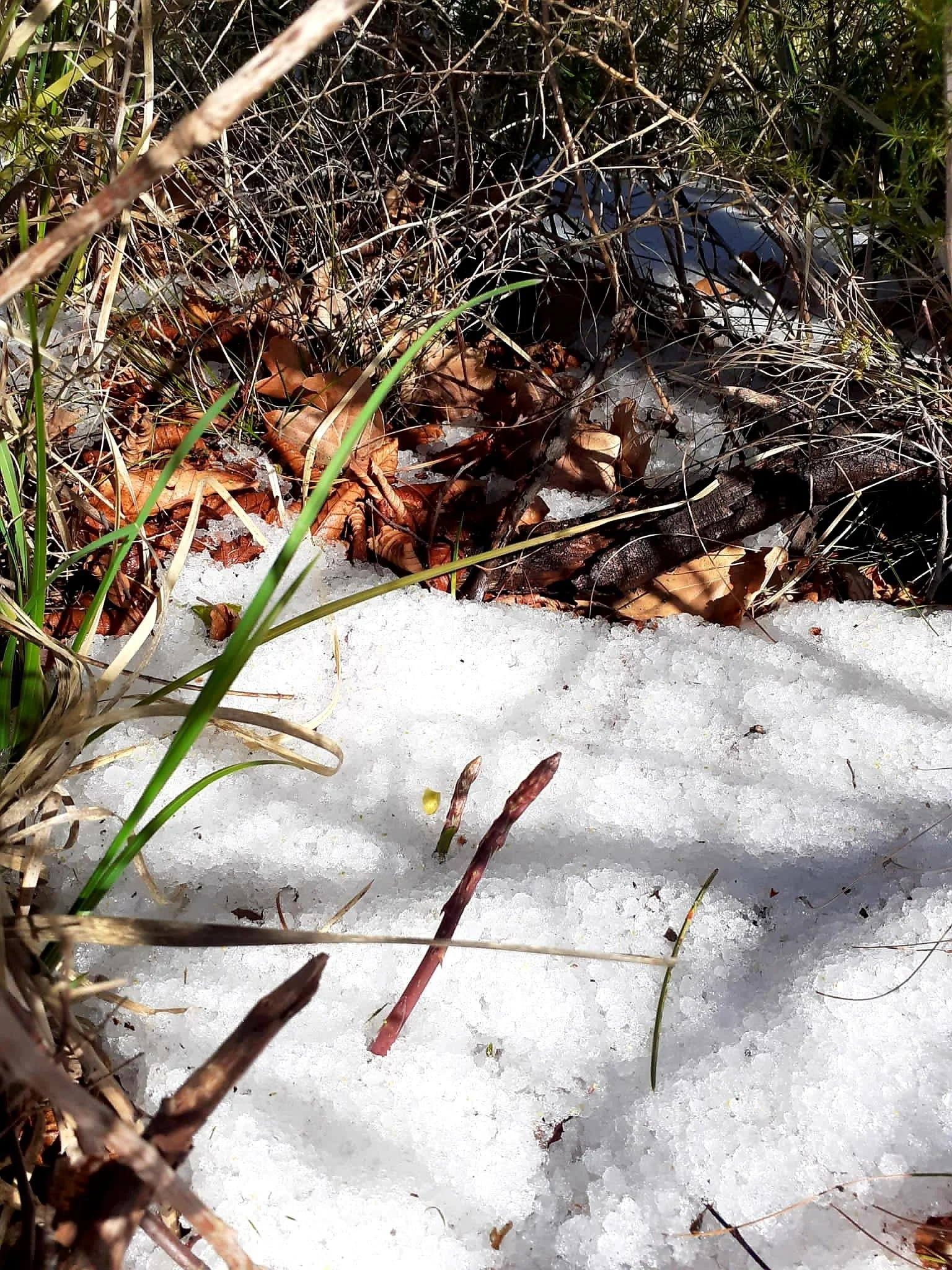
Wild asparagus, like store bought ones, have a fairly short season, but are more aromatic and they are ready to be picked around Easter period and one can commonly find them growing on the south facing pieces of land close to dry stone walls, on the edges of the forests, among the bushes, and although they are free in Slovenia to be foraged and enjoyed, there is a legal limit of how much wild asparagus someone can pick for personal use and consumption.

This is not quite the case in the United kingdom, where I currently live, as I found out, according to Janet Lister (Wildlife and Countryside Advisor for the National Trust). Wild asparagus, once a plentiful plant, is now a very rare coastal plant that only grows and can only be found in a handful of counties (Glamorgan, Pembrokeshire, Cornwall and Dorset). In fact, it is in decline and classed as an “endangered” species on the GB Red List.

Wild asparagus

In the olden days, along the coats in Slovenia, these green delicacies were only known to the locals who used to invent and create dishes that were born out of necessity, with the ingredients available only during a particular season. This, once again, is a testimony and a reminder of the great resourcefulness of local people, who proved time and time again the ability to find clever ways to overcome hunger.

Nowadays, this type of asparagus has reached such a popularity that the inhabitants from inland Slovenia make a special day trip to the coast to enjoy this truly seasonal speciality.

Green asparagus with pancetta and scrambled eggs is a very much loved dish in many households, and so it is made very often. However, since it can only be made during asparagus season, it is also during this time that it is found in many informal family run restaurants.

I am sharing here the family recipe I grew up with, made with wild asparagus, which was picked by the family during many enjoyable and very memorable walks in nature. In this recipe I have replaced wild asparagus for the cultivated alternative, and you can also transform this recipe into a vegetarian and vegan friendly variation by using and frying the onions instead of pancetta, bacon or lardons. For this recipe you can also use fresh white asparagus.

View fullsize Green Asparagus with pancetta and scrambled eggs Istrian Recipe 3.jpg
View fullsize Green Asparagus with pancetta and scrambled eggs Istrian Recipe 5.jpg

Ingredients

Serves 4

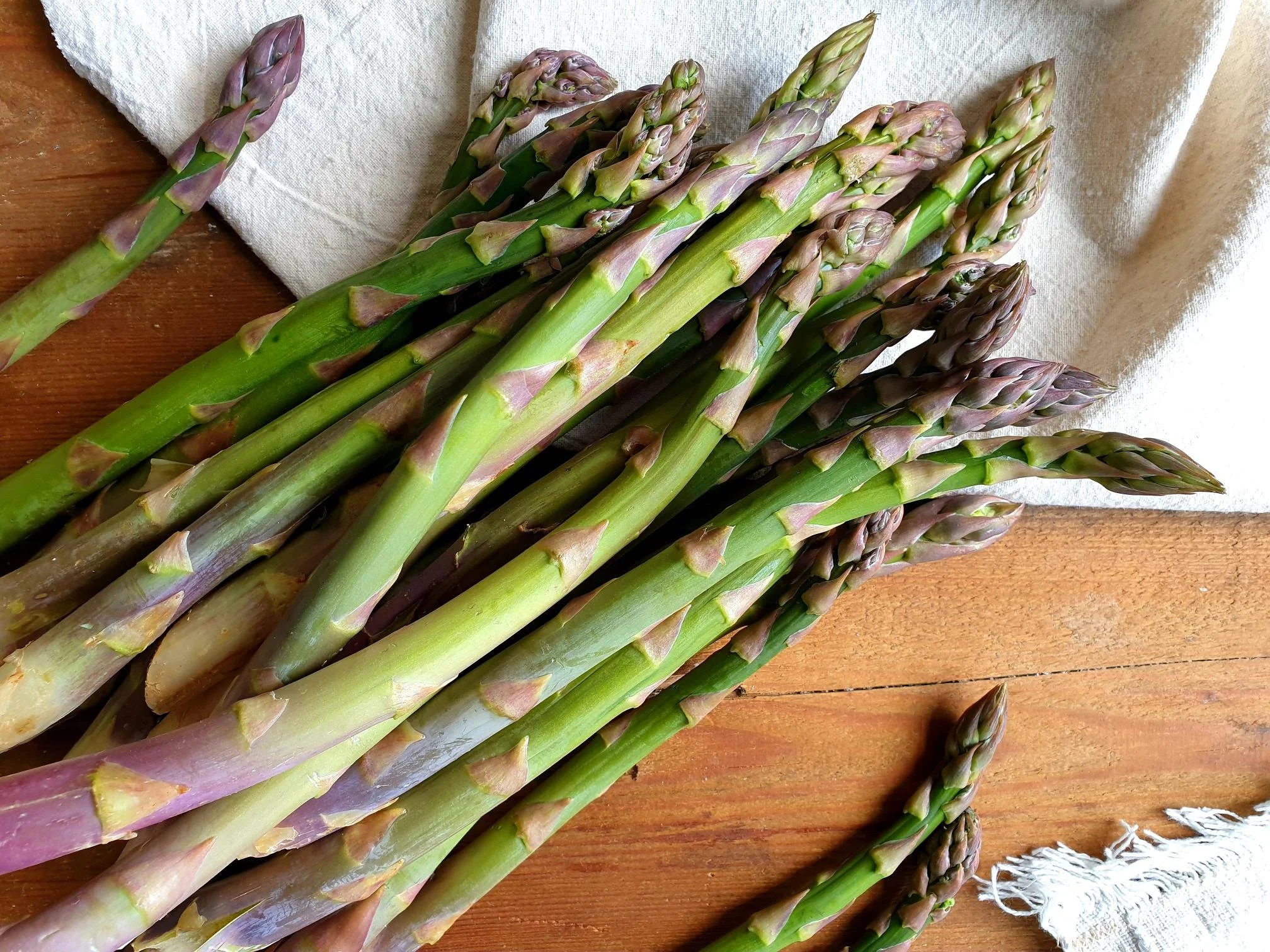
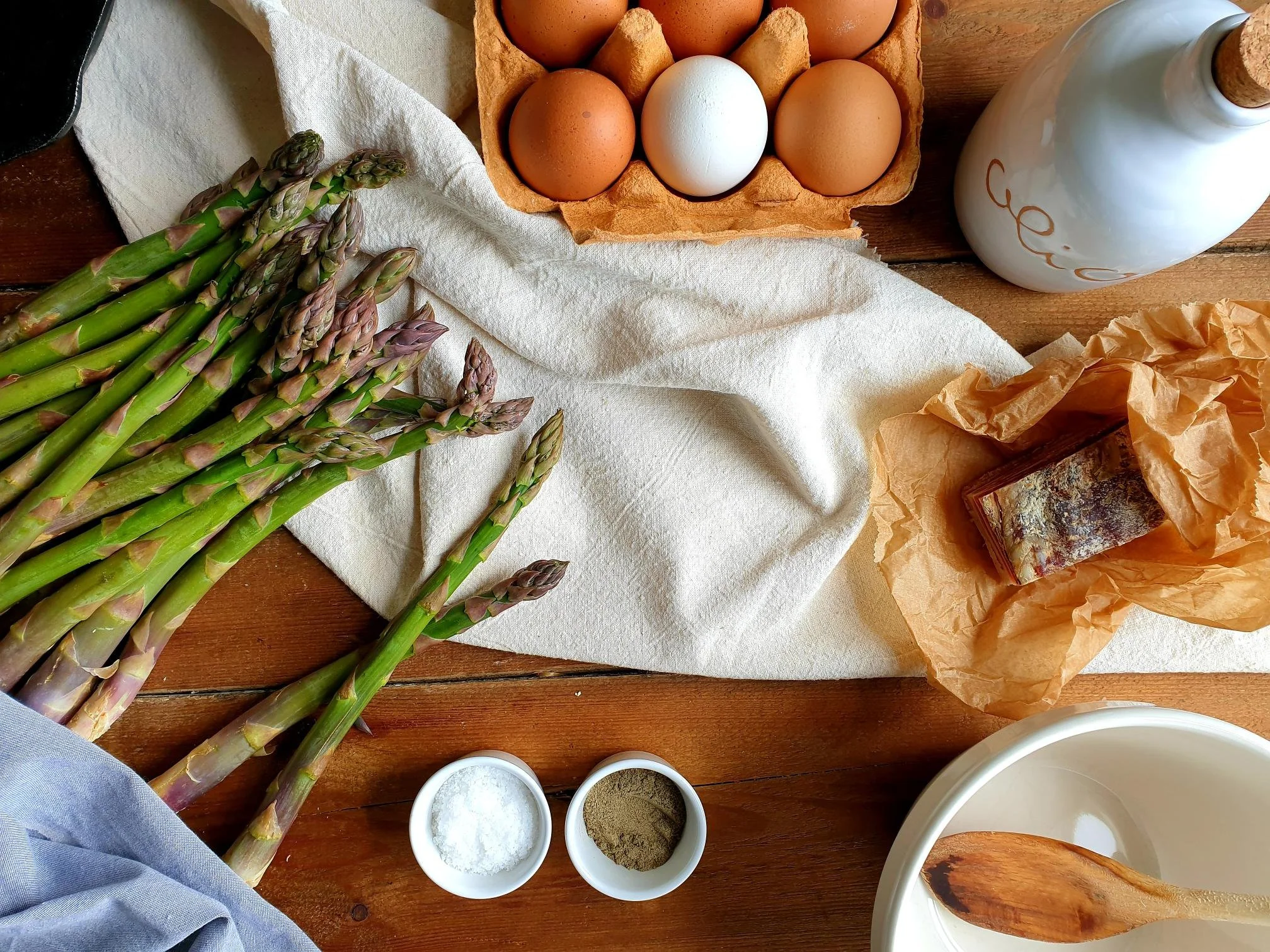
  • about 500g fresh green asparagus

  • 180g roughly, pancetta, bacon or lardons, finely sliced

  • 2 Tbsp extra virgin olive oil

  • 8 fresh eggs

  • sea salt

  • black pepper

Method

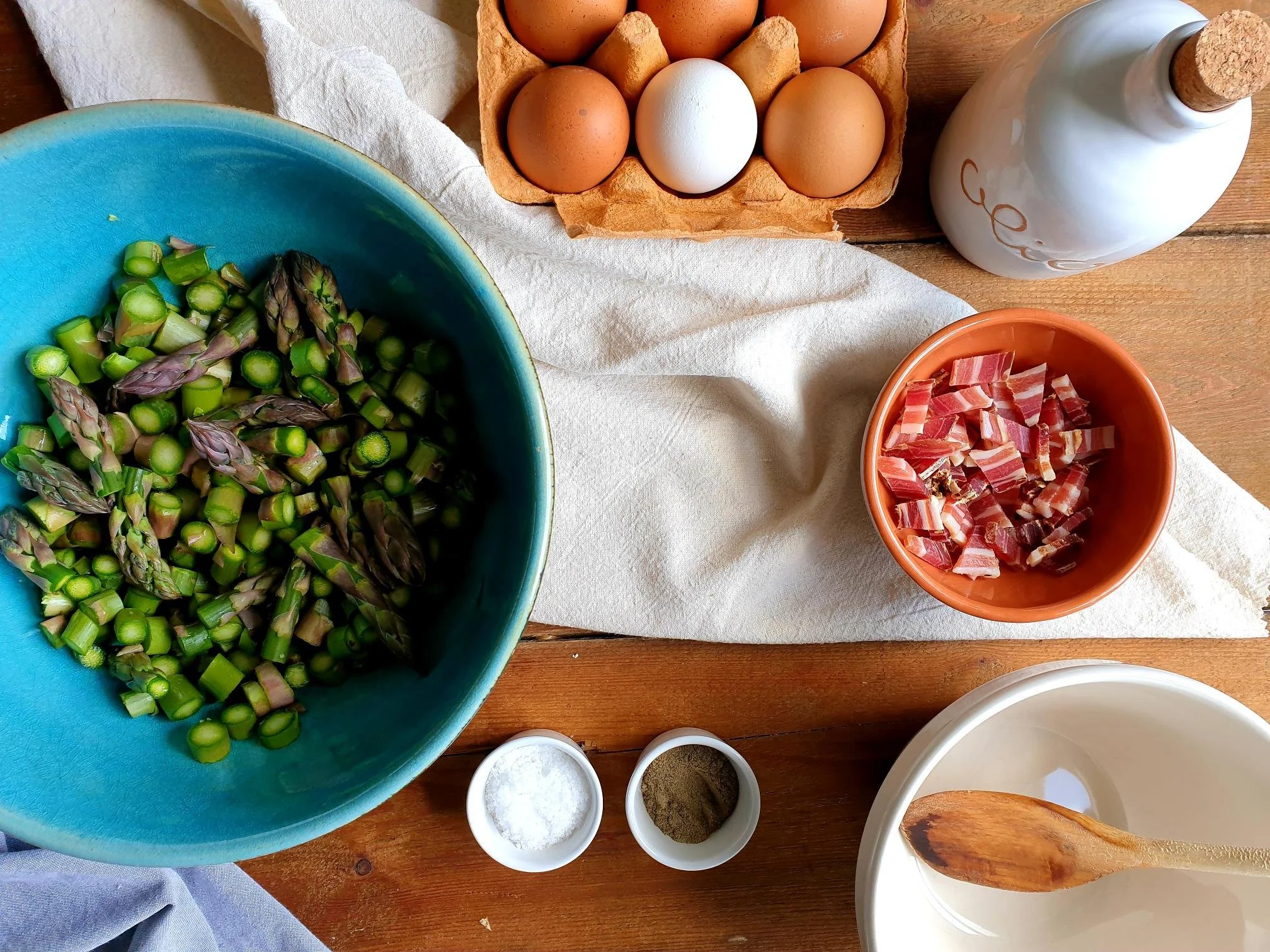
Wash the asparagus under cold running water and chop each asparagus into smaller sections.

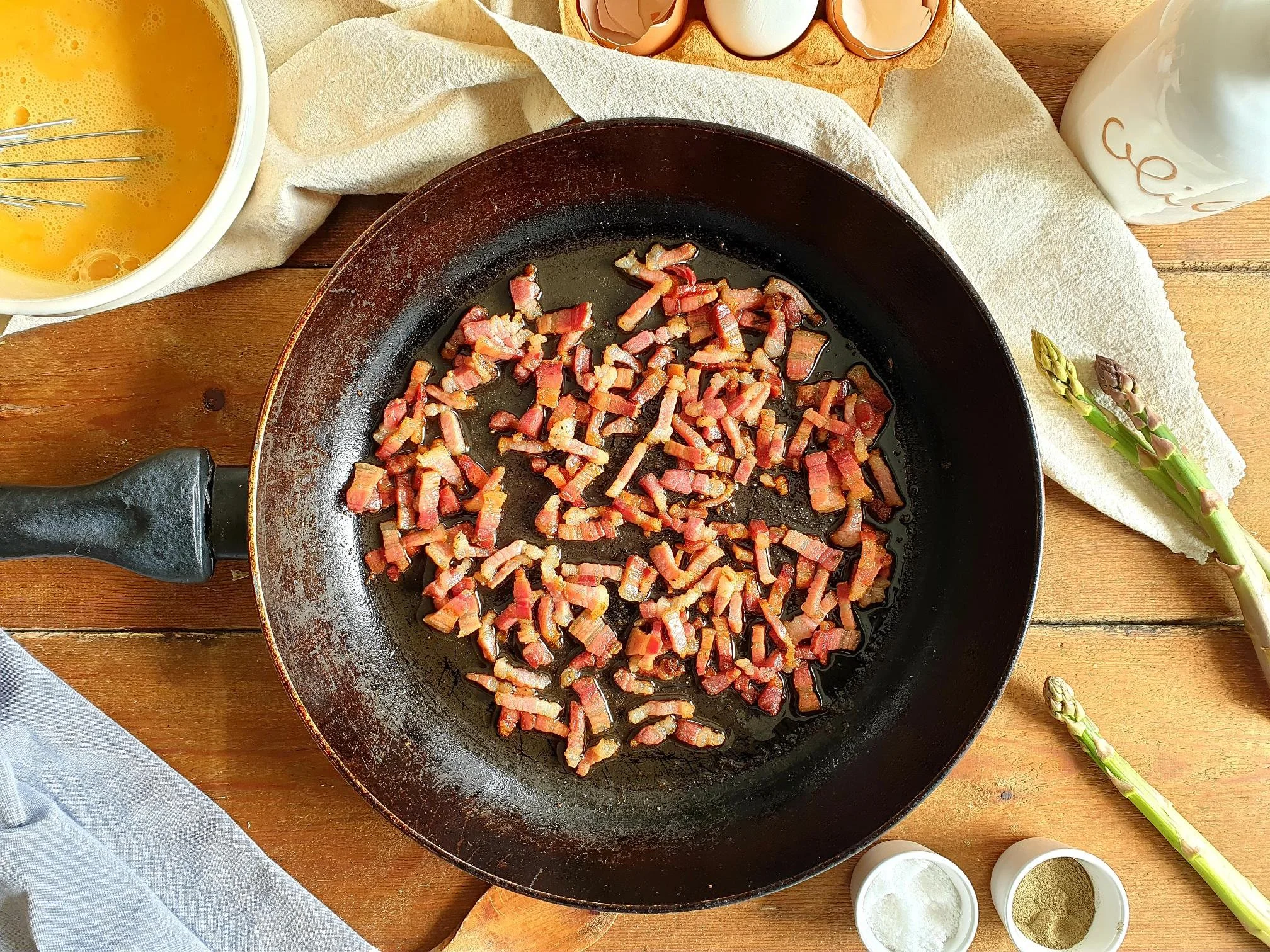
Put extra virgin olive oil in a fairly large frying pan, add finely sliced pancetta, bacon or lardons and fry until fully cooked and slightly crispy.

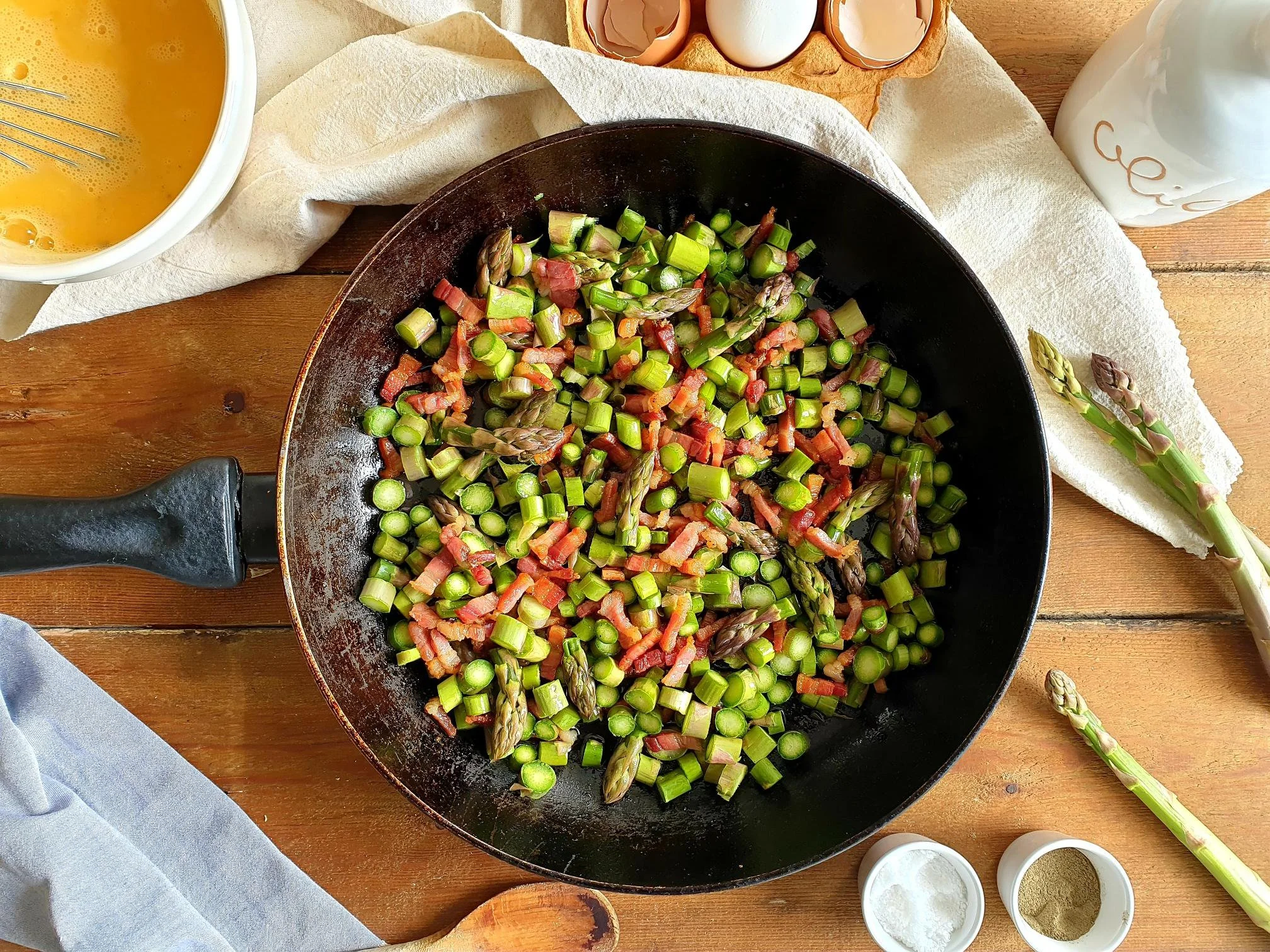
Add chopped asparagus and cook for a few minutes together with pancetta, until they soften a bit and deepen in colour.

Add small amounts of water, about 50ml at a time, this will help to cook down the asparagus.

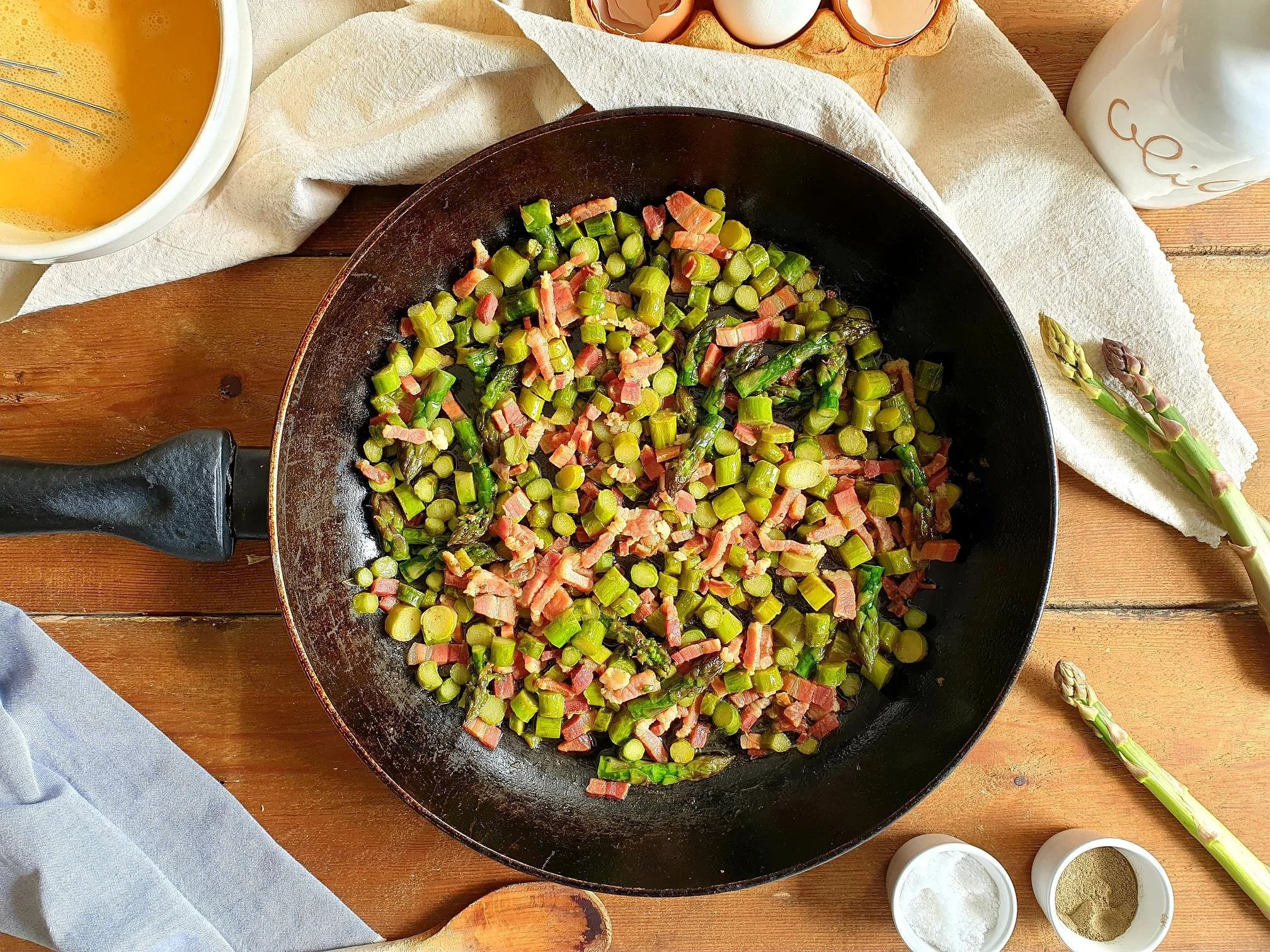
Cook the asparagus until they are fully cooked, deepen in colour, and tender but not overcooked and falling apart.

View fullsize Green Asparagus with pancetta and scrambled eggs Istrian Recipe 13.jpg
View fullsize Green Asparagus with pancetta and scrambled eggs Istrian Recipe 14.jpg

Cook the asparagus until they are fully cooked and tender but not overcooked and falling apart.

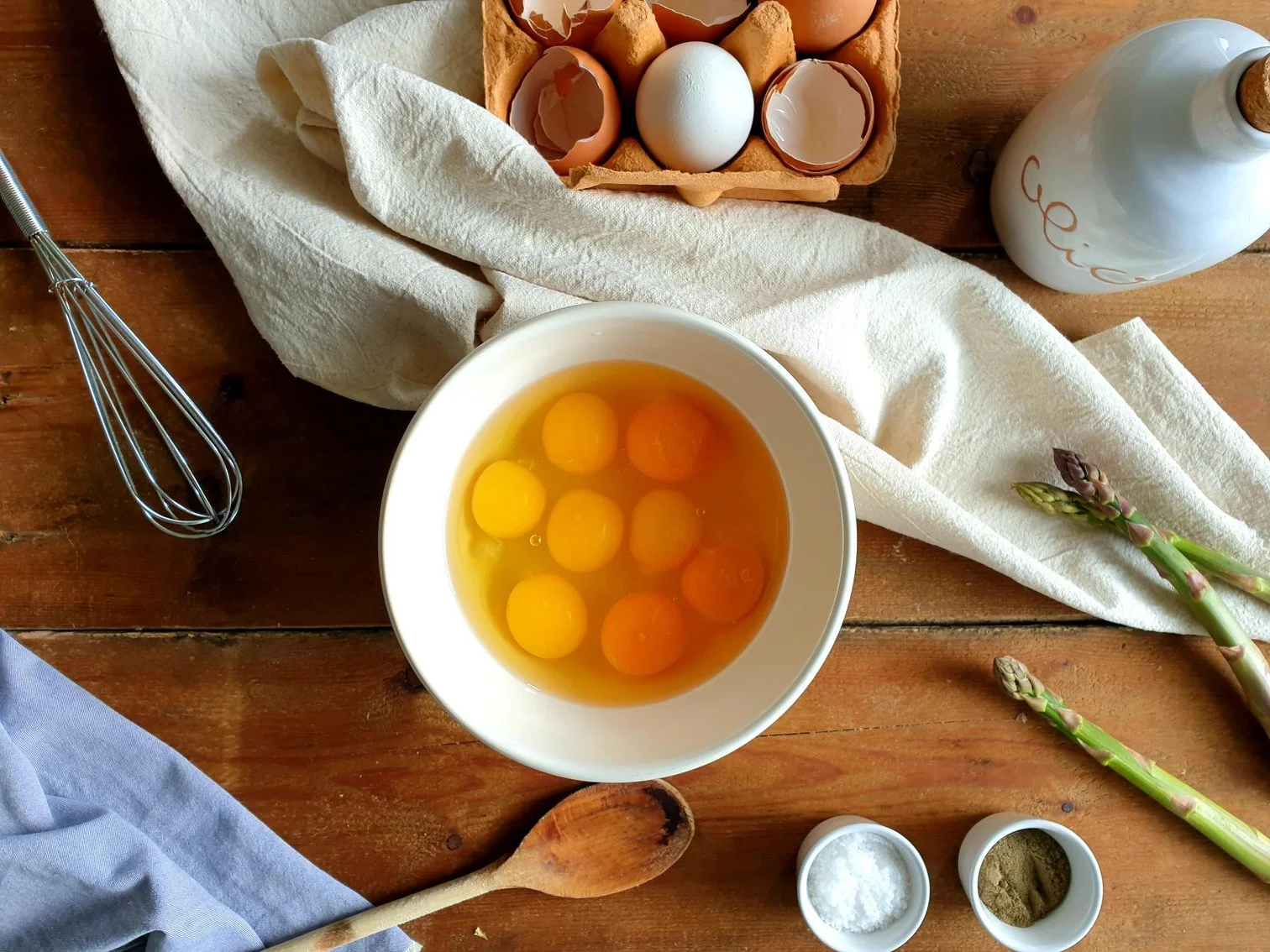
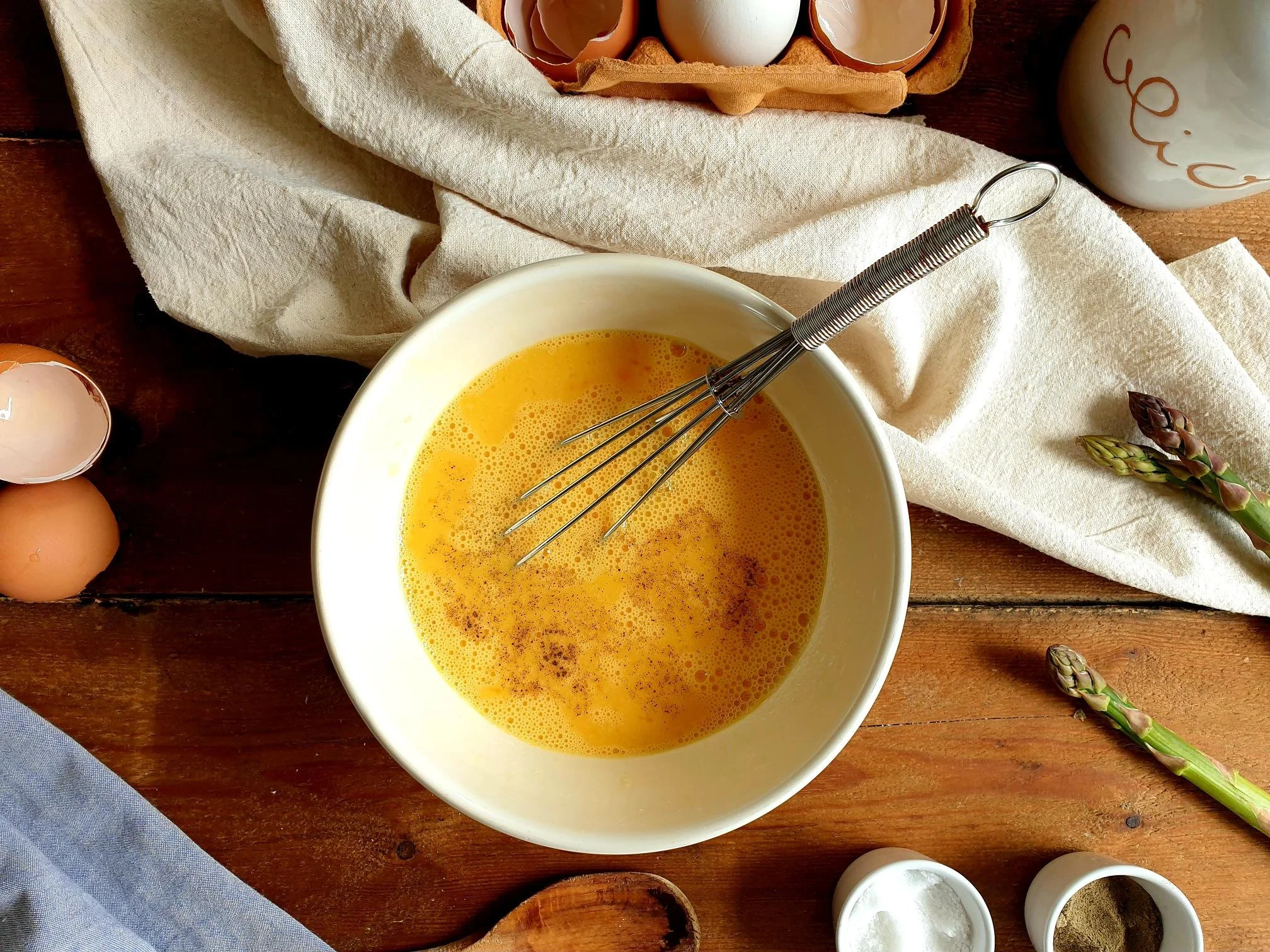
Crack the eggs into a bowl, add sea salt, black pepper and whisk.

View fullsize Green Asparagus with pancetta and scrambled eggs Istrian Recipe 10.jpg
View fullsize Green Asparagus with pancetta and scrambled eggs Istrian Recipe 12.jpg

Take the pan off the heat and pour the eggs over the asparagus mixture.

Put the pan back on the heat, stir and cook the eggs to the desired consistency stirring with a wooden spoon or spatula, lifting and folding the egg and asparagus mixture from the bottom of the pan.

Cook the eggs until they are softly set and slightly runny in places or cook further until they reach the desired consistency.

Taste and adjust the seasoning with sea salt and black pepper.

Sprinkle with roughly chopped fresh parsley, if desired, and serve hot immediately with fresh crunchy bread.

Just a thought

This dish is not suitable for freezing.

Cooked asparagus and pancetta mixture, without adding the eggs, makes a fantastic base for risotto.

You can also turn cooked asparagus and pancetta base into a scrumptious sauce for a pasta dish by simply adding a bit of single cream to it and dilute it, if it gets too thick, with a bit of water where you cooked the pasta.

Wine suggestion
Lugana DOC "Le Fornaci" 2021 - Tommasi

June 01, 2022 /tina oblak
green asparagus, cultivated green asparagus, wild asparagus, scrambled eggs with asparagus, scrambled eggs, pancetta, bacon, lardons, asparagi verdi con pancetta e uova strapazzate, Umešana jajca s šparglji, divji šparglji, Umešana jajca z divjimi šparglji
Adriatic Recipe, breakfast, brunch, child friendly dish, child friendly meal, dinner, Easy recipe, entrée course, family friendly dish, family friendly meal, first course, first course dish, first course meal, hearty dish, Istrian cuisine, Istrian dish, Istrian food, Istrian gastronomy, main course, main dish, Rustic dish, Slovenian cuisine, Slovenian food, Slovenian gastronomy, Spring dish, Spring recipe, Starters, supper, Vegetarian, Vegetables
Comment

Pan-fried potatoes with onions and pancetta Istrian Recipe

Beans and Sardines
May 25, 2022 by tina oblak in Adriatic Recipe, All year round recipe, Autumnal dish, Autumnal recipe, brunch, child friendly dish, child friendly meal, dinner, Easy recipe, family friendly dish, family friendly meal, Istrian cuisine, Istrian dish, Istrian food, Istrian gastronomy, Root vegetables, Rustic dish, Side Dishes, Slovenian cuisine, Slovenian food, Slovenian gastronomy, Spring dish, Spring recipe, supper, Vegetables, Winter dish, Winter recipe, hearty dish

If you are searching for a slightly different potato side dish from the usual and delicious mashed or roast potatoes, look no further.

This modest, simple and humble, but hearty and scrumptious potato side dish, pairs perfectly with just about anything, but it is the most loyal companion to meat or vegetable based dishes.

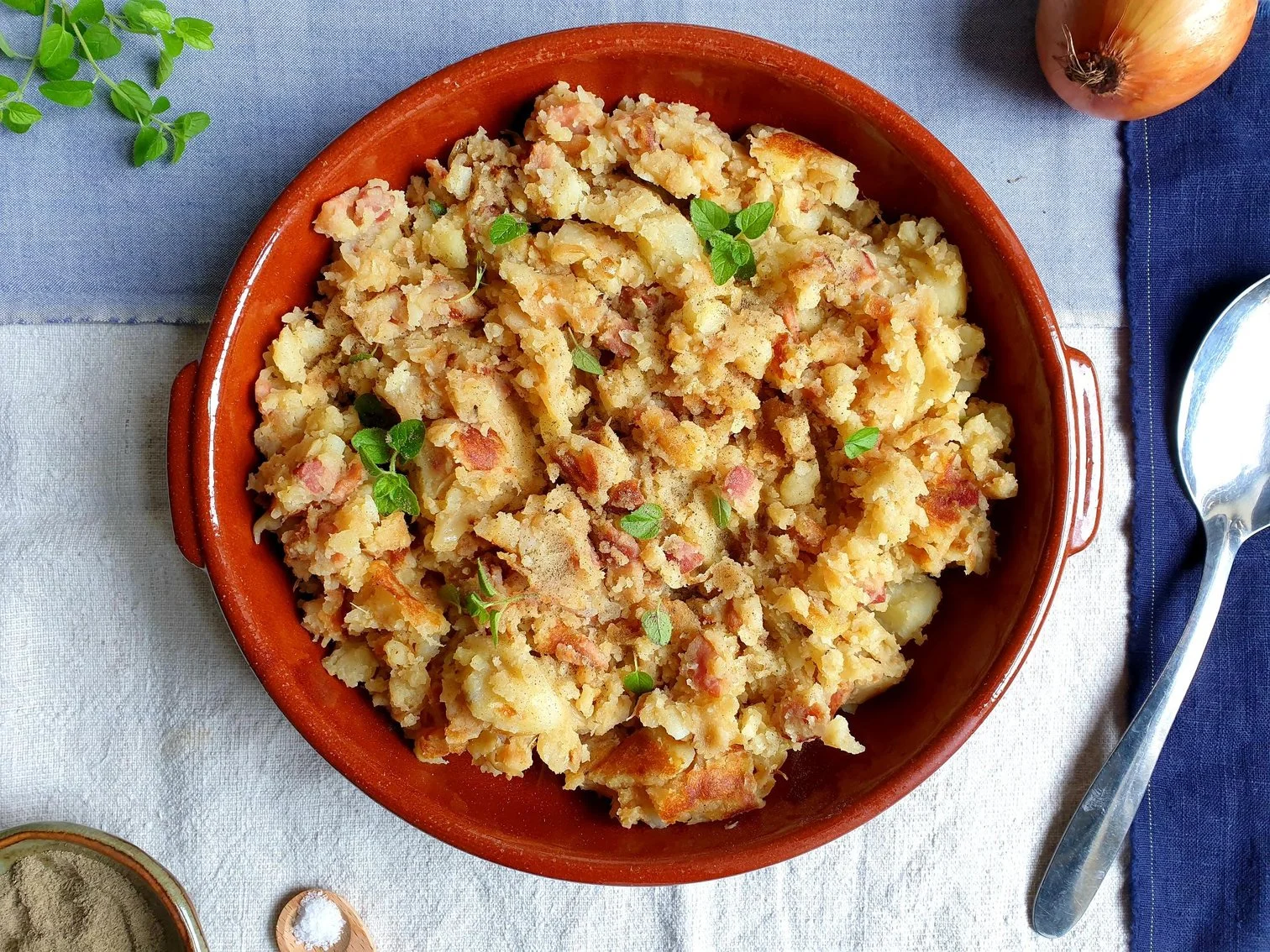
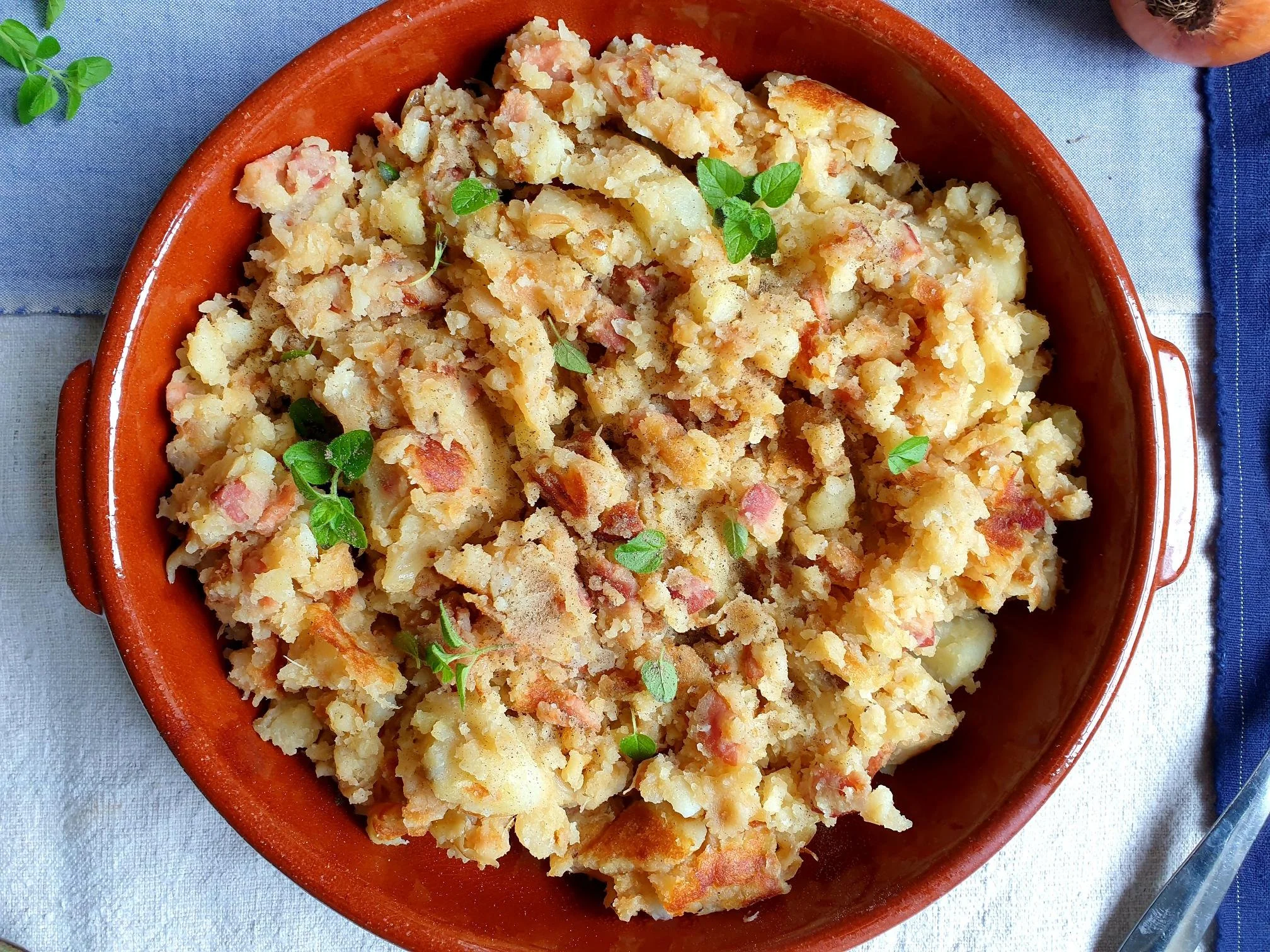
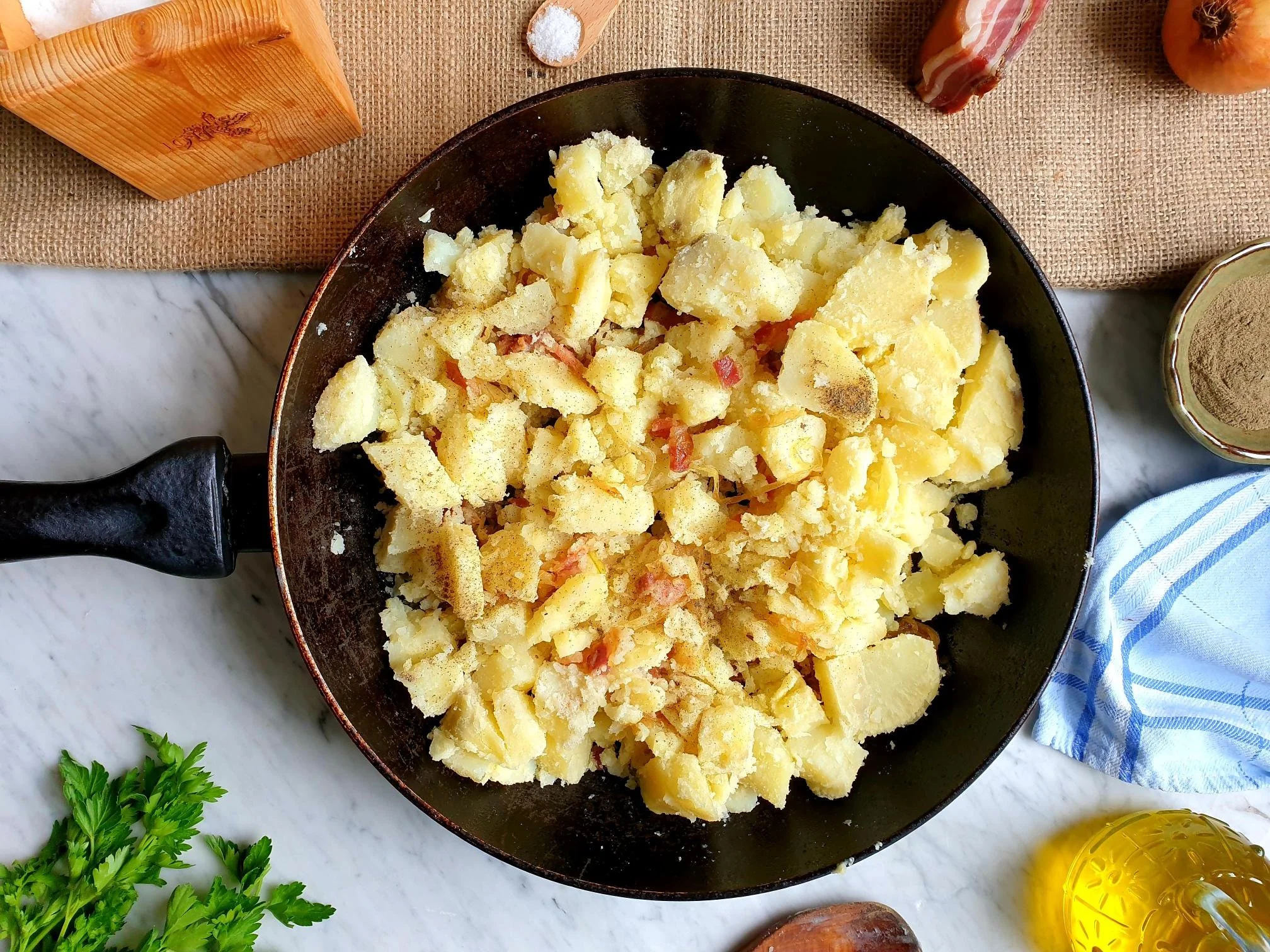
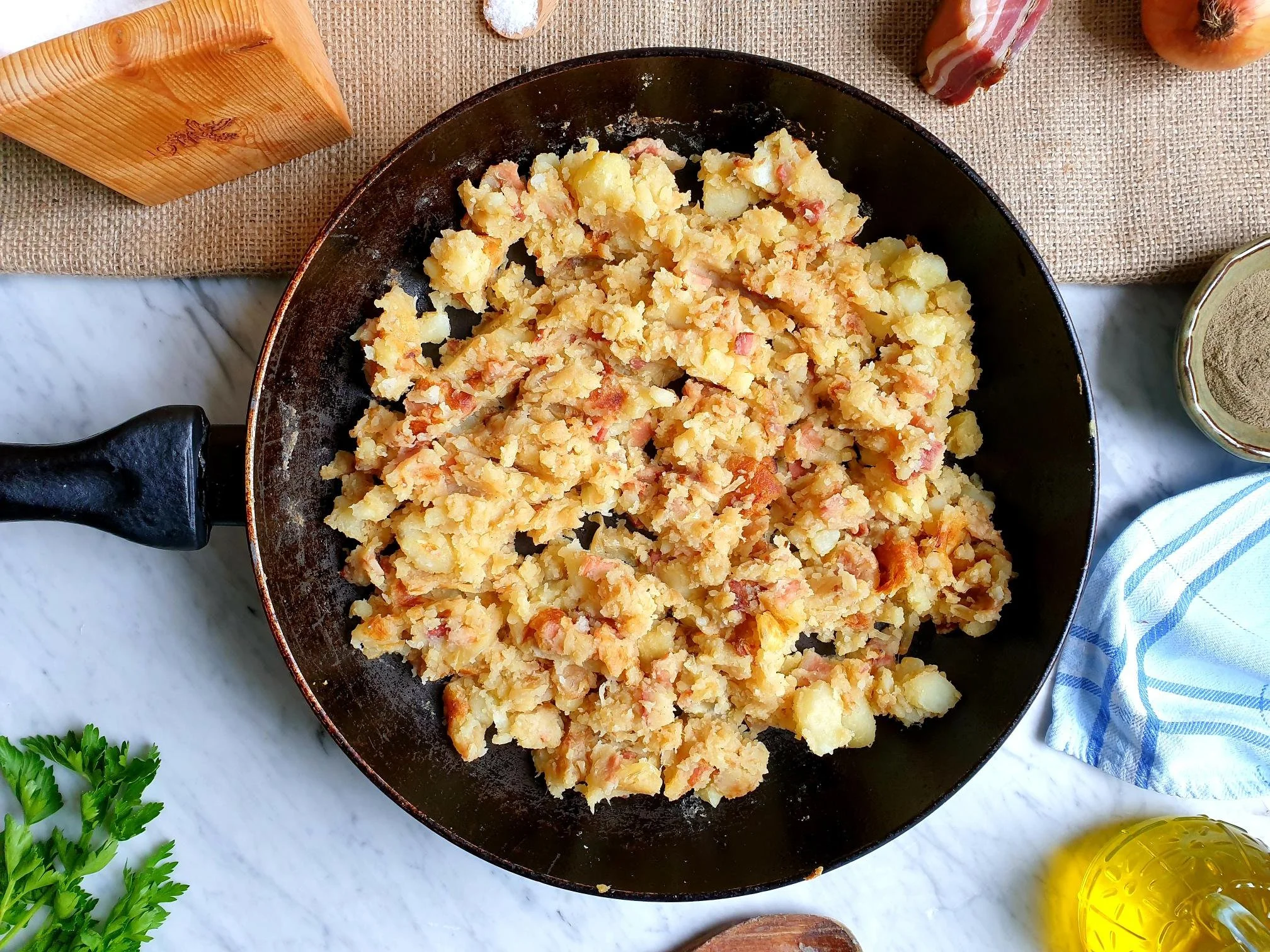
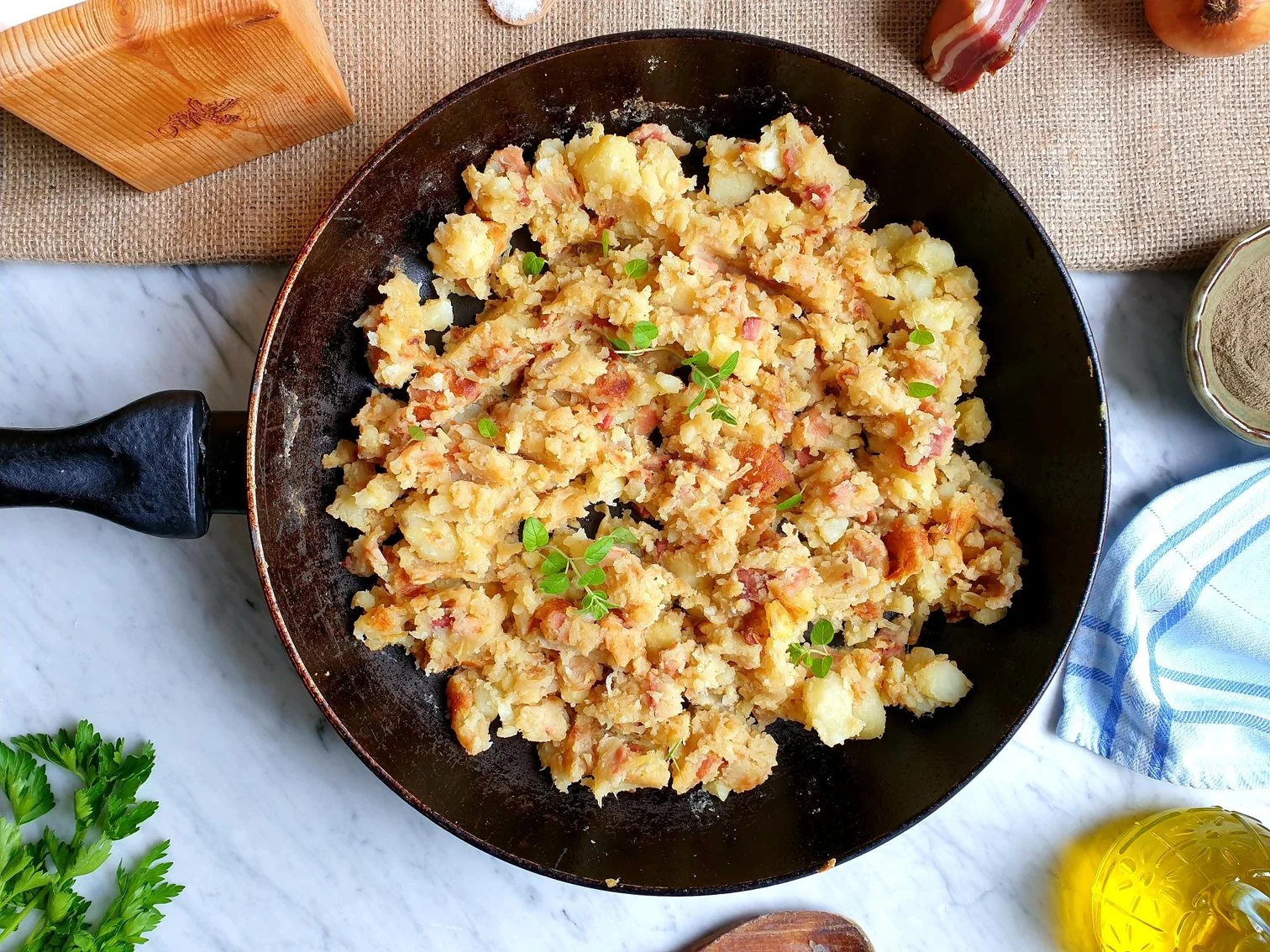
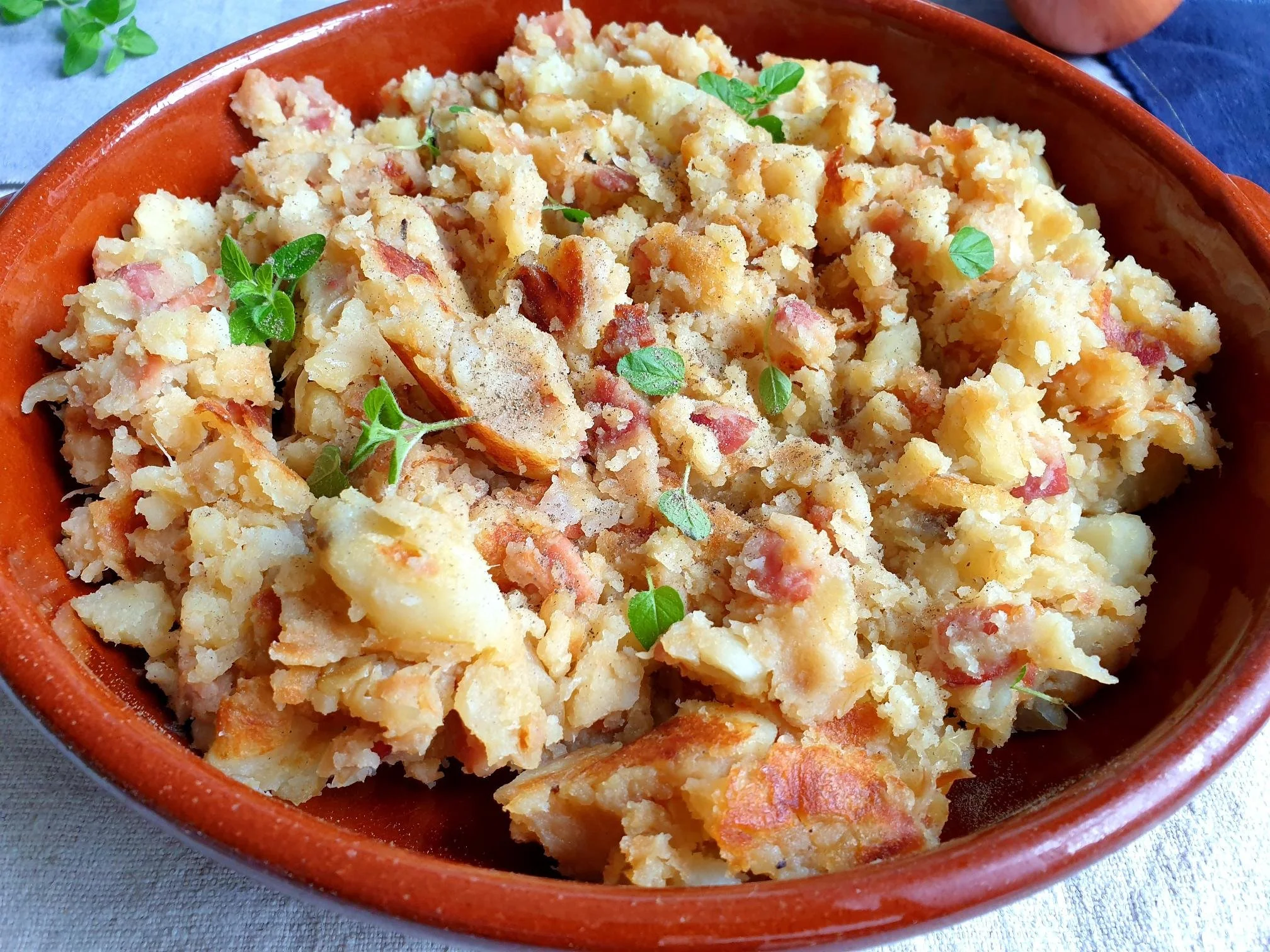
This recipe consists of boiling the potatoes, then cutting them into small pieces and pan-fry them together with salty and crispy bits of pancetta and caramelised, sweet and mellow onions. During this process the light crust will form at the bottom of the pan and when the mixture gets broken into pieces and mixed, you end up with the combination of smooth, creamy potatoes and brown crispy pieces of potato crust, heavenly texture! During this pan-frying phase, the stock gets gradually added for extra flavour and moisture.

You really cannot find a more Slovenian dish than this. It is cooked recurrently in every household and found regularly on the menus (Pražen krompir) in a family run restaurants, nurseries and school canteens up and down the country. Traditionally it is served with roasted meats, sausages and sauerkraut, boiled sheen of beef cooked in broth or simply eaten on its own with a salad or fried eggs.

I grew up with this dish and I am sharing with you my mum's recipe, a variation developed on the coastal part of Slovenia (Kromper v teći, Patate in tecia) where pancetta and olive oil is used instead of lard and pork cracklings, still a very popular choice, but most commonly perhaps ingredients used in inland Slovenia.

This potato dish really unites all the regions of Slovenia, it is a part of very strong gastronomic culture in Istria and Dalmatia (in Croatia) and stretches across and beyond the “borders” with Italy.

This very popular and very much loved potato side dish is traditional in the whole region of Friuli- Venezia Giulia in Italy, where the city of Trieste with its inhabitants particularly prides itself for exceptionally good Patate in tecia.

It is in the dialect of this region and the Veneto region that the word tecia has a double meaning; it can indicate a type of a pan that would normally be used to cook this dish and it can refer to a method of slow cooking on a fairly low heat.

Other recipes and dishes can have a word tecia in them, so for example you can have Zucchine in tecia (Pan- fried courgettes) or Verze in tecia (Pan-fried Savoy cabbage) etc.

This dish, made from scratch, is incredible in its simplicity, but it is also made and can be prepared using leftover boiled potatoes and no vegetarian or vegan friend or family member will be excluded from the dinner table as you can cook this dish by omitting the meaty element and using vegetable broth or stock.

Ingredients

Serves 4

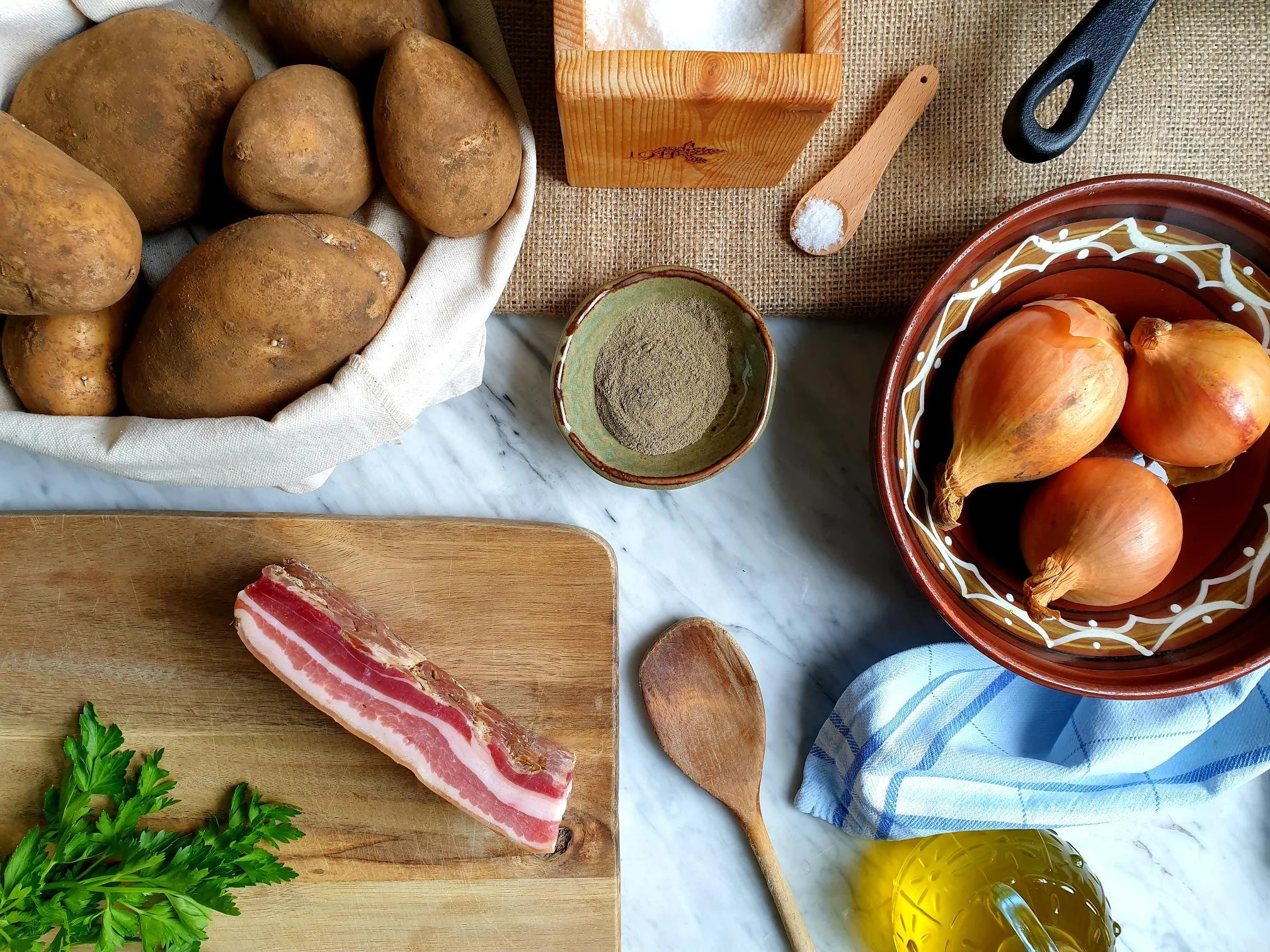
  • 1kg of potatoes

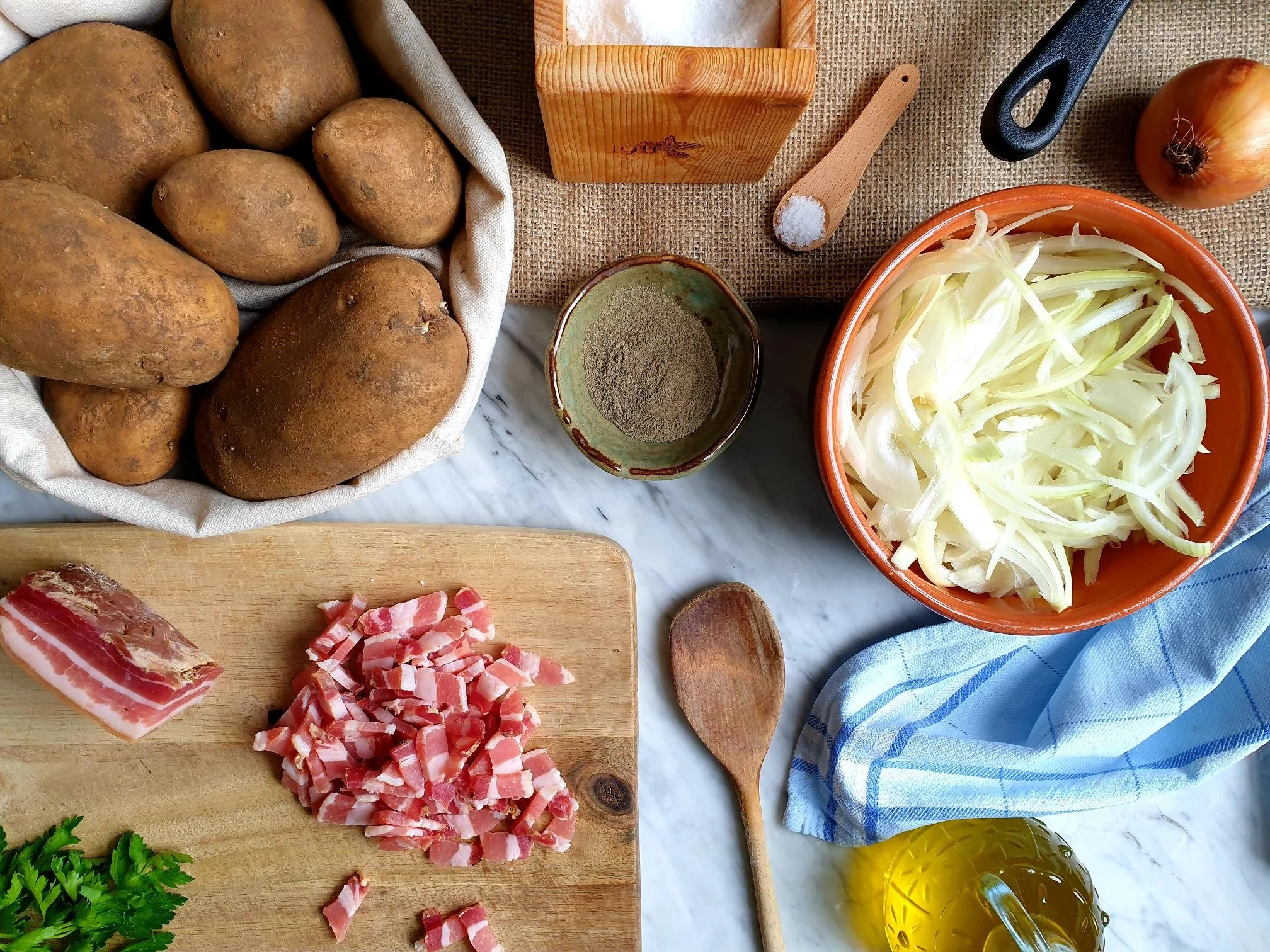
  • 100g unsmoked pancetta or bacon, cut into small strips or finely diced, bacon lardons or pork cracklings

  • onions (about 240g), peeled and finely sliced

  • 2 Tbsp extra virgin olive oil or lard

  • sea salt

  • black pepper

  • 200ml meat or vegetable broth or stock (you can make a simple stock using a good quality instant vegetable or meat stock powder)

  • flat leaf parsley, roughly chopped, for garnish

Method

Wash whole unpeeled potatoes under the cold running water and put them in a big pot of boiling water.

Add sea salt and gently boil the potatoes until fully cooked, this will depend on the size of the potatoes you are using.

Drain cooked potatoes and allow to cool.

Peel the potatoes and slice or cut them into irregular shape smaller chunks, set aside.

Put the olive oil or lard, if using, in a fairly large frying pan.

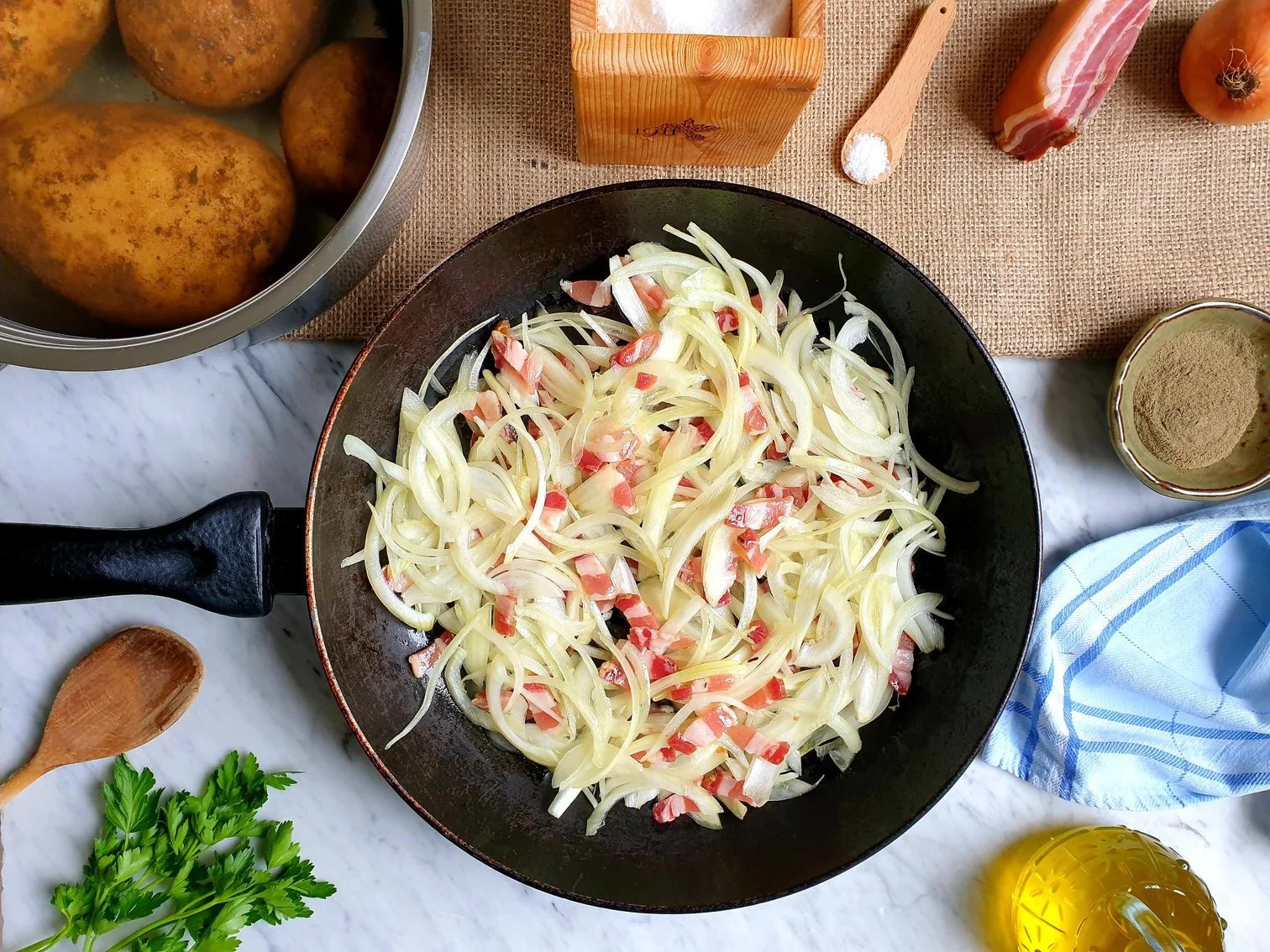
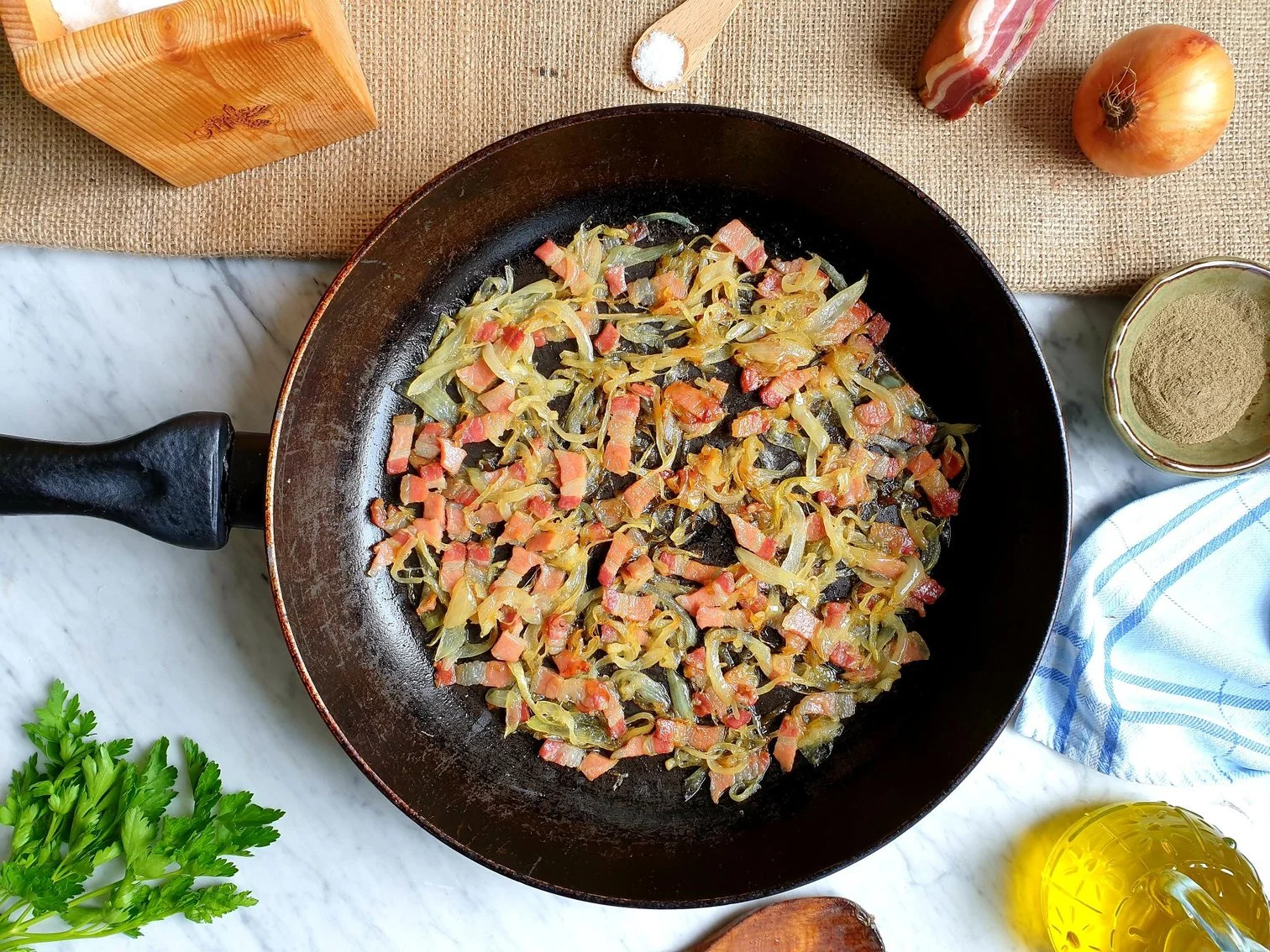
Add finely sliced onions and pancetta and gently fry on a fairly low heat until the onions become golden brown in colour, soft and caramelised, and pancetta fully cooked and slightly crisp. This might take around 40 minutes but it is important not to rush this phase of the recipe as the onions might not get as sweet.

View fullsize Pan-fried potatoes with onions and pancetta Istrian Recipe 4.jpg
View fullsize Pan-fried potatoes with onions and pancetta Istrian Recipe 5.jpg

Turn the heat up a bit, add pieces of potatoes and season with sea salt and black pepper (bear in mind that the use of pancetta and broth in this recipe, will partially provide the seasoning).

Cook the potatoes with the onion and pancetta mixture and break down a bit bigger pieces of potatoes with the back of the wooden spoon or or a fork, avoiding to end up with mashed potatoes, you still want bits of potatoes in the texture.

Cook for a few minutes allowing the mixture to catch a bit at the bottom of the pan forming a light crust, but try and avoid to get it burnt (although if it does burn slightly it is not the end of the world).

Scrape the layer of golden brown bits and break the crust with the wooden spoon, stir the mixture.

Cook further for a few minutes until the crust forms again, break it and stir.

Repeat the process a few times adding small amounts of broth or stock to avoid potatoes getting too dry.

The whole idea behind repeating this process of allowing the crust to form, then breaking it and stirring the mixture is to end up with a final dish that will have a combination of crusty and crispy bits of potatoes that are stirred back, mixed with the rest of soft/mushy potatoes, caramelised onions and pancetta.

View fullsize Pan-fried potatoes with onions and pancetta Istrian Recipe 6.jpg
View fullsize Pan-fried potatoes with onions and pancetta Istrian Recipe 7.jpg

Taste, adjust the seasoning with sea salt and black pepper.

Sprinkle with roughly chopped fresh flat leaf parsley and serve hot.

Just a thought

This dish is not suitable for freezing.

When reheating this dish you will need to add some moisture back, as it gets quite dry when cooled down and kept in a fridge, adding more stock or broth.

You can cook this dish with leftover boiled potatoes or using left over mashed potatoes.

Wine suggestion
Friuli Venezia Giulia Friulano DOC "San Pietro" 2020 - I Clivi
May 25, 2022 /tina oblak
potato dish, rustic potato meal, potato side dish, Pan-fried potatoes with onions and pancetta, pan-fried potatoes woth onions and bacon, pan-fried potatoes with onions and bacon, Patate in tecia, Kromper v teći, Pražen krompir, potatoes, pancetta, bacon, lardons
Adriatic Recipe, All year round recipe, Autumnal dish, Autumnal recipe, brunch, child friendly dish, child friendly meal, dinner, Easy recipe, family friendly dish, family friendly meal, Istrian cuisine, Istrian dish, Istrian food, Istrian gastronomy, Root vegetables, Rustic dish, Side Dishes, Slovenian cuisine, Slovenian food, Slovenian gastronomy, Spring dish, Spring recipe, supper, Vegetables, Winter dish, Winter recipe, hearty dish
Comment
  • Newer
  • Older