Beans and Sardines

  • Home
  • About
  • Recipe of the week
  • Recipes
  • Wines
  • Contact

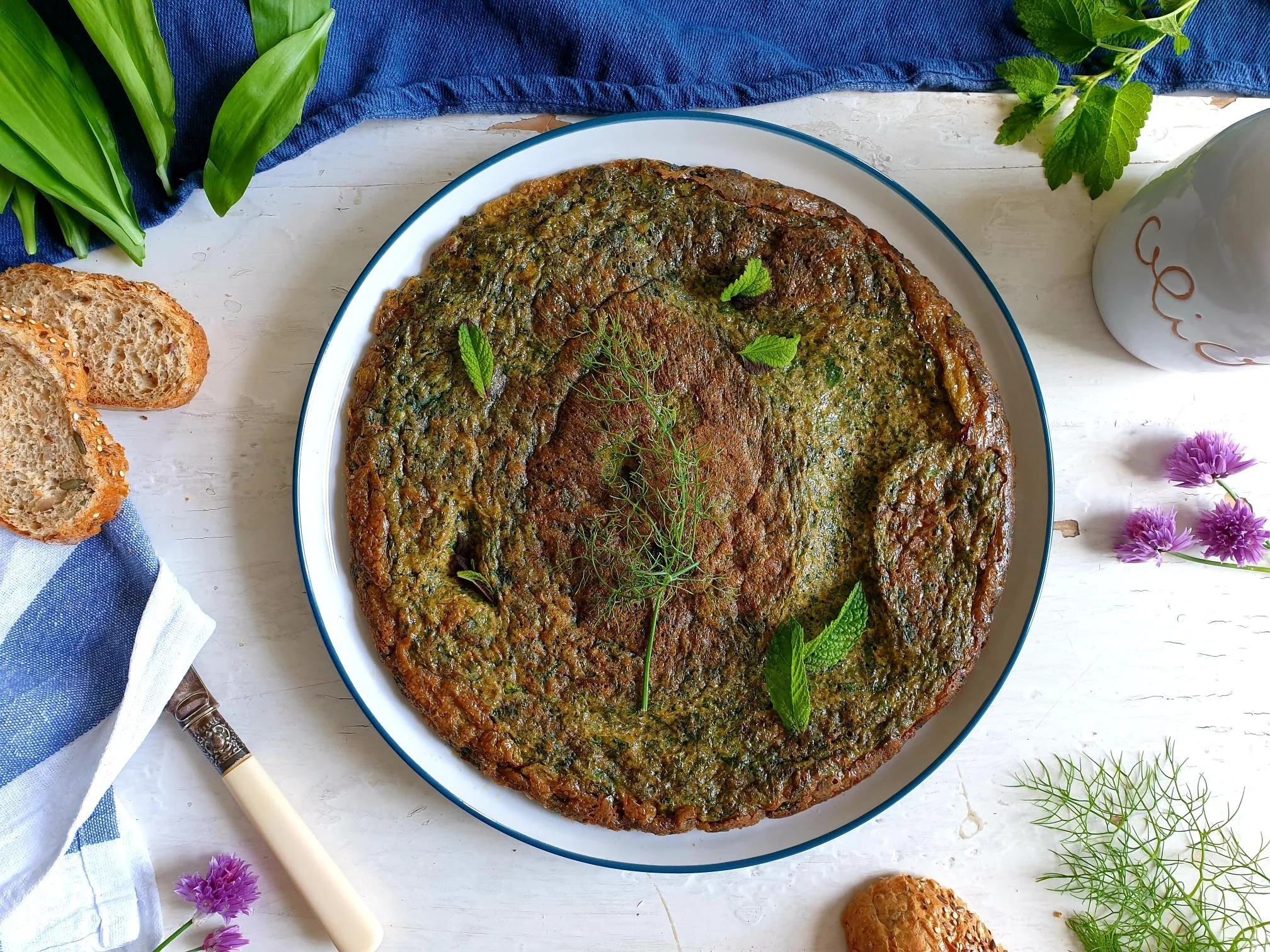
Egg frittata with wild herbs Istrian Recipe

Beans and Sardines
June 16, 2022 by tina oblak in Adriatic Recipe, All year round recipe, Appetizers, baked dish, bite-sized nibbles, breakfast, brunch, Canapés, dinner, Easy recipe, entrée course, family friendly dish, family friendly meal, Finger food, first course, first course dish, first course meal, foraging, Healthy, healthy mael, Istrian cuisine, Istrian dish, Istrian food, Istrian gastronomy, light meal, main course, main dish, Nutritious, Nutritious dish, Rustic dish, simple recipe, Slovenian cuisine, Slovenian food, Slovenian gastronomy, Small bites, Snacks, Spring dish, Spring recipe, Starters, supper, Vegetarian, Fresh herbs

Egg frittata with wild herbs is a very simple and rustic dish, quick to make and a perfect recipe choice for an easy and uncomplicated midweek or weekend lunch, dinner, brunch or breakfast.

It is delicious when eaten hot, but equally very tasty at room temperature or cold, it can be made ahead, providing a great picnic solution, and frittata cut into small bite size pieces will make a brilliant finger food feeding larger groups served together with some drinks.

This humble frittata is a very traditional dish in the Slovenian Istra where I grew up, it is similar to an omelette, it is Italian in origin (Italian word frittata roughly translates to “fried”) and to me, is more than just a quick meal solution.
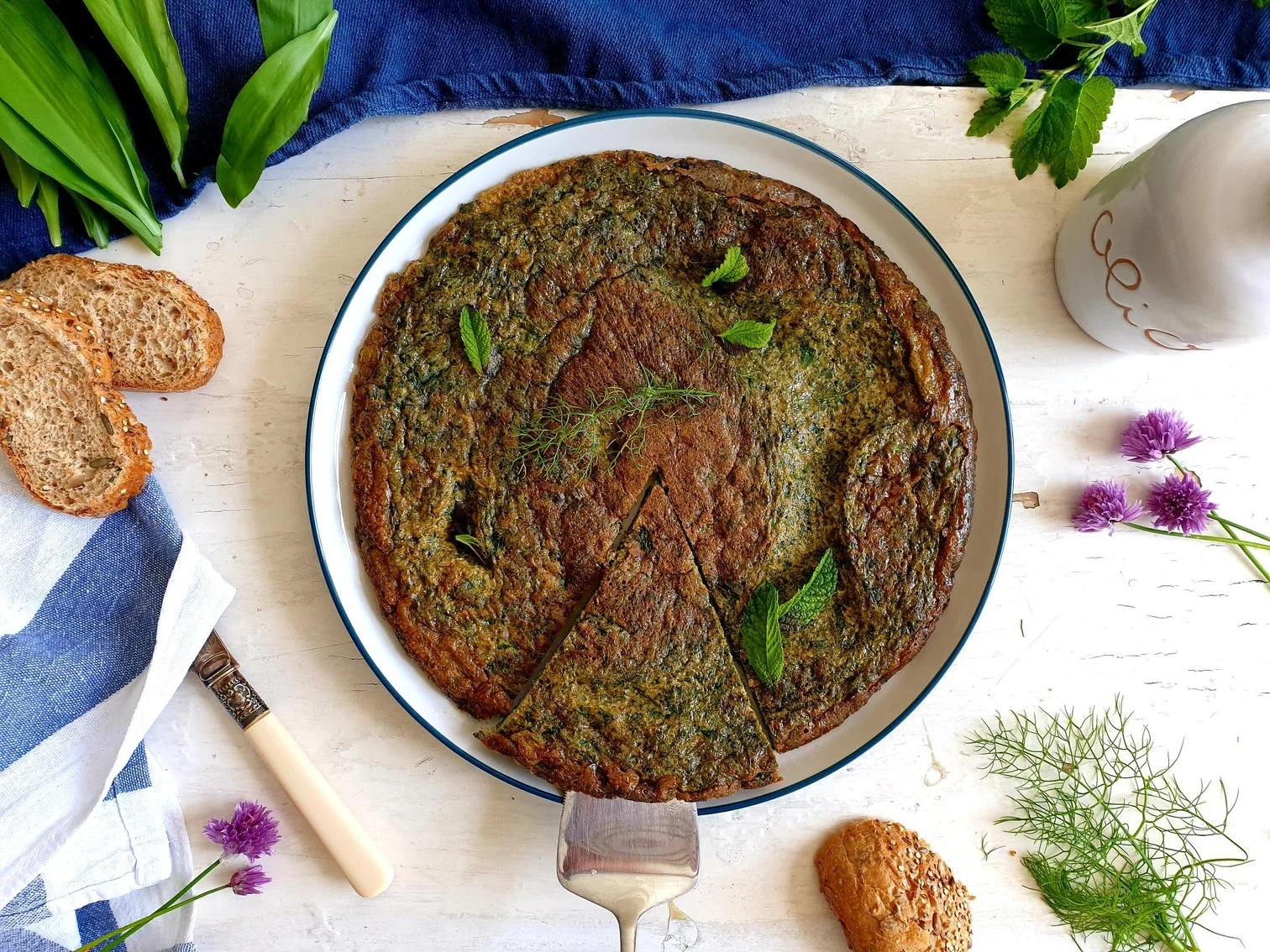
This type of frittata together with other two most common variations (frittata with dry sausage and frittata with wild asparagus and pancetta) represent a real speciality in Slovenian Istra which, due to close geographical proximity to Italy, made this dish very popular and is referred by locals as Fritaia de erbe, Fritaja, Fritata or Frtalja, Fritaia, and all of these words derive from the Venetian word fritaia, given Venice's domination of the region.
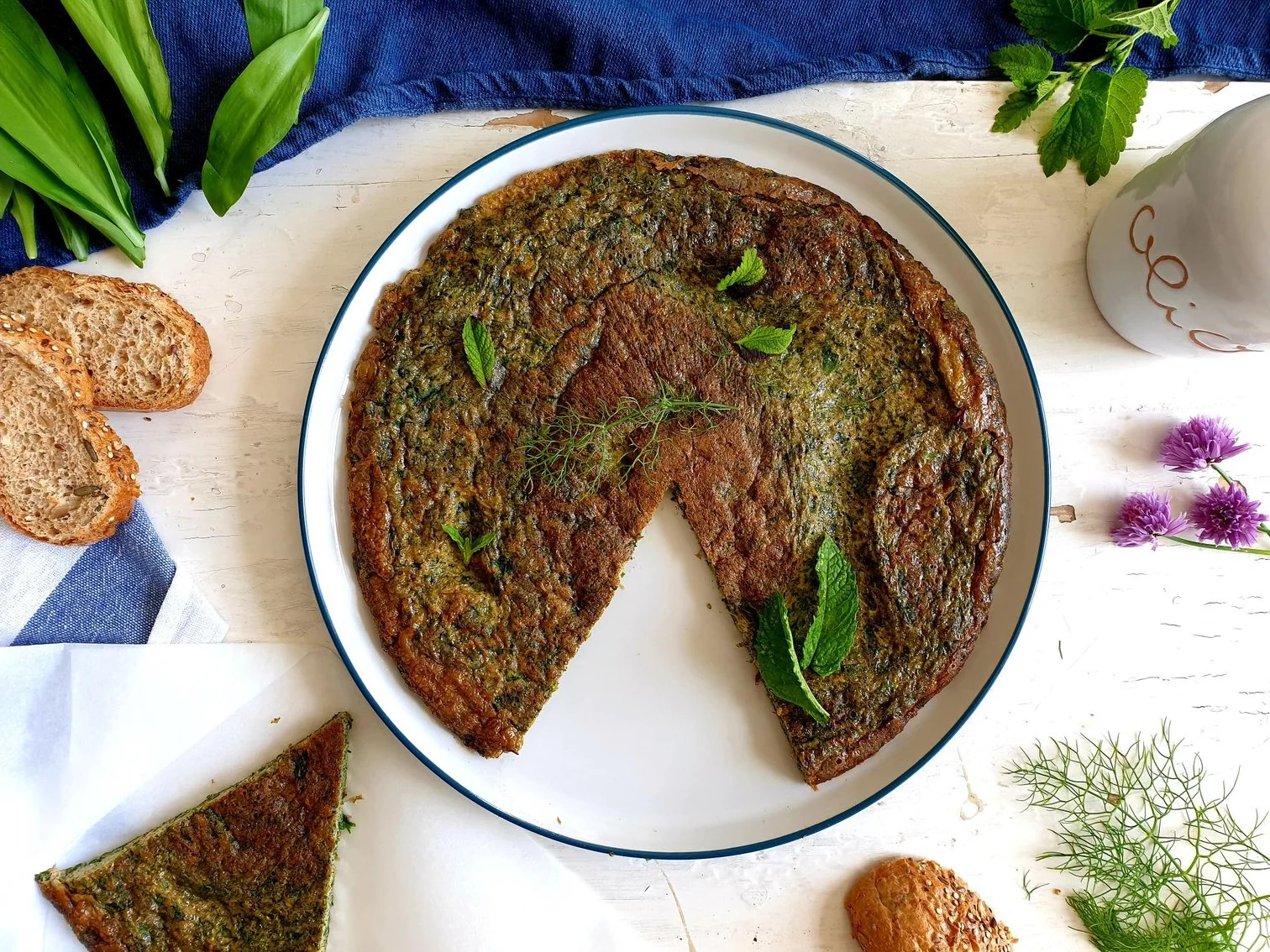
Both my paternal and maternal grandfathers loved all variations of frittata and would have them for merenda (a dialect word, from Italian meaning snack) indicating in the past a quite substantial late morning breakfast (a slightly less sophisticated version of a “modern” brunch) for pheasants, farmers, fishermen and workers. They all started work at dawn, so by mid morning, when they finished working, and before returning home for lunch, they were all quite hungry, and more than ready to have some food to replenish the energy. Nowadays, merenda indicates a light mid morning or mid afternoon snack, that can be savoury or sweet, and of course, children always push for a sweet option...
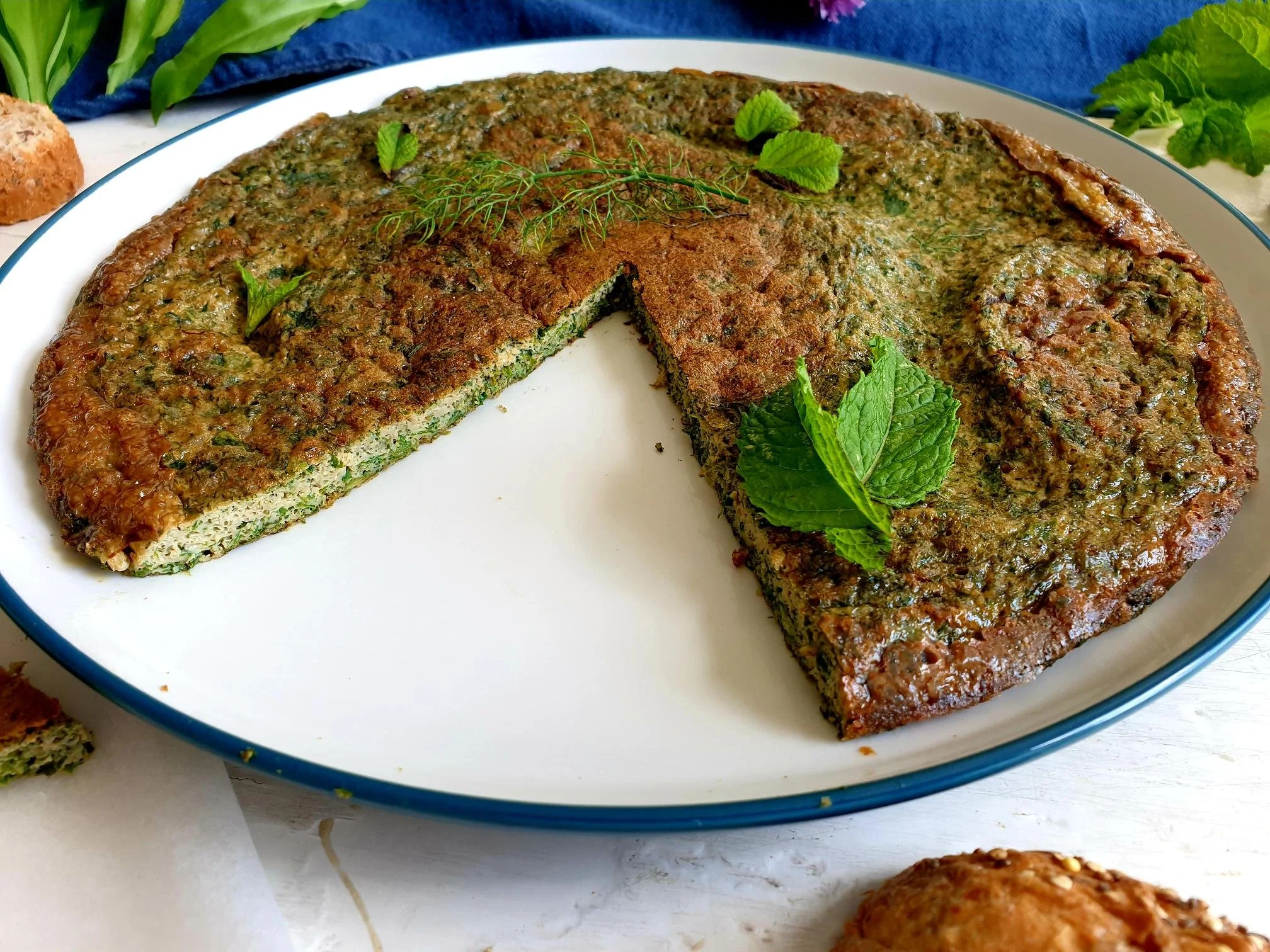
Both my grandfathers would pick up wild herbs (spring providing the widest range) when returning home from spending a morning working in their vegetable gardens, orchards or olive groves, in which case egg frittata with wild herbs would be prepared for lunch or dinner.
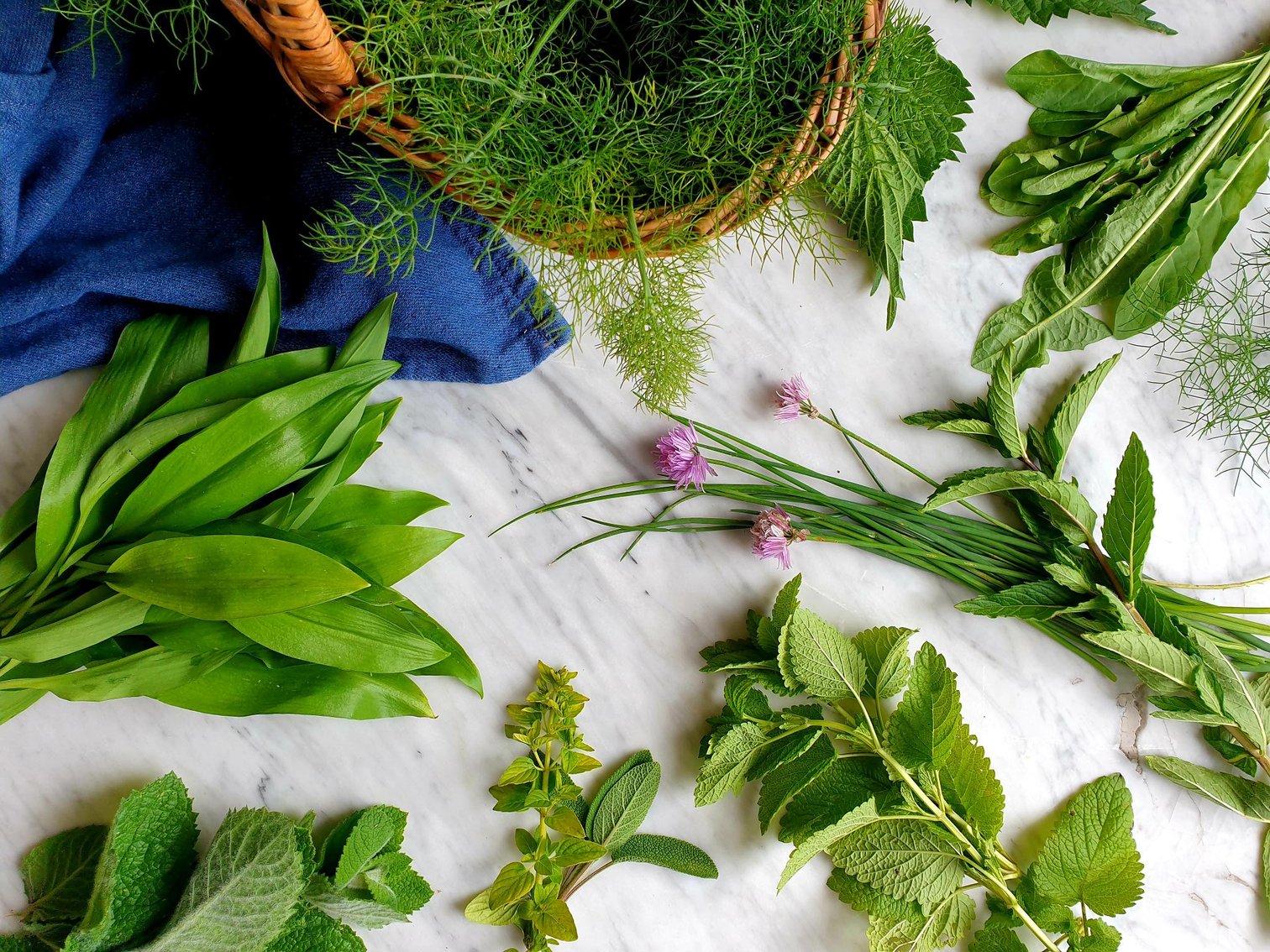
Wild herbs frittata and other types of frittata were for a long time considered a dish for only the poorest people, but thanks to new gastronomic traditions, they are very proudly back on the menus of many homes and restaurants, and given the true dignity they deserve. They are quick and cheap to prepare, have low caloric intake, and are abundant with nutrients from freshly picked herbs in the local area.
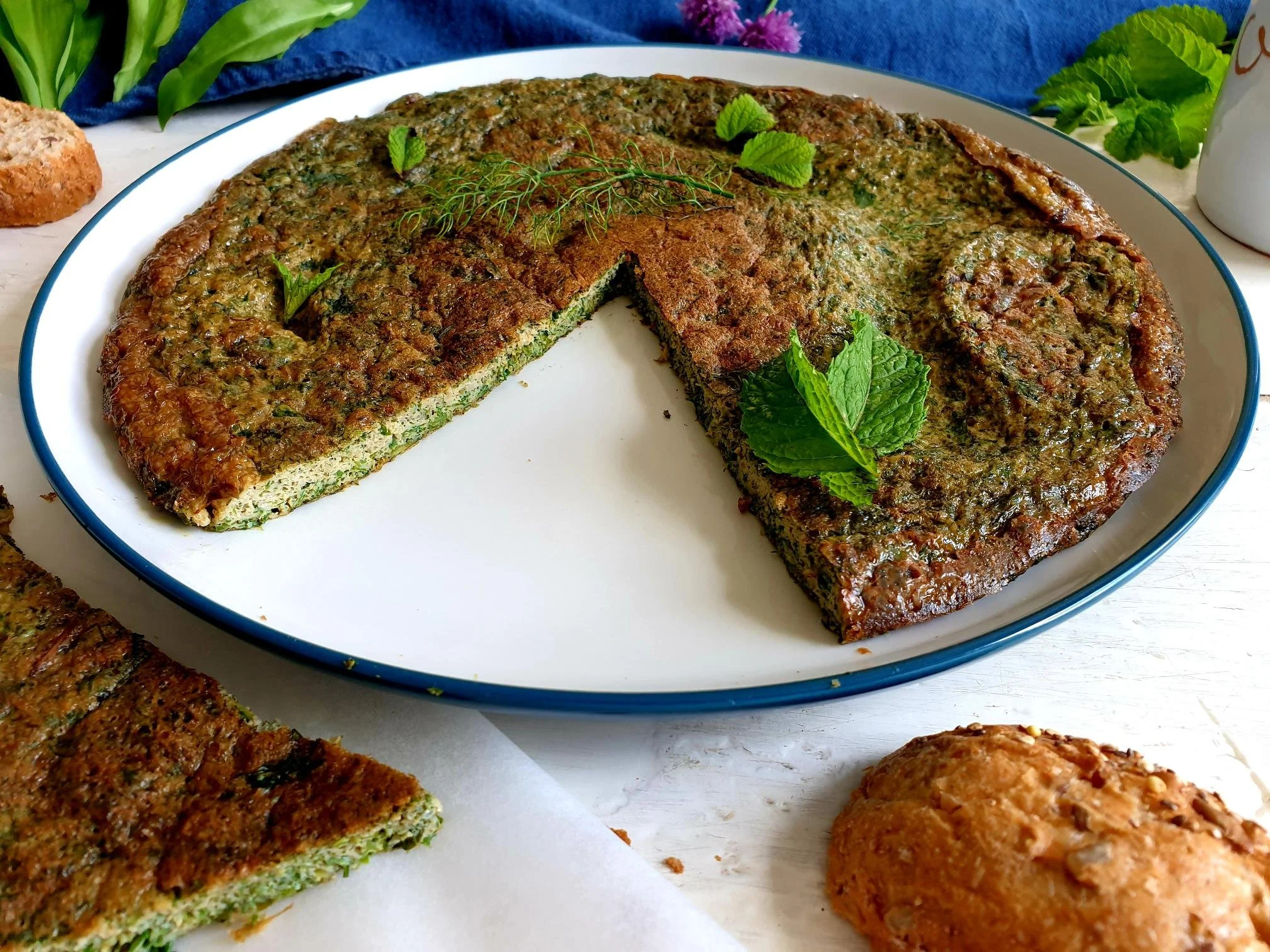
I am sharing here a very easy family recipe for this modest frittata. All you need to do is take a nice walk in the natural world around you - forests, meadows etc., and pick some seasonal wild herbs. What can be easier than that?

Well, if you are mainly in an urban area, you can skip the walk and use store bought baby spinach, wild rocket, some fresh basil and flat leaf parsley and you are ready to go...

Ingredients

Serves 4

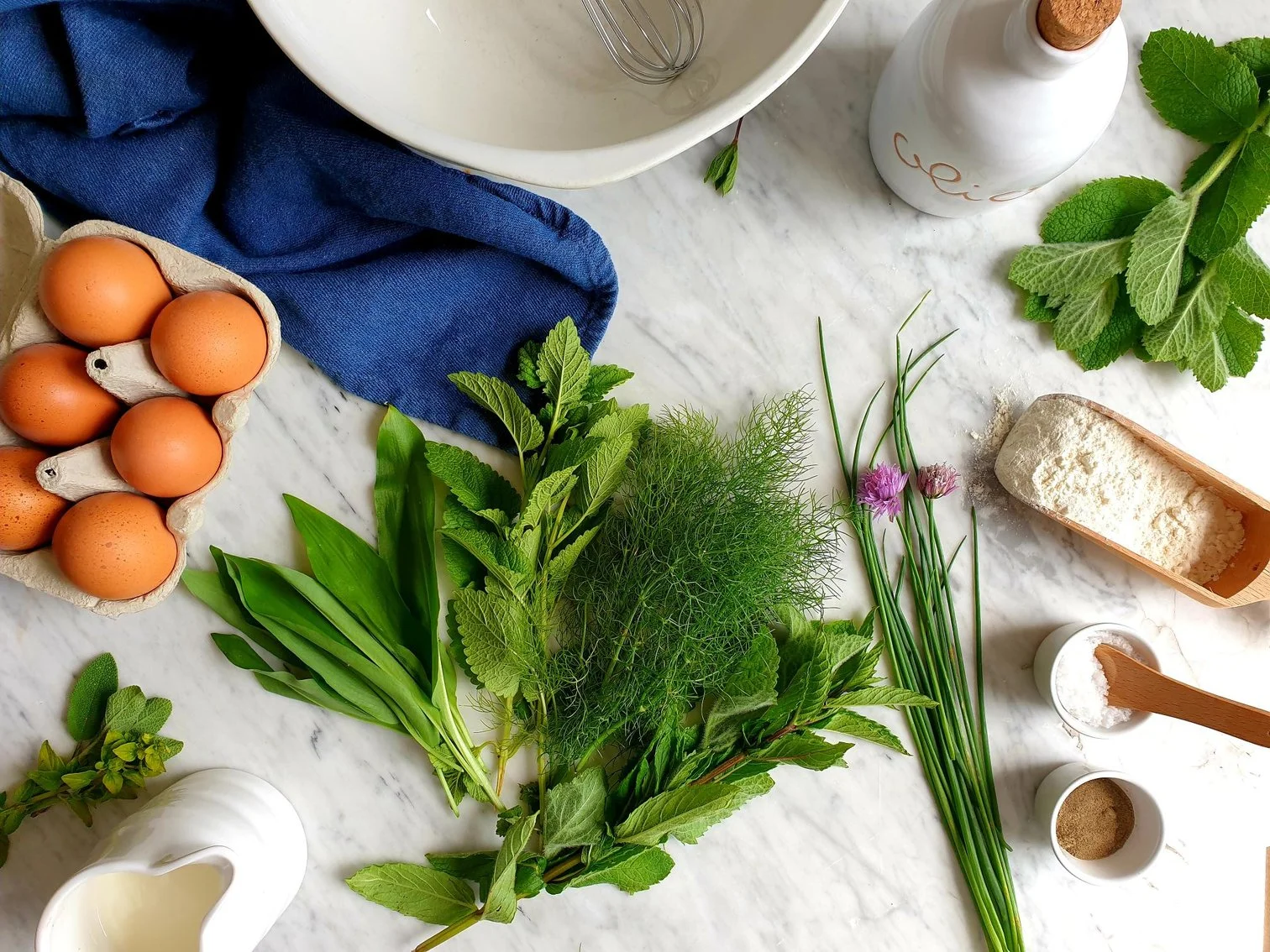
  • 100g-150g (about 4 full handfuls) fresh mixed wild herbs, washed and finely chopped

    In this recipe I used wild garlic leaves, wild fennel, stinging nettle, dandelion leaves, mint, chives, lemon balm, sage, marjoram, flat leaf parsley, basil.

    You can also use store bought baby spinach, wild rocket, any combination, proportion does not really matter as long as you have more or less the total amount of fresh herbs stated in the ingredients list.

  • 2 Tbsp extra virgin olive oil

  • 8 medium sized eggs (in this recipe I calculated 2 eggs per person)

  • sea salt

  • black pepper

Method

Wash thoroughly fresh mixed herbs, dry them using a salad spinner, if you have one.
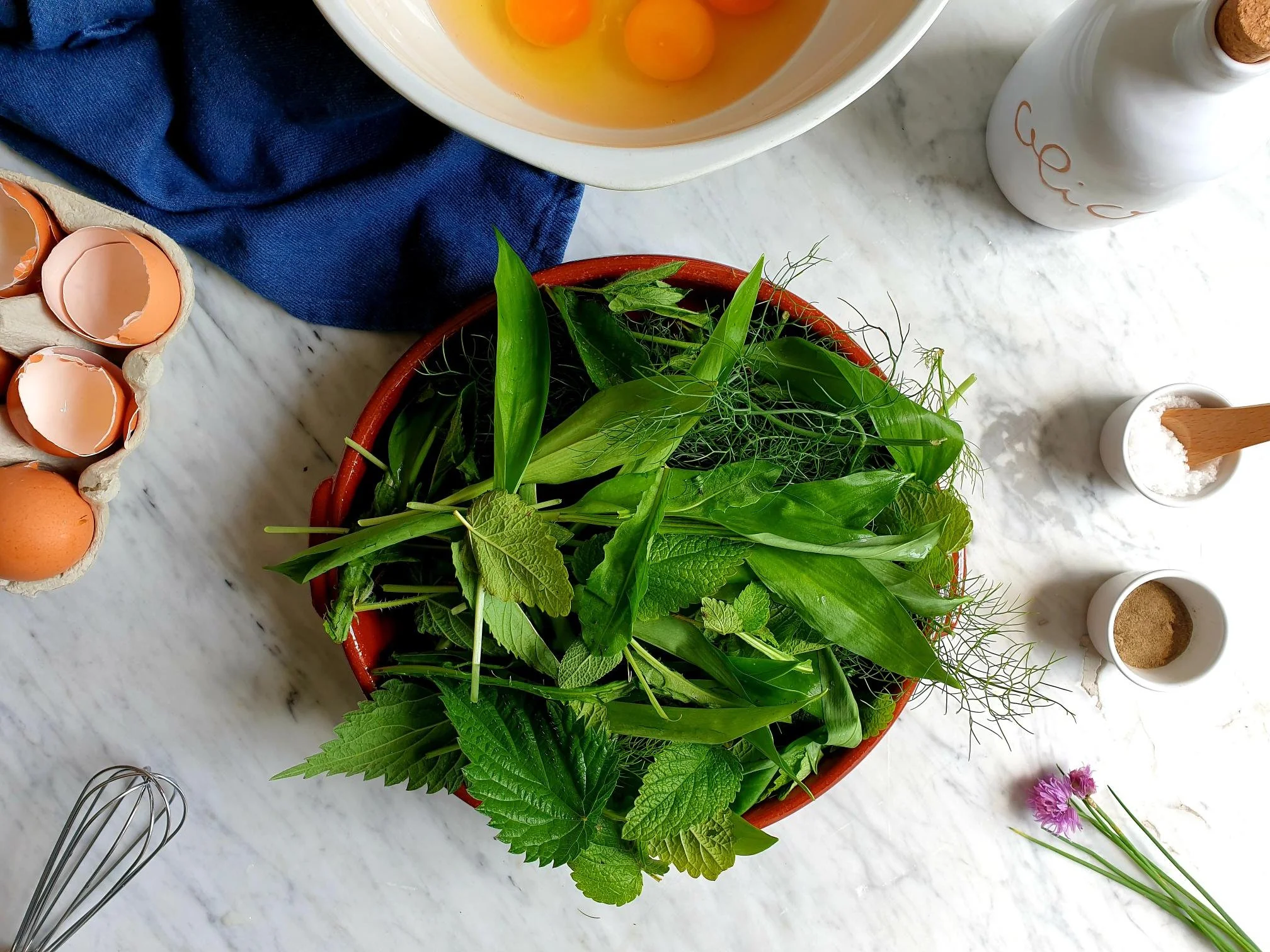
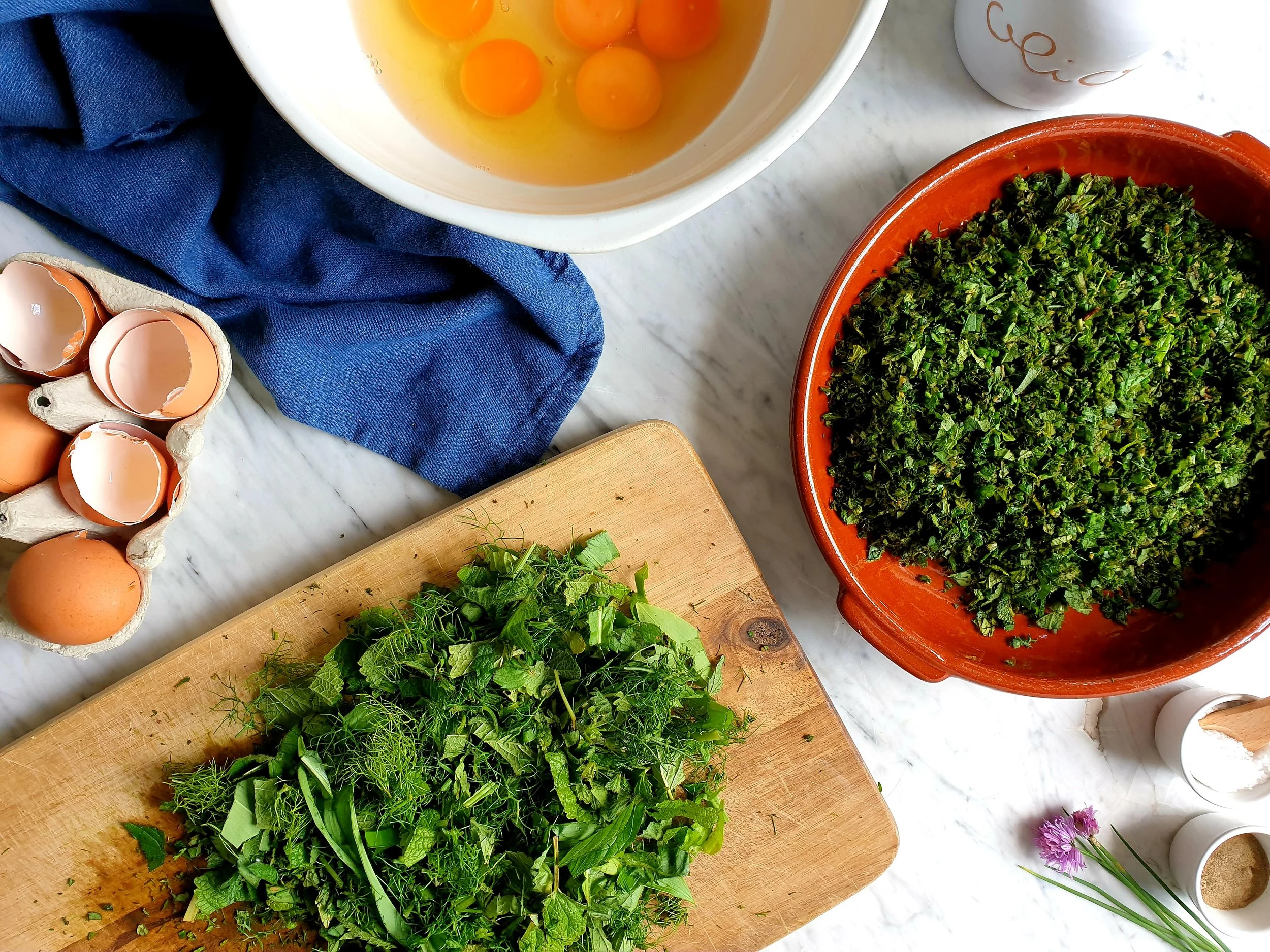
Finely chop the herbs and set aside.
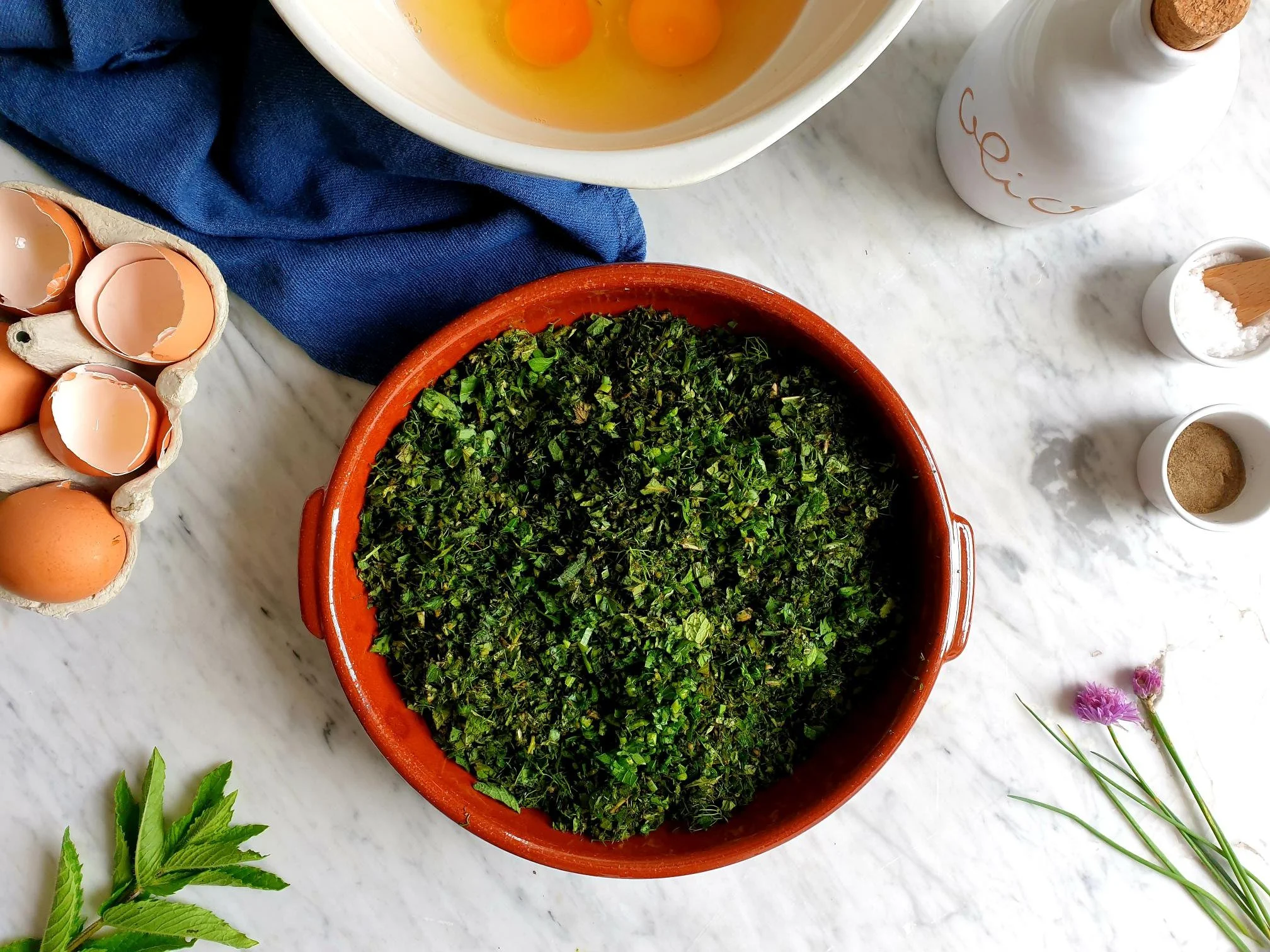
View fullsize Egg frittata with wild herbs 4.jpg
View fullsize Egg frittata with wild herbs 6.jpg

Crack the eggs into a mixing bowl and whisk well, add sea salt and black pepper.

Add finely chopped herbs into a mixing bowl and mix well with the egg mixture.
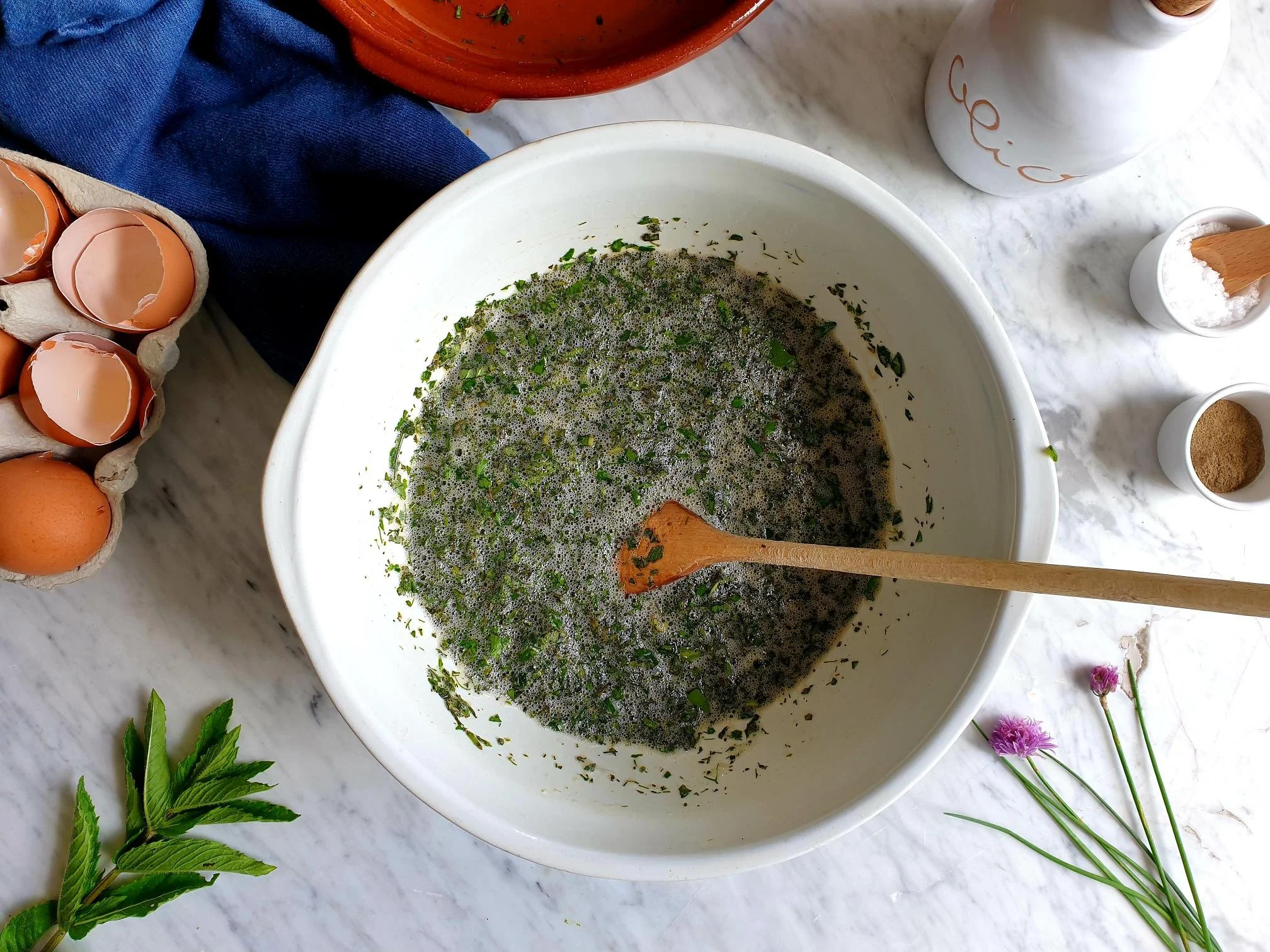
Put extra virgin olive oil in a fairly large non stick frying pan (28cm or 30cm) and heat it up a bit.

Pour the egg and wild herbs mixture into a pan, cover with a lid (glass lid with steam hole works very well if you have it) and cook on a gentle heat.

The frittata is ready and cooked when the underside is set and the egg mixture on the surface no longer has “runny and raw” consistency.
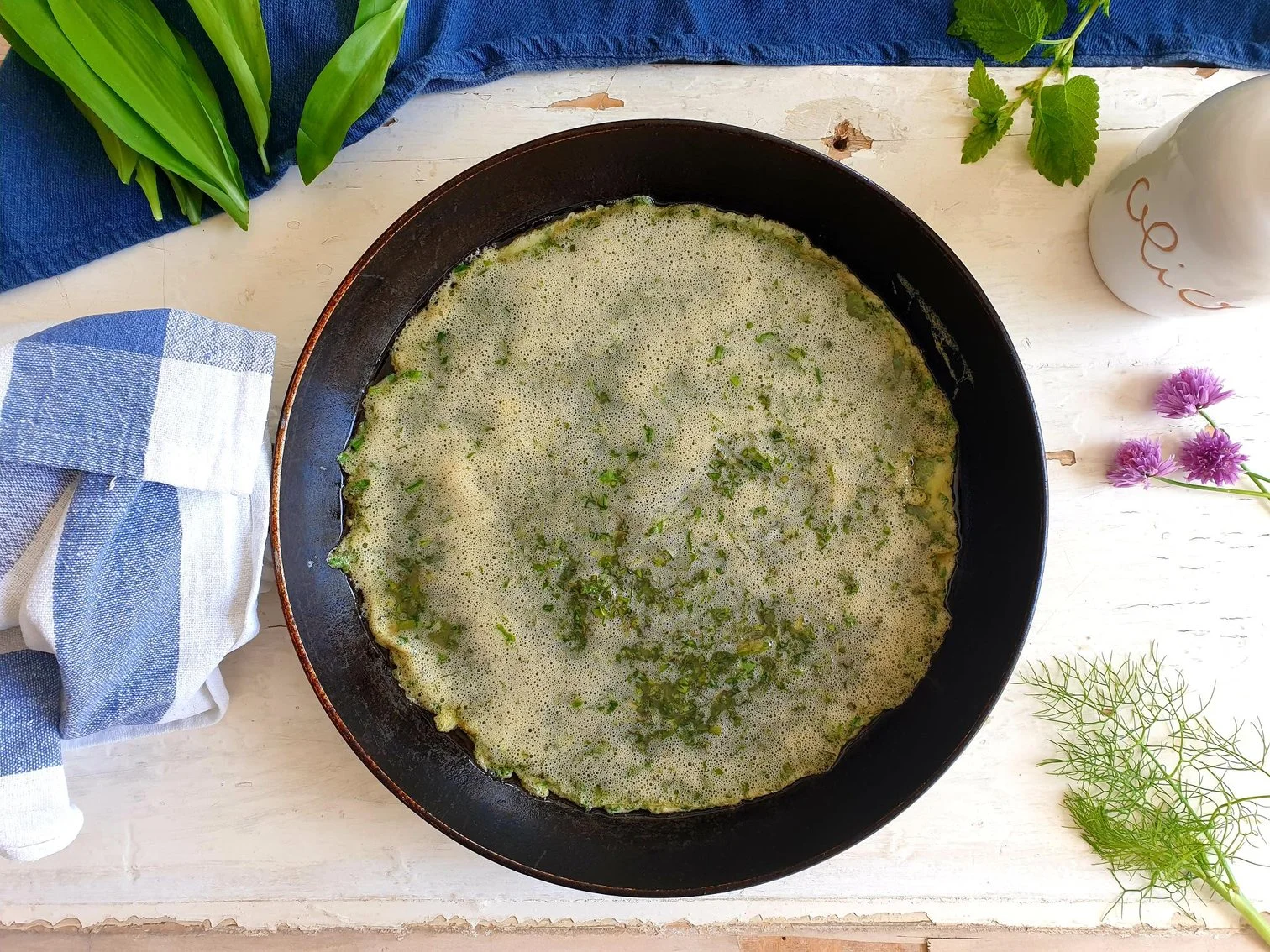
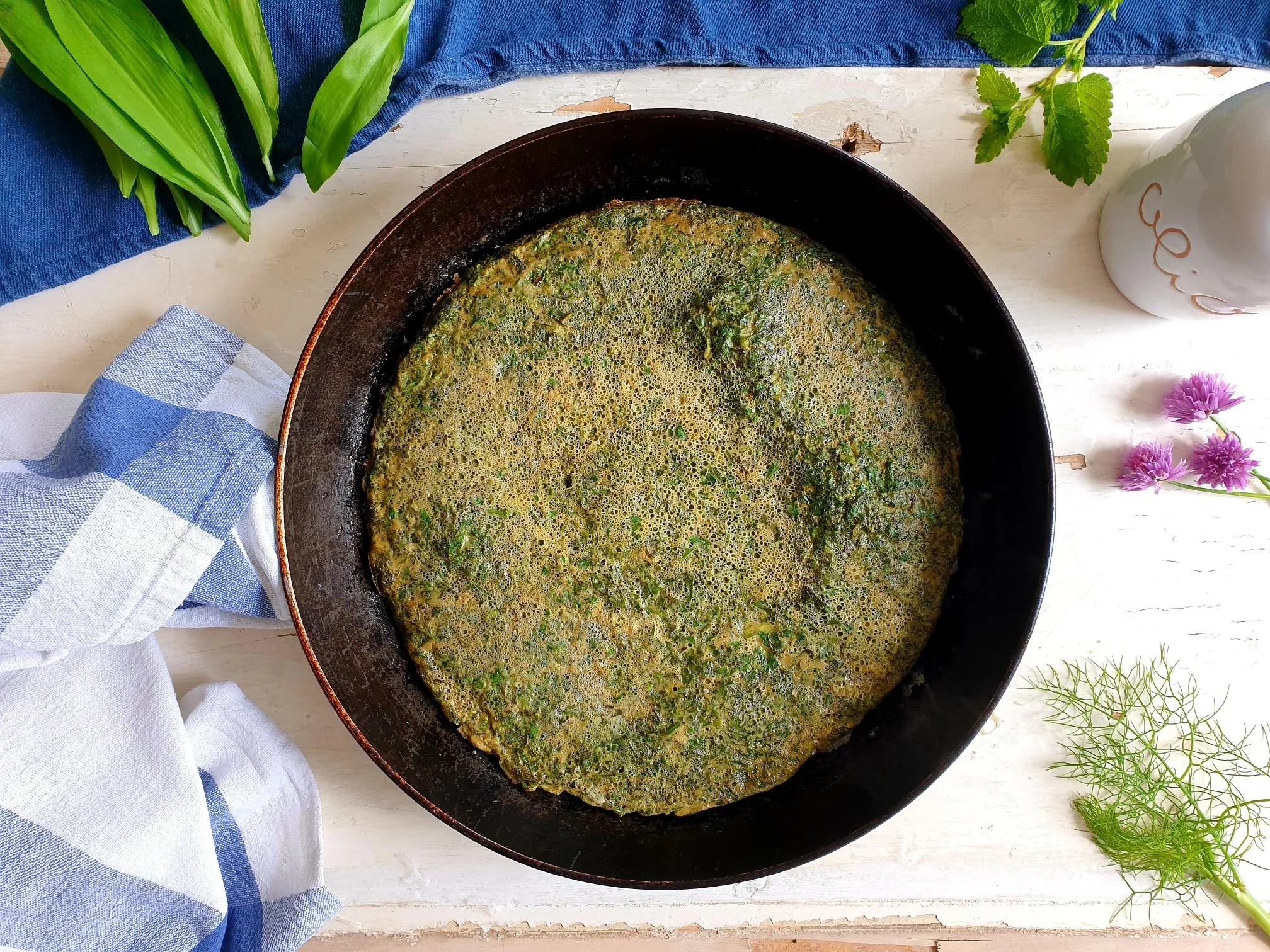
View fullsize Egg frittata with wild herbs 7a.jpg
View fullsize Egg frittata with wild herbs 10.jpg

Hold a plate upside-down over the pan and turn the two over together so that the frittata inverts on to the plate. Slide the frittata back into the pan and cook for a further minute or so.
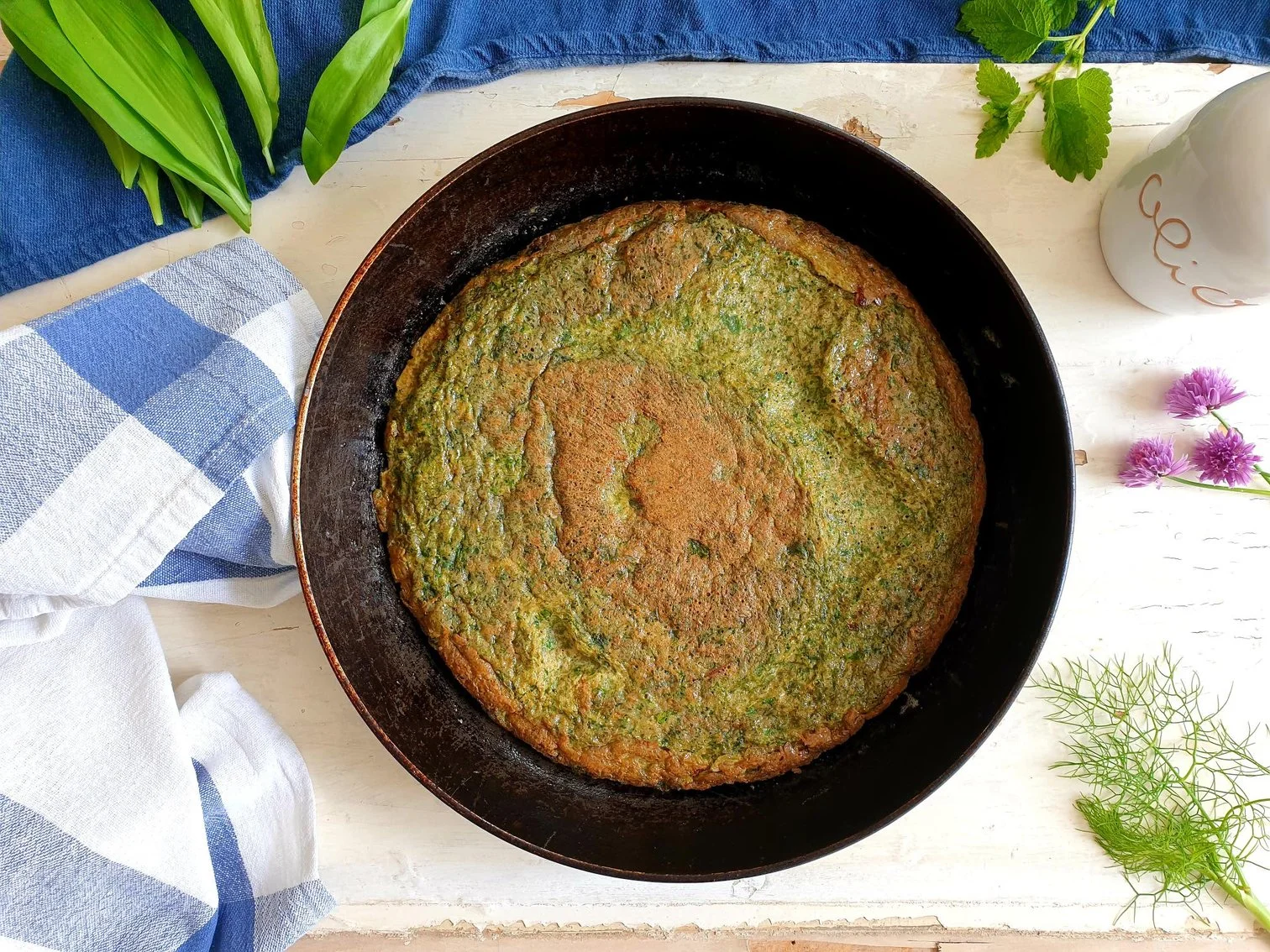
Fresh herbs frittata can be eaten and enjoyed warm, room temperature or cold and will make a complete meal accompanied by some salad, fresh crunchy bread, soft cooked or grilled polenta and it also makes a great sandwich filler.

If you want to enjoy it Istrian style, pour yourself a small glass of red wine.
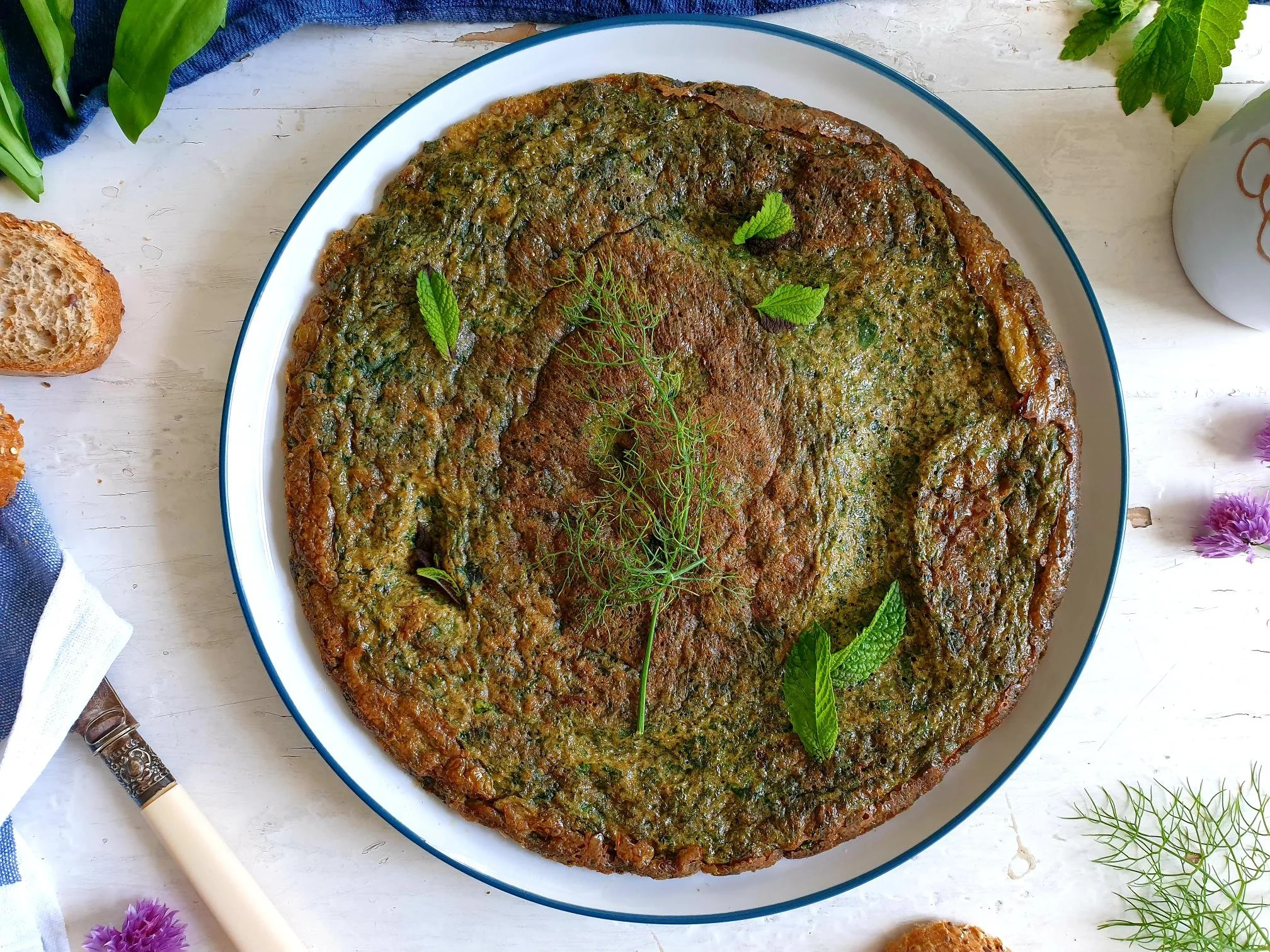
Just a thought

This type of frittata will keep in the fridge in an air tight container for about two days and is not suitable for freezing.

In this recipe, I have chosen to cook the frittata in a traditional way, on the stove with a lid, as my family has always used this method. However, if you are familiar cooking the frittata in the oven, and that is your preferred method, it is perfectly fine to do so.

Wine suggestion

Friuli Colli Orientali Ribolla Gialla DOC 2021 - Torre Rosazza
June 16, 2022 /tina oblak
fresh herbs, fresh wild herbs, wild herbs, fresh parsley, fresh basil, fresh sage, fresh wild dill, fresh wild garlic, stinging nettle, dandelion leaves, fresh mint, Frtalja z zelišči, Fritaia z zelišči, Fritaia de erbe, meadow herbs, edible plants, wild garlic leaves
Adriatic Recipe, All year round recipe, Appetizers, baked dish, bite-sized nibbles, breakfast, brunch, Canapés, dinner, Easy recipe, entrée course, family friendly dish, family friendly meal, Finger food, first course, first course dish, first course meal, foraging, Healthy, healthy mael, Istrian cuisine, Istrian dish, Istrian food, Istrian gastronomy, light meal, main course, main dish, Nutritious, Nutritious dish, Rustic dish, simple recipe, Slovenian cuisine, Slovenian food, Slovenian gastronomy, Small bites, Snacks, Spring dish, Spring recipe, Starters, supper, Vegetarian, Fresh herbs
Comment

Pork risotto Venetian inspired Recipe

Beans and Sardines
June 08, 2022 by tina oblak in Adriatic Recipe, All year round recipe, Autumnal dish, Autumnal recipe, child friendly dish, child friendly meal, dinner, Easy recipe, entrée course, family friendly dish, family friendly meal, first course, first course dish, first course meal, hearty dish, Istrian cuisine, Istrian dish, Istrian food, Istrian gastronomy, main course, main dish, Meat, recipe from Northern Ital, Risotti, Rustic dish, Spring dish, Spring recipe, Starters, supper, Venetian dish, Winter dish, Winter recipe, Risotto, simple recipe

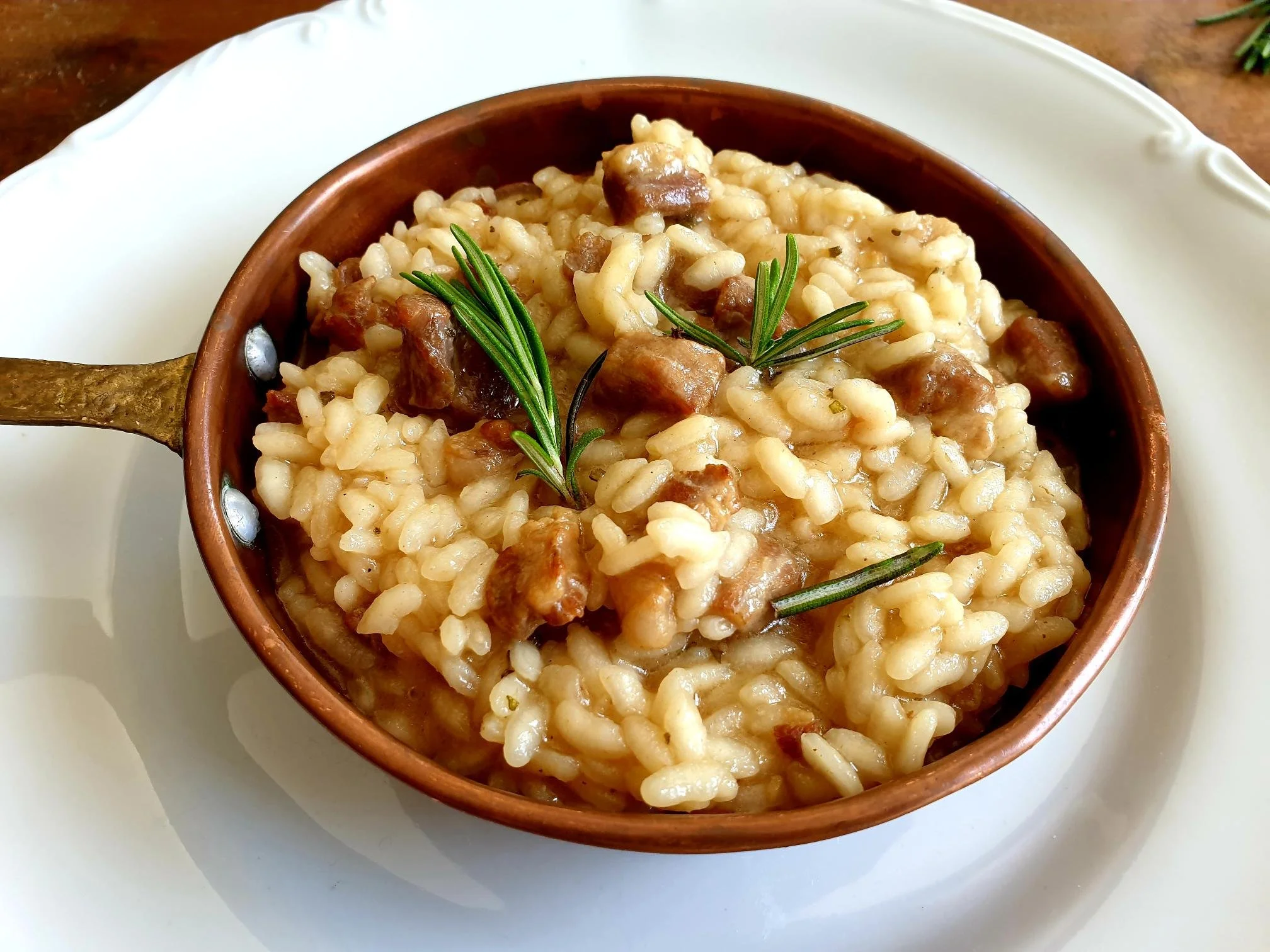
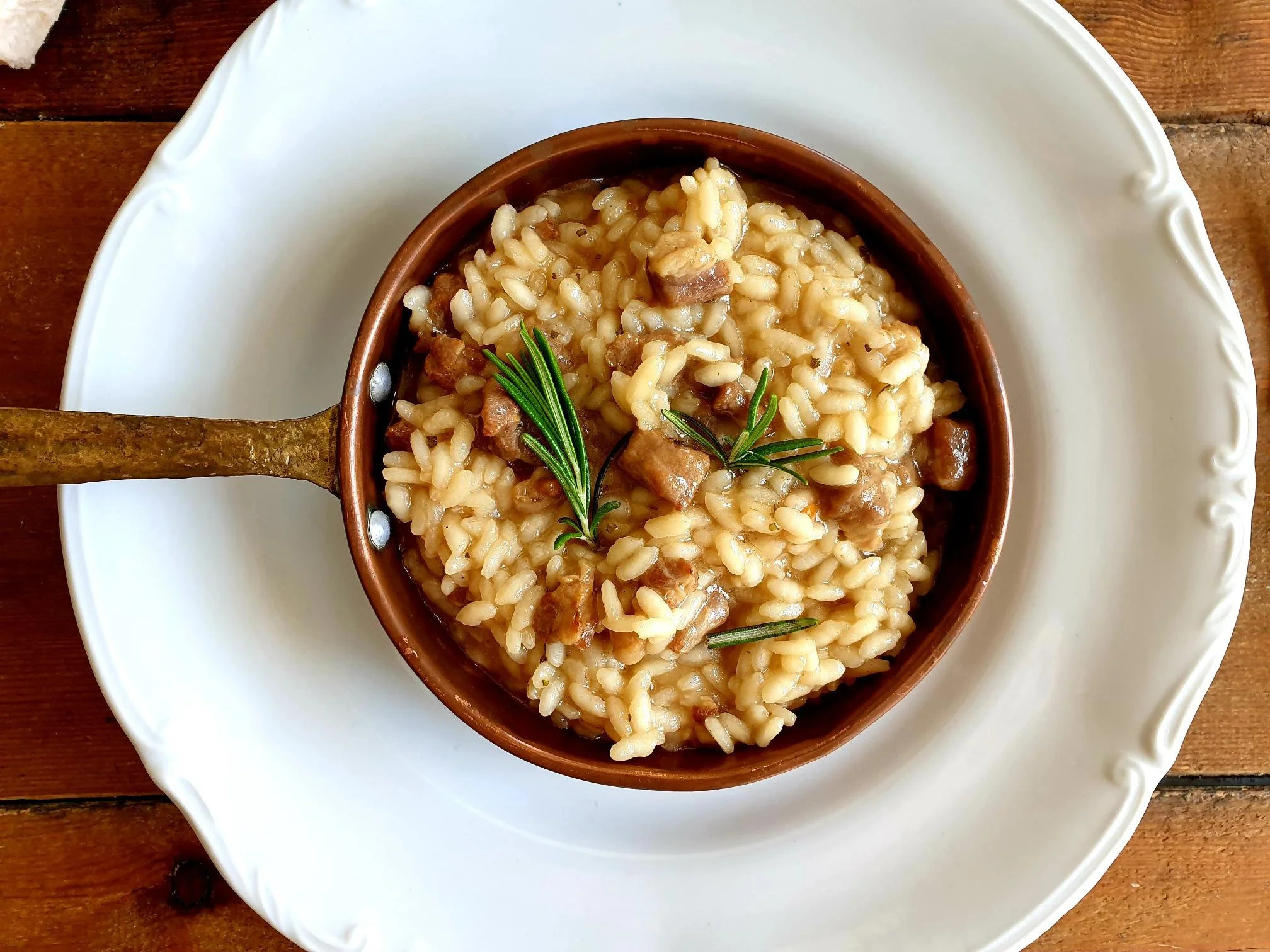
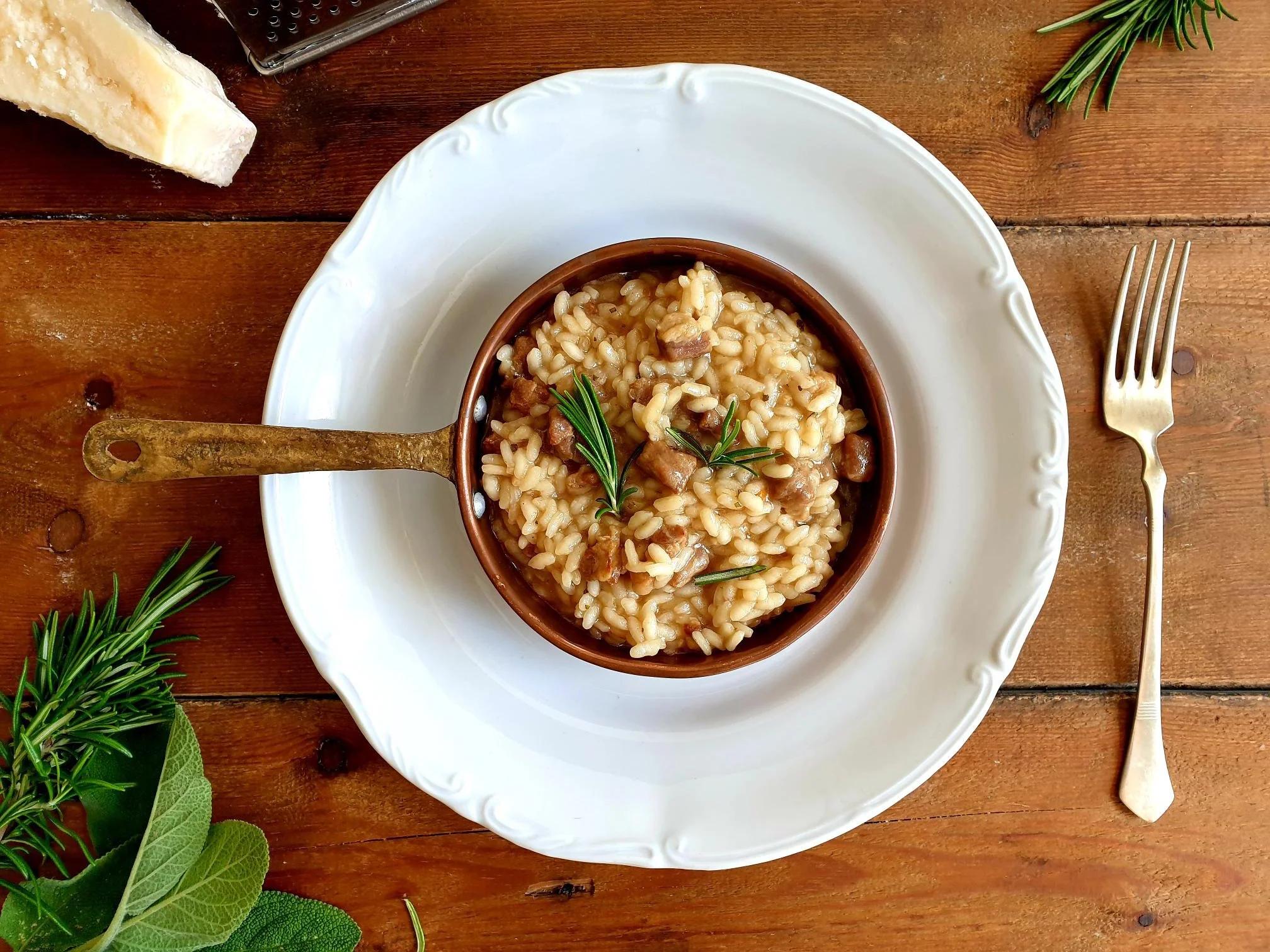
Pork risotto is a perfect recipe when you want to rustle up a quick meal, using only a few fresh simple ingredients. This risotto is easy and uncomplicated to make, and is a delicious, creamy, and very comforting meal. I would not be surprised if it becomes your all time favourite risotto recipe.

The actual name for this pork risotto is Risotto all'Isolana that originated, and is famous in the area of Isola della Scala, situated between Verona and Mantua, in the region of Veneto in Italy. This is where Vialone Nano (type of short grain risotto rice) is widely cultivated. The authentic recipe for this risotto includes the use of two types of meat, a combination of veal and pork, and ground cinnamon, and this is how it is also cooked and eaten in Venice.

In Slovenian Istra, however, where I grew up, and where numerous dishes were inspired from Venetian cooking, it should be no surprise that an Istrian variation of this risotto was created using only pork and omitting ground cinnamon, as this exotic spice was difficult to get hold of, and was out of reach for most locals, and only used to make desserts and puddings.

This type of risotto is a risotto of my childhood and is the one that my mother used to prepare very often, and here I am sharing her recipe.

Ingredients

Serves 4

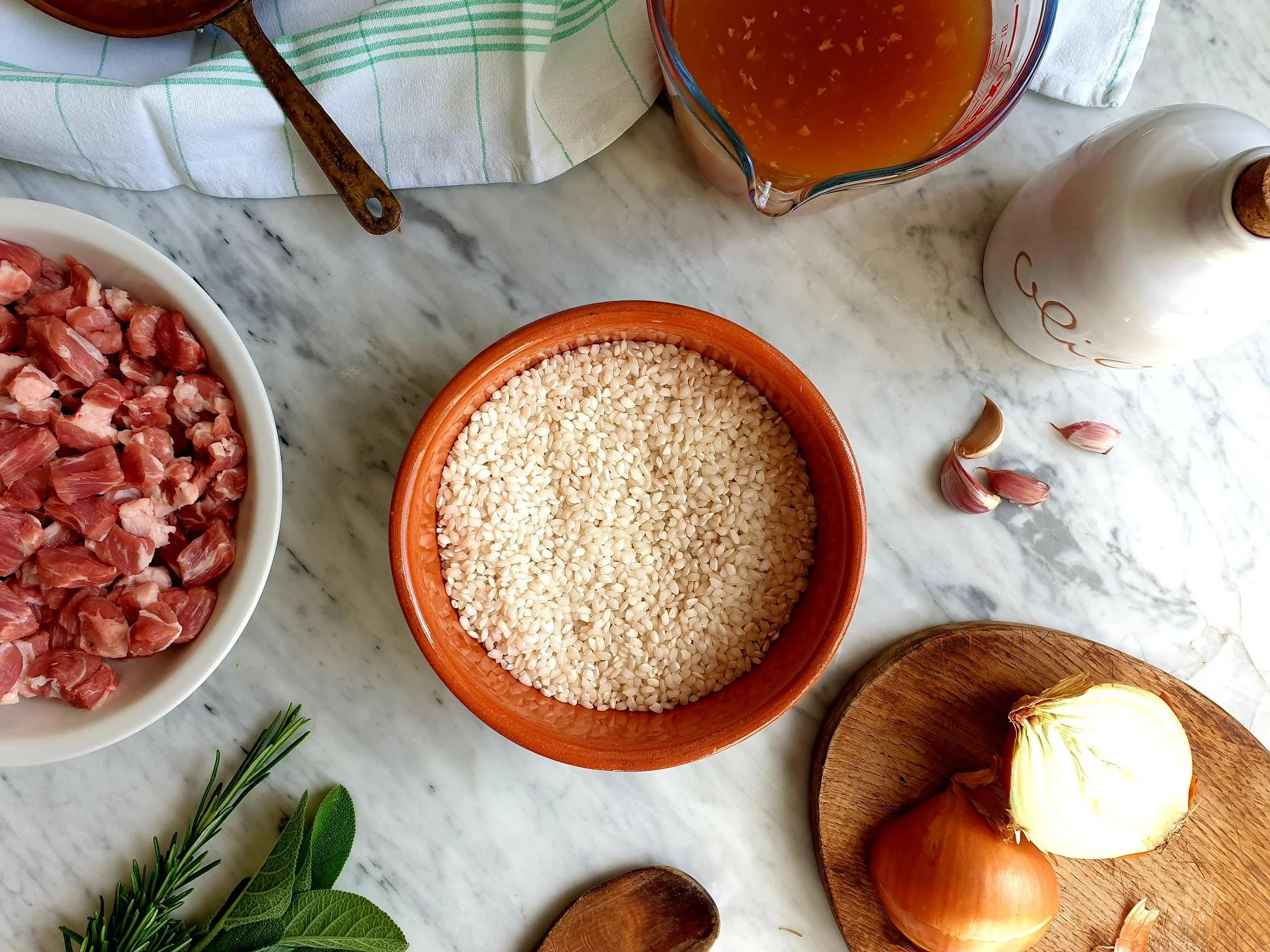
  • 400g pork shoulder steaks, trimmed off excessive fat and diced

  • 300g risotto rice (like Arborio, Vialone Nano or Carnaroli)

  • 1 medium onion (about 150g), peeled and finely chopped

  • 1 clove of garlic, peeled and crushed

  • 2 Tbsp extra virgin olive oil

  • 1 litre of beef or other meat stock (home made or good quality store bought stock)

  • few leaves of fresh sage, finely chopped

  • one sprig of fresh rosemary, needles removed and finely chopped

  • sea salt

  • black pepper

  • Parmiggiano Reggiano or Grana Padano cheese, finely grated, to serve (optional)

Method

Before starting making risotto have your boiling hot beef or other meat stock ready to hand for later.

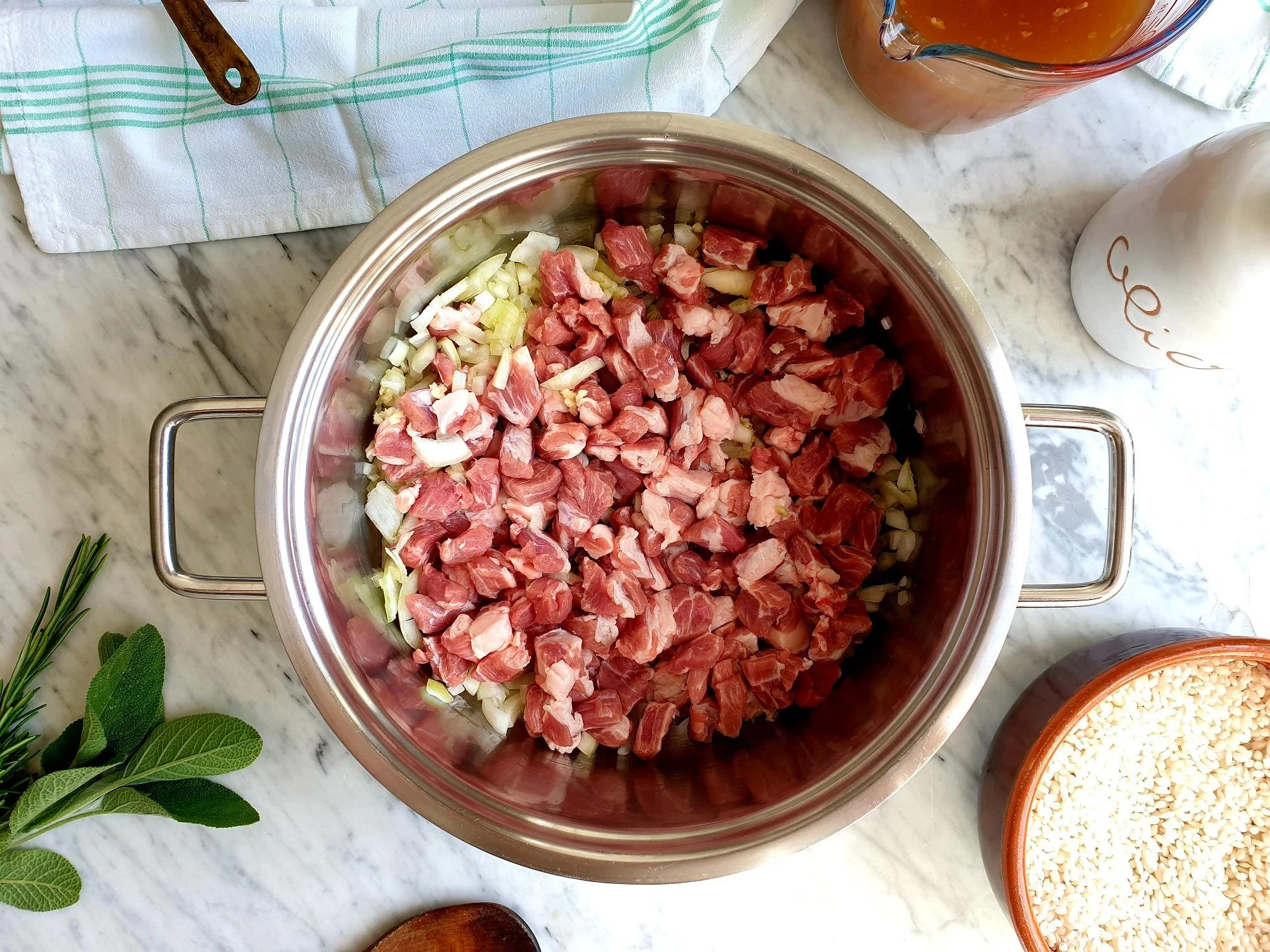
Place in a pan extra virgin olive oil, finely chopped onions, crushed garlic and trimmed and diced pork shoulder steaks.

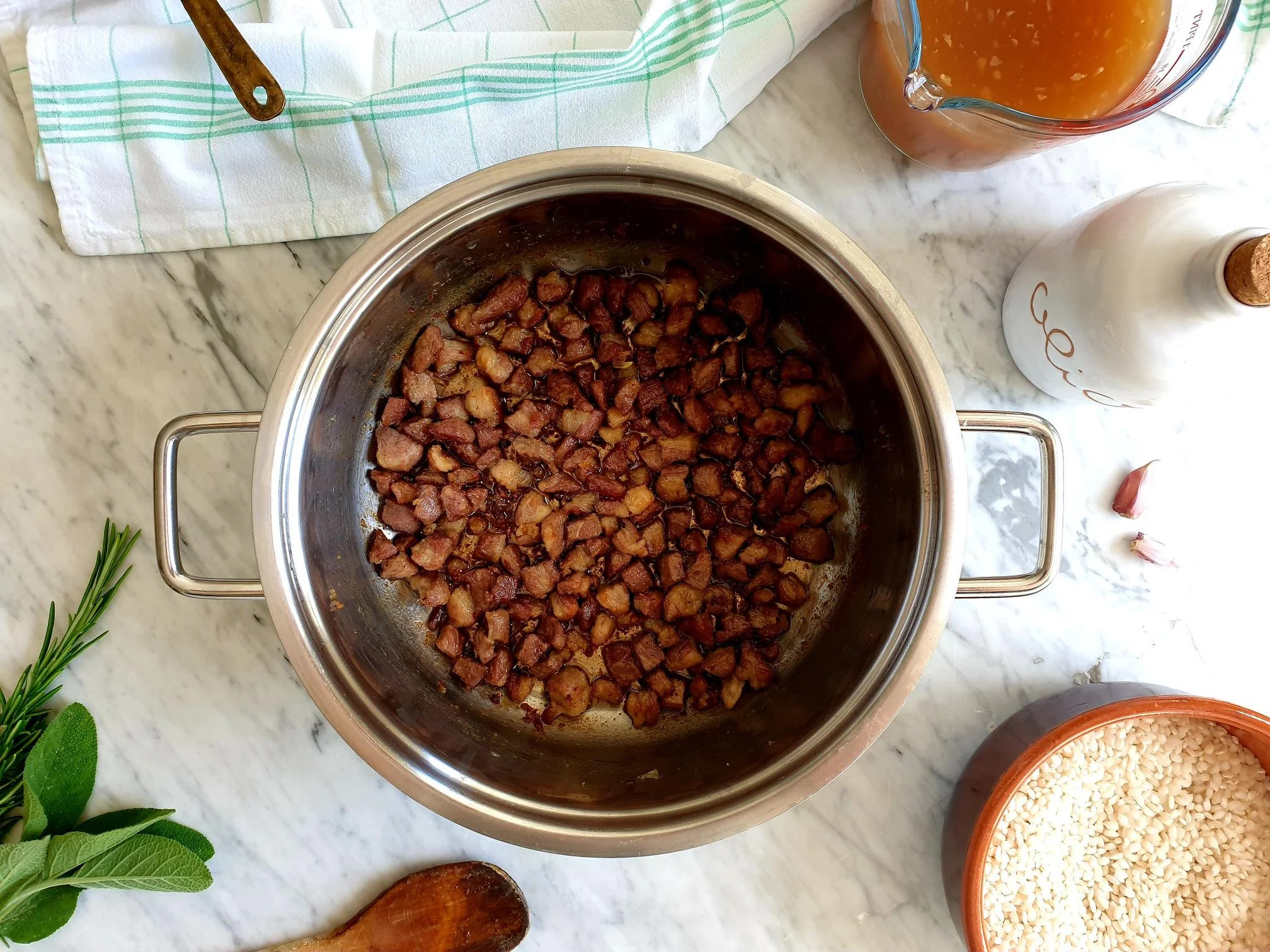
Add a pinch of salt, a bit of black pepper and gently fry on a fairly low heat until the onions become soft and translucent and the meat light brown in colour.

View fullsize Pork risotto Venetian inspired Recipe 2.jpg
View fullsize Pork risotto Venetian inspired Recipe 4.jpg

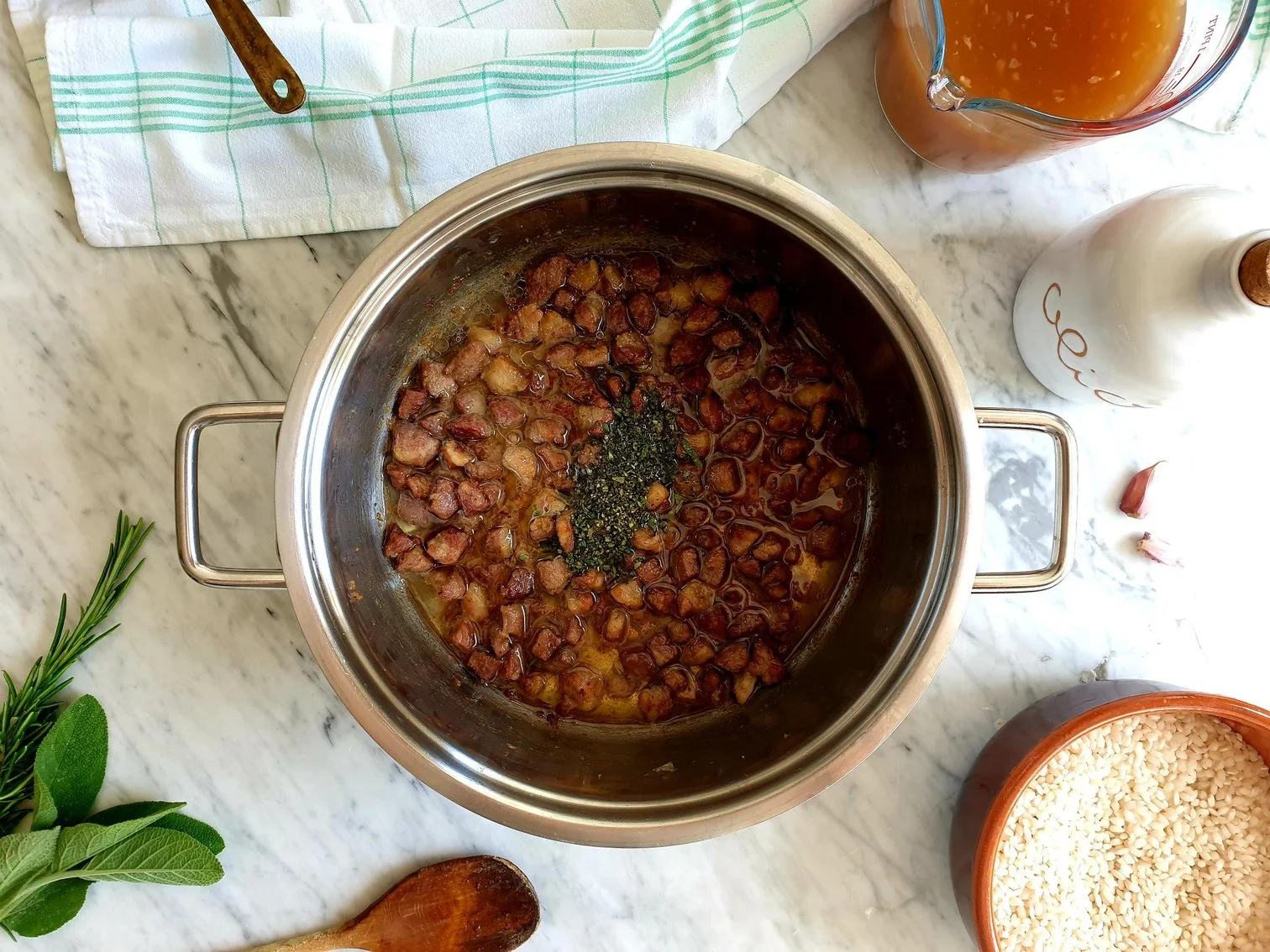
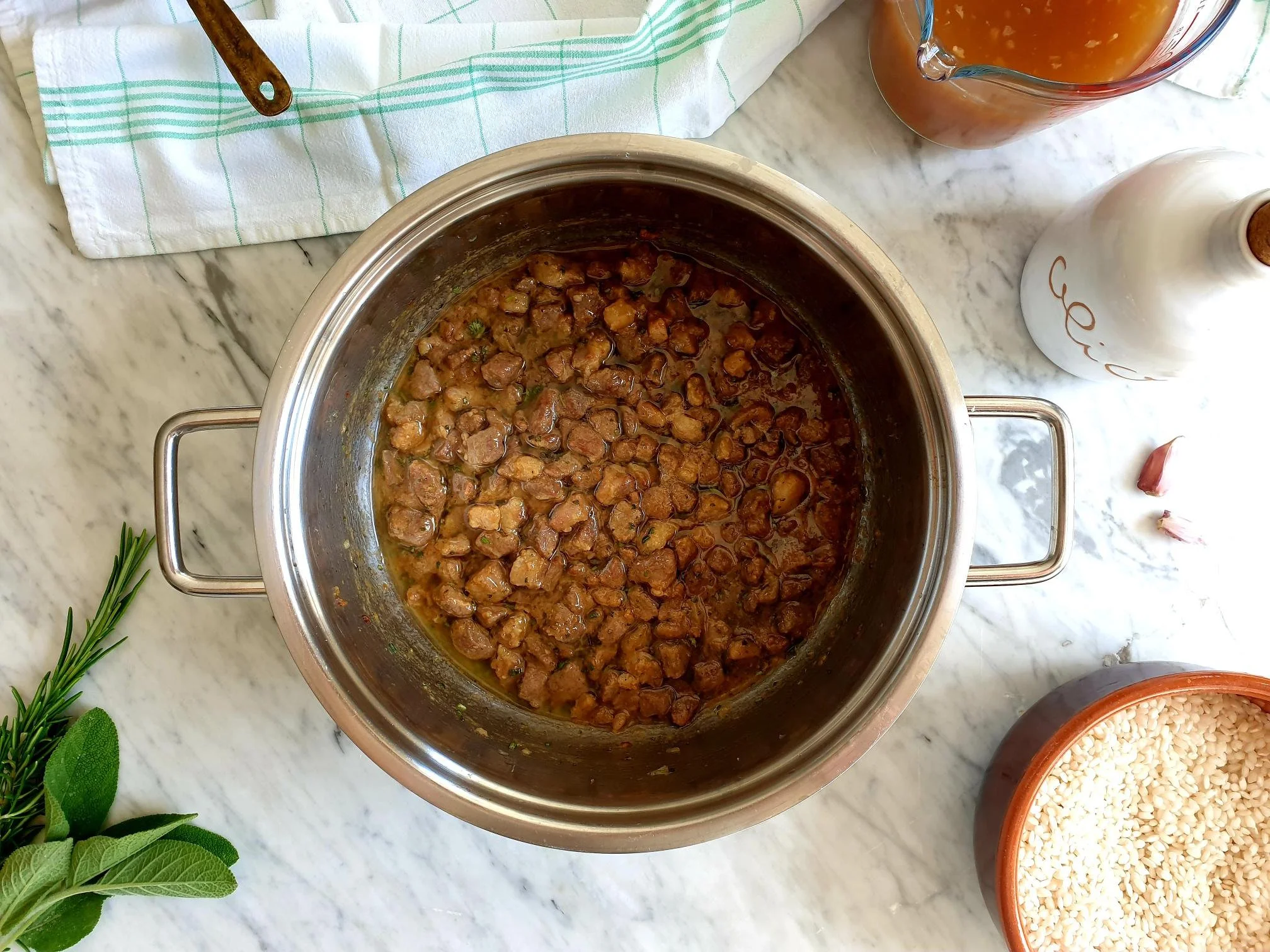
Add finely chopped herbs and about 100ml of water. With a wooden spoon mix and scrap all the bits and pieces from the bottom of the pan, deglaze and cook further for a few minutes on a gentle heat until all the water evaporates.

View fullsize Pork risotto Venetian inspired Recipe 5.jpg
View fullsize Pork risotto Venetian inspired Recipe 6.jpg

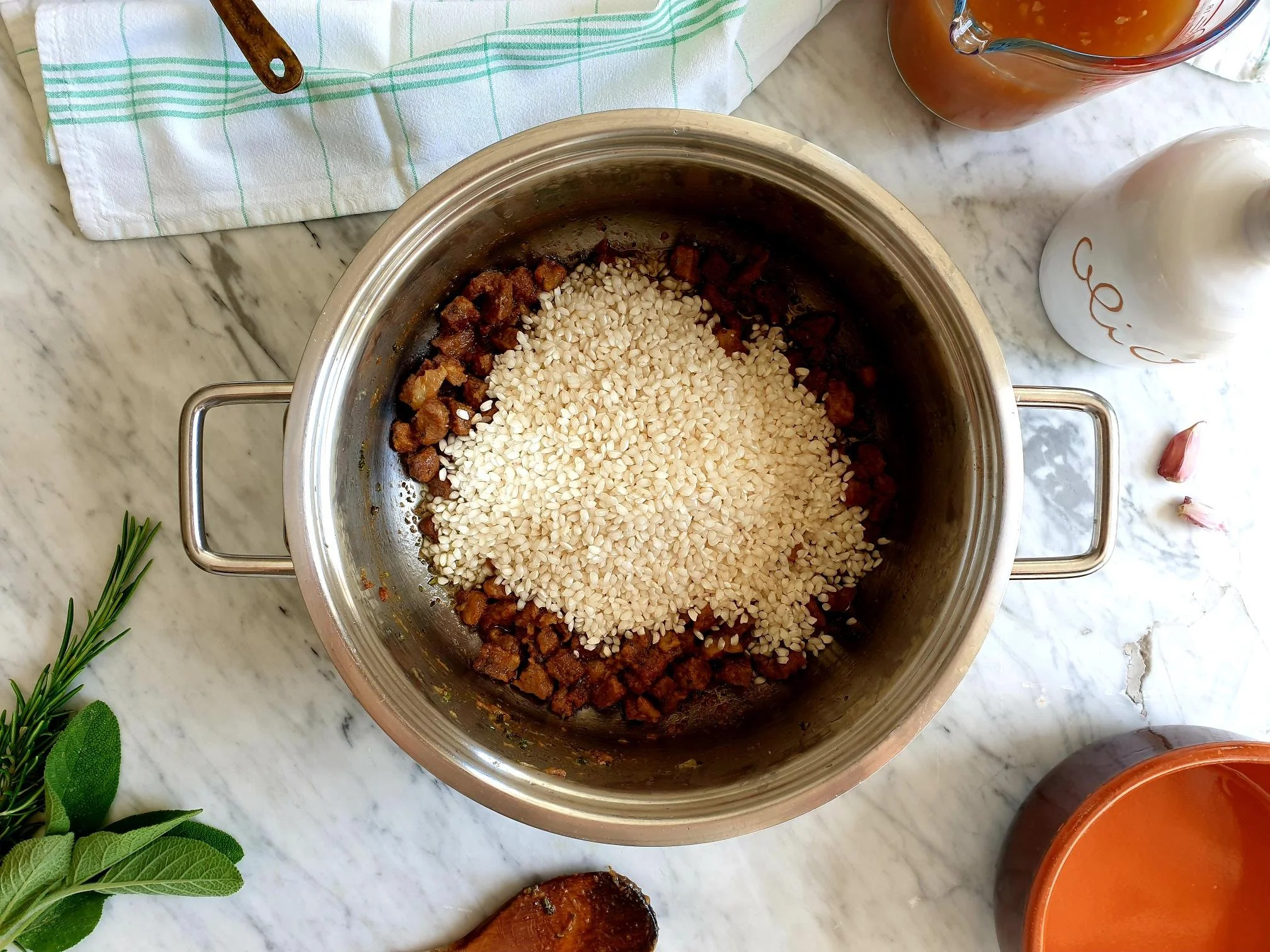
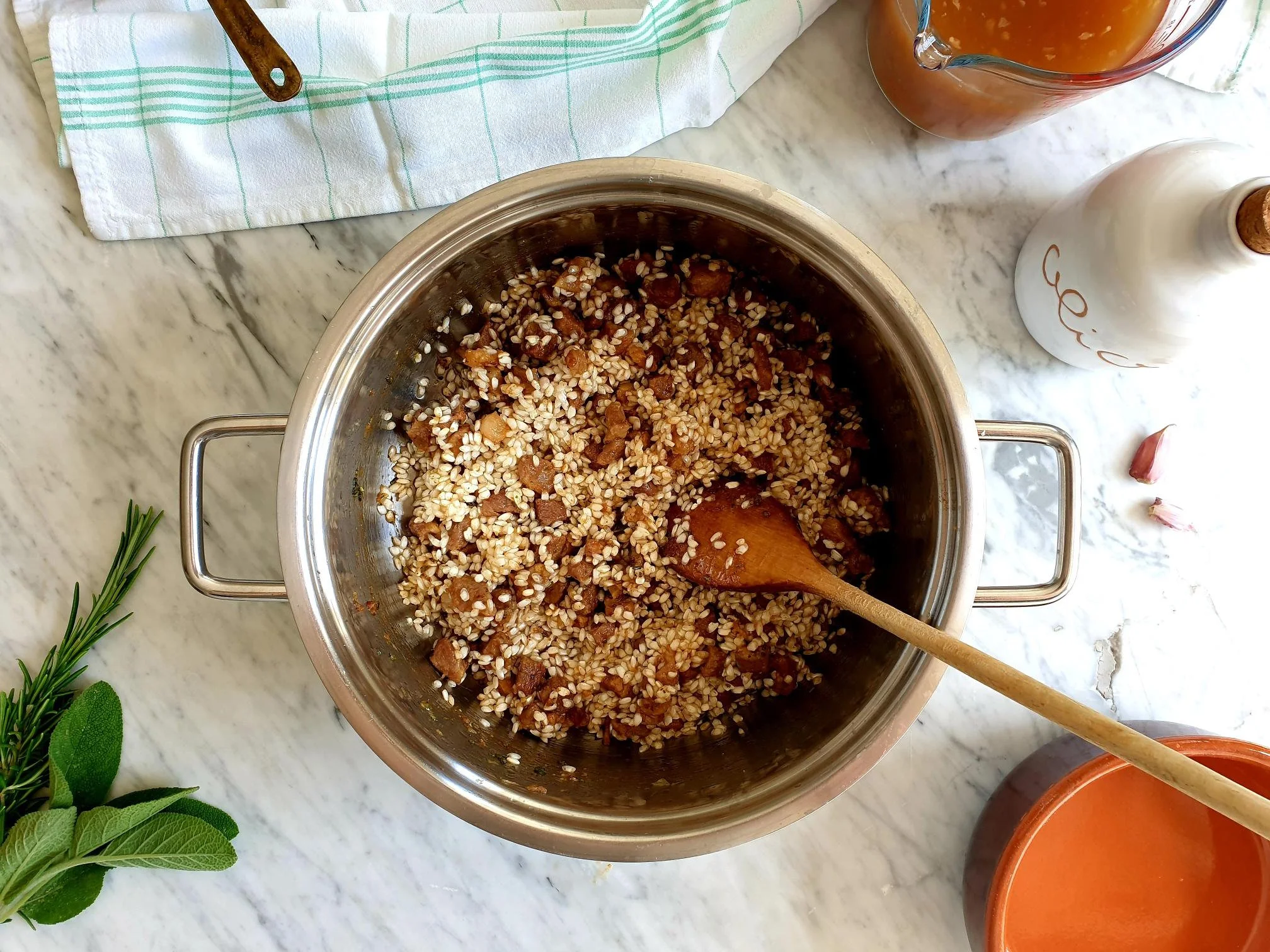
Add risotto rice and toast briefly, stirring constantly to avoid sticking to the pan.

View fullsize Pork risotto Venetian inspired Recipe 7.jpg
View fullsize Pork risotto Venetian inspired Recipe 8.jpg

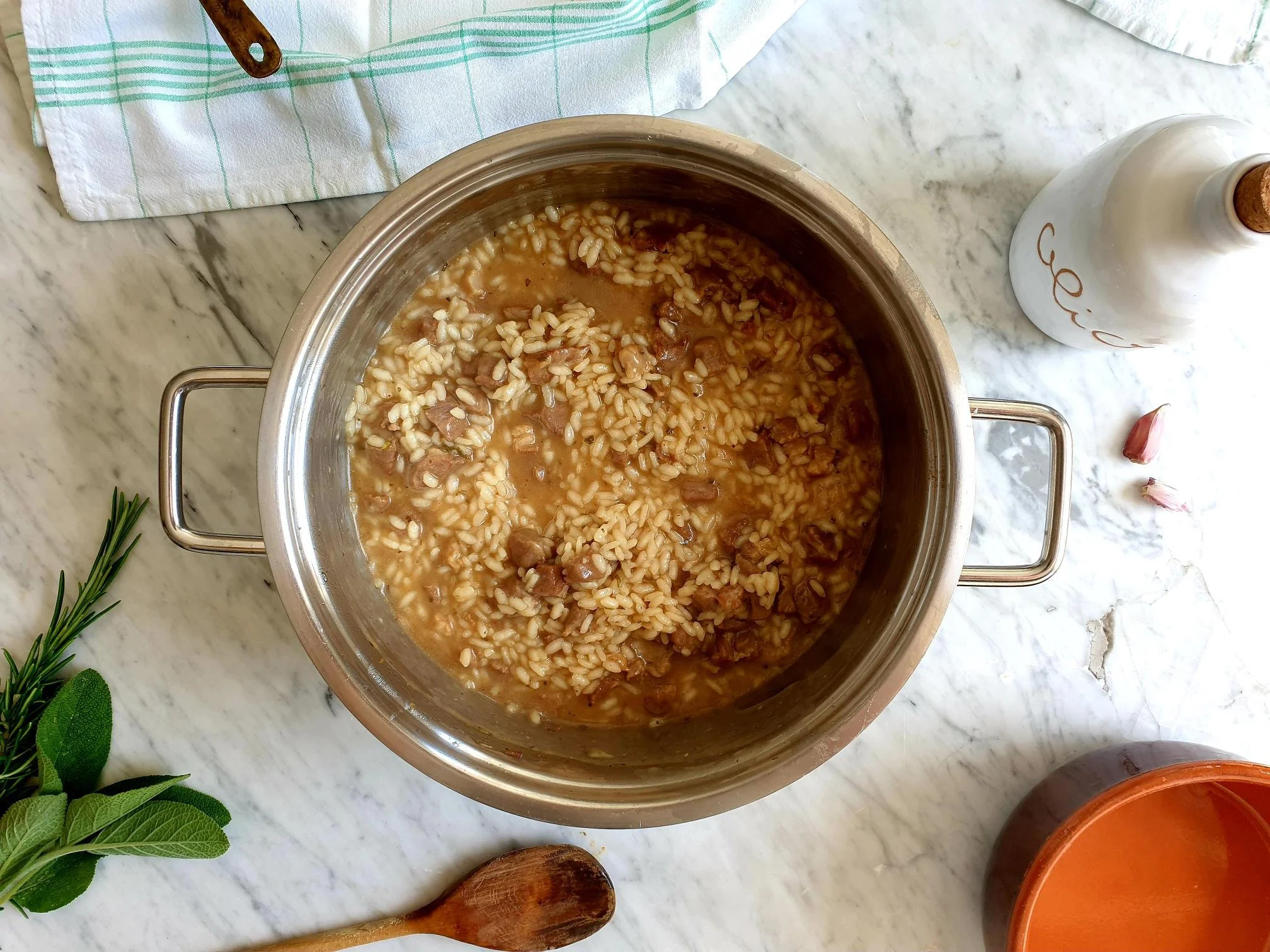
Start gradually adding ladles of hot stock, one at a time, allowing the liquid to be absorbed before adding more.

Cook on a medium heat, stirring almost constantly, until the rice is cooked al dente, meaning fully cooked but still a bit firm when bitten, it should roughly take between 15-18 minutes for a risotto to be cooked.

Taste and adjust the seasoning with sea salt and black pepper, but this might not be necessary since the store bought stocks are, generally speaking, salty already.

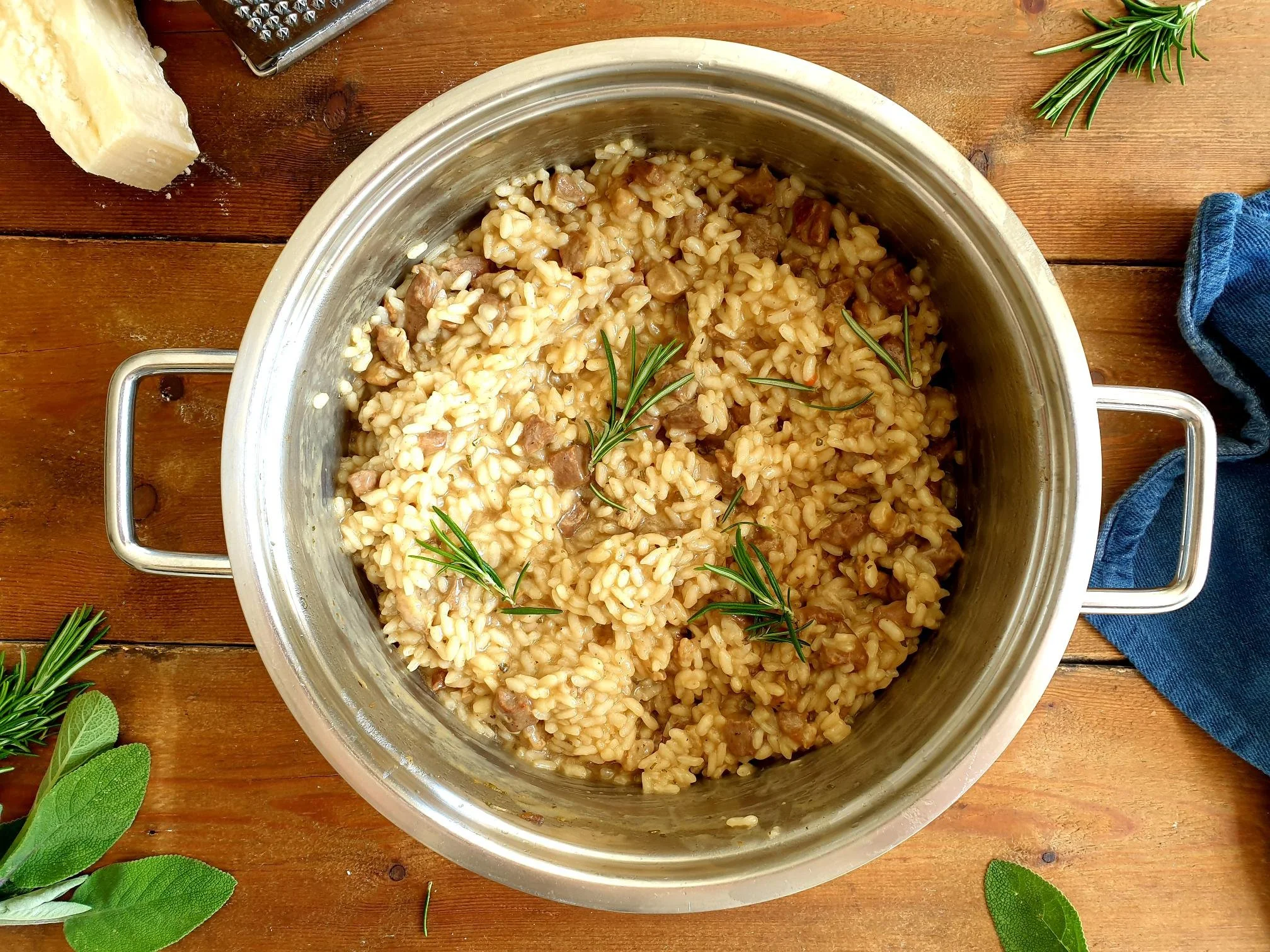
Serve immediately while risotto is still hot and rather liquidy, smooth and runny or as the Italians would describe it, all'onda, meaning on the wave.

Ladle the risotto onto the plates and sprinkle with freshly grated Parmiggiano Reggiano or Grana Padano cheese.

Just a thought

Pork risotto is not suitable for freezing.

Wine suggestion

Marca Trevigiana Raboso IGT 2018 - Gatti

June 08, 2022 /tina oblak
Pork risotto, Venetian style posrk risotto, Istrian style pork risotto, meat based risotto, simple risotto, rustic risotto, Risotto all'Isolana, Arborio, Vialone Nano rice, Carnaroli rice, risotto rice, Rižota s svinjskim mesom
Adriatic Recipe, All year round recipe, Autumnal dish, Autumnal recipe, child friendly dish, child friendly meal, dinner, Easy recipe, entrée course, family friendly dish, family friendly meal, first course, first course dish, first course meal, hearty dish, Istrian cuisine, Istrian dish, Istrian food, Istrian gastronomy, main course, main dish, Meat, recipe from Northern Ital, Risotti, Rustic dish, Spring dish, Spring recipe, Starters, supper, Venetian dish, Winter dish, Winter recipe, Risotto, simple recipe
Comment

Green asparagus with pancetta and scrambled eggs Istrian Recipe

June 01, 2022 by tina oblak in Adriatic Recipe, breakfast, brunch, child friendly dish, child friendly meal, dinner, Easy recipe, entrée course, family friendly dish, family friendly meal, first course, first course dish, first course meal, hearty dish, Istrian cuisine, Istrian dish, Istrian food, Istrian gastronomy, main course, main dish, Rustic dish, Slovenian cuisine, Slovenian food, Slovenian gastronomy, Spring dish, Spring recipe, Starters, supper, Vegetarian, Vegetables

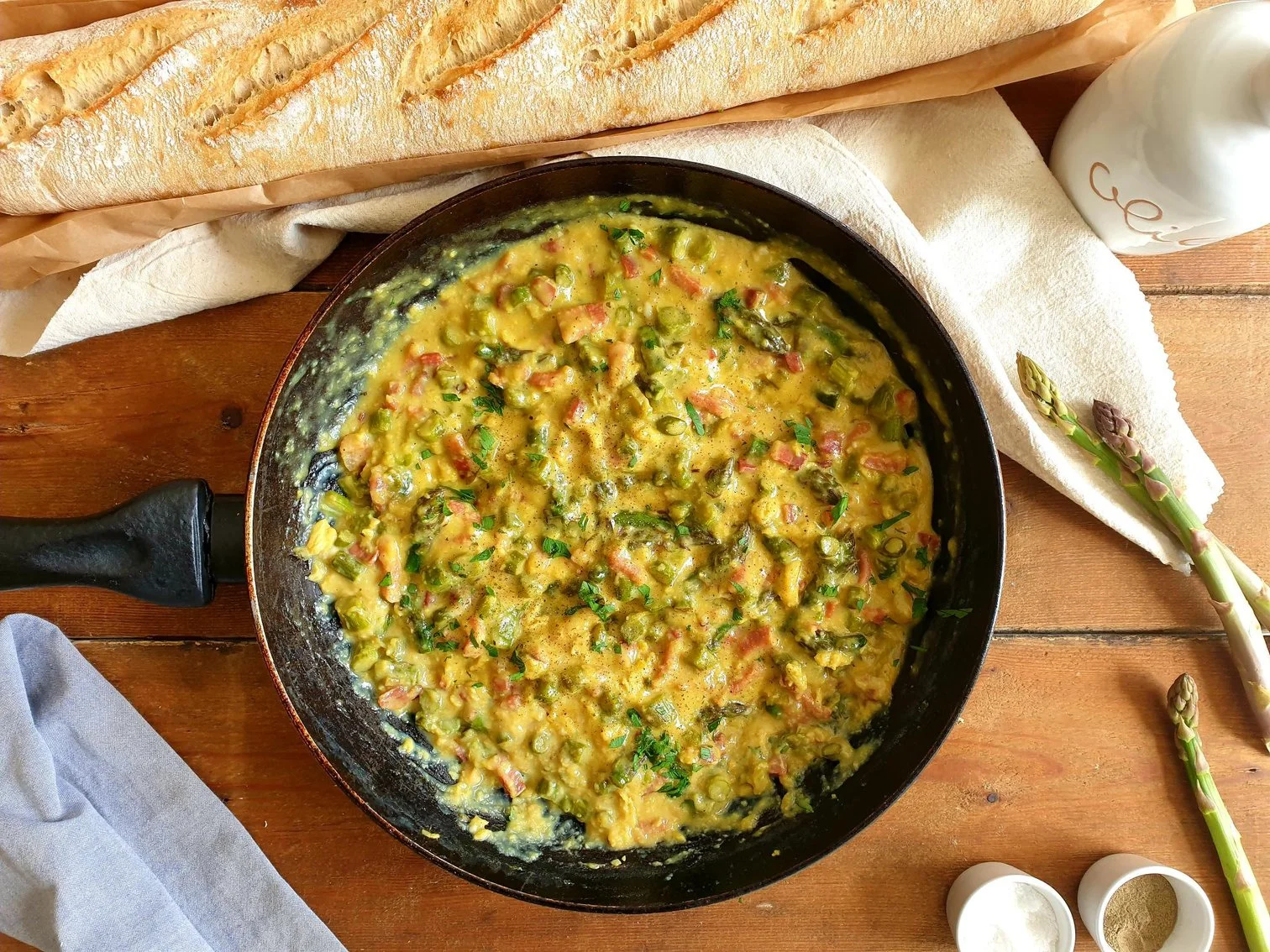
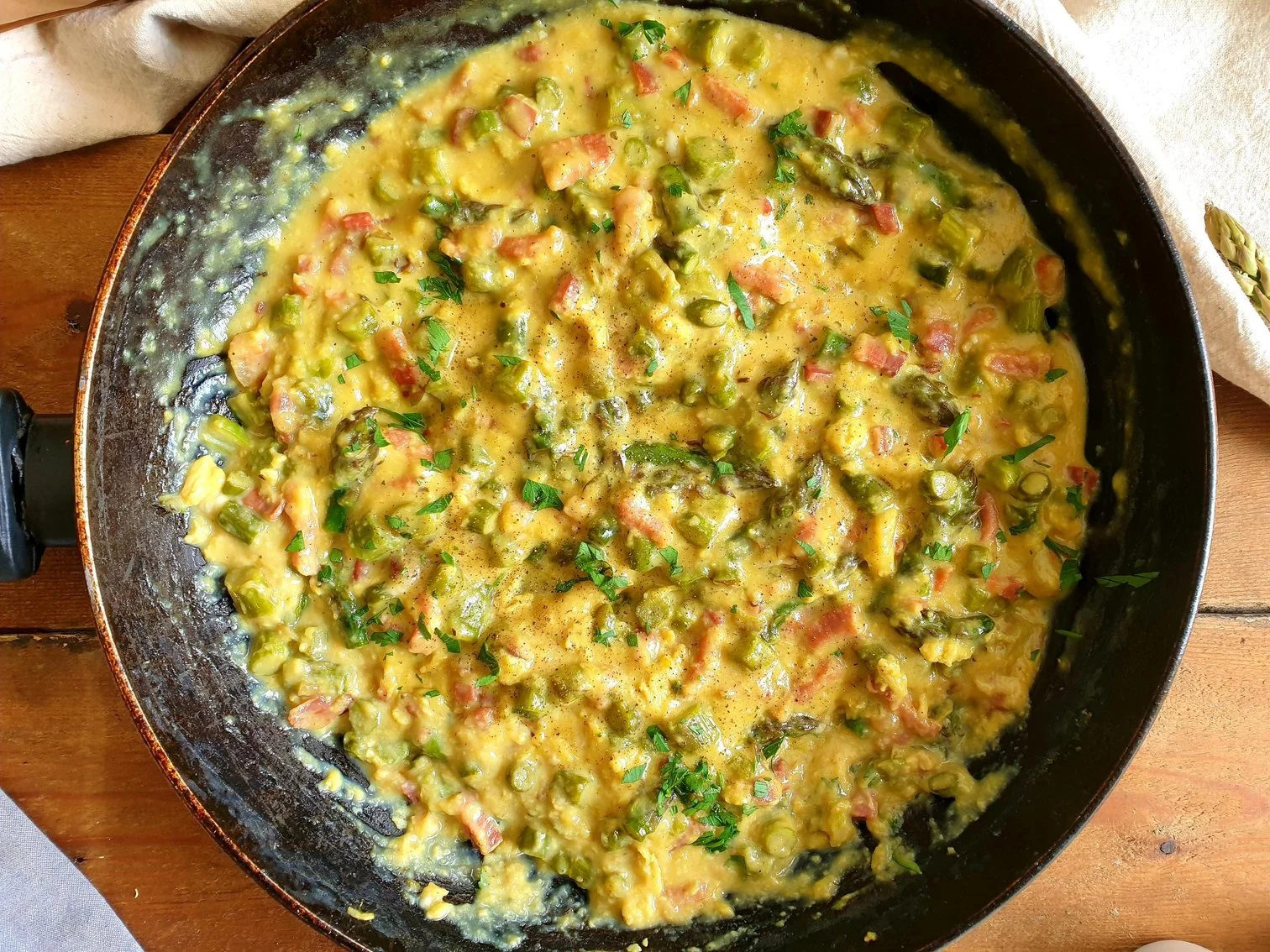
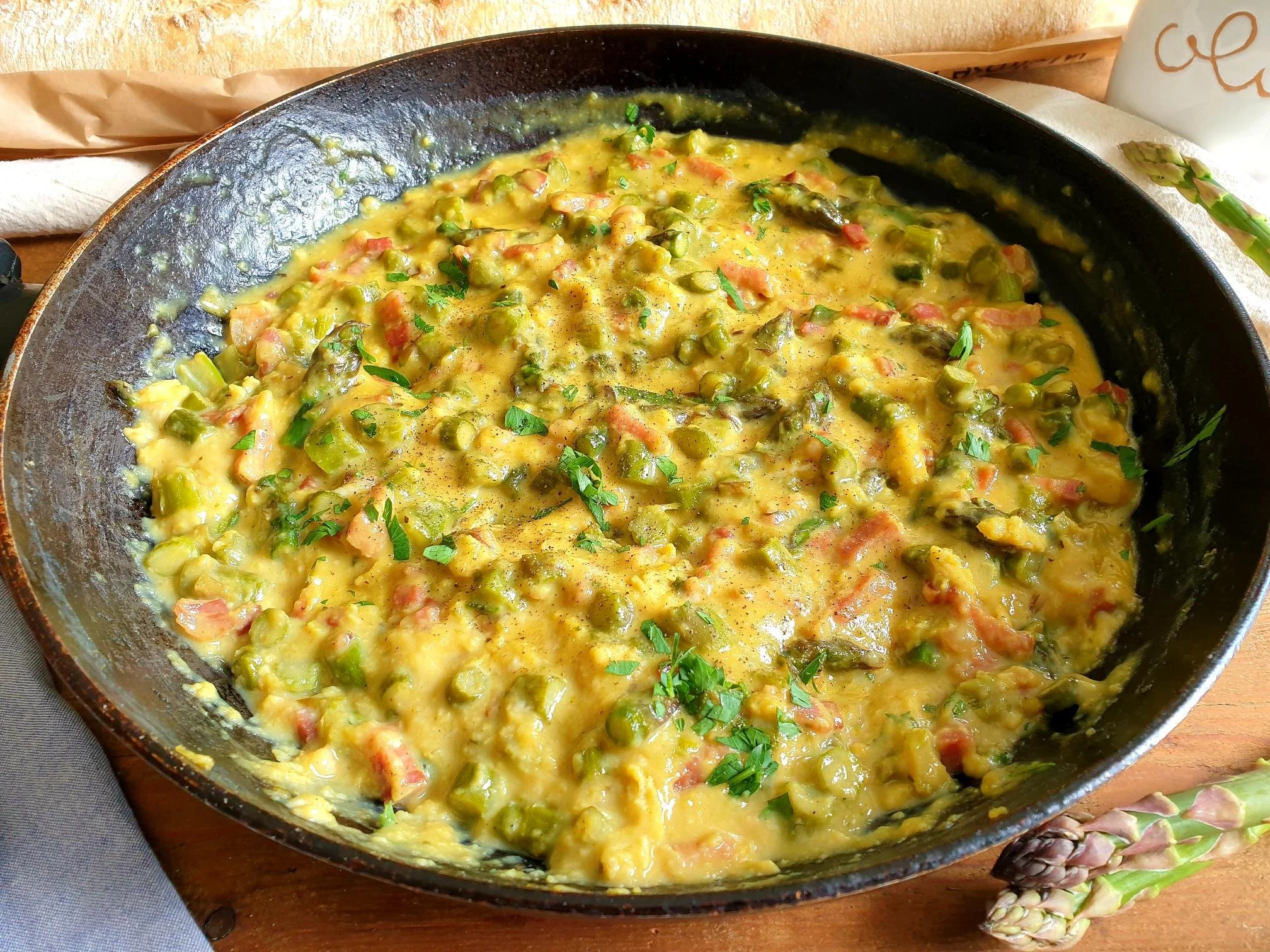
This extraordinarily simple and humble dish is really easy to make and truly sublime. It consists of cooking down the asparagus with some crunchy pancetta and then adding whisked eggs and cooking them to a creamy and smooth consistency, and when served with some fresh crunchy bread, this dish becomes a perfect choice for breakfast, brunch, lunch or dinner.

Green asparagus with pancetta and scrambled eggs (Umešana jajca s šparglji) or Green asparagus frittata with pancetta, know locally as Fritaja s špargljo, Fritata s šparglji or Fritaia coi sparesi, are probably the two of the most representative dishes and part of a unique gastronomic offers of Slovenian Istra, so much so, that a Festival called Šparga Fest is dedicated to these two dishes, traditionally using exclusively wild asparagus (divji šparglji).

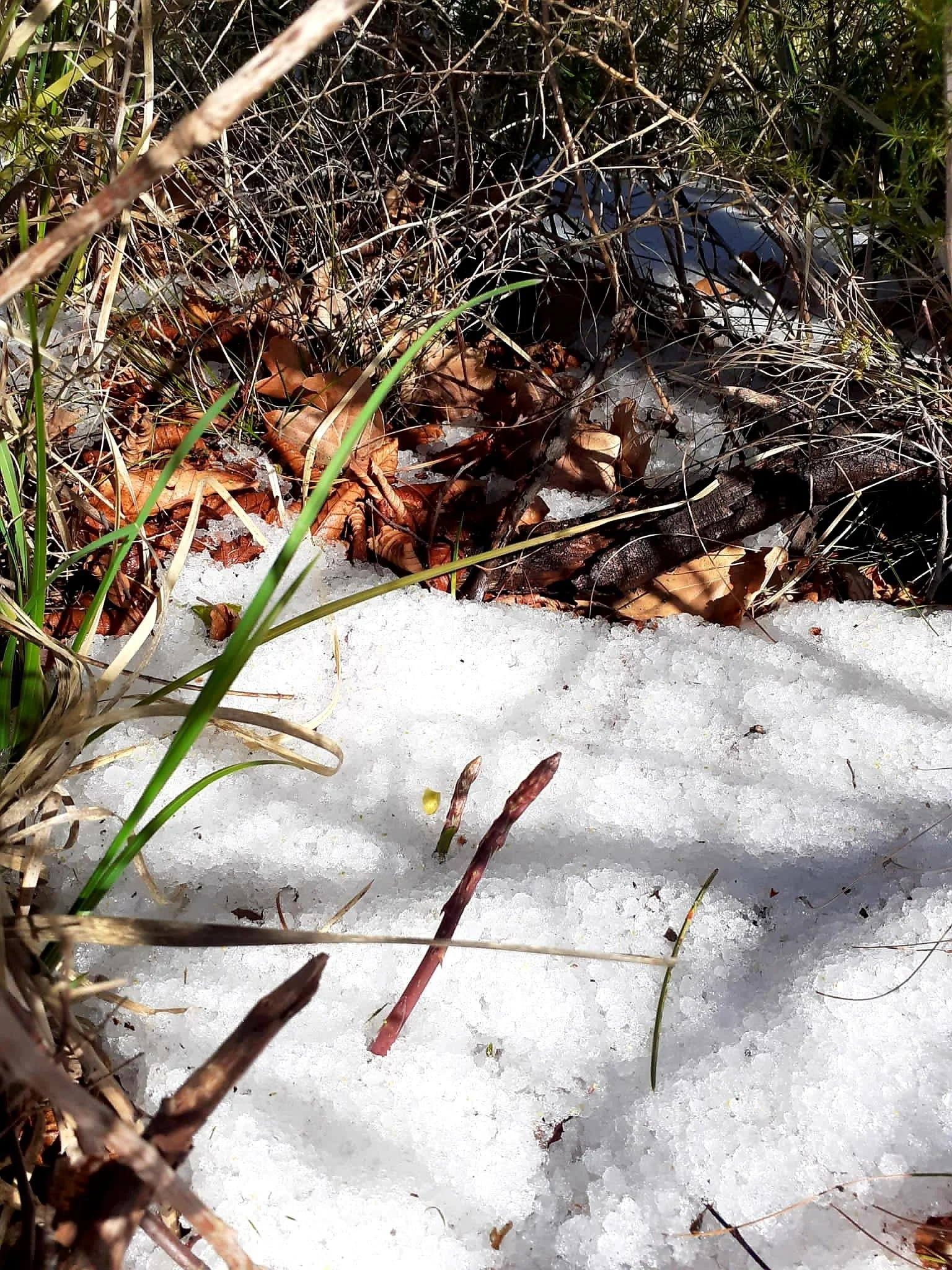
Wild asparagus, like store bought ones, have a fairly short season, but are more aromatic and they are ready to be picked around Easter period and one can commonly find them growing on the south facing pieces of land close to dry stone walls, on the edges of the forests, among the bushes, and although they are free in Slovenia to be foraged and enjoyed, there is a legal limit of how much wild asparagus someone can pick for personal use and consumption.

This is not quite the case in the United kingdom, where I currently live, as I found out, according to Janet Lister (Wildlife and Countryside Advisor for the National Trust). Wild asparagus, once a plentiful plant, is now a very rare coastal plant that only grows and can only be found in a handful of counties (Glamorgan, Pembrokeshire, Cornwall and Dorset). In fact, it is in decline and classed as an “endangered” species on the GB Red List.

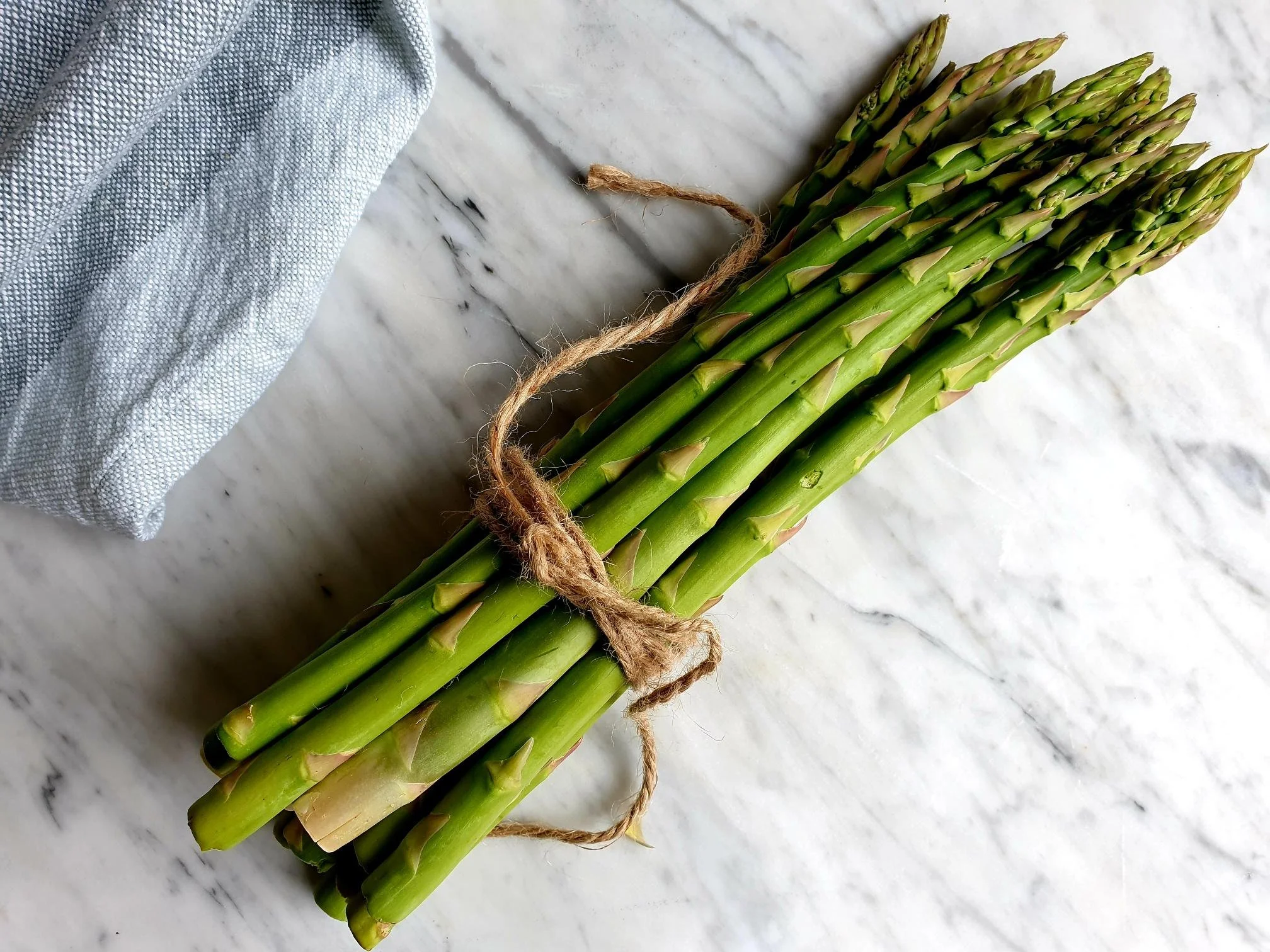
Wild asparagus

In the olden days, along the coats in Slovenia, these green delicacies were only known to the locals who used to invent and create dishes that were born out of necessity, with the ingredients available only during a particular season. This, once again, is a testimony and a reminder of the great resourcefulness of local people, who proved time and time again the ability to find clever ways to overcome hunger.

Nowadays, this type of asparagus has reached such a popularity that the inhabitants from inland Slovenia make a special day trip to the coast to enjoy this truly seasonal speciality.

Green asparagus with pancetta and scrambled eggs is a very much loved dish in many households, and so it is made very often. However, since it can only be made during asparagus season, it is also during this time that it is found in many informal family run restaurants.

I am sharing here the family recipe I grew up with, made with wild asparagus, which was picked by the family during many enjoyable and very memorable walks in nature. In this recipe I have replaced wild asparagus for the cultivated alternative, and you can also transform this recipe into a vegetarian and vegan friendly variation by using and frying the onions instead of pancetta, bacon or lardons. For this recipe you can also use fresh white asparagus.

View fullsize Green Asparagus with pancetta and scrambled eggs Istrian Recipe 3.jpg
View fullsize Green Asparagus with pancetta and scrambled eggs Istrian Recipe 5.jpg

Ingredients

Serves 4

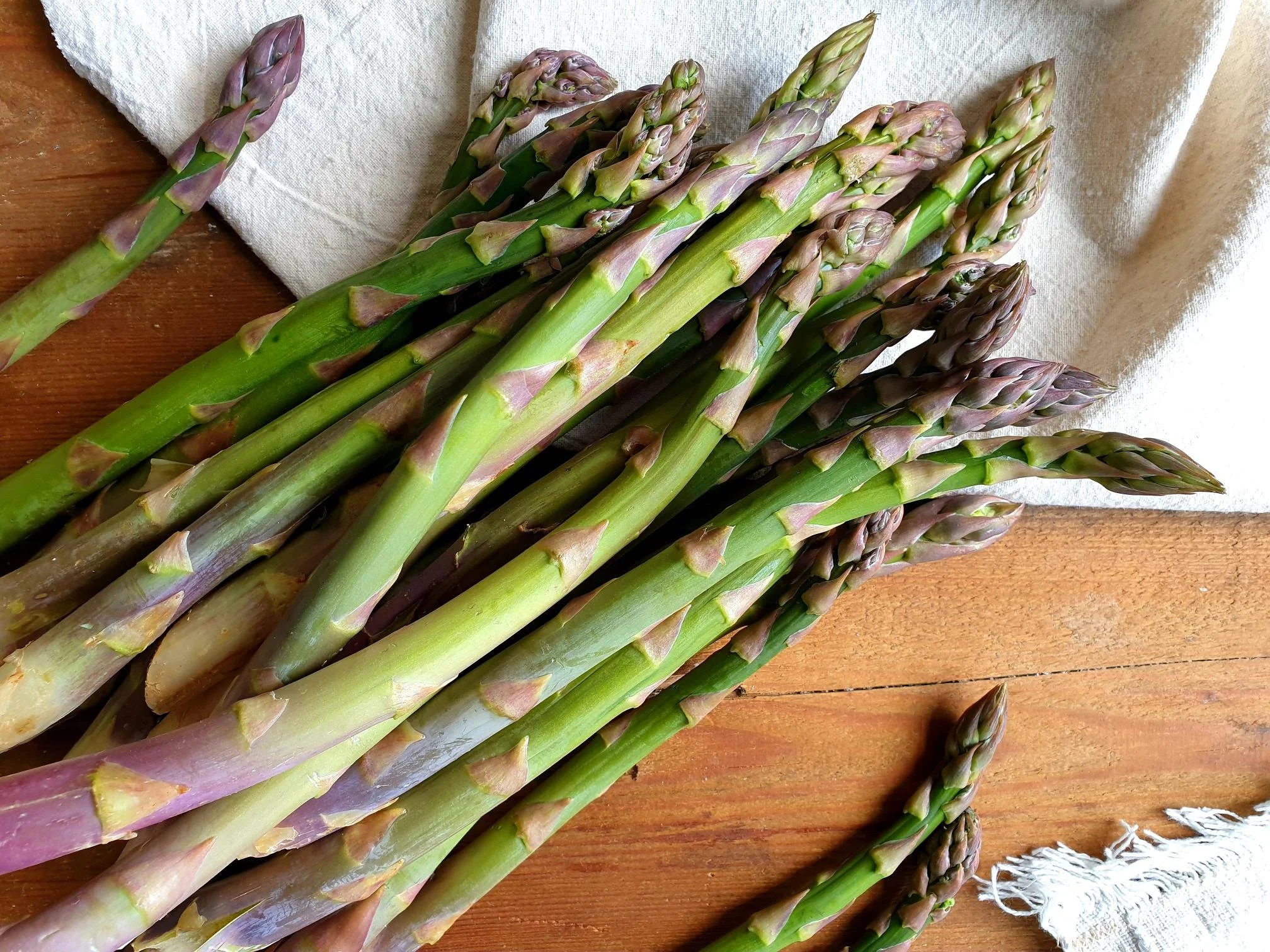
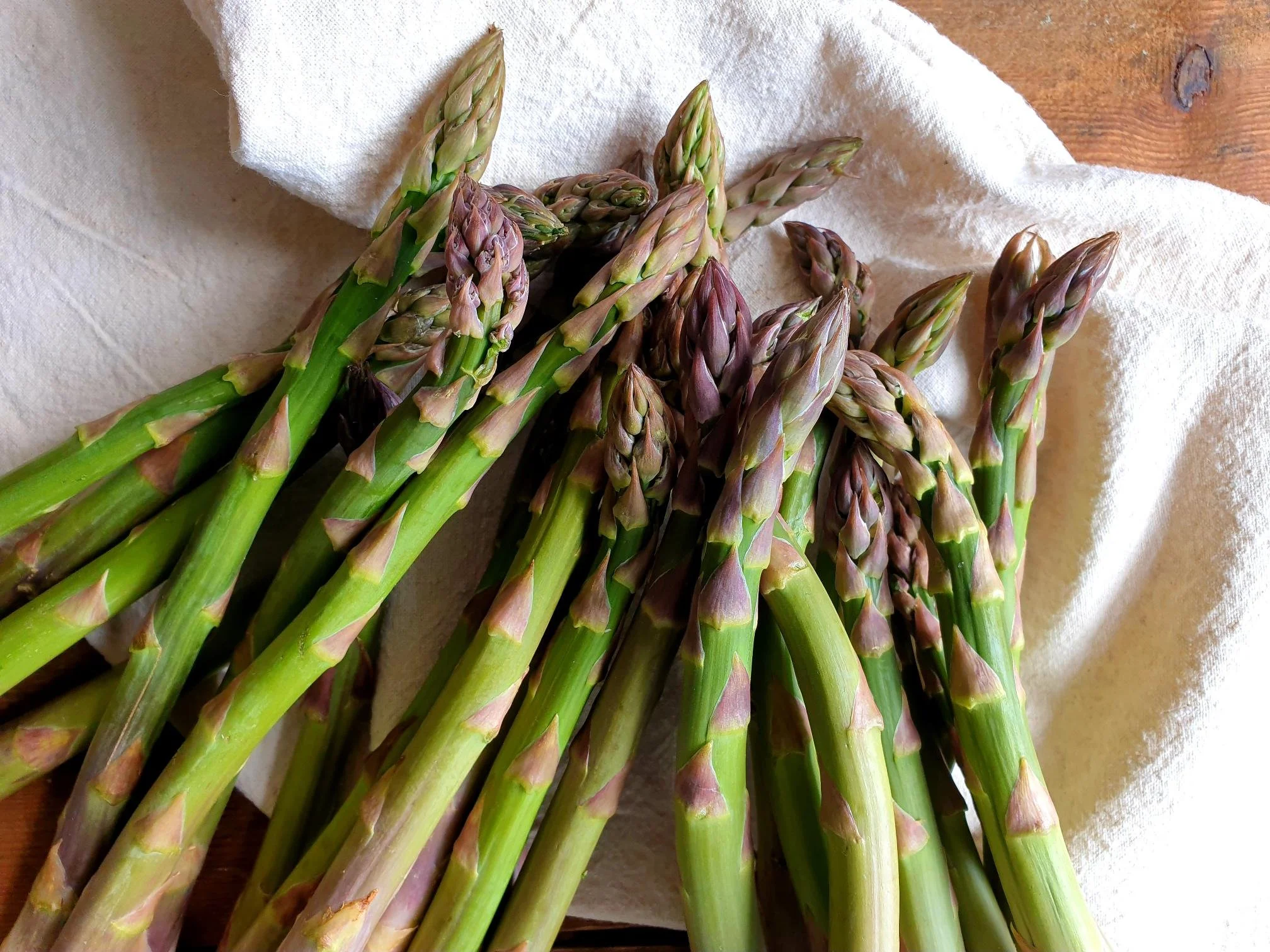
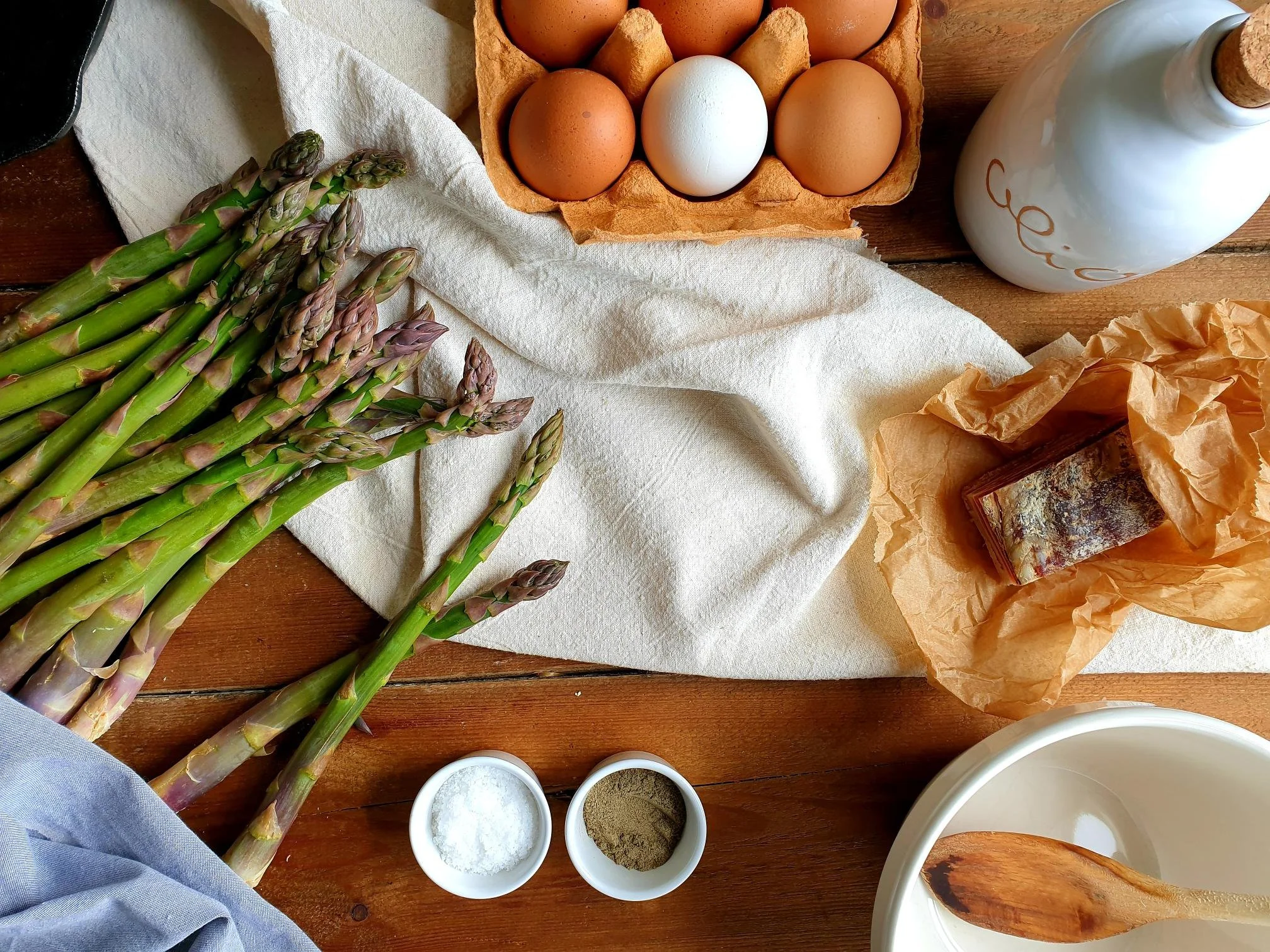
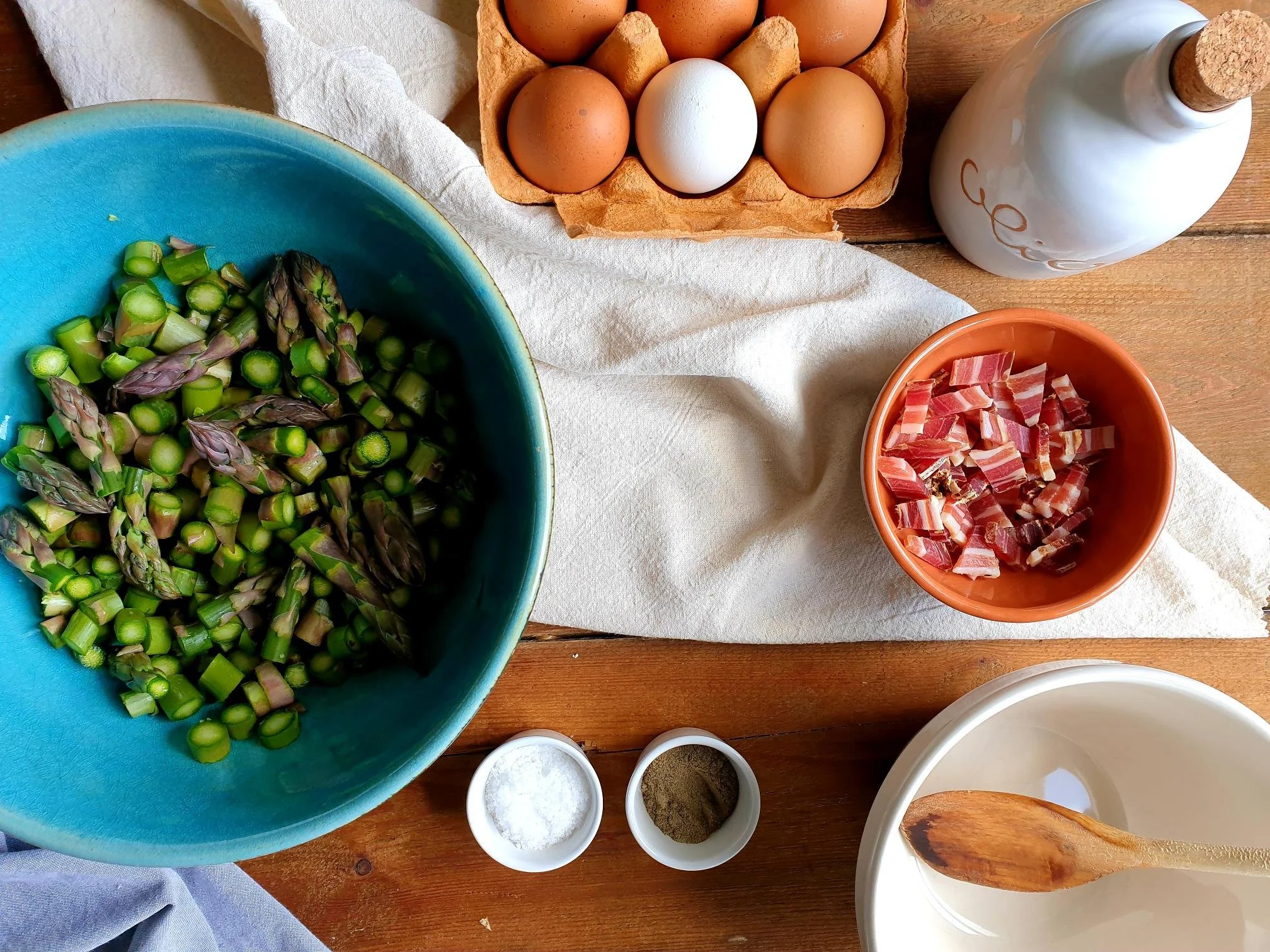
  • about 500g fresh green asparagus

  • 180g roughly, pancetta, bacon or lardons, finely sliced

  • 2 Tbsp extra virgin olive oil

  • 8 fresh eggs

  • sea salt

  • black pepper

Method

Wash the asparagus under cold running water and chop each asparagus into smaller sections.

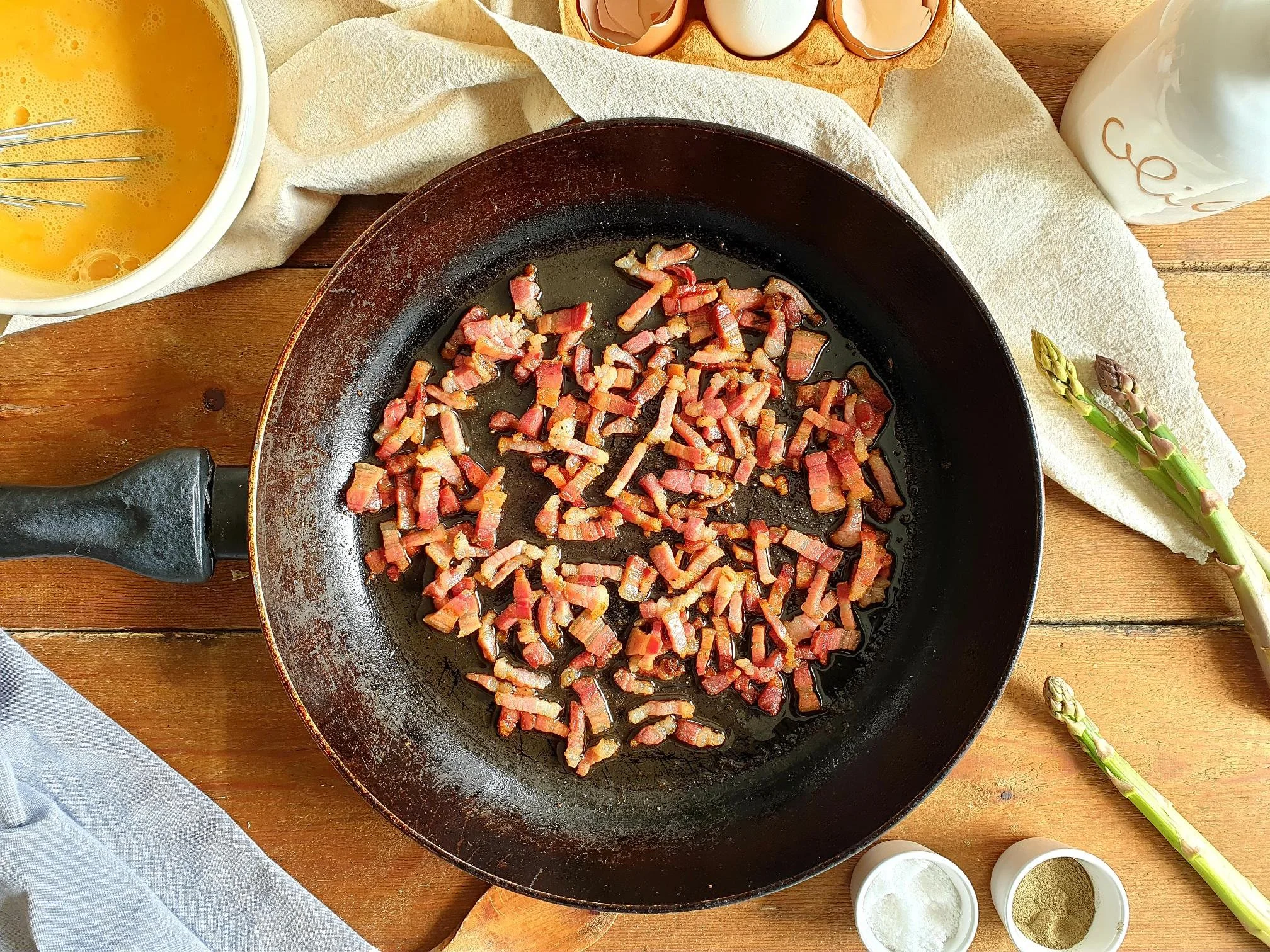
Put extra virgin olive oil in a fairly large frying pan, add finely sliced pancetta, bacon or lardons and fry until fully cooked and slightly crispy.

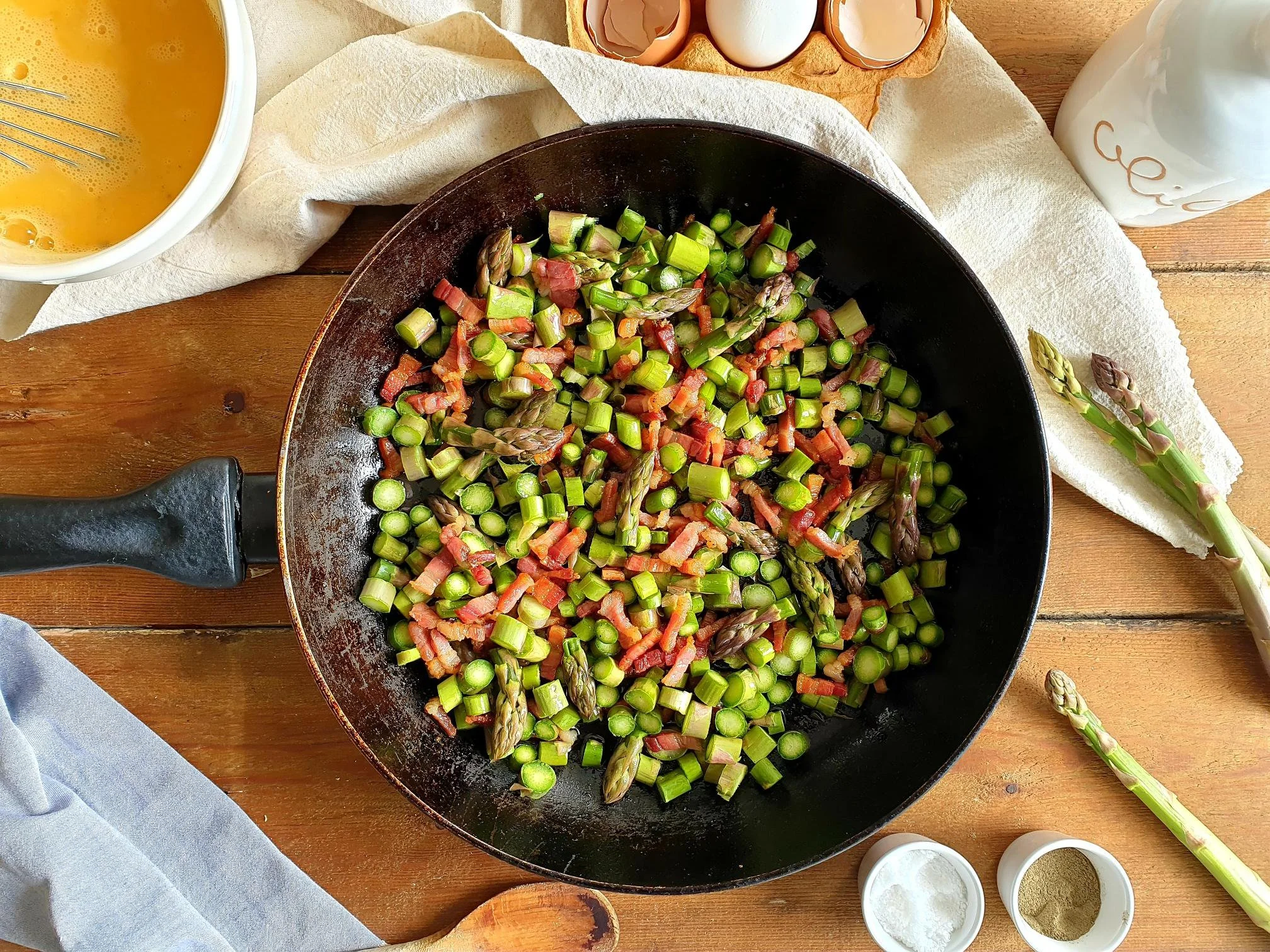
Add chopped asparagus and cook for a few minutes together with pancetta, until they soften a bit and deepen in colour.

Add small amounts of water, about 50ml at a time, this will help to cook down the asparagus.

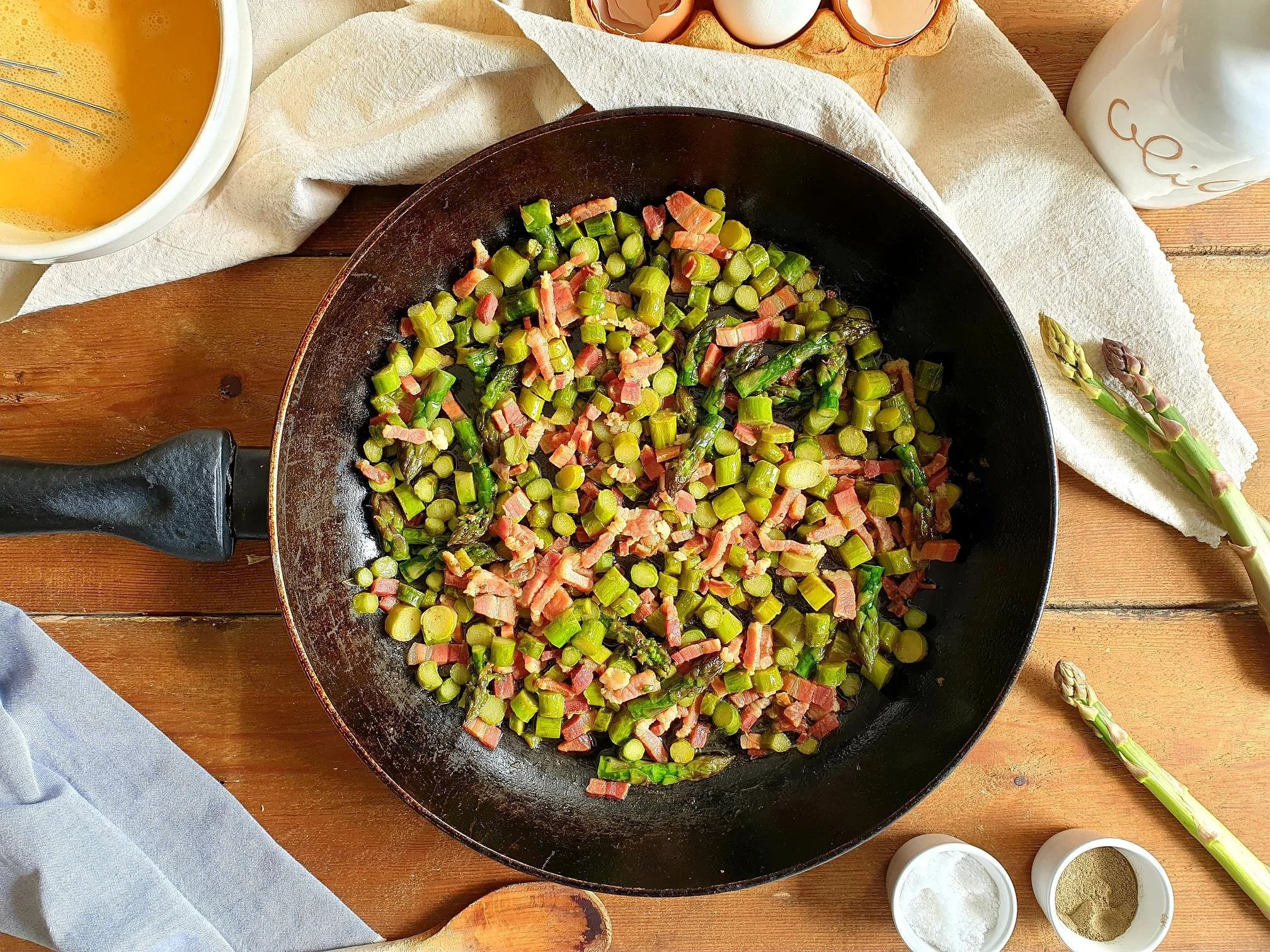
Cook the asparagus until they are fully cooked, deepen in colour, and tender but not overcooked and falling apart.

View fullsize Green Asparagus with pancetta and scrambled eggs Istrian Recipe 13.jpg
View fullsize Green Asparagus with pancetta and scrambled eggs Istrian Recipe 14.jpg

Cook the asparagus until they are fully cooked and tender but not overcooked and falling apart.

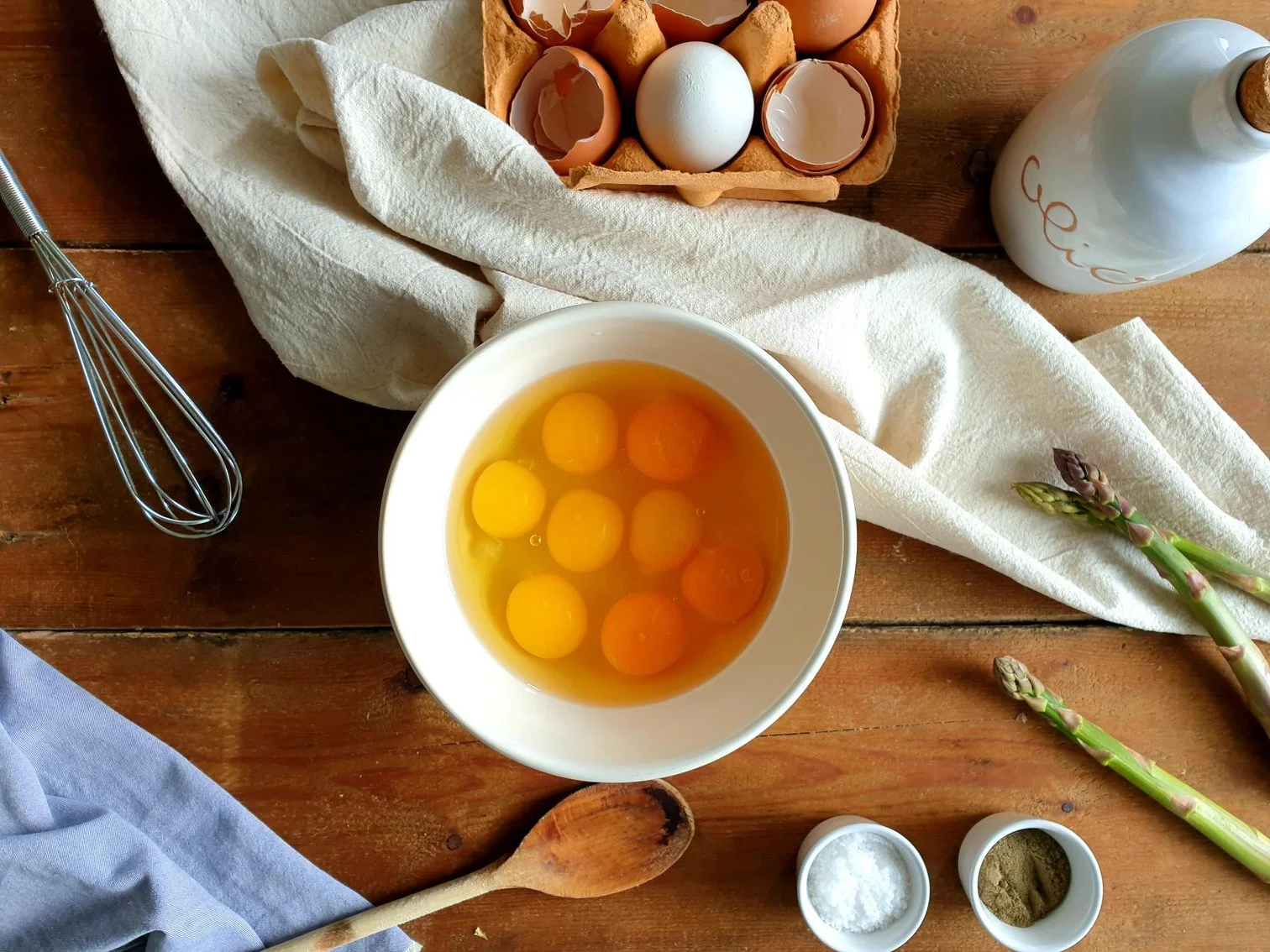
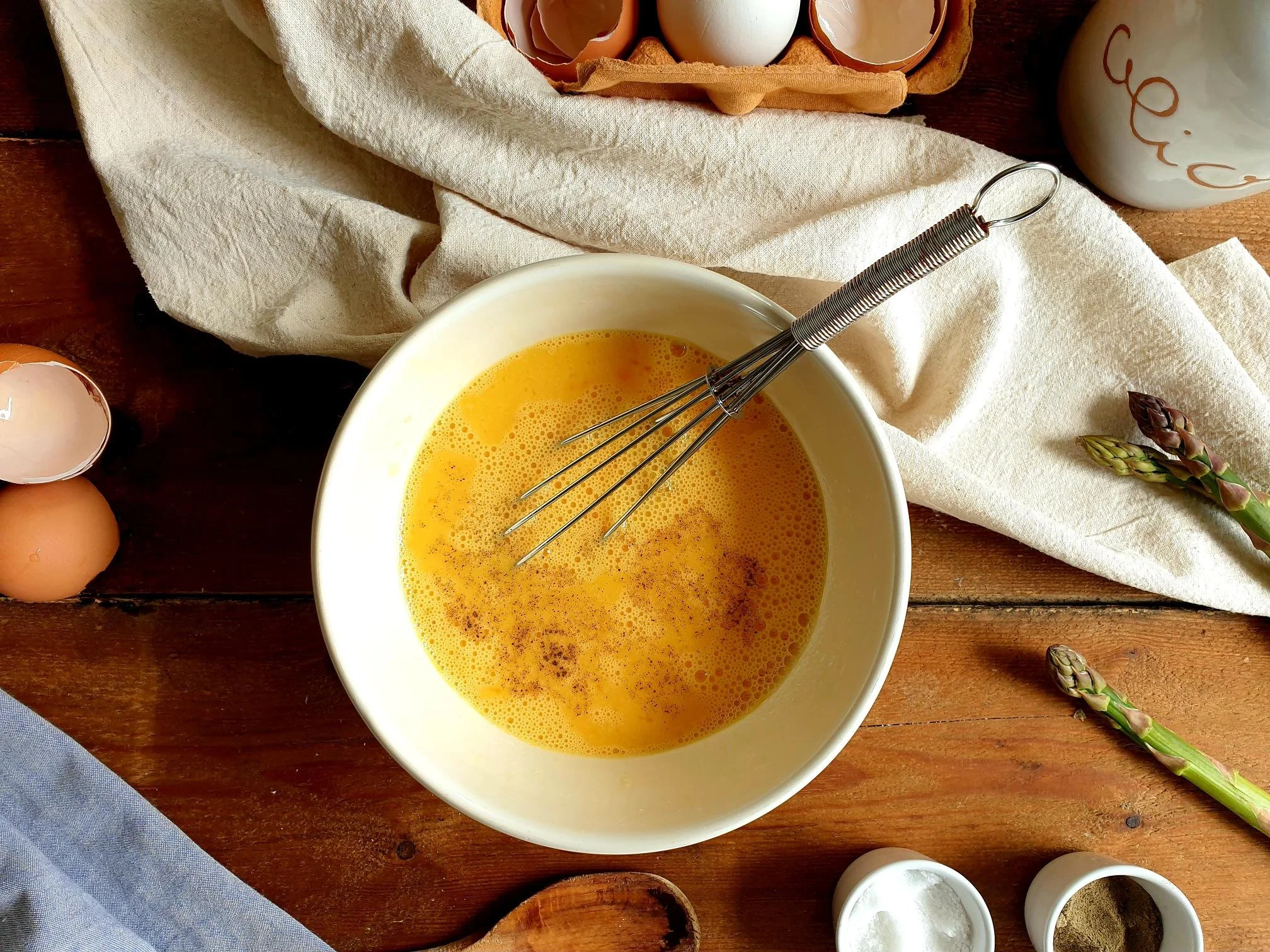
Crack the eggs into a bowl, add sea salt, black pepper and whisk.

View fullsize Green Asparagus with pancetta and scrambled eggs Istrian Recipe 10.jpg
View fullsize Green Asparagus with pancetta and scrambled eggs Istrian Recipe 12.jpg

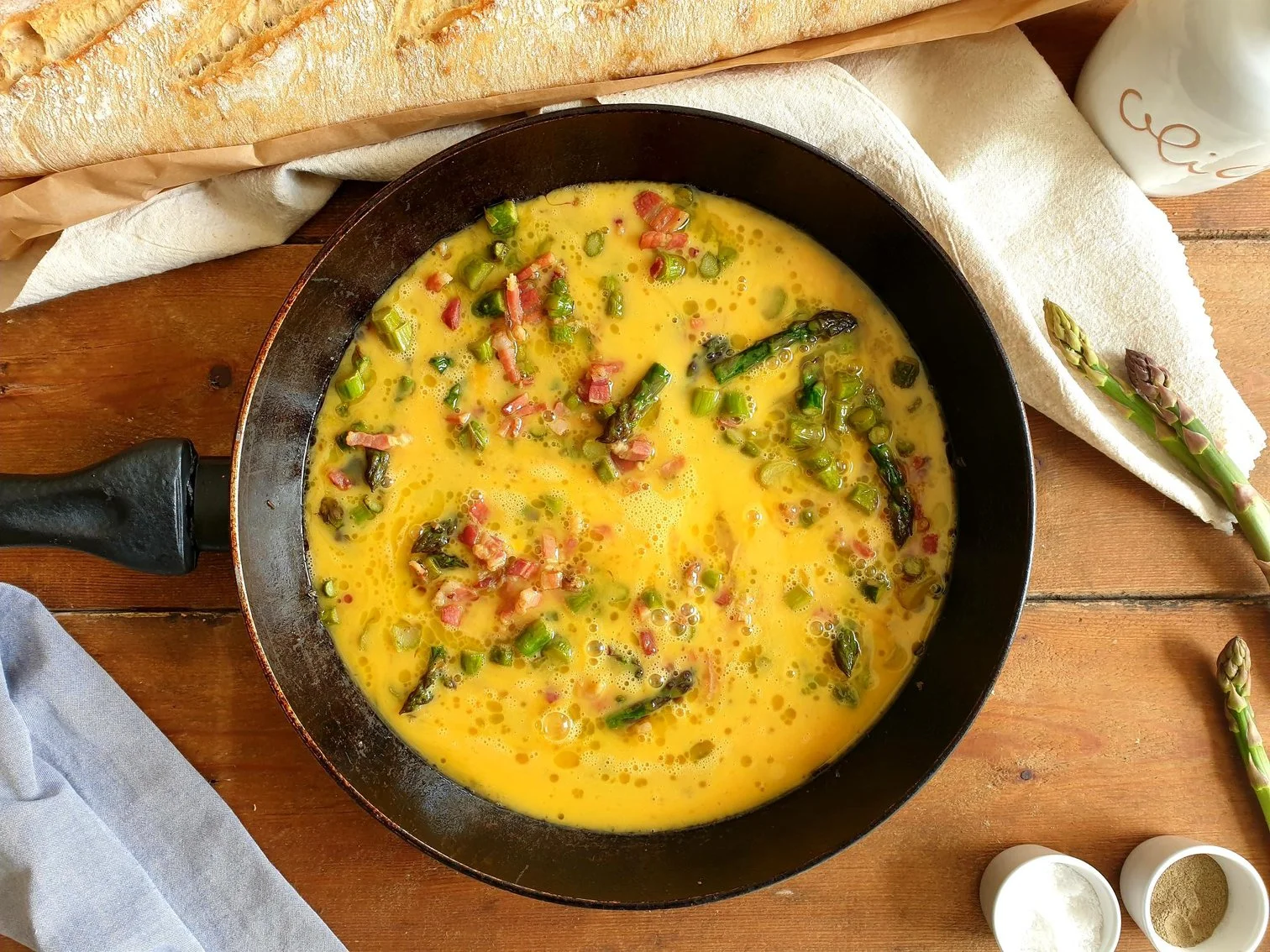
Take the pan off the heat and pour the eggs over the asparagus mixture.

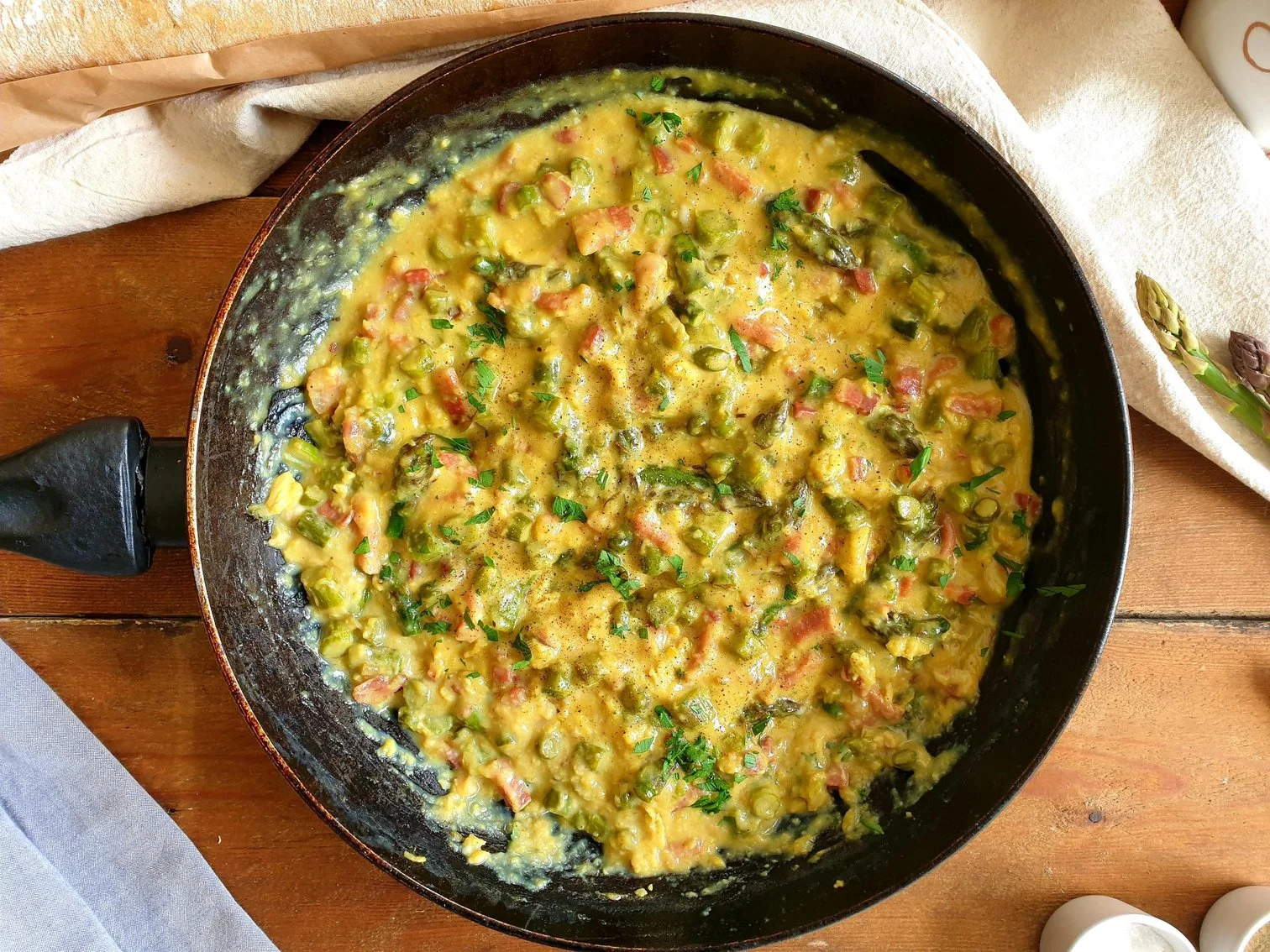
Put the pan back on the heat, stir and cook the eggs to the desired consistency stirring with a wooden spoon or spatula, lifting and folding the egg and asparagus mixture from the bottom of the pan.

Cook the eggs until they are softly set and slightly runny in places or cook further until they reach the desired consistency.

Taste and adjust the seasoning with sea salt and black pepper.

Sprinkle with roughly chopped fresh parsley, if desired, and serve hot immediately with fresh crunchy bread.

Just a thought

This dish is not suitable for freezing.

Cooked asparagus and pancetta mixture, without adding the eggs, makes a fantastic base for risotto.

You can also turn cooked asparagus and pancetta base into a scrumptious sauce for a pasta dish by simply adding a bit of single cream to it and dilute it, if it gets too thick, with a bit of water where you cooked the pasta.

Wine suggestion

Lugana DOC "Le Fornaci" 2021 - Tommasi

June 01, 2022 /tina oblak
green asparagus, cultivated green asparagus, wild asparagus, scrambled eggs with asparagus, scrambled eggs, pancetta, bacon, lardons, asparagi verdi con pancetta e uova strapazzate, Umešana jajca s šparglji, divji šparglji, Umešana jajca z divjimi šparglji
Adriatic Recipe, breakfast, brunch, child friendly dish, child friendly meal, dinner, Easy recipe, entrée course, family friendly dish, family friendly meal, first course, first course dish, first course meal, hearty dish, Istrian cuisine, Istrian dish, Istrian food, Istrian gastronomy, main course, main dish, Rustic dish, Slovenian cuisine, Slovenian food, Slovenian gastronomy, Spring dish, Spring recipe, Starters, supper, Vegetarian, Vegetables
Comment

Sea Bream broth Istrian Recipe

Beans and Sardines
May 18, 2022 by tina oblak in Adriatic Recipe, All year round recipe, Appetizers, Autumnal dish, Autumnal recipe, Celebratory dish, child friendly dish, child friendly meal, dinner, Easy recipe, entrée course, family friendly dish, family friendly meal, first course, first course dish, first course meal, Fish & Seefood, fish starter, Healthy, healthy mael, Istrian cuisine, Istrian dish, Istrian food, Istrian gastronomy, light fish course, light meal, main course, main dish, main fish course, main fish meal, Nutritious, Nutritious dish, Rustic dish, Slovenian cuisine, Slovenian food, Slovenian gastronomy, Soups, Spring dish, Spring recipe, Starters, supper, Winter recipe, winter soup

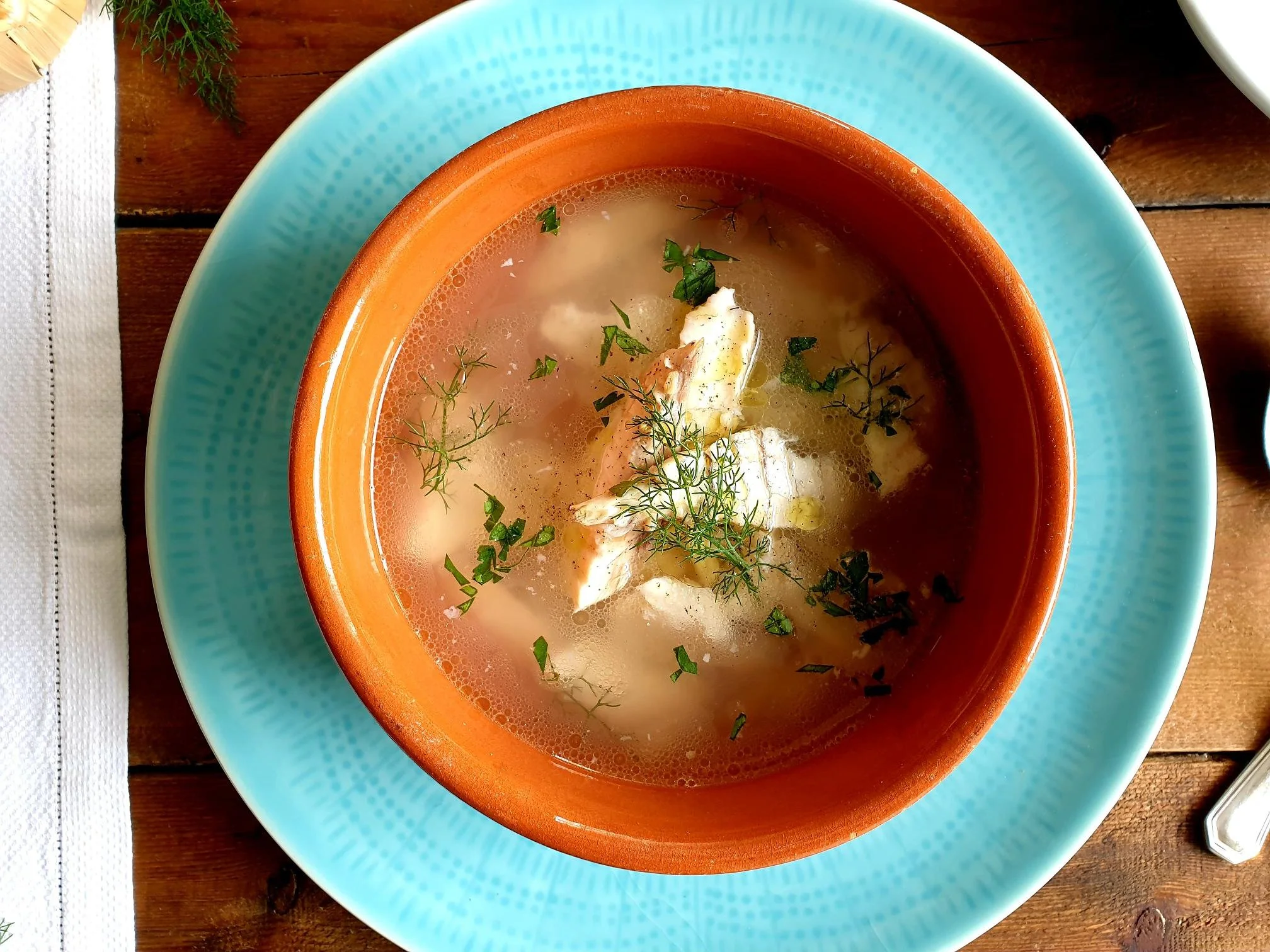
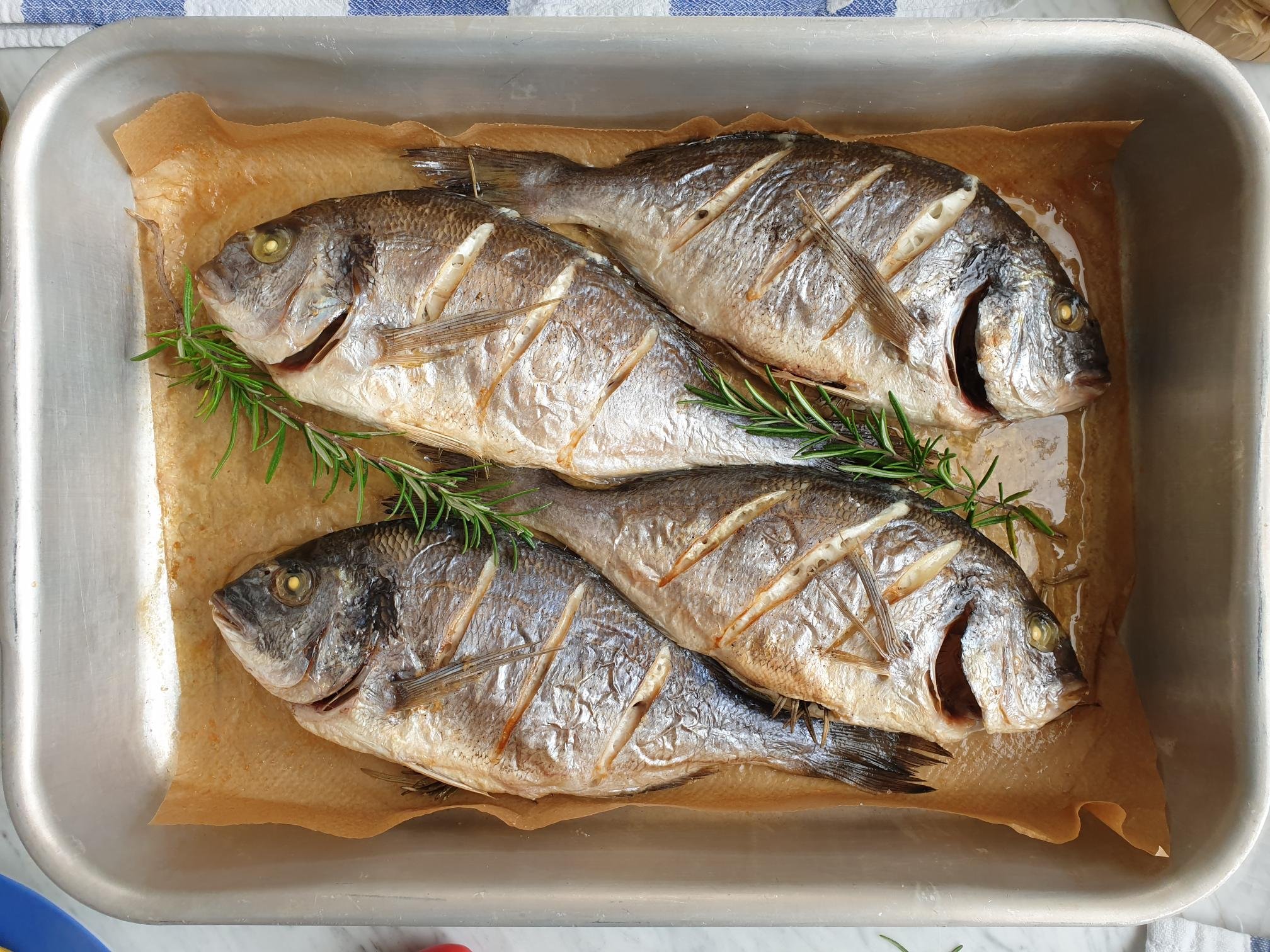
This clear fish broth is very light and has a very pleasant, delicate and mild fish flavour, it is very nutritious and incredibly easy to make as it consists of cooking fresh whole fish in plenty of water together with the onions, celery, bay leaves, parsley, carrots, black peppercorns and seasoned with sea salt, then strained and served hot with fillets of fish and some cooked white rice if desired.

This fish broth can be as rustic or as elegant and sophisticated as you want it to be, it is a very family friendly dish and perfect for any occasion.

It would be normally eaten as a hot starter, however, you can turn this clear soup into a bit more substantial main course by cooking some white rice separately and add it into a broth, and sprinkle some freshly grated Parmiggiano Reggiano (or Padano) cheese on top, which is a very customary thing to do along the Slovenian coast, where this type of soup is very much loved by the locals, cooked recurrently in the households and found on menus in fish restaurants (Ribja juha).

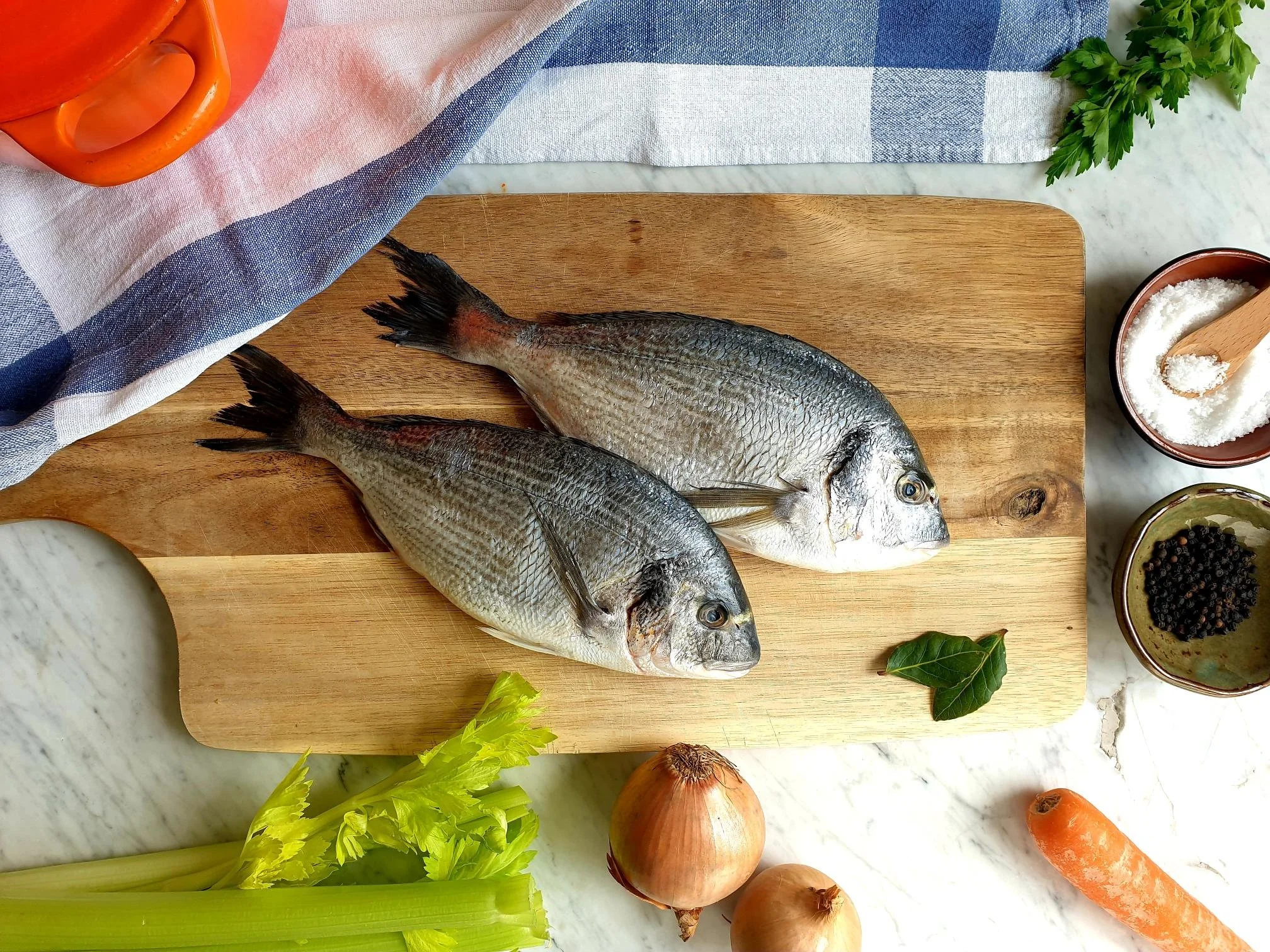
This type of broth would be most commonly cooked using fresh whole Sea bream or Sea bass, but other type of fish can be used like Red mullet, John Dory, Small red scorpionfish and similar fish that have a delicate flavour, and you can also mix and match the fish that you like and found available fresh when deciding to cook the broth.

Fish that is quite strong in taste and quite oily, like mackerel, for example, is not the best choice for the broth, also fish fillets are not particularly recommended (although you can use them for practical reasons) as they will give you a slightly blander tasting broth, and that is because the real flavour comes out of the heads and the bones of the fish.

Recipe for this broth is timeless, it has been cooked and loved by the whole family since I was very little and really does take me right back to my childhood when my family used to run a small fish based restaurant.

This type of fish broth would be cooked in large quantities as it is also a fantastic base to use for sauces and for fish and seafood risotto, as it adds bags of extra flavour.

Ingredients

Serves 4

  • fresh whole sea bream, one big in size or a few smaller ones (total weight roughly between 400-600g), cleaned, scaled and gutted

  • 1 medium onion, peeled and halved

  • 1 medium carrot, peeled

  • 1 fresh celery stick, washed (with or without the leaves on)

  • 2 fresh bay leaves, fresh or dry

  • 2 branches of fresh flat leaf parsley, washed (plus some extra when serving the dish)

  • sea salt

  • few black peppercorns

  • extra virgin olive oil, for drizzling, optional

  • white rice, optional

  • Parmiggiano Reggiano or Padano cheese, freshly grated, optional

Method

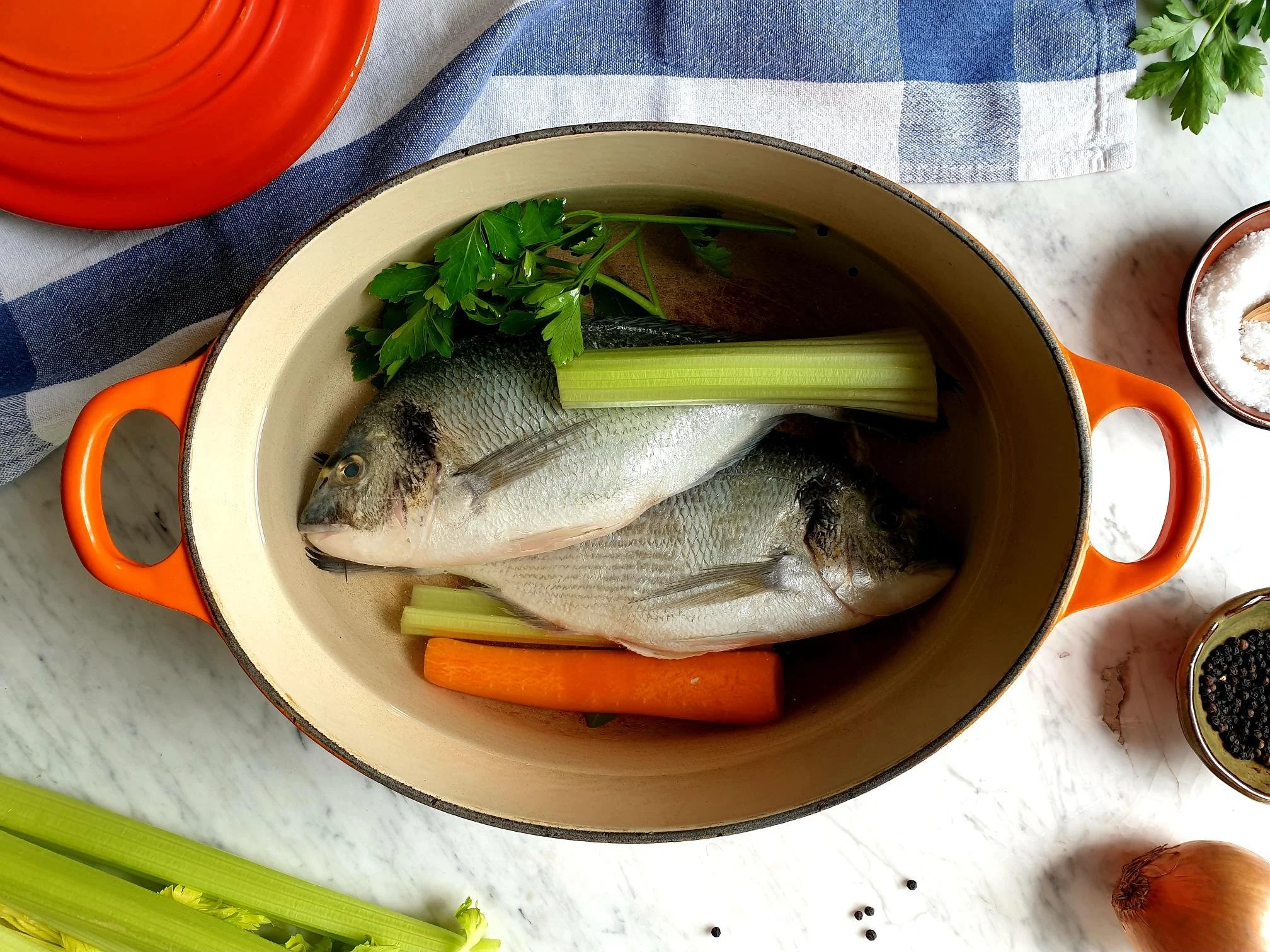
Place sea bream in a pan or stock pot large enough to accommodate the fish lying flat (if using more than one sea breams they can overlap a bit but avoid laying them one on top of the other).

Add onion, carrot, celery stick, bay leaves, fresh parsley and a pinch of salt.

Add 2 litres of cold water and bring to boil.

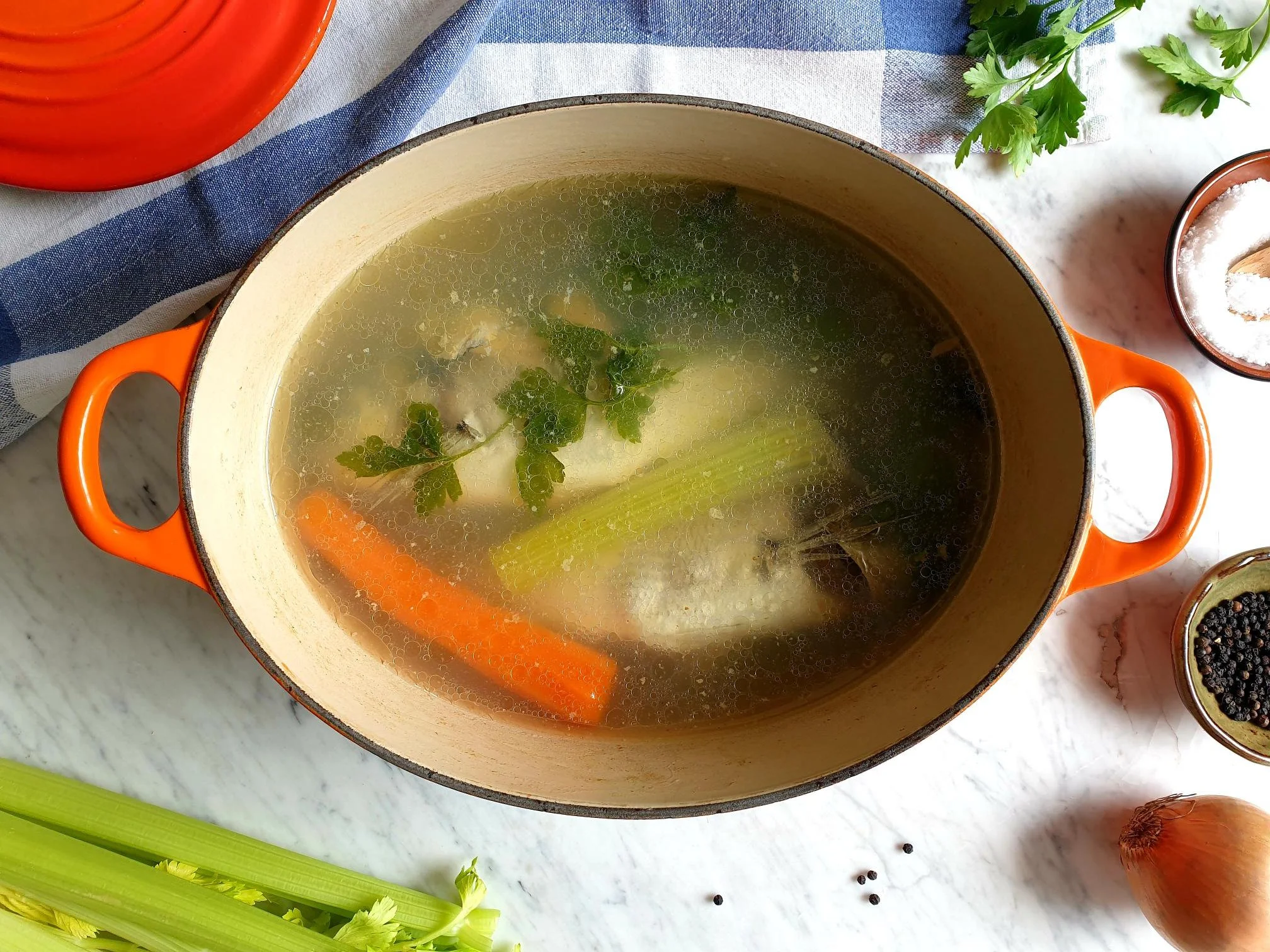
Lower the heat and gently cook for about 1 hour with the lid partially uncovered.

Check occasionally so the broth does not boil too vigorously (this can break the fish into pieces) and skim off any scum if it forms.

Cook the rice as instructed on the pack, if using to add to the broth (a small handful of rice per person).

Carefully remove the fish from the pan, the use of slotted or unslotted turner spatula on each end of the fish will help to lift the fish out of the pan and place it on a big plate or chopping board.

Allow the fish to cool a bit to a manageable temperature.

Clean sea bream by removing the tails, heads, the skin and all the bones in order to obtain small fillets of fish.

Put the fillets in a dish and cover with the aluminium foil to prevent drying and set aside for later use.

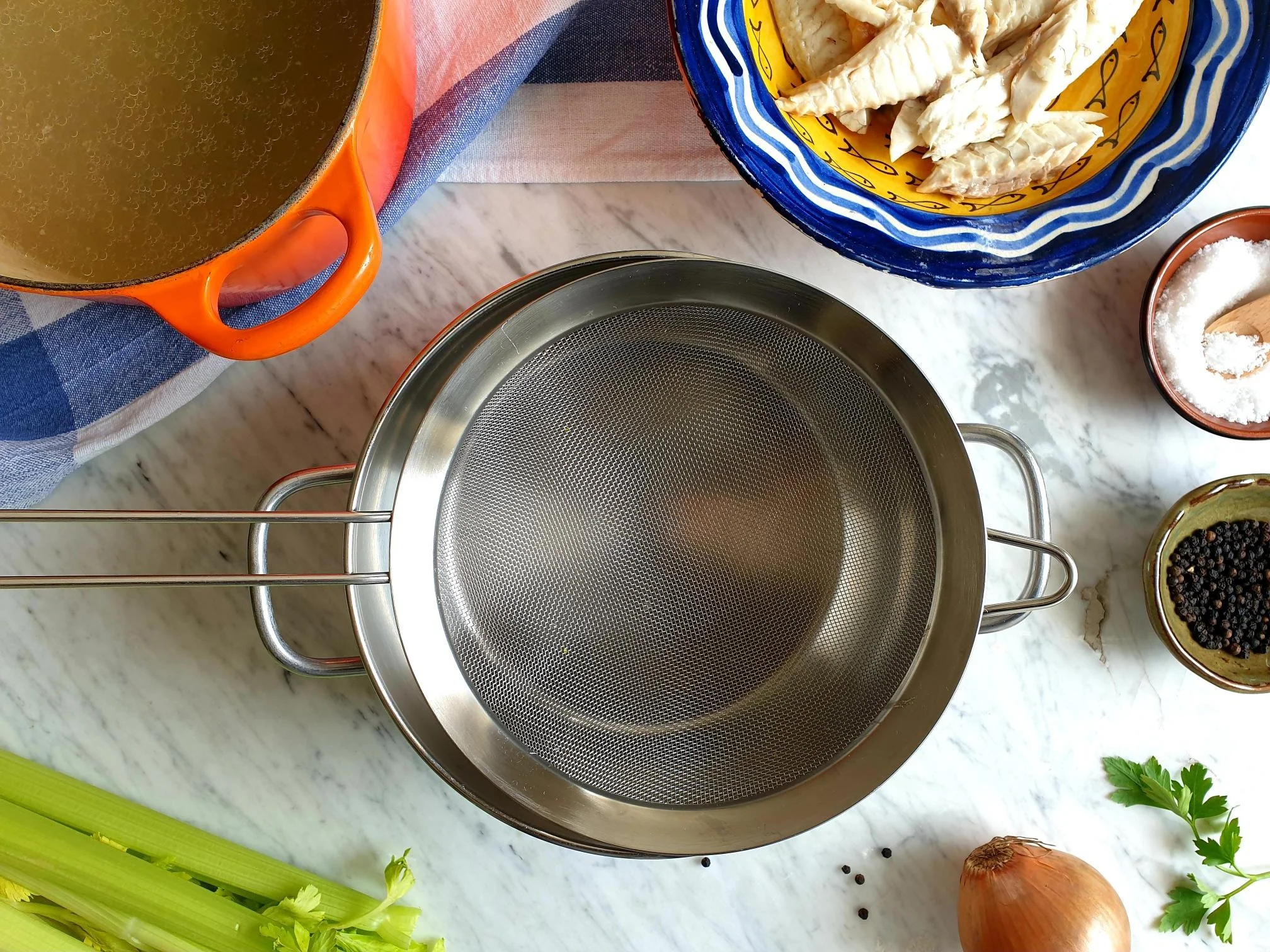
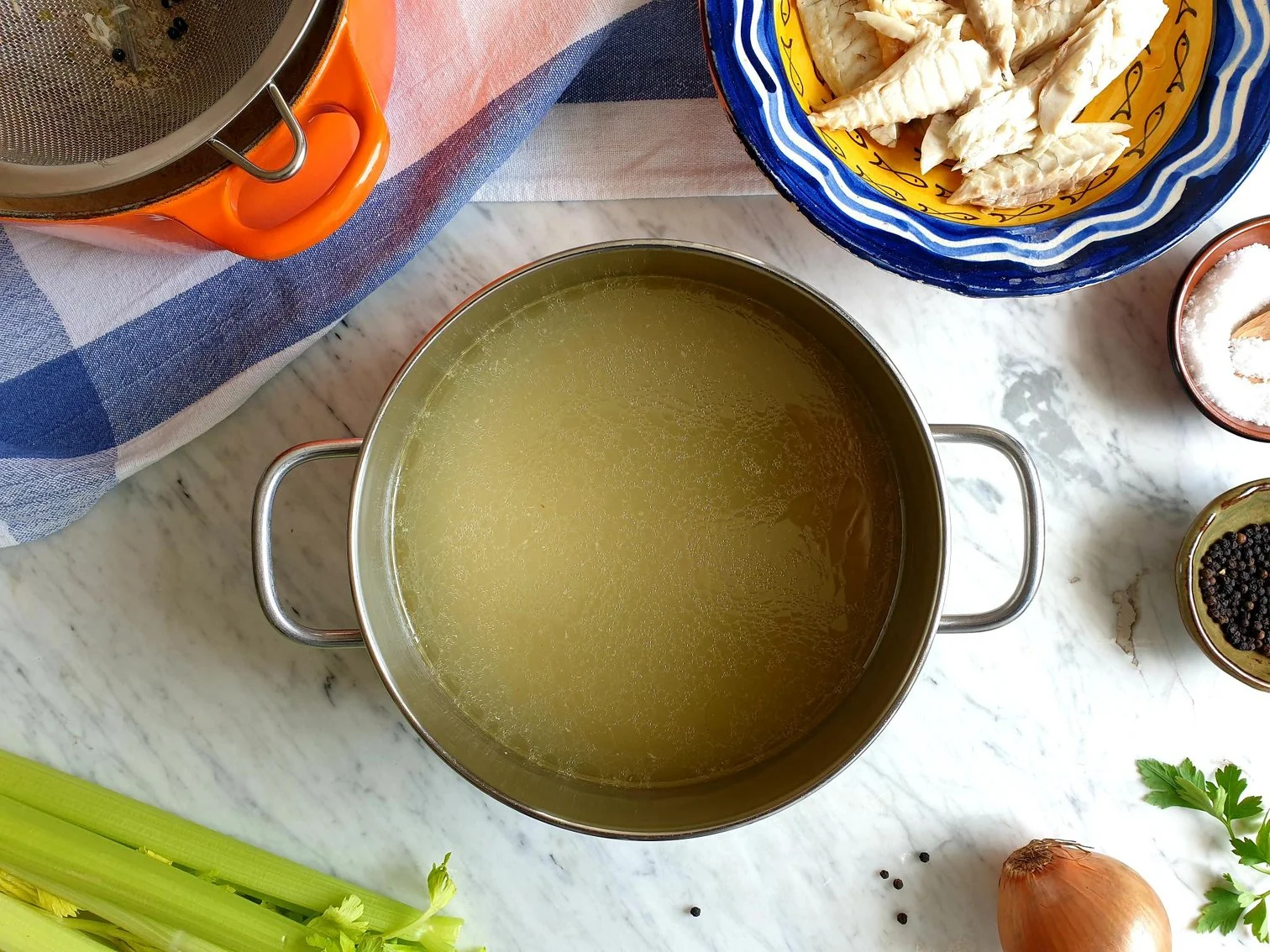
Pour the broth through a fine strainer or sieve into another pan.

View fullsize Sea Bream broth Istrian Recipe 12.jpg
View fullsize Sea Bream broth Istrian Recipe 13.jpg

Add previously cleaned pieces of fish (small fillets) back into a pan with a filtered broth.

Discard bits and pieces caught in the strainer or in the sieve.

Taste and adjust the seasoning with sea salt.

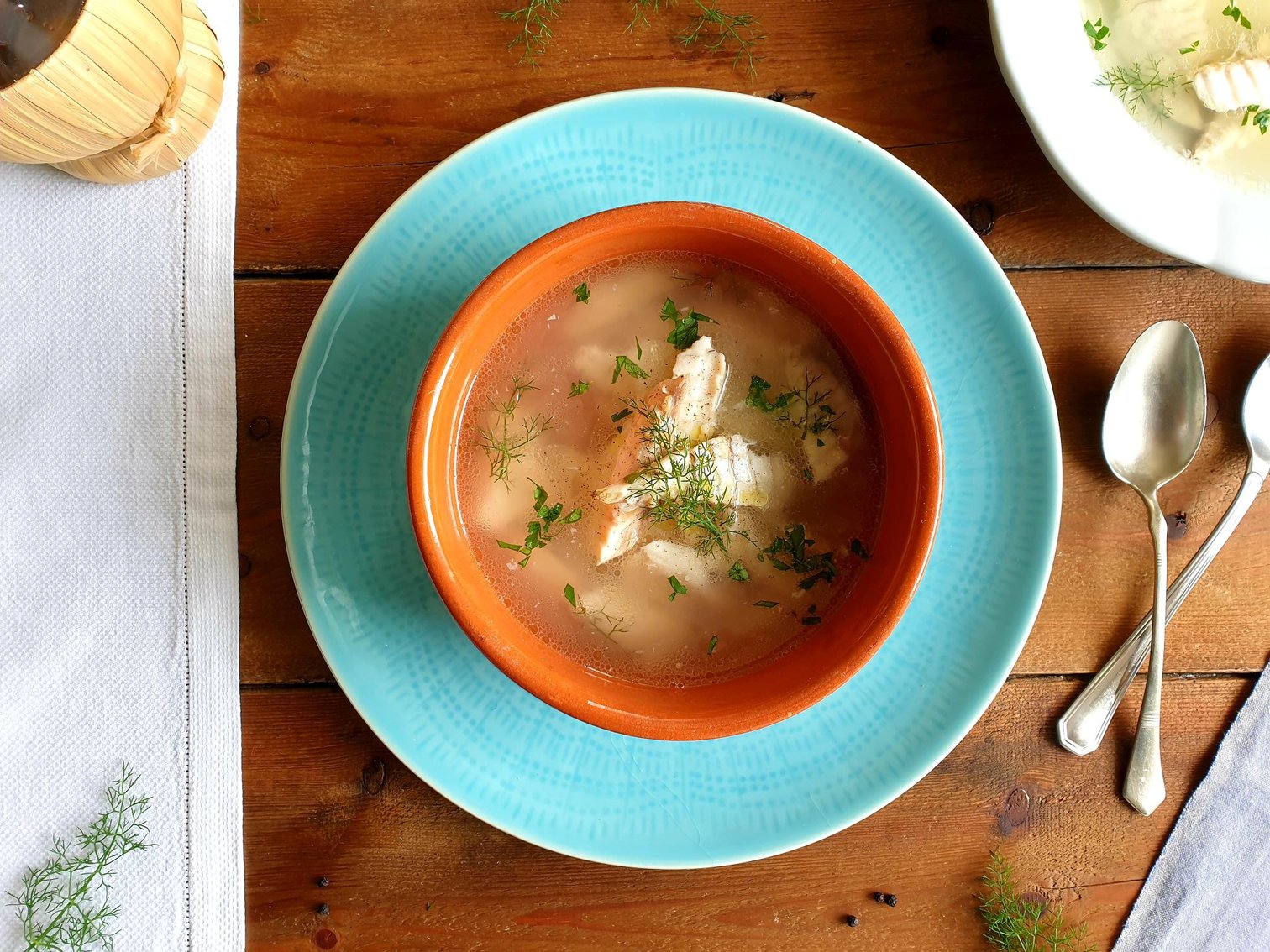
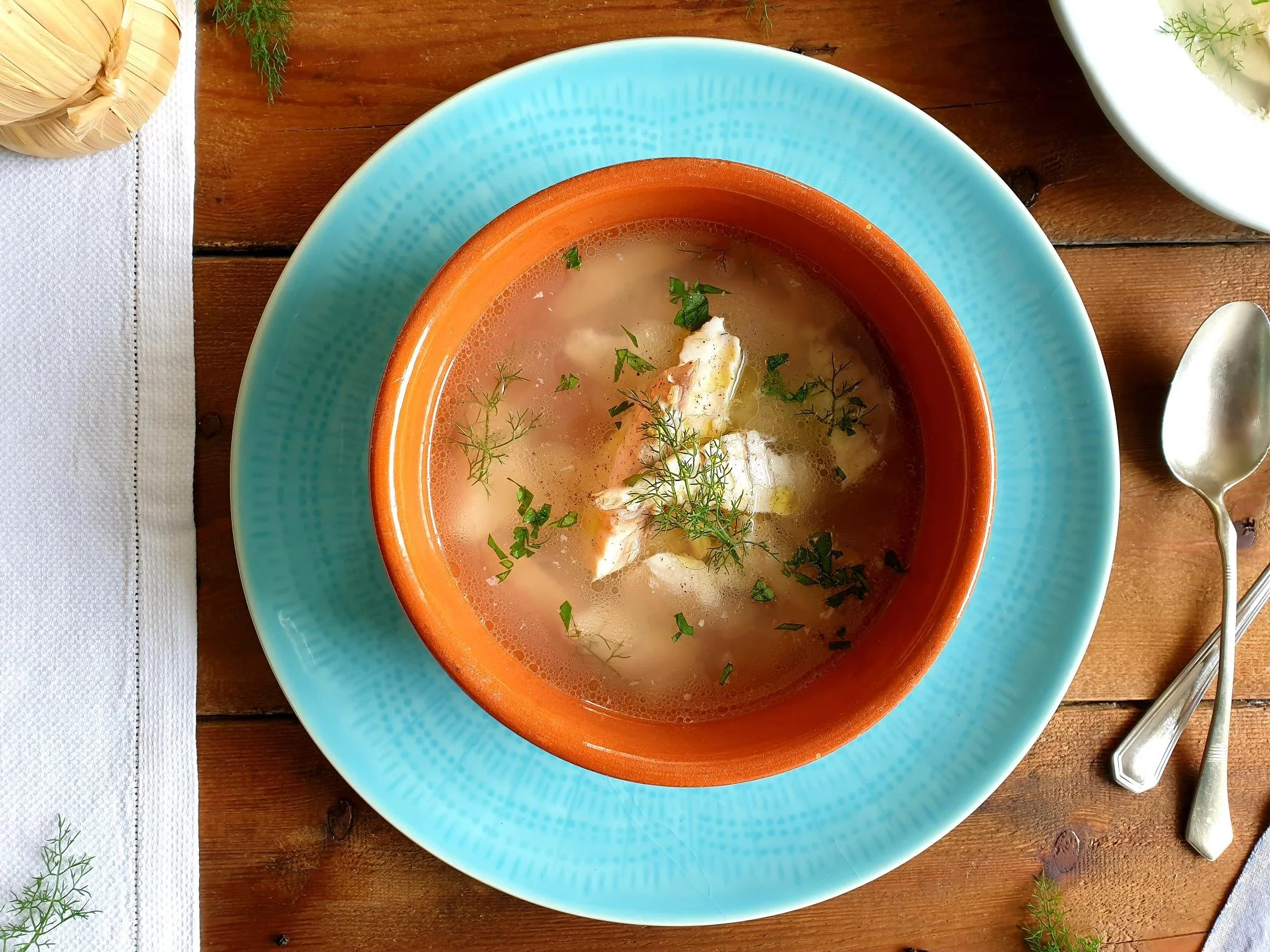
Ladle the broth into serving soup plates or bowls, sprinkle with roughly chopped fresh parsley, drizzle of extra virgin olive oil, add a small handful of cooked rice if desired, and serve hot, immediately with some fresh crunchy bread.

Just a thought

Freshly cooked fish broth will keep in the fridge for a few days in the airtight container and is suitable for freezing.

You can cook this broth using only the heads and the bones of the fish and use the fillets for a different recipe or make a second course with them.

Wine suggestion

Vino Bianco "Turno Belo" - Movia

May 18, 2022 /tina oblak
Clear Sea Bream broth, clear fish soup, Sea Bream, Sea Bass, Red mullet, John Dory, Small red scorpionfish, Ribja juha, Cista ribja juha, Brodo di pesce, Brodo di branzino
Adriatic Recipe, All year round recipe, Appetizers, Autumnal dish, Autumnal recipe, Celebratory dish, child friendly dish, child friendly meal, dinner, Easy recipe, entrée course, family friendly dish, family friendly meal, first course, first course dish, first course meal, Fish & Seefood, fish starter, Healthy, healthy mael, Istrian cuisine, Istrian dish, Istrian food, Istrian gastronomy, light fish course, light meal, main course, main dish, main fish course, main fish meal, Nutritious, Nutritious dish, Rustic dish, Slovenian cuisine, Slovenian food, Slovenian gastronomy, Soups, Spring dish, Spring recipe, Starters, supper, Winter recipe, winter soup
Comment

White asparagus with hard boiled eggs Venetian style Recipe

Beans and Sardines
May 11, 2022 by tina oblak in Adriatic Recipe, Appetizers, brunch, child friendly dish, child friendly meal, dinner, Easter dish, Easter recipes, Easy recipe, family friendly dish, family friendly meal, first course, first course dish, first course meal, Healthy, healthy mael, Istrian cuisine, Istrian dish, Istrian food, Istrian gastronomy, light meal, main course, main dish, Nutritious, Nutritious dish, recipe from Northern Ital, Rustic dish, Salads, Side Dishes, Slovenian cuisine, Slovenian food, Slovenian gastronomy, Spring dish, Spring recipe, Starters, Vegetable side dish, Vegetables, Vegetarian, Venetian dish

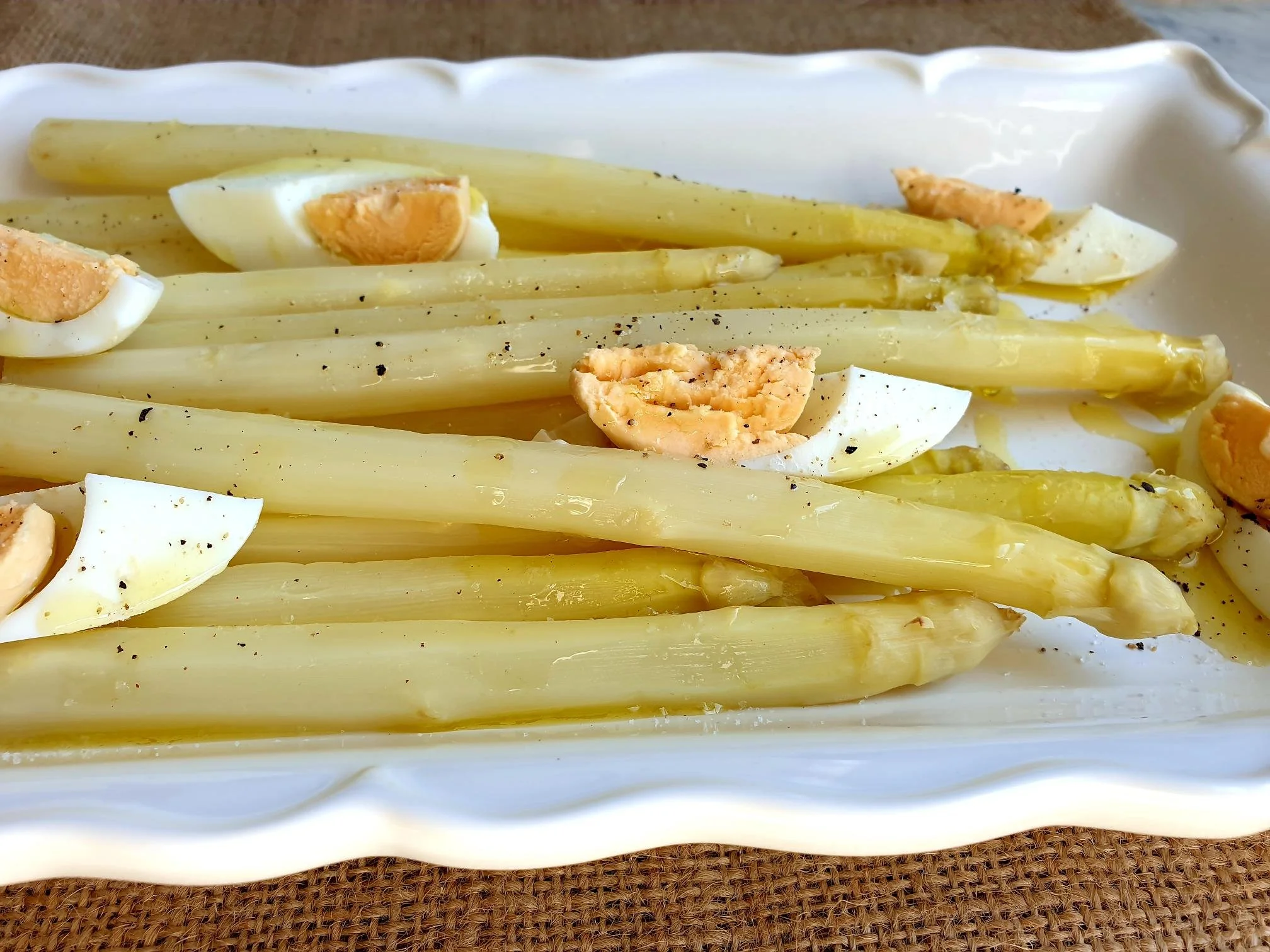
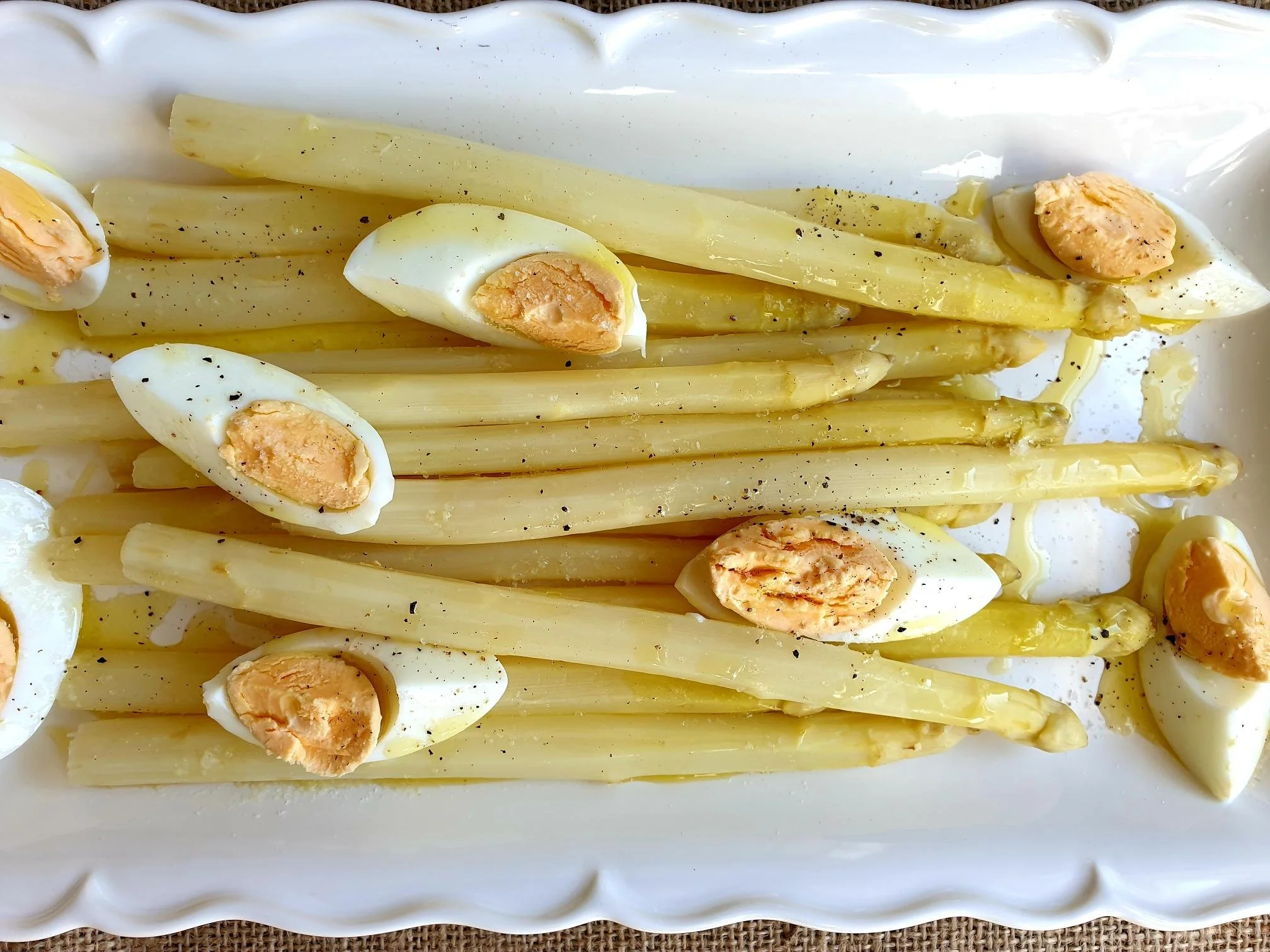
This exquisite recipe is so easy and quick to prepare you can hardly call it a recipe. It consist of gently boiling the asparagus and dress them with oil, sea salt and pepper to allow the delicate and mild sweet taste of white asparagus to be fully enhanced and appreciated. Asparagus prepared this way can be served as a starter, main course or as a side dish and is a great meal for vegetarians.

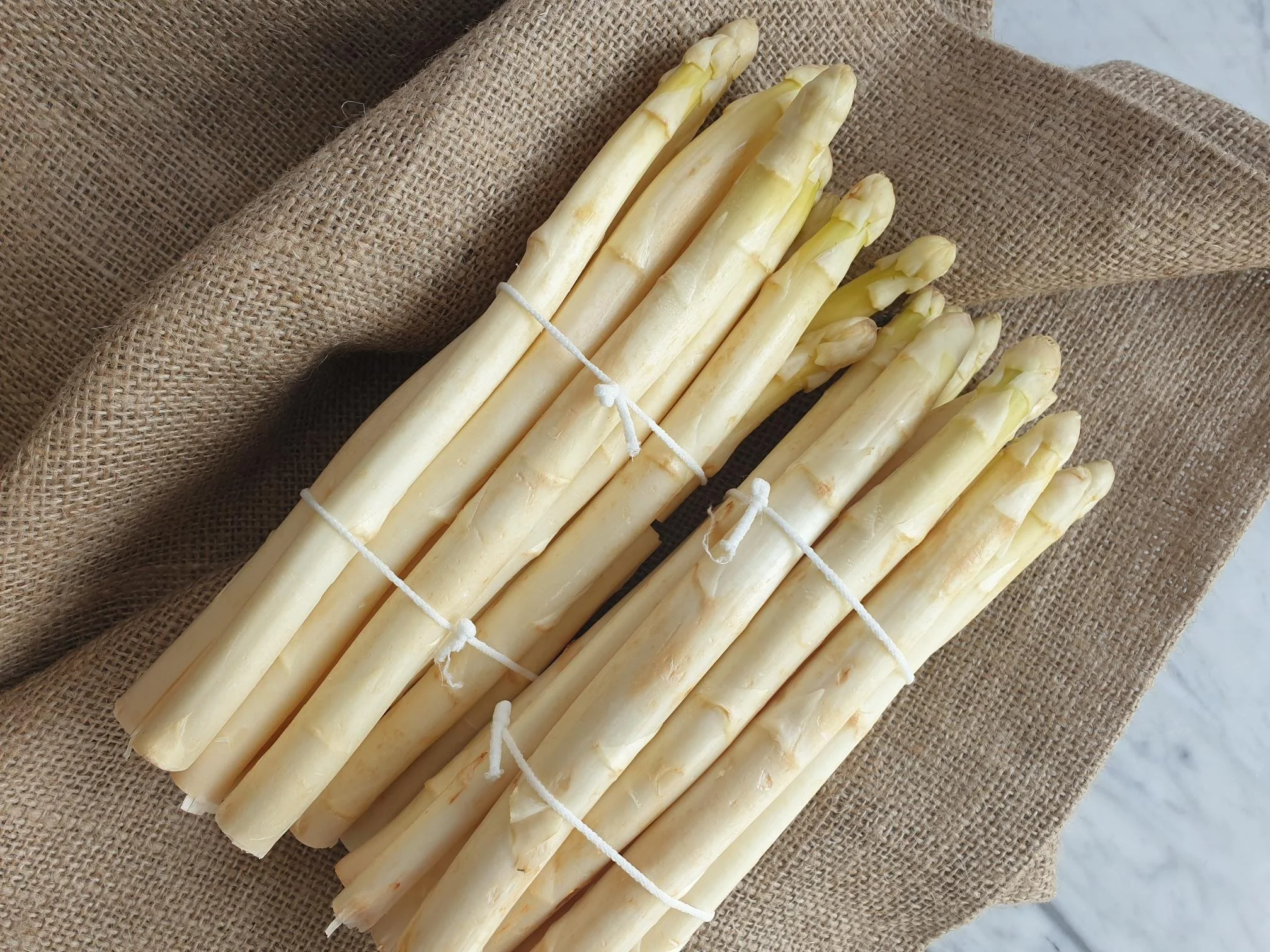
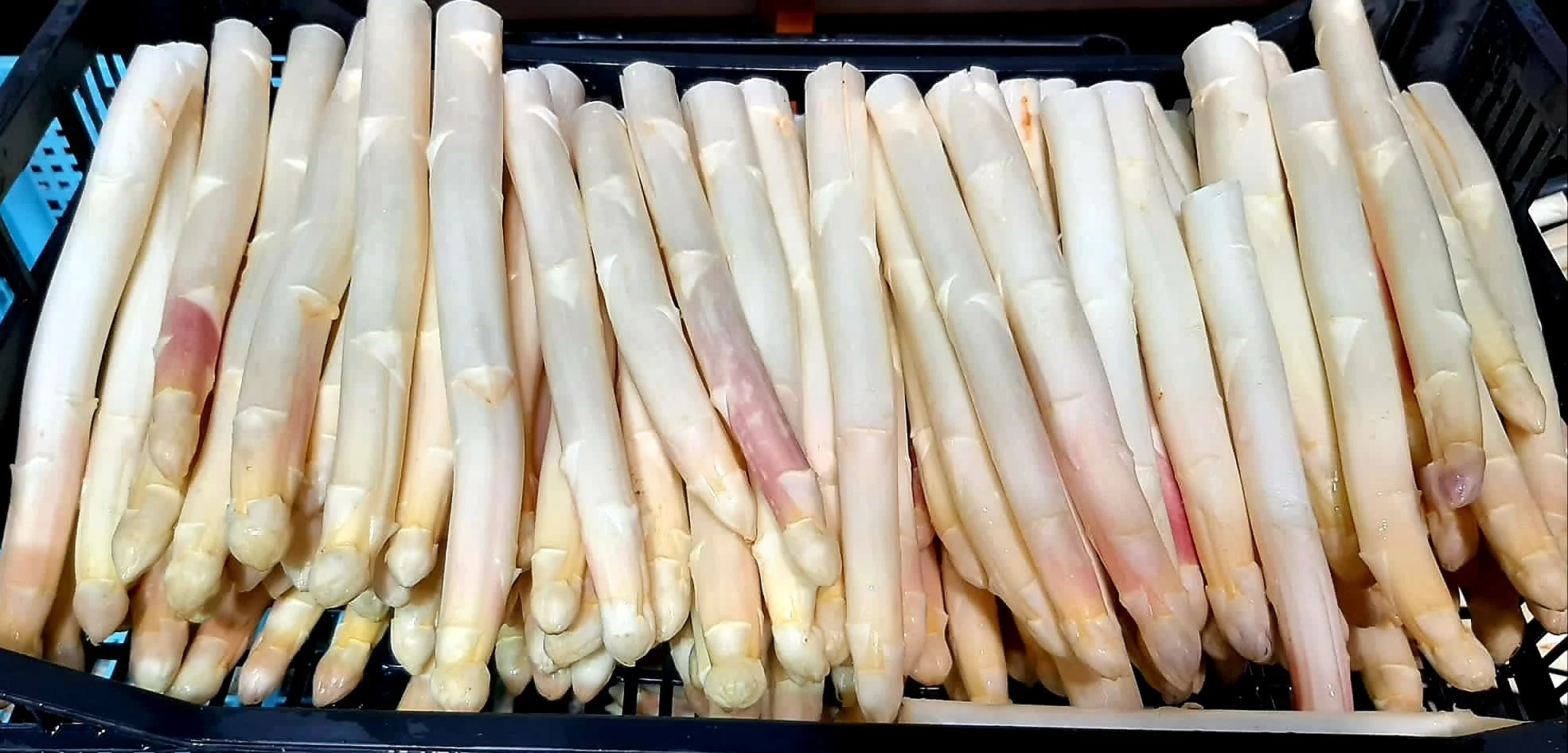
White asparagus grow with the absence of sunlight which prevents the photosynthesis to take place and therefore stops the asparagus turning green in colour.

Back home, where I come from, on the Slovenian coast, this dish, (Beli beluši s trdo kuhanimi jajci / Beli šparglji s trdo kuhanimi jajci) among other asparagus dishes, is very popular during the fairly short asparagus season and the locals make the best of it.

My nona shared with me a very touching story about white asparagus. She very modestly confessed to me that when she was a little girl, her father was the first farmer in the village (Marezige), and the first in the surrounding area to grow white asparagus. She also told me the story that when the asparagus were almost ready to be harvested, he would guard them during the night as these vegetables were very precious source of income for the family and were almost never consumed for domestic use. Only a very small amount of the asparagus, the ones that broke during the harvest, were used by the family for cooking, and this was a real treat for everyone.

White asparagus were, and still are, more difficult and more laborious to grow, therefore they fetch a higher price when they are sold on the market. The asparagus would be taken by my great grandmother to Trieste, just across the border, a big port city with Imperial style cafes, and important theatres where a fairly high number of wealthy noble families used to live, families that could easily afford to buy this type of vegetable and appreciate its gastronomic use.

My nona also told me that the locals used to say that the white asparagus were so cherished they were considered to be vegetable fit for the queen.

Even nowadays, white asparagus, although more accessible, are still pricier compared to the green ones, and they are enjoyed as a “festive food” especially around Easter celebrations when they are in season.

There is a very close geographical proximity between my home town and the Italian region of Veneto, where this flavoursome and elegant dish is typical, (Asparagi bianchi con uova sode alla Veneta) and where in the foothills of the town of Bassano, and along the whole stretch of the river Brenta, the best, renowned, plump white asparagus are produced in terms of size and flavour.

I am sharing here this simple and very much loved family recipe which traditionally calls for white asparagus, and is a very much anticipated vegetable in the spring season. However, if you have difficulty buying them, then just use green asparagus, the dish will be equally delicious.

Ingredients

Serves 4

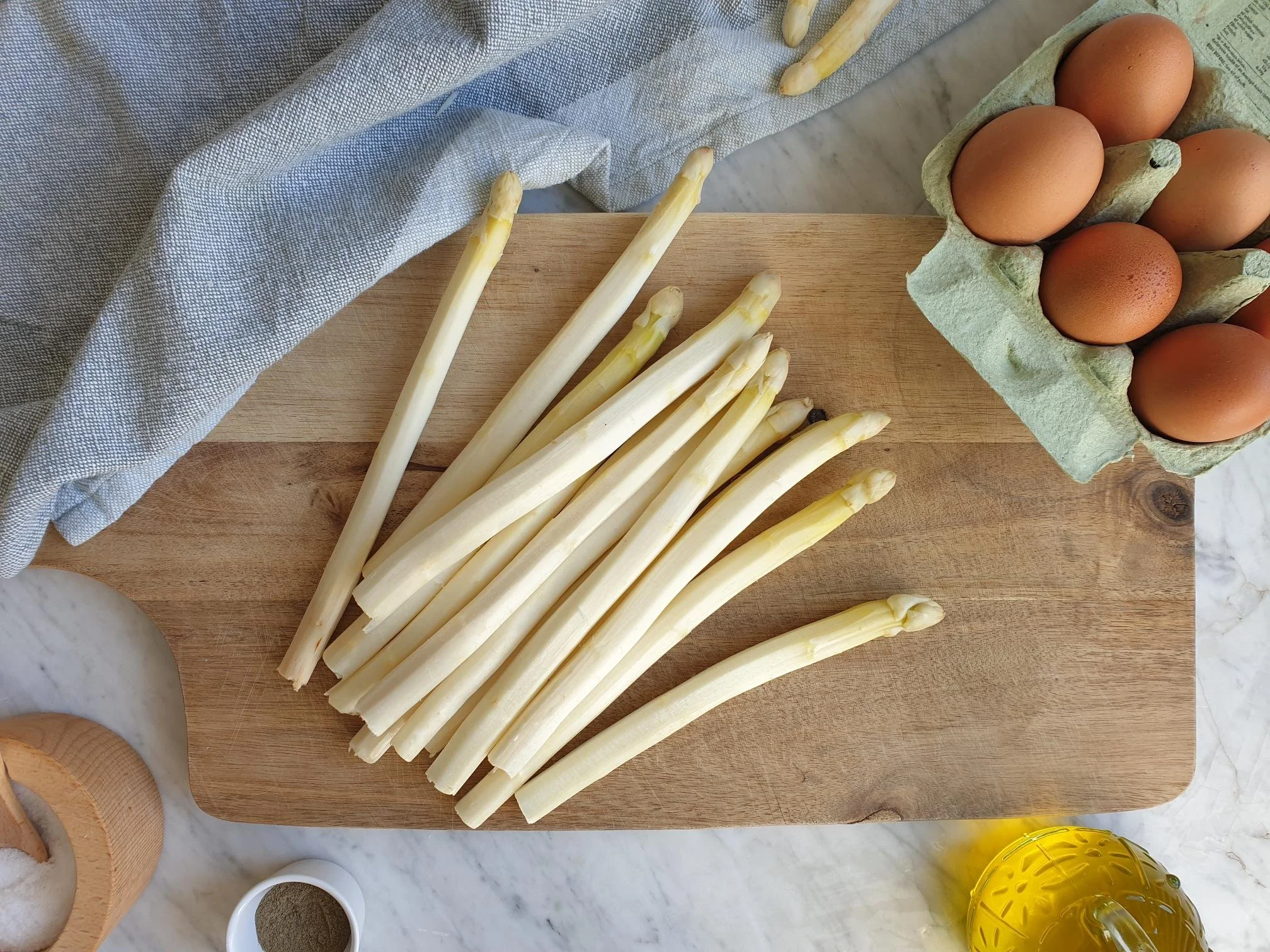
  • 1kg white asparagus (you can use green asparagus)

  • 8 eggs, soft or hard boiled and quartered, sliced or chopped

  • extra virgin olive oil (sunflower oil or a neutral tasting oil of your preference)

  • sea salt

  • black pepper

  • red or white vinegar, optional

Method

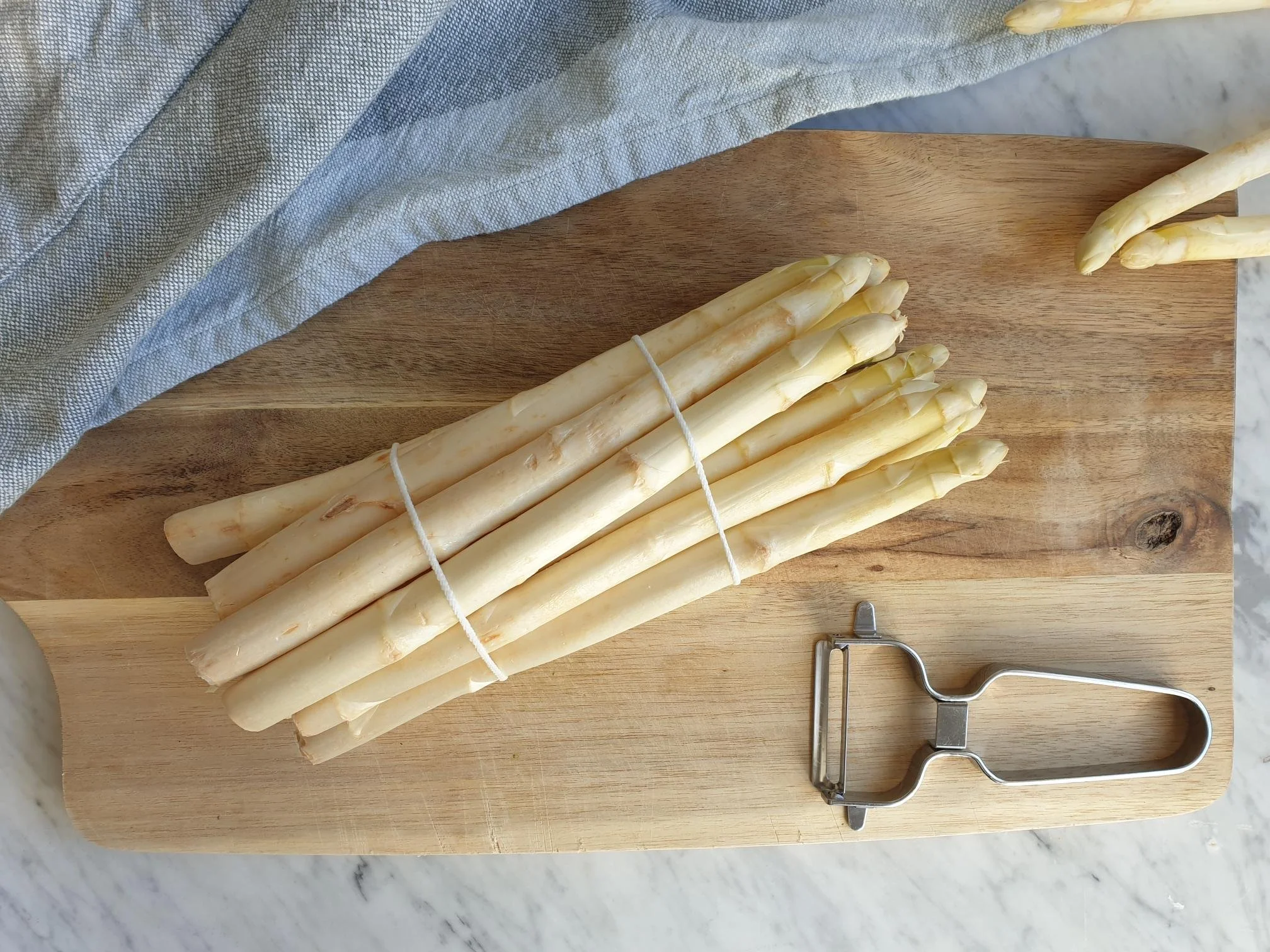
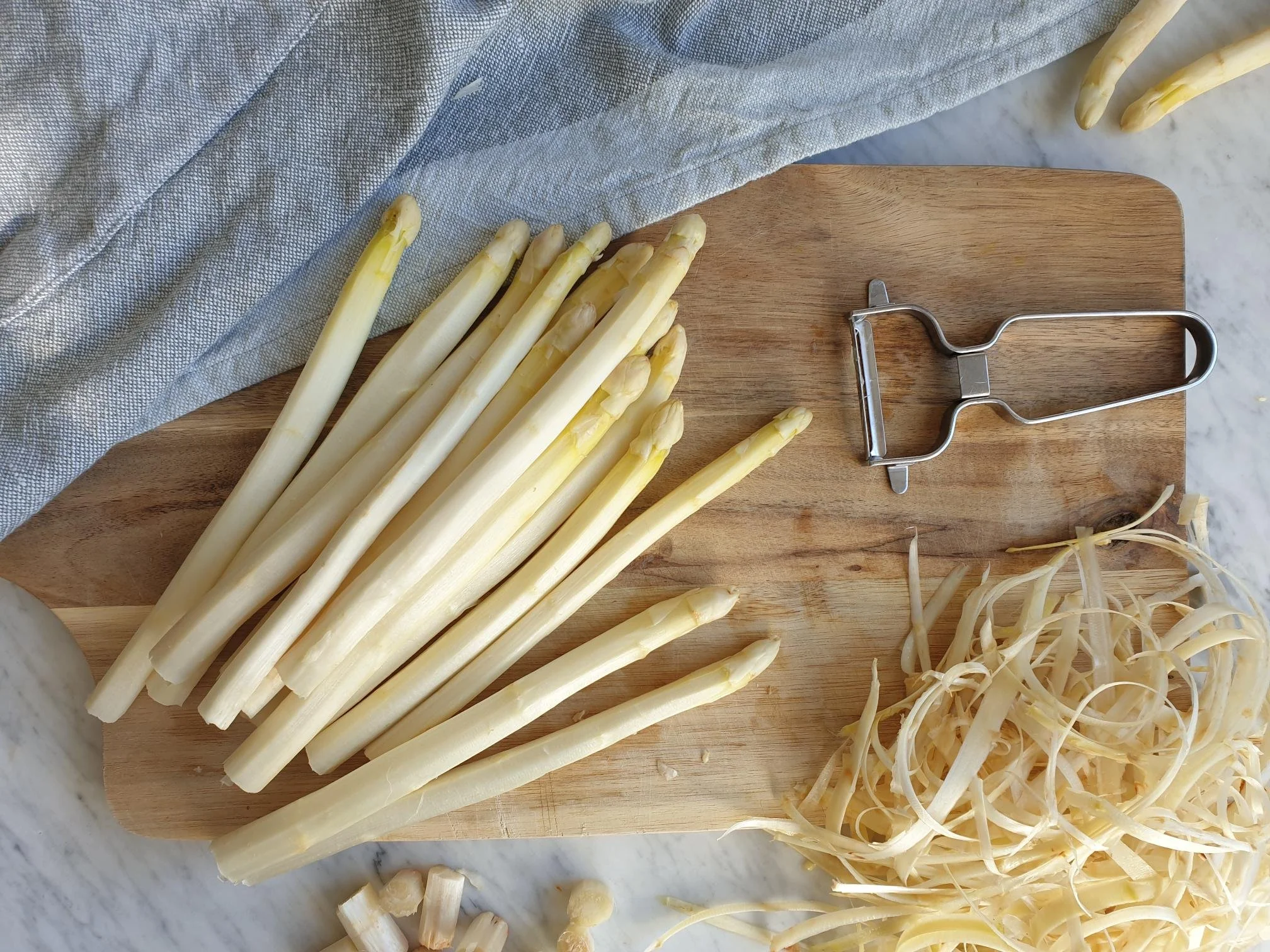
First of all prepare the asparagus. Chop off the ends which are normally hard, woody and fibrous.

With the potato peeler, peel the asparagus starting from just underneath the tips.

View fullsize White asaparagus 4.jpg
View fullsize White asaparagus 6.jpg

Place the asparagus in a pan with a small amount of boiling water.

Gently boil for about 10-15 minutes or until just tender. Test by inserting the tip of a small sharp knife into the end of the asparagus as this part takes the longest to cook. The cooking times will vary according to the size and thickness of the asparagus.

With a slotted spoon gently remove the asparagus from the pan and place them, one next to each other, on paper kitchen towel. Allow the asparagus to drain and cool.While removing the asparagus be careful not to break the tips, they cook quicker than the ends and will be much softer, if they do break, however, it is not the end of the world, they will just not look quite as nice on the plate.

Alternatively, you can steam the asparagus or cooked them tied in a bundle and placed upright in a tall pot with two thirds of their length immersed in cold water. Bring the water to boil and cook for about 10-15 minutes (the steam will cook the tips). Remove and untie the bundle.

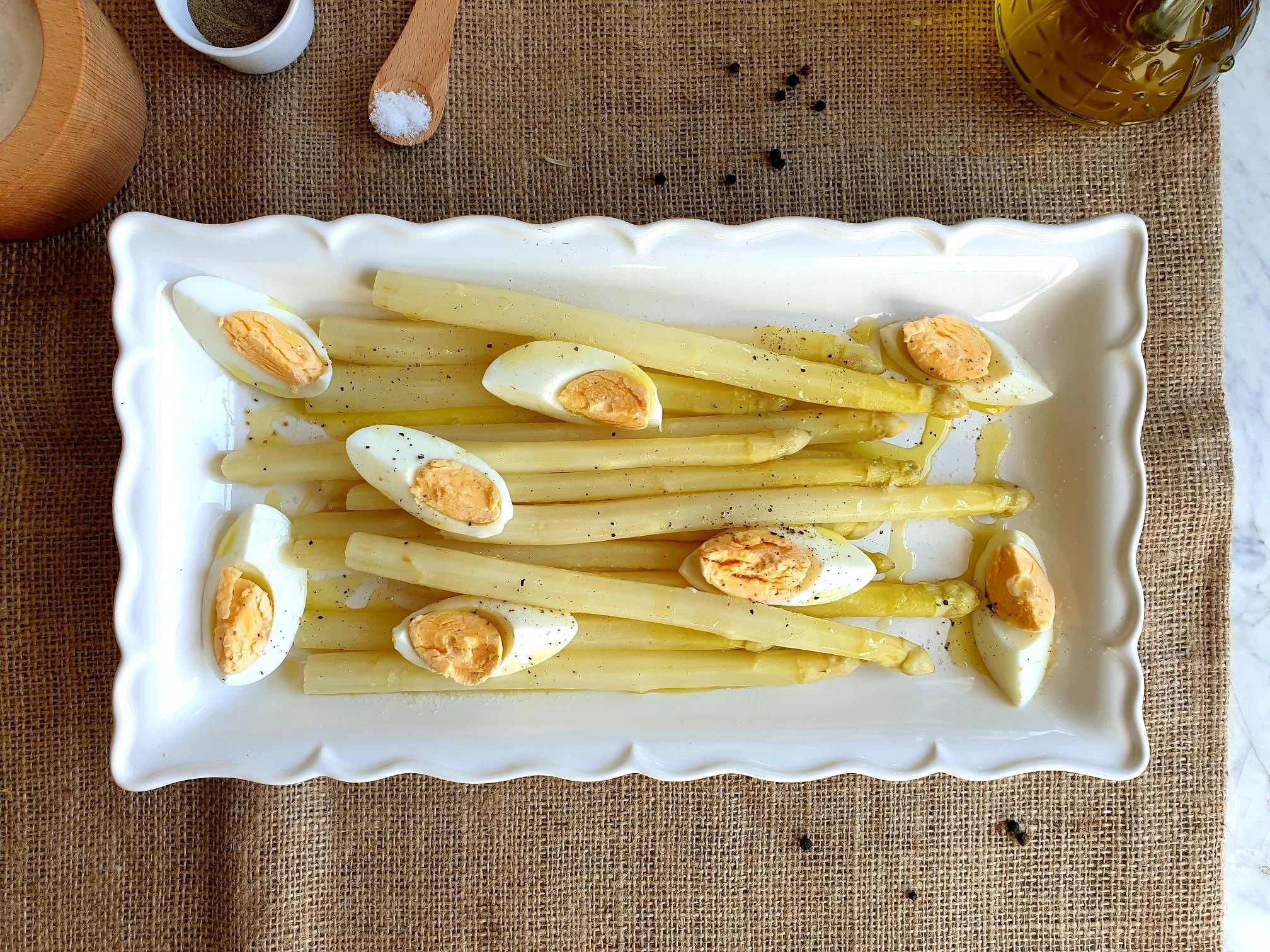
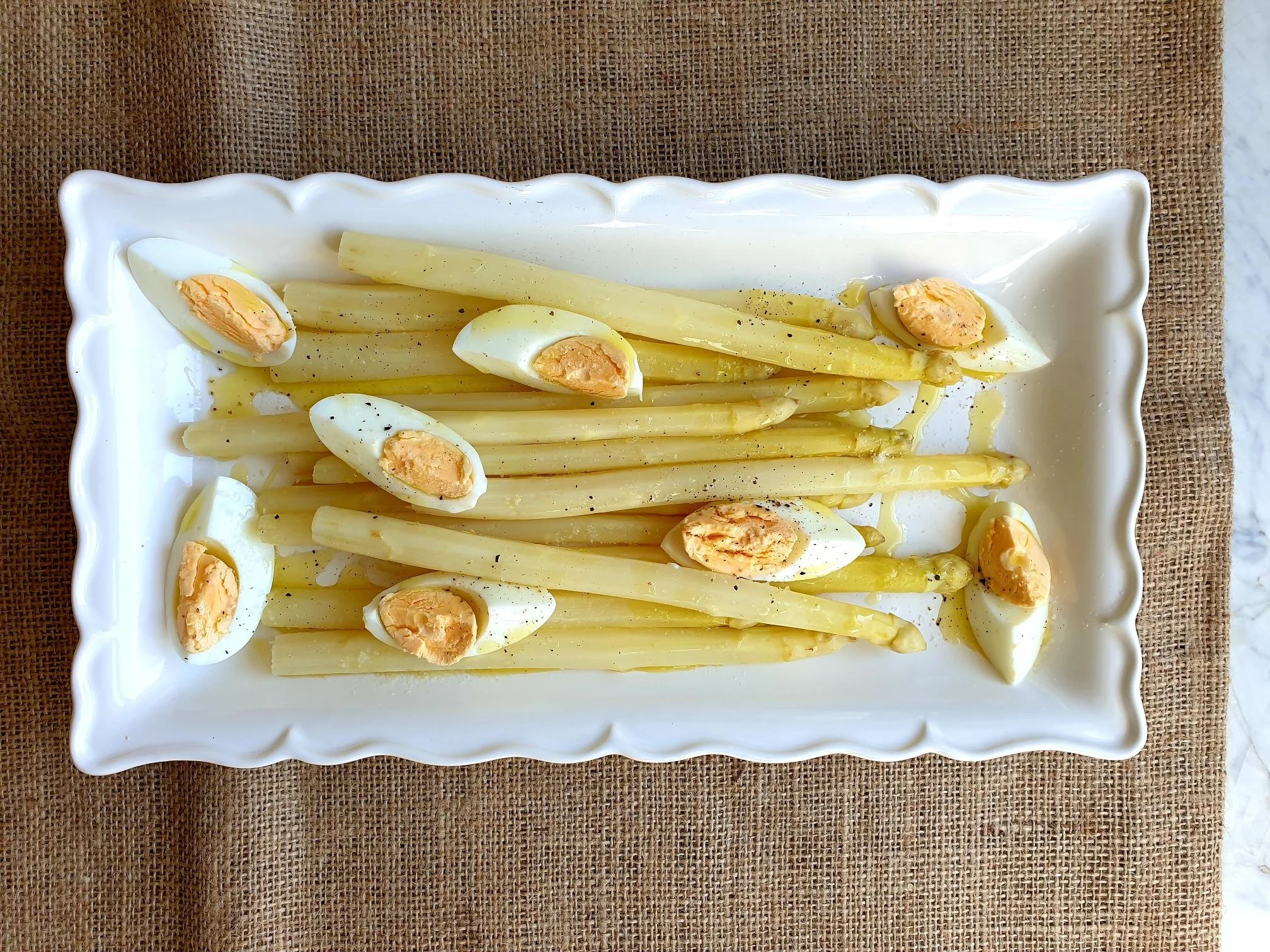
Transfer the cooked asparagus and lay them on a serving plate.

Place the soft or hard boiled eggs on the top or between the asparagus.

Dress liberally with oil, sea salt and black pepper.

Serve with crunchy bread to soak up the juices.

Just a thought

You can use the water in which you cooked the asparagus as a stock. Just add the ends you cut off the asparagus and the peels and add them to the water, gently boil for about half and hour and strain.

You will end up with a delicious and delicate asparagus flavoured stock to be used for asparagus risotto, minestrone primavera or asparagus soup.

If you are not using the stock straight away it is perfect for freezing.

Wine suggestione

Collio Sauvignon DOC 2020 - Schiopetto

May 11, 2022 /tina oblak
fresh white asparagus, fresh green asparagus, white asparagus, green asparagus, dressed white asparagus, dressed green asparagus, hard boiled eggs, soft boiled eggs, Asparagi bianchi e uova sode, Sparglji, Beli beluši s trdo kuhanimi jajci, Beli šparglji s trdo kuhanimi jajci, Asparagi bianchi con uova sode alla Veneta
Adriatic Recipe, Appetizers, brunch, child friendly dish, child friendly meal, dinner, Easter dish, Easter recipes, Easy recipe, family friendly dish, family friendly meal, first course, first course dish, first course meal, Healthy, healthy mael, Istrian cuisine, Istrian dish, Istrian food, Istrian gastronomy, light meal, main course, main dish, Nutritious, Nutritious dish, recipe from Northern Ital, Rustic dish, Salads, Side Dishes, Slovenian cuisine, Slovenian food, Slovenian gastronomy, Spring dish, Spring recipe, Starters, Vegetable side dish, Vegetables, Vegetarian, Venetian dish
Comment

Venetian-style Calf's liver with caramelised onions Recipe

Beans and Sardines
May 04, 2022 by tina oblak in Adriatic Recipe, All year round recipe, Appetizers, Autumnal dish, Autumnal recipe, bite-sized nibbles, brunch, Canapés, dinner, Easy recipe, family friendly dish, family friendly meal, Istrian cuisine, Istrian dish, Istrian food, Istrian gastronomy, main course, main dish, main meat course, Meat, recipe from Northern Ital, Rustic dish, Slovenian cuisine, Slovenian food, Slovenian gastronomy, Small bites, spreads, supper, Venetian dish, Winter dish, Spring dish, Spring recipe

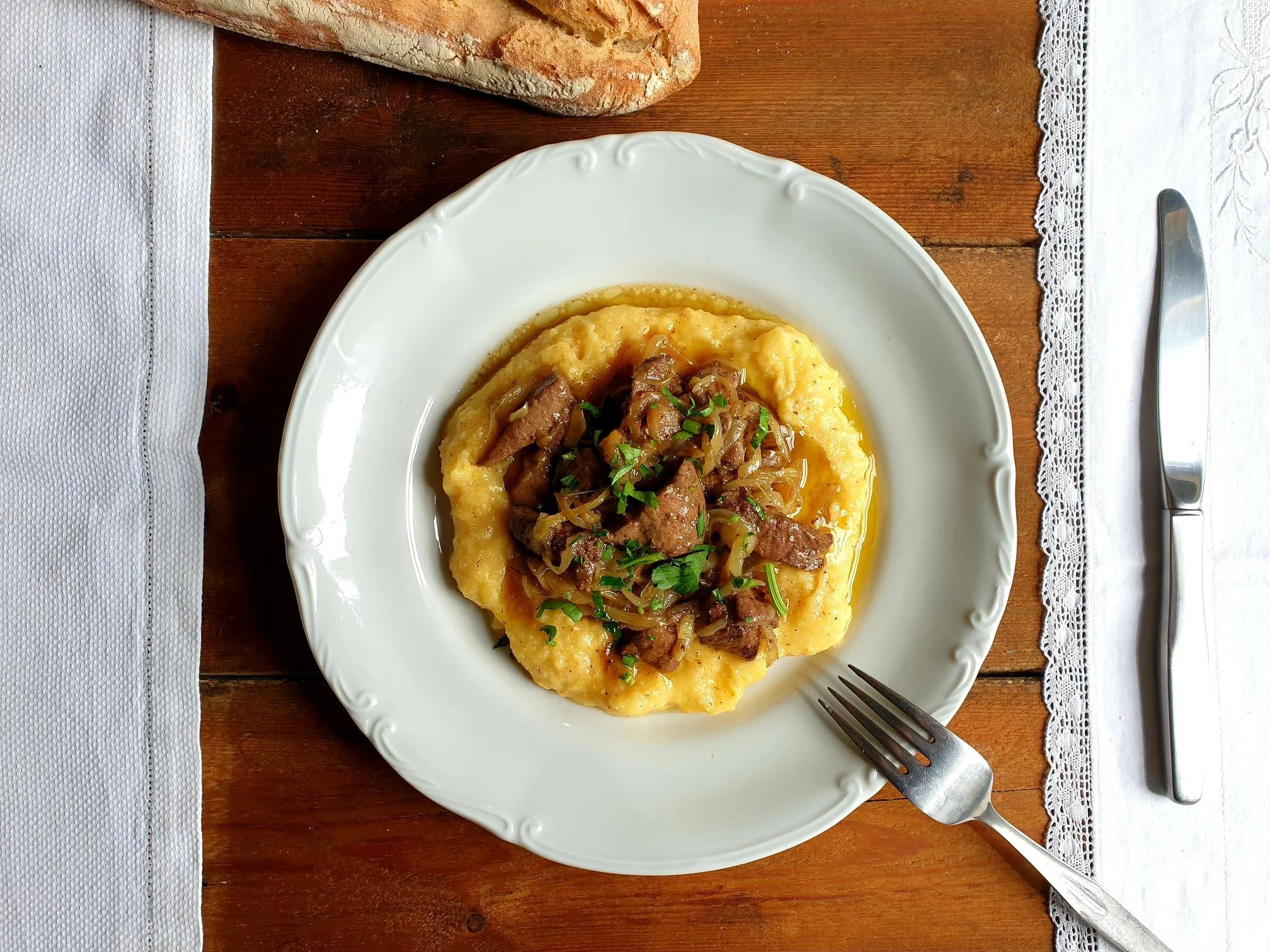
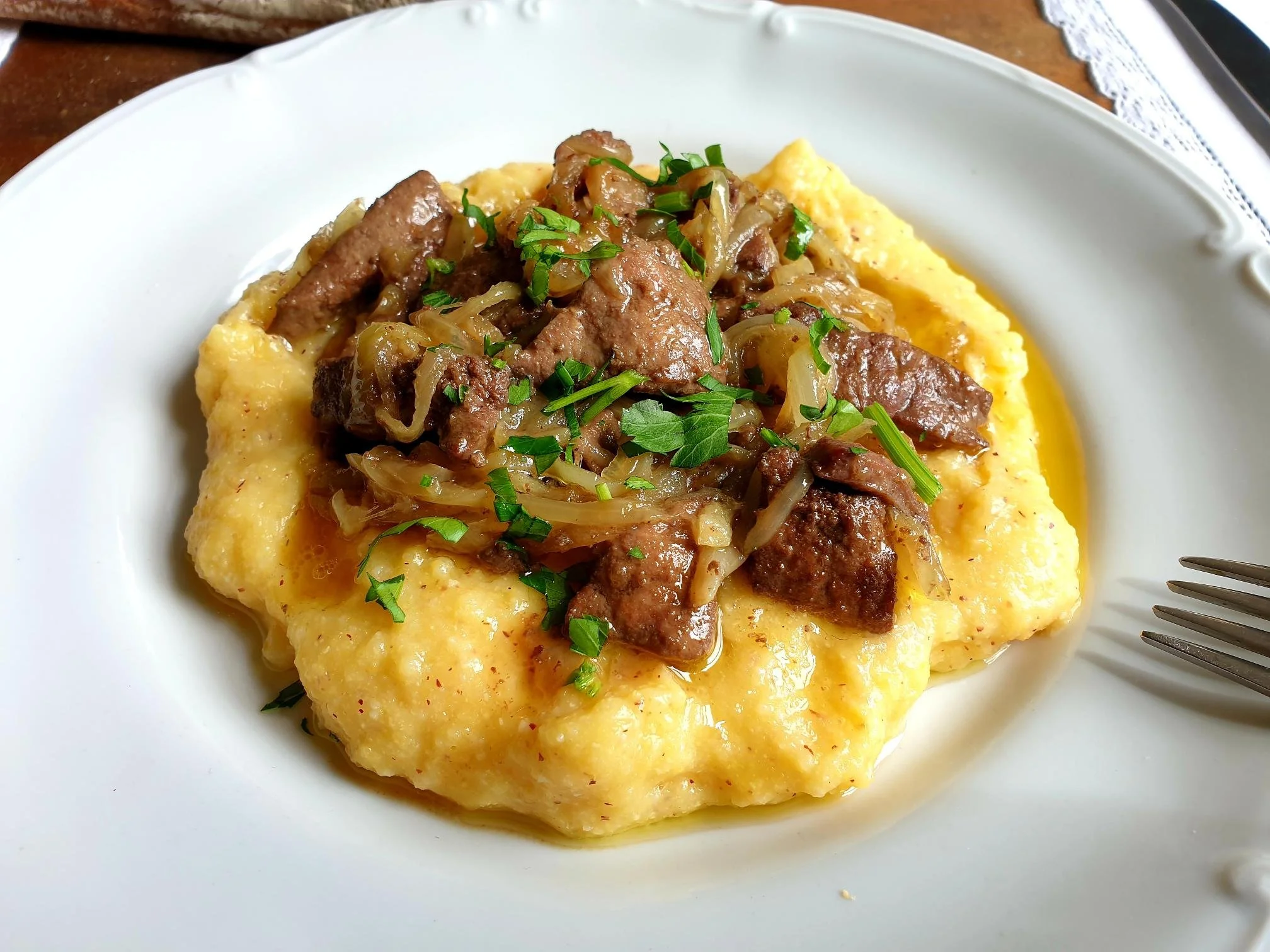
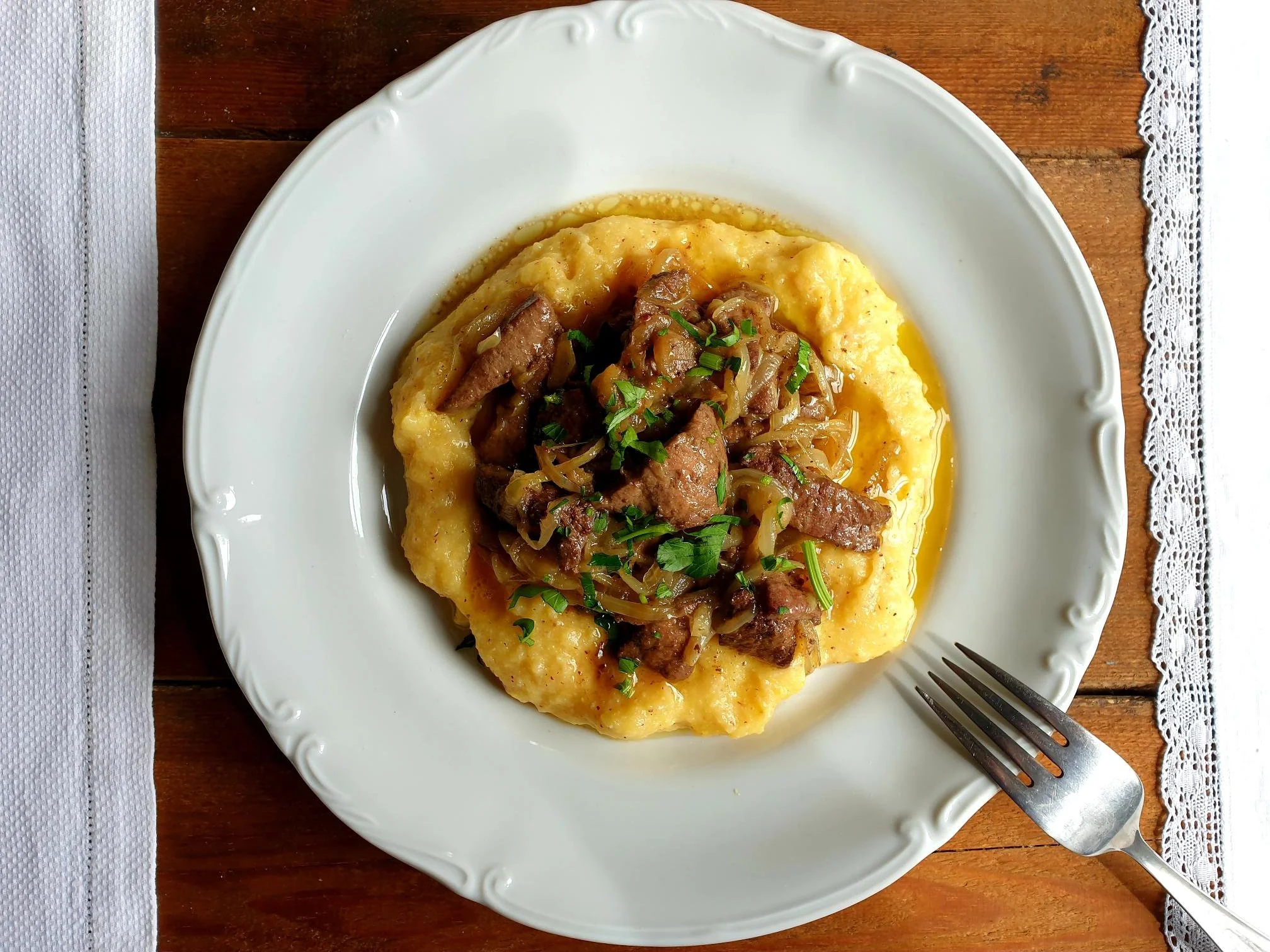
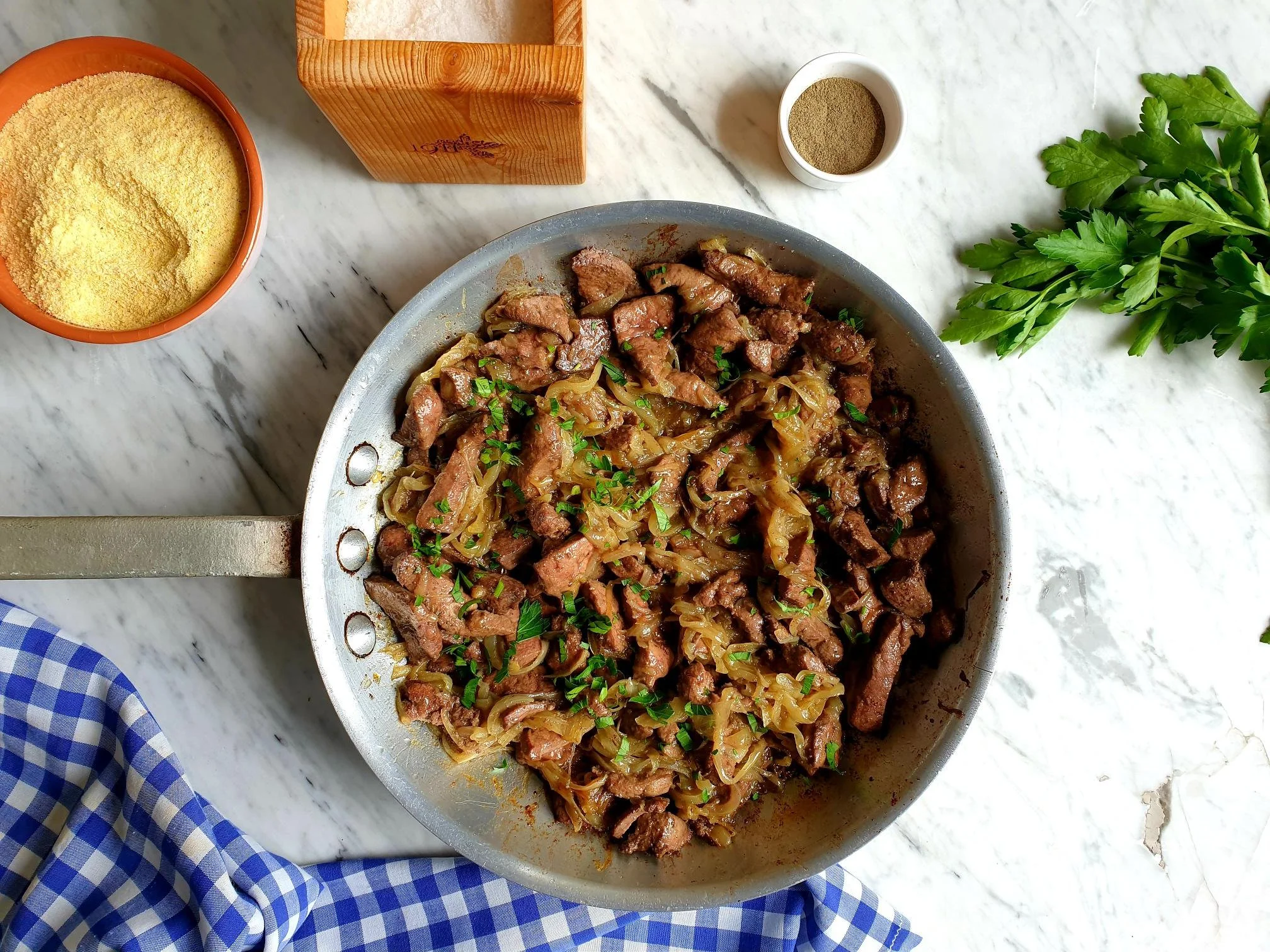
Venetian style liver with onions, Fegato alla Veneziana, consists of thinly sliced liver cooked very quickly and combined with soft, mellow, sweet and caramelised onions, and gently sprinkled with fresh parsley, with white wine being sometimes added to balance the flavours.

It is nowadays acclaimed dish worldwide and it is one of the most classic and traditional Venetian dishes, but is has very humble and modest origins as it was created out of necessity and hunger which originally drove people to eat inner organs of fowls and beasts with great enjoyment.

If you ever had a chance to visit Venice and wondered around the calli (very narrow streets in Venice) you will be able to notice that just about every authentic family run restaurant will display on its menu Fegato alla Veneziana.

Venetian-style calf's liver is a recipe that not only is a staple dish in Venice, but also in the whole region of Veneto. It is also so popular “across the border” in Slovenian Istra, where I come from, that it has become part of a very strong gastronomic tradition there (Polenta z jetrci, Palenta z jetrci or Polenta e fegadini). This is quite understandable since its local recipes and eating habits were significantly shaped by the very lengthy presence of The Most Serene Republic of Venice in the region.

This dish, in its simplicity, when cooked properly, is simply divine, and might be enjoyed even by those who normally are not so keen on liver and thought they did not like it, and that is simply because organ meats unfortunately are very often not very well prepared and overcooked, a process which toughens the texture of the meat and accentuates the “mineral, or irony” taste of the organ meat.

Calf liver, compared to other types of liver, is delicate in flavour, tender and has a very high content of iron.

I am sharing here the recipe that has been in the family since forever - so, just try it, and I am sure that this dish will be nothing like any other liver dishes you might have had in the past and disliked. I encourage you to be brave and open minded, but if your aversion to organ meats is really strong you might just want to skip this post.

Ingredients

Serves 4

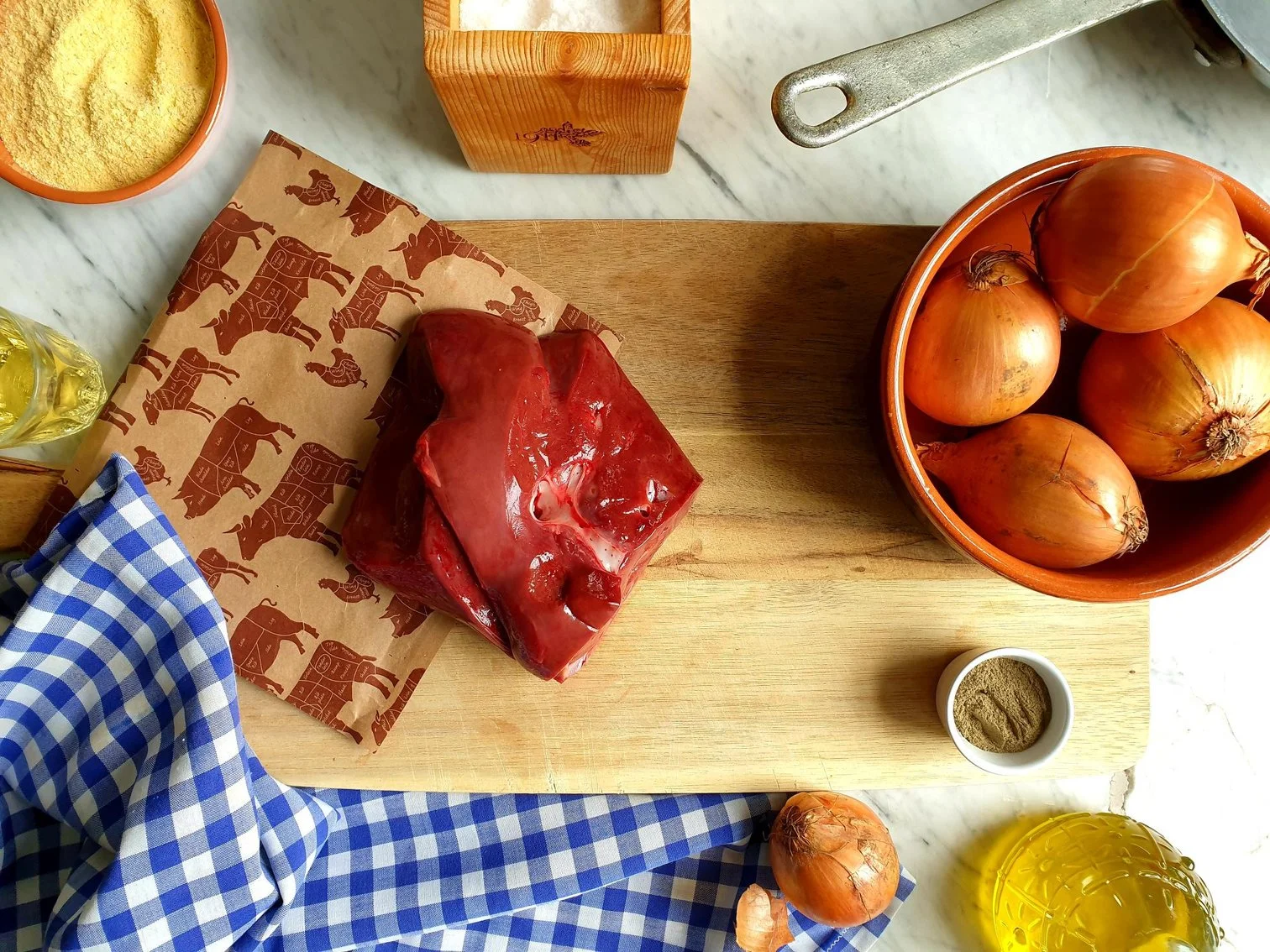
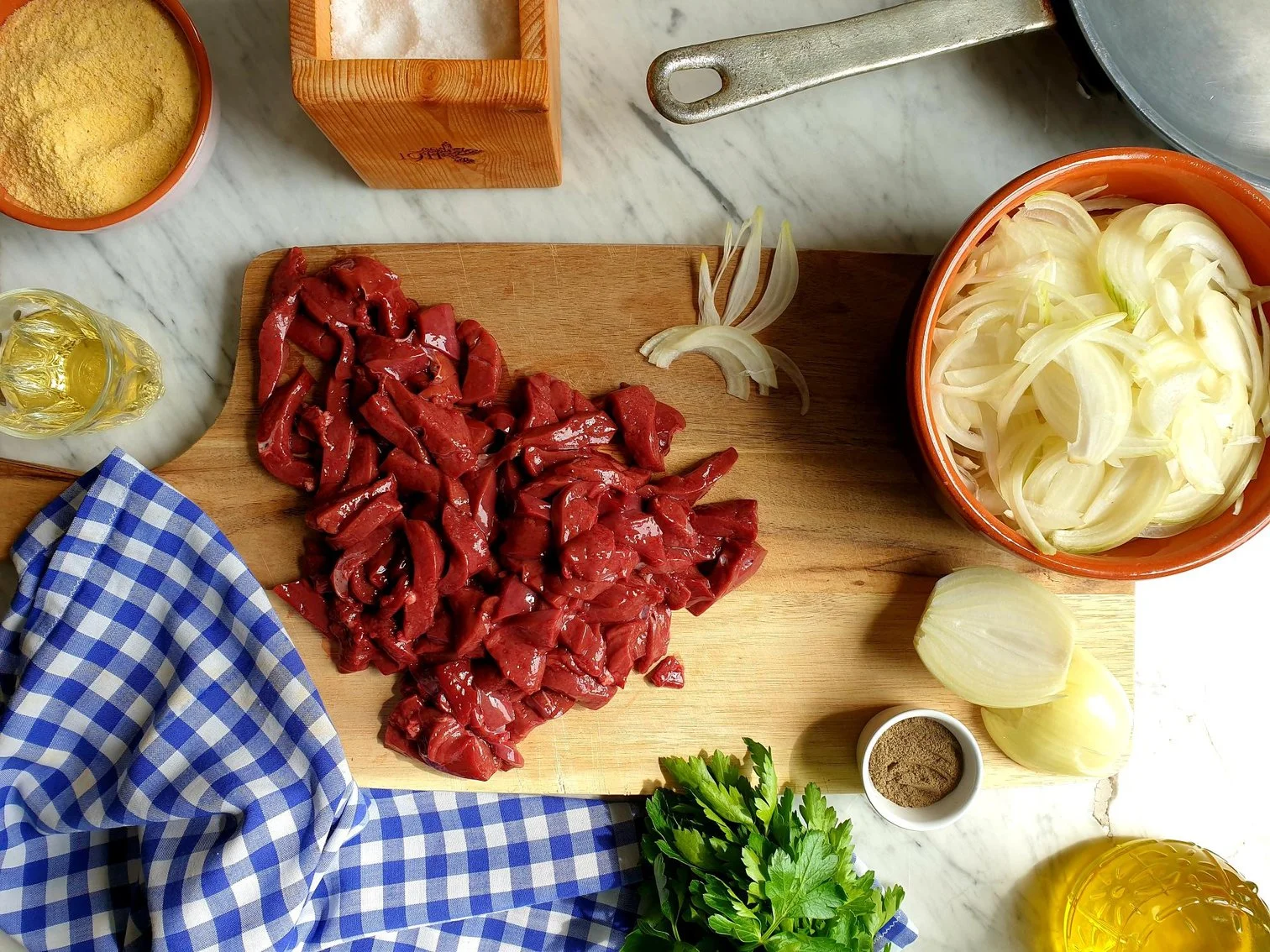
  • 500g very fresh calf's liver, trimmed and sliced into thin strips

  • 500g onions, peeled and thinly sliced

  • 8 Tbsp extra virgin olive oil (you can use neutral tasting oil of your choice or butter or a combination)

  • 100 ml white wine (optional)

  • handful of fresh flat leaf parsley (about 5-10g), roughly chopped

  • sea salt

  • black pepper

Method

If you are bothered by the slight bitter flavour from the liver a great way of reducing it, is to soak the liver in a dish or bowl of milk for about 1 hour, or overnight. Discard the milk after the soaking process.

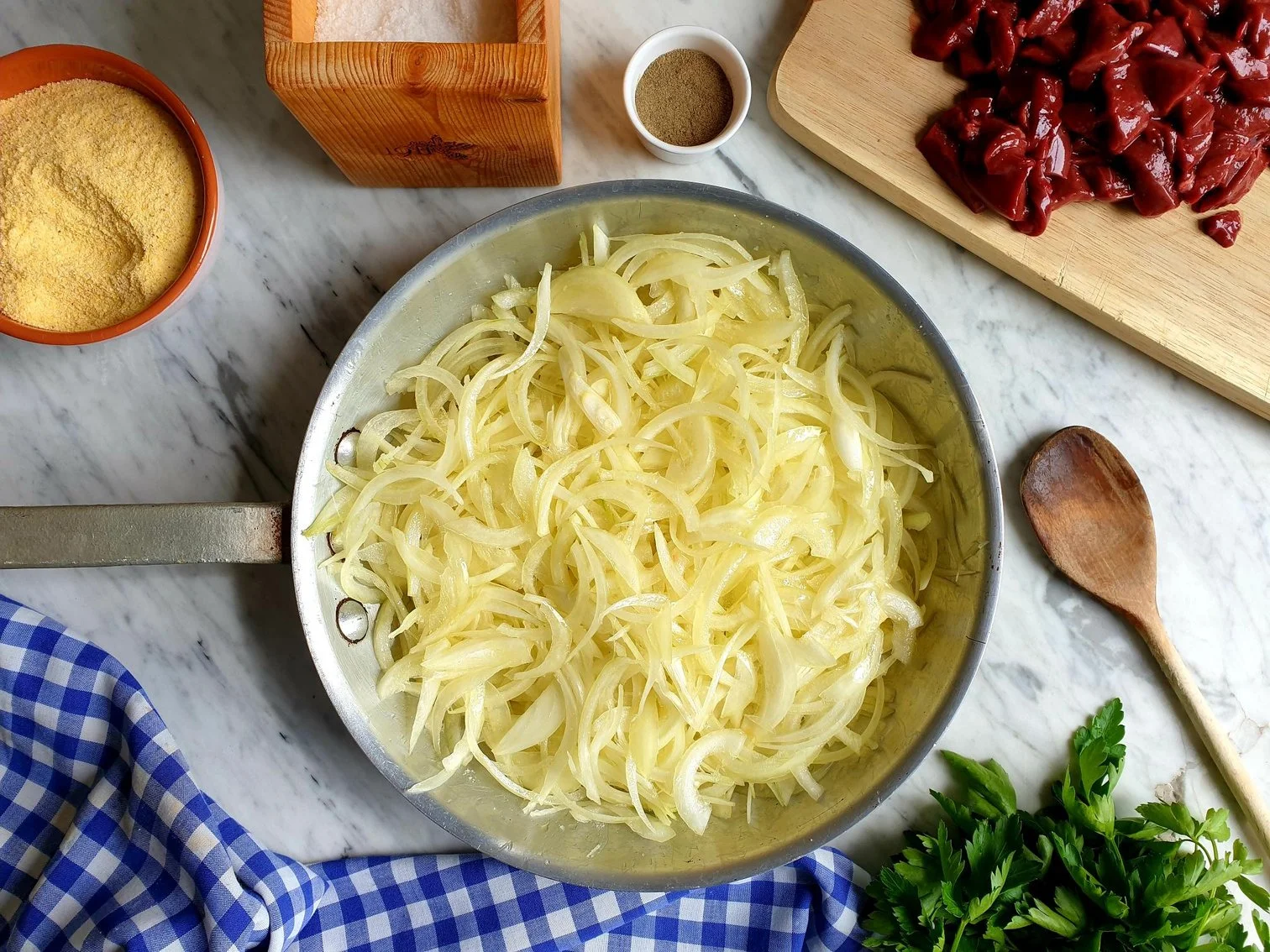
Put extra virgin olive oil and thinly sliced onions in a fairly large frying pan and add a generous pinch of sea salt.

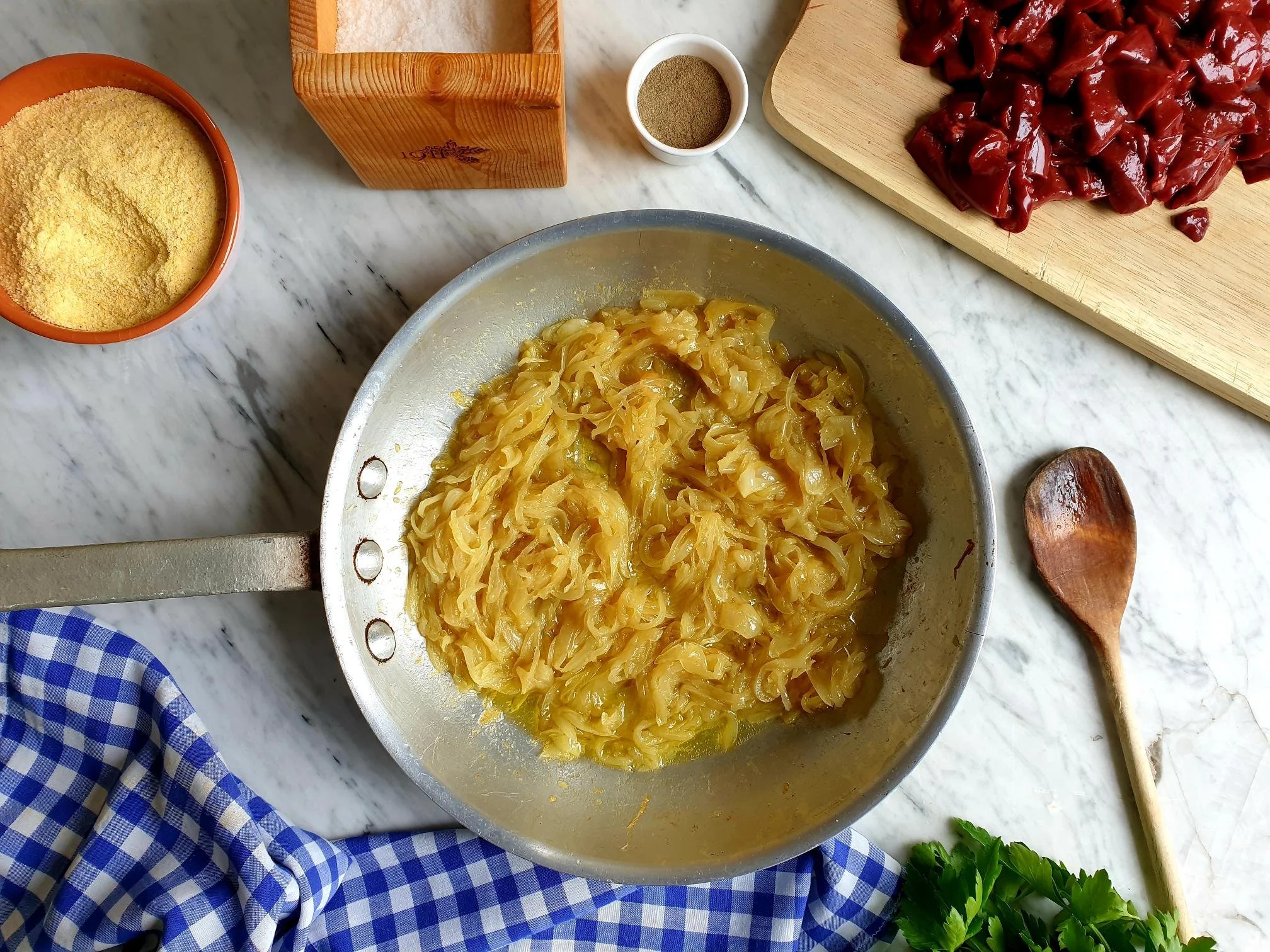
Slowly cook the onions on a gentle heat, stirring occasionally, until very soft, translucent, well wilted and caramelised. In order to prevent the onions getting too much colour and brown regulate the heat and maybe add a bit of water or wine to help the onions to wilt well and caramelize better. Be patient, this process might take up to 40minutes but it is crucial for the success of this dish.

View fullsize Venetian-style Calf's liver with caramelised onions Recipe 3.jpg
View fullsize Venetian-style Calf's liver with caramelised onions Recipe 4.jpg

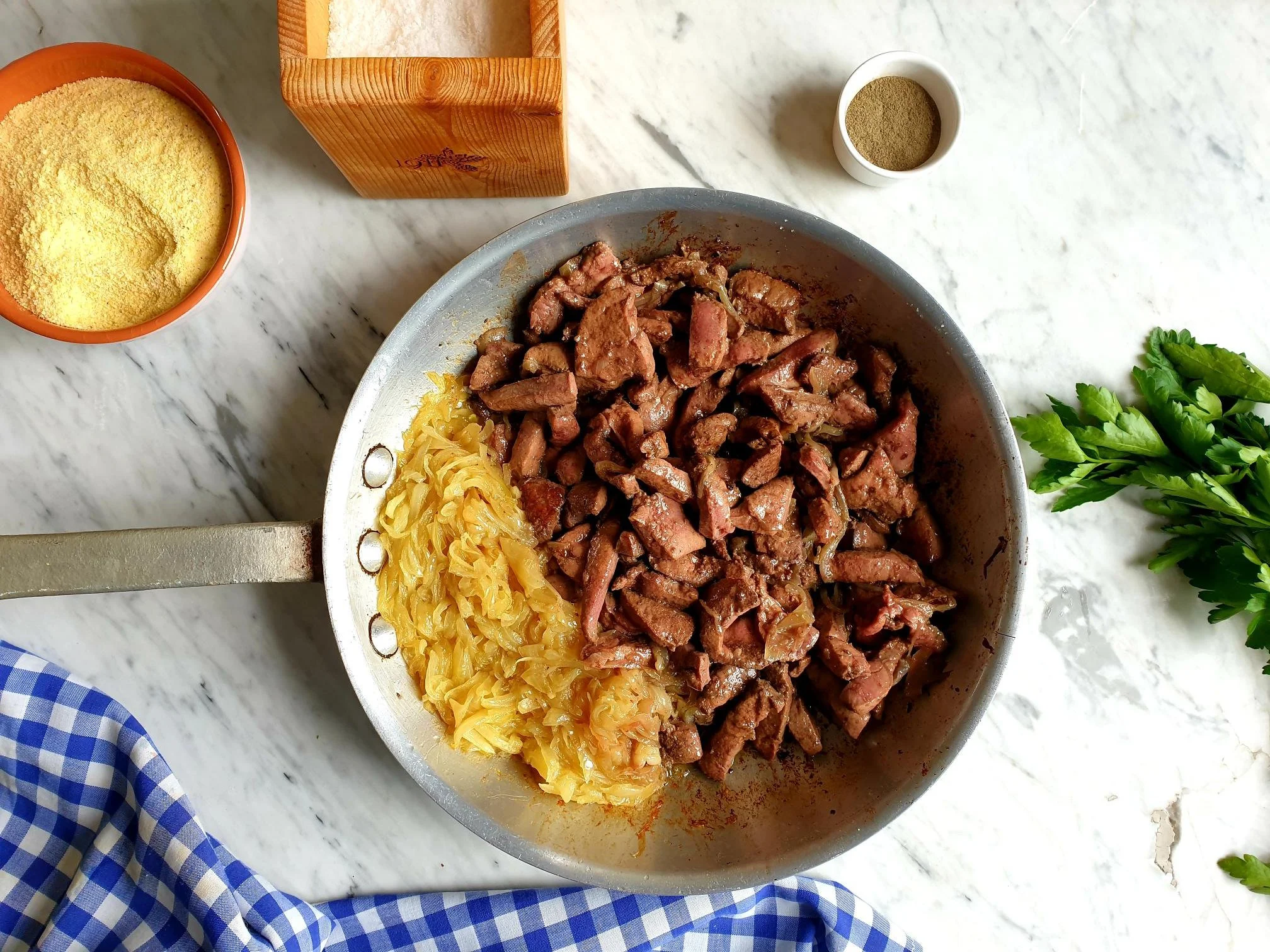
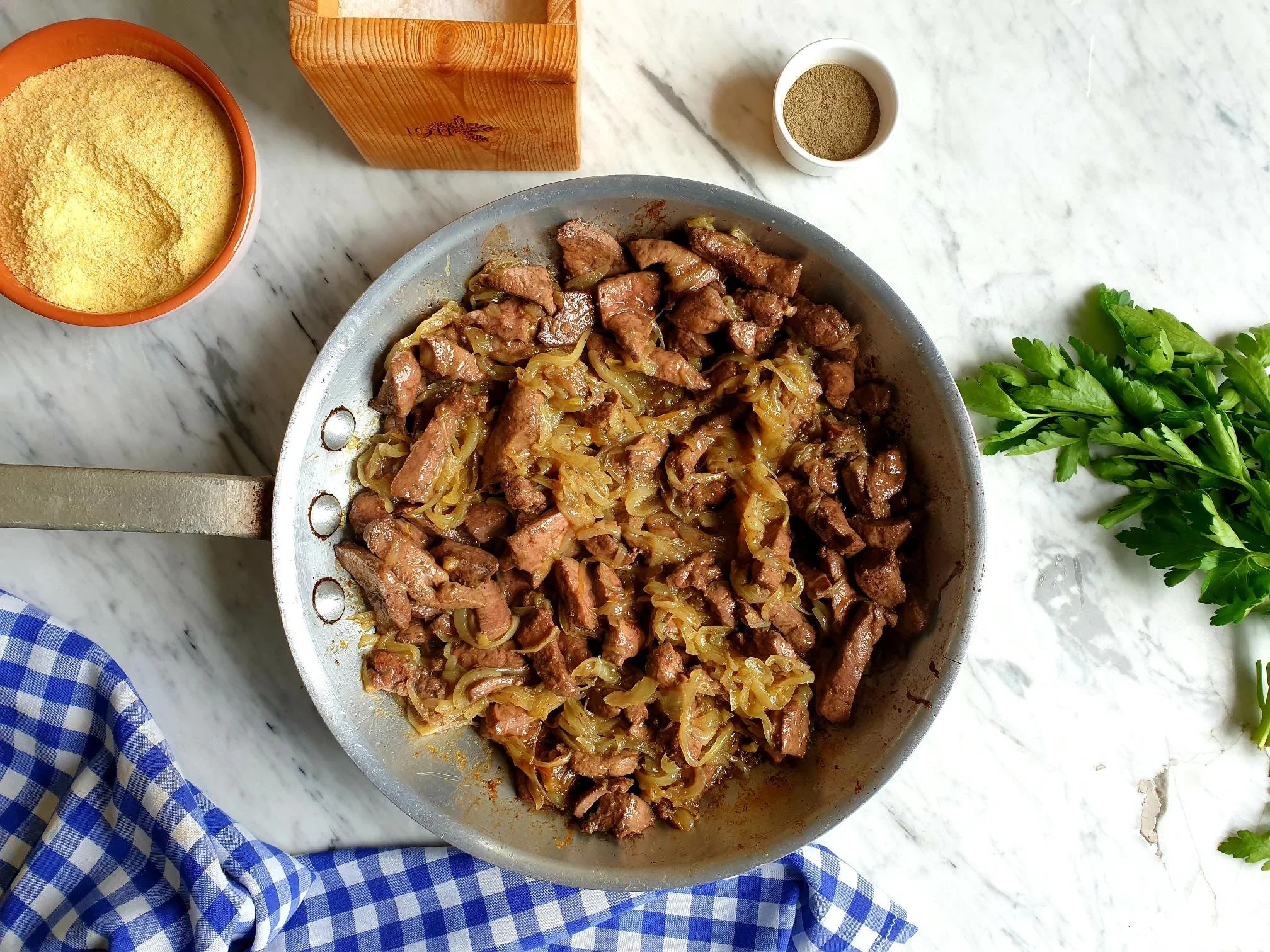
When the onions are cooked completely and ready push them on the side of the frying pan and turn up the flame. Add the strips of liver and over high heat sauté and cook quickly just for a few minutes, mixing and turning liver strips regularly, until they loose their raw colour. Mix the onions and liver together.

View fullsize Venetian-style Calf's liver with caramelised onions Recipe 5.jpg
View fullsize Venetian-style Calf's liver with caramelised onions Recipe 6.jpg

Add finely chopped parsley, taste and adjust the seasoning with sea salt and black pepper.

Transfer cooked liver onto a serving plate, lightly sprinkle with roughly chopped fresh parsley and serve warm immediately.

If using white wine, deglaze the frying pan by pouring a good splash of wine and scrape up with the wooden spoon all the bits that have formed. Reduce the wine to the consistency of a syrup and pour over the liver.

Serve on soft cooked creamy polenta, grilled polenta, mashed potatoes or simply a nice crunchy bread to soak up the juices.

Just a thought

If you happen to have some left over cooked livers you can make a very delicious and economic liver pâté.

Simply weight the amount of left over livers, chop them very finely (if you like small bits in your pâté) and add the same same amount of very soft unsalted butter. Mix together and here is your Venetian style liver pâté, delicious spread on crostini (toasted bread).

If you prefer the pâté with a very smooth consistency place both livers and butter into a small food processor and mix until the mixture resembles smooth paste (you can also use a hand blender).

Wine suggestion

Valpolicella Ripasso Classico Superiore DOC 2019 - Speri

May 04, 2022 /tina oblak
Calf's liver, Venetian style calf's liver, Istrian style calf's liver, Fegato alla veneziana, Polenta e fegadini, Polenta z jetrci, Palenta z jetrci, Calf's liver with soft cooked polenta, Calf's liver with polenta
Adriatic Recipe, All year round recipe, Appetizers, Autumnal dish, Autumnal recipe, bite-sized nibbles, brunch, Canapés, dinner, Easy recipe, family friendly dish, family friendly meal, Istrian cuisine, Istrian dish, Istrian food, Istrian gastronomy, main course, main dish, main meat course, Meat, recipe from Northern Ital, Rustic dish, Slovenian cuisine, Slovenian food, Slovenian gastronomy, Small bites, spreads, supper, Venetian dish, Winter dish, Spring dish, Spring recipe
Comment

Green Asparagus Risotto Venetian style Recipe

Beans and Sardines
April 27, 2022 by tina oblak in Adriatic Recipe, child friendly dish, child friendly meal, dinner, Easy recipe, family friendly dish, family friendly meal, first course, first course dish, first course meal, foraging, Healthy, healthy mael, Istrian cuisine, Istrian dish, Istrian food, Istrian gastronomy, light meal, main course, main dish, Nutritious, Nutritious dish, recipe from Northern Ital, Risotti, Rustic dish, Slovenian cuisine, Slovenian food, Slovenian gastronomy, Spring recipe, Starters, supper, Vegan, Vegetables, Vegetarian

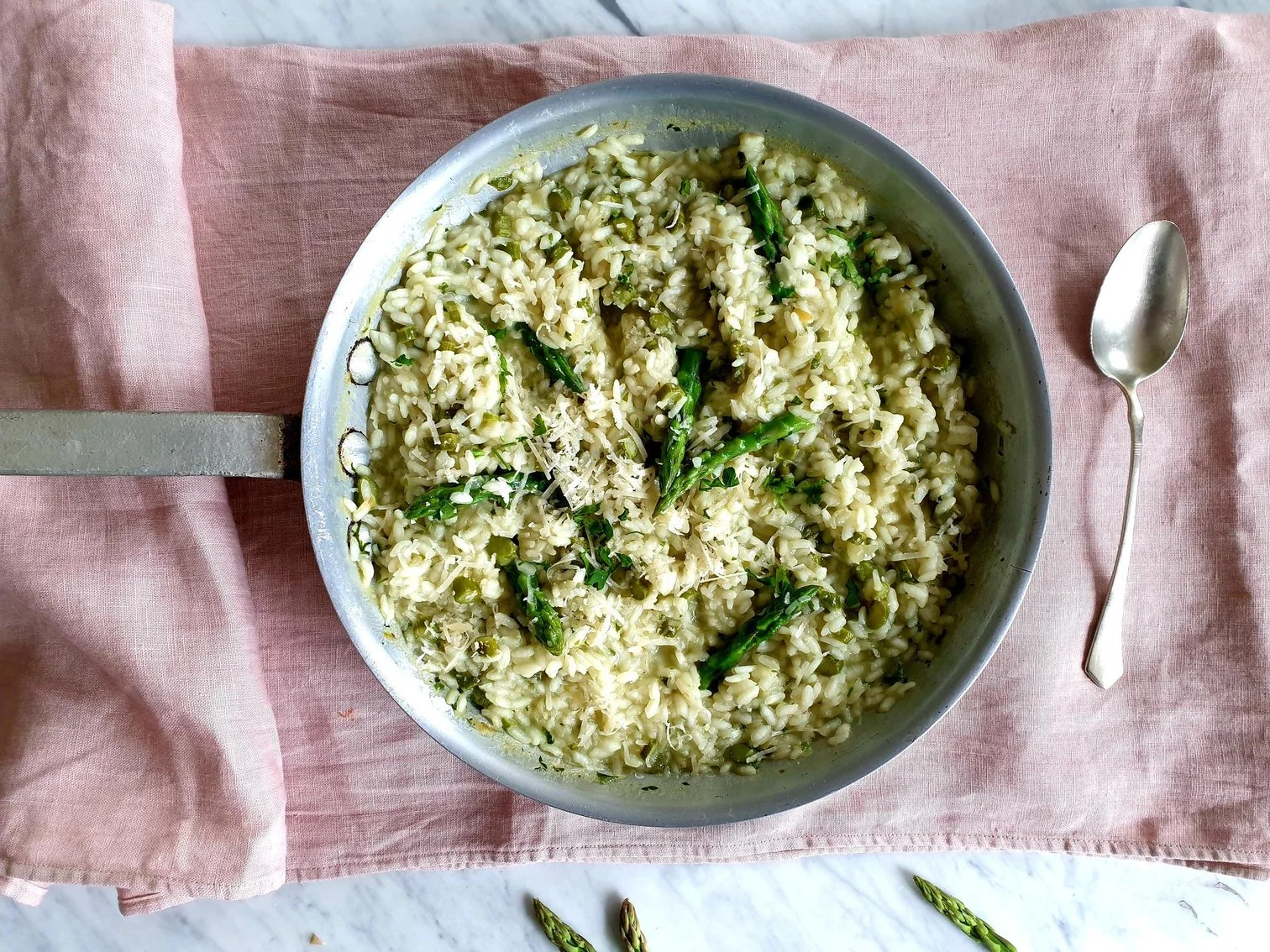
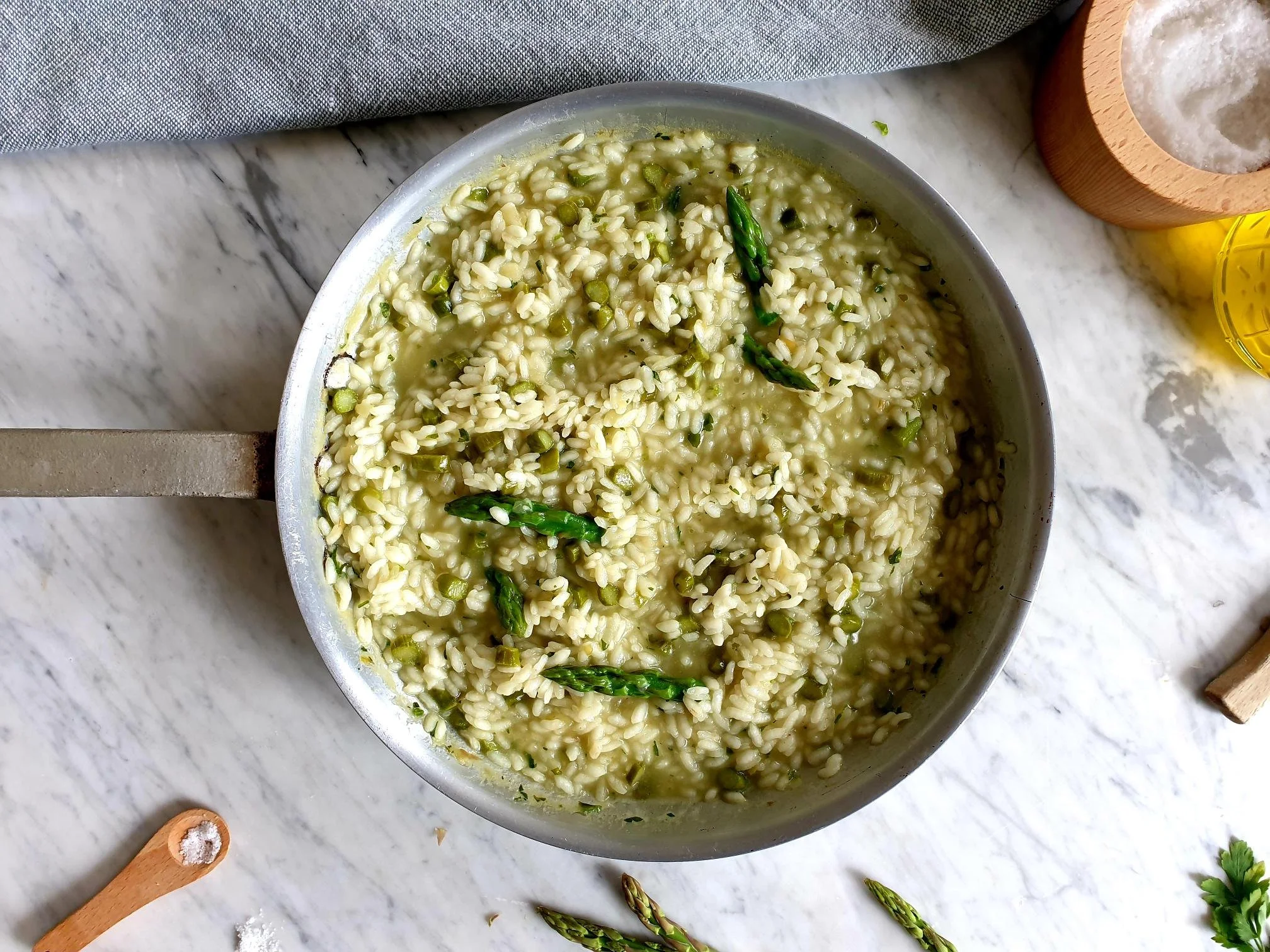
Green asparagus risotto with its pale green colour, is elegant in appearance, sweet and nutty taste of the asparagus makes this classic risotto delicate, simple, and clean in flavour, but a surprisingly tasty rice dish. It is creamy and very satisfying. This risotto celebrates the best of spring vegetable, making it a perfect choice for a quick week night dish.

The preparation and cooking of this risotto is particularly simple and quick, perfect for just about any occasion. It covers informal and more rustic eating settings, where risotto is served in a bowl and eaten with a spoon, as well as more formal settings, where risotto can be placed onto big white plates with maybe Parmiggiano Reggiano shavings, which can impress your slightly more demanding quests.

Asparagus risotto is very popular on the Slovenian coast, where I was born and grew up, and this is no surprise as the Veneto (region in Northern Italy) is where the greatest variety of risotto dishes can be found, and is a short car drive from my home town.

Asparagus back home is a very much celebrated spring vegetable and used to make a lot of different dishes, minestrone primavera, asparagus frittata, cooked asparagus with hard boiled eggs, sautéed asparagus with scrambled eggs, just to mention a few. Very frequently the bought variety of asparagus would be replaced by the wild variety since like mushrooms, it is also found in nature (without any concern about poisonous varieties!), and is very keenly foraged by the locals during their pick season in mid spring.

As a child I have vivid memories going with my mother to the market and seeing beautifully displayed bunches of asparagus which were than purchased to make the risotto.

I am sharing here my mother's recipe for the asparagus risotto with which I grew up, she told me that when I was little I used to pile a substantial amount of cheese on my risotto, making a mountain of cheese, apparently, I loved it that way, maybe not so appealing now...

Ingredients

Serves 4

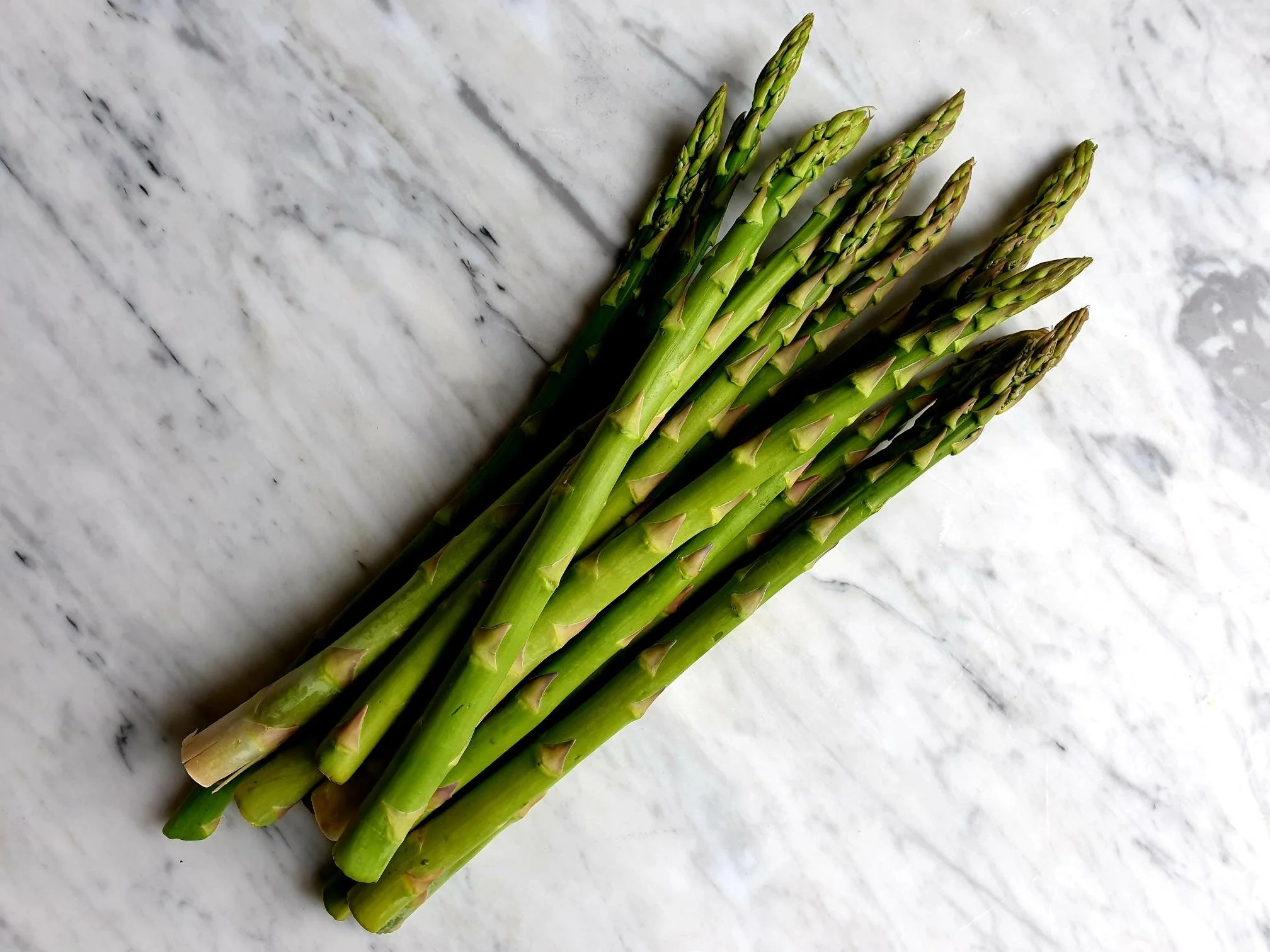
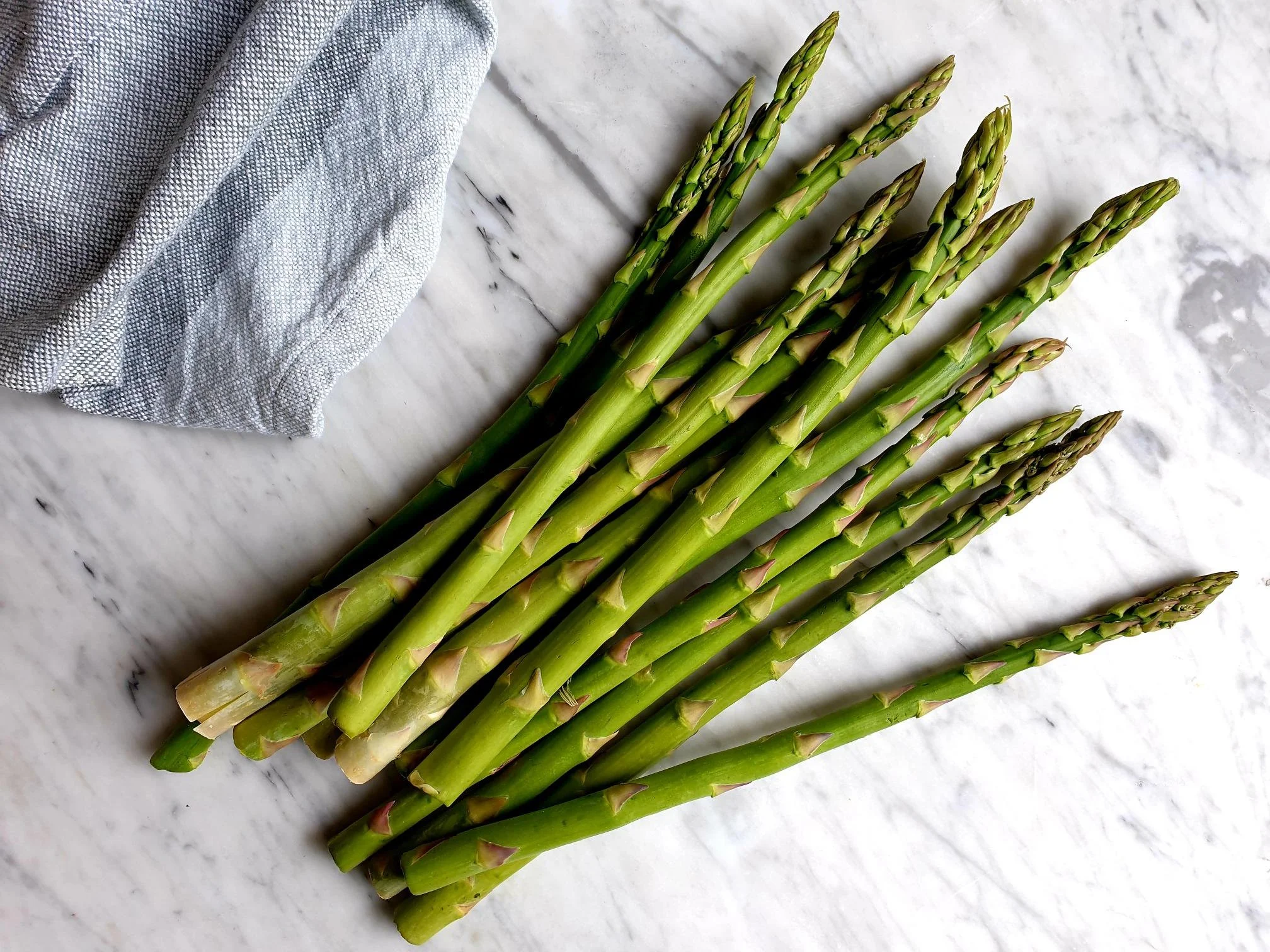
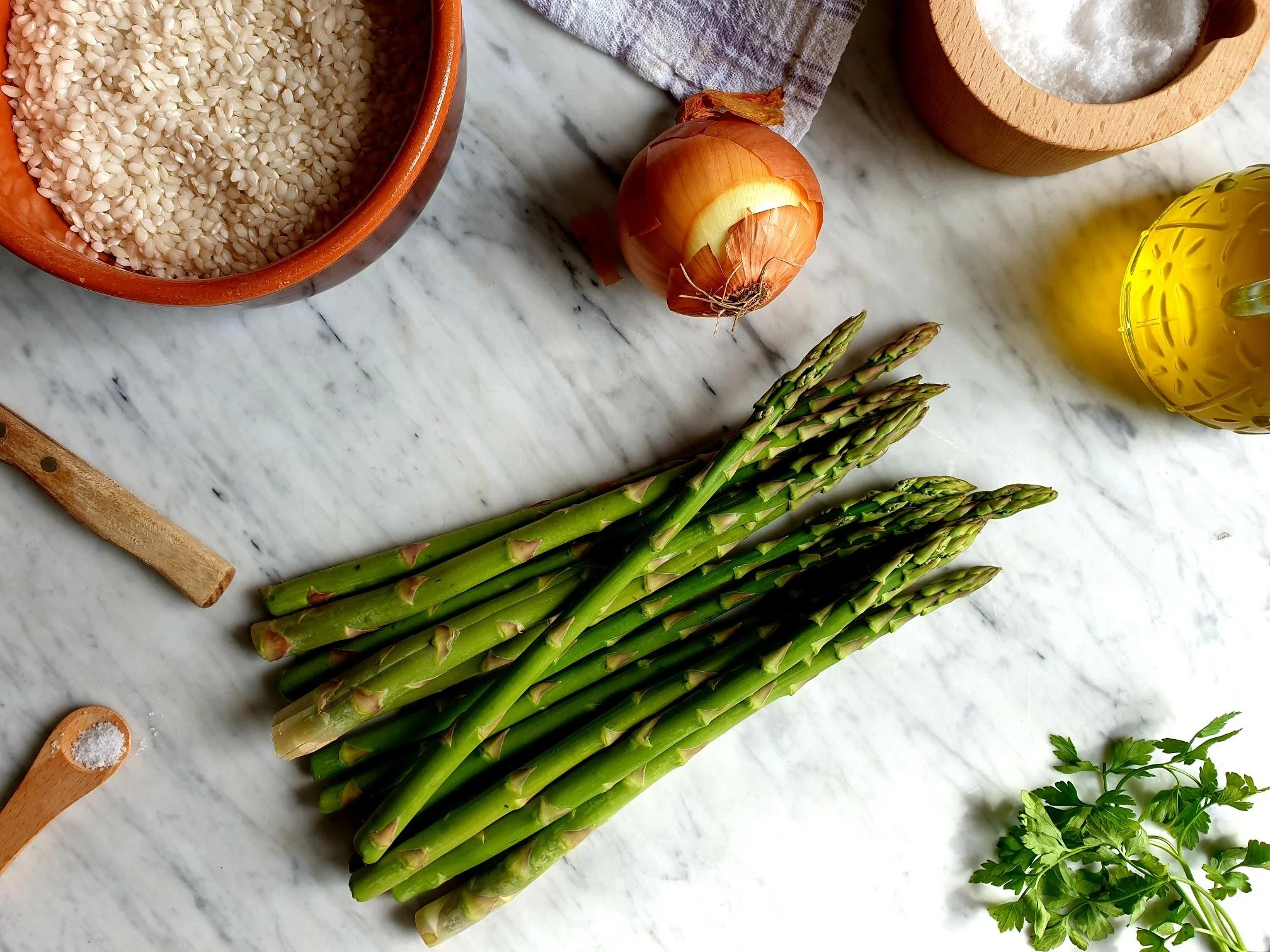
  • 200-300g green asparagus

  • 300g risotto rice (like Vialone Nano, Arborio or Carnaroli)

  • 1 onion or shallots (about 80g) peeled and finely chopped

  • 4 Tbsp extra virgin olive oil

  • 1 litre hot vegetable or chicken stock (you can use Instant vegetable or chicken stock powder)

  • fresh flat leaf parsley, a handful (about 6g), finely chopped (plus some extra for garnish, optional)

  • sea salt

  • Parmiggiano Reggiano cheese, finely grated (about a generous handful or to taste)

Method

Before starting making risotto have your boiling hot vegetable or chicken stock ready to hand for later.

Wash the asparagus and pat dry them with the kitchen paper towel.

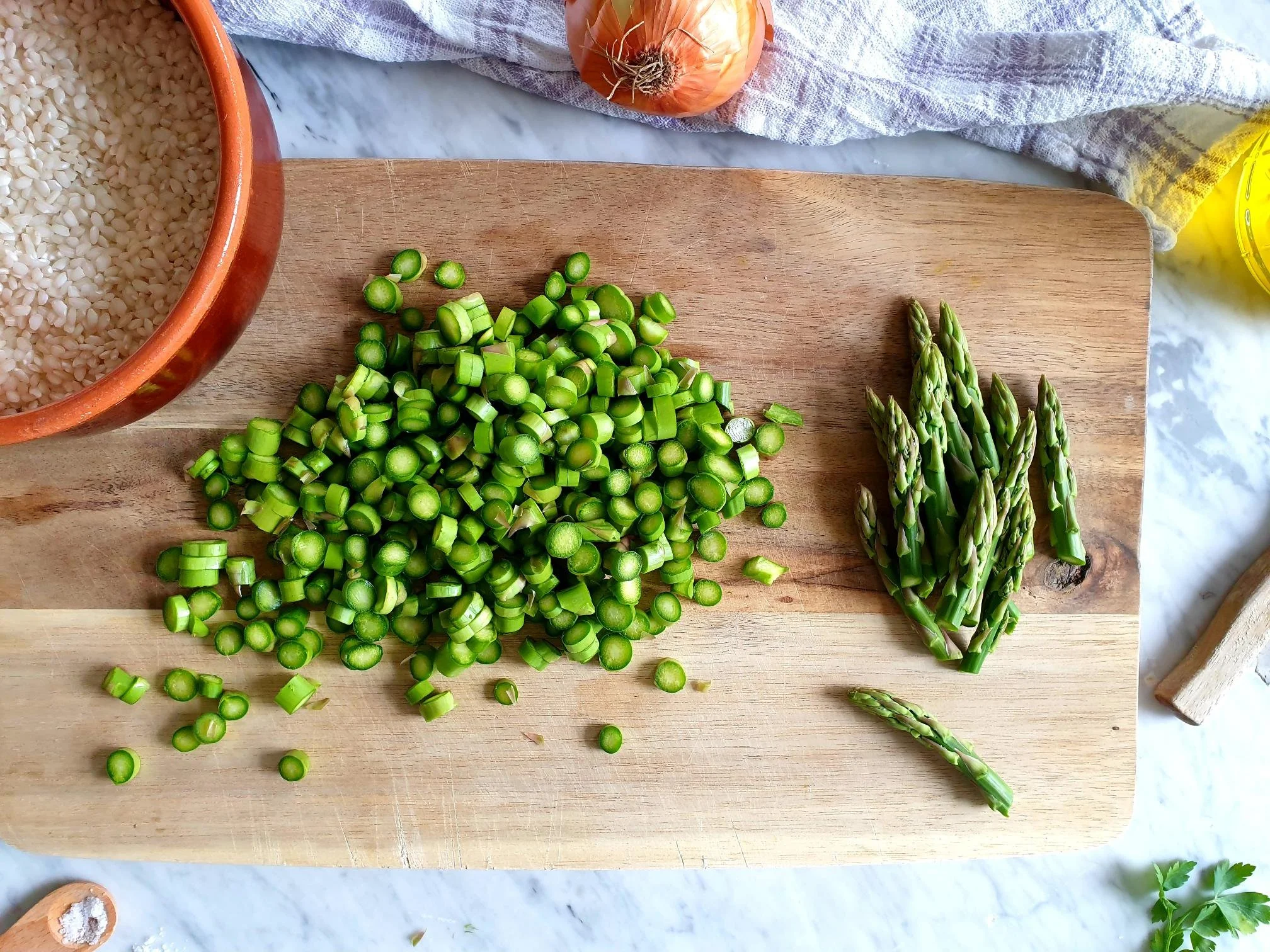
Cut off the tips of the asparagus and set aside.

Chop the stalk sections of the asparagus.

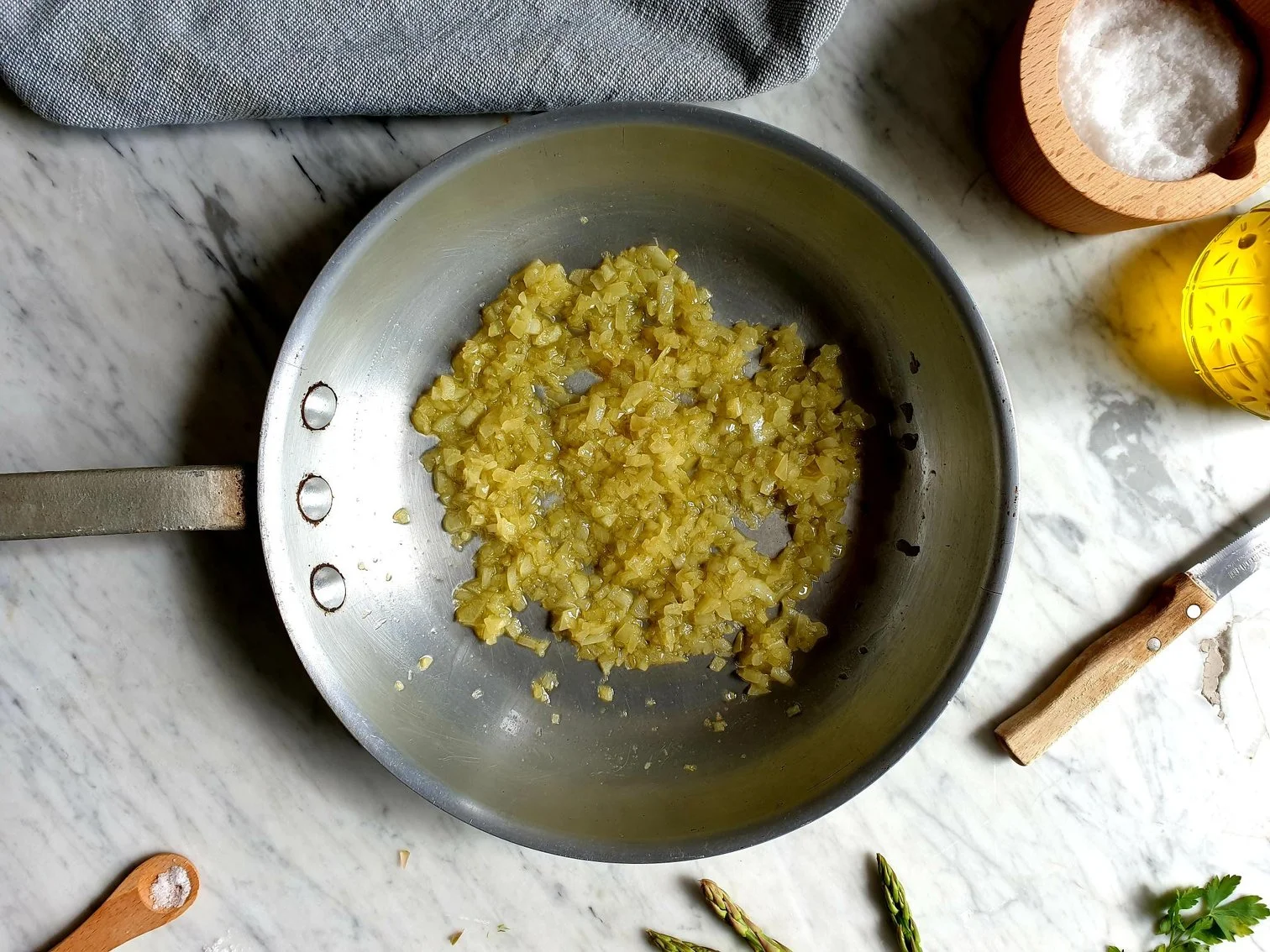
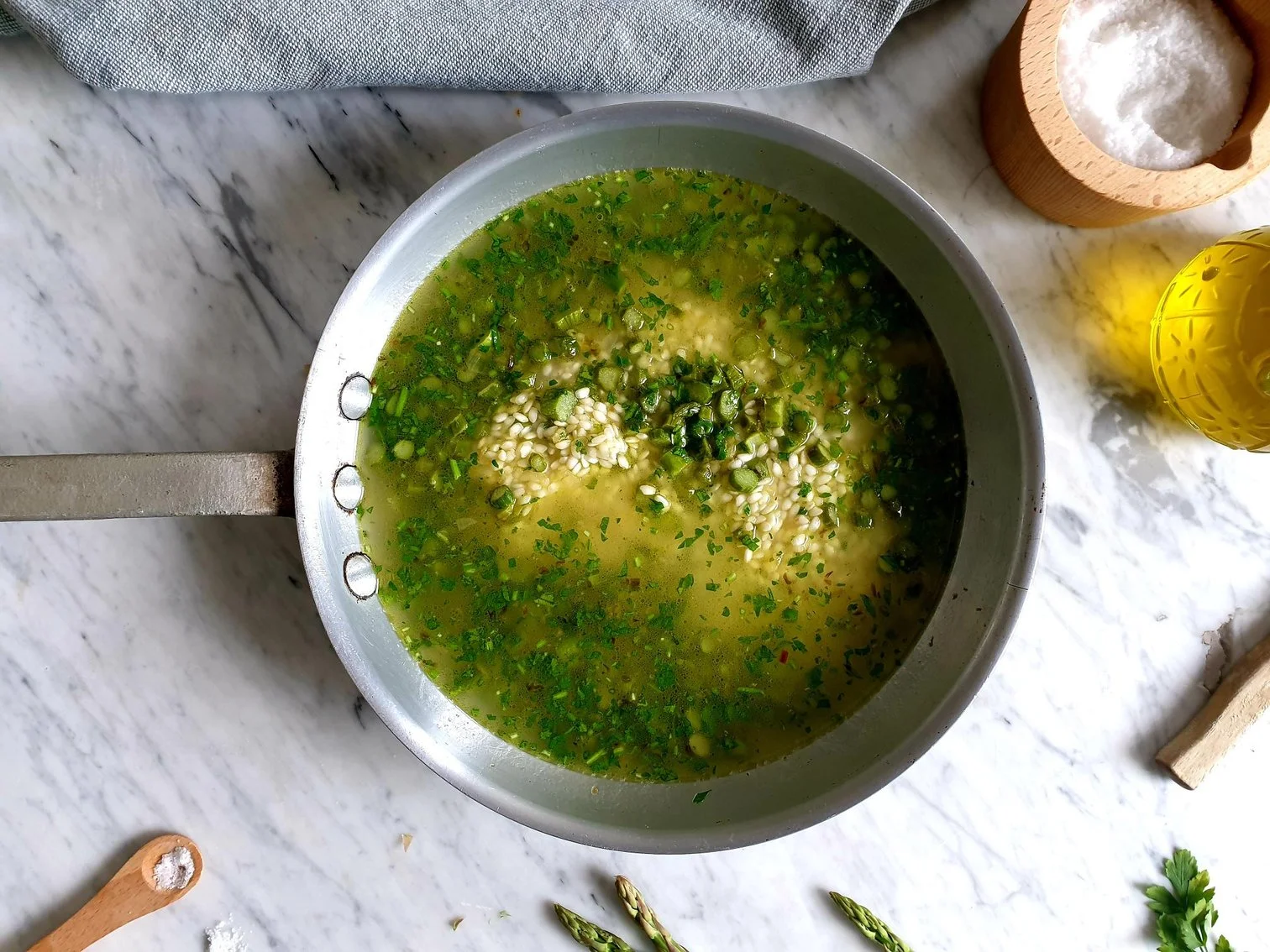
Put extra virgin olive oil in a pan, add finely chopped onions, a pinch of sea salt and sauté for a few minutes on a gentle heat until soft.

View fullsize Asparagus risotto 8.jpg
View fullsize Asparagus risotto 10.jpg

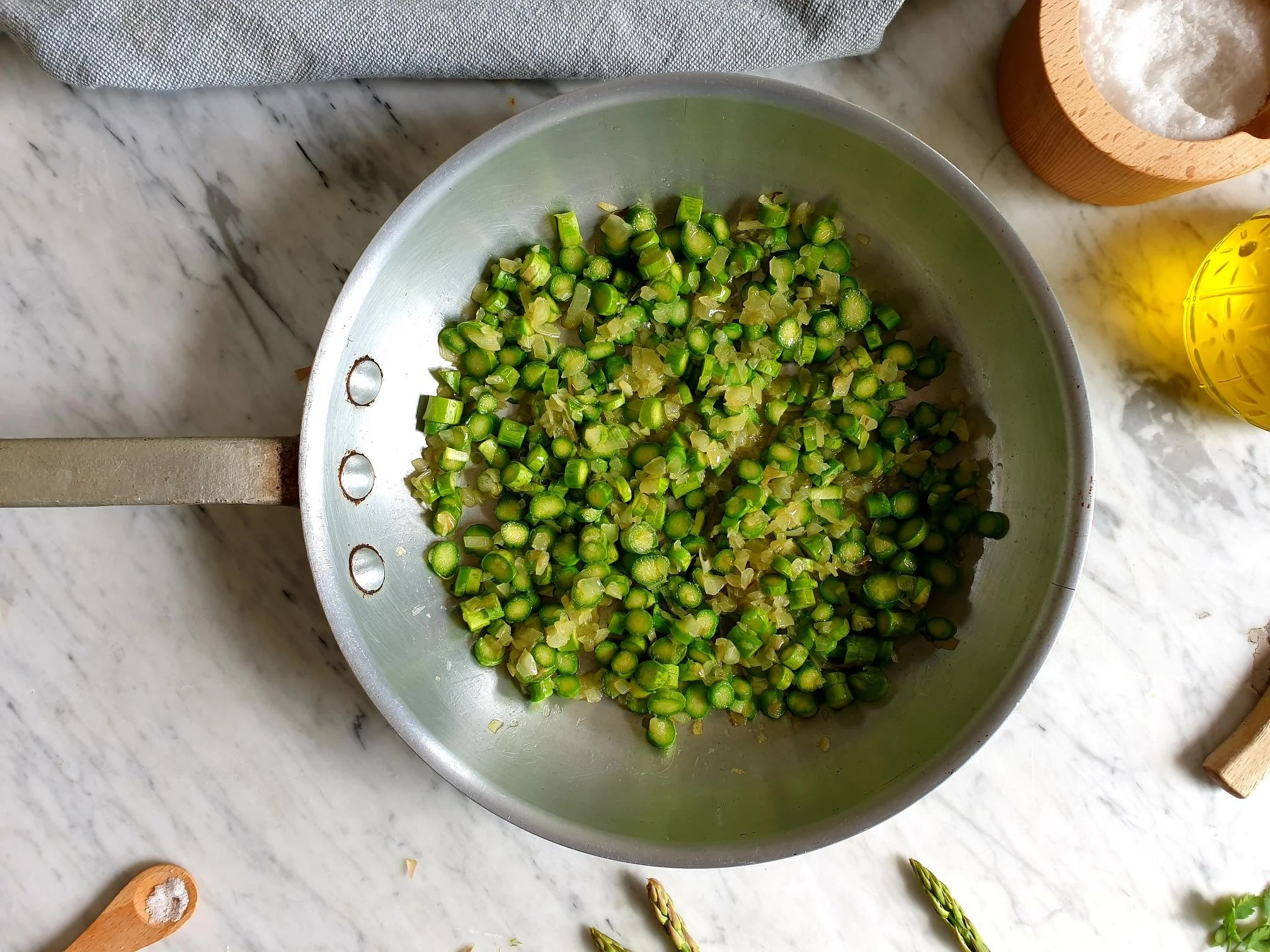
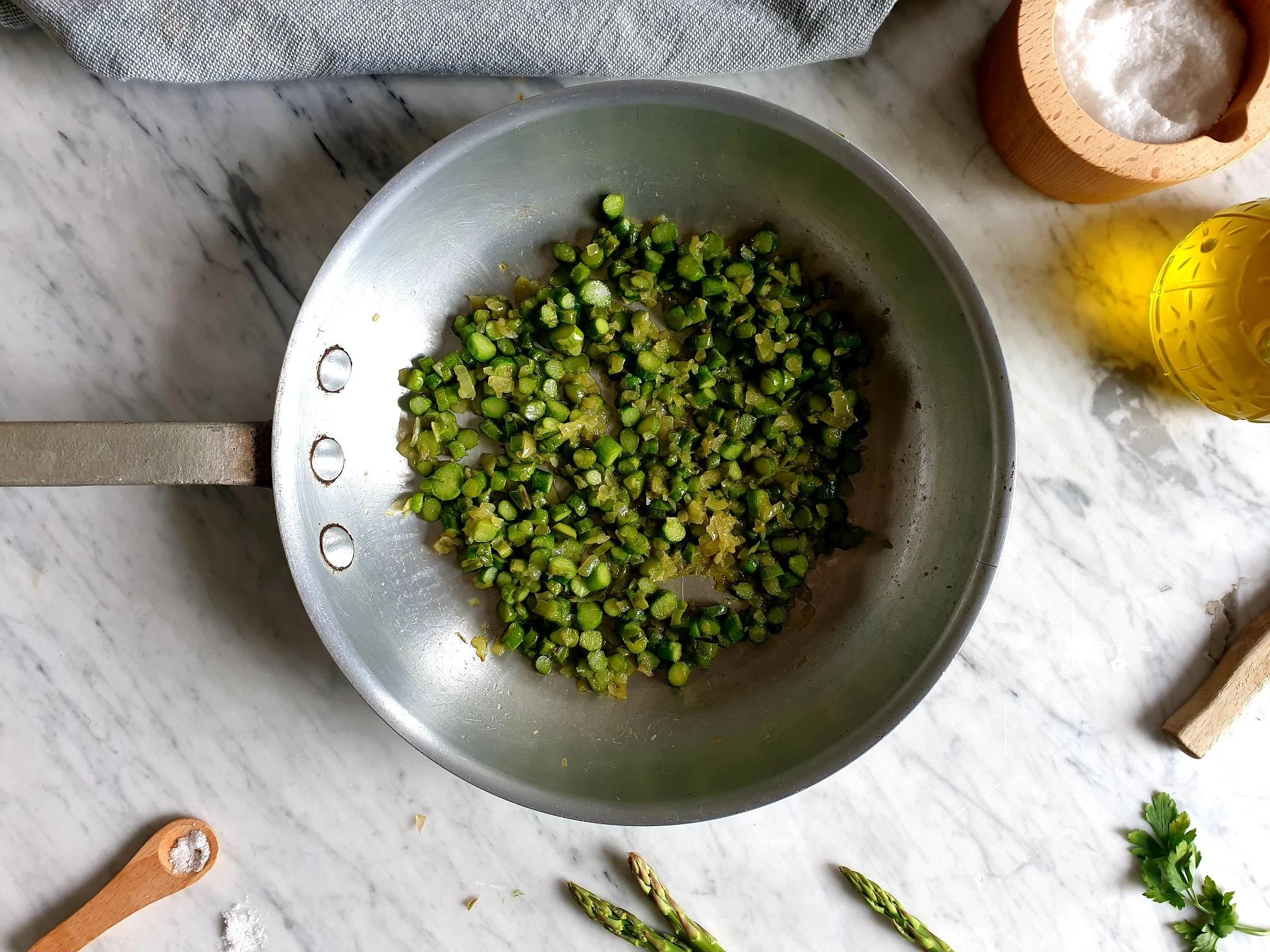
Add chopped sections of the asparagus, not the tips, and cook for a few minutes together with the onions until they soften a bit and deepen in colour

View fullsize Asparagus risotto 11.jpg
View fullsize Asparagus ristotto 12.jpg

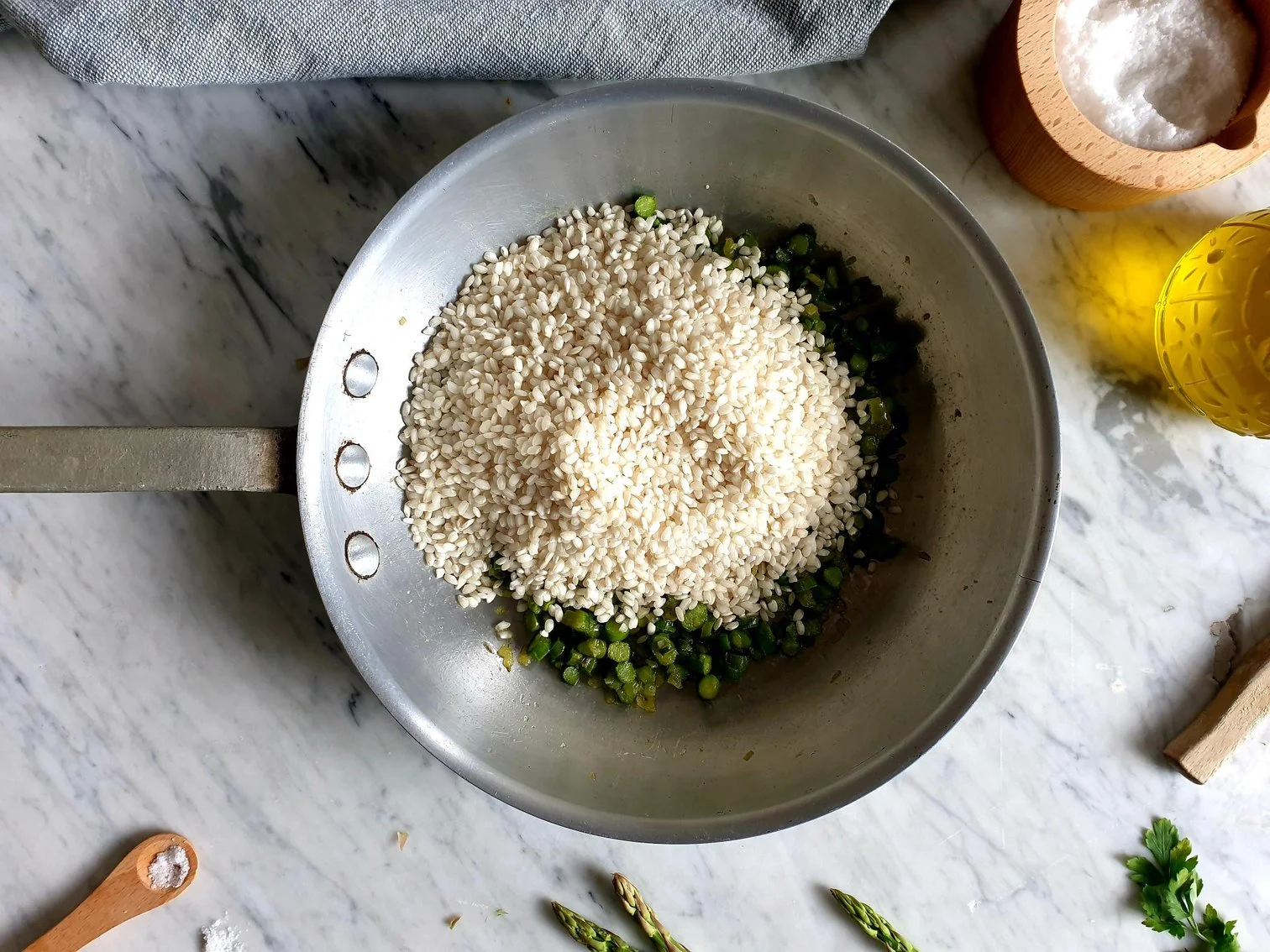
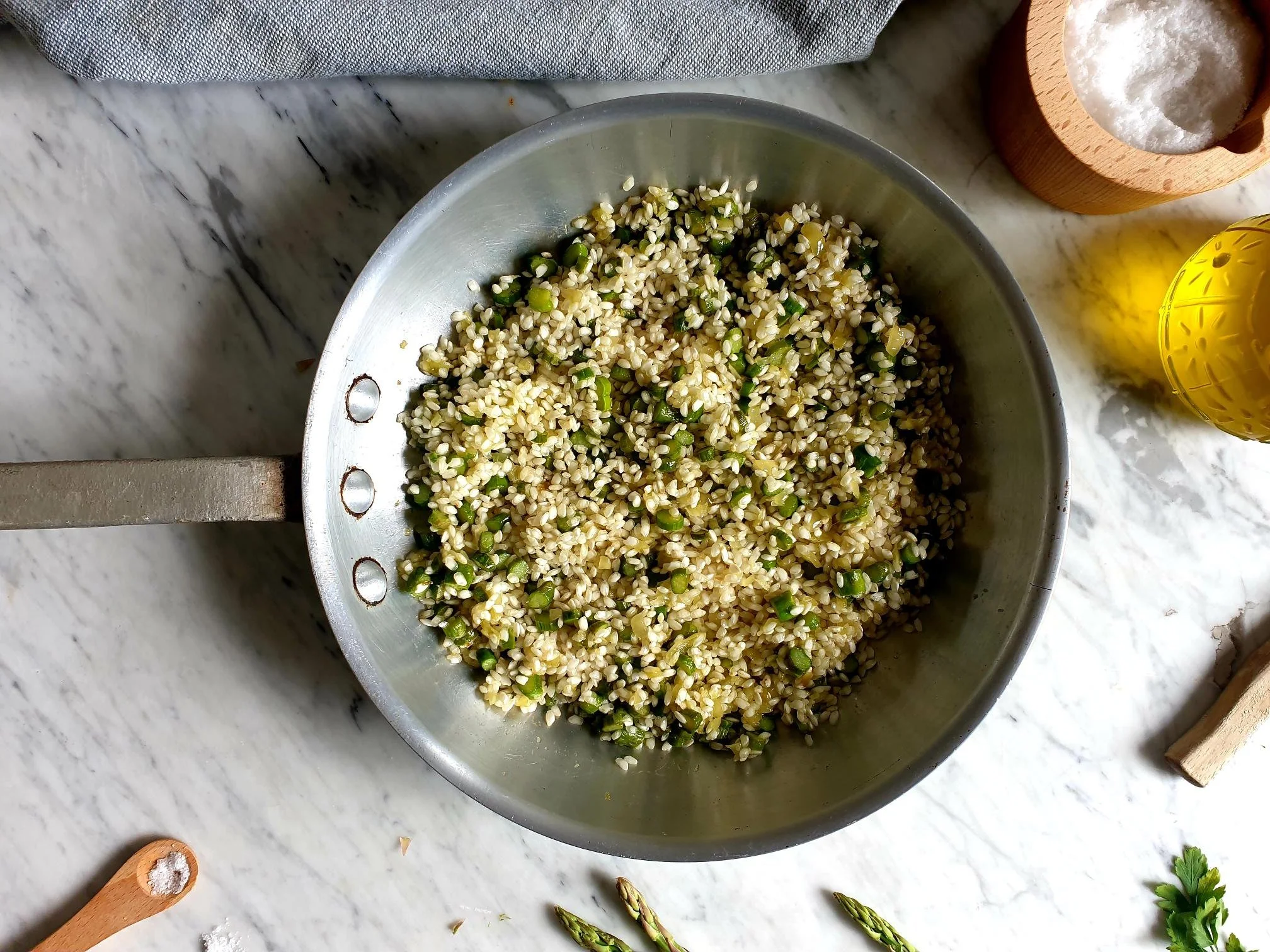
Add the rice and toast for a bit, stirring constantly to avoid sticking to the pan.

View fullsize Asparagus ristotto 13.jpg
View fullsize Asparagus ristotto 14.jpg

Pour or ladle ½ litre (500ml) of hot vegetable or chicken stock and add chopped parsley.

Cook until the first amount of liquid is absorbed then start gradually adding ladles of hot stock, one at a time, allowing the liquid to be absorbed before adding more.

Cook on a medium heat, stirring almost constantly, until the rice is cooked al dente, meaning fully cooked but still a bit firm when bitten, it should roughly take between 15 -18 minutes for a risotto to be cooked.

Add the tips of the asparagus a few minutes before the end of cooking time.

Taste and adjust the seasoning with sea salt, but this might not be necessary since the stocks that come from the store generally speaking are salty already!

Serve immediately while the risotto is still hot and rather liquidy.

Ladle the risotto onto the plates, sprinkle with freshly grated Parmiggiano Reggiano cheese and garnish with some roughly chopped fresh parsley.

Just a thought

For even creamier texture, you can finish cooking the asparagus risotto with a typical Italian mantecare phase. Remove the saucepan from the heat, add grated cheese and a bit of cold butter or cream to the risotto when is almost finished and stir with a wooden spoon quite vigorously in order to develop that delicious creamy texture.

April 27, 2022 /tina oblak
green asparagus, green asparagus risotto, risotto rice, Vialone Nano, Arborio, Carnaroli, Venetian style asparagus risotto, wild asparagus
Adriatic Recipe, child friendly dish, child friendly meal, dinner, Easy recipe, family friendly dish, family friendly meal, first course, first course dish, first course meal, foraging, Healthy, healthy mael, Istrian cuisine, Istrian dish, Istrian food, Istrian gastronomy, light meal, main course, main dish, Nutritious, Nutritious dish, recipe from Northern Ital, Risotti, Rustic dish, Slovenian cuisine, Slovenian food, Slovenian gastronomy, Spring recipe, Starters, supper, Vegan, Vegetables, Vegetarian
Comment

Dandelion Salad with hard boiled eggs, boiled potatoes and crispy pancetta Recipe

Beans and Sardines
April 20, 2022 by tina oblak in Adriatic Recipe, Appetizers, dinner, Easter, Easy recipe, entrée course, Healthy, healthy mael, Istrian cuisine, Istrian dish, Istrian food, Istrian gastronomy, light meal, main course, main dish, Nutritious, Nutritious dish, Rustic dish, Salads, Side Dishes, Slovenian cuisine, Slovenian food, Slovenian gastronomy, Starters, Vegetarian, Vegan, Spring recipe, Spring dish, foraging

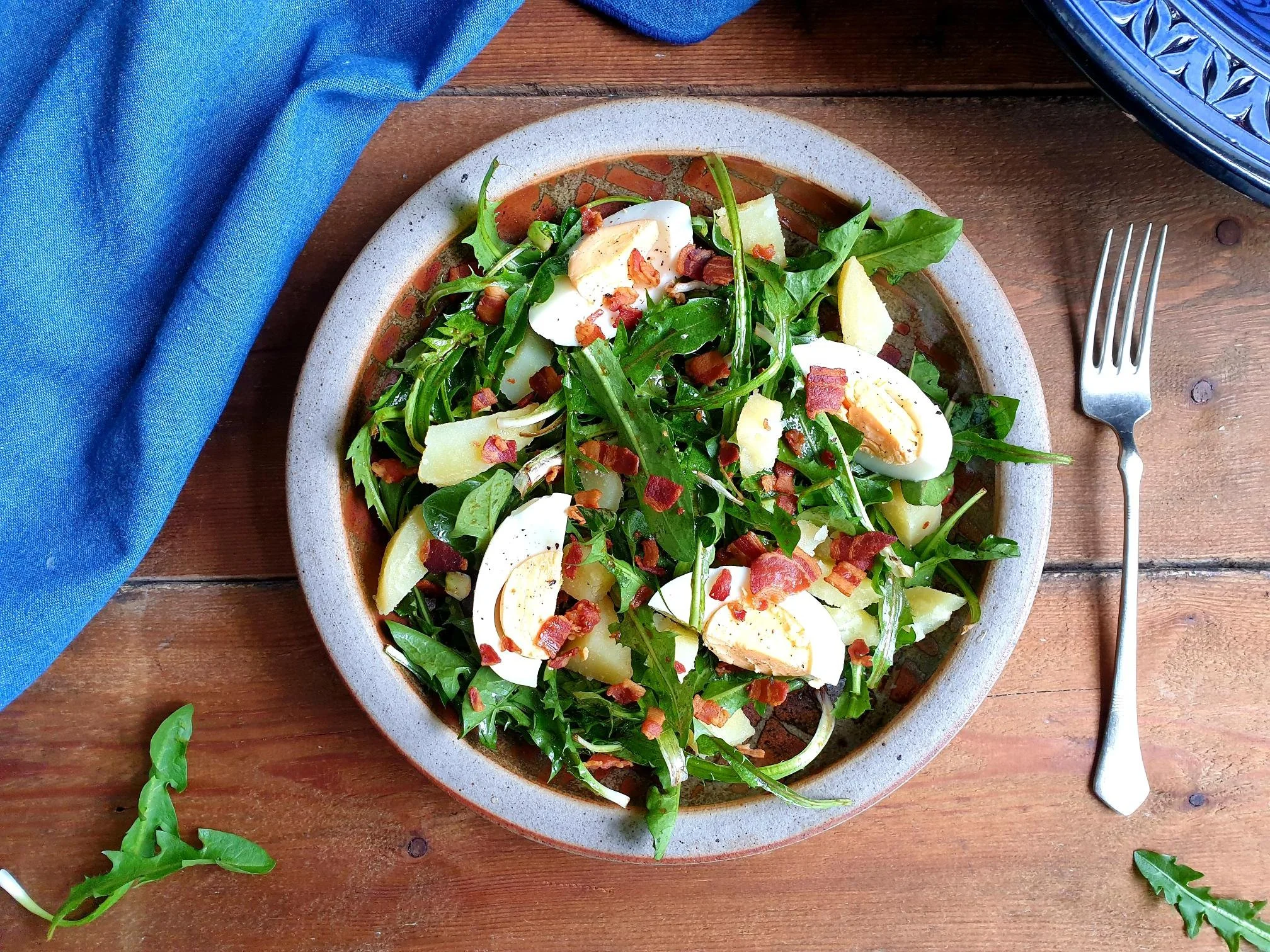
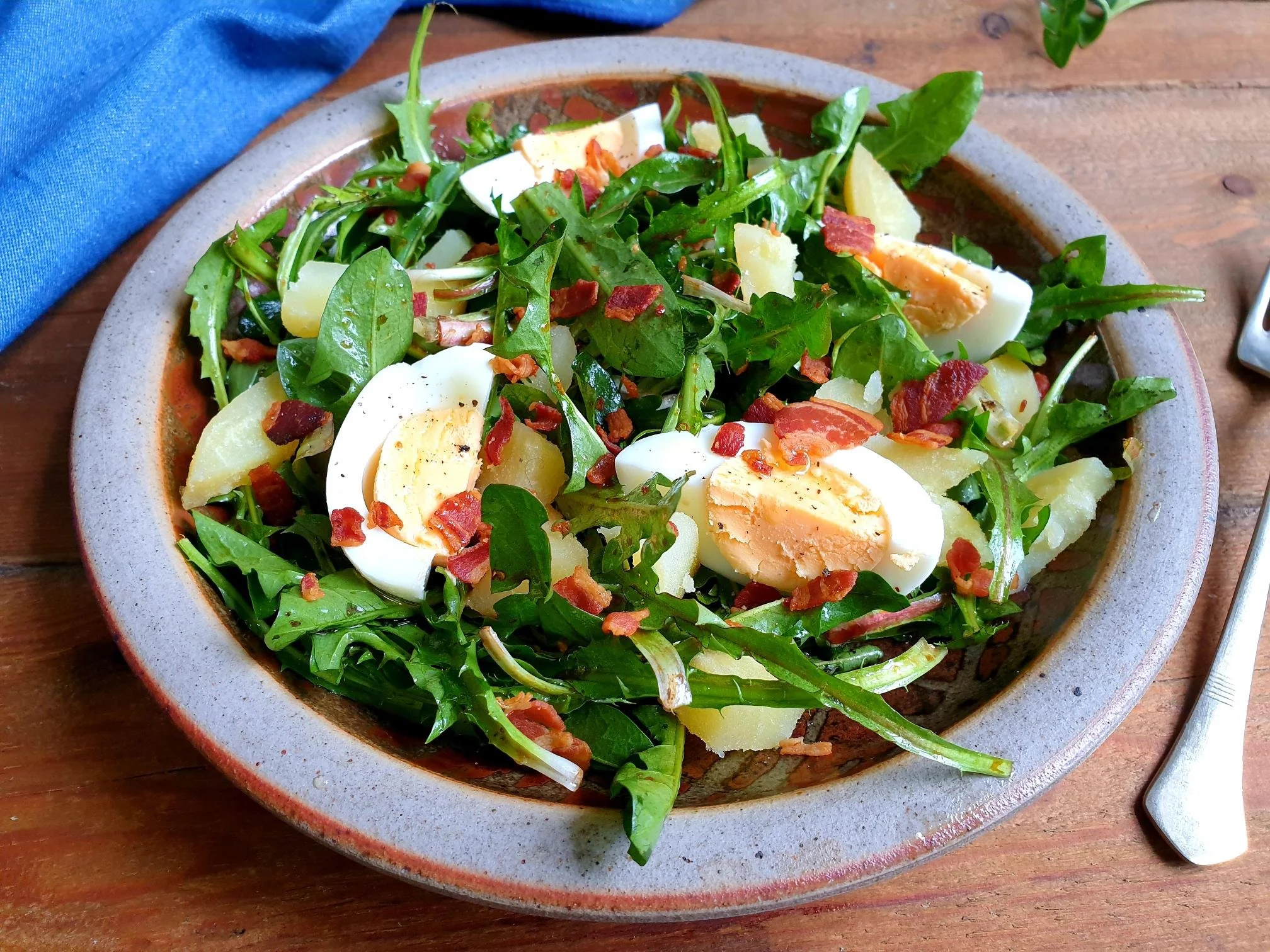
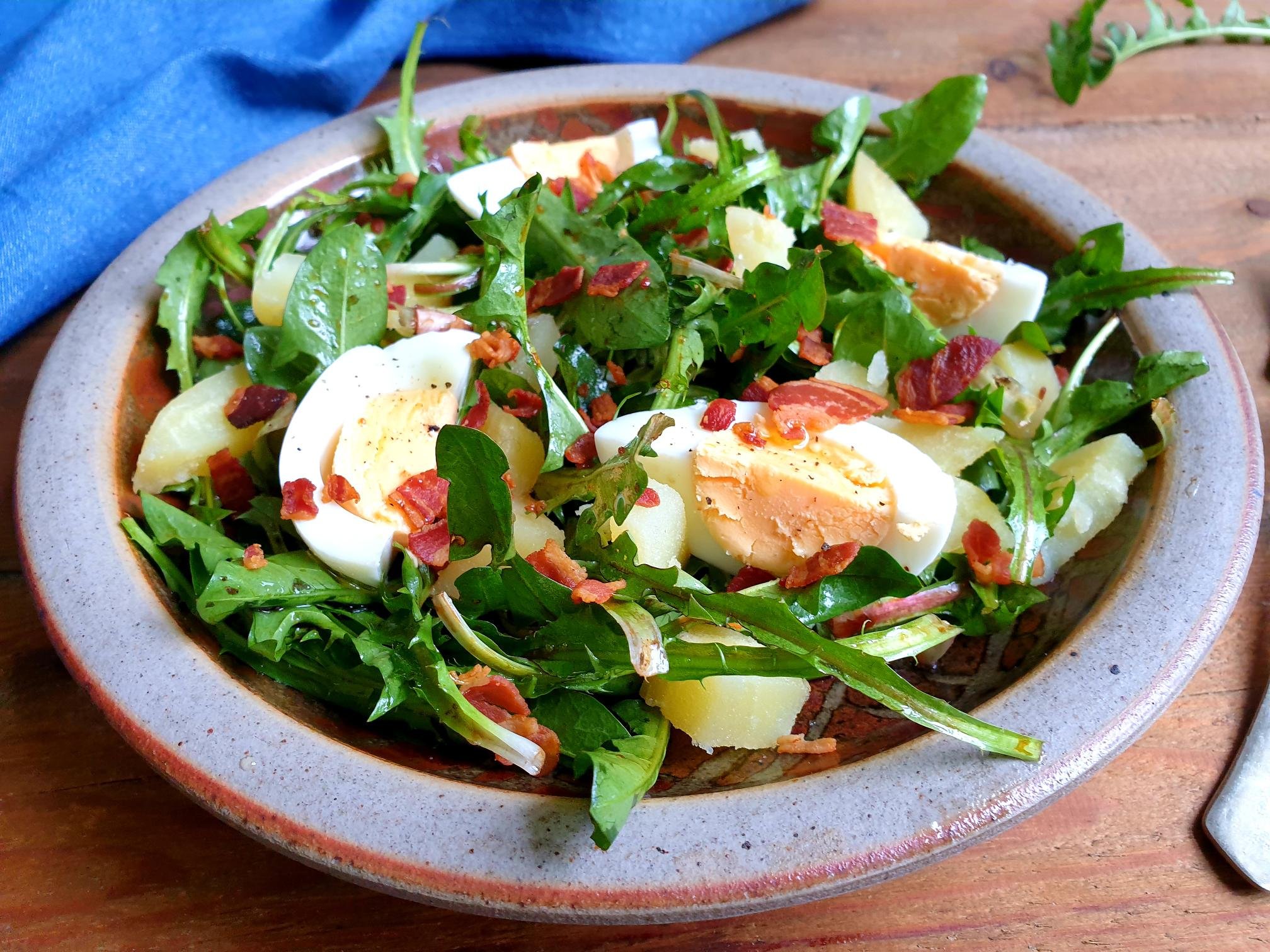
This very healthy and nutritious but incredibly tasty salad is made from young and tender dandelion leaves and enriched with hard boiled eggs, cooked potatoes and crispy pancetta that give us extra energy for the long spring walks in the nature and for completing all those chores in the garden and inside the house.

This salad can also easily become vegetarian and vegan friendly by simply omitting some of the ingredients.

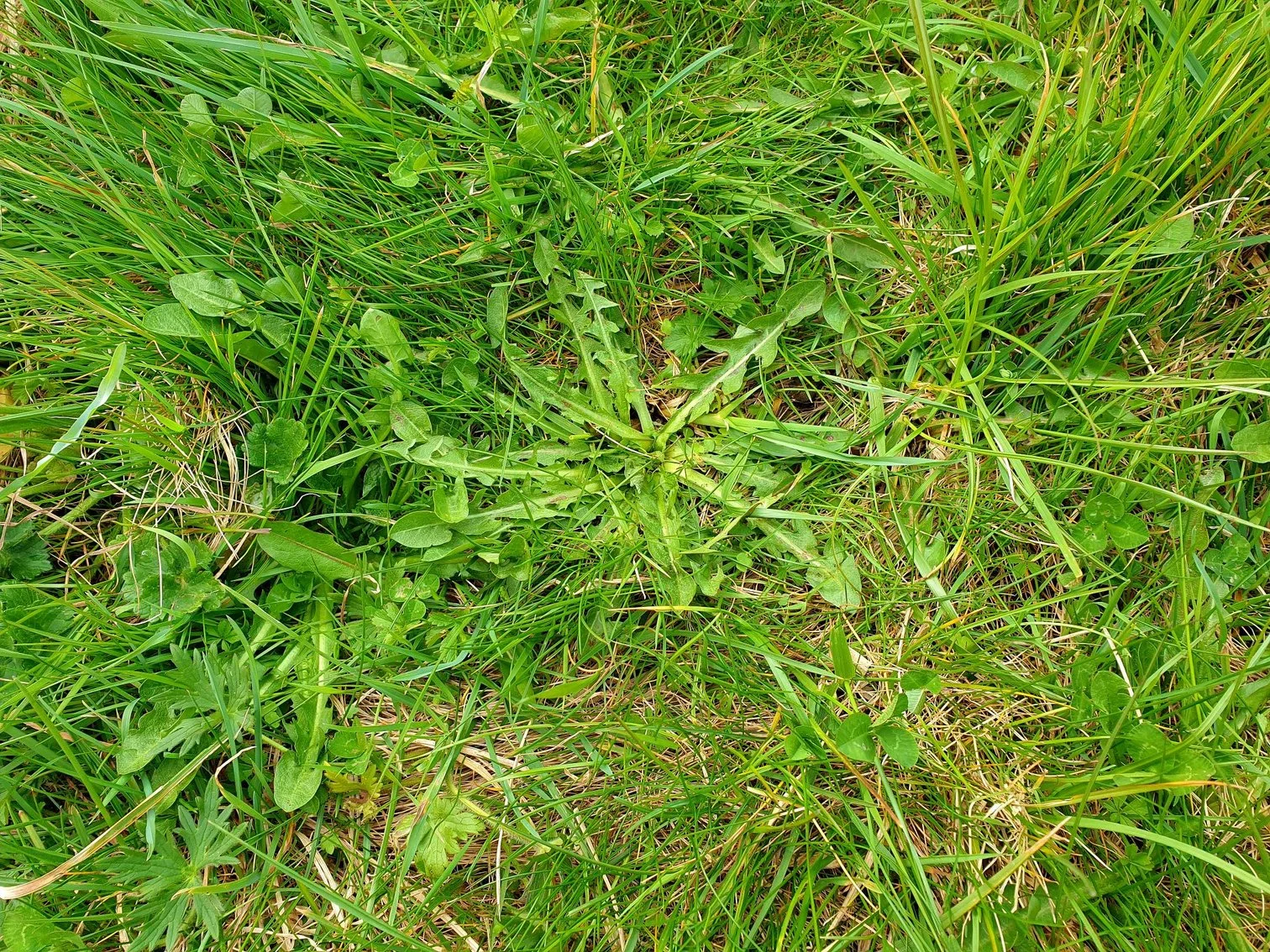
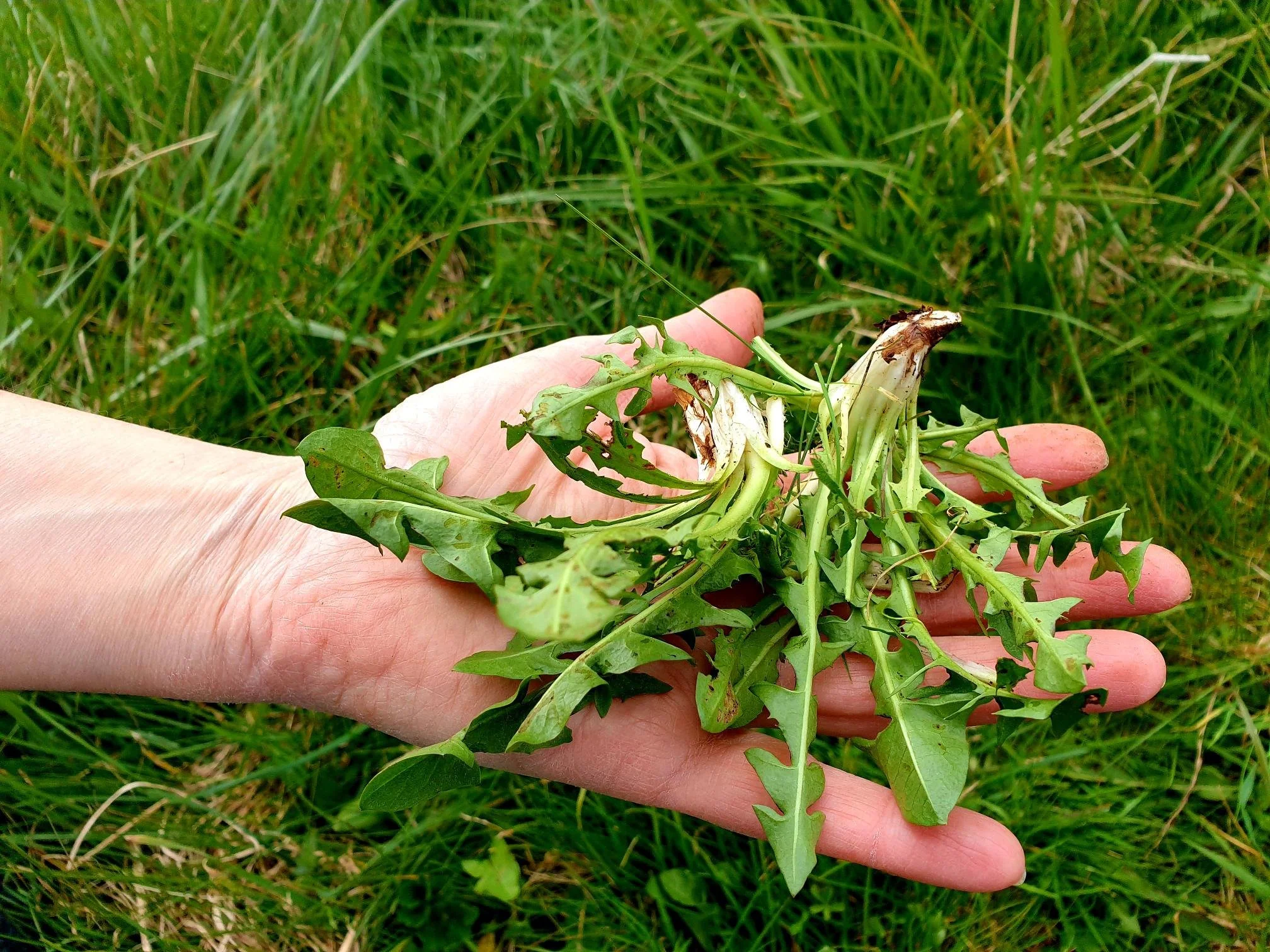
Dandelion leaves, with their verdant colour, can be eaten cooked (customary on the Slovenian coast) or raw, they have a pleasant bitter taste, a bit like peppery rocket salad, and they should be picked small and tender before the plant blooms, then they turn seriously bitter.

When foraging for dandelion try to avoid the areas close to busy roads, lanes popular with dog walkers (no need to go into too much detail as to why), and fields close to farms that have potentially been sprayed with pesticides or fertilizers and antibiotics which get absorbed into the plant.

View fullsize Dandelion Salad 10.jpg
View fullsize Dandelion Salad 9.jpg

To pick dandelion you can use a small knife and cut around the plant root and then pull it out of the ground or just simply tear the leaves off the plant.

Dandelion is very rich in vitamins and minerals, very good for our body, and yes it might be a bit bitter, but it is this bitter substance in the dandelion leaves that helps to optimise the function of the gallbladder and the liver. They contain a lot of potassium which is very beneficial for the kidneys, and iron which enriches our blood and helps to purify it. .

This is of no coincidence since dandelion salad is very popular in early spring (around Easter), not only because this is the right time to pick the leaves, but also because this salad is also traditionally eaten with eggs, a symbol of purity, rebirth, and rejuvenation.

In Slovenia, where I come from, picking dandelion leaves in spring time during long walks and returning home with a free lunch or dinner is a great pastime, and almost an obsession.

But there is another tradition that is deeply rooted and much anticipated, especially with the children. It is colouring and decorating Easter eggs, and lots of them, they would be beautifully displayed in small wicker baskets and than used, yes, you guessed it, in the dandelion salad and of course other dishes.

I am sharing here the family recipe, that includes the use of crunchy pancetta or ocvirki (very commonly used in Slovenia, they are small pork cracklings in lard, usually home made, kept in glass jars in the fridge).

A small amount (about 2Tbsp) of pork cracklings in lard will be placed in a small frying pan and warmed up, by doing so, the lard melts and the cracklings get very crunchy, all of this would then be added to the dandelion salad substituting the oil and the pancetta.

If you never have this salad before, try it and play around with the ingredients to suit your taste, keep the ingredients you like and omit the ones you are less keen on. You can also forage a smaller amount of dandelion leaves than indicated in this recipe and mix with other salad leaves.

Have a go and make this super salad, next time you look at the dandelion you will not see it as a annoying weed...

Ingredients

Serves 4

  • 100-150g freshly picked young dandelion leaves, trimmed and picked through

  • 4 eggs, hard boiled

  • potatoes (about 400g) cooked and peeled (you can use baby potatoes or new potatoes with the skin on)

  • 150g pancetta rashers (sliced pancetta) or streaky bacon, smoked or unsmoked

  • extra virgin olive oil (or other type if prefer)

  • vinegar (I used balsamic vinegar, you can use red or white wine vinegar or cider vinegar works well too)

  • 1 clove of garlic, peeled and very finely chopped, optional (I did not use garlic I this recipe)

  • sea salt

  • black pepper

Method

Start by preparing all the ingredients needed for the salad.

Place the potatoes in a pot, cover with water, bring to boil and simmer until cooked.

Cut pancetta rashers or streaky pancetta into small pieces, place them in a small pan and gently fry until very crisp. Remove them from the pan, and place on to kitchen paper so they can drain, and the excess fat can be absorbed. Let the rashers cool and set them aside.

Cook the eggs in a small pan of simmering water until hard boiled, cool, peel and cut into quarters.

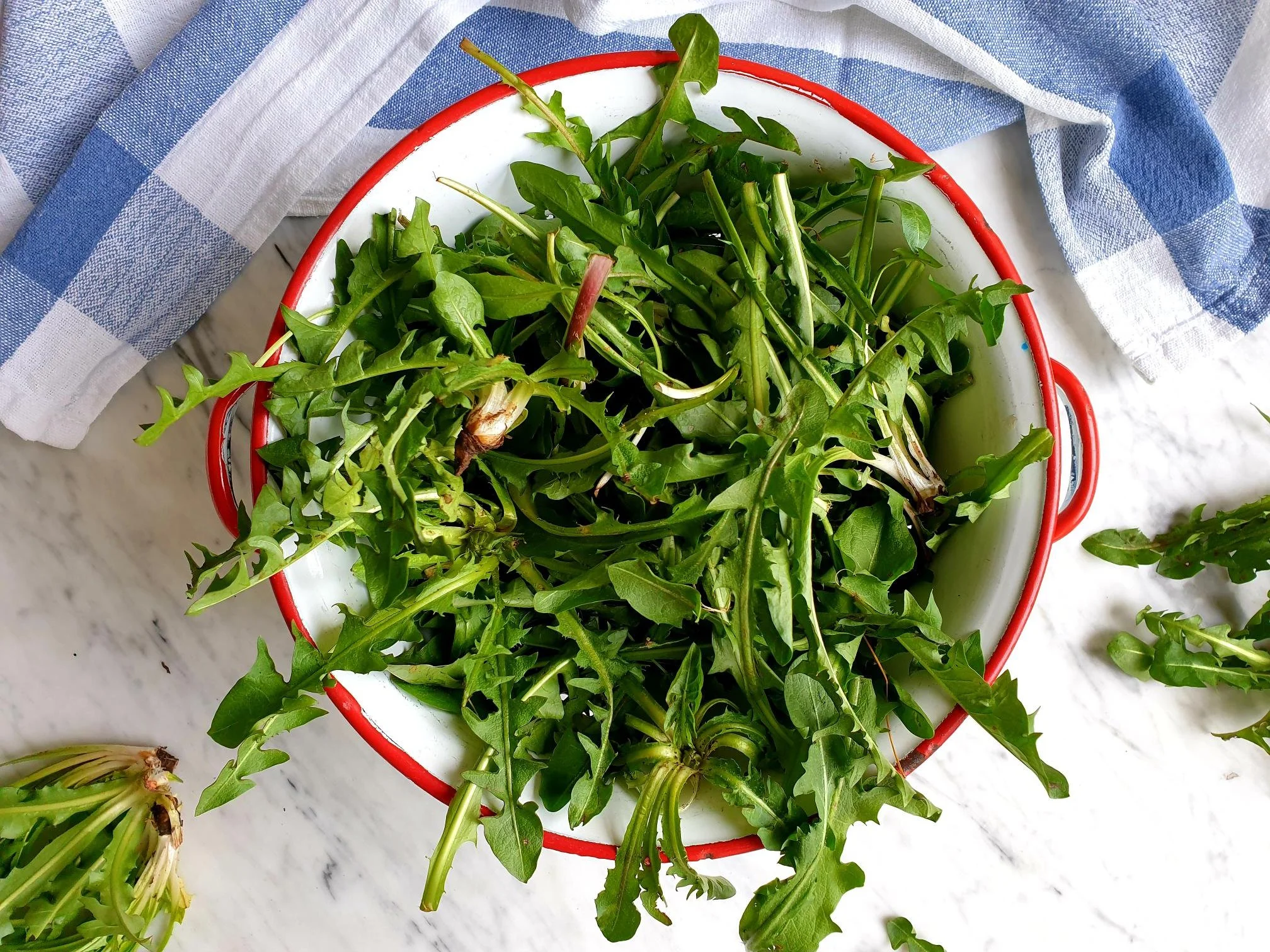
Clean dandelion leaves, wash and dry thoroughly (use salad spinner if you have one).

Wine suggestion

Collio Friulano DOC 2021 - Pighin

April 20, 2022 /tina oblak
dandelion salad, dandelion leaves, insalata di tarassaco, regratova solata, dandelion salad with crispy pancetta, dandelion salad with crispy bacon, dandelion salad with hard boiled eggs, dandelion salad with boiled potatoes, Istrian dandelion salad
Adriatic Recipe, Appetizers, dinner, Easter, Easy recipe, entrée course, Healthy, healthy mael, Istrian cuisine, Istrian dish, Istrian food, Istrian gastronomy, light meal, main course, main dish, Nutritious, Nutritious dish, Rustic dish, Salads, Side Dishes, Slovenian cuisine, Slovenian food, Slovenian gastronomy, Starters, Vegetarian, Vegan, Spring recipe, Spring dish, foraging
Comment

Lamb Peka – One pot slow roasted lamb with potatoes and vegetables Istrian style Recipe

Beans and Sardines
April 13, 2022 by tina oblak in Adriatic Recipe, All year round recipe, baked dish, baking, Celebratory dish, child friendly dish, child friendly meal, dinner, Easter, Easter dish, Easter recipes, Easy recipe, family friendly dish, family friendly meal, Festive dish, Istrian cuisine, Istrian dish, Istrian food, Istrian gastronomy, main dish, main meat course, Meat, one pot meal, one pot meat recipe, Rustic dish, Slovenian cuisine, Slovenian food, Slovenian gastronomy

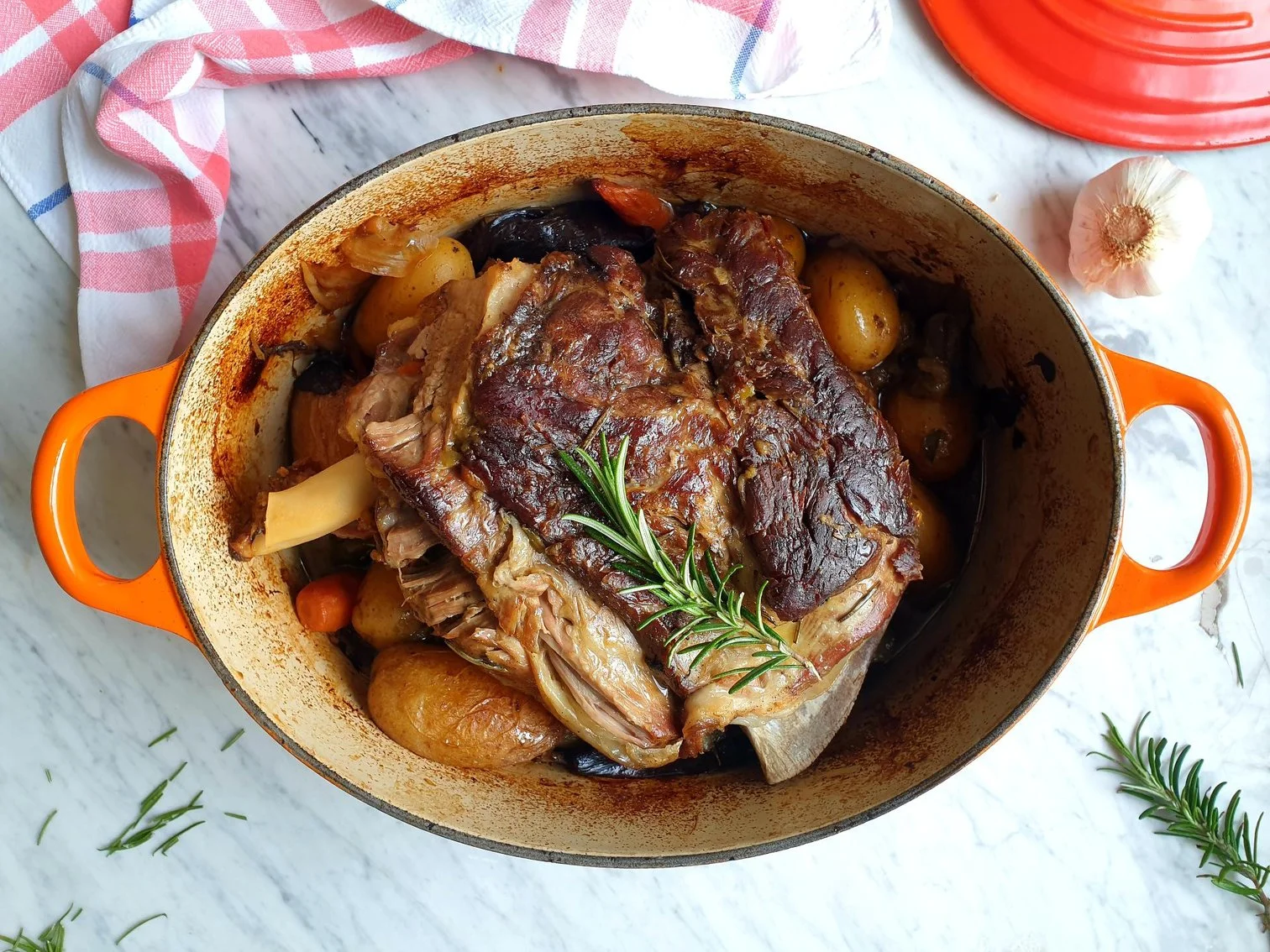
The word Peka, in Slovenian (also called črpinja) and in Croatian, refers to a large metal baking dish with a lid that resembles a bell-shaped dome but it is also a name given to the finished dish (lamb peka, octopus peka etc.) cooked with this very ancient method (in an open fireplace) and the oldest roasting technique which ensures the slow and even cooking as hot coals and embers are placed on top of the dome.

Any Peka type of recipe, traditionally, is usually for a large number of people, when family and friends come together to mark a special occasion. It is a very informal and rustic way of cooking, and yet, feels very special and celebratory. Various types of meats and poultry, as well as fish, octopus being the most popular choice, can be cooked this way, always paired with potatoes and vegetables to soak up the juices, preparation for which takes minimal effort but offers a spectacular one pot meal feast and an unforgettable experience.

Food prepared with the “peka method” recipe, typically found in Slovenian and Croatian Istria and along Dalmatian coast, will give you the finished dish that it is neither baked or cooked, but something in between, will be slightly crispy outside and very tender inside, it falls apart and almost melts in your mouth.

Most of you, including myself, as I currently live in England, will not have the possibility to make this dish with the authentic and traditional peka method, but where there is a will there is a way.

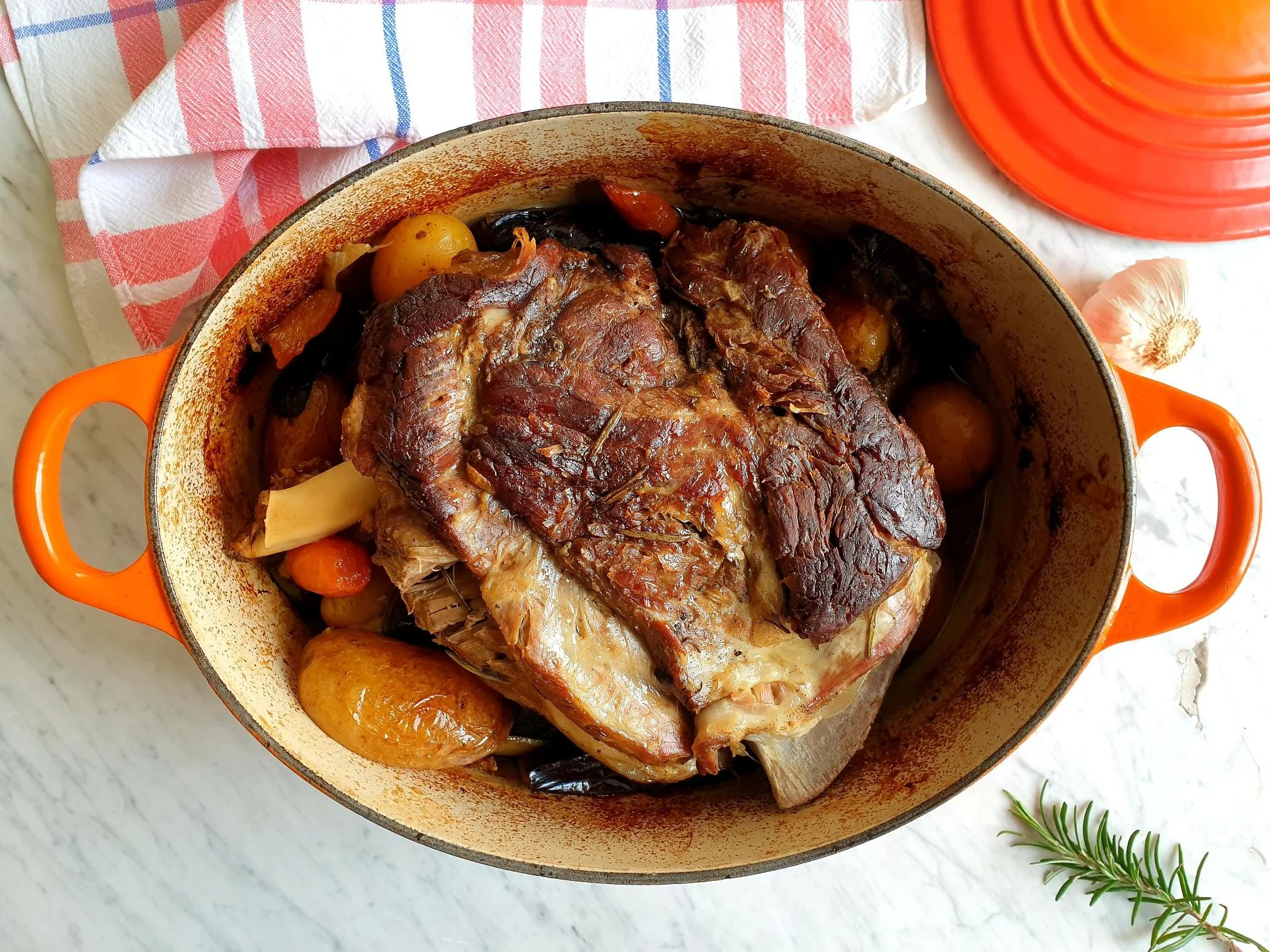
Here I am sharing with you the recipe for lamb peka in the oven, using a Dutch oven or cast iron casserole dish, even a baking tray and aluminium foil will do, that will give us the possibility to come as close as we can can to a “real deal lamb peka”, just as delicious and aromatic!

This is probably the easiest recipe for the “roast”, you can use chicken thighs, or smaller chunks of any other meat, lamb chops for example, in which case the cooking time will be between 1 -2 hours.

You really need to adjust the cooking time according to the type and size of the meat you are using.

Serve this dish hot, place the pot in the centre of the table and make sure there is plenty of crunchy bread to soak up the juices, prepare a mixed salad to accompany the dish, and you are ready to go.

Try this recipe, this is one of those dishes you will get a lot of 'oohs' and 'aahs'!

Ingredients

Serves 6 people

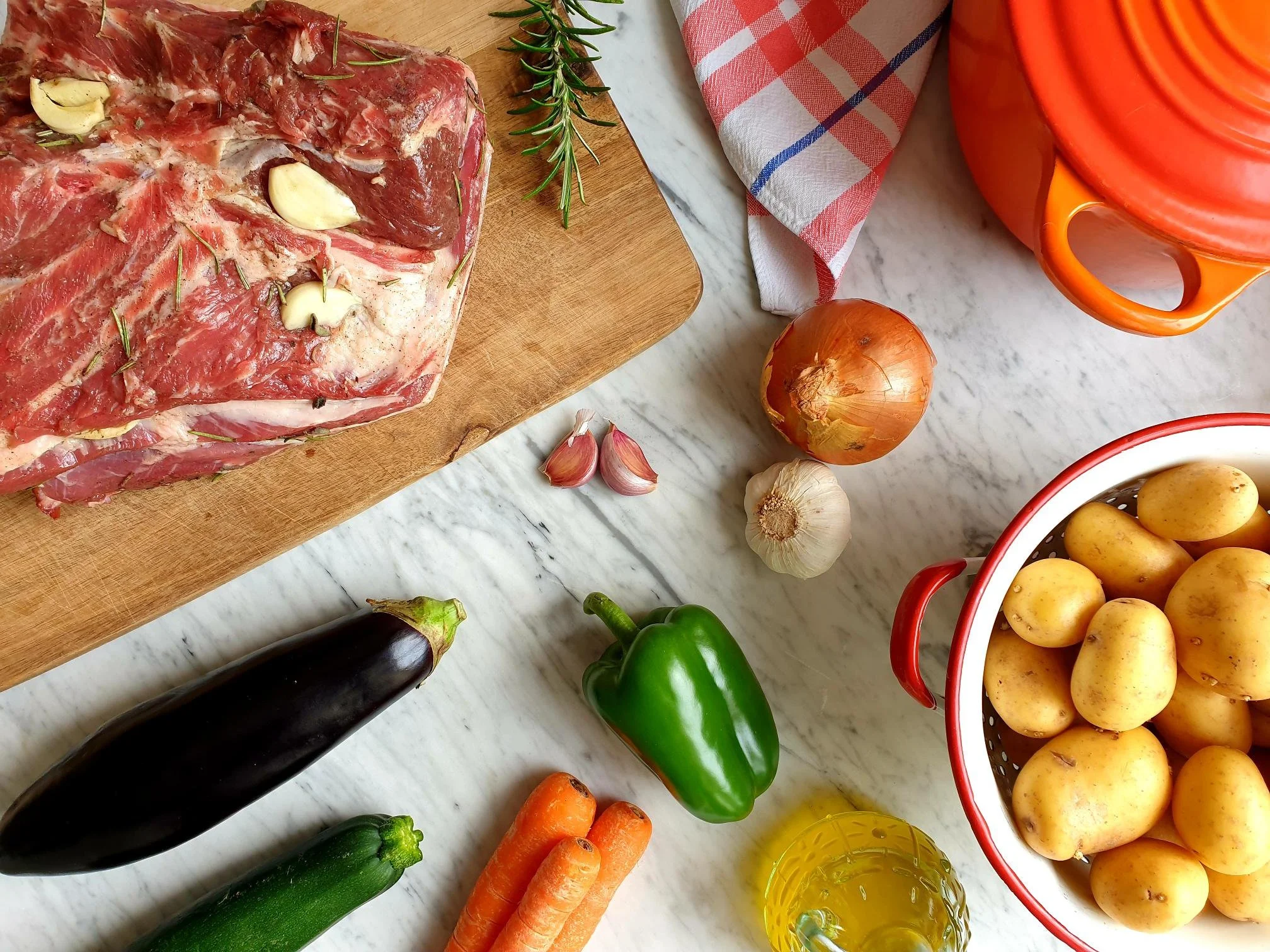
  • 2 – 2.5kg lamb meat (lamb shoulder with bone in or leg of lamb) For this recipe I used shoulder of lamb with the bone weighing 2.350kg.

  • 1kg baby potatoes (or regular potatoes, peeled and quartered)

  • 1 medium onion (about 150g) peeled and quartered (you can use red onion or shallots)

  • 3 cloves of garlic, peeled

  • carrots (about 150g) peeled and cut into chunks

  • small courgette (about 220g) cut into chunks

  • small aubergine (about 240g) quartered

  • small green pepper (about 130g) deseeded and quartered

  • fresh rosemary sprig

  • 100ml white wine, optional

  • sea salt

  • black ground pepper

Method

Marinating the meat (optional)

Before making this dish you can marinate the meat the evening before for extra flavour (I always do it but this is not necessary).

Put the lamb in a container, drizzle with extra virgin olive oil and with your hands rub the oil into the meat.

Season with sea salt and pepper and add 2 peeled cloves of garlic and some fresh herbs like rosemary and sage.

Close the lid, put in the fridge for a few hours or ideally overnight.

Take the meat out of the fridge and bring it to the room temperature at least an hour before cooking it.

Preheat the oven to 170C static or equivalent.

Prepare the vegetables, wash them, quarter them or cut them into bigger chunks (if you are using baby potatoes cut the bigger ones in half lengthwise).

View fullsize Lamb Peka 2.jpg
View fullsize Lamb Peka 3.jpg

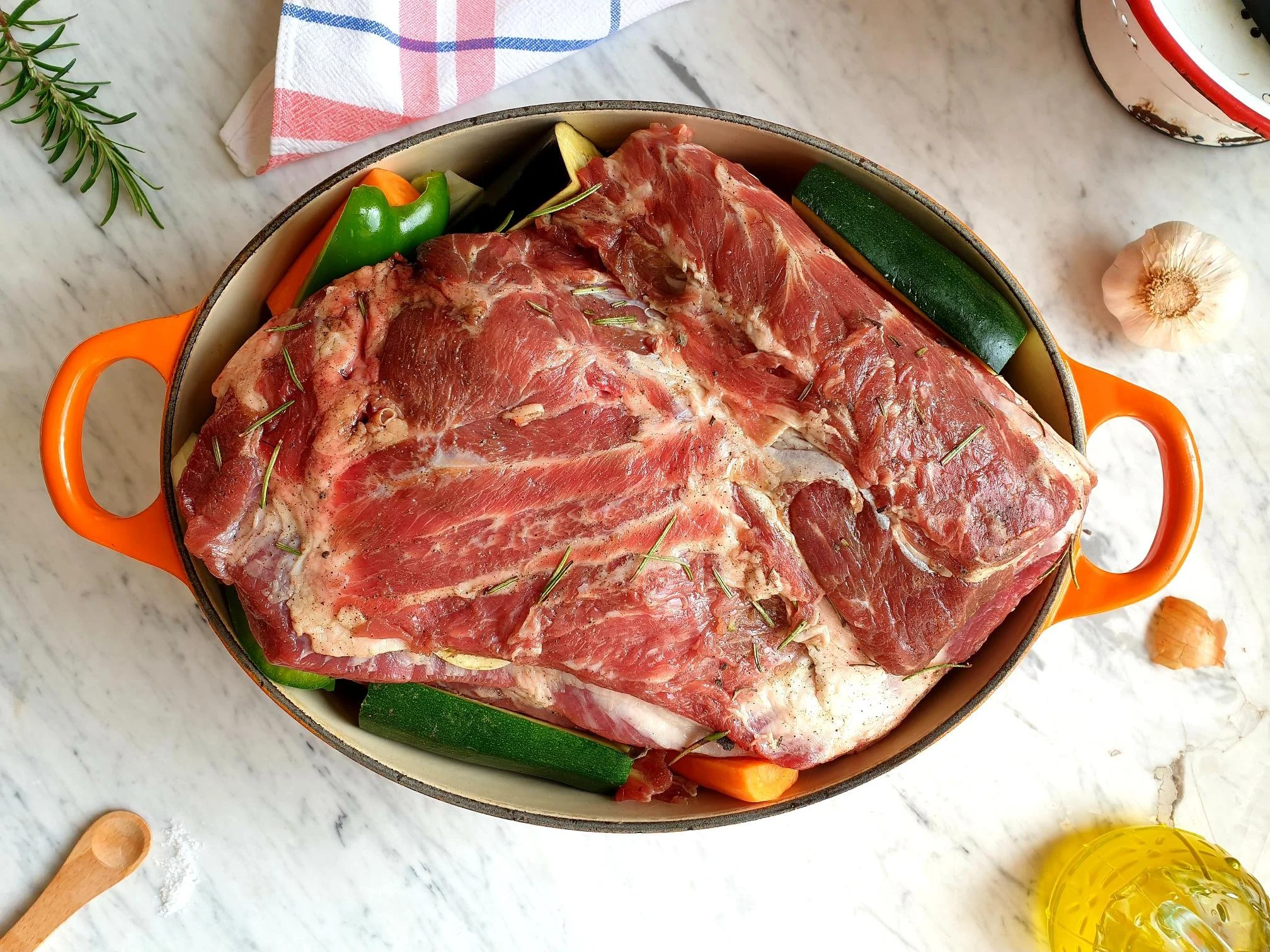
Place the potatoes and roughly half of the vegetables in the Dutch oven, stick the fresh rosemary sprig in the middle of the potatoes and vegetables, season with sea salt and black pepper, pour white wine if using, and place the meat on the top.

Arrange the rest of the vegetables around the meat.

Close Dutch oven with the lid, or cover well with the aluminium foil if using a baking tray, put in the oven and bake for 4 hours until the meat becomes so tender it falls off the bone.

Turn the meat half way cooking time.

Remove the meat from the Dutch oven or baking tray, and wrap it into the aluminium foil to rest and keep warm.

While the lamb is resting, take a big spoon and scoop/spoon out the excessive fat.

View fullsize Lamb Peka 5.jpg
View fullsize Lamb Peka 6.jpg

Return the Dutch oven or baking tray back in the oven (without the lid or aluminium foil) and bake further for a few minutes allowing the potatoes to colour a bit and and liquids to dry.

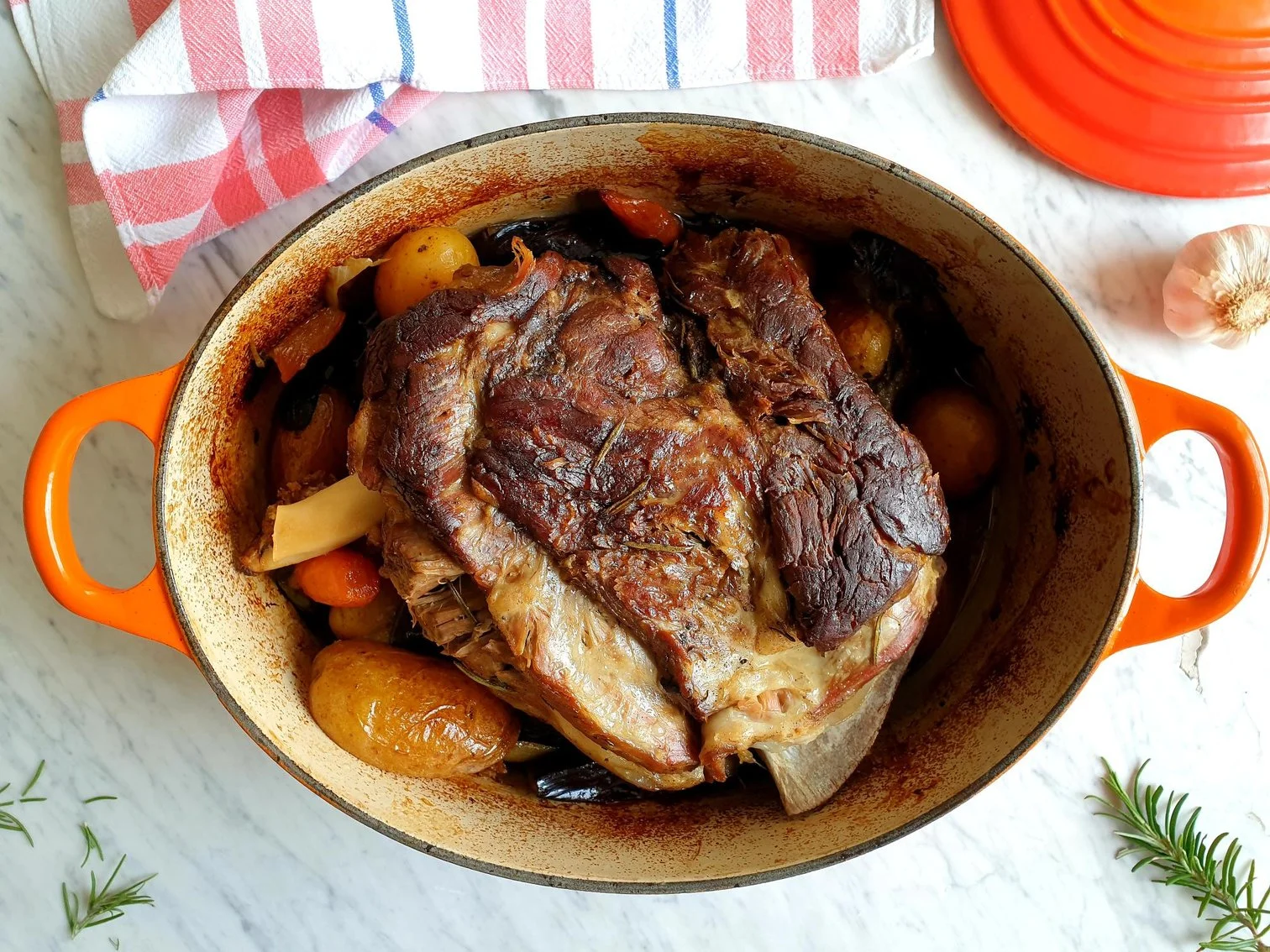
Take the potatoes and the vegetables from the oven, unwrap the lamb, place it back in the Dutch oven, or tray, on top of the potatoes and vegetables.

Place the pot in the middle of the table and serve or let everyone help themselves.

Just a thought

You can play around with this recipe a bit, use the vegetables that you particularly like and adjust the quantity of the potatoes and the vegetables according to the size of a pot or a dish/tray you are using.

Wine suggestion

Alto Adige Cabernet Riserva DOC 2019 - Alois Lageder

April 13, 2022 /tina oblak
lamb peka, peka, one post slow roasted lamb, Istrian lamb peka, izpod peke, jagenček izpod peke, roasted lamb in Dutch oven, lamb meat, shoulder of lamb, slow roasted shoulder of lamb peka, shoulder of lamb bone in
Adriatic Recipe, All year round recipe, baked dish, baking, Celebratory dish, child friendly dish, child friendly meal, dinner, Easter, Easter dish, Easter recipes, Easy recipe, family friendly dish, family friendly meal, Festive dish, Istrian cuisine, Istrian dish, Istrian food, Istrian gastronomy, main dish, main meat course, Meat, one pot meal, one pot meat recipe, Rustic dish, Slovenian cuisine, Slovenian food, Slovenian gastronomy
Comment

Cooked ham in bread dough Recipe

Beans and Sardines
April 06, 2022 by tina oblak in Adriatic Recipe, All year round recipe, Appetizers, baked dish, baking, breakfast, brunch, Celebratory dish, Central European recipes, child friendly dish, child friendly meal, Easter dish, Easter treats, easy baking, Easy recipe, Enriched dough, entrée course, family friendly dish, family friendly meal, festive bakes, Festive dish, Finger food, home baking, Istrian cuisine, Istrian dish, Istrian food, Istrian gastronomy, main course, main dish, Meat, Mitteleuropean cuisine, Mitteleuropean dish, Mitteleuropean food, Mitteleuropean recipes, Rustic dish, Slovenian cuisine, Slovenian food, Slovenian gastronomy, Starters, Easter, Easter recipes

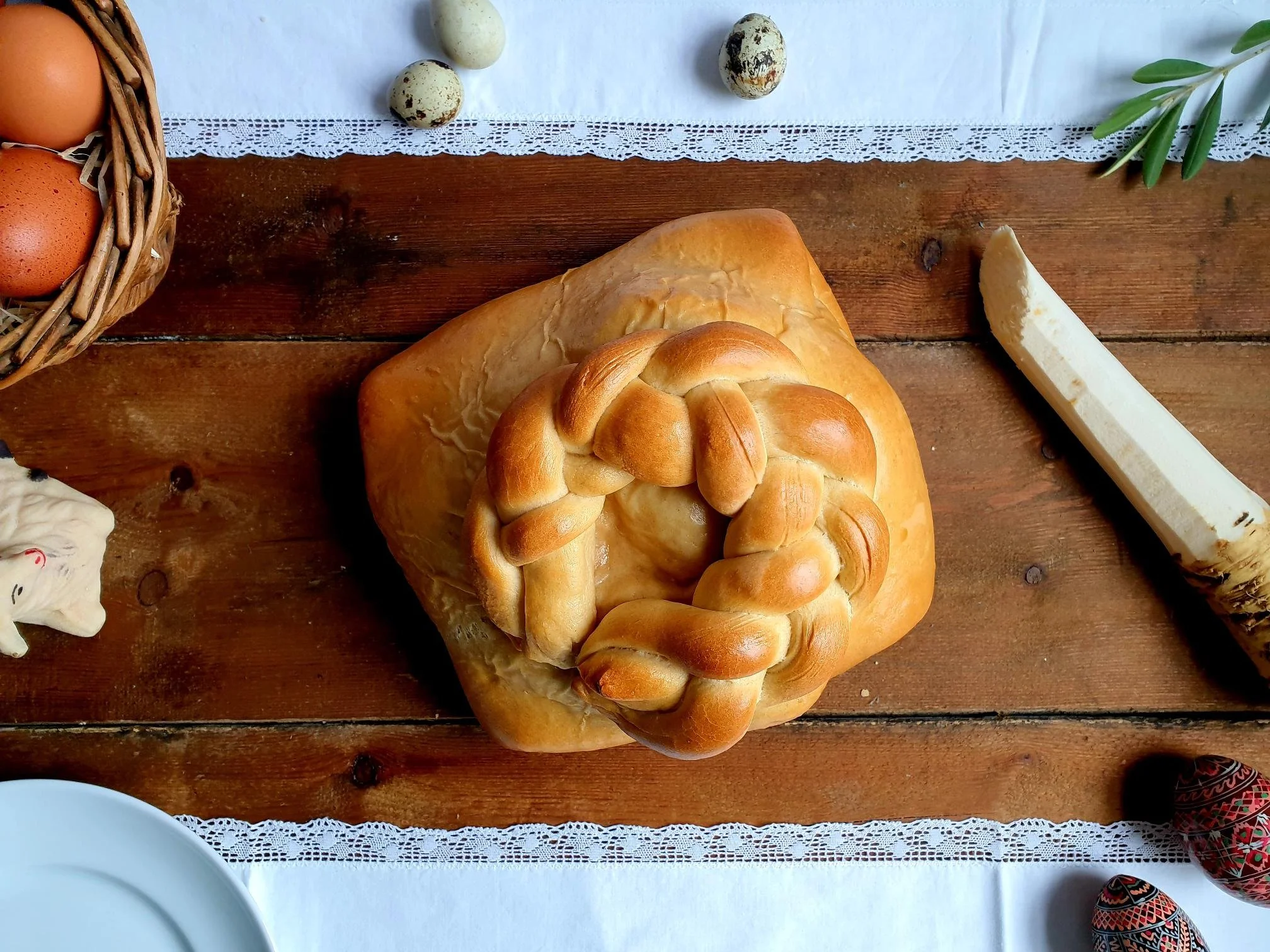
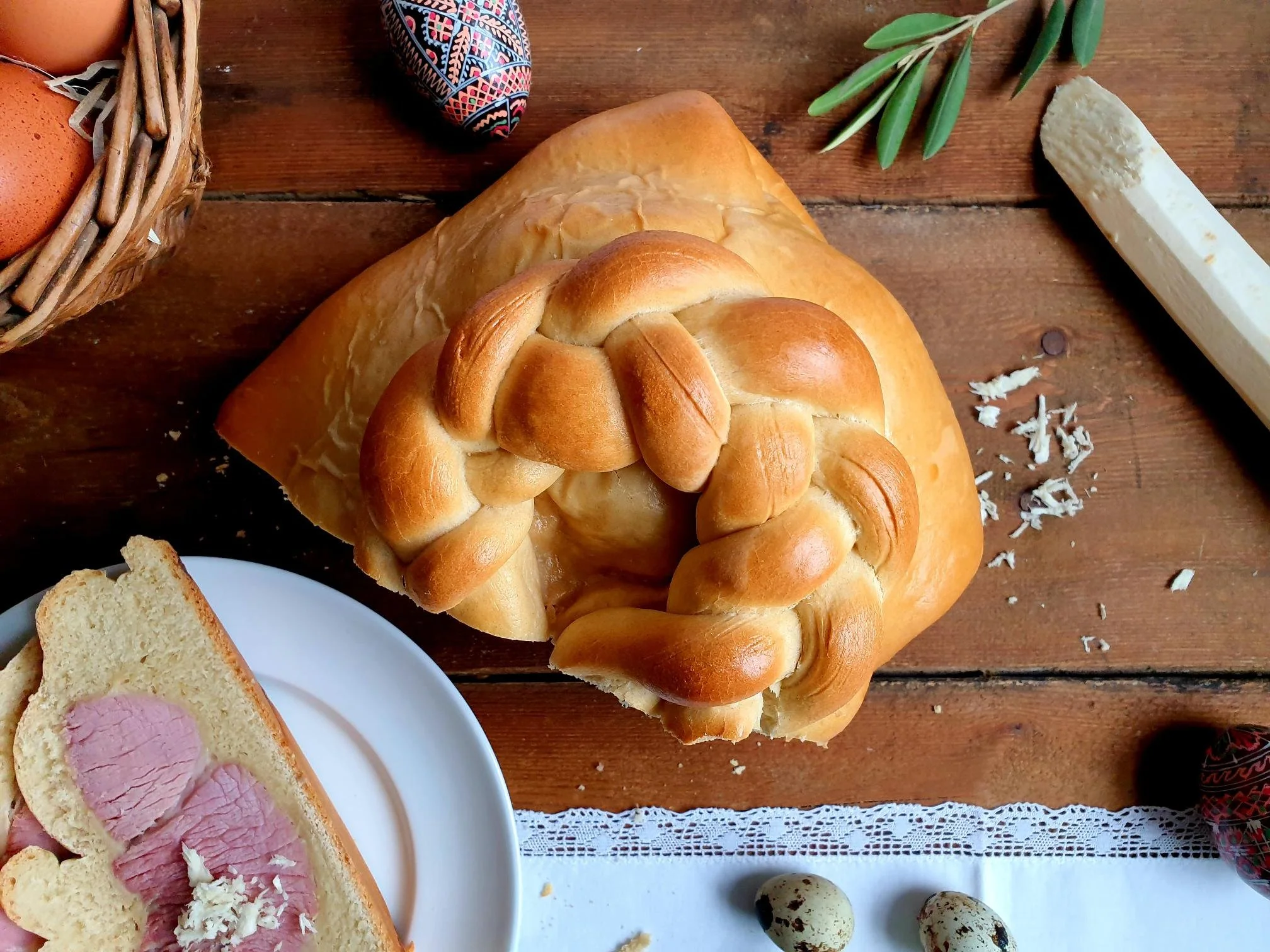
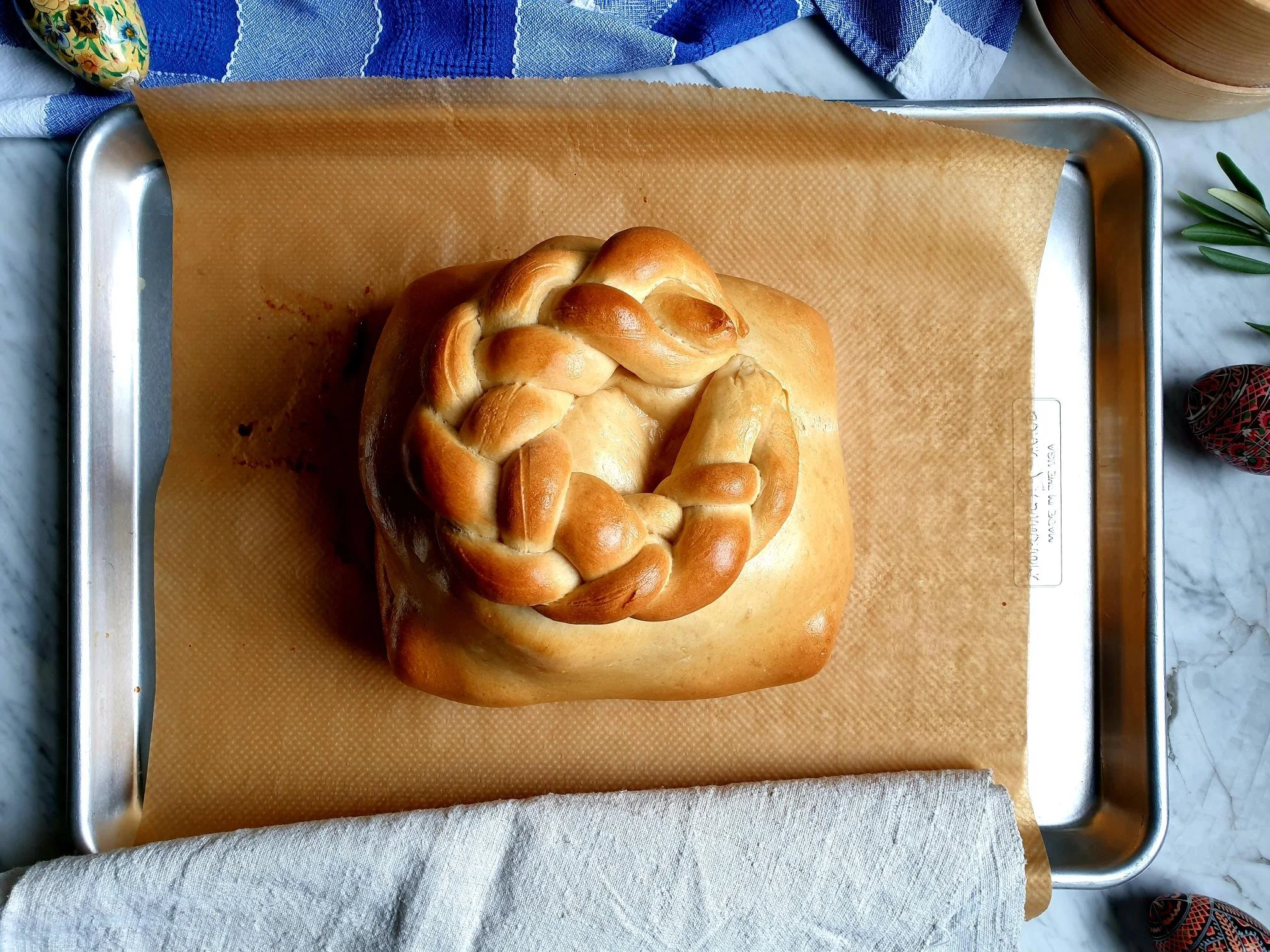
Cooked ham in bread dough is a real show stopper and a crowd pleaser, this recipe goes back to medieval times when it was customary cooking various types of meats in bread dough.

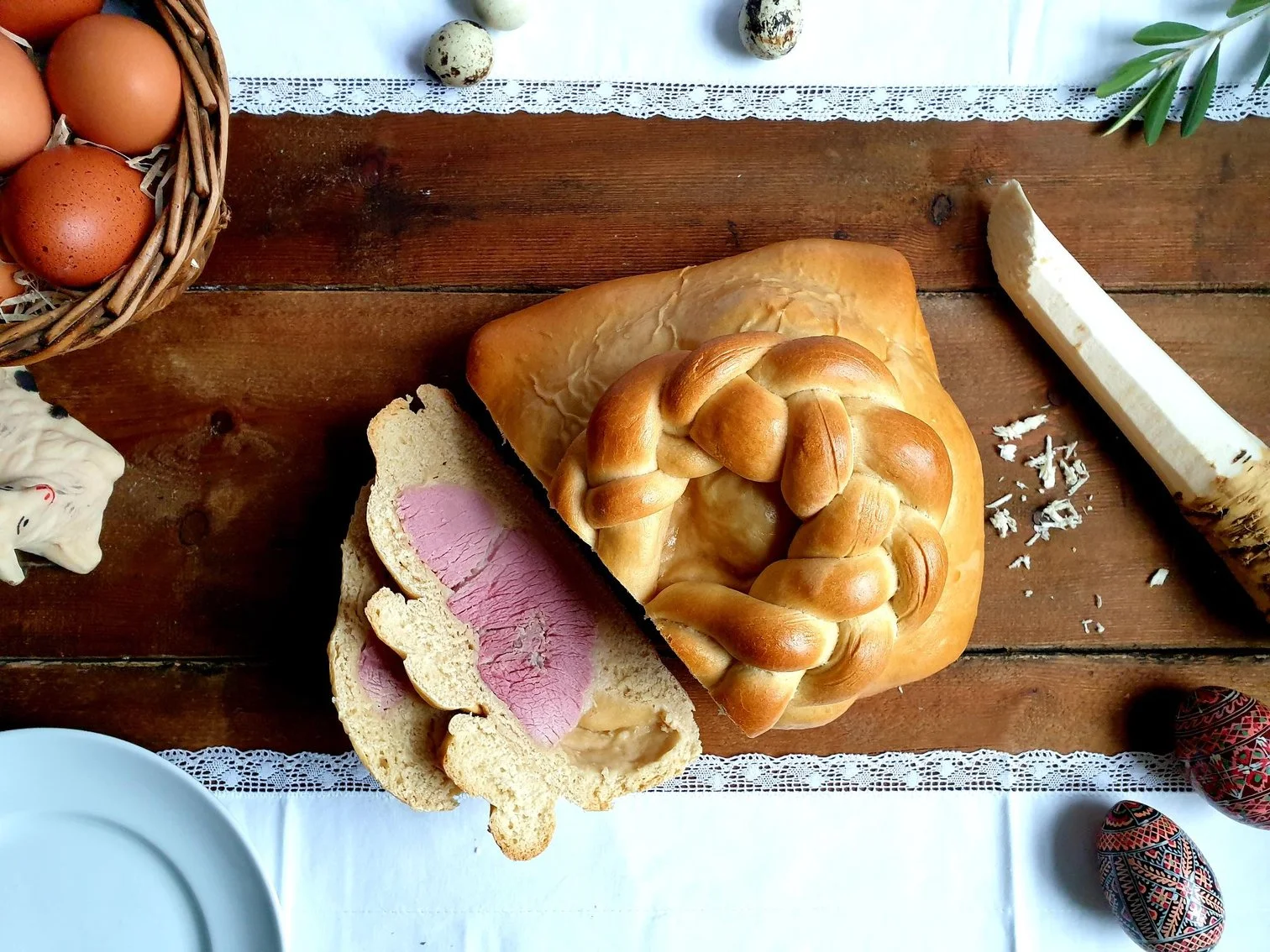
This dish consists of a piece of ham being cooked first and then wrapped in bread dough and baked in the oven allowing the aroma and the flavours of the ham to travel into the dough during the baking process.

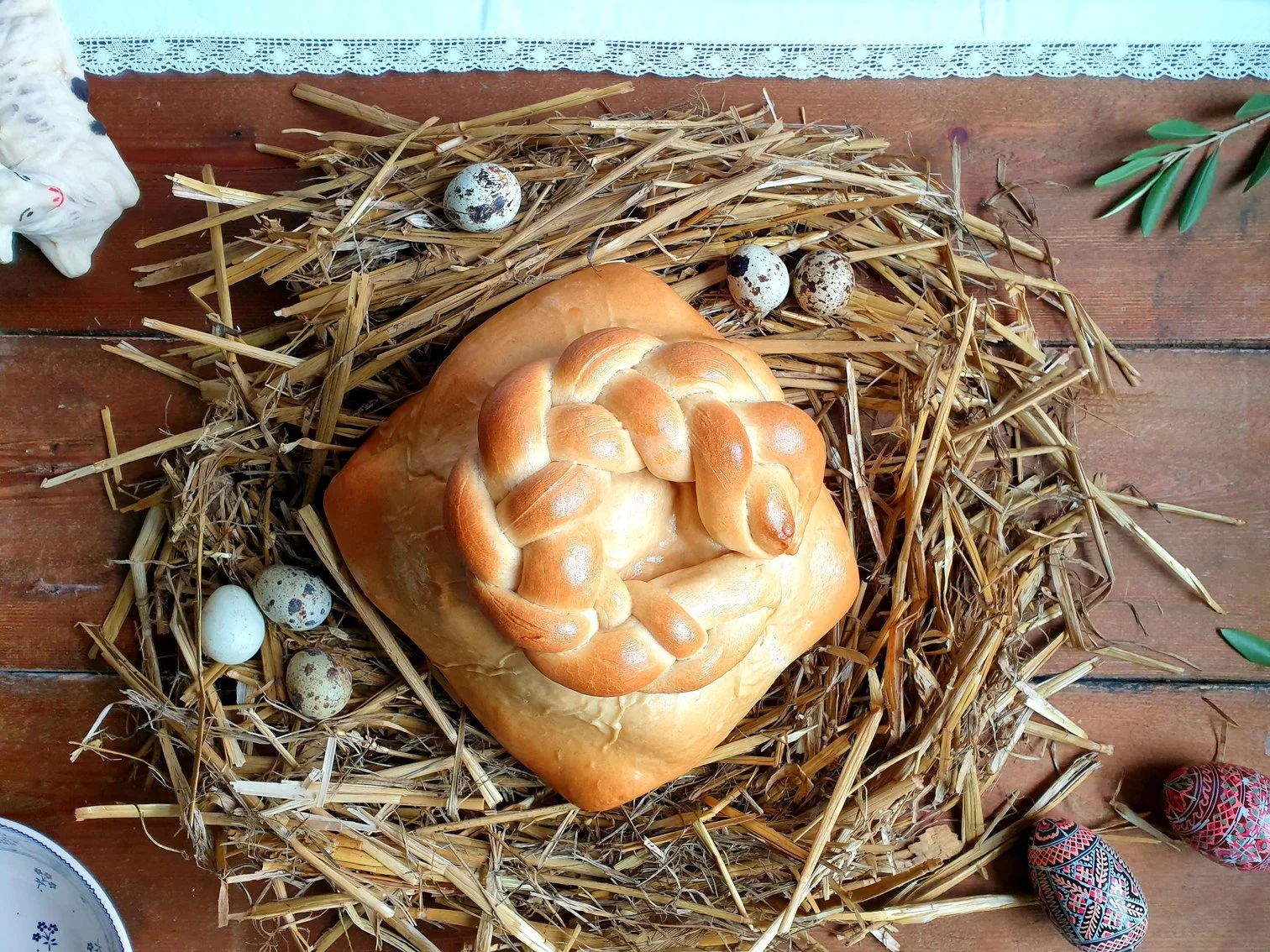
On the Slovenian coast, where I come from, there is no Easter without this dish. This baked delicacy is so deeply rooted in Slovenian gastronomic culture that it is traditionally cooked and eaten around Easter period (with freshly grated horseradish or horseradish cream and mustard) and served as part of Easter breakfast on actual Easter day, in just about every corner of the country, together with hard boiled eggs, Pinca (Easter sweet bread) and Potica (traditional Slovenian festive nut roll).

This dish is also typically found in Trieste, and province of Trieste in Italy, in local osterie (informal, usually family run eating places serving simple local specialities), on a daily basis and typically served with a a glass of wine or locally produced artisan beer.

I studied in Trieste and had this dish on my graduation day as part of the buffet.

This recipe is so popular and delicious that it is nowadays enjoyed all year round, it is also ideal for picnics, as it can be made ahead of time and travels well.

Ingredients

Serves

For the dough

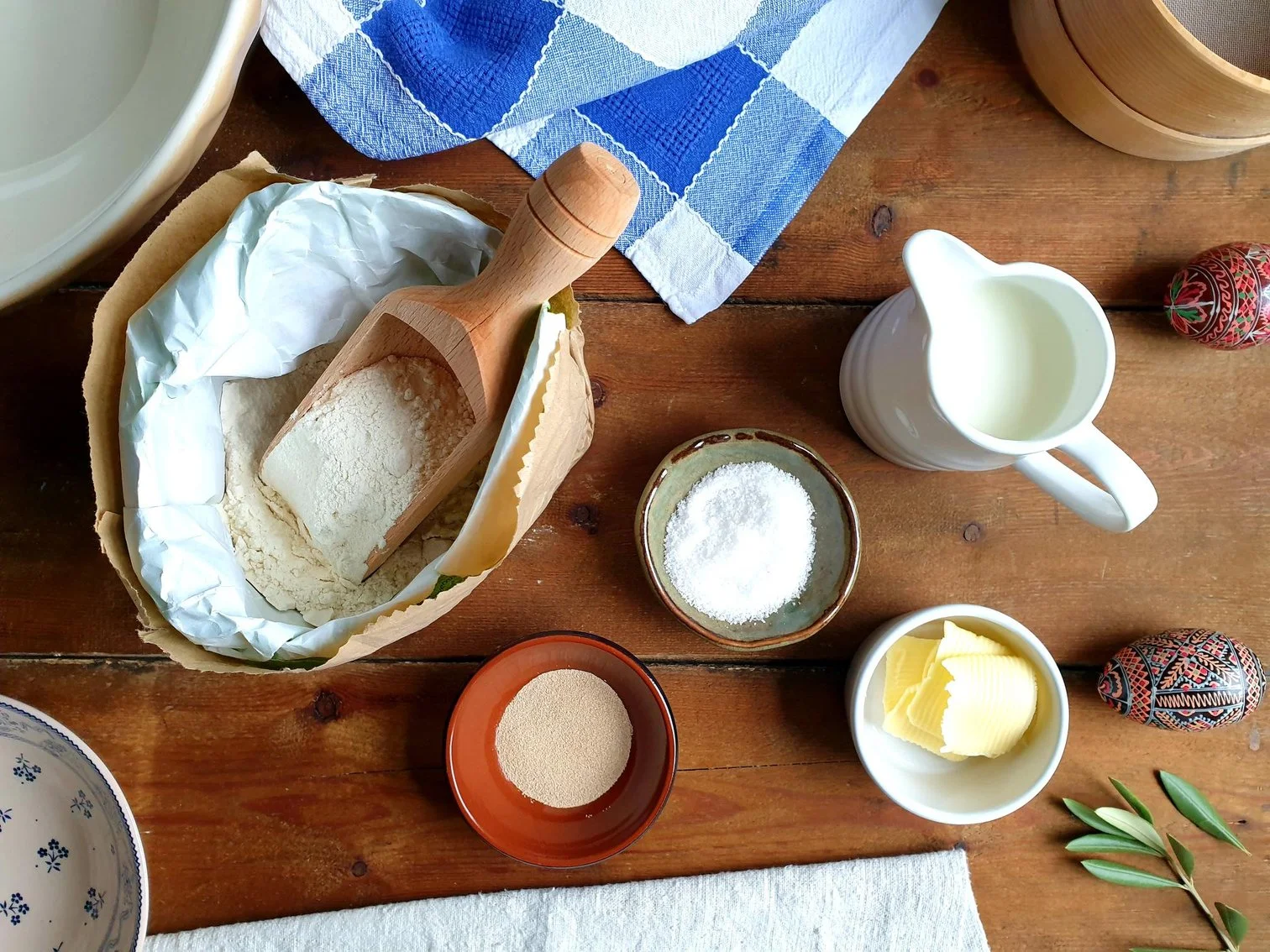
  • 500g strong white bread flour

  • 7g (one sachet) fast-action dried yeast

  • sea salt, a pinch

  • 300ml lukewarm milk (full fat, semi skimmed or skimmed)

  • 25g butter, unsalted or slightly salted, melted

You also need

  • 1.4kg, roughly, unsmoked or smoked Gammon joint

  • 1 carrot, optional

  • 1 celery stick, optional

  • ½ onion, optional

  • 1egg, beaten

  • a bit of extra milk (about 2 Tbsp)

Method

Place the ham in a big pot and add enough cold water to completely cover the ham.

Add a whole carrot, celery stick and half an onion for extra flavour, if desired.

Bring to boil, lower the heat, cover with the lid and gently boil for required time, this will depend on the size of the ham. (Weight your meat to calculate and work out your cooking times, allow 20 minutes per 450g)

While the ham is cooking, make the dough. (You can cook the ham in advance and wrap it in aluminium foil to keep it moist, and use when needed.

Drain cooked ham in a colander and let it cool completely.

Pat dry the ham well with the kitchen paper.

Put the flour in a large mixing bowl, add dried yeast on one side of the bowl and sea salt on the other. Add the milk, melted butter and mix to combine well all the ingredients.

View fullsize Ham in bread dough 2.jpg
View fullsize Ham in bread dough 3.jpg

The dough at this point will be a bit sticky, but should not be soggy. The dough will become less sticky as you knead.

View fullsize Ham in bread dough 4.jpg
View fullsize Ham in bread dough 5.jpg

Transfer the mixture on to a lightly floured (or lightly oiled) work surface and knead for about 10-15 minutes until the dough is nice and smooth and has an elastic texture. Your hands should not stick to the dough, if they do add a bit of flour at a time.

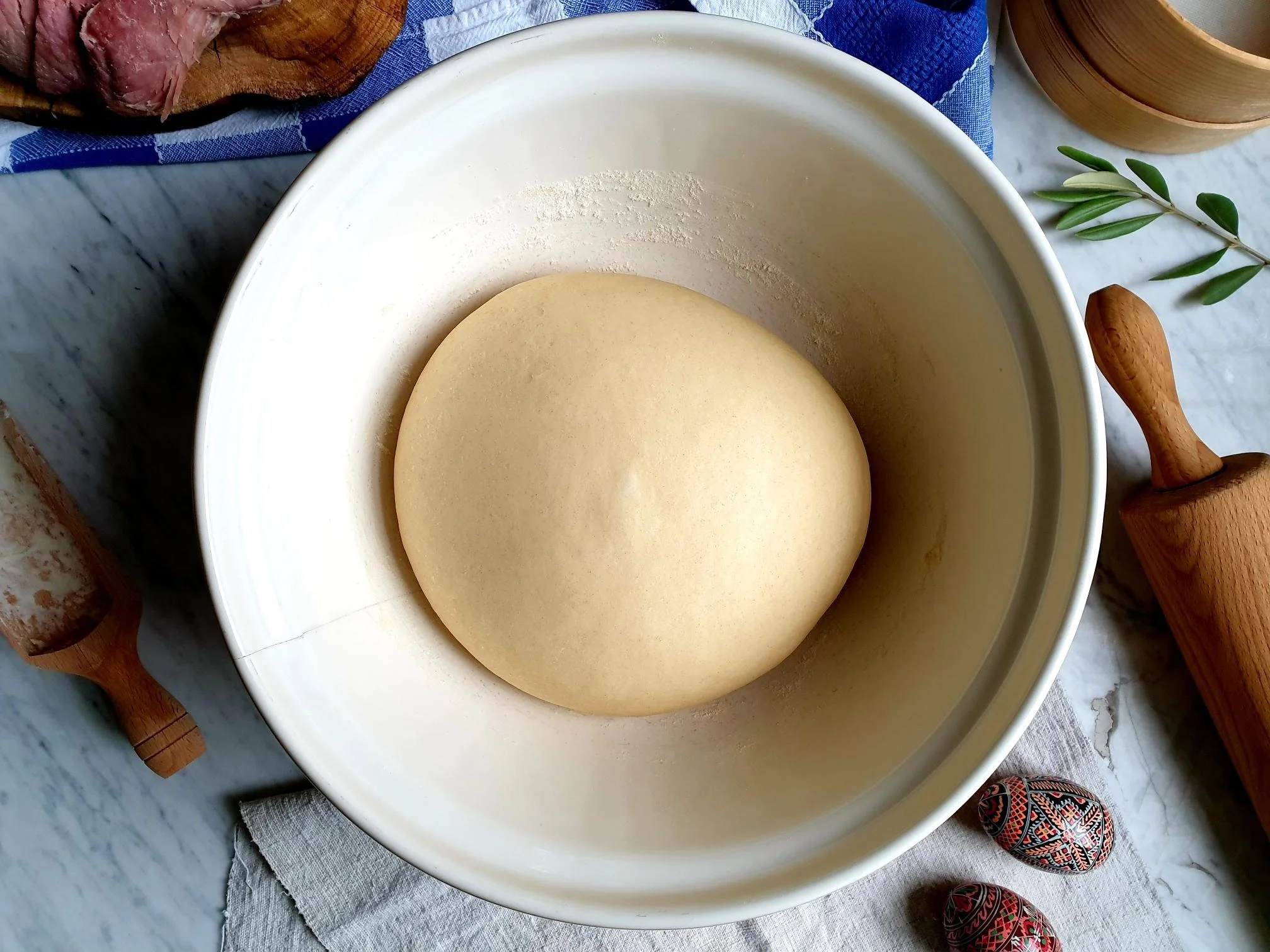
Put the dough in a lightly oiled large bowl and cover with a cling film. Stand in a warm place, free of drafts, and let it rise for at least 1-1 ½ hours until the dough has doubled or tripled in size.

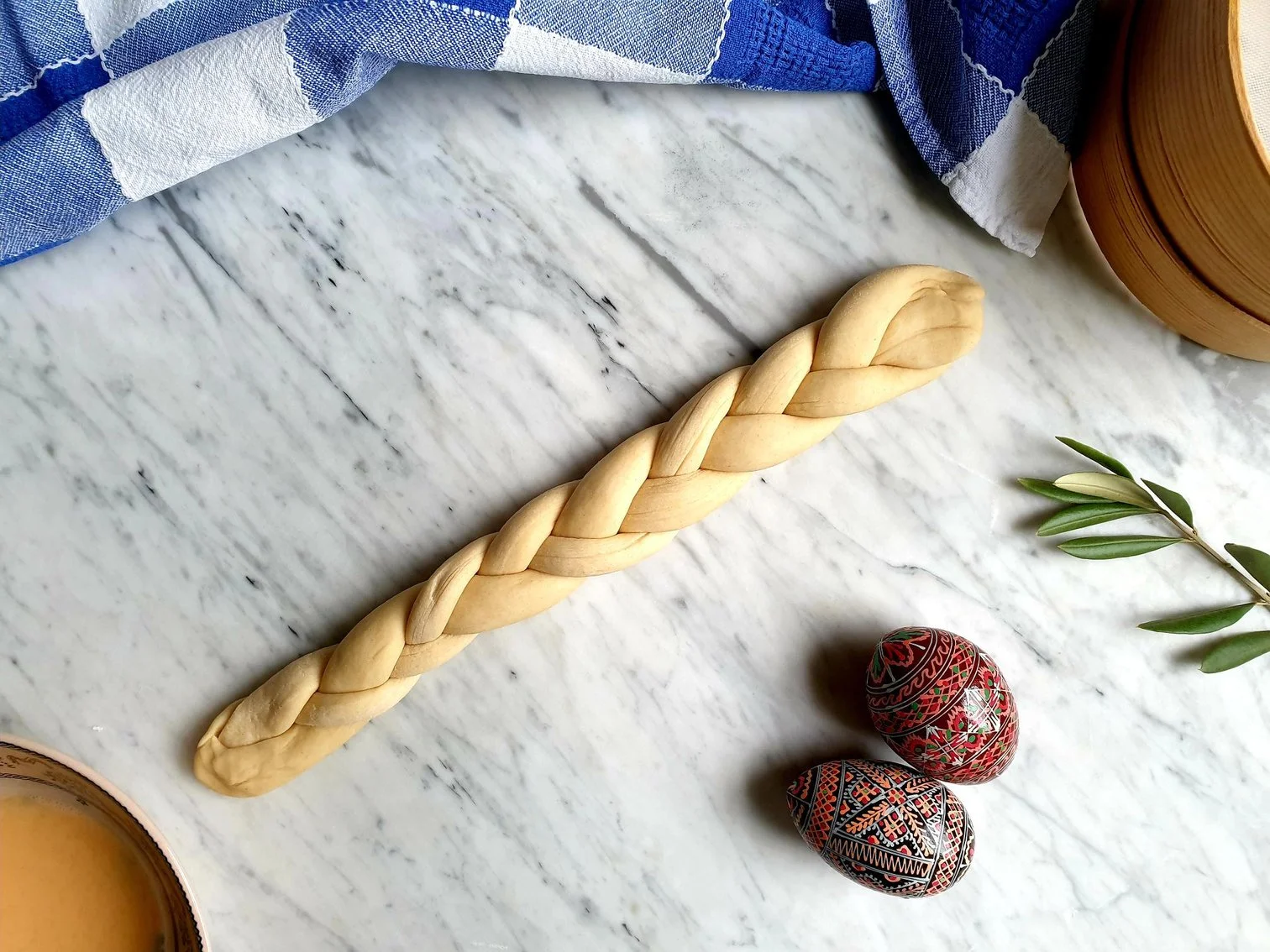
Turn the dough on to lightly floured surface and knock back by hand for few minutes. Flour well the surface and with the rolling pin roll the dough to about 2cm thick. At this point you can pinch a bit of dough for decorating if you wish (I made a little dough plait, as it is done traditionally).

View fullsize Ham in bread dough 10.jpg
View fullsize Ham in bread dough 11.jpg

Preheat the oven to 180C static or equivalent and line the baking tray with the non stick baking parchment.

In a small bowl mix the beaten egg with a bit of milk and brush the centre of the rolled dough.

Place the ham in the centre on the brushed area.

Brush the rest of the ham with egg and milk mixture.

Wrap the ham with the dough all around, a bit like a parcel. Seal well the edges to avoid the dough opening up during the baking.

View fullsize Ham in bread dough 8.jpg
View fullsize Ham in bread dough 9.jpg

Place your ham and dough parcel on a baking tray with the junctions facing downwards.

Glaze the ham and dough parcel on all sides with the egg and milk mixture.

Prick the ham and dough parcel with a toothpick.

If you created a small Easter themed dough decoration, place it on top of the dough parcel and brush with egg and milk mixture.

Put the ham dough parcel in the preheated oven and bake for 60 minutes. Half way the baking time cover with aluminium foil and bake further until golden in colour.

View fullsize Ham in bread dough 13.jpg
View fullsize Ham in bread dough 14.jpg

Take out of the oven, leave to cool on the baking tray for a few minutes, then remove from the baking tray and leave to cool on a wire rack.

Best served warm with horse radish sauce, freshly grated horse radish root or/and mustard.

Wine suggestion

Collio Pinot Bianco DOC 2020 - Doro Princic

April 06, 2022 /tina oblak
ham, cooked ham, gammon joint, unsmoked gammon joint, smoked gammon joint, Easter bread, cooked ham in bread dough, prosciutto in crosta, kuhana sunka v testu, Easter breakfast, Easter brunch
Adriatic Recipe, All year round recipe, Appetizers, baked dish, baking, breakfast, brunch, Celebratory dish, Central European recipes, child friendly dish, child friendly meal, Easter dish, Easter treats, easy baking, Easy recipe, Enriched dough, entrée course, family friendly dish, family friendly meal, festive bakes, Festive dish, Finger food, home baking, Istrian cuisine, Istrian dish, Istrian food, Istrian gastronomy, main course, main dish, Meat, Mitteleuropean cuisine, Mitteleuropean dish, Mitteleuropean food, Mitteleuropean recipes, Rustic dish, Slovenian cuisine, Slovenian food, Slovenian gastronomy, Starters, Easter, Easter recipes
Comment

Squid Risotto Adriatic style Recipe

Beans and Sardines
March 30, 2022 by tina oblak in Adriatic Recipe, Appetizers, All year round recipe, brunch, child friendly dish, child friendly meal, dinner, Easy recipe, family friendly dish, family friendly meal, Fish & Seefood, fish starter, Healthy, healthy mael, Istrian cuisine, Istrian dish, Istrian food, Istrian gastronomy, light fish course, light meal, main course, main dish, recipe from Northern Ital, Risotti, Rustic dish, Starters, first course, first course dish, first course meal

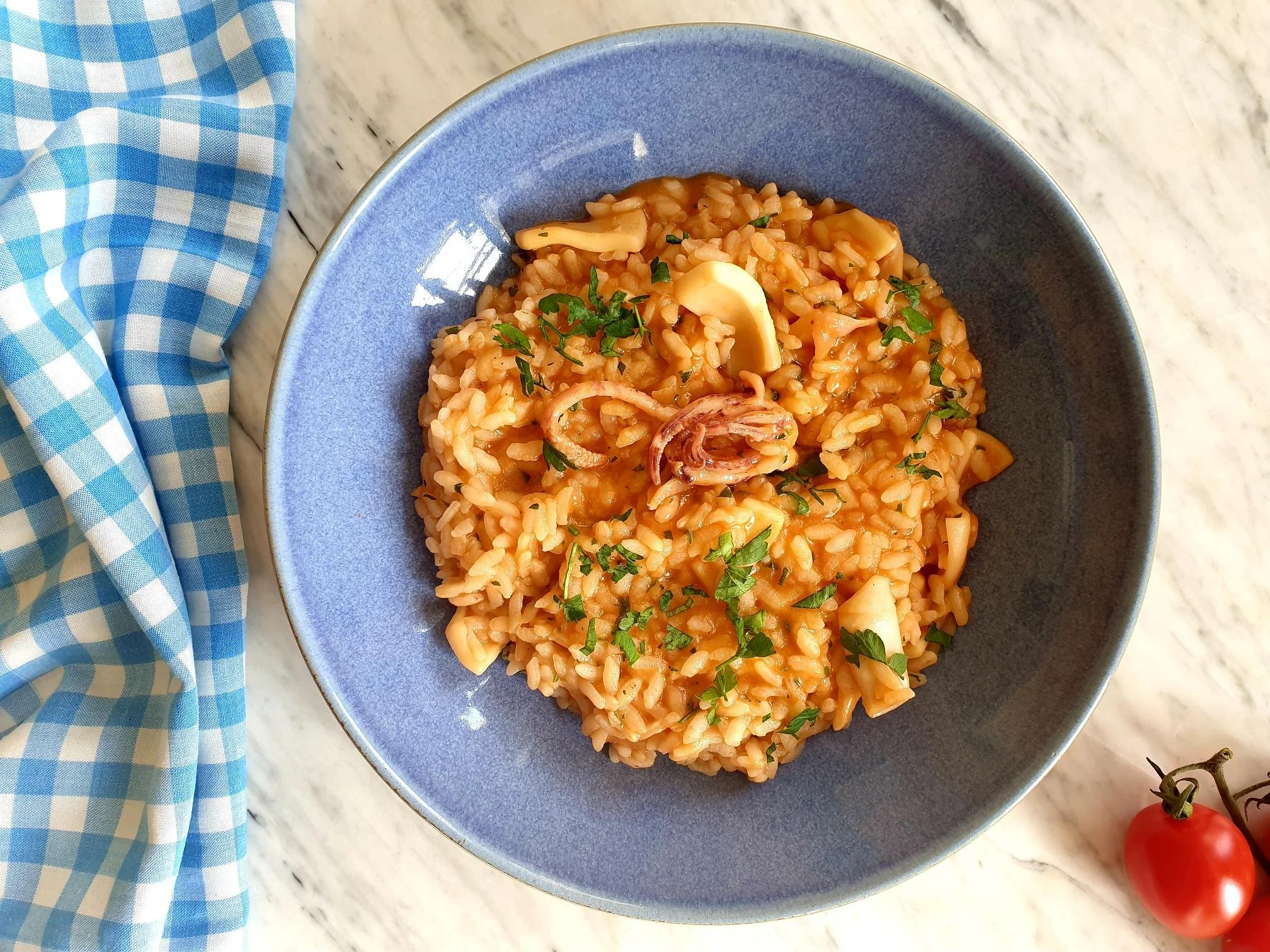
Squid or calamari risotto is very delicate in taste, yet flavoursome, hearty and filling, very quick and easy to make, which makes it a perfect choice for a light lunch or dinner and a staple mid-week dish.

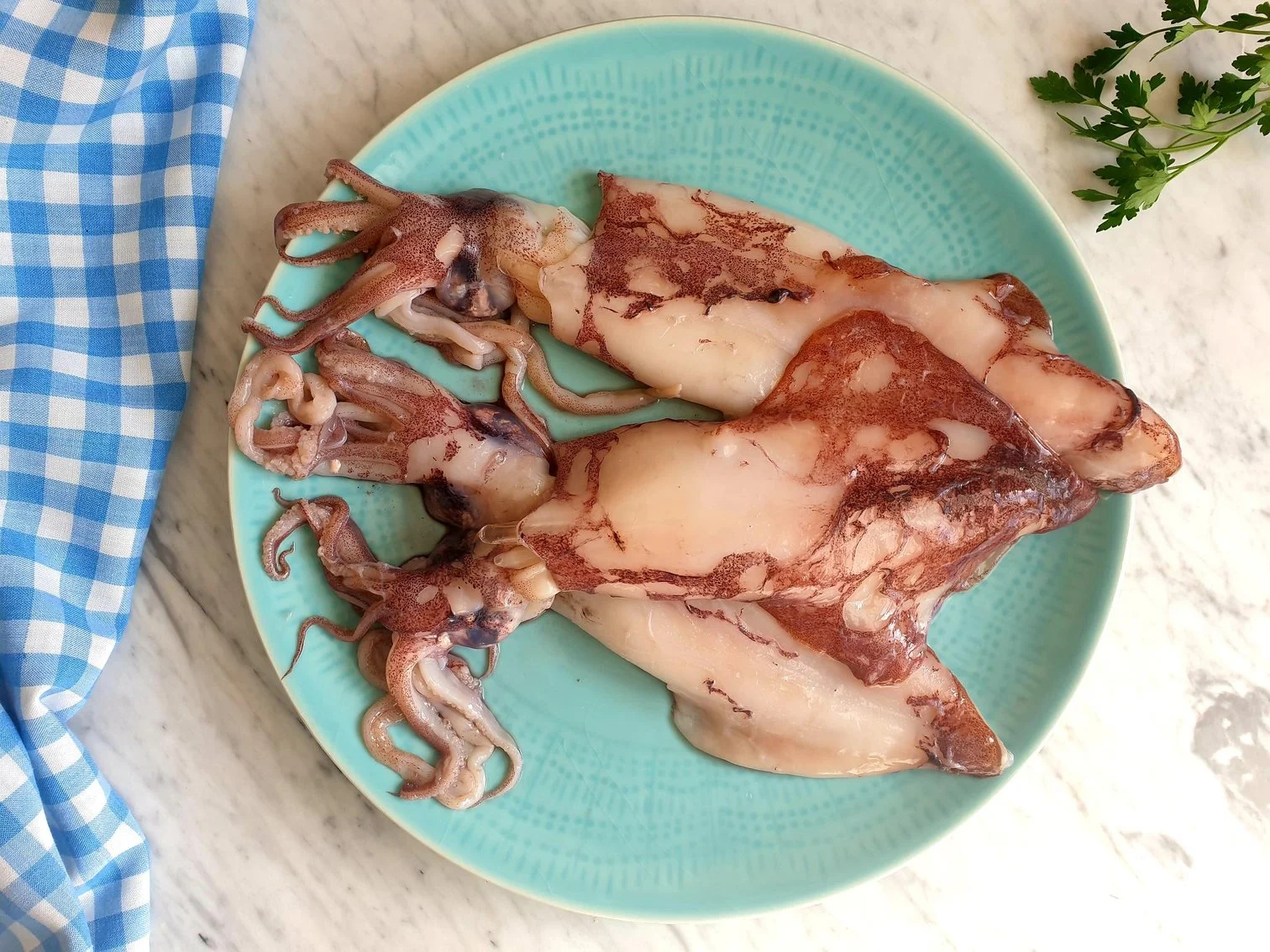
Fresh squid (not cleaned yet)

This risotto is an absolute winner, it will delight the whole family, and it is very pleasant to eat with its creamy texture and sweet and tender squid. It is simply delicious, and it is packed with Mediterranean ingredients that recall holidays by the sea.

I grew up on this type of risotto, it has been made in my family since as long as I can remember. My mother told me I was partially weaned on this risotto, she obviously made sure the squid chunks were cut in miniscule pieces to make it safe for me to eat. I loved it, apparently, and I still do.

The frequency with which this risotto, among many other types of risotti, has been made should come as no surprise. The area where I was born and grew up, the Slovenian coast, it is just under two hours drive from northern region of Veneto in Italy, where the greatest number and variety of risotto recipes can be found.

Squid risotto is very often prepared and cooked in the households, and regularly printed on the menus in the local restaurants, where you will find it as Rižota s kalamari or Rižota z lignji.

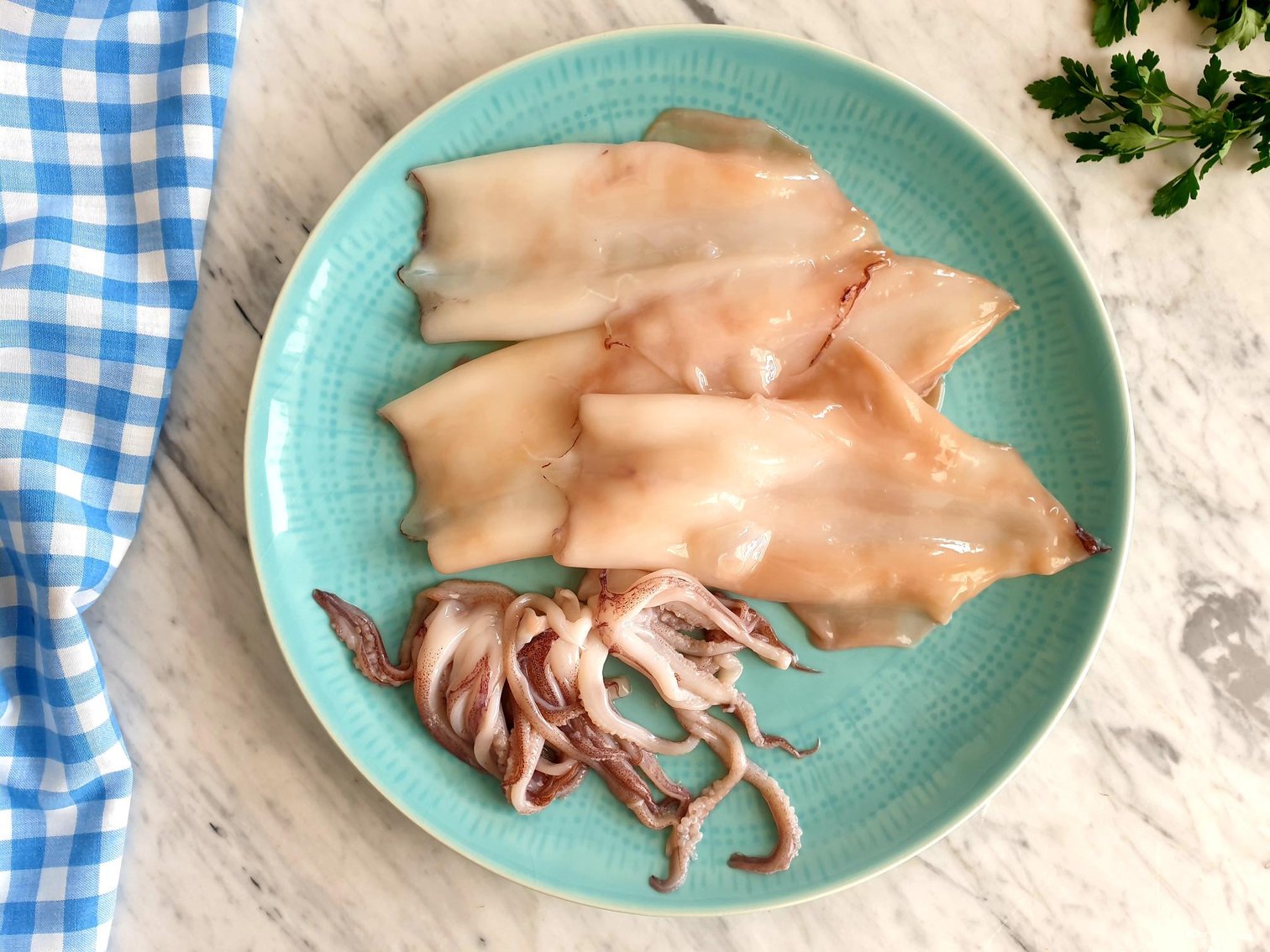
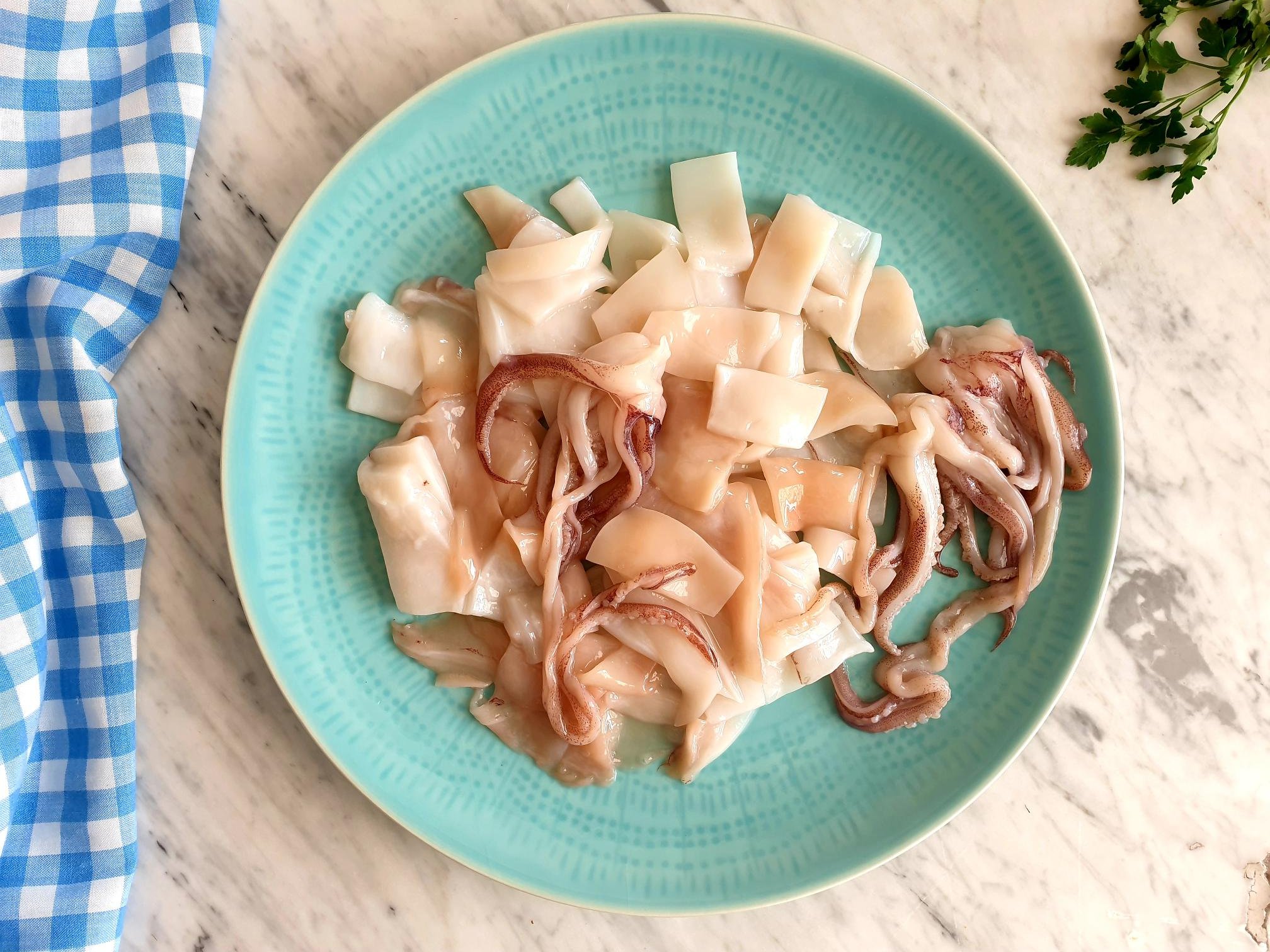
I am sharing here my mother's recipe, and do not be put off by the task of cleaning the squid, ask your fishmonger to do it for you and try this fantastic risotto dish.

Ingredients

Serves 4

  • 500g roughly, fresh squid, cleaned and cut into smaller pieces or rings (keep the tentacles). For this recipe you can also use frozen raw already cleaned squid tubes available in most bigger supermarkets.

  • 1 small onion (about 80g), peeled and finely chopped

  • 1 clove garlic, peeled and crushed

  • 4 Tbsp extra virgin olive oil

  • 1 Tbsp tomato purée

  • 300g risotto rice (like Vialone Nano, Arborio or Carnaroli)

  • fresh flat leaf parsley, about a handful (roughly 8g), some extra for garnish

  • 1 litre hot vegetable stock or hot water

  • sea salt

  • ground black pepper

View fullsize Squid risotto 2.jpg
View fullsize Squid risotto 3.jpg

Method

Before starting making risotto, it is a good idea to have your boiling hot stock or hot water ready to hand for later.

Put extra virgin olive oil in a pan, add finely chopped onions and sauté on a gentle heat until soft.

Add crushed garlic and cook for about a minute together with the onions.

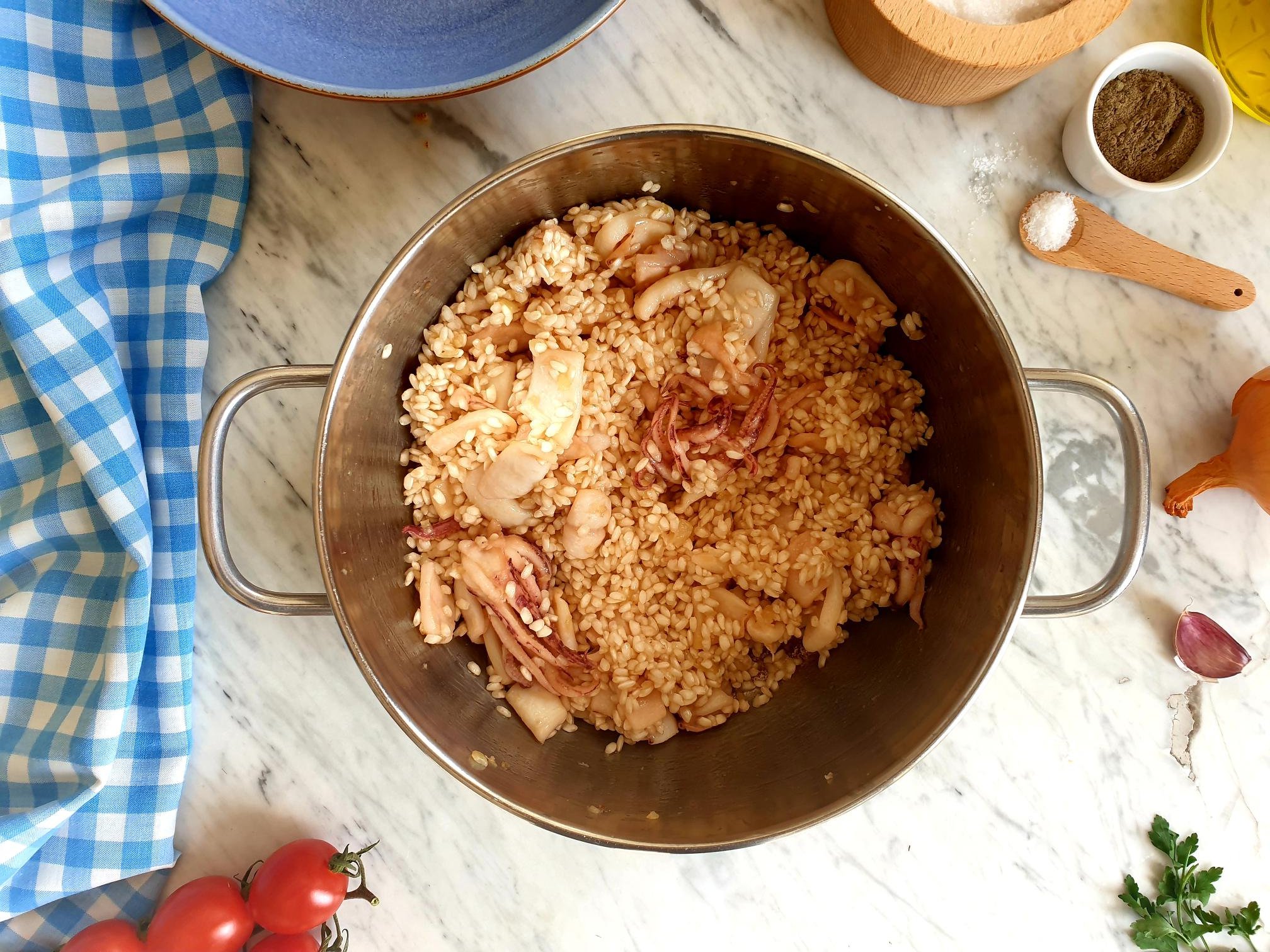
Place clean pieces of squid in a pan and cook for about three minutes or so, until opaque.

Add the rice, mix well with the onion, garlic and squid mixture, and toast it for few minutes stirring constantly to avoid sticking to the pan.

Add tomato purée, pour in the pan all the hot stock or hot water and add chopped parsley.

If you have made a risotto before and have a clear idea of how moist you like it to be, you can control the moisture of the risotto by gradually adding ladles of hot stock or water, one at a time, allowing the liquid to be absorbed before adding more, rather than pouring the whole quantity of liquid over toasted rice, like I did in this recipe.

Cook on a medium heat, stirring almost constantly, until the rice is cooked al dente (fully cooked but still firm when bitten). It will generally take about 15-18 minutes for a risotto to be cooked.

There should be enough liquid just to cover the risotto, the Italians say that risotto should be smooth and runny enough to be described as all'onda, on the wave. Quite right, eating dry risotto is not particularly enjoyable.

Taste and adjust the seasoning with sea salt and ground pepper.

Serve hot and garnish with roughly chopped fresh flat parsley.

Just a thought

You can add to the risotto a small amount of chilli to give it an extra kick, but in small amounts, as you do not want to overpower the delicate flavour of the squid and of the dish in general.

Wine suggestion

Colli di Luni Vermentino “Etichetta Nera” 2021 - Lunae

March 30, 2022 /tina oblak
fresh squid, frozen squid, fresh calamari, frozen calamari, squid risotto
Adriatic Recipe, Appetizers, All year round recipe, brunch, child friendly dish, child friendly meal, dinner, Easy recipe, family friendly dish, family friendly meal, Fish & Seefood, fish starter, Healthy, healthy mael, Istrian cuisine, Istrian dish, Istrian food, Istrian gastronomy, light fish course, light meal, main course, main dish, recipe from Northern Ital, Risotti, Rustic dish, Starters, first course, first course dish, first course meal
Comment

Bread dumplings Recipe

Beans and Sardines
March 23, 2022 by tina oblak in Adriatic Recipe, Austrian inspired dishes, Autumnal dish, Autumnal recipe, casserole, Celebratory dish, Central European recipes, dinner, Dumplings, Eastern European dishes, Eastern European recipes, Easy recipe, Istrian cuisine, Istrian dish, Istrian food, Istrian gastronomy, main course, main dish, Mitteleuropean cuisine, Mitteleuropean dish, Mitteleuropean food, Mitteleuropean recipes, one pot meal, Rustic dish, Side Dishes, Slovenian cuisine, Slovenian food, Slovenian gastronomy, stew, supper, Vegetarian, Winter dish, Winter recipe, family friendly meal, child friendly meal, child friendly dish, family friendly dish

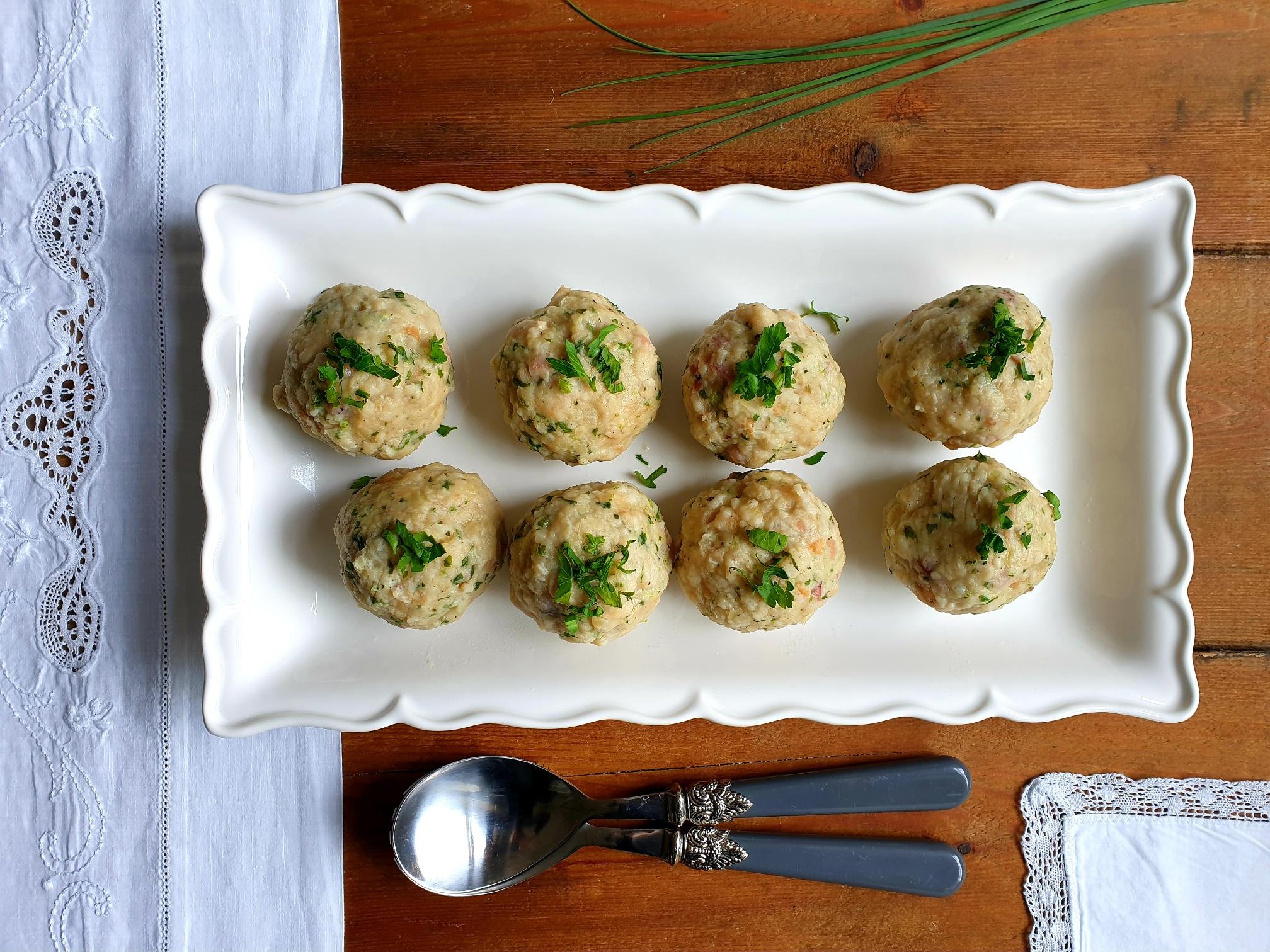
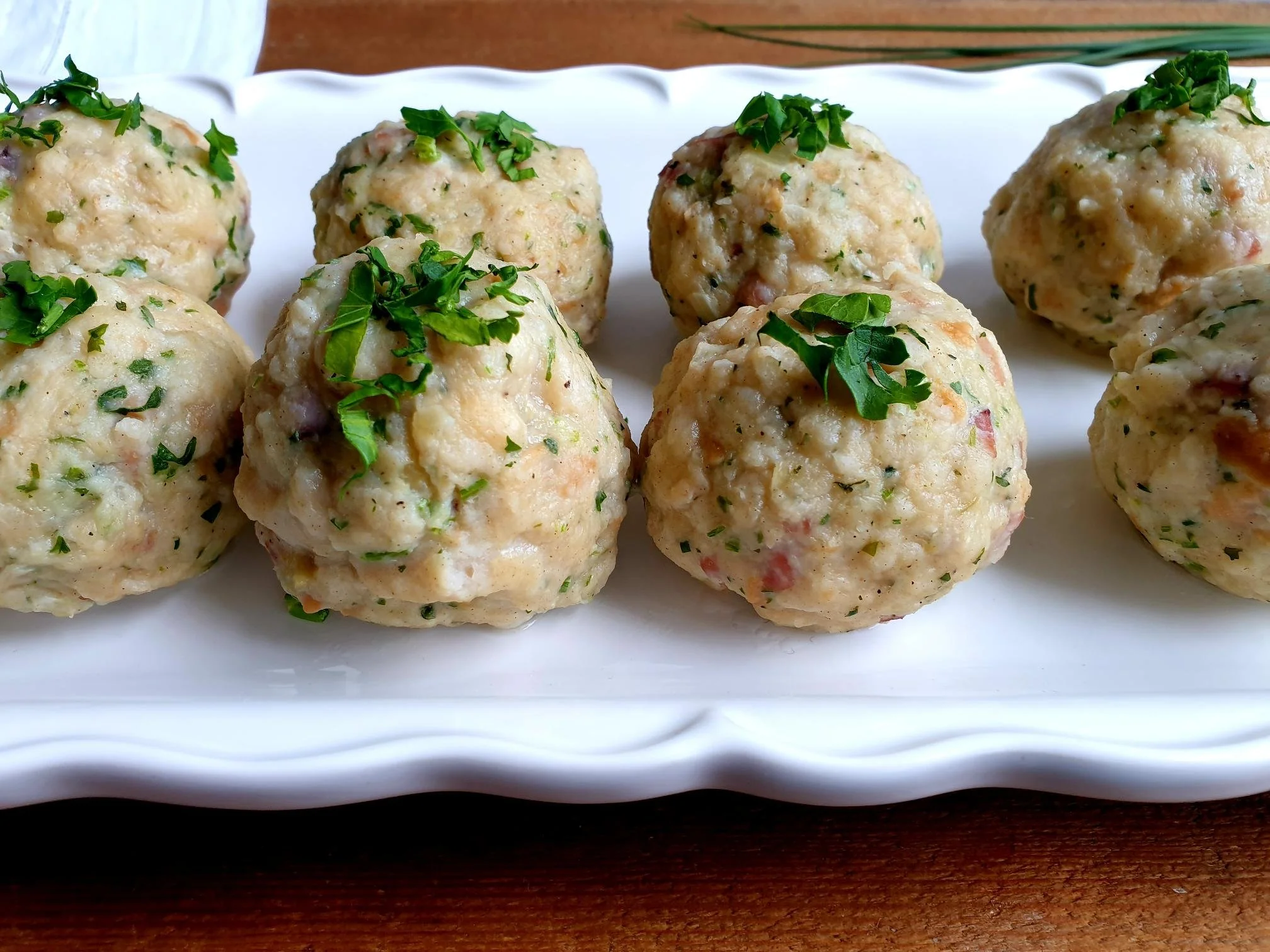
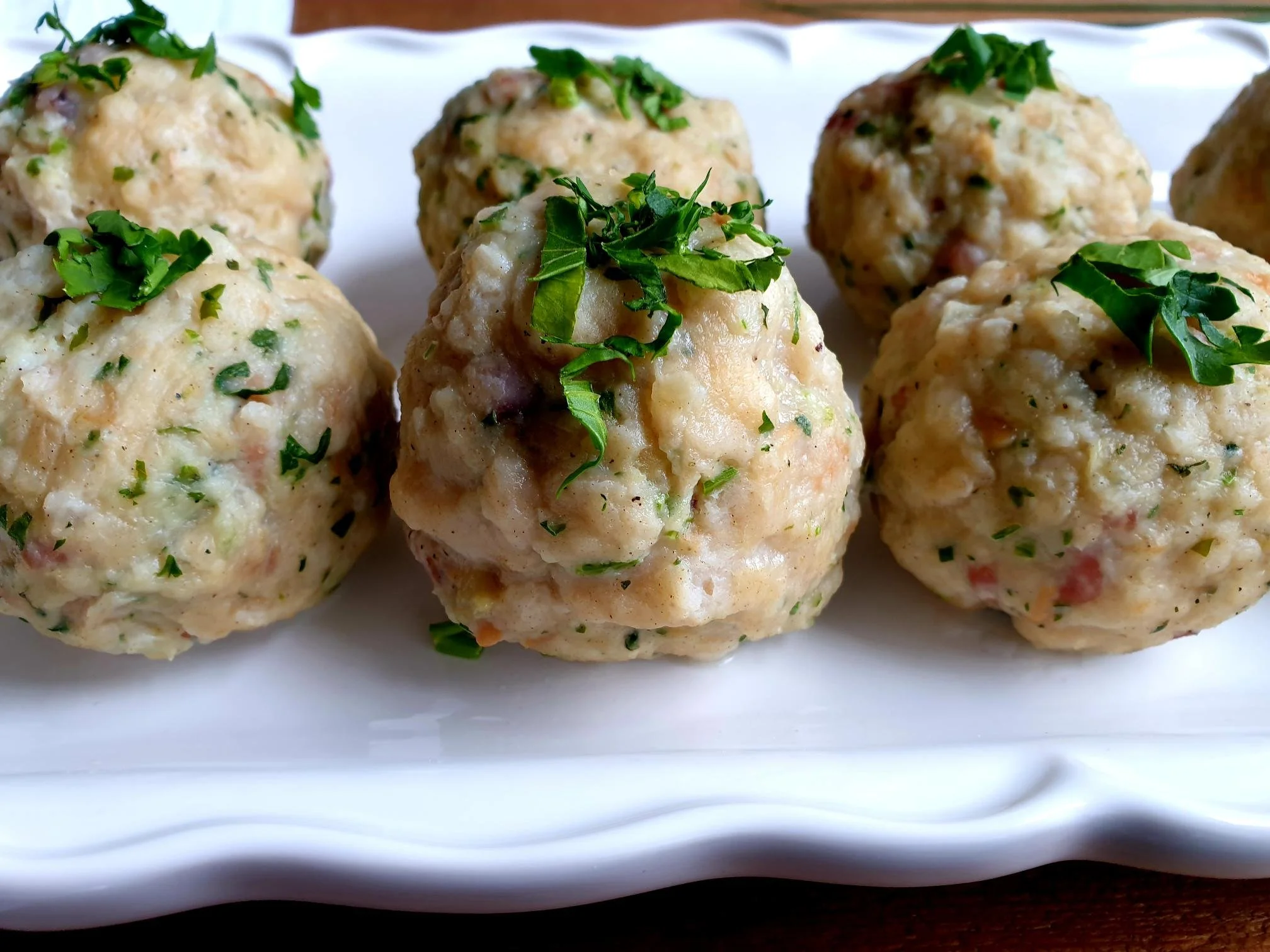
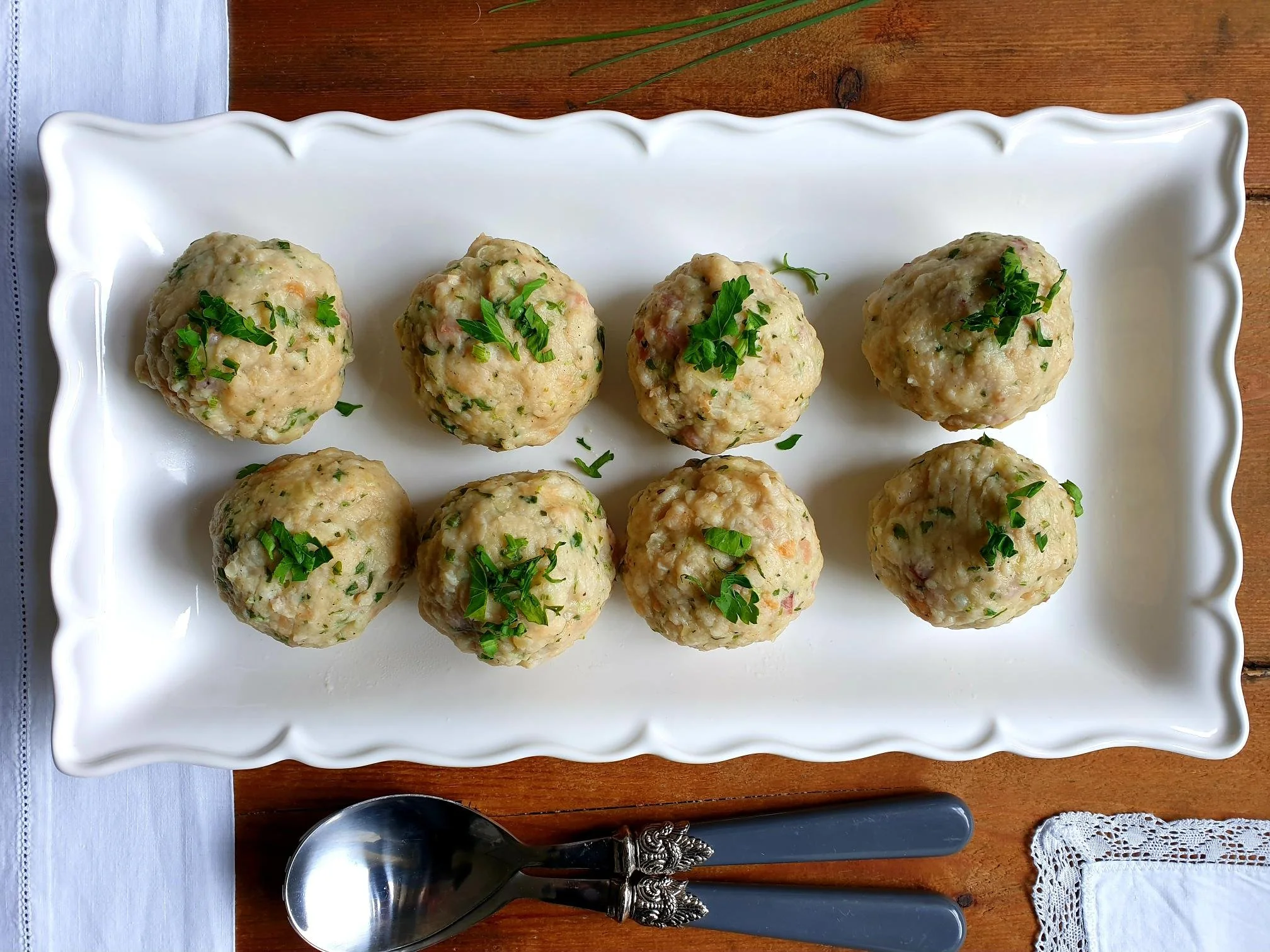
Bread dumplings are a real crowd pleaser, they are made from a mixture of stale bread soaked in milk and combined with fresh parsley, marjoram, onions, pancetta, beaten egg, seasoned with sea salt and black pepper, then formed into a ball shape and gently cooked in simmering water.

They can be easily turned into a vegetarian friendly option by simply omitting the meaty element and adding, if prefer, a bit of grated cheese, depending on your preference.

They are served as a perfect companion to stews, braised meats and roasted meats with a gravy. The idea behind these dumplings is to squash them with the fork, and this will soak up all the juices of whatever is accompanying them. In other words, it is an ideal side dish for almost anything that has some kind of sauce with it.

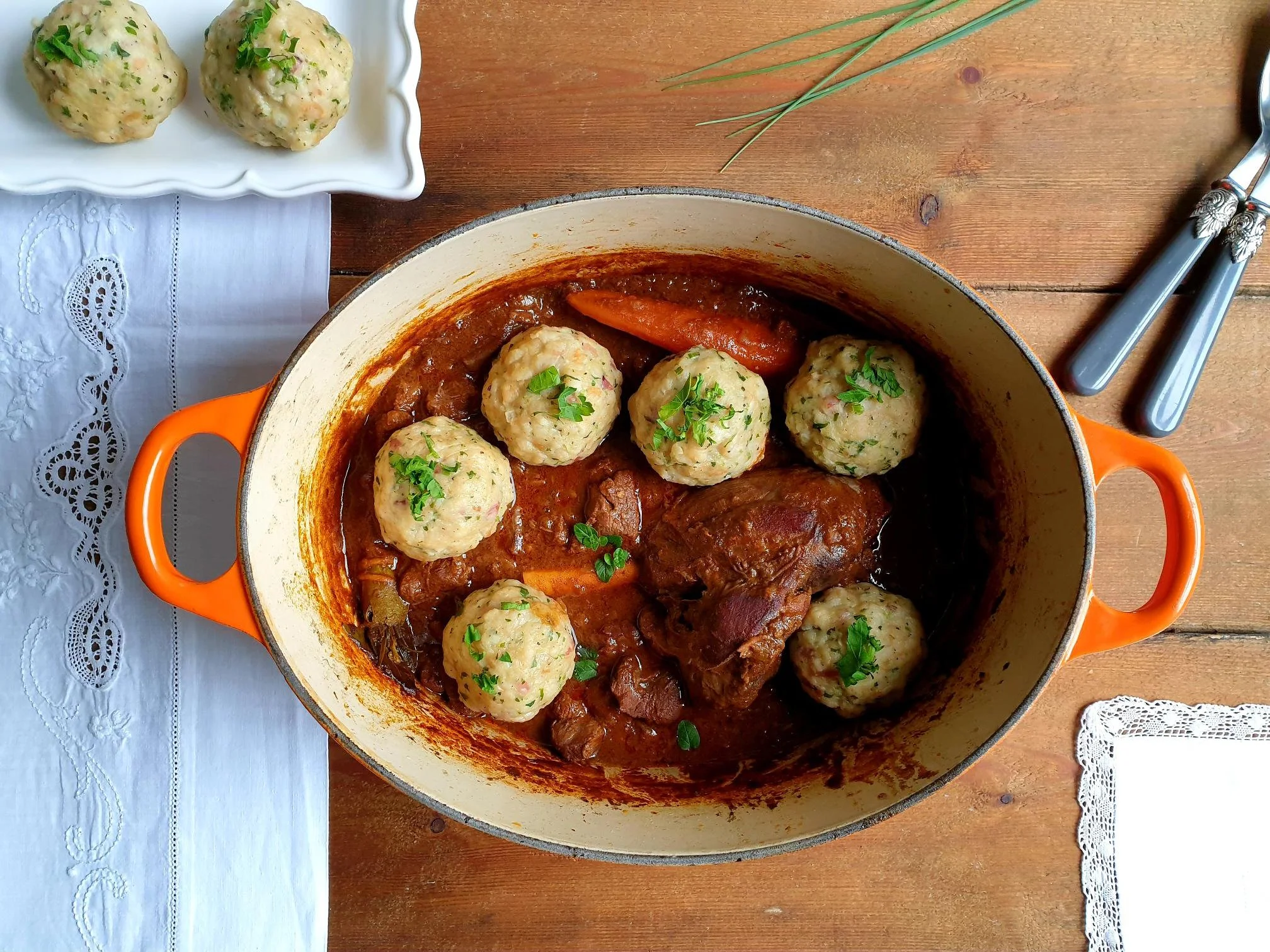
Bread dumplings with Venison stew

I simply love the recipes that provide some kind of a solution to the “problem” of avoiding food waste, and in this case the recipe is a brilliant side dish that uses - nothing more than stale bread as the key ingredient.

This is one of those recipes that you do not really need to plan since you can make bread dumplings when you simply end up with old bread and do not know what to do with it. If you have quite a bit of it to use up, then double or triple the ingredients since you can freeze a big batch of bread dumplings.

These rustic and elegant bread dumplings became a staple dish in a lot of cuisines of Eastern and Central Europe where stale bread has been very cleverly turned into a pure delicacy.

In Slovenia, where I was born and grew up, bread dumplings, called Kruhovi cmoki, have been so popular they almost became a national dish, and this recipe is most similar, or actually almost identical to the Austrian and South German( Bavarian) variety, where it is believed bread dumplings originated from, and are referred to as Semmelknödel.

There are a variety of bread dumpling recipes, for example, in the Czech Republic, fresh herbs, onions and the meaty element is not added to the bread mixture, which is also not shaped into small balls, but instead into a roll, then boiled and sliced.

Similar to bread dumplings are Canederli, found in Italy, in Trentino Alto Adige, an autonomous province of Italy, and in Austria, where small pieces of speck (lightly smoked cured meat) and cheese are added to the basic bread mixture, then they are shaped into small balls and typically cooked and served in hot beef or chicken broth.

This dish was one of my favourite dishes when I was a child, and it really does take me down memory lane. My mother would prepare them quite often, and I am sharing here her recipe, a typical Istrian variation of bread dumplings, in which fresh marjoram is added to the basic bread mixture.

Ingredients

Will make about 8 dumplings, depending on the size.

  • 310g roughly of stale bread (for this recipe I used 5 stale white baps)

  • 250-300ml milk (skimmed, semi skimmed or full fat)

  • 1 egg, beaten

  • 2 Tbsp olive oil

  • a handful of fresh flat leaf parsley (about 10g), finely chopped

  • 1 medium onion (about 100g), peeled and finely chopped

  • sea salt

  • ground black pepper

  • 40-50g sliced pancetta, cut into very small pieces (can use bacon or lardons), optional

  • 1 Tbsp fresh marjoram, very finely chopped, optional

  • all purpose flour (enough to coat the bread dumplings)

  • 1 Tbsp white dry breadcrumbs (only if needed)

Method

Cut or tear with your hands white baps (or any other type of stale bread you are using) into small pieces and put them in a fairly large bowl. Pour over the milk, mix well and leave to soak for about 20-30 minutes or until the bread is completely softened.

View fullsize Bread Dumplings 2.jpg
View fullsize Bread Dumplings 3.jpg

While the bread is soaking in milk, prepare the onion and pancetta mixture.

Put olive oil, finely chopped onions and small pieces of pancetta in a frying pan. Gently fry the mixture until the onions become nice and soft and transparent but not brown. Cool the pancetta and onion mixture and set aside.

View fullsize Bread Dumplings 4.jpg
View fullsize Bread Dumplings 5.jpg

Add to the bowl with the soaked bread, the beaten egg, onion and pancetta mixture, finely chopped parsley and marjoram and season with sea salt and black pepper.

With your hand(s) mix very well all the ingredients, almost using a squeezing action, to thoroughly combine the mixture. You should end up with a bread mixture that is soft, and with a fairly smooth consistency (if you end up with bigger bread pieces just break them with your fingers).

Adjust the mixture, adding a bit of breadcrumbs (and never the flour, as the mixture will get too sticky and will become unworkable), one tablespoon at the time, if the bread mixture is too wet.

On the contrary, if you feel the mixture is too hard and dry, add a bit of milk.

It is important to use a bit of personal judgment and intuition here. The idea behind this recipe is using the stale bread or a combination of different types of stale bread which will absorb a slightly different quantity of liquid, therefore the moisture of the bread mixture needs to be adjusted accordingly.

View fullsize Bread Dumplings 6.jpg
View fullsize Bread Dumplings 7.jpg

Wet you hands (this will prevent the dough to stick to your hands).

Take roughly a handful of the mixture and shape it into a compact ball, about the size of a tennis ball.

Repeat the process until you run out of the mixture.

Put some flour into a deep plate or a bowl.

Gently coat each dumpling into a flour and remove excess flour (this will prevent sticking).

View fullsize Bread Dumplings 8.jpg
View fullsize Bread Dumplings 9.jpg

Fill a large pot of water and bring to boil. Turn down the heat and leave the water to a gentle boil.

With a slotted spoon, drop one dumpling at the time in a simmering water and cook for about 15 minutes. Do not allow the dumplings to cook in a strong boiling water as they might loose the shape and fall apart.

Remove cooked dumplings with a slotted spoon and transfer onto a serving plate or directly on the plates, serve warm.

Just a thought

Bread dumplings are suitable for freezing.

You can freeze uncooked dumplings by freezing them individually first, and then transfer them into freezing bags or containers. Do not defrost the dumplings when you need them, just plop them frozen directly into a simmering water and cook them slightly longer, and they are cooked when they float on the surface.

Alternatively, you can freeze already cooked dumplings. Cool them first, freeze them individually and place in freezing bags or containers. When you want to use the dumplings, let them thaw first and then reheat covered, in order to get some steam, using a microwave works well.

You can “recycle” this dish even further, if you end up with some left over cooked dumplings, slice them up and fry the slices on both sides lightly in a frying pan with some butter or olive oil.

You really could not ask anything more from stale bread!

Wine suggestion

Alto Adige Schiava DOC "Menzen" 2020 - Colterenzio

March 23, 2022 /tina oblak
stale bread, old bread, dumplings, savory dumplings, Kruhovi cmoki, Semmelknödel, Canederli
Adriatic Recipe, Austrian inspired dishes, Autumnal dish, Autumnal recipe, casserole, Celebratory dish, Central European recipes, dinner, Dumplings, Eastern European dishes, Eastern European recipes, Easy recipe, Istrian cuisine, Istrian dish, Istrian food, Istrian gastronomy, main course, main dish, Mitteleuropean cuisine, Mitteleuropean dish, Mitteleuropean food, Mitteleuropean recipes, one pot meal, Rustic dish, Side Dishes, Slovenian cuisine, Slovenian food, Slovenian gastronomy, stew, supper, Vegetarian, Winter dish, Winter recipe, family friendly meal, child friendly meal, child friendly dish, family friendly dish

Venison Stew with red wine and fresh herbs - Istrian Recipe

Beans and Sardines
March 16, 2022 by tina oblak in Adriatic Recipe, Autumnal dish, Autumnal recipe, casserole, Central European recipes, dinner, Easy recipe, healthy mael, Istrian cuisine, Istrian dish, Istrian food, Istrian gastronomy, main course, main dish, main meat course, Meat, Mitteleuropean cuisine, Mitteleuropean dish, Mitteleuropean food, Mitteleuropean recipes, one pot meal, one pot meat recipe, Rustic dish, Slovenian cuisine, Slovenian food, Slovenian gastronomy, stew, supper, Winter recipe, Wild game meat, Game meat

Venison goulash is simply a lovely dish, perfect for colder days, and is very comforting and warming. It is slow cooked and braised for a long time with onions, garlic, fresh herbs, juniper berries, and red wine until the meat becomes so soft and tender it almost melts, and falls apart easily.

Venison meat, as it is very lean and low in saturated fat, works great in recipes requiring long cooking times which prevents drying the meat too much and helps to further develop the flavour.

Venison goulash is a great alternative to most common lamb or beef stews cooked on a more regular basis, and it is really super delicious as venison meat is packed with flavour because wild deer feed on apples, chestnuts, fruits, berries and acorns.

Venison Stew with Bread Dumplings

I am sharing here my paternal grandmother's recipe that has been in the family since .... forever. I grew up eating game meat that was provided very generously by my paternal grandfather's friends who were hunters. My nono, as I used to call him, would provide his hunter friends with a delicious extra virgin olive produced by him, and in exchange he would receive venison meat, an easy, uncomplicated trade, which everyone seemed to be happy with, especially the beneficiaries of the cooked venison goulash!

Ingredients

Serves 4-6

  • 1kg stewing venison (I used ready-cubed venison for stewing and a small shank)

  • 4 Tbsp olive oil

  • 1 medium size onion (about 180g), peeled and finely chopped

  • 2 big (or 4 small) cloves of garlic, peeled and crushed

  • 2 Tbsp tomato purée

  • 2 Tbsp all purpose flour

  • 100 ml red wine

  • 1 small whole carrot, peeled

  • few juniper berries (about 4), crushed

  • 1 sprig of fresh rosemary, made in bouquet garni or leaves picked and finely chopped

  • 1 bay leaf, fresh or dry, made in bouquet garni or just placed in a pot

  • few fresh sage leaves, made in bouquet garni or finely chopped

  • sea salt

  • black pepper, freshly ground

Method

In a large pot put the oil, finely chopped onions, a pinch of salt, and cook on a gentle heat, stirring quite often, until the onions are soft.

Add crushed garlic and cook for a further minute.

Add the venison meat, turn up the heat a bit and brown it and seal it on all sides, stirring and turning quite frequently.

Pour in the pot red wine and deglaze the pan, scrap with the wooden spoon all the bits and pieces that have stuck to the bottom of the pan.

Stir in the flour, add tomato purée, a carrot, juniper berries, bouquet garni or finely chopped herbs, sea salt and black pepper.

Add water, just enough to cover the meat, bring to boil, turn the heat down and gently simmer for about 2-3 hours, with the lid partially uncovered, or until the meat falls apart easily.

Keep an eye on the goulash during the simmering, and add splashes of water if you think it gets too thick and dry.

On the contrary, if you think the sauce is too thin, make a paste with some more flour and a bit of water, and add as much of the paste to venison goulash as needed to thicken the sauce.

Taste and adjust the seasoning with sea salt and black pepper.

Serve hot with some crusty bread, potato gnocchi, soft cooked polenta or grilled polenta, mashed, boiled or roasted potatoes, rice or with bread dumplings.

Just a thought

This is a great dish to make ahead of time and suitable for freezing.

If you have a bit of leftover goulash, shred the meat and use it as a venison ragù, delicious served with your favourite shape of pasta or potato gnocchi.

Wine suggestion

Teroldego Rotaliano DOC 2019 - De Vescovi Ulzbach

March 16, 2022 /tina oblak
Venison stew, slow cooked venison, braised venison, venison goulash, venison shank, cubed venison, venison for stewing, venison in red wine sauce, venison with fresh herbs, venison stew on a hob, juniper berries, jelenov golaz
Adriatic Recipe, Autumnal dish, Autumnal recipe, casserole, Central European recipes, dinner, Easy recipe, healthy mael, Istrian cuisine, Istrian dish, Istrian food, Istrian gastronomy, main course, main dish, main meat course, Meat, Mitteleuropean cuisine, Mitteleuropean dish, Mitteleuropean food, Mitteleuropean recipes, one pot meal, one pot meat recipe, Rustic dish, Slovenian cuisine, Slovenian food, Slovenian gastronomy, stew, supper, Winter recipe, Wild game meat, Game meat
1 Comment

Sarme - Pickled cabbage leaves stuffed with minced meat and rice in a light tomato sauce

Beans and Sardines
March 11, 2022 by tina oblak in Adriatic Recipe, Austrian inspired dishes, Hungarian inspired dishes, Autumnal dish, Autumnal recipe, Celebratory dish, Central European recipes, dinner, Eastern European dishes, Winter recipe, Winter dish, stew, Slovenian gastronomy, Slovenian food, Slovenian cuisine, Rustic dish, one pot meal, main dish, stuffed dishes, Mitteleuropean dish, Mitteleuropean cuisine, Mitteleuropean food

Sarme, which is a plural form of sarma, but also holding the name of the dish, is made of a mixture of minced meat and white rice wrapped in pickled cabbage leaves, and then slow cooked on a bed of shredded sauerkraut in a light tomato sauce.

This dish takes a special place in my recipe collection for comfort food, it is easy to make, hearty and satisfying, especially popular during colder months, it will wrap you in warmth like a woollen blanket. It used to be commonly served for lunch or dinner during the holidays and special occasions but nowadays it is also eaten as midweek meal.

Taking into account the historical context, it is quite clear, that Sarma probably originated in Turkey (the name sarma derives from a Turkish word sarmak, meaning to roll) and belongs to the dolma food family (stuffed dishes) spread in the cuisines in territories of the former Ottoman Empire from the Middle East to the Balkans and Central Europe, but like with most dishes, different places developed different versions of the same basic recipe.

When I first arrived to England, I was quite nostalgic about this dish as I could not find the whole sauerkraut head to buy. When my mother visited me she would buy it back home for me, put it in a suitcase and bring it with her on a plane. We would then prepare and cook sarme together. In Slovenia, where I come from, it is quite common to pickle large quantities of cabbage heads and buy them in the supermarkets in plastic bags or on farmer's markets directly from barrels available to make sarme during the winter.

View fullsize Sarme 1.jpg
View fullsize Sarme 3.jpg

In the family this dish would very often be made for big family gatherings in a big batch with the hope that some of it could be frozen and taken out on a lazy day, but that almost never happened!

I am Sharing here a version of sarme my maternal grandmother and my mother always cooked. It is highly recommended to make ahead as it tastes even better the following day, and serve sarme with mashed or boiled potatoes, or crusty bread and a dollop of sour cream on top.

It is very common to add in a pot of simmering sarme some lardons, bacon (thick cut), pancetta or pork ribs, smoked or unsmoked, this will give an additional meaty taste to the dish.

If you live in the UK and happened to watch on the television Rick's Steins Long Weekends short holiday and cooking series a few years ago, this dish was prepared for him in Vienna and described by him as one of his absolute favourites of all his long weekend programmes.

Ingredients

Serves 4-6 (about 12 rolls)

  • 1 pack of whole pickled cabbage head (you will find this on line or European delicatessens, especially Polish in the chilled section)

  • 250g minced beef

  • 250g minced pork

  • 100g white rice

  • 1 onion (about 100g), peeled and finely chopped

  • 2-3 cloves of garlic, peeled and crushed

  • 3 Tbsp olive oil

  • sea salt

  • ground black pepper

  • 2 bay leaves, fresh or dry

  • 2 Tbsp tomato concentrate

  • 1 Tbsp (or to taste) sweet Hungarian paprika

  • 1-2 Tbsp all purpose flour

  • sour cream for serving, optional

Method

The filling

Place the rice in a pan and cover with plenty of water.

Cook the rice as instructed on the pack, but cut the cooking time in half, as you only want the rice to be part-cooked.

Drain the rice in a colander and let it cool completely.

Put the oil, finely chopped onions and crushed garlic in a frying pan and sauté on a gentle heat until the onions become nice and soft.

Turn the heat to medium, add minced beef and pork, season with sea salt and black pepper and cook for about 20 minutes until the meat is browned.

Remove the frying pan from the heat, set aside and cool completely.

When both the rice and the meat mixture are cooled completely, put them in a bowl and mix them well together.

This is now your filling ready to fill the cabbage leaves.

Prepare the cabbage leaves for stuffing.

View fullsize Sarme 4.jpg
View fullsize Sarme 5.jpg

Carefully unpeel the leaves from the whole pickled cabbage head and gently open them up without breaking them. This is quite important so you do not have breakage and holes in the leaves, as the filling might come out once rolled. If you end up damaging quite badly the leaf, do not worry about it, just thinly shred it and use it later as a part of a sauce.

You will only need bigger and medium size leaves that come off the head quite easily. How many leaves you can obtain it really depends on the size of the whole pickled cabbage head (from the medium size cabbage head you should get around 12 leaves, this is the amount I used for this recipe).

View fullsize Sarme 8.jpg
View fullsize Sarme 9.jpg

Once you peel off the leaves, you will end up with smaller inner cabbage head. Shred it with a sharp knife and set aside, this will be part of your sauce later on.

Place each leaf on a chopping board and cut out the thick and hard part of the stem, this will allow you to roll the leaf easily.

View fullsize Sarme 10.jpg
View fullsize Sarme 11.jpg

Take one leaf, place it on a working surface and spoon the filling on the edge of each leaf. It is tricky to give the exact amount, maybe 3 Tbsp for bigger leaves and a bit less for smaller leaves. You really want to use a bit of judgement here and just put the amount of filling you think the size of the leaf you are using can hold.

First fold inwards (away from you) the leaf section.

View fullsize Sarme 15.jpg
View fullsize Sarme 16.jpg

Then fold over the two flaps on the side. Then you simply roll forward until you get a cabbage roll.

View fullsize Sarme 17.jpg
View fullsize Sarme 18.jpg

Set aside the rolls and keep repeating the process until you use up all the leaves.

Put half the shredded pickled cabbage over the base of a fairly large casserole dish or pan with a lid.

Place and arrange the stuffed leaves, fold-side down, next to each other, nice and tightly.

Scatter the other half of shredded cabbage on top of the rolls.

View fullsize Sarme 20.jpg
View fullsize Sarme 21.jpg

Add a bit of water, about half way to 1/3 way up the dish.

In a small cereal bowl put the flour, few tables spoons of lukewarm water and mix well to avoid lumps.

Add sweet paprika, tomato paste and mix.

Pour the mixture over the stuffed leaves.

Stick 1 or 2 bay leaf between sarma, add sea salt and black pepper.

Cover with the lid and gently simmer for about 2 hours. It is important not to stir and keeping the gas on a fairly low as high heat might cause aggressive boil causing the rolls to open up and break. Just shake the pot gently a few times during the cooking process.

If after two hours you think the sauce is too watery just dissolve 1 Tbsp of flour in a bit of lukewarm water, pour it in the pot and continue simmering. This should thicken a bit the sauce.

Taste and adjust the seasoning with sea salt and black pepper.

Lift the cabbage rolls gently out of the pot, with the help of the spoon and a fork and serve warm with mashed or boiled potatoes or plenty of crunchy bread to soak up the juices.

For extra flavour top the rolls with a dollop of sour cream.

Just a thought

Sarme will keep in the fridge up to 3-4 days in an airtight container.

The dish also freezes very well, but before using it, defrost in the fridge overnight and reheat well.

Wine suggestion

Venezia Giulia Malvasia Istriana IGT 2017 - Damijan Podversic

March 11, 2022 /tina oblak
Sarma, Sarme, sauerkraut, Sauerkraut recipe, minced meat, mince pork, mince beef, rice, shredded sauerkraut, pickled cabbage leaves, hearty dish
Adriatic Recipe, Austrian inspired dishes, Hungarian inspired dishes, Autumnal dish, Autumnal recipe, Celebratory dish, Central European recipes, dinner, Eastern European dishes, Winter recipe, Winter dish, stew, Slovenian gastronomy, Slovenian food, Slovenian cuisine, Rustic dish, one pot meal, main dish, stuffed dishes, Mitteleuropean dish, Mitteleuropean cuisine, Mitteleuropean food
Comment

Whole baked Sea Bream with fresh rosemary Recipe

Beans and Sardines
March 02, 2022 by tina oblak in Adriatic Recipe, baked dish, brunch, fish spreads, Healthy, healthy mael, Istrian cuisine, Istrian dish, Istrian food, Istrian gastronomy, main course, main dish, main fish meal, main fish course, Slovenian gastronomy, Slovenian food, Slovenian cuisine, Rustic dish, light meal, light fish course, baked fish, roasted fish, oven baked fish

Whole baked sea bream in the oven with fresh rosemary is a simple and tasty main fish dish that takes little effort to prepare.

Cooking the whole fish on the bone gives it a better flavour, and this delicate white fish is best cooked simply and gently in order to give it the full respect it deserves.

Baked sea bream is a perfect choice for a light meal option, traditionally served with spinach or chard cooked with potatoes, garlic and extra virgin olive oil.

Sea bream is a great choice to include in your diet as is rich in iron and vitamins and easy to digest.

This fish as a main course is unpretentious and understated in its simplicity, but it is elegant, and full of flavour.

I am sharing here this incredibly simple way of cooking the fish, that also represents the most common method of preparing and eating the fish along the Slovenian coast in restaurants as well as in many households.

This recipe has been in the family, well, since forever. Give it a go, there is nothing complicated about it, and if you are slightly intimidated by the task of cleaning the fish, the fishmonger will be more than happy to do it for you. Give a fish a good rinse, pat dry it, and follow the easy preparation steps, and off it goes in the oven, how difficult can that be?

Ingredients

Serves 4-8

  • 4 fresh whole sea bream (each weighing between 300g – 400g), cleaned, scaled and gutted

  • extra virgin olive oil, generous drizzle

  • 4 small sprigs of fresh rosemary

  • sea salt

  • black pepper

Method

Preheat the oven to 200C static or equivalent.

Line a baking tray with non stick baking parchment and drizzle a bit of olive oil.

Wash the fish thoroughly inside and out under cold running water and pat dry well the fish with the kitchen paper.

With the sharp knife, slash the fish 3 to 5 times through the flesh, about 5mm deep, almost to the bone.

Place the fish on the oiled baking parchment, side by side.

Season with sea salt and black pepper and rub with the olive oil.

Put a small sprig of fresh rosemary into the body cavity of each fish and drizzle the fish with a little more oil.

View fullsize Sea Bream oven baked with fresh rosemary 5.jpg
View fullsize Sea Bream oven baked with fresh rosemary 7.jpg

Cover the baking tray with aluminium foil and place in the oven.

Bake for about 30 minutes then remove the aluminium foil and bake further for about 10-20 minutes until the fish is cooked through and comes away from the bone easily.

View fullsize Sea Bream oven baked with fresh rosemary 8.jpg
View fullsize Sea Bream oven baked with fresh rosemary 10.jpg
View fullsize Sea Bream oven baked with fresh rosemary 12.jpg
View fullsize Sea Bream oven baked with fresh rosemary 11.jpg

One way of checking that the fish is cooked thorough, insert a small knife into the thickest part of the sea bream, the flesh of the fish should be nice and white in colour.

Discard the skin, bones, rosemary (from the cavity) and serve.

Wine suggestion

Vermentino "Tuvaoes" di Sardegna DOC 2020 - Cantina Cherchi

March 02, 2022 /tina oblak
fresh sea bream, whole fresh sea bream, baked sea bream, oven baked sea bream, oven baked whole sea bream, Orata al forno con rosmarino fresco, Orada v pecici s svezim rozmarinom, baking whole sea bream
Adriatic Recipe, baked dish, brunch, fish spreads, Healthy, healthy mael, Istrian cuisine, Istrian dish, Istrian food, Istrian gastronomy, main course, main dish, main fish meal, main fish course, Slovenian gastronomy, Slovenian food, Slovenian cuisine, Rustic dish, light meal, light fish course, baked fish, roasted fish, oven baked fish
Comment

Hungarian style Creamy Potato and Beef Goulash Soup Recipe

Beans and Sardines
February 23, 2022 by tina oblak in Appetizers, Autumnal dish, Autumnal recipe, casserole, Central European recipes, dinner, Eastern European recipes, Easy recipe, entrée course, main course, main dish, Mitteleuropean recipes, one pot meal, Slovenian cuisine, Slovenian food, Slovenian gastronomy, Starters, stew, supper, Vegan, Winter dish, Winter recipe, winter soup, Hungarian inspired dishes

This soup, warm, wholesome, and rich in flavour, can be used as a main meal, especially on those cold days when it will be much appreciated. It is made with only a few simple ingredients, and when cooked well and simmered slowly, it makes a perfect meal choice for body and soul, it is also quite filling, so there is no need to plan a main course.

This Hungarian soup, Gulyásleves, is generally made of beef, vegetables, ground paprika and other spices, but originates from a dish, a thicker stew (what is commonly known as beef goulash) that was cooked outside in the cauldron over an open fire, by the cattlemen, the Hungarian cowboys, who camped with their cattle in the Great Hungarian Plain.

This dish, although native to Hungary, became very popular in the countries around Hungary, which, like in most cases, gave a little twist to the original recipe, and is the origin of variety of new regional variations.

For example in Austria, where this dish is called Goulaschsuppe, it is common to cook this soup without its meat component, which makes a fantastic vegetarian and vegan friendly meal.

In Slovenia, where I come from however, this soup (called kromprjev golaž) which is a real crowd pleaser and became part of Slovenian food culture, testimony of the strong presence of the Austro-Hungarian Empire in the the territory, is almost always cooked with the meat component, where beef can be substituted by dry meats, i.e. some sort or sausages (smoked varieties are often used for a deeper, smokier, and more “imperial” flavour).

In Slovenia, like in Italy (mountainous parts of some regions like of Trentino-Alto Adige, Veneto and Friuli-Venezia Giulia bordering with Austria), this soup is generally served in the informal mountainside restaurants to the delight of hikers and skiers, as well as cooked in the households.

This seriously delicious one pot meal is quite nostalgic for me and reminds me of my childhood. It was served in the school canteens for lunch, and what were called 'dinner ladies, cooked the soup from scratch with fresh ingredients, and the aroma would travel around the school, into the classrooms, destructing the minds of us children struggling with some impossible maths sexercises, especially when approaching lunch time, when you could hear growling in the little tummies.

The soup would be followed by the Austrian inspired pudding, Buchteln, sweet yeast buns filled with apricot jam. This is the type of lunch, among many others, we children really looked forward to...

When I moved to England, goulash soup is one of those dishes, which for some strange reason has been a bit forgotten, and it was not until our skiing trip to Austria, when I saw this soup on the menu that all my childhood memories suddenly came back to me, this is what food does...

As soon as we got back to England I cooked this wonderful tasting goulash soup, it was a hit. I have been making it on a regular basis since then, and I will most definitely make sure this time it stays on the menu.

It is just so hearty, comforting and cosy, the whole family loves this one pot soup and it is cooked very often for my husband and my son who simply adore it. When I serve it, we get transported to the skiing memories we created together as a family, and the table conversations would start ....

I am sharing here a family recipe how my maternal grandmother used to make it, and how my mother still makes it. If you never had this soup before, try it and it will become one of your favourites, and all you need to serve the soup with is a nice rustic bread to dunk it, yes .... this is 'home' for me...

Ingredients

Serves 4

  • 4 Tbsp extra virgin olive oil

  • 3 medium size potatoes (about 500g) peeled and chopped into small cubes

  • 1 onion (about 120g) peeled and finely chopped

  • 1 clove of garlic, peeled and crushed

  • 2 Tbsp Hungarian sweet paprika

  • 2 Tsp red or white wine vinegar

  • 2 Tbsp tomato purée

  • 1 Tsp fresh marjoram (a few springs) finely chopped, (can use dry marjoram)

  • 3 Tsp caraway seeds, crashed with mortar and pestle (can use spice or coffee grinder)

    whole caraway seeds can be used if you have none of the above ways to ground the seeds

  • 400-500g braising steak or shin of beef, trim any hard fat off the beef and dice finely

  • sea salt

  • black pepper, freshly ground

  • 2 fresh or dry bay leaves

  • 2l water or vegetable stock

  • sour cream (optional)

  • fresh flat leaf parsley, roughly chopped, for garnish (optional)

Method

Put the oil in a fairly large pan, add chopped onions, crushed garlic, a pinch of salt and gently sauté until the onions are soft and translucent.

Pour wine vinegar and cook for a minute or so stirring the onion and garlic mixture. The vinegar will help to deglaze and release any bits stuck to the bottom of the pan.

Add diced beef and continue to cook, turning and stirring regularly, until the meat is nicely browned on all sides.

View fullsize Goulash soup 4.jpg
View fullsize Goulash soup 5.jpg

Add cubed potatoes and cook briefly for a few minutes together with meat and onions mixture.

View fullsize Goulash soup 7.jpg
View fullsize Goulash soup 8.jpg
View fullsize Goulash soup 9.jpg
View fullsize Goulash soup 10.jpg

Add paprika, tomato purée, fresh or dry marjoram, crushed caraway seeds and bay leaves, sea salt and black pepper.

Add water or vegetable stock, bring to a boil.

View fullsize Goulash soup 11.jpg
View fullsize Goulash soup 12.jpg
View fullsize Goulash soup 13.jpg
View fullsize Goulash soup 14.jpg

Cover with the lid and simmer on a gentle heat for about 2 hours. After this time, the soup will become slightly thicker and the meat will become so tender it will just melt in your mouth.

To make the goulash soup slightly “creamier” in consistency, you can press with a fork few cubes of potatoes on the side of the casserole pan and give it a good stir.

Taste and adjust the seasoning with sea salt and black pepper and add more paprika to your liking, if you wish.

Serve hot with a spoonful of sour cream, if desired, sprinkle some roughly chopped fresh parsley for garnish and a bit more paprika. Place some crunchy rustic bread on the table to dunk in the goulash soup and life just cannot get any better.

Just a thought

Double the amount of the ingredients in the recipe, if serving for 6-8 people or, if you wish to make a bigger batch and freeze.

Like most stews and soups, this goulash soup is best made in advance, as it tastes better every time you reheat it.

Wine suggestion

Vigneti delle Dolomiti Rosso IGT "Fojaneghe" 2015 - Bossi Fedrigotti, Masi

February 23, 2022 /tina oblak
potatoes, beef, stewing beef, shin of beef, caraway seeds, paprika, sweet Hungarian paprika, Gulyásleves, Goulaschsuppe, kromprjev golaž, Goulash soup, Goulash soup without meat, Hungarian beef and potato stew
Appetizers, Autumnal dish, Autumnal recipe, casserole, Central European recipes, dinner, Eastern European recipes, Easy recipe, entrée course, main course, main dish, Mitteleuropean recipes, one pot meal, Slovenian cuisine, Slovenian food, Slovenian gastronomy, Starters, stew, supper, Vegan, Winter dish, Winter recipe, winter soup, Hungarian inspired dishes
Comment

Braised Fennel Istrian Recipe

Beans and Sardines
February 09, 2022 by tina oblak in Adriatic Recipe, Autumnal dish, Autumnal recipe, brunch, Central European recipes, Easy recipe, Healthy, healthy mael, Istrian cuisine, Istrian dish, Istrian food, Istrian gastronomy, main dish, Nutritious, Nutritious dish, Rustic dish, Side Dishes, Slovenian cuisine, Slovenian food, Slovenian gastronomy, supper, Vegan, Vegetarian, Winter recipe, Vegetable side dish, Vegetables, Root vegetables

Braised fennel is made with fresh fennel bulbs, a humble and very often underrated and forgotten vegetable, and if you were ever put off by maybe a slightly “assertive” liquorice taste of a raw fennel, try this dish, it is like eating a completely different vegetable.

Fennel, during braising process, becomes mellow and sweet, very tender, and develops soft and mild aniseed and slightly caramelized flavour, sincerely gorgeous!

For this dish, perhaps, we can apply the famous saying “do not judge the book by its cover.”

With its appearance, maybe it does not belong to the privileged club of the most appealing looking dishes, but the taste of braised fennel is simply luxurious and elegant, worthy to be served as a part of Sunday roast.

Back home, on the Slovenian coast, where I come from, braised fennel is a very popular, very much loved dish and served with dignity for a simple midweek lunch or dinner.

Here I am sharing my mother's recipe for a traditional and regional braised fennel recipe. Try it, and next time you are shopping for your vegetables, you will be reaching out for fresh fennel...

Ingredients

Serves 4 as part of meal

  • few fresh fennel bulbs (1200g approximately)

  • 5 Tbsp extra virgin olive oil (the best you can afford)

  • sea salt

  • black pepper

  • fresh flat leaf parsley, roughly chopped

  • 100ml water or vegetable stock

Method

Wash fennel bulbs under cold running water and dry them with clean kitchen paper or towel. Place the bulbs on the chopping board and trim the hard hollow stalks which are quite tough and very fibrous. You can discard the stalks or put in the compost, or trim the stalks, cut them into pieces and use them instead of, or as an addition to the celery in soups and stews, or use them as a bed for roasted chicken, or other meats, and roasted fish.

Cut the feathery fronds from the stalks, you can use these as a garnish for this dish, or as a herb to make others dishes. Trim off the root end of the the bulb (the base of the fennel bulb) and cut it into wedges.

View fullsize Braised fennel 4.jpg
View fullsize Braised fennel 3.jpg

The layers may separate and fall apart, do not worry, this is normal.

Put extra virgin olive oil in a large frying pan, preferably non stick, and heat it up a bit.

Place the fennel wedges into a pan.

Add a pinch of sea salt and sauté for few minutes on a fairly high heat, stirring occasionally, until golden brown in colour.

View fullsize Braised fennel 7.jpg
View fullsize Braised fennel 8.jpg

Add 100ml of water, black pepper, lower the heat to fairly low, cover with the lid.

Cook on a gentle heat for about 40 minutes, then uncover the lid.

Turn the heat to medium and cook further uncovered until all the water evaporates.

At this stage the fennel might catch a bit and turn slightly mushy, oozy and creamy in the middle.

Taste and adjust the seasoning with sea salt and black pepper.

View fullsize Braised fennel 9.jpg
View fullsize Braised fennel 10.jpg

Add a sprinkle of fresh chopped parsley for extra flavour and some fennel fronds for garnish.

Serve hot or at room temperature.

Just a thought

This dish freezes very well, so it might be a good idea to cook in bigger quantities when the fennel is in season and freeze it.

February 09, 2022 /tina oblak
Fresh fennel, Fresh fennel bulb, Fennel bulb, Braised fennel, Slow cooked fennel, Fennel cooked in frying pan, Braised fennel with fresh parsley, Fennel fronds, Braised fennel garnished with fennel fronds
Adriatic Recipe, Autumnal dish, Autumnal recipe, brunch, Central European recipes, Easy recipe, Healthy, healthy mael, Istrian cuisine, Istrian dish, Istrian food, Istrian gastronomy, main dish, Nutritious, Nutritious dish, Rustic dish, Side Dishes, Slovenian cuisine, Slovenian food, Slovenian gastronomy, supper, Vegan, Vegetarian, Winter recipe, Vegetable side dish, Vegetables, Root vegetables
1 Comment

Venetian style Sardines in Savor (Marinated Fried Sardines)

Beans and Sardines
February 02, 2022 by tina oblak in Adriatic Recipe, Appetizers, bite-sized nibbles, brunch, Canapés, dinner, Easy recipe, entrée course, Fish & Seefood, fish starter, Healthy, healthy mael, Istrian cuisine, Istrian dish, Istrian food, Istrian gastronomy, main course, main dish, main fish meal, Nutritious, Nutritious dish, recipe from Northern Ital, Rustic dish, Slovenian cuisine, Slovenian food, Slovenian gastronomy, Small bites, Starters

Marinated sardines is a classic and quintessentially Venetian dish, where sardines are lightly fried and then marinated in onion and vinegar mixture. It is prepared and found on Venetian menus (Sarde in saòr) where typical humble dishes are served all year round The name of the dish comes from the Venetian word saòr, meaning sapore in standard Italian, which translates as flavour, and refers to the fact that the flavour of the marinated fish is elevated by the use of good quality wine vinegar.

This dish originated simply out of necessity, when the catch of the fish was particularly abundant and plentiful, people had to figure out how to preserve food to be able to eat it for days without going bad, as the refrigeration had not yet been invented.

This Venetian dish in origin is also very popular and became a staple dish along the coast of the Slovenian Istra, where local gastronomy was strongly shaped and influenced by the Venetian cuisine, and this is of no surprise, as this land was once part of The Republic of Venice who “left behind” the recipe for marinated sardines and enriched the food habits of the locals, who refer to this dish as Sardele in savor (Sardele na šavor in standard Slovenian) and serve it as a cold starter or sometimes as main. It is made all year round but particularly pleasant to eat cold during the hot summer months due to its refreshing taste.

Unlike the Venetian variety of this dish, Istrian marinated sardines do not include the use of pine nuts or raisins, testimony to the introduction of expensive and unusual ingredients in noble Venice due to a its strong trading activity with the East.

More humble and poorer Istrian variation, to offer extra flavour to this dish, introduced the use of fresh parsley and Mediterranean herbs like rosemary and bay leaves growing in abundance along the coast, instead of pine nuts and raisins, difficult to find and expensive, and therefore out of reach for most households. This variation also introduced the use of red wine vinegar, home made and produced in most households, instead of white wine vinegar, type of vinegar solely used in Venetian recipe.

This dish is customarily made with sardines (small ones are particularly suitable) but can be made with other types of fish like sprats, called papaline (Venetian word) by the locals and mackerel being most popular and most common alternative to sardines, and fillets of more prestigious fish like sea bream and sea bass can also be considered.

Once, this was food for the poor, nowadays is a delicacy and a speciality very much appreciated for their unique flavour and highly valued for nutritional content, especially in Slovenian Istra, where, unlike in Venice, this dish, although very traditional in the area, is not easily available in the restaurants, but almost exclusively made in the households.

My nona told me a lovely story, when she was only twenty two years old and got married she moved into the house, where she still currently lives, not very far away from the sea, and during the hot summer nights, the windows would be kept wide open in the hope to get some fresh breeze from the sea to cool the bedrooms to make it easier to sleep.

She could very clearly hear, in the middle of the night, the sound of very small fishing boats leaving the port and going out in the open sea to fish, this is the sound that she remembers as a very special and nostalgic one, and this is because she can no longer hear these sounds, as the majority of those small boats were replaced by only few commercial bigger fishing boats. These days they struggle for a few big catches since over the years the the sea has been depleted of fish. Sadly, fishing has become very difficult and complicated, and so is not very appealing to the younger generations.

I am sharing here my nona's recipe, this is the dish she grew up with, and the one she recalls was also made by her grandmother. This is a traditional, local and authentic family recipe for Istrian style marinated sardines. However, if you wish to “jazz up” this recipe a bit, and make it more “noble” and Venetian, you can add 50g of pine nuts and 50g raisins (previously soaked in lukewarm water for few minutes to help them become more plump).

Ingredients

Serves 4-6

  • 1 kg very fresh sardines, cleaned (scaled, gutted, heads and central bone removed and butterflied)

    (ask fishmonger to prepare them for you if uncomfortable with the task)

  • all purpose flour (quantity enough to flour the sardines)

  • 400 ml frying oil

  • 5 Tbsp extra virgin olive oil

  • 500 g onions, peeled and thinly sliced

  • 5 whole black peppercorns

  • 1 Tbsp white dry breadcrumbs

  • 100 ml white or red wine vinegar

  • 1 bay leaf, fresh or dry

  • 1 small fresh rosemary spring

  • very generous pinch of fresh flat leaf parsley (about 2g), finely chopped

  • sea salt

Method

Cut the heads of the sardines, gut them and remove the central bone. Butterfly the sardines, rinse them well under cold running water and pat dry thoroughly with the kitchen paper.

View fullsize Sarde in saor 4.jpg
View fullsize Sarde in saor 5.jpg

Coat them in flour and shake off flour in excess.

View fullsize Sarde in saor 6.jpg
View fullsize Sarde in saor 7.jpg

Place frying oil in a frying pan, heat it up and fry gently and quickly the sardines, 2 minutes on each side is sufficient. They should have a light, not very crunchy, coating coating.

Drain well on a kitchen paper.

Season well with sea salt and set aside.

Peel the onions and slice them thinly.

View fullsize Sarde in saor 10.jpg
View fullsize Sarde in saor 11.jpg

In a separate frying pan, ideally non stick, put extra virgin olive oil and heat a bit.

Add the onions and cook them on a very gentle heat until they become very soft and translucent, stirring often to avoid getting too brown.

View fullsize Sarde in saor 12.jpg
View fullsize Sarde in saor 13.jpg

Add black peppercorns, breadcrumbs, bay leaf, small fresh rosemary spring, finely chopped fresh flat leaf parsley.

Pour in wine vinegar and enough water to completely cover the onion mixture.

View fullsize Sarde in saor 14.jpg
View fullsize Sarde in saor 15.jpg

Cook the onion and vinegar mixture on a gentle heat for about 20 minutes. The sauce should slightly thicken and reduce a little, but you should still be left with quite a bit of liquid.

If too much liquid has evaporated during the cooking add a bit more water.

Take a serving dish and alternate layers of onions in the vinegar mix and fried sardines.

Repeat the process of layering until the dish is full. The number of layers will depend on the size of your serving dish but the last layer should be onion and vinegar mix.

If you are left with a bit of vinegary liquid from the onion mixture just pour it over the layers.

View fullsize Sarde in saor 17.jpg
View fullsize Sarde in saor 18.jpg
View fullsize Sarde in saor 19.jpg
View fullsize Sarde in saor 20.jpg

Place the dish in a fridge or a cool place for at least 24 hours or a couple of days, so the sardines marinate well and absorb all the flavours.

The longer you leave to marinate the better it will taste, but bare in mind that the fish will keep for up to a week.

Wine Suggestion

Collio Sauvignon Doc 2020 Draga

February 02, 2022 /tina oblak
Marinated sardines, sardines, papaline, mackerel, sprats, sea bream fillets, sea bass filets, marinated fresh fish, marinated fish, Sardele in Savor, Sardines in savor, Venetian sarde in savor, Sardele in savor, Sardele na šavor, Istrian sardines in savor, Istrian marinated fish
Adriatic Recipe, Appetizers, bite-sized nibbles, brunch, Canapés, dinner, Easy recipe, entrée course, Fish & Seefood, fish starter, Healthy, healthy mael, Istrian cuisine, Istrian dish, Istrian food, Istrian gastronomy, main course, main dish, main fish meal, Nutritious, Nutritious dish, recipe from Northern Ital, Rustic dish, Slovenian cuisine, Slovenian food, Slovenian gastronomy, Small bites, Starters
Comment

Home made Baked Beans Istrian Recipe

Beans and Sardines
January 26, 2022 by tina oblak in Adriatic Recipe, Appetizers, Autumnal dish, Autumnal recipe, brunch, Central European recipes, Eastern European recipes, Easy recipe, Healthy, healthy mael, Istrian cuisine, Istrian dish, Istrian food, Istrian gastronomy, main course, main dish, Nutritious dish, Nutritious, one pot meal, one pot meat recipe, Rustic dish, Side Dishes, Slovenian cuisine, Slovenian food, Slovenian gastronomy, Small bites, Starters, stew, Vegan, Vegetarian, Winter dish, Winter recipe, casserole

Home made baked beans is one of the most humble staple dishes in Slovenian Istra, the peninsula located at the head of the Adriatic Sea. This dish is nutritious, as full of fibre and protein, wholesome, super delicious, cheap and simple to make, and what it may lack in appearance it most certainly makes up in flavour.

This dish is classic comfort food, quintessentially rustic, a truly peasant food since it used to be made by farmers during colder months to help them to get warm, and to partially replenish their energy used up during the very hard, physical and laborious jobs required in the fields during the day.

This borlotti beans casserole is made with beautifully caramelized onions and sautéed pancetta and flavoured with garlic, bay leaf and a touch of tomato paste, it is typically served with polenta or crusty bread and a fantastic companion to grilled meats.

My nona grew up with this dish, as borlotti beans were consistently cooked as a part of the Mediterranean diet, the recipe was passed down to my father who adored baked beans and would prepare them regularly when there was a family barbecue, normally in such a huge quantities that we would eat them on a toasted bread for days to follow, nobody seemed to mind or complained about it, on the contrary...

This home made baked beans are known in standard Slovenian as Praženi Fižol, but the locals would refer to this dish simply in the dialect as Pražen Fežu.

This very traditional dish calls for dry borlotti beans, but you can use canned beans to cut down on time without compromising the deliciousness of the final dish, it can also be made with or without the meat component, in which case, this version makes an excellent vegetarian and vegan meal option.

I am sharing here the traditional, local family recipe which uses only few simple ingredients, however, you can take this dish slightly off the beaten track and jazz it up a bit by adding few chilli flakes or powdered sweet or smoked Hungarian paprika, which will give a more “Imperial” and “Balcanic” flavour. My father attempted this only once and was severely told off by his mother, my famous nona, for “corrupting” the traditional recipe making it too “exotic” for her to eat, this version of baked beans, although very delicious indeed, was never cooked again by my father in her presence...

Whether you go for a traditional or more exotic version of the recipe for home made baked beans, give it a go, a store bought tinned baked beans might just become a thing of a past...

Ingredients

Serves 6-8

  • 500g dry borlotti beans, (or other dry beans of your choice) soaked overnight or for about 8 hours

    For this recipe you can also use tinned borlotti beans or other tinned beans of your choice 4 x 400g)

  • 1 medium onion, (about 130g) finely chopped

  • 4 Tbsp extra virgin olive oil

  • 2 cloves of garlic, peeled and crushed

  • 100g pancetta, (smoked or unsmoked) thinly sliced and chopped

  • You can replace pancetta for smoked or unsmoked bacon or lardons

  • 1 Tsp white all purpose flour

  • 2 Tbsp tomato paste

  • 2 bay leaves (fresh or dry)

  • sea salt

  • black pepper

Method

Place dry borlotti beans, or other dry beans of your choice, in a big bowl, cover completely with plenty of cold water and soak for about 8 hours or overnight.

Drain soaked beans in a colander and rinse with cold running water.

View fullsize Baked borlotti beans 4.jpg
View fullsize Baked borlotti beans 5.jpg

Transfer soaked beans in a pot.

View fullsize Baked borlotti beans 6.jpg
View fullsize Baked borlotti beans 7.jpg

Add plenty of cold water, to completely cover the beans, a bay leaf and bring to boil.

Turn the heat down to medium-low and cook the beans for about 1 -1 ½ hour or until the beans are fully cooked and soft but not falling apart. Skim any foam if it rises to the surface. Towards the end of cooking time add sea salt.

Fish out the bay leaf and discard. Turn the heat off, leaving the pot with the beans in their liquid on the stovetop for later use.

View fullsize Baked borlotti beans 8.jpg
View fullsize Baked borlotti beans 11.jpg

Put extra virgin olive oil in a fairly large and deep skillet or casserole dish (both preferably non stick). Add finely chopped onion, crushed garlic, finely sliced and chopped pancetta or similar, if using, and sauté on a gentle heat, stirring occasionally, until the onions become soft and translucent.

Add the flour and stir well with the onion, garlic and pancetta mixture.

View fullsize Baked borlotti beans 10.jpg
View fullsize Baked borlotti beans 12.jpg

With the slotted spoon, (or a regular big serving spoon) transfer the beans to the skillet with the onion, garlic and pancetta mixture.

Pour the liquid from the beans into the skillet to completely cover the beans. If you are left with more liquid from the beans as needed at this stage, keep it aside and do not discard it. You might use it later on, if the beans during the cooking process get too dry. On the contrary, if you end up using all the liquid from the beans, and the beans get too dry, you can simply use water.

Add sea salt, black pepper, bay leaf, tomato paste and bring to a gentle boil.

View fullsize Baked borlotti beans 13.jpg
View fullsize Baked borlotti beans 14.jpg

Lower the heat and gently simmer for about 30 minutes stirring occasionally.

Taste and adjust the seasoning with sea salt and black pepper.

Serve hot or at room temperature.

Just a thought

Home made baked beans are suitable for freezing.

Wine suggestion

Schiava Alto Adige DOC "Kolbenhofer" 2020 - Hofstater

January 26, 2022 /tina oblak
borlotti beans, baked beans, baked borlotti beans, baked beans with pancetta, baked beans with lardons, baked beans with bacon, rustic baked beans, beaked beans on a hob, baked beans on stove, Stovetop baked beans, Skillet baked beans, baked beans in a frying pan, Praženi Fižol, Pražen Fežu, Istrian borlotti beans
Adriatic Recipe, Appetizers, Autumnal dish, Autumnal recipe, brunch, Central European recipes, Eastern European recipes, Easy recipe, Healthy, healthy mael, Istrian cuisine, Istrian dish, Istrian food, Istrian gastronomy, main course, main dish, Nutritious dish, Nutritious, one pot meal, one pot meat recipe, Rustic dish, Side Dishes, Slovenian cuisine, Slovenian food, Slovenian gastronomy, Small bites, Starters, stew, Vegan, Vegetarian, Winter dish, Winter recipe, casserole

Green Split Peas Soup Istrian Recipe

Beans and Srdines
January 19, 2022 by tina oblak in Adriatic Recipe, Appetizers, Autumnal dish, Autumnal recipe, brunch, dinner, entrée course, healthy mael, Istrian cuisine, Istrian dish, Istrian food, Istrian gastronomy, main course, main dish, Nutritious dish, one pot meal, Rustic dish, Slovenian cuisine, Slovenian food, Slovenian gastronomy, Soups, Starters, supper, Vegan, Vegetarian, Winter dish, winter soup

This comforting, filling and hearty soup is a perfect winter warmer, incredibly easy to make, super delicious in its simplicity, and once you try it, you will add it to your soups recipe collection!

Split peas are quite different from their fresh counterpart, they are a specific kind of field pea, which are dried in order to be stored for a longer period. They are called split peas because after the outer hull is removed the peas are then split in half along a natural seam.

This wonderful soup is protein packed and here I am sharing my nona's recipe. For her, this dish represents a good “old fashioned” basic recipe and is a real staple in the gastronomic repertoire since she learned to make this soup from her grandmother, and so this is a very old family recipe.

She told me that when she was a child, this soup was very often on the tables, as it is a a traditional and classic soup made in Slovenian Istra, where locals refer to it in dialect as Maneštra iz biži špakaj while in standard Slovenian is called Mineštra iz suhega graha.

My nona also shared with me that when she was small, most of the ingredients were home made but this is not the case for dried green split peas, they were bought at the local food market or in a small family run food shop, since for both types of local businesses it was a crucial time for the local microeconomy.

This soup is normally home made and not typically found on the menus in the restaurants.

Try this very tasty one pot soup, and you will think twice before you open a can of soup bought in the supermarket!

Ingredients

  • 500g green split peas, soaked for about 8 hours or overnight

  • 1 medium potato (about 200g), peeled and roughly diced

  • 1 medium onion (about 100g), peeled and roughly chopped

  • few celery leaves

  • fresh flat leaf parsley, a handful (about 10g), roughly chopped

  • 1 small carrot (about 50g), peeled and finely grated

  • tip of fresh or dry bay leaf

  • 4 Tbsp extra virgin olive oil

  • sea salt

  • ground black pepper

  • 2l cold water

Method

Place dried green split peas in a bowl, cover completely with plenty of cold water and soak for about 8 hours or overnight.

Drain soaked peas in a colander and rinse with cold running water.

Transfer soaked peas in a soup pot and add peeled and roughly diced potato, peeled and roughly chopped onion, few celery leaves, roughly chopped parsley, peeled and finely grated carrot, tip of fresh or dry bay leaf, extra virgin olive oil, pinch of sea salt and ground black pepper.

Add 2 litres of cold water and bring to boil.

View fullsize Green split peas soup 5.jpg
View fullsize Green split peas soup 6.jpg

Turn the heat down, partially cover with the lid and gently simmer for about 1 ½ - 2 hours or until the peas are completely tender and disintegrated. Stir occasionally to avoid peas sticking to the bottom of the pan.

Taste and adjust the seasoning with sea salt and black pepper and fish out the tip of bay leaf.

View fullsize Green split peas soup 7.jpg
View fullsize Green split peas soup 8.jpg

You can serve this soup as it is with a bit of texture or if you prefer a creamier texture purée the soup using an immersion blender (like I did for this recipe) or a regular blender.

For a smoother texture you can also use food mill or pass the puréed soup through a sieve which will result in an exceptionally smooth soup.

The soup should generally have a nice thickish consistency, but not too thick, in which case, dilute it adding a bit of water.

This soup is great served hot with some bread croutons, roughly chopped parsley and a drizzle of extra virgin olive oil.

Traditionally it is served with small shaped pasta (ditalini, stelline, orzo, ect.) or rice, both cooked previously and separately and then added to the soup.

Just a thought

This soup is great made in advance and freezes very well.

Wine suggestion

Alto Adige Valle Isarco Sylvaner DOC 2020 - San Michele Appiano

January 19, 2022 /tina oblak
green split peas, dried split green peas, dried split peas creamed soup, cream of green split peas soup, Maneštra iz biži špakaj, Mineštra iz suhega graha
Adriatic Recipe, Appetizers, Autumnal dish, Autumnal recipe, brunch, dinner, entrée course, healthy mael, Istrian cuisine, Istrian dish, Istrian food, Istrian gastronomy, main course, main dish, Nutritious dish, one pot meal, Rustic dish, Slovenian cuisine, Slovenian food, Slovenian gastronomy, Soups, Starters, supper, Vegan, Vegetarian, Winter dish, winter soup
Comment
  • Newer
  • Older