Beans and Sardines

  • Home
  • About
  • Recipe of the week
  • Recipes
  • Wines
  • Contact

Venison Stew with red wine and fresh herbs - Istrian Recipe

Beans and Sardines
March 16, 2022 by tina oblak in Adriatic Recipe, Autumnal dish, Autumnal recipe, casserole, Central European recipes, dinner, Easy recipe, healthy mael, Istrian cuisine, Istrian dish, Istrian food, Istrian gastronomy, main course, main dish, main meat course, Meat, Mitteleuropean cuisine, Mitteleuropean dish, Mitteleuropean food, Mitteleuropean recipes, one pot meal, one pot meat recipe, Rustic dish, Slovenian cuisine, Slovenian food, Slovenian gastronomy, stew, supper, Winter recipe, Wild game meat, Game meat

Venison goulash is simply a lovely dish, perfect for colder days, and is very comforting and warming. It is slow cooked and braised for a long time with onions, garlic, fresh herbs, juniper berries, and red wine until the meat becomes so soft and tender it almost melts, and falls apart easily.

Venison meat, as it is very lean and low in saturated fat, works great in recipes requiring long cooking times which prevents drying the meat too much and helps to further develop the flavour.

Venison goulash is a great alternative to most common lamb or beef stews cooked on a more regular basis, and it is really super delicious as venison meat is packed with flavour because wild deer feed on apples, chestnuts, fruits, berries and acorns.

Venison Stew with Bread Dumplings

I am sharing here my paternal grandmother's recipe that has been in the family since .... forever. I grew up eating game meat that was provided very generously by my paternal grandfather's friends who were hunters. My nono, as I used to call him, would provide his hunter friends with a delicious extra virgin olive produced by him, and in exchange he would receive venison meat, an easy, uncomplicated trade, which everyone seemed to be happy with, especially the beneficiaries of the cooked venison goulash!

Ingredients

Serves 4-6

  • 1kg stewing venison (I used ready-cubed venison for stewing and a small shank)

  • 4 Tbsp olive oil

  • 1 medium size onion (about 180g), peeled and finely chopped

  • 2 big (or 4 small) cloves of garlic, peeled and crushed

  • 2 Tbsp tomato purée

  • 2 Tbsp all purpose flour

  • 100 ml red wine

  • 1 small whole carrot, peeled

  • few juniper berries (about 4), crushed

  • 1 sprig of fresh rosemary, made in bouquet garni or leaves picked and finely chopped

  • 1 bay leaf, fresh or dry, made in bouquet garni or just placed in a pot

  • few fresh sage leaves, made in bouquet garni or finely chopped

  • sea salt

  • black pepper, freshly ground

Method

In a large pot put the oil, finely chopped onions, a pinch of salt, and cook on a gentle heat, stirring quite often, until the onions are soft.

Add crushed garlic and cook for a further minute.

Add the venison meat, turn up the heat a bit and brown it and seal it on all sides, stirring and turning quite frequently.

Pour in the pot red wine and deglaze the pan, scrap with the wooden spoon all the bits and pieces that have stuck to the bottom of the pan.

Stir in the flour, add tomato purée, a carrot, juniper berries, bouquet garni or finely chopped herbs, sea salt and black pepper.

Add water, just enough to cover the meat, bring to boil, turn the heat down and gently simmer for about 2-3 hours, with the lid partially uncovered, or until the meat falls apart easily.

Keep an eye on the goulash during the simmering, and add splashes of water if you think it gets too thick and dry.

On the contrary, if you think the sauce is too thin, make a paste with some more flour and a bit of water, and add as much of the paste to venison goulash as needed to thicken the sauce.

Taste and adjust the seasoning with sea salt and black pepper.

Serve hot with some crusty bread, potato gnocchi, soft cooked polenta or grilled polenta, mashed, boiled or roasted potatoes, rice or with bread dumplings.

Just a thought

This is a great dish to make ahead of time and suitable for freezing.

If you have a bit of leftover goulash, shred the meat and use it as a venison ragù, delicious served with your favourite shape of pasta or potato gnocchi.
Wine suggestion

Teroldego Rotaliano DOC 2019 - De Vescovi Ulzbach

March 16, 2022 /tina oblak
Venison stew, slow cooked venison, braised venison, venison goulash, venison shank, cubed venison, venison for stewing, venison in red wine sauce, venison with fresh herbs, venison stew on a hob, juniper berries, jelenov golaz
Adriatic Recipe, Autumnal dish, Autumnal recipe, casserole, Central European recipes, dinner, Easy recipe, healthy mael, Istrian cuisine, Istrian dish, Istrian food, Istrian gastronomy, main course, main dish, main meat course, Meat, Mitteleuropean cuisine, Mitteleuropean dish, Mitteleuropean food, Mitteleuropean recipes, one pot meal, one pot meat recipe, Rustic dish, Slovenian cuisine, Slovenian food, Slovenian gastronomy, stew, supper, Winter recipe, Wild game meat, Game meat
1 Comment

Sarme - Pickled cabbage leaves stuffed with minced meat and rice in a light tomato sauce

Beans and Sardines
March 11, 2022 by tina oblak in Adriatic Recipe, Austrian inspired dishes, Hungarian inspired dishes, Autumnal dish, Autumnal recipe, Celebratory dish, Central European recipes, dinner, Eastern European dishes, Winter recipe, Winter dish, stew, Slovenian gastronomy, Slovenian food, Slovenian cuisine, Rustic dish, one pot meal, main dish, stuffed dishes, Mitteleuropean dish, Mitteleuropean cuisine, Mitteleuropean food

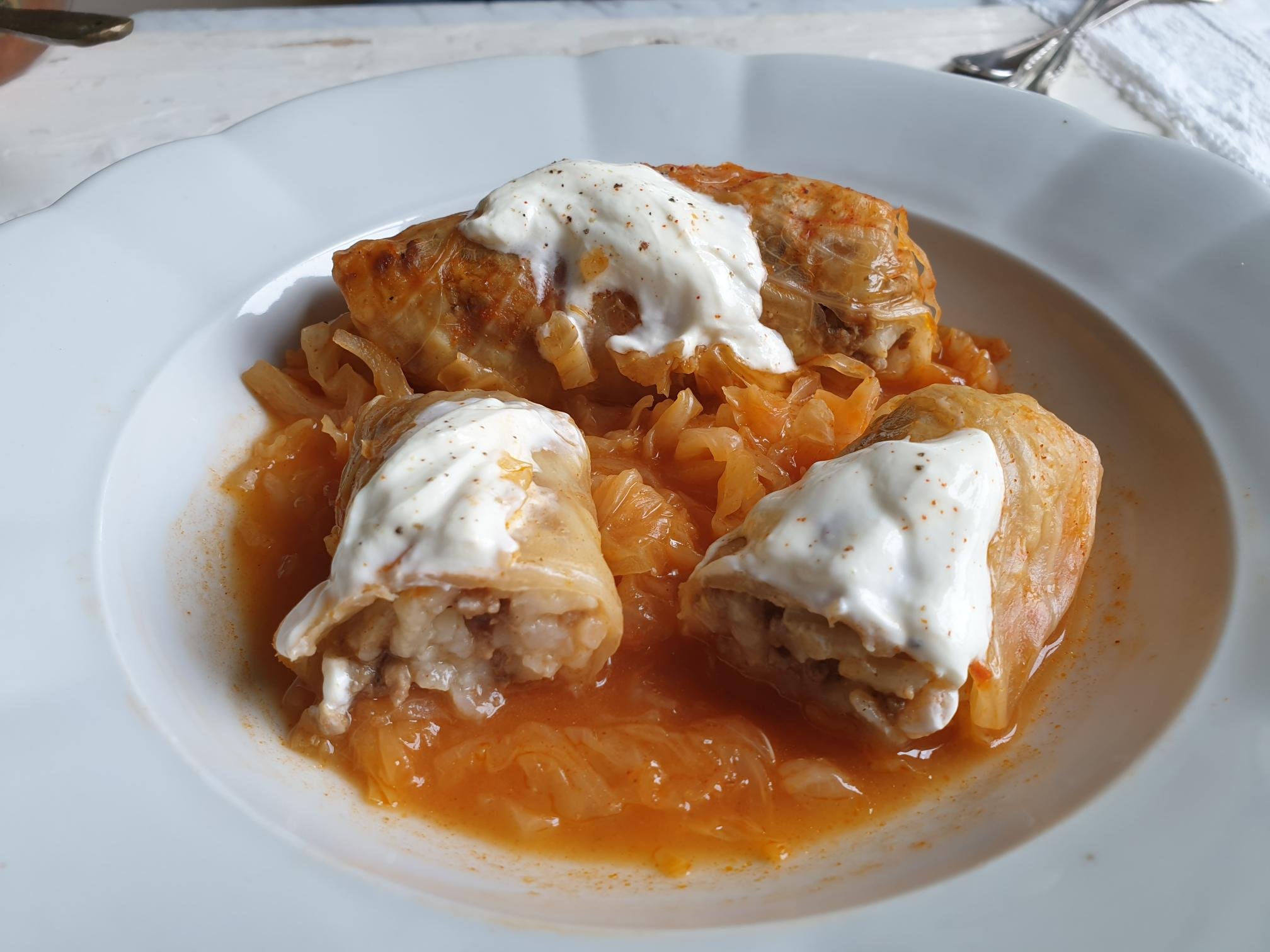
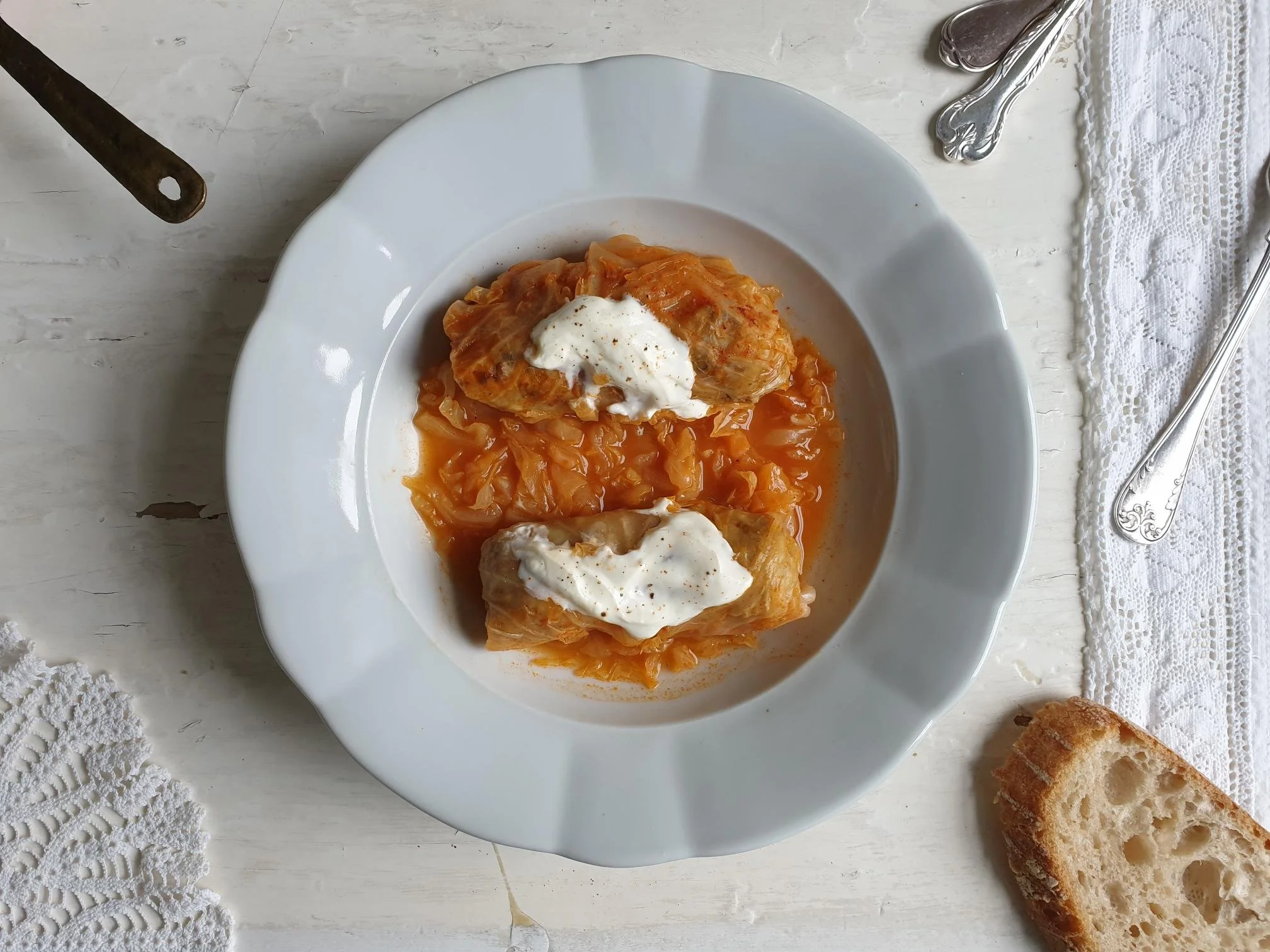
Sarme, which is a plural form of sarma, but also holding the name of the dish, is made of a mixture of minced meat and white rice wrapped in pickled cabbage leaves, and then slow cooked on a bed of shredded sauerkraut in a light tomato sauce.

This dish takes a special place in my recipe collection for comfort food, it is easy to make, hearty and satisfying, especially popular during colder months, it will wrap you in warmth like a woollen blanket. It used to be commonly served for lunch or dinner during the holidays and special occasions but nowadays it is also eaten as midweek meal.

Taking into account the historical context, it is quite clear, that Sarma probably originated in Turkey (the name sarma derives from a Turkish word sarmak, meaning to roll) and belongs to the dolma food family (stuffed dishes) spread in the cuisines in territories of the former Ottoman Empire from the Middle East to the Balkans and Central Europe, but like with most dishes, different places developed different versions of the same basic recipe.

When I first arrived to England, I was quite nostalgic about this dish as I could not find the whole sauerkraut head to buy. When my mother visited me she would buy it back home for me, put it in a suitcase and bring it with her on a plane. We would then prepare and cook sarme together. In Slovenia, where I come from, it is quite common to pickle large quantities of cabbage heads and buy them in the supermarkets in plastic bags or on farmer's markets directly from barrels available to make sarme during the winter.

View fullsize Sarme 1.jpg
View fullsize Sarme 3.jpg

In the family this dish would very often be made for big family gatherings in a big batch with the hope that some of it could be frozen and taken out on a lazy day, but that almost never happened!

I am Sharing here a version of sarme my maternal grandmother and my mother always cooked. It is highly recommended to make ahead as it tastes even better the following day, and serve sarme with mashed or boiled potatoes, or crusty bread and a dollop of sour cream on top.

It is very common to add in a pot of simmering sarme some lardons, bacon (thick cut), pancetta or pork ribs, smoked or unsmoked, this will give an additional meaty taste to the dish.

If you live in the UK and happened to watch on the television Rick's Steins Long Weekends short holiday and cooking series a few years ago, this dish was prepared for him in Vienna and described by him as one of his absolute favourites of all his long weekend programmes.

Ingredients

Serves 4-6 (about 12 rolls)

  • 1 pack of whole pickled cabbage head (you will find this on line or European delicatessens, especially Polish in the chilled section)

  • 250g minced beef

  • 250g minced pork

  • 100g white rice

  • 1 onion (about 100g), peeled and finely chopped

  • 2-3 cloves of garlic, peeled and crushed

  • 3 Tbsp olive oil

  • sea salt

  • ground black pepper

  • 2 bay leaves, fresh or dry

  • 2 Tbsp tomato concentrate

  • 1 Tbsp (or to taste) sweet Hungarian paprika

  • 1-2 Tbsp all purpose flour

  • sour cream for serving, optional

Method

The filling

Place the rice in a pan and cover with plenty of water.

Cook the rice as instructed on the pack, but cut the cooking time in half, as you only want the rice to be part-cooked.

Drain the rice in a colander and let it cool completely.

Put the oil, finely chopped onions and crushed garlic in a frying pan and sauté on a gentle heat until the onions become nice and soft.

Turn the heat to medium, add minced beef and pork, season with sea salt and black pepper and cook for about 20 minutes until the meat is browned.

Remove the frying pan from the heat, set aside and cool completely.

When both the rice and the meat mixture are cooled completely, put them in a bowl and mix them well together.

This is now your filling ready to fill the cabbage leaves.

Prepare the cabbage leaves for stuffing.

View fullsize Sarme 4.jpg
View fullsize Sarme 5.jpg

Carefully unpeel the leaves from the whole pickled cabbage head and gently open them up without breaking them. This is quite important so you do not have breakage and holes in the leaves, as the filling might come out once rolled. If you end up damaging quite badly the leaf, do not worry about it, just thinly shred it and use it later as a part of a sauce.

You will only need bigger and medium size leaves that come off the head quite easily. How many leaves you can obtain it really depends on the size of the whole pickled cabbage head (from the medium size cabbage head you should get around 12 leaves, this is the amount I used for this recipe).

View fullsize Sarme 8.jpg
View fullsize Sarme 9.jpg

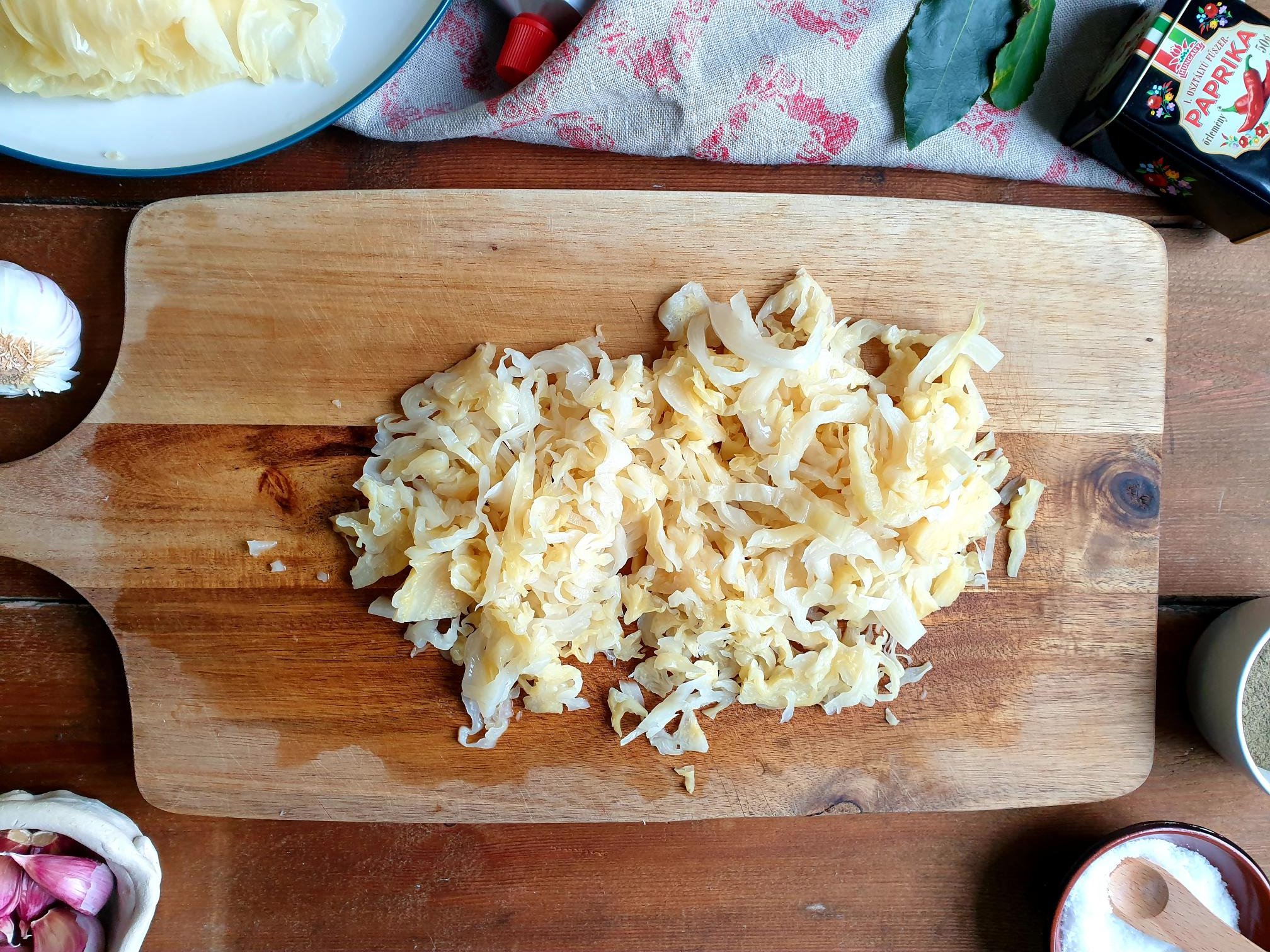
Once you peel off the leaves, you will end up with smaller inner cabbage head. Shred it with a sharp knife and set aside, this will be part of your sauce later on.

Place each leaf on a chopping board and cut out the thick and hard part of the stem, this will allow you to roll the leaf easily.

View fullsize Sarme 10.jpg
View fullsize Sarme 11.jpg

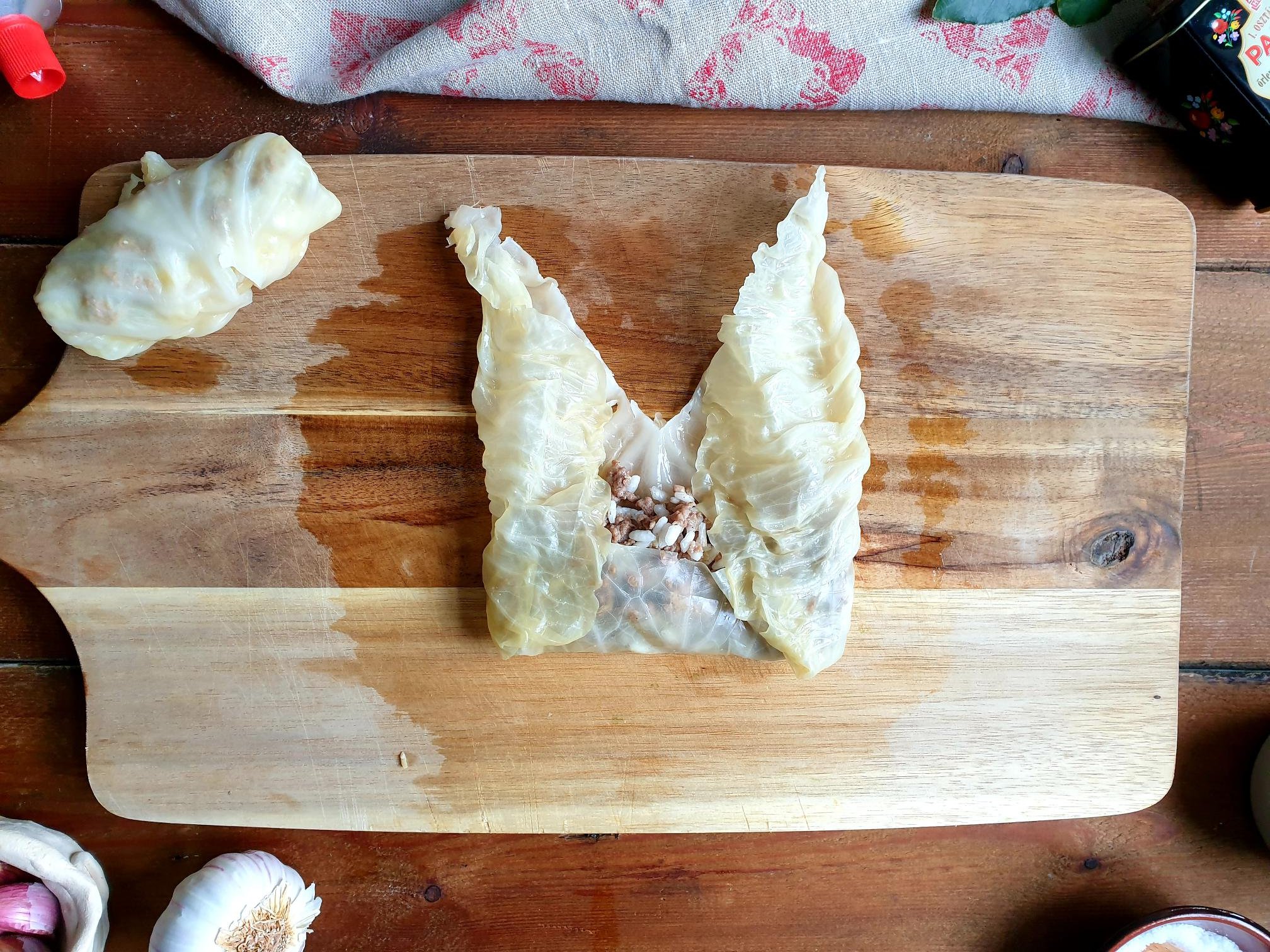
Take one leaf, place it on a working surface and spoon the filling on the edge of each leaf. It is tricky to give the exact amount, maybe 3 Tbsp for bigger leaves and a bit less for smaller leaves. You really want to use a bit of judgement here and just put the amount of filling you think the size of the leaf you are using can hold.

First fold inwards (away from you) the leaf section.

View fullsize Sarme 15.jpg
View fullsize Sarme 16.jpg

Then fold over the two flaps on the side. Then you simply roll forward until you get a cabbage roll.

View fullsize Sarme 17.jpg
View fullsize Sarme 18.jpg

Set aside the rolls and keep repeating the process until you use up all the leaves.

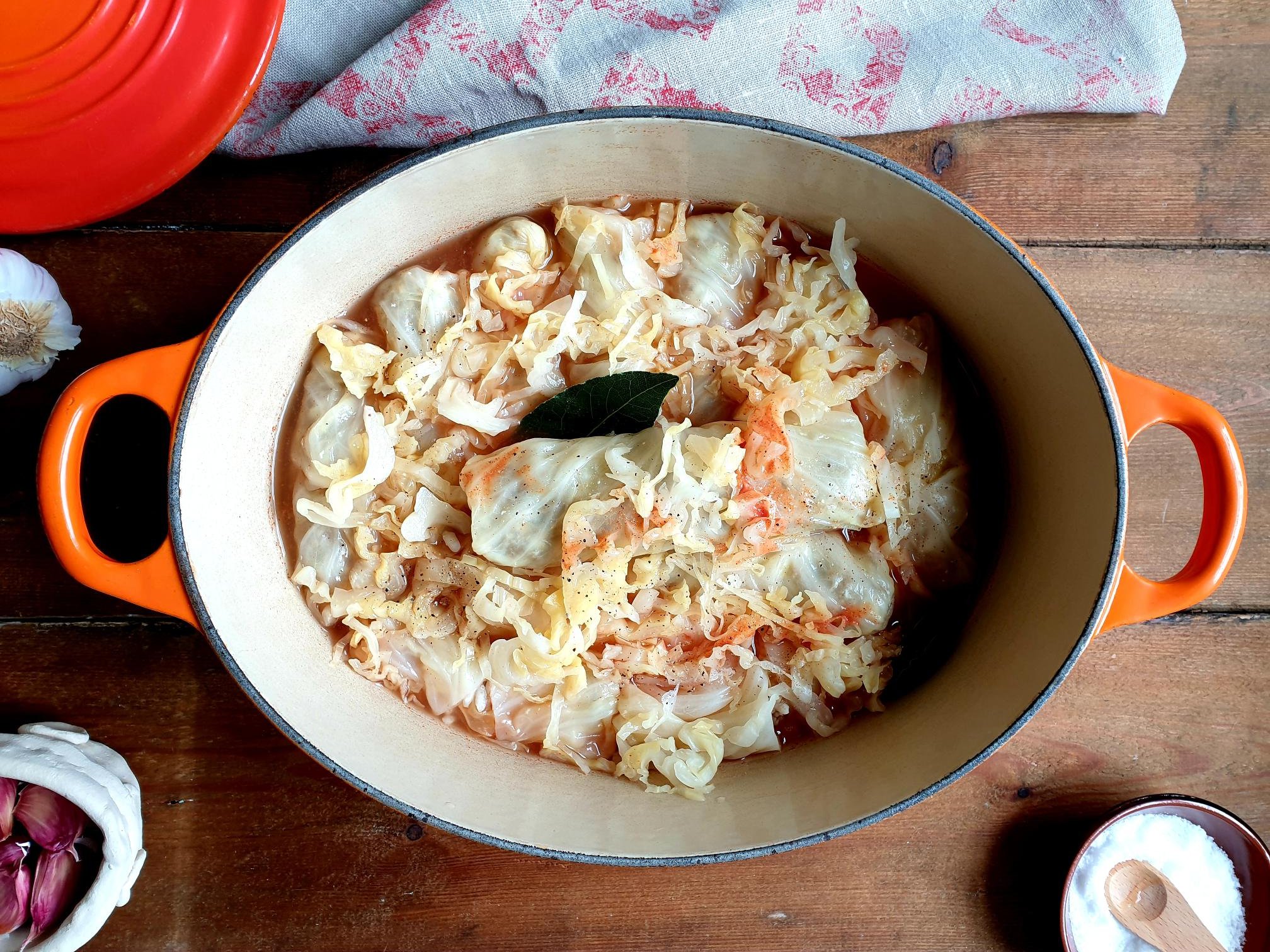
Put half the shredded pickled cabbage over the base of a fairly large casserole dish or pan with a lid.

Place and arrange the stuffed leaves, fold-side down, next to each other, nice and tightly.

Scatter the other half of shredded cabbage on top of the rolls.

View fullsize Sarme 20.jpg
View fullsize Sarme 21.jpg

Add a bit of water, about half way to 1/3 way up the dish.

In a small cereal bowl put the flour, few tables spoons of lukewarm water and mix well to avoid lumps.

Add sweet paprika, tomato paste and mix.

Pour the mixture over the stuffed leaves.

Stick 1 or 2 bay leaf between sarma, add sea salt and black pepper.

Cover with the lid and gently simmer for about 2 hours. It is important not to stir and keeping the gas on a fairly low as high heat might cause aggressive boil causing the rolls to open up and break. Just shake the pot gently a few times during the cooking process.

If after two hours you think the sauce is too watery just dissolve 1 Tbsp of flour in a bit of lukewarm water, pour it in the pot and continue simmering. This should thicken a bit the sauce.

Taste and adjust the seasoning with sea salt and black pepper.

Lift the cabbage rolls gently out of the pot, with the help of the spoon and a fork and serve warm with mashed or boiled potatoes or plenty of crunchy bread to soak up the juices.

For extra flavour top the rolls with a dollop of sour cream.

Just a thought

Sarme will keep in the fridge up to 3-4 days in an airtight container.

The dish also freezes very well, but before using it, defrost in the fridge overnight and reheat well.

Wine suggestion

Venezia Giulia Malvasia Istriana IGT 2017 - Damijan Podversic

March 11, 2022 /tina oblak
Sarma, Sarme, sauerkraut, Sauerkraut recipe, minced meat, mince pork, mince beef, rice, shredded sauerkraut, pickled cabbage leaves, hearty dish
Adriatic Recipe, Austrian inspired dishes, Hungarian inspired dishes, Autumnal dish, Autumnal recipe, Celebratory dish, Central European recipes, dinner, Eastern European dishes, Winter recipe, Winter dish, stew, Slovenian gastronomy, Slovenian food, Slovenian cuisine, Rustic dish, one pot meal, main dish, stuffed dishes, Mitteleuropean dish, Mitteleuropean cuisine, Mitteleuropean food
Comment

Whole baked Sea Bream with fresh rosemary Recipe

Beans and Sardines
March 02, 2022 by tina oblak in Adriatic Recipe, baked dish, brunch, fish spreads, Healthy, healthy mael, Istrian cuisine, Istrian dish, Istrian food, Istrian gastronomy, main course, main dish, main fish meal, main fish course, Slovenian gastronomy, Slovenian food, Slovenian cuisine, Rustic dish, light meal, light fish course, baked fish, roasted fish, oven baked fish

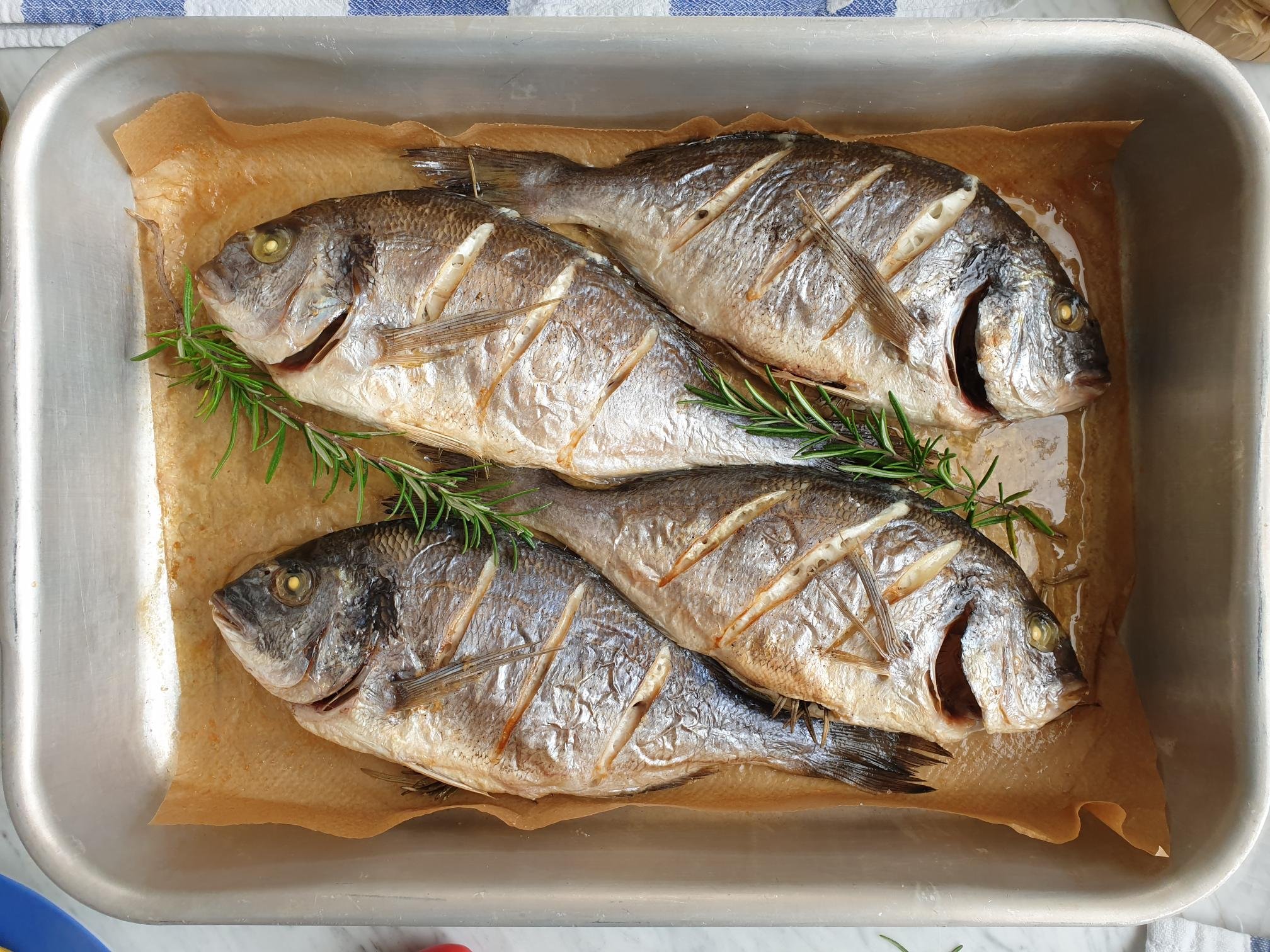
Whole baked sea bream in the oven with fresh rosemary is a simple and tasty main fish dish that takes little effort to prepare.

Cooking the whole fish on the bone gives it a better flavour, and this delicate white fish is best cooked simply and gently in order to give it the full respect it deserves.

Baked sea bream is a perfect choice for a light meal option, traditionally served with spinach or chard cooked with potatoes, garlic and extra virgin olive oil.

Sea bream is a great choice to include in your diet as is rich in iron and vitamins and easy to digest.

This fish as a main course is unpretentious and understated in its simplicity, but it is elegant, and full of flavour.

I am sharing here this incredibly simple way of cooking the fish, that also represents the most common method of preparing and eating the fish along the Slovenian coast in restaurants as well as in many households.

This recipe has been in the family, well, since forever. Give it a go, there is nothing complicated about it, and if you are slightly intimidated by the task of cleaning the fish, the fishmonger will be more than happy to do it for you. Give a fish a good rinse, pat dry it, and follow the easy preparation steps, and off it goes in the oven, how difficult can that be?

Ingredients

Serves 4-8

  • 4 fresh whole sea bream (each weighing between 300g – 400g), cleaned, scaled and gutted

  • extra virgin olive oil, generous drizzle

  • 4 small sprigs of fresh rosemary

  • sea salt

  • black pepper

Method

Preheat the oven to 200C static or equivalent.

Line a baking tray with non stick baking parchment and drizzle a bit of olive oil.

Wash the fish thoroughly inside and out under cold running water and pat dry well the fish with the kitchen paper.

With the sharp knife, slash the fish 3 to 5 times through the flesh, about 5mm deep, almost to the bone.

Place the fish on the oiled baking parchment, side by side.

Season with sea salt and black pepper and rub with the olive oil.

Put a small sprig of fresh rosemary into the body cavity of each fish and drizzle the fish with a little more oil.

View fullsize Sea Bream oven baked with fresh rosemary 5.jpg
View fullsize Sea Bream oven baked with fresh rosemary 7.jpg

Cover the baking tray with aluminium foil and place in the oven.

Bake for about 30 minutes then remove the aluminium foil and bake further for about 10-20 minutes until the fish is cooked through and comes away from the bone easily.

View fullsize Sea Bream oven baked with fresh rosemary 8.jpg
View fullsize Sea Bream oven baked with fresh rosemary 10.jpg
View fullsize Sea Bream oven baked with fresh rosemary 12.jpg
View fullsize Sea Bream oven baked with fresh rosemary 11.jpg

One way of checking that the fish is cooked thorough, insert a small knife into the thickest part of the sea bream, the flesh of the fish should be nice and white in colour.

Discard the skin, bones, rosemary (from the cavity) and serve.

Wine suggestion

Vermentino "Tuvaoes" di Sardegna DOC 2020 - Cantina Cherchi

March 02, 2022 /tina oblak
fresh sea bream, whole fresh sea bream, baked sea bream, oven baked sea bream, oven baked whole sea bream, Orata al forno con rosmarino fresco, Orada v pecici s svezim rozmarinom, baking whole sea bream
Adriatic Recipe, baked dish, brunch, fish spreads, Healthy, healthy mael, Istrian cuisine, Istrian dish, Istrian food, Istrian gastronomy, main course, main dish, main fish meal, main fish course, Slovenian gastronomy, Slovenian food, Slovenian cuisine, Rustic dish, light meal, light fish course, baked fish, roasted fish, oven baked fish
Comment

Hungarian style Creamy Potato and Beef Goulash Soup Recipe

Beans and Sardines
February 23, 2022 by tina oblak in Appetizers, Autumnal dish, Autumnal recipe, casserole, Central European recipes, dinner, Eastern European recipes, Easy recipe, entrée course, main course, main dish, Mitteleuropean recipes, one pot meal, Slovenian cuisine, Slovenian food, Slovenian gastronomy, Starters, stew, supper, Vegan, Winter dish, Winter recipe, winter soup, Hungarian inspired dishes

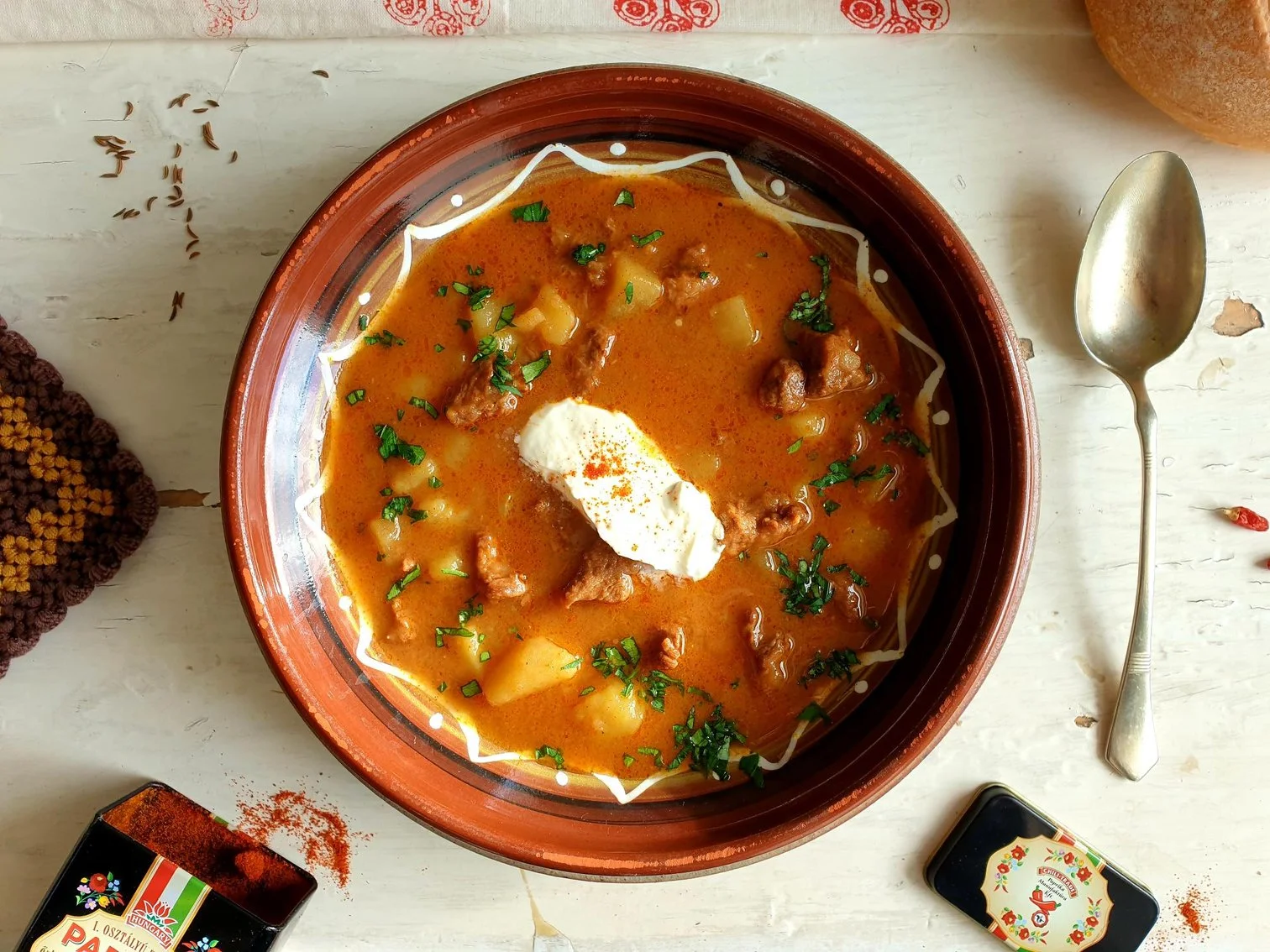
This soup, warm, wholesome, and rich in flavour, can be used as a main meal, especially on those cold days when it will be much appreciated. It is made with only a few simple ingredients, and when cooked well and simmered slowly, it makes a perfect meal choice for body and soul, it is also quite filling, so there is no need to plan a main course.

This Hungarian soup, Gulyásleves, is generally made of beef, vegetables, ground paprika and other spices, but originates from a dish, a thicker stew (what is commonly known as beef goulash) that was cooked outside in the cauldron over an open fire, by the cattlemen, the Hungarian cowboys, who camped with their cattle in the Great Hungarian Plain.

This dish, although native to Hungary, became very popular in the countries around Hungary, which, like in most cases, gave a little twist to the original recipe, and is the origin of variety of new regional variations.

For example in Austria, where this dish is called Goulaschsuppe, it is common to cook this soup without its meat component, which makes a fantastic vegetarian and vegan friendly meal.

In Slovenia, where I come from however, this soup (called kromprjev golaž) which is a real crowd pleaser and became part of Slovenian food culture, testimony of the strong presence of the Austro-Hungarian Empire in the the territory, is almost always cooked with the meat component, where beef can be substituted by dry meats, i.e. some sort or sausages (smoked varieties are often used for a deeper, smokier, and more “imperial” flavour).

In Slovenia, like in Italy (mountainous parts of some regions like of Trentino-Alto Adige, Veneto and Friuli-Venezia Giulia bordering with Austria), this soup is generally served in the informal mountainside restaurants to the delight of hikers and skiers, as well as cooked in the households.

This seriously delicious one pot meal is quite nostalgic for me and reminds me of my childhood. It was served in the school canteens for lunch, and what were called 'dinner ladies, cooked the soup from scratch with fresh ingredients, and the aroma would travel around the school, into the classrooms, destructing the minds of us children struggling with some impossible maths sexercises, especially when approaching lunch time, when you could hear growling in the little tummies.

The soup would be followed by the Austrian inspired pudding, Buchteln, sweet yeast buns filled with apricot jam. This is the type of lunch, among many others, we children really looked forward to...

When I moved to England, goulash soup is one of those dishes, which for some strange reason has been a bit forgotten, and it was not until our skiing trip to Austria, when I saw this soup on the menu that all my childhood memories suddenly came back to me, this is what food does...

As soon as we got back to England I cooked this wonderful tasting goulash soup, it was a hit. I have been making it on a regular basis since then, and I will most definitely make sure this time it stays on the menu.

It is just so hearty, comforting and cosy, the whole family loves this one pot soup and it is cooked very often for my husband and my son who simply adore it. When I serve it, we get transported to the skiing memories we created together as a family, and the table conversations would start ....

I am sharing here a family recipe how my maternal grandmother used to make it, and how my mother still makes it. If you never had this soup before, try it and it will become one of your favourites, and all you need to serve the soup with is a nice rustic bread to dunk it, yes .... this is 'home' for me...

Ingredients

Serves 4

  • 4 Tbsp extra virgin olive oil

  • 3 medium size potatoes (about 500g) peeled and chopped into small cubes

  • 1 onion (about 120g) peeled and finely chopped

  • 1 clove of garlic, peeled and crushed

  • 2 Tbsp Hungarian sweet paprika

  • 2 Tsp red or white wine vinegar

  • 2 Tbsp tomato purée

  • 1 Tsp fresh marjoram (a few springs) finely chopped, (can use dry marjoram)

  • 3 Tsp caraway seeds, crashed with mortar and pestle (can use spice or coffee grinder)

    whole caraway seeds can be used if you have none of the above ways to ground the seeds

  • 400-500g braising steak or shin of beef, trim any hard fat off the beef and dice finely

  • sea salt

  • black pepper, freshly ground

  • 2 fresh or dry bay leaves

  • 2l water or vegetable stock

  • sour cream (optional)

  • fresh flat leaf parsley, roughly chopped, for garnish (optional)

Method

Put the oil in a fairly large pan, add chopped onions, crushed garlic, a pinch of salt and gently sauté until the onions are soft and translucent.

Pour wine vinegar and cook for a minute or so stirring the onion and garlic mixture. The vinegar will help to deglaze and release any bits stuck to the bottom of the pan.

Add diced beef and continue to cook, turning and stirring regularly, until the meat is nicely browned on all sides.

View fullsize Goulash soup 4.jpg
View fullsize Goulash soup 5.jpg

Add cubed potatoes and cook briefly for a few minutes together with meat and onions mixture.

View fullsize Goulash soup 7.jpg
View fullsize Goulash soup 8.jpg
View fullsize Goulash soup 9.jpg
View fullsize Goulash soup 10.jpg

Add paprika, tomato purée, fresh or dry marjoram, crushed caraway seeds and bay leaves, sea salt and black pepper.

Add water or vegetable stock, bring to a boil.

View fullsize Goulash soup 11.jpg
View fullsize Goulash soup 12.jpg
View fullsize Goulash soup 13.jpg
View fullsize Goulash soup 14.jpg

Cover with the lid and simmer on a gentle heat for about 2 hours. After this time, the soup will become slightly thicker and the meat will become so tender it will just melt in your mouth.

To make the goulash soup slightly “creamier” in consistency, you can press with a fork few cubes of potatoes on the side of the casserole pan and give it a good stir.

Taste and adjust the seasoning with sea salt and black pepper and add more paprika to your liking, if you wish.

Serve hot with a spoonful of sour cream, if desired, sprinkle some roughly chopped fresh parsley for garnish and a bit more paprika. Place some crunchy rustic bread on the table to dunk in the goulash soup and life just cannot get any better.

Just a thought

Double the amount of the ingredients in the recipe, if serving for 6-8 people or, if you wish to make a bigger batch and freeze.

Like most stews and soups, this goulash soup is best made in advance, as it tastes better every time you reheat it.

Wine suggestion

Vigneti delle Dolomiti Rosso IGT "Fojaneghe" 2015 - Bossi Fedrigotti, Masi

February 23, 2022 /tina oblak
potatoes, beef, stewing beef, shin of beef, caraway seeds, paprika, sweet Hungarian paprika, Gulyásleves, Goulaschsuppe, kromprjev golaž, Goulash soup, Goulash soup without meat, Hungarian beef and potato stew
Appetizers, Autumnal dish, Autumnal recipe, casserole, Central European recipes, dinner, Eastern European recipes, Easy recipe, entrée course, main course, main dish, Mitteleuropean recipes, one pot meal, Slovenian cuisine, Slovenian food, Slovenian gastronomy, Starters, stew, supper, Vegan, Winter dish, Winter recipe, winter soup, Hungarian inspired dishes
Comment

Braised Fennel Istrian Recipe

Beans and Sardines
February 09, 2022 by tina oblak in Adriatic Recipe, Autumnal dish, Autumnal recipe, brunch, Central European recipes, Easy recipe, Healthy, healthy mael, Istrian cuisine, Istrian dish, Istrian food, Istrian gastronomy, main dish, Nutritious, Nutritious dish, Rustic dish, Side Dishes, Slovenian cuisine, Slovenian food, Slovenian gastronomy, supper, Vegan, Vegetarian, Winter recipe, Vegetable side dish, Vegetables, Root vegetables

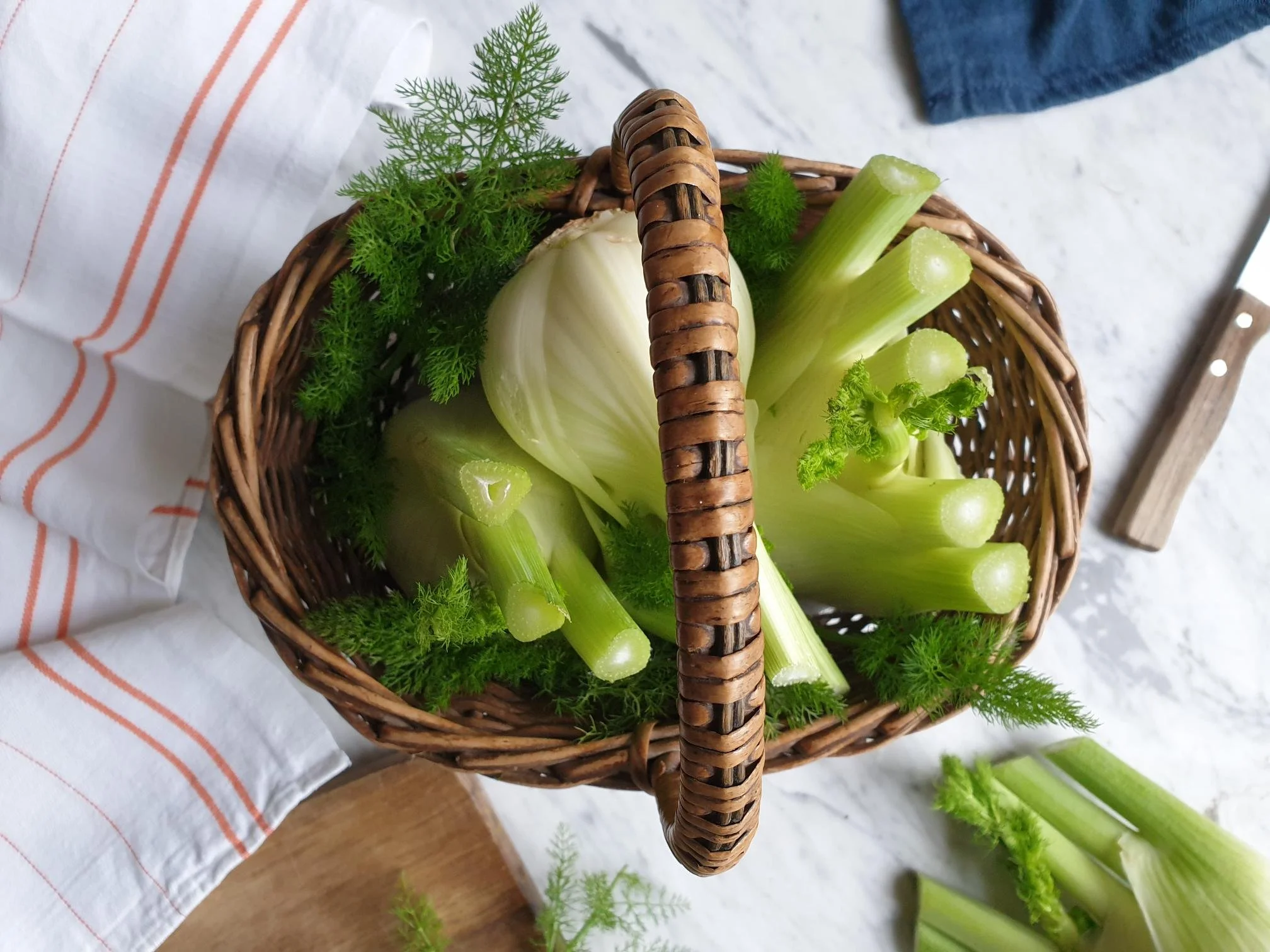
Braised fennel is made with fresh fennel bulbs, a humble and very often underrated and forgotten vegetable, and if you were ever put off by maybe a slightly “assertive” liquorice taste of a raw fennel, try this dish, it is like eating a completely different vegetable.

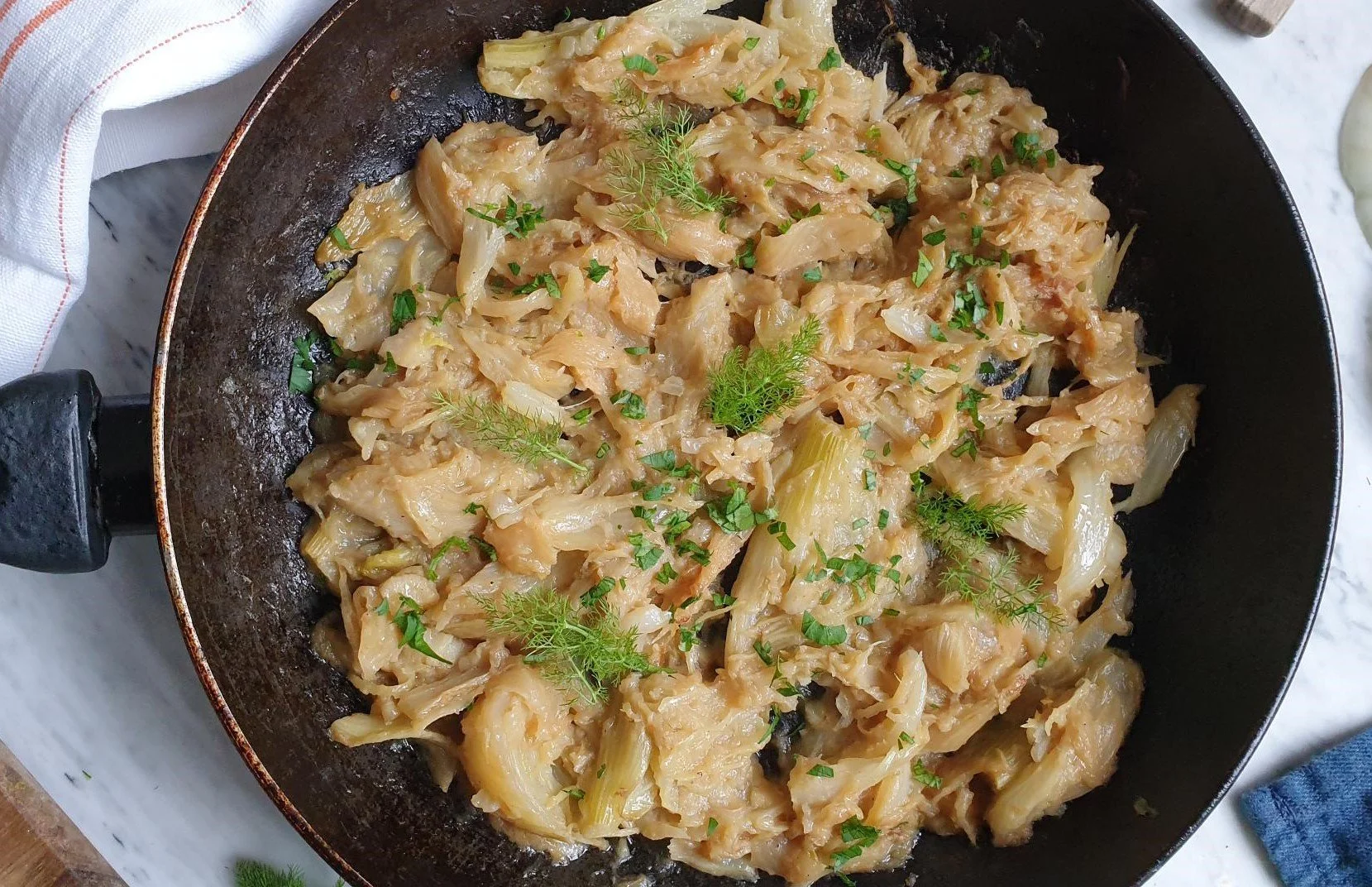
Fennel, during braising process, becomes mellow and sweet, very tender, and develops soft and mild aniseed and slightly caramelized flavour, sincerely gorgeous!

For this dish, perhaps, we can apply the famous saying “do not judge the book by its cover.”

With its appearance, maybe it does not belong to the privileged club of the most appealing looking dishes, but the taste of braised fennel is simply luxurious and elegant, worthy to be served as a part of Sunday roast.

Back home, on the Slovenian coast, where I come from, braised fennel is a very popular, very much loved dish and served with dignity for a simple midweek lunch or dinner.

Here I am sharing my mother's recipe for a traditional and regional braised fennel recipe. Try it, and next time you are shopping for your vegetables, you will be reaching out for fresh fennel...

Ingredients

Serves 4 as part of meal

  • few fresh fennel bulbs (1200g approximately)

  • 5 Tbsp extra virgin olive oil (the best you can afford)

  • sea salt

  • black pepper

  • fresh flat leaf parsley, roughly chopped

  • 100ml water or vegetable stock

Method

Wash fennel bulbs under cold running water and dry them with clean kitchen paper or towel. Place the bulbs on the chopping board and trim the hard hollow stalks which are quite tough and very fibrous. You can discard the stalks or put in the compost, or trim the stalks, cut them into pieces and use them instead of, or as an addition to the celery in soups and stews, or use them as a bed for roasted chicken, or other meats, and roasted fish.

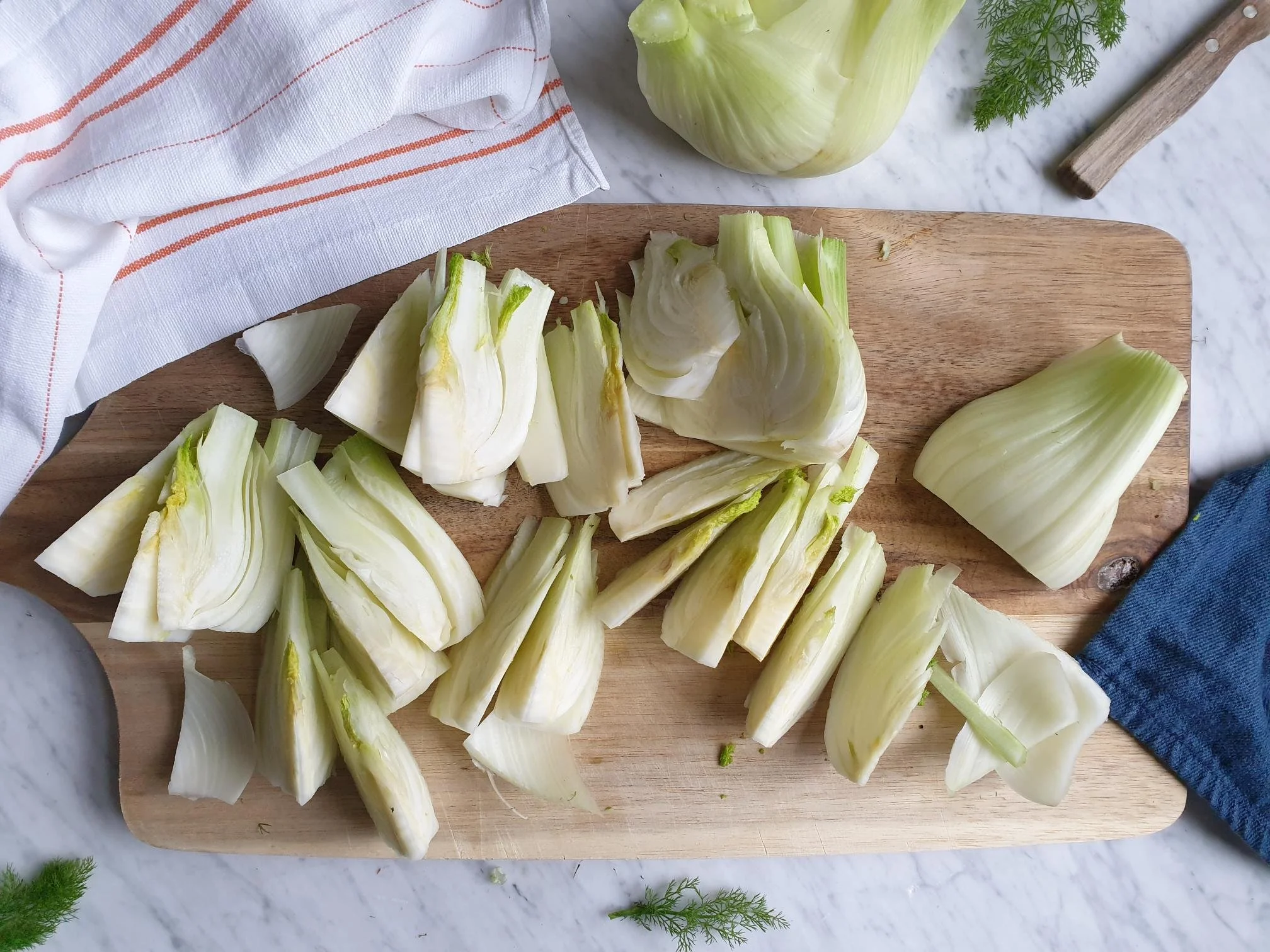
Cut the feathery fronds from the stalks, you can use these as a garnish for this dish, or as a herb to make others dishes. Trim off the root end of the the bulb (the base of the fennel bulb) and cut it into wedges.

View fullsize Braised fennel 4.jpg
View fullsize Braised fennel 3.jpg

The layers may separate and fall apart, do not worry, this is normal.

Put extra virgin olive oil in a large frying pan, preferably non stick, and heat it up a bit.

Place the fennel wedges into a pan.

Add a pinch of sea salt and sauté for few minutes on a fairly high heat, stirring occasionally, until golden brown in colour.

View fullsize Braised fennel 7.jpg
View fullsize Braised fennel 8.jpg

Add 100ml of water, black pepper, lower the heat to fairly low, cover with the lid.

Cook on a gentle heat for about 40 minutes, then uncover the lid.

Turn the heat to medium and cook further uncovered until all the water evaporates.

At this stage the fennel might catch a bit and turn slightly mushy, oozy and creamy in the middle.

Taste and adjust the seasoning with sea salt and black pepper.

View fullsize Braised fennel 9.jpg
View fullsize Braised fennel 10.jpg

Add a sprinkle of fresh chopped parsley for extra flavour and some fennel fronds for garnish.

Serve hot or at room temperature.

Just a thought

This dish freezes very well, so it might be a good idea to cook in bigger quantities when the fennel is in season and freeze it.

February 09, 2022 /tina oblak
Fresh fennel, Fresh fennel bulb, Fennel bulb, Braised fennel, Slow cooked fennel, Fennel cooked in frying pan, Braised fennel with fresh parsley, Fennel fronds, Braised fennel garnished with fennel fronds
Adriatic Recipe, Autumnal dish, Autumnal recipe, brunch, Central European recipes, Easy recipe, Healthy, healthy mael, Istrian cuisine, Istrian dish, Istrian food, Istrian gastronomy, main dish, Nutritious, Nutritious dish, Rustic dish, Side Dishes, Slovenian cuisine, Slovenian food, Slovenian gastronomy, supper, Vegan, Vegetarian, Winter recipe, Vegetable side dish, Vegetables, Root vegetables
1 Comment

Venetian style Sardines in Savor (Marinated Fried Sardines)

Beans and Sardines
February 02, 2022 by tina oblak in Adriatic Recipe, Appetizers, bite-sized nibbles, brunch, Canapés, dinner, Easy recipe, entrée course, Fish & Seefood, fish starter, Healthy, healthy mael, Istrian cuisine, Istrian dish, Istrian food, Istrian gastronomy, main course, main dish, main fish meal, Nutritious, Nutritious dish, recipe from Northern Ital, Rustic dish, Slovenian cuisine, Slovenian food, Slovenian gastronomy, Small bites, Starters

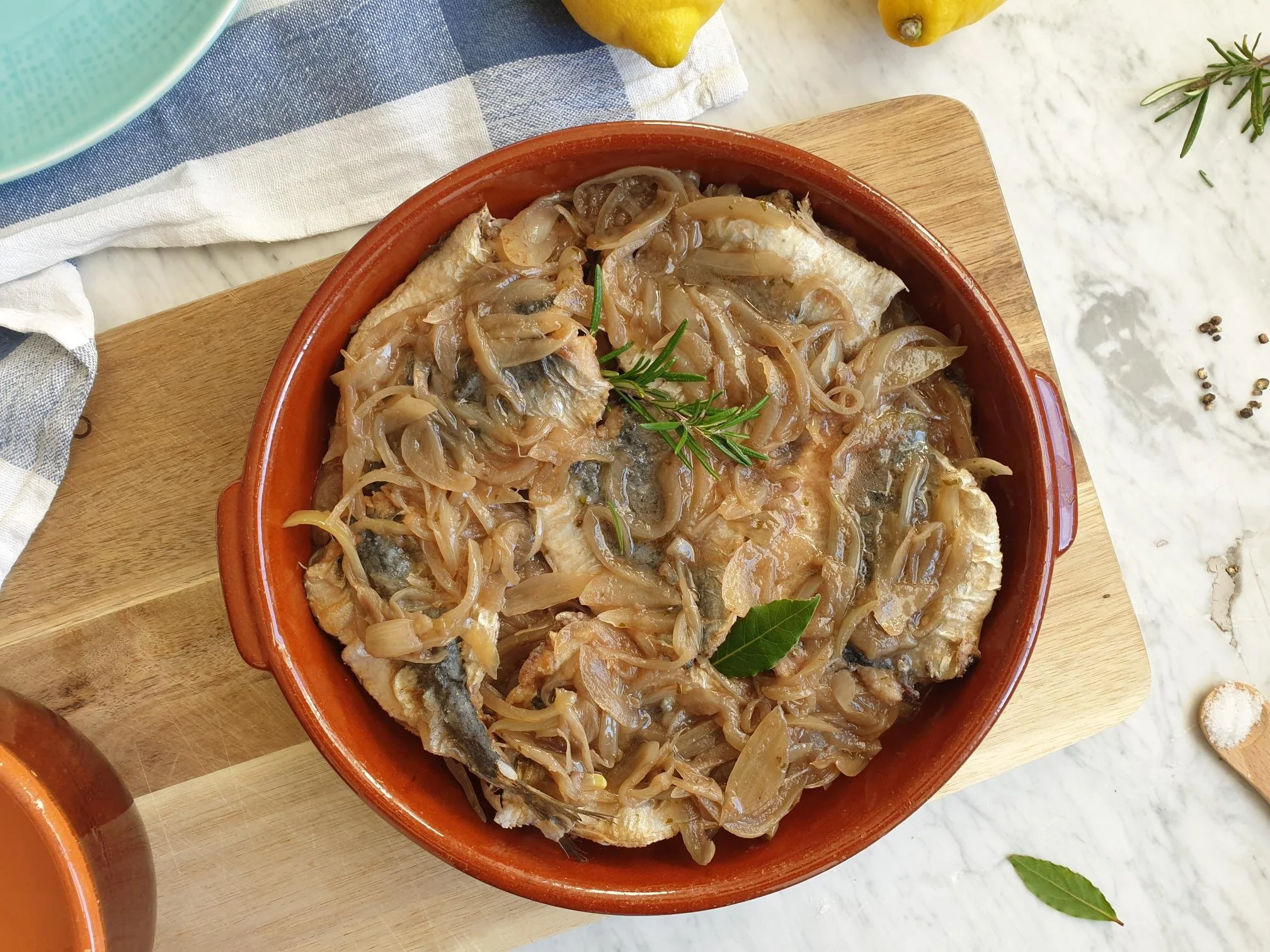
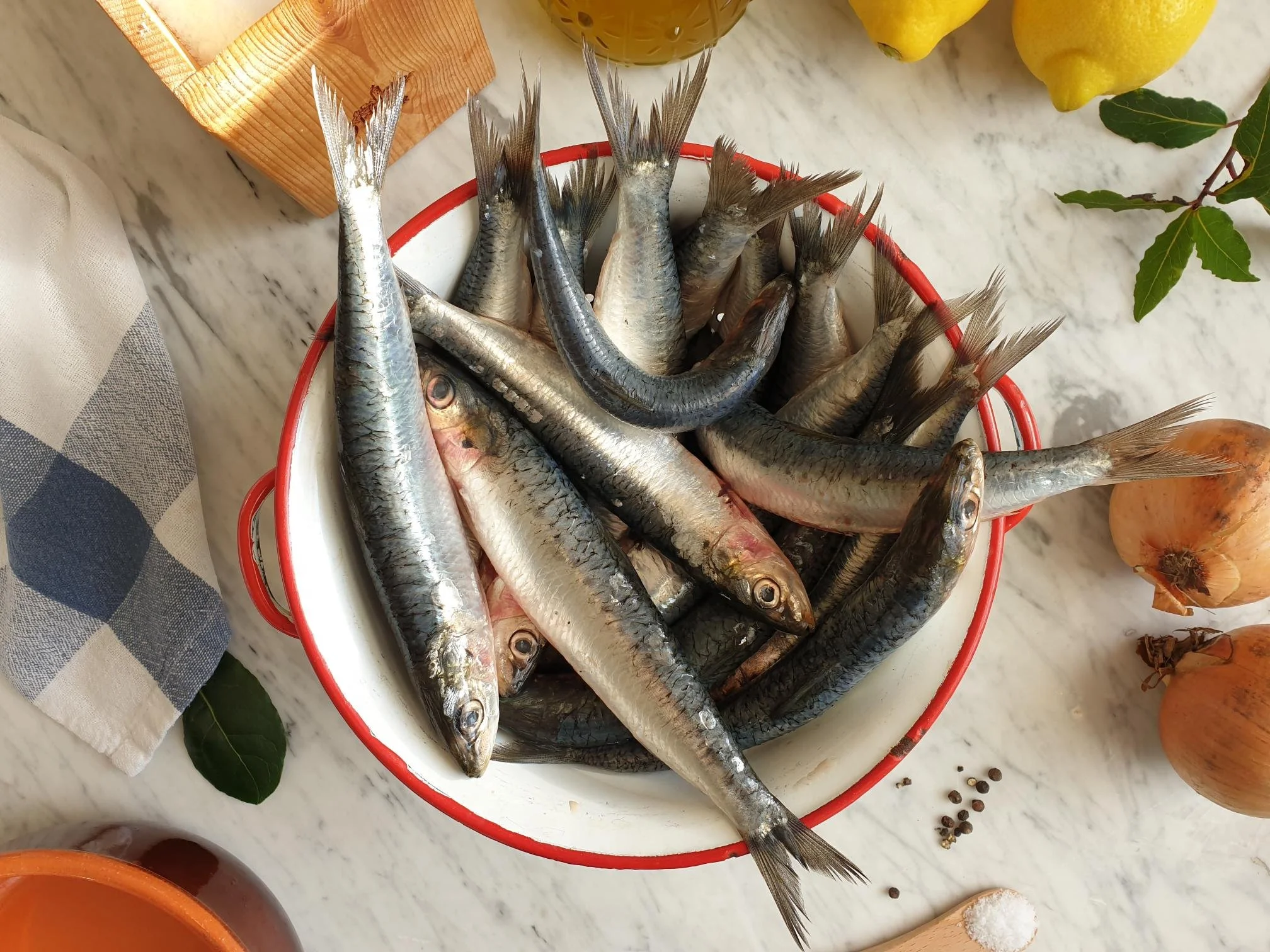
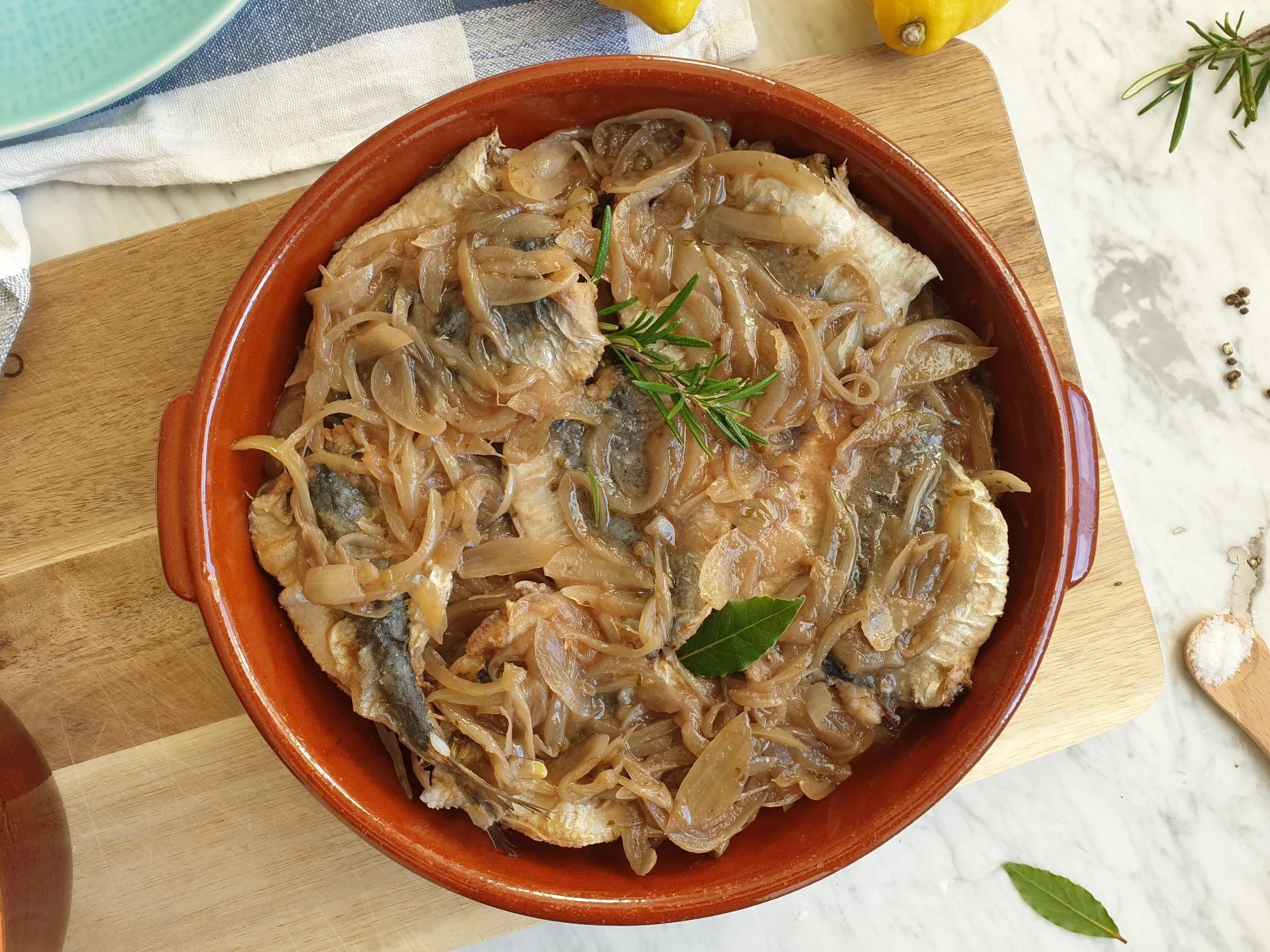
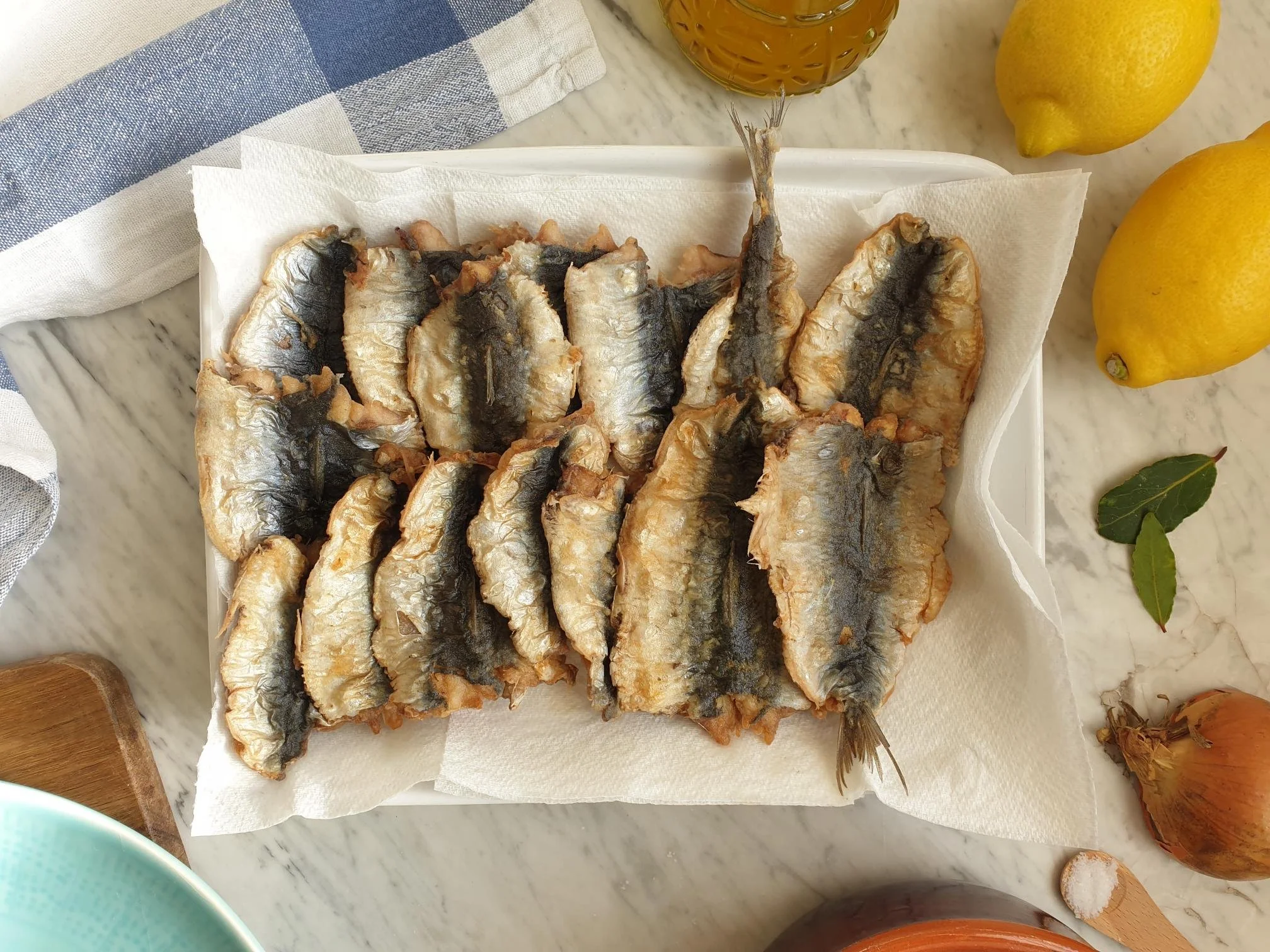
Marinated sardines is a classic and quintessentially Venetian dish, where sardines are lightly fried and then marinated in onion and vinegar mixture. It is prepared and found on Venetian menus (Sarde in saòr) where typical humble dishes are served all year round The name of the dish comes from the Venetian word saòr, meaning sapore in standard Italian, which translates as flavour, and refers to the fact that the flavour of the marinated fish is elevated by the use of good quality wine vinegar.

This dish originated simply out of necessity, when the catch of the fish was particularly abundant and plentiful, people had to figure out how to preserve food to be able to eat it for days without going bad, as the refrigeration had not yet been invented.

This Venetian dish in origin is also very popular and became a staple dish along the coast of the Slovenian Istra, where local gastronomy was strongly shaped and influenced by the Venetian cuisine, and this is of no surprise, as this land was once part of The Republic of Venice who “left behind” the recipe for marinated sardines and enriched the food habits of the locals, who refer to this dish as Sardele in savor (Sardele na šavor in standard Slovenian) and serve it as a cold starter or sometimes as main. It is made all year round but particularly pleasant to eat cold during the hot summer months due to its refreshing taste.

Unlike the Venetian variety of this dish, Istrian marinated sardines do not include the use of pine nuts or raisins, testimony to the introduction of expensive and unusual ingredients in noble Venice due to a its strong trading activity with the East.

More humble and poorer Istrian variation, to offer extra flavour to this dish, introduced the use of fresh parsley and Mediterranean herbs like rosemary and bay leaves growing in abundance along the coast, instead of pine nuts and raisins, difficult to find and expensive, and therefore out of reach for most households. This variation also introduced the use of red wine vinegar, home made and produced in most households, instead of white wine vinegar, type of vinegar solely used in Venetian recipe.

This dish is customarily made with sardines (small ones are particularly suitable) but can be made with other types of fish like sprats, called papaline (Venetian word) by the locals and mackerel being most popular and most common alternative to sardines, and fillets of more prestigious fish like sea bream and sea bass can also be considered.

Once, this was food for the poor, nowadays is a delicacy and a speciality very much appreciated for their unique flavour and highly valued for nutritional content, especially in Slovenian Istra, where, unlike in Venice, this dish, although very traditional in the area, is not easily available in the restaurants, but almost exclusively made in the households.

My nona told me a lovely story, when she was only twenty two years old and got married she moved into the house, where she still currently lives, not very far away from the sea, and during the hot summer nights, the windows would be kept wide open in the hope to get some fresh breeze from the sea to cool the bedrooms to make it easier to sleep.

She could very clearly hear, in the middle of the night, the sound of very small fishing boats leaving the port and going out in the open sea to fish, this is the sound that she remembers as a very special and nostalgic one, and this is because she can no longer hear these sounds, as the majority of those small boats were replaced by only few commercial bigger fishing boats. These days they struggle for a few big catches since over the years the the sea has been depleted of fish. Sadly, fishing has become very difficult and complicated, and so is not very appealing to the younger generations.

I am sharing here my nona's recipe, this is the dish she grew up with, and the one she recalls was also made by her grandmother. This is a traditional, local and authentic family recipe for Istrian style marinated sardines. However, if you wish to “jazz up” this recipe a bit, and make it more “noble” and Venetian, you can add 50g of pine nuts and 50g raisins (previously soaked in lukewarm water for few minutes to help them become more plump).

Ingredients

Serves 4-6

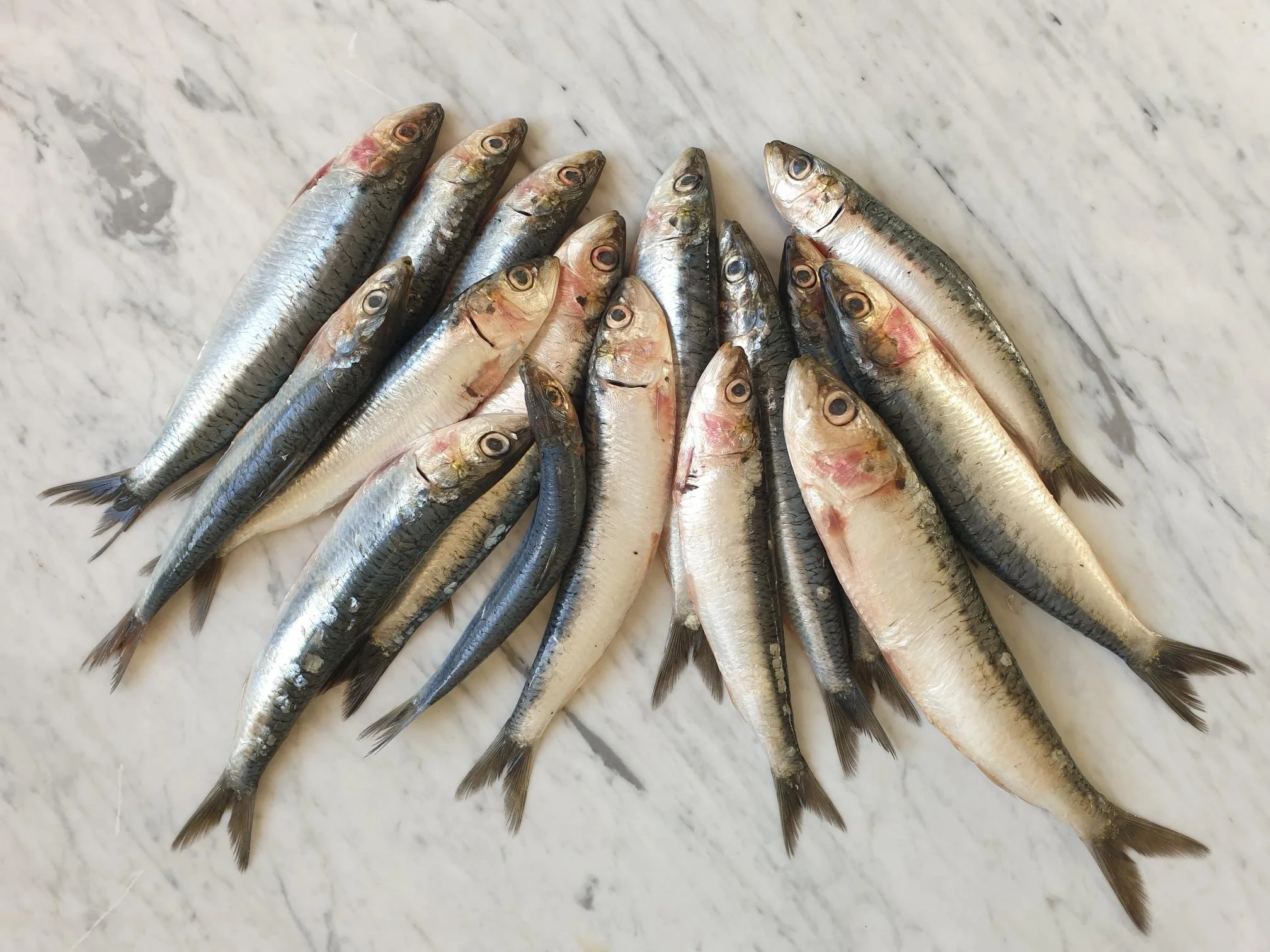
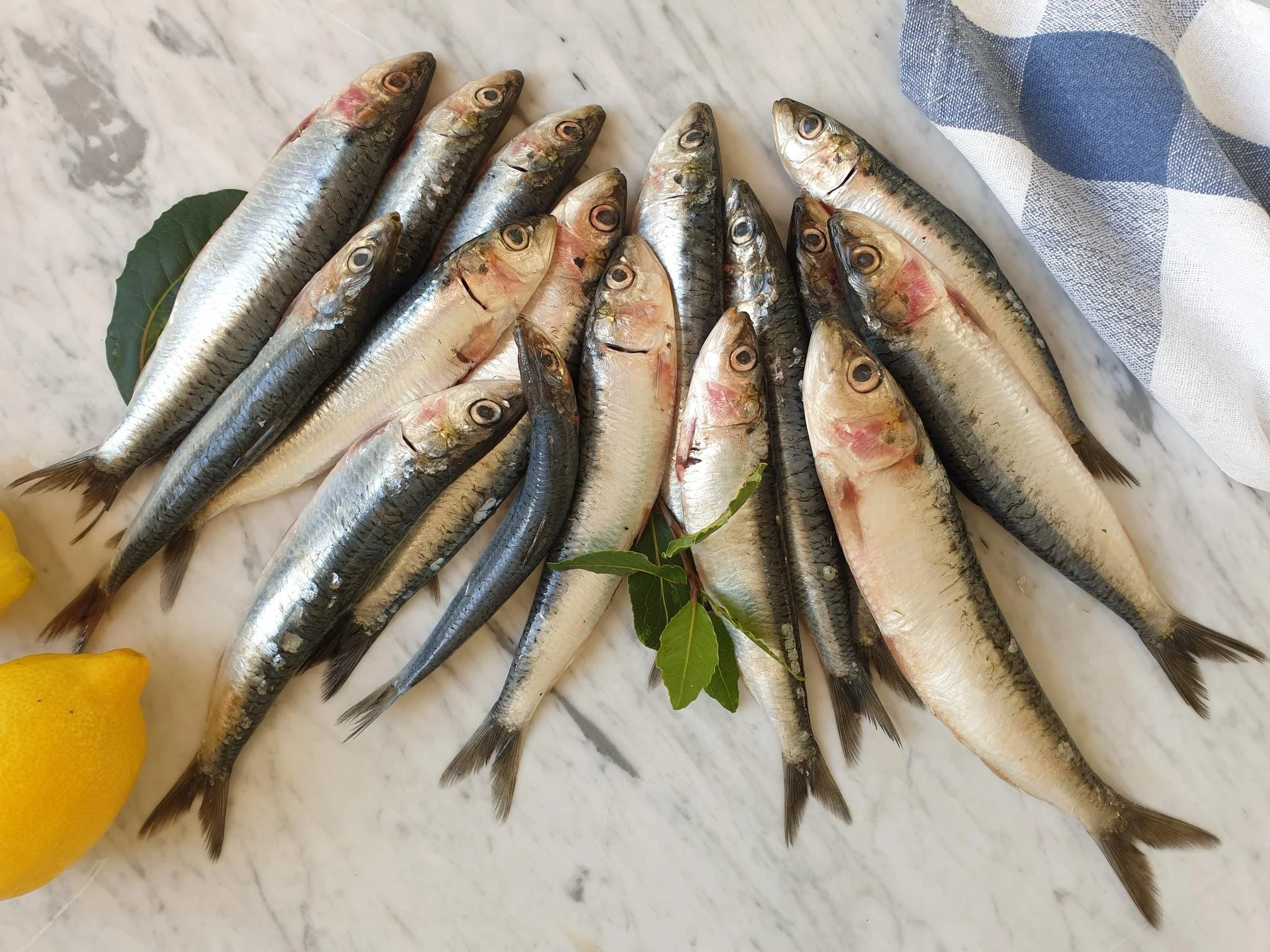
  • 1 kg very fresh sardines, cleaned (scaled, gutted, heads and central bone removed and butterflied)

    (ask fishmonger to prepare them for you if uncomfortable with the task)

  • all purpose flour (quantity enough to flour the sardines)

  • 400 ml frying oil

  • 5 Tbsp extra virgin olive oil

  • 500 g onions, peeled and thinly sliced

  • 5 whole black peppercorns

  • 1 Tbsp white dry breadcrumbs

  • 100 ml white or red wine vinegar

  • 1 bay leaf, fresh or dry

  • 1 small fresh rosemary spring

  • very generous pinch of fresh flat leaf parsley (about 2g), finely chopped

  • sea salt

Method

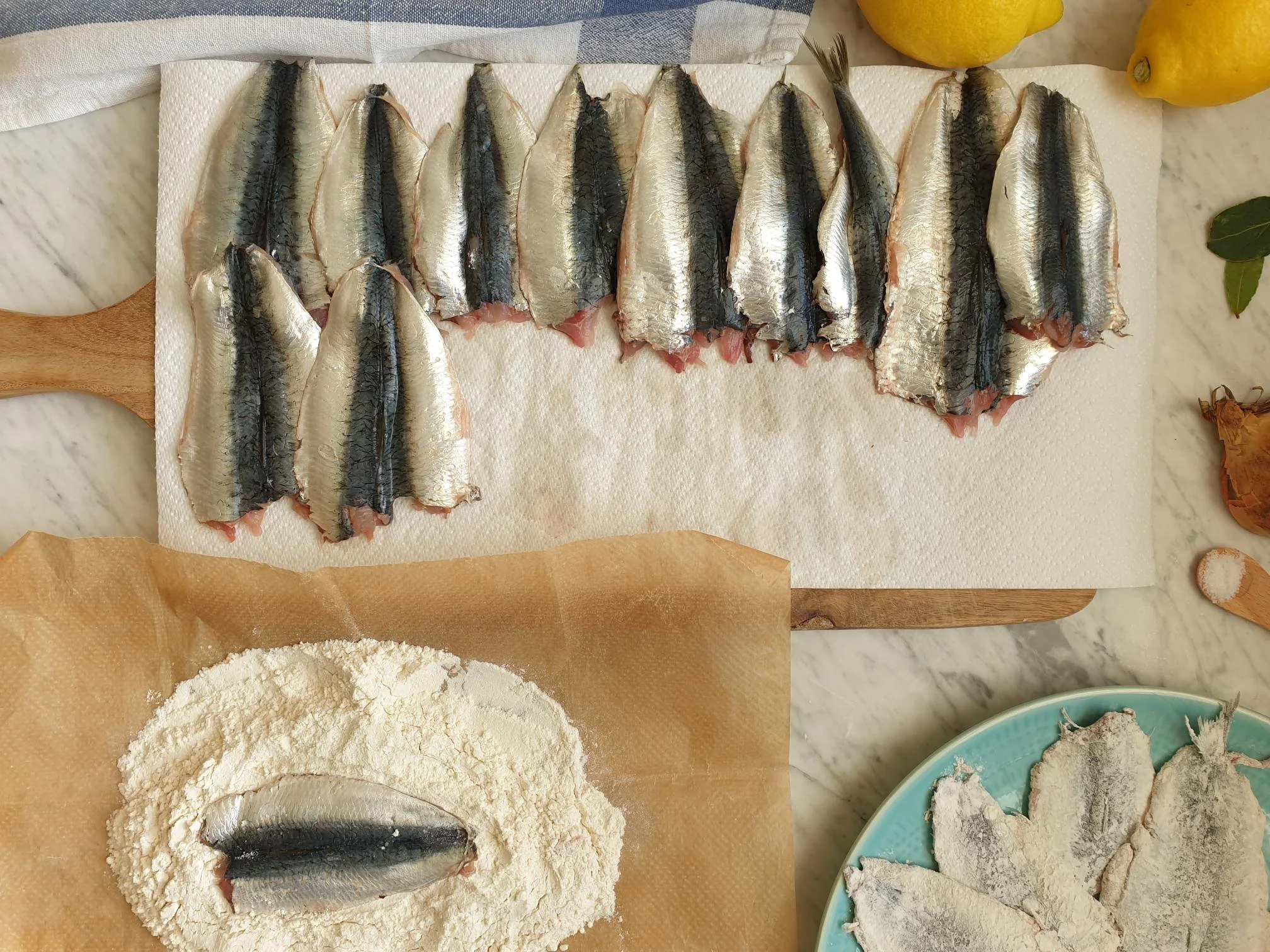
Cut the heads of the sardines, gut them and remove the central bone. Butterfly the sardines, rinse them well under cold running water and pat dry thoroughly with the kitchen paper.

View fullsize Sarde in saor 4.jpg
View fullsize Sarde in saor 5.jpg

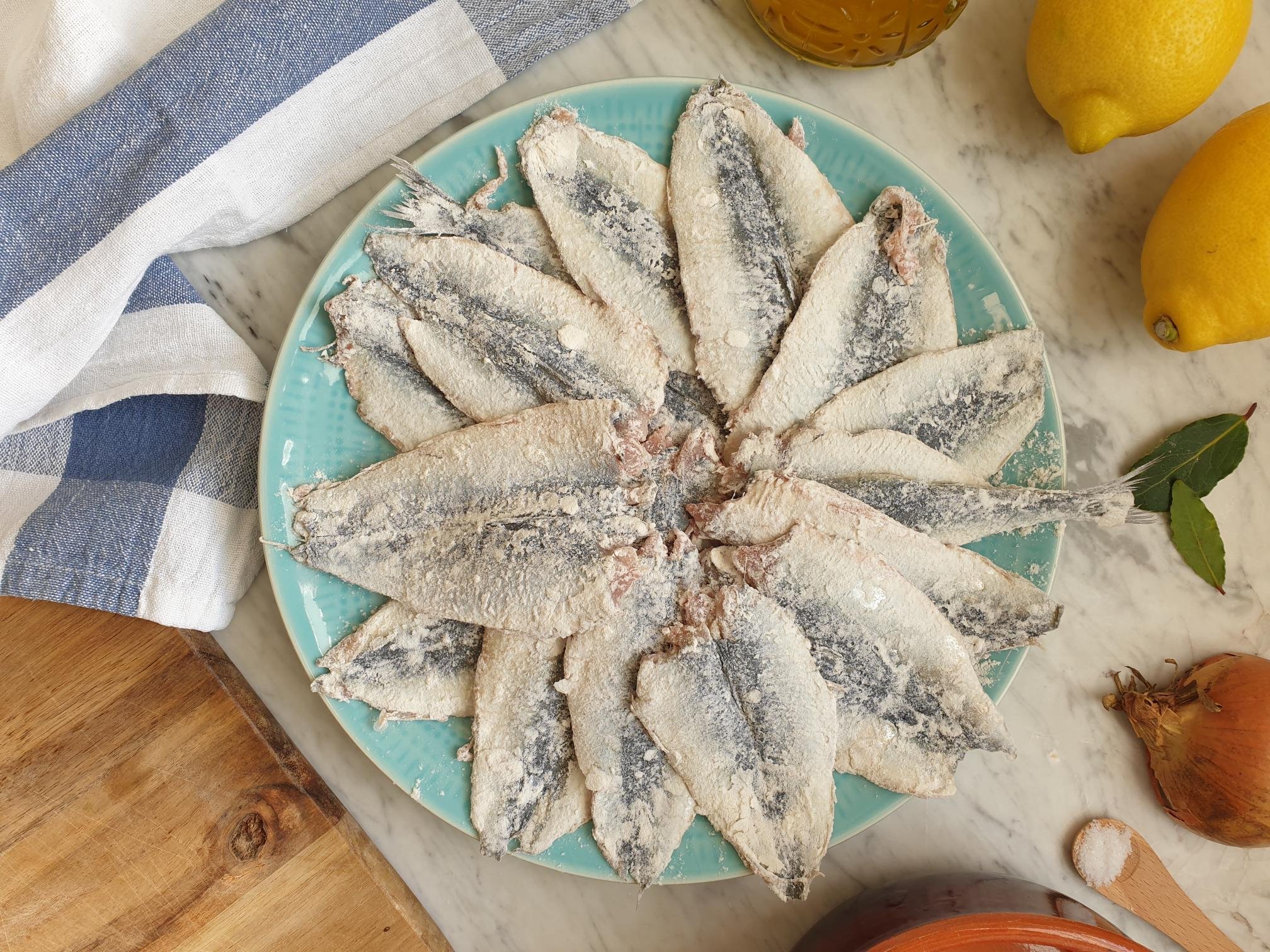
Coat them in flour and shake off flour in excess.

View fullsize Sarde in saor 6.jpg
View fullsize Sarde in saor 7.jpg

Place frying oil in a frying pan, heat it up and fry gently and quickly the sardines, 2 minutes on each side is sufficient. They should have a light, not very crunchy, coating coating.

Drain well on a kitchen paper.

Season well with sea salt and set aside.

Peel the onions and slice them thinly.

View fullsize Sarde in saor 10.jpg
View fullsize Sarde in saor 11.jpg

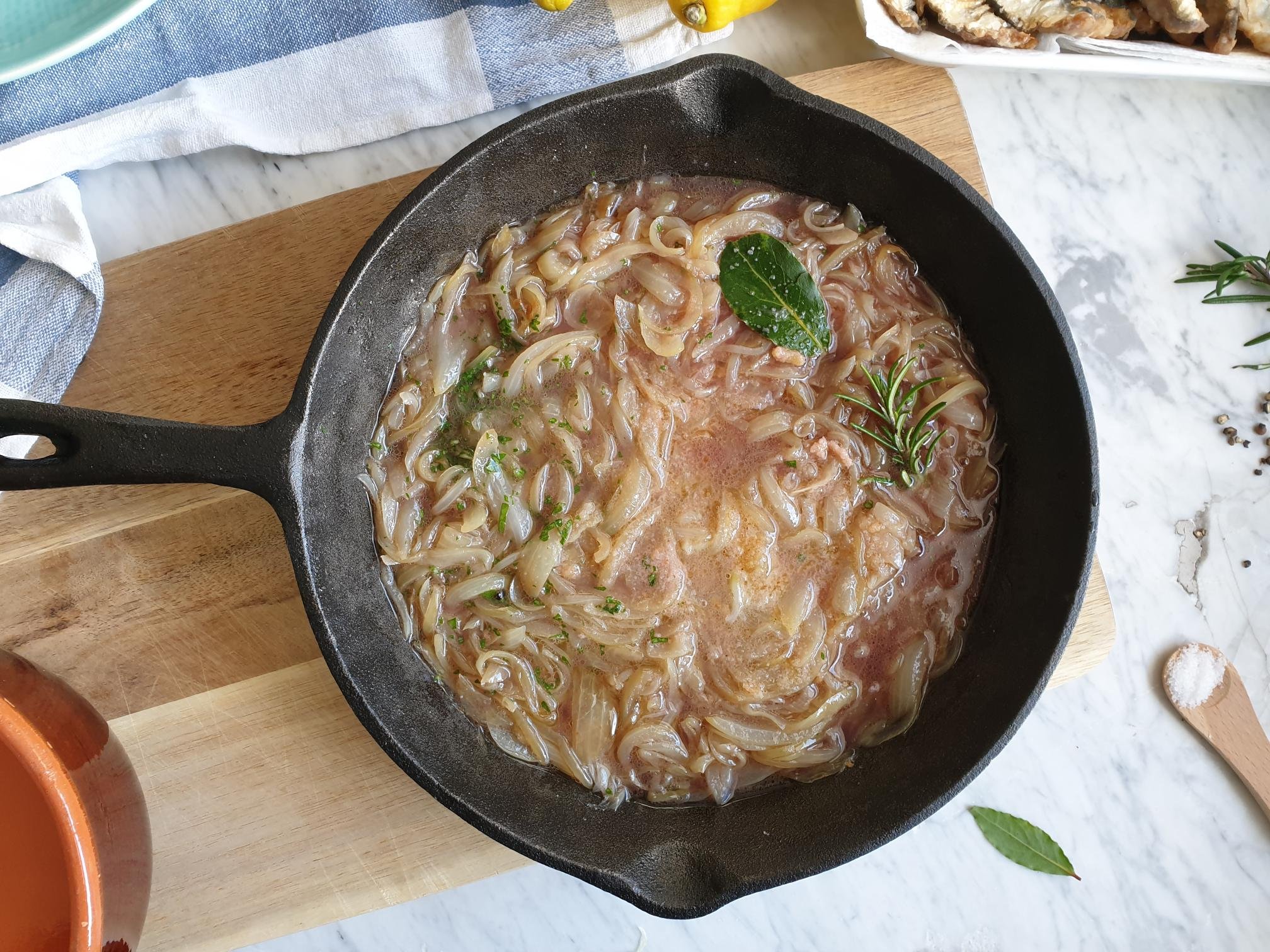
In a separate frying pan, ideally non stick, put extra virgin olive oil and heat a bit.

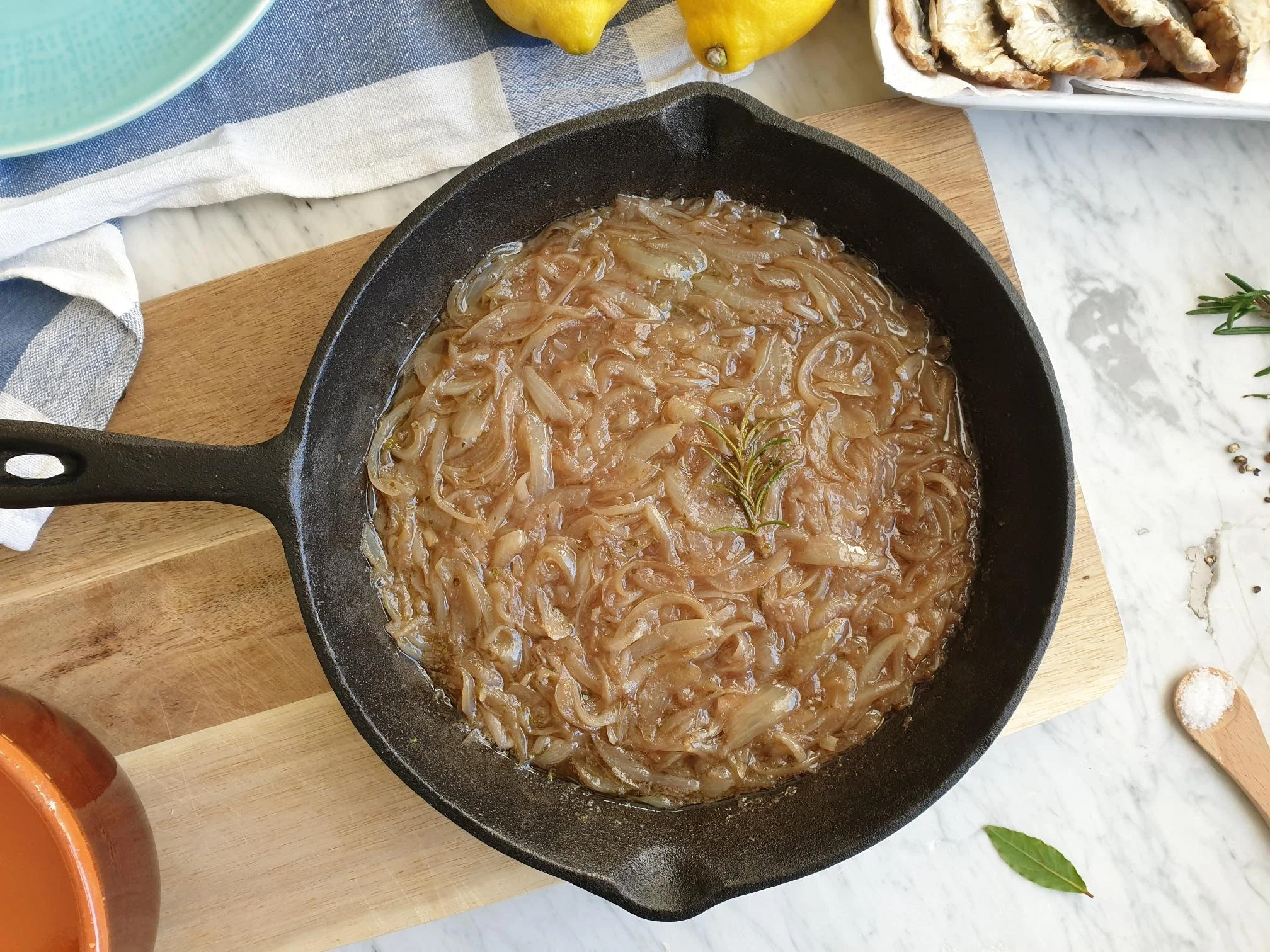
Add the onions and cook them on a very gentle heat until they become very soft and translucent, stirring often to avoid getting too brown.

View fullsize Sarde in saor 12.jpg
View fullsize Sarde in saor 13.jpg

Add black peppercorns, breadcrumbs, bay leaf, small fresh rosemary spring, finely chopped fresh flat leaf parsley.

Pour in wine vinegar and enough water to completely cover the onion mixture.

View fullsize Sarde in saor 14.jpg
View fullsize Sarde in saor 15.jpg

Cook the onion and vinegar mixture on a gentle heat for about 20 minutes. The sauce should slightly thicken and reduce a little, but you should still be left with quite a bit of liquid.

If too much liquid has evaporated during the cooking add a bit more water.

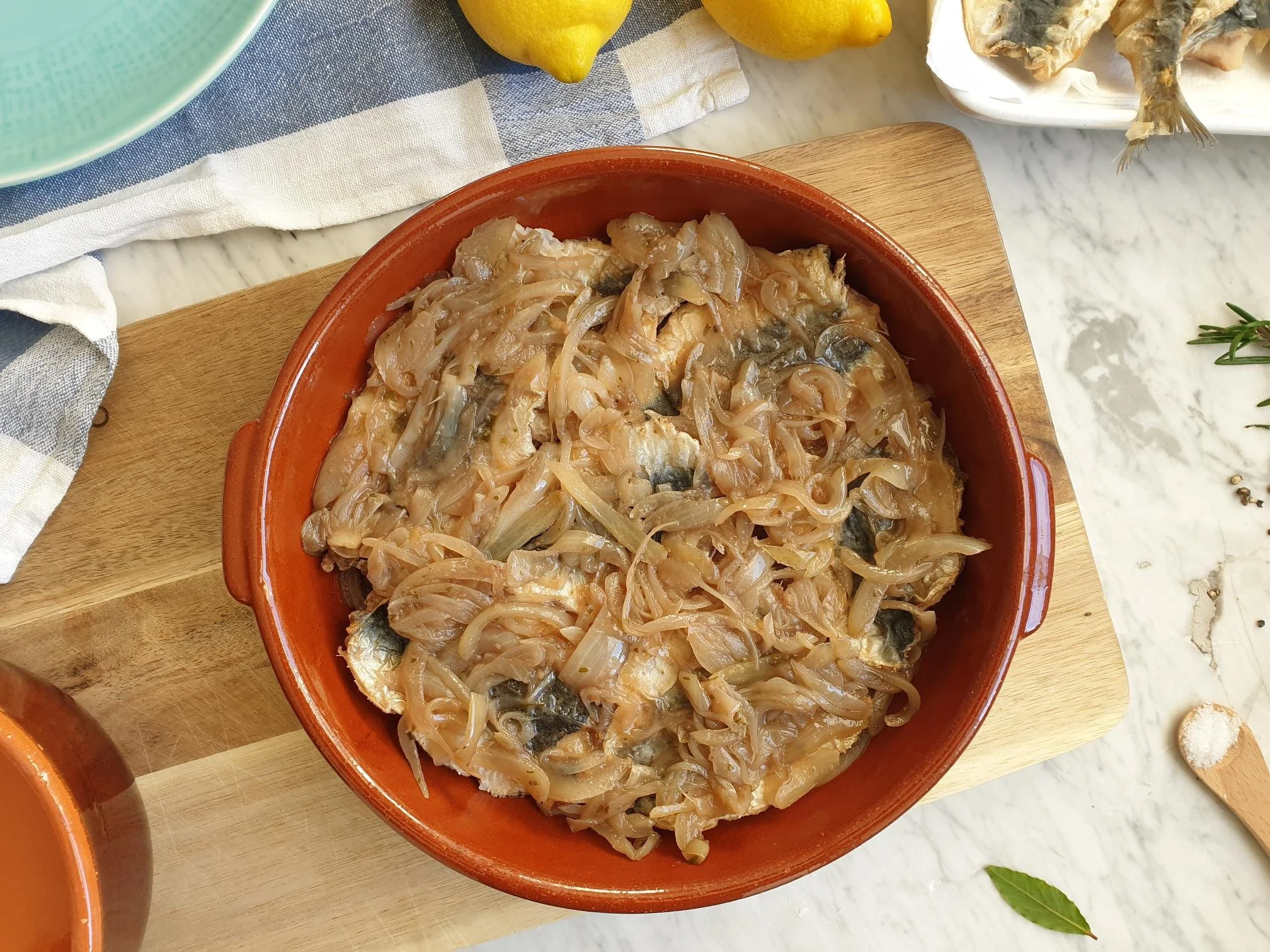
Take a serving dish and alternate layers of onions in the vinegar mix and fried sardines.

Repeat the process of layering until the dish is full. The number of layers will depend on the size of your serving dish but the last layer should be onion and vinegar mix.

If you are left with a bit of vinegary liquid from the onion mixture just pour it over the layers.

View fullsize Sarde in saor 17.jpg
View fullsize Sarde in saor 18.jpg
View fullsize Sarde in saor 19.jpg
View fullsize Sarde in saor 20.jpg

Place the dish in a fridge or a cool place for at least 24 hours or a couple of days, so the sardines marinate well and absorb all the flavours.

The longer you leave to marinate the better it will taste, but bare in mind that the fish will keep for up to a week.

Wine Suggestion

Collio Sauvignon Doc 2020 Draga

February 02, 2022 /tina oblak
Marinated sardines, sardines, papaline, mackerel, sprats, sea bream fillets, sea bass filets, marinated fresh fish, marinated fish, Sardele in Savor, Sardines in savor, Venetian sarde in savor, Sardele in savor, Sardele na šavor, Istrian sardines in savor, Istrian marinated fish
Adriatic Recipe, Appetizers, bite-sized nibbles, brunch, Canapés, dinner, Easy recipe, entrée course, Fish & Seefood, fish starter, Healthy, healthy mael, Istrian cuisine, Istrian dish, Istrian food, Istrian gastronomy, main course, main dish, main fish meal, Nutritious, Nutritious dish, recipe from Northern Ital, Rustic dish, Slovenian cuisine, Slovenian food, Slovenian gastronomy, Small bites, Starters
Comment

Home made Baked Beans Istrian Recipe

Beans and Sardines
January 26, 2022 by tina oblak in Adriatic Recipe, Appetizers, Autumnal dish, Autumnal recipe, brunch, Central European recipes, Eastern European recipes, Easy recipe, Healthy, healthy mael, Istrian cuisine, Istrian dish, Istrian food, Istrian gastronomy, main course, main dish, Nutritious dish, Nutritious, one pot meal, one pot meat recipe, Rustic dish, Side Dishes, Slovenian cuisine, Slovenian food, Slovenian gastronomy, Small bites, Starters, stew, Vegan, Vegetarian, Winter dish, Winter recipe, casserole

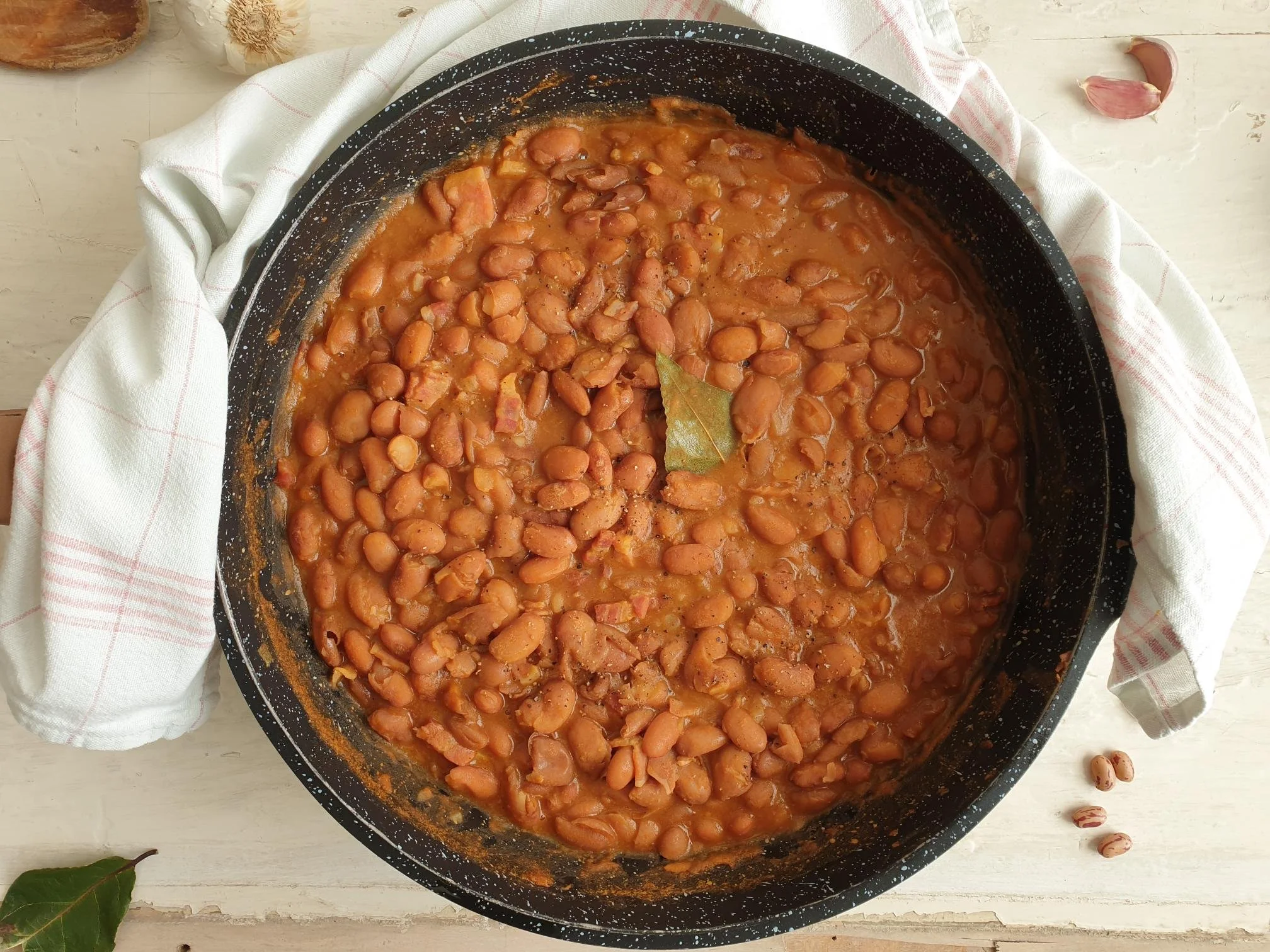
Home made baked beans is one of the most humble staple dishes in Slovenian Istra, the peninsula located at the head of the Adriatic Sea. This dish is nutritious, as full of fibre and protein, wholesome, super delicious, cheap and simple to make, and what it may lack in appearance it most certainly makes up in flavour.

This dish is classic comfort food, quintessentially rustic, a truly peasant food since it used to be made by farmers during colder months to help them to get warm, and to partially replenish their energy used up during the very hard, physical and laborious jobs required in the fields during the day.

This borlotti beans casserole is made with beautifully caramelized onions and sautéed pancetta and flavoured with garlic, bay leaf and a touch of tomato paste, it is typically served with polenta or crusty bread and a fantastic companion to grilled meats.

My nona grew up with this dish, as borlotti beans were consistently cooked as a part of the Mediterranean diet, the recipe was passed down to my father who adored baked beans and would prepare them regularly when there was a family barbecue, normally in such a huge quantities that we would eat them on a toasted bread for days to follow, nobody seemed to mind or complained about it, on the contrary...

This home made baked beans are known in standard Slovenian as Praženi Fižol, but the locals would refer to this dish simply in the dialect as Pražen Fežu.

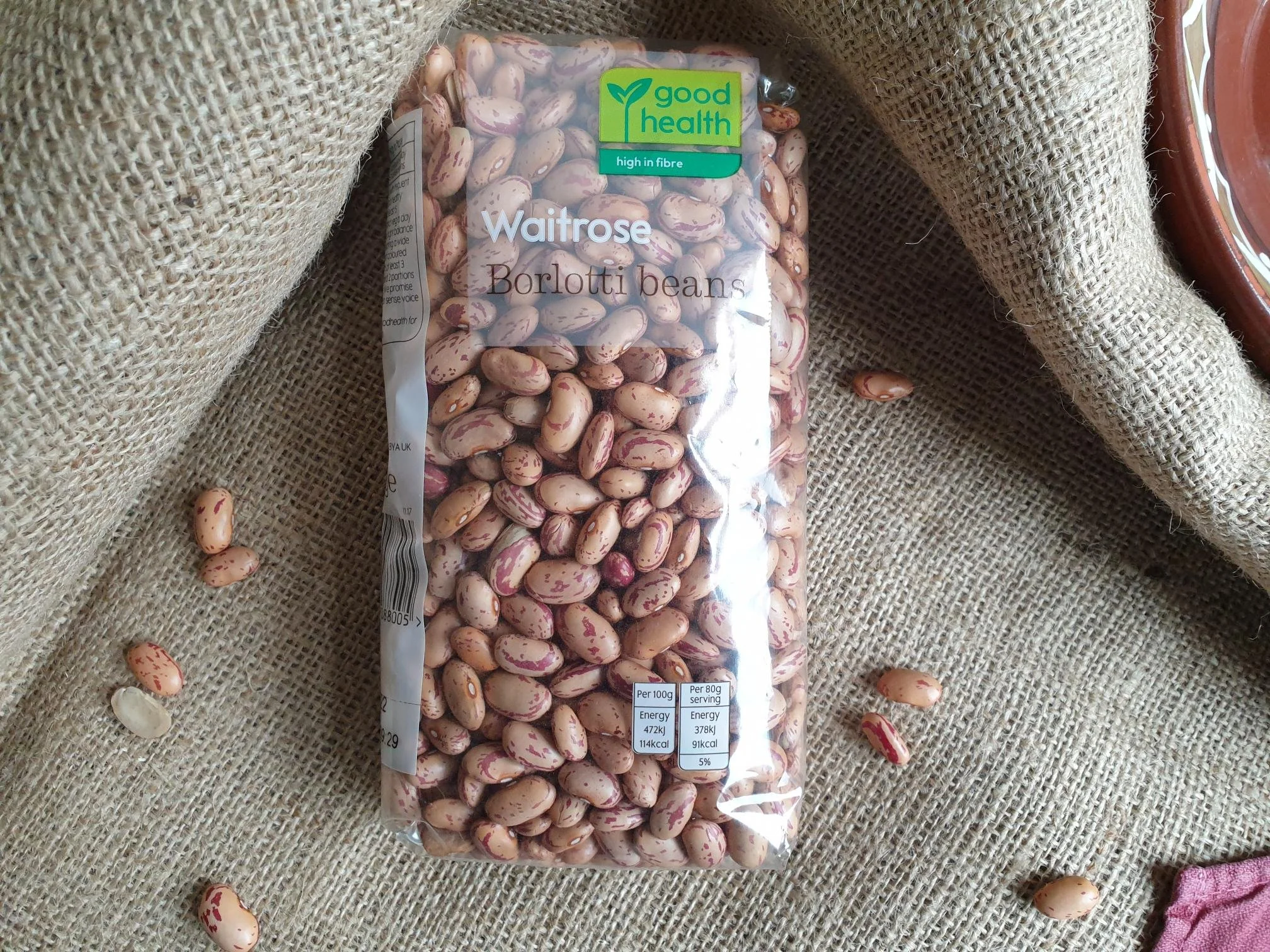
This very traditional dish calls for dry borlotti beans, but you can use canned beans to cut down on time without compromising the deliciousness of the final dish, it can also be made with or without the meat component, in which case, this version makes an excellent vegetarian and vegan meal option.

I am sharing here the traditional, local family recipe which uses only few simple ingredients, however, you can take this dish slightly off the beaten track and jazz it up a bit by adding few chilli flakes or powdered sweet or smoked Hungarian paprika, which will give a more “Imperial” and “Balcanic” flavour. My father attempted this only once and was severely told off by his mother, my famous nona, for “corrupting” the traditional recipe making it too “exotic” for her to eat, this version of baked beans, although very delicious indeed, was never cooked again by my father in her presence...

Whether you go for a traditional or more exotic version of the recipe for home made baked beans, give it a go, a store bought tinned baked beans might just become a thing of a past...

Ingredients

Serves 6-8

  • 500g dry borlotti beans, (or other dry beans of your choice) soaked overnight or for about 8 hours

    For this recipe you can also use tinned borlotti beans or other tinned beans of your choice 4 x 400g)

  • 1 medium onion, (about 130g) finely chopped

  • 4 Tbsp extra virgin olive oil

  • 2 cloves of garlic, peeled and crushed

  • 100g pancetta, (smoked or unsmoked) thinly sliced and chopped

  • You can replace pancetta for smoked or unsmoked bacon or lardons

  • 1 Tsp white all purpose flour

  • 2 Tbsp tomato paste

  • 2 bay leaves (fresh or dry)

  • sea salt

  • black pepper

Method

Place dry borlotti beans, or other dry beans of your choice, in a big bowl, cover completely with plenty of cold water and soak for about 8 hours or overnight.

Drain soaked beans in a colander and rinse with cold running water.

View fullsize Baked borlotti beans 4.jpg
View fullsize Baked borlotti beans 5.jpg

Transfer soaked beans in a pot.

View fullsize Baked borlotti beans 6.jpg
View fullsize Baked borlotti beans 7.jpg

Add plenty of cold water, to completely cover the beans, a bay leaf and bring to boil.

Turn the heat down to medium-low and cook the beans for about 1 -1 ½ hour or until the beans are fully cooked and soft but not falling apart. Skim any foam if it rises to the surface. Towards the end of cooking time add sea salt.

Fish out the bay leaf and discard. Turn the heat off, leaving the pot with the beans in their liquid on the stovetop for later use.

View fullsize Baked borlotti beans 8.jpg
View fullsize Baked borlotti beans 11.jpg

Put extra virgin olive oil in a fairly large and deep skillet or casserole dish (both preferably non stick). Add finely chopped onion, crushed garlic, finely sliced and chopped pancetta or similar, if using, and sauté on a gentle heat, stirring occasionally, until the onions become soft and translucent.

Add the flour and stir well with the onion, garlic and pancetta mixture.

View fullsize Baked borlotti beans 10.jpg
View fullsize Baked borlotti beans 12.jpg

With the slotted spoon, (or a regular big serving spoon) transfer the beans to the skillet with the onion, garlic and pancetta mixture.

Pour the liquid from the beans into the skillet to completely cover the beans. If you are left with more liquid from the beans as needed at this stage, keep it aside and do not discard it. You might use it later on, if the beans during the cooking process get too dry. On the contrary, if you end up using all the liquid from the beans, and the beans get too dry, you can simply use water.

Add sea salt, black pepper, bay leaf, tomato paste and bring to a gentle boil.

View fullsize Baked borlotti beans 13.jpg
View fullsize Baked borlotti beans 14.jpg

Lower the heat and gently simmer for about 30 minutes stirring occasionally.

Taste and adjust the seasoning with sea salt and black pepper.

Serve hot or at room temperature.

Just a thought

Home made baked beans are suitable for freezing.

Wine suggestion

Schiava Alto Adige DOC "Kolbenhofer" 2020 - Hofstater

January 26, 2022 /tina oblak
borlotti beans, baked beans, baked borlotti beans, baked beans with pancetta, baked beans with lardons, baked beans with bacon, rustic baked beans, beaked beans on a hob, baked beans on stove, Stovetop baked beans, Skillet baked beans, baked beans in a frying pan, Praženi Fižol, Pražen Fežu, Istrian borlotti beans
Adriatic Recipe, Appetizers, Autumnal dish, Autumnal recipe, brunch, Central European recipes, Eastern European recipes, Easy recipe, Healthy, healthy mael, Istrian cuisine, Istrian dish, Istrian food, Istrian gastronomy, main course, main dish, Nutritious dish, Nutritious, one pot meal, one pot meat recipe, Rustic dish, Side Dishes, Slovenian cuisine, Slovenian food, Slovenian gastronomy, Small bites, Starters, stew, Vegan, Vegetarian, Winter dish, Winter recipe, casserole

Green Split Peas Soup Istrian Recipe

Beans and Srdines
January 19, 2022 by tina oblak in Adriatic Recipe, Appetizers, Autumnal dish, Autumnal recipe, brunch, dinner, entrée course, healthy mael, Istrian cuisine, Istrian dish, Istrian food, Istrian gastronomy, main course, main dish, Nutritious dish, one pot meal, Rustic dish, Slovenian cuisine, Slovenian food, Slovenian gastronomy, Soups, Starters, supper, Vegan, Vegetarian, Winter dish, winter soup

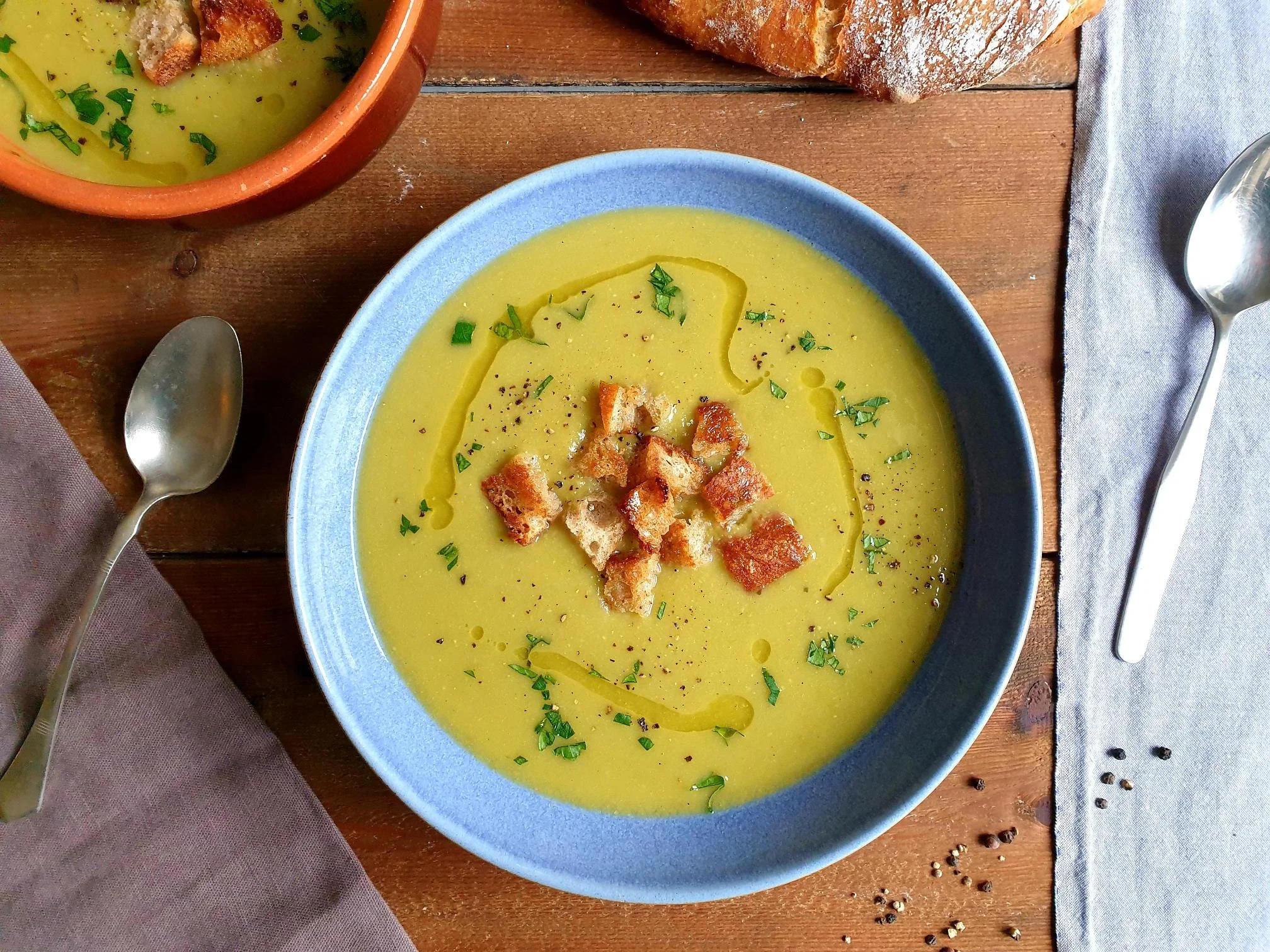
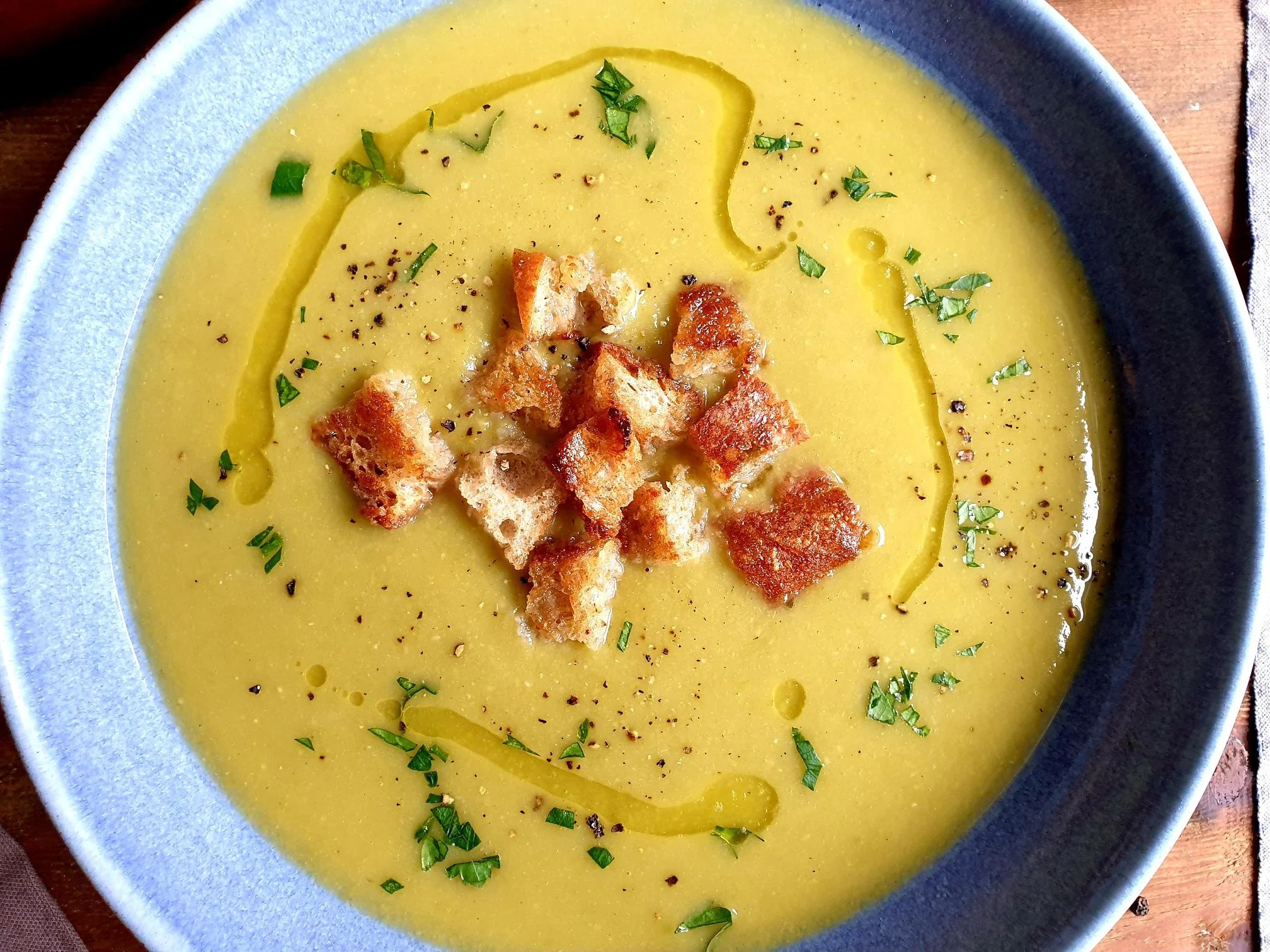
This comforting, filling and hearty soup is a perfect winter warmer, incredibly easy to make, super delicious in its simplicity, and once you try it, you will add it to your soups recipe collection!

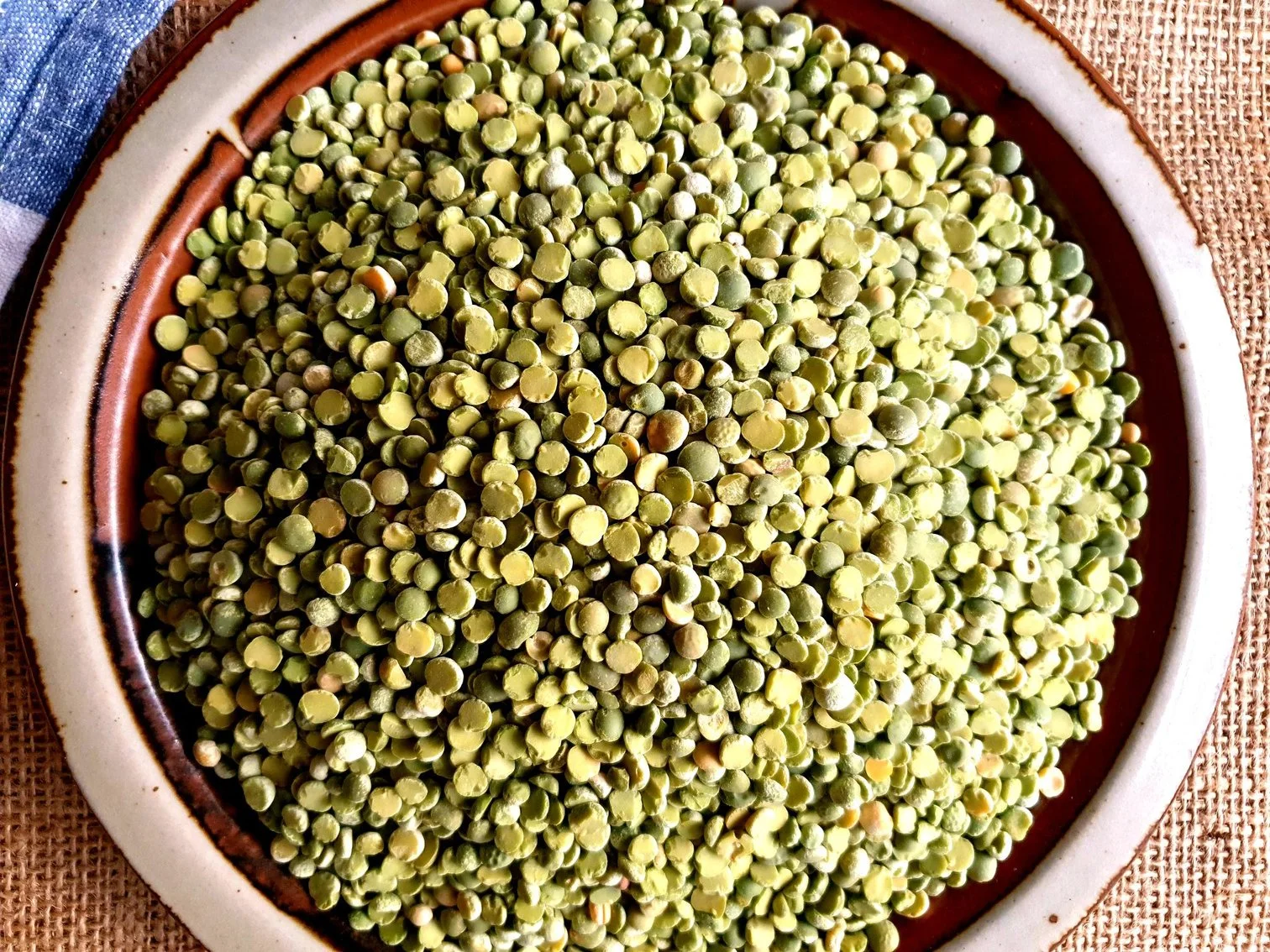
Split peas are quite different from their fresh counterpart, they are a specific kind of field pea, which are dried in order to be stored for a longer period. They are called split peas because after the outer hull is removed the peas are then split in half along a natural seam.

This wonderful soup is protein packed and here I am sharing my nona's recipe. For her, this dish represents a good “old fashioned” basic recipe and is a real staple in the gastronomic repertoire since she learned to make this soup from her grandmother, and so this is a very old family recipe.

She told me that when she was a child, this soup was very often on the tables, as it is a a traditional and classic soup made in Slovenian Istra, where locals refer to it in dialect as Maneštra iz biži špakaj while in standard Slovenian is called Mineštra iz suhega graha.

My nona also shared with me that when she was small, most of the ingredients were home made but this is not the case for dried green split peas, they were bought at the local food market or in a small family run food shop, since for both types of local businesses it was a crucial time for the local microeconomy.

This soup is normally home made and not typically found on the menus in the restaurants.

Try this very tasty one pot soup, and you will think twice before you open a can of soup bought in the supermarket!

Ingredients

  • 500g green split peas, soaked for about 8 hours or overnight

  • 1 medium potato (about 200g), peeled and roughly diced

  • 1 medium onion (about 100g), peeled and roughly chopped

  • few celery leaves

  • fresh flat leaf parsley, a handful (about 10g), roughly chopped

  • 1 small carrot (about 50g), peeled and finely grated

  • tip of fresh or dry bay leaf

  • 4 Tbsp extra virgin olive oil

  • sea salt

  • ground black pepper

  • 2l cold water

Method

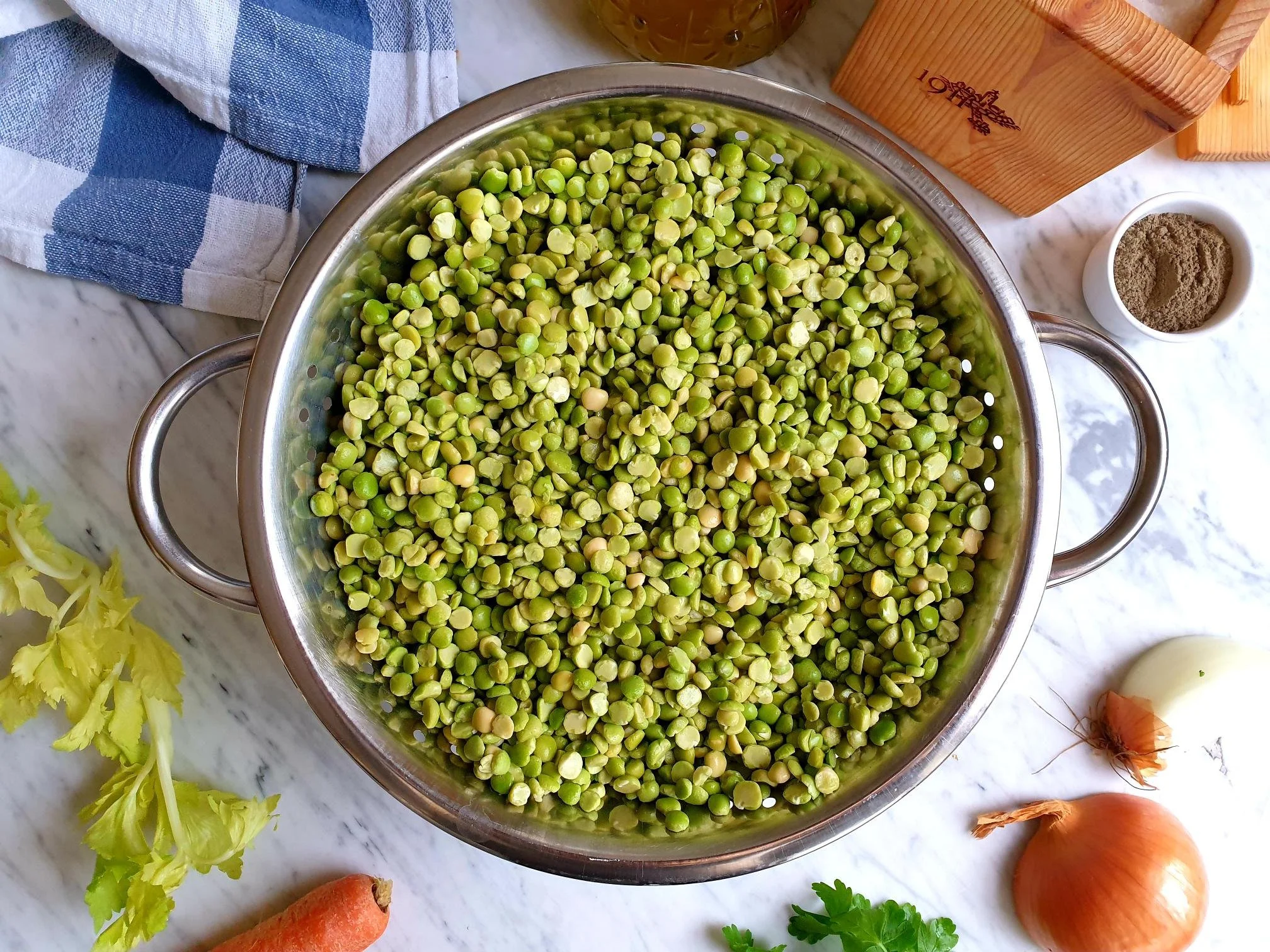
Place dried green split peas in a bowl, cover completely with plenty of cold water and soak for about 8 hours or overnight.

Drain soaked peas in a colander and rinse with cold running water.

Transfer soaked peas in a soup pot and add peeled and roughly diced potato, peeled and roughly chopped onion, few celery leaves, roughly chopped parsley, peeled and finely grated carrot, tip of fresh or dry bay leaf, extra virgin olive oil, pinch of sea salt and ground black pepper.

Add 2 litres of cold water and bring to boil.

View fullsize Green split peas soup 5.jpg
View fullsize Green split peas soup 6.jpg

Turn the heat down, partially cover with the lid and gently simmer for about 1 ½ - 2 hours or until the peas are completely tender and disintegrated. Stir occasionally to avoid peas sticking to the bottom of the pan.

Taste and adjust the seasoning with sea salt and black pepper and fish out the tip of bay leaf.

View fullsize Green split peas soup 7.jpg
View fullsize Green split peas soup 8.jpg

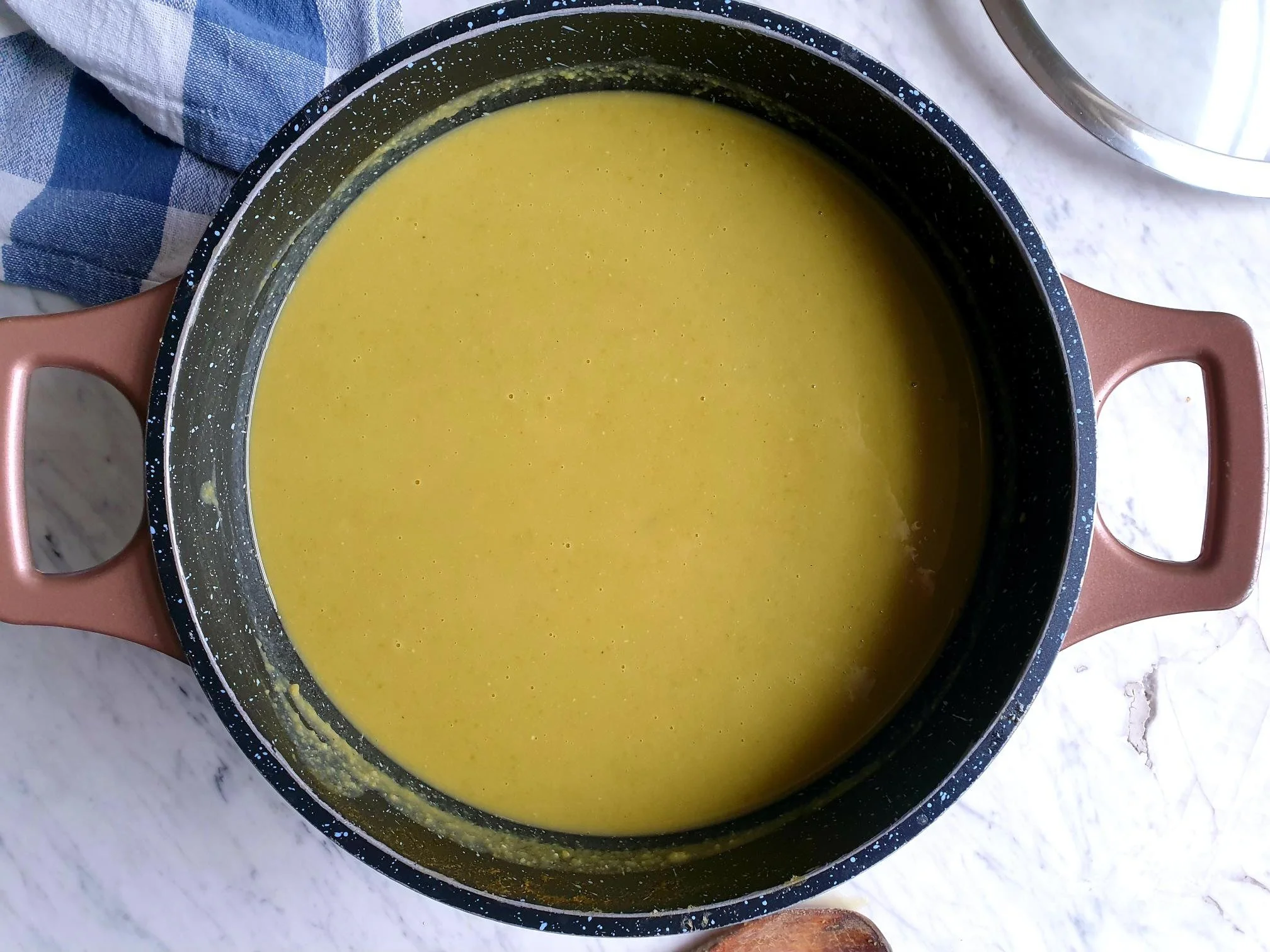
You can serve this soup as it is with a bit of texture or if you prefer a creamier texture purée the soup using an immersion blender (like I did for this recipe) or a regular blender.

For a smoother texture you can also use food mill or pass the puréed soup through a sieve which will result in an exceptionally smooth soup.

The soup should generally have a nice thickish consistency, but not too thick, in which case, dilute it adding a bit of water.

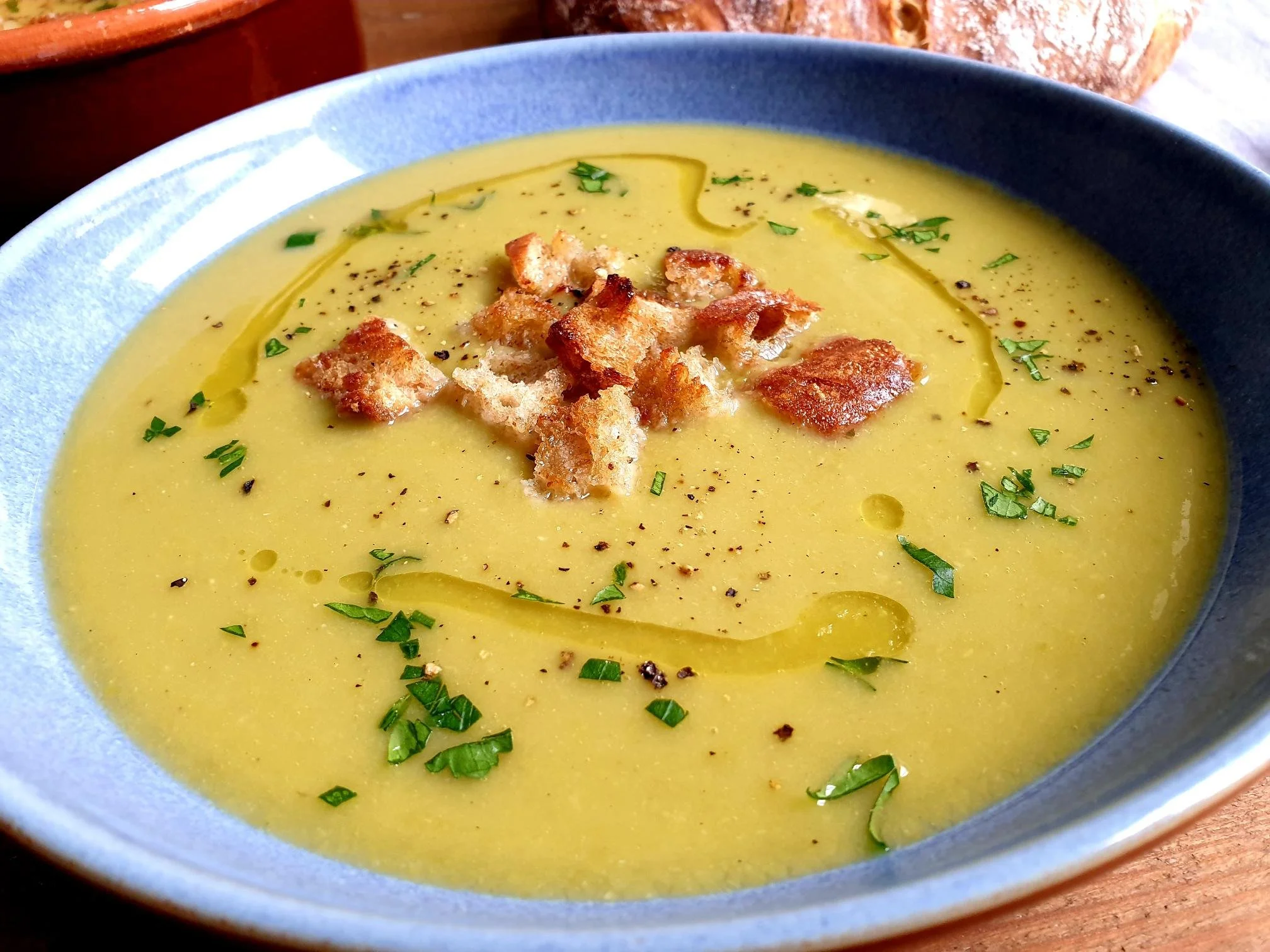
This soup is great served hot with some bread croutons, roughly chopped parsley and a drizzle of extra virgin olive oil.

Traditionally it is served with small shaped pasta (ditalini, stelline, orzo, ect.) or rice, both cooked previously and separately and then added to the soup.

Just a thought

This soup is great made in advance and freezes very well.

Wine suggestion

Alto Adige Valle Isarco Sylvaner DOC 2020 - San Michele Appiano

January 19, 2022 /tina oblak
green split peas, dried split green peas, dried split peas creamed soup, cream of green split peas soup, Maneštra iz biži špakaj, Mineštra iz suhega graha
Adriatic Recipe, Appetizers, Autumnal dish, Autumnal recipe, brunch, dinner, entrée course, healthy mael, Istrian cuisine, Istrian dish, Istrian food, Istrian gastronomy, main course, main dish, Nutritious dish, one pot meal, Rustic dish, Slovenian cuisine, Slovenian food, Slovenian gastronomy, Soups, Starters, supper, Vegan, Vegetarian, Winter dish, winter soup
Comment

Braised Pheasant with fresh herbs Recipe

Beans and Srdines
January 12, 2022 by tina oblak in Adriatic Recipe, Autumnal dish, Autumnal recipe, Celebratory dish, Central European recipes, Christmas dish, dinner, Eastern European recipes, Easy recipe, Festive dish, Istrian cuisine, Istrian dish, Istrian food, Istrian gastronomy, main dish, main meat course, Meat, one pot meal, Rustic dish, Slovenian cuisine, Slovenian food, Slovenian gastronomy, Winter dish, Winter recipe, one pot meat recipe

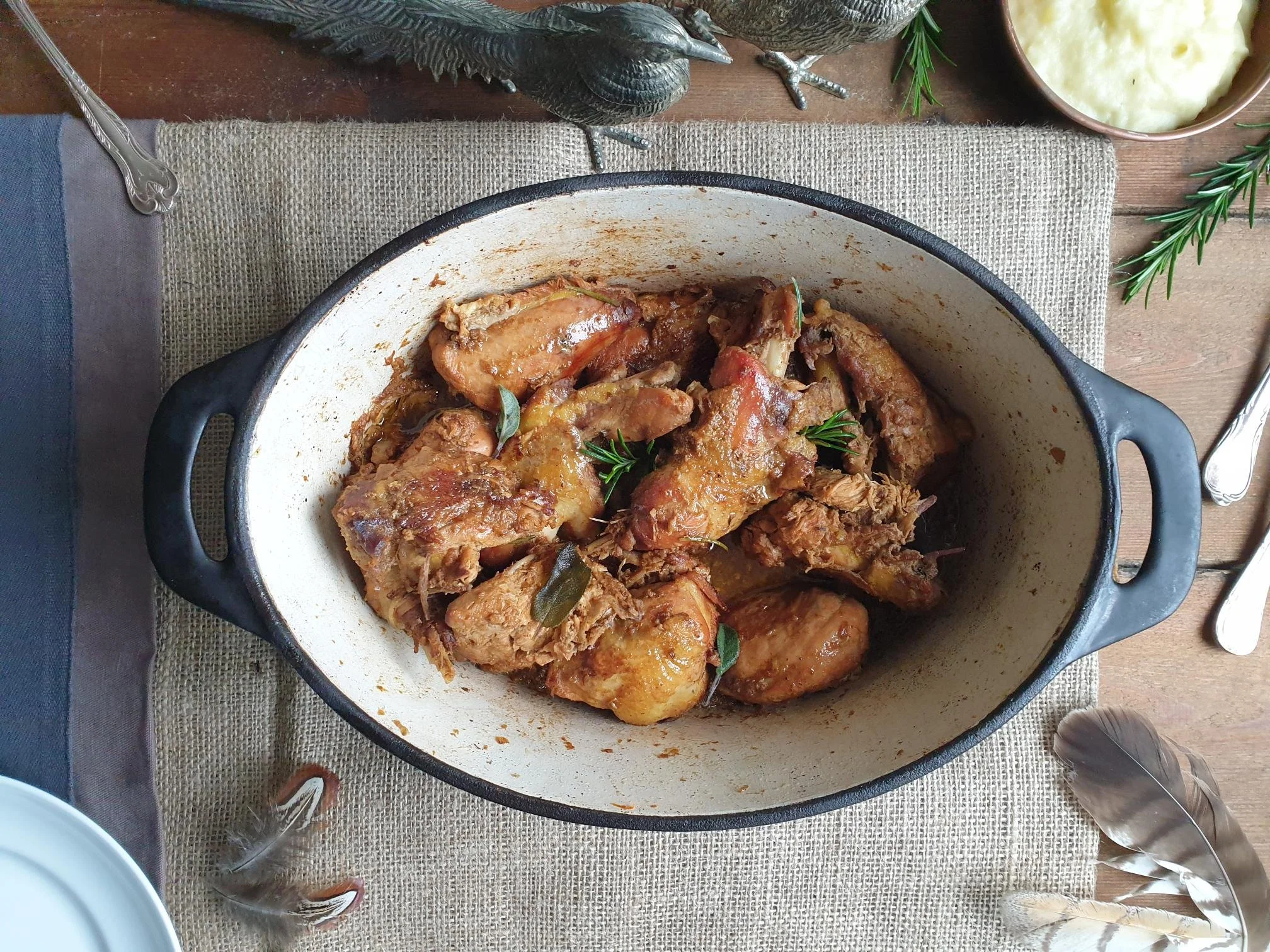
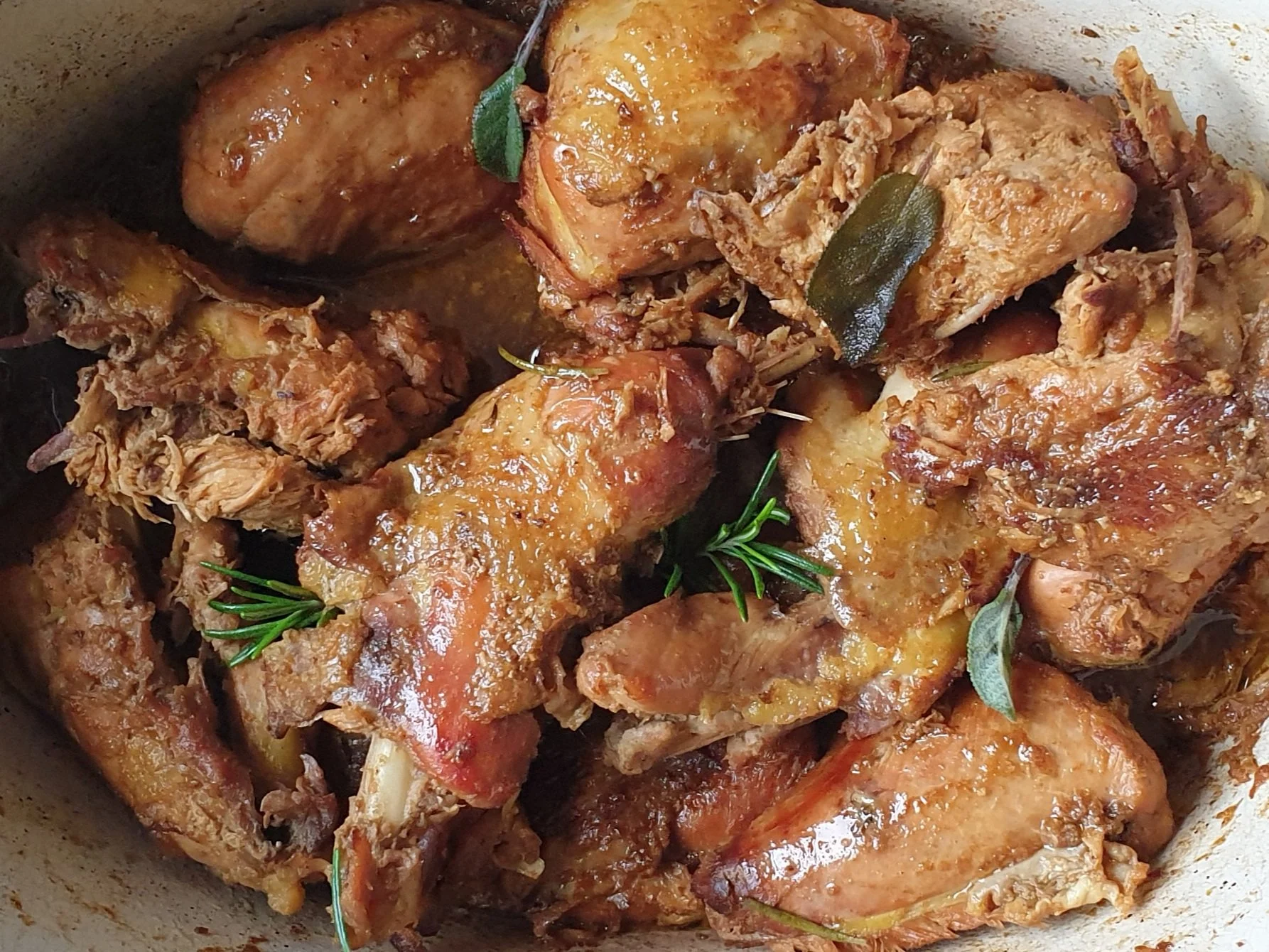
Braised pheasant is a fantastic winter warmer, comforting and hearty, made with only few fresh ingredients evoking seasonal flavours.

First, the pheasant meat is browned and then slowly cooked with fresh herbs in a beautiful sauce allowing the meat to be tenderised.

This simple and rustic dish offers and provides full and rich but delicate flavour and it is best made ahead of time as it improves when cooked in advance and then re-heated gently before serving.

Braised pheasant has been a very much loved traditional dish in Slovenian Istra where its gentle landscape has provided many opportunities for hunting, a pheasant representing one of the foremost preys among the local hunters.

This area was once part of The Republic of Venice, and it is believed that this gamebird with oriental plumage, was introduced to the West via Venice, as this majestic city had very close links with the Byzantine empire.

Moreover, some sources report that the name pheasant, Fasan, in venetian dialect, and Fazan, in standard Slovenian, comes from the fact that the pheasant was originally a native of the river Phasis in Colchis (in present day Western Georgia).

Cooking pheasant meat, in general, used to be a rare treat and was reserved for festivities and very special occasions, and although nowadays pheasant meat is a bit more accessible and affordable, it is still served to mark more special events, and is not presented on your plate as a average midweek dinner. Pheasant dishes can be enjoyed and found on menus in formal and informal restaurants during autumn and winter pheasant hunting months.

Braised pheasant is a very much appreciated dish in the family and here I am sharing my nona and my mother's recipe.

Ingredients

Serves 4-6

  • 2 small pheasants (about 1.5kg) jointed (your butcher will be more than happy to do this for you)

  • 3 Tbsp extra virgin olive oil

  • 1 medium onion (about 150g), roughly chopped

  • 2 celery sticks (about 40g), finely chopped

  • carrot (about 50g), finely grated

  • 2 cloves of garlic, peeled and crushed

  • sea salt

  • ground black pepper

  • 1 fresh rosemary spring (tied with the cooking string as this makes it easier to remove after cooking and prevents the needles to fall off the spring)

  • 2-3 fresh sage leafs

  • 100 ml white wine

  • chicken or vegetable stock (can use just water) It is perfectly fine to use a good quality instant stock .

Method

In a heavy, lidded casserole pan add extra virgin olive oil, chopped onions, finely grated carrot, finely chopped celery sticks, crushed garlic, jointed pheasants and mix well.

On a low and gentle heat, fry, stirring occasionally and moving around the meat. Scrape the bits off the bottom of the pan with the wooden spoon if it starts to catch to avoid burning (this will get deglazed later and become part of the sauce).

This stage of very gently frying and browning the meat on all sides can take up to one hour (the longer you brown the meat the darker the sauce will be).

View fullsize Braised pheasant 2.jpg
View fullsize Braised pheasant 3.jpg

Deglaze the pan with white wine and let it completely evaporate.

Add fresh spring of rosemary, fresh sage leafs and stock or water, just enough to cover halfway up.

Place the casserole pan over a medium heat and bring to a simmering point.

Cover with a lid, lower the heat and gently simmer for about 1 hour, stirring occasionally, until the pheasant meat is tender and cooked through. Cooking the pheasant with the lid covered partially or completely will ensure the pheasant meat stays moist as the moisture will be kept in the pan, gently steaming the meat during the simmering process.

If excess fat is formed during cooking process skim it off using a spoon.

Remove rosemary spring and sage leafs.

Taste and adjust the seasoning with sea salt and black pepper.

If the sauce is too liquidy, increase the heat allowing it to reduce and thicken slightly. On the contrary, if the sauce has a thick consistency dilute it a bit with the stock or water.

Serve hot with soft cooked or grilled polenta, mashed potato, potato gnocchi, egg based pasta like bleki or simply nice fresh crunchy rustic style bread to soak up the juices.

Just a thought

This is a great dish to make ahead of time and suitable for freezing.

Wine suggestion

Friuli Colli Orientali Merlot DOC 2017 - Livio Felluga

January 12, 2022 /tina oblak
Pheasant, Pheasant meat, game meat, Braised pheasant, Slow cooked pheasant, Istrian style braised pheasant
Adriatic Recipe, Autumnal dish, Autumnal recipe, Celebratory dish, Central European recipes, Christmas dish, dinner, Eastern European recipes, Easy recipe, Festive dish, Istrian cuisine, Istrian dish, Istrian food, Istrian gastronomy, main dish, main meat course, Meat, one pot meal, Rustic dish, Slovenian cuisine, Slovenian food, Slovenian gastronomy, Winter dish, Winter recipe, one pot meat recipe
Comment

Braised Cuttlefish Recipe

Beans and Srdines
December 30, 2021 by tina oblak in Adriatic Recipe, Autumnal dish, Autumnal recipe, dinner, Easy recipe, Festive dish, Fish & Seefood, healthy mael, Istrian cuisine, Istrian dish, Istrian food, Istrian gastronomy, main dish, Nutritious dish, one post fish recipe, one pot meal, Rustic dish, recipe from Northern Ital, Slovenian cuisine, Slovenian food, Slovenian gastronomy, stew, Winter dish, Winter recipe, main fish meal

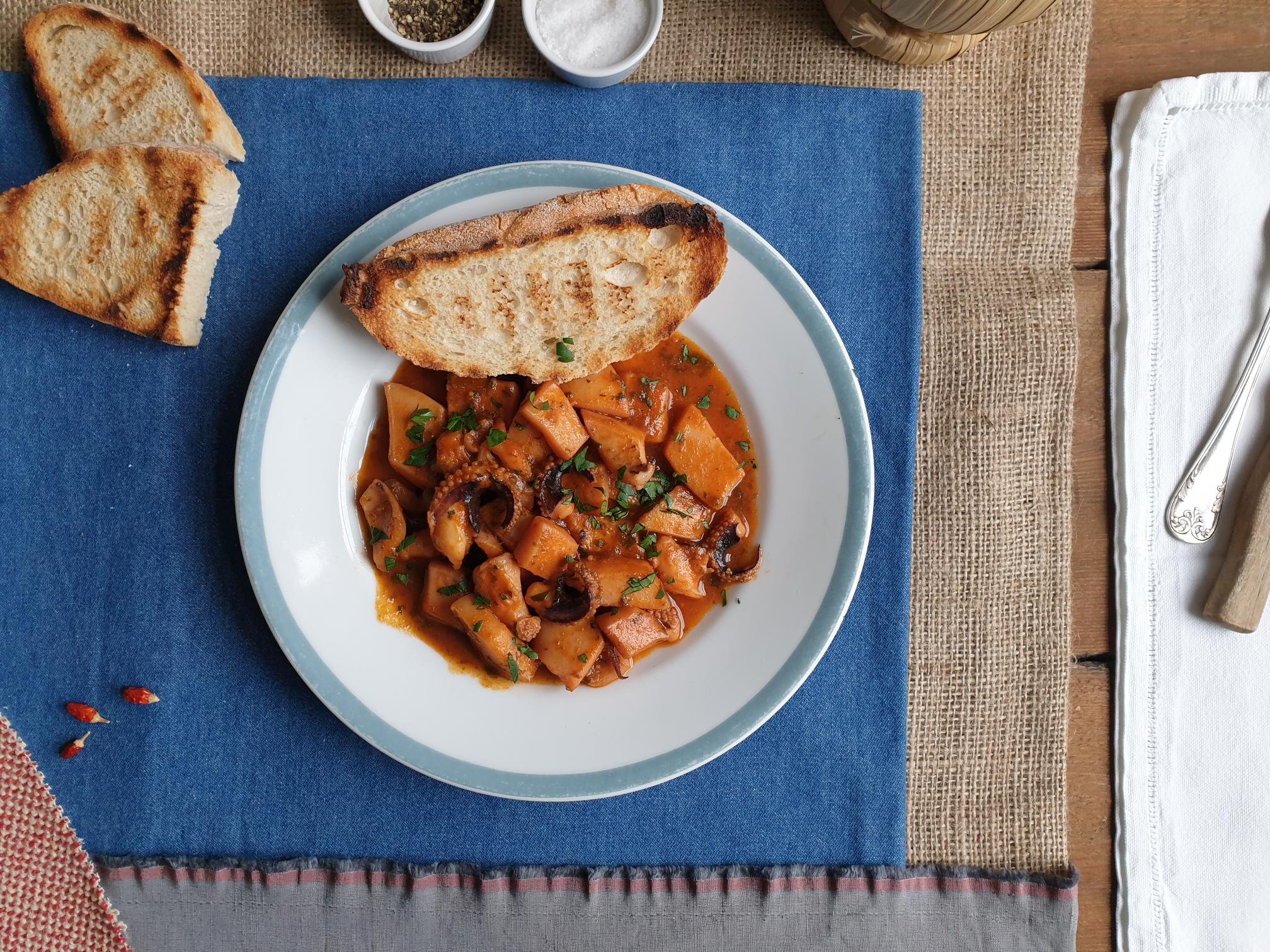
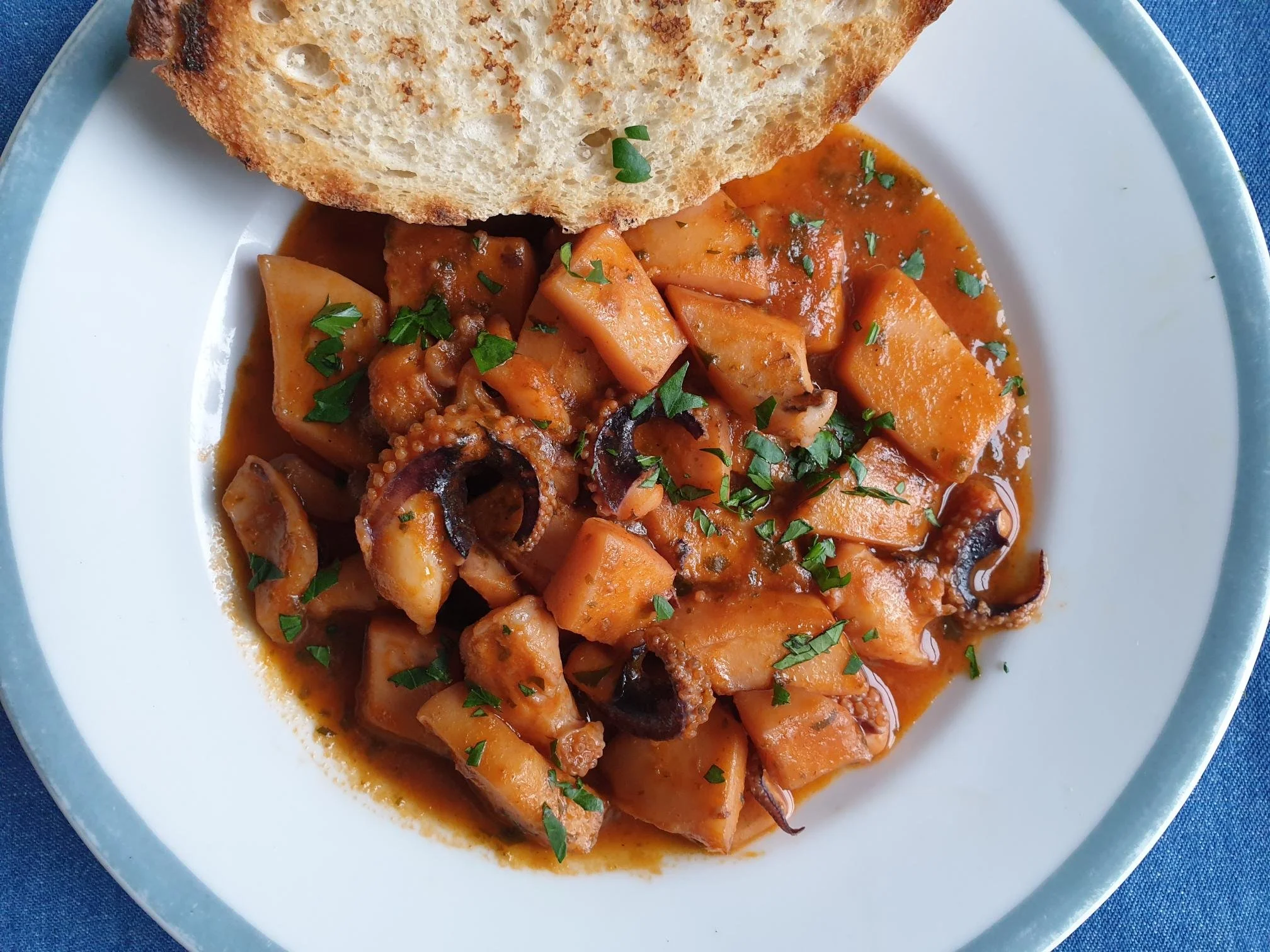
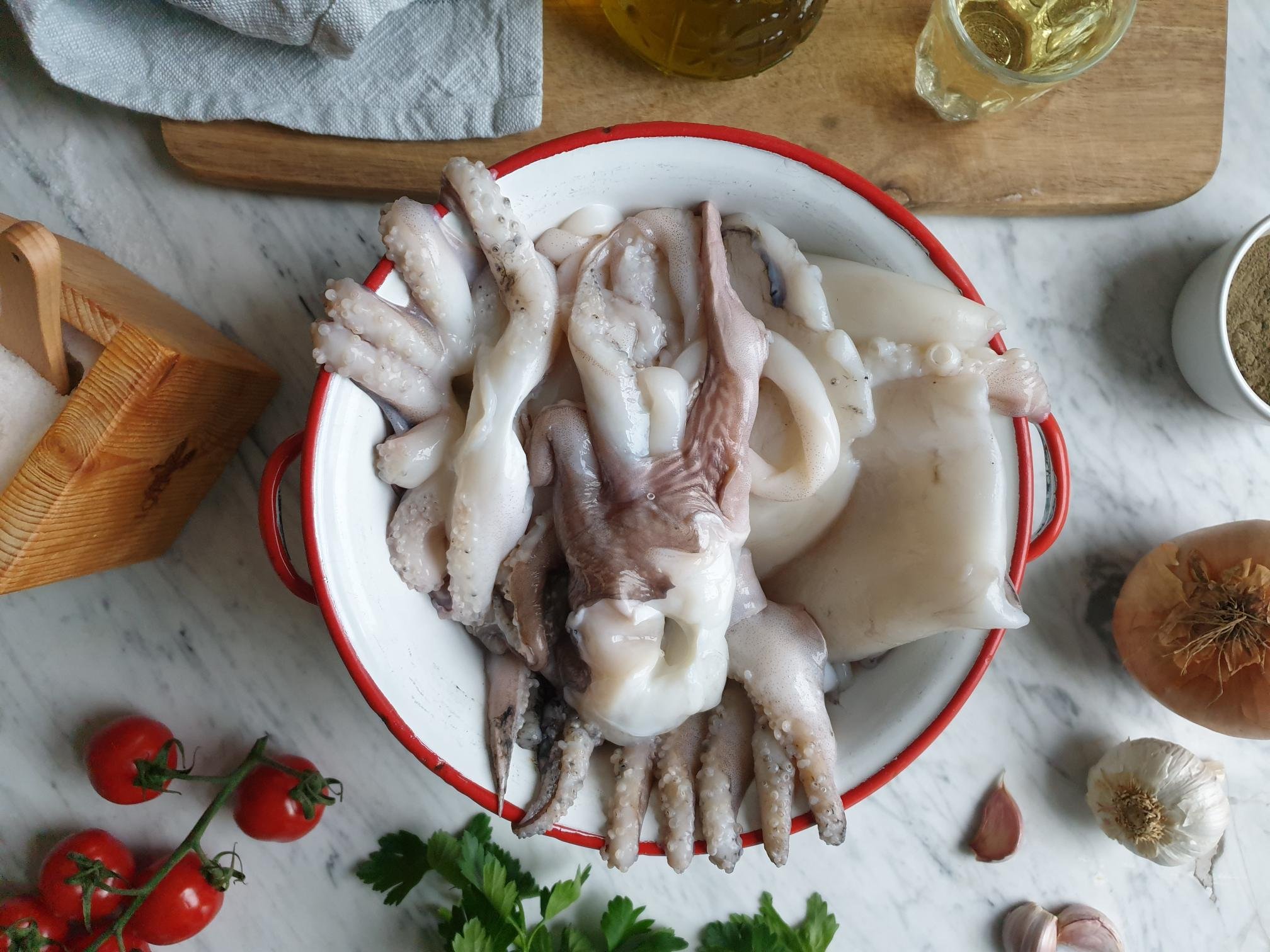
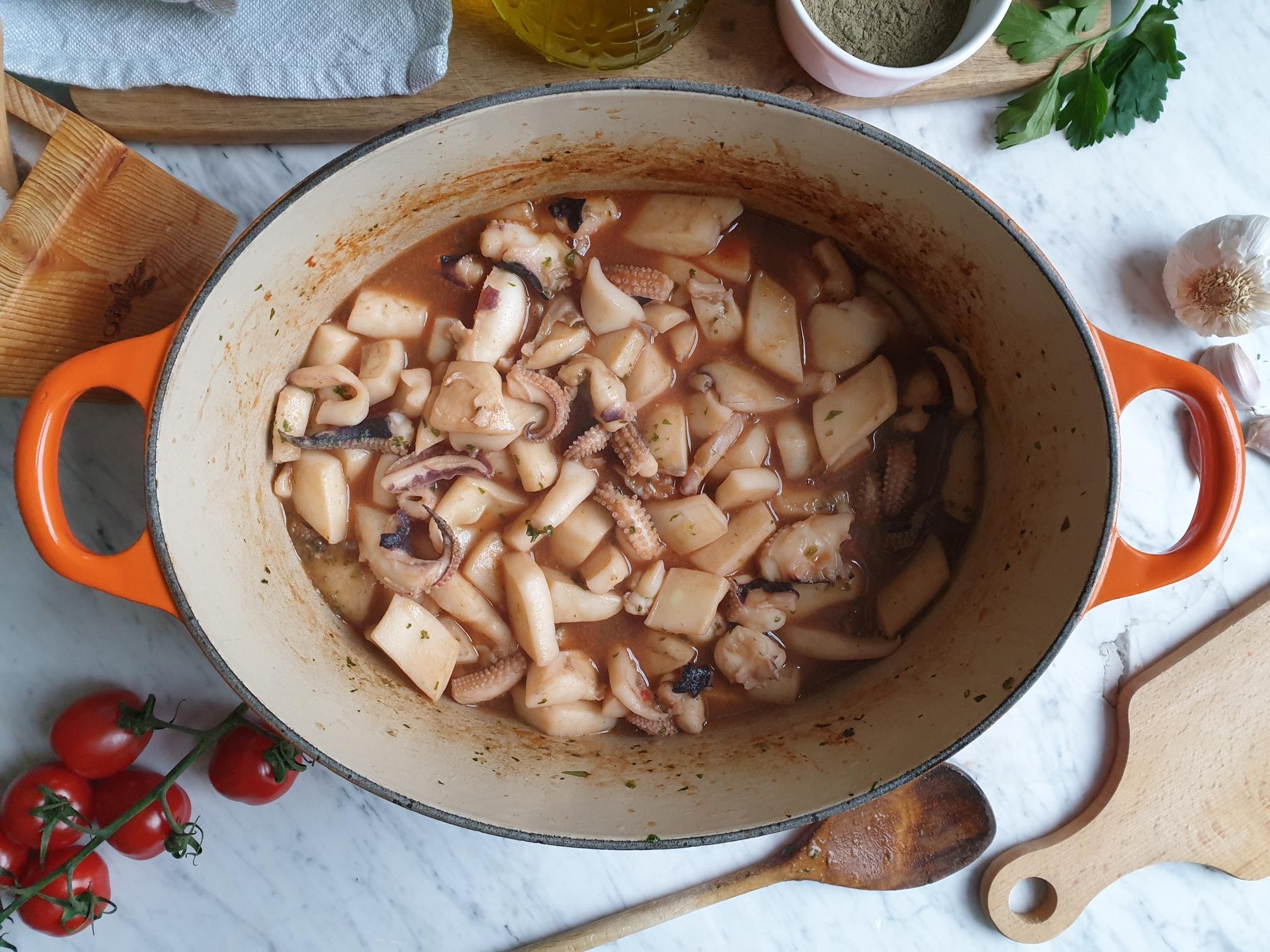
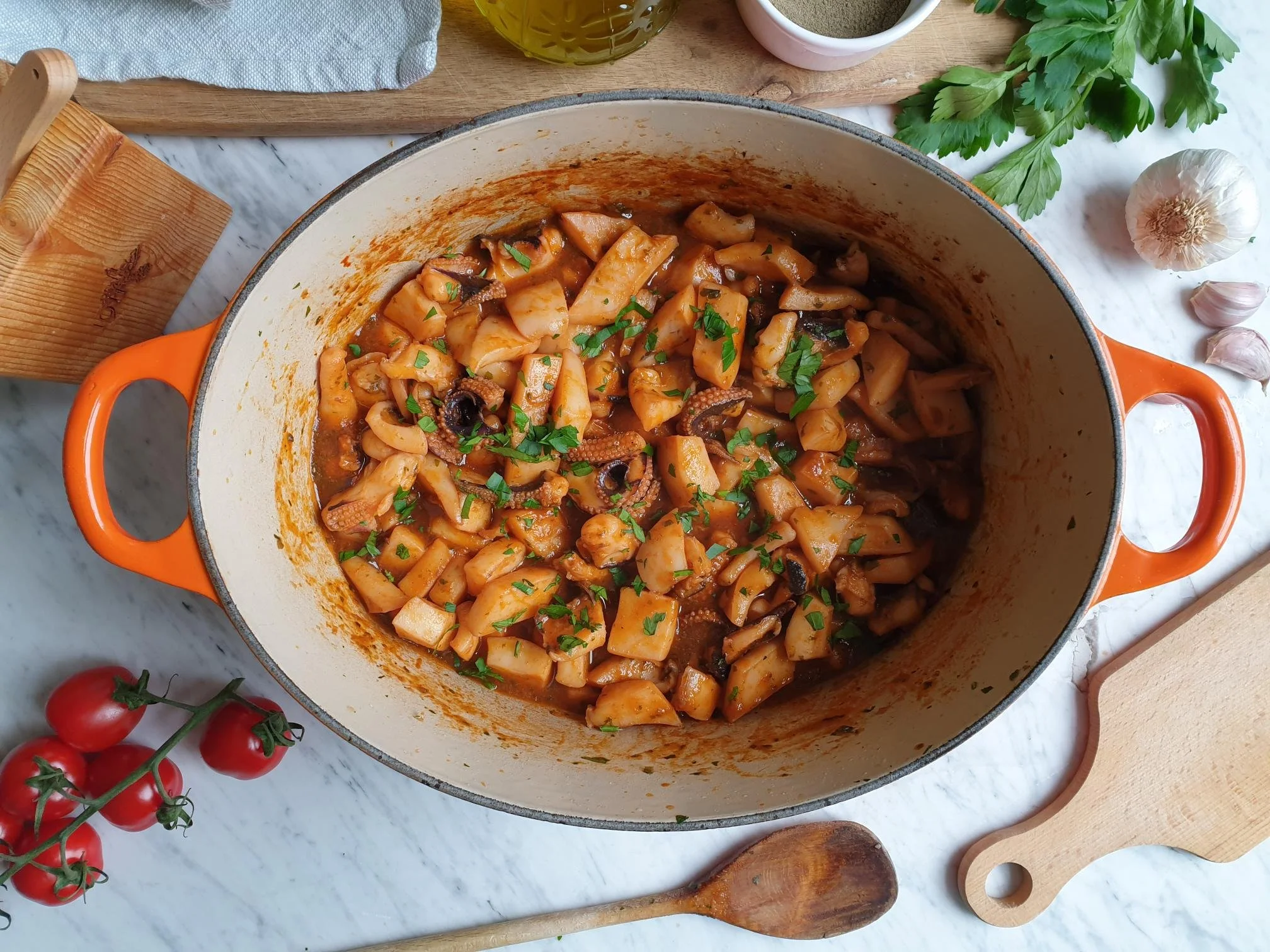
Braised cuttlefish is a simple, comforting and rustic dish, and it uses only few ingredients. The cuttlefish is slow cooked in a light tomato sauce with white wine to the point of becoming so tender that the cuttlefish almost melts into your mouth and you hardly need a knife to cut it. It is very easy to prepare and a fantastic recipe if you want to make a seafood based meal ahead of time. Cuttlefish stew is a staple dish in Venice and a real delicacy, famous in particular for being cooked in its black ink.

Cuttlefish are plentiful in British waters but the majority are sent to the continent where there is a high demand, and it is greatly appreciated.

Braised cuttlefish is a dish that is prepared in particular in coastal towns and villages in Slovenian Istra, since there is a cuttlefish habitat along the Adriatic coast. The tides push the fish towards the sandy shallows where it becomes an easy catch for the fishermen.

Braised cuttlefish play an important role in the local gastronomy and the locals are very grateful to the Venetians to have “left behind” this aspect of the marine and coastal ecology, given the very lengthy and strong presence of the Venetian Republic in the territory. Cuttlefish is not as frequently found in local restaurants as one might expect, although it is one of the most loved meals in the family.

If you have never had cuttlefish before or had it but were put off for whatever reason, try my nona's family recipe, you might just change your mind. If you are worried about handling fresh cuttlefish, fishmongers in general, will be more than happy to prepare the cuttlefish for you, they will clean all the ink off the cuttlefish, remove the skin and wash thoroughly the tentacles.

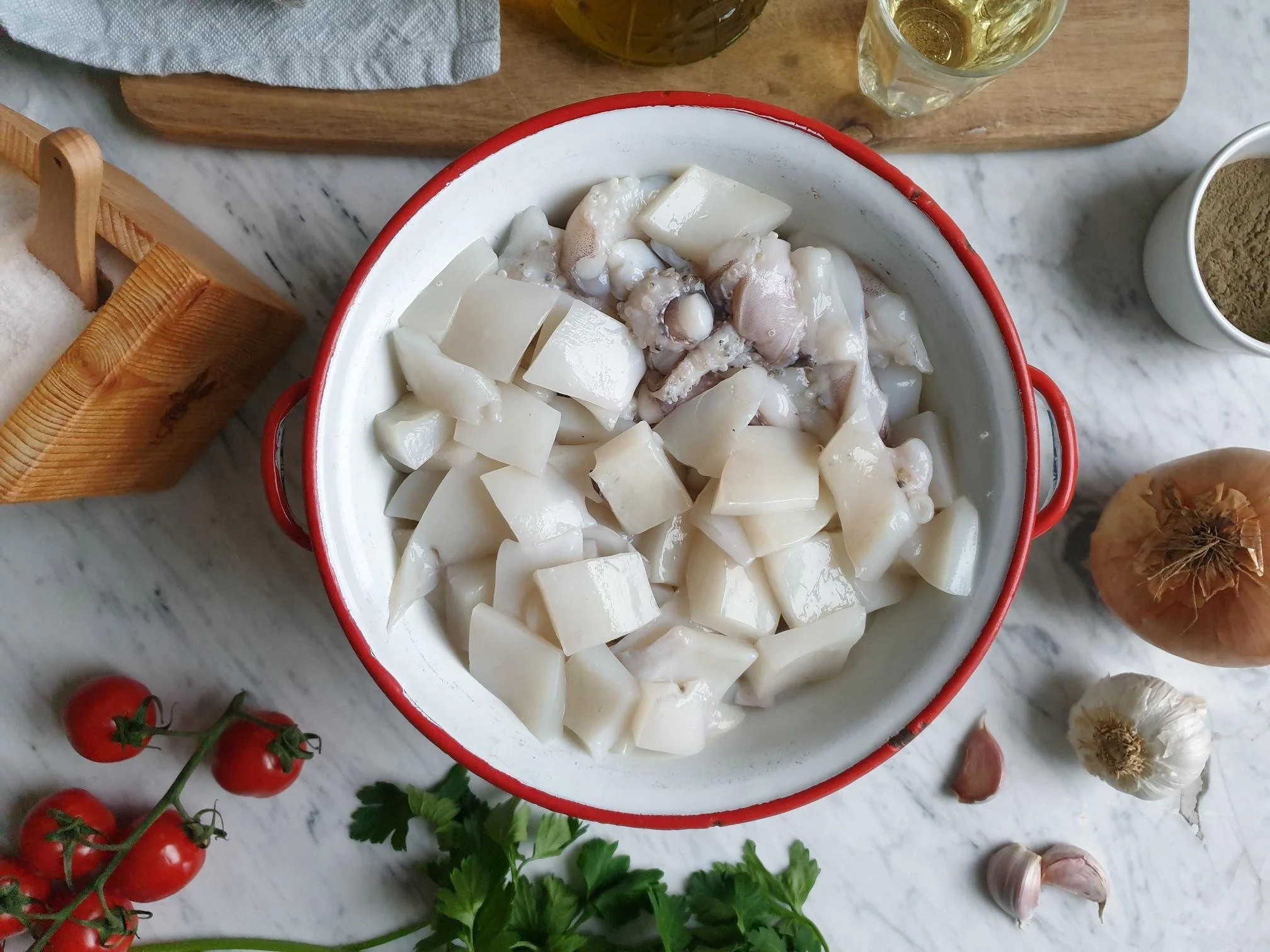
All you will be left with is beautifully cleaned cuttlefish that only needs to be cut into bite size pieces or strips, easy!

Ingredients

Serves 4

  • 5 Tbsp extra virgin olive oil

  • 1 onion (about 130g), finely chopped

  • 1 clove garlic, peeled and crushed

  • handful of fresh flat leaf parsley, stalks included (about 10g), finely chopped, plus some extra when serving

  • 1 kg (roughly) cuttlefish, cleaned and cut into bite size pieces or strips. Already cleaned frozen cuttlefish as a alternative works well for this recipe

  • 100 ml white wine

  • 300 ml water

  • 2 Tbsp tomato purée

  • sea salt

  • finely ground black pepper

  • red chilli, a tiny bit, optional

Method

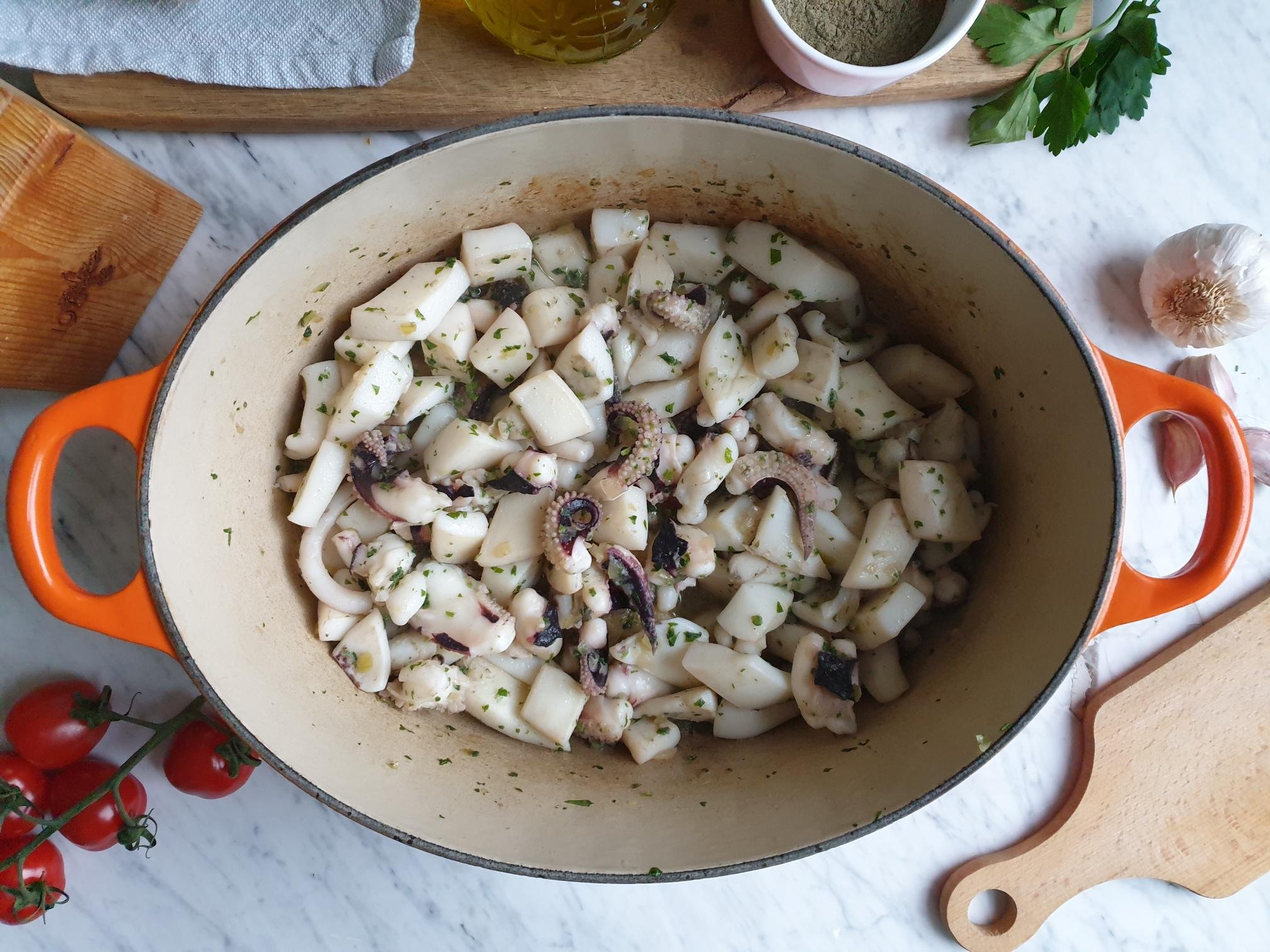
Put extra virgin olive oil in a pan or casserole dish, add finely chopped onion, crushed garlic, generous pinch of sea salt and fry gently until soft and lightly golden in colour.

Add finely chopped fresh parsley and mix together with fried onions and garlic.

View fullsize Cuttlefish 3.jpg
View fullsize Cuttlefish 4.jpg

Add the cuttlefish and fry further for about 2 minutes.

View fullsize Cuttlefish 5.jpg
View fullsize Cuttlefish in sauce 5a.jpg

Cuttlefish will start turning whitish in colour and release liquid.

Add white wine, allow it to evaporate and reduce roughly by half.

Add tomato purée, water, sea salt and black pepper and stir together to combine. Bring to boil.

View fullsize Cuttlefish in sauce 6.jpg
View fullsize Cuttlefish  in sauce 7.jpg

Turn down the heat, partially cover with the lid and gently simmer for about 45minute to 1 hour, stirring occasionally. By this time the cuttlefish should be really very tender when you insert the fork into it. The final texture of the sauce should be velvety and thick and not too runny when you spoon it onto serving plates.

If the sauce is too thick add a little a bit of water to dilute it slightly, on the contrary, if the sauce is too runny and watery in consistency, cook further until the sauce thickens a bit.

Adjust the seasoning with sea salt and black pepper.

Sprinkle with some roughly chopped fresh parsley and serve hot with crusty bread, white or yellow polenta, soft cooked or grilled, or some boiled potatoes or cooked rice.

Just a thought

Braised cuttlefish can also be used as a base for making risotto or tossed with egg based fresh pasta.

Store in the fridge in an airtight container for no longer than two day suitable for freezing.

The traditional recipe does not call for red chilli but adding a tiny bit gives this dish a real nice kick without overpowering the “sweetness” of the cuttlefish.

Wine suggestion

"Gardelin" 2016 - Aleks Klinec

December 30, 2021 /tina oblak
cuttlefish, cuttlefish in light tomato sauce, slow cooked cuttlefish, seppia in umido, seppia in rosso, sipa na rdece
Adriatic Recipe, Autumnal dish, Autumnal recipe, dinner, Easy recipe, Festive dish, Fish & Seefood, healthy mael, Istrian cuisine, Istrian dish, Istrian food, Istrian gastronomy, main dish, Nutritious dish, one post fish recipe, one pot meal, Rustic dish, recipe from Northern Ital, Slovenian cuisine, Slovenian food, Slovenian gastronomy, stew, Winter dish, Winter recipe, main fish meal
Comment

Sautéed Savoy Cabbage with potatoes, garlic and olive oil Istrian Recipe

Beans and Srdines
December 27, 2021 by tina oblak in Adriatic Recipe, Autumnal dish, Autumnal recipe, brunch, Central European recipes, Christmas dish, dinner, Easy recipe, Festive dish, Healthy, healthy mael, Istrian cuisine, Istrian dish, Istrian food, Istrian gastronomy, Nutritious dish, Rustic dish, Side Dishes, Slovenian cuisine, Slovenian food, Slovenian gastronomy, supper, Vegan, Vegetarian, Winter dish, Winter recipe, one post fish recipe

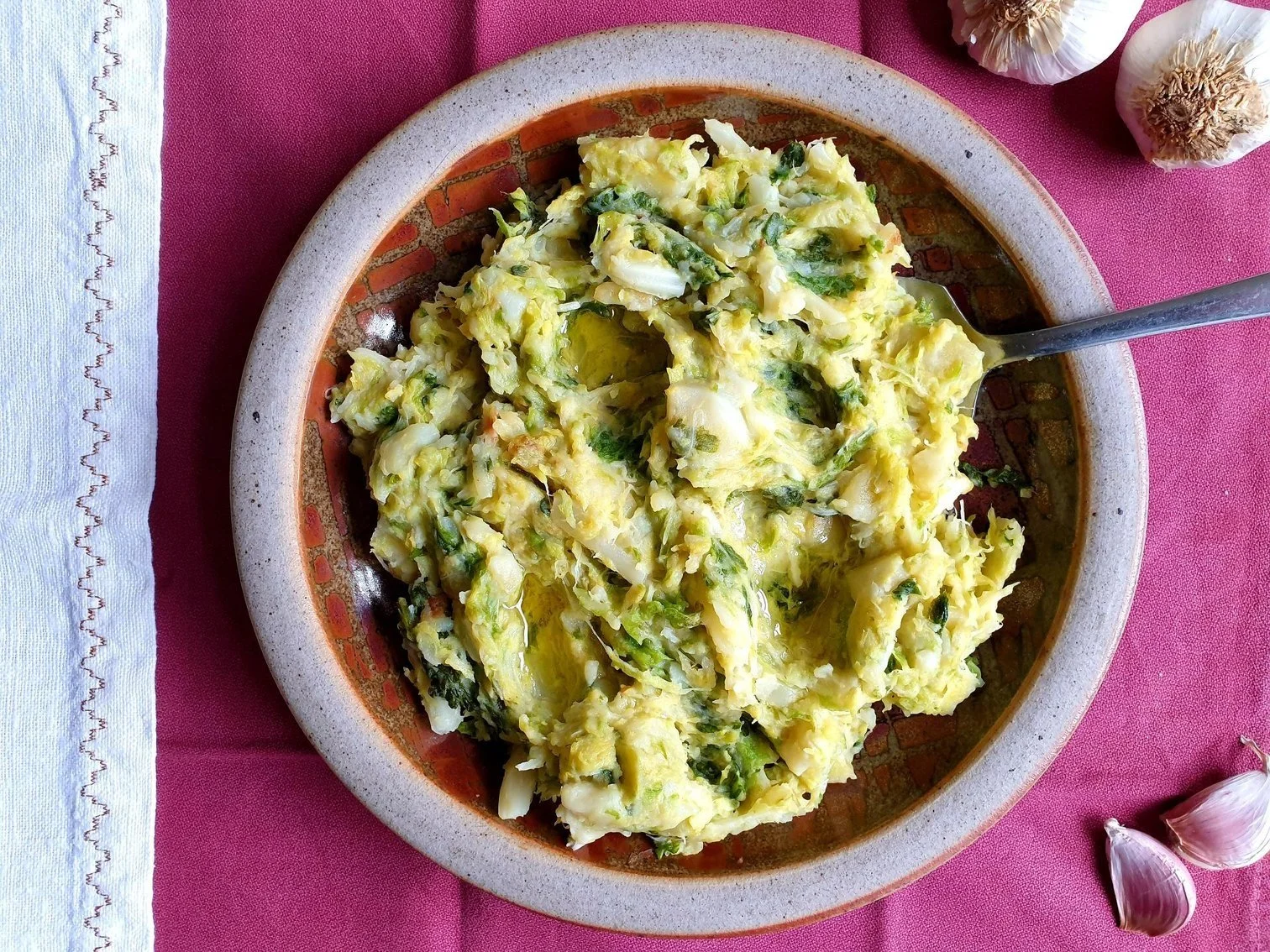
Let's face it, not a lot of people I know will get particularly excited about the cabbage, but slowly cooked down and sautéed savoy cabbage with delicate boiled potatoes, fragrant garlic, excellent olive oil and seasoned well with sea salt, will most certainly made up in the taste for what maybe lacks in appearance. This comforting and rustic vegetable side dish is simply delicious, trusted and reliable gastronomic companion to just about any meat dish, very easy to prepare, healthy, nutritious and inexpensive.

When savoy cabbage is cooked well with just a few excellent quality and fresh ingredients tastes nothing like you imagine, and it might convert the most austere cabbage 'dislikers'. This recipe can become a new classic cabbage dish for your family, changing what they have in mind when thinking about cabbage - if they ever even think about cabbage! This recipe completely changes the taste and texture of the cabbage, and it becomes “sweet”, soft, and ever so slightly mushy and velvety in a pleasant way.

I have never thought about this aspect of the dish, nor have I ever been bothered about it, as I grew up with it and have always been fully aware of the reward you get on the palate when it is cooked properly.

This dish is deeply rooted in Slovenian Istra, and is one of the most traditional dishes to be cooked as part of everyday family meals during autumn and winter when savoy cabbage is in full season and is most full of flavour. When it tastes at its best, it takes nothing less than the central place on dining tables, and as tradition wants, especially on Christmas Eve, together with salted cod spread and fritole (Istrian small doughnuts).

It is during these colder months of the year that my mother and most other households would prepare this side dish. My brother and I have always found this dish somehow reassuring, we would eat it paired with breaded, pan fried chicken escallops or pork Wiener schnitzel, which is one of the most common ways of serving it.

If there were any leftovers, my mother would reheat them, and they would be served with fried eggs - no waste, no hassle, and another meal sorted, and so happy children, and also happy, or relieved mom!

This recipe is normally made with freshly cooked cabbage and potatoes but it is made, and it can be made, using left over cooked cabbage and boiled potatoes which is a fantastic way to reduce food waste.

If you are one of those cabbage non-lovers, and managed to read up to this point about my enthusiasm for this humble vegetable, I warmly invite you to try this recipe, you might have a revolutionary moment and convert, this dish might just become one of your favourite autumn/winter vegetable side dishes.

I am sharing here my family recipe, give it a chance to see how nice it tastes

Ingredients

Serves 4 as part of meal

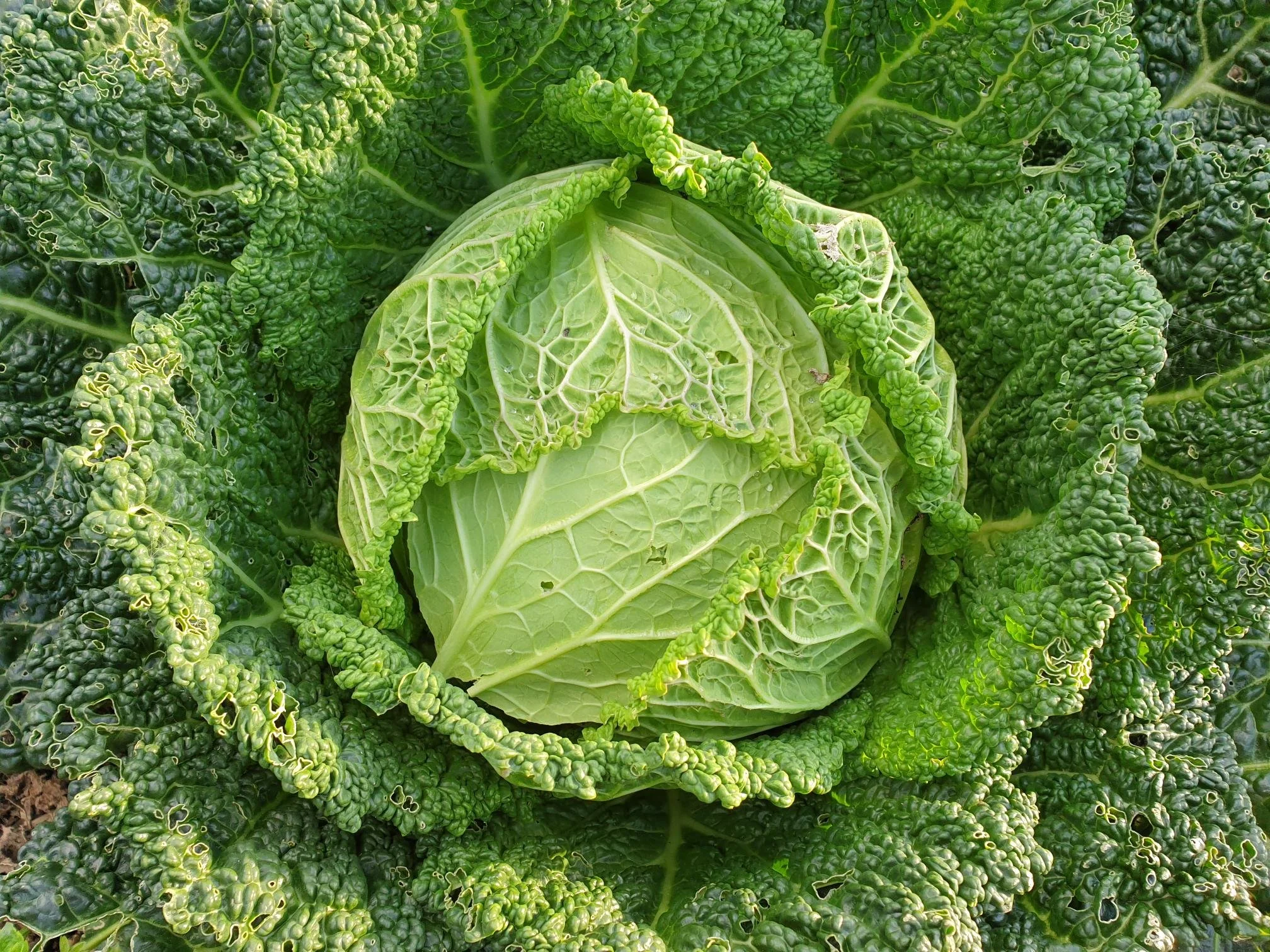
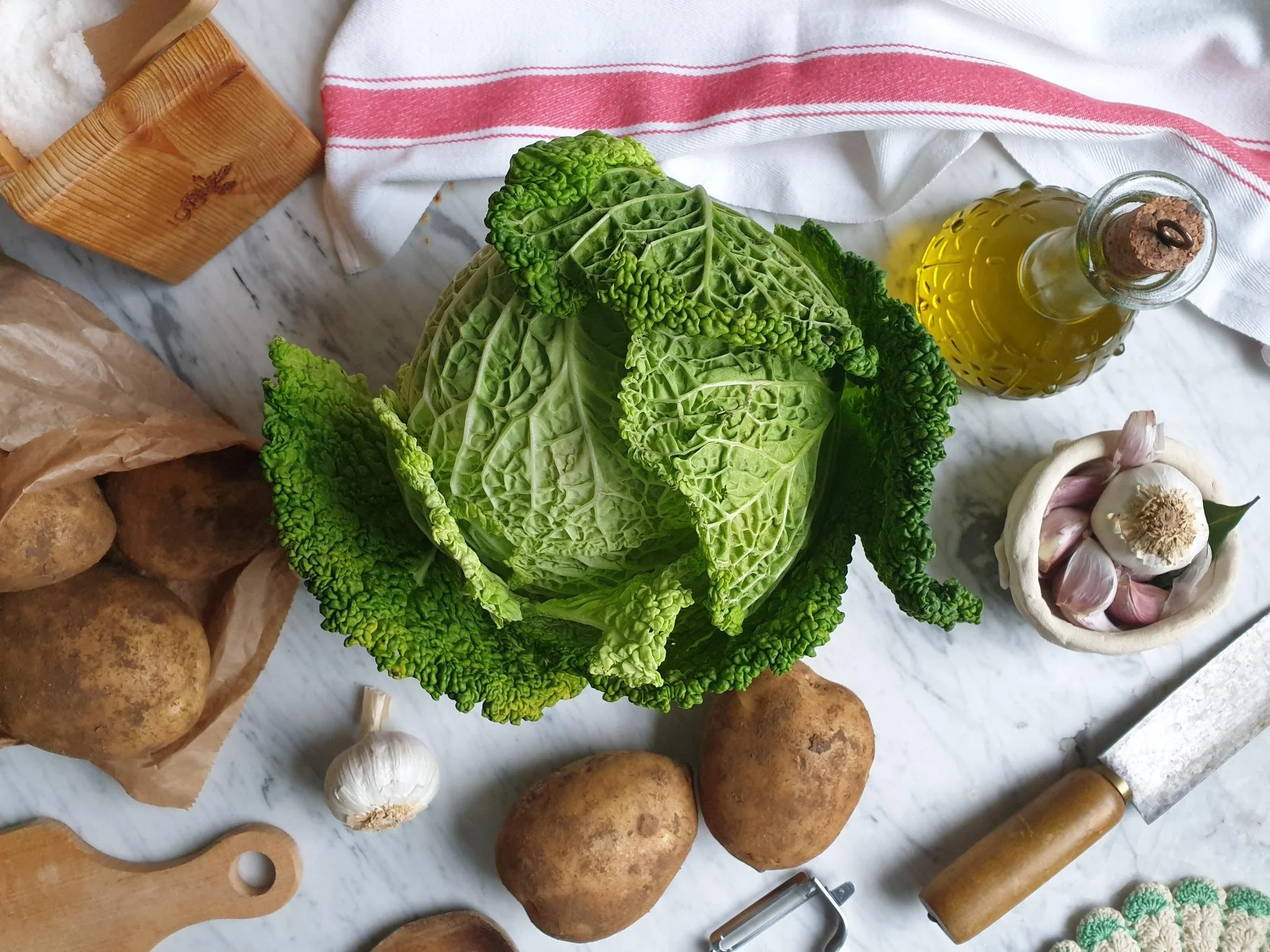
  • 1 savoy cabbage, cored and roughly chopped

  • 2 medium size potatoes (about 380g), peeled and cubed

  • 2 cloves of garlic, peeled and cut lengthwise

  • 6 Tbsp extra virgin olive oil (the best quality you can afford)

  • sea salt

  • ground black pepper, optional

Method

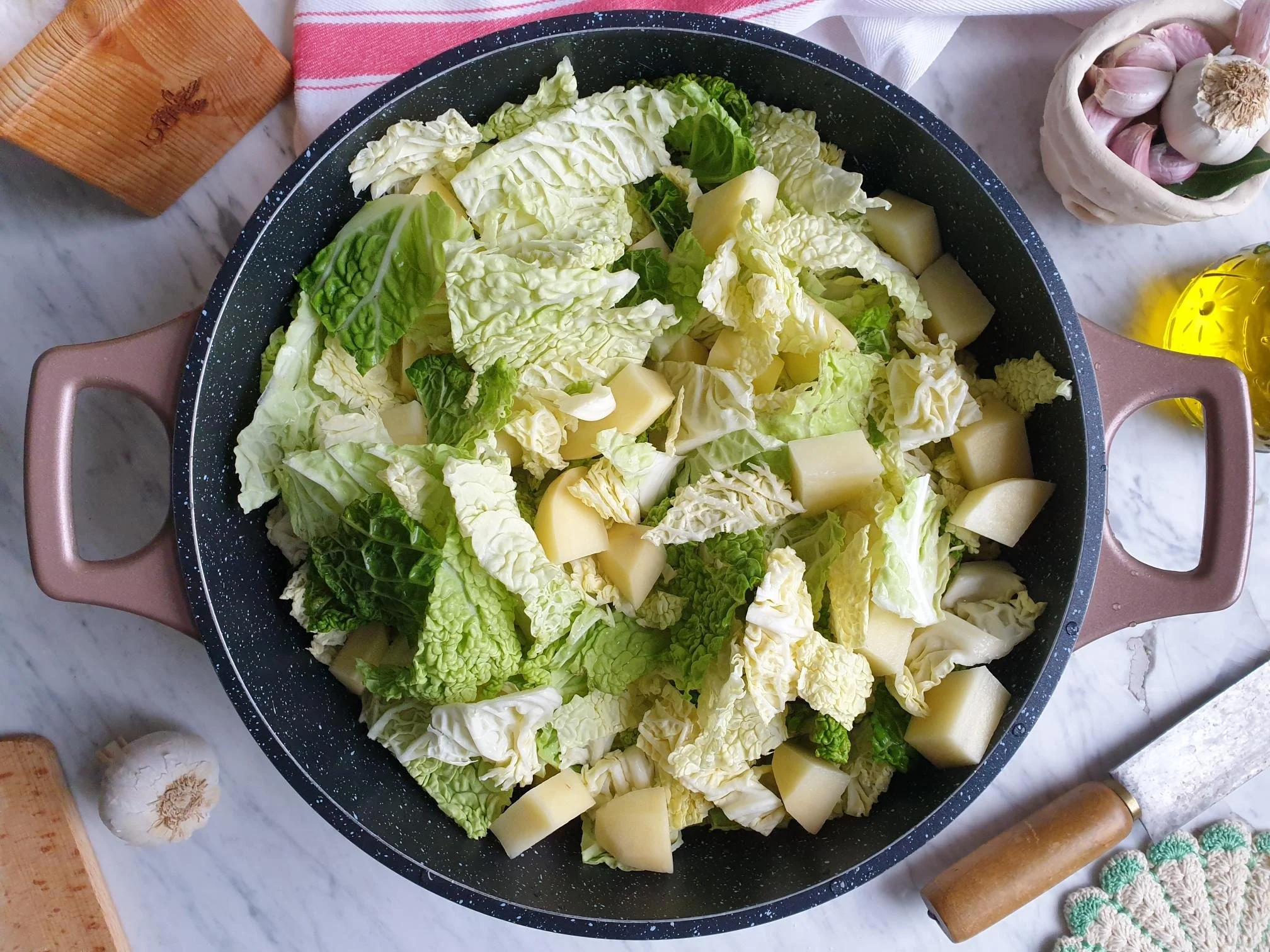
Cut up the savoy cabbage into quarters, remove core, cut roughly into smaller pieces and wash thoroughly

Peel the potatoes, cut into cubes and wash under cold running water.

Place both cabbage and the potatoes in a fairly big pot and add water to completely cover.

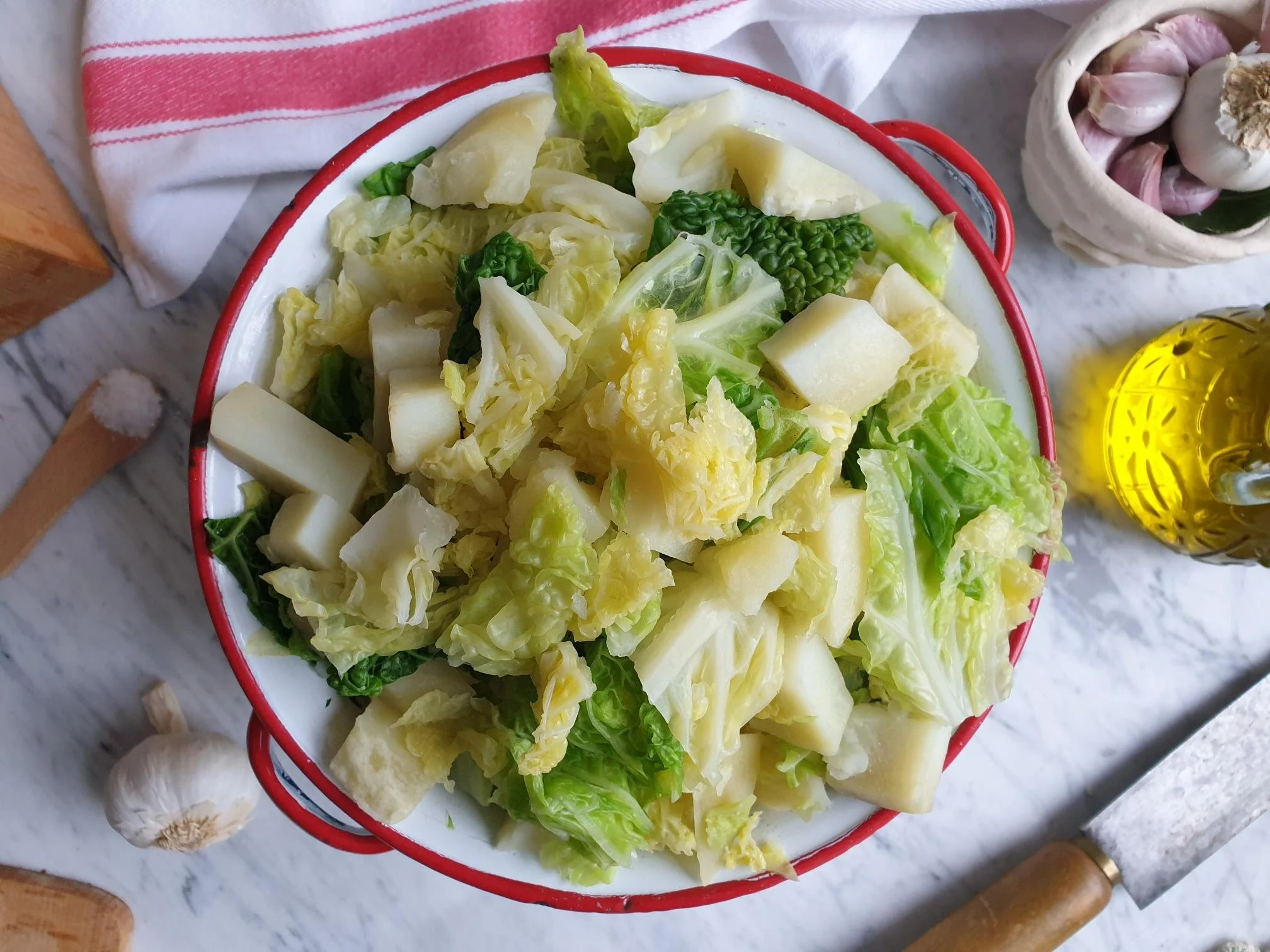
Bring to boil, turn the heat down, add a pinch of salt and cook for about 8-10 minutes or until potatoes and cabbage are cooked but still a bit firm.

View fullsize Savoy cabbage 4.jpg
View fullsize Savoy cabbage 5.jpg

When cooked, drain in a colander and leave for a few minutes so the extra water can drain well.

Put the extra virgin olive oil and the garlic in a pan (you can use the same pan that you cooked the cabbage and potatoes in, just dry it well) or use a skillet.

Cook the garlic in the oil until golden in colour allowing to flavour the oil, then remove and discard the garlic.

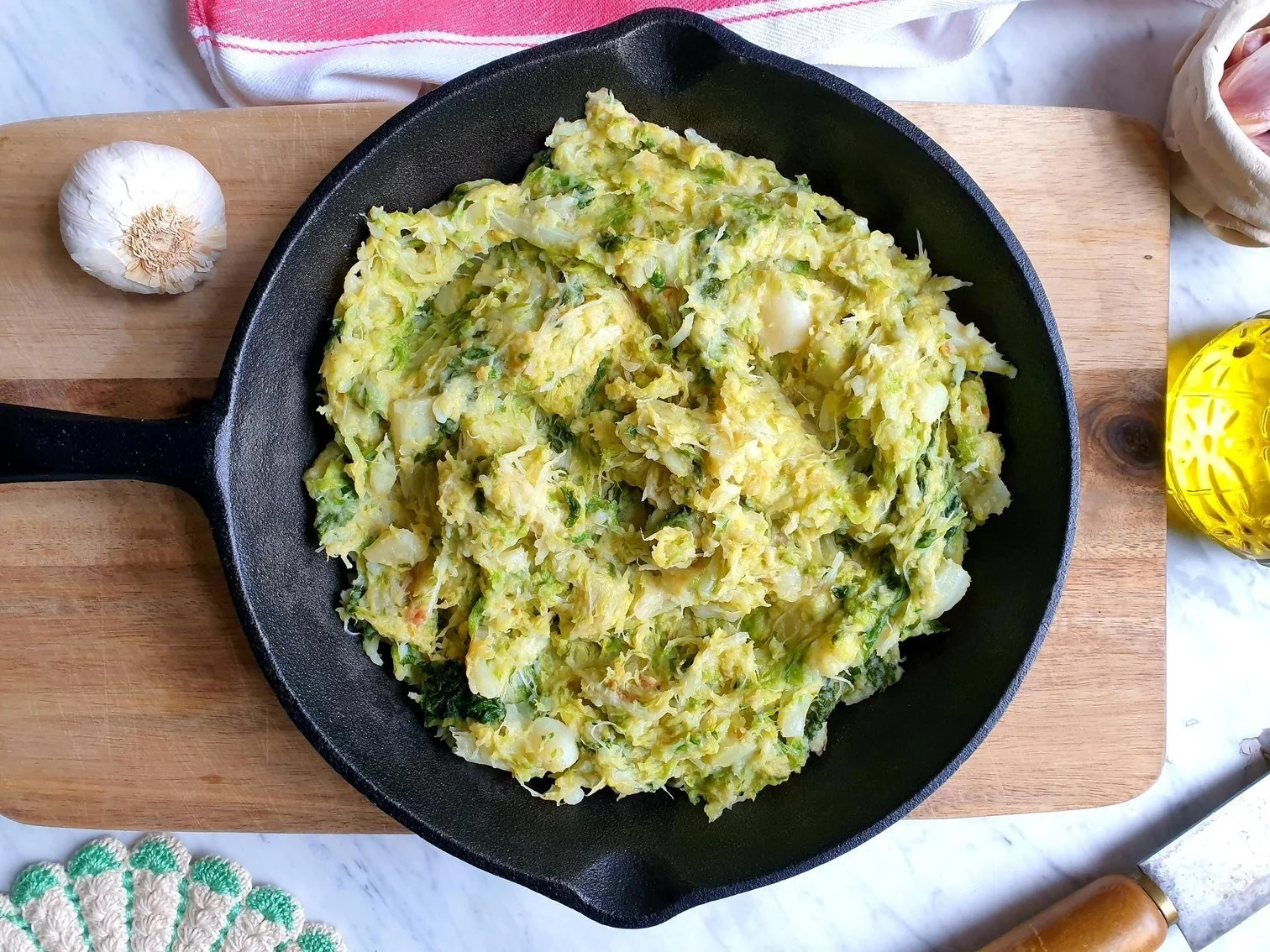
Add potatoes and the cabbage to the pan or skillet and cook down for about 20 minutes on a gentle heat stirring occasionally until a nice soft and velvety consistency.

While cooking, break the potatoes a bit with a back of wooden spoon or a fork but do not mash it completely.

Taste and adjust the seasoning with sea salt and add ground black if using.

Serve hot immediately.

Just a thought

This side dish will keep very well in fridge in the airtight container for a few days. Reheat well before serving warm.

Not particularly suitable for freezing.

December 27, 2021 /tina oblak
savoy cabbage, royal cabbage, vrzota s krompirjem, verza e patate
Adriatic Recipe, Autumnal dish, Autumnal recipe, brunch, Central European recipes, Christmas dish, dinner, Easy recipe, Festive dish, Healthy, healthy mael, Istrian cuisine, Istrian dish, Istrian food, Istrian gastronomy, Nutritious dish, Rustic dish, Side Dishes, Slovenian cuisine, Slovenian food, Slovenian gastronomy, supper, Vegan, Vegetarian, Winter dish, Winter recipe, one post fish recipe
Comment

Fritole - Istrian small doughnuts Recipe

Beans and Sardines
December 23, 2021 by tina oblak in Adriatic Recipe, Autumnal dish, Autumnal recipe, Celebratory dish, Central European recipes, Christmas dish, dessert, Easter dish, Easter treats, Eastern European recipes, Easy recipe, Enriched dough, Festive dish, Finger food, Istrian cuisine, Istrian dish, Istrian food, pudding, Rustic dish, Slovenian cuisine, Slovenian food, Slovenian gastronomy, Small bites, Snacks, sweet course, Sweet Things, Winter dish, Winter recipe, festive sweet things, festive dessert, celebratory desserts

Fritole are a type of small fried doughnuts made of thick batter-like dough enriched with raisins and served warm covered in icing sugar, they are light and crunchy on the outside and soft and aromatic on the inside, they just melt in your mouth.

This sinfully delicious and fragrant little delights have a very deep connection with Christian, especially Catholic liturgical festivities like the Carnival season, the time of the year in which eating in excess, and gastronomic indulgence was allowed by the Church before the start of fasting and austerity during Lent, and ending with Easter.

In Venice, where this sweet treats are a synonym of Carnival, fritole used to be prepared and served strictly during the days of Carnival. Nowadays, they appear not only in Venice but also in the region of Veneto and north-east region of Friuli-Venezia Giulia, Italy, and Istria where fritole are also very popular and start appearing as soon as Christmas festivities are over and remain around on offer as a irresistible sweet temptation until Ash Wednesday begins the Lent season.

However, on the coastal part of Slovenian Istra, once being part of what was called, ‘The most Serene Republic of Venice,’ fritole hold a very special place on Christmas Eve and this is when my nona would make fritole as the tradition called upon her to do.

In dialect they could also be called Fritle, Fritule or miške, meaning little mice in standard Slovenian, as when you drop the batter in hot oil, there is a little trail on the end, resembling little mice.

My father adored them and everyone in the family simply loves fritole, and whoever also grew up with fritole knows this very well. I am sure they can share with me the fact that they get eaten far faster than they can ever be made! When my nona started to get ready for the frying process, the kitchen would suddenly get crowded, we would get louder, and more excited, and our eyes would sparkle with joy just waiting in anticipation for them to be finished, and ready to eat!

My nona would be carefully scooping fritole out of hot oil and they would be disappearing in front of her yes and my nona, being incredibly experienced and fast could hardly keep up with us.

My nona made fritole with raisins but like most recipes fritole have few variation where pine nuts, cinnamon and candied fruit is added to a basic batter.

We would eventually get full, our greediness would decrease, the kitchen would be less noisy and less crowded but she kept frying, ending up layering the fritole on a big plate and dusting them with sugar looking like a snowy mountain, and this vision will stay with me forever...

She would then lovingly packed them for us to take home...

I am miles away from her kitchen, and years have passed by, but when I close my eyes I get transported immediately right back there ... I can smell and feel all of it, and in the stillness of these thoughts I can fully recollect all the nostalgic flavours, and the emotions so closely tied to my family.

My nona is now 93 years old, and her hands sadly are no longer able to make fritole, and so I feel privileged to be have learned how to make them from her, and since she gave me the family recipe, I am to able to keep making them and keep this family tradition alive.

This is why for me these sweet treats hold a very special place in my heart, they are more than just another recipe, they are part of who I am, and who I have become as a person ...

I am sharing here my nona's recipe that was passed down to her by her nona, and so try to make them, and delight your family and friends.

Ingredients

Makes about 40 small doughnuts

  • 400g plain flour

  • 3 eggs, (room temperature) beaten

  • 50g granulated sugar

  • 60-70g raisins or sultanas

  • 3 Tsp fast action dried yeast (also called instant yeast) or 40 g of fresh yeast

  • 250ml milk, lukewarm (full fat or semi skimmed)

  • 4 Tbsp of dark rum or grappa

  • finely grated lemon zest of one unwaxed lemon

  • sea salt, a pinch

  • sunflower or corn oil for frying

  • icing sugar for dusting

Method

Put the raisins in a small bowl, add warm water to completely cover and soak them for at least 20 minutes or until they plump up.

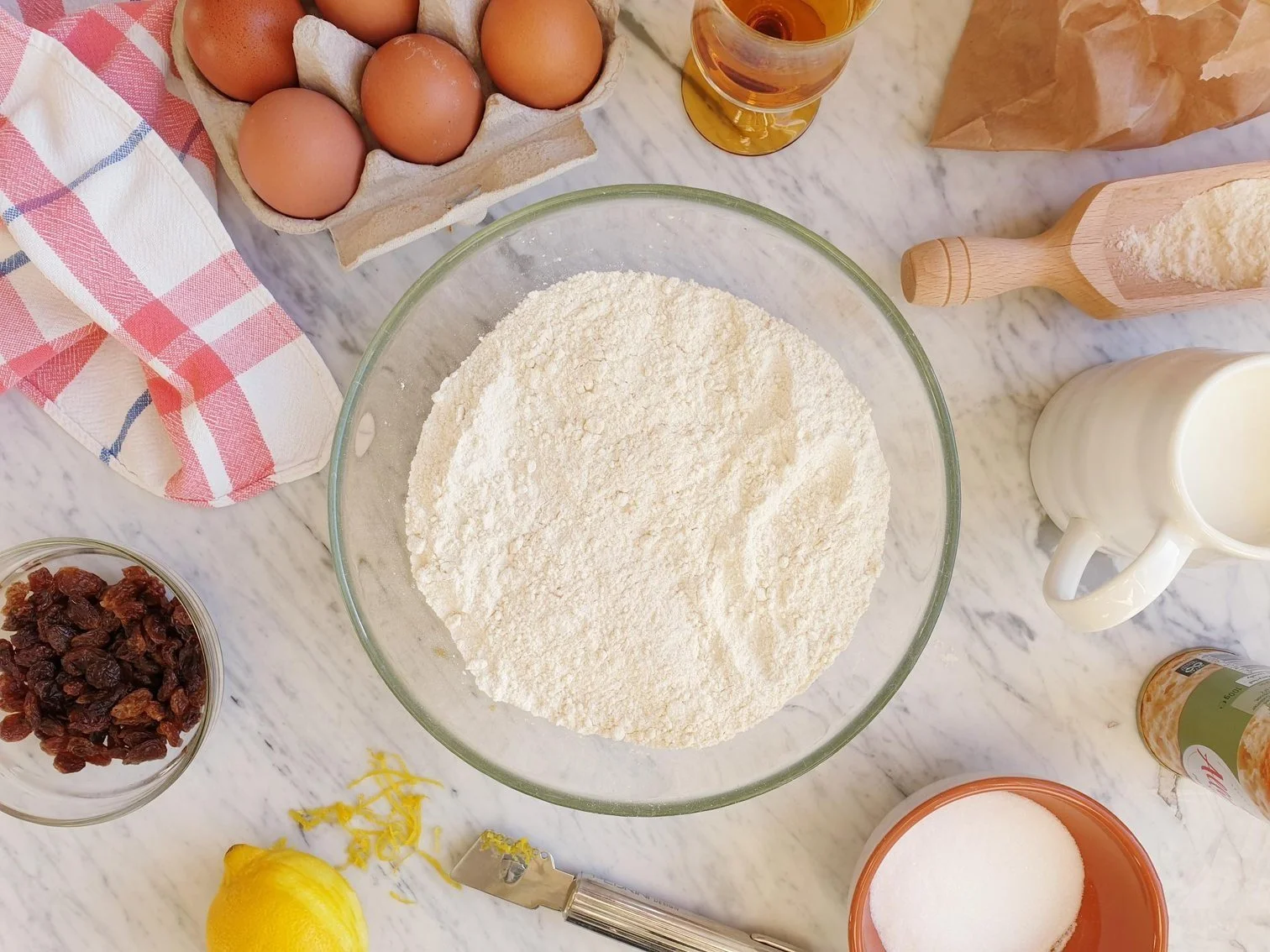
In a large bowl place the flour, beaten eggs, sugar, pinch of salt, yeast, grated lemon zest.

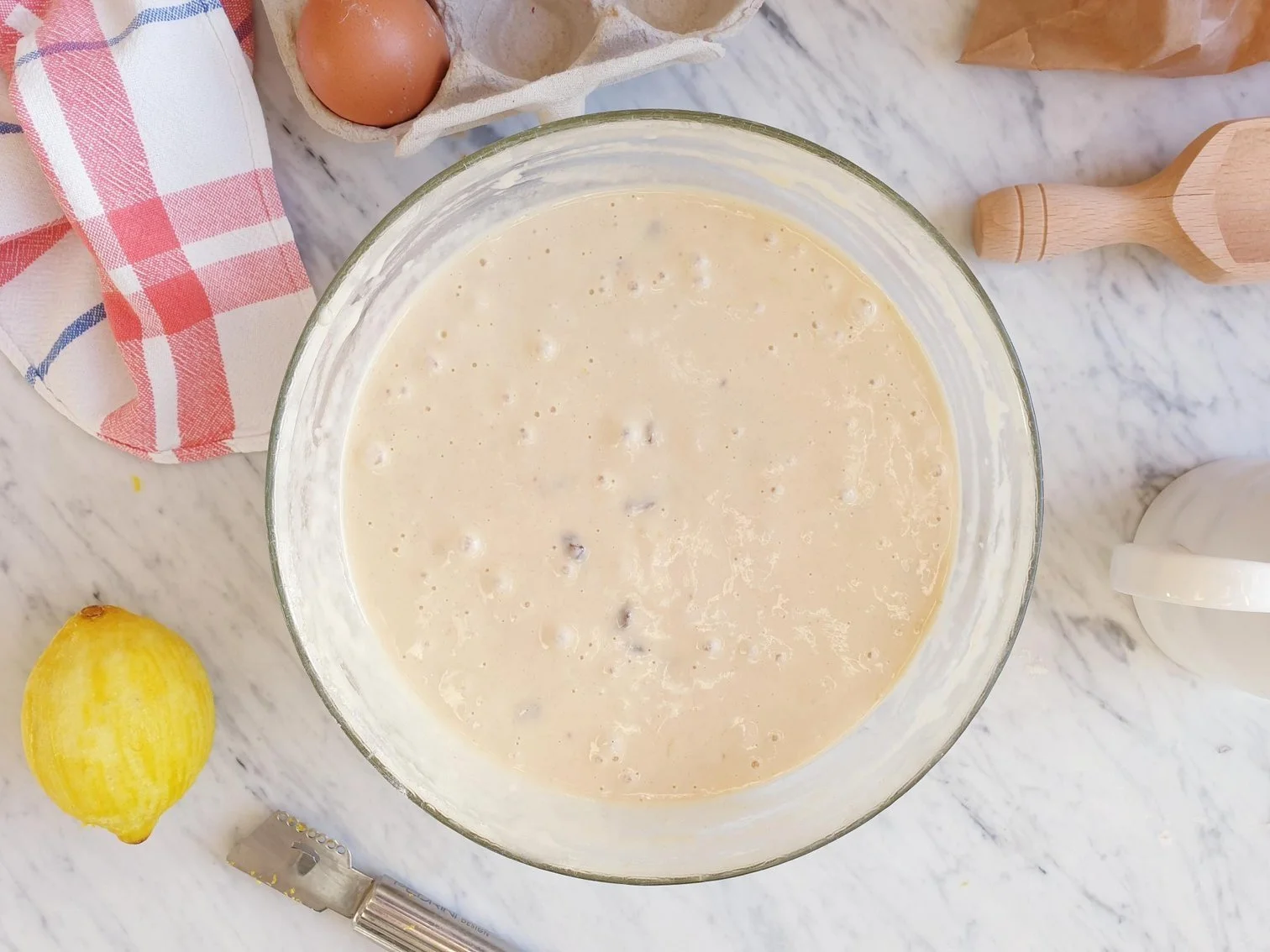
Gradually start adding the milk, mixing constantly until all the ingredients are well incorporated and you end up with a sticky dough that will be soft but thick resembling batter-like dough or a thick cake mix.

Adjust the dough by adding more milk if the dough is too thick, on the contrary, if you find the dough too runny add a bit more flour.

Add to the dough drained soaked raisins (squeeze out the all the excess liquid).

Cover the bowl with cling film or clean tea towel and place it in a warm place free of drafts from any open window.

Let the dough rest for at least 1 hour.

After this time the dough should rise a bit and have a bubbly surface.

Take a medium- sized deep skillet. Add the oil and heat it up over a medium heat to about 180C.

(If you do not have a thermometer, drop a cube of bread into the oil, it is ready when bread turns golden brown in 15 seconds).

Fritole are fried by dropping a small spoonfuls of dough/batter into the hot oil.

Take two tablespoons, with the first spoon scoop up the sticky dough from the bowl, with the second spoon slip off the dough from the first spoon into the hot oil.

Do not overcrowd the skillet with fritole and fry them in small batches, a few at the time, (4-6) this will obviously depend on the size of your pan. Fry them on both sides, fitole are fried in no time, about a minute on each size, so help them to flip over by using a fork or some tongs, however fritole will sometimes flip over themselves.

Whne you drop the batter/dough into a hot oil they will most probably not form perfect shaped balls but instead will leave a little trail on the end.

Fry until dark-ish brown in colour, puffed and well cooked through. I suggest you do a little test to make sure they are not raw inside. Simply open up a cooked fritola, if still gooey inside the oil is probably too hot and the heat too high.

Line a large plate with absorbent kitchen paper towels. Drain fried fritole with a slotted spoon and transfer them on a plate.

Allow the fritole to cool a bit.

Dust them with icing sugar or roll them in caster sugar.

Serve warm or at room temperature.

Just a thought

Fritole are to best enjoyed served still warm, however they are still delicious at room temperature.

Fritole can be warmed up in a microwave or in the oven. My nona put a plate of fritole on the radiator.

Wine suggestion

Moscato del Veneto IGT "Dindarello"2020 - Maculan'

December 23, 2021 /tina oblak
fritole, fritule, deep fried desserts, miske, miške, Fritle, Traditional Istrian doughnuts, small doughnuts, doughnuts, Venetian desserts, Venetian frittole
Adriatic Recipe, Autumnal dish, Autumnal recipe, Celebratory dish, Central European recipes, Christmas dish, dessert, Easter dish, Easter treats, Eastern European recipes, Easy recipe, Enriched dough, Festive dish, Finger food, Istrian cuisine, Istrian dish, Istrian food, pudding, Rustic dish, Slovenian cuisine, Slovenian food, Slovenian gastronomy, Small bites, Snacks, sweet course, Sweet Things, Winter dish, Winter recipe, festive sweet things, festive dessert, celebratory desserts
Comment

Potica – traditional Slovenian festive nut roll Recipe

Beans and Sardines
December 20, 2021 by tina oblak in Adriatic Recipe, Autumnal dish, Autumnal recipe, baked dish, baking, breakfast, celebratory desserts, Celebratory dish, Christmas dish, dessert, Easter dish, Easter treats, Enriched dough, festive dessert, Festive dish, festive sweet things, Istrian dish, Istrian food, Istrian gastronomy, Slovenian food, Slovenian gastronomy, Sweet bread, sweet course, sweet finger food, sweet nibbles, Sweet Things, Vegetarian, Winter dish, Winter recipe, festive bakes, Christmas bakes

Potica – traditional Slovenian festive nut roll Recipe

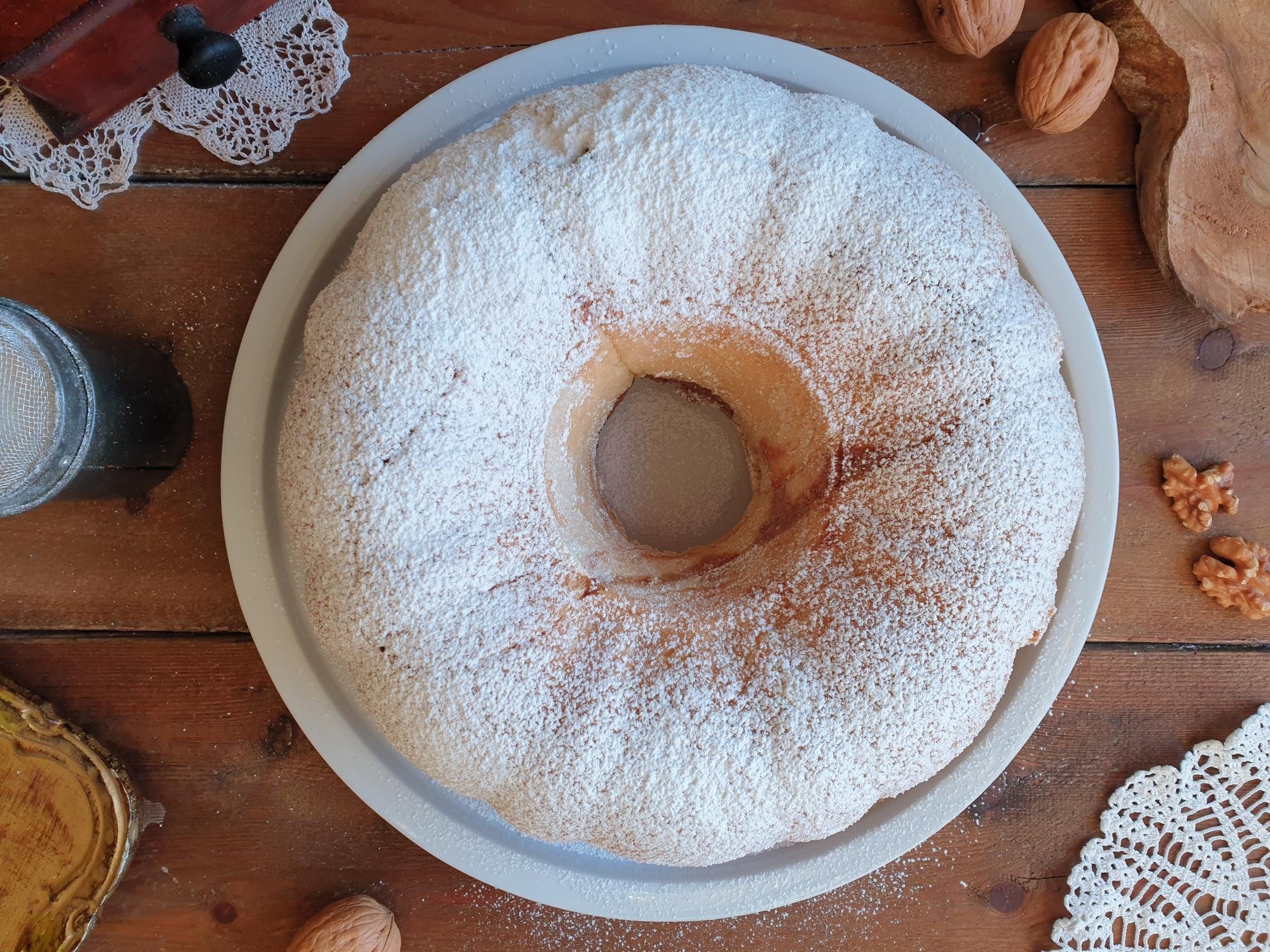
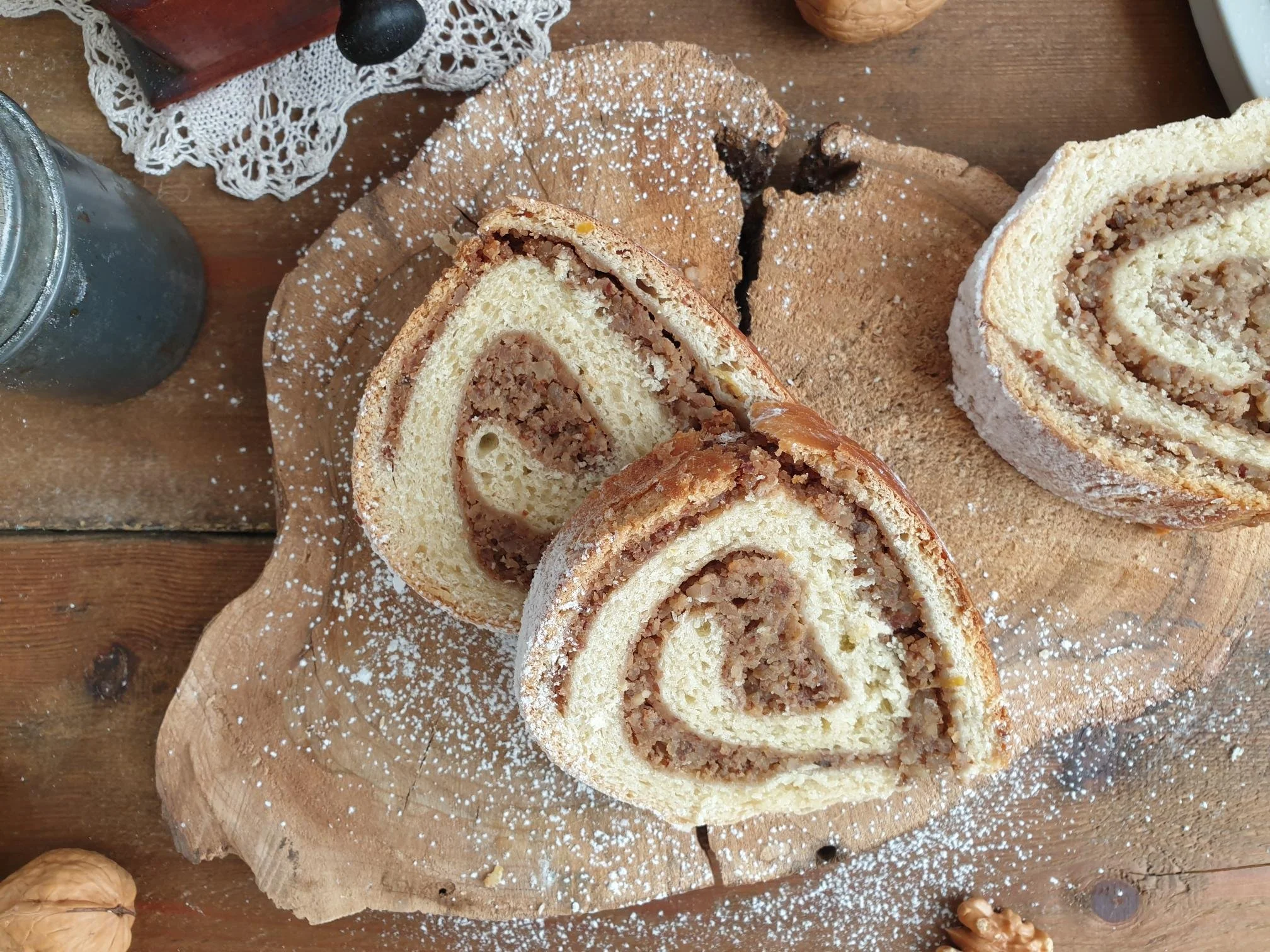
Potica is a light brioche like roll filled with rich and very tasty walnut filling, it is the most famous Slovenian dessert and the queen of festive sweet treats.

This cake is traditionally prepared and eaten around Christmas and Easter or other special and festive occasions like the weddings, Christening, family celebrations like birthdays and the birth of a new baby, but these days potica is available to buy in bakeries and supermarkets all year round.

Most loved and well-known is walnut potica, with or without raisins, but other regional sweet and savoury varieties are also very popular, where fillings are most commonly made with poppy seeds, pork crackling, cottage cheese and tarragon. They are all super delicious and recipes for potica are proudly passed from generation to generation.

The name "potica" derives from a Slovenian word “poviti” which means to roll up or to wrap and goes back as far as 16th century when it was baked in Slovenian monasteries.

In Slovenia, potica is traditionally baked in “potičnik” which is a round bundt-style baking dish made from ceramic, but it is also very commonly baked in a simple bundt cake tin, loaf tin or cake pan.

Potica, this Slovenian national treasure, has been registered as a Traditional speciality guaranteed (TSG) in the European Union since April 2001.

A slice of potica can be a great choice for breakfast, is ideal as an afternoon treat with coffee or tea, or like me, you will find any excuse, or none at all, to eat it.

I am sharing here the recipe of my nona's grandmother that made the filling for potica using a mixture of walnuts and almonds, the latter being widely available in Istria.

The mild Mediterranean climate makes almond trees a very common sight. My nona told me that the filling for potica was made with a mixture of those nuts that were most readily available, and sometimes raisins and a little bit of grated apple were also added to the nut mixture, and very rarely, a piece of a chocolate bar (not the whole bar), might be grated into the mixture, which then made the potica particularly luxurious. She reminded me that in the olden days, when she was small, (in the 30s and 40s) seasonal and home grown produce were used to create a wonderful array of dishes, shopping lists, as we know them today, just simply did not exist...

Ingredients for the dough

  • 500g all purpose flour or 00 type flour

  • 20g of fresh yeast or 7g fast-action dried yeast (also called instant yeast)

  • 100g unsalted butter, melted

  • 80g caster sugar

  • 250ml lukewarm full fat or semi skimmed milk

  • 2 eggs, separated (egg yolks slightly beaten, keep the whites for brushing potica just before putting in the oven)

  • 1 Tbsp dark rum

  • grated lemon zest of 1 unwaxed lemon

  • pinch of sea salt

Ingredients for the filling

  • 250g walnuts

  • 250g almonds (skin on or peeled)

  • 200ml single cream (can use semi skimmed or full fat milk instead)

  • 100g caster sugar

  • 1Tbsp dark rum

  • 2Tbsp of honey (about 50g)

  • 2 eggs, separated (egg yolks slightly beaten and egg whites whisked to soft peaks)

  • finely grated lemon zest of 1 unwaxed lemon

  • icing sugar for dusting

Method

The dough

In a fairly large bowl, sift the flour, make a little well in the centre and add instant yeast, melted butter, caster sugar, lightly beaten egg yolks, grated lemon zest, dark rum and a pinch of sea salt. Mix and combine well all the ingredients.

(If using fresh yeast, slightly brake it down into smaller pieces with your fingers and place it into a small bowl. Add few tablespoons of tepid milk, ¼ Tsp of sugar, gently stir and leave for about 15-20 minutes or until gentle bubbles form on the surface).

View fullsize Potica2.jpg
View fullsize Potica3.jpg

Transfer the mixture onto a well floured working surface and start kneading, for about ten minutes, adding a little flour at a time if the mixture is too wet and sticky.

Alternatively, use a mixer fitted with a dough hook and leave running for about 5 minutes.

The dough is ready when it ends up being really smooth and elastic. It should not stick to your hands or working surface and should leave the bowl clean if using a mixer.

Transfer the dough back into a very lightly oiled bowl and cover with cling film or clean kitchen towel.

Put the bowl in a warm room free of drafts for at least one hour and leave the dough to rest and rise, the dough should double in size.

View fullsize Potica12.jpg
View fullsize Potica13.jpg

While the dough is resting and rising start preparing the filling.

The filling

Place walnuts and almonds in a food processor and mix to a coarse consistency.

View fullsize Potica5.jpg
View fullsize Potica6.jpg

Transfer ground walnuts and almonds into a bowl, pour over lukewarm single cream and mix well.

Add caster sugar, dark rum, honey, 2 lightly beaten egg yolks and 2 egg whites (previously whisked to soft peaks and not too stiff) and grated lemon zest. Mix all the ingredient until very well combined and set aside.

View fullsize Potica7.jpg
View fullsize Potica8.jpg
View fullsize Potica9.jpg
View fullsize Potica10.jpg

Flour well your working surface and rolling pin. Put your dough onto a working surface and roll it out to a more or less rectangular shape (40cmx50cm) to the thickness of about not more than 1cm.

View fullsize Potica16.jpg
View fullsize Potica17.jpg
View fullsize Potica18.jpg
View fullsize Potica19.jpg

Take the walnut-almond mixture and spread it evenly on the rolled dough but leave some space around the edge so the filling does not come out when rolling the dough.

View fullsize Potica20.jpg
View fullsize Potica21.jpg

Gently roll the filled dough quite tightly into a log.

Cut off or tuck well in the edges.

View fullsize Potica22.jpg
View fullsize Potica24.jpg
View fullsize Potica25.jpg

Prepare the bundt pan (for the quantities in this recipe I use a 24cm round bundt cake tin).

Grease it very well with butter, make sure you reach all the nooks and crannies and coat it well with the flour. Shake the excessive flour out of the bundt tin.

If you do not have a bundt pan you can use:

  1. loaf tins (cut the roll into two or three parts, depending on the size of the loaf tins you are using)

  2. greased spring form cake tin (24cm for the quantity in this recipe)

  3. or simply use a baking tray previously greased with butter (in this case model the log into a U shape)

View fullsize Potica14.jpg
View fullsize Potica15.jpg

Very gently place your rolled dough (seam side down) into a bundt pan, cake tin or baking tray. Cover with a clean kitchen towel, place it in a warm, draft free room and leave to prove for the second time for 30min to 1h or until well risen (not necessarily doubling in size, just filling out nicely the tin).

View fullsize Potica26.jpg
View fullsize Potica27.jpg

Take a toothpick and make little holes in the dough on the whole surface and brush with egg whites.

View fullsize Potica28.jpg
View fullsize Potica29.jpg

Bake in the preheated oven at 180C static for about 50-60 minutes. Halfway through baking, tent the potica with the aluminium foil to prevent it browning too much and starting to burn.

Leave until completely cold in a tin.

To remove the potica more easily, take a little plastic knife and run it around the edges to loosen the cake.

Transfer on a serving plate, dust with icing sugar and serve.

Just a thought

Potica tastes at its best the day after has been baked.

You can store it in an airtight container for up to five days and is suitable for freezing.

Wine suggestion

Friuli Colli Orientali Picolit Cialla DOC 2008 - Ronchi di Cialla (0.5l - astuccio)

December 20, 2021 /tina oblak
Christmas cakes, nut bakes, walnut bakes, almond bakes, Potica, festive nut roll, traditional Slovenian bakes, Traditional Eastern European bakes, Festive Eastern European bakes
Adriatic Recipe, Autumnal dish, Autumnal recipe, baked dish, baking, breakfast, celebratory desserts, Celebratory dish, Christmas dish, dessert, Easter dish, Easter treats, Enriched dough, festive dessert, Festive dish, festive sweet things, Istrian dish, Istrian food, Istrian gastronomy, Slovenian food, Slovenian gastronomy, Sweet bread, sweet course, sweet finger food, sweet nibbles, Sweet Things, Vegetarian, Winter dish, Winter recipe, festive bakes, Christmas bakes
Comment

Creamed salted cod (or stockfish) Recipe

Beans and Sardines
December 16, 2021 by tina oblak in Adriatic Recipe, Appetizers, Autumnal dish, Autumnal recipe, bite-sized nibbles, brunch, Canapés, Celebratory dish, Central European recipes, Christmas dish, dinner, Easter dish, Easy recipe, entrée course, Festive dish, Finger food, Fish & Seefood, healthy mael, Istrian cuisine, Istrian dish, Istrian food, Istrian gastronomy, main course, main dish, Nutritious dish, recipe from Northern Ital, Rustic dish, Slovenian cuisine, Slovenian food, Slovenian gastronomy, Small bites, Snacks, spreads, Starters, Winter dish, Winter recipe, fish spreads, fish starter

Venetian in origin, this light and creamy, almost mousse like spread, it is one of the most loved dishes, due to its very mild fishy flavour and no bones to worry about, and so it covers the whole family from the youngest children to the oldest members.

Spread on fresh or toasted slices of bread or it can be eaten with polenta, and it is a very convenient dish since it is served cold and it is prepared in advance. Creamed salted cod is rustic but it can soon turn into very elegant canapé served with a pre dinner drink.

I think that this recipe is one of the greatest recipes ever invented! Quite frankly, it takes a bit of a genius to turn an uneatable dry stockfish, which looks utterly unappealing, and is as dry as a plank of wood, into the most luxurious and delicious dishes ever created.

Venetian creamed cod, known in Italy as Baccalà mantecato, is a real speciality and a staple dish in Venice, where it was created, and it is very much appreciated and well known in the rest of Italy. Slightly less known however in the rest of the world, creamed salted cod certainly deserves greater international praise and renown.

This dish is one of my absolute top favourites, one of those dishes I am most grateful to the Venetians to have brought with them during the time they ruled my homeland in the North Adriatic, period during which dried stockfish was first introduced in Istria in 15th century from Venetian cuisine.

In Slovenian it is called Bakala na belo or Polenovka na belo or simply called by the locals Bakala or Bakalar.

My paternal grandfather, or my nono as I called him, used to always buy stockfish at the beginning of December, I have this image in my head of the dry long stockfish sticking heavily out of the shopping bag, I knew very well that it was the start of the Christmas festivities.

This recipe is a real classic holiday and festive dish in Slovenian Istra, and holds a very special place among the locals. Dried stockfish was once a food for the poor but nowadays is a staple dish and considered a delicacy, taking central stage on household tables during Christmas and Easter as it is cooked on holy days during the fasting time and not eating meat.

Traditionally, creamed stockfish is home made and served as part of Christmas Eve dinner, together with sautéed Savoy cabbage and polenta, and Istrian fritole (small fried doughnuts), of course.

These days you can find creamed stockfish on the supermarket shelves all year round, and especially during the holiday season and Easter, but unfortunately, the sad reality is, that very often, the quality of commercially produced cod spread leaves much to be desired, as very common practice is to add lard or potatoes to increase the weight

I have very vivid memories about the process of soaking the stockfish, this huge restaurant size pot was left outside in the back garden during the night and when the temperatures plummeted below 0, the ice formed on the top, and I just loved finding the sheet of ice the following morning, and braking it into pieces. My son does the same...what is it with the children and the ice, and love for breaking it ...

My son Jakob (age 9) with his gran grandmother (age91) making creamed stockfish with the help of a standard mixer

My nono was in charge of stockfish, year, after year, after year, until he sadly passed away, then my father took over and now it is down to myself, my brother, my husband, and the children, since my father sadly is longer around. Back home, according to tradition, stockfish and the preparation of it is still a male affair, however, maybe it is time for this to change!

My nono would sit on the chair, place a big pot containing pieces of cooked cod between the legs, a bottle of olive oil would be kept very close to him for an easy and frequent reach and as tradition requests, the cooked cod would then be beaten with big and long wooden flat spoon like, known locally as polentar or bat which resembles very much a cricket bat, but in my research I have found no connection between the two types of bats!

In honour of my family but in particular in honour of my nono and my father I am sharing here this very special generational family recipe. Give it a go, you will love it!

Ingredients

Serves 4

  • 500g salted cod or 1 dry stockfish

  • 170ml extra virgin olive oil (the very best you can afford) plus a bit of extra as needed

  • 1-2 cloves of garlic, peeled

  • 1 bay leaf, fresh or dry

  • fresh flat leaf parsley (about 7g) finely chopped, optional

  • sea salt, to taste

Method

For this recipe you can use either salted cod or dry stockfish, both need to be soaked and rehydrated first.

If you are using salted cod (I used this type for the recipe) first you need to rinse well the salted cod under very cold running water and soak it. Place rinsed cod in an airtight container, fill it completely with freezing cold water, and with some ice, if you have it, so the fillets are completely submerged. Close the lid and put the container in the fridge. Change the water after 24 hours and place in the fridge for another day. After 48 hours, the cod will be completely soaked. Remove the cod from the container, rinse well with cold water and cut the fillet/s into portion size.

Place pre-soaked pieces of cod in a pan and fill it with plenty of cold water so the pieces of fish are completely submerged in the water. Add bay leaf and bring to boil.

View fullsize Creamed Salted Cod 3.jpg
View fullsize Creamed Salted Cod 4.jpg

Turn the heat down and cook further on a gentle heat for about 20 to 30 minutes and skim the foam on the surface as needed.

After the fish is cooked drain in the colander.

As soon as it is cool enough to handle carefully remove the skin and the odd bone.

With your fingers break the flesh into smaller pieces and place them in a pan or in a bowl of a standard mixer if you are using one.

View fullsize Creamed Salted Cod 5.jpg
View fullsize Creamed Salted Cod 6.jpg

If using a whole dried stockfish, this needs to be soaked and rehydrated first. Place the whole stockfish in a big stock pot and fill completely with cold water and soak for 2-3 days, changing the water every day. If you do not have a very big pot to fit the whole stockfish in, you can use a smaller pot, like a regular 5 litre stock pot, and then place the stockfish in a pot where half of it will probably stick out, and half will be submerged in the water. Soak the submerged part of stockfish for 24 hours and after this time the soaked part of the stockfish will get soft enough to bend, which will allow you to bend it in a such a way for the whole stockfish to be completely submerged into the water in order to get properly rehydrated. No need for rinsing as the dried stockfish is not salted.

Soaked and rehydrated cod needs then to be cooked. Place it in a stock pot, the same one you used for soaking, fill it with plenty of cold water (the whole fish needs to be completely submerged), add bay leaf and bring to boil. Lower the heat and cook further on a gentle heat until the fish is tender, for about 1 hour or just over.

Drain the fish and as soon as is cold enough to handle carefully remove the skin and all the bones.

With your fingers break the flesh into smaller pieces and place them back into in big pan or into a bowl of a standard mixer if you are using one.

Whether you have decided to use salted cod or stockfish you are now left with cooked cleaned small pieces of cod in a big pan or in a bowl of a standard mixer, again only if you are using one.

Place 5 Tbsp of extra virgin olive oil in a small frying pan, add the garlic previously peeled and cut in half lengthwise. Fry the garlic on a gentle heat until golden in colour to infuse the oil then discard the garlic.

Add garlic infused oil to the bowl.

Now the magic can begin.

Take a wooden spoon and start beating the pieces of fish quite vigorously. If using a standard mixer, put it on the lowest and slowest setting.

Keep beating and poring gradually the rest of the oil until you obtain a whitish paste and until the creamy mixture can no longer absorb any more oil.

This action of beating and adding very gradually small quantities of oil will eventually turn the pieces of cod into a light and fluffy cream, this process, in order to get the best result, can take up to 30 minutes.

View fullsize Creamed salted Cod 7.jpg
View fullsize Creamed salted cod 9.jpg

Add sea salt to your taste and very finely 1 chopped clove of garlic, although this optional, mix well, taste, and adjust the seasoning.

Transfer cod spread on a serving plate.

Serve it accompanied with slices of fresh rustic bread, toasted slices of bread (bruschetta) or slices of grilled yellow polenta.

Wine suggestion

Venezia Giulia Malvasia IGT 2019 - Skerk

December 16, 2021 /tina oblak
creamed salted cod, creamed stockfish, creamed salted cod mousse, baccala mantecato, Bakala na belo, Bakala, Bakalar, Istrian fish delicacy, Venetian fish specialty
Adriatic Recipe, Appetizers, Autumnal dish, Autumnal recipe, bite-sized nibbles, brunch, Canapés, Celebratory dish, Central European recipes, Christmas dish, dinner, Easter dish, Easy recipe, entrée course, Festive dish, Finger food, Fish & Seefood, healthy mael, Istrian cuisine, Istrian dish, Istrian food, Istrian gastronomy, main course, main dish, Nutritious dish, recipe from Northern Ital, Rustic dish, Slovenian cuisine, Slovenian food, Slovenian gastronomy, Small bites, Snacks, spreads, Starters, Winter dish, Winter recipe, fish spreads, fish starter
Comment

Salted Cod in tomato sauce Istrian Recipe

Beans and Sardines
December 08, 2021 by tina oblak in Adriatic Recipe, Autumnal dish, Autumnal recipe, dinner, Easy recipe, Fish & Seefood, healthy mael, Istrian cuisine, Istrian dish, Istrian food, Istrian gastronomy, main course, main dish, Nutritious, Nutritious dish, one pot meal, Rustic dish, Slovenian cuisine, Slovenian food, Slovenian gastronomy, stew, Winter dish, Winter recipe, one post fish recipe, Christmas dish, Easter dish, Celebratory dish, Festive dish

Salted Cod in tomato sauce Istrian Recipe

This main, fish based dish is absolutely delicious and very special! It is rustic but delicate and elegant at the same time - cod is cooked in a simple tomato sauce enriched with onions, garlic, and fresh parsley. It is very easy to make but it does require a bit of organization and planning ahead since it is traditionally prepared with dried stockfish or salted cod that needs to be soaked and hydrated, although in this recipe you have the option to use fresh cod or similar.

This recipe is a real classic holiday and festive dish in Slovenian Istra, and holds a very special place among the locals. Dried stockfish was once a food for the poor but nowadays is a staple dish and considered a delicacy taking central stage on household tables during Christmas and Easter as it is cooked on holy days during the fasting from meat.

Dried stockfish was introduced in Istria in 15th century from Venetian cuisine, and this should not be surprising since the Venetians established a monopoly in the Adriatic Sea.

The origins of this fish, however, is far away from being local dish. It can be traced to the extreme north of Norway, to the Lofoten Islands where the Vikings, most probably the earliest inhabitants of the area, had to find a solution to the perpetual problem of hunger. They fished enormous cod shoals, then they dried the headed and gutted fish in the strong winds of the north, hanging them by their tails, the fish turned as hard as a plank of wood and it would last for a very, very long time.

This dried fish eventually started to be sold by the Norwegians to the rest of Europe, sometime in the eleven century. Gastronomically speaking, and perhaps surprisingly, dried stockfish has not been particularly well appreciated by the Scandinavians. On the contrary, in the Mediterranean countries, stockfish became an elevated dish, it was highly valued, and much more appreciated.

The biggest consumers of dry cod, just to mention a few, are Italy, Spain, Portugal, Brazil, West Africa, Caribbean, and many other countries.

Local people back home, on the Slovenian coast, are very traditional and conservative when it comes to the choice of the ingredients and cooking, therefore the use of dried stockfish would be the first choice to prepare this dish. The use of less traditional salted pieces of cod would be the second choice influenced mainly by simplicity, practicality and speed, and this is the type of cod I I use for this recipe.

In the recipe description below I am also giving you the option to use fresh cod or a similar fish, if you have difficulty finding dried stockfish, salted cod or pre-soaked cod, or simply prefer to use fresh fish instead.

Here, in the United Kingdom, where I currently live, you can find and buy dried stockfish or salted cod (sold vacuum packed) in Italian delicatessen shops especially around Christmas and Easter or alternatively order it from your trusted fishmonger or from an on-line specialist shop.

I am sharing here this very special family festive recipe in honour of my father, who very sadly is no longer with us, and who absolutely adored preparing and enjoying this dish.

At the start of Christmas season, my father would buy dried stockfish, soaked it, cooked it, removed the skin and all the bones to be left with bite size pieces that would get vacuum packed and I would take the pack on the plane back to the UK...

Ingredients

  • 500g salted cod or about 800g of already pre-soaked cod (soaked and rehydrated cod almost doubles its original weight) Both varieties are sold vacuum packed in form of fillets with no bones.

    (can use about 800g of fresh cod fillets or similar like haddock or pollock instead)

    Whole stockfish (unsalted, dry cod) is traditionally used for this recipe.

  • white flour (for coating the fish)

  • 2 Tbsp extra virgin oil

  • 1 medium onion (about 140g) finely chopped

  • 1 clove of garlic, peeled and crushed

  • 1 handful of fresh flat leaf parsley (about 12g)

  • 250g plum or other types of tomatoes (when in season), quartered or chopped. Use tomato passata, tinned chopped or plum tomatoes as alternative.

  • sea salt, if needed

Method

Serves 4

How you start this recipe will really depend on what type of cod you have.

1. If you have salted cod (I used this type for the recipe) first you need to rinse well the salted cod under very cold running water. Place rinsed cod in an airtight container, fill it completely with freezing cold water, and with some ice, if you have it, so the fillets are completely submerged. Close the lid and put the container in the fridge. Change the water after 24 hours and place in the fridge for another day. After 48 hours, the cod will be completely soaked. Remove the cod from the container, rinse well with cold water and tap dry with kitchen paper. Cut the fillet in portion size.

View fullsize Bacala in tomato sauce 1.jpg
View fullsize Bacala in tomato sauce 2.jpg

2. You can buy (a bit trickier to find, at least in the United Kingdom) already soaked and rehydrated cod. In this case just rinse with running cold water, tap dry and cut in portion size.

3. You can simply use fresh cod or similar like haddock or pollock fillets and cut it into portion size.

4. You can buy a whole dried stockfish. This could prove the trickiest option as the stock fish might be quite long and you need quite a big stock pot to fit it in, fill completely with very cold water and soak for at least 3 days, changing the water every day. If you do not have a very big pot to fit the whole stockfish you can use a smaller pot, like a regular 5 litre stock pot, and then place the stockfish in a pot, half of it will probably stick out, and half will be submerged in the water. Soak the submerged part of stockfish for 24 hours and after this time the soaked part of the stockfish will get soft enough to bend, which will allow you to bend it in a such a way for the whole stockfish to be completely submerged into the water in order to get properly rehydrated.

No need for rinsing as the dried stockfish is not salted. Soaked and rehydrated cod needs then to be cooked until tender, for about 1 hour or just over. When is cooked take the skin off and remove all the bones. You are left with portion size or smaller bite size piece ready to be used for this recipe.

Very lightly coat the pieces of cod in flour and shake off the excess.

Place oil in a pan (the pan should be big enough so all the pieces of cod are nicely tucked next to each other and do not overlap).

Add finely chopped onions, crashed garlic and sauté very gently until soft.

Place chopped tomatoes or passata in a pan and cook further for about 10 minutes stirring occasionally. If using fresh tomatoes make sure they are soft and use the back of a fork to squash a bit.

Place cod pieces in a tomato sauce, add finely chopped parsley and enough water to almost cover the cod fillets. If using fresh cod add the water half way up as it cooks quicker.

View fullsize Bacala in tomato sauce 3.jpg
View fullsize Bacala in tomato sauce 4.jpg

Partially cover with the lid and on a gentle heat cook for about 40 minutes, shaking the pan now and again. If using fresh cod the cooking time will be slightly reduced.

After this time you should end up with the velvety sauce that is not too thick nor too thin and liquidy.

If the the sauce, however, is too thin sprinkle a bit of flour or breadcrumbs and cook further briefly until you get the desired consistency.

Contrary, if the sauce gets too thick dilute it with a bit of water.

Taste and adjust the seasoning with sea salt especially if preparing this dish using dried stockfish or fresh fish. If using salted cod you will most probably not need any extra sea salt for seasoning, as although the fish gets soaked and desalinated, the fish still retains some of the salt, and this gets released during cooking.

Just a thought

This dish is traditionally served with soft cooked polenta or some crunchy bread to soak up the sauce.

Salted cod in tomato sauce can also be eaten with the pasta of your choice or it can be used as a base to make a risotto.

This dish will keep well in the fridge for few days in an airtight container and is suitable for freezing.

Wine suggestion

Pinot Bianco DOC 2020- Doro Princic

December 08, 2021 /tina oblak
salted cod in tomato sauce, dry stockfish in tomato sauce, pollock in tomato sauce, cod in to, cod in tomato sauce, haddock in tomato sauce, easy fish recipe, Istrian fish recipe, traditional Istrian fish recipe
Adriatic Recipe, Autumnal dish, Autumnal recipe, dinner, Easy recipe, Fish & Seefood, healthy mael, Istrian cuisine, Istrian dish, Istrian food, Istrian gastronomy, main course, main dish, Nutritious, Nutritious dish, one pot meal, Rustic dish, Slovenian cuisine, Slovenian food, Slovenian gastronomy, stew, Winter dish, Winter recipe, one post fish recipe, Christmas dish, Easter dish, Celebratory dish, Festive dish
Comment

Barley, potato and borlotti beans Istrian soup Recipe

Beans and Sardines
December 01, 2021 by tina oblak in Adriatic Recipe, Appetizers, Autumnal dish, Autumnal recipe, Central European recipes, dinner, Eastern European recipes, Easy recipe, entrée course, healthy mael, Istrian cuisine, Istrian dish, Istrian food, Istrian gastronomy, main course, main dish, Nutritious dish, one pot meal, Rustic dish, Slovenian cuisine, Slovenian food, Slovenian gastronomy, Soups, Starters, stew, supper, Vegan, Vegetarian, Winter dish, Winter recipe, winter minestrone, winter soup

This hearty and filling one pot barley soup is a traditional soup from Slovenian Istra, a perfect choice to warm you up on a cold day, delicious in its simplicity, and it could not be easier to make.

Barley soup is a very popular choice in many households and is found on the menus as Ječmenova mineštra in more rustic, informal, mountainside, and family run restaurants.

Barley soup together with other types of soups like Jota (sauerkraut, borlotti beans and potato stew), Bobići (Sweet corn soup), Pasta e fasoi (Pasta and borlotti beans soup) play an incredibly important role in Istrian cooking as the soups were eaten as a main dish and sometimes the only hot meal of the day. The choice of the ingredients to make mineštre/maneštre (Istrian dialect word, from Italian minestra, indicating thicker soup) would rely exclusively on the type of vegetables and pulses that were available during a particular season.

Barley soup is traditionally made during colder autumn and winter months using dry borlotti beans, potatoes and barley that were harvested by the end of summer and autumn and appropriately stored to be used later in the year when the cold weather did not allow you to grow a vast array of vegetables, unlike during the spring, when it was warmer, and you could grow them in abundance to make even a lighter Minetrone Primavera.

In Slovenian Istra it is very common to put in some soups, besides different pork cuts, dried ham bone or pešto or taca (smooth paste made with pancetta, crushed garlic and very finely chopped parsley) to boost the flavour of the dish.

Traditionally this recipe calls for some unsmoked or smoked pork meat cuts to be added to the soup however you can turn this soup into a vegetarian and vegan friendly dish by simply leaving out the meaty component.

This family recipe really goes back generations. I am sharing with you the recipe for barley soup from my paternal nona's grandmother.

Ingredients

Serves 8-12

  • 300g dried borlotti beans, soaked overnight

  • 300g pearl barley

  • 500g roughly of pork ribs, ham hock, pig trotters or similar (slab of pancetta or bacon, about 130g). You can use smoked version of the meats if you prefer a slightly deeper smoky flavour or a combination of both.

  • 2 medium size potatoes (about 300g), peeled and cubed

  • leaves from 2-3 sticks of celery

  • 1 medium size onion (about 130g), finely chopped

  • 1 clove of garlic, peeled and crushed

  • 1 medium size carrot (about80g) peeled and finely grated

  • handful of fresh flat leaf parsley (about 15g) finely chopped

  • 1 bay leaf, fresh or dry

  • sea salt

  • black pepper

Method

In a fairly big stock pot place all the ingredients, except the sea salt and black pepper, add 4 ½ litres of cold water and bring to boil.

Turn the heat down and skim the surface as needed.

Cover partially with the lid and cook the soup on a gentle heat for about 1h ½.

View fullsize Barley soup 2.jpg
View fullsize Barley soup 3.jpg

After this time the soup should have a nice thicker velvety consistency as the potatoes and the barley release the starch. If the soup gets too thick simply dilute it with a bit of water.

Season with sea salt and black pepper, taste and adjust the seasoning.

Just a thought

Barley soup will keep well in a fridge for few days and is suitable for freezing.

Wine suggestion

Search results for 'Refosco dal Peduncolo Rosso DOC "Villa Locatelli" 2019 - Tenuta di Angoris

December 01, 2021 /tina oblak
barley soup, barley, potato and borlotti beans soup, barley minestrone, barley potato and borlotti beans minestrone, one pot barley soup, Istrian barley soup, Istrian barley minestrone
Adriatic Recipe, Appetizers, Autumnal dish, Autumnal recipe, Central European recipes, dinner, Eastern European recipes, Easy recipe, entrée course, healthy mael, Istrian cuisine, Istrian dish, Istrian food, Istrian gastronomy, main course, main dish, Nutritious dish, one pot meal, Rustic dish, Slovenian cuisine, Slovenian food, Slovenian gastronomy, Soups, Starters, stew, supper, Vegan, Vegetarian, Winter dish, Winter recipe, winter minestrone, winter soup
Comment

Bleki – Fresh Istrian pasta Recipe

Beans and Srdines
November 25, 2021 by tina oblak in Adriatic Recipe, dinner, Easy recipe, entrée course, Istrian cuisine, Istrian dish, Istrian food, Istrian gastronomy, main course, main dish, Pasta, Rustic dish, Slovenian cuisine, Slovenian food, Slovenian gastronomy, Starters, supper, Fresh pasta, Egg based pasta

Bleki are one of the typical Istrian square shaped fresh pasta, similar to Italian Maltagliati. They are normally home made and hand rolled with a wooden rolling pin, but these days the pasta machine is often used instead.

The squares are traditionally cut from lasagna pasta sheets by hand with a sharp knife or with a fluted pastry wheel for a sightly more “modern”and decorative touch.

Due to its shape and thickness (bleki are slightly thicker compared to other types of pasta made from regular thin pasta lasagna sheets). This type of pasta is very pleasant to eat because when bleki are cooked they almost have a texture of a dumpling.

Bleki, this simple pasta, truly reflects the peasant life in Istria and represents real home rustic cooking. Bleki are very easy to make and if you have never made fresh pasta yourself at home and have been always temped, but find the task quite daunting, this is a perfect recipe to start with.

Traditional Istrian pasta holds a special place in Istrian gastronomy among other original dishes, and

changed its form and name through the journey from Italy to Istria.

There are two variations of bleki, the first made with white flour, pinch of sea salt and water. Bleki made like this are usually added to soups, like a typical Pasta e fasoi (Pasta and beans soup), to give soups thickness and velvety texture, as fresh pasta during cooking process releases the starch.

The second variation is often made with eggs, if a local family has a few chickens, so if you prefer egg-based pasta, and don’t raise your own chickens, you can buy organic eggs, or use ordinary eggs to make the pasta. However, traditionally, this egg based Bleki would only be made for special occasions like weddings, major holidays, special Sunday lunch, and other special events, as it was traditionally paired, and still is, with chicken or rabbit goulash, meat dishes equally reserved for celebratory occasions.

My paternal nona shared with me that bleki in her village and the surrounding area would be called blečiċi which is a diminutive and affectionate version of the word for bleks, which means krpica in standard Slovenian, indicating a small piece of cloth.

This type of pasta really represents a true gastronomic osmosis between Istria and Friuli, the most north-eastern region of Italy, where bleki are called blecs or referred to as biechi and are often made with a mixture of white flour and buckwheat flour.

This much loved pasta could be sometimes found on the menus in local family run restaurants on both sides of the border, but unfortunately not as frequently as a special dish of the day as I would have liked.

However, keep in mind that Bleki is a type of pasta that is made and consumed on the same day, and is not suitable for drying.

Ingredients

Serves 4-6

  • 400 g 00 pasta flour

  • 4 large free range or organic eggs

  • pinch of sea salt

Method

Place the flour directly on a working surface, wooden board or mixing bowl and make a well in the centre.

Crack the eggs directly into a well and add a pinch of salt.

Using a fork, mix the eggs with the flour, incorporating a little at a time, until everything is combined. At this stage you will end up with pieces of dough. Just keep working it until it comes together. You will get at first a rough and floury dough.

Start kneading the dough, which at first may feel a little dry, and at this stage you might think the recipe has go wrong. It could take around 10 min of kneading for the gluten to develop in the flour and to get a smooth lump of dough.

View fullsize Bleki 2.jpg
View fullsize Bleki 3.jpg

Wrap dough tightly with cling film or a clean cotton kitchen cloth and let it rest at the room temperature for about 30 minutes.

Unwrap the dough and cut it in half. Cover the half of the dough that you are not working with, with cling film to prevent it from drying and cracking.

With your hands flatten the other half of the dough to a thickness of about 0.5cm and lightly dust with flour as need it to prevent sticking.

Put the flattened half of the dough through pasta machine on the widest setting.

Fold the dough in half, keep rollers on the widest setting, and reroll the dough.

Flour as needed to prevent sticking, and keep rolling pasta dough through pasta machine reducing the width of rollers one setting at a time.

Continue rolling until pasta dough has been rolled through second thinnest setting.

View fullsize Bleki 4.jpg
View fullsize Bleki+5.jpg

Repeat the same process with the other half of pasta dough.

At this stage you should end up with a few pasta (lasagna) sheets. Place them on a lightly floured surface.

View fullsize Bleki+6.jpg
View fullsize Bleki+7.jpg

With a sharp knife (traditionally done) or fluted pastry cutter, cut pasta sheets into squares.

Place bleki on a lightly floured wooden board or baking tray making sure the pasta squares are dusted between the layers.

Pasta is ready to be cooked immediately, alternatively cover bleki well with cling and chill until ready to use, more or less up to four hours.

View fullsize Bleki+8.jpg
View fullsize Bleki 9.jpg
View fullsize Bleki 10.jpg
View fullsize Bleki+11.jpg

Just a thought

Normally, about 80-100g of pasta per person, with your choice of sauce will make a quite substantial plate of meal. If using pasta as a starter reduce the amount of pasta to 50-60g.

November 25, 2021 /tina oblak
bleki, traditional Istrian fresh pasta, Istrian pasta, bleks, blečiċi, blecs, biechi, eggs based fresh pasta, fresh pasta without eggs
Adriatic Recipe, dinner, Easy recipe, entrée course, Istrian cuisine, Istrian dish, Istrian food, Istrian gastronomy, main course, main dish, Pasta, Rustic dish, Slovenian cuisine, Slovenian food, Slovenian gastronomy, Starters, supper, Fresh pasta, Egg based pasta
Comment

Green Beans simple salad Recipe

Beans and Sardines
November 23, 2021 by tina oblak in Adriatic Recipe, Appetizers, Autumnal dish, Autumnal recipe, dinner, Easy recipe, healthy mael, Istrian cuisine, Istrian dish, Istrian food, Istrian gastronomy, Nutritious dish, Rustic dish, Side Dishes, Slovenian cuisine, Slovenian food, Slovenian gastronomy, Small bites, Starters, supper, Vegan, Vegetarian, Salads

This Green Bean salad is one of the quickest side dishes you can prepare using only four ingredients. It is incredibly simple to make, as the beans, after being cooked and still warm get tossed in delicious extra virgin olive oil and sliced garlic.

This salad, using fresh green beans, when they are in season, is an excellent choice to accompany almost any meat or fish dish.

In this recipe I slice the garlic, since this allows the option to remove it easily if someone would only like a hint of garlic flavour without a stronger one, even though traditionally the garlic is very finely chopped.

Best served still warm or at room temperature and in the summer is very refreshing dish taken out of the fridge.

This side dish is a perfect example of simplicity at its best and it has been with me as long as I can remember.

I am sharing here how it has been prepared in my family.

Ingredients

Serves 4 as part of meal

  • 500g fresh green beans

  • 3 Tbsp extra virgin olive oil (the best you can afford)

  • 1 Tbsp red or white wine vinegar (can use balsamic vinegar)

  • 1 clove of garlic(peeled and crushed or very finely sliced or chopped) You can replace garlic with finely sliced onion.

Method

Trim the stalk ends off the beans, place them in a colander and wash well with cold running water.

Place the beans in a pan with boiling unsalted water and cook the beans for about 15 minutes or just until al dente (tender but still with a bit of bite).

Drain well and place the beans in a large bowl. Add a pinch of sea salt, extra virgin olive oil, sliced, chopped or crushed garlic and toss well. Taste and adjust the seasoning.

Serve and enjoy!

November 23, 2021 /tina oblak
fresh green beans, simple salad, simple green beans salad
Adriatic Recipe, Appetizers, Autumnal dish, Autumnal recipe, dinner, Easy recipe, healthy mael, Istrian cuisine, Istrian dish, Istrian food, Istrian gastronomy, Nutritious dish, Rustic dish, Side Dishes, Slovenian cuisine, Slovenian food, Slovenian gastronomy, Small bites, Starters, supper, Vegan, Vegetarian, Salads
Comment

Rabbit Goulash Istrian Recipe

Beans and Sardines
November 18, 2021 by tina oblak in Adriatic Recipe, Autumnal dish, Autumnal recipe, Central European recipes, dinner, Eastern European recipes, Easy recipe, Istrian cuisine, Istrian dish, Istrian food, Istrian gastronomy, main course, main dish, main meat course, Meat, one pot meal, Rustic dish, Slovenian cuisine, Slovenian food, Slovenian gastronomy, stew, Winter dish, Winter recipe

Rabbit goulash is a hearty, peasant meal, and a real comfort dish for the coming cold winter evenings. It is made with only few ingredients, but when cooked well, it makes a delicious one pot meal that is fit for a king (and not only a peasant), and even for these cooler autumn days, it will warm you up nicely and make you feel cosy.

This dish is a part of Istrian žgvacet, collective term indicating traditional stew or goulash made with pieces of meat like chicken, beef, or venison, and is cooked in a sauce.

In Istria, rabbit goulash is one of the staple dishes and can also be called by locals šugo z zajcem (zajec meaning wild rabbit) or kunčji golaž (kunec meaning home bred rabbit).

My paternal nona shared with me that in rural households it was very common to keep a small holding of chickens, rabbits, and turkeys, to name just a few animals, that represented a vital source of meat, although this hearty meat dish was almost strictly reserved for special occasions and festivities, and traditionally eaten accompanied with home made potato gnocchi or home made pasta like bleki or soft cooked polenta or some crunchy bread to soak up the sauce.

Serving rabbit goulash with mashed or roasted potatoes is less traditional but quite common.

Rabbit meat, which can be a great alternative to a chicken, is available to buy fresh at speciality markets and can be ordered by your local butcher who will be more than happy to prepare it for you.

In this recipe the whole rabbit is used, even the parts that have very little or no meat on them like the ribs. They will truly add crucial flavour to the goulash, even though you can remove them, and discard these bits later on.

This dish, like most stews, tastes almost better the following day when is reheated as the all the flavours get the chance to mix and fully develop.

Rabbit goulash has always been a classic in Istria and in my family during colder autumn and winter months, served very often during the days leading up the Christmas and New Year.

I am sharing here my family traditional recipe for rabbit goulash made with wild or farmed rabbit that can be replaced by chicken if you cannot get hold of a rabbit, or are simply not keen on this type of meat.

Ingredients

Serves 4-6

  • 1-1.5kg wild or farmed rabbit, skinned and jointed (your butcher will be more than happy to do that for you), even though you can use chicken instead.

  • 1 onion, medium size (about 200g), finely chopped

  • 1 clove of garlic, peeled and crushed

  • ½ carrot (about 40g) finely grated

  • 4 Tbps extra virgin olive oil

  • fresh herbs (about a handful), finely chopped (rosemary, sage, marjoram and thyme, tip of fresh or dry bay leaf)

  • 2-3 fresh plum tomatoes, quartered, or half of tomato, roughly chopped, optional

  • 1 Tbsp tomato purée

  • sea salt

  • round black pepper

Method

Place extra virgin olive oil in a big casserole or stewing pan, add finely chopped onions, finely grated carrot, crushed garlic and jointed pieces of rabbit.

On a gentle heat, fry all together until the onions are soft and caramelised and rabbit deep golden in colour on both sides, stir occasionally.

Add finely chopped fresh herbs, quartered tomatoes, tomato purée, sea salt and ground black pepper.

View fullsize Rabbit Goulash 2.jpg
View fullsize Rabbit Goulash 3.jpg

Add about 500ml water, or enough to almost cover the rabbit meat. Scrape with the wooden spoon all the bits that stuck to the bottom of the pan. Bring to boil and then lower the heat.

Cover partially with the lid and gently simmer for 1-1½ hour.

After this time, the meat will be so tender and just fall off the bone and the sauce should of a nice consistency, not too thick nor too thin. You should end up with enough sauce to be used for potato gnocchi or pasta.

Taste and adjust seasoning with sea salt and black ground pepper.

View fullsize Rabbit Goulash 4.jpg
View fullsize Rabbit Goulash 5.jpg

There are two ways of serving this dish.

You can leave whole pieces of rabbit and serve it with soft cooked polenta, roasted or mashed potatoes or simply with nice crunchy bread.

Alternatively, you can take all the meat off the bone, put it back in a pan and mix with the sauce adding to it potato gnocchi or pasta. Reserve some of the starchy cooking liquid from pasta or gnocchi to dilute the meaty sauce to obtain a velvety consistency. Dish served like this might not look the most attractive but you will be well reworded by the taste and flavours.

Just a thought

Rabbit goulash will keep in the fridge up to 3-4 days in an airtight container. This dish also freezes very well, but before using it, defrost in the fridge overnight and reheat well.

Wine suggestion

Friuli Colli Orientali Merlot DOC "Vigne Cinquant’anni" 2016 - Le Vigne di Zamò

November 18, 2021 /tina oblak
hearty dish, wild rabbit, rabbit, rabbit meat
Adriatic Recipe, Autumnal dish, Autumnal recipe, Central European recipes, dinner, Eastern European recipes, Easy recipe, Istrian cuisine, Istrian dish, Istrian food, Istrian gastronomy, main course, main dish, main meat course, Meat, one pot meal, Rustic dish, Slovenian cuisine, Slovenian food, Slovenian gastronomy, stew, Winter dish, Winter recipe
Comment

Jota – Sauerkraut, beans and potato stew Istrian Recipe

Beans and Sardines
November 10, 2021 by tina oblak in Adriatic Recipe, Central European recipes, dinner, Eastern European recipes, Easy recipe, entrée course, healthy mael, Istrian cuisine, Istrian dish, Istrian food, Istrian gastronomy, main course, main dish, Mitteleuropean recipes, Nutritious dish, one pot meal, recipe from Northern Ital, Rustic dish, Slovenian cuisine, Slovenian food, Slovenian gastronomy, Soups, Starters, stew, supper, Vegan, Vegetarian, Autumnal recipe, Autumnal dish, Winter recipe, Winter dish

Jota, pronounced 'yota,' is a very old recipe for a stew made of sauerkraut, dried borlotti beans, potatoes and some kind of pork cuts. It is believed that the word jota derives from Celtic word “jutta” indicating a liquidy soup.

Jota is filling and makes a perfect choice for a comfort food when the first cold starts as it will warm your body and soul. It is really easy to make, healthy, inexpensive, and it has become a staple and much loved dish in Slovenian households. Jota, being also very nutritious, is served in nurseries, schools, care homes for elderly, and family run informal restaurants, as well as being one of the most requested dishes from hikers and skiers in mountainside restaurants.

This hearty stew is incredibly humble and proper peasant food as it was born out of necessity and from what was available. My paternal nona told me that most of the households in the countryside, where she was growing up (a little village called Marezige just a few kilometres from the coastal town Koper), would have a wooden barrel of home made sauerkraut, sacks of potatoes and dried borlotti beans, and if you were lucky enough, a pig or a few pigs that would eventually get slaughtered and provided a very precious meat. The better cuts of pork meat were used for drying and curing and for what was considered a very rare and luxurious roasts while less prestigious cuts were put in soups and stews to enrich the flavour.

This very poor dish comes from the region of Primorska near the Adtriatic Sea and it is considered a quintessentially, one of the most famous Istrian peasant dishes, also enormously popular in Trieste and province of Trieste in Italy.

According to Anna Gosetti della Salda, in her book, Le ricette regionali Italiane, Jota (or Jote) was widely made over the whole region of Friuli (Italy), the area bordering with Slovenia, but towards the end of last century the use of jota was limited almost exclusively to the Valli di Gorto and Pesarina in Carnia.

The use of sauerkraut in all these regions, referred to as kapus in the Istrian dialect, is a testimony to how strongly the Austro-Hungarian Empire influenced the dishes in these areas.

Like with most dishes in the culinary world, it is no surprise that there are some variations in the recipe for Jota as well. The most common variation of Jota is without potatoes, and instead, a bit of flour is used to thicken the soup, and another common variation is making jota using sour turnip (called kisla repa in Slovenian).

In some variations, also used by both my mother and my nona, besides the use of different pork cuts, pešto or taca (smooth paste made with pancetta, crushed garlic and fresh, very finely chopped parsley) would be used. This was done, once again, to boost the flavour of the dish.

In some parts of Slovenia that are geographically closer to Hungary, a small quantity of powdered smoked sweet Hungarian paprika will be added to jota.

Before serving this sauerkraut stew, different cuts of pork, that have been cooked in jota, are removed from the bone, sometimes shredded and then returned and mixed into a soup. It is also very common to remove the meats from the soup and serve it later as a separate course.

Different cuts of pork can be used to enrich the flavour of this stew, but it is equally delicious without the meaty element and so it makes a lovely vegetarian and vegan meal.

My nona also “jokingly” shared with me, that to make a really good jota you need three days. The first day for soaking the beans, the second day for cooking Jota and the third for eating it, and enjoying it after it has rested, and all the flavours had a chance to fully develop. It is up to you whether you want to follow my nona three day rule.

I do, no wonder it turns out delicious...

Here I am sharing my family recipe for jota.

Ingredients

Serves 6-8

  • 300g dry borlotti beans, soaked overnight or least for 4 hours

  • 650g -1kg sauerkraut, drained and rinsed

    (I am giving you an approximate amount of sauerkraut to be used in this recipe as it can be flexible. The amount you use will depend on what you can find in your local food store. Sauerkraut is normally sold in either glass jars or sometimes in sealed plastic bags and they will indicate on the label both total net weight (with the liquid) and drained weight, and the latter is the weight you need to look for.

  • For this recipe I bought a glass jar of sauerkraut with total weight of 680g and 650g drained weight which is the amount of sauerkraut I used for the soup).

  • 2 bay leaves, fresh or dry

  • 500g or more, pork ribs (can use ham hocks or similar)

  • 100-200g g smoked bacon lardons (can use smoked cubed pancetta, a slab of bacon or pancetta, chopped strips of smoked bacon or similar)

    (The use of combination of smoked and unsmoked meat element is quite important, as it really gives that traditional and typical Jota flavour, but it is also very flexible. You can, if you prefer, only use unsmoked meats or all smoked for a deeper smoky flavour. Traditionally a bone or outer rind of dry cured ham would be used in order not to waist anything, and it is also packed full of flavour.

  • few black peppercorns, 4-6

  • 2 cloves of garlic, peeled and crushed

  • 3 fairly big potatoes about 600-800g, peeled and cubed

  • 2 Tbsp extra virgin olive oil

  • 2 tbsp tomato paste (optional)

  • sea salt

Method

There are three simple stages to make jota.

Stage 1

Drain previously soaked beans in a colander, rinse with cold running water and drain again.

Transfer the beans to a very big pot (5 litre at least, where jota will be cooked), add the meats, bay leaf and 5 litre of cold water. Bring to boil over high heat, turn the heat down to a medium low and cook the beans, partially covered with the lid for about 1 hour until the beans are just soft. Skim any foam that rises to the surface, you might have to repeat this process few times.

Do not add sea salt at this point as this will make the skin of the beans hard causing them to crack during the cooking.

Stage 2

Place the sauerkraut in a colander and drain, rinse briefly but thoroughly with cold running water and drain again.

Transfer the sauerkraut in a pan, add a pinch of salt, peppercorns, crashed garlic, bay leaf, olive oil and cold water just enough to cover the sauerkraut.

Bring to a boil, lower the heat and cook for about 30 minutes. After this time, transfer the sauerkraut to a big bean pot.

Stage 3

Peel, wash, cube the potatoes and place them in pan. Cover completely with water, bring to boil, turn the heat down and cook for about 30 minutes until the potatoes are soft when pierced with the tip of a knife.

Drain the potatoes in a colander or with the slotted spoon transfer the potatoes to a large plate or bowl. With the back of the fork coarsely mash half of the potatoes and leave the other half cubed.

Transfer coarsely mashed and cubed potatoes in a big pot with beans.

Partially cover with a lid the big pot with beans, sauerkraut and potatoes and continue cooking on a gentle heat for another hour. All three elements will mix and blend together and the soup will start thickening. Taste and adjust seasoning with sea salt and freshly ground black pepper.

The soup should be quite thick but still have enough liquid to be able to ladle it nicely on the plate.

If jota gets too thick just add a bit of water to dilute it.

When jota is cooked, depending on what type of meats you use, take the meat of the bones, discard skin and bones and transfer pieces of shredded meat to the soup if you wish.

Discard the bay leaves before serving jota hot with a nice piece of crunchy bread.

Just a thought

Jota will keep well in a fridge for few days and is suitable for freezing.

If jota gets too thick, simply dilute it adding a bit of water, bring to boil and serve hot.

Wine suggestion

Venezia Giulia Pinot GrigioIGT 2019 – Azienda Agricola Pierpaolo Pecorari

November 10, 2021 /tina oblak
Sauerkraut recipe, Istrian sauerkraut stew, Istrian sauerkraut soup, hearty stew, comforting stew, borlotti beans, potatoes, autumnal stew, winter stew, winter dish
Adriatic Recipe, Central European recipes, dinner, Eastern European recipes, Easy recipe, entrée course, healthy mael, Istrian cuisine, Istrian dish, Istrian food, Istrian gastronomy, main course, main dish, Mitteleuropean recipes, Nutritious dish, one pot meal, recipe from Northern Ital, Rustic dish, Slovenian cuisine, Slovenian food, Slovenian gastronomy, Soups, Starters, stew, supper, Vegan, Vegetarian, Autumnal recipe, Autumnal dish, Winter recipe, Winter dish
2 Comments
  • Newer
  • Older